World

British man killed in Ukraine 'saved lives', inquest told

A British man who died fighting in Ukraine saved the lives of other soldiers in his international unit before he was shot and killed, an inquest was told on Tuesday.

Jordan Gatley, 24, died on June 10 in the eastern city of Severodonetsk after handing in his notice to the British Army and joining an international unit of fighters in the weeks after the Russian invasion.

A “skilled rifleman”, Gatley, had served as a lance corporal in The Rifles regiment based in the Scottish capital Edinburgh.

But after the war broke out, Gatley told his parents he was determined “to do whatever he could”, his mother told Oxford Coroner’s Court in a statement.

He was “adamant… he could help the people of Ukraine with his skills” and by early June, the former lance corporal and other international volunteers were in Severodonetsk, a target for heavy Russian shelling.

He was fatally shot in the head by a Russian sniper as he checked a bombed-out building for Ukrainian casualties.

A Russian tank was then prevented from firing on his colleagues after a fighter he had trained in anti-tank weaponry managed to deploy a weapon against it, his mother Sally Gatley added.

“They felt that Jordan ultimately saved everyone else’s lives,” she said.

– ‘Nothing that could have been done’ –

Another inquest held earlier on Tuesday was told that the first British volunteer to die in Ukraine was killed by mortar fire on April 22.

Scott Sibley, a 36-year-old former logistics specialist in the Royal Marines, was killed in the village of Lymany in the southern Mykolayiv region.

His fellow fighter, US citizen Gene “AJ” Smith was quoted as telling a British consular official that Sibley “was an excellent sniper” who spent three days in his foxhole.

A team came to relieve him on the third day, but a drone located them and moments later, the foxhole came under heavy artillery fire and Sibley ran towards the next dugout.

“As he was running, another mortar struck him, killing him instantly,” senior coroner Darren Salter said.

A post-mortem at Oxford’s John Radcliffe Hospital determined that the father of three daughters who had served in Afghanistan, suffered an “instant” death.

“There is nothing that could have been done to save his life,” the coroner said.

– ‘Active service’ –

Sibley had served as a petroleum operator with the Britain’s Logistic Support Squadron, Commando Logistic Regiment before leaving the army around five years ago and becoming a lorry driver. 

His mother, Mary Sibley, said in a statement that her son “heard on the news about women and children being abused (in Ukraine), he wanted to help”.

“Scott would do anything to help anyone,” she said.

In April, a tribute on the Facebook page of his former squadron said he “showed Commando spirit until the end”.

Senior coroner Darren Salter ruled that both men were “killed while on active service with the Ukrainian army”.

The UK has also confirmed the deaths of medic Craig Mackintosh and ex-paratrooper Simon Lingard, who was killed near Bakhmut in eastern Ukraine this month.

Coroner’s inquests are held in England and Wales to try to establish the causes and circumstances of sudden or unexplained deaths based on the balance of probability.

They do not determine criminal or civil liability but set out facts in the public interest.
France to conduct biggest ever war games in 2023

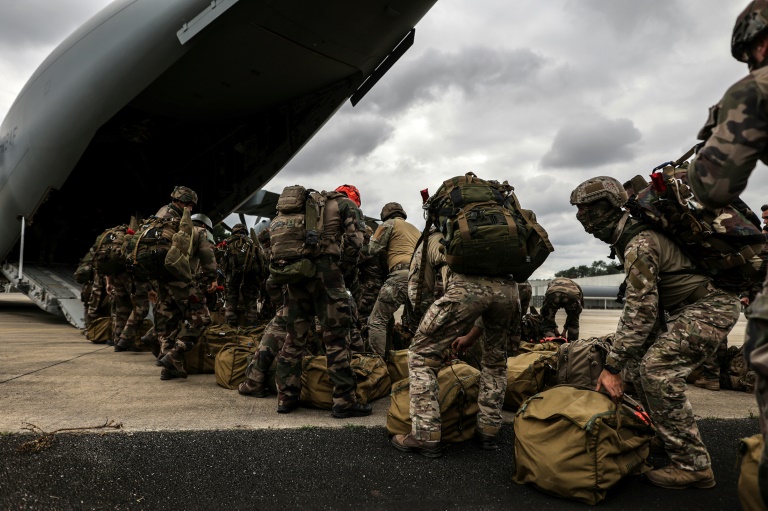
France is planning its biggest ever military exercise involving 12,000 troops, including NATO allies, in the first half of next year, a commander at the chiefs of staff said Tuesday.

The scenario calls for a major conflict with an unspecified foreign state to be played out, said Yves Metayer, commander of the troop deployment division at the French chiefs of staff.

The exercise will come against the background of Russia’s war in Ukraine launched in February this year.

“The geopolitical context justifies this exercise,” Metayer said, adding however that the war games plan had been in the works since 2020 and followed on from a French strategic review published in 2017.

The review pointed to “a need to prepare for a major conflict”, after two decades of mostly asymmetrical warfare with non-state actors, such as jihadists, he said.

“After the fall of the Berlin Wall, we allowed the mobilisation mechanisms we had during the Cold War to decline,” he added.

The wargames, called Orion will involve European NATO allies Germany, Britain, Belgium, Italy and Spain as well as the United States.

Between late February and early May, 7,000 troops will play out a sequence involving naval operations in the Mediterranean, and an amphibian and airlift operation in southern France.

This phase will simulate an intervention in a country undermined by militia activity, and neighbour to a powerful nuclear state stirring up the unrest.

From mid-April to early May, the soldiers will simulate an air and land conflict with that powerful state, involving the deployment of up to 12,000 troops in northern France.

Orion will involve land, sea, air and space components, including cyber warfare, as well as civilian operations in wartime, such as health services and transport, Metayer.

Red Cross says first aid convoy arrives in Tigray capital

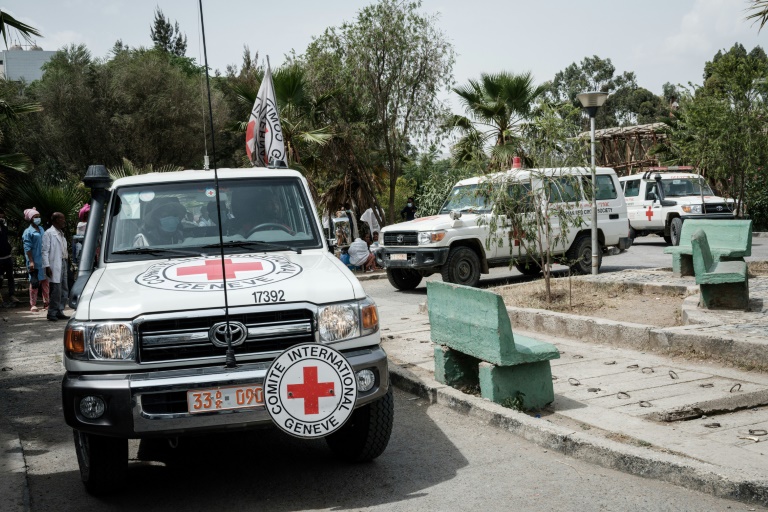
The International Committee of the Red Cross (ICRC) said a medical aid convoy had arrived in the capital of Ethiopia’s war-ravaged Tigray region Tuesday, its first since a peace deal between the federal government and Tigrayan rebels almost two weeks ago.

The restoration of aid deliveries to Tigray was a key part of the breakthrough agreement signed on November 2 to silence the guns in the two-year conflict that has killed untold numbers of people and unleashed a humanitarian crisis in northern Ethiopia.

“ICRC’s first medical supplies have just arrived in Mekele,” the ICRC’s spokesperson in Ethiopia, Jude Fuhnwi, told AFP.

The agency said on Twitter that two trucks had delivered medicines, emergency and first-aid kits to support health facilities in Tigray to treat patients with conditions that need urgent care.

“It is an enormous relief for us to deliver this cargo. The healthcare system in the region is under extreme pressure and these deliveries are a lifeline for people who need medical help,” said Nicolas Von Arx, the head of ICRC’s delegation in Ethiopia. 

“This aid delivery is the first since the resumption of fighting last August and the signing of the Pretoria and Nairobi agreements,” the ICRC added in a statement.

It was referring to the “Cessation of Hostilities” agreement signed by the Ethiopian government and the Tigray People’s Liberation Front (TPLF) in South Africa on November 2 and a follow-up accord reached in the Kenyan capital on Saturday.

The warring sides had agreed in Nairobi to facilitate immediate humanitarian access to “all in need” in Tigray and neighbouring regions with immediate effect.

Tigray, a region of six million people, has been suffering from a severe lack of food and medicine, as well as limited access to basic services including electricity, banking and communications, with the UN warning that many people were on the brink of starvation.

A humanitarian source told AFP late Monday that the UN’s World Food Programme (WFP) was preparing a convoy headed for the town of Shire, which has been under the control of federal forces and their allies since mid-October.

– ‘Make our promise a reality’ –

Earier Tuesday, Ethiopian Prime Minister Abiy Ahmed vowed to fulfil the commitments made in the peace deal and make “our promise a reality”.

As well as the restoration of aid and a cessation of hostilities, the agreement calls for the disarming of TPLF fighters and the re-establishment of federal authority over Tigray.

International pressure for a ceasefire had been mounting since intense fighting reignited in northern Ethiopia in late August after a five-month truce, with pro-government forces capturing a number of key towns in Tigray.

Responding to questions from lawmakers, Abiy said: “We have discussed and signed (the agreement), what is expected from us next is executing the promise we made dutifully.”

A Twitter post by his office later quoted him saying: “We must keep our word by making our promise a reality. We must work hard to avoid problems during the process.”

Abiy has previously said that the Ethiopian government secured 100 percent of what it had sought in the negotiations with the TPLF.

Observers have pointed to many challenges ahead, including the aid issue and the thorny question of Western Tigray, a contested region which has been occupied by pro-Abiy Amhara militias since the war erupted.

The peace deal does not mention the region, raising fears of further conflict down the road.

But Abiy said the issue could be resolved through constitutional means, including a possible referendum.

“We did not go to Pretoria to debate whether Wolkait (in Western Tigray) belongs to Amhara or Tigray as it is neither the place nor the time,” he told lawmakers.

The region is claimed by Tigrayans and Amharas.

The conflict between the TPLF and pro-Abiy forces — which include regional militias and the Eritrean army — has caused an untold number of deaths, forced more than two million people from their homes and driven hundreds of thousands to the brink of famine.

But Abiy did not make any reference to the presence on Ethiopian soil or any possible withdrawal of Eritrean troops, who have played a major role in the conflict but have been accused of atrocities.

Neither the Pretoria nor Nairobi agreements make any mention of Eritrean forces.

The war in Africa’s second most populous country began in November 2020 when Abiy, a Nobel Peace laureate, sent troops into Tigray, accusing the TPLF of attacking federal army camps.

The TPLF had dominated national politics for nearly three decades until Abiy took office in 2018.

str-ayv-txw-amu/ri

US wholesale price inflation slows in October

US wholesale prices continued to rise in October but at a slower pace than in the prior month, according to official data Tuesday which will add to rising hopes that inflation has peaked.

President Joe Biden cheered the news, which came on top of last week’s report showing a slowdown in consumer prices, adding traction to growing expectations the Federal Reserve will be able to dial back its aggressive increases in borrowing costs in the battle against inflation that hit a 40-year high.

The producer price index rose just 0.2 percent compared to September, the Labor Department reported, which was half the pace economists had expected.

And annual PPI slowed to 8.0 percent in October, the data showed, down from 8.5 percent in the prior month.

“There’s more good news for our economy this morning, and more indications that we are starting to see inflation moderate,” Biden said in a statement.

He noted that “food inflation slowed — a welcome sign for families’ grocery bills as we head into the holidays,” and credited his administration’s policies.

“It will take time to get inflation back to normal levels — and we could see setbacks along the way — but we will keep at it,” Biden said.

Food and energy prices, which have soared this year in the wake of Russia’s invasion of Ukraine, continue to pressure the overall index.

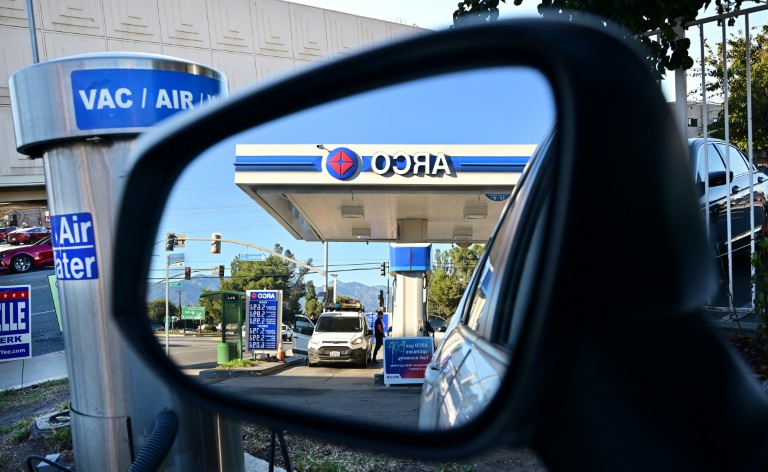
Wholesale energy prices, especially gasoline, were the biggest driver, jumping 2.7 percent in the month and up 21.8 percent compared to October 2021, according to the report.

Food prices have risen 12.7 percent over the past year, and there were big jumps last month in costs for eggs, fresh fruits and vegetables.

The prices of goods excluding volatile food and energy dipped slightly last month, and are up a more modest 6.6 percent over the year.

However, passenger car prices fell, the report said.

Rubeela Farooqi of High Frequency Economics noted the improving trend in inflation pressures.

“Producer prices, while high, are off their peaks,” she said in an analysis. “The improvement in the October inflation data, if it persists, supports the Fed’s expectation of a step down in the pace of increases going forward.”

The Fed has moved aggressively this year to cool the economy and tamp down inflation, hiking the benchmark interest rate six times. But central bankers increasingly have said it will soon be time to slow the pace of those increases.

Kherson residents seek water and phone service on river's edge

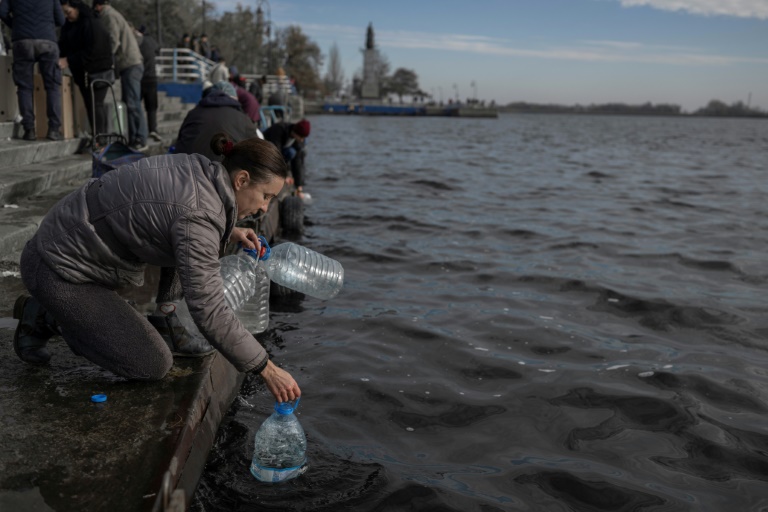
Residents come down some steps and balance dangerously off the edge of a concrete pier to scoop up yellowish river water in Kherson, just days after Russian forces retreated.

With their water supplies cut off for several days, people in the key southern city are reduced to drawing on the Dnipro River for their needs.

Before pulling out on Friday from the regional hub after an eight-month occupation, Russian forces destroyed energy infrastructure which also affected water.

“A week ago, the water supply system was damaged. And since then we have not had any more electricity or water so we come and get water here for washing,” said Tatyana, who came on foot with her daughter and son.

From their trolley, they take out several large plastic bottles that they plan to fill up despite the presence of Russian forces just on the other side of the river.

It is a complicated task, especially for the elderly, as the pier is high off the water and the residents have to kneel down.

They use buckets, funnels — even a milk carton on a string to scoop up the water.

“It’s been five days without water and a week without electricity. I knew this could happen so I’ve been stocking up on water,” said Olga Genkulova, 41, as she packed bottles into her car at the busy car park by the river’s edge.

One man, a cafe owner, was packing a dozen large bottles in his truck which he said he would share with his neighbours.

Residents of the city, which had a pre-war population of 280,000, are also going to reservoirs for drinking water and some bottled water is still available in the shops.

– Destroyed bridge –

Best known for its shipyards, Kherson has a river port that has lain idle since the start of the war when traffic dried up along the Dnipro River — which also crosses Kyiv.

A bit further upstream next to a World War II monument, another group of residents could be seen staring at their phones.

Shortly after the capture of Kherson by Russian forces in March, Moscow cut off phone connections on Ukrainian networks.

But near the monument, residents are able to pick up Russian phone signals from the other side of the river. The networks do not have names, just numbers — 2494 and 2596.

Vita Morzhiveska, 55, spoke to her children as her husband listened in.

“They are in Crimea,” she said, referring to the peninsula annexed by Moscow in 2014.

“They left at the start of the war…. They wanted to come back in August but did not manage it,” she said.

“They were about to cross the Antonivsky bridge but it was shelled. They nearly got hit themselves.”

The bridge spans the Dnipro in the northeastern outskirts of the city and is the last crossing before the river flows into the Black Sea.

Hit by Ukrainian rockets while it was under Russian control, it was then blown up by Russian forces as they retreated.

A plume of black smoke could be seen above the Russian-occupied village of Oleshky on Monday on the other side of the river.

Most probably it was the result of outgoing Ukrainian artillery fire which could be heard at regular intervals around Kherson.

Walmart lifts outlook on strong earnings but hit by opioid settlement

US retailer Walmart saw its earnings top expectations in the third quarter as consumers looked for bargains amid surging inflation, but its numbers were bogged down after a settlement announced Tuesday relating to opioid cases.

The big-box retailer said it “continued to gain market share” in the grocery segment, raising its full-year outlook on strong results despite a challenging environment this year.

Total revenue came in better than expected at $152.8 billion, up 8.7 percent from a year ago.

Walmart also expects that its full-year adjusted profit will decline between 6.5 percent and 7.5 percent — an improvement from earlier estimates.

But its numbers were bogged down by a settlement resolving allegations that it contributed to the opioid crisis by failing to regulate prescriptions at stores.

The deal is set to provide $3.1 billion to communities nationwide and “require significant improvements in how Walmart’s pharmacies handle opioids,” according to a statement by New York Attorney General Letitia James’s office.

This came as the opioid crisis in the United States — causing more than 500,000 deaths over 20 years — triggered a flurry of lawsuits against drugmakers, distributors and pharmacies.

US pharmacy chains CVS Health and Walgreens similarly announced preliminary agreements this month to pay a total of more than $10 billion to resolve opioid claims.

“Pharmacies such as Walmart played an undeniable role” in perpetuating the harm caused by opioids, said James, adding that the settlement is being sent to other states for review and approval.

In a separate statement, Walmart said it “strongly disputes” the allegations but believes the settlement will help communities in the fight against the crisis.

– Gains in grocery –

“With the cost of everyday items still stubbornly high in too many categories, more customers and members are choosing us for the value and assortment we’re known for,” Walmart Chief Executive Doug McMillon told an earnings call.

Customers are shopping with Walmart more often as well, including wealthier consumers, he said.

“Walmart US continued to gain market share in grocery, helped by unit growth in our food business,” McMillon said in a statement, adding that the company has improved its inventory position.

“When consumer finances get tough, Walmart gets going. That is the central message from today’s strong set of numbers,” said GlobalData managing director Neil Saunders in an analysis.

He noted that most of the company’s expansion is occurring in grocery where shoppers are feeling the pinch.

Although some of this is down to inflation, “there has also been volume growth which reflects the increase in customer numbers.”

With US inflation hovering near a decades-high level, consumers have been spending more on staples and pulling back on discretionary items, forcing Walmart to cut its profit outlook in July.

The company also announced in recent months that it would hire 40,000 workers for the upcoming holiday season, significantly lower than before.

Investors have been eyeing Walmart’s results as a proxy for demand, and Wall Street stocks climbed in morning trading on signs of resilience among consumers.

Anti-mafia reporter on trial for 'defaming' Italy's far-right PM

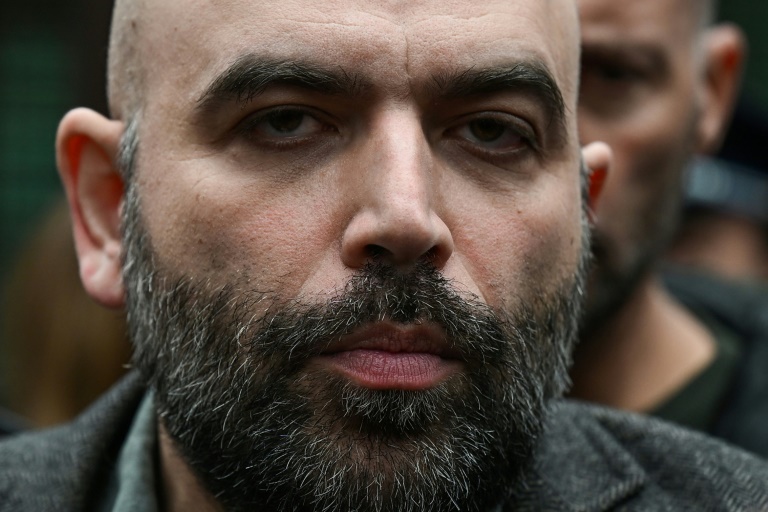
A trial pitting Italy’s far-right Prime Minister Giorgia Meloni against investigative journalist Roberto Saviano opened Tuesday, with the anti-mafia author accused of defamation for an outburst over her stance on migrants.

Meloni’s Brothers of Italy party was in opposition at the time, but took office last month after triumphing at the polls on a nationalist campaign that promised to stop migrants crossing the Mediterranean from North Africa.

Saviano, best known for his international mafia bestseller “Gomorrah”, faces up to three years in prison, if convicted.

In a short speech outside the Rome court, he said Meloni’s attack on those who save lives at sea was “inhuman”. 

The case dates back to December 2020 when he was asked on a political TV chat show for a comment on the death of a six-month-old baby from Guinea in a shipwreck.

The baby, Joseph, had been one of 111 migrants rescued by the Open Arms charity ship, but died before he could receive medical attention.

In footage shot by rescuers and shown to Saviano on the chat show, the baby’s mother — who has just been pulled from the sea without Joseph — can be heard weeping “Where’s my baby? Help, I lose my baby!”

– ‘Infamy, inhuman’ –

A visibly emotional Saviano then blasted Meloni and Matteo Salvini — the leader of the anti-immigrant League party, which is now part of her coalition government —  who have both long used anti-migrant rhetoric.

“I just want to say to Meloni, and Salvini, you bastards! How could you?” Saviano said on the show.

Meloni said in 2019 that charity vessels which rescue migrants “should be sunk”, while Salvini, as interior minister that same year, blocked such vessels from docking.

Salvini joined the criminal proceedings on Tuesday as a civil party seeking damages.

In a speech read out to journalists outside the court after the hearing, Saviano said that he had used the term bastards to highlight the damage done by Meloni and Salvini’s “lies” about charity rescuers.

“How could you be so thoughtless as to isolate, to smear, to transform sea ambulances into pirate ships?” he said.

“Letting people drown isn’t a political opinion. It’s not a political opinion to discredit rescue ambulances, it is infamy, and above all it’s inhuman.”

The judge set the next hearing for December 12.

PEN International, an organisation that defends free speech, sent an open letter to Meloni last week urging her to drop the case.

– ‘Just an insulted woman’ –

Ahead of the trial Saviano, 43, told AFP it was an “unequal confrontation, decidedly grotesque”, while press freedom groups warned it sent a “chilling message” to journalists.

The author, who has been under police protection since publishing “Gomorrah” due to threats from the Naples “Camorra” mafia, said the tactic was to “intimidate one in order to intimidate 100”.

Watchdogs say such trials are symbolic of a culture in Italy in which public figures — often politicians — intimidate reporters with repeated lawsuits.

Meloni’s lawyer Luca Libra said Tuesday there was no intention of “intimidating” anyone.

His client was “just a woman who was insulted… on television in front of millions of people”, he said. 

Meloni would consider whether or not to withdraw the complaint, Libra added.

Italy ranked 58th in the 2022 world press freedom index published by Reporters Without Borders, the lowest level in western Europe.

Tuesday’s trial is not the only one Saviano faces for defamation. He was sued in 2018 by Salvini after calling him “Il Ministro della Malavita”, or minister of the criminal underworld.

That trial is set to open in February.

Red Cross says first aid convoy arrives in Tigray capital

The International Committee of the Red Cross (ICRC) said a medical aid convoy had arrived in the capital of Ethiopia’s war-ravaged Tigray region Tuesday, its first since a peace deal between the federal government and Tigrayan rebels almost two weeks ago.

The restoration of aid deliveries to Tigray was a key part of the breakthrough agreement signed on November 2 to silence the guns in the two-year conflict that has killed untold numbers of people and unleashed a humanitarian crisis in northern Ethiopia.

“ICRC’s first medical supplies have just arrived in Mekele,” the ICRC’s spokesperson in Ethiopia, Jude Fuhnwi, told AFP.

The agency said on Twitter that two trucks had delivered medicines, emergency and first aid kits to support health facilities in Tigray to treat patients with conditions that need urgent care.

“This aid delivery is the first since the resumption of fighting last August and the signing of the Pretoria and Nairobi agreements,” the ICRC added in a statement.

It was referring to the “Cessation of Hostilities” agreement signed by the Ethiopian government and the Tigray People’s Liberation Front (TPLF) in South Africa on November 2 and a follow-up accord reached in the Kenyan capital on Saturday.

The warring sides had agreed in Nairobi to facilitate immediate humanitarian access to “all in need” in Tigray and neighbouring regions with immediate effect.

Tigray, a region of six million people, has been suffering from a severe lack of food and medicine, as well as limited access to basic services including electricity, banking and communications, with the UN warning that many people were on the brink of starvation.

– ‘Make our promise a reality’ –

Earier Tuesday, Ethiopian Prime Minister Abiy Ahmed vowed to fulfil the commitments made in the peace deal and make “our promise a reality”.

As well as the restoration of aid and a cessation of hostilities, the agreement calls for the disarming of TPLF fighters and the re-establishment of federal authority over Tigray.

International pressure for a ceasefire had been mounting since intense fighting reignited in northern Ethiopia in late August after a five-month truce, with pro-government forces capturing a number of key towns in Tigray.

Responding to questions from lawmakers, Abiy said: “We have discussed and signed (the agreement), what is expected from us next is executing the promise we made dutifully.”

A Twitter post by his office later quoted him saying: “We must keep our word by making our promise a reality. We must work hard to avoid problems during the process.”

Abiy has previously said that the Ethiopian government secured 100 percent of what it had sought in the negotiations with the TPLF.

Observers have pointed to many challenges ahead, including the aid issue and the thorny question of Western Tigray, a contested region which has been occupied by pro-Abiy Amhara militias since the war erupted.

The peace deal does not mention the region, raising fears of further conflict down the road.

But Abiy said the issue could be resolved through constitutional means, including a possible referendum.

“We did not go to Pretoria to debate whether Wolkait (in Western Tigray) belongs to Amhara or Tigray as it is neither the place nor the time,” he told lawmakers.

The region is claimed by Tigrayans and Amharas.

The conflict between the TPLF and pro-Abiy forces — which include regional militias and the Eritrean army — has caused an untold number of deaths, forced more than two million people from their homes and driven hundreds of thousands to the brink of famine.

But Abiy did not make any reference to the presence on Ethiopian soil or any possible withdrawal of Eritrean troops, who have played a decisive role in the conflict but have been accused of committing atrocities.

Neither the Pretoria nor Nairobi agreements make any mention of the Eritrean army.

The war in Africa’s second most populous country began in November 2020 when Abiy, a Nobel Peace laureate, sent troops into Tigray, accusing the TPLF of attacking federal army camps.

The TPLF had dominated national politics for nearly three decades until Abiy took office in 2018.

Missile strikes pound Ukraine cities

Missile strikes hit cities across Ukraine on Tuesday and prompted mass power outages, a few days after a humiliating Russian retreat in the nation’s south and in the middle of the G20 summit.

The fresh bombardment, which officials said struck residential buildings in Kyiv, trespassed on days of Ukrainian jubilation over the recapture of the key city of Kherson.

Lviv in the west and Kharkiv in the east were also attacked on Tuesday, authorities said, but there were no immediate information on possible casualties.

Kyiv mayor Vitali Klitschko announced the attack following reports that air raid sirens were sounding across all Ukraine’s regions, saying at least half of Kyiv’s residents were without power.

“According to preliminary information, two residential buildings were hit in the Pechersk district,” he said adding “several missiles were shot down… by air defence systems.

The deputy head of the president’s office Kyrylo Tymoshenko said the missiles had been fired by Russian forces.

He distributed footage of the apparent scene of the attacks, showing a blaze at a Soviet-era, five-storey residential building.

“The danger has not passed. Stay in shelters,” he added in the statement online.

The atttacks came after Russian appointed officials in Nova Kakhovka said they were exiting the important southern city, blaming artillery fire from Kyiv forces, which have been reclaiming swathes of the south after a Russian retreat.

Their announcement comes one day after Ukrainian President Volodymyr Zelensky visited the recently liberated regional capital of the Kherson region and announced “the beginning of the end of the war”.

Zelensky told the G20 summit in Bali on Tuesday “now is the time” to end the war.

“I am convinced now is the time when the Russian destructive war must and can be stopped,” he said via video link, according to a speech obtained by AFP. “It will save thousands of lives.”

Ukraine forces since September have been pushing deeper into the south and Russia announced last week a full withdrawal from the regional capital of the southern Kherson region, allowing Ukraine to enter.

“Employees of the state administration of Nova Kakhovka, as well as state and municipal institutions have left the city and were relocated to safe locations in the region,” the Moscow-installed authorities said on Telegram.

The Russian-backed officials said after Moscow’s pull-out from Kherson city, Nova Kakhovka came under “indiscriminate fire” and “life in the city is unsafe.”

They also claimed “thousands of residents” had followed their recommendation to leave to “save themselves”, saying Kyiv’s forces will seek “revenge on collaborators.”

The authorities claimed that this did not mean that the city was “abandoned” and that “crews of municipal workers” were working to ensure the “functioning of energy and water supply systems.”

– Key dam in ‘dangerous’ state –

Nova Kakhovka sits on the eastern bank of the Dnipro River, now a natural dividing line between Ukraine’s forces that retook Kherson city on the west side and Russia’s forces on the opposing bank.

It is also home to the Kakhovka hydroelectric dam which was captured in the beginning of the invasion because of its strategic importance supplying the Moscow-annexed Crimean peninsula.

The Russian-controlled dam is a particular focus now after Zelensky accused Russian troops of planning to blow it up to trigger a devastating flood.

Any problem with the dam would cause water supply problems for Crimea, which has been under Russian control since 2014 and which Ukraine hopes to recapture.

Russia forces said last week that a Ukrainian strike had damaged the dam.

The Russian-appointed head of the occupied part of the Kherson region, Vladimir Saldo, said Tuesday the dam was no longer operating.

“Today, the turbines do not produce electricity, and there is no need for this,” he said on state-run television channel Rossiya-24, according to Russian agencies.

“The situation is more dangerous — not with electricity generation — but with the dam itself, which, in the event of an explosion, would flood a fairly large area.”

The loss of Kherson was the latest in a string of setbacks for the Kremlin, which invaded Ukraine on February 24 hoping for a lightning takeover that would topple the government in days.

NATO secretary general Jens Stoltenberg nonetheless cautioned that Ukraine was facing difficult months ahead and said that Russia’s military capability should not be underestimated.

Stocks push higher on reassuring US inflation data

Stocks mostly pushed higher on Tuesday, boosted by encouraging data and earnings suggesting inflation may be slowing, and resilience in the US economy.

Moves by China to shore up its economy also boosted sentiment, while the dollar continued to fall back following indications of a possible slowdown in the hiking of US interest rates.

Stocks have taken a beating in recent months as the US Federal Reserve and other central banks have aggressively hiked interest rates, and on statements by policymakers who say they are ready to push economies into recession if necessary to bring inflation down.

But stocks rallied last week as data suggested that US inflation may be moderating and policymakers have indicated that the pace of interest rate hikes may slow even if interest rates need to rise further.

Data released Tuesday suggested US inflation may be slowing.

Manufacturing prices rose just 0.2 percent month-on-month in October, and were flat when volatile food and energy prices are excluded.

“The key takeaway from the report is the clear signs of disinflation embedded in it,” said Patrick O’Hare at Briefing.com.

The data “will feed the market’s newfound belief that the Fed is apt to take a less aggressive rate-hike approach and ultimately settle on a lower terminal rate than previously thought,” he added.

Wall Street stocks snapped higher at the open of trading in New York, with the Dow rising 0.9 percent. The broader S&P 500 jumped 1.6 percent and the tech-heavy Nasdaq soared 2.4 percent.

A key US manufacturing survey released on Tuesday turned positive when analysts had expected it to continue pointing to a contraction, suggesting resilience in the economy despite the Fed interest rate hikes.

Meanwhile, top retailer Walmart, a bellwether for shifts in consumer activity, also posted better-than-expected third quarter results with rising sales volumes and increased earnings. 

A $20 billion share buyback helped send its shares rocketing 6.2 percent higher.

European stocks were mostly higher in afternoon trading, with an improvement in German investor sentiment helping eurozone stocks, while London’s blue-chip FTSE 100 index was penalised by the strong pound.

China’s move to ease some of its strict Covid-19 restrictions and provide much-needed support to its beleaguered property sector helped support sentiment in Asian trading.

Hong Kong rose more than four percent and Shanghai also closed in positive territory.

Optimism for a thawing in relations between Washington and Beijing was boosted after Biden and Xi’s extended talks on the sidelines of the G20 summit in Indonesia.

While there remain differences on hot-potato issues such as Taiwan, the two did find common ground on the Ukraine conflict, climate and the need to avoid another Cold War.

Oil prices slid as the International Energy Agency once again cut its demand growth forecasts given the fragile state of the global economy.

– Key figures around 1330 GMT –

London – FTSE 100: DOWN 0.3 percent at 7,366.09 points

Frankfurt – DAX: UP 0.4 percent at 14,367.91

Paris – CAC 40: UP 0.6 percent at 6,646.55

EURO STOXX 50: UP 0.7 percent at 3,913.49

New York – Dow: UP 0.9 percent at 33,821.25

Tokyo – Nikkei 225: UP 0.1 percent at 27,990.17 (close)

Hong Kong – Hang Seng Index: UP 4.1 percent at 18,343.12 (close)

Shanghai – Composite: UP 1.6 percent at 3,134.08 (close)

Euro/dollar: UP at $1.0422 from $1.0331 on Monday

Pound/dollar: UP at $1.1962 from $1.1751 

Dollar/yen: DOWN at 138.85 yen from 139.90 yen

Euro/pound: DOWN at 87.17 pence from 87.89 pence

West Texas Intermediate: DOWN 0.9 percent at $85.10 per barrel

Brent North Sea crude: DOWN 0.9 percent at $92.33 per barrel

burs-rl/lcm

Close Bitnami banner
Bitnami