World

'Three dead' as Iran protests swell on anniversary of lethal 2019 crackdown

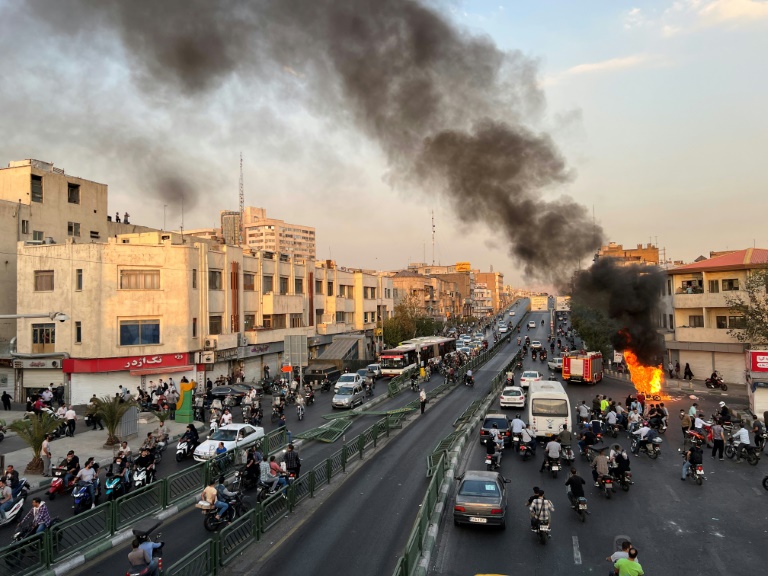
Iranian security forces shot dead at least three protesters Tuesday, a rights group said, as demonstrations sparked by Mahsa Amini’s death swelled on the anniversary of a bloody 2019 crackdown.

The protesters were responding to a call to commemorate those slain in the 2019 crackdown, giving new momentum to the demonstrations sparked by the death of 22-year-old Amini in mid-September this year, after her arrest for allegedly flouting Iran’s strict dress code for women.

In Tehran, the din of honking car horns reverberated as protesters blocked a major roundabout at Sanat Square and yelled “Freedom, freedom”, according to verified footage.

People later poured onto the streets of other cities, including Bandar Abbas and Shiraz, where women were seen waving their headscarves above their heads.

As darkness fell, more people emerged onto the streets of the capital, some of them gathering around bonfires and chanting “Death to the dictator”, according to the 1500tasvir social media monitor.

Other videos posted by the monitor showed altercations with security forces in multiple cities as protests carried on into the night.

“The government forces have directly opened fire in most of the cities where uprisings have taken place, such as Sanandaj, Kamyaran and Kermanshah,” Hengaw, a rights group based in Norway, told AFP.

“Three people have been killed so far, two in Sanandaj and one in Kamyaran” by direct fire from government forces, it said, adding that it was working to confirm reports that more protesters were killed.

The UN Human Rights Office called on Iran to immediately release thousands of people arrested for taking part in peaceful demonstrations.

“Instead of opening space for dialogue on legitimate grievances, the authorities are responding to unprecedented protests with increasing harshness,” spokesman Jeremy Laurence told reporters in Geneva.

– ‘Year of blood’ –

“This year is the year of blood, Seyed Ali will be toppled,” a large crowd chanted outside a Tehran metro station, in a video verified by AFP, referring to Iran’s supreme leader Ayatollah Ali Khamenei.

As the day began, shops were shuttered in Tehran’s famed Grand Bazaar and in other parts of the country, according to online videos verified by AFP.

Iranian media outlets said the bazaar’s merchants shut up shop for fear of them being torched, and a police spokesperson later told state television that 11 people had been arrested for “threatening” traders there.

Workers downed tools and university students boycotted classes in Amini’s home province of Kurdistan, in western Iran, Hengaw said.

In the province’s flashpoint city of Sanandaj, protesters were seen burning tyres in a street and chanting anti-government slogans, in other online footage.

“Woman, life, freedom” and “Man, homeland, prosperity,” chanted male and female students at Islamic Azad University in the northwestern city of Tabriz, in a video published by 1500tasvir.

The protests on Tuesday marked the third anniversary of the start of “Bloody Aban” — or Bloody November — when a surprise overnight fuel price hike sparked bloody street violence that lasted for days.

Amnesty International said at least 304 people were killed during the protests three years ago, but a tribunal in London this year by various rights groups said expert evidence suggested the toll was likely far more, possibly as high as 1,515.

– UN rights session –

Oslo-based group Iran Human Rights on Saturday said that security forces had killed at least 326 people, including 43 children and 25 women, in the crackdown against ongoing protests.

The unrest was fanned by fury over the dress rules for women, but has grown into a broad movement against the theocracy that has ruled Iran since the 1979 Islamic Revolution.

It has shown no sign of abating despite the authorities’ use of lethal force and a campaign of mass arrests that has snared activists, journalists and lawyers.

Former president and leading reformist Mohammad Khatami rejected the idea of a change of power in the Islamic republic, while admitting there was dissatisfaction with the current government.

“The overthrow (of the system) is neither possible nor desirable but the continuation of the current situation leads to social collapse,” Khatami, president from 1997 to 2005, was quoted as saying by reformist newspapers.

The European Union and Britain slapped sanctions on more than 30 senior Iranian officials and organisations over the crackdown.

Iran, which has accused the United States and its allies of fomenting the unrest, threatened to “respond effectively and forcefully”.

The US condemned cross-border drone and missile strikes by Iran on Monday against Iraq-based Kurdish opposition groups that Tehran accuses of stoking what it calls the “riots” at home.

The UN Human Rights Council is due to hold an urgent session on Iran on November 24, with backers pushing for an international investigation into the deadly crackdown on the protests.


Stocks push higher on reassuring US inflation data

Global markets pushed higher on Tuesday, boosted by encouraging data and earnings reports suggesting resilience in the US economy and showing inflation may be slowing.

But Wall Street retreated from the day’s highs after reports of a missile strike in Poland.

NATO and the Pentagon said they were looking into unconfirmed reports that two Russian missiles had landed inside NATO-member Poland. 

The news sent US stocks lower but major indices recovered ground by the closing bell, and the broad-based S&P 100 gained 0.9 percent.

Moves by China to shore up its economy also boosted sentiment, while the dollar continued to fall back following data showing US wholesale price inflation eased last month — lifting hopes the central bank could slow its pace of interest rate hikes.

Stocks have taken a beating in recent months as the US Federal Reserve and other central banks aggressively raised borrowing costs, and after statements by policymakers who say they are ready to push economies into recession if necessary to bring inflation down.

But markets rallied late last week on indications that US consumer price inflation may be moderating.

And data released Tuesday showed the producer price index, which measures wholesale costs, rose far slower than analysts expected.

“While Fed officials have been at pains to push back on the narrative that inflation may well have peaked, the numbers appear to be speaking for themselves,” said market analyst Michael Hewson at CMC Markets.

“Fed officials may well be urging caution but investors already appear to have made up their minds,” he added.

Top retailer Walmart, a bellwether for shifts in consumer activity, also posted encouraging third quarter results with rising sales and better-than-expected earnings.

It announced a $20 billion share buyback, sending its shares up by nearly seven percent at close.

But Jack Ablin of Cresset Capital cautioned that recent trading days saw strong gains at the beginning and a loss of momentum at the end is “not a good sign” since it could reflect some caution among institutional investors.

“We really had a trifecta of information between retail and PPI and the China reopening story, and you would think that would be a recipe for a bull market, but institutional investors don’t agree,” he told AFP.

European stocks were mostly higher in afternoon trading, with an improvement in German investor sentiment helping eurozone stocks, while London’s blue-chip FTSE 100 index was penalized by the strong pound.

In Asia trading, China’s move to ease some strict Covid-19 restrictions and provide much-needed support to its beleaguered property sector helped support sentiment.

Hong Kong rose more than four percent and Shanghai closed in positive territory.

There has also been a boost in optimism for thawing relations between Washington and Beijing, after talks between US President Joe Biden and China’s top leader Xi Jinping on the sidelines of the G20 summit in Indonesia.

While there remain differences on hot-potato issues such as Taiwan, the sides found common ground on the Ukraine conflict, climate and the need to avoid another Cold War.

Oil prices initially slid as the International Energy Agency once again cut its demand growth forecasts given the fragile state of the global economy, but a drop in the dollar helped them later turn positive.

– Key figures around 2130 GMT –

New York – Dow: UP 0.2 percent at 33,592.92 points (close)

New York – S&P 500: UP 0.9 percent at 3,991.73 (close)

New York – Nasdaq: UP 1.5 percent at 11,358.41 (close)

EURO STOXX 50: UP 0.7 percent at 3,915.09 (close)

London – FTSE 100: DOWN 0.2 percent at 7,369.44 (close)

Frankfurt – DAX: UP 0.5 percent at 14,378.51 (close)

Paris – CAC 40: UP 0.5 percent at 6,641.66 (close)

Tokyo – Nikkei 225: UP 0.1 percent at 27,990.17 (close)

Hong Kong – Hang Seng Index: UP 4.1 percent at 18,343.12 (close)

Shanghai – Composite: UP 1.6 percent at 3,134.08 (close)

Euro/dollar: UP at $1.0354 from $1.0331 on Monday

Pound/dollar: UP at $1.1871 from $1.1751 

Dollar/yen: DOWN at 139.16 yen from 139.90 yen

Euro/pound: DOWN at 87.18 pence from 87.89 pence

West Texas Intermediate: UP 1.22 percent at $86.92 per barrel

Brent North Sea crude: UP 0.8 percent at $93.86 per barrel

burs-rl-bys/hs

Rich, developing nations head toward climate compensation clash

Wealthy and developing countries set the stage Tuesday for a showdown at UN climate talks over demands for rich polluters to compensate vulnerable nations for damages caused by natural disasters.

The COP27 conference in Egypt has been dominated by calls for wealthy nations to provide financing to developing nations least responsible for global warming for deadly and costly climate impacts.

Ministers from some of the world’s worst-hit countries admonished developed ones for not doing enough, not only on this issue but also on unfulfilled promises to provide $100 billion in annual aid for their green transitions.

At “how many COPs have we been arguing for urgent climate action? And how many more do we need, how many lives do we need to sacrifice?” Belize’s Climate Change Minister Orlando Habet told COP27 delegates.

After dragging their feet on the issue of “loss and damage” for years over concerns it would create a reparations mechanism, the United States and European Union agreed to have it on the formal agenda at COP27.

But Western powers and a major group of developing nations allied with China presented widely different views of how to achieve this.

The G77+China bloc of more than 130 developing nations presented a document saying the need for a special “loss and damage” fund was “urgent and immediate”.

How much money would be put into the fund, and where it would come from it left unsaid, but the G77+China said it should be operational in time to be approved at next year’s COP28 in Dubai.

The United States and the European Union have suggested that expanding current channels for climate finance might be a more efficient approach than creating a new one.

In its own “talking points” on Tuesday, the EU recognised “the need and urgency” for loss and damage funding, and that “current financing mechanisms are not able to cover all necessary actions.”

But rather than creating a new facility in Sharm el-Sheikh, they favour calling in the two-week meeting’s final declaration for the launch of a time-bound process to explore a “mosaic of solutions”.

The first draft of COP27’s final declaration — which must be approved by all parties — echoes language previously deployed by the US and Europeans proposing “funding arrangements” for loss and damage.

European Commission Vice President Frans Timmermans told reporters that the EU has “demonstrated openness to discuss moving forward on loss and damage”, but he said “he was not quite sure we would be able this week to find consensus on the new financial mechanism”.

– Major emitter ‘hypocrisy’ –

With COP27 scheduled to end on Friday and several items left unresolved, Egyptian Foreign Minister Sameh Shoukry, the COP27 president, said it was “clear that some issues require further technical work”.

“Progress has been made, but certainly more remains to be done if we are to achieve the robust outcomes that will drive ambitious, and inclusive climate action,” he told delegates.

Conrod Hunte of Antigua and Barbuda, lead negotiator for the Alliance of Small Island States, said it would be a “devastating blow” if talks stalled.

“Antigua and Barbuda will not leave here without a loss and damage fund,” he said.

Shawn Edward, sustainable development minister of Saint Lucia, said the people of his Caribbean islands suffer the consequences of the “hypocrisy” of major emitters that continue to invest in fossil fuels.

COP27 comes as global CO2 emissions are poised to reach an all-time high this year, making the aspirational goal of limiting warming to 1.5 degrees Celsius compared to preindustrial levels ever more elusive.

– EU raises emissions target –

Timmermans told delegates that the EU would outperform its original plan to reduce its greenhouse gas emissions by 55 percent by 2030.

The 27-nation bloc will now be able to cut those emissions by 57 percent from 1990 levels, he said, pointing to agreements on phasing out fossil fuel-powered cars and protecting forests that serve as “carbon sinks”.

“The European Union is here to move forwards, not backwards,” Timmermans told COP27 delegates.

The invasion of Ukraine by energy exporter Russia has cast a shadow over the talks in Egypt, with activists accusing Europeans of seeking to tap Africa for natural gas following Russian supply cuts.

But Timmermans denied the bloc was in a “dash for gas” amid the Ukraine conflict.

“Don’t let anybody tell you, here or outside, that the EU is backtracking,” he said.

Watchdog groups were unimpressed.

“This small increase announced today at COP27 doesn’t do justice to the calls from the most vulnerable countries at the front lines,” said Chiara Martinelli, of Climate Action Network Europe.

Walmart lifts outlook on strong earnings but hit by opioid settlement

US retailer Walmart on Tuesday saw its earnings top expectations in the third quarter as consumers looked for bargains amid surging inflation, but its numbers were weighed down by a settlement stemming from the US opioid crisis.

The big-box retailer said it continued to gain market share in the grocery sector, raising its full-year outlook on strong results despite a challenging environment this year.

Total revenue came in better than expected at $152.8 billion, up 8.7 percent from a year ago.

Walmart also expects that its full-year adjusted profit will decline between 6.5 percent and 7.5 percent — an improvement from earlier estimates.

But its numbers were weakened by a settlement resolving allegations that it contributed to the opioid crisis in America by failing to regulate prescriptions at stores.

The deal is set to provide $3.1 billion to communities nationwide and “require significant improvements in how Walmart’s pharmacies handle opioids,” according to a statement by New York Attorney General Letitia James’s office.

The opioid crisis in the United States has caused more than 500,000 deaths over 20 years and triggered a flurry of lawsuits against drugmakers, distributors and pharmacies.

US pharmacy chains CVS Health and Walgreens similarly announced preliminary agreements this month to pay a total of more than $10 billion to resolve opioid claims.

“Pharmacies such as Walmart played an undeniable role” in perpetuating the harm caused by opioids, said James, adding that the settlement is being sent to other states for review and approval.

In a separate statement, Walmart said it “strongly disputes” the allegations but believes the settlement will help communities in the fight against the crisis.

The settlement does not cover a lawsuit the Justice Department filed in late 2020 accusing Walmart of filling thousands of invalid prescriptions and ignoring red flags about problem orders.

– Gains in grocery –

“With the cost of everyday items still stubbornly high in too many categories, more customers and members are choosing us for the value and assortment we’re known for,” Walmart Chief Executive Doug McMillon told an earnings call.

Customers are shopping with Walmart more often as well, including wealthier consumers, he said.

“Walmart US continued to gain market share in grocery, helped by unit growth in our food business,” McMillon said in a statement, adding that the company has improved its inventory position.

Inventories were up only 13 percent from a year ago, compared with bigger increases previously. To manage stocks, the company cancelled orders and raised the level of markdowns.

In a sign of optimism about its business, the company also announced a $20 billion share buyback authorization.

“When consumer finances get tough, Walmart gets going. That is the central message from today’s strong set of numbers,” said GlobalData managing director Neil Saunders in an analysis.

He noted that most of the company’s expansion is occurring in grocery where shoppers are feeling the pinch.

Although some of this is down to inflation, “there has also been volume growth which reflects the increase in customer numbers.”

With US inflation hovering near a decades-high level, consumers have been spending more on staples and pulling back on discretionary items, forcing Walmart to cut its profit outlook in July.

The company also announced in recent months that it would hire 40,000 workers for the upcoming holiday season, significantly lower than before.

Investors have been eyeing Walmart’s results as a proxy for demand, and Wall Street stocks climbed in morning trading on signs of resilience among consumers.

Thousands of Brazilians demand army support to block Lula taking power

Thousands of Brazilians gathered outside Army barracks in Rio de Janeiro,  Brasilia and other cities on Tuesday demanding the military intervene to prevent leftist president-elect Luiz Inacio Lula da Silva taking power next year.

“We want a better Brazil. We don’t want Lula to take charge on January 1, we don’t want a communist country,” bank employee Lais Nunes, 30, told AFP in Rio.

Protesters draped in green and gold waved Brazilian flags and sung the national anthem on what was a bank holiday.

“There is various information that there was electoral fraud … we can’t accept that,” added police officer Leandro de Oliveira, 38, who claimed the national electoral tribunal was responsible for the supposed fraud.

Supporters of outgoing far-right President Jair Bolsonaro have alleged fraud surrounding the electronic voting system that has been used since 1996.

Bolsonaro himself did likewise repeatedly, without providing any supporting evidence.

Brazil’s defense ministry has, however, produced a report dismissing alleged inconsistencies in the electronic results, while international observers also validated the election result.

Lula, who was also president from 2003-10 and left with sky-high approval ratings, won the October 30 run-off with just under 51 percent of the vote compared to Bolsonaro’s 49 percent.

In the capital Brasilia, thousands more gathered at the army’s headquarters with some holding up banners such as “S.O.S Armed Forces” and “Audit at the polls.”

Security was stepped up in the capital and police restricted access to the area around the presidential palace, parliament and supreme court.

Similar protests took place straight after the second round election last month.

Since then, many people set up a camp outside the army headquarters in Sao Paulo, where there were also protests on Tuesday, as well as in Belo Horizonte.

Apart from a brief speech two days after his defeat, Bolsonaro has remained tight-lipped and a recluse, with his official diary left empty.

He has not only disappeared from public life but also from social media, where he used to be extremely active, even running the majority of his successful 2018 campaign online.

He is not attending the Group of 20 summit in Bali, Indonesia, where Brazil is being represented by its top diplomat Carlos Franca.

Sperm count is declining at accelerating rate worldwide: study

Sperm count among men worldwide is falling at an accelerated rate after halving over the last 40 years, a large new study said Tuesday, calling for action to stop the decline.

The study, led by Israeli epidemiologist Hagai Levine, updates 2017 research which had come under scrutiny for only including North America, Europe, Australia and New Zealand.

The new study includes data from more than 57,000 men collected over 223 studies across 53 countries, making it the largest meta-analysis ever conducted on the subject.

With the additional new countries, it confirmed the 2017 finding that sperm counts have halved over the last four decades.

Between 1973 to 2018, the concentration of sperm in men not known to be infertile fell by more than 51 percent, from 101.2 million to 49 million sperm per millimetre of semen, the new study found.

“Furthermore, data suggest that this worldwide decline is continuing in the 21st century at an accelerated pace,” said the study published in the journal Human Reproduction Update.

Sperm counts are dropping at a rate of around 1.1 percent a year, the research found.

More action and research is urgently needed “to prevent further disruption of male reproductive health,” it added.

– ‘We genuinely don’t know why’ –

Sperm count is not the only factor that affects fertility — the speed of sperm movement, which was not measured in the study, also plays a crucial role.

And the lower sperm concentration of 49 million is still well above the range considered “normal” by the World Health Organization — between 15 million and 200 million sperm per millilitre. 

Sarah Martins da Silva, an expert in reproductive Medicine at Scotland’s University of Dundee not involved in the study, said it showed that the rate of decline in sperm count has doubled since 2000.

“And we genuinely don’t know why,” she added.

“Exposure to pollution, plastics, smoking, drugs and prescribed medication, as well as lifestyle, such as obesity and poor diet, have all been suggested to be contributory factors although effects are poorly understood and ill-defined.”

Other experts said the new study did not resolve their scepticism about the 2017 research.

“I remain concerned about the quality of the data in the papers that were published, particularly in the far past,” on which the analysis is based, Allan Pacey of the UK’s University of Sheffield told AFP.

While hailing the “very elegant meta-analysis”, Pacey said he believed we have “simply gotten better” at the difficult task of counting sperm, which could account for the falling rates.

But Martins da Silva dismissed critics of the study’s results, saying that “the numbers and consistent findings are difficult to ignore”.

Seven million homes in dark as missiles pound Ukraine cities

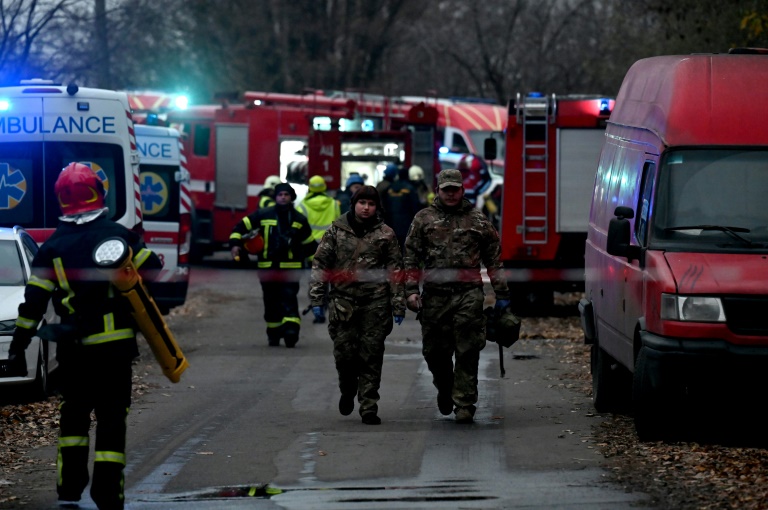
Missile strikes hit cities across Ukraine on Tuesday, plunging seven million homes into darkness just days after a humiliating Russian retreat, prompting a defiant response from President Volodymyr Zelensky.  

Seven million homes were without power following the latest attacks, the presidency said, dampening jubilation over the recapture of Kherson city as world leaders gather at a G20 summit expected to tackle the violence engulfing Ukraine.

Lviv in the west and Kharkiv in the east were also attacked on Tuesday, authorities said, with Lviv’s mayor reporting 80 percent of the city was without power.

Zelensky said in a video statement that Russia had fired 85 missiles at energy facilities across the country.

“We are working, we will restore everything,” he said as areas across Ukraine reported interruptions to power supplies including the western Ternopil region that said 90 percent of users were cut off.

And the Dnipropetrovsk region’s military administration said an energy facility in Kryvyi Rih had been hit, creating a “complicated” situation for the grid.

Moldova, which borders Ukraine, reported power cuts because of the missiles fired at its neighbour and called on Moscow to “stop the destruction now”.

Kyiv’s mayor Vitali Klitschko said at least half of the city’s residents were without power, two residential buildings were hit and “several missiles were shot down… by air defence systems”.

The deputy head of the president’s office Kyrylo Tymoshenko said the missiles had been fired by Russian forces and called the energy situation “critical”.

– ‘Danger has not passed’ –

Tymoshenko shared footage of a blaze at a Soviet-era, five-storey residential building struck by the missile salvoes.

“The danger has not passed. Stay in shelters,” he added in the statement online.

The attacks came after Russia-appointed officials in Nova Kakhovka said they were leaving the important southern city, blaming artillery fire from Kyiv forces, which have reclaimed swathes of the south after Russia left Kherson.

In Kherson city, 41-year-old Olga Genkulova said it had “been five days without water and a week without electricity”. 

“I knew this could happen so I’ve been stocking up on water,” she said packing bottles filled from the Dnipro River.

Ukrainian strikes killed two in a Russian region on the border with Ukraine according to the governor. 

Zelensky said in a video “it is clear what the enemy wants. It will not achieve its goal”.

On Monday he made a surprise visit to the city of Kherson, announcing the retaking of the regional capital marked “the beginning of the end of the war”.

Zelensky told the G20 summit in Bali on Tuesday “now is the time” to end the war, while Washington said the strikes would “deepen the concerns among the G20 about the destabilising impact of Putin’s war”.

White House National Security Adviser Jake Sullivan said Russia was again trying to destroy Ukrainian critical infrastructure.

Since September Ukraine forces have been pushing deeper into the south. 

Russia announced last week a full withdrawal from the regional capital of the southern Kherson region, allowing Ukraine to re-enter.

Moscow-installed authorities in Nova Kakhovka said on Telegram that state and municipal employees were relocated to safety.

The Russian-backed officials said that following Moscow’s pull-out from Kherson city, Nova Kakhovka came under “indiscriminate fire” and “life in the city is unsafe”.

They also claimed “thousands of residents” had followed their recommendation to leave to “save themselves”, saying Kyiv’s forces would seek “revenge on collaborators”.

– Key dam at risk –

Nova Kakhovka sits on the eastern bank of the Dnipro River, now a natural dividing line between Ukraine’s forces that retook Kherson city on the west side and Russia’s forces on the opposing bank.

It is also home to the Kakhovka hydroelectric dam which was captured in the beginning of the invasion because of its strategic importance supplying the Moscow-annexed Crimean peninsula.

The Russian-controlled dam is a particular focus now after Zelensky accused Russian troops of planning to blow it up to trigger a devastating flood.

Any defects at the dam would cause water supply problems for Crimea, which has been under Russian control since 2014 and which Ukraine hopes to recapture.

Russian forces said last week that a Ukrainian strike had damaged the dam.

The Russian-appointed head of the occupied part of the Kherson region, Vladimir Saldo, said Tuesday the dam was no longer operating.

“The situation is more dangerous — not with electricity generation — but with the dam itself, which, in the event of an explosion, would flood a fairly large area,” he said on state-run television channel Rossiya-24, according to Russian agencies.

The loss of Kherson was the latest in a string of setbacks for the Kremlin, which invaded Ukraine on February 24 hoping for a lightning takeover that would topple the government in days.

NATO secretary general Jens Stoltenberg nonetheless cautioned that Ukraine was facing difficult months ahead and said that Russia’s military capability should not be underestimated.

Iran protests swell on anniversary of lethal 2019 crackdown

Iranians took to the streets Tuesday after organisers of protests over Mahsa Amini’s death called for demonstrations marking three years since a lethal crackdown on unrest sparked by a fuel price hike.

The call to commemorate those slain in the 2019 crackdown gave new momentum to the protests that erupted following the death of 22-year-old Amini on September 16, after her arrest for allegedly flouting the strict dress code for women.

As the day began, shops were shuttered in Tehran’s famed Grand Bazaar and in other parts of the country, according to online videos verified by AFP. Iranian media outlets said the bazaar’s merchants shut up shop for fear of them being torched.

In Tehran, the din of honking car horns reverberated as protesters blocked a major roundabout at Sanat Square and yelled “Freedom, freedom”, according to other verified footage.

People later poured onto the streets of other cities, including Bandar Abbas and Shiraz, where women were seen peacefully waving their headscarves above their heads.

As darkness fell, more people emerged onto the streets of the capital, some of them gathering around bonfires and chanting “Death to the dictator”, according to the 1500tasvir social media monitor.

Hengaw, an Oslo-based human rights group, said that security forces “opened fire and shot tear gas at protesters” after dark on Nawbahar Boulevard Kermanshah, a Kurdish city in western Iran.

The UN Human Rights Office called on Iran to immediately release thousands of people arrested for taking part in peaceful demonstrations.

“Instead of opening space for dialogue on legitimate grievances, the authorities are responding to unprecedented protests with increasing harshness,” spokesman Jeremy Laurence told reporters in Geneva.

– ‘Year of blood’ –

“This year is the year of blood, Seyed Ali will be toppled,” a large crowd chanted outside a Tehran metro station, in a video verified by AFP, referring to Iran’s supreme leader Ayatollah Ali Khamenei.

Workers downed tools and university students boycotted classes in Amini’s home province of Kurdistan, in western Iran, Hengaw said.

In the province’s flashpoint city of Sanandaj, protesters were seen burning tyres in a street and chanting anti-government slogans, in other online footage.

“Woman, life, freedom” and “Man, homeland, prosperity,” chanted male and female students at Islamic Azad University in the northwestern city of Tabriz, in a video published by 1500tasvir.

The protests on Tuesday marked the third anniversary of the start of “Bloody Aban” — or Bloody November — when a surprise overnight fuel price hike sparked bloody street violence that lasted for days.

Amnesty International said at least 304 people were killed, but a tribunal in London this year by various rights groups said expert evidence suggested the toll was likely far more, possibly as high as 1,515.

On Tuesday, in a video shared by activists, students at Tehran’s Khajeh-Nasir university chanted “1,500 people were killed in Aban”.

– UN rights session –

Oslo-based group Iran Human Rights on Saturday said that security forces had killed at least 326 people, including 43 children and 25 women, in the crackdown.

The unrest was fanned by fury over the dress rules for women, but has grown into a broad movement against the theocracy that has ruled Iran since the 1979 Islamic Revolution.

It has shown no sign of abating despite the authorities’ use of lethal force and a campaign of mass arrests that has snared activists, journalists and lawyers.

Former president and leading reformist Mohammad Khatami rejected the idea of a change of power in the Islamic republic, while admitting there was dissatisfaction with the current government. 

“The overthrow (of the system) is neither possible nor desirable but the continuation of the current situation leads to social collapse,” Khatami, president from 1997 to 2005, was quoted as saying by reformist newspapers.

The European Union and Britain slapped sanctions on more than 30 senior Iranian officials and organisations over the crackdown.

Iran, which has accused the United States and its allies of fomenting the unrest, threatened to “respond effectively and forcefully”.

The US also condemned Iran’s cross-border drone and missile strikes Monday against Iraq-based Kurdish opposition groups that Tehran accuses of stoking what it calls the “riots” at home.

The UN Human Rights Council is due to hold an urgent session on Iran on November 24, with backers pushing for an international investigation into the deadly crackdown on the protests.

Trump poised to launch 2024 comeback bid

Former US president Donald Trump is expected to launch a new White House bid Tuesday, even as a growing number of his hardcore supporters chalked up losses in last week’s midterms.

The 76-year-old billionaire, whose 2016 win shocked America and the world, has summoned the press to his Florida mansion for a “very big announcement” at 9:00 pm Tuesday (0200 GMT Wednesday).

The event comes during a turbulent moment, with Trump’s Republicans licking their wounds after bitter ballot box defeats while also inching towards a likely takeover of the House of Representatives with a razor-thin majority that will be difficult for party leadership to keep in line.

Known for his unpredictability, Trump could still change his mind at the last minute, but for months he has barely hidden his desire to vie for the presidency again in 2024.

And delaying the announcement now, as some of his advisers have reportedly suggested to him, would be awkward considering Trump’s repeated boast about the momentousness of his Tuesday address.

“Hopefully TODAY will turn out to be one of the most important days in the history of our Country!” Trump posted overnight on his Truth Social platform.

An advisor, Jason Miller, said recently that Trump would announce “that he’s running for president.”

– ‘Red wave’ crashes –

But in a new sign that Trump and his hardcore followers do not lead the electoral juggernaut they once did, one of Trump’s staunchest allies, the election denier and establishment skeptic Kari Lake, was projected to lose her race to be governor of Arizona.

The defeat of Lake and other Trumpists in multiple battleground states have emboldened Trump’s Republican detractors — many of whom blame him for the party’s poorer-then-expected midterm showing — and sapped most of his political momentum heading into the expected Tuesday campaign launch.

“This is certainly not the rollout I’m sure Donald Trump wanted for his announcement tonight,” outgoing congresswoman Liz Cheney, a fierce Republican critic of Trump, said during a Washington Post event.

In 2016, Trump and the Republicans swept into power, taking control of the White House and maintaining their majorities in both chambers of Congress.

But Democrats won back the House of Representatives in a 2018 landslide after campaigning largely against Trump’s caustic style.

They completed their trifecta of US political power by taking the Senate and the White House in 2020.

President Joe Biden, whose victory Trump has refused to acknowledge, recently revealed he is planning to run for a second term, although he said he will make a final decision next year.

Trump departed Washington in chaos two weeks after his partisans stormed the US Capitol, but he chose to remain in the political arena, continuing to fundraise and hold rallies around the country.

Leading up to last week’s midterm vote, in which Biden’s Democrats had been expected to lose handily, Trump made denial of the 2020 election results a key litmus test for candidates to win his influential political endorsement.

But the predicted Republican “red wave” failed to materialize, and Democrats will maintain their control of the Senate. 

Trump’s once-loyal wingman, former vice president Mike Pence, offered potent criticism late Monday, telling ABC News that Trump was “reckless” on the day of the January 6, 2021 insurrection at the US Capitol and that he had told the president they had no authority to unilaterally block certification of the election, as Trump sought.

But Pence declined to say directly whether Trump should be president again. “That’s up to the American people, but I think we’ll have better choices in the future,” he said in the interview.

– Florida showdown –

Part of the conservative world has already turned to another possible White House contender who, like Trump, is a resident of Florida: Governor Ron DeSantis.

The 44-year-old rising star of the hard right has emerged in strong form after his resounding re-election victory in the southeastern state and appears poised to challenge the former president.

Tuesday’s announcement is widely seen as a way for Trump to take the wind out of the sails of potential rivals, including DeSantis and Pence, who is publishing his memoir on the same day.

For the moment, Trump retains an undeniable popularity with his base, despite having been impeached twice by the House.

His White House pursuit will be hampered too by multiple investigations into his conduct before, during and after his first term as president — which could ultimately result in his disqualification.

Those include allegations of fraud by his family business, his role in last year’s US Capitol attack and his handling of classified documents at Mar-a-Lago, his private Florida mansion, which was searched by the FBI in August.

Stocks push higher on reassuring US inflation data

Stocks mostly pushed higher on Tuesday, boosted by encouraging data and earnings reports suggesting inflation may be slowing and resilience in the US economy.

Moves by China to shore up its economy also boosted sentiment, while the dollar continued to fall back following the inflation data which further raised hopes of a slowdown in the hiking of US interest rates.

Stocks have taken a beating in recent months as the US Federal Reserve and other central banks have aggressively hiked interest rates, and on statements by policymakers who say they are ready to push economies into recession if necessary to bring inflation down.

But stocks rallied last week as data suggested that US inflation may be moderating and policymakers have indicated that the pace of interest rate hikes may slow even if interest rates need to rise further.

Data released Tuesday suggested US inflation may be slowing.

Manufacturing prices rose just 0.2 percent month-on-month in October, and were flat when volatile food and energy prices are excluded. On an annual measure, core manufacturing prices fell to 6.7 percent from 7.2 percent in September.

“The key takeaway from the report is the clear signs of disinflation embedded in it,” said Patrick O’Hare at Briefing.com.

The data “will feed the market’s newfound belief that the Fed is apt to take a less aggressive rate-hike approach and ultimately settle on a lower terminal rate than previously thought,” he added.

Wall Street stocks snapped higher at the start of trading and remained there during morning trading.

“While Fed officials have been at pains to push back on the narrative that inflation may well have peaked the numbers appear to be speaking for themselves,” said market analyst Michael Hewson at CMC Markets.

“Fed officials may well be urging caution but investors already appear to have made up their minds,” he added.

Meanwhile, a key US manufacturing survey released on Tuesday turned positive when analysts had expected it to continue pointing to a contraction, suggesting resilience in the economy despite the Fed interest rate hikes.

Meanwhile, top retailer Walmart, a bellwether for shifts in consumer activity, also posted better-than-expected third quarter results with rising sales volumes and increased earnings. 

A $20 billion share buyback helped send its shares rocketing 7.4 percent higher.

European stocks were mostly higher in afternoon trading, with an improvement in German investor sentiment helping eurozone stocks, while London’s blue-chip FTSE 100 index was penalised by the strong pound.

China’s move to ease some of its strict Covid-19 restrictions and provide much-needed support to its beleaguered property sector helped support sentiment in Asian trading.

Hong Kong rose more than four percent and Shanghai also closed in positive territory.

Optimism for a thawing in relations between Washington and Beijing was boosted after Biden and Xi’s extended talks on the sidelines of the G20 summit in Indonesia.

While there remain differences on hot-potato issues such as Taiwan, the two did find common ground on the Ukraine conflict, climate and the need to avoid another Cold War.

Oil prices initially slid as the International Energy Agency once again cut its demand growth forecasts given the fragile state of the global economy, but the drop in the dollar helped them later turn positive.

– Key figures around 1530 GMT –

New York – Dow: UP 0.7 percent at 33,776.67 points

EURO STOXX 50: UP 0.7 percent at 3,915.09

London – FTSE 100: DOWN 0.2 percent at 7,369.44 (close)

Frankfurt – DAX: UP 0.5 percent at 14,378.51 (close)

Paris – CAC 40: UP 0.5 percent at 6,641.66 (close)

Tokyo – Nikkei 225: UP 0.1 percent at 27,990.17 (close)

Hong Kong – Hang Seng Index: UP 4.1 percent at 18,343.12 (close)

Shanghai – Composite: UP 1.6 percent at 3,134.08 (close)

Euro/dollar: UP at $1.081 from $1.0331 on Monday

Pound/dollar: UP at $1.1884 from $1.1751 

Dollar/yen: DOWN at 139.26 yen from 139.90 yen

Euro/pound: DOWN at 87.35 pence from 87.89 pence

West Texas Intermediate: UP 0.2 percent at $86.08 per barrel

Brent North Sea crude: UP 0.2 percent at $93.33 per barrel

burs-rl/lcm

Close Bitnami banner
Bitnami