World

Chip giant TSMC shares surge on Buffett stake

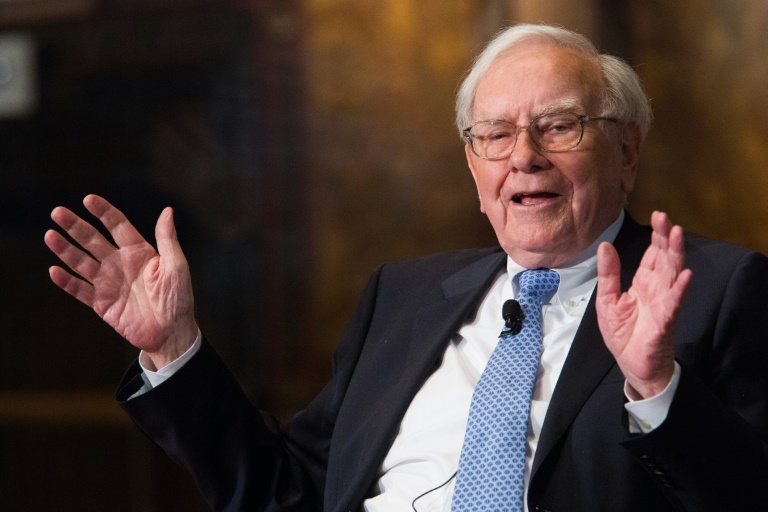
Shares in Taiwan’s TSMC soared on Tuesday after Warren Buffett’s Berkshire Hathaway confirmed it had taken a close to $5 billion stake in a major boost of confidence for the semiconductor giant.

Taiwan Semiconductor Manufacturing Company operates the world’s largest silicon wafer factories and produces some of the most advanced microchips used in everything from smartphones and cars to missiles.

The company’s shares and profits soared for the first two years of the coronavirus pandemic during a global shortage of semiconductors.

That climb came to an end this year as demand was clipped and the prospect of a global downturn loomed with the firm’s shares down 24 percent since January 1 and some US$230 billion wiped from its valuation. 

But that rout turned a corner in the past week with a sudden surge of investor buying and in Tuesday morning trade the company was up nearly eight percent.

That came after Buffet’s Hathaway confirmed in a filing it had acquired about 60 million American Depository Receipts in TSMC in the three months ended September.

Billionaire finance guru Buffett is one of the world’s most successful investors and has a long track record of making savvy, lucrative bets.

In October TSMC announced plans to slash expenditure by around 10 percent in the latest sign from a major global chipmaker that they are expecting the global downturn to deepen.

But the company remains in the fortunate position of making some of the world’s most advanced chips, with key clients including Apple, Nvidia and Qualcomm.

The company reported forecast-beating results in the third quarter with a net income of TW$280.9 billion ($8.8 billion).

Asian markets rise further as China moves provide support

Asian markets rose Tuesday as investors brushed off a reverse on Wall Street and focused on signs of slowing inflation and China’s moves to shore up its economy.

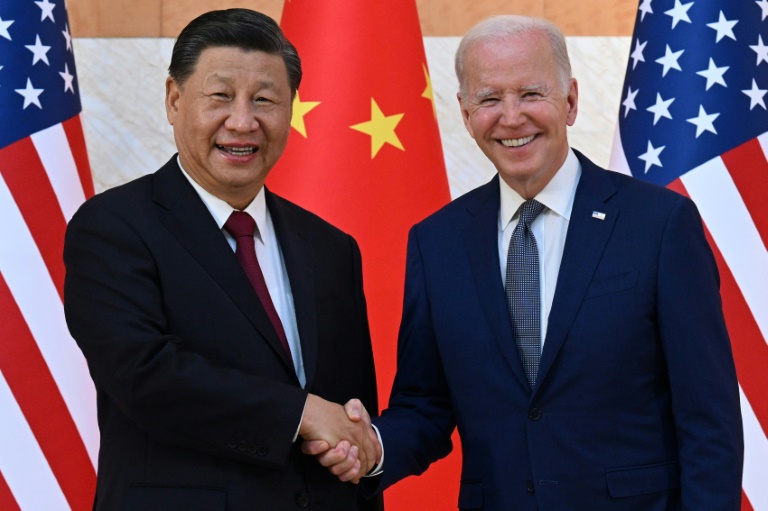
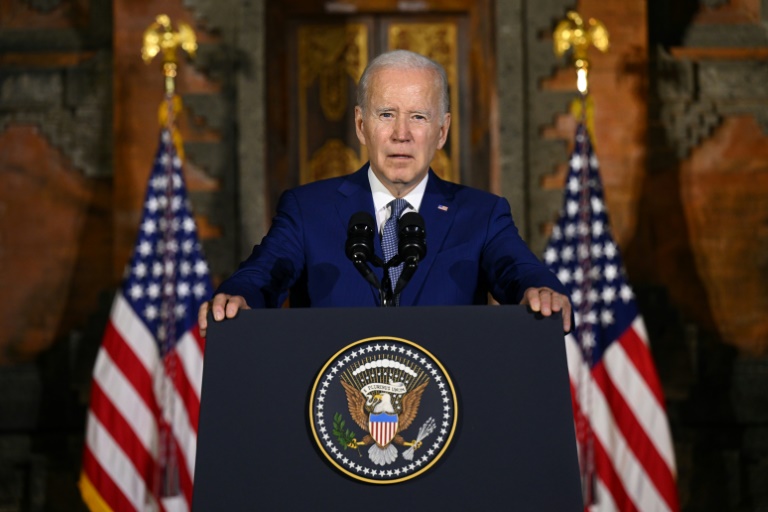
A largely positive meeting between US President Joe Biden and Chinese counterpart Xi Jinping indicated an easing of tensions between the powers and added to the upbeat mood on trading floors.

Still, there remains a lot of trepidation that central bank interest rate hikes aimed at taming inflation will eventually send economies into a recession.

And since Thursday’s forecast-beating consumer prices data, Federal Reserve officials have warned there were more increases in the pipeline, though they are not expected to be as big as the previous four rises, of 75 basis points.

The latest was vice chair Lael Brainard, who said that while it would probably be right to slow down the rate hikes, “we have additional work to do both on raising rates and sustaining restraint to bring inflation down”. 

The comments, along with profit-taking, helped push Wall Street’s three main indexes into the red and pushed the dollar up against its peers, having tumbled last week.

Stephen Innes at SPI Asset Management said: “With US growth yet to fall off a cliff, make no mistake, inflation is still at the fulcrum of market expectations as board members continue to push back a bit on market pricing.”

However, Asian traders were a little more upbeat, cheered by China’s move to ease some of its strict Covid-19 restrictions and provide much-needed support to its beleaguered property sector.

Hong Kong rose more than two percent and Shanghai was also in positive territory.

Tokyo, Singapore, Seoul, Mumbai, Manila, Taipei, Bangkok and Wellington were also up, but Sydney and Jakarta dipped. 

Optimism for a thawing in relations between Washington and Beijing was boosted after Biden and Xi’s extended talks on the sidelines of the G20 summit in Indonesia.

While there remain differences on hot-potato issues such as Taiwan, the two did find common ground on the Ukraine conflict, climate and the need to avoid another Cold War.

After the talks, Chinese Foreign Minister Wang Yi described it as a “new starting point”, adding that Beijing hoped “to stop the tumbling of bilateral ties and to stabilise the relationship”.

After a painful year for markets across the planet, dealers are hopeful that there is finally light at the end of the tunnel.

“It’s certainly a time to be thinking about a recovery regime unfolding for markets,” said Kristina Hooper of Invesco.

“But it’s going to take a little time before we know if this really is something of a turning point for inflation and the Fed can be a lot more comfortable about hastening the end of tightening,” she told Bloomberg Radio.

– Key figures around 0410 GMT –

Tokyo – Nikkei 225: UP 0.2 percent at 28,017.28

Hong Kong – Hang Seng Index: UP 3.6 percent at 18,257.69 (break)

Shanghai – Composite: UP 1.3 percent at 3,122.58 (break)

Euro/dollar: DOWN at $1.0324 from $1.0331 on Friday

Pound/dollar: UP at $1.1764 from $1.1751 

Dollar/yen: UP at 140.35 yen from 139.90 yen

Euro/pound: DOWN at 87.74 pence from 87.89 pence

West Texas Intermediate: DOWN 0.4 percent at $85.51 per barrel

Brent North Sea crude: DOWN 0.1 percent at $93.01 per barrel

New York – Dow: DOWN 0.6 percent at 33,536.70 (close)

London – FTSE 100: UP 0.9 percent at 7,385.17 (close)

Anti-mafia reporter on trial for 'defaming' Italy's far-right PM

A trial pitting Italy’s far-right Prime Minister Giorgia Meloni against investigative journalist Roberto Saviano opens on Tuesday, with the anti-mafia author accused of defamation for an outburst over her stance on migrants.

Meloni’s Brothers of Italy party was in opposition at the time, but took office last month after triumphing at the polls on a nationalist campaign that promised to stop migrants crossing the Mediterranean from North Africa.

Saviano, best known for his international mafia bestseller “Gomorrah”, risks up to three years in prison.

The case dates back to December 2020 when he was asked on a political TV chat show for a comment on the death of a six-month-old baby from Guinea in a shipwreck.

The baby, Joseph, had been one of 111 migrants rescued by the Open Arms charity ship, but he died before he could receive medical attention.

In footage shot by rescuers and shown to Saviano on the chat show, the baby’s mother — who has just been pulled from the sea without Joseph — can be heard weeping “Where’s my baby? Help, I lose my baby!”

A visibly emotional Saviano blasted Meloni and Matteo Salvini, the leader of the anti-immigrant League party, which is now part of her coalition government — both of whom have long used anti-migrant rhetoric.

“I just want to say to Meloni, and Salvini, you bastards! How could you?” Saviano said on the show.

Meloni said in 2019 that charity vessels which rescue migrants “should be sunk”, while Salvini, as interior minister that same year, blocked such vessels from docking.

– ‘Decidedly grotesque’ –

PEN International, an organisation that defends free speech, sent an open letter to Meloni last week urging her to drop the case.

Saviano, 43, told AFP the trial was an “unequal confrontation, decidedly grotesque”, while press freedom groups warned it sent a “chilling message” to journalists.

The author, who has been under police protection since publishing “Gomorrah” due to threats from the Naples “Camorra” mafia, said the tactic was to “intimidate one in order to intimidate 100”.

“It will be even more difficult (for journalists) to report on what is happening” if their words are “put on trial when they criticise power and its inhuman policies,” Saviano said.

Watchdogs say such trials are symbolic of a culture in Italy in which public figures — often politicians — intimidate reporters with repeated lawsuits.

Italy ranked 58th in the 2022 world press freedom index published by Reporters Without Borders, the lowest level in western Europe.

Tuesday’s trial is not the only one Saviano faces for defamation. He was sued in 2018 by Salvini after calling him “Il Ministro della Malavita”, or minister of the criminal underworld.

That trial is set to open in February.

UK budget predicted to be a nightmare before Christmas

Britain will on Thursday hike taxes and slash public spending in a government budget signalling a return to austerity despite millions suffering a cost-of-living crisis in an economy facing recession.

Conservative Prime Minister Rishi Sunak, who took office just three weeks ago, has vowed to fix the economic havoc created by his short-lived predecessor Liz Truss.

But he is mindful of sky-rocketing energy bills, decades-high inflation and rising interest rates that are squeezing households.

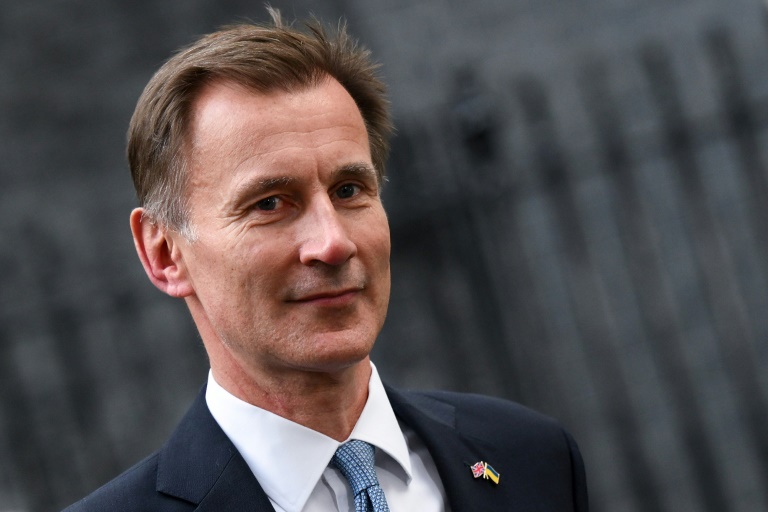
Finance minister Jeremy Hunt will present his crucial budget in parliament, alongside official economic and inflation forecasts — with recent data signalling a grim outlook.

Chancellor of the Exchequer Hunt is expected to unveil fiscal consolidation totalling between £50 billion and £60 billion (between $58.7 billion and $70.5 billion), media reports suggest.

– Scrooge –

“We’re all going to be paying a bit more tax, I’m afraid,” Hunt told UK media over the weekend, likening himself to the penny-pinching miser Ebenezer Scrooge in Charles Dickens’ festive favourite “A Christmas Carol”.

“We will be asking everyone for sacrifices,” he said, stressing however that the pain would fall disproportionately on the better off.

In more gloomy news, Britain’s economy shrank in the third quarter as inflation soars, recent data showed, likely confirming it is already in a recession.

The Bank of England has said the UK economy would also contract in the current final quarter, meaning the economy was in a recession which it warned could last until mid-2024.

“The big fiscal tightening … is coming just as the recession begins,” noted Capital Economics analyst Ashley Webb.

“The clear risk is that the fiscal consolidation deepens the recession,” he cautioned.

Truss’ unfunded tax-slashing budget sparked a collapse in the pound and an explosion in state borrowing costs during her 49-day tenure that began in September.

Investors fretted over a black hole of as much as £200 billion, forcing emergency intervention from the Bank of England.

She then fired her finance minister Kwasi Kwarteng and replaced him with Hunt, who set about reversing the much-criticised budget and curtailed a costly freeze in domestic fuel bills. 

Yet it was not enough to keep Truss in Downing Street.

– Stability back? –

Markets have since regained an even keel after Sunak took the helm and political turmoil subsided, but retail lenders’ mortgage rates remain elevated.

“What we are seeing now is that stability has returned to the United Kingdom,” Sunak told Sky News in Bali, Indonesia, where he is attending the G20 summit.

“But that’s because the expectation is that the government will make those difficult but necessary decisions to ensure that we can get a grip of inflation, reduce it for people with the cost of living, also limit the increase in mortgage rates.

“I would really want people to be reassured that … all the decisions we make will have fairness and compassion at their heart.”

Economic storm clouds could darken further this week, with unemployment and inflation data due for release on Tuesday and Wednesday respectively.

The BoE this month sprang its biggest interest rate hike since 1989 to fight sky-high inflation, which stands at a four-decade peak above 10 percent as energy and food prices soar as a result of the Ukraine war.

The bank’s key rate has rocketed from 0.1 percent to 3.0 percent in under one year, in turn ramping up home loan repayments and worsening the cost-of living crisis.

– ‘Austerity 2.0’ –

Britain’s main opposition Labour party has slammed Sunak, arguing that a second wave of austerity is not the answer.

“I don’t believe that austerity 2.0, after the austerity that we have gone through after the last 12 years, is the right approach,” said Labour’s finance spokeswoman Rachel Reeves.

“Public services area already on their knees,” added Reeves, a former Bank of England economist, calling it a “badge of shame” that the nurses felt compelled to go on strike.

Tens of thousands of staff in various industries have already gone on strike across Britain this year to press for higher pay.

Reports suggest that Hunt will freeze income tax rate thresholds, which means more people are dragged into higher tax brackets over time.

He could also overhaul the government’s energy bills support scheme with more targeted measures.

And Hunt could ramp up windfall tax on oil and gas giants, whose profits have surged on fallout from Russia’s war on Ukraine.

UK budget predicted to be a nightmare before Christmas

Britain will on Thursday hike taxes and slash public spending in a government budget signalling a return to austerity despite millions suffering a cost-of-living crisis in an economy facing recession.

Conservative Prime Minister Rishi Sunak, who took office just three weeks ago, has vowed to fix the economic havoc created by his short-lived predecessor Liz Truss.

But he is mindful of sky-rocketing energy bills, decades-high inflation and rising interest rates that are squeezing households.

Finance minister Jeremy Hunt will present his crucial budget in parliament, alongside official economic and inflation forecasts — with recent data signalling a grim outlook.

Chancellor of the Exchequer Hunt is expected to unveil fiscal consolidation totalling between £50 billion and £60 billion (between $58.7 billion and $70.5 billion), media reports suggest.

– Scrooge –

“We’re all going to be paying a bit more tax, I’m afraid,” Hunt told UK media over the weekend, likening himself to the penny-pinching miser Ebenezer Scrooge in Charles Dickens’ festive favourite “A Christmas Carol”.

“We will be asking everyone for sacrifices,” he said, stressing however that the pain would fall disproportionately on the better off.

In more gloomy news, Britain’s economy shrank in the third quarter as inflation soars, recent data showed, likely confirming it is already in a recession.

The Bank of England has said the UK economy would also contract in the current final quarter, meaning the economy was in a recession which it warned could last until mid-2024.

“The big fiscal tightening … is coming just as the recession begins,” noted Capital Economics analyst Ashley Webb.

“The clear risk is that the fiscal consolidation deepens the recession,” he cautioned.

Truss’ unfunded tax-slashing budget sparked a collapse in the pound and an explosion in state borrowing costs during her 49-day tenure that began in September.

Investors fretted over a black hole of as much as £200 billion, forcing emergency intervention from the Bank of England.

She then fired her finance minister Kwasi Kwarteng and replaced him with Hunt, who set about reversing the much-criticised budget and curtailed a costly freeze in domestic fuel bills. 

Yet it was not enough to keep Truss in Downing Street.

– Stability back? –

Markets have since regained an even keel after Sunak took the helm and political turmoil subsided, but retail lenders’ mortgage rates remain elevated.

“What we are seeing now is that stability has returned to the United Kingdom,” Sunak told Sky News in Bali, Indonesia, where he is attending the G20 summit.

“But that’s because the expectation is that the government will make those difficult but necessary decisions to ensure that we can get a grip of inflation, reduce it for people with the cost of living, also limit the increase in mortgage rates.

“I would really want people to be reassured that … all the decisions we make will have fairness and compassion at their heart.”

Economic storm clouds could darken further this week, with unemployment and inflation data due for release on Tuesday and Wednesday respectively.

The BoE this month sprang its biggest interest rate hike since 1989 to fight sky-high inflation, which stands at a four-decade peak above 10 percent as energy and food prices soar as a result of the Ukraine war.

The bank’s key rate has rocketed from 0.1 percent to 3.0 percent in under one year, in turn ramping up home loan repayments and worsening the cost-of living crisis.

– ‘Austerity 2.0’ –

Britain’s main opposition Labour party has slammed Sunak, arguing that a second wave of austerity is not the answer.

“I don’t believe that austerity 2.0, after the austerity that we have gone through after the last 12 years, is the right approach,” said Labour’s finance spokeswoman Rachel Reeves.

“Public services area already on their knees,” added Reeves, a former Bank of England economist, calling it a “badge of shame” that the nurses felt compelled to go on strike.

Tens of thousands of staff in various industries have already gone on strike across Britain this year to press for higher pay.

Reports suggest that Hunt will freeze income tax rate thresholds, which means more people are dragged into higher tax brackets over time.

He could also overhaul the government’s energy bills support scheme with more targeted measures.

And Hunt could ramp up windfall tax on oil and gas giants, whose profits have surged on fallout from Russia’s war on Ukraine.

'End the war', Indonesia leader urges at G20 opening

Indonesia’s President Joko Widodo on Tuesday urged G20 leaders to “end the war” as he opened a summit dominated by Russia’s invasion of Ukraine, with Washington and allies heaping pressure on Moscow.

“Being responsible means creating not zero-sum situations, being responsible here also means that we must end the war,” Widodo said.

The United States and its allies are looking to pin painfully high global food and fuel prices squarely at President Vladimir Putin’s door during the gathering.

Eyeing a joint G20 declaration that would condemn the eight-month-old invasion and threats to use nuclear weapons, US and European officials have painted the summit as evidence of Russia’s deepening isolation.

“I think you’re going to see most members of the G20 make clear that they condemn Russia’s war in Ukraine,” a senior US official said, speaking on condition of anonymity.

“Russia’s war of aggression is being condemned in the strongest possible terms,” the official said, adding that many “see Russia’s war in Ukraine as the root source of immense economic and humanitarian suffering in the world.”

It remained far from clear that Russia’s G20 allies China, India and South Africa would sign up to language that would condemn Putin’s war so explicitly.

Such a condemnation at the G20 would be a heavy diplomatic defeat for Moscow, which has been keen to paint opposition to the conflict as Western-dominated.

There was a hint at growing Chinese unease with Russia’s prosecution of the war though when presidents Xi Jinping and Joe Biden met late Monday.

Both men voiced opposition to the “use or threat of use” of nuclear weapons in Ukraine, the White House said.

European Council president Charles Michel signalled that while a draft agreement had been agreed to in principle, there was still work to be done.

“I am absolutely convinced that we should try to use the meeting today and tomorrow to convince all of the parties to put more pressure on Russia,” he told media as the summit opened.

-Inflation woes-

G20 leaders are gathered in Bali as soaring inflation drives millions more into poverty and tips several nations toward recession.

US allies hope to find common ground with G20 nations that, while cautious about denouncing Russia, are deeply concerned about rising prices.

G20 members Argentina and Turkey are among the countries worst hit by food inflation, while India and South Africa have avoided criticism of Moscow.

Putin is skipping the summit after a string of embarrassing battlefield defeats in a war that his supporters believed would be over in days.

Rubbing salt in the wound, Ukrainian leader Volodymyr Zelensky — fresh from a visit to liberated Kherson — addressed G20 leaders in a video message.

Russia is represented by Sergei Lavrov, despite the veteran foreign minister making two Bali hospital trips in as many days for an undisclosed ailment. 

Moscow denied the top diplomat had been hospitalised.

Lavrov is not seen as part of Putin’s inner circle — meaning the chance of a diplomatic breakthrough to end the war is vanishingly small.  

With Zelensky and Putin absent “there is little chance of any real peace diplomacy in Bali,” said Richard Gowan of the International Crisis Group. 

Still, French President Emmanuel Macron has kept an olive branch extended. He will call Putin after the G20 summit, according to a senior French official. 

– Grain corridor –

A deal allowing Ukraine to export grain through the Black Sea is likely to be another focus of conversation.

It expires November 19, and Russia has already threatened to rip it up.

United Nations Secretary-General Antonio Guterres said Monday he was “hopeful” the deal would be extended, calling it crucial for food security.

Ukraine is one of the world’s top grain producers, and the Russian invasion had blocked 20 million tonnes of grain in its ports before the United Nations and Turkey brokered the deal in July.

“We need urgent action to prevent famine and hunger in a growing number of places around the world,” Guterres said.

The summit build-up has focused on Xi, who is making only his second overseas trip since the pandemic.

He meets Tuesday with French President Emmanuel Macron and Australia’s Anthony Albanese, a day after a first presidential sitdown with Biden. 

The pair cooled Cold War rhetoric in a three-hour summit as they tried to take some of the heat out of their simmering superpower rivalry. 

“The world expects that China and the United States will properly handle the relationship,” Xi told Biden.

Former US diplomat Danny Russel described the meeting as broadly positive. 

“We should beware of prematurely declaring the strategic rivalry over. However, we saw a deliberate effort to stabilise a dangerously overheated relationship.”

Most Asian markets up further as China moves provide support

Asian markets mostly rose Tuesday as investors brushed off a reverse on Wall Street and focused on signs of slowing inflation and China’s moves to shore up its economy.

While the week got off to a slower start, the mood remains buoyant across trading floors, particularly in Hong Kong, where tech firms led the way.

Still, there remains a lot of trepidation that central bank interest rate hikes aimed at taming inflation will eventually send economies into a recession.

And since Thursday’s forecast-beating consumer prices data, Federal Reserve officials have warned there were more increases in the pipeline, though they are not expected to be as big as the previous four 75 basis point rises.

The latest was vice chair Lael Brainard, who said that while it would probably be right to slow down the rate hikes, “we have additional work to do both on raising rates and sustaining restraint to bring inflation down”. 

The comments, along with profit-taking, helped push Wall Street’s three main indexes into the red and pushed the dollar up against its peers, having tumbled last week.

Stephen Innes at STI Asset Management said: “With US growth yet to fall off a cliff, make no mistake, inflation is still at the fulcrum of market expectations as board members continue to push back a bit on market pricing.”

However, Asian traders were a little more upbeat, with dealers cheered by China’s move to ease some of its strict Covid-19 restrictions and provide much-needed support to its beleaguered property sector.

Hong Kong rose more than two percent and Shanghai was also in positive territory.

Tokyo, Singapore, Manila, Taipei, Jakarta and Wellington were also up, but Sydney and Seoul dipped. 

After a painful year for markets across the planet, there are budding hopes for light at the end of the tunnel.

“It’s certainly a time to be thinking about a recovery regime unfolding for markets,” said Kristina Hooper of Invesco.

“But it’s going to take a little time before we know if this really is something of a turning point for inflation and the Fed can be a lot more comfortable about hastening the end of tightening,” she told Bloomberg Radio.

Adding to the largely positive mood was a slight easing of China-US tensions after presidents Joe Biden and Xi Jinping held extended talks on the sidelines of the G20 summit in Indonesia.

After the talks, Chinese Foreign Minister Wang Yi described it as a “new starting point” and that they “hope to stop the tumbling of bilateral ties and to stabilise the relationship”.

– Key figures around 0230 GMT –

Tokyo – Nikkei 225: UP 0.1 percent at 27,994.68 (break)

Hong Kong – Hang Seng Index: UP 2.3 percent at 18,031.85

Shanghai – Composite: UP 0.5 percent at 3,100.05

Euro/dollar: DOWN at $1.0326 from $1.0331 on Friday

Pound/dollar: UP at $1.1765 from $1.1751 

Dollar/yen: UP at 140.25 yen from 139.90 yen

Euro/pound: DOWN at 87.75 pence from 87.89 pence

West Texas Intermediate: DOWN 0.6 percent at $85.39 per barrel

Brent North Sea crude: DOWN 0.3 percent at $92.91 per barrel

New York – Dow: DOWN 0.6 percent at 33,536.70 (close)

London – FTSE 100: UP 0.9 percent at 7,385.17 (close)

US presses China for debt relief in developing countries

The United States is pressing China and other G20 members to do more on debt relief for the world’s poorest countries, a senior US official said Tuesday.

The issue will be highlighted in the final joint statement when the summit in the Indonesian resort island of Bali ends this week, the official said, but there will not be unanimity.

“What you’re going to see in the G20 statement is that 19 members of the G20 came together to say this is a core, first-order issue that we need to take collective action with respect to, and you’ll see that, you know, one country is still blocking progress,” the official said, speaking on condition of anonymity.

He would not name the hold-out country but this appeared likely to be China, a massive creditor to poor countries around the world in a policy that Western countries have condemned as “debt traps” used to tighten Beijing’s grip on the global economy.

The official mentioned similar opposition to joint agreement on restructuring such debts at the October meetings of the World Bank and International Monetary Fund.

The issue “will continue to be a topic of conversation between the US and China and within the G20”, he said.

“We’re seeing — because of the stresses on the global economy, because of the food and energy security issues that we’re facing, as well as the broader macro-economic headwinds in the globe — that a set of emerging countries are finding themselves in pretty substantial distress when it comes to their debt burdens,” the US official said.

“It is vital to find a way forward to provide those countries that relief, so they can ultimately begin growing again and get their citizens and their economy out from under the burden.”

Debt relief will also be a concern in broader relations with China, which presidents Joe Biden and Xi Jinping sought to reinvigorate Monday at a meeting on the sidelines of the G20.

“I suspect that that will be a core topic that we continue engaging the PRC (China) on in the weeks and months ahead,” the official said.

Clashes in eastern DR. Congo as envoy pursues 'dialogue' initiative

Troops and rebels traded heavy fire in the Democratic Republic of Congo on Monday, a military source and local inhabitants said, as an envoy from the East African bloc called for all armed groups to “silence the guns”.

Government forces and the M23 militia were fighting in Kibumba, about 20 kilometres (12 miles) north of the strategic city Goma, the sources said, speaking by phone.

M23 fighters were also seen about 40 kilometres northwest of the city in the Virunga National Park, a wildlife haven famed for its mountain gorillas but which is also a hideout for armed groups, the sources said.

A mostly Congolese Tutsi group, the M23 — the March 23 Movement — leapt to prominence in 2012 when it briefly captured Goma before being driven out. 

After lying dormant for years, the rebels took up arms again in late 2021, claiming the DRC had failed to honour a pledge to integrate them into the army, among other grievances.

They have since won a string of victories against the military and captured swathes of territory, prompting thousands of people to flee their homes.

The resurgence has ratcheted up diplomatic tensions, with the DRC accusing its smaller neighbour Rwanda of backing the group.

Kinshasa expelled Rwanda’s ambassador at the end of last month as the M23 advanced, and recalled its own envoy from Kigali.

Rwanda denies providing any support for the M23 and accuses the Congolese army of colluding with the Forces for the Liberation of Rwanda (FDLR) — a notorious Hutu rebel movement involved in the 1994 genocide of Tutsis in Rwanda. 

“The Rwandan army and its allies from the M23 don’t stop, every passing day, launching assaults on our different positions in Kibumba,” lieutenant colonel Guillaume Ndjike, army spokesman for the eastern North Kivu province, told reporters.

Witnesses in the rebel-held town of Kiwanja also spoke last week of school canteens backed by World Food Programme being pillaged on Sunday and Monday. 

“There was corn flour and oil. They took these provisions as food rations,” a resident said.

Another said oil cans, flour sacks and beans had been taken away by truck the previous day.

– ‘Silence the guns’ –

Eastern DRC saw two bloody regional wars in the 1990s.

That conflict, along with the Rwandan genocide, bequeathed a legacy of scores of armed groups which remain active across the region but especially in North Kivu.

The heads of the seven-nation East African Community (EAC) on Sunday announced they would hold a “peace dialogue” on the region’s conflicts. 

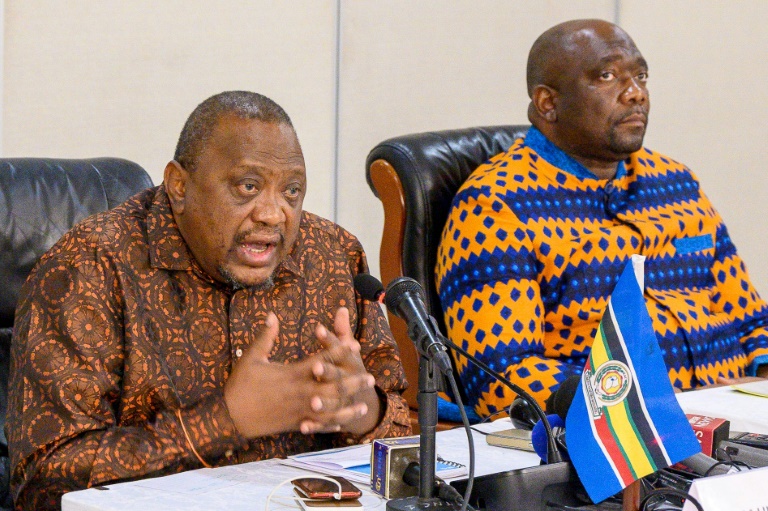
“All groups that currently bear arms should lay those arms down and choose the path of peace through dialogue,” said EAC’s mediator, former Kenyan president Uhuru Kenyatta, on Monday. 

He arrived in Kinshasa the day before to hold consultations ahead of November 21 peace talks in Nairobi. 

“Silence the guns and join in a political process,” he urged local armed groups. 

To foreign groups, “the DRC is no longer the battleground for problems that are not from this country,” Kenyatta added. 

“There is nothing that can be gained through the barrel of a gun.”  

Another diplomatic path is being explored by Angolan President Joao Lourenco.

He met on Friday with Rwandan President Paul Kagame and on Saturday with Congolese President Felix Tshisekedi.

Twitter prank spurs unexpected scrutiny of insulin prices

A Twitter imposter cost a US pharmaceutical giant billions of dollars, but the viral prank triggered another unexpected crisis — a new wave of scrutiny of the high cost of its insulin.

Authentic-looking fake accounts proliferated last week after Twitter rolled out a paid verification service, the latest in a string of chaotic developments since Elon Musk’s blockbuster $44 billion buyout of the influential platform.

Among the victims was drugmaker Eli Lilly, whose stock price nosedived — erasing billions in market capitalization — after a parody account stamped with a verification tag purchased for $8 tweeted that insulin was being made available for free.

The company was forced to issue an apology for the “misleading message from a fake Lily account,” but the disinformation stirred fresh attention to a long-festering debate about high insulin prices.

“What you should *actually* apologize for is price gouging life-saving insulin,” tweeted Chicago-based human rights lawyer Qasim Rashid.

“People are dying because of your greed (and) cruelty. Apologize for that.”

Gaining traction alongside such comments was a cartoon meme with a half-elephant, half-human character riling up people to be more upset about the price of insulin than the price of gas.

“Fake Eli Lilly might be offering something closer to truth than real Eli Lilly,” Peter Maybarduk, from the nonprofit Public Citizen, told AFP.

“Parody is successful when it reveals embarrassing and widely understood truth.”

– ‘Abusive pricing’ – 

In recent decades, insulin prices have soared in the United States, costing more than eight times more than in 32 comparable high-income countries, according to a 2020 Rand Corporation study.

A survey released in October by the nonprofit T1International showed that one in four respondents living with diabetes reported rationing their insulin because of the financial strain.

On Monday, which marks World Diabetes Day, dozens of advocacy groups including Public Citizen sent a letter to Congress demanding a stop to what they called insulin price-gouging.

“There’s no defense for Eli Lilly’s abusive insulin pricing,” said Maybarduk.

“It’s long past time we provide access to insulin for all, and yes –- it should be free,” he added. 

The backlash against Eli Lilly showcased the real-life potential of online disinformation to trigger chaos and financial loss. The company’s stock price has marginally recovered since last week’s drop.

But in this rare instance, it brought to the fore a much-ignored public health issue.

– ‘Panic’ –

“The disinformation is not without ramification — Eli Lilly’s stock price dropped dramatically,” Al Tompkins, a senior faculty member at the Poynter Institute, told AFP.

But exploiting Twitter’s chaotic rollout of its paid verification policy, the prank managed to make “the insulin drug price conversation relevant to a lot of people.”

On Friday, Twitter disabled sign-ups for the contentious feature known as Twitter Blue, with reports saying it had been temporarily disabled to help address impersonation issues — but not before several brands took a hit.

Shares of other firms such as aerospace defence company Lockheed Martin also took a hit after being targeted by impersonators.

The prank sparked panic inside Eli Lilly, with officials scrambling to contact Twitter representatives to take it down, but the platform did not react for hours, the Washington Post reported on Monday.

By Friday, Eli Lilly executives ordered a halt to all ad campaigns on Twitter, a move that could potentially cost the platform millions of dollars.

That would mark another blow to Twitter, which laid off nearly half its workforce after Musk’s takeover as it struggles to boost revenue.

Eli Lilly and Twitter did not respond to AFP’s request for comment.

Close Bitnami banner
Bitnami