World

Japan's economy shrinks unexpectedly in third quarter

Japan’s economy shrank in the three months to September due to slower-than-expected consumption, official data showed Tuesday, dashing hopes of another quarter of growth.

Higher import volumes and costs fuelled by the weak yen and the soaring price of commodities such as oil weighed on the world’s third-largest economy.

And private consumption did not see a significant jump, despite the end of Covid-19 restrictions.

The surprise negative reading follows three consecutive quarters of growth, after an initial negative reading in the first quarter was revised upwards.

From July to September, Japan’s gross domestic product contracted 0.3 percent quarter-on-quarter, missing market expectations of 0.3 percent growth, the government data showed.

Corporate investment was up for the period but private residential investment declined, while an increase in imports overwhelmed an increase in exports, the cabinet office said.

In the three-month period, private consumption grew 0.3 percent, down from 1.3 percent in the second quarter.

The data is preliminary, and GDP figures are often revised in later months.

Taro Saito, senior economist at NLI Research Institute, predicted the gloomy result would be short-lived. 

“The contraction this quarter is a one-off phenomenon, and we think the October-December quarter will see growth again,” he told AFP.

“Individual consumption and corporate investment both remain strong. A government campaign to support tourism across the country will also likely help boost consumption,” Saito added.

Before the data release, analysts had predicted a pick-up in consumption but acknowledged that Japan faces headwinds because of its trade balance.

A slower global economy, which is “likely to be dragged down by tightening in monetary policy, zero-Covid policy in China and geopolitical uncertainties,” is also a negative factor for Japan, UBS economists Masamichi Adachi and Go Kurihara said.

“On top of these factors, the secular drag from a shrinking and ageing population and low medium-to-long-term growth expectations cannot be ignored,” they added.

Last month, Japanese Prime Minister Fumio Kishida announced a $260 billion stimulus package to cushion the economy from the impact of inflation and the weak yen.

The Japanese currency has tumbled from about 115 against the dollar before Russia’s invasion of Ukraine to around 140 on Tuesday, after hitting three-decade lows of 151 yen last month.

The main driver of the yen’s fall is the gap between the stance of the Bank of Japan, which is sticking to its long-standing monetary easing policies, and the US Federal Reserve, which has made a series of aggressive rate hikes to tackle inflation.

Japan is heavily reliant on imported energy and also ships in other goods including much of its food.

The country fully reopened its borders to foreign tourists in October, after two and a half years of tough Covid-19 border restrictions.


Three out of four bitcoin investors have lost money: study

Roughly three-quarters of people who have bought bitcoin have lost money according to a study published Monday as the cryptocurrency sector reels from the collapse of a major exchange that has sapped confidence.

Economists at the Bank of International Settlements, an institution widely considered as the central banks of central banks, analysed data on investors in cryptocurrencies in 95 countries between 2015 and 2022.

“Overall, back of the envelope calculations suggest that around three-quarters of users have lost money on their bitcoin investments,” they said in their study.

During the period studied, the price of bitcoin rose from $250 in August 2015 to peak at nearly $69,000 in November 2021. It is now trading at around $16,500.

The number of people using smartphone apps allowing one to purchase and sell cryptocurrencies rose from 119,000 to 32.5 million during the same period.

“Our analysis has shown that, around the world, bitcoin price increases have been tied to greater entry by retail investors,” the researchers wrote.

Moreover, they said they found that “as prices were rising and smaller users were buying bitcoin, the largest holders (the so-called ‘whales’ or ‘humpbacks’) were selling –- making a return at the smaller users’ expense.”

The researchers did not have direct data on the gains or losses of individual investors. However, they were able to extrapolate based on the price of bitcoin when new investors began using cryptocurrency trading apps and the approximately $20,000 it was worth last month.

The study also found that the biggest segment of new cryptocurrency investors, at roughly 40 percent, were men under 35, and who are commonly identified as the most “risk-seeking” segment of the population.

Researchers found most cryptocurrency investors saw it as a speculative investment and that young men tended to be more active in trading in the months after a big rise in the bitcoin price.

They said the jump in investors after price increases should raise concerns whether more consumer protection is needed.

Ukraine's Zelensky hails Kherson capture as 'beginning of end of war'

President Volodymyr Zelensky on Monday said Ukraine’s recapture of Kherson marked “the beginning of the end of the war” during a surprise visit to the newly liberated city.

But the city’s “critical infrastructure” was destroyed while under the control of Russian troops, he said, leaving the population with no electricity, communications or internet. 

NATO chief Jens Stoltenberg cautioned that Ukraine was facing difficult months ahead and said that Russia’s military capability should not be underestimated.

And US President Joe Biden and his Chinese counterpart Xi Jinping — a key ally of Vladimir Putin — agreed in talks Monday that nuclear weapons should never be used, including in Ukraine.

The Ukrainian presidency distributed images of Zelensky singing the national anthem with his hand over his chest as the country’s blue and yellow flag was hoisted next to Kherson’s main administrative building.

“This is the beginning of the end of the war,” Zelensky said. 

“It is a long way, a difficult way, because the war took the best heroes of our country. We are ready for peace.” 

He added that “the price of this war is high”.

“People are injured. A large number are dead. There were fierce battles, and the result is — today we are in Kherson region.”

In his daily address issued late Monday after his visit, he highlighted the hardships Kherson faces as winter approaches. 

“There is no electricity, no communication, no internet, no television… Before winter, the Russian occupiers destroyed absolutely all critical infrastructure,” Zelensky said. 

“This is what the Russian flag means — complete devastation,” he said, promising a return to normal life.

Moscow formally annexed Kherson last month. Russian President Vladimir Putin’s spokesman denied that the Ukrainian leader’s visit had any impact on its status. 

– ‘Mistake’ to underestimate Russia –

Zelensky’s visit came just days after Ukrainian troops entered the city — the Kherson region’s administrative centre — after Russia pulled back its forces on Friday.

The takeover is the latest in a string of setbacks for the Kremlin, which invaded Ukraine on February 24 hoping for a lightning takeover that would topple the government in days.

Still, Stoltenberg said, “the coming months will be difficult”. 

“We should not make the mistake of underestimating Russia,” the NATO secretary general told a press conference in The Hague. 

“Putin’s aim is to leave Ukraine cold and dark this winter.”

Russia has repeatedly targeted Ukrainian infrastructure, and the country’s national energy company said Moscow’s forces destroyed a key energy facility before retreating from the western bank of the Dnipro river.

They also caused “significant damage to civilian infrastructure”, including “water and utility systems”, before their departure, a senior US military official told journalists.

The city of Kherson was the first major urban hub to fall to Russian forces and the only regional capital seized by Moscow’s troops.

Its recapture opens a gateway for Ukraine to the entire Kherson region, one of four that the Kremlin announced in September were annexed and part of Russia.

Putin vowed to use all available means to defend them from Ukrainian forces, hinting at the use of nuclear weapons.

Biden and Xi agreed in talks at the G20, however, that nuclear weapons should never be used, including in Ukraine, the White House said.

“President Biden and President Xi reiterated their agreement that a nuclear war should never be fought and can never be won and underscored their opposition to the use or threat of use of nuclear weapons in Ukraine,” it said in a statement.

US Central Intelligence Agency Director William Burns, meanwhile, held talks with his Russian counterpart in Ankara to warn him about the consequences of using nuclear weapons.

And in New York, the UN General Assembly on Monday adopted a non-binding resolution calling for Russia to pay reparations for human and property destruction from its invasion of Ukraine. 

The resolution — sponsored by Ukraine, Canada, the Netherlands and Guatemala — passed 94-14, with 63 countries abstaining. Countries opposing it included Russia, China, Cuba, Mali and Ethiopia. 

– ‘Very scared’ –

A self-described partisan in Kherson told AFP after the Russian withdrawal that he and his friends had spent months walking the streets observing the Russians’ every move.

Ukraine’s forces could then use coordinates he provided to target strikes during a counteroffensive that has seen Russia cede roughly half the land it seized in the first weeks of the war.

“I was scared,” soft-spoken guitarist Volodymyr Timor said of the prospect of being caught and possibly killed.

Fuelling concerns that Moscow may have a lingering presence in Kherson, Ukrainian intelligence services said they had detained a Russian military serviceman dressed in civilian clothes.

It said his task was “to gather information, adjust fire on the Ukrainian armed forces and carry out sabotage”.

The senior US military official said it is possible Moscow still has a “small number” of troops on the western side of the Dnipro.

Elsewhere, Ukraine’s forces had retaken 12 towns and villages in the eastern region of Lugansk, the military and local officials said Monday.

The eastern industrial region has been held by Russian-supported separatists since 2014 but Kyiv’s forces have slowly been clawing back territory.

But Russia’s military also said its forces were making gains in the neighbouring region of Donetsk, capturing the village of Pavlivka, where fighting had caused controversy in Russia.

Wall Street rally peters out as dollar rises

Wall Street stocks slipped Monday after last week’s global surge, as the dollar advanced against major rivals.

The dollar crept higher as traders urged caution over expectations that the Federal Reserve would pull back from massive US interest rate hikes, following cooling inflation in the world’s biggest economy.

US stocks slipped on Monday with the Dow closing 0.6 percent lower, and the Nasdaq shedding 1.1 percent.

“There is a little bit of questioning as to whether the market overreacted last week,” said Briefing.com analyst Patrick O’Hare.

The “burst of euphoria” is ebbing away, after fresh warnings that the fight against inflation is still a hard slog yet to be won, added Susannah Streeter, senior investment and markets analyst at Hargreaves Lansdown.

While Fed Vice Chair Lael Brainard said on Monday that it would likely be “appropriate soon” for the central bank to slow its pace of rate hikes, she added that it still has work to do on raising rates and tamping down prices.

Investors will get a look this week on whether the cooling has spread to consumers, with US retail sales data due out on Wednesday.

Earnings figures from major retailers Walmart and Target are expected to also provide a window into how inflation is impacting consumer spending, a major driver of the US economy.

European stocks finished higher, with data boosting sentiment.

“There was good news from the eurozone as industrial production came in better than expected this morning,” said market analyst Fawad Razaqzada at City Index and FOREX.com.

While the eurozone is widely seen as heading for a recession, data showed a month-on-month gain of 0.9 percent in September.

The pound briefly fell by more than one percent against the dollar as the Thursday budget presentation by Chancellor of the Exchequer Jeremy Hunt approaches.

“The pound has also come under pressure… with all manner of reports that the Chancellor will impose new taxes on business that will deter future investment in energy security,” CMC Markets analyst Michael Hewson said.

Meanwhile, market sentiment was given a boost by China’s easing of some pandemic restrictions and authorities reportedly unveiling a plan to support its embattled property sector.

China’s real estate industry has come under immense pressure since officials imposed restrictions in 2020 aimed at reeling in debt, with major developers teetering on the brink of collapse.

The latest moves indicate that Beijing could be turning its focus to supporting the economy, a crucial driver of global growth, according to analysts.

Nomura’s Lu Ting warned, however, that the “measures may have little direct impact on stimulating home purchases”.

Hong Kong’s stock exchange ended more than one percent higher Monday, while oil prices fell.

“Crude oil prices have slipped back, after OPEC cut its oil demand forecast for the rest of this year, and 2023… citing concerns about rising inflation and interest rates,” said Hewson of CMC Markets.

“Increasing Covid cases within China alongside a rebound in the US dollar are also weighing on prices,” he added.

– Key figures around 2135 GMT –

New York – Dow: DOWN 0.6 percent at 33,536.70 points (close)

New York – S&P 500: DOWN 0.9 percent at 3,957.25 (close)

New York – Nasdaq: DOWN 1.1 percent at 11,196.22 (close)

London – FTSE 100: UP 0.9 percent at 7,385.17 (close)

Frankfurt – DAX: UP 0.6 percent at 14,313.30 (close)

Paris – CAC 40: UP 0.2 percent at 6,609.17 (close)

EURO STOXX 50: UP 0.5 percent at 3,887.51 (close)

Tokyo – Nikkei 225: DOWN 1.1 percent at 27,963.47 (close)

Hong Kong – Hang Seng Index: UP 1.7 percent at 17,619.71 (close)

Shanghai – Composite: DOWN 0.1 percent at 3,083.40 (close)

Euro/dollar: DOWN at $1.0331 from $1.0361 on Friday

Pound/dollar: DOWN at $1.1751 from $1.1839 

Dollar/yen: UP at 139.90 yen from 138.70 yen

Euro/pound: UP at 87.89 pence from 87.49 pence

West Texas Intermediate: DOWN 3.5 percent at $85.87 per barrel

Brent North Sea crude: DOWN 3.0 percent at $93.14 per barrel

burs-rl-bys/mdl

UN climate talks enter home stretch with deep divides

COP27 entered its final week Monday with rich carbon polluters and developing nations at loggerheads over how to speed up and fund reductions in emissions to slow global warming.

The standoff comes with wealthy nations pressed into acknowledging the need to compensate emerging economies for accelerating climate change, and as total funding needs appear poised to run into trillions, rather than billions, of dollars.

“There is still a lot of work ahead of us,” Egyptian Foreign Minister and COP27 president Sameh Shoukry said at the UN climate talks in the Red Sea resort of Sharm el-Sheikh.

He said countries were still split on key issues as ministers join the talks this week to seek a consensus before the summit is scheduled to end on Friday.

COP27 participants were watching for signals from the first face-to-face meeting between US President Joe Biden and Chinese leader Xi Jinping — representing the world’s top two polluting nations — at the G20 summit in Indonesia.

The White House said following the bilateral talks that the United States and China will resume climate cooperation, which Beijing had halted in anger after US House Speaker Nancy Pelosi visited Taiwan in August.

“The two leaders agreed to empower key senior officials to maintain communication and deepen constructive efforts on these and other issues,” the White House said.

Ani Dasgupta, president of the research non-profit World Resources Institute, said the global community was “breathing a sigh of relief”.

“There is simply no time left for geopolitical fault lines to tear the United States and China away from the climate negotiation table.”

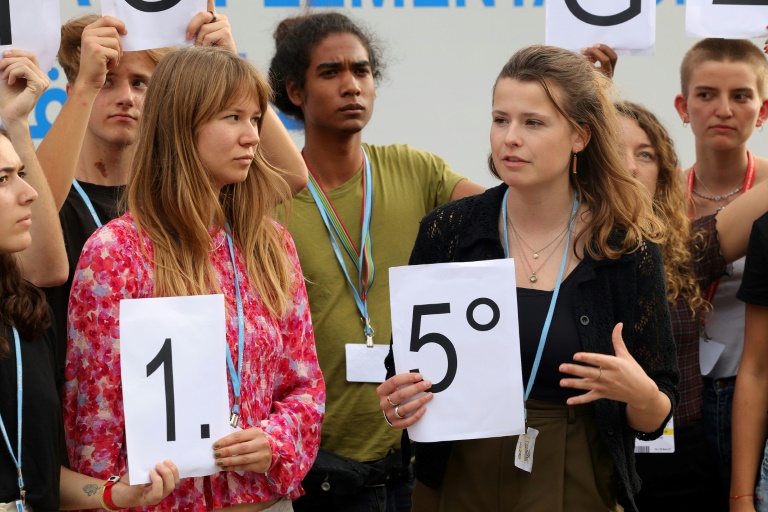
– ‘No consensus’ on 1.5 –

Negotiators in Egypt are also eagerly waiting to see what climate message may appear in the final communique of the G20 meeting on the Indonesian resort island of Bali.

At last year’s UN climate summit in Glasgow, nearly 200 countries vowed to “keep alive” the Paris Agreement’s aspirational goal of capping global warming at 1.5 degrees Celsius above pre-industrial levels.

“Confirming the 1.5C goal in Bali would make our lives easier,” a senior negotiator at COP27 said.

Nearly 1.2 degrees of warming on average so far has seen a cascade of increasingly severe climate disasters, such as the flooding that left a third of Pakistan under water this summer, claiming at least 1,700 lives.

The Glasgow Pact urged nations to ramp up their commitments to reduce greenhouse gas emissions ahead of COP27, but only around 30 nations have obliged.

This leaves the world on track to heat up by about 2.5 degrees by the end of the century — enough, scientists say, to trigger dangerous climate tipping points.

In Bali, UN chief Antonio Guterres said he would make a “strong appeal” to G20 countries, which account for 80 percent of emissions, to “have a common plan to reach net zero (emissions) globally by 2050”.

China and India have called the 1.5-degree goal into question, with Beijing pointing out that the binding target agreed in Paris was “well below” two degrees.

The more ambitious 1.5 target is non-binding, but science shows it is a far safer global threshold. 

Switzerland, on behalf of a six-nation group that includes Mexico and South Korea, proposed to introduce an item on the official COP27 agenda to reinforce the goal of “limiting global warming to 1.5C”.

“It’s mostly about securing a space for commitments on 1.5C,” said a delegate who spoke on condition of anonymity.

Developed countries backed the proposal, but China and groups of developing nations rejected it over concerns that it would imply renegotiating the Paris Agreement, several delegates said.

“Basically there is no consensus,” a Chinese delegate told AFP.

– Money talks –

For developing countries, the priority at COP27 is for wealthy nations to make good on pledges to provide $100 billion a year in aid for poorer countries to green their economies and build resilience against future impacts.

There are also deep divisions over calls to create a “loss and damage” fund through which rich polluters would compensate developing nations for the destruction caused by climate-induced natural disasters.

Wealthy nations fearful of creating an open-ended liability regime agreed only this year to include this touchy topic on the formal agenda. 

Developing nations are calling for the creation of a separate facility, but the United States and the European Union — while not precluding such an outcome — have said they favour using existing financial channels.

On Monday, the Group of 7 developed countries and nearly 60 nations most vulnerable to climate change launched a scheme aimed at providing financial support for communities battered by climate disasters, with more than $200 million of initial funding.

Kenneth Ofori-Atta, Ghana’s finance minister and chair of the V20 group of nations most vulnerable to the effects of climate change, said the scheme “is long overdue”.

Why go back to the Moon?

On September 12, 1962, then US president John F. Kennedy informed the public of his plan to put a man on the Moon by the end of the decade.

It was the height of the Cold War and America needed a big victory to demonstrate its space superiority after the Soviet Union had launched the first satellite and put the first man in orbit.

“We choose to go to the Moon,” Kennedy told 40,000 people at Rice University, “because that challenge is one that we are willing to accept, one we are unwilling to postpone, and one which we intend to win.”

Sixty years on, the United States is about to launch the first mission of its return program to the Moon, Artemis. But why repeat what has already been done?

Criticism has risen in recent years, for example from Apollo 11 astronaut Michael Collins, and the Mars Society founder Robert Zubrin, who have long advocated for America to go directly to Mars.

But NASA argues re-conquering the Moon is a must before a trip to the Red Planet. Here’s why.

– Long space missions –

NASA wants to develop a sustainable human presence on the Moon, with missions lasting several weeks –- compared to just a few days for Apollo. 

The goal: to better understand how to prepare for a multi-year round trip to Mars. 

In deep space, radiation is much more intense and poses a real threat to health. 

Low Earth Orbit, where the International Space Station (ISS) operates, is partly shielded from radiation by the Earth’s magnetic field, which isn’t the case on the Moon. 

From the first Artemis mission, many experiments are planned to study the impact of this radiation on living organisms, and to assess the effectiveness of an anti-radiation vest. 

What’s more, while the ISS can often be resupplied, trips to the Moon — a thousand times further — are much more complex. 

To avoid having to take everything with them, and to save costs, NASA wants to learn how to use the resources present on the surface. 

In particular, water in the form of ice, which has been confirmed to exist on the lunar south pole, could be transformed into rocket fuel by cracking it into its separate hydrogen and oxygen atoms.

– Testing new gear –

NASA also wants to test on the Moon the technologies that will continue to evolve for a mission to Mars. First, new spacesuits for spacewalks.

Their design was entrusted to the company Axiom Space for the first crewed mission to the Moon, in 2025 at the earliest. 

Other needs: vehicles  — both pressurized and unpressurized — so that the astronauts can move around, as well as a fixed habitat at the lunar base camp.

Finally, for sustainable access to an energy source, NASA is working on the development of portable nuclear fission systems. 

Solving any problems that arise will be much easier on the Moon, only a few days away, than on Mars, which can only be reached after at least several months of voyage.

– Establishing a waypoint –

A major pillar of the Artemis program is the construction of a space station in orbit around the Moon, called Gateway, which will serve as a relay before the trip to Mars. 

All the necessary equipment can be sent there in “multiple launches,” before finally being joined by the crew to set off on the long voyage, Sean Fuller, responsible for the Gateway program, told AFP.

“Kind of like you’re stopping at your gas station to make sure you get all the stuff, and then you’re off on your way.”

– Maintaining leadership over China –

Apart from Mars, another reason put forward by the Americans for settling on the Moon is to do so before the Chinese, who plan to send taikonauts by the year 2030.

China is the United States’ main competition today as the once proud Russian space program has withered.

“We don’t want China suddenly getting there and saying, “This is our exclusive territory,'” NASA boss Bill Nelson said in a recent interview.

– For the sake of science –

While the Apollo missions brought back to Earth nearly 400 kilograms of lunar rock, new samples will make it possible to further deepen our knowledge of this celestial object and its formation. 

“The samples that we collected during the Apollo missions changed the way we view our solar system,” astronaut Jessica Meir told AFP. “I think we can expect that from the Artemis program as well.”

She expects further scientific and technological breakthroughs too, just like during the Apollo era.

Musk's Tesla compensation trial begins in US court

A US trial over Elon Musk’s $50 billion compensation package at Tesla began Monday in a Delaware court.

Richard Tornetta, a shareholder of the electric car maker, filed a complaint in 2018 on the grounds that Musk and the company’s board of directors failed to respect their duties when they authorized the pay plan.

According to the plaintiff, Musk dictated his terms to directors who were not sufficiently independent from the tech tycoon to object.

The court date landed as Musk is facing a deluge of scrutiny over his $44 billion takeover of Twitter that has seen big layoffs, an exodus of advertisers and a proliferation of fake accounts.

The Tesla shareholder accuses Musk of “unjustified enrichment” and asked for the annulment of the pay program.

According to a legal filing, Musk earned the equivalent of $52.4 billion in stock options over four and a half years after virtually all of the company’s targets were met. 

When the plan was adopted it was valued at a total of $56 billion.

Lawyers for the tycoon and the other defendants argue that the compensation plan is linked to the company’s performance and that Tesla’s stock market value increased more than tenfold since its adoption.

Musk is expected to testify on Wednesday and canceled an in-person appearance at an event on the sidelines of the G20 in Indonesia to attend court.

The trial, which will take place without a jury, will last five days and is headed by Judge Kathaleen McCormick, the same judge who prosecuted the case opposing Musk against Twitter.

That case did not go to trial after the tycoon agreed to buy the platform for $44 billion after months of trying to wiggle out of the deal.

In addition to Musk, the lawsuit includes several current and former Tesla board members. 

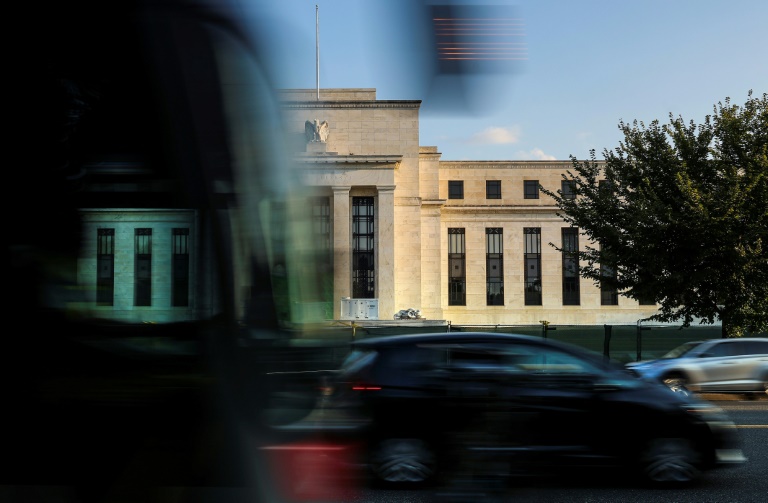
Fed vice chair says 'appropriate soon' to slow rate hikes

It likely will be “appropriate soon” for the US central bank to slow the pace of interest rate increases, Federal Reserve Vice Chair Lael Brainard said Monday.

Her comments came as red-hot consumer prices, which have squeezed American households, showed signs of easing, and after the Fed delivered a fourth straight super-sized rate hike to cool the economy.

But with inflation still hovering close to the highest level in recent decades, the Fed still has “additional work to do both on raising rates” and tamping down prices, she said in an event with Bloomberg.

The closely-watched consumer price index released last week showed US inflation logged its lowest annual increase since January, fueling hopes that soaring costs will start to pull back.

The US central bank has moved forcefully to lower demand and bring inflation closer to its two percent target, raising the benchmark lending rate six times this year despite fears that it could trigger a recession.

But there is a growing chorus of voices, including some Fed officials, advocating for smaller steps in coming months.

– ‘More deliberate’ –

Brainard acknowledged that policymakers have raised rates “very rapidly” in recent months, and said it will take time for tightening to flow through to the economy.

“By moving forward at a pace that’s more deliberate, we’ll be able to assess more data and be better able to adjust the path of rates to bring inflation down,” she said.

Russia’s war in Ukraine this year has sent food and fuel prices soaring, and the annual inflation rate hit a blistering 9.1 percent in June — its highest in four decades — but slowed to 7.7 percent in October.

“I think the inflation data was reassuring preliminarily,” Brainard said.

Excluding food and energy, officials are also beginning to see some goods prices turn down, and this is a key trend that “will need to continue over the next year,” she added.

– Regulating crypto –

Brainard also weighed in on the fallout from the stunning collapse of cryptocurrency platform FTX, which declared bankruptcy in the United States, expressing the need for regulation in the industry.

The situation at the company has reverberated across the digital currency landscape, and Brainard said it “reinforces” the fact that crypto finance “needs to be under the regulatory perimeter.”

She stressed that digital currencies are “no different than traditional finance in the risks that it exposes investors to” and flagged the need for “regulatory guardrails.”

This could mean bringing some into compliance with existing rules, or in some cases, expanding the reach of financial watchdogs, she said.

Cash-strapped FTX filed for bankruptcy on Friday and its high-profile founder and chief executive Sam Bankman-Fried resigned after Binance, the world’s biggest cryptocurrency platform, scrapped a takeover bid, sending chills across the cryptocurrency world.

FTX until recently was considered the world’s second-largest cryptocurrency platform, at one point valued at $32 billion.

Former German extremist Klein dies in France

Hans-Joachim Klein, an ex-member of Germany’s defunct extreme-left movement Revolutionary Cells, has died in France where he was buried on Monday, funeral services said.

In 1975, Klein took part in an attack orchestrated by Ilich Ramirez Sanchez, known as Carlos the Jackal, on the OPEC headquarters in Vienna.

An Iraqi bodyguard, an Austrian policeman and an OPEC member of staff were killed, and 70 people taken hostage by six armed attackers.

He went into hiding, including in France where he spent much of the 1990s until his arrest in 1998 by French anti-terror police.

Klein was sent back to Germany where he was sentenced to nine years in jail in 2001 for his role in the Vienna attack.

Klein had already admitted publicly in 1977 that he had taken part in the attack, during which he was seriously injured, and said that he had renounced political violence.

He was released from prison in 2003 and returned to his former hiding place, Sainte-Honorine-la-Guillaume in Normandy, where local press reports said he resided until his death on November 9.

Ramirez Sanchez is currently serving three life sentences in a French prison for his attacks.

Google pays $392 mn in landmark US privacy case

Google on Monday agreed to settle a landmark privacy case with 40 US states over accusations that the search engine giant misled users into believing location tracking had been switched off on their devices.

A statement said it was the largest multi-state privacy settlement by state authorities in US history and included a binding commitment for improved disclosures by Google.

“Digital platforms like Google cannot claim to provide privacy controls to users then turn around and disregard those controls to collect and sell data to advertisers against users’ express wishes — and at great profit,” said New Jersey Attorney General Matthew Platkin in the statement.

The rare joint lawsuit by 40 states grew from impatience over the failure of federal authorities to crack down on big tech amid legislative gridlock in Washington.

Republican and Democratic lawmakers disagree on what national rules on online privacy should look like, with furious lobbying by tech companies to limit their potential impact.

Since 2018, the US tech giants have faced strict rules in Europe, with Google, Amazon and others subjected to hefty fines over privacy violations.

The US case began after an article in 2018 from the Associated Press reported that Google tracked users even when they had opted out of the practice.

Other states involved included Arkansas, Florida, Illinois, Louisiana, North Carolina, Pennsylvania and Tennessee.

Specifically at fault in their case was evidence that users continued to be tracked when they disabled the location history option on their phones as tracking continued through a separate Web & App Activity setting.

In a statement, Google said that the allegations were based on product features that were no longer up to date.

“Consistent with improvements we’ve made in recent years, we have settled this investigation which was based on outdated product policies that we changed years ago,” the company said.

Under the settlement, Google will provide more detailed information on tracking activity.

Close Bitnami banner
Bitnami