World

UK cops flak over carbon-neutral pledges

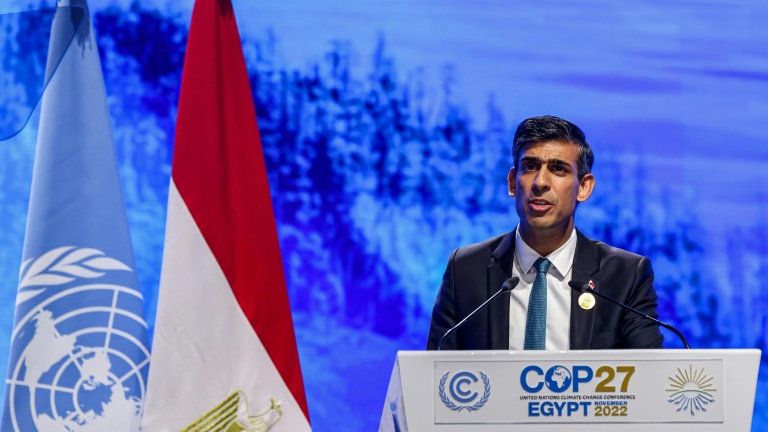
As world leaders and environmental experts meet at the COP27 climate change talks in Egypt, last year’s host Britain is under scrutiny about its commitment to tackling global warming.

London has ambitious long-standing targets to help try to stop the increase in temperatures and has enshrined in law its 2050 pledge for carbon neutrality.

It has vowed under the Paris agreement to cut carbon emissions by 68 percent by 2030, compared with 1990 levels.

Nevertheless, ministers have come under fire from environmental pressure groups and the independent Climate Change Committee (CCC), a UK body which advises the government. 

– ‘Way off track’ –

Green lobby groups gave the government, headed by new Prime Minister Rishi Sunak, a mixed reception and urged a raft of policy changes.

“The UK is currently way off track for meeting its legally binding climate targets,” said Mike Childs, director of policy at Friends of the Earth England.

“Sunak made a good start to his tenure as prime minister last month by reintroducing the fracking ban.

“But there are many important decisions Mr Sunak and his government have to make to show real climate leadership.”

Sunak, who took office just three weeks ago, swiftly restored a fracking ban that was controversially lifted by his short-lived predecessor Liz Truss.

At the same time, Britain has sought to ramp up renewable energy and curb coal.

“We are ahead of many nations on cutting our CO2,” Doug Parr, chief scientist at Greenpeace UK, told AFP.

“However, much of this reduction is attributable to the decline of coal and the increase in renewables.”

The CCC, in its most recent report, declared: “Tangible progress is lagging the policy ambition.”

It cautioned that “important policy gaps remain”, including the need to reduce demand for fossil fuels.

And the advisory body noted that CO2 emissions in Britain had in fact increased by four percent in 2021 from the previous year.

– Coal mine –

In a faltering start to his premiership, Sunak first said he would not attend COP27 due to pressing domestic commitments.

He was then bounced into a U-turn after former prime minister Boris Johnson, whom he helped to oust, said he was going.

Critics contend Sunak did little to tackle the climate emergency in his previous role as finance minister in Johnson’s administration, which preceded that of Truss.

Green campaigners want Sunak to scrap proposals for Britain’s first new deep coal mine in decades. 

The controversial project, in Cumbria, northwestern England, has long faced outcry from environmental campaigners.

And it is in sharp contrast to Britain’s commitment to scrap dirty coal-powered electricity generation by October 2024.

“Friends of the Earth and others are urging the government to make coal history by refusing planning permission for the mine,” said Childs.

He added they were also strongly opposed to more oil and gas drilling in the North Sea, which Johnson and Truss had authorised in the teeth of green opposition, particularly from direct action protest groups such as Just Stop Oil.

Campaigners also want Sunak to allow more onshore wind power and increase energy insulation support for homes across Britain.

And they have urged the Treasury to adapt tax policies to incentivise companies and households to emit less damaging carbon dioxide, particularly by introducing an expanded windfall tax on the profits of energy producers.

Yet campaigners remain unconvinced of the new PM’s approach to climate change.

Green spending was slashed on most energy efficiency projects before the Ukraine conflict and the explosion of domestic fuel prices, they argue.

The CCC wants the government to align its net-zero goal with curbing the cost of living, particularly via increased efficiency measures such as better home insulation, to soften the blow of rising bills.

“So far, Rishi Sunak’s attitude to climate action has been lacklustre,” Parr concluded.

“As chancellor, Sunak failed to even mention climate change in major economic statements or conference speeches.

“And as prime minister, he only appeared at COP27 after being pushed into attending.”
Nomadic Latino migrant labor aids Florida hurricane recovery

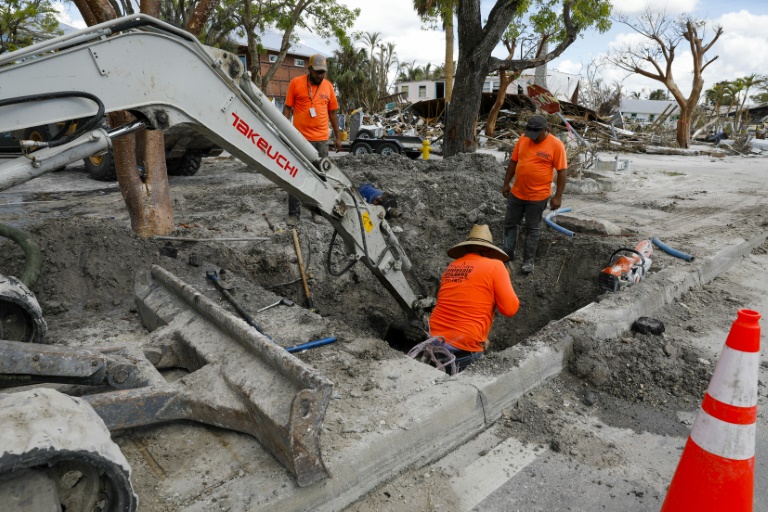
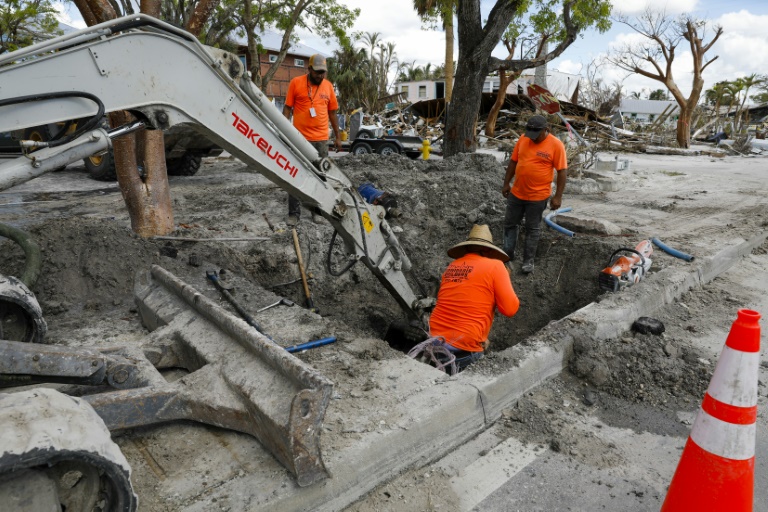
Hour by hour, day by day, hurricane-devastated southwest Florida is starting to get back on its feet — and the workers doing the hard labor are largely undocumented migrants.

They have names like Jael, Juan and Francisco Antonio, and they flooded into Florida from other Gulf Coast states, and even from Mexico, to take on work.

Many are perpetual nomadic workers, traveling from one natural disaster to another, toiling by day and sleeping in cars and trucks at night. 

Since Hurricane Ian smashed into southwest Florida on September 28, killing some 125 people and leaving tens of billions of dollars in damage, the workers have been busily tearing down damaged homes, clearing wreckage, repairing roofing and beginning reconstruction.

Ian was a dangerous Category 4 monster of a storm, and the reconstruction work has been intense and vital to recovery in a state led by Governor Ron DeSantis, who has sought to make a national name for himself as a crusader against the very immigrants now doing the rebuilding.

Little more than a week before the storm hit, the Republican governor chartered two planes to carry migrants from Texas to Martha’s Vineyard, a quaint vacation destination in the Democratic stronghold of Massachusetts.

The flights captured headlines and underscored the discontent of DeSantis and many other Republican leaders at how President Joe Biden, a Democrat, is handling a migrant crisis at the Mexican border. 

Francisco Antonio Rivera, a 46-year-old Honduran, doesn’t like DeSantis’s policies. But that didn’t stop him from traveling to Fort Myers, epicenter of the hurricane-damaged area, to offer his services as a mason. 

“Latinos are the heart of the United States. Nonetheless, they arrest us on coming here and treat us any way they like,” he said, resignation in his voice.

Rivera is undocumented and has lived for 17 years in New Orleans, Louisiana. He’s experienced at disaster recovery. He worked in Panama City, in the Florida Panhandle, after Hurricane Michael hit in 2018, and labored in Louisiana in 2021 after Hurricane Ida struck.  

– Critical workforce –

On a recent Wednesday, Rivera is not having any luck. No one has hired him for the day. So he waits, a cap on his head to protect him from the sun, seated on the open trunk to his car.

Around him, a dozen other Latinos pass the time with him, waiting in the parking lot of a hardware store. Homeowners and contractors come most days to places like this to hire day labor.

There’s no lack of work in Fort Myers Beach. More than a month after the storm, rubble lines streets of the barrier island where the hurricane ripped off roofs, knocked down walls and flooded countless homes with storm surge.

Thousands of migrants toil in Southwest Florida these days, said Saket Soni, director of Resilience Force, a nonprofit that helps US cities recover from disaster. 

This nomadic workforce, comprising mostly Latinos, is what “makes recovery possible” after natural disasters, Soni said. “They rebuild homes, schools and hospitals. They sort of help all the broken infrastructure come back together.”

They work under the sun and in the rain. They climb on roofs, handle chemical products, and then at night sleep in their cars because they have nowhere else to go, Soni said.

“When we go to work, we do so with enthusiasm and hopes of getting ahead,” says Jael Cruz, 44, a Honduran who traveled from Texas to Fort Myers. 

“When you come from a country like ours, you come in search of the American dream, and the American dream is to work.” 

– Vulnerable laborers –

But the desire to work without papers leaves the laborers exposed to potential abuse by employers, and sometimes they are stiffed of wages, given less than promised, and subjected to threats that they’ll be turned over to immigration authorities if they complain, Soni said.

Juan Martínez, a Mexican who asked to use a pseudonym for fear of immigration authorities, got a friendly visit from Resilience Force workers a few days ago. 

Since then, he carries a card that reminds him to “ask for an advance of the work to be done” and take “before and after photos of the work.” 

The 50-year-old Mexican traveled from his homeland to Fort Myers when he heard of news of Ian’s devastation. He’d made the same trip to do labor after hurricanes Michael and Ida, and knew that Florida would need help from masons like him.

He’d found work at several jobsites, and said so far that homeowners had treated him fairly.

He only hopes that his work — and that of other laborers — may change the outlook of authorities and residents of the region. 

“We need them, and they need us,” Martinez said. “I would like them to realize that we are here to help.” 

Nomadic Latino migrant labor aids Florida hurricane recovery

Hour by hour, day by day, hurricane-devastated southwest Florida is starting to get back on its feet — and the workers doing the hard labor are largely undocumented migrants.

They have names like Jael, Juan and Francisco Antonio, and they flooded into Florida from other Gulf Coast states, and even from Mexico, to take on work.

Many are perpetual nomadic workers, traveling from one natural disaster to another, toiling by day and sleeping in cars and trucks at night. 

Since Hurricane Ian smashed into southwest Florida on September 28, killing some 125 people and leaving tens of billions of dollars in damage, the workers have been busily tearing down damaged homes, clearing wreckage, repairing roofing and beginning reconstruction.

Ian was a dangerous Category 4 monster of a storm, and the reconstruction work has been intense and vital to recovery in a state led by Governor Ron DeSantis, who has sought to make a national name for himself as a crusader against the very immigrants now doing the rebuilding.

Little more than a week before the storm hit, the Republican governor chartered two planes to carry migrants from Texas to Martha’s Vineyard, a quaint vacation destination in the Democratic stronghold of Massachusetts.

The flights captured headlines and underscored the discontent of DeSantis and many other Republican leaders at how President Joe Biden, a Democrat, is handling a migrant crisis at the Mexican border. 

Francisco Antonio Rivera, a 46-year-old Honduran, doesn’t like DeSantis’s policies. But that didn’t stop him from traveling to Fort Myers, epicenter of the hurricane-damaged area, to offer his services as a mason. 

“Latinos are the heart of the United States. Nonetheless, they arrest us on coming here and treat us any way they like,” he said, resignation in his voice.

Rivera is undocumented and has lived for 17 years in New Orleans, Louisiana. He’s experienced at disaster recovery. He worked in Panama City, in the Florida Panhandle, after Hurricane Michael hit in 2018, and labored in Louisiana in 2021 after Hurricane Ida struck.  

– Critical workforce –

On a recent Wednesday, Rivera is not having any luck. No one has hired him for the day. So he waits, a cap on his head to protect him from the sun, seated on the open trunk to his car.

Around him, a dozen other Latinos pass the time with him, waiting in the parking lot of a hardware store. Homeowners and contractors come most days to places like this to hire day labor.

There’s no lack of work in Fort Myers Beach. More than a month after the storm, rubble lines streets of the barrier island where the hurricane ripped off roofs, knocked down walls and flooded countless homes with storm surge.

Thousands of migrants toil in Southwest Florida these days, said Saket Soni, director of Resilience Force, a nonprofit that helps US cities recover from disaster. 

This nomadic workforce, comprising mostly Latinos, is what “makes recovery possible” after natural disasters, Soni said. “They rebuild homes, schools and hospitals. They sort of help all the broken infrastructure come back together.”

They work under the sun and in the rain. They climb on roofs, handle chemical products, and then at night sleep in their cars because they have nowhere else to go, Soni said.

“When we go to work, we do so with enthusiasm and hopes of getting ahead,” says Jael Cruz, 44, a Honduran who traveled from Texas to Fort Myers. 

“When you come from a country like ours, you come in search of the American dream, and the American dream is to work.” 

– Vulnerable laborers –

But the desire to work without papers leaves the laborers exposed to potential abuse by employers, and sometimes they are stiffed of wages, given less than promised, and subjected to threats that they’ll be turned over to immigration authorities if they complain, Soni said.

Juan Martínez, a Mexican who asked to use a pseudonym for fear of immigration authorities, got a friendly visit from Resilience Force workers a few days ago. 

Since then, he carries a card that reminds him to “ask for an advance of the work to be done” and take “before and after photos of the work.” 

The 50-year-old Mexican traveled from his homeland to Fort Myers when he heard of news of Ian’s devastation. He’d made the same trip to do labor after hurricanes Michael and Ida, and knew that Florida would need help from masons like him.

He’d found work at several jobsites, and said so far that homeowners had treated him fairly.

He only hopes that his work — and that of other laborers — may change the outlook of authorities and residents of the region. 

“We need them, and they need us,” Martinez said. “I would like them to realize that we are here to help.” 

Biden to press Xi on N. Korea in G20 talks

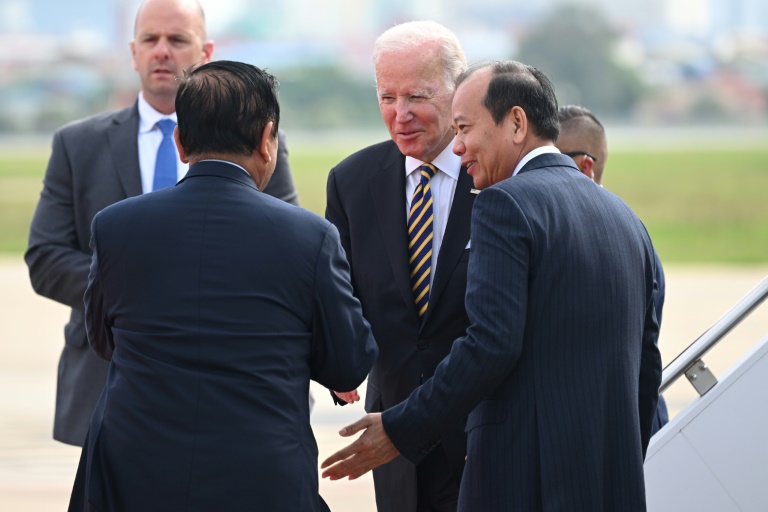
US President Joe Biden landed in Asia on Saturday vowing to urge Chinese leader Xi Jinping to rein in North Korea when they hold their first face-to-face meeting at next week’s G20 summit.

Biden touched down in Phnom Penh for meetings with Southeast Asian leaders ahead of his encounter with his Chinese counterpart on Monday in Bali.

The meeting between the two superpowers comes after a record-breaking spate of missile tests by North Korea sent fears soaring that the reclusive state would soon conduct its seventh nuclear test.

In Monday’s meeting on the sidelines of the G20 summit, Biden will tell Xi that China — Pyongyang’s biggest ally — has “an interest in playing a constructive role in restraining North Korea’s worst tendencies,” US National Security Advisor Jake Sullivan told reporters.

Biden will also tell Xi that if North Korea’s missile and nuclear build-up “keeps going down this road, it will simply mean further enhanced American military and security presence in the region.”

Sullivan said Biden would not make demands on China but rather give Xi “his perspective”.

This is that “North Korea represents a threat not just to the United States, not just to (South Korea) and Japan but to peace and stability across the entire region.”

Whether China wants to increase pressure on North Korea is “of course up to them”, Sullivan said.

However, with North Korea rapidly ramping up its missile capacities, “the operational situation is more acute in the current moment,” Sullivan said.

Biden and Xi, the leaders of the world’s two biggest economies, have spoken by phone multiple times since Biden became president in January 2021. 

But the Covid-19 pandemic and Xi’s subsequent aversion to foreign travel have prevented them from meeting in person.

– Regional rivalry –

The pair are not short of topics to discuss, with Washington and Beijing at loggerheads over issues ranging from trade to human rights in China’s Xinjiang region and the status of the self-ruled island of Taiwan.

UN chief Antonio Guterres has urged the two sides to work together, warning Friday of “a growing risk that the global economy will be divided into two parts, led by the two biggest economies –- the United States and China”.

Before the G20, Biden will push the US’s commitment to Southeast Asia in meetings with leaders from the Association of Southeast Asian Nations (ASEAN), seeking to counter Beijing’s influence in the region.

China has been flexing its muscles — through trade, diplomacy and military clout — in recent years in a region it sees as its strategic backyard.

Biden flew into Phnom Penh with an agenda emphasising his administration’s policy of “elevating” the US presence in the region as a guarantor of stability, Sullivan said.

Biden will argue for “the need for freedom of navigation for lawful, unimpeded commerce, and for ensuring that the United States is playing a constructive role in maintaining peace and stability in the region.”

“He wants to use the next 36 hours to build on that foundation to take American engagement forward,” Sullivan said, noting this will include raising the US-ASEAN ties at the summit to a “comprehensive strategic partnership.”

– Xi emerges, Putin absent –

Biden and Xi both go into the G20 buoyed by recent domestic political success: Biden’s party having earned surprisingly strong midterm results and Xi having secured a landmark third term as China’s leader.

At last month’s Communist Party Congress, where he was anointed as chief again, Xi warned of a challenging geopolitical climate without mentioning the United States by name, as he wove a narrative of China’s “inevitable” triumph over adversity.

The G20 summit will be the latest step in a diplomatic re-emergence for Xi after the pandemic — it comes less than a fortnight after he hosted German Chancellor Olaf Scholz in Beijing.

As well as Biden, Xi will also meet French President Emmanuel Macron, before heading to Bangkok later in the week for the APEC summit.

Notably absent from the summit will be Russian President Vladimir Putin, who has been shunned by the West over his invasion of Ukraine, and who is instead sending Foreign Minister Sergei Lavrov.

Lavrov will press Moscow’s view that the United States is “destabilising” the Asia-Pacific region with a confrontational approach, the Russian TASS news agency reported.

The Kremlin has close ties to Vietnam and Myanmar — whose military is a major buyer of Russian arms — while other regional governments have steered clear of joining Western efforts to isolate Moscow over the Ukraine invasion.

Ukrainian President Volodymyr Zelensky is expected to attend the G20 virtually, after his request to address the ASEAN gathering was turned down.

Will robots replace humans at Amazon?

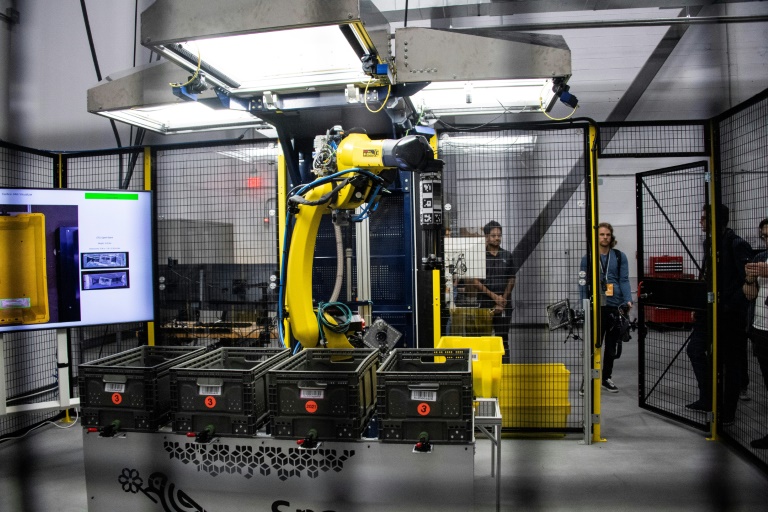
At Amazon’s robotics laboratory on the outskirts of Boston, Massachusetts, the company’s newest automaton “Sparrow” picks out items to be shipped to customers, displaying human hand-like dexterity.

It is the e-commerce giant’s most advanced robot yet and could soon do the job of the hundreds of thousands of Amazon employees who sort and send five billion packages annually.

The development of “Sparrow,” and other robots like “Robin” and “Cardinal,” are fueling fears that Amazon’s warehouses will one day be run by machines, leading to huge layoffs.

Amazon’s robotics chief Tye Brady plays down such concerns, which have been expressed by labor unions.

“It’s not machines replacing people,” he tells journalists during a tour of the laboratory, which opened in Westborough in October last year.

“It’s actually machines and people working together in order to collaborate to do a job.”

Equipped with cameras and cylindrical tubes, Sparrow can successfully detect and select an individual item from millions of products of different shapes and sizes.

It gently sucks up items that arrive on a conveyor belt and distributes them into the appropriate basket in front of it using its robotic arm.

Robin and Cardinal can only redirect entire packages, making Sparrow Amazon’s first robot to be able to handle individual products.

“Given the variety of materials we have in our warehouses, Sparrow is a significant accomplishment,” says Brady.

Working with the robotic trio is a small army of machines, including “Proteus,” which can carry hundreds of kilograms of items around warehouses.

The creations will free employees from repetitive tasks to focus on “more rewarding and interesting” activities while “improving safety,” Brady insists.

Amazon’s focus is ensuring that as little time as possible passes between the moment a customer orders an item and the moment it arrives at his or her door.

– Drones –

That goal has led some workers to accuse the company of treating them like “slaves” and of depriving them of food and toilet breaks.

In statements, Amazon has insisted it provides “a safe and positive workplace” for employees and, apart from one warehouse in New York, has resisted unionization.

Amazon’s desire to deliver items quicker is driving its investment in automation.

By the end of this year it will begin delivering packages weighing up to two kgs in less than an hour from warehouses in Lockeford, California and College Station, Texas.

The company aims to deliver 500 million packages by drone by the end of the decade, including in major US cities such as Boston, Atlanta and Seattle.

Around 75 percent of Amazon’s five billion annual orders is handled at some point by a robot, according to Joe Quinlivan, vice president of Amazon Robotics.

For decades the conventional wisdom was that increased automation destroys workforces.

Studies now suggest that moving towards robots in e-commerce will not lead to massive job losses in the short to medium term due to the huge growth in demand.

However, a 2019 study by the University of California’s Labor Center at Berkeley warned that while some technologies can alleviate arduous warehouse tasks, they could also contribute to increasing the “workload and pace of work.”

The researchers added that technological advancements might also contribute towards “new methods of monitoring workers,” and cited the Amazon’s MissionRacer video game “that pits workers against one another to assemble customer orders fastest.”

Amazon says its innovation has generated more than a million jobs and 700 new job categories, mainly in highly specialized engineering, but also as technicians and operators.

“I really think what we’re going to do in the next five years is going to dwarf anything we’ve done in the last ten years,” says Quinlivan.

Cryptocurrency platform FTX files for bankruptcy, boss resigns amid tumult

Crisis-struck cryptocurrency platform FTX has gone bankrupt in the United States and its chief executive Sam Bankman-Fried has resigned, it said Friday, the latest blow in a saga that has reverberated across the digital currency landscape.

The filing comes after the world’s biggest cryptocurrency platform Binance agreed to buy its rival earlier this week but backed out, leading market players to consider possible regulator responses.

FTX Group announced in a statement Friday that it filed for Chapter 11 bankruptcy proceedings, adding it has begun an “orderly process to review and monetize assets for the benefit of all global stakeholders.”

Chapter 11 is a US mechanism allowing a company to restructure its debts under court supervision while continuing to operate.

This week’s financial chaos at FTX has seen major cryptocurrencies, including bitcoin, plunge.

Bankman-Fried issued a “sincere” apology Thursday, adding FTX would do “everything we can to raise liquidity.”

The cash-strapped company added in its statement that it has appointed John J. Ray as chief executive with immediate effect.

“The immediate relief of Chapter 11 is appropriate to provide the FTX Group the opportunity to assess its situation,” said Ray in the statement.

“Stakeholders should understand that events have been fast-moving and the new team is engaged only recently.”

“Many employees of the FTX Group in various countries are expected to continue with the FTX Group and assist Mr. Ray and independent professionals in its operations during the Chapter 11 proceedings,” the statement said.

Binance agreed to buy FTX.com on Tuesday — before scrapping the takeover just a day later.

Binance chief executive Changpeng Zhao defended himself against accusations of any purposeful plot after the deal fell apart.

“FTX going down is not good for anyone in the industry. Do not view it as a win for us. User confidence is severely shaken,” he tweeted.

The platform’s collapse came as a shock even for an already turbulent industry.

Bankman-Fried, who worked as a broker on Wall Street before moving to Hong Kong in 2017, had cultivated friends in Washington and basked in glowing tributes when he stepped in to rescue other ailing crypto companies earlier in the year.

The turmoil at FTX, at one point valued at $32 billion, is a spectacular reversal of fortune for the founder and one-time cryptocurrency wunderkind.

“This is another black eye for the industry,” David Holt, a cryptocurrency industry expert at CFRA, said of FTX’s troubles.

The fall from grace even stretched to the world of sports where the Miami Heat announced its FTX Arena is set for a rename and the Mercedes Formula One team said it had suspended a sponsorship deal with FTX and removed the company’s logos from its cars ahead of this weekend’s Sao Paulo Grand Prix.

The Heat tweeted Friday that it and Miami-Dade County were “immediately taking action to terminate our business relationships with FTX,” including finding “a new naming rights partner for the arena.”

– Growing doubts –

Doubts had already been growing about the financial stability of FTX, despite Bankman-Fried’s good standing in Washington as a public face of crypto investing.

Attention had focused on the relationship between FTX and Alameda Research, a trading house also owned by Bankman-Fried that was taken down from the internet on Wednesday, reports said.

Specialist media site CoinDesk reported that 40 percent of Alameda’s balance sheet comprised FTX’s FTT tokens, raising concerns of a potential conflict of interest.

“We don’t know exactly what happened, but from all the reporting it looks like there was a lot of misconduct,” former US Securities and Exchange Commission (SEC) lawyer Howard Fischer said on the CNBC network Friday, predicting that some clients would sue in order to recover their investments.

The company is currently under investigation by the SEC, according to the New York Times, citing sources familiar with the matter.

The regulator, which does not usually comment on ongoing investigations, did not respond to AFP’s request for comment Friday, nor did the Department of Justice. 

Media reports suggest FTX had needed to find about $8 billion to plug a massive hole in its finances and escape bankruptcy.

Binance meanwhile axed its FTX takeover deal late on Wednesday and cited recent press reports about mismanagement of client funds and potential investigations.

Bankman-Fried, the son of Stanford Law School professors and a graduate of the elite Massachusetts Institute of Technology, has long been a vocal advocate for smoother access to the crypto market for the general public, particularly in the United States.

Kevin O’Leary, president of a venture capital firm and television personality who had invested in FTX, on Friday called for urgent regulations to safeguard the industry. 

“I lost money in the account, but I’m still going to invest on crypto,” he told CNBC. 

Cryptocurrency platform FTX files for bankruptcy, boss resigns amid tumult

Crisis-struck cryptocurrency platform FTX has gone bankrupt in the United States and its chief executive Sam Bankman-Fried has resigned, it said Friday, the latest blow in a saga that has reverberated across the digital currency landscape.

The filing comes after the world’s biggest cryptocurrency platform Binance agreed to buy its rival earlier this week but backed out, leading market players to consider possible regulator responses.

FTX Group announced in a statement Friday that it filed for Chapter 11 bankruptcy proceedings, adding it has begun an “orderly process to review and monetize assets for the benefit of all global stakeholders.”

Chapter 11 is a US mechanism allowing a company to restructure its debts under court supervision while continuing to operate.

This week’s financial chaos at FTX has seen major cryptocurrencies, including bitcoin, plunge.

Bankman-Fried issued a “sincere” apology Thursday, adding FTX would do “everything we can to raise liquidity.”

The cash-strapped company added in its statement that it has appointed John J. Ray as chief executive with immediate effect.

“The immediate relief of Chapter 11 is appropriate to provide the FTX Group the opportunity to assess its situation,” said Ray in the statement.

“Stakeholders should understand that events have been fast-moving and the new team is engaged only recently.”

“Many employees of the FTX Group in various countries are expected to continue with the FTX Group and assist Mr. Ray and independent professionals in its operations during the Chapter 11 proceedings,” the statement said.

Binance agreed to buy FTX.com on Tuesday — before scrapping the takeover just a day later.

Binance chief executive Changpeng Zhao defended himself against accusations of any purposeful plot after the deal fell apart.

“FTX going down is not good for anyone in the industry. Do not view it as a win for us. User confidence is severely shaken,” he tweeted.

The platform’s collapse came as a shock even for an already turbulent industry.

Bankman-Fried, who worked as a broker on Wall Street before moving to Hong Kong in 2017, had cultivated friends in Washington and basked in glowing tributes when he stepped in to rescue other ailing crypto companies earlier in the year.

The turmoil at FTX, at one point valued at $32 billion, is a spectacular reversal of fortune for the founder and one-time cryptocurrency wunderkind.

“This is another black eye for the industry,” David Holt, a cryptocurrency industry expert at CFRA, said of FTX’s troubles.

The fall from grace even stretched to the world of sports where the Miami Heat announced its FTX Arena is set for a rename and the Mercedes Formula One team said it had suspended a sponsorship deal with FTX and removed the company’s logos from its cars ahead of this weekend’s Sao Paulo Grand Prix.

The Heat tweeted Friday that it and Miami-Dade County were “immediately taking action to terminate our business relationships with FTX,” including finding “a new naming rights partner for the arena.”

– Growing doubts –

Doubts had already been growing about the financial stability of FTX, despite Bankman-Fried’s good standing in Washington as a public face of crypto investing.

Attention had focused on the relationship between FTX and Alameda Research, a trading house also owned by Bankman-Fried that was taken down from the internet on Wednesday, reports said.

Specialist media site CoinDesk reported that 40 percent of Alameda’s balance sheet comprised FTX’s FTT tokens, raising concerns of a potential conflict of interest.

“We don’t know exactly what happened, but from all the reporting it looks like there was a lot of misconduct,” former US Securities and Exchange Commission (SEC) lawyer Howard Fischer said on the CNBC network Friday, predicting that some clients would sue in order to recover their investments.

The company is currently under investigation by the SEC, according to the New York Times, citing sources familiar with the matter.

The regulator, which does not usually comment on ongoing investigations, did not respond to AFP’s request for comment Friday, nor did the Department of Justice. 

Media reports suggest FTX had needed to find about $8 billion to plug a massive hole in its finances and escape bankruptcy.

Binance meanwhile axed its FTX takeover deal late on Wednesday and cited recent press reports about mismanagement of client funds and potential investigations.

Bankman-Fried, the son of Stanford Law School professors and a graduate of the elite Massachusetts Institute of Technology, has long been a vocal advocate for smoother access to the crypto market for the general public, particularly in the United States.

Kevin O’Leary, president of a venture capital firm and television personality who had invested in FTX, on Friday called for urgent regulations to safeguard the industry. 

“I lost money in the account, but I’m still going to invest on crypto,” he told CNBC. 

France accepts migrant ship as row with Italy blazes

A rescue ship carrying 230 migrants docked at the French port of Toulon on Friday amid a blazing row between France and Italy over which country is responsible for them.

The Ocean Viking, operated by a French NGO, had picked up the migrants at sea near the Libyan coast before spending weeks seeking a port to accept them.

France had never before allowed a rescue vessel carrying migrants from the Mediterranean to land on its coast, but did so this time because Italy had refused access.

The rescue came a day after French Interior Minister Gerald Darmanin said the migrants were Italy’s responsibility under EU rules, and that the French move was an “exceptional” measure.

He called Italy’s refusal to accept the migrants “incomprehensible” and that there would be “severe consequences” for relations with Italy, which he said had “lacked humanity”.

The migrants, more than 50 of whom are children, were taken to an international waiting zone pending the processing of requests for asylum.

They would not be allowed to leave the zone until the process was completed in about three weeks, the government said. Asylum interviews were to start Saturday.

The shelter, a short drive from the port, was heavily guarded. An AFP team was one of the few media outlets granted access.

Ibrahim, a 17-year-old from Gambia, said landing in Toulon was an unexpected “dream”.

Like many others, he thought he would arrive in Italy, but finds himself in France, where he would “love to stay and start his life”.

He is missing a tooth, which he said was from the abuse he suffered in Libya.

“All I wanted was to leave Libya (and leave) hell,” he said.

Ibrahim had been handed a coat, but many of the other migrants were still barefoot when AFP arrived. Some sat on white plastic chairs in an outdoor hall.

Among them was an 18-year-old from Pakistan, who clutched a binbag containing his only belongings. Imran — a pseudonym — spent 21 days at sea, he said, and felt exhausted.

He wondered how long he would be able to stay in France.

“They haven’t told us anything,” he said.

“As long as we are no longer in Libya or at sea, I am fine with anything. I needed to be on dry land.”

His most pressing concern, he said, was to let his family know he is still alive.

– ‘End of an ordeal’ –

In retaliation for Italy’s stance, France has suspended a plan to take 3,500 refugees currently in Italy, part of a European burden-sharing accord, and urged Germany and other EU nations to do the same.

On Friday, Italian Prime Minister Giorgia Meloni condemned what she called an “aggressive reaction” by the French government, telling reporters that it was “incomprehensible and unjustified”.

The Ocean Viking ship had initially sought access to Italy’s coast, which is closest to where the migrants were picked up, saying health and sanitary conditions onboard were rapidly worsening.

Italy refused, saying other nations needed to shoulder more of the burden for taking in the thousands of migrants trying to reach Europe from North Africa every year.

Following the disembarkation in Toulon, French President Emmanuel Macron said the debate over migration in France could not be resolved “if we do not have a real European organisation that works”.

He also stressed the importance of understanding “how to resolve the problems of inequality with the African continent and the other shores of the Mediterranean.”

“Everybody is very, very tired, but also relieved to set foot on land, it’s the end of an ordeal,” Laurence Bondard, a member of SOS Mediterranee, the NGO in charge of the Operation Viking, told AFP.

But the organisation also said that migrant ships should not have to make the long journey to France in future rescues.

“It is wrong that people disembark at such a great distance from the rescue locations,” SOS Mediterranee president Francois Thomas told reporters.

Operations director Xavier Lauth said the ship would resume rescue missions “because we don’t accept that this sea becomes a cemetery”.

Some 600 police were deployed for the ship’s arrival, with the Red Cross in charge of humanitarian aid.

Meloni, head of Italy’s most right-wing government in decades, has appeared ready to push the dispute to the top of the European agenda.

Italian Interior Minister Matteo Piantedosi said Thursday the request had been for “234 migrants, when Italy has taken in 90,000 just this year”.

Nine European nations have committed to hosting two-thirds of the migrants, Darmanin said Thursday, with the remaining third staying in France.

So far this year, 164 asylum seekers have been moved from Italy to other nations in the bloc that volunteered to accept them.

That is a fraction of the more than 88,000 that have reached its shores so far this year, of which 14 percent arrived after being rescued by NGO vessels, according to the Italian authorities.

burs-jh/sjw/ah/lcm/dhc

Twitter scrambles to curb spread of fake accounts

Twitter moved on Friday to curb fake accounts that have proliferated since Elon Musk’s takeover, suspending sign-ups for a new paid checkmark system and reinstating a gray “official” badge on some accounts.

The U-turn was the latest of a string of chaotic developments at the social network, which has lurched back and forth on the question of account verification since Musk’s $44 billion buyout late last month.

The @TwitterSupport account tweeted early Friday that a gray checkmark indicating an “official” account was coming back, only days after it was introduced — then almost immediately scrapped.

“To combat impersonation, we’ve added an ‘Official’ label to some accounts,” the profile announced.

The rollout of the label appeared inconsistent: it appeared briefly then disappeared from the network’s own account, @Twitter.

By Friday morning, the firm had also disabled sign-ups for Twitter Blue, the feature touted by free-speech proponent Musk as bringing “power to the people” by offering ordinary users a verified blue tick — until then reserved for prominent accounts — for $8 per month.

An internal memo for Twitter staff, obtained by US media including The Washington Post, confirmed the feature had been temporarily disabled to “help address impersonation issues.”

In introducing the paid blue-check verification system, Musk had warned that Twitter would suspend fake accounts not clearly marked as parody. 

But accounts impersonating public figures and businesses had continued to spread — with NBA star LeBron James and former British prime minister Tony Blair among those targeted. 

US drugmaker Eli Lilly was forced to issue an apology Thursday after a fake account — stamped with a purchased blue tick — tweeted that insulin was to be made available for free.

The fake account was removed, and the company put out a statement of apology.

The turmoil at Twitter has raised concerns about the potential for serious damage, should nefarious actors successfully pose as official representatives of powerful companies or government entities. 

And the disarray — which saw two more top security executives quit on Thursday — drew a rare warning from the Federal Trade Commission which said it was tracking the developments with “deep concern.”

The same day, Musk informed Twitter employees the site was burning through cash dangerously fast, raising the specter of bankruptcy if the situation was not turned around.

The warning came a week after he fired half of Twitter’s 7,500 employees.

Flowers, mines welcome Ukraine forces on road to Kherson

Smiles, flowers from local people and mines planted by the Russians greeted Ukrainian soldiers advancing on Kherson, a major city in the south liberated from Moscow’s forces on Friday.

“We see attractive, smiling faces, flowers, embroidered towels which we display on our vehicles,” said Andriy Zholob, the commander of a medical unit currently about 50 kilometres (30 miles) from Kherson. 

“We see children running to meet us and greeting us,” he told AFP in Warsaw by phone. Zholob is from the western city of Lviv and worked as an orthopaedist before the Russian invasion in February. 

Ukraine’s army announced it had entered Kherson after Russian forces withdrew — nine months after Moscow’s forces captured the regional capital. 

The soldier acknowledged that in the region of southern Ukraine, “there are probably a certain number of locals” who regret the Russian withdrawal — adding that he was relieved not to have met any.

Another Ukrainian soldier who had just entered Kherson city showed AFP videos of the approach to the town.

In one, a young woman shouts “Glory to Ukraine!” as she blows kisses towards troops.

In another clip, dozens of civilians near a bus stop adorned with the blue and yellow national colours greeted the troops’ vehicle with applause, flowers and cries of “our rescuers!”

“It’s like that everywhere,” said the soldier, who cannot be identified for security reasons.  

– ‘Towards victory’ –

“There is a lot of affection… we are advancing towards victory, towards the Dniepr river, towards the town of Kherson,” said Zholob, whose brigade began advancing on Kherson last week after having been camped out for several months.

They advanced slowly at first before surging forward in less than 48 hours. 

After four months on the southern front, his army’s rapid success caught him by surprise. 

“Our enemy is skilful and dangerous. The advance we see now and the escape of the occupants to the Dniepr was really a surprise for all of us,” said Zholob. 

In recent months, “it was a war of positions, with assaults, artillery duels. It was really hard, bloody, with a lot of losses and very exhausting”. 

He said he saw “a lot of armaments of the occupier burned, a lot of local agricultural equipment destroyed and marked with Z signs”, the symbol of the Russian invasion, as well as homes destroyed by the fighting. 

Zholob said that while he feels joyful, he has kept up his guard and remains “suspicious”, as the Ukrainian authorities have repeatedly warned fearing booby-traps left behind by Russian forces. 

The danger of mines planted by the Russians before their departure or unexploded munitions that can explode at any moment is now omnipresent, he said.  

Close Bitnami banner
Bitnami