World

Cuisine in the dark as power cuts grip Kyiv

The place goes dark at 6:00 pm as scheduled but customers at this upscale Kyiv restaurant are unfazed, happy to continue their meal and conversations. 

Guided by her phone’s flashlight, the waitress brings out dishes and distributes candles. She smiles as she waits for the generator to start.

The atmosphere in the central Supra restaurant, bathed in the gentle glow of candlelight, is cosy, not sinister.

As winter approaches darkness descends on Kyiv at 4:00 pm. Places like Supra offer their customers access to some light and heat — as well as wifi.

Alina Germash, a 36-year-old IT expert, has compiled a list of cafes where she can sit down with her laptop.

“You need to migrate all over the city and find a place where you can start your work,” she said.

For much of the past month, Russian strikes have severely damaged Ukraine’s energy infrastructure.

To ease the strain on the grid, the national energy operator has imposed controlled power cuts across the war-torn country.

In Kyiv, power cuts have been imposed daily for the past two weeks.

At Supra, the menu has been re-organised to take the new constraints into account. 

Patrons are now offered cold entrees that do not require the use of electricity, dishes that can be reheated with the help of the generator, and drinks. 

Filter coffee, kept warm on the stove, is especially popular with clients while it is three degrees Celsius (37 degrees Farenheit) outside.

Manager Valeria Mamysheva said little luxuries like filter coffee matter and can brighten up the day.

“We are constantly trying to find a way out of any situation and to make people happy because times are very tough,” Mamysheva told AFP.

– Open, power cuts or not –

Kyiv is under a 11:00 pm curfew but most restaurants close at 9:00 pm to give employees the time to clean up and catch public transport home. 

Many supermarkets have had to adapt to maintain the proper storage temperatures for foods during power disruptions.

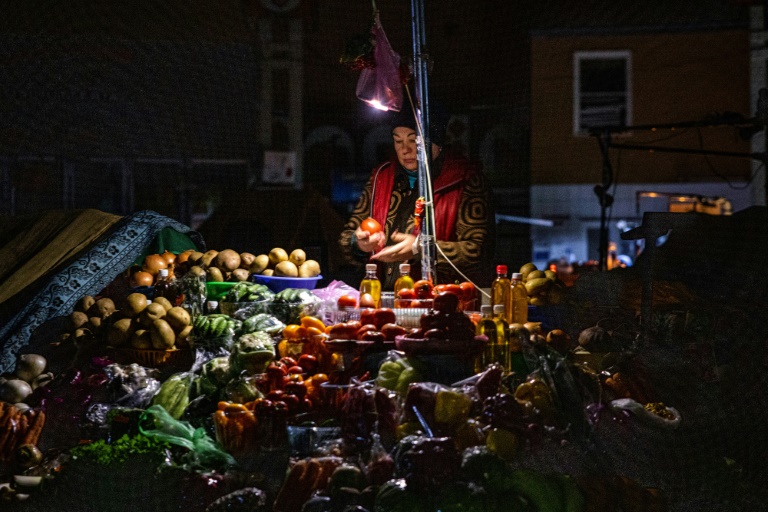
Small street stalls, equipped with candles or headlamps, have popped up to help residents with emergency shopping.  

But some restaurants find generators too noisy or cannot afford the high fuel prices.

Power cuts are especially bad for business at Kyiv’s 1708 pizzeria, which does not have a generator.

“A pizza oven runs on electricity, not on firewood, so we cannot work,” lamented the owner, Ilona, speaking under the light of an LED lamp as staff waited for power to be restored. 

Kyiv mayor Vitali Klitschko has warned of a “worst-case” scenario this winter with “no electricity, water or heating” if Russia keeps up its attacks on the country’s infrastructure.

Roman Khandys hopes to keep his cocktail bar open, power cuts or not.

“If a power cut coincides with the start of our work, we shift our opening hours,” Khandys said, whisky bottles glinting in the candlelight behind him. 

“If it’s in the middle of the day, then we prepare food and clean.”
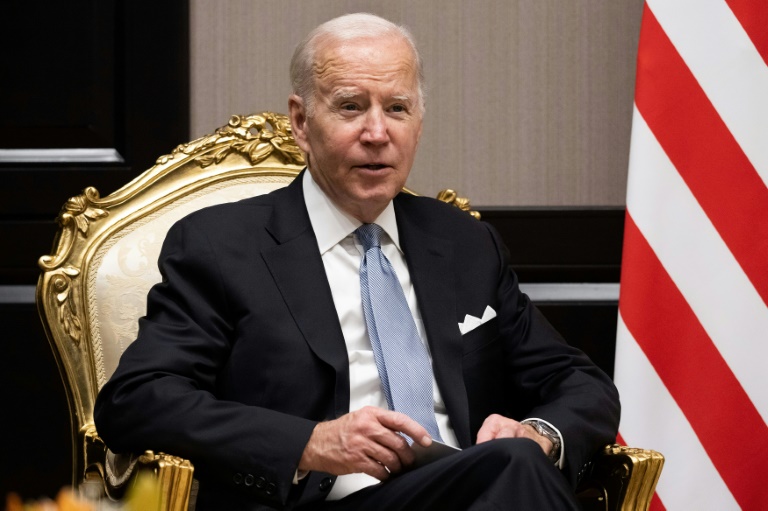
Biden speaks of 'urgent' crisis as he joins UN climate talks

US President Joe Biden arrived at UN climate talks in Egypt on Friday armed with major domestic achievements against global warming but under pressure to do more for countries reeling from natural disasters.

Biden will spend only a few hours at COP27 in Sharm el-Sheikh, three days after US midterm elections that have raised questions about what the result could mean for US climate policy.

The lightning visit to Egypt marks the start of a week-long trip abroad that will also take him to an ASEAN regional summit in Cambodia at the weekend, before he travels to Indonesia for G20 talks.

Climate action in the United States — the world’s second biggest emitter — was given a major boost this year when Congress passed a landmark spending bill, the Inflation Reduction Act, which includes $369 billion for clean energy and climate initiatives.

Global warming “is an urgent crisis”, Biden said as he met Egyptian President Abdel Fattah al-Sisi on the sidelines of COP27, where he said he would address human rights in the country with his host.

Biden, who was due to deliver a speech later, skipped a two-day summit of about 100 world leaders at COP27 that coincided with the US election earlier this week.

– ‘Historic polluter’ –

New research shows just how dauntingly hard it will be to meet the goal of capping global warming at 1.5 degrees Celsius above preindustrial levels — requiring emissions to be slashed nearly in half by 2030.

The new study — published on Friday in the journal Earth System Science Data — found that CO2 emissions from fossil fuels are on track to rise one percent in 2022 to reach an all-time high.

COP27 talks have been dominated by the need for wealthy polluters to stop stalling on helping developing countries green their economies and prepare for future impacts — alongside calls to provide financial help for the catastrophic damage already apparent.

Calling out the United States as “the historic polluter”, Mohamed Adow, founder of the think tank Power Shift Africa, said Washington has been an obstacle to the establishment of a “loss and damage” fund.

“So our test for Biden … is, will he actually set out US commitment in providing effective support on loss and damage for the vulnerable countries?” Adow said.

The United States agreed to have the issue discussed at COP27, with developing countries least responsible for planet-heating emissions seeking what amounts to reparations from rich polluters to cope with accelerating climate impacts.

– Climate-sceptic Republicans –

Germany’s climate envoy, Jennifer Morgan, told reporters that Biden’s attendance at COP27 was a “very good sign” that reassures other countries that “the United States at the highest level takes this issue incredibly seriously”.

White House National Security Adviser Jake Sullivan said Biden will “underscore the need to go further, faster, to help the most vulnerable communities build their resilience” and push major economies to “dramatically” cut emissions.

US climate envoy John Kerry presented this week a public-private partnership aimed at supporting the transition to renewable energy in developing nations and based on a carbon credit system.

But the plan has been panned by activists wary of firms using these to “offset” their carbon emissions.

The White House announced Friday plans to require federal contractors to set targets to reduce their emissions in line with the Paris Agreement.

It also aims to step up efforts to cut methane emissions — a major contributor to global warming — with a “Super-Emitter Response Programme” that would require companies to act on leaks reported by “credible” third parties.

Biden has also pledged to contribute $11.4 billion to a $100 billion per-year-scheme through which rich countries will help developing nations transition to renewable energies and build climate resilience.

But Democrats may be running out of time to honour that as control of the House of Representatives appears poised to shift to the Republicans from January in the wake of this week’s mid-term elections.

“We’re going to be pressing for passage of the appropriations bills,” US lawmaker Kathy Castor, who chairs the climate crisis committee in the House, told AFP.

France accepts migrant ship as row with Italy blazes

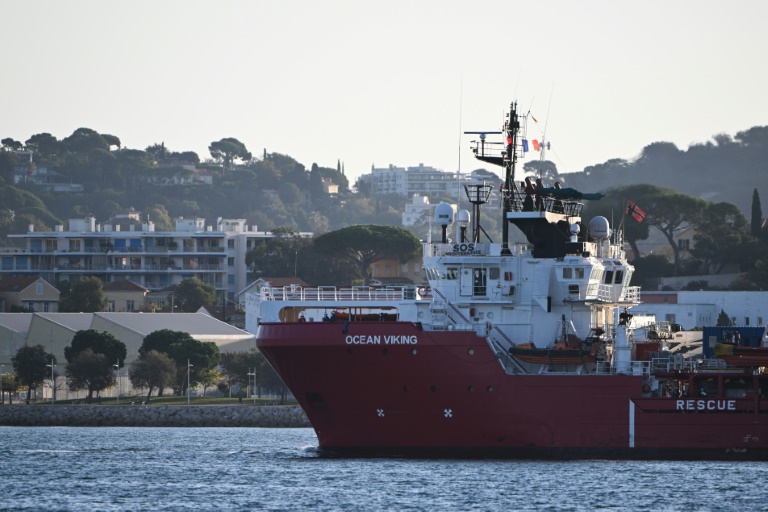
A rescue ship carrying 230 migrants docked at the French port of Toulon on Friday amid a blazing row between France and Italy over which country is responsible for them.

The Ocean Viking, operated by a French NGO, had picked up the migrants at sea near the Libyan coast before spending weeks seeking a port to accept them.

France had never before allowed a rescue vessel carrying migrants from the Mediterranean to land on its coast, but did so this time because Italy had refused access.

The rescue came a day after French Interior Minister Gerald Darmanin said that the migrants were Italy’s responsibility under EU rules, and that the French move was an “exceptional” measure.

He said Italy’s refusal to accept the migrants was “incomprehensible” and that there would be “severe consequences” for relations with Italy which he said had “lacked humanity”.

– ‘End of an ordeal’ –

On Friday, Italian Prime Minister Giorgia Meloni condemned what she called an “aggressive reaction” by the French government, telling reporters that it was “incomprehensible and unjustified”.

The Ocean Viking ship had initially sought access to Italy’s coast, which is closest to where the migrants were picked up, saying health and sanitary conditions onboard were rapidly worsening.

Italy refused, saying other nations needed to shoulder more of the burden for taking in the thousands of migrants trying to reach Europe from North Africa every year.

“Everybody is very, very tired, but also relieved to set foot on land, it’s the end of an ordeal,” Laurence Bondard, a member of SOS Mediterranee, the NGO operating the Operation Viking, told AFP.

But the organisation also said that migrant ships should not have to make the long journey to France in future rescues.

“It is wrong that people disembark at such a great distance from the rescue locations,” SOS Mediterranee president Francois Thomas told reporters.

Operations director Xavier Lauth said the ship would resume rescue missions “because we don’t accept that this sea becomes a cemetery”.

The migrants, more than 50 of whom are children, were taken to an international waiting zone pending the processing of requests for asylum.

They would not be allowed to leave the zone until the process was completed in about three weeks, the government said. Asylum interviews were to start Saturday.

The shelter, a short drive from the port, was heavily guarded, an AFP photographer said.

Some 600 police were deployed for the ship’s arrival, with the Red Cross in charge of humanitarian aid.

Meloni, head of Italy’s most right-wing government in decades, has appeared ready to push the dispute to the top of the European agenda.

Italian Interior Minister Matteo Piantedosi Thursday said the request had been for “234 migrants, when Italy has taken in 90,000 just this year”.

Nine European nations have committed to hosting two-thirds of the migrants, Darmanin said Thursday, with the remaining third staying in France.

In retaliation for Italy’s stance, France has suspended a plan to take 3,500 refugees currently in Italy, part of a European burden-sharing accord, and urged Germany and other EU nations to do the same.

– Stricter border checks –

French police said Friday it had also reinforced controls at several Italian border crossings.

The flare-up of tensions echoes European migrant disputes four years ago, when French President Emmanuel Macron clashed with Italy’s populist interior minister Matteo Salvini.

France had insisted that under international maritime law, Rome had to take in the Ocean Viking.

But Italy’s Foreign Minister Antonio Tajani said this week that he was sending a signal to EU nations that they must play a bigger part.

Rome wants “an agreement to establish, on the basis of population, how migrants with a right to asylum are relocated to various countries”, Tajani said ahead of a meeting of EU ministers next week.

In June, around a dozen EU countries, including France, agreed to take in migrants who arrive in Italy and other main entry points.

So far this year, 164 asylum seekers have been moved from Italy to other nations in the bloc that volunteered to accept them.

That is a fraction of the more than 88,000 that have reached its shores so far this year, of which 14 percent arrived after being rescued by NGO vessels, according to the Italian authorities.

burs-jh/sjw/ah

Residents of recaptured Ukrainian villages feel 'abandoned'

Residents of recaptured villages in eastern Ukraine who have lived through Russian occupation and near constant shelling say they now feel “abandoned” by Ukrainian officials and still lack running water, gas and electricity.

In the Donbas region, the villages of Yampil and Zarichne, retaken by Ukrainian troops at the end of September, still bear the scars of heavy fighting.

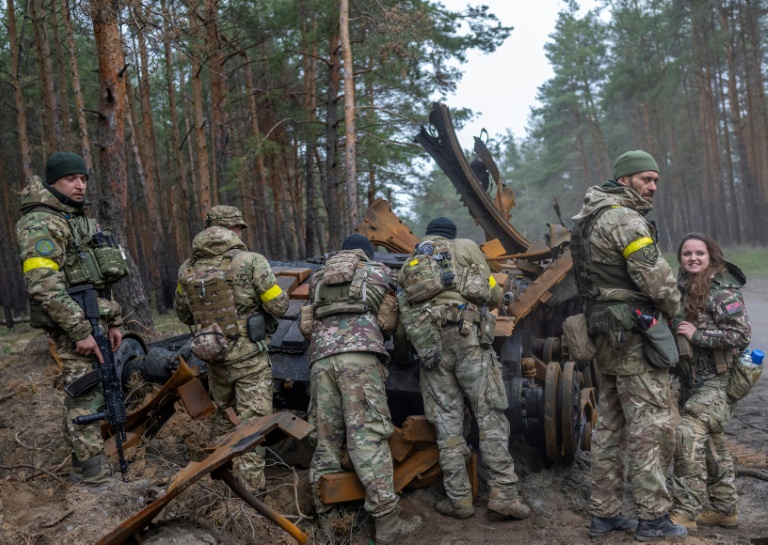
Many houses are in ruins, and the forest surrounding Yampil is full of charred pine trees and destroyed armoured vehicles.

Those who remained in their homes in this primarily Russian-speaking region are mostly older people.

They say they are still struggling even after the return of Ukrainian troops.

In Yampil, Nina Marchenko, 72, tells AFP a missile damaged her home during the fighting.

It “went through the roof, through the wall and destroyed the top of the underground storage room,” she says, though she and her family were luckily sheltering in a neighbour’s house at the time.

Marchenko, her 50-year-old son Andriy and his wife Lyudmila have since come back to live in their house and have mended the roof themselves. 

“We were told that we shouldn’t wait for local authorities to do it,” Marchenko says.

One bedroom is unusable because “there are water leaks everywhere” when it rains, she says.

So the family is crammed into the kitchen and living room, with wallpaper peeling off the ceiling due to water damage.

– ‘We beg for bread’ –

The money in the family’s bank accounts is no help.

They still cannot withdraw it, despite authorities’ efforts to restore some normality. 

So the family lives on pasta and rice, sometimes with tinned meat or pate when they receive humanitarian aid. 

They have not had electricity since April.

It is too dangerous to gather wood in the forest because of landmines, so the family looks for fuel for their stove — used for both heating and cooking — in destroyed homes nearby.

Thankfully, they can still draw water from their well.

“Six missiles fell in the garden. They weren’t Russian, they were Ukrainian,” Andriy says.

His mother has one wish for the future. 

“I just pray to God: ‘please stop the war’. There is nothing I want more than this,” his mother says, with tears in her eyes.

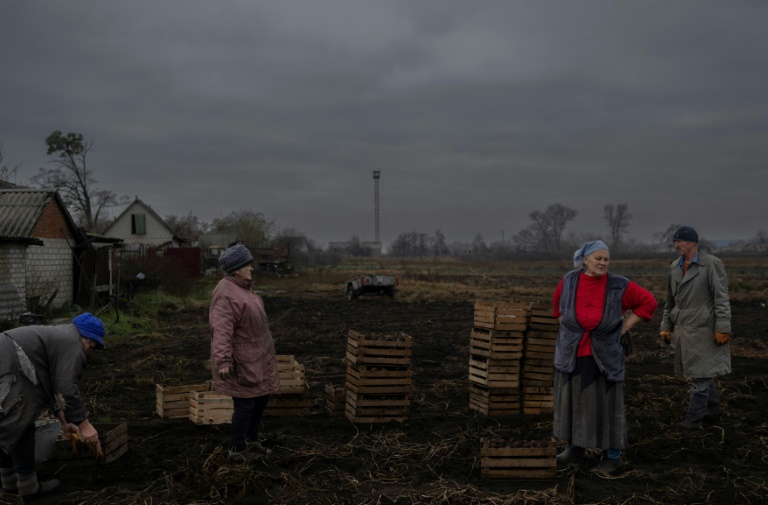
To the south, in a field in Zarichne, three women and a man have filled a wooden box with around two dozen freshly dug-up potatoes.

They all refuse to give their names. 

“We don’t believe anyone. Everyone is lying to us. Russia is lying, Ukraine is lying,” says one woman wearing a blue scarf over her hair.

“Everyone kept promising us mountains of gold. But in the end, we were abandoned,” she says.

“So we beg for bread. We go to the soldiers and ask ‘give us bread’. The authorities are nowhere to be seen. They’re afraid to come here because of shelling.” 

A strike destroyed the house where her two small grandchildren were living, she says, though they survived and have now left with their parents.

“It’s the Ukrainians who fired those missiles… There were no Russians here,” the woman says, claiming there were only separatist fighters at a checkpoint. 

– Unexploded cluster bomb –

Opposite the field, 37-year-old Sergiy points out a small grey cylinder lying on the ground outside his house.

A small white flag is planted next to it. 

The cluster bomb landed without exploding during strikes on November 3, he says. He has asked local authorities to come and take it away, but they have still not come.

His two daughters, aged 5 and 8, are only allowed to play inside the house now.

“Most of the time, they stay inside. Sometimes they go outside — but with us,” he says. 

The authorities “promised to pay, but no one has paid yet. They’re not even giving out humanitarian aid, and we’ve been liberated for one month,” he says. 

Local authorities are not fixing damage to private properties and have postponed most public works until spring as winter approaches. 

Explosions still echo in the valley: the front line is only 10 kilometres (6 miles) to the east. 

“Russians are hitting the bridge over there,” Sergiy says, pointing to the river that runs by the village.

From there, the road east leads to the small town of Kreminna, about 20 kilometres away, which the Ukrainians are seeking to recapture from the Russians.

Irish PM says 'opportunity' to end Brexit dispute after UK talks

Irish prime minister Micheal Martin on Friday said there was “a window of opportunity” for Britain and the European Union to resolve a dogged dispute over post-Brexit trade in Northern Ireland.

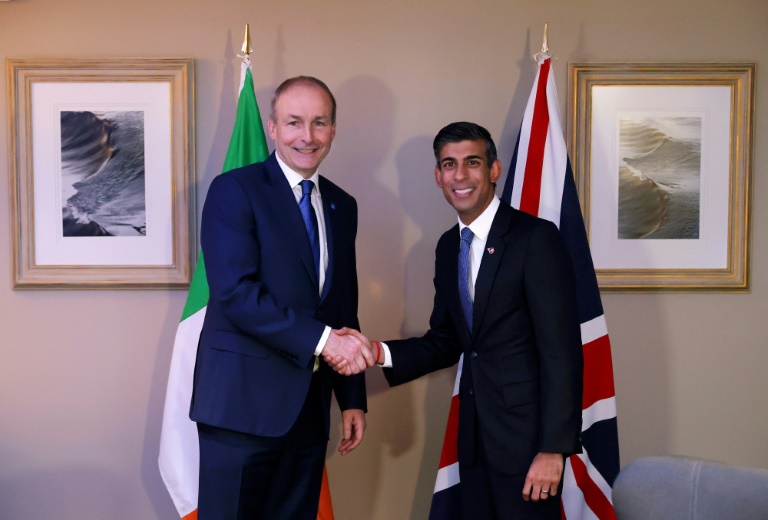
Speaking after two days of broader talks between UK and Irish leaders in Blackpool, northwest England, Martin said he had a “positive perspective” following a meeting with new UK counterpart Rishi Sunak.

Martin and Sunak met Thursday as they bid to end the long-running row over the Northern Ireland Protocol which has paralysed power-sharing government in Belfast and put London at loggerheads with Brussels and Dublin.

“It’s my assessment that the window of opportunity now does exist,” Martin said as the British-Irish Council summit concluded.

In an apparent sign of renewed commitment to ease the post-Brexit frictions in Northern Ireland, Sunak became the first UK prime minister since 2007 to attend the regular gathering.

“The space now exists to resolve the outstanding issues pertaining to the protocol by negotiation, and obviously that will need momentum,” Martin added. 

“It will need substantive engagement by the EU and UK government to make that a reality.”

The protocol was signed separately from the trade and cooperation deal that cemented the UK’s formal departure from the European Union in January 2021.

But its implementation has proven a flashpoint for disagreement between the bloc, member state Ireland and Britain — and even threatens a possible EU-UK trade war.

The deal kept Northern Ireland in the European single market and customs union, stipulating checks on goods moving from the rest of the UK to Northern Ireland.

That was designed to prevent a “hard” border between Ireland and Northern Ireland — a key plank of the 1998 Good Friday Agreement that largely ended three decades of conflict.

– ‘Pressure point’ –

However, it has enraged hardline unionists, including the Democratic Unionist Party (DUP), leading to their boycott of the Stormont assembly in Belfast since February.

Elections in May further complicated the situation, after pro-Irish party Sinn Fein won a historic first election.

The UK government, which is risking EU reprisals by trying to overhaul the protocol unilaterally through legislation, has threatened to order a new vote.

Flanking Martin, senior UK minister Michael Gove said he was not aware of plans to pause the passage of the controversial draft law through parliament.

But he insisted the Blackpool talks had been “conducted in a cordial and constructive fashion”. 

“We remain optimistic about the opportunities of reaching a resolution,” he added.

Europe’s pointman on the negotiations, Maros Sefcovic, said Monday an agreement could be found with the right “political will”.

London and Dublin hope a breakthrough over the protocol could pave the way for the restoration of power-sharing in Northern Ireland. 

The DUP has said it will not return to Stormont unless the pact is scrapped or significantly overhauled.

On Wednesday, London extended a deadline to hold new elections, in the hope it can strike an agreement with Brussels in the coming weeks to break the deadlock in Belfast.

Asked about the prospect of power-sharing resuming, both Martin and Gove said “the sooner the better”.

“The pressure point is to really get this (protocol) issue resolved so we can create a pathway for the restoration of the institutions,” Martin added.

Gove expressed hope that it could have happened by the time British and Irish leaders next meet in June or July, 2023.

European stocks held back by recession warnings

European stock markets on Friday failed to match soaring gains overnight in Asia and on Wall Street, as recession prospects offset a boost from slower US inflation.

London’s benchmark FTSE 100 index fell around 0.5 percent in afternoon deals after official data indicated that the UK economy was likely at the start of a prolonged recession.

“The FTSE’s struggles suggest UK investors are more worried about deteriorating domestic, eurozone and global economies than are hopeful about the US and other central banks easing rate hikes,” noted Fawad Razaqzada, market analyst at City Index trading group.

Frankfurt and Paris managed to advance around half-a-percent by mid-afternoon trading, but gains were capped as the EU warned the eurozone was set to fall into recession this winter.

Brussels also hiked regional inflation forecasts for 2022 and 2023 on the back of high energy prices.

Asian equities closed sharply higher after a bumper session on Wall Street Thursday, as lower US inflation dimmed expectations of more aggressive interest-rate hikes from the Federal Reserve.

Hong Kong’s main equities index rocketed more than 7.7 percent, while Tokyo won three percent.

Shanghai won 1.7 percent and oil prices rose strongly as China relaxed some hardline Covid-19 restrictions.

In the US, annual inflation came in at a lower-than-expected 7.7 percent in October, down from 8.2 percent in September.

The latest inflation data should be welcome news to Fed policymakers because prices are “finally showing some response” to the steep rate hikes, said Rubeela Farooqi of High Frequency Economics.

The dollar slumped against rival currencies following the data release as traders bet that upcoming US interest rate hikes will be smaller than in recent months and amid expectations of less stringent Chinese Covid curbs.

The dollar was at a three-month low against the euro, plunging more than once percent at around 1300 GMT, and weakened against the yen and pound.

Daniel Berkowitz, senior investment officer for Prudent Management Associates, struck a note of caution regarding the slower inflation.

“While it always feels good to see markets rally, we think this… is bordering on silly,” he said.

“The market is reacting as if this is the continuance of a multiple-month, downward trend in inflation, and it is not.”

In the UK, inflation is seen rising further. Currently at 10.1 percent, the Bank of England is forecasting it will hit around 11 percent this year before starting to cool.

Traders pounced on the slower US number, however.

Wall Street’s Dow shares index was up 3.7 percent at Thursday’s close and the tech-heavy Nasdaq index soared 7.4 percent. 

– Key figures around 1345 GMT –

London – FTSE 100: DOWN 0.5 percent at 7,342.36 points 

Frankfurt – DAX: UP 0.3 percent at 14,193.98

Paris – CAC 40: UP 0.4 percent at 6,583.78

EURO STOXX 50: UP 0.5 percent at 3,865.85

Tokyo – Nikkei 225: UP 3.0 percent at 28,263.57 (close)

Hong Kong – Hang Seng Index: UP 7.7 percent at 17,325.66 (close)

Shanghai – Composite: UP 1.7 percent at 3,087.29 (close)

New York – Dow: UP 3.7 percent at 33,715.37 points (close)

Pound/dollar: UP at $1.1788 from $1.1642 on Thursday

Euro/dollar: UP at $1.0310 from $1.0131

Dollar/yen: DOWN at 139.25 yen from 143.15 yen

Euro/pound: UP at 87.52 pence from 87.20 pence

Brent North Sea crude: UP 2.8 percent at $96.31 per barrel

West Texas Intermediate: UP 3.1 percent at $89.17 per barrel

burs/imm/cdw

European stocks held back by recession warnings

European stock markets on Friday failed to match soaring gains overnight in Asia and on Wall Street, as recession prospects offset a boost from slower US inflation.

London’s benchmark FTSE 100 index fell around 0.5 percent in afternoon deals after official data indicated that the UK economy was likely at the start of a prolonged recession.

“The FTSE’s struggles suggest UK investors are more worried about deteriorating domestic, eurozone and global economies than are hopeful about the US and other central banks easing rate hikes,” noted Fawad Razaqzada, market analyst at City Index trading group.

Frankfurt and Paris managed to advance around half-a-percent by mid-afternoon trading, but gains were capped as the EU warned the eurozone was set to fall into recession this winter.

Brussels also hiked regional inflation forecasts for 2022 and 2023 on the back of high energy prices.

Asian equities closed sharply higher after a bumper session on Wall Street Thursday, as lower US inflation dimmed expectations of more aggressive interest-rate hikes from the Federal Reserve.

Hong Kong’s main equities index rocketed more than 7.7 percent, while Tokyo won three percent.

Shanghai won 1.7 percent and oil prices rose strongly as China relaxed some hardline Covid-19 restrictions.

In the US, annual inflation came in at a lower-than-expected 7.7 percent in October, down from 8.2 percent in September.

The latest inflation data should be welcome news to Fed policymakers because prices are “finally showing some response” to the steep rate hikes, said Rubeela Farooqi of High Frequency Economics.

The dollar slumped against rival currencies following the data release as traders bet that upcoming US interest rate hikes will be smaller than in recent months and amid expectations of less stringent Chinese Covid curbs.

The dollar was at a three-month low against the euro, plunging more than once percent at around 1300 GMT, and weakened against the yen and pound.

Daniel Berkowitz, senior investment officer for Prudent Management Associates, struck a note of caution regarding the slower inflation.

“While it always feels good to see markets rally, we think this… is bordering on silly,” he said.

“The market is reacting as if this is the continuance of a multiple-month, downward trend in inflation, and it is not.”

In the UK, inflation is seen rising further. Currently at 10.1 percent, the Bank of England is forecasting it will hit around 11 percent this year before starting to cool.

Traders pounced on the slower US number, however.

Wall Street’s Dow shares index was up 3.7 percent at Thursday’s close and the tech-heavy Nasdaq index soared 7.4 percent. 

– Key figures around 1345 GMT –

London – FTSE 100: DOWN 0.5 percent at 7,342.36 points 

Frankfurt – DAX: UP 0.3 percent at 14,193.98

Paris – CAC 40: UP 0.4 percent at 6,583.78

EURO STOXX 50: UP 0.5 percent at 3,865.85

Tokyo – Nikkei 225: UP 3.0 percent at 28,263.57 (close)

Hong Kong – Hang Seng Index: UP 7.7 percent at 17,325.66 (close)

Shanghai – Composite: UP 1.7 percent at 3,087.29 (close)

New York – Dow: UP 3.7 percent at 33,715.37 points (close)

Pound/dollar: UP at $1.1788 from $1.1642 on Thursday

Euro/dollar: UP at $1.0310 from $1.0131

Dollar/yen: DOWN at 139.25 yen from 143.15 yen

Euro/pound: UP at 87.52 pence from 87.20 pence

Brent North Sea crude: UP 2.8 percent at $96.31 per barrel

West Texas Intermediate: UP 3.1 percent at $89.17 per barrel

burs/imm/cdw

Ukraine says its forces entering Kherson after Russian retreat

Ukraine said on Friday its forces were entering the southern city of Kherson and hailed an “important victory” after Russia announced its troops had retreated from the only regional capital it has captured after nearly nine months fighting.

The announcement that Moscow’s pullout was over came hours after Russian strikes killed seven people in Mykolaiv, a city near Kherson, that Russian troops have battered for months.

“Kherson is returning to Ukrainian control and units of the Armed Forces of Ukraine are entering the city,” the defence ministry said on social media.

It added that its artillery teams had clear views over Russia’s routes to retreat and warned: “Any attempts to oppose the Armed Forces of Ukraine will be stopped.”

Russia announced earlier that it had finished pulling back its troops. 

But the Kremlin insisted that Kherson was still part of Russia and that it did not regret annexing the entire Kherson region at a lavish ceremony in late September.

“The transfer of Russian troops to the left [eastern] bank of the Dnipro River was completed. Not a single piece of military equipment and weapons was left on the right [western] bank,” the Russian defence ministry said.

– ‘No regrets’ –

“Ukraine is gaining another important victory right now and proves that whatever Russia says or does, Ukraine will win,” Foreign Minister Dmytro Kuleba wrote on social media.

He posted an amateur video showing Ukrainians removing a billboard near Kherson that proclaimed: “Russia is here forever”.

Ukraine’s parliament published pictures of people with Ukrainian flags in the city centre.

Kherson was the first major urban hub to fall to Russian troops after President Vladimir Putin announced Moscow’s “special military operation” in Ukraine, and it was the only regional capital his forces seized.

Its full recapture by Kyiv would be a political and symbolic blow to Putin and open a gateway for Ukraine’s forces to the entire Kherson region, with access to both the Black Sea in the west and Sea of Azov in the east.

It would also disrupt an important land bridge for Russia between its mainland and the Crimean peninsula, which Moscow annexed from Ukraine in 2014.

Ukrainian officials were initially wary after Moscow announced this week that it would pull forces to defensive positions on the east bank of the river in Kherson.

While it would appear a major Russian setback in a region Vladimir Putin claimed to have annexed, the Kremlin on Friday dismissed any suggestion the status of the region had changed after the retreat.

“This is a subject of the Russian Federation. There are no changes in this and there cannot be changes,” Kremlin spokesman Dmitry Peskov told reporters.

The region of Kherson was one of four territories of Ukraine that Putin claimed to have annexed during a grand ceremony in the Kremlin in late September, vowing at the time to use all available methods to defend it from Kyiv.

– ‘Cynical’ attack –

Asked by reporters whether Russia now regretted annexing Kherson, Peskov said the Kremlin had “no regrets” about the move.

The announcement from Moscow that it had finished retreating in Kherson came after a fatal Russian strike on a residential building in the southern city of Mykolaiv.

Russian troops failed to capture the Black Sea city from Ukraine in the early stages of their invasion but have launched rockets and missiles on the embattled city for months.

An AFP journalist at the scene of the strike saw a gaping hole cut through a Soviet-style residential building with emergency workers in yellow helmets on the site clearing rubble.

Mykolaiv regional governor Vitaliy Kim said on social media the toll had risen to six.

Ukrainian President Volodymyr Zelensky branded the strike a “cynical response to our successes at the front”.

He announced late on Thursday that his forces had recaptured more than 40 towns and villages in southern Ukraine during a counter-offensive begun in August.

On Thursday, the United States announced a new $400-million security assistance package for Kyiv, including defence systems and surface-to-air missiles.

  “(With) Russia’s unrelenting and brutal air attacks on Ukrainian civilian and critical infrastructure, additional air defense capabilities are critical,” Deputy Pentagon Press Secretary Sabrina Singh told journalists.

Burkina's new parliament opens after coup

Burkina Faso’s new legislative assembly opened on Friday with a call for self-sacrifice by the 71 members appointed by the junta that seized power a month ago.

One of the world’s poorest countries, Burkina has been struggling with a jihadist offensive since 2015.

Disgruntled army officers have carried out two coups this year in a show of anger at failures to roll back the insurgency.

Coup leader Captain Ibrahim Traore named 20 of the new deputies and the armed forces 16. The country’s 13 regions selected one member each, civil society groups 12 and political parties 10.

A dozen members of the last parliament were among those appointed, including Abdoulaye Soma, who ran for president in 2020, and 41-year-old law professor Ousmane Bougouma, who was elected speaker on Friday.

“Our country, Burkina Faso, is living through difficult times in its history,” Bougouma told the assembly.

“It’s not a time for celebration but rather commitment and self-sacrifice.”

The assembly opened after agreement in mid-October on a transitional charter to help guide the Sahel nation back to elections.

Traore, 34, ousted Lieutenant-Colonel Paul-Henri Sandaogo Damiba on September 30.

In January, Damiba had led a group of officers to topple the last elected president, Roch Marc Christian Kabore.

Traore has been appointed transitional president with the declared aim of taking pack huge swathes of territory held by “hordes of terrorists”.

Thousands have been killed in Burkina over the last seven years, around two million people out of a population of 21 million have fled their homes and more than a third of the country is outside government control.

EU warns of 'difficult months' as eurozone faces recession

The EU warned Friday the eurozone was set to fall into recession this winter as Brussels hiked inflation forecasts for 2022 and 2023 on the back of high energy prices.

Europe is reeling from the economic shockwaves unleashed by Russia’s war on Ukraine, which have fuelled a spike in energy costs and hit the wallets of consumers around the continent.

The EU’s executive arm said increased uncertainty and prices “are expected to tip” the eurozone and most of the bloc’s member states into recession in the last quarter of this year.

“The contraction of economic activity is set to continue in the first quarter of 2023. Growth is expected to return to Europe in spring,” the European Commission said.

“With powerful headwinds still holding back demand, economic activity is set to be subdued, with GDP growth reaching 0.3 percent in 2023.”

Brussels predicted that the EU’s biggest economy Germany would fare the worst of the member states with a contraction of 0.6 percent next year. 

Overall eurozone GDP growth for 2022 was put at 3.2 percent after early strong months of the year.

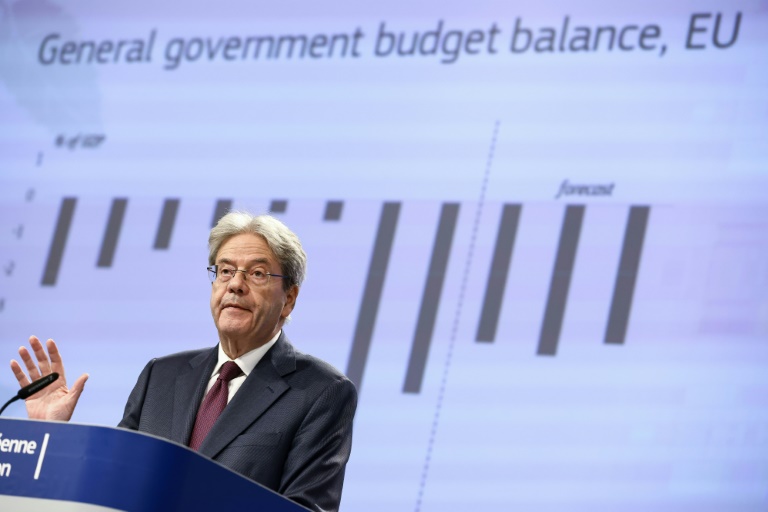
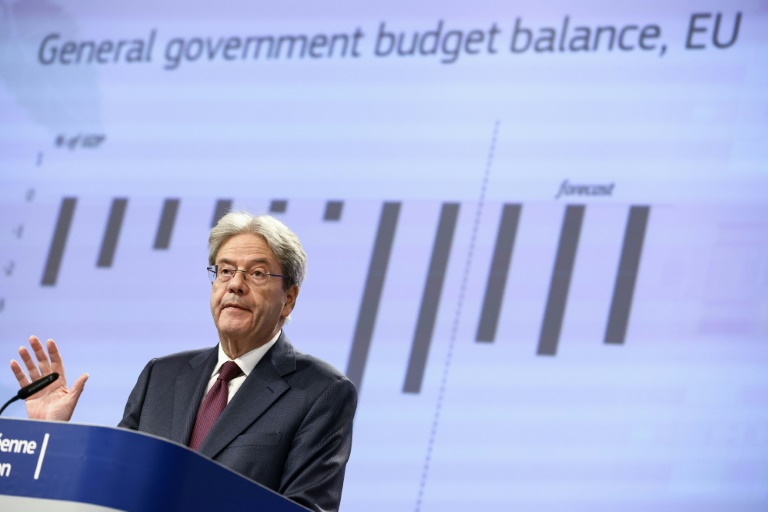
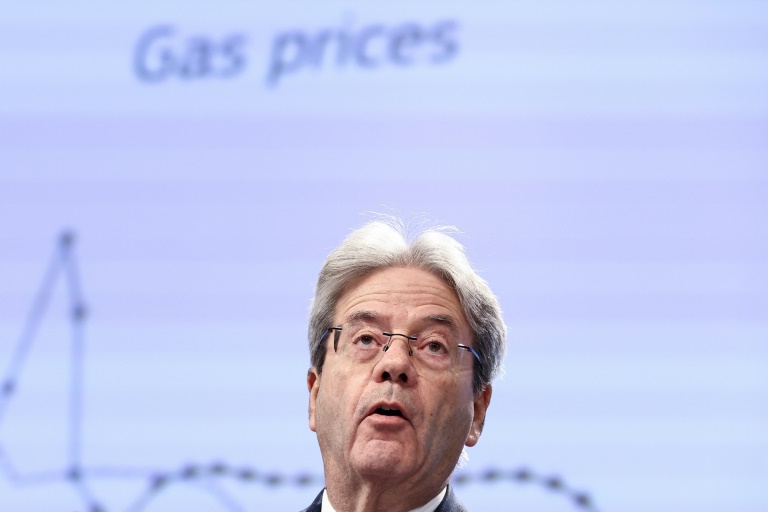
But the EU’s economy commissioner Paolo Gentiloni said “the impact of soaring energy prices, rampant inflation, are now taking their toll.”

“We have some difficult months ahead of us,” Gentiloni said. 

He cautioned that “the potential for further economic disruptions due to Russia’s war is far from exhausted.”

– Inflation peak in view? –

The downbeat forecast came as the commission sharply raised its predictions for inflation in this and next year.

It said eurozone inflation was expected to stand at 8.5 percent for 2022, a point higher than earlier forecast, and 6.1 percent in 2023, over two points higher than predicted previously. 

“Inflation has continued to rise faster than expected, but we believe that the peak is near. Most likely at the end of this year,” Gentiloni said.

“We are projecting a very gradual reduction of inflation because inflation next year is still projected to be quite high.”

He warned however that inflation could end up two points higher in 2023 if the EU “fails to prepare” adequately in advance for next winter by filling up its gas stores.

The baseline prediction put inflation in 2024 at 2.6 percent, still higher than the European Central Bank’s (ECB) target of two percent.

The ECB in October forecast a recession was on the way, as it announced another jumbo interest rate hike to try to curb inflation driven up by the fallout from Russia’s war on Ukraine.  

Bank president Christine Lagarde said last week that a “mild” eurozone recession was looming but would not be enough to bring down record-high inflation.

Gentiloni said that one “bright spot” remained the resilience of the EU’s labour market and that there was only expected to be a “moderate” increase in unemployment before a decline in 2024. 

The aggregate government budget deficit is expected to rise again from 3.4 percent in 2022 to 3.6 percent in 2023 as the EU debates reforming its fiscal rules.

Close Bitnami banner
Bitnami