World

EU warns of 'difficult months' as eurozone faces recession

The EU warned Friday the eurozone was set to fall into recession this winter as Brussels hiked inflation forecasts for 2022 and 2023 on the back of high energy prices.

Europe is reeling from the economic shockwaves unleashed by Russia’s war on Ukraine, which have fuelled a spike in energy costs and hit the wallets of consumers around the continent.

The EU’s executive arm said increased uncertainty and prices “are expected to tip” the eurozone and most of the bloc’s member states into recession in the last quarter of this year.

“The contraction of economic activity is set to continue in the first quarter of 2023. Growth is expected to return to Europe in spring,” the European Commission said.

“With powerful headwinds still holding back demand, economic activity is set to be subdued, with GDP growth reaching 0.3 percent in 2023.”

Brussels predicted that the EU’s biggest economy Germany would fare the worst of the member states with a contraction of 0.6 percent next year. 

Overall eurozone GDP growth for 2022 was put at 3.2 percent after early strong months of the year.

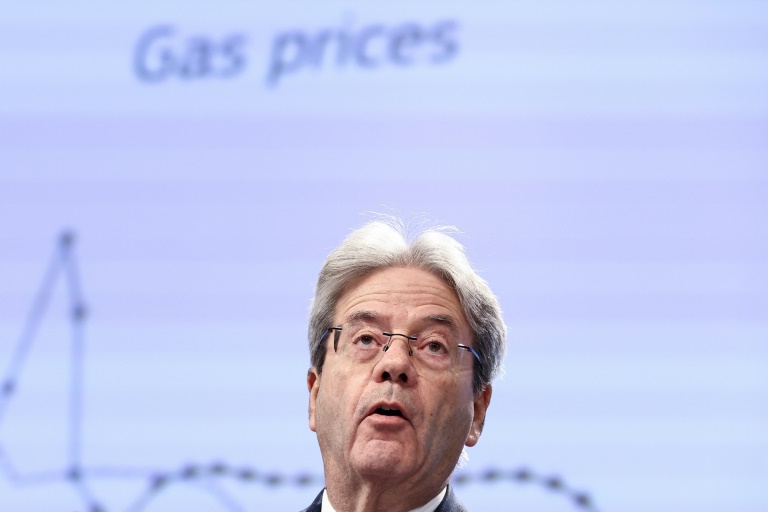
But the EU’s economy commissioner Paolo Gentiloni said “the impact of soaring energy prices, rampant inflation, are now taking their toll.”

“We have some difficult months ahead of us,” Gentiloni said. 

He cautioned that “the potential for further economic disruptions due to Russia’s war is far from exhausted.”

– Inflation peak in view? –

The downbeat forecast came as the commission sharply raised its predictions for inflation in this and next year.

It said eurozone inflation was expected to stand at 8.5 percent for 2022, a point higher than earlier forecast, and 6.1 percent in 2023, over two points higher than predicted previously. 

“Inflation has continued to rise faster than expected, but we believe that the peak is near. Most likely at the end of this year,” Gentiloni said.

“We are projecting a very gradual reduction of inflation because inflation next year is still projected to be quite high.”

He warned however that inflation could end up two points higher in 2023 if the EU “fails to prepare” adequately in advance for next winter by filling up its gas stores.

The baseline prediction put inflation in 2024 at 2.6 percent, still higher than the European Central Bank’s (ECB) target of two percent.

The ECB in October forecast a recession was on the way, as it announced another jumbo interest rate hike to try to curb inflation driven up by the fallout from Russia’s war on Ukraine.  

Bank president Christine Lagarde said last week that a “mild” eurozone recession was looming but would not be enough to bring down record-high inflation.

Gentiloni said that one “bright spot” remained the resilience of the EU’s labour market and that there was only expected to be a “moderate” increase in unemployment before a decline in 2024. 

The aggregate government budget deficit is expected to rise again from 3.4 percent in 2022 to 3.6 percent in 2023 as the EU debates reforming its fiscal rules.
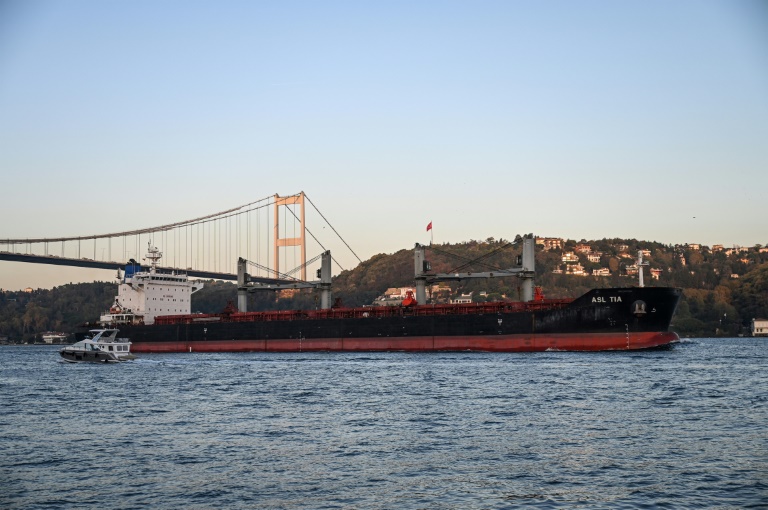
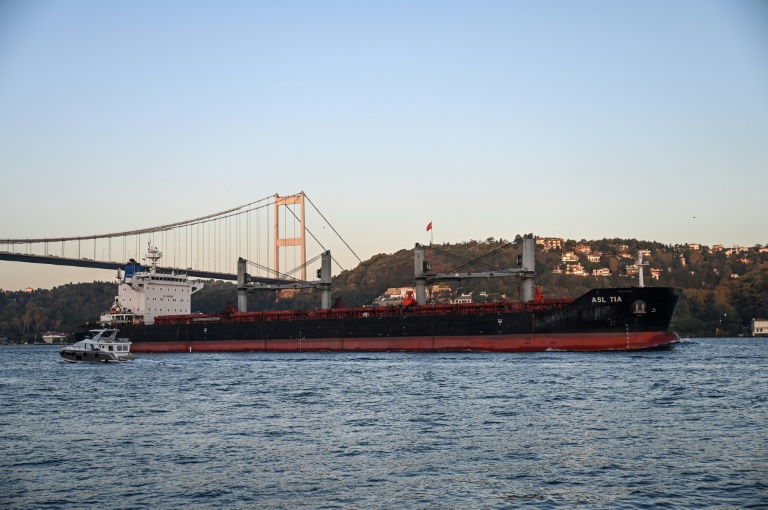
UN, Russia hold talks on grain, fertiliser exports

United Nations chiefs were holding talks with Russian officials Friday on the Black Sea agreements on exporting grain and fertilisers, eight days before one of the deals is set to expire.

UN humanitarian chief Martin Griffiths and Rebeca Grynspan, head of UN trade and development agency UNCTAD, were meeting a high-level delegation from Moscow, led by Russian deputy foreign minister Sergei Vershinin.

UN spokeswoman Alessandra Vellucci confirmed the talks were under way at the UN Palais des Nations headquarters in Geneva.

“They will continue ongoing consultations in support of the efforts by (UN) Secretary-General Antonio Guterres on the full implementation of the two agreements signed on July 22 in Istanbul,” she said.

“It is hoped that the discussions will advance progress made in facilitating the unimpeded export of food and fertilisers originating from the Russian Federation to the global markets.”

– 10.2 million tonnes exported –

Two agreements brokered by the UN and Turkey were signed on July 22 — to allow the export of Ukrainian grain blocked by Russia’s war in the country, and the export of Russian food and fertilisers despite Western sanctions imposed on Moscow following its invasion of Ukraine.

The 120-day Black Sea Grain Initiative runs out on November 19, and the United Nations is seeking to renew the agreements for one year.

Moscow, however, has not yet said whether it will agree to that.

It has complained that the second agreement exempting its fertilisers from sanctions, which is due to run for three years, is not being respected.

Ukraine is one of the world’s top grain producers and the Russian invasion had blocked 20 million tonnes of grain in its ports until the safe passage deal was agreed.

Until Thursday, 10.2 million tonnes of grains and other foodstuffs had been exported from Ukraine under the deal, relieving some fears over a deepening global food security crisis.

– ‘Very serious’ implications –

The UN’s Food and Agriculture Organization said the implications could be very concerning for global food security if the deal is not renewed.

“We see it as an important initiative that has improved food availability,” said Boubaker Ben-Belhassen, director of the FAO’s markets and trade division.

“However, should we be in a scenario that nobody wants to see, that there is a termination of the deal, I think the situation could be really difficult and the implications could be very serious,” he told reporters via video-link from Rome, where the FAO is based.

He pointed in particular to global food security, prices, availability and food staples.

Ben-Belhassen said that in the short term prices would increase, especially for wheat, maize and sunflower seed oil, while availability of grains on the global market would go down.

There could be a heavy impact on countries that depend on Black Sea imports, notably in the Middle East and North Africa.

Ben-Belhassen also warned of the impact within Ukraine if the deals are not renewed.

The grain agreement has until now allowed Ukraine to release stocks from the last winter harvest, easing storage capacity pressure, he said.

It has also given farmers in the war-torn country a revenue stream, allowing them to make decisions on future investments and planting the next crop, he added.

UN, Russia hold talks on grain, fertiliser exports

United Nations chiefs were holding talks with Russian officials Friday on the Black Sea agreements on exporting grain and fertilisers, eight days before one of the deals is set to expire.

UN humanitarian chief Martin Griffiths and Rebeca Grynspan, head of UN trade and development agency UNCTAD, were meeting a high-level delegation from Moscow, led by Russian deputy foreign minister Sergei Vershinin.

UN spokeswoman Alessandra Vellucci confirmed the talks were under way at the UN Palais des Nations headquarters in Geneva.

“They will continue ongoing consultations in support of the efforts by (UN) Secretary-General Antonio Guterres on the full implementation of the two agreements signed on July 22 in Istanbul,” she said.

“It is hoped that the discussions will advance progress made in facilitating the unimpeded export of food and fertilisers originating from the Russian Federation to the global markets.”

– 10.2 million tonnes exported –

Two agreements brokered by the UN and Turkey were signed on July 22 — to allow the export of Ukrainian grain blocked by Russia’s war in the country, and the export of Russian food and fertilisers despite Western sanctions imposed on Moscow following its invasion of Ukraine.

The 120-day Black Sea Grain Initiative runs out on November 19, and the United Nations is seeking to renew the agreements for one year.

Moscow, however, has not yet said whether it will agree to that.

It has complained that the second agreement exempting its fertilisers from sanctions, which is due to run for three years, is not being respected.

Ukraine is one of the world’s top grain producers and the Russian invasion had blocked 20 million tonnes of grain in its ports until the safe passage deal was agreed.

Until Thursday, 10.2 million tonnes of grains and other foodstuffs had been exported from Ukraine under the deal, relieving some fears over a deepening global food security crisis.

– ‘Very serious’ implications –

The UN’s Food and Agriculture Organization said the implications could be very concerning for global food security if the deal is not renewed.

“We see it as an important initiative that has improved food availability,” said Boubaker Ben-Belhassen, director of the FAO’s markets and trade division.

“However, should we be in a scenario that nobody wants to see, that there is a termination of the deal, I think the situation could be really difficult and the implications could be very serious,” he told reporters via video-link from Rome, where the FAO is based.

He pointed in particular to global food security, prices, availability and food staples.

Ben-Belhassen said that in the short term prices would increase, especially for wheat, maize and sunflower seed oil, while availability of grains on the global market would go down.

There could be a heavy impact on countries that depend on Black Sea imports, notably in the Middle East and North Africa.

Ben-Belhassen also warned of the impact within Ukraine if the deals are not renewed.

The grain agreement has until now allowed Ukraine to release stocks from the last winter harvest, easing storage capacity pressure, he said.

It has also given farmers in the war-torn country a revenue stream, allowing them to make decisions on future investments and planting the next crop, he added.

European stocks held back by recession warnings

European stock markets on Friday failed to match soaring gains overnight in Asia and on Wall Street, as recession prospects offset a boost from slower US inflation.

London’s benchmark FTSE 100 index fell in midday deals after official data indicated that the UK economy was likely at the start of a prolonged recession.

“The FTSE’s struggles suggest UK investors are more worried about deteriorating domestic, eurozone and global economies than are hopeful about the US and other central banks easing rate hikes,” noted Fawad Razaqzada, market analyst at City Index trading group.

Frankfurt and Paris managed to advance around half-a-percent but gains were capped as the EU warned the eurozone was set to fall into recession this winter.

Brussels also hiked regional inflation forecasts for 2022 and 2023 on the back of high energy prices.

Asian equities closed sharply higher after a bumper session on Wall Street Thursday, as lower US inflation dimmed expectations of more aggressive interest-rate hikes from the Federal Reserve.

Hong Kong’s main equities index rocketed more than 7.7 percent, while Tokyo won three percent.

Shanghai won 1.7 percent and oil prices rose strongly as China relaxed some hardline Covid-19 restrictions.

In the US, annual inflation came in at a lower-than-expected 7.7 percent in October, down from 8.2 percent in September.

The latest inflation data should be welcome news to Fed policymakers because prices are “finally showing some response” to the steep rate hikes, said Rubeela Farooqi of High Frequency Economics.

The dollar slumped against rival currencies following the data release as traders bet that upcoming US interest rate hikes will be smaller than in recent months.

Daniel Berkowitz, senior investment officer for Prudent Management Associates, struck a note of caution regarding the slower inflation.

“While it always feels good to see markets rally, we think this… is bordering on silly,” he said.

“The market is reacting as if this is the continuance of a multiple-month, downward trend in inflation, and it is not.”

In the UK, inflation is seen rising further. Currently at 10.1 percent, the Bank of England is forecasting it will hit around 11 percent this year before starting to cool.

Traders pounced on the slower US number, however.

Wall Street’s Dow shares index was up 3.7 percent at Thursday’s close and the tech-heavy Nasdaq index soared 7.4 percent. 

– Key figures around 1200 GMT –

London – FTSE 100: DOWN 0.4 percent at 7,346.14 points 

Frankfurt – DAX: UP 0.5 percent at 14,218.05

Paris – CAC 40: UP 0.3 percent at 6,578.94 

EURO STOXX 50: UP 0.6 percent at 3,871.35

Tokyo – Nikkei 225: UP 3.0 percent at 28,263.57 (close)

Hong Kong – Hang Seng Index: UP 7.7 percent at 17,325.66 (close)

Shanghai – Composite: UP 1.7 percent at 3,087.29 (close)

New York – Dow: UP 3.7 percent at 33,715.37 points (close)

Pound/dollar: UP at $1.1757 from $1.1642 on Thursday

Euro/dollar: UP at $1.0291 from $1.0131

Dollar/yen: DOWN at 139.37 yen from 143.15 yen

Euro/pound: UP at 87.49 pence from 87.20 pence

Brent North Sea crude: UP 3.1 percent at $96.59 per barrel

West Texas Intermediate: UP 3.4 percent at $89.44 per barrel

burs/bcp/rfj/rox

European stocks held back by recession warnings

European stock markets on Friday failed to match soaring gains overnight in Asia and on Wall Street, as recession prospects offset a boost from slower US inflation.

London’s benchmark FTSE 100 index fell in midday deals after official data indicated that the UK economy was likely at the start of a prolonged recession.

“The FTSE’s struggles suggest UK investors are more worried about deteriorating domestic, eurozone and global economies than are hopeful about the US and other central banks easing rate hikes,” noted Fawad Razaqzada, market analyst at City Index trading group.

Frankfurt and Paris managed to advance around half-a-percent but gains were capped as the EU warned the eurozone was set to fall into recession this winter.

Brussels also hiked regional inflation forecasts for 2022 and 2023 on the back of high energy prices.

Asian equities closed sharply higher after a bumper session on Wall Street Thursday, as lower US inflation dimmed expectations of more aggressive interest-rate hikes from the Federal Reserve.

Hong Kong’s main equities index rocketed more than 7.7 percent, while Tokyo won three percent.

Shanghai won 1.7 percent and oil prices rose strongly as China relaxed some hardline Covid-19 restrictions.

In the US, annual inflation came in at a lower-than-expected 7.7 percent in October, down from 8.2 percent in September.

The latest inflation data should be welcome news to Fed policymakers because prices are “finally showing some response” to the steep rate hikes, said Rubeela Farooqi of High Frequency Economics.

The dollar slumped against rival currencies following the data release as traders bet that upcoming US interest rate hikes will be smaller than in recent months.

Daniel Berkowitz, senior investment officer for Prudent Management Associates, struck a note of caution regarding the slower inflation.

“While it always feels good to see markets rally, we think this… is bordering on silly,” he said.

“The market is reacting as if this is the continuance of a multiple-month, downward trend in inflation, and it is not.”

In the UK, inflation is seen rising further. Currently at 10.1 percent, the Bank of England is forecasting it will hit around 11 percent this year before starting to cool.

Traders pounced on the slower US number, however.

Wall Street’s Dow shares index was up 3.7 percent at Thursday’s close and the tech-heavy Nasdaq index soared 7.4 percent. 

– Key figures around 1200 GMT –

London – FTSE 100: DOWN 0.4 percent at 7,346.14 points 

Frankfurt – DAX: UP 0.5 percent at 14,218.05

Paris – CAC 40: UP 0.3 percent at 6,578.94 

EURO STOXX 50: UP 0.6 percent at 3,871.35

Tokyo – Nikkei 225: UP 3.0 percent at 28,263.57 (close)

Hong Kong – Hang Seng Index: UP 7.7 percent at 17,325.66 (close)

Shanghai – Composite: UP 1.7 percent at 3,087.29 (close)

New York – Dow: UP 3.7 percent at 33,715.37 points (close)

Pound/dollar: UP at $1.1757 from $1.1642 on Thursday

Euro/dollar: UP at $1.0291 from $1.0131

Dollar/yen: DOWN at 139.37 yen from 143.15 yen

Euro/pound: UP at 87.49 pence from 87.20 pence

Brent North Sea crude: UP 3.1 percent at $96.59 per barrel

West Texas Intermediate: UP 3.4 percent at $89.44 per barrel

burs/bcp/rfj/rox

Biden and Xi to meet at G20 summit

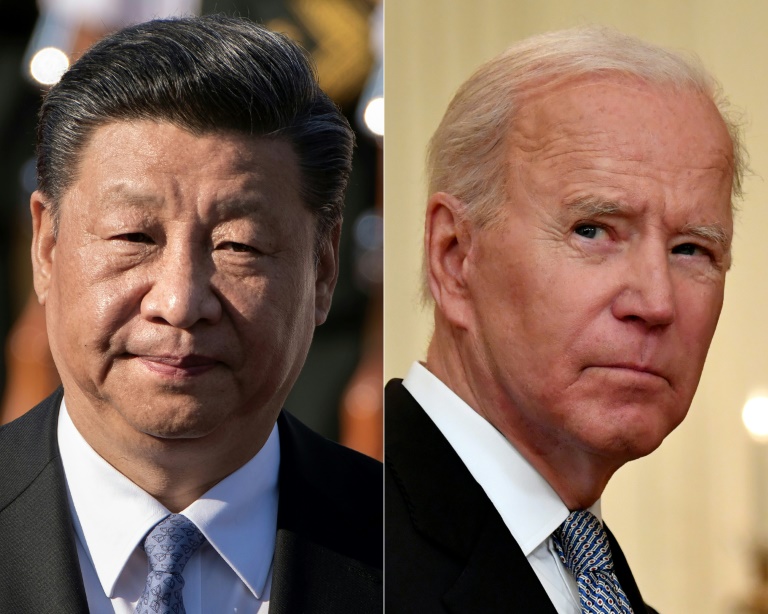
Xi Jinping and Joe Biden will hold talks at next week’s G20 summit in Bali, their first face-to-face meeting since the US president took office and just weeks after the Chinese leader secured a landmark third term.

The leaders of the world’s two biggest economies have spoken by phone multiple times since Biden became president in January 2021. But the Covid-19 pandemic and Xi’s subsequent aversion to foreign travel have prevented them from meeting in person.

Beijing’s foreign ministry said Friday that China would always “firmly defend” its interests in talks with the United States, while working to “manage differences, promote mutually beneficial cooperation and avoid miscalculation”.

The White House had said a day earlier the meeting would go ahead, and that the leaders were set to discuss “efforts to maintain and deepen lines of communication”, as well as how to “responsibly manage competition and work together where our interests align”.

Both powers have challenged each other’s military and diplomatic influence — especially in the Asia-Pacific region.

They have been at odds over an array of issues, including trade, human rights in China’s Xinjiang region, and the status of the self-ruled island of Taiwan.

UN chief Antonio Guterres warned Friday of “a growing risk that the global economy will be divided into two parts, led by the two biggest economies –- the United States and China”.

“A divided global economy, with two different sets of rules, two dominant currencies, two internets, and two conflicting strategies on artificial intelligence, would undermine the world’s capacity to respond to the dramatic challenges we face,” Guterres said at an Association of Southeast Asian Nations leaders’ meeting.

“This decoupling must be avoided at all costs.”

– ‘Inevitable’ triumph –

At last month’s Communist Party Congress, Xi warned of a challenging geopolitical climate without mentioning the United States by name, as he wove a narrative of China’s “inevitable” triumph over adversity.

The G20 summit will serve as a diplomatic re-emergence for Xi following his anointment in October as China’s leader for a third term.

In Indonesia’s Bali, he is also set to meet French President Emmanuel Macron less than a fortnight after hosting German Chancellor Olaf Scholz in Beijing.

Biden, in turn, is headed into the trip to Southeast Asia “with the wind at his back”, White House National Security Advisor Jake Sullivan said Thursday, with “an excellent opportunity both to deal with competitors from a strong position and to rally allies”.

US midterm elections this week brought surprisingly strong results for Biden’s party — limiting losses in the House, potentially holding the Senate, and chastening former president Donald Trump’s far-right wing.

Notably absent from the summit will be Russian President Vladimir Putin, who has been shunned by the West over his invasion of Ukraine, and who is instead sending Foreign Minister Sergei Lavrov.

A trip to the summit in Bali would have put Putin in the same room as Biden for the first time since the Ukraine war began on February 24.

Biden has fiercely criticised Putin and had ruled out meeting him in Bali if he went, unless they discussed the release of Americans held in Russia.

Putin’s spokesperson said Friday the president would not go to the G20 summit because of scheduling commitments.

Observers say the Kremlin is seeking to shield the 70-year-old leader from Western condemnation over the Ukraine war, in which Russian forces are suffering setbacks against a counter-offensive.

Political analyst Konstantin Kalachev said Putin did not want to step out of his comfort zone and face tough questions.

Putin’s refusal to attend the summit in person also suggests he does not have any firm proposal to end the offensive in Ukraine. 

“There is a sense of a dead end, and without concrete proposals Putin simply has nothing to do at this summit,” Kalachev told AFP.

– Diplomatic tightrope –

Host Indonesia pursues a neutral foreign policy and had rebuffed Western calls to disinvite Russia.

Indonesian President Joko Widodo had invited Putin despite the Ukraine assault, prompting a flurry of Western criticism. In August, he said Putin had accepted that invitation.

Ukrainian President Volodymyr Zelensky is expected to attend virtually. He had threatened to boycott the summit if Putin attended.

The G20 summit will be the bloc’s biggest meeting since the start of the pandemic.

It will be held under the shadow of divisions over the food and energy crises worsened by the Ukraine conflict, on top of soaring inflation and climate change.

G20 meetings held ahead of the leaders’ get-together all ended without a joint communique.

The summit is also not expected to close with a joint declaration, but the Indonesian foreign ministry said “the negotiation for the final document is still ongoing”.

burs-oho/je/ser/leg/dva

EU warns of 'difficult months' as eurozone faces recession

The EU warned Friday the eurozone was set to fall into recession this winter as Brussels hiked inflation forecasts for 2022 and 2023 on the back of high energy prices.

Europe is reeling from the economic shockwaves unleashed by Russia’s war on Ukraine, which have fuelled a spike in energy costs and hit the wallets of consumers around the continent.

The EU’s executive arm said increased uncertainty and prices “are expected to tip” the eurozone and most of the bloc’s member states into recession in the last quarter of this year.

“The contraction of economic activity is set to continue in the first quarter of 2023. Growth is expected to return to Europe in spring,” the European Commission said.

“With powerful headwinds still holding back demand, economic activity is set to be subdued, with GDP growth reaching 0.3 percent in 2023.”

Brussels predicted that the EU’s biggest economy Germany would fare the worst of the member states with a contraction of 0.6 percent next year. 

Overall eurozone GDP growth for 2022 was put at 3.2 percent after early strong months of the year. 

But the EU’s economy commissioner Paolo Gentiloni said “the impact of soaring energy prices, rampant inflation, are now taking their toll.”

“We have some difficult months ahead of us,” Gentiloni said. 

He cautioned that “the potential for further economic disruptions due to Russia’s war is far from exhausted.”

– Inflation peak in view? –

The downbeat forecast came as the commission sharply raised its predictions for inflation in this and next year.

It said eurozone inflation was expected to stand at 8.5 percent for 2022, a point higher than earlier forecast, and 6.1 percent in 2023, over two points higher than predicted previously. 

“Inflation has continued to rise faster than expected, but we believe that the peak is near. Most likely at the end of this year,” Gentiloni said.

“We are projecting a very gradual reduction of inflation because inflation next year is still projected to be quite high.”

He warned however that inflation could end up two points higher in 2023 if the EU “fails to prepare” adequately in advance for next winter by filling up its gas stores.

The baseline prediction put inflation in 2024 at 2.6 percent, still higher than the European Central Bank’s (ECB) target of two percent.

The ECB in October forecast a recession was on the way, as it announced another jumbo interest rate hike to try to curb inflation driven up by the fallout from Russia’s war on Ukraine.  

Bank president Christine Lagarde said last week that a “mild” eurozone recession was looming but would not be enough to bring down record-high inflation.

Gentiloni said that one “bright spot” remained the resilience of the EU’s labour market and that there was only expected to be a “moderate” increase in unemployment before a decline in 2024. 

The aggregate government budget deficit is expected to rise again from 3.4 percent in 2022 to 3.6 percent in 2023 as the EU debates reforming its fiscal rules.
EU warns of 'difficult months' as eurozone faces recession

The EU warned Friday the eurozone was set to fall into recession this winter as Brussels hiked inflation forecasts for 2022 and 2023 on the back of high energy prices.

Europe is reeling from the economic shockwaves unleashed by Russia’s war on Ukraine, which have fuelled a spike in energy costs and hit the wallets of consumers around the continent.

The EU’s executive arm said increased uncertainty and prices “are expected to tip” the eurozone and most of the bloc’s member states into recession in the last quarter of this year.

“The contraction of economic activity is set to continue in the first quarter of 2023. Growth is expected to return to Europe in spring,” the European Commission said.

“With powerful headwinds still holding back demand, economic activity is set to be subdued, with GDP growth reaching 0.3 percent in 2023.”

Brussels predicted that the EU’s biggest economy Germany would fare the worst of the member states with a contraction of 0.6 percent next year. 

Overall eurozone GDP growth for 2022 was put at 3.2 percent after early strong months of the year. 

But the EU’s economy commissioner Paolo Gentiloni said “the impact of soaring energy prices, rampant inflation, are now taking their toll.”

“We have some difficult months ahead of us,” Gentiloni said. 

He cautioned that “the potential for further economic disruptions due to Russia’s war is far from exhausted.”

– Inflation peak in view? –

The downbeat forecast came as the commission sharply raised its predictions for inflation in this and next year.

It said eurozone inflation was expected to stand at 8.5 percent for 2022, a point higher than earlier forecast, and 6.1 percent in 2023, over two points higher than predicted previously. 

“Inflation has continued to rise faster than expected, but we believe that the peak is near. Most likely at the end of this year,” Gentiloni said.

“We are projecting a very gradual reduction of inflation because inflation next year is still projected to be quite high.”

He warned however that inflation could end up two points higher in 2023 if the EU “fails to prepare” adequately in advance for next winter by filling up its gas stores.

The baseline prediction put inflation in 2024 at 2.6 percent, still higher than the European Central Bank’s (ECB) target of two percent.

The ECB in October forecast a recession was on the way, as it announced another jumbo interest rate hike to try to curb inflation driven up by the fallout from Russia’s war on Ukraine.  

Bank president Christine Lagarde said last week that a “mild” eurozone recession was looming but would not be enough to bring down record-high inflation.

Gentiloni said that one “bright spot” remained the resilience of the EU’s labour market and that there was only expected to be a “moderate” increase in unemployment before a decline in 2024. 

The aggregate government budget deficit is expected to rise again from 3.4 percent in 2022 to 3.6 percent in 2023 as the EU debates reforming its fiscal rules.
ASEAN agrees to talk to Myanmar opposition

Southeast Asian leaders agreed Friday to engage Myanmar opposition groups as they seek ways to quell the country’s escalating bloodshed which has seen thousands killed in clashes since last year’s coup.

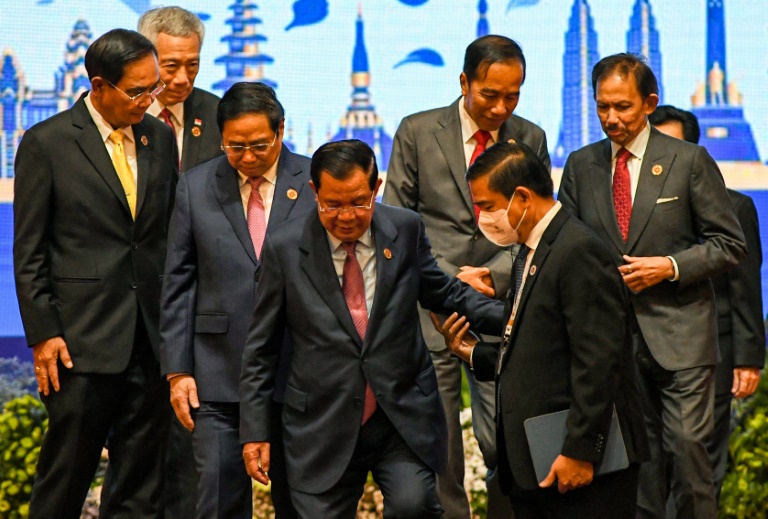
The Myanmar crisis dominated the first day of a gathering of the Association of Southeast Asian Nations (ASEAN) regional bloc in Phnom Penh that US President Joe Biden will join on Saturday.

Myanmar has spiralled into bloody conflict since the military ousted Aung San Suu Kyi’s civilian government in February last year.

ASEAN agreed upon a “five-point consensus” peace plan with Myanmar in April last year but the junta has so far ignored it and the bloc has struggled for months to come up with ways to enforce it.

Frustrated by the generals’ foot-dragging, leaders on Friday tasked their foreign ministers with drawing up “an implementation plan that outlines concrete, practical and measurable indicators with specific timeline”.

In a 15-point statement thrashed out over two days of difficult talks among foreign ministers, the bloc agreed to “engage all stakeholders soon”.

“Engagement would be done in a flexible and informal manner, primarily undertaken by the Special Envoy of the ASEAN Chair on Myanmar,” the leaders’ statement said.

This will likely involve meeting representatives of Myanmar’s National Unity Government (NUG), a self-declared parallel body dominated by former lawmakers from Suu Kyi’s party.

The NUG considers itself to be the country’s legitimate government but the junta regards its members as “terrorists”, and engaging with the group would be a significant step for ASEAN.

– ‘This is a warning’ –

The leaders also warned the generals that if they do not step up, the bloc could expand a ban on junta figures attending ASEAN meetings.

“This is a warning, this is a strong message from the leaders,” Indonesian Foreign Minister Retno Marsudi told reporters.

Within the bloc, Indonesia has been one of the main voices calling for tougher action on the junta, along with Malaysia and Singapore.

Philippine Assistant Secretary for ASEAN Affairs Dan Espiritu said that after more than a year of junta inaction it was time to “implement some other alternative plan in view of the limited progress”.

He characterised the situation in Myanmar as “critical and fragile with growing violence”.

The five-point plan calls for an end to violence, dialogue between all sides in Myanmar mediated by the ASEAN envoy, and humanitarian aid.

Last year’s coup slammed the door on Myanmar’s brief dalliance with democracy after decades under army rule.

Earlier this month Singapore’s Foreign Minister Vivian Balakrishnan warned that the Myanmar military had “a very high tolerance for pain, very high tolerance for isolation” and the crisis could take decades to resolve.

Addressing ASEAN leaders on Friday, UN Secretary-General Antonio Guterres condemned “escalating levels of violence” in Myanmar.

“I repeat my call on the Myanmar authorities to launch an inclusive process immediately to return to the democratic transition,” Guterres said.

Elsewhere on Friday, the summit agreed “in principle” to let East Timor join ASEAN, granting it observer status while it works towards full membership.

– US pressure – 

ASEAN has blocked Myanmar junta chief Min Aung Hlaing from attending the gathering in Phnom Penh, which Chinese Premier Li Keqiang is also attending.

China, the bloc’s biggest trading partner, has historically had good ties with the Myanmar junta, though it has voiced some unease at the ongoing chaos in the country.

Western powers have heaped sanctions on the junta and the United States has urged ASEAN to take a “forceful” stance to squeeze the junta to reduce the violence, which escalated in recent weeks with deadly military air strikes on civilian targets including a school and concert.

Daniel Kritenbrink, the top US diplomat for East Asia, said Myanmar would be a top subject when Biden meets ASEAN leaders on Saturday.

On Sunday Biden will sit down with Li in Phnom Penh at the East Asia Summit, which takes in ASEAN members plus other regional powers including Russia, Australia and New Zealand.

A day later the US leader flies to a high-stakes meeting with his Chinese counterpart Xi Jinping on the sidelines of the G20 summit in Indonesia.

Myanmar state media have slammed ASEAN’s involvement, accusing the bloc of being a “lapdog for the US”, while the junta warned against imposing a timeline on the peace process, saying it could lead to “negative implications”.

India's top court frees Rajiv Gandhi's killers

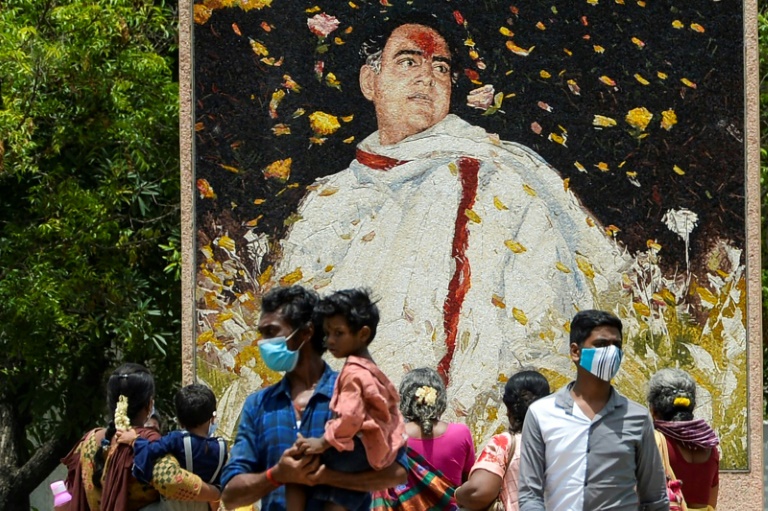
India’s top court Friday ordered the release of six people convicted over the assassination of former prime minister Rajiv Gandhi. 

Gandhi was 46 when he was killed by a woman suicide bomber at an election rally in the southern state of Tamil Nadu in 1991.

The assassination was carried out by the Liberation Tigers of Tamil Eelam (LTTE), a Sri Lankan armed separatist group.

India’s supreme court said the convicts were being released based on their “satisfactory conduct” in prison and that they had served over three decades of jail time.

The six — three of whom had been condemned to death before their sentences were commuted — are the last still in prison for the assassination, although two were already out on parole. 

“I am very happy… I am very thankful to each and everybody,” Nalini Sriharan, one of the two on parole, told broadcaster CNN News18. 

The “last 32 years have been a struggle”, she added.

She and her husband — another of the convicts ordered released by the court — were both initially condemned to death.

Earlier this year the court freed another convict who had faced execution, AG Perarivalan, citing good conduct. 

Gandhi became India’s youngest prime minister after his mother and predecessor Indira Gandhi was assassinated by her Sikh bodyguards in 1984.

The family’s Congress party dominated Indian politics for decades and Rajiv’s widow Sonia remains the most powerful figure in the organisation, while their son Rahul is seen as current Prime Minister Narendra Modi’s main political opponent. 

Rajiv Gandhi’s killing was largely seen as a response to his move to send Indian forces to Sri Lanka in 1987 to disarm the Tamil rebels. 

India later withdrew its troops after losing more than 1,000 of them in fights with the rebels.

The release of the convicts has been the subject of much debate in India, and Congress condemned the court decision as “totally unacceptable” and “completely erroneous”.

“It is most unfortunate that the Supreme Court has not acted in consonance with the spirit of India on this issue,” the party said, tweeting a statement by senior member Jairam Ramesh.

But India has a significant Tamil population of its own, and state governments in Tamil Nadu have repeatedly called for the convicts to be freed.

Earlier this year, current Tamil Nadu chief minister MK Stalin tweeted a picture of him hugging Perarivalan in Chennai after his release. 

Gandhi’s son has over the years spoken about how he and his sister Priyanka had forgiven their father’s killers. 

“We were very upset and hurt and for many years we were quite angry,” the Indian Express newspaper quoted Rahul as saying in 2018. But they had since forgiven them, he said, “in fact, completely”. 

Close Bitnami banner
Bitnami