World

Repeat hacks highlight Australia's cyber flaws

Inadequate privacy safeguards and the stockpiling of sensitive customer information have made Australia a lucrative target in the eyes of foreign hackers, cybersecurity experts told AFP following a series of major data breaches.

Medibank, Australia’s largest private health insurer, recently confirmed that hackers had accessed the data of 9.7 million current and former customers, including medical records related to drug abuse and pregnancy terminations. 

Telecom company Optus fell prey to a data breach of similar scale in late September, during which the personal details of up to 9.8 million people were accessed. 

Both incidents sit comfortably among the largest data breaches in Australian history. 

Australian National University cybersecurity expert Thomas Haines said many companies had been hoarding personal data that they should not have been hanging on to. 

“There was a famous line for a while: Data is the new oil,” he told AFP. 

“If data is the new oil, then we’re living the era of the weekly oil spill.” 

Haines contrasted Australia’s approach with that of the European Union, which in 2018 adopted sweeping privacy reforms limiting how organisations collect, use and store personal data.

“There have got to be incentives in place to stop companies hoarding data they don’t need, or to penalise those companies for big leaks. Europe has done this,” he said.

“At the moment the business incentives are basically along the lines of: Let’s just keep a whole bunch of data.”

Haines said Medibank appeared to be an exception, in that most of the sensitive information within its databases had been stored for good reason. 

– Hacking ‘for profit’ – 

Australia’s comparatively weak safeguards against identity theft meant it was also easier to exploit stolen personal information, Haines said. 

“All they need to know is your passport, your driver’s licence and some other things — and then I can start taking out loans in your name.”

Haines said European countries such as Norway had much more stringent requirements involving face-to-face contact.

Dennis Desmond, a former FBI agent and US Defense Intelligence Agency officer, said most hackers were searching for particular types of data. 

“For-profit hackers are going after healthcare data, they’re going after identity data and credentials to access systems,” he told AFP.

“There is a profit motivation there, otherwise they wouldn’t be risking jail and prosecution.”

The Medibank hackers this week started leaking stolen data to a dark web forum, after the company refused to pay a US$9.7 million (Aus$15 million) ransom.

The Optus breach led to the theft of customers’ names, birth dates, and passport numbers.

– Russia blamed –

Australian Federal Police Commissioner Reece Kershaw on Friday blamed the Medibank cyberattack on a team of hackers based in Russia.

“We believe those responsible for the breach are in Russia,” he told reporters.

“Our intelligence points to a  group of loosely affiliated cyber criminals who are likely responsible for past significant breaches in countries across the world.”

Medibank data leaked to the dark web so far has included hundreds of potentially-compromising medical records related to drug addiction, alcohol abuse and sexually-transmitted infections. 

Home Affairs Minister Clare O’Neil conceded on Friday the country’s cyber defences had not always been up to scratch. 

University of Sydney data researcher Jane Andrew said one major flaw was that Australian companies were not always obliged to report data breaches. 

“There are heaps of data breaches happening all the time that we don’t hear anything about,” she told AFP. 

“Companies have been gathering data because it’s seen to be valuable, without fully understanding the potential risks.” 
China eases Covid measures, cutting quarantine and scrapping flight bans

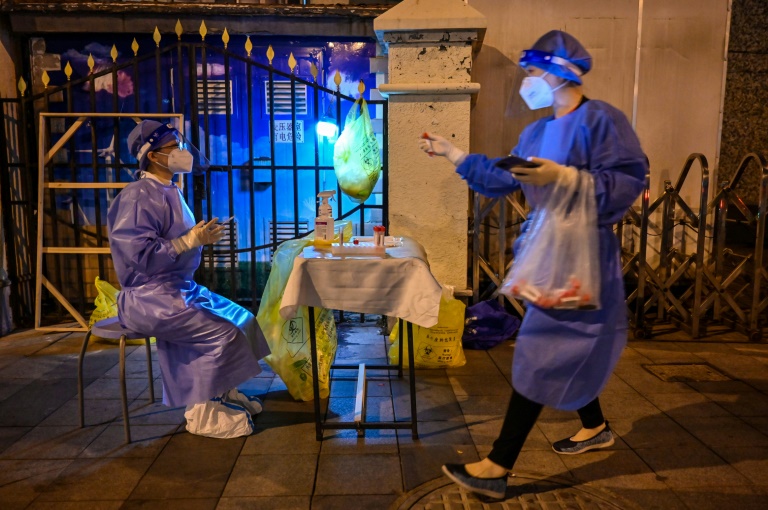
China announced the relaxation of some of its hardline Covid-19 restrictions on Friday, after authorities had vowed to stick to a zero-tolerance virus approach despite mounting economic damage.

The country is the last major economy welded to a strategy of stamping out virus flare-ups as they occur, through a combination of snap lockdowns, mass testing and lengthy quarantines.

Top leaders had pledged to stick “unswervingly” to the policy, which has forced business closures, roiled international supply chains and weighed heavily on growth.

But a notice from the country’s disease control agency on Friday said the Politburo Standing Committee — the apex of power in China — met Thursday to rubberstamp limited relaxations.

According to the notice, quarantines for inbound travellers will be cut from 10 days to eight, consisting of five days in a state isolation centre and three days at home.

Inbound arrivals will still be required to undergo six nucleic acid tests and will not be allowed to freely set foot outside during those eight days, the notice says.

It adds that travellers will only be required to show one negative Covid test within 48 hours of boarding flights to China, a reduction from the current two tests.

– Relaxing strict policies –

The new rules single out “important business personnel” and “sports groups” as examples of privileged groups permitted to skip quarantine as long as they remain in a virus-secure “closed loop” for the duration of their stays.

It added that a so-called “circuit breaker” mechanism on inbound flights would be abolished, bringing an end to a policy that saw the snap closures of flight routes if a certain proportion of passengers tested positive for the virus.

In further signs of easing, the notice did away with the requirement to identify and isolate “secondary close contacts” — those who may have come into contact with people who recently passed near infected people.

A domestic virus risk system has been reduced from three tiers to two, with areas to be labelled as either “high-risk” and subject to curbs, or “low-risk” with minimal restrictions.

People travelling from high- to low-risk areas will be required to undergo seven days of isolation at home, instead of staying in centralised facilities.

Places will be defined as “low-risk” if they record zero new infections for five successive days.

Workers in environments where exposure to the virus is higher — such as cabin crews, airport staff and quarantine hotel personnel — will undergo shortened quarantines, the notice said.

On Thursday, Chinese state media reported top leaders as saying they would not waver from the zero-Covid policy, echoing a vow last week to “unswervingly” stick to the strategy.

China's Singles Day shopping spree enters final stretch

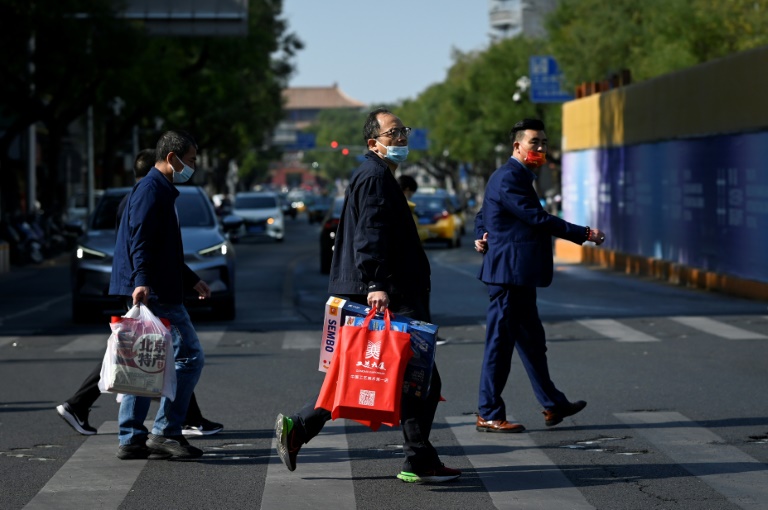
China’s Singles Day shopping bonanza entered its final stretch Friday, with all eyes on whether sales can top a record one trillion yuan ($140 billion) despite the country’s struggling economy.

Conceived by technology giant Alibaba, the informal holiday’s title riffs on a tongue-in-cheek celebration of singlehood inspired by the four ones — “11/11” — that denote its date of November 11.

It has grown to encompass much of China’s retail sector — including traditional brick-and-mortar stores, second-hand sales platforms and even rival shopping giant JD.com — with merchants offering varying levels of discounts starting in late October.

The combined gross value of products sold by Alibaba and JD.com this year “may surpass a trillion yuan,” Xiaofeng Wang, principal analyst at research firm Forrester, said in a note — up from the total of 965 billion yuan raked in at last year’s event.

Once a festival of frenzied consumption led by Alibaba’s effervescent founder Jack Ma, Singles Day has been more muted in recent years as Beijing cracks down on online platforms.

Last year’s holiday was virtually ignored by state-controlled news outlets with a host of other events competing for shoppers’ wallets.

Beijing resident Liu Yingxue said the Single’s Day atmosphere was “not as enthusiastic” as in previous years.

“Platforms like (Alibaba’s) Taobao and JD.com used to have more ads and promotions,” she told AFP. 

“And they don’t give so many discounts these days.”

– Economic strain –

The mood has been dampened further this year as Beijing persists with a zero-Covid strategy that has hammered business confidence and chipped away at consumer demand.

The holiday, conceived in 2009, has previously lured throngs of Chinese influencers alongside Western celebrities including Kim Kardashian and Taylor Swift, drawing heavy coverage in both domestic and international media.

This time around, a series of scandals and a campaign against tax evasion have lowered expectations of celebrity endorsements, with influential Chinese live-streamer Viya disappearing from social media late last year in the wake of a tax probe.

Alibaba said last week the event could “make a big difference” for retailers struggling with supply-chain disruptions and inflation this year, including a slew of foreign brands.

Businesses and consumers alike have been laid low by China’s stringent Covid prevention policies, which see officials wield snap lockdowns, mass testing and lengthy quarantines in response to a handful of cases.

Beijing resident Li Xiaofeng said the “state of the whole economy” was likely putting platforms and merchants under more pressure, “so they are offering fewer discounts”.

“I think it’s because of Covid,” said Lin Xiangru, another denizen of China’s capital. 

“People have less guaranteed income than before, so they don’t want to spend money on desired products at such a specific moment.”

China is the last major economy wedded to a strategy of extinguishing new outbreaks as they occur.

State media reported Thursday that top leaders had again vowed to stick “unswervingly” to the policy.

Australia blames Russian hackers for medical data theft

Russian hackers carried out a cyberattack on a major Australian healthcare company that breached the data of 9.7 million people, including the country’s prime minister, police said Friday.

The hackers started leaking the data this week after Medibank, the country’s largest health insurer, refused to pay a $9.7 million (Aus$15 million) ransom.

Australian Federal Police commissioner Reece Kershaw blamed the attack on Russia-based “cyber criminals”. 

“We believe those responsible for the breach are in Russia,” he told reporters.

“Our intelligence points to a group of loosely affiliated cyber criminals who are likely responsible for past significant breaches across the world.”

The hackers have been drip-feeding the stolen data to a dark web forum.

The first leaks appeared to have been selected to cause maximum harm: targeting those who received treatment related to drug abuse, sexually transmitted infections, or pregnancy terminations.

Kershaw said the hackers also appeared to be supported by people living outside Russia.

“These cyber criminals are operating like a business with affiliates and associates who are supporting the business.

“We also believe that some affiliates may be in other countries.”

He added that Australian police would be working with Interpol and seeking the cooperation of their counterparts in Russia.

“We’ll be holding talks with Russian law enforcement about these individuals,” he said.

“Russia benefits from the intelligence sharing and data shared through Interpol and with that comes responsibilities and accountability.”

– Retaliation threat –

Australia has repeatedly condemned Russia’s invasion of Ukraine and has provided Kyiv with hundreds of millions of dollars in aid and military equipment.

Australia’s foreign intelligence agency in April warned that backing Ukraine could open the country up to reprisals from Russian hackers. 

“Russian-aligned cybercrime groups have threatened to conduct cyber operations in retaliation for perceived cyber offensives against the Russian government,” the Australian Signals Directorate said in an advisory note. 

“Some groups have also threatened to conduct cyber operations against countries and organisations providing materiel support to Ukraine.”

Kershaw said police knew the identities of the hackers but he would not be naming them.

Cybersecurity analysts have suggested they could be linked to Russian hacker group REvil. 

REvil — an amalgam of ransomware and evil — was reportedly dismantled by Russian authorities earlier this year, after extracting an $11 million ransom from JBS Foods, a major food conglomerate. 

– ‘Rolled gold mongrels’ –

Australian National University cybersecurity expert Thomas Haines said tracking the hackers down was the easiest part for police.

“It’s unusual for hackers to cover their tracks so well that you don’t know where they came from,” he told AFP. 

“But there are certain areas of the world where the ability to apply any pressure is effectively zero.”

Kershaw said Australian police were taking “covert measures” to bring the hackers to justice. 

“To the criminals, you know we know who you are,” he said. 

“The Australian Federal Police has some significant runs on the scoreboard when it comes to bringing overseas offenders back to Australia to face the justice system.”

Education Minister Jason Clare on Friday called the hackers “rolled gold mongrels”, while Home Affairs Minister Clare O’Neil has dubbed them “scummy criminals”.

O’Neil on Thursday said the “smartest and toughest” people in Australia were hunting down the hackers.

In a taunting reply posted to the dark web early Friday morning, the hackers said: “We always keep our word.” 

“We should post this data, because nobody will believe us in the future.”

Australia blames Russian hackers for medical data theft

Russian hackers carried out a cyberattack on a major Australian healthcare company that breached the data of 9.7 million people, including the country’s prime minister, police said Friday.

The hackers started leaking the data this week after Medibank, the country’s largest health insurer, refused to pay a $9.7 million (Aus$15 million) ransom.

Australian Federal Police commissioner Reece Kershaw blamed the attack on Russia-based “cyber criminals”. 

“We believe those responsible for the breach are in Russia,” he told reporters.

“Our intelligence points to a group of loosely affiliated cyber criminals who are likely responsible for past significant breaches across the world.”

The hackers have been drip-feeding the stolen data to a dark web forum.

The first leaks appeared to have been selected to cause maximum harm: targeting those who received treatment related to drug abuse, sexually transmitted infections, or pregnancy terminations.

Kershaw said the hackers also appeared to be supported by people living outside Russia.

“These cyber criminals are operating like a business with affiliates and associates who are supporting the business.

“We also believe that some affiliates may be in other countries.”

He added that Australian police would be working with Interpol and seeking the cooperation of their counterparts in Russia.

“We’ll be holding talks with Russian law enforcement about these individuals,” he said.

“Russia benefits from the intelligence sharing and data shared through Interpol and with that comes responsibilities and accountability.”

– Retaliation threat –

Australia has repeatedly condemned Russia’s invasion of Ukraine and has provided Kyiv with hundreds of millions of dollars in aid and military equipment.

Australia’s foreign intelligence agency in April warned that backing Ukraine could open the country up to reprisals from Russian hackers. 

“Russian-aligned cybercrime groups have threatened to conduct cyber operations in retaliation for perceived cyber offensives against the Russian government,” the Australian Signals Directorate said in an advisory note. 

“Some groups have also threatened to conduct cyber operations against countries and organisations providing materiel support to Ukraine.”

Kershaw said police knew the identities of the hackers but he would not be naming them.

Cybersecurity analysts have suggested they could be linked to Russian hacker group REvil. 

REvil — an amalgam of ransomware and evil — was reportedly dismantled by Russian authorities earlier this year, after extracting an $11 million ransom from JBS Foods, a major food conglomerate. 

– ‘Rolled gold mongrels’ –

Australian National University cybersecurity expert Thomas Haines said tracking the hackers down was the easiest part for police.

“It’s unusual for hackers to cover their tracks so well that you don’t know where they came from,” he told AFP. 

“But there are certain areas of the world where the ability to apply any pressure is effectively zero.”

Kershaw said Australian police were taking “covert measures” to bring the hackers to justice. 

“To the criminals, you know we know who you are,” he said. 

“The Australian Federal Police has some significant runs on the scoreboard when it comes to bringing overseas offenders back to Australia to face the justice system.”

Education Minister Jason Clare on Friday called the hackers “rolled gold mongrels”, while Home Affairs Minister Clare O’Neil has dubbed them “scummy criminals”.

O’Neil on Thursday said the “smartest and toughest” people in Australia were hunting down the hackers.

In a taunting reply posted to the dark web early Friday morning, the hackers said: “We always keep our word.” 

“We should post this data, because nobody will believe us in the future.”

Hun Sen hands out Cambodian-made watches to summit VIPs

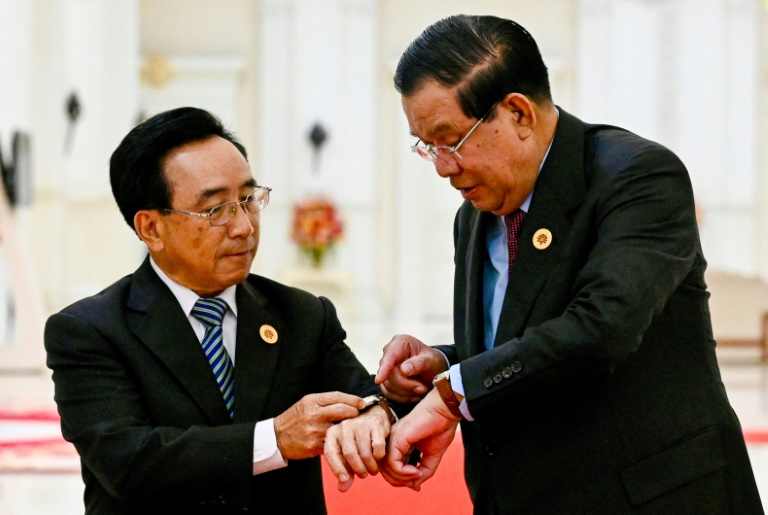
World leaders attending a summit in Phnom Penh will receive Cambodian-made watches from host Hun Sen, a noted fan of luxury timepieces.

The gift to VIPs at the Association of Southeast Asian Nations (ASEAN) and East Asian Summit gatherings has raised eyebrows in a country with no history of watchmaking.

US President Joe Biden and Chinese Premier Li Keqiang are among the guests over three days of meetings, which will cover the crisis in Myanmar and other regional issues.

The 25 tourbillion watches will be presented to delegates, said Hun Sen, who plans to wear one himself throughout the summit and at the upcoming G20 and APEC meets.

The watches feature matt grey faces emblazoned with “ASEAN Cambodia 2022” set in silver-coloured casing inscribed “Made in Cambodia”, according to pictures on Hun Sen’s official Facebook page.

Hun Sen — who has ruled the kingdom for 37 years  and is Asia’s longest-serving leader — said the new watches “show the progress in science and technology of Cambodia.”

The strongman ruler has been pictured in recent years wearing luxury Swiss watches worth hundreds of thousands of dollars.

Cambodian firm Prince Horology — tasked with designing and assembling the pieces — rejected suggestions that the items were overly luxurious, stressing that the watch faces were made of stainless steel.

Tourbillion watches are so-called for their intricate inner mechanism, seen from the outside, and patented around 200 years ago by a Swiss-French watchmaker.

While modern horology has made such designs obsolete, tourbillions are highly desirable to watch collectors with limited editions changing hands for hundreds of thousands of dollars.

“They are obviously highly decorated, highly polished,” Prince Horology spokesperson Gabriel Tan told AFP.

The watches also feature “synthetic rubies”, he said, that are “used to facilitate the watch movement.”

All 25 were designed and assembled in Cambodia over the last 18 months, Tan said, declining to comment on their cost.

But in a country which boasts a rich cultural and artistic history, some questioned the gift.

“We are not Switzerland,” said Cambodian rights activist Ou Virak, founder and president of the pro-democracy Future Forum group.

“It appears desperate, at least from the outside looking in,” he told AFP, adding the gesture was unlikely to be looked on in a “positive” way.

“You have to really question who is making the watch,” he said.

“I just hope that it is not another Chinese company made with a Cambodian stamp on it.”

Prince Horology is part of the Prince Group of companies and is headed by Chen Zhi, a Chinese citizen granted Cambodian nationality in 2014, according to Radio Free Asia.

The group is among the largest conglomerates in the kingdom, with interests in banking, tourism, food and real estate.

Bong! Big Ben's back in Britain

Getting up close to Big Ben requires earplugs, and ear defenders over them to be safe. When the 13.7-tonne bell sounds, the vibration hits you in the chest.

After a five-year restoration project, the world-famous ringer is back with a bong.

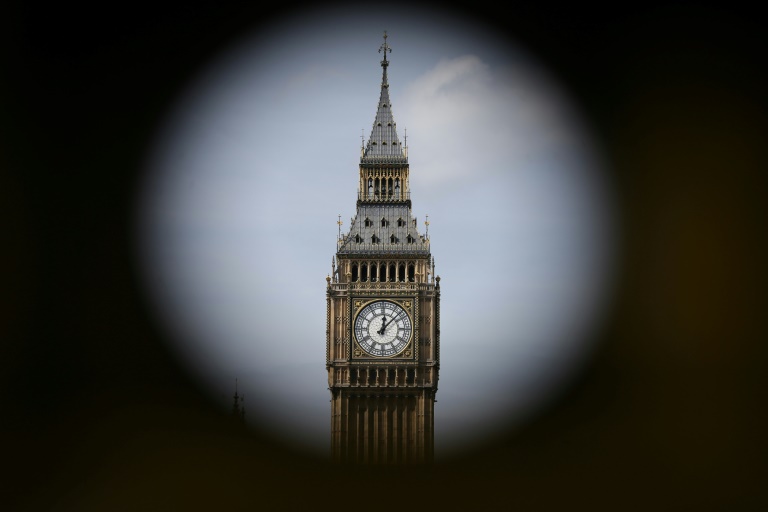
The Great Clock towering above Britain’s Houses of Parliament is resuming daily operations following the painstaking renovation of more than 1,000 moving parts.

When the clock’s five cast-iron bells including Big Ben fell silent in 2017, a mournful crowd of parliamentarians and staff gathered below. Some shed tears.

But after a week of testing, normal service will resume every 15 minutes from 11:00 am (1100 GMT) on Sunday. 

The time marks the moment on November 11, 1918 when the guns fell silent in World War I. In Britain, Remembrance Sunday immediately follows Armistice Day every November 11.

They are two of the few occasions that Big Ben and his partners have rung since 2017, along with New Year’s Eve, when Britain left the European Union in 2021, and the funeral of Queen Elizabeth II in September.

Atop the 96-metre (315-foot) Elizabeth Tower is the belfry housing the bells — protected by exterior netting to keep out bats and pigeons.

Beyond lie some of London’s most spectacular vistas.

But parliament’s three in-house timekeepers don’t have time to enjoy the view.

Ian Westworth, 60, and his colleagues have been busy overseeing the tests to ensure everything is in order after the £80-million ($90-million) restoration.

– London calling –

“It’s the sound of London back again,” Westworth told AFP on a dawn tour of the tower.

“The bell’s sounded through wars, and you try and imagine what this bell’s actually seen — 160 years of development.” 

The Elizabeth Tower, previously called the Clock Tower, was renamed in 2012 to honour the late queen’s Diamond Jubilee. 

When first built in the 1840s, it dominated the Westminster skyline. Today, newer and taller buildings lie nearby.

“You used to be able to hear this (Big Ben) on a quiet night up to 15 miles (24 kilometres) away,” Westworth said, as a chill wind whistled through the belfry.

“Now you’re lucky on a day like today if you can hear it the other side of Parliament Square.”

The five-year restoration involved cleaning and repainting each of the five bells’ hammers and arms. The bells themselves stayed in place.

Big Ben sounds the hour, and is so large that flooring in the tower beneath would have to be dismantled if it ever had to be removed. 

The four smaller bells around it sound the quarter-hour.

The biggest job was taking apart the 11.5-tonne clock mechanism dating from 1859 so that every cog and pinion could be cleaned, repaired and re-oiled by a specialist company in Cumbria, northwest England.

Other changes were cosmetic. 

Twenty-eight round LED lights now illuminate the four clock faces, a balance of green and white offering the closest match to how they would have looked in gas-lit Victorian times.

Above the bells sits a taller LED light, which glows white when parliament is sitting. 

State-of-the-art sprinklers have been installed throughout the tower, although the belfry is beyond reach of the system.

– Timeless technology –

In past years before the renovation, parliament’s timekeepers would benchmark the Great Clock’s time against the telephone speaking clock.

Now, it is calibrated by GPS via Britain’s National Physical Laboratory.

But the method to adjust the clock’s timing mechanism remains old-fashioned: pre-decimal pennies are added or removed from weights attached to two giant coiled springs, to make or lose a second.

As the top of the hour approaches, it is time to don the ear defenders again for the continuing series of tests. 

Big Ben bongs seven times, setting off a bass vibrato in the gantry around it. 

While deafening, the unmistakeable peal of the cracked bell is also a reassuring note of constancy after a year of political upheaval in Britain, and as the rest of the parliamentary estate frays.

Political bickering over the costs is holding up a bigger renovation of the ageing complex.

But Westworth and his 35-year-old colleague Alex Jeffrey remain focused on the job in hand: tending to parliament’s 2,000 clocks, many of them irreplaceable antiques.

“Every day you’re keeping time in a very hands-on way, using technology, arts and crafts,” Jeffrey said.

“It’s very tactile, as is maintaining the Great Clock,” he added. “It’s the best job in the world.”

Japan govt backs major firms in next-gen chip project

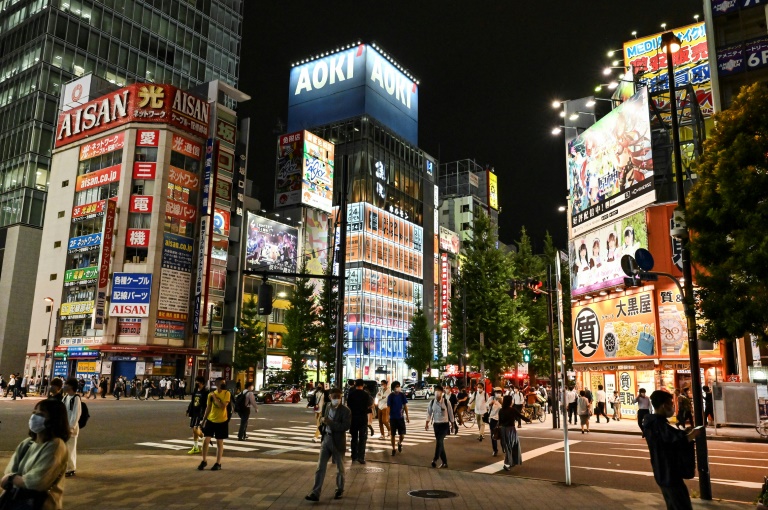
The Japanese government will pour half a billion dollars into a new project to develop and make next-generation microchips, chief cabinet secretary Hirokazu Matsuno said Friday.

Eight major companies including Sony, SoftBank, Toyota and telecoms giant NTT have joined forces for the venture, Japanese media reports said.

The new firm, named Rapidus, will develop and mass produce next-generation semiconductors by 2027, according to major media outlets including national broadcaster NHK and the Mainichi Shimbun.

The pandemic has fuelled a global shortage of memory chips, with governments scrambling to secure supplies as carmakers and tech companies have been forced to make production cuts.

Each company has invested around one billion yen ($7 million), with MUFG Bank investing 300 million yen, according to the industry ministry. 

The investor companies are expected to officially announce the project later on Friday. 

The ministry will grant 70 billion yen to Rapidus to lead a research and development project for next-generation semiconductors, Matsuno said without elaborating.

“Semiconductors are a key technology that supports digitalisation and decarbonisation,” Matsuno said at a regular briefing.

“We hope these steps will help improve the competitiveness of our country’s semiconductor industry.”

The chip shortage has prompted calls for the government and businesses to secure semiconductor supplies for Japan’s economic security, as geopolitics become increasingly volatile — especially concerning Taiwan, which has a huge chip-producing capacity.

The United States recently introduced new measures to limit China’s access to high-end semiconductors with military uses, a move that has wiped billions from chip companies’ valuations worldwide.

The German economy ministry also has recommended that the sale of a chip factory to a Chinese-owned firm should be blocked as it poses a security threat, government sources said Tuesday.

Last year, Taiwanese chip giant TSMC and Sony said they would tie up on a new $7 billion plant in Japan.

Turkey seeks Central Asia inroads with Russia distracted

Turkey on Friday will lead a summit of Central Asian countries, aiming to strengthen economic ties with the region’s resource-rich ex-Soviet states while Moscow is distracted by war in Ukraine.

Turkish President Recep Tayyip Erdogan will preside over the Organization of Turkic States (OTS) summit in Uzbekistan’s historic city of Samarkand.

Erdogan has for several years been pushing for closer cultural, linguistic and religious ties with several ex-Soviet countries in the Caucasus and Central Asia.

Russia’s invasion of Ukraine in late February spooked Moscow’s neighbours in Central Asia and spurred Kazakhstan — geographically the region’s largest country — and Uzbekistan, the most populous, to look for alliances elsewhere: both with China and also Europe.

In a sign of Ankara’s determination to gain a foothold here while Moscow focuses on Ukraine, this is Erdogan’s third trip to the region in less than two months.

The OTS group includes Azerbaijan — a former Soviet republic with a Turkic language located in the Caucasus region bordering Turkey — as well as Kazakhstan, Kyrgyzstan and Uzbekistan in Central Asia.

Turkmenistan, also in Central Asia, and EU member state Hungary are observer members of the group.

The group last year dropped its former name, the Turkic Council, in favour of the Organization of Turkic States.

– Moscow’s ‘failures’ –

The group could expand further if isolated Turkmenistan becomes a fully-fledged member — an expansion announced by Turkey’s foreign ministry but not confirmed by Ashgabat.

If Turkmenistan does join, the union set up in 2009 will incorporate all the Central Asian countries that speak languages in the Turkic group.

“This community of Turkic states is beginning to take shape,” Bayram Balci, who teaches political science at France’s Sciences Po, told AFP.

In Samarkand, locals said they viewed the Turkish-led summit positively.

“The people of Turkey are considered to be our brother nation. We have a lot in common… and we like this event,” said 18-year-old student Sevinch Zhurakulova.

Khadicha Murodova, a 22-year-old Samarkand resident, said she thought it was “very pleasant that these countries are coming and communicating with each other”.

Turkey’s efforts to build political alliances with Turkic ex-Soviet states after the 1991 breakup of the USSR were long hampered by the lingering influence of Russia.

“Since the beginning of this dream of creating a Turkic community, the weight and influence of Russia have been obstacles,” Balci said, pointing to Moscow’s strong economic and military ties in the former Soviet states. 

But the Nagorno-Karabakh war between Armenia and Azerbaijan in 2020, followed by the invasion of Ukraine by Russia this year, have given new impetus to Turkey’s quest for influence in the region, aided by Moscow’s weakening position.

“Turkey is indirectly reaping the fruits of Russia’s failures and mistakes, which are allowing other countries to gain a foothold,” Balci said.

– A ‘threat’ to Moscow –

For Andrei Grozin, Central Asia analyst at Moscow’s Institute of CIS Countries, “any activity in Central Asia is perceived by Moscow, if not as a direct threat, at least as undesirable”.

But Turkey and Russia, which cooperate closely despite disagreements in several geopolitical arenas, could find common ground to work together in Central Asia.

“The interests of Turkey and Russia in Central Asia are not fundamentally incompatible,” Grozin said, noting that Ankara does not have “as many resources as Moscow” anyway.

Balci said Central Asia countries would cherry-pick from alliances offered by Moscow and Ankara, “taking what interests them and rejecting what does not interest them”.

Turkey is also deepening military ties with former Soviet states, in particular with the sale of drones.

It has also been flexing its soft power by funding mosques in the region and allocating money for schools and scholarships.

The International Trade Center (ITC), a Geneva-based agency attached to the World Trade Organization and the United Nations, says that the volume of Turkish-Central Asian trade in 2019 amounted to some $7.3 billion.

That figure falls far behind Central Asia’s volume of trade with the European Union and Russia, which the ITC says amounted that year to around $29 billion, and China ($25 billion).

bur-video-bk-bur/ah

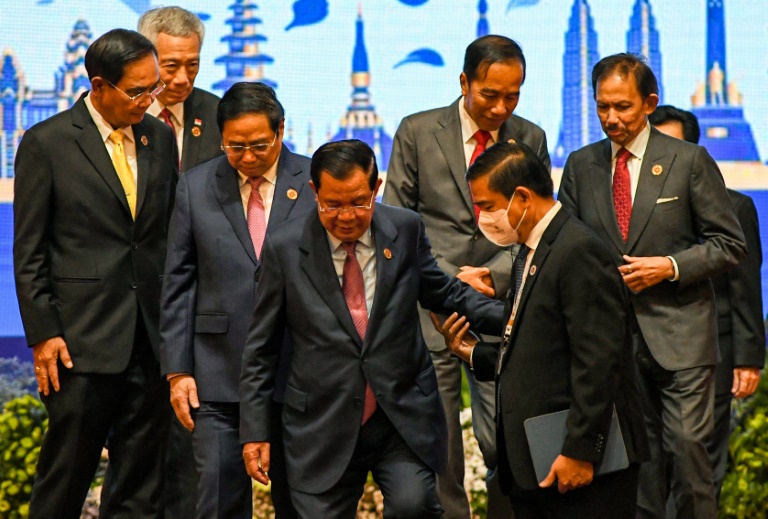
ASEAN leaders struggle for answers to Myanmar crisis

The escalating crisis in Myanmar was set to dominate summit talks Friday between Southeast Asian leaders struggling to find a way to calm the bloodshed in the junta-ruled country.

Leaders from the Association of Southeast Asian Nations (ASEAN) regional bloc will discuss ways to implement a peace plan agreed with Myanmar last year which the junta has so far ignored.

Myanmar has spiralled into bloody conflict since the military ousted Aung San Suu Kyi’s civilian government in February last year, with thousands killed in clashes since.

There is growing frustration among the other nine ASEAN countries at the generals’ foot-dragging on the so-called “five-point consensus” but so far no concrete plan to enforce it. 

President Ferdinand Marcos Jr of the Philippines called for “patience” in resolving the crisis at talks with Cambodian premier Hun Sen, the summit host.

ASEAN has blocked junta chief Min Aung Hlaing from attending the gathering in Phnom Penh, which US President Joe Biden will join on Saturday.

Biden will then go on to hold a high-stakes meeting with his Chinese counterpart Xi Jinping on the sidelines of the G20 summit in Indonesia on Monday.

China, ASEAN’s biggest trading partner, has historically had good ties with the Myanmar junta, though it has voiced some unease at the ongoing chaos in the country.

Chinese Premier Li Keqiang will hold talks with ASEAN leaders on Friday afternoon, before joining Biden and other regional leaders for an East Asia Summit in Phnom Penh on Sunday.

– US pressure –

Western powers have heaped sanctions on the junta and the United States has urged ASEAN to take a “forceful” stance to squeeze the junta to reduce the violence, which escalated in recent weeks with deadly military air strikes on civilian targets including a school and concert.

Daniel Kritenbrink, the top US diplomat for East Asia, said Myanmar would be a top subject when Biden meets ASEAN leaders on Saturday.

Within the bloc, Indonesia, Malaysia and Singapore have led a push for tougher action.

Indonesian President Joko Widodo met Singapore Prime Minister Lee Hsien Loong on the sidelines of ASEAN late Thursday to discuss their concerns about the situation in Myanmar.

“Both leaders expressed disappointment with the absence of commitment of the Myanmar military junta in implementing the five-point consensus,” Indonesian Foreign Minister Retno Marsudi said in a statement.

Earlier this month Singapore’s Foreign Minister Vivian Balakrishnan warned that the Myanmar military had “a very high tolerance for pain, very high tolerance for isolation” and the crisis could take decades to resolve.

– Junta defiance –

ASEAN foreign ministers held emergency talks on Myanmar last week and said afterwards they were “even more determined” to find a solution.

Myanmar state media have slammed ASEAN’s involvement, accusing the bloc of being a “lapdog for the US” while the junta warned against imposing a timeline on the peace process, saying it could lead to “negative implications”.

An early draft of a leaders’ statement seen by AFP tasks ASEAN officials with drawing up an “implementation plan”, but gives no details of what this would involve.

Ahead of the meeting, a senior ASEAN diplomat told AFP that expelling Myanmar from the bloc was not under consideration.

But the diplomat and the draft statement both suggest ASEAN could take up official contact with Myanmar’s National Unity Government (NUG).

The NUG is a self-declared parallel body dominated by former lawmakers from Suu Kyi’s party which considers itself to be Myanmar’s legitimate government.

The Myanmar junta regards the NUG as “terrorists”, and engaging with the group would be a significant step for ASEAN.

On the eve of the summit, rights campaign group Amnesty International called on the leaders to agree a complete embargo on the transfer of arms and aviation fuel to Myanmar.

Close Bitnami banner
Bitnami