World

CO2 pollution from fossil fuels to hit all-time high in 2022

Carbon dioxide emissions from fossil fuels, the main driver of climate change, are on track to rise one percent in 2022 to reach an all-time high, scientists said Friday at the COP27 climate summit in Egypt.

Emissions from oil, fuelled by the continuing rebound in aviation, will likely rise more than two percent compared to last year, while emissions from coal — thought by some to have peaked in 2014 — will hit a new record.

“Oil is more driven by the recovery from Covid, and coal and gas are more driven by events in Ukraine,” Glen Peters, research director at CICERO climate research institute in Norway, told AFP.

Global CO2 emissions from all sources — including deforestation and land use — will top out at 40.6 billion tonnes, just below the record level in 2019, the first peer-reviewed projections for 2022 showed.

Despite the wild cards of pandemic recovery and an energy crisis provoked by war in Ukraine, the uptick in carbon pollution from burning oil, gas and coal is consistent with underlying trends, the data suggested. 

And deeply worrying, said Peters, a co-author of the study.

“Emissions are now five percent above what they were when the Paris Agreement was signed” in 2015, he noted. 

“You have to ask: When are they going to go down?”

– Carbon budget –

The new figures show just how dauntingly hard it will be to slash emissions fast enough to meet the Paris goal of capping global warming at 1.5 degrees Celsius above preindustrial levels.

Heating beyond that threshold, scientists warn, risks triggering dangerous tipping points in the climate system.

Barely 1.2C of warming to date has unleashed a crescendo of deadly and costly extreme weather, from heat waves and drought to flooding and tropical storms made more destructive by rising seas. 

To achieve the ambitious Paris target, global greenhouse emissions must drop 45 percent by 2030, and be cut to net zero by mid-century, with any residual emissions compensated by removing CO2 from the atmosphere.

To be on track for a net-zero world, emissions would have to plummet by seven percent annually over the next eight years. 

To put that in perspective: in 2020, with much of the world’s economy on lock down, emissions fell by only six percent.

Over a longer time frame, the annual rise in CO2 from fossil fuel use has slowed, on average, to 0.5 percent per year over the last decade after climbing three percent annually from 2000 to 2010.  

To have a 50/50 chance of staying under the 1.5C limit, humanity’s emissions allowance is 380 billion tonnes of CO2, according to the study in Earth System Science Data, authored by more than 100 scientists. 

On current emissions trends of 40 billion tonnes a year, that “carbon budget” would be used up in less than a decade.

For a two-thirds chance, the budget shrivels by a quarter and would be exhausted in seven years.

– ‘Deeply depressing’ –

In recent decades, scientists could usually draw a straight line between CO2 trends and the economy of China, which has been the world’s top carbon polluter for about 15 years.

In 2022, however, China’s CO2 output is set to drop by nearly one percent for the year, almost certainly reflecting an economic slowdown linked to Beijing’s strict zero-covid policy.

Despite having to scramble for alternate sources of energy, including carbon-intensive coal, the European Union is on track to see its emissions fall by almost as much, 0.8 percent.

US emissions will likely go up by 1.5 percent, and India’s by six percent.

The annual update also revealed that the ability of oceans, forests and soil to continue soaking up more than half of CO2 emissions has slowed.

“These ‘sinks’ are weaker than they would be if not for the impacts of a changing climate,” said co-author Corinne Le Quere, a professor at the University of East Anglia.

Scientists not involved in the findings said they were grim.

“Global Carbon Budget for 2022 is deeply depressing,” said Mark Maslin, a professor of Climatology at University College London.

“To have any chance of staying below the international agreed 1.5C global warming target we need to have large annual cuts in emissions — which there is no sign of.” 

Belgium launches terror probe after policeman knifed to death

A Belgian police officer was killed in a knife attack in Brussels on Thursday, authorities said, as anti-terror prosecutors took charge of the inquiry.  

The spokesman for the prosecutor’s office, Eric Van Duyse, told AFP that federal investigators had taken charge “because there is suspicion of a terrorist motive, which will be confirmed or disproved”.

Local media reported that an assailant stabbed two officers in the area close to the city’s Brussels-North railway station at around 1815 GMT before being shot in the legs and abdomen by another police patrol arriving at the scene. 

One of the police officers reportedly died of his injuries after being stabbed in the neck and both the other wounded officer and the perpetrator were hospitalised. 

A local resident told AFP that he had heard “five or six shots” fired shortly after the time of the attack. 

“Our police officers risk their lives every day to ensure the safety of our citizens. Today’s drama demonstrates this once again,” Belgian Prime Minister Alexander De Croo wrote. 

“My thoughts are with the family and friends of the deceased officer. My sincere hope is that his hospitalised colleague will be well,” he posted on social media.

Several news outlets reported, without giving their source, that the assailant had earlier on Thursday gone into a police station in the city to warn that he would try to attack police, but he was not detained. 

Interior Minister Annelies Verlinden said that she was “closely monitoring the situation” and was in contact with police and local authorities. 

“This violence against our people is unacceptable,” she said.

Justice Minister Vincent Van Quickenborne said “police and federal prosecutors are doing what they have to to investigate these horrific acts.”

Brussels is currently holding the trial of those accused of involvement in the 2016 Islamic State group attacks that killed 32 people at the city’s main airport and in a crowded metro station.

The trial is the largest ever staged in front of a Belgian jury, with 960 civil plaintiffs represented and the sprawling former headquarters of the NATO military alliance converted into a high-security court complex on the edge of the city. 

Between 2016 and 2018 Belgium witnessed several fatal Islamist terror attacks against the police or military. 

The last attack classified as “terrorist” took place in the city of Liege in May 2018, when a radicalised attacker shot dead two policewomen and a student before being gunned down by officers. 

Alleged LockBit ransomware operator arrested in Canada

A dual Russian-Canadian national allegedly involved in the LockBit global ransomware campaign has been arrested in Canada, US and European authorities announced on Thursday.

Mikhail Vasiliev, 33, of Bradford, Ontario, is now awaiting extradition to the United States, the US Justice Department said in a statement.

“This arrest is the result of over two-and-a-half-years of investigation into the LockBit ransomware group, which has harmed victims in the United States and around the world,” US Deputy Attorney General Lisa Monaco said.

Europol said the arrest resulted from a complex investigation involving law enforcement in France, Canada and the United States.

It said LockBit has been used to carry out attacks against critical infrastructure and large industrial groups around the world, with ransom demands ranging from €5 million to €70 million ($5.1 mln to $71.4 mln)

According to a criminal complaint filed against Vasiliev in New Jersey, LockBit, which first appeared in January 2020, has been deployed against as many as 1,000 victims in the United States and other countries.

LockBit members have extracted tens of millions of dollars in ransom payments from their victims, it said.

Vasiliev faces up to five years in prison if convicted of conspiring to damage protected computers and transmit ransom demands.

Europol said two other alleged LockBit members were arrested in Ukraine in September.

Ukraine says dozens of villages recaptured amid Russian retreat

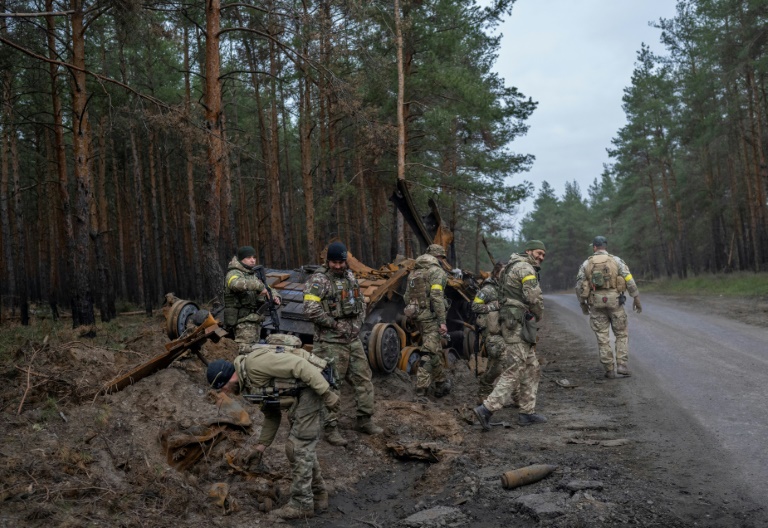
Kyiv forces have recaptured over 40 towns and villages in southern Ukraine, President Zelensky said Thursday, as Moscow signaled its army had begun retreating from the strategic city of Kherson.

The United States meanwhile announced a new $400 million security assistance package for Kyiv, which will include defense systems and surface-to-air missiles as Ukraine is reeling from massive recent Russian airstrikes targeting key infrastructure.

“Today we have good news from the south,” Zelensky said in his daily address to the nation. “The number of Ukrainian flags returning to their rightful place as part of the ongoing defense operation is already dozens.”

Zelensky said 41 settlements have been “liberated” from Russian occupation.

Moscow said it had made the “difficult decision” to pull forces from Kherson, and Russia’s defence ministry on Thursday said its units were manoeuvring in the area.

Ukrainian troops have for weeks been capturing villages en route to Kherson city in the eponymous region, where Kremlin-installed leaders have been pulling out civilians in what Kyiv has called illegal deportations.

The retreat would be a major Russian setback in a region Vladimir Putin claimed to have annexed, but officials in Kyiv have remained wary, saying Russia was unlikely to leave Kherson without a fight.

– Battlefield… and diplomacy? –

In his speech, Zelensky, who has been facing pressure from Western capitals to resume peace talks with Russia, hinted that negotiations were not ruled out if Ukraine regains all its territory.

“We have to go all the way on the battlefield and through diplomacy so that all over our land, along our entire internationally recognised border, our flags — Ukrainian flags — are installed,” Zelensky said.

He also thanked US President Joe Biden and the American people for the air defense systems.

“Together we’re building an air shield to protect civilians,” Zelensky said on Twitter. “We’re bringing victory over the aggressor closer!”

US media have reported in recent days that the Biden administration has been urging Zelensky to publicly declare a willingness to talk to Russia.

And on Wednesday top US general Mark Milley said that military victory may not be possible in the war.

“There’s… an opportunity here, a window of opportunity for negotiation,” he said.

– ‘Can you trust a thing they say?’ –

On the battlefield, in the southern city of Mykolaiv, which Russian forces have pounded with artillery and missiles for months, there was little belief the Russians would retreat.

“How can you trust a thing they say?” asked Volodymyr Vypritskiy, a 55-year-old driver. “How can you trust people that always told us they were our brothers? People who start killing their brothers — can you really believe them?”

Zelensky has suggested Russia could be strategically feigning rather than experiencing a major setback.

Military officials in Kyiv reiterated that caution on Thursday.

“At this point, we can’t confirm or deny information about the retreat of Russian troops from Kherson,” said Oleksiy Gromov, from the Ukrainian armed forces’ general staff.

Russia losing the Kherson region would return to Ukraine important access to the Sea of Azov and leave Putin with little to show from a campaign that has turned him into a pariah in Western eyes.

The retreat will put pressure on Russian control of the rest of the Kherson region, which forms a land bridge from Russia to Crimea, the peninsula that Moscow annexed in 2014.

– Massive casualties –

Kherson was one of four Ukrainian regions that Russia declared it had annexed in September, shortly after being forced to withdraw from swathes of territory in the northeastern Kharkiv region.

The United States this week estimated more than 100,000 Russian military personnel have been killed or wounded in Ukraine.

Kyiv’s forces have likely suffered similar casualties, according to General Milley.

Russia has been pushing to capture the eastern Donbas city of Bakhmut, with the battered town famous for wine and salt mines coming under intensive fire for weeks.

“It has become harder these past three days. The Russians are pushing more and more. But our boys are holding their positions,” 26-year-old soldier Vitaliy told AFP in Bakhmut.

Around half of the 70,000 people living in the city have stayed despite the fighting, mostly in the east of the city, for the past four months.

US inflation eases in October but still near decades-high

US consumer prices cooled in October but remained at decades-high levels, according to government data released Thursday, keeping the pressure on President Joe Biden as his Democratic party struggles to retain control of Congress.

The closely-watched report showed more evidence of rising costs, including a rebound in gasoline prices, in a year when surging inflation topped voter concerns, and as Americans headed to the polls in this week’s midterm elections.

But there were positive signs in the consumer price index (CPI), which showed annual inflation slowed to 7.7 percent in October, even while underscoring a heightened cost of living, the Labor Department reported.

That was the lowest annual increase since January, fueling hopes that soaring costs will start to pull back and causing Wall Street stocks to rally.

Biden welcomed the data, saying it showed “a much-needed break in inflation at the grocery store as we head into the holidays.” 

But he cautioned in a statement that it will “take time to get inflation back to normal levels,” with potential setbacks along the way, and vowed to keep helping households with living costs.

While the annual inflation rate was down from a harsh 9.1 percent in June — the highest in 40 years — latest numbers are unlikely to bring quick reprieve from the Federal Reserve’s aggressive moves to cool the economy.

Russia’s war in Ukraine has sent food and fuel prices soaring, and the energy index surged 17.6 percent over the past 12 months, according to the data.

Excluding volatile food and energy prices, “core” CPI rose 6.3 percent in October from a year ago, slightly below the rate in September.

– ‘Uncomfortably high’ –

As residents reel from soaring costs, the US central bank has moved forcefully to lower demand and bring prices down.

The Fed has raised the benchmark lending rate six times this year, including four consecutive giant rate hikes, despite fears it could trigger a recession.

Fed Chair Jerome Powell last week said it was premature to consider pausing the hikes, but there is a growing chorus of voices, including some Fed officials, advocating for smaller steps in coming months.

Dallas Fed President Lorie Logan said Thursday that she believes “it may soon be appropriate to slow the pace of rate increases” so policymakers can assess how conditions are changing.

But she warned that “a slower pace should not be taken to represent easier policy.”

Another official, Cleveland Fed President Loretta Mester, added in separate remarks that inflation remains persistent and monetary policy needs to become restrictive and stay that way for some time.

While headline data “surprised to the downside,” consumer prices “remain uncomfortably high,” said economist Rubeela Farooqi of High Frequency Economics.

Still, the numbers will be welcome news to Fed policymakers, with prices “finally showing some response” to the steep rate hikes, supporting a step-down in the pace moving forward, she said in an analysis.

Stephen Innes, managing partner at SPI Asset Management, said the inflation data “should mean the beginning of the end for inflation fears.”

Monthly CPI rose 0.4 percent in October, the same as in September, while the core rate slowed to 0.3 percent, half the pace of the prior month, data showed.

Housing costs contributed to over half of the overall monthly increase in October, while gasoline also resumed its upward move, the Labor Department said.

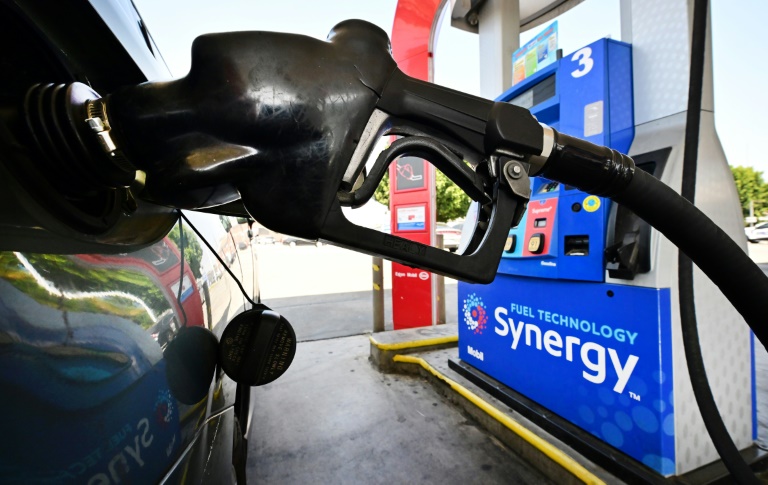
The energy index rose 1.8 percent in October, following three consecutive declines, including a 4.0 percent jump in gasoline.

But food prices, especially food at home, eased last month.

Ryan Sweet of Oxford Economics cautioned that the deceleration in the monthly CPI was likely affected by a methodology change in estimating health insurance prices, which created a “bigger drag” than expected.

But analysts are hopeful of some softening ahead as housing and other costs ease. 

Ian Shepherdson of Pantheon Macroeconomics said “the fever appears to be breaking in rents” and this should gradually transmit to headline numbers.

US equities rallied on the news, ending the day with steep gains.

“One good core CPI print proves nothing, but we see good reasons to think this one is the real deal,” Shepherdson said.

Stocks rally, dollar slumps after US inflation slows

Stocks rallied while the dollar slumped against rival currencies on Thursday after news of lower US inflation dimmed expectations of more aggressive Federal Reserve rate hikes.

The consumer price index (CPI), a key measure of inflation, rose at an annual pace of 7.7 percent in October.

That was below analyst expectations and a dip from the 8.2 percent rate recorded in September.

The dollar plunged more than four percent against the yen, while the pound jumped 3.2 percent against the greenback and the euro rose two percent.

Meanwhile, Wall Street stocks surged, with the Dow ending 3.7 percent higher with a nearly 1,200-point jump.

The broader S&P 500 jumped 5.5 percent and the tech-heavy Nasdaq Composite index soared 7.4 percent.

“I don’t recall having ever seeing the Nasdaq being up seven percent ever (and) I’ve been watching the markets for over 50 years,” Peter Cardillo of Spartan Capital Securities told AFP.

“Inflation has finally started to drop like a rock in the US and this is the best news that anyone can expect,” added AvaTrade analyst Naeem Aslam.

He expects that the Fed will still continue with rate hikes, though at a slower pace.

The Fed’s benchmark lending rate currently stands at between 3.75 to 4.0 percent, the highest since January 2008.

Investors have been keenly watching for signs that Fed policymakers will pivot away from their aggressive 0.75 percentage point hikes or pause them altogether.

Matt Weller at StoneX said that after the softer inflation reading, traders are now pricing in an 80 percent chance that the Fed will shift down to a 0.50 percentage point interest rate hike and now see rates peaking below 5.0 percent.

“There’s optimism that the worst of the selling may be behind us,” on equity markets, which are down heavily this year.

– Covid and crypto –

Markets are grappling also with the impact of strict zero-Covid measures in China, with supply chains and activity slowed by harsh lockdowns and testing policies.

“China’s domestic demand is weak and their key trading partners are entering recession territory,” said Edward Moya at OANDA trading group.

The crypto world has meanwhile been rocked by a surprise decision from Binance — the world’s biggest cryptocurrency platform — to scrap a possible acquisition of rival FTX.com a day after disclosing it had signed a non-binding letter of intent to buy it.

The near-collapse of FTX has plunged bitcoin to a two-year low.

“FTX’s slump from over a $32 billion valuation to zero in less than a few days raises numerous issues,” said Stephen Innes at SPI Asset Management.

“Prominent investors are wearing eggs on their faces after diving in head first.”

He added that gold and silver would be the biggest beneficiaries of the crypto fallout with investors looking to the trusted precious metals for stability.

– Key figures around 2130 GMT –

New York – Dow: UP 3.7 percent at 33,715.37 points (close)

New York – S&P 500: UP 5.5 percent at 3,956.37 (close)

New York – Nasdaq: UP 7.4 percent at 11,114.15 (close)

EURO STOXX 50: UP 3.2 percent at 3,846.56 (close)

London – FTSE 100: UP 1.1 percent at 7,375.34 (close)

Frankfurt – DAX: UP 3.5 percent at 14,146.09 (close)

Paris – CAC 40: UP 2.0 percent at 6,556.83 (close)

Tokyo – Nikkei 225: DOWN 1.0 percent at 27,446.10 (close) 

Hong Kong – Hang Seng Index: DOWN 1.7 percent at 16,081.04 (close)

Shanghai – Composite: DOWN 0.4 percent at 3,036.13 (close)

Euro/dollar: UP at $1.0219 from $1.0076 Wednesday 

Pound/dollar: UP at $1.1724 from $1.1544

Dollar/yen: DOWN at 140.67 yen from 145.58 yen

Euro/pound: DOWN at 87.10 pence from 87.26 pence

West Texas Intermediate: UP 0.7 percent at $86.47 per barrel

Brent North Sea crude: UP 1.1 percent at $93.67 per barrel

burs-rl-bys/dw

Transit strikes snarl London, Paris as workers seek raises

Commuters in London and Paris scrambled for alternatives Thursday — or just stayed home — as public transport workers went on strike for higher pay, the latest industrial action seeking relief from soaring prices in Europe.

Spreading labour unrest is a growing problem for governments that are already spending billions trying to blunt the worst effects of rising prices, at least for the most vulnerable.

“I took my car, the train and now I have to cycle,” said 36-year-old Nicco Hogg in London.

The action in Britain, by members of the Rail, Maritime and Transport (RMT) and Unite unions, followed several walkouts this year amid a long-running dispute over job cuts, pensions and working conditions.

Some commuters were sympathetic to their cause.

“They are defending their working conditions and their pay so it’s fair enough,” said 28-year-old Pema Monaghan, a writer also working in publishing.

Others doubted that the action would have much impact on politicians.

“They have loads of strikes,” said Daniel Osei, 26, who works in mental health for children in the London borough of Fulham.

“They’re not really affecting the government as much as they are affecting us.”

In France, the strike aims also to ratchet up pressure on President Emmanuel Macron before he brings a controversial pensions overhaul bill to parliament, which would require millions of people to work beyond the current retirement age of 62.

“It’s to show that if we want to take action, we know how to take action,” said Frederic Souillot, head of France’s FO union.

– ‘Calm and patient’ –

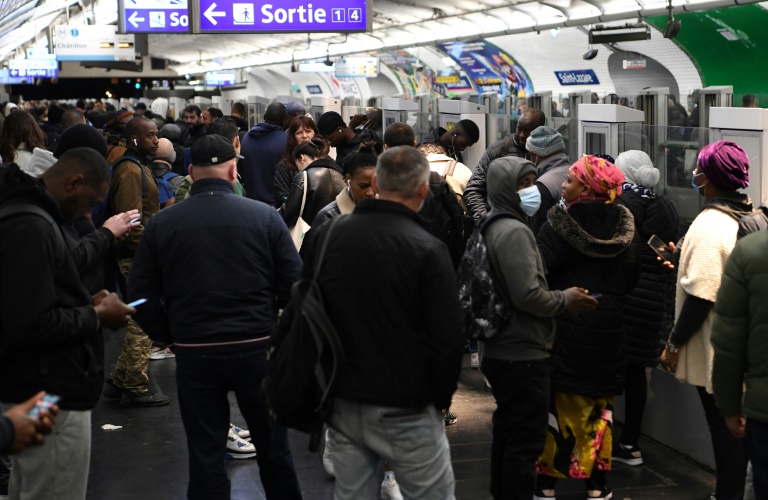
Five Paris Metro lines were completely shut down, with most others operating with only limited rush-hour service — one two automated lines without drivers were running normally.

Many commuters appeared to heed the call by transit operator RATP to postpone trips or work from home, making transport less chaotic than many had feared, while the city’s growing network of bike lanes saw a surge of cyclists.

Others decided to book a day off ahead of a long weekend thanks to Friday’s French bank holiday.

As a result, “apart from a few angry commuters, everybody is being calm and patient”, said Nolwenn, a 21-year-old transit agent deployed at Saint-Lazare station in Paris, one of Europe’s busiest commuter hubs.

But the two main suburban rail lines called RER A and B, which connect central Paris with Disneyland Paris and the Charles de Gaulle and Orly airports, saw more severe disruptions.

Trains on the metro lines still open were packed, with some running only every 15-20 minutes instead of the usual three-minute rhythm.

“It’s a mess,” said Sylvie, 46, after failing to board a metro on the number seven line because of the crowds.

Authorities in London also said the Underground system was “severely disrupted”, with limited or no services running, and advised people to avoid trying to use the network.

Reports said many buses were packed to capacity, while roads were more congested than usual.

– ‘Return to the roundabouts’ – 

French unions have staged strikes across several sectors in recent weeks seeking pay hikes or increased hiring as spiralling energy costs feed into widespread inflation.

Thursday’s strike included a protest march in the capital that shut down major traffic avenues.

But the Paris transport strike did not spill over into other sectors, with only the hard-line CGT union calling for general work stoppages.

“Let’s unite, let’s be as many as possible, even if we have to return to the roundabouts,” said Communist Party leader Fabien Roussel, a reference to the “Yellow Vests” movement starting in 2018 that had anti-government protesters gather at busy traffic circles. 

Unions representing the RATP’s nearly 70,000 employees say they are feeling the pinch of soaring prices, but are also overstretched because of insufficient hiring, resulting in increased sick leave.

That has led to more service delays or lower frequency on busy metro lines in recent months, causing headaches for the system’s roughly 12 million daily users.

In neighbouring Spain, meanwhile, an association of independent truck drivers called for an unlimited strike starting Monday to protest against delays in the implementation of a charter protecting their incomes.

The call comes eight months after an earlier strike in the sector had a major impact on the Spanish economy.

E-cig giant Juul secures funds to avoid bankruptcy

American e-cigarette firm Juul Labs has secured financing to stay afloat but confirmed job cuts, it said in a statement Thursday, while dealing with a dispute on whether its products can remain on market.

The vaping giant has challenged a June action by the US Food and Drug Administration ordering all products it made to be off the market in the United States, after finding that it failed to address certain safety concerns.

The FDA order has been put on hold after an appeal by Juul, which argues that its products are safe for adult smokers.

“Today, Juul Labs has identified a path forward, enabled by an investment of capital from some of our earliest investors,” a Juul spokesperson told AFP in a statement.

This investment will help Juul Labs to maintain business operations and “continue advancing its administrative appeal of the FDA’s marketing denial order,” among other needs, the firm added.

But it is undertaking a reorganization “including the difficult but necessary step of separating from many valued colleagues,” the spokesperson said, without providing further details.

Juul told staff on Thursday that it has halted bankruptcy preparations with the new injection of funds, The Wall Street Journal reported.

It is also undertaking a cost-cutting program, and plans to lay off around 400 employees while cutting its operating budget by up to 40 percent, according to the report.

The company’s wide range of flavored vapes, which have included mango and creme brulee, helped it become a byword for e-cigarettes in the US.

But it has also been blamed for a surge in youth vaping over its marketing of fruit and candy flavored e-cigarettes, which it stopped selling in 2019.

Proponents of vaping say that it is less harmful than traditional tobacco, though the science is not clear.

Those who disagree, however, counter that the flavors are appealing to young people, arguing that companies which sell them are knowingly or otherwise getting a new generation hooked on nicotine.

By the end of 2018, Juul had more than 70 percent of the US market for e-cigarettes.

World needs US 'to be climate leader', Ugandan activist

Ugandan climate activist Vanessa Nakate on Thursday urged US President Joe Biden to help those most affected by the ravages of global warming, a day before his arrival for UN climate talks in Egypt.

Nakate, a Goodwill Ambassador for the United Nations’ children’s fund UNICEF, urged Biden to listen to climate science and those “on the frontlines of this crisis”.

She also called for fossil fuels to be phased out and funding to help vulnerable countries cope with accelerating climate impacts.

“The world needs the United States to be a climate leader in our fight for climate justice,” the 25-year-old told AFP in an interview at the COP27 climate conference in the Red Sea resort of Sharm el-Sheikh. 

“The message is for President Biden to stand with the people on the planet and the coming generations.”

Inspired by Sweden’s Greta Thunberg, Nakate — who founded the Rise Up Climate Movement in her native Uganda — has become a prominent voice among global youth fighting for climate action and justice. 

Although she is unlikely to meet the US president in person during his fleeting trip to the two-week climate talks, Nakate urged Biden to summon the “political will” to support communities most affected by the snowballing impacts caused by a warming world. 

This year alone has seen a barrage of extreme heat waves and crop-withering droughts across the world, while catastrophic floods have swept Pakistan and Nigeria. 

Floods had also ripped through Nakate’s own region in Uganda, she said.  

“When you look at all these crises that are happening and they are just around you in your community, you have no choice but to come here and believe that another world is not only necessary but it’s also possible,” she said.  

– ‘Cannot eat coal’ –

Thunberg has snubbed the UN talks in Egypt — billed as an “Africa COP” — over concerns about restrictions for campaigners. 

But Nakate said she had been compelled to attend because of the growing harm suffered by people in the global south, adding that activists were using social media and interviews in the press to keep up the pressure on leaders.

She said it was more important than ever “to hold our leaders accountable and to remind them that we cannot eat coal, we cannot drink oil and we cannot breathe gas”. 

In a world gripped by energy, food and inflation crises — fuelled by climate impacts, the war in Ukraine, and the pandemic — the challenges of soaring prices are too often seen only through the eyes of wealthier nations, Nakate said.

“In countries like Uganda, many people are being impacted and suffering because, as the fuel prices rise, transportation rises, food prices rise as well,” she said, adding that many people “just don’t know how to keep up with it”.

She called for the international community to step up investments that address energy poverty in Africa and support the shift to renewable power. 

“If there is no climate finance to support that transition, many of our countries are being pressured into taking money from fossil fuel companies so that they can lift their communities out of energy poverty,” she said. 

In her role for UNICEF, Nakate has recently visited communities affected by the devastating drought in the Horn of Africa, where millions are on the brink of starvation, including children.

These tragedies can reverberate for many years throughout an individual’s life, even generations, Nakate said. 

But she noted that Biden and the other world leaders who have travelled to Egypt this week should understand that their positive actions also have the potential to echo into the future.  

“I’ve heard of something called the butterfly effect, whereby just one thing that may seem like a small action can end up affecting the lives of so many people,” she said, adding that leaders have a choice whether their effect is positive or negative. 

“If it’s to be positive, then one action right now will benefit not only our generation, but also the coming generations,” she said.

Apple limits file-sharing for Chinese iPhone users after anti-govt protest

Apple limited file-sharing for Chinese iPhone users Thursday, a month after reports that anti-government protesters were using the function to share digital leaflets with strangers.

Under the update to the AirDrop function, users of smartphones sold by Apple in China can only opt in to receive files from non-contacts during a 10-minute window before it automatically shuts off. The feature did not previously have a time limit.

The update, rolled out in the operating system released overnight, makes it virtually impossible to receive unexpected files from strangers.

The change follows widespread reports of people using AirDrop to spread leaflets critical of the Chinese Communist Party in crowded public spaces, partly inspired by a protest in Beijing in which a man hung banners calling for the removal of President Xi Jinping.

Chinese censors quickly scrubbed online videos and posts referring to the protest, while hundreds of users on the popular payment and chat app WeChat had their accounts blocked after speaking about the rare act of rebellion.

Apple declined AFP’s request for comment on the record but the company is now understood to be planning a roll out of the feature across the globe.

Apple phones sold outside mainland China on Thursday did not appear to be affected by the update, while iPhones sold in China displayed the limit regardless of which country the user’s App Store account was based in.

The description for users said the update “includes bug fixes and security updates”.

-‘Less appealing’-

The California-based tech giant, which touts security and privacy protections as key features of its devices, has previously faced criticism for alleged concessions to Beijing.

China is seen by Western observers as becoming increasingly repressive as President Xi Jinping embarks on his third term as the country’s most powerful figure.

“This is one small sample of a type of China cost…that’s making China much less appealing as a investment and manufacturing destination for many global multinationals many global companies,” Isaac Stone Fish, CEO of Strategy Risks, told AFP.

“Apple has to understand the very real risks of being overly exposed to China in 2022,” he added.

Other apparent concessions included opening a data centre in China, as well as removing an app in 2019 that allowed Hong Kong pro-democracy protesters to keep track of police.

It has also faced boycott threats in China as it stands in the crossfire of US-China tensions, with Beijing warning in 2020 that it could turn its citizens against Apple if Washington blocked Chinese apps.

Some Chinese social media users on Thursday hailed the iPhone update as a positive step in preventing unsolicited messages from strangers. One Weibo user said the change would “greatly reduce the probability of iPhone users being harassed”.

A handful questioned why the function was only being rolled out on Chinese iPhones, with one Weibo commenter joking about Apple CEO Tim Cook’s friendliness with Beijing: “So is Tim Cook a Party member or not?”

Close Bitnami banner
Bitnami