World

Lashing out at Italy, France allows Ocean Viking to dock

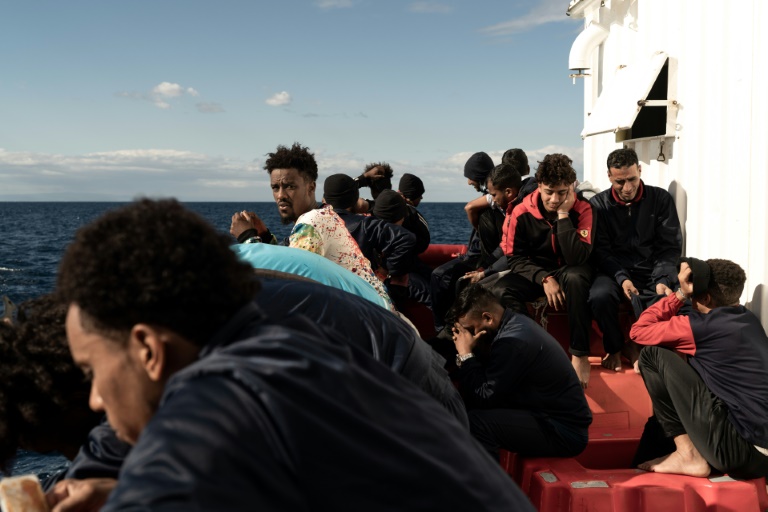
France warned Italy of “severe consequences” Thursday as it agreed to take in a charity ship carrying more than 200 migrants rescued in the Mediterranean, after Rome refused to allow them to disembark in its ports.

The Ocean Viking ship had initially sought access to Italy’s coast, which is closest to where the migrants were picked up, saying health and sanitary conditions onboard were rapidly worsening.

Italy refused, saying other nations must shoulder more of the burden for taking in the thousands of migrants trying to reach Europe from North Africa every year.

Prime Minister Giorgia Meloni, head of Italy’s most right-wing government in decades, appears ready to push the dispute to the top of the European agenda.

French Interior Minister Gerald Darmanin slammed Italy’s stance as “incomprehensible”, saying the Ocean Viking “is located without any doubt in Italy’s search and rescue zone.”

Later Thursday, the Italian government in turn used the same word — “incomprehensible” — to describe France’s response to allowing a migrant ship to disembark in a French port.

Interior Minister Matteo Piantedosi said the request had been for “234 migrants, when Italy has taken in 90,000 just this year”.

After seeing dozens of requests to dock refused, the charity operating the ship, SOS Mediterranee, this week turned to France for help, though without any official government response initially.

On Friday, France said it would evacuate three migrants needing urgent medical care, with a helicopter taking them and a caregiver to a hospital in Corsica.

Darminin later said the 230 remaining migrants on the ship, including 57 children, would be welcomed at the Toulon military port on Friday, an “exceptional” decision that would not guide future action.

In retaliation, France has suspended a plan to take 3,500 refugees currently in Italy, part of a European burden-sharing accord, and urged Germany and other EU nations to do the same.

“It is obvious that there will be extremely severe consequences for bilateral relations and European relations,” Darmanin warned, adding that French police would also reinforce controls at Italian border crossings.

– Strained solidarity –

The flare-up of tensions echoes European migrant disputes four years ago, when French President Emmanuel Macron in particular clashed with Italy’s populist interior minister Matteo Salvini.

Salvini, recently returned to government as Meloni’s deputy, responded to France’s decision to halt the migrant-sharing deal with the sarcastic tweet: “European solidarity.”

France had insisted that under international maritime law, Rome had to take in the Ocean Viking and the 234 distressed migrants it rescued, not least after it granted access this week to three other rescue ships carrying around 700 people.

But Italy’s Foreign Minister Antonio Tajani said this week that he was sending a signal to EU nations that they must play an even bigger part.

Rome wants “an agreement to establish, on the basis of population, how migrants with a right to asylum are relocated to various countries”, Tajani said ahead of a meeting of EU ministers next week.

In June, around a dozen EU countries, including France, agreed to take in migrants who arrive in Italy and other main entry points.

Darmanin said one-third of the migrants aboard the Ocean Viking would stay in France while another third would be transferred to Germany, and discussions were underway on the fate of the remainder.

So far this year, 164 asylum seekers have been moved from Italy to other nations in the bloc that have volunteered to accept them.

But that is a tiny fraction of the more than 88,000 that have reached its shores so far this year, of which just 14 percent arrived after being rescued by NGO vessels, according to the Italian authorities.

– ‘Relief and anger’ –

SOS Mediterranee said it felt “a mixture of relief and anger” after France’s agreement to let it disembark. 

“Disembarking almost three weeks after their rescue… is the result of a dramatic failure from all the European states, which have violated maritime law in an unprecedented manner,” the charity’s director of operations, Xavier Lauth, said in a statement. 

Volker Turk, the UN High Commissioner for Human Rights, warned Wednesday that “politics should not be pursued at the expense of people in distress”.

According to the UN’s International Organization for Migration, 1,891 migrants have died or disappeared so far this year while trying to cross the Mediterranean, often with help of smugglers crowding them into rickety vessels.

burs/js/jh/ah
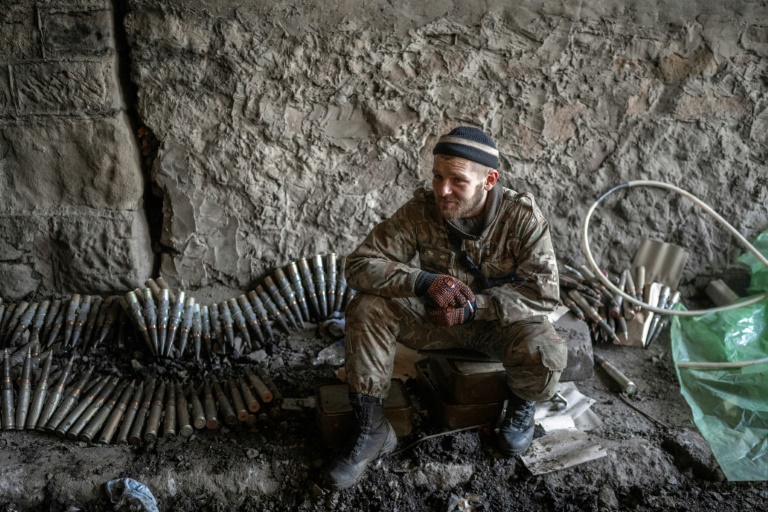
Moscow says Kherson pullout starts as Ukraine claims gains

Moscow announced Thursday it had begun retreating from Ukraine’s southern city of Kherson as Kyiv said it had recaptured a dozen villages in the strategic Black Sea region.

“The Russian troop units are manoeuvring to prepared position on the left bank of the Dnipro river in strict accordance with the approved plan,” the Russian defence ministry said.

Ukrainian officials have remained wary since Moscow signalled late Wednesday that it would pull forces from the west bank of the Dnipro river in Kherson, in what would be major Russian setback in a region Vladimir Putin claimed to have annexed.

Ukrainian troops have for weeks been capturing villages en route to the main city in the eponymous region, while Kremlin-installed leaders in Kherson have been pulling out civilians in what Kyiv has called illegal deportations.

Ukrainian general Valeriy Zaluzhny said on social media that Ukraine’s forces had recaptured six settlements after fighting near the Petropavlivka-Novoraisk front.

Kyiv’s army had taken another six in the Pervomaiske-Kherson direction, capturing a total of more than 200 square kilometres (77 square miles) from the Russians, he added.

Late Wednesday, Russia’s most senior defence officials responsible for Ukraine announced in a televised meeting that they had taken the “difficult decision” to withdraw from Kherson and set up defensive lines further back.

– Zero trust –

In the nearby southern city of Mykolaiv, which Russian forces have pounded with artillery and missiles for months, there was little belief the Russians would do as they said.

“How you can you trust a thing they say?” driver Volodymyr Vypritskiy demanded in between stalls selling vegetables and winter hats.

“How can you trust people that always told us they were our brothers? People who start killing their brothers — can you really believe them?” the 55-year-old asked.

Ukrainian President Volodymyr Zelensky has suggested Russia could be strategically feigning rather than experiencing a major setback.

Military officials in Kyiv reiterated that caution on Thursday.

“At this point, we can’t confirm or deny information about the retreat of Russian troops from Kherson,” said Oleksiy Gromov, from the Ukrainian armed forces’ general staff.

Russia losing the Kherson region would return to Ukraine important access to the Sea of Azov and leave Putin with little to show from a campaign that has turned him into a pariah in Western eyes.

The retreat will put pressure on Russian control of the rest of the Kherson region, which forms a land bridge from Russia to Crimea, the peninsula that Moscow annexed in 2014.

In the weeks leading up to the announcement from Russian Defence Minister Sergei Shoigu, Kremlin-installed officials said they were “evacuating” civilians and rendering the city a “fortress”.

As Ukrainian troops advance in the south, Russia’s commander in Ukraine, Sergei Surovikin, told Shoigu on Wednesday that around 115,000 people had been removed from the western bank of the Dnipro, which includes Kherson city.

– Bakhmut fight ‘harder’ –

Kherson was one of four Ukrainian regions that Russia declared it had annexed in September, shortly after being forced to withdraw from swathes of territory in the northeastern Kharkiv region.

In Moscow, Kremlin supporters rushed to justify the decision despite earlier setbacks in Ukraine spurring division and soul searching among Putin allies.

The head of Russian state media group RT, Margarita Simonyan, said the retreat was necessary to not leave Russian troops exposed on the west bank of the Dnipro River and “open the way to Crimea”.

Chechen strongman Ramzan Kadyrov said the decision was “difficult but fair”.

Moscow’s announced withdrawal came as the United States estimated more than 100,000 Russian military personnel have been killed or wounded in Ukraine.

Kyiv’s forces have likely suffered similar casualties, according to top US General Mark Milley, who shared the most precise figures released to date by Washington.

Russia has been pushing to capture the eastern Donbas city of Bakhmut, with the battered town famous for wine and salt mines coming under intensive fire for weeks.

“It has become harder these past three days. The Russians are pushing more and more. But our boys are holding their positions,” 26-year-old soldier Vitaliy told AFP in Bakhmut.

Around half of the 70,000 people living in the city have stayed despite the fighting, mostly in the east of the city, for the past four months.

But meanwhile in the neighbouring region of Lugansk, Kyiv’s troops advanced “up to 2 kilometres (1.2 miles) in the past day,” Gromov said.

Scorched Earth: Ukraine war takes heavy toll on climate too

The Ukraine war has shown the heavy toll military conflict takes not just on people but also on the planet, say experts at the UN climate summit in Egypt.

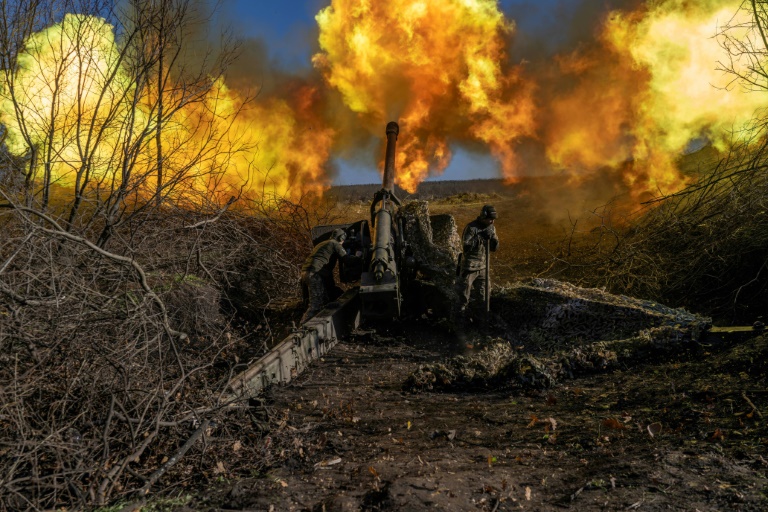
From the emissions caused by diesel-powered tanks, fighter jets and missile blasts to urban and forest fires and massive waves of refugees, the conflict has also spewed out huge amounts of greenhouse gases.

“This is a field of significant emissions and nobody has really dealt with this problem,” said Axel Michaelowa, head of the University of Zurich’s International Climate Policy research group.

Russia’s invasion has plunged Ukraine into misery, heightened geopolitical tensions, driven up global energy and food prices and distracted the world community from the urgent need for climate action.

A fast-heating world “cannot afford a single gunshot”, Ukrainian President Volodymyr Zelensky told the COP27, arguing that the aggressors “are destroying the world’s ability to work united for a common goal”.

But, aside from such massive global shockwaves, the actual carbon footprint of war — and of peacetime armies — is also enormous, experts have argued, while acknowledging that so far they lack precise data.

Estimates of planet-warming emissions from the world’s militaries range between one and five percent of the global total, according to a commentary published in the journal Nature last week.

That can be compared to shipping or aviation — both around two percent, according to the paper led by researchers in Britain.

If the US military, the world’s biggest by expenditure, were a country, it would have the world’s highest per capita emissions, at 42 tonnes of CO2 equivalent per member of its personnel.

When one of its F-35 fighter planes flies 100 nautical miles, it hurls into the atmosphere as much CO2 as the average British petrol car does in a year, the experts wrote.

– ‘Conflicts past and present’ –

Ukraine has started to calculate emissions linked directly and indirectly to the invasion launched by Russia on February 24, a first for a country at war.

Fires in buildings, forests and fields sent into the skies 23.8 million tonnes of CO2 equivalent, and the fighting itself 8.9 million tonnes, according to the project called the Initiative on GHG Accounting of War.

The displacement of people caused 1.4 million tonnes, said the project created two months into the war, while reconstruction of destroyed infrastructure will cause another 48.7 million tonnes of carbon emissions.

The total comes to nearly 83 million tonnes as a direct consequence of the war, now in its eighth month — compared to around 100 million tonnes produced from all sources by the Netherlands over the same period, according to the initiative.

“It shows us how much we are missing from other conflicts past and present,” said Deborah Burton, co-founder of the group Tipping Point North South. “We have not had this level of detail on Iraq or Syria or other conflicts.”

The authors of the Nature commentary argued it is high time to address the issue.

“Why are reports from the Intergovernmental Panel on Climate Change and United Nations climate summits silent on military emissions?” they wrote. 

“The short answer is politics, and a lack of expertise.”

– ‘Blind spot’ –

Ukraine’s project aims to remedy this “sort of blind spot” in the calculation of global emissions, said Lennard de Klerk, a private-sector specialist on carbon emissions who took part in the initiative. 

The experts of the Nature commentary hope the COP27 and next year’s climate conference in Dubai will bring “opportunities to formalise this change”. 

“The best step in our view would be to actually bring this directly to the IPCC process,” Michaelowa told AFP.

“The challenge is that military data are usually kept confidential, but there are possibilities to actually find proxies.

“You know which aircraft are operating in which area, you have an idea of the emission intensity of certain types of vehicles,” explained Michaelowa.

“So, by using proxy data, you should be able to have estimates of military emissions that are at least accurate in the level of plus or minus 10-20 percent.”

The Nature authors argued that carbon emissions “must be officially recognised and accurately reported in national inventories, and military operations need to be decarbonised”.

“Military emissions need to be put on the global agenda.”

'Worried about the future': Russians despair in uncertain times

When President Vladimir Putin announced in February that Russian forces were entering Ukraine, a wave of shock washed over 22-year-old student Vasilina Kotova that turned quickly to despair and then depression.

“I didn’t leave my house for two months,” Kotova, a computer science student, told AFP.

“I had no energy anymore to do anything. It wasn’t even so much the energy but the desire to do anything, like there wasn’t any point,” she said.

Eight months into the stagnating conflict, fighting in Ukraine has brought with it threats of nuclear weapons, sanctions that have isolated Russians and a conscription drive that has sent thousands fleeing the country.

Kotova is just one among a rising tide of Russians who have grown more anxious and depressed with the conflict grinding on, with its shockwaves being felt back home and the future uncertain.

The result, professionals in the industry say, is a creeping mental health crisis that is spurring shortages of anti-depressants and soaring demand for psychological support.

At first, Kotova admitted, she thought that the hundreds of thousands of Russians who rushed to flee after the conflict began were “fools” and that the Kremlin’s “special military operation” would not touch her personally.

But then Putin began drafting hundreds of thousands of men into the Russian army in September and Kotova began to worry her father or brother could be sent to the front.

And when Moscow began to sound the alarm — without providing evidence — that Ukraine was preparing to use a so-called dirty bomb, her mother’s concern grew. 

“And then you start thinking: ‘what if I’m the real fool?’ and your anxiety just gets worse and worse,” said Kotova.

– Rush for medication –

After Putin announced the mobilisation drive, a record number of Russians — nearly 70 percent — reported feeling “anxious”, the Kremlin-friendly pollster FOM said.

The independent Levada Centre one month later found that nearly 90 percent of Russians were “worried” by the conflict.

The pollster said 57 percent backed talks with Kyiv — up nine percentage points from the previous month — suggesting growing support for a speedy resolution.

Around Kotova, that concern is beginning to show.

Last month, after Putin said the world was facing “perhaps the most dangerous and unpredictable decade” since World War II, local media reported that some residents of her neighbourhood had begun building a bomb shelter in a nearby underground parking.

Others, including Kotova, are turning to more conventional coping aid: medication. And she said the measure has had a positive impact.

In the first nine months of the year, spending on drugs to cope with depression jumped 70 percent year-on-year, official figures show.

And the YouTalk psychological consultation service has seen “the number of online requests increase by 40 percent since the mobilization”, its co-founder Anna Krymskaya told AFP.

Clients concerned about depression have grown by 50 percent in that time, she said.

– ‘Everyone is worried’ –

The growing sense of doom is being felt across Russia’s political divide.

Ilya Kaznacheyev says he was “happy and proud” when Putin launched Moscow’s “special military operation” in Ukraine.

But the 37-year-old has been in a state of “permanent anxiety” since March after Russian troops failed to capture the Ukrainian capital Kyiv.

“What’s worse than a war launched? A war lost!” the bearded man told AFP in a Moscow bookstore.

Kaznacheyev said he was considering taking anti-depressants and was worried about shortages of imported drugs due to Western sanctions.

Zoloft, one of the most commonly prescribed medications, has already disappeared from pharmacies in the Russian capital.

“A lot of people rushed to stock up,” neurologist Oleg Levin told AFP.

“And they did the right thing.”

Irrespective of their stance on Ukraine, “everyone is worried about the future,” Levin added.

He said the number of his patients taking depression medication had increased by a quarter since February.

As the conflict drags on, psychologists are worried about its long-term mental health impact on Russians.

Amina Nazaraliyeva, a therapist at the private Moscow clinic, Mental Health Centre, said she worried that some returning troops would “inevitably suffer from post-traumatic stress disorder and alcoholism”. 

She pointed to a spike in “pro-violence rhetoric” and said Russia would be dealing with the consequences “for a long time”.

“The whole country will process this trauma,” she said.

Brussels under pressure to tighten car pollution rules

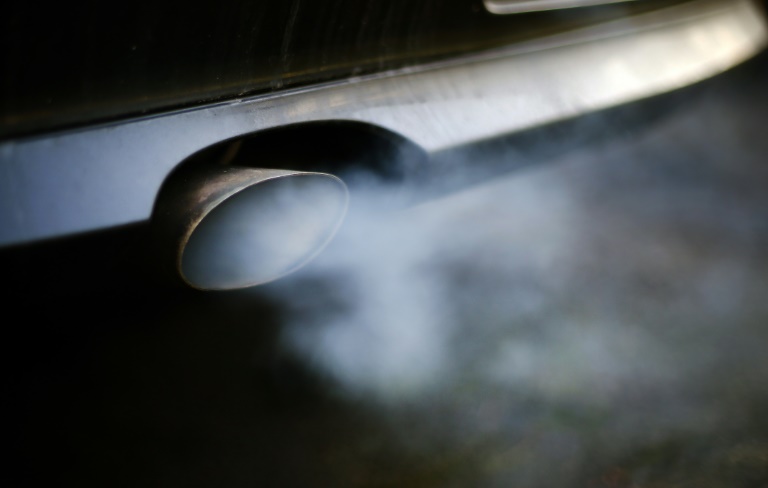
The European Commission on Thursday unveiled new proposals to tighten vehicle emissions standards, but immediately ran into fresh criticism that Brussels officials are too close to the car industry.

European Union capitals have already agreed to ban sales of new petrol and diesel cars from 2035 as part of the 27-nation bloc’s effort to build a carbon-neutral economy by 2050.

For the motor lobby, the investment needed to transition to electric cars is already a high enough cost to impose on a sector that employs millions of workers in the main EU economies.

But green groups, citing evidence that air pollution from road transport kills 70,000 Europeans per year, are pushing for tighter emissions standards to cover the final decade of internal combustion engines.

On Thursday, the EU executive unveiled its proposed Euro 7 vehicle emissions standards to apply from 2025.

These, it said, would reduce the emission of NOx — the nitric and nitrogen oxides that cause smog and acid rain — by 35 percent from cars and 56 percent from trucks and buses compared to the previous rules.

There will also be steep reductions in the permitted levels of particulate matter in exhaust gas and of metal particles from brake pad abrasion.

For green campaigners the proposed rules do not go far enough. For the motor industry, they are a step too far.

“Unfortunately, the environmental benefit of the commission’s proposal is very limited, whereas it heavily increases the cost of vehicles,” said BMW chief Oliver Zipse, president of the ACEA lobbying group.

ACEA argues that exhaust emissions are already at a “barely measurable level” and that it makes no sense to spend to improve petrol and diesel vehicle standards when manufacturers are transitioning to electric.

But campaigners like the environmental NGO Transport and Environment and Green MEP Karima Delli accused Brussels of backing down to pressure from automakers and their allies in Paris, Berlin and Rome.

“The negotiations are likely to be tough and complicated,” Delli said, predicting that the European Parliament could yet seek tougher rules than those set out by the commission.

“Nevertheless, we must save lives, we cannot afford to miss the boat. We in the European Parliament will therefore do our utmost to raise the ambitions of this proposal.”

US inflation eases in October but still near decades-high

US consumer prices cooled in October but remained at decades-high levels, according to government data released Thursday, keeping the pressure on President Joe Biden’s administration as Democrats struggle to retain control of Congress.

The closely-watched report showed more evidence of rising costs, including a rebound in gasoline prices, in a year when surging inflation was at the top of voter concerns, as Americans headed to the polls in this week’s midterm elections.

The consumer price index (CPI), a key measure of inflation, rose 7.7 percent from October 2021, easing from September’s pace but underscoring the heightened cost of living that has squeezed many households, the Labor Department reported.

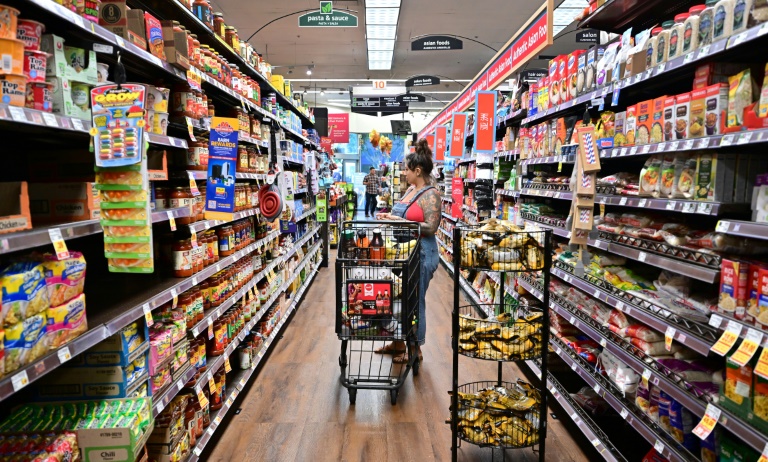
Biden welcomed the data, saying that it showed “a much-needed break in inflation at the grocery store as we head into the holidays.” 

But he cautioned in a statement that it will “take time to get inflation back to normal levels,” with potential setbacks along the way, and vowed to keep helping households with living costs.

While the annual inflation rate was the lowest since January and down from a harsh 9.1 percent in June — the highest in 40 years — latest figures are unlikely to bring quick reprieve from the Federal Reserve’s aggressive moves to cool the economy.

The Russia war in Ukraine has sent food and fuel prices soaring, and the energy index surged 17.6 percent over the past 12 months, according to the data.

Excluding volatile food and energy prices, “core” CPI rose 6.3 percent in October from a year ago, slightly below the rate in September.

– ‘Uncomfortably high’ –

As residents reel from soaring costs, the US central bank has moved forcefully to lower demand and bring prices down.

The Fed has raised the benchmark lending rate six times this year, including four consecutive giant rate hikes, despite fears it could trigger a recession.

Fed Chair Jerome Powell last week said it was premature to consider pausing the hikes, but there is a growing chorus of voices, including some Fed officials, advocating for smaller steps in coming months.

While headline data “surprised to the downside in October,” consumer prices “remain uncomfortably high,” said economist Rubeela Farooqi of High Frequency Economics.

Still, the numbers will be welcome news to Fed policymakers, with prices “finally showing some response” to the steep rate hikes, she said in an analysis.

Stephen Innes, managing partner at SPI Asset Management, said the inflation data “should mean the beginning of the end… and the Fed will feel much more comfortable ramping down” its policy moves.

Prices rose 0.4 percent in October, the same as in September, while core CPI slowed to 0.3 percent, half the pace of the prior month, the data showed.

Housing costs contributed to over half of the overall monthly increase in October, while the gasoline also resumed its upward move, the Labor Department said.

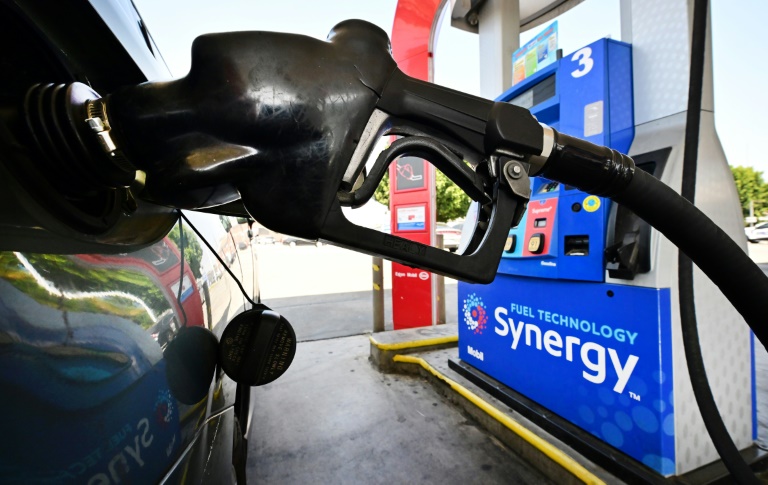
The energy index rose 1.8 percent in October, following three consecutive declines, including a 4.0 percent jump in gasoline.

Stocks rally, dollar slumps after US inflation slows

Stocks rallied while the dollar slumped against rival currencies after a drop in inflation dimmed expectations of more aggressive Federal Reserve rate hikes.

The consumer price index (CPI), a key measure of inflation, rose at annual pace of 7.7 percent in September.

That was below analyst expectations and a dip from the 8.2 percent rate in September.

The dollar plunged against the euro, pound and yen after the data was released, and US treasury bond yields also dropped.

European stocks, which had been lower in midday trading, shot higher.

Frankfurt stocks were up 2.9 percent in afternoon trading as Wall Street open, with Paris 1.6 percent higher and London rising 0.8 percent.

US stock futures also rocketed after the data was published, and at the opening bell the Dow jumped 2.5 percent higher.

The S&P 500 sprang up 3.7 percent and Nasdaq Composite soared 4.8 percent.

“Inflation has finally started to drop like a rock in the US and this is the best news that anyone can expect,” said AvaTrade analyst Naeem Aslam.

“The Fed will still continue to increase the interest rate but there is no need to be aggressive about this — which means that the pace of interest rate hikes will slow down now.”

The Fed’s main policy rate currently stands at between 3.75 to 4.0 percent, and investors have been keen on determining when policymakers will “pivot” away from aggressive hikes or “pause” them altogether.

Stuart Clark, portfolio manager at Quilter Investors, said the slowdown in inflation will provide some relief to consumers and investors, as well as “giving some momentum to the idea that the worst is now behind us.”

But we’re “not completely out of the woods yet,” he added, pointing food and housing costs continue to rise.

Clark said “the Federal Reserve is going to remain in a hawkish mood for some time to come… the market will have to wait for any indication of a pivot or pause from the central bank.”

– Covid and crypto –

Markets are grappling also with the impact of strict zero-Covid measures in China, with supply chains and activity slowed by harsh lockdowns and testing policies.

“China’s domestic demand is weak and their key trading partners are entering recession territory,” said Edward Moya at OANDA trading group.

Oil prices extended recent losses on weaker Chinese demand.

The crypto world has meanwhile been rocked by a surprise decision from Binance, the world’s biggest cryptocurrency platform, to scrap a possible acquisition of rival FTX.com a day after disclosing it had signed a non-binding letter of intent to buy it.

The near-collapse of FTX has plunged bitcoin to a two-year low.

“FTX’s slump from over a $32 billion valuation to zero in less than a few days raises numerous issues,” said Stephen Innes at SPI Asset Management.

“Prominent investors are wearing eggs on their faces after diving in head first.”

He added that gold and silver would be the biggest beneficiaries of the crypto fallout with investors looking to the trusted precious metals for stability.

– Key figures around 1330 GMT –

London – FTSE 100: UP 0.8 percent at 7,355.53 points 

Frankfurt – DAX: UP 2.9 percent at 14,057.12

Paris – CAC 40: UP 1.6 percent at 6,533.37 

EURO STOXX 50: UP 2.4 percent at 3,817.93

New York – Dow: UP 2.5 percent at 33,328.77

Tokyo – Nikkei 225: DOWN 1.0 percent at 27,446.10 (close) 

Hong Kong – Hang Seng Index: DOWN 1.7 percent at 16,081.04 (close)

Shanghai – Composite: DOWN 0.4 percent at 3,036.13 (close)

Euro/dollar: UP at $1.0131 from $1.0017 Wednesday 

Pound/dollar: UP at $1.1642 from $1.1352

Dollar/yen: DOWN at 143.15 yen from 146.37 yen

Euro/pound: DOWN at 87.20 pence from 88.19 pence

West Texas Intermediate: DOWN 0.5 percent at $85.41 per barrel

Brent North Sea crude: DOWN 0.1 percent at $92.55 per barrel

burs-rl/cdw

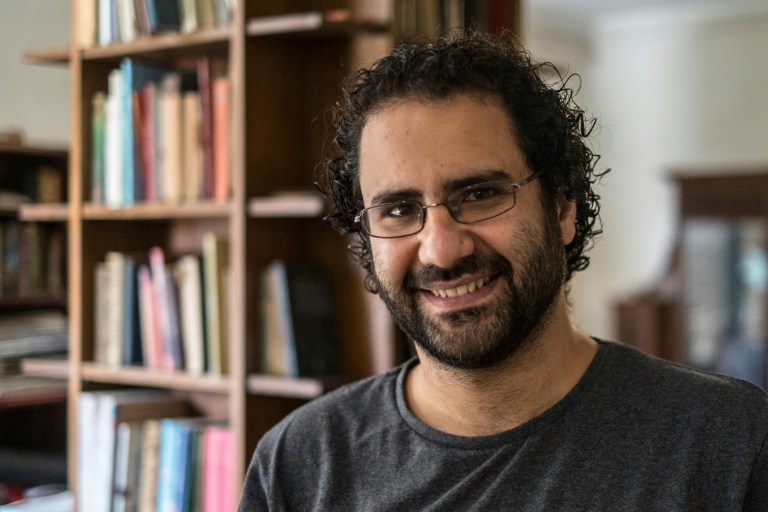
Egypt prison puts hunger-striker Abdel Fattah 'under medical intervention'

The family of Egypt’s jailed dissident Alaa Abdel Fattah said Thursday prison authorities had told them he is “under medical intervention”, as fear mounts that he is being force-fed.

The family have repeatedly demanded information on the health of the British-Egyptian activist in recent days, after he escalated his months-long hunger strike to include water.

On Thursday, his lawyer said he had been refused access to him by the prison where he is held, despite being authorised to do so by the interior ministry.

Abdel Fattah’s mother Laila Soueif, who has likewise tried to access the Wadi al-Natroun prison north of Cairo, was informed that “medical intervention was taken… with the knowledge of judicial entities”, the activist’s sister Mona Seif wrote on Twitter.

“They should allow our mother to see him immediately and see for herself how he is,” Seif added.

Abdel Fattah, a veteran pro-democracy and rights campaigner, is serving a five-year prison sentence for “spreading false news” by sharing a Facebook post about police brutality.

International concern has mounted since the 40-year-old also began declining liquids since Sunday, marking the start of the UN climate summit COP27 hosted by Egypt.

On Thursday, an officer told the activist’s mother that he was “under medical intervention”, but gave no other details.

Hossam Bahgat, founder of the Egyptian Initiative for Personal Rights (EIPR), the country’s largest rights group, said the prison officer statement “means he is being force-fed”.

Amnesty International said they were “worried” that medical decisions for Abdel Fattah were “not made by independent doctors free from interference and coercion by security”.

– ‘Hidden behind high walls’ –

A key figure of the 2011 uprising that toppled longtime autocrat Hosni Mubarak, Abdel Fattah gained British citizenship this year.

“Surely our mother should see him, or someone from @UKinEgypt (British embassy in Cairo) so we understand his real health status!!” Seif added on Twitter.

The dissident’s aunt, novelist Ahdaf Soueif, earlier this week said the family was concerned about “rumours of force-feeding and of sleep-inducing drugs”.

Soueif demanded that he be moved to the Qasr al-Aini University Hospital, Cairo’s largest state medical facility, fearing the prison hospital “is probably not equipped” to care for a patient who has been living for months “on 100 calories a day”.

Abdel Fattah’s lawyer, Khaled Alia, said Thursday that “the interior ministry refused to implement the prosecutor’s permit for us to visit Alaa under the pretext that the permit was dated” the day before.

British Prime Minister Rishi Sunak, French President Emmanuel Macron and German Chancellor Olaf Scholz have all voiced concern during the climate summit and called for his release.

United Nations rights chief Volker Turk has warned Abdel Fattah’s “life is in great danger”.

Activists at the COP27 summit in Egypt’s Red Sea resort of Sharm el-Sheikh have posted widely on Twitter under the hashtag #FreeAlaa. Several figures have ended their speeches with the words “you have not yet been defeated” — the title of the jailed activist’s book.

On Thursday, hundreds of COP27 participants, dressed in white like Egyptian prisoners, chanted “Free him!” and “no climate justice without human rights!”.

Others shouted “Free them all!” in reference to the 60,000 political detainees rights groups say are incarcerated in the country, many of them in brutal conditions and overcrowded cells — accusations which Cairo rejects.

“We are carrying out this action to draw attention to those who are invisible, hidden behind high walls,” one of the organisers George Galvis said.

– ‘Unacceptable insult’ –

Abdel Fattah’s case and the wider rights situation are intensely sensitive in Egypt, ranked 135 out of 140 countries in the World Justice Project’s rule of law index.

As international criticism of Egypt mounts, a counter-campaign has grown.

One Egyptian lawmaker protested during a press conference by Sanaa Seif, Alaa Abdel Fattah’s other sister, at COP27 — before being expelled by UN security — and another has called on parliament to protest.

Egypt’s mission in Geneva slammed the intervention by the UN’s Turk, saying his “characterisation of a judicial decision as ‘unfair’ is an unacceptable insult”.

A lawyer has also filed a complaint against Sanaa Seif for “conspiracy with foreigners” and “false information”, according to activists.

The prosecution has yet to decide on the complaint, the same potential charge of spreading “false information” that Abdel Fattah himself was jailed for.

He had shared a post — written by someone else — accusing an officer of killing an inmate under torture.

Surge of fossil fuel lobbyists at climate talks: watchdogs

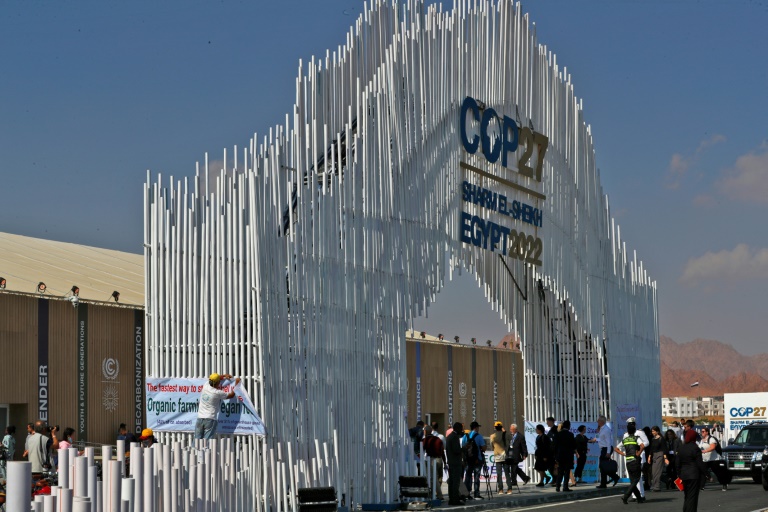
Fossil fuel lobbyists have flooded UN climate talks in Egypt, a report by watchdog groups said Thursday, even as calls grow at the summit for a windfall tax on oil majors’ bumper profits.

More than 600 lobbyists from some of the world’s biggest polluters have registered to the climate talks in the Egyptian resort of Sharm el-Sheikh, up 25 percent from last year, the analysis by groups including Global Witness and Corporate Accountability found.

That is more than the number of representatives from the 10 most climate-affected countries combined, they said.

“There’s been a lot of lip service paid to this being the so-called African COP, but how are you going to address the dire climate impacts on the continent when the fossil fuel delegation is larger than that of any African country?” said Philip Jakpor of Corporate Accountability.  

The groups scoured the official list of registered participants looking for those either directly affiliated with oil and gas companies, or people who are attending as part of delegations that “act on behalf of the fossil fuel industry”.

Last year at the UN climate meeting in Glasgow, they counted 503 fossil fuel lobbyists registered.

The groups called on the United Nations to restrict access to the talks for fossil fuel firms, which the UN chief Antonio Guterres has said are “poisoning our planet”.

They added that there are more fossil fuel lobbyists than any single national delegation, except for the United Arab Emirates — the host of next year’s talks — which has registered over a thousand delegates, 70 of whom are directly linked to fossil fuel interests.

– ‘Planet is burning’ –

Oil companies have scored tens of billions of dollars in profits this year as crude prices soared in the wake of Russia’s invasion of Ukraine.

Barbados Prime Minister Mia Mottley called Monday for a 10 percent tax on oil companies to fund loss and damage.

Other small island nations threatened by rising seas caused by global warming joined her call on Tuesday.

“While they are profiting, the planet is burning,” said the prime minister of Antigua and Barbuda, Gaston Browne, adding that company profits should go towards the creation of a “loss and damage” fund to help vulnerable countries cope with the here-and-now impacts of climate change.

The Pacific island nation of Tuvalu became this week the second country to join calls for a fossil fuel non-proliferation treaty, an initiative that seeks to stop new investments in coal, oil and gas globally and phase out production.

Activists gathered for a small rally at the climate conference, calling for big emitters to be thrown out. 

“Polluters out! People in!” they chanted.  

COP presidency representative Ambassador Wael Aboulmagd said it was difficult to unpick exact numbers for lobbyists, adding that other high-emitting sectors such as the cement, fertilisers and steel industries were also present. 

The aim was to show that firms can cut their emissions, he said at the presidency’s “decarbonisation day”.

“The context isn’t going to be to allow anyone to come and pretend they’re doing something,” he told reporters. 

Some fossil fuel delegates said it was legitimate for them to represent their interests at the talks.  

“We have no apology for our position here,” Omar Farouk Ibrahim, head of the African petroleum producers organisation, told AFP. 

'Why would they?': Doubts in Russia's retreat from Kherson

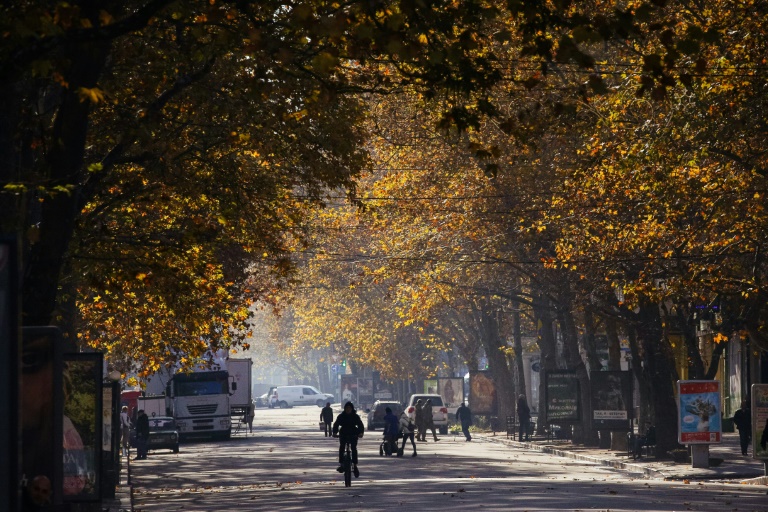
Few Ukrainians shopping for socks and extension cords on the main market of the biggest city near the Kherson front Thursday could believe the Russians really were pulling back.

Russian generals have ordered their troops to abandon their main southern bastion and other positions on the west bank of the Dnipro River.

Wednesday’s televised announcement capped weeks of creeping progress by Ukraine’s forces towards the biggest city — and only regional capital — Russia had captured in the war.

Kherson offers Ukraine a gateway to the Kremlin-annexed Crimea peninsula and the Sea of Azov.

Its fall in the first days of war cemented Russia’s control over a huge swath of southeastern Ukraine.

The retreat would leave President Vladimir Putin with little to show from his invasion other than Russia being ostracized from the Western world.

So suspicions that the Russians were pulling some sort of trick ran hight among Ukraine’s leaders in Kyiv and Mykolaiv shoppers at the central market.

“Why would they just get up and go after defending it with all their might for eight months?” mechanic Igor Kosorotov asked.

“I think that would be the height of stupidity. It makes no sense in my mind,” the 59-year-old said.

– Grounds for doubt –

The people of Mykolaiv have grounds to doubt the Russians.

Military officials say the riverside port has been bombed on 80 percent of the days of the war.

Many of its Soviet-era high-rises stand with blown out windows and soot covering walls in places where fires raged after aerial attacks.

The city’s eastern outskirts are dotted with the rusting remains of Russian armoured vehicles that tried and failed to capture the city in late February.

“How you can you trust a thing they say?” driver Volodymyr Vypritskiy demanded in between stalls selling vegetables and winter hats.

“How can you trust people that always told us they were our brothers? People who start killing their brothers — can you really believe them?” the 55-year-old asked.

The Kremlin initially argued that Russians and Ukrainians were one people that were split into two nations by geopolitical mistakes.

The logic changed when Moscow started calling Ukraine’s leaders Nazis who had to be deposed for the nation’s own sake.

– Lack of news –

Many around the Mykolaiv market did not even know that Russia had ordered a Kherson withdrawal.

Ukraine has banned Russian television and urged people not to trust a word coming out of Moscow during the war.

This has enflamed suspicions that news of the retreat is part of some sort of Kremlin misinformation campaign.

Store clerk Svitlana Kyrychenko said she never heard Moscow’s announcement but had friends who told her the Russians were actually fortifying Kherson.

“No one will give us anything back just like that,” the 54-year-old said.

“I have friends who have a friend in Kherson, and she said that there are even more Russian troops in Kherson.”

Ukraine announced Thursday that its forces had recaptured a dozen villages across a region covering more than 200 square kilometres (75 square miles) around the city of Kherson.

But it remained unclear whether the Russians had cleared out of the city itself.

– ‘Turn into ruins’ –

Satellite images show the Russians digging several lines of defensive trenches on the eastern bank of the Dnipro river.

The positions give the Russians a perfect position from which to shell Ukraine’s forces should they enter the abandoned city.

Mechanic Kosorotov said he was certain the Russians would destroy Kherson before allowing Ukraine to take it back.

“They will simply turn Kherson into ruins and that’s it,” he said. “They will let it sink into the river.”

But retired teacher Nina Belova said she was too worn down by life in wartime to focus much on the latest news from the front.

“My elevator has not worked since the first day of war, and I live on the ninth floor,” said the 78-year-old.

“What state can I possibly be in? I am just a bundle of nerves.”

Close Bitnami banner
Bitnami