World

'We can't survive on our own': locals help out neighbours in Bakhmut

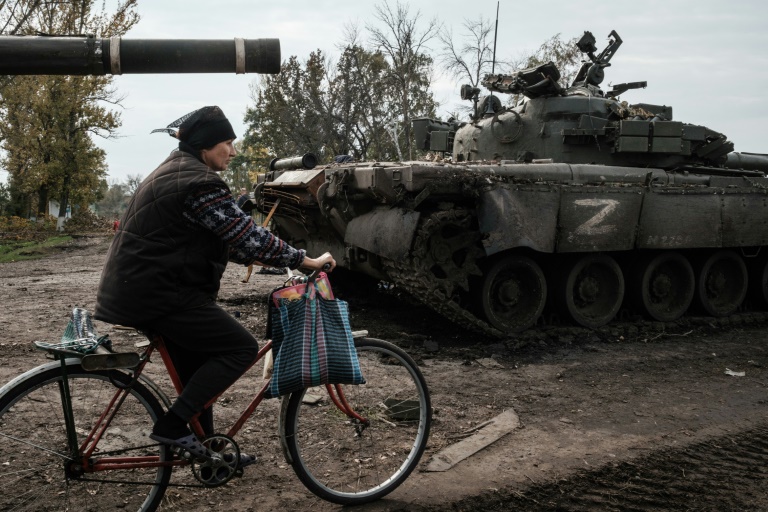
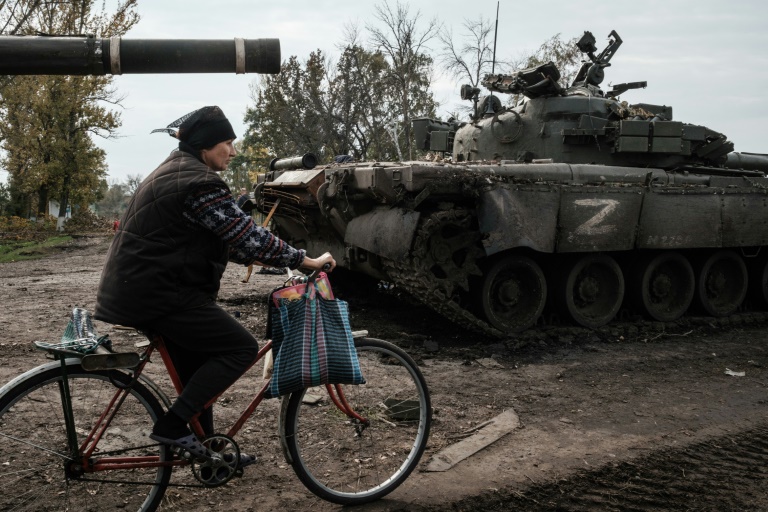
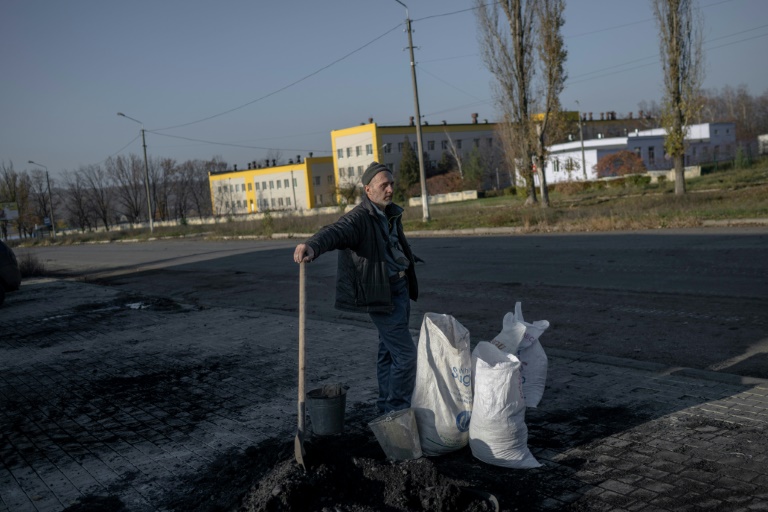
In a supermarket car park in Bakhmut, the eastern Ukrainian city at the centre of the fighting for the Donbas region, Anatoliy is rushing to load up his truck with coal for him and his neighbours, determined to stay dug in for the winter.

Around half of Bakhmut’s 70,000 people have stayed on despite the fighting raging for the past four months, mostly in the east of the city.

“The fact that we are still here and helping others, that means a lot to us,” says Anatoliy, a 60-year-old man with a white beard and a beanie. 

“We aren’t just going to stay here and do nothing. We cannot survive on our own,” Anatoliy adds, still shovelling. 

Behind him, cars with trailers are coming and going to pick up the coal that authorities have piled up to help residents ahead of the cold winter. 

A big bag of toilet paper, a box of candles and bottles of water are packed on the passenger seat of a Soviet-era Lada car.

Locals are allowed to pick up two tons of coal per household. 

This means a lot in a city with no electricity or running water since mid-October. 

Already there is almost no coal left in the six piles, and shovels scrape against concrete paving.

But this noise barely covers the endless explosions of shelling between Ukrainian forces defending the city and Russian troops boosted by Wagner mercenaries. 

– ‘Helping people survive’ –

When Russia invaded in February “we still had emotions, but now, we are just surviving,” Anatoliy says. 

“We are giving humanitarian aid. I have a house, I have bees, and anything I can harvest in my garden, I give it to people for free,” he says.

“If someone needs carrots, cabbages or beetroots, they can take it… I don’t need much, so long as it can help people survive,” Anatoliy says. 

“These days, we think about others more than we used to.”

Very few residents risk wandering through the streets, only nipping out to buy food at a small street market in the centre or at the grocery stores that remain open.

Every day, shelling hits the city itself.

At the end of October, a Russian strike killed seven people in Bakhmut.

There are very few children left in the city.

One of them, 12-year-old Sasha, just bought some lemonade and is on his way back home. 

“A missile fell here. One person died,” he says, pointing to one of the entrances to his block of flats, before going back inside. 

Artillery exchanges mostly occur in the outskirts of Bakhmut. 

The contact line in the eastern suburbs has barely moved in the past four weeks, despite fierce fighting and heavy losses. 

– ‘We are winning’ –

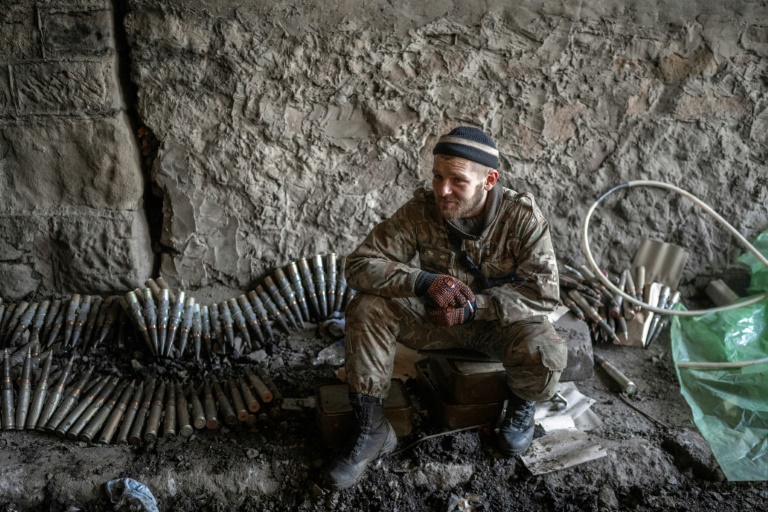
“It has become harder these past three days. (The Russians) are pushing more and more. But our boys are holding their positions,” 26-year-old soldier Vitaliy tells AFP.

The soldier is standing next to two combat vehicles in a sheltered spot in the city centre. 

The unit has just been ordered to move one of the vehicles to the front line to fire at a Russian position.

The brigade comes back 15 minutes later, its task fulfilled. 

The unit chief gets out of the armoured vehicle red-faced and takes big gulps of water from a bottle. 

The Russians “came in, and we pushed them back. And now, we are shooting (at their positions) 2 kilometres (1.2 miles) away from the city,” he explains.

“So, long story short: we are winning,” he grins.
ArcelorMittal net profit plummets

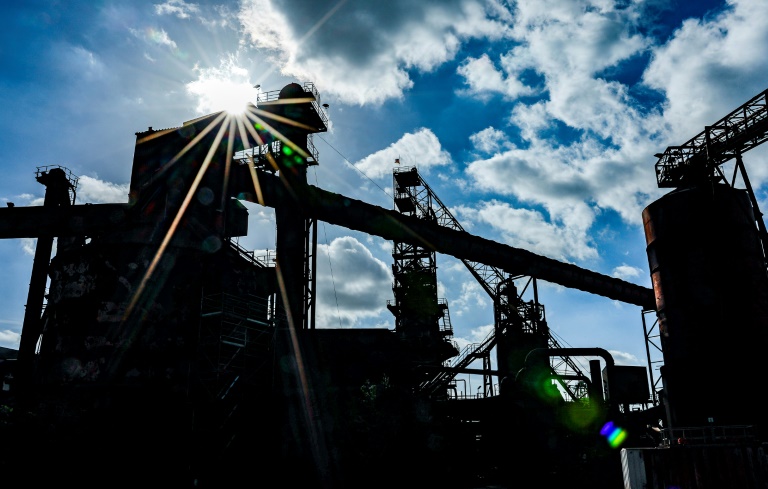
ArcelorMittal, the world’s number-two steel maker, saw its net profit tumble by 78 percent in the third quarter of 2022 as metal prices fell from “exceptional” levels during the post-Covid recovery and energy prices soared.

The global steel market is suffering both from the slowdown in China’s economic growth — the world’s largest user of steel — and from the fallout of the war in Ukraine and the surge in energy prices in Europe.

From July to September, ArcelorMittal said in a statement that it made a net profit of $993 million compared to $4.6 billion in the same quarter last year, bringing the profit for the first nine months of the year to $9 billion compared to $10.9 last year. 

“The strong market conditions enjoyed for much of the past two years deteriorated in the third quarter as seasonally lower shipments, a reduction in exceptional price levels, destocking and higher energy costs combined to put profits under pressure,” said Aditya Mittal, ArcelorMittal CEO. 

While expressing confidence in his group’s resilience he warned that the “short-term outlook for the industry remains uncertain and caution is appropriate.”

In September, ArcelorMittal said it would shut down two of its blast furnaces in Europe over high energy prices and lower demand.

Its furnaces in Bremen in northern Germany and near Gijon in northern Spain will cease to operate until further notice at the end of the month, it announced.

The CEO of the group’s partially-idled Hamburg site, Uwe Braun, told AFP in October that its gas bill had multiplied by seven compared to the period before Russia’s invasion of Ukraine.

In Thursday’s update the steelmaker said it had reduced European gas consumption by 30 percent amid soaring costs.

– Gas prices –

Total steel shipments in the third quarter were down just over seven percent compared with the same quarter the previous year, which the group said largely reflects weaker demand and seasonality in Europe.

But the group said shipments “remain broadly stable” — excluding ArcelorMittal Kryvyi Rig which is impacted by the war in Ukraine.

Work halted for a month when Russian forces approached Kryvyi Rig, but eventually restarted at a reduced tempo.

The steelmaker has also said that it continues towards a goal of decarbonisation for its future business strategy.

Mittal said in Thursday’s update that the group hoped the COP27 summit in Egypt would lead to the “scaling up of renewable energy, critical for both the decarbonisation of steel and enhanced energy security.”

The update said the group had broken ground on its first low-carbon emissions steelmaking project in Canada, which removes coal from the ironmaking process.

Lashing out at Italy, France allows Ocean Viking to dock

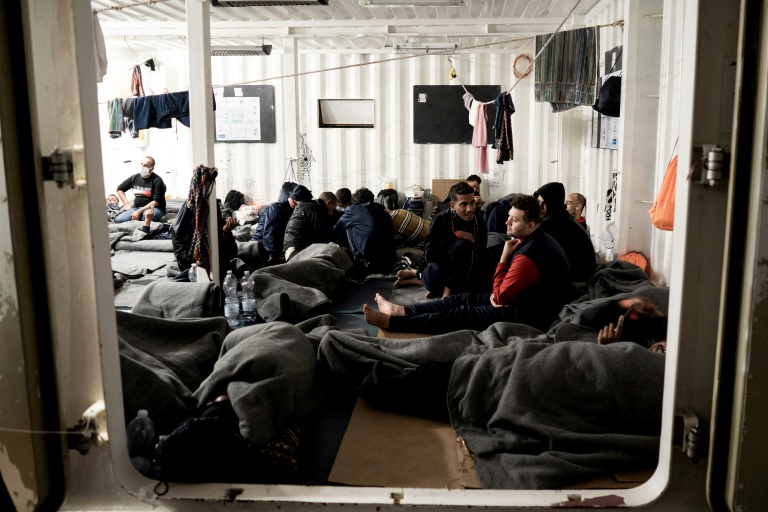
France said Thursday that it would allow a rescue ship carrying more than 200 migrants to dock on its southern coast and disembark its passengers, harshly criticising Italy for failing to take them in.

Interior Minister Gerald Darmanin said the Ocean Viking, whose passengers include 57 children, would be granted access to the military port of Toulon after a deepening standoff with Italy over whose responsibility it was to take them in.

Visibly angered by Rome’s refusal to accept the ship, Darmanin called its stance “incomprehensible”.

The ship “is located without any doubt in Italy’s search and rescue zone”, he said, adding that “it was Italy’s job to immediately designate a port to welcome this ship”.

The French-Italian tensions are the latest episode in a European standoff over where to disembark migrants picked up after trying to reach Europe from North Africa, with Rome increasingly frustrated at taking in the bulk of those rescued.

Speaking after a cabinet meeting, Darmanin also warned that “it is obvious that there will be extremely severe consequences for bilateral relations” with Italy.

He said France had already decided to freeze a plan to take 3,500 migrants currently in Italy, part of a European burden-sharing accord, and urged Germany and other EU nations to do the same.

Earlier Thursday, France said it was disembarking four of the 234 migrants aboard the Ocean Viking via helicopter for health reasons.

The charity that operates the ship, SOS Mediterranee, had made the request to French authorities after refusals by Italy to allow port access for the past week, even as sanitary conditions worsened onboard.

After Darmanin’s announcement, SOS Mediterranee said it felt “relief tainted with bitterness”.

– A one-off decision –

A spokeswoman for the charity told AFP earlier that “one of the patients is unstable and no longer reacting to treatment since October 27”. 

“The two others were injured in Libya and because of this long wait for treatment, they risk having long-term health issues,” she said.

France had insisted that under international maritime law, Rome must grant access to the Ocean Viking and the 234 distressed migrants it rescued, not least after it granted access this week to three other rescue ships carrying hundreds of people.

Darmanin said the decision to allow the ship to dock, after two weeks at sea, was “exceptional” and would not guide future action.

But the arrival of Giorgia Meloni as the head of Italy’s most right-wing government in decades could also spark a repeat of the European migrant fights of four years ago, when French President Emmanuel Macron in particular clashed with Italy’s populist interior minister Matteo Salvini.

Italy’s Foreign Minister Antonio Tajani said this week that he was sending a signal to EU nations that they must play an even bigger part.

Rome wants “an agreement to establish, on the basis of population, how migrants with a right to asylum are relocated to various countries,” Tajani said ahead of a meeting of EU ministers next week.

Volker Turk, the UN High Commissioner for Human Rights, has also urged a rapid disembarkment and warned that “politics should not be pursued at the expense of people in distress.”

Under international law, ships in distress or carrying rescued passengers must be allowed entry in the nearest port of call — which means Italy and often Malta are shouldering the burden of taking in those rescued after trying to cross the Mediterranean from Libya.

In June, around a dozen EU countries, including France, agreed to take in migrants who arrive in Italy and other main entry points.

So far this year, 164 asylum seekers have been moved from Italy to other nations in the bloc that have volunteered to accept them.

But that is a tiny fraction of the more than 88,000 that have reached its shores so far this year, of which just 14 percent arrived after being rescued by NGO vessels, according to the Italian authorities.

According to the UN’s International Organization for Migration, 1,891 migrants have died or disappeared while trying to cross the Mediterranean so far this year.

burs/js-jh/ah

Moscow says Kherson pullout starts as Ukraine claims gains

Moscow announced Thursday it had begun retreating from Ukraine’s southern city of Kherson as Kyiv said it had recaptured a dozen villages in the strategic Black Sea region.

“The Russian troop units are manoeuvring to prepared position on the left bank of the Dnipro river in strict accordance with the approved plan,” the Russian defence ministry said.

Ukrainian officials have remained wary since Moscow first signalled late Wednesday that it was pulling forces from the west bank of the Dnipro river in Kherson, in what would be major Russian setback in a region Vladimir Putin claimed to have annexed.

Ukrainian troops have for weeks been capturing villages en route to the main city in the eponymous region, while Kremlin-installed leaders in Kherson have been pulling out civilians in what Kyiv has called illegal deportations.

Ukrainian general Valeriy Zaluzhny said on social media that Ukraine’s forces had recaptured six settlements after fighting near the Petropavlivka-Novoraisk front.

Kyiv’s army had taken another six in the Pervomaiske-Kherson direction, capturing a total of more than 200 square kilometres (77 square miles) from the Russians, he added.

Late Wednesday, Russia’s most senior defence officials responsible for Ukraine announced in a televised meeting that they had taken the “difficult decision” to withdraw from Kherson and set up defensive lines further back.

In the nearby southern city of Mykolaiv, which Russian forces have pounded with artillery and missiles for months, there was little belief the Russians would do as they said.

“You cannot trust what they say. No one will give us anything back just like that,” Svitlana Kyrychenko, a 54-year-old store clerk, told AFP.

– ‘Don’t believe’ –

She said friends told her there were even more Russian troops in Kherson and that she believed that Moscow’s forces would not leave the city without a fight.

“I don’t believe that they will just give anything back,” she added.

Ukrainian President Volodymyr Zelensky has suggested Russia could be strategically feigning rather than experiencing a major setback.

Military officials in Kyiv reiterated that caution on Thursday.

“At this point, we can’t confirm or deny information about the retreat of Russian troops from Kherson,” said Oleksiy Gromov, from the Ukrainian armed forces’ general staff.

Russia losing the Kherson region would return to Ukraine important access to the Sea of Azov and leave Putin with little to show from a campaign that has turned him into a pariah in Western eyes.

The retreat will put pressure on Russian control of the rest of the Kherson region, which forms a land bridge from Russia to Crimea, the peninsula that Moscow annexed in 2014.

In the weeks leading up to the announcement from Russian Defence Minister Sergei Shoigu, Kremlin-installed officials said they were “evacuating” civilians and rendering the city a “fortress”.

As Ukrainian troops advance in the south, Russia’s commander in Ukraine, Sergei Surovikin, told Shoigu on Wednesday that around 115,000 people had been removed from the western bank of the Dnipro, which includes Kherson city.

– Bakhmut fight ‘harder’ –

Kherson was one of four Ukrainian regions that Russia declared it had annexed in September, shortly after being forced to withdraw from swathes of territory in the northeastern Kharkiv region.

In Moscow, Kremlin supporters rushed to justify the decision despite earlier setbacks in Ukraine spurring division and soul searching among Putin allies.

The head of Russian state media group RT, Margarita Simonyan, said the retreat was necessary to not leave Russian troops exposed on the west bank of the Dnipro River and “open the way to Crimea”.

Chechen strongman Ramzan Kadyrov said the decision was “difficult but fair”.

Moscow’s announced withdrawal came as the United States estimated more than 100,000 Russian military personnel have been killed or wounded in Ukraine.

Kyiv’s forces have likely suffered similar casualties, according to top US General Mark Milley, who shared the most precise figures released to date by Washington.

Russia has been pushing to capture the eastern Donbas city of Bakhmut, with the battered town famous for wine and salt mines coming under intensive fire for weeks.

“It has become harder these past three days. The Russians are pushing more and more. But our boys are holding their positions,” 26-year-old soldier Vitaliy told AFP in Bakhmut.

Around half of the 70,000 people living in the city have stayed despite the fighting, mostly in the east of the city, for the past four months.

Stock markets drop before US inflation

Stock markets mostly fell Thursday looking ahead to key inflation data in the United States and as traders digested the country’s inconclusive midterm election results as well as a cryptocurrency crisis.

US inflation numbers due Thursday will help markets to gauge the speed of future rate hikes by the Federal Reserve. The dollar was mixed before the latest data. 

“US growth looks still too strong to bring inflation down,” noted Tapas Strickland of National Australia Bank.

“The ongoing resilience in the (consumer prices) data and stickiness in inflation continue to point to the Fed hiking rates closer to 5.0 percent or higher.” 

Rates currently stand at between 3.75 to 4.0 percent.

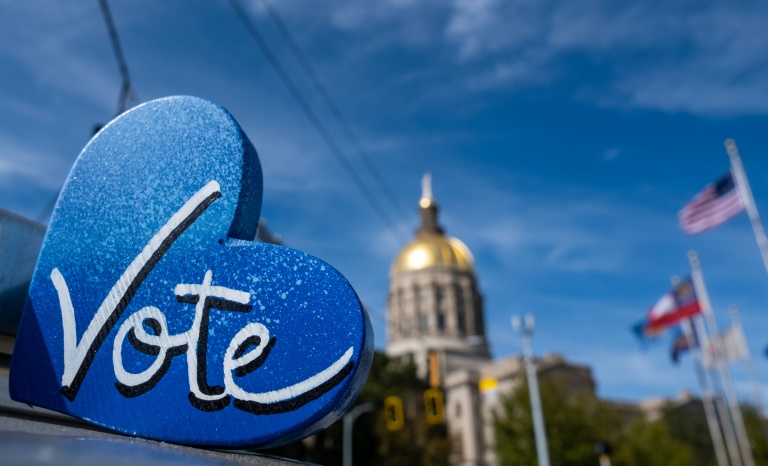
In US midterm elections, Republicans appeared likely to win a majority in the House of Representatives, but with a much smaller victory than they had hoped for — and that pollsters forecast.

Markets are grappling also with the impact of strict zero-Covid measures in China, with supply chains and activity slowed by harsh lockdowns and testing policies.

“China’s domestic demand is weak and their key trading partners are entering recession territory,” said Edward Moya at OANDA trading group.

Oil prices fell Thursday, extending recent losses on weaker Chinese demand.

The crypto world has meanwhile been rocked by a surprise decision from Binance, the world’s biggest cryptocurrency platform, to scrap a possible acquisition of rival FTX.com a day after disclosing it had signed a non-binding letter of intent to buy it.

The near-collapse of FTX has plunged bitcoin to a two-year low.

“FTX’s slump from over a $32 billion valuation to zero in less than a few days raises numerous issues,” said Stephen Innes at SPI Asset Management.

“Prominent investors are wearing eggs on their faces after diving in head first.”

He added that gold and silver would be the biggest beneficiaries of the crypto fallout with investors looking to the trusted precious metals for stability.

– Key figures around 1200 GMT –

London – FTSE 100: DOWN 0.1 percent at 7,291.54 points 

Frankfurt – DAX: FLAT at 13,667.53

Paris – CAC 40: DOWN 0.5 percent at 6,401.60 

EURO STOXX 50: DOWN 0.1 percent at 3,725.10

Tokyo – Nikkei 225: DOWN 1.0 percent at 27,446.10 (close) 

Hong Kong – Hang Seng Index: DOWN 1.7 percent at 16,081.04 (close)

Shanghai – Composite: DOWN 0.4 percent at 3,036.13 (close)

New York – Dow: DOWN 2.0 percent at 32,513.94 (close)

Euro/dollar: DOWN at $0.9945 from $1.0017 Wednesday 

Pound/dollar: UP at $1.1376 from $1.1352

Dollar/yen: UP at 146.49 yen from 146.37 yen

Euro/pound: DOWN at 87.42 pence from 88.19 pence

West Texas Intermediate: DOWN 0.6 percent at $85.33 per barrel

Brent North Sea crude: DOWN 0.4 percent at $92.29 per barrel

'Unstoppable' renewables help climate, security: experts at COP27

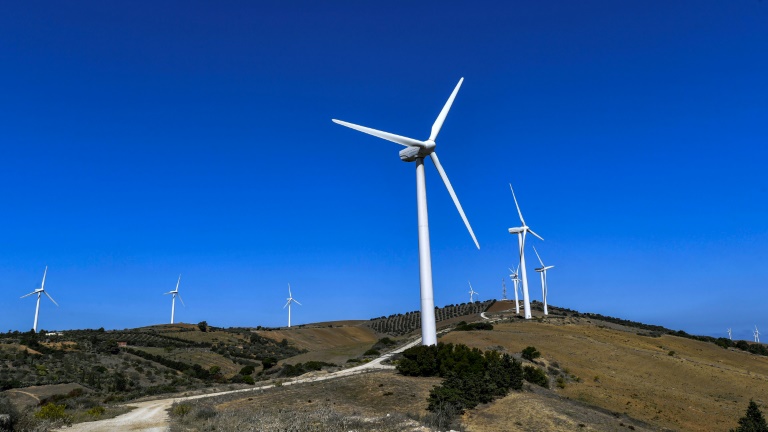
Russia’s war in Ukraine has forced a short-term scramble for fossil fuels but the rise of solar, wind and other clean energies is “unstoppable”, the head of International Renewable Energy Agency told AFP.

Speaking at the UN COP27 climate summit in Egypt, Francesco La Camera said market forces now all but ensure renewables will keep growing fast — but also warned that the pace will need to double to prevent a climate catastrophe.

The Ukraine war has led to a serious energy supply crunch and oil and gas price spikes that have forced especially European countries to quickly search for new suppliers as they head into winter.

“In the short term, this will have an impact,” said La Camera, director general of IRENA. 

“But in the medium and long term, there is no other way than to accelerate decarbonisation. Because ultimately renewables are not only good for the climate, jobs, GDP, but are a real way to ensure energy independence.”

NATO chief Jens Stoltenberg also highlighted the strategic aspect of a shift away from dependency on Russia and other oil and gas suppliers to clean and safe renewables.

Russia’s “use of energy as a weapon”, he said, “is a stark reminder of the need to transition from dependence on fossil fuels to renewables, because that will make us less dependent on Russian gas and Russian oil”. 

Helping NATO allies and countries everywhere shift to green power will not just help mitigate global warming, he said, but will also “be good for our security”.

– ‘Market is the engine’ –

As delegates meet in Egypt, US President Joe Biden was assessing the likely election loss of the House of Representatives to the Republicans, many of whom are hostile to his climate policies.

But La Camera said he saw no danger of the United States backsliding in Biden’s push to expand clean energies.

“The market is the engine,” he said. “The market is already saying clearly that we are moving toward a system based on renewables and complemented by hydrogen, mainly green. No one can stop this progress.”

Even under ex-president Donald Trump, “coal-fired power plants were already closing in the United States,” said La Camera. 

“The question is not where we are going but how fast and at what scale.”

IRENA calculated in a report published for COP27 that the energy transition is not yet on track to meet the Paris Agreement goals of keeping global warming well below two degrees Celsius and preferable at 1.5 degrees compared to the pre-industrial era. 

“The figures say that we must double the ambition between now and 2030,” he stressed.

Countries worldwide are now on track for 5.4 terawatts of installed renewable electricity capacity by that year — only half of the 10.8 TW that would be needed to meet climate commitments.

– ‘Phenomenal potential’ –

Africa, where the COP is being held this year, has enormous potential to harness renewables, especially the power of the sun, but is so far lagging behind, experts say.

Investment in renewables there fell to an 11-year low last year, according to a report by research organisation BloombergNEF. 

The continent captured only 0.6 percent of global investments in the sector. 

“Africa has phenomenal potential,” said the IRENA chief. “They can produce 1,000 times the electricity and energy they need. This continent is an incredible powerhouse.

“But we need to review the way cooperation works,” he added. “Africa cannot develop and move towards a clean energy system without the right physical and legal infrastructure.”

La Camera warned against the temptation to promote new fossil fuel projects, a dream cherished by several countries including Senegal and the Democratic Republic of Congo. 

“It’s in the interest of the continent to jump on the new train” and not “stay stuck in old technologies,” he said, predicting this would generate millions of new jobs and accelerate economic growth. 

“But this can only be done,” La Camera said, “if developed countries are ready to facilitate, to support, to work with Africans to make this possible.”

Isolated Putin will not go to G20 summit

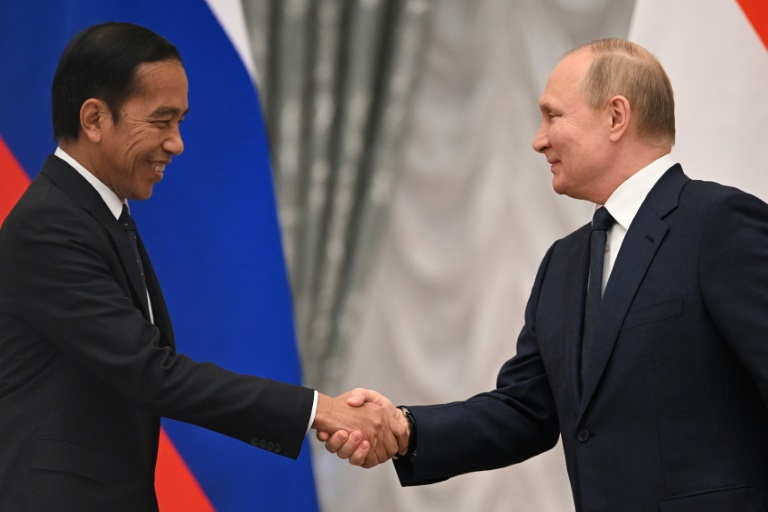
Russian President Vladimir Putin, who has been shunned by the West over his offensive in Ukraine, will not travel to Indonesia for the G20 leaders’ summit next week, officials said Thursday.

The Kremlin, which has been mired in a protracted conflict in Ukraine and threatened the West with nuclear weapons, will instead send Foreign Minister Sergei Lavrov. Putin may take part in the November 15-16 summit by video link, officials said.

“A decision has been made that Sergei Lavrov will represent Russia at the G20 summit,” Kremlin spokesman Dmitry Peskov told reporters.

A trip to the summit in Bali would have put Putin in the same room as US President Joe Biden for the first time since the Russian leader sent troops to Ukraine on February 24.

Biden has fiercely criticised Putin and ruled out meeting him in Bali if he went, unless they discussed the release of Americans held in Russia.

Yulia Tomskaya, chief of protocol at Russia’s embassy in Jakarta said that Putin could participate “virtually.”

“President Putin’s programme is still being worked out,” she told AFP.

The confirmation Putin will not be present followed months of uncertainty over his summit plans.

– ‘Sense of dead end’ –

Observers say the Kremlin is seeking to shield the 70-year-old leader from Western condemnation over the Ukraine offensive, in which Russian forces are suffering setbacks against a Ukrainian counter-offensive.

In 2014, Putin cut short his attendance at the Group of 20 summit in Brisbane where he got a chilly reception and faced intense pressure from the West over Moscow’s support for insurgents in Ukraine.

Political analyst Konstantin Kalachev said Putin did not want to step out of his comfort zone and face uncomfortable questions.

Putin’s refusal to attend the summit in person also suggests he does not have any firm proposal to end the offensive in Ukraine. 

“There is a sense of a dead end, and without concrete proposals Putin simply has nothing to do at this summit,” Kalachev told AFP.

Indonesia’s coordinating minister of maritime and investment affairs, Luhut Binsar Pandjaitan, told reporters that Putin would not travel because “maybe (he) is busy in his country” and said leaders should respect his decision.

Lavrov walked out of a G20 foreign ministers’ meeting in Bali in July after officials condemned Russia’s actions in Ukraine.

– Increasing isolation –

Indonesia pursues a neutral foreign policy and has rebuffed Western calls to disinvite Russia from the summit.

Indonesian President Joko Widodo had invited Putin despite the Ukraine assault, prompting a flurry of Western criticism. In August, he said Putin had accepted that invitation.

Ukrainian President Volodymyr Zelensky is expected to attend virtually. He had threatened to boycott the summit if Putin attended.

Ukraine is not a G20 member.

Russia refers to its military campaign as a “special military operation” to “de-Nazify” Ukraine and blames subsequent Western sanctions for the global food and energy crises that followed.

While those sanctions have gnawed at Russia’s campaign, other countries have maintained economic ties with Moscow. India and China stepped up their purchases of Russian oil.

– Global crises –

The G20 summit will be the bloc’s biggest meeting since the onset of the Covid-19 pandemic.

Fresh from securing a historic third term, Chinese President Xi Jinping is expected to attend.

The talks will be held under the shadow of divisions over the food and energy crises worsened by the Ukraine conflict, on top of soaring inflation and climate change.

G20 meetings held ahead of the leaders’ meeting all ended without a joint communique.

The summit in Bali is also not expected to close with a joint declaration but the Indonesian foreign ministry said “the negotiation for the final document is still ongoing”.

AstraZeneca returns to profit on higher drugs revenue

British pharmaceuticals giant AstraZeneca on Thursday announced a return to third-quarter profit on increased revenue from sales of its drugs.

Net profit for the Covid-vaccine maker came in at $1.64 billion in the July-September period, a statement said.

That compared with a loss after tax of $1.65 billion in the third quarter of last year, in part on costs linked to its takeover of US biotech company Alexion.

For the third quarter of this year, revenue jumped 11 percent to almost $11 billion as AstraZeneca began to profit from the Alexion purchase that cost it $39 billion.

AstraZeneca was benefitting also from “sustained investment in research and development (R&D)”, chief executive Pascal Soriot said in Thursday’s statement.

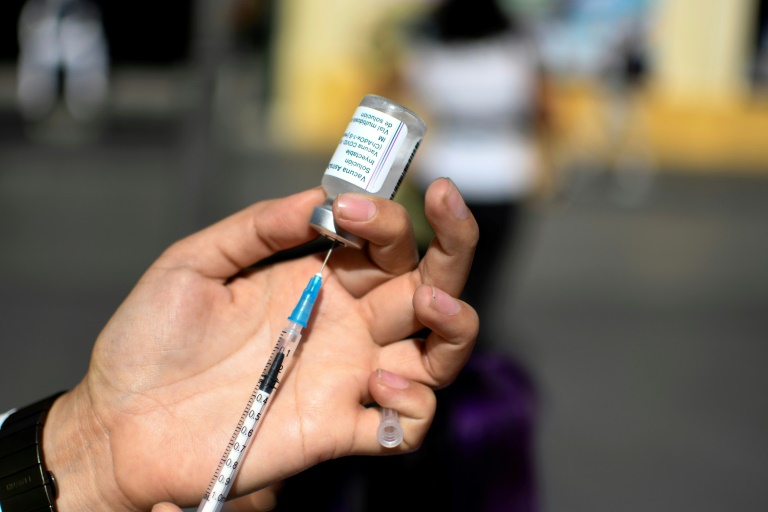
While overall sales jumped, driven by cancer drugs, revenue from its Covid jab Vaxzevria slumped 83 percent in the quarter to $173 million.

Revenue from AstraZeneca’s new drug Evusheld, developed for patients at risk of death from Covid, came in at $537 million.

“In all, required investment costs in drug development continue to weigh, and falling sales of its Vaxzevria Covid-19 vaccine have pushed emerging market sales down a tenth during the quarter,” noted Keith Bowman, investment analyst at Interactive Investor. 

“What’s more, Astra’s purchase of Alexion… is still to be fully justified.”

AstraZeneca’s share price jumped 2.1 percent to £110 ($125) on London’s top FTSE 100 index, down slightly overall in late morning deals.

Analysts said the shares were boosted by a positive earnings outlook.

“Progress in drug innovation and approvals is evident” for the group said Bowman, adding that “cancer treatment sales accounted for over a third of overall revenues during this latest period”.

Dash for gas imperils 1.5C climate goal: report

The global scramble for natural gas after Russia’s invasion of Ukraine threatens the Paris Agreement target of limiting global warming to 1.5 degrees Celsius, scientists said Thursday on the sidelines of UN climate talks in Egypt.

Projected emissions from Liquefied Natural Gas (LNG) projects under construction, approved and proposed up to 2050 would eat up a big chunk of humanity’s carbon budget for a 1.5C world, analysis from research NGO Climate Action Tracker showed.

The energy crisis spurred by restricted supply from Russia has seen a major push to expanded LNG production and import capacity in Europe, Africa, North America, Asia and Australia.

“The world has overreached in its bid to respond to the energy crisis,” said Bill Hare, CEO of Climate Analytics, which contributed to the report. 

“Our analysis shows proposed, approved and under construction LNG far exceeds what’s needed to replace Russian gas.”

In 2030, LNG could surge 500 million tonnes, equivalent to nearly five times the European Union’s 2021 Russian gas imports, and double total global Russian exports. 

The resulting emissions — some two billion tonnes of CO2 every year by 2030 — is incompatible with pathways to a carbon neutral world by mid-century, including one laid out by the intergovernmental International Energy Agency (IEA).  

– ‘Emergency mode’ –

“Increasing our reliance on fossil gas cannot be the solution to today’s climate and energy crises anywhere,” Hare said.

Annual projections of how much government plans and pledges will curb global warming show virtually no movement compared to year ago. 

Few governments have increased their short-term targets or made new longer horizon “net zero” commitments since the COP26 UN climate summit in Glasgow in November 2021. 

All countries honouring their carbon pledges so far under the 2015 Paris treaty would see the rise in global temperatures top out at 2.4C above pre-industrial levels.

With nearly 1.2C of warming to date, the world has seen a rapid crescendo of deadly and costly heat waves, floods, droughts and storm surges made worse by rising seas. 

2022 has been a year of climate havoc, with Pakistan still underwater after flooding submerged a third of the country in August. 

This year has also seen wildfires raging across Europe, Russia and North America, and record heatwaves on three continents. 

“With governments focussing on the energy crisis, this has been a year of little action on the climate,” said Niklas Hohne, an analyst at NewClimate Institute. 

“To limit warming to 1.5C, countries need to flip to emergency mode on climate as they do on the energy crisis.”

Dash for gas imperils 1.5C climate goal: report

The global scramble for natural gas after Russia’s invasion of Ukraine threatens the Paris Agreement target of limiting global warming to 1.5 degrees Celsius, scientists said Thursday on the sidelines of UN climate talks in Egypt.

Projected emissions from Liquefied Natural Gas (LNG) projects under construction, approved and proposed up to 2050 would eat up a big chunk of humanity’s carbon budget for a 1.5C world, analysis from research NGO Climate Action Tracker showed.

The energy crisis spurred by restricted supply from Russia has seen a major push to expanded LNG production and import capacity in Europe, Africa, North America, Asia and Australia.

“The world has overreached in its bid to respond to the energy crisis,” said Bill Hare, CEO of Climate Analytics, which contributed to the report. 

“Our analysis shows proposed, approved and under construction LNG far exceeds what’s needed to replace Russian gas.”

In 2030, LNG could surge 500 million tonnes, equivalent to nearly five times the European Union’s 2021 Russian gas imports, and double total global Russian exports. 

The resulting emissions — some two billion tonnes of CO2 every year by 2030 — is incompatible with pathways to a carbon neutral world by mid-century, including one laid out by the intergovernmental International Energy Agency (IEA).  

– ‘Emergency mode’ –

“Increasing our reliance on fossil gas cannot be the solution to today’s climate and energy crises anywhere,” Hare said.

Annual projections of how much government plans and pledges will curb global warming show virtually no movement compared to year ago. 

Few governments have increased their short-term targets or made new longer horizon “net zero” commitments since the COP26 UN climate summit in Glasgow in November 2021. 

All countries honouring their carbon pledges so far under the 2015 Paris treaty would see the rise in global temperatures top out at 2.4C above pre-industrial levels.

With nearly 1.2C of warming to date, the world has seen a rapid crescendo of deadly and costly heat waves, floods, droughts and storm surges made worse by rising seas. 

2022 has been a year of climate havoc, with Pakistan still underwater after flooding submerged a third of the country in August. 

This year has also seen wildfires raging across Europe, Russia and North America, and record heatwaves on three continents. 

“With governments focussing on the energy crisis, this has been a year of little action on the climate,” said Niklas Hohne, an analyst at NewClimate Institute. 

“To limit warming to 1.5C, countries need to flip to emergency mode on climate as they do on the energy crisis.”

Close Bitnami banner
Bitnami