World

Transit strikes snarl London, Paris as workers seek raises

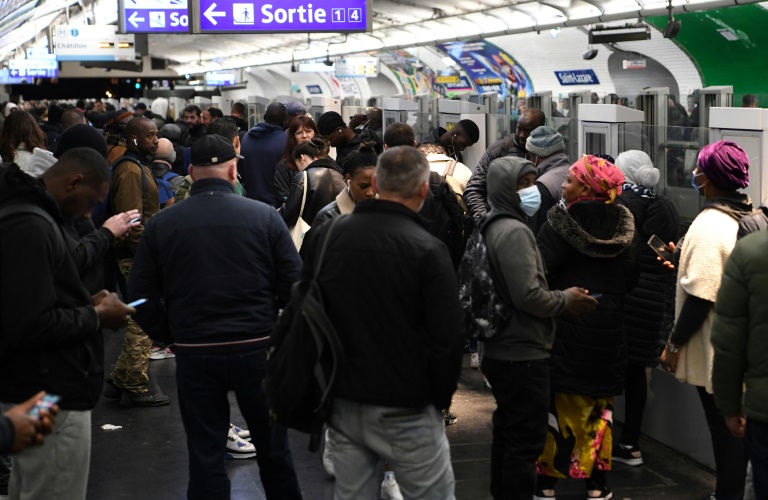
Commuters in London and Paris scrambled for alternatives Thursday — or simply stayed home — as public transport workers went on strike for higher pay, the latest industrial action seeking relief from soaring prices in Europe.

Spreading labour unrest poses a problem for governments which are already spending billions trying to blunt the worst effects of rising prices, at least for the most vulnerable.

“I am very deeply affected by the strike,” said 36-year-old Nicco Hogg in London. “I took my car, the train and now I have to cycle.”

The action in Britain, by members of the Rail, Maritime and Transport (RMT) and Unite unions, follows several prior walkouts this year amid a long-running dispute over job cuts, pensions and working conditions.

In France, the strike aims also to ratchet up pressure on President Emmanuel Macron before he brings a controversial pensions overhaul bill to parliament, which would require millions of people to work longer before retiring.

“It’s to show that if we want to take action, we know how to take action,” Frederic Souillot, head of France’s FO union, said ahead of the Paris strike.

The capital’s public transport operator RATP said nearly every Metro line would be shut down or operating with only limited rush-hour service, and urged people to work from home or postpone trips if possible.

Many commuters appeared to heed the call, with the morning crush less chaotic than many feared, and the city’s growing network of bike lanes saw a surge of cyclists under a bright autumn sky.

But the two main suburban rail lines called RER A and B, which connect central Paris with Disneyland Paris and the Charles de Gaulle and Orly airports, saw more severe disruptions.

Frequency of bus services were likely to drop by a third, while tram operations were expected at near-normal levels, the RATP said.

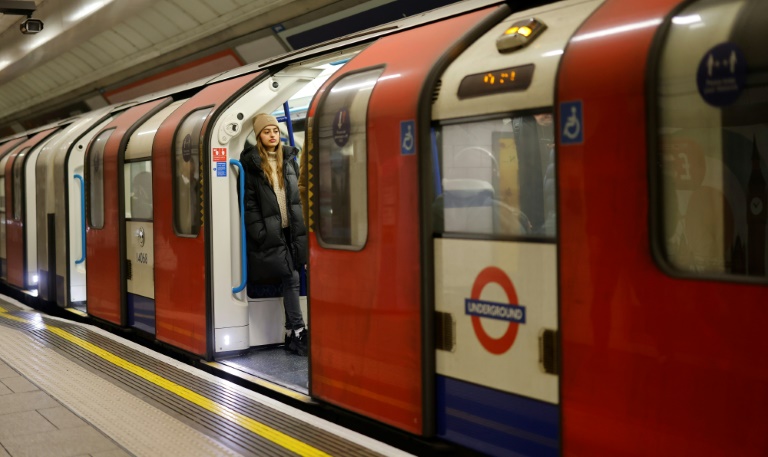
Authorities in London said the Underground system was “severely disrupted”, with limited or no services running, and advised people to avoid trying to use the network.

Reports said many buses were packed to capacity and unable to pick up hordes waiting at numerous stops, while roads were expected to be more congested than usual.

– New CEO awaited –

French unions have staged strikes across several sectors in recent weeks seeking pay hikes or increased hiring as spiralling energy costs feed into widespread inflation.

Thursday’s strike will also include a protest march in the capital in the afternoon that will shut down major traffic avenues.

But the Paris transport strike did not spill over into other sectors, with only the hard-line CGT union calling for general work stoppages that could match turnout of October 18, when authorities say 107,000 demonstrators turned out nationwide.

Unions representing the RATP’s nearly 70,000 employees say they are feeling the pinch of soaring prices, but are also overstretched because of insufficient hiring, resulting in increased sick leave.

That has led to more service delays or lower frequency on busy metro lines in recent months, causing headaches for the system’s roughly 12 million daily users.

The government is set to appoint former prime minister Jean Castex as RATP chief, with parliamentary panels giving their green light after questioning him this week.

“The most urgent issue… is the continuity and quality of service,” Castex told lawmakers. “The heart of our job is to meet the expectations of our users.”
Transit strikes snarl London, Paris as workers seek raises

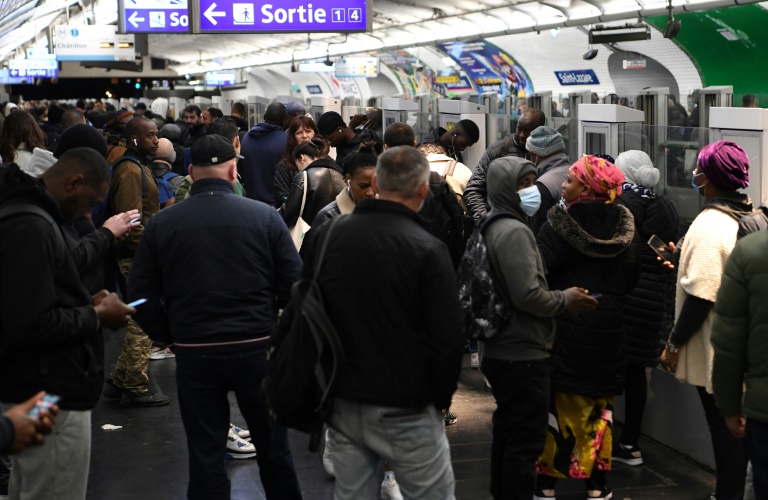
Commuters in London and Paris scrambled for alternatives Thursday — or simply stayed home — as public transport workers went on strike for higher pay, the latest industrial action seeking relief from soaring prices in Europe.

Spreading labour unrest poses a problem for governments which are already spending billions trying to blunt the worst effects of rising prices, at least for the most vulnerable.

“I am very deeply affected by the strike,” said 36-year-old Nicco Hogg in London. “I took my car, the train and now I have to cycle.”

The action in Britain, by members of the Rail, Maritime and Transport (RMT) and Unite unions, follows several prior walkouts this year amid a long-running dispute over job cuts, pensions and working conditions.

In France, the strike aims also to ratchet up pressure on President Emmanuel Macron before he brings a controversial pensions overhaul bill to parliament, which would require millions of people to work longer before retiring.

“It’s to show that if we want to take action, we know how to take action,” Frederic Souillot, head of France’s FO union, said ahead of the Paris strike.

The capital’s public transport operator RATP said nearly every Metro line would be shut down or operating with only limited rush-hour service, and urged people to work from home or postpone trips if possible.

Many commuters appeared to heed the call, with the morning crush less chaotic than many feared, and the city’s growing network of bike lanes saw a surge of cyclists under a bright autumn sky.

But the two main suburban rail lines called RER A and B, which connect central Paris with Disneyland Paris and the Charles de Gaulle and Orly airports, saw more severe disruptions.

Frequency of bus services were likely to drop by a third, while tram operations were expected at near-normal levels, the RATP said.

Authorities in London said the Underground system was “severely disrupted”, with limited or no services running, and advised people to avoid trying to use the network.

Reports said many buses were packed to capacity and unable to pick up hordes waiting at numerous stops, while roads were expected to be more congested than usual.

– New CEO awaited –

French unions have staged strikes across several sectors in recent weeks seeking pay hikes or increased hiring as spiralling energy costs feed into widespread inflation.

Thursday’s strike will also include a protest march in the capital in the afternoon that will shut down major traffic avenues.

But the Paris transport strike did not spill over into other sectors, with only the hard-line CGT union calling for general work stoppages that could match turnout of October 18, when authorities say 107,000 demonstrators turned out nationwide.

Unions representing the RATP’s nearly 70,000 employees say they are feeling the pinch of soaring prices, but are also overstretched because of insufficient hiring, resulting in increased sick leave.

That has led to more service delays or lower frequency on busy metro lines in recent months, causing headaches for the system’s roughly 12 million daily users.

The government is set to appoint former prime minister Jean Castex as RATP chief, with parliamentary panels giving their green light after questioning him this week.

“The most urgent issue… is the continuity and quality of service,” Castex told lawmakers. “The heart of our job is to meet the expectations of our users.”
Latest London Underground strike paralyses network

Millions of Londoners faced travel misery on Thursday as another strike by Underground staff shut down most of the network, including almost all lines and city centre stations.

The latest industrial action, by members of the Rail, Maritime and Transport (RMT) and Unite unions, follows several prior walkouts this year amid a long-running dispute over job cuts, pensions and working conditions.

It mirrors strife across numerous UK sectors as pay fails to keep up with inflation at the highest level in decades, with the main nurses’ union announcing Wednesday that it will stage the first strike in its 106-year history.

Thursday’s walkout on the so-called London “tube” network left travellers struggling to catch buses or find alternative ways to get to work in the city of around 9 million people.

TfL said the tube system was “severely disrupted”, with limited or no services running, and advised people to avoid trying to use the network.

Reports said many buses were packed to capacity and unable to pick up hordes waiting at numerous stops, while roads were expected to be more congested than usual.

The RMT said a conditional offer to suspend the strike, made at last ditch talks Tuesday with Transport for London (TfL) bosses, failed amid disagreements over planned job cuts and other reforms.

The union — which has also been spearheading walkouts on the national rail network this year in a separate dispute — held pickets at numerous stations across London, including at the hub King’s Cross.

“TfL have missed a golden opportunity to make progress in these negotiations and avoid strike action,” RMT General secretary Mick Lynch said.

“Our members are resolute in their determination to see a just settlement to this dispute, and they will continue their industrial campaign for as long as it takes.”

Ahead of the walkout, TfL blamed the RMT and Unite for the stalemate. 

“No proposals to change pensions or conditions have been made,” TfL’s Chief Operating Officer Glynn Barton said in a statement following Tuesday’s failed talks.

“Unfortunately, no agreement could be reached but we remain open for discussions.”

Asian, European stocks down as US midterms worry markets

Asian stocks fell on Thursday after inconclusive US midterm election results and a cryptocurrency crisis hammered markets.

The uncertainty, especially about how the midterm results would impact inflation, transferred from Wall Street to Asia overnight.

Hong Kong dropped 1.7 percent while Tokyo shed nearly one percent and Shanghai also closed lower. Seoul, Sydney, Jakarta and Taipei also fell.

London, Paris, and Frankfurt all opened on Thursday in the red, continuing the slide in European markets.

“A purple dilemma might be the best way to describe the red-blue tangle that emerged Wednesday. It’ll be gridlock, that’s for sure,” Stephen Innes of SPI Asset Management said of the US midterms where the Democrats did better than expected, although Congress will likely be divided.

“Perhaps not the friendliest kind for market participants, many of whom were hoping for a more resounding rebuke of Democrats given inflation realities.”

All eyes are expected to turn to US inflation data, due later Thursday, to gauge the speed of future rate hikes by the Federal Reserve. 

“US growth looks still too strong to bring inflation down,” Tapas Strickland of National Australia Bank said in a note.

“The ongoing resilience in the (consumer prices) data and stickiness in inflation continue to point to the Fed hiking rates closer to 5.0 percent or higher.” 

Fed officials have raised their policy rate to a range of between 3.75 to 4.0 percent.

– ‘Crypto tumult’ –

Markets in Asia were already grappling with the impact of strict zero-Covid measures in China, with supply chains and activity slowed by harsh lockdowns and testing policies. 

“China’s domestic demand is weak and their key trading partners are entering recession territory,” said Edward Moya from Oanda. 

“China is also continuing to struggle with COVID as Guangzhou has to return to mass testing.”

The crypto world was also rocked by a surprise decision from Binance, the world’s biggest cryptocurrency platform, to scrap a possible acquisition of rival FTX.com a day after disclosing it had signed a non-binding letter of intent to buy it.

The near-collapse of FTX has plunged bitcoin to a two-year low.

“FTX’s slump from over a $32 bn valuation to zero in less than a few days raises numerous issues,” said Stephen Innes.

“This is far from fringe buyers taking a hit on the back of support from stimulus-check and crypto enthusiasts. Prominent investors are wearing eggs on their faces after diving in head first.”

He added that gold and silver will be the biggest beneficiaries of the crypto fallout with investors looking to the trusted precious metals for stability.

– Key figures around 0725 GMT –

London – FTSE 100: DOWN 0.17 percent at 7,284.15 

Frankfurt – DAX: DOWN 0.44 percent at 13,621.27 

Paris – CAC 40: DOWN 0.32 percent at 6,409.72 

Tokyo – Nikkei 225: DOWN 0.98 percent at 27,446.10 (close) 

Hong Kong – Hang Seng Index: DOWN 1.7 percent at 16,081.04 (close)

Shanghai – Composite: DOWN 0.39 percent at 3,036.13 (close)

Pound/dollar: UP at $1.1385 from $1.1352  

Euro/dollar: DOWN at $1.0001 from $1.0017 

Dollar/yen: DOWN at 146.26 yen from 146.37 yen 

Euro/pound: DOWN at 87.84 pence from 88.19 pence 

West Texas Intermediate: DOWN 0.55 percent at $85.36 per barrel

Brent North Sea crude: DOWN 0.36 percent at $92.32 per barrel

New York – Dow: DOWN 2.0 percent at 32,513.94 (close)

Musk 'kills' new Twitter label, hours after launch

Twitter launched two new verification tools Wednesday but “killed” one of them hours later in a messy start to owner Elon Musk’s campaign to revamp the influential platform following his $44 billion buyout.

The social media platform unveiled its long-awaited Twitter Blue subscription service, which allows users to pay $7.99 per month for a coveted blue tick, as well as a separate gray “official” badge for some high-profile accounts.

But the new gray label was almost immediately scrapped, overshadowing the launch of Twitter Blue, which is currently only available on the mobile app on iPhones and in the United States.

“I just killed it,” Musk tweeted hours after the new tag was added to government accounts, big companies and major media outlets.

“Please note that Twitter will do lots of dumb things in coming months. We will keep what works & change what doesn’t,” the world’s richest man added.

The U-turn invited further scrutiny of Musk’s plans for Twitter a week after he laid off thousands of workers and drew a massive drop in spending by advertisers, who are wary of the site’s direction.

The blue tick has been a mark of an account’s authenticity and doubts emerged that public figures or media outlets would pay for it. The official gray tag was seen by observers as a workaround to solve that problem.

The launch of the new official label began Wednesday and was on the accounts of companies such as Apple and BMW, as well as public ones such as the White House and major media outlets.

But only hours later, it was gone for many of them.

Accounts that had received the “official” badge — including Agence France-Presse, BBC News, Pope Francis and Kanye West — saw the mention disappear.

– ‘A lot of work’ –

Esther Crawford, an executive who announced the gray tick on Tuesday, insisted that the official label was still going to be part of the relaunch, but that “we are just focusing on government and commercial entities to begin with.”

“There are no sacred cows in product at Twitter anymore. Elon is willing to try lots of things — many will fail, some will succeed,” she tweeted Wednesday.

“The goal is to find the right mix of successful changes to ensure the long-term health and growth of the business.”

During a panel for advertisers broadcast on Twitter, Musk exercised some damage control, admitting that a lot of work lay ahead to get the site to the place he wished to reach.

“We’ve got a lot to do on the software side. I can’t emphasize that enough,” he said.

Musk took control of Twitter after a drawn-out legal battle in which the mercurial tycoon tried to renege on a deal that many believe he overpaid for.

It emerged on Tuesday that Musk sold $4 billion worth of shares in Tesla to help pay for a transaction in which he took on billions of dollars in debt.

Twitter Blue is seen as one way to overcome the loss in advertisers since Musk took over.

Twitter last week fired half of its 7,500 employees, which Musk said was necessary as the company was losing $4 million a day.

Musk 'kills' new Twitter label, hours after launch

Twitter launched two new verification tools Wednesday but “killed” one of them hours later in a messy start to owner Elon Musk’s campaign to revamp the influential platform following his $44 billion buyout.

The social media platform unveiled its long-awaited Twitter Blue subscription service, which allows users to pay $7.99 per month for a coveted blue tick, as well as a separate gray “official” badge for some high-profile accounts.

But the new gray label was almost immediately scrapped, overshadowing the launch of Twitter Blue, which is currently only available on the mobile app on iPhones and in the United States.

“I just killed it,” Musk tweeted hours after the new tag was added to government accounts, big companies and major media outlets.

“Please note that Twitter will do lots of dumb things in coming months. We will keep what works & change what doesn’t,” the world’s richest man added.

The U-turn invited further scrutiny of Musk’s plans for Twitter a week after he laid off thousands of workers and drew a massive drop in spending by advertisers, who are wary of the site’s direction.

The blue tick has been a mark of an account’s authenticity and doubts emerged that public figures or media outlets would pay for it. The official gray tag was seen by observers as a workaround to solve that problem.

The launch of the new official label began Wednesday and was on the accounts of companies such as Apple and BMW, as well as public ones such as the White House and major media outlets.

But only hours later, it was gone for many of them.

Accounts that had received the “official” badge — including Agence France-Presse, BBC News, Pope Francis and Kanye West — saw the mention disappear.

– ‘A lot of work’ –

Esther Crawford, an executive who announced the gray tick on Tuesday, insisted that the official label was still going to be part of the relaunch, but that “we are just focusing on government and commercial entities to begin with.”

“There are no sacred cows in product at Twitter anymore. Elon is willing to try lots of things — many will fail, some will succeed,” she tweeted Wednesday.

“The goal is to find the right mix of successful changes to ensure the long-term health and growth of the business.”

During a panel for advertisers broadcast on Twitter, Musk exercised some damage control, admitting that a lot of work lay ahead to get the site to the place he wished to reach.

“We’ve got a lot to do on the software side. I can’t emphasize that enough,” he said.

Musk took control of Twitter after a drawn-out legal battle in which the mercurial tycoon tried to renege on a deal that many believe he overpaid for.

It emerged on Tuesday that Musk sold $4 billion worth of shares in Tesla to help pay for a transaction in which he took on billions of dollars in debt.

Twitter Blue is seen as one way to overcome the loss in advertisers since Musk took over.

Twitter last week fired half of its 7,500 employees, which Musk said was necessary as the company was losing $4 million a day.

Website for boycotting oligarchs gains traction in Hungary

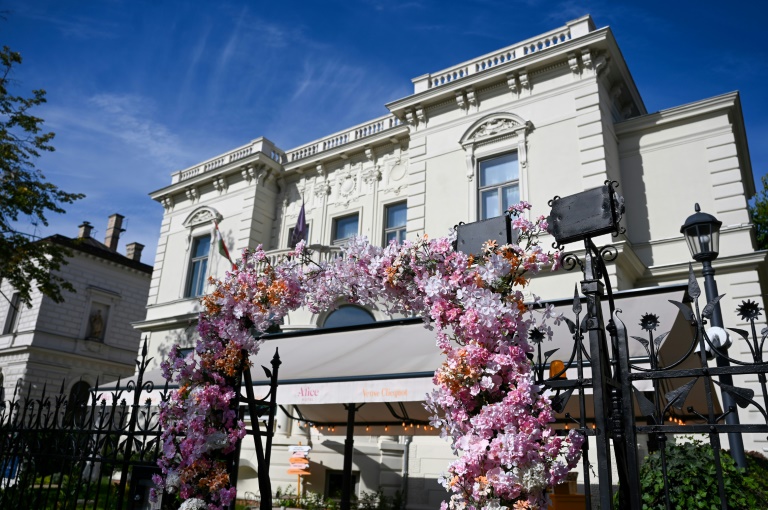
It may be just one of many fashionable hotels in the Hungarian capital, but for anti-corruption activist Attila Juhasz, the Alice Hotel symbolises the capture of the tourism industry by an elite that has enriched itself under Prime Minister Viktor Orban. 

“One of the owners is a commercial partner of (Orban’s son-in-law) Istvan Tiborcz,” Juhasz, a bearded 30-year-old in a yellow parka coat, told AFP. 

To increase awareness Juhasz’s corruption watchdog “K-Monitor” created a tourist guide with a difference, an interactive map nerhotel.hu that lists addresses to avoid in Budapest. 

It includes the Alice Hotel, housed in a neo-renaissance building on Budapest’s prestigious Andrassy boulevard, lined with 19th century palaces.  

According to Juhasz the map lets people check if their tourist spending is flowing to “politically exposed figures”. 

In three years more than 400 addresses have been added to the map, most located in parts of the historic centre of Budapest that form a UNESCO World Heritage site.

Between 3,000 and 3,500 unique visitors view the map every month. 

“People constantly ask us to check new addresses,” said Juhasz, adding that an English version is on the way.   

The Alice Hotel and two other popular addresses, Cafe Opera and Hotel Moments, did not reply to requests for comment by AFP. 

– ‘Wealth accumulation’ –

Since Orban returned to power 12 years ago in this EU member nation of 10 million people, Brussels and several NGOs have often alleged corruption among circles close to the government. 

Worried by the wastage of EU funds, the bloc has so far refused to unlock some 7.5 billion euros for Hungary scheduled for the coming years. Budapest has started to implement a range of anti-corruption measures to get the money. 

The pandemic recovery fund given to EU members has also been blocked. A discussion on those funds will take place on November 22, according to a source in Brussels.

The EU anti-fraud office OLAF recommended in a European Parliament report in September that the European Commission recover 2.2 percent of funding given to Hungary between 2016 and 2020. 

That figure is well above the EU average of 0.29 percent and is the highest among the bloc’s 27 members. 

“Since 2010, out of nowhere several individuals have become the richest men in the country,” said Marta Pardavi, who co-heads the Hungarian Helsinki Committee rights group. 

“Their lifestyle is way beyond the average Hungarian’s, and displays a rapid accumulation of wealth that is hard to justify,” said Pardavi. 

With a recession looming, due in part to the war in neighbouring Ukraine, the “very visible enrichment” of oligarchs lies in stark contrast to the “rundown public health and education systems,” she said. 

There is a direct link between the diversion of public money and the increase in economic misery as inflation hits record highs, according to Peter Akos Bod, a former Hungarian central bank governor.   

“If the winner of a public tender overcharges for his project and pockets the difference, it drives up the score,” said Bod, who now works at the Corvinus university in Budapest. 

– ‘Hungarian entrepreneur class’ –

Dismissing corruption claims, Orban insists that capital should be in the hands of a homegrown “class of Hungarian entrepreneurs” rather than profiteering multinationals.   

But by “converging funds toward friendly circles” he created a “over centralised crony capitalism” that is no longer a “classical western market economy,” said Bod.  

After a swathe of bank takeovers, Budapest itself recently waded into the telecommunications sector, buying the Hungarian branch of British giant Vodafone.   

At the same time, entire sectors of the economy including the powerful car industry — dominated by German and Japanese firms — have escaped the power grab. 

In what was widely seen as a gesture of goodwill in response to EU concerns, the government annulled in September an EU-financed public tender for heritage promotion. 

Worth 138 million forints (342,000 euros), the tender was won by two Hungarian communications agencies, the only candidates in contention.

Khaki nation: Ukraine dresses for war

Ukrainian President Volodymyr Zelensky created the trend by wearing khaki outfits in every setting since the beginning of the Russian invasion in February.

In the eight months of war, his people have followed his sartorial lead. 

Even civilians far from the frontlines have adopted their president’s khaki dress code turned weapon of communication.

As Ukraine’s army chief, Zelensky could wear the national military uniform, but he swapped his suits for more relaxed civilian outfits with military tones.

Since the first day of the war, he has been wearing olive t-shirts revealing his biceps, topped by khaki fleece on cold days, along with cargo trousers and sneakers in the same tones. 

“And these are very cheap sneakers, signalling simplicity,” Tanya Solovey, a fashion history researcher and former Vogue journalist, tells AFP.

“They say: ‘my country is fighting and I am wearing the same simple and convenient outfit as people who go down to underground shelters’,” Solovey adds.

In the country that announced general mobilisation for men between 18 and 60 years old on February 25, army green has also been adopted en masse by civilians. 

“Many people started wearing khaki, which is associated with our army, that way we don’t forget what is going on and help, in our way,” says 30-year-old Denys, walking in Kyiv in a khaki designer jacket. 

The monochromatic trend invaded women’s fashion too, from manicured fingertips to small accessories. 

Svitlana, 62, chose a khaki tracksuit to go out to Kyiv’s city centre because “our times require it.”

“But not every day, that would be too repetitive,” says the pensioner who livened up her outfit with a sleeveless candy-pink down jacket. 

– Illegal for civilians –

“Khaki has always been a popular colour in Ukraine, for casual and outerwear, but it’s become more than just a style, it is the visual identity of an entire nation at war,” Solovey says. 

In front of the main post office in Kyiv, Natalya is wearing a full head-to-toe khaki look, from her cap to her tailored trousers and elegant quilted jacket. 

She has been wearing that colour since the beginning of the war, in homage to her brother killed in combat in 2015 and to her husband, mobilised on the frontline. 

“Camouflage is the only colour that makes me feel like I’m protected,” the 42-year-old accountant says.

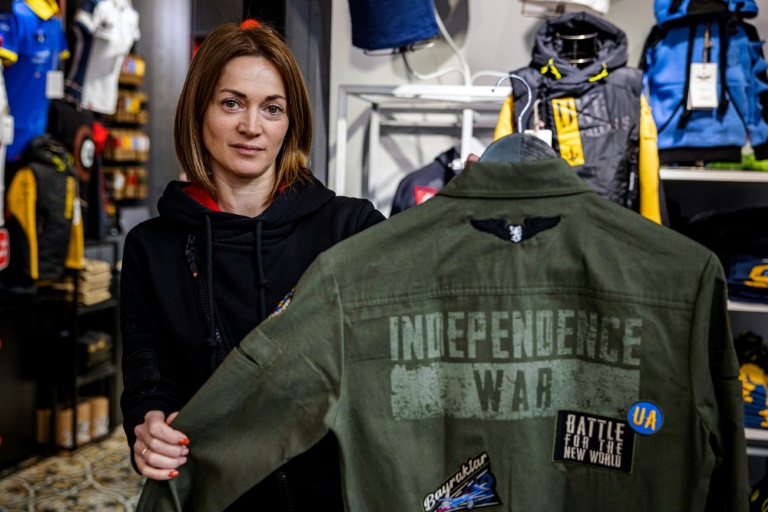
In the war-torn nation, most supermarkets have replaced the flowers or telephones on their stalls by military uniforms for conscripts or mobilised soldiers.

Ukrainian martial law prohibits civilians from wearing military uniforms or any outfit that could pass as such.

Offenders can receive a fine of up to 3,400 hryvnias (92 dollars).

“I love this (khaki) colour, I also have loads of camouflage print outfits, but I avoid wearing them to avoid confusing people or inconveniencing our soldiers,” said Anastasya Grebinichenko, a 15-year-old student who opted for black as her winter colour. 

– Embroideries and ‘Vyshyvankas’ –

In Kyiv, the fashion line “Aviatsiya Halychyny” created at the beginning of the 2014 war has become widely popular for its t-shirts honouring the defenders of Mariupol or boasting anti-Russian messages. 

The company donates some of its earnings to Ukrainian army brigades. 

“Clothes are the simplest vector to express an opinion,” says Natalya Kulyk, a brand manager. 

“They show direct support to our army, they’re a patriotic expression,” adds Kulyk, who is wearing a “tactical-style” black outfit with a military-inspired fleece with pockets and herringbone pattern.

In Ukraine, fashion has become a tool and a political symbol since the 2004 orange revolution.

Then, citizens started wearing scarves and ribbons of the same clour to protest against Kremlin-backed oligarch Viktor Yanukovych. 

After the pro-EU so-called Euromaidan protest wave in 2014, followed by the onset of conflict with Russia that same year, Ukrainian fashion took on overtly “patriotic” tones.

Many started wearing patches with the trident, the national emblem.

Another trend clearly returned as people started wearing traditional embroidered shirts called Vyshyvankas.

“As long as Russia repeats that there is no Ukrainian nation, language or identity, we will defend our culture and our heritage, it’s just part of the battle,” said Solovey.

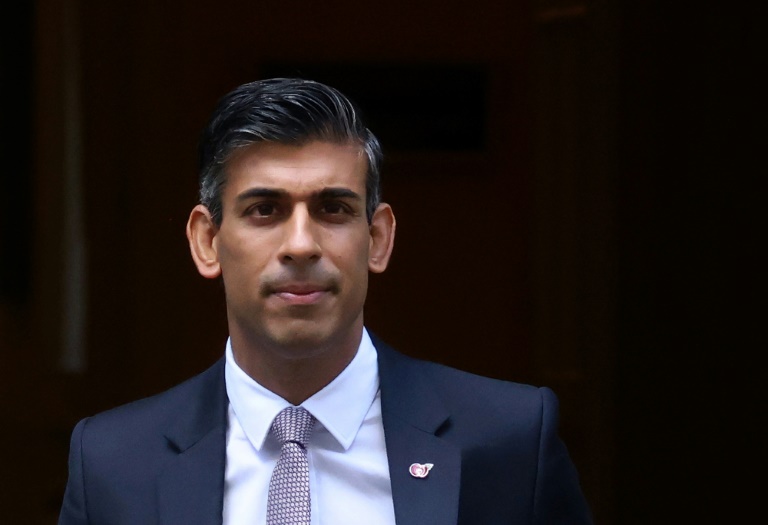
UK PM Sunak to meet Ireland's Martin at British-Irish summit

UK Prime Minister Rishi Sunak on Thursday hosts his Irish counterpart Micheal Martin, with renewed focus on talks to end a dispute over post-Brexit trade in Northern Ireland.

The two leaders meet with signs that frosty ties are thawing over the issue that has paralysed politics in Northern Ireland and put London at loggerheads with Brussels.  

In a sign of renewed commitment to resolving the row, Sunak will become the first UK prime minister to open the British-Irish Council summit since 2007.

Downing Street said Sunak will say he is “determined” to help restore the power-sharing assembly in Belfast “as soon as possible”.

The Northern Ireland Protocol was signed separately from the Brexit trade and cooperation deal that cemented the UK’s departure from the European in January 2021.

But its implementation has proven a particular flashpoint for disagreement between the EU, member state Ireland and the UK.

The protocol kept Northern Ireland in the European single market and customs union, stipulating checks on goods moving from the rest of the UK to Northern Ireland.

That was designed to prevent a “hard” border between Ireland and Northern Ireland — a key plank of the 1998 Good Friday Agreement that brought peace to Northern Ireland.

But it has enraged the province’s largest pro-UK political party, the Democratic Unionist Party (DUP), leading to their boycott of the Belfast assembly in spite of May elections.

The UK government, which is risking EU reprisals by trying to unilaterally overhaul the protocol through legislation, has threatened to order a new vote.

But on Wednesday it extended the deadline “to create the time and space needed” for talks with the European Commission.

– Optimism –

Both Dublin and Brussels have signalled hopes that they can break the impasse around the protocol in the coming weeks.

Europe’s pointman on talks, Maros Sefcovic, said on Monday an agreement could be found with the right “political will”.

The UK and Irish governments are guarantors of the 1998 peace accords which ended decades of sectarian violence over British rule in Northern Ireland that left 3,500 dead.

The British-Irish Council brings together the UK, Ireland and representatives from the Scottish and Welsh governments, plus the governments on the Isle of Man, Jersey and Guernsey.

In Blackpool, Sunak will have his first face-to-face meetings as prime minister with Scotland’s First Minister Nicola Sturgeon and her counterpart in Wales, Mark Drakeford.

Sturgeon is pushing for a second referendum on independence despite opposition from the government in London.

Drakeford recently exploded with rage during a debate at the economic damage caused by Sunak’s predecessor Liz Truss, whose proposed unfunded tax cuts caused turmoil in the markets. 

Downing Street said Sunak will urge leaders to work together to tackle the current economic crisis, Downing Street said.

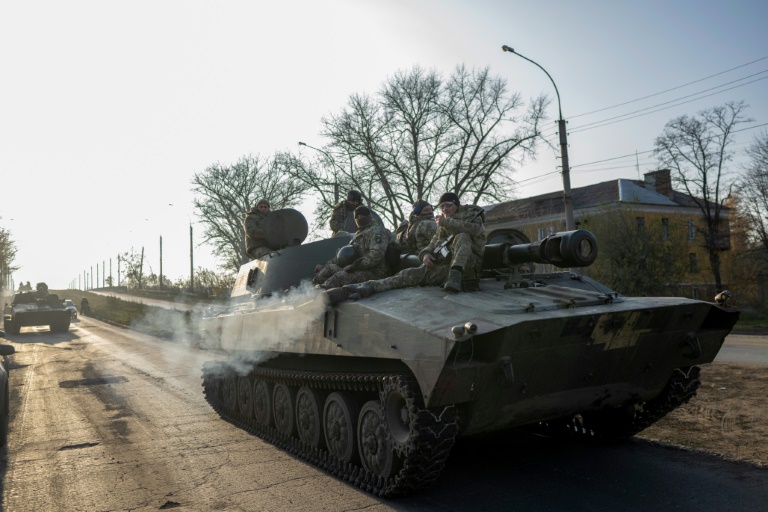
Ukraine cautious as Russia orders troops out of Kherson

Kyiv has reacted sceptically to Russia announcing its retreat from the southern city of Kherson, urging continued resistance until Ukraine liberates all of its occupied cities. 

Moscow’s decision to withdraw troops from the regional capital it had seized earlier in the war came as the United States estimated more than 100,000 Russian military personnel have been killed or wounded in Ukraine.

Kyiv’s forces have likely suffered similar casualties, according to top US General Mark Milley, who shared the most precise figures released to date by Washington.

Both Milley and Ukrainian President Volodymyr Zelensky refrained from overblowing the significance of Moscow’s retreat from Kherson, even as US President Joe Biden suggested it was evidence that eight months into the war, Russia has “real problems” on the battlefield.

Zelensky has suggested that rather than experiencing a major setback, Russia could be strategically feigning. 

“The enemy does not bring us gifts, does not make ‘gestures of goodwill,'” Zelensky said Wednesday in his daily address to the nation, adding that any gains by Ukraine come at the expense of “lives lost by our heroes”.

Kherson, a gateway to the annexed Crimean Peninsula, was the first urban hub captured by Russia during its “special military operation” and the only regional capital controlled by Moscow’s forces since the February 24 invasion.

Ukraine’s troops have for weeks been capturing villages en route to the city near the Black Sea, and Kremlin-installed leaders in Kherson have been pulling out civilians.

“Begin to pull out troops,” Russian Defence Minister Sergei Shoigu said at a televised meeting with Russia’s commander in Ukraine, Sergei Surovikin.

The commander had proposed the “difficult decision” of pulling back from the city and setting up defences on the eastern bank of the Dnipro River.

In Kyiv, legislator and peace negotiator David Arakhamia insisted Ukraine’s military would not be lured into a false sense of security.

“We do not trust the enemy and will act according to our plans to liberate the territories,” he said.

“Sooner or later they will either leave Kherson, Donetsk, Luhansk and Sevastopol, or they will be destroyed.”

Some Ukrainian civilians, too, were sceptical.

Andriy Orikhovskyi, a 46-year-old financier, told AFP in Kyiv: “The Russian leadership is playing something, you shouldn’t trust them… I think they are up to something.”

– 115,000 civilians removed –

In Moscow, Kremlin supporters rushed to justify the decision.

The head of Russian state media group RT, Margarita Simonyan, said the retreat was necessary in order not to leave Russian troops exposed on the west bank of the Dnipro River and “open the way to Crimea”.

Chechen strongman Ramzan Kadyrov said the decision was “difficult but fair”.

Putin ally Yevgeny Prigozhin, who is the founder of the Wagner mercenary group and has been critical of Russia’s military strategy in the campaign, was more ambiguous.

“It is important not to agonise, not to beat around in paranoia, but to draw conclusions and work on mistakes,” his press service wrote on social media.

Russia losing the Kherson region would return to Ukraine important access to the Sea of Azov and leave President Vladimir Putin with little to show from a campaign that has turned him into a pariah in Western eyes.

The retreat will put pressure on Russian control of the rest of the Kherson region, which forms a land bridge from Russia to Crimea, the peninsula that Moscow annexed in 2014.

Kherson was one of four Ukrainian regions that Russia declared it had annexed in September, shortly after being forced to withdraw from swathes of territory in the northeastern Kharkiv region.

The announcement of the retreat came just hours after officials said the Moscow-installed deputy head of the Kherson region, Kirill Stremousov, a key supporter of annexation, had died in a car crash.

As Ukrainian troops have gradually advanced in the south, Surovikin told Shoigu on Wednesday that some 115,000 people had been removed from the western bank of the Dnipro, which includes Kherson city.

Ukraine has defined these population movements towards Russia or Russian-occupied territory as “deportations”.

– ‘Strong bipartisan support’ –

In Washington, where election officials were still counting votes after Tuesday’s crucial midterms, Biden said the retreat from Kherson demonstrated Moscow’s military weaknesses.

“It’s evidence of the fact that they have some real problems, Russia, the Russian military,” Biden told reporters in Washington.

Biden’s Democratic Party looked set to narrowly lose control of the House of Representatives to the Republicans, some of whom have vowed to review US military and humanitarian aid to Ukraine. 

But Biden vowed that Washington’s support of Kyiv will remain unchanged.

“In the area of foreign policy I hope we’ll continue this bipartisan approach of confronting Russia’s aggression in Ukraine,” he said.

With the Russian offensive now in its ninth month, Western powers have stepped up military and financial support for Kyiv.

In the latest announcement, the European Commission on Wednesday proposed an 18-billion-euro ($18-billion) aid package for Ukraine in 2023 in the form of loans.

burs-lb/qan

Close Bitnami banner
Bitnami