World

Pay strike set to paralyse Paris metro

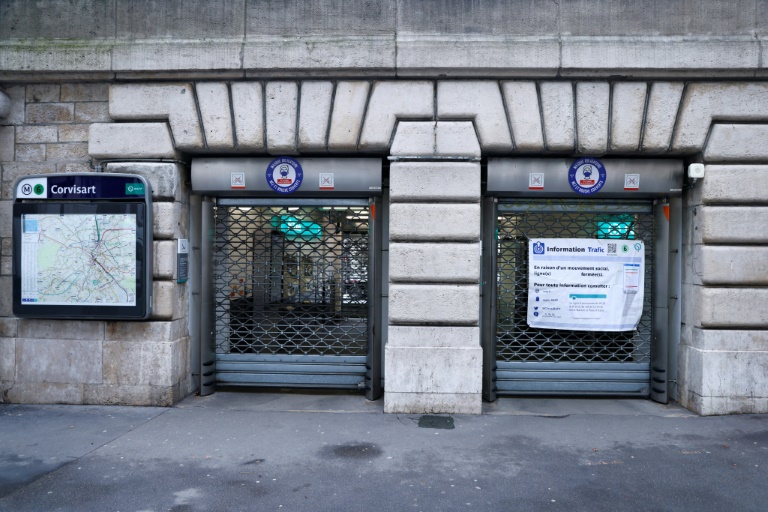
Paris commuters were bracing for bedlam Thursday as metro workers called a major one-day pay strike, the latest industrial action across France seeking relief from inflation.

The walkout comes amid wider European protests over the soaring cost of living, after transport workers in Belgium and Greece also refused to work on Wednesday, and with Underground employees in the British capital also set to strike on Thursday.

The French capital’s public transport operator RATP said nearly every line would be shut down or operating with only limited rush-hour service, and urged people to work from home or postpone trips if possible.

Only lines 1 and 14, which are fully automated with no drivers, will operate normally but risk being jam-packed.

The two main suburban rail lines called RER A and B, which connect central Paris with Disneyland Paris and the Charles de Gaulle and Orly airports, will also see severe disruptions, the operator warned.

Frequency of bus services will be cut by a third, while tram operations are expected to be nearly normal.

Unions have staged strikes across several sectors in recent weeks seeking pay hikes or increased hiring as spiralling energy costs feed into widespread inflation.

Union leaders are also hoping to step up pressure on President Emmanuel Macron as he prepares to revive a controversial pensions overhaul that would push back the official retirement age from 62 to 64 or 65.

But the Paris transport strike did not spill over into other sectors, with only the hard-line CGT union calling for general work stoppages that could match turnout of October 18, when authorities say 107,000 demonstrators turned out nationwide.

National high-speed train services will run normally, rail operator SNCF said, and only light disruptions are expected on regional lines.

Unions representing the RATP’s nearly 70,000 employees say they are feeling the pinch of soaring prices, but are also overstretched because of insufficient hiring, resulting in increased sick leave.

That has led to increased service delays or lower frequency on busy metro lines in recent months, causing headaches for the system’s roughly 12 million daily users.

The government is set to appoint former prime minister Jean Castex as RATP chief, with parliamentary panels giving their green light after questioning him this week.

“The most urgent issue… is the continuity and quality of service,” Castex told lawmakers. “The heart of our job is to meet the expectations of our users.”
Pay strike set to paralyse Paris metro

Paris commuters were bracing for bedlam Thursday as metro workers called a major one-day pay strike, the latest industrial action across France seeking relief from inflation.

The walkout comes amid wider European protests over the soaring cost of living, after transport workers in Belgium and Greece also refused to work on Wednesday, and with Underground employees in the British capital also set to strike on Thursday.

The French capital’s public transport operator RATP said nearly every line would be shut down or operating with only limited rush-hour service, and urged people to work from home or postpone trips if possible.

Only lines 1 and 14, which are fully automated with no drivers, will operate normally but risk being jam-packed.

The two main suburban rail lines called RER A and B, which connect central Paris with Disneyland Paris and the Charles de Gaulle and Orly airports, will also see severe disruptions, the operator warned.

Frequency of bus services will be cut by a third, while tram operations are expected to be nearly normal.

Unions have staged strikes across several sectors in recent weeks seeking pay hikes or increased hiring as spiralling energy costs feed into widespread inflation.

Union leaders are also hoping to step up pressure on President Emmanuel Macron as he prepares to revive a controversial pensions overhaul that would push back the official retirement age from 62 to 64 or 65.

But the Paris transport strike did not spill over into other sectors, with only the hard-line CGT union calling for general work stoppages that could match turnout of October 18, when authorities say 107,000 demonstrators turned out nationwide.

National high-speed train services will run normally, rail operator SNCF said, and only light disruptions are expected on regional lines.

Unions representing the RATP’s nearly 70,000 employees say they are feeling the pinch of soaring prices, but are also overstretched because of insufficient hiring, resulting in increased sick leave.

That has led to increased service delays or lower frequency on busy metro lines in recent months, causing headaches for the system’s roughly 12 million daily users.

The government is set to appoint former prime minister Jean Castex as RATP chief, with parliamentary panels giving their green light after questioning him this week.

“The most urgent issue… is the continuity and quality of service,” Castex told lawmakers. “The heart of our job is to meet the expectations of our users.”
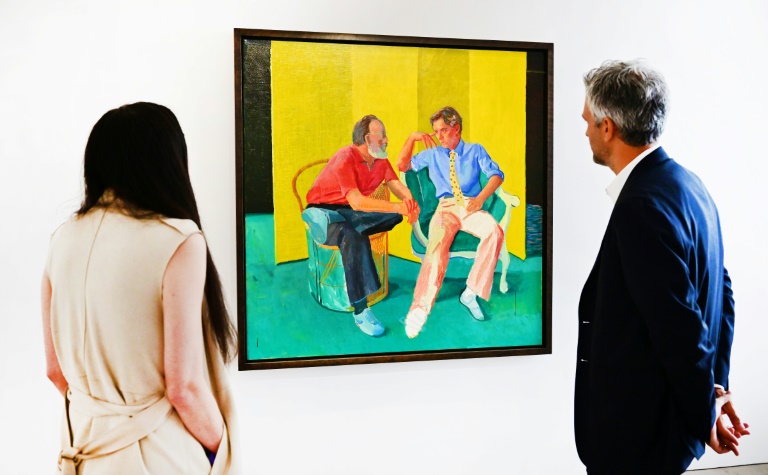
Paul Allen's art collection tops $1 bn at Christie's

Paintings and sculptures from the collection of late Microsoft co-founder Paul Allen were auctioned off for a historic $1 billion Wednesday, Christie’s auction house said, with records set for works by Van Gogh, Cezanne, Gauguin, Seurat and Klimt.

At the end of the night Wednesday, five paintings entered the exclusive club of works of art sold for more than $100 million at auction, the New York auction house said.

The most expensive piece of art of the evening, Georges Seurat’s 1888 work “Les Poseuses, Ensemble (small version)”, a renowned work of pointillism, fetched $149.24 million, including fees, Christie’s said.

The auction house had announced that all the proceeds would be donated to charity.

While only 60 of 150 lots were sold on Wednesday, with the rest to be auctioned off Thursday, the value of the collection has already surpassed the previous record for the Macklowe collection, named after a wealthy New York couple, which fetched $922 million at competitor Sotheby’s earlier this spring.

The two-day sale in New York came as experts say the super wealthy are viewing art as a safe investment this year amid a tumultuous global economy and Russia’s war in Ukraine.

Allen made his fortune with the establishment of the PC operating system with his better-known Microsoft co-founder Bill Gates in 1975.

He amassed a huge art collection which he used to lend to museums before his death in 2018 at the age of 65.

Allen left Microsoft in 1983, due to health problems and a deteriorating relationship with Gates, who remained in charge of the company until 2000.

Despite their strained friendship, Allen signed Gates’s “Giving Pledge” campaign and all proceeds from the auction are to be donated to charitable causes.

At auction Wednesday, French painter Paul Cezanne’s “La Montagne Sainte-Victoire” fetched $137.8 million, almost double the artist’s auction record.

A work by Vincent Van Gogh, “Orchard with Cypresses,” broke the Dutch artist’s previous record, bringing in $117.2 million.

A painting from Paul Gauguin’s Tahitian period, “Maternity II,” brought $105.7 million.

Austrian painter Gustav Klimt’s “Birch Forest” brought in $104.6 million.

Another 95 works from Allen’s collection go on sale Thursday.

Putin will not go to G20 summit in Bali

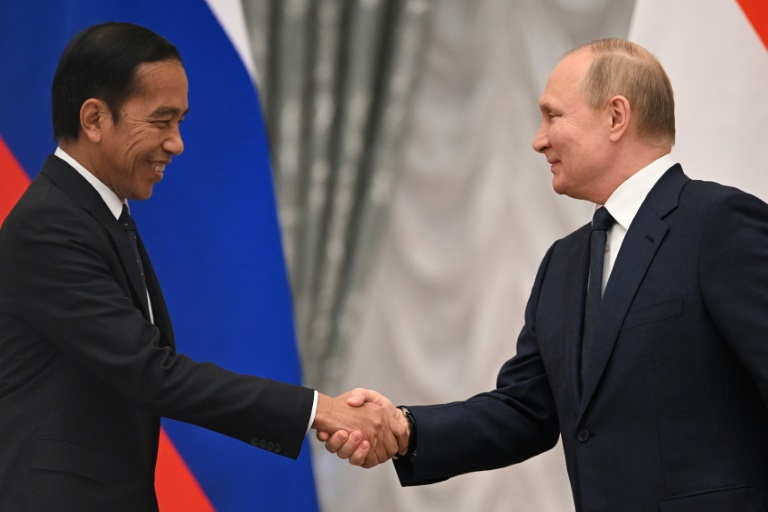
Russian President Vladimir Putin will not attend the G20 leaders’ summit on the Indonesian resort island of Bali next week, Moscow’s embassy in Indonesia told AFP on Thursday.

“I can confirm that (foreign minister) Sergei Lavrov will lead the Russian delegation to the G20. President Putin’s program is still being worked out, he could participate virtually,” said Yulia Tomskaya, the embassy’s chief of protocol.

US President Joe Biden, who has called Putin a “war criminal” and who will be attending the summit, previously said he had no intention of meeting Putin in Bali if he went.

The decision, which follows months of speculation, comes as Moscow is suffering losses in its Ukraine campaign and as the Kremlin tries to shield itself from Western condemnation at the November 15-16 summit.

Another source with knowledge of Russia’s planning for the Bali event confirmed that Putin would be replaced by Lavrov. The person said it was unclear if the Russian leader would attend virtually.

Moscow’s top diplomat walked out of a July G20 foreign ministers’ meeting in Bali after officials roundly condemned Russia over its invasion of Ukraine.

Host Indonesia pursues a neutral foreign policy and has rebuffed Western calls to disinvite Russia from the summit. Ukrainian President Volodymyr Zelensky is expected to attend the summit virtually.

Indonesian President Joko Widodo said Putin would be invited to the summit despite the invasion, prompting a flurry of Western criticism. In August, he said Putin had accepted that invitation.

Zelensky had threatened to boycott the summit if Putin attended. Ukraine is not a member of the G20 bloc.

– Battlefield losses –

While US President Joe Biden has shunned contact with his Russian counterpart, France has warned against worsening Putin’s isolation on the world stage.

French President Emmanuel Macron has spoken to Putin in recent months and succeeded in gaining permission for a mission by the UN nuclear watchdog to travel to the Russian-occupied Zaporizhzhia nuclear power plant in Ukraine.

Russia refers to its invasion as a special military operation to “de-Nazify” Ukraine and blames subsequent Western sanctions for global economic turmoil caused by the conflict after it sparked food and energy crises.

The Bali meeting comes as Russia is suffering battlefield setbacks in the face of a Ukrainian counter-offensive.

Russia on Wednesday ordered its troops to withdraw from the city of Kherson in southern Ukraine. It was the only regional capital controlled by Moscow’s forces since the offensive began on February 24.

Asian stocks down after US midterms turn global markets red

Asian stocks started down on Thursday after inconclusive US midterm election results and a turbulent cryptocurrency market left Wall Street and European markets in a sea of red.

The uncertainty, especially about how the midterm results would impact inflation, transferred to Asia overnight.

Tokyo, Hong Kong, Shanghai, Seoul, Jakarta and Taipei were all trading lower.

“A purple dilemma might be the best way to describe the red-blue tangle that emerged Wednesday. It’ll be gridlock, that’s for sure,” Stephen Innes of SPI Asset Management said of the US midterms.

“Perhaps not the friendliest kind for market participants, many of whom were hoping for a more resounding rebuke of Democrats given inflation realities.” 

All eyes are expected to turn to US inflation data, due later Thursday, to gauge the speed of future rate hikes by the Federal Reserve. 

“US growth looks still too strong to bring inflation down,” Tapas Strickland of National Australia Bank said in a note.

“The ongoing resilience in the (consumer prices) data and stickiness in inflation continue to point to the Fed hiking rates closer to 5.0 percent or higher.” 

Fed officials have raised their policy rate to a range of between 3.75 to 4.0 percent.

– ‘Crypto tumult’ –

Markets in Asia were already grappling with the impact of strict zero-Covid measures in China, with supply chains and activity slowed by harsh lockdowns and testing policies. 

“China’s domestic demand is weak and their key trading partners are entering recession territory,” said Edward Moya from Oanda. 

“China is also continuing to struggle with COVID as Guangzhou has to return to mass testing.” 

The crypto world was also rocked by a surprise decision from Binance, the world’s biggest cryptocurrency platform, to scrap a possible acquisition of rival FTX.com a day after disclosing it had signed a non-binding letter of intent to buy it.

The near-collapse of FTX has plunged bitcoin to a two-year low.

“You can’t deny the growing correlation between bitcoin and risk assets,” said Innes.

“The FTX news is having an outsized effect on asset prices,” he said, adding that “all ships were sinking on the crypto tumult.”

– Key figures around 0230 GMT –

Tokyo – Nikkei 225: DOWN 1.16 percent at 27,395.71 

Hong Kong – Hang Seng Index: DOWN 2.49 percent at 15,950.47

Shanghai – Composite: DOWN 0.39 percent at 3,036.37

Pound/dollar: UP at $1.1394 from $1.1352  

Euro/dollar: FLAT at $1.0017 

Dollar/yen: DOWN at 146.19 yen from 146.37 yen 

Euro/pound: DOWN at 87.89 pence from 88.19 pence 

West Texas Intermediate: DOWN 0.22 percent at $85.64 per barrel

Brent North Sea crude: DOWN 0.19 percent at $92.47 per barrel

New York – Dow: DOWN 2.0 percent at 32,513.94 (close)

London – FTSE 100: DOWN 0.1 percent at 7,296.25 (close)

Bao Tong, Chinese ex-official turned dissident, dead at 90

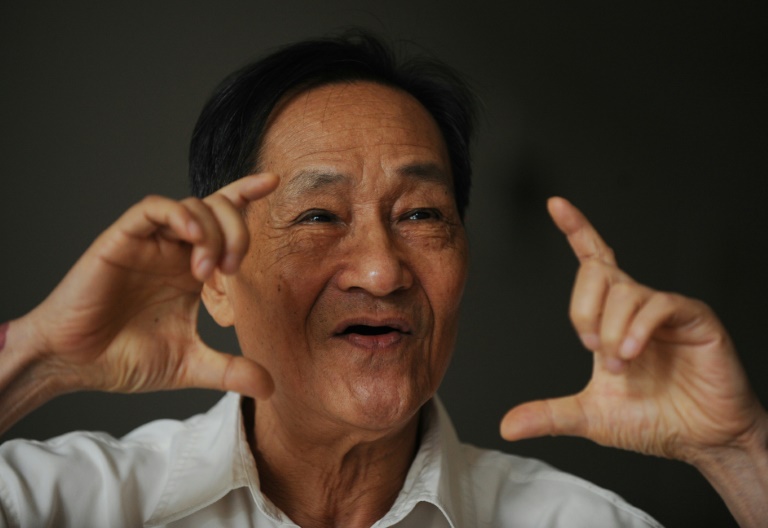
Chinese dissident Bao Tong, a top Communist Party official imprisoned in the wake of the 1989 Tiananmen Square protests who became a vocal critic of Beijing, has died at 90 years old, his son said on Twitter.

Bao had spent much of the past three decades under home surveillance or in prison following the Chinese military’s violent crackdown on the student movement, which called for democratic reforms and an end to corruption. 

“My late father… died peacefully at 07:08 on the 9th of November 2022,” his son Bao Pu wrote Wednesday night on Twitter.

A former member of the Chinese Communist Party’s powerful Central Committee, Bao Tong served as political secretary to reformist premier — and subsequent party general secretary — Zhao Ziyang.

Zhao, once a rising star within the party leadership, clashed with hardline colleagues over his sympathy for the student movement, eventually leading to his dismissal and house arrest.

Bao Tong, like Zhao a supporter of economic and political reforms, was also detained over his support for the movement, serving seven years in prison before being released and placed under house arrest.

But his detention did not prevent his becoming a vehement critic of the Chinese government in articles he penned and comments to foreign press. He also notably fought for the official rehabilitation of Zhao Ziyang until his death in 2005.

Convinced that China has taken the wrong path after the events of Tiananmen, he signed the “Charter 08” manifesto, a widely circulated online petition that called for political reform.

The manifesto, signed by more than 10,000 people, called for the protection of basic human rights and the reform of China’s one-party system.

Bao later became an outspoken critic of Chinese President Xi Jinping — the country’s most powerful leader since Mao Zedong — speaking out against his drive against corruption, which critics have said was used to quash his opponents.

“Our system is run on corruption,” Bao said in 2013. “If I beat 10 tigers, 100 more will come out. If I hit 100 flies, 1,000 come out.

“Why do they want political power? They want it in order to be corrupt.”

Facebook owner Meta to lay off 11,000 staff

Facebook owner Meta will lay off more than 11,000 of its staff in “the most difficult changes we’ve made in Meta’s history,” boss Mark Zuckerberg said on Wednesday.

He said the cuts represented 13 percent of the social media titan’s workforce and would affect its research lab focusing on the metaverse as well as its apps, which include Facebook, Instagram and WhatsApp.

The tech industry is in a serious slump and several major firms have announced mass layoffs — Twitter’s new owner Elon Musk fired half its staff last week.

“I want to take accountability for these decisions and for how we got here,” Zuckerberg said in a note to staff.

“I know this is tough for everyone, and I’m especially sorry to those impacted.”

Ad-supported platforms such as Facebook and Google are suffering with advertisers looking to cut costs as they struggle with inflation and rising interest rates.

Zuckerberg told his 87,000-strong staff he had expected the boost in e-commerce and online activity during the Covid pandemic to continue, but added: “I got this wrong, and I take responsibility for that.”

The measures were also a message to Wall Street, where the company’s poor performance has sent the Meta share price plummeting by 70 percent since the start of the year.

The move on Wednesday was welcomed by investors with Meta shares showing major gains for the day of nearly six percent just ahead of the closing bell in New York.

The downturn has affected companies across the sector, with Apple and Amazon also recently announcing results that disappointed investors.

But Meta also faces some unique problems of its own.

The California-based company is being squeezed by Zuckerberg’s decision to devote billions of dollars to developing the metaverse, an immersive version of the web accessed via virtual reality headsets.

Zuckerberg renamed the company Meta a year ago to reflect the commitment to the project, but the division working on metaverse technology has since made losses of more than $3.5 billion.

Facebook is also struggling to fend off Chinese-owned TikTok, the now dominant social media for younger users to the detriment of Meta’s Instagram.

– ‘Last resort’ –

Mike Proulx, a research director at Forrester, said “Meta is amidst an identity crises” and that severe cost-cutting was “inevitable.”

“The company has one foot in a risky long-term metaverse bet and another foot failing to compete with TikTok,” he added.

Zuckerberg has hinted several times this year that belt-tightening measures were just around the corner and said in his letter on Wednesday that staff layoffs were a “last resort.”

Meta would also keep a hiring freeze going into next year, he said, and other spending cuts were envisaged.

“Fundamentally, we’re making all these changes for two reasons: our revenue outlook is lower than we expected at the beginning of this year, and we want to make sure we’re operating efficiently,” Zuckerberg wrote.

In the US, terminated Meta employees will receive four months severance pay and two additional weeks of pay for each year of service. 

Last month, Meta announced profits of $4.4 billion in the third quarter, a 52 percent decrease year-on-year.

The slump in profits comes despite its platforms dominating the world in terms of users — Facebook alone claims to have around two billion people who log on daily.

Facebook owner Meta to lay off 11,000 staff

Facebook owner Meta will lay off more than 11,000 of its staff in “the most difficult changes we’ve made in Meta’s history,” boss Mark Zuckerberg said on Wednesday.

He said the cuts represented 13 percent of the social media titan’s workforce and would affect its research lab focusing on the metaverse as well as its apps, which include Facebook, Instagram and WhatsApp.

The tech industry is in a serious slump and several major firms have announced mass layoffs — Twitter’s new owner Elon Musk fired half its staff last week.

“I want to take accountability for these decisions and for how we got here,” Zuckerberg said in a note to staff.

“I know this is tough for everyone, and I’m especially sorry to those impacted.”

Ad-supported platforms such as Facebook and Google are suffering with advertisers looking to cut costs as they struggle with inflation and rising interest rates.

Zuckerberg told his 87,000-strong staff he had expected the boost in e-commerce and online activity during the Covid pandemic to continue, but added: “I got this wrong, and I take responsibility for that.”

The measures were also a message to Wall Street, where the company’s poor performance has sent the Meta share price plummeting by 70 percent since the start of the year.

The move on Wednesday was welcomed by investors with Meta shares showing major gains for the day of nearly six percent just ahead of the closing bell in New York.

The downturn has affected companies across the sector, with Apple and Amazon also recently announcing results that disappointed investors.

But Meta also faces some unique problems of its own.

The California-based company is being squeezed by Zuckerberg’s decision to devote billions of dollars to developing the metaverse, an immersive version of the web accessed via virtual reality headsets.

Zuckerberg renamed the company Meta a year ago to reflect the commitment to the project, but the division working on metaverse technology has since made losses of more than $3.5 billion.

Facebook is also struggling to fend off Chinese-owned TikTok, the now dominant social media for younger users to the detriment of Meta’s Instagram.

– ‘Last resort’ –

Mike Proulx, a research director at Forrester, said “Meta is amidst an identity crises” and that severe cost-cutting was “inevitable.”

“The company has one foot in a risky long-term metaverse bet and another foot failing to compete with TikTok,” he added.

Zuckerberg has hinted several times this year that belt-tightening measures were just around the corner and said in his letter on Wednesday that staff layoffs were a “last resort.”

Meta would also keep a hiring freeze going into next year, he said, and other spending cuts were envisaged.

“Fundamentally, we’re making all these changes for two reasons: our revenue outlook is lower than we expected at the beginning of this year, and we want to make sure we’re operating efficiently,” Zuckerberg wrote.

In the US, terminated Meta employees will receive four months severance pay and two additional weeks of pay for each year of service. 

Last month, Meta announced profits of $4.4 billion in the third quarter, a 52 percent decrease year-on-year.

The slump in profits comes despite its platforms dominating the world in terms of users — Facebook alone claims to have around two billion people who log on daily.

Iran cities strike in solidarity with 'Bloody Friday' dead

Cities in western Iran went on strike Wednesday in solidarity with mourners marking 40 days since security forces killed dozens in a crackdown on protests in the country’s strife-torn southeast, rights groups said.

Security forces opened fire on protests that erupted on September 30 after weekly prayers in Zahedan, capital of the restive province of Sistan-Baluchistan on Iran’s border with Pakistan.

It came two weeks after demonstrations broke out across Iran over the death of Mahsa Amini, a 22-year-old Iranian of Kurdish origin, following her arrest in Tehran for allegedly flouting the country’s strict hijab dress rules for women.

The crackdown on nationwide protests since her death has killed at least 304 people, including 41 children and 24 women, says the Oslo-based group Iran Human Rights (IHR).

Activists were seen distributing fliers calling for protests in all cities Wednesday for the 40-day mourning ceremony of Zahedan’s “Bloody Friday”, in a video shared by the 1500tasvir social media channel.

One of Iran’s most prominent actors, Taraneh Alidoosti, also posted a photo of herself on Instagram without a headscarf and holding a slogan that has become the rallying cry of the protests: “Woman. Life. Freedom”.

Widespread strikes were held “in solidarity” with Zahedan in the Kurdish cities of Baneh, Bukan, Kermanshah, Marivan, Sanandaj and Amini’s hometown of Saqez, in the country’s west, said the Norway-based Hengaw rights group.

– ‘Angry and frustrated’ –

The trigger for the violence that IHR said left at least 92 dead in Zahedan on September 30 was the alleged rape in custody of a 15-year-old girl by a police commander in the province’s port city of Chabahar.

But analysts say the Baluchi were inspired by the protests that flared over Amini’s death, which were initially driven by women’s rights but expanded over time to include other grievances.

“The 2022 protests are a convergence of angry and frustrated Iranians with the same goal, overthrowing the Islamic republic and a theocratic regime,” said Saeid Golkar, from the University of Tennessee at Chattanooga.

Poverty-stricken Sistan-Baluchistan province is a flashpoint for clashes with drug smuggling gangs, as well as rebels from the Baluchi minority and Sunni extremist groups.

Activists have long complained the region has been the victim of discrimination by Iran’s Shiite clerical leadership, with disproportionate numbers of Baluchi killed in clashes every year and also hanged in executions.

Protests over Amini’s death have shown no signs of abating despite the brutal crackdown and a campaign of mass arrests.

Young women have led the way, removing and burning their head coverings, chanting anti-regime slogans and confronting security forces on the street.

On Wednesday, reformist parties called for “courageous and innovative changes” including a referendum in a bid to end the crisis, according to a statement from the Iranian Reform Front, founded last year by officials close to former president Mohammad Khatami.

But Henry Rome, an Iran expert at the Washington Institute, suggested the “call will almost certainly wither”.

“The regime is unable to coalesce around even modest reforms to defuse the protests; in a moment of turbulence, there’s little prospect it would go so far as to put itself on the ballot,” he said.

– ‘Systematically silencing women’ –

Iran has struggled to suppress the demonstrations, which have evolved into its biggest challenge since the 1979 Islamic Revolution.

Security forces have fired directly on protesters using live ammunition, bird shot, tear gas and even paintballs.

Iran has sought to portray the protest movement as a plot hatched by its arch-enemies in the West, with Britain, Canada, the European Union and the United States imposing sanctions over rights violations.

The EU will seek to adopt further restrictions next week, German Foreign Minister Annalena Baerbock said Wednesday.

“We won’t let up,” Baerbock said. “We stand with the men and women of Iran, not only today, but as long as it is necessary.”

The Islamic Revolutionary Guard Corps was accused this week of issuing death threats against two journalists working for the London-based Persian-language Iran International television channel.

The Saudi-linked channel’s owner, Volant Media, said London police had warned them of “credible threats to their lives”.

In response, Iran’s Intelligence Minister Esmail Khatib warned Britain it would “pay” for what it labelled actions to destabilise the Islamic republic.

Khatib also accused Iran’s regional rival Saudi Arabia of financing media outlets behind the wave of unrest, state news agency IRNA reported Wednesday.

An unprecedented number of female journalists have been detained, which Reporters Without Borders (RSF) said “symbolically reveals the Iranian regime’s intention to systematically silence women’s voices”.

Schumacher Ferrari fetches record $15 mn at auction

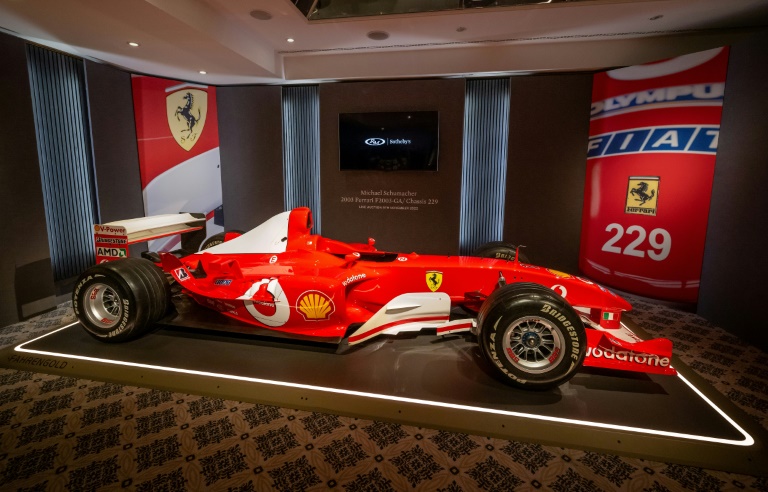
The Ferrari in which Formula One legend Michael Schumacher won the 2003 World Championship title sold for nearly $15 million at auction in Geneva on Wednesday.

“This remarkable car has achieved a world record price for a modern-era Formula One,” the Sotheby’s auctioneer said after the F2003-GA, Chassis 229 car went under the hammer for 13 million Swiss francs ($13.2 million).

When taxes and fees were added on, the final price stood at 14.6 million francs ($14.9 million), the auction house said later.

The previous record was held by another Schumacher-driven Ferrari, an F2001 model sold by Sotheby’s in New York in 2017 for $7.5 million.

The final price, offered by an unidentified telephone bidder from Europe after a bidding war of more than 40 minutes, far outstripped expectations, with the auction house estimating before the sale that the car would fetch up to 9.5 million Swiss francs.

It is “one of the most significant Formula One cars of all time”, the auctioneers said.

Schumacher, who has not been seen in public since suffering serious injuries in a skiing accident in 2013, raced nine times in the car.

– ‘Very important car’ –

He won five Grands Prix with it in the 2003 season and drove it when he clinched the title in Japan.

“It’s one of the Ferraris with the most victories in the constructor’s history, so it’s a very important car in the history of motor racing,” Vincent Luzuy, from the Sotheby’s branch dealing with luxury car sales, told AFP.

Designed by Rory Byrne and Ross Brawn, the F2003-GA featured a longer wheelbase to improve aerodynamics, he explained.

The model was brought in at the Spanish Grand Prix, the fifth race of the 2003 season. Chassis 229 is by far the most successful of the six F2003-GAs that were built.

Schumacher drove it to victory in Spain and also won the Austrian, Canadian, Italian and US Grands Prix in the car.

He also claimed pole position in Spain, Austria and Italy in the vehicle, and the fastest laps in Austria, Italy and the United States.

The car powered Schumacher to his sixth F1 title — a total that saw the German overtake the five won by Argentina’s Juan Manuel Fangio in the 1950s.

It also helped Ferrari win a 13th constructor’s championship — the Italian team’s fifth in a row.

– Luxury week –

Schumacher’s Ferrari was sold during Sotheby’s Luxury Week, which began last Friday and where a range of sparkling jewels, pricy watches and designer handbags are going under the hammer.

But a spectacular blue diamond, expected to provide the grand finale to the jewellery sale and estimated to fetch up to 15 million Swiss francs, went unsold later on Wednesday.

That 5.53-carat “fancy vivid blue” cushion-shaped diamond is part of the De Beers Exceptional Blue Collection — a group of eight rare fancy blue diamonds with a total value of more than $70 million being sold in Geneva, New York and Hong Kong.

Sotheby’s told AFP the gem was “an exceptional stone in every sense” and “attracted significant interest” before the sale.

“While we didn’t get to see it sell in the room tonight, we are confident it will find a new home very soon,” it added.

Another piece expected to draw attention, and bids, was an emerald and diamond bracelet made in the 1850s, which once belonged to French empress Eugenie, the wife of emperor Napoleon III.

It has been estimated at between 60,000 and 80,000 francs.

Sotheby’s is already on a roll, having sold the 11.15-carat Williamson Pink Star pink diamond in Hong Kong last Friday for HK$453.2 million ($57.7 million), setting a record for price per carat paid at auction for any diamond or gemstone, the auction house said.

Pink diamonds are only found in a few places and fewer than 10 percent weigh more than one fifth of a carat, and the big ones are some of the most in-demand on the global market.

The 18.18-carat Fortune Pink — the largest pear-shaped “fancy vivid pink” diamond ever to go under the hammer — was meanwhile snapped up at a Christie’s auction in Geneva on Tuesday for $28.5 million.

Close Bitnami banner
Bitnami