World

Iran cities strike in solidarity with 'Bloody Friday' dead

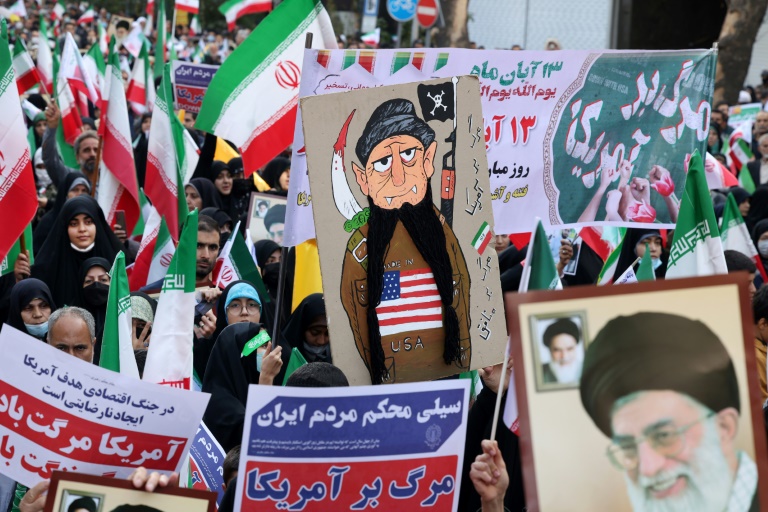
Cities in western Iran went on strike Wednesday in solidarity with mourners marking 40 days since security forces killed dozens in a crackdown on protests in the country’s strife-torn southeast, rights groups said.

Security forces opened fire on protests that erupted on September 30 after weekly prayers in Zahedan, capital of the restive province of Sistan-Baluchistan on Iran’s border with Pakistan.

It came two weeks after demonstrations broke out across Iran over the death of Mahsa Amini, a 22-year-old Iranian of Kurdish origin, following her arrest in Tehran for allegedly flouting the country’s strict hijab dress rules for women.

The crackdown on nationwide protests since her death has killed at least 304 people, including 41 children and 24 women, says the Oslo-based group Iran Human Rights (IHR).

Activists were seen distributing fliers calling for protests in all cities Wednesday for the 40-day mourning ceremony of Zahedan’s “Bloody Friday”, in a video shared by the 1500tasvir social media channel.

Widespread strikes were held “in solidarity” with Zahedan in the Kurdish cities of Baneh, Bukan, Kermanshah, Marivan, Sanandaj and Amini’s hometown of Saqez, in the country’s west, said the Norway-based Hengaw rights group.

Videos published by the US-based Human Rights Activists News Agency (HRANA) showed shops shuttered in Saqez and in Zahedan itself.

The trigger for the violence that IHR said left at least 92 dead in Zahedan on September 30 was the alleged rape in custody of a 15-year-old girl by a police commander in the province’s port city of Chabahar.

– ‘Angry and frustrated’ –

But analysts say the Baluchi were inspired by the protests that flared over Amini’s death, which were initially driven by women’s rights but expanded over time to include other grievances.

“The 2022 protests are a convergence of angry and frustrated Iranians with the same goal, overthrowing the Islamic republic and a theocratic regime,” said Saeid Golkar, assistant professor with the University of Tennessee at Chattanooga.

Poverty-stricken Sistan-Baluchistan province is a flashpoint for clashes with drug smuggling gangs, as well as rebels from the Baluchi minority and Sunni extremist groups.

Activists have long complained the region has been the victim of discrimination by Iran’s Shiite clerical leadership, with disproportionate numbers of Baluchi killed in clashes every year and also hanged in executions.

Protests over Amini’s death have shown no signs of abating despite the brutal crackdown and a campaign of mass arrests that has netted artists, journalists and lawyers.

Young women have led the way, removing and burning their head coverings, chanting anti-regime slogans and confronting security forces on the street.

On Wednesday, reformist parties called for “courageous and innovative changes” including a referendum in a bid to end the crisis, according to a statement from the Iranian Reform Front, founded last year by officials close to former president Mohammad Khatami. 

But Henry Rome, an Iran expert at the Washington Institute, suggested the “call will almost certainly wither”.

“The regime is unable to coalesce around even modest reforms to defuse the protests; in a moment of turbulence, there’s little prospect it would go so far as to put itself on the ballot”, he said.

– ‘Systematically silencing women’ –

Iran has struggled to suppress the protests that have evolved into its biggest challenge since the 1979 Islamic Revolution.

Security forces have fired directly on protesters using live ammunition, bird shot, tear gas and even paintballs.

The Islamic Revolutionary Guard Corps was accused this week of issuing death threats against two journalists working for the London-based Persian-language Iran International television channel.

The Saudi-linked channel’s owner, Volant Media, said the pair had received formal “warnings of credible threats to their lives” and those of their families, from London’s Metropolitan Police.

In response, Iran’s Intelligence Minister Esmail Khatib warned Britain it would “pay” for what it labelled actions to destabilise the Islamic republic.

Khatib also accused Iran’s regional rival Saudi Arabia of financing media outlets behind the wave of unrest, state news agency IRNA reported on Wednesday.

Among those detained in Iran’s crackdown have been an unprecedented number of female journalists, including Niloufar Hamedi and Elahe Mohammadi, two newspaper reporters who first drew public attention to Amini’s death.

“The increasing detention of female journalists symbolically reveals the Iranian regime’s intention to systematically silence women’s voices,” Reporters Without Borders (RSF) said Wednesday.


Musk 'kills' new Twitter label, hours after launch

Twitter on Wednesday unveiled — and then almost immediately scrapped — a new gray “official” label for some high-profile accounts as Elon Musk struggles to revamp the highly influential platform following his $44 billion buyout.

“I just killed it,” Musk tweeted just hours after the new tag was added to government accounts as well as those of big companies and major media outlets.

“Please note that Twitter will do lots of dumb things in coming months. We will keep what works & change what doesn’t,” the world’s richest man added to explain the U-turn.

The sudden change of heart will invite further scrutiny of Musk’s plans for Twitter a week after he laid off thousands of workers and drew a massive drop in spending by advertisers, who are wary of the site’s direction.

The botched rollout came out ahead of the hotly anticipated introduction of a revamped subscription model in which the site’s famed blue checkmark would be made available for a fee of $7.99.

The blue tick has been a mark of an account’s authenticity and doubts emerged that public figures or media outlets would pay for it. The official gray tag was seen by observers as a workaround to solve that problem.

The rollout of the new official label began on Wednesday and was on the accounts of companies such as Apple or BMW and public ones such as the White House and major media outlets.

But only a few hours later, it was gone.

Musk took control of Twitter after a drawn-out back-and-forth legal battle in which the mercurial tycoon tried to renege on the deal.

It emerged on Tuesday that Musk sold $4 billion worth of shares in Tesla to help pay for the deal in which he took on billions of dollars in debt.

The $7.99 subscription idea is seen as one way to overcome the loss in advertisers since Musk took over the company.

Twitter last week fired half of its 7,500 employees which Musk said was necessary as the company was losing four million dollars a day.

Musk 'kills' new Twitter label, hours after launch

Twitter on Wednesday unveiled — and then almost immediately scrapped — a new gray “official” label for some high-profile accounts as Elon Musk struggles to revamp the highly influential platform following his $44 billion buyout.

“I just killed it,” Musk tweeted just hours after the new tag was added to government accounts as well as those of big companies and major media outlets.

“Please note that Twitter will do lots of dumb things in coming months. We will keep what works & change what doesn’t,” the world’s richest man added to explain the U-turn.

The sudden change of heart will invite further scrutiny of Musk’s plans for Twitter a week after he laid off thousands of workers and drew a massive drop in spending by advertisers, who are wary of the site’s direction.

The botched rollout came out ahead of the hotly anticipated introduction of a revamped subscription model in which the site’s famed blue checkmark would be made available for a fee of $7.99.

The blue tick has been a mark of an account’s authenticity and doubts emerged that public figures or media outlets would pay for it. The official gray tag was seen by observers as a workaround to solve that problem.

The rollout of the new official label began on Wednesday and was on the accounts of companies such as Apple or BMW and public ones such as the White House and major media outlets.

But only a few hours later, it was gone.

Musk took control of Twitter after a drawn-out back-and-forth legal battle in which the mercurial tycoon tried to renege on the deal.

It emerged on Tuesday that Musk sold $4 billion worth of shares in Tesla to help pay for the deal in which he took on billions of dollars in debt.

The $7.99 subscription idea is seen as one way to overcome the loss in advertisers since Musk took over the company.

Twitter last week fired half of its 7,500 employees which Musk said was necessary as the company was losing four million dollars a day.

Russia orders troops out of Kherson in major reversal

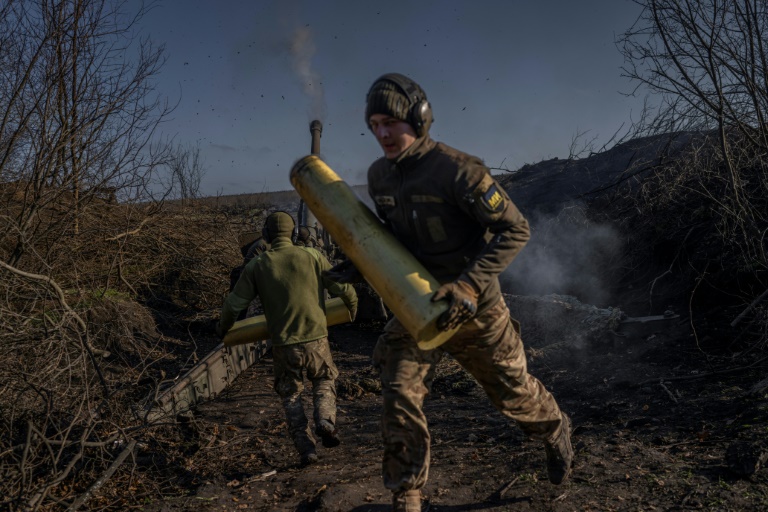
Russia ordered its troops to withdraw from the city of Kherson in southern Ukraine on Wednesday in a further major blow to its campaign amid a Ukrainian counter-offensive.

“Begin to pull out troops,” Russian Defence Minister Sergei Shoigu said at a televised meeting with Russia’s commander in Ukraine, Sergei Surovikin.

The commander had proposed the “difficult decision” of pulling back from the city and setting up defences on the eastern bank of the Dnipro River.

Kherson city was the first urban hub captured by Russia during its “special military operation” and the only regional capital controlled by Moscow’s forces since the offensive began on February 24.

Ukraine’s troops have for weeks been capturing villages en route to the city near the Black Sea and Kremlin-installed leaders in Kherson have been pulling out civilians.

But Ukraine responded with scepticism to the Russian announcement.

Ukrainian presidential adviser Mykhaylo Podolyak said some Russian troops remained in the city.

“We see no signs that Russia is leaving Kherson without a fight,” he said on Twitter.

“Ukraine is liberating territories based on intelligence data, not staged TV statements.”

Kremlin supporters meanwhile rushed to justify the decision.

The head of Russian state media group RT, Margarita Simonyan, said the retreat was necessary in order not to leave Russian troops exposed on the west bank of the Dnipro River and “open the way to Crimea”.

Chechen strongman Ramzan Kadyrov said the decision was “difficult but fair”.

Putin ally Yevgeny Prigozhin, who is the founder of the Wagner mercenary group and has been critical of Russia’s military strategy in the campaign, was more ambiguous.

“It is important not to agonise, not to beat around in paranoia, but to draw conclusions and work on mistakes,” his press service wrote on social media.

– 115,000 civilians removed –

Russia losing the Kherson region would return Ukraine important access to the Sea of Azov and leave President Vladimir Putin with little to show from a campaign that has turned him into a pariah in the eyes of the West.

The retreat will put pressure on Russian control of the rest of the Kherson region, which forms a land bridge from Russia to Crimea, the peninsula which Moscow annexed in 2014.

Kherson was one of four Ukrainian regions that Russia declared it had annexed in September, shortly after being forced to withdraw from swathes of territory in the northeastern Kharkiv region.

The announcement of the retreat came just hours after officials said the Moscow-installed deputy head of the Kherson region, Kirill Stremousov, a key supporter of annexation, had died in a car crash.

As Ukrainian troops have gradually advanced in the south, Surovikin told Shoigu on Wednesday that some 115,000 people had been removed from the western bank of the Dnipro, which includes Kherson city.

“We have done everything possible for our part to ensure their safety during the evacuation,” Surovikin said in a report broadcast on the state-run Rossiya-24 television channel.

Ukraine has defined these population movements towards Russia or Russian-occupied territory as “deportations”.

– ‘Strong bipartisan support’ –

With the Russian offensive now in its ninth month, Western powers have stepped up military and financial support for Kyiv.

In the latest announcement, the European Commission on Wednesday proposed an 18-billion-euro ($18-billion) aid package for Ukraine in 2023 in the form of loans.

Ukrainian President Volodymyr Zelensky hailed the aid as “true solidarity”.

The Kremlin said that relations between Moscow and Washington would remain “bad” after the US midterm elections.

“Our existing ties are bad, and they will remain bad,” Kremlin spokesman Dmitry Peskov was quoted as saying by Russian news agencies.

US President Joe Biden, who has been a key ally to Kyiv and provided weapons and financial backing, could be constrained in his support for Ukraine if Republicans win majorities the Senate and the House of Representatives.

But NATO chief Jens Stoltenberg denied the Republicans’ advance would undermine Western military backing for Ukraine.

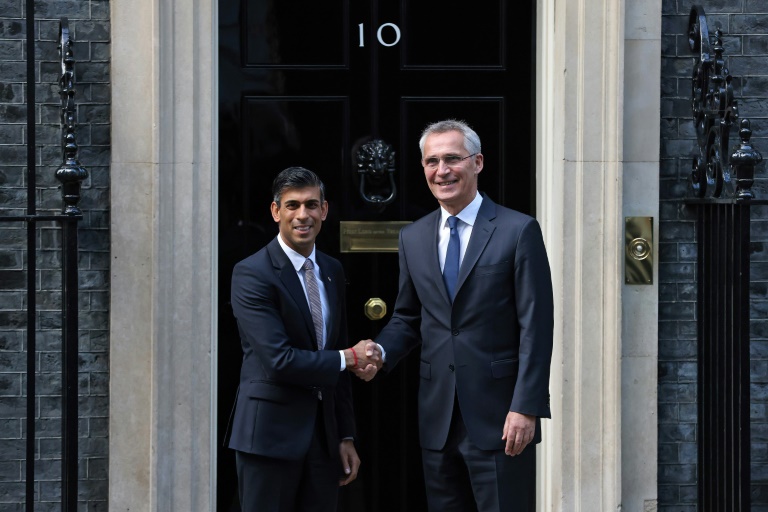
After talks with UK Prime Minister Rishi Sunak, Stoltenberg said: “It’s absolutely clear that there’s strong bipartisan support in the United States for a continued support for Ukraine, and that’s not changed.”

Voters back abortion rights in US state referendums

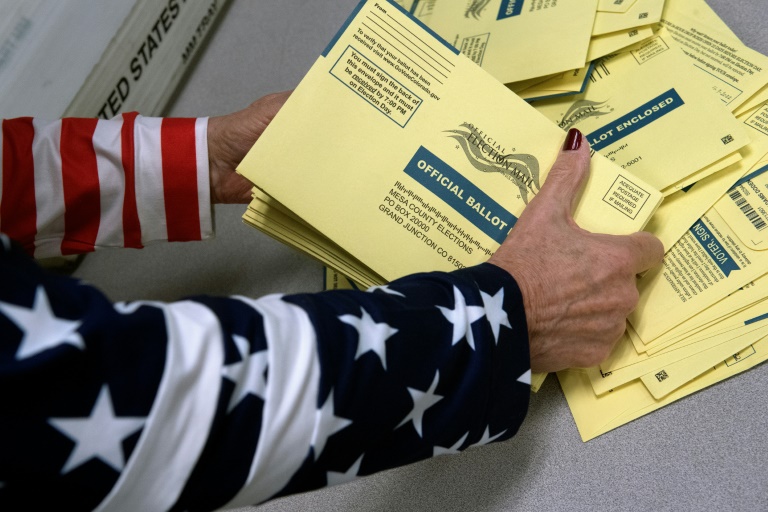
Abortion rights advocates claimed victory Wednesday after US voters sided with protecting access to the procedure in several ballot initiatives, in a rebuke of the Supreme Court’s June decision to overturn nationwide access.

Voters in California, Vermont and Michigan strongly endorsed proposed state constitutional amendments guaranteeing the right to have an abortion.

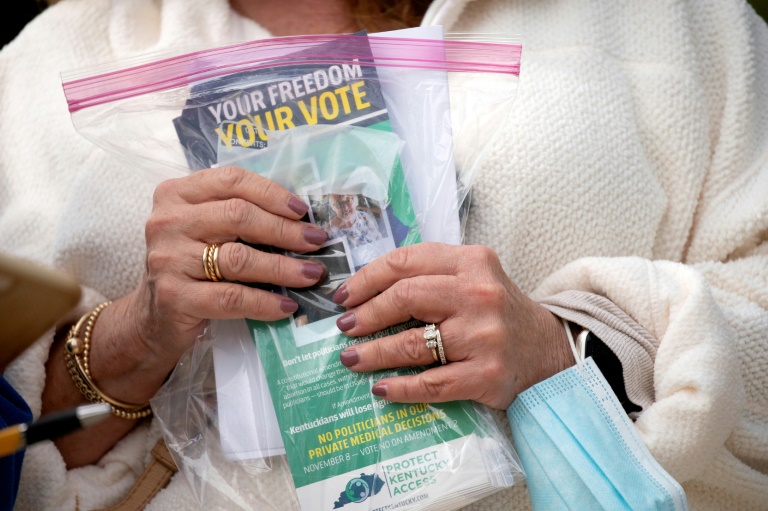
And in Republican stronghold Kentucky — where abortion has been outlawed since the Supreme Court ruling — voters rejected an amendment to the state charter that would have in effect made it impossible to challenge the state’s ban.

In Montana, the fifth state with an abortion measure on the ballot, a preliminary count indicated voters there also opposed legislation hostile to the procedure.

Analysts suggest progressive voters were motivated to turn out for Tuesday’s midterm elections in part by the conservative-majority Supreme Court’s ruling overturning Roe v. Wade, the 1973 case that established abortion as a constitutional right.

The court’s decision pushed the issue to states to decide, and anti-abortion groups mounted strong campaigns to ban or severely restrict the practice. 

Around 15 states instituted full-scale bans, which the White House denounced as “radical” attacks on fundamental rights.

“Across the country last night, we saw an unmistakable repudiation of the Supreme Court’s decision to overturn Roe,” said Nancy Northup, president of the Center for Reproductive Rights.

“From Kentucky to Michigan to Vermont to California, Americans want their right to abortion protected.

“People are energized and they do not want politicians controlling their bodies and futures.”

Planned Parenthood said the verdicts proved that the issue motivated voters.

“The pundits were wrong. Abortion rights was the game changer this election,” the organization said.

Anthony Romero, executive director of the American Civil Liberties Union, said the votes in the five states showed that voters will “stand up for the ability to access essential abortion care in overwhelming numbers.”

He said the results validated the ACLU’s efforts to support state-based initiatives to protect access to abortion.

But, he added, their “work is far from finished on the federal level or in states across the country.”

The votes in California, Michigan and Vermont for constitutional amendments to protect abortion rights were not surprising: all three are firmly Democratic states, and the electoral verdict was clear.

In conservative Kentucky, however, the ballot measure supported by anti-abortion groups was rejected by a relatively narrow 52 percent to 48 percent margin.

The Guttmacher Institute, which advocates for abortion rights, acknowledged that the procedure will remain prohibited in Kentucky after Tuesday’s vote. 

“While abortion is still banned in the state except in very narrow circumstances, defeating this measure is a significant win and could set the stage for future progress on abortion rights,” it said.

Schumacher Ferrari fetches record $15 mn at auction

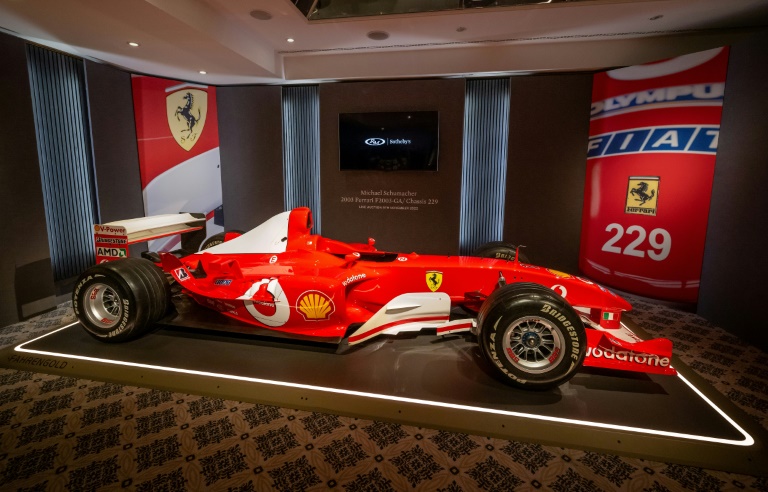
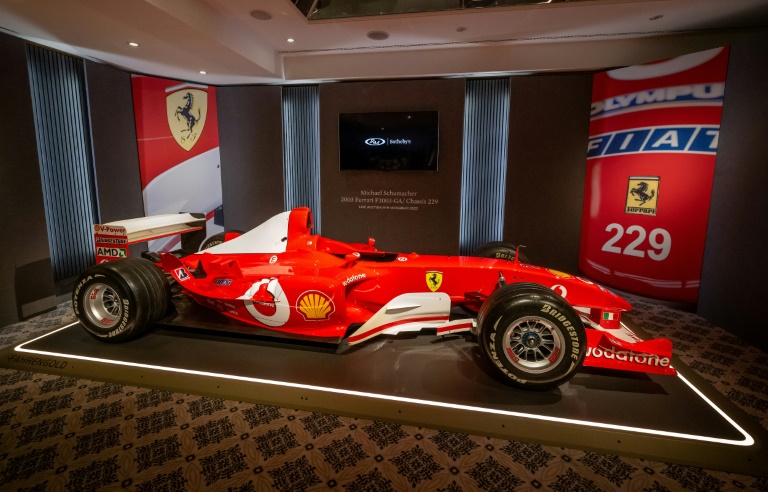
The Ferrari in which Formula One legend Michael Schumacher won the 2003 World Championship title sold for nearly $15 million at auction in Geneva on Wednesday.

“This remarkable car has achieved a world record price for a modern-era Formula One,” the Sotheby’s auctioneer said after the F2003-GA, Chassis 229 car went under the hammer for 13 million Swiss francs ($13.2 million).

When taxes and fees were added on, the final price stood at 14.6 million francs ($14.9 million), the auction house said later.

The previous record was held by another Schumacher-driven Ferrari, an F2001 model sold by Sotheby’s in New York in 2017 for $7.5 million.

The final price, offered by an unidentified telephone bidder from Europe after a bidding war of more than 40 minutes, far outstripped expectations, with the auction house estimating before the sale that the car would fetch up to 9.5 million Swiss francs.

It is “one of the most significant Formula One cars of all time”, the auctioneers said.

Schumacher, who has not been seen in public since suffering serious injuries in a skiing accident in 2013, raced nine times in the car.

– ‘Very important car’ –

He won five Grands Prix with it in the 2003 season and drove it when he clinched the title in Japan.

“It’s one of the Ferraris with the most victories in the constructor’s history, so it’s a very important car in the history of motor racing,” Vincent Luzuy, from the Sotheby’s branch dealing with luxury car sales, told AFP.

Designed by Rory Byrne and Ross Brawn, the F2003-GA featured a longer wheelbase to improve aerodynamics, he explained.

The model was brought in at the Spanish Grand Prix, the fifth race of the 2003 season. Chassis 229 is by far the most successful of the six F2003-GAs that were built.

Schumacher drove it to victory in Spain and also won the Austrian, Canadian, Italian and US Grands Prix in the car.

He also claimed pole position in Spain, Austria and Italy in the car, and the fastest laps in Austria, Italy and the United States.

The car powered Schumacher to his sixth F1 title — a total that saw the German overtake the five won by Argentina’s Juan Manuel Fangio in the 1950s.

It also helped Ferrari win a 13th constructor’s championship — the Italian team’s fifth in a row.

– Luxury week –

Schumacher’s Ferrari was sold during Sotheby’s Luxury Week, which began last Friday and where a range of sparkling jewels, pricy watches and designer handbags are going under the hammer.

Later Wednesday, a spectacular blue diamond will provide the grand finale to the jewellery sale, and has been estimated to fetch up to 15 million Swiss francs.

That 5.53-carat “fancy vivid blue” cushion-shaped diamond is part of the De Beers Exceptional Blue Collection — a group of eight rare fancy blue diamonds with a total value of more than $70 million being sold in Geneva, New York and Hong Kong.

Another piece expected to draw attention, and bids, is an emerald and diamond bracelet made in the 1850s, which once belonged to French empress Eugenie, the wife of emperor Napoleon III.

It has been estimated at between 60,000 and 80,000 francs.

Sotheby’s is already on a roll, having sold the 11.15-carat Williamson Pink Star pink diamond in Hong Kong last Friday for HK$453.2 million ($57.7 million), setting a record for price per carat paid at auction for any diamond or gemstone, the auction house said.

Pink diamonds are only found in a few places and fewer than 10 percent weigh more than one fifth of a carat, and the big ones are some of the most in-demand on the global market.

The 18.18 carat Fortune Pink — the largest pear-shaped “fancy vivid pink” diamond ever to go under the hammer — was meanwhile snapped up at a Christie’s auction in Geneva on Tuesday for $28.5 million.

Schumacher Ferrari fetches record $15 mn at auction

The Ferrari in which Formula One legend Michael Schumacher won the 2003 World Championship title sold for nearly $15 million at auction in Geneva on Wednesday.

“This remarkable car has achieved a world record price for a modern-era Formula One,” the Sotheby’s auctioneer said after the F2003-GA, Chassis 229 car went under the hammer for 13 million Swiss francs ($13.2 million).

When taxes and fees were added on, the final price stood at 14.6 million francs ($14.9 million), the auction house said later.

The previous record was held by another Schumacher-driven Ferrari, an F2001 model sold by Sotheby’s in New York in 2017 for $7.5 million.

The final price, offered by an unidentified telephone bidder from Europe after a bidding war of more than 40 minutes, far outstripped expectations, with the auction house estimating before the sale that the car would fetch up to 9.5 million Swiss francs.

It is “one of the most significant Formula One cars of all time”, the auctioneers said.

Schumacher, who has not been seen in public since suffering serious injuries in a skiing accident in 2013, raced nine times in the car.

– ‘Very important car’ –

He won five Grands Prix with it in the 2003 season and drove it when he clinched the title in Japan.

“It’s one of the Ferraris with the most victories in the constructor’s history, so it’s a very important car in the history of motor racing,” Vincent Luzuy, from the Sotheby’s branch dealing with luxury car sales, told AFP.

Designed by Rory Byrne and Ross Brawn, the F2003-GA featured a longer wheelbase to improve aerodynamics, he explained.

The model was brought in at the Spanish Grand Prix, the fifth race of the 2003 season. Chassis 229 is by far the most successful of the six F2003-GAs that were built.

Schumacher drove it to victory in Spain and also won the Austrian, Canadian, Italian and US Grands Prix in the car.

He also claimed pole position in Spain, Austria and Italy in the car, and the fastest laps in Austria, Italy and the United States.

The car powered Schumacher to his sixth F1 title — a total that saw the German overtake the five won by Argentina’s Juan Manuel Fangio in the 1950s.

It also helped Ferrari win a 13th constructor’s championship — the Italian team’s fifth in a row.

– Luxury week –

Schumacher’s Ferrari was sold during Sotheby’s Luxury Week, which began last Friday and where a range of sparkling jewels, pricy watches and designer handbags are going under the hammer.

Later Wednesday, a spectacular blue diamond will provide the grand finale to the jewellery sale, and has been estimated to fetch up to 15 million Swiss francs.

That 5.53-carat “fancy vivid blue” cushion-shaped diamond is part of the De Beers Exceptional Blue Collection — a group of eight rare fancy blue diamonds with a total value of more than $70 million being sold in Geneva, New York and Hong Kong.

Another piece expected to draw attention, and bids, is an emerald and diamond bracelet made in the 1850s, which once belonged to French empress Eugenie, the wife of emperor Napoleon III.

It has been estimated at between 60,000 and 80,000 francs.

Sotheby’s is already on a roll, having sold the 11.15-carat Williamson Pink Star pink diamond in Hong Kong last Friday for HK$453.2 million ($57.7 million), setting a record for price per carat paid at auction for any diamond or gemstone, the auction house said.

Pink diamonds are only found in a few places and fewer than 10 percent weigh more than one fifth of a carat, and the big ones are some of the most in-demand on the global market.

The 18.18 carat Fortune Pink — the largest pear-shaped “fancy vivid pink” diamond ever to go under the hammer — was meanwhile snapped up at a Christie’s auction in Geneva on Tuesday for $28.5 million.

Ukraine has 'strong bipartisan' US support: NATO chief

NATO chief Jens Stoltenberg on Wednesday denied the Republicans’ advance in US midterm elections would undermine Western military backing for Ukraine.

Following talks with UK Prime Minister Rishi Sunak, Stoltenberg also vowed the alliance “will continue to support (Ukraine) around Kherson”, after Russia ordered its troops to withdraw from the southern city.

The NATO secretary-general said he could not comment in detail on the ongoing count from Tuesday’s elections for the US Congress.

“But it’s absolutely clear that there is strong bipartisan support in the United States for continued support for Ukraine,” he told reporters.

“That has not changed with the elections that have taken place in United States.”

The US Congress committed $40 billion for Ukraine in May with support across party lines as Kyiv fights back against Russian invaders.

But Republican Kevin McCarthy, who is in line to become House of Representatives speaker, warned last month there would be no “blank cheque” for Ukraine if his party regains control.

Ukraine enjoys backing from much of the Republican base, although hard-right lawmakers close to former president Donald Trump have voiced criticism of the US support.

Stoltenberg said there were “always some voices that have a different opinion”.

But opinion polls in NATO members showed that “we are ready to continue to provide support for as long as it takes”, he said outside 10 Downing Street.

Prior to becoming the first foreign leader to visit the new UK prime minister, Stoltenberg observed Ukrainian troops being trained by British, Canadian and other NATO officers in southern England.

“In a dangerous world, it’s even more important that North America and Europe stand together in NATO,” he said, thanking Britain for its role in the alliance supporting Ukraine.

At the start of their meeting, Sunak told Stoltenberg that NATO was “a cornerstone of the UK’s security”, vowing together “to face the new threats that we’re all seeing” from Russia and elsewhere.

Sunak is preparing painful budget cuts after inheriting an economic crisis from his short-lived predecessor Liz Truss, who had vowed to raise UK defence spending to three percent of GDP.

Stoltenberg said: “In a more dangerous world we need to invest more in our defence, and I am absolutely confident that the United Kingdom will continue to lead by example on defence spending.”

Stocks slide on China, US midterms

Global stock markets fell Wednesday following weak Chinese data and as traders assessed results of US midterm elections.

The dollar rose strongly versus the British pound — a currency under pressure owing to the UK’s bleak economic outlook.

Oil prices slumped as official data from China showed the world’s second-largest economy languishing under its strict zero-Covid policy and US stockpiles increased.

Shares in Facebook owner Meta jumped 8.0 percent after the company said it would lay off 11,000 staff, in a move which follows a recent plunge of its valuation.

The tech industry is in a serious slump and several major firms have announced mass layoffs — Twitter’s new owner Elon Musk fired half its staff last week.

Ad-supported platforms such as Facebook and Google are suffering with advertisers looking to cut costs as they struggle with inflation and rising interest rates.

Bitcoin continued to slide on fallout from the near-collapse of cryptocurrency platform FTX, reaching the lowest level for two years at $17,052.49.

“Even if you are not involved in cryptos, the turmoil is definitely something to keep an eye on, as it may be an additional factor impacting risk appetite across the financial markets,” said market analyst Fawad Razaqzada at City Index and FOREX.com.

– US midterms –

While equities rose ahead of the vote on the likelihood of legislative gridlock for the next two years, which would mean no new big increases in US government spending and taxes, they fell as results came in.

Republican hopes for a sweeping rebuke of President Joe Biden in congressional elections failed to materialise, with both parties picking up seats following a campaign fought against a backdrop of stubbornly high inflation and fears for US democracy.

While Republicans look like they will pick up a slim majority in the House, the outcome in the Senate is still unclear.

“The stock market had a nice, little run leading up to election day based on the gridlock angle,” said Patrick O’Hare at Briefing.com.

“It appears that is going to be the case, so participants are taking some money off the table,” he added.

– ‘No good news from China’ –

In China, speculation over how long Beijing will keep its harsh lockdown-and-testing Covid-19 policies has fuelled volatility on markets, despite the government vowing it will not change course.

The restrictions have taken a toll on the Chinese economy, with Data Wednesday showing China’s producer price index (PPI) fell by 1.3 percent on-year in October, pushing it into negative territory for the first time since December 2020.

The consumer price index (CPI) — the main gauge for retail inflation — rose 2.1 percent year-on-year in October, moderating slightly from September’s two-year high of 2.8 percent.

“The economy’s slowing, confirmed by the CPI data,” Iris Pang, chief economist for Greater China at ING Wholesale Banking, told AFP. 

“I don’t see any good news from China.”

– Key figures around 1530 GMT –

New York – Dow: DOWN 0.8 percent at 32,898.35 points

EURO STOXX 50: DOWN 0.3 percent at 3,728.03

London – FTSE 100: DOWN 0.1 percent at 7,296.25 (close)

Frankfurt – DAX: DOWN 0.2 percent at 13,666.32 (close)

Paris – CAC 40: DOWN 0.2 percent at 6,430.57 (close)

Tokyo – Nikkei 225: DOWN 0.6 percent at 27,716.43 (close)

Hong Kong – Hang Seng Index: DOWN 1.2 percent at 16,358.52 (close)

Shanghai – Composite: DOWN 0.5 percent at 3,048.17 (close)

Pound/dollar: DOWN at $1.1415 from $1.1468 on Tuesday

Euro/dollar: UP at $1.0049 from $1.0005

Dollar/yen: DOWN at 146.06 yen from 146.26 yen

Euro/pound: UP at 88.04 pence from 87.23 pence

West Texas Intermediate: DOWN 2.1 percent at $87.01 per barrel

Brent North Sea crude: DOWN 1.8 percent at $93.66 per barrel

burs-rl/lc

Germany blocks sale of two chipmakers to China

Germany on Wednesday blocked the sale of two chipmakers to Chinese investors because of a potential threat to security.

“We must look very closely at company takeovers when it relates to important infrastructure or when there is a danger that the technology would flow to buyers from non-EU countries,” said Economy Minister Robert Habeck.

Chinese company Sai MicroElectronics had been seeking to buy the Dortmund factory of Elmos through its Swedish subsidiary Silex. 

The German government had rejected the planned takeover because “the purchase could endanger the order and security of Germany,” said the economy ministry.

Other ways of reducing the risks, including allowing the acquisition under certain conditions, were “unable to eliminate the identified dangers”, it added.

Elmos and Silex “regret” the decision, the German company said, adding the sale would have “strengthened semiconductor production” in Europe’s top economy.

Elmos said it was considering legal action as the ban on the acquisition was announced before the end of a review period and without granting the companies a hearing.

The second acquisition to be turned down was of Bavaria-based ERS Electronic, which supplies a cooling technology to wafer manufacturers, according to Germany’s minister for research Bettina Stark-Watzinger.

Fears have been growing in Germany about an over-reliance on Beijing, and letting critical infrastructure fall into the hands of Chinese state-linked companies.

Russia’s invasion of Ukraine and its subsequent dwindling of crucial gas supplies to Europe has further accentuated the concerns.

In particular, the microchip industry has come under scrutiny, as it produces key components used across industry from consumer electronics to battery-powered vehicles.

Earlier this year, the European Union unveiled a multibillion euro “Chips Act” aimed at doubling Europe’s market share in semiconductors and reducing dependence on supplies from Asia. 

– ‘Not naive’ –

Elmos, which primarily builds components for the automobile industry, said late last year it intended to sell the production facility at its headquarters.

Silex was seeking to buy the site for 85 million euros ($85.4 million).

But business weekly Wirtschaftswoche said Elmos had been the recipient of 5.9 million euros from the German state for two research projects. It had also received 8.1 million euros from an EU project on autonomous driving.

Habeck said that Germany remained open to investors, but that “we are also not naive”. 

Beijing has been trying to glean knowledge about production and development, underlined the minister, saying that the “statements from China are very clear”.

Habeck, of the ecologist Greens party, has recently locked horns with Chancellor Olaf Scholz over investments from China.

He deeply opposed a plan by Chinese shipping firm Cosco to buy a stake in a Hamburg port terminal, forcing Scholz to pull rank to force through the deal by allowing the purchase of a reduced stake.

Scholz has repeatedly underlined the importance of strong trade ties with Beijing, something that German industry leaders have also stressed.

China is a major market for German goods, particularly for auto giants Volkswagen, BMW and Mercedes-Benz, and many jobs in Europe’s top economy depend directly on the relationship.

On a controversial visit to Beijing last week, Scholz, accompanied by a delegation of German business bosses, told Chinese leaders that Berlin expected equal treatment on trade.

But Scholz’s trip has sparked controversy for coming so soon after Xi Jinping strengthened his hold on power in China last month.

With tensions between the West and Beijing running high on issues ranging from Taiwan to alleged human rights abuses, there had been concerns that the high-profile trip may have unsettled both the United States and the European Union.

Close Bitnami banner
Bitnami