World

Strikes flare in Europe as cost of living spirals

European workers squeezed by the soaring cost of living went on strike in Belgium and Greece on Wednesday, with more stoppages threatening to paralyse parts of Britain, France and Spain in coming days.

Spreading industrial unrest poses a problem for governments which are already spending billions trying to blunt the worst effects of rising prices, at least for the most vulnerable.

Europe is acutely affected by the fall-out from the war in Ukraine, which is exacerbating a global energy crisis, inflation and a scarcity of some food products.

The onset of winter, when energy bills spike, and repeated predictions of a continent-wide recession are souring the labour mood even further.

Belgium and Greece saw general strikes on Wednesday, disrupting transport in their respective capitals, impacting businesses.

In Brussels, home to the European Commission and other EU institutions, workers were protesting inflation running higher than 12 percent — well above the 10.7 percent average across the eurozone.

The country’s biggest union, the FGTB, is demanding greater leeway to negotiate pay rises. 

But the Belgian government counters that Belgian salaries are already indexed to inflation — an arrangement not seen in most other countries.

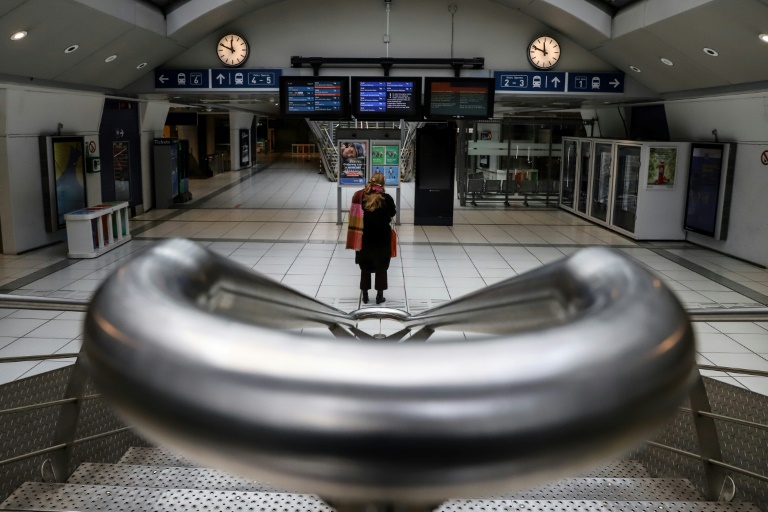
The strike cut train services by 75 percent and closed the airport in the southern city of Charleroi, the main hub in the country for Europe’s leading airline Ryanair.

– Strikes in Britain and France –

In Greece, ferries serving its many islands were among the transport lines halted by a general strike, the second to hit the country since September.

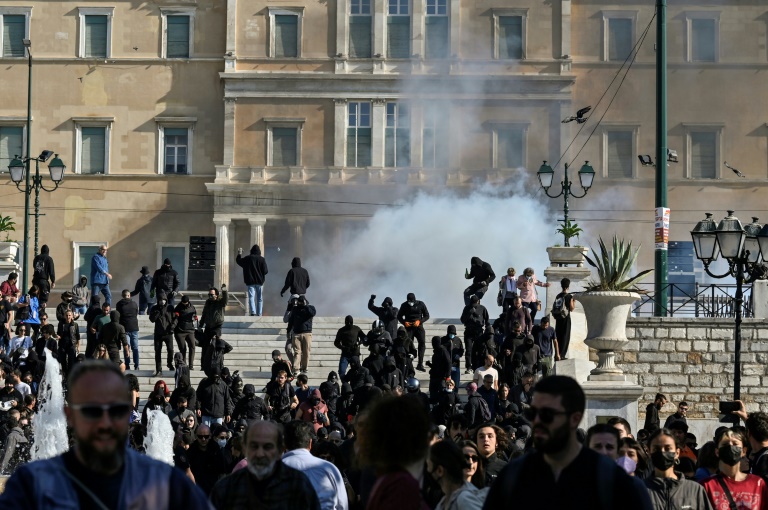
Brief clashes erupted in Athens and Thessaloniki when hooded youths threw firebombs at police, who responded with tear gas.

In the capital, red paint was splashed at the entrance to Greece’s central bank, and a firebomb was thrown at a car in front of the finance ministry.

In the northern city of Thessaloniki, a banner said: “We choose life, not survival.”

Greek unions are insisting on salary rises to cope with inflation which has risen to 12 percent.

Stoppages were to be felt on Thursday in Britain and France, with the underground urban rail networks and buses in London and Paris to be severely affected.

Celine Verzeletti, of the French CGT trade union, predicted up to 200 “demonstration points”, roughly the same as the last national strike in France on October 18, when more than 100,000 people protested.

France is not as badly affected by inflation as its European peers, as the state holds stakes in the main energy companies and has minimised how far energy bills can rise.

Inflation in France is just over six percent — better than elsewhere — but with economic activity across the eurozone nosediving, hatches are being battened for what looks like a period of stagflation.

In Britain, where inflation is above 10 percent, worker protests over not being able to make ends meet are coming to a crescendo.

The Bank of England predicts the country is headed for a two-year recession, even though it was forced to hike interest rates, making it even tougher for UK households.

– EU energy moves –

On top of Thursday’s stoppage in London’s Underground, British nurses are to hold the first strike in the 106-year history of their Royal College of Nursing union at a date yet to be announced.

Announcing the result of a ballot, RCN General Secretary Pat Cullen said: “Anger has become action –- our members are saying enough is enough.”

Late next week, hundreds of employees at Heathrow airport are to halt work for three days, between November 18 and 21, to demand better pay.

Their action could force the cancellation of flights to Qatar, which is to host the World Cup football tournament that kicks off on November 20.

British dockers, university staff, postal employees and the legal profession have all held or threaten to continue strikes over pay eaten away by inflation.

In Spain, truck drivers have called an indefinite strike from next Monday. Their last stoppage, in March, led to empty supermarket shelves.

With labour protests mounting, the European Union is looking at ways to take some of the sting out of energy prices.

The European Commission and member states are working on proposals to promote the joint purchase of gas and possibly impose a mechanism to cap the price of wholesale gas within the European Union.

Details are not expected to be finalised until late this month, but the steps — and unseasonably warm weather last month — contributed to a fall in gas prices, though they are expected to rise again as winter bites.

The head of the European Central Bank, Christine Lagarde, said last week a “mild” eurozone recession looked likely — but warned it would not be enough to bring down record-high inflation.
Striking Kenya Airways pilots return to work

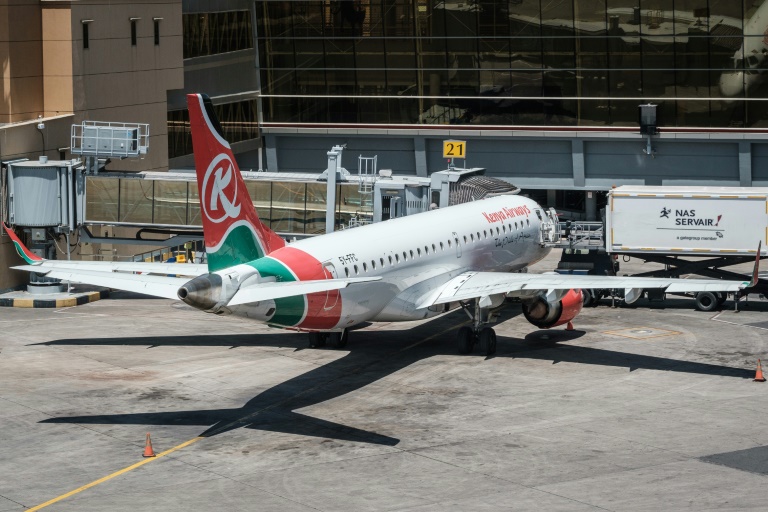
Kenya Airways pilots returned to work on Wednesday, after a court ordered them to end their days-long strike which had led to hundreds of flight cancellations and stranded thousands of passengers. 

The strike, which began on Saturday, exacerbated the woes facing the troubled national carrier, which has vowed to “do everything possible to return to normalcy in the shortest time”.

“The strike is off, we are back to work,” a spokesperson for the Kenya Airline Pilots Association (KALPA) told AFP Wednesday, hours after a Nairobi court ordered the union to end the walkout.

Kenya Airways said that it expected to be up to 50 percent of normal operations by Thursday, rising to 70 percent by Friday and operating normally by November 12.

Officials at Nairobi’s Jomo Kenyatta International Airport said the airline was still struggling to clear the backlog from earlier flight cancellations.

“We have had several KQ flights on schedule today take off after the pilots resumed work,” an official at the Kenya Airports Authority told AFP, using the shorthand airline code.

“Things are getting back to normal,” he said. 

The airline said it was “doing everything possible to return to normal scheduled operations within the shortest possible time”.

“Over 5,000 of the 12,000 disrupted passengers have been uplifted”, it said in a Wednesday statement.

The dispute has added to the challenges facing Kenya’s recently elected President William Ruto, who has inherited a country already battling a cost-of-living crisis and a record drought.

Passengers at the airport told AFP they were cautiously optimistic after being forced to reschedule their travel plans because of the strike.

Peace Wamala told AFP she was hoping to finally make it to the Ugandan town of Entebbe following a cancellation on Tuesday.

She said she didn’t yet know “the exact time for our flight but we have been assured we will fly today”.

Another passenger, who only gave her name as Londiwe, told AFP: “I have had the worst experience on KQ during the strike for the past two days, but finally I have been told I will fly this evening.

“So I am just hoping the pilots will not go on strike again.”

KALPA launched the walkout in defiance of a court injunction issued last week against the strike, prompting the government to threaten the pilots with disciplinary action.

– ‘No disciplinary action’ –

Kenya Airways, which is part-owned by the government as well as Air France-KLM, is one of the biggest in Africa, connecting multiple countries to Europe and Asia. 

But it has been running losses for years, despite the government pumping in millions of dollars to keep it afloat.

In a breakthrough for the beleaguered airline, Justice Anna Mwaure on Tuesday ordered KALPA members to resume their duties “unconditionally” by 6:00 am (0300 GMT) Wednesday.

Mwaure also ordered the airline’s management to allow the pilots “to perform their duties without harassing them or intimidating them and especially by not taking any disciplinary action against any of them”.

Transport Minister Kipchumba Murkomen had urged the pilots and the airline’s management to obey the court order.

“In the past three days, this strike has disrupted travel plans for over 12,000 customers… forced the cancellation of over 300 flights, and affected 3,500 other employees who were not part of it,” he said.

The protesting pilots, who make up 10 percent of the airline’s total workforce, are pressing for the reinstatement of contributions to a provident fund and payment of all salaries stopped during the Covid-19 pandemic.

In a statement released Tuesday, the airline’s CEO Allan Kilavuka said: “We commit to complying with the court’s directions.”

The airline and the government have accused the union of engaging in “economic sabotage”, with Kenya Airways warning that the strike would lead to losses estimated at $2.5 million per day.

The airline was founded in 1977 following the demise of East African Airways, and flies more than four million passengers to 42 destinations annually.

It has been operating in large part thanks to state bailouts following years of losses.

Thinning Greenland ice sheet may mean more sea level rise: study

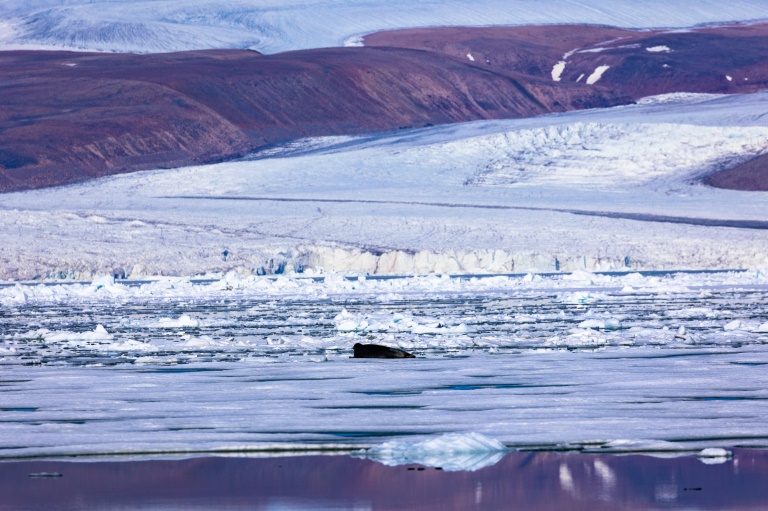
Part of Greenland’s ice sheet is thinning further inland than previously believed, which will likely lead to greater sea level rise by the end of this century, a new study found Wednesday.

The findings pertain to a northeast section of the giant ice block covering, but the trend is likely happening elsewhere on Greenland and Earth’s other ice sheet, in Antarctica. 

The implications are worrying, as sea level rise already threatens millions of people living along coasts that could find themselves underwater in the decades and centuries to come. 

Scientists have previously focused on the edges of Greenland’s ice sheet to examine active melting as global temperatures rise, largely using satellite data.  

But the authors of Wednesday’s study looked further inland, over 100 kilometres from the coast.

What they found was alarming: thinning from Greenland’s coast stretched back 200 to 300 kilometres (125 to 185 miles).   

“What we see happening at the front reaches far back into the heart of the ice sheet,” said first author Shfaqat Abbas Khan in a press release about the study, published in Nature. 

“The new model really captures what’s going on inland, the old ones do not… you end up with a completely different mass change, or sea level projection,” he told AFP in an interview. 

The researchers installed GPS stations on the ice sheet to gather more precise information, and also used satellite data and numerical modelling, all of which provided a new set of data likely to alter global sea level rise projections. 

The research was conducted at the Northeast Greenland Ice Stream (NEGIS), which covers an estimated 12 percent of Greenland, according to co-author Mathieu Morlighem. 

It found that the thinning could add between 13.5 and 15.5 millimetres to sea levels by the end of this century — equivalent to the entire Greenland ice sheet’s contribution during the past 50 years. 

“The NEGIS could lose six times more ice than existing climate models estimate,” the report found.

– ‘Reduce CO2’ –

One reason for the inland thinning is the intrusion of warm ocean currents, which in 2012 caused the floating extension of the NEGIS to collapse. 

That event “has accelerated ice flow and triggered a wave of rapid ice thinning that has spread upstream”. 

The Greenland ice sheet is currently the main factor in swelling the Earth’s oceans, according to NASA, with the Arctic region heating at a faster rate than the rest of the planet.

In a landmark report on climate science last year, the Intergovernmental Panel on Climate Change (IPCC) said the Greenland ice sheet would contribute up to 18 centimetres to sea level rise by 2100 under the highest emissions scenario. 

The massive ice sheet, two kilometres thick, contains enough frozen water to lift global seas by over seven metres (23 feet) in total.  

The researchers will now extend their methods to look at other glaciers on Greenland and Antarctica, and some new data could be available in a year or so. 

Earth’s surface has warmed, on average, nearly 1.2 degrees Celsius since pre-industrial times, unleashing a catalogue of impacts from heatwaves to more intense storms.  

Under the Paris climate deal, countries have agreed to limit warming to well under 2C. 

World leaders are currently meeting in Sharm el-Sheikh, Egypt, for UN climate talks aimed at slashing harmful emissions and boosting funding to green developing country economies. 

Khan said the thinning trend on Greenland’s ice sheet will be near impossible to reverse, but can at least be slowed with the right policies in place. 

“I really hope that they agree on a reduction on CO2 and as soon as possible,” he said in a message to leaders at the COP27 climate talks. 

Iran calls for Ukraine talks as it hosts Russian security chief

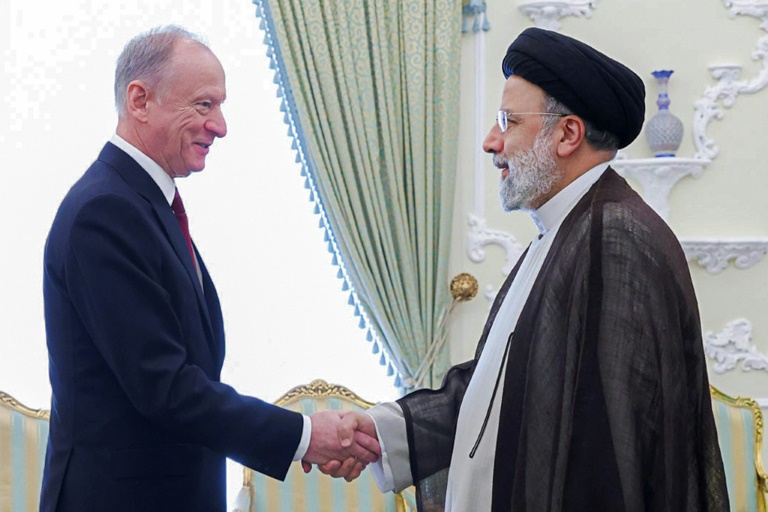
Iran’s top security official Ali Shamkhani called for dialogue to end the war in Ukraine during a meeting Wednesday in Tehran with his Russian counterpart Nikolai Patrushev.

Patrushev later met with President Ebrahim Raisi, who said that “broadening the scope of the war and its escalation are a source of concern for all countries,” according to official news agency IRNA.

The meetings come after Kiev and its Western allies accused Russia in recent weeks of using Iranian-made drones to carry out attacks in Ukraine. Tehran denies the allegations.

“Iran supports any initiative leading to a ceasefire and peace between Russia and Ukraine based on dialogue,” Shamkhani said, secretary of Iran’s Supreme National Security Council.

The Islamic republic was “ready to play a role in ending the war”, he added, IRNA reported.

Russia’s Security Council said the two senior officials “discussed in detail bilateral cooperation in the field of law enforcement, including public security and the fight against terrorism and extremism”.

“In addition, they discussed measures to counter the interference of Western special services in the internal affairs of the two countries,” it said in a statement.

Iran has been rocked by nearly two months of protests since the death of Mahsa Amini, after her arrest by the morality police for allegedly breaking the nation’s strict dress code for women.

An adviser to Ukraine’s president said Patrushev’s visit to Iran showed the Kremlin was “exhausted”.

In a Twitter post, the adviser Mykhailo Podoliak said Russia’s “resources are close to the limit”, and that Patrushev was “looking for a way to continue the war” by getting more drones and missiles.

“Now is the perfect time to double aid to Ukraine,” he wrote.

Kiev dramatically curtailed diplomatic relations with Tehran in September due to alleged arms shipments to Moscow.

Last week Iran’s Foreign Minister Hossein Amir-Abdollahian admitted his country had supplied drones to Moscow before Russian troops invaded Ukraine in February 2022.

He also said he was ready to examine any evidence of the use of Iranian drones in the Ukrainian conflict.

In late October the European Union and Britain announced new sanctions against Iran, targeting three generals and an arms company “responsible for supplying Russia with suicide drones” to bomb Ukraine.

Shamkhani, during the meeting with Patrushev, underlined the “creation of joint institutions to deal with the sanctions” imposed on Russia and Iran, IRNA said.

The Russian statement said both parties “stressed the importance of developing Russia’s and Iran’s economic potential and expand trade relations” to counter Western sanctions.

Republicans make gains in US midterms but no 'red wave'

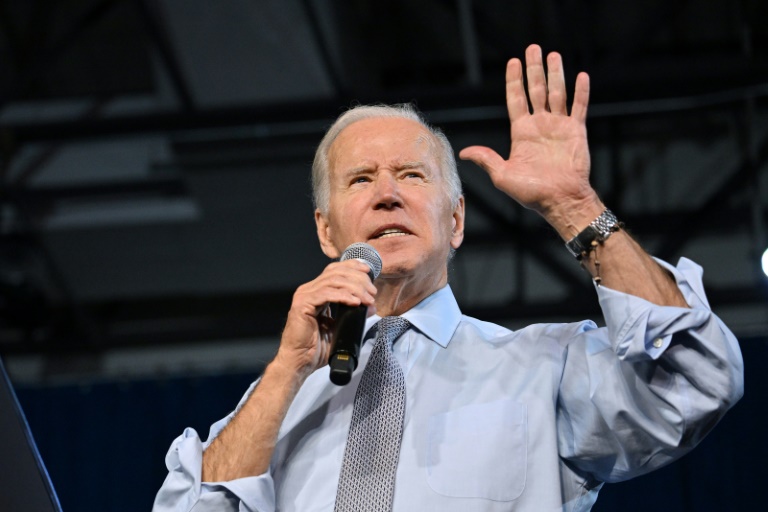
Republicans appeared poised on Wednesday to carve out a slim majority in the US House of Representatives but their hopes of a “red wave” in midterm elections were dashed as President Joe Biden’s Democrats defied expectations.

With four key races yet to be called after Tuesday’s vote, the Senate remained in play but it was leaning Democratic and control may hinge on a runoff election in the southern state of Georgia in early December.

Republicans seemed on track to reclaim the House for the first time since 2018, but the midterms delivered a mixed bag for Donald Trump, who was widely expected to announce another White House run next week.

While the night saw wins by more than 100 Republicans embracing Trump’s “Big Lie” that Biden stole the 2020 election, several high-profile acolytes of the former president came up short.

And Florida Governor Ron DeSantis, a likely challenger to Trump for the 2024 Republican presidential nomination, scored a resounding victory in his re-election bid.

Among other races, Maura Healey of Massachusetts will make history as the first openly lesbian governor in the United States, and in New York, Democratic Governor Kathy Hochul fended off a Republican challenge.

In ballot initiatives in five states, preliminary results indicated that voters supported abortion rights in a pushback to the anti-abortion movement which won a crucial Supreme Court decision in June.

Aiming to deliver a rebuke of Biden’s presidency against a backdrop of sky-high inflation and bitter culture wars, Republicans needed just one extra seat to wrest control of the evenly divided Senate.

But by early Wednesday the only seat to change party hands went to the Democrats, with John Fetterman, a burly champion of progressive economic policies, triumphing in Pennsylvania over Trump-endorsed celebrity doctor Mehmet Oz.

In the 435-member House, results suggested Republicans were on track for a majority — but only by a handful of seats, a far cry from their predictions.

– ‘Never underestimate’ –

“Never underestimate how much Team Biden is underestimated,” White House chief of staff Ronald Klain tweeted.

Top Republican Kevin McCarthy — who hopes to be the lower chamber’s next speaker — struck an upbeat note, telling supporters in the early hours: “It is clear that we are going to take the House back.”

But Senator Lindsey Graham, a top Trump ally, bluntly conceded to NBC that the election is “definitely not a Republican wave, that’s for darn sure.”

A Republican-controlled House could still derail Biden’s agenda, launching aggressive investigations, scuttling his ambitions on climate change and scrutinizing the billions of US dollars to help Ukraine fight Russia.

The president’s party has traditionally lost seats in midterm elections, and with Biden’s ratings stuck in the low 40s and Republicans pounding him over inflation and crime, pundits had predicted a drubbing.

That would have raised tough questions on whether America’s oldest-ever commander in chief, who turns 80 this month, should run again.

Instead Biden stands to emerge in much better shape than either of his Democratic predecessors, Barack Obama or Bill Clinton, who both took a hammering at the midterms.

Democrats need two more wins to successfully hold the Senate, while Republicans need three to flip it.

In Arizona, Nevada and Wisconsin, counting the remaining votes for Senate could take days.

And Georgia may well go to a runoff on December 6 if neither candidate crosses the 50 percent threshold.

– DeSantis romps to victory –

On a night of close contests, one of the most decisive wins was for DeSantis, who won the gubernatorial race overwhelmingly in Florida, cementing his status as a top potential White House candidate in 2024.

DeSantis, who has railed against Covid-19 mitigation measures and transgender rights, won by nearly 20 points against a former Democratic governor in what used to be a swing state.

“We will never, ever surrender to the woke mob,” DeSantis told a victory party, using a derisive term for social justice campaigners.

But if the 44-year-old views his victory as a presidential mandate, he will likely face a stiff challenge from another Florida resident — Trump, who has teased an “exciting” announcement on November 15.

Trump, who faces criminal probes over taking top secret documents from the White House and trying to overturn the 2020 election, returned on Tuesday to his playbook of airing unsubstantiated claims of fraud.

In Arizona, Trump and his chosen candidate for governor, Kari Lake, alleged irregularities after problems with voting machines.

Officials in the most populous county of Maricopa said about 20 percent of the 223 polling stations experienced difficulties related to scanners but that no one was denied the right to vote.

Biden has warned that Republicans pose a dire threat to democracy, calling out their growing embrace of voter conspiracy theories that fueled last year’s storming of the Capitol.

In the run-up to the election, an intruder espousing far-right beliefs broke into the San Francisco home of House Speaker Nancy Pelosi and bludgeoned her husband with a hammer.

S.African court greenlights Amazon's new Africa HQ

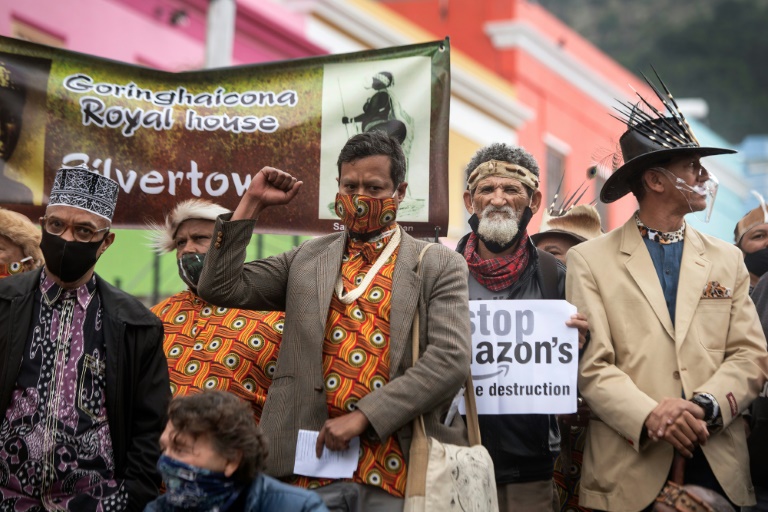
Campaigners on Wednesday slammed a South African court ruling to allow construction to go ahead on Amazon’s new African headquarters, dealing a blow to indigenous groups who say the development will desecrate ancestral land.

Developers now have the go-ahead to re-start work  on a multi-million-dollar project that is to host the US tech giant’s offices –- which had been halted by a previous court decision.

The High Court in Cape Town concluded Tuesday that a representative for several groups opposing the construction had “misrepresented the views of some indigenous leaders without consulting with them”. 

Campaigners opposing the development said they were “deeply disappointed” at ruling. 

“We do not believe that the facts put before the court enabled the court to make a fair judgement,” a collective of campaign groups representing indigenous people said in a statement. 

Amazon was not directly named in the case that has pitted indigenous groups against property developers.

Construction of a nine-storey business and residential complex on a greenfield site that will be anchored by Amazon was first approved by city authorities last year.

But work on the four-billion-rand ($225 million) complex were suspended in March this year after indigenous people took legal action. 

Some of the country’s first inhabitants, the Khoisan, said the development lies on a battlefield where their ancestors fought Portuguese colonisers in 1510.

Once hunter-gatherers known under the now-discarded label of Bushmen, the Khoisan suffered deeply during the colonial-era and under apartheid.

Indigenous communities in South Africa still face vast social inequalities and lack of economic activities, with their history often overlooked.

Located on what was previously a golf course, Amazon’s new HQ will have a total floor space of 70,000 square metres (7.5 million feet) — equivalent to almost 10 football pitches.

The project holds the promise of thousands of jobs in a country where unemployment is cripplingly high.

Several Khoisan groups had thrown their support behind the project after the developers agreed to build a heritage, cultural and media centre that will be operated by indigenous groups.

At COP27 climate talks, US midterms make waves

The US midterms made waves Wednesday at a UN climate summit on the shores of Egypt, with activists urging President Joe Biden to take bolder action against global warming regardless of the election outcome.

Campaigners were confident that Republicans would not be able to undo Biden’s $370 billion green energy legislation even if they take one or both houses of Congress.

But with Biden due to join the UN’s COP27 climate conference in the Red Sea resort of Sharm el-Sheikh on Friday, some had a strong message for the US leader.

“I think it would be a catastrophic mistake if President Biden does not seize this literally once-in-the-universe opportunity now to be the climate president that the world needs him to be,” said Jean Su, energy justice programme director at the Center for Biological Diversity, a US environmental group.

“We are literally at the tipping point for an unlivable world,” she said at a news conference, urging Biden to phase out fossil fuel production and use his presidential powers to declare a climate emergency.

But Su and others were also pleased to see candidates who campaigned on climate change gain seats in Congress.

“A lot of climate champions did win across states, governorships, legislatures and more,” said Frances Colon, climate policy director at the Center for American Progress.

“What we expect is that they will turn these winds into more climate action,” she said.

– ‘Dodged a bullet’ –

Republicans are on track to reclaim the House of Representatives, but Biden’s Democrats appear to have a decent chance of keeping their Senate majority.

“We may have dodged a bullet,” US climate envoy John Kerry said at COP27 talks, a day after telling the summit that Biden’s climate policy “cannot be changed by anybody else who comes along”.

Colon said Republicans had campaigned on the issues of soaring inflation and high fuel prices.

“Being propped up by fossil fuels, election denying, and climate denying really didn’t work out so well for them,” she said.

Republicans will not be able to reverse the Inflation Reduction Act, Biden’s flagship programme to green the US economy.

“What you might see from them is that they try to slow down things, try to present some obstacles to what the Biden administration will do for the next two years,” Colon said.

But activists said a Republican victory in the House would endanger Biden’s pledge to contribute $11.4 billion to a $100 billion per year fund from rich countries to help developing ones green their economies.

Colon said Democrats need to pass the legislation before the new Congress is sworn in in January.

– Trump shadow –

After the new Congress is known, all eyes will quickly turn to the 2024 presidential election, with Donald Trump hinting that he will announce his intentions on November 15.

Climate activists fear a Trump comeback. The former US leader pulled the United States out of the Paris Agreement in 2017 — a move that Biden reversed as soon as he took office.

“We know that there’s a huge climate denier that may announce (his candidacy) pretty soon,” said Ramon Cruz, president of the Sierra Club, a major US non-government organisation.

“We knew how difficult that was not only for the US, but for the whole world,” he said.

The Sierra Club, which supported candidates in this year’s election, already has 2024 on the “horizon”, he said.

But one campaigner had a different take on the impact of US elections on the climate agenda.

“The US has acted in bad faith irrespective of elections,” said Harjeet Singh, senior adviser at Climate Action Network.

Singh said that, for years, the United States has blocked attempts to create a “loss and damage” mechanism through which rich polluters would compensate developing countries for the destruction caused by climate-induced disasters.

The United States has dragged their feet on the issue, but loss and damage has taken centre stage at COP27 as it was finally put on the official agenda following intense negotiations.

“The US has been an obstructionist, always,” Singh said.

“Please look at the US role beyond what happens in this election. It is for the US to change course and be more constructive in its approach.”

Macron ends France's Africa mission, ponders new strategy

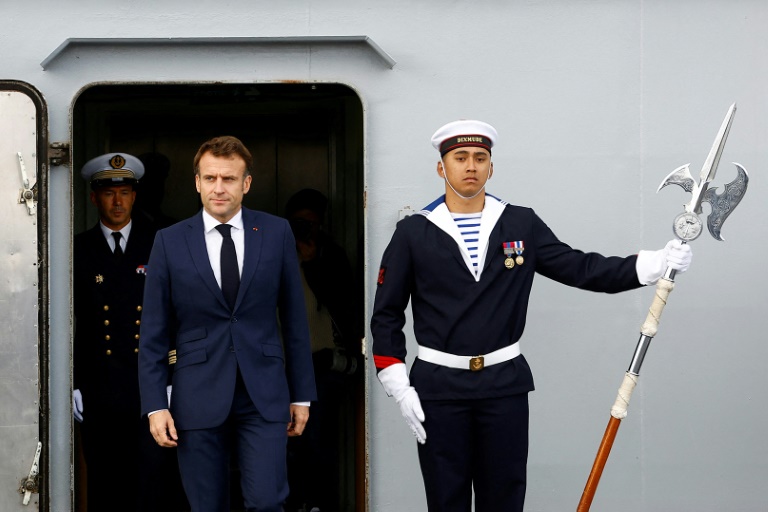
French President Emmanuel Macron on Wednesday announced that France was ending its Barkhane anti-jihadist mission in Africa after over a decade, saying a new strategy would be worked out with African partners.

The declaration came in a wide-ranging speech reviewing France’s strategy where the president also underlined the importance of its nuclear deterrent, as well as relations with Germany and the United Kingdom despite recent tensions.

Macron laid out his strategic defence priorities for France in Europe and Africa in the coming years, not least in response to Russia’s invasion of Ukraine and a growing international assertiveness of China.

“I have decided, in coordination with our partners, to make official today the end of the Barkhane operation,” Macron said in the keynote speech on military policy to top generals and diplomats aboard a helicopter carrier Mediterranean naval base at Toulon.

The move was the “consequence of what we have experienced” in recent months, and a new strategy would be worked out within the next half-year, he added.

“Our military support for African countries will continue, but according to new principles that we have defined with them,” said Macron.

– No ‘unlimited’ deployment –

He indicated that future strategy would be based on a far closer cooperation with African armies to make France’s own deployment lighter and more dynamic.

French forces have faced growing hostility from some who see them as the ineffective occupying force of a former colonial power, and Macron pulled troops out of Mali this year as relations soured with the country’s military rulers.

Around 3,000 French soldiers remain in Burkina Faso, Chad and Niger. There are no immediate plans for a reduction in numbers.

Macron said that in the coming days exchanges would be launched with African nations and regional organisations and allies “to change the status, format and mission” of French bases in Africa.

“Our interventions should have better time limits and from the very start. We do not want to remain engaged for an unlimited time in foreign operations,” he said.

The French deployment was launched in 2013, when jihadists took over much of northern Mali before being turned back.

But the rebels regrouped and soon the region was targeted by other Islamist insurgencies that are now looking to push south toward the Gulf of Guinea, experts say.

– ‘Indispensable partner’ –

He revealed that Britain and France will hold a summit in the first quarter of 2023 aimed at reinforcing their military and defence cooperation, in a new sign of a reset under new Prime Minister Rishi Sunak.

“Our partnership with the United Kingdom must also be raised to another level,” Macron said.

“I hope that we will actively resume our dialogue on operations, capacities, nuclear and hybrid areas and renew the ambitions of our two countries as friends and allies.”

Macron also insisted on the need for deeper military cooperation with Germany, and “indispensable partner” for building up Europe’s military autonomy.

The two countries have agreed to work notably on next-generation fighter jets and tanks, but both projects have reportedly stalled on divergences over technical needs and how to share production.

“The success of the European project depends in large part, I believe, on the balance of our partnership,” Macron said. 

“In that regard I hope that we can make decisive progress in the coming weeks.”

– Nuclear deterrent –

Macron added that the French nuclear deterrent contributed to the security of Europe, after sparking a controversy with recent comments over what circumstances would cause France to use its atomic weapons.

“Today, even more than yesterday, the vital interests of France have a European dimension. Our nuclear forces therefore contribute by their own existence to the security of France and Europe”, he said.

“Don’t forget that France has nuclear deterrent and don’t dramatise a few remarks,” he added.

Macron in October in an interview had appeared to cast doubt on whether France would contemplate striking back if Russia attacked Ukraine with a tactical nuclear weapon.

“Our (nuclear) doctrine is based on what we call the fundamental interests of the nation and they are defined in a very clear way. It is not at all what would be affected if there was a ballistic nuclear attack in Ukraine or the region,” he then told the France 2 channel.

vl-dla-js-sjw/ah

Rich nation 'gestures' on climate damage only a start: observers

A trickle of climate “loss and damage” funding pledges from rich countries at the COP27 summit in Egypt have been welcomed by observers and developing nations, who say they must pave the way for a broad global financing deal. 

The controversial issue is a key focus of the UN meeting, as a relentless surge of impacts wreak death, destruction and mounting economic losses on developing nations least responsible for planet-heating emissions. 

A handful of European nations and regions have announced small funding pledges during the Sharm el-Sheikh talks, with Germany, Austria, Ireland and Belgium saying they would make contributions. 

“These are good gestures. It shows that the issue has been acknowledged after years of advocacy,” said Harjeet Singh, head of global political strategy at the Climate Action Network.

But he said that this should not distract from calls by developing nations for a robust framework that can pay out when countries are hit by increasingly ferocious floods, heatwaves and droughts, along with slow-onset impacts such as sea level rise. 

Pledges so far are miniscule in comparison to the damages already incurred. 

Austria has offered $50 million and Belgium says it will give $2.5 million to Mozambique, adding to $13 million that Denmark has earmarked for loss and damage in North Africa and the Sahel. 

Scotland, which kicked off the loss and damage pledges last year when Britain hosted the COP26 summit, has also upped its contribution to $8 million. 

Meanwhile, Germany is touting its “global shield” project, due to be officially launched in Egypt next week, as a way to provide climate risk insurance and prevention to vulnerable countries. 

It announced $170 million for the project this week, while Ireland said it would contribute $10 million for 2023. 

– Heatwaves, droughts, floods –

These countries “have begun to show the way” by recognising the need to provide funds to countries already being slammed by the impacts of climate change,” Gaston Browne, the Prime Minister of Antigua and Barbuda, told delegates on Tuesday. 

“It would be right for the major polluters — particularly those that have been involved in the historical use of fossil fuel energies — to follow this example.”

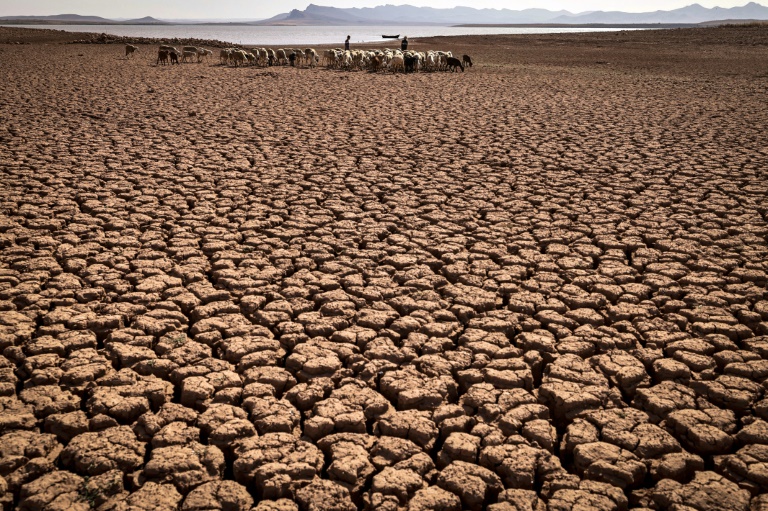
The summit is taking place at as a devastating drought is threatening millions with starvation in the Horn of Africa. 

Heatwaves and droughts have caused crops to wither on four continents, while Pakistan is still reeling from catastrophic flooding that destroyed homes, roads and bridges and swallowed vast areas of farmland. 

The World Bank has estimated the Pakistan floods alone caused $30 billion in damages and economic loss. Millions of people were displaced and two million homes destroyed.

Rachel Cleetus, policy director and lead economist for the Climate and Energy Program, Union of Concerned Scientists, said climate disasters and rocketing fossil fuel prices were hurting countries already burdened with “crushing debt”.  

She said that while measures like Germany’s insurance programme are important additions to loss and damage, they would be “inadequate” to deal with loss and damage more broadly.  

“We’re talking about losing land to sea level rise and desertification. Insurance can help you up to a point but climate change is now creating conditions in many parts of the world that are beyond the bounds of what’s insurable,” she said. 

“In a year like this, on this climate vulnerable continent of Africa, it would just be unconscionable to come away without an agreement on a loss and damage facility.”

Strikes flare in Europe as cost of living spirals

European workers squeezed by the soaring cost of living went on strike in Belgium and Greece on Wednesday, with more stoppages threatening to paralyse parts of Britain, France and Spain in coming days.

Spreading industrial unrest poses a problem for governments which are already spending billions trying to blunt the worst effects of rising prices, at least for the most vulnerable.

Europe is acutely affected by the fall-out from the war in Ukraine, which is exacerbating a global energy crisis, inflation and a scarcity of some food products.

The onset of winter, when energy bills spike, and repeated predictions of a continent-wide recession are souring the labour mood even further.

Belgium and Greece saw general strikes on Wednesday, disrupting transport in their respective capitals, impacting businesses.

In Brussels, home to the European Commission and other EU institutions, workers were protesting inflation running higher than 12 percent — well above the 10.7 percent average across the eurozone.

The country’s biggest union, the FGTB, is demanding greater leeway to negotiate pay rises. 

But the Belgian government counters that Belgian salaries are already indexed to inflation — an arrangement not seen in most other countries.

The strike cut train services by 75 percent and closed the airport in the southern city of Charleroi, the main hub in the country for Europe’s leading airline Ryanair.

– Strikes in Britain and France –

In Greece, ferries serving its many islands were among the transport lines halted by a general strike, the second to hit the country since September.

Brief clashes erupted in Athens and Thessaloniki when hooded youths threw firebombs at police, who responded with tear gas.

In the capital, red paint was splashed at the entrance to Greece’s central bank, and a firebomb was thrown at a car in front of the finance ministry.

In the northern city of Thessaloniki, a banner said: “We choose life, not survival.”

Greek unions are insisting on salary rises to cope with inflation which nationally has risen to 12 percent.

Stoppages were to be felt on Thursday in Britain and France, with the underground urban rail networks and buses in London and Paris to be severely affected.

A French union leader, Celine Verzeletti of the CGT confederation, predicted up to 200 “demonstration points”, roughly the same as the last national strike in France, on October 18, when more than 100,000 people protested.

France is not as badly affected by inflation as its European peers, as the state holds stakes in the main energy companies and has minimised how far energy bills can rise.

Inflation in France is just over six percent — better than elsewhere — but with economic activity across the eurozone nosediving, hatches are being battened for what looks like a period of stagflation.

In Britain, where inflation is above 10 percent, worker protests over not being able to make ends meet are coming to a crescendo.

The Bank of England predicts the country is headed for a two-year recession, even though it was forced to hike interest rates, making it even tougher for UK households.

– EU energy moves –

On top of Thursday’s stoppage in London’s Underground, British nurses are to hold the first strike in the 106-year history of their RCN union at a date yet to be announced.

Late next week, hundreds of workers at Heathrow airport are to down tools for three days, between November 18 and 21, to demand better pay.

Their action could force the cancellation of flights to Qatar, which is to host the World Cup football tournament that kicks off on November 20.

British dockers, university staff, postal employees and the legal profession have all held, or threaten to continue strikes over pay eaten away by inflation.

In Spain, truck drivers have called an indefinite strike from next Monday. Their last stoppage, in March, led to empty supermarket shelves.

With labour protests mounting, the EU is looking at ways to take some of the sting out of energy prices.

The European Commission and member states are working on proposals to promote the joint purchase of gas and possibly impose a mechanism to cap the price of wholesale gas within the EU.

Details are not expected to be finalised until late this month, but the steps — and unseasonably warm weather last month — contributed to a fall in gas prices, though they are expected to rise again as winter bites.

The head of the European Central Bank, Christine Lagarde, said last week a “mild” eurozone recession looked likely — but warned it would not be enough to bring down record-high inflation.
Close Bitnami banner
Bitnami