World

Court orders striking Kenya Airways pilots back to work

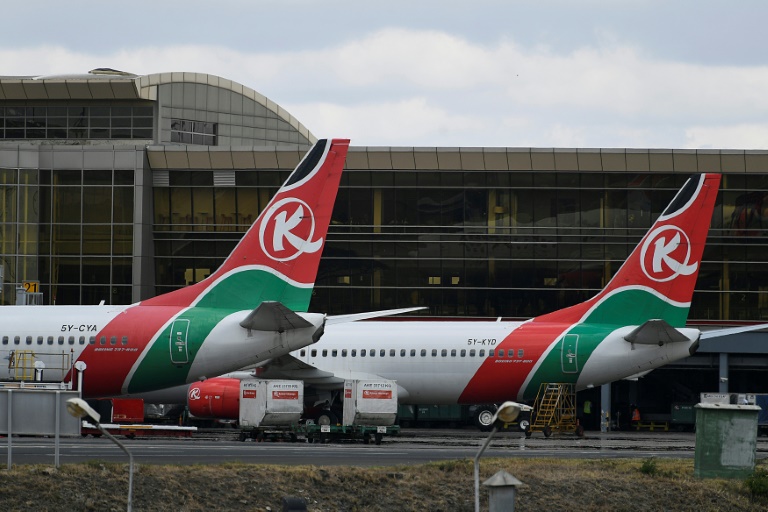
A Nairobi court has ordered striking Kenya Airways pilots to return to work by Wednesday morning after the days-long walkout forced dozens of flight cancellations and left thousands of passengers stranded.

The Kenya Airline Pilots Association (KALPA) launched the strike at Nairobi’s Jomo Kenyatta International Airport on Saturday, defying a court order issued last week against the industrial action.

Justice Anna Mwaure on Tuesday ordered “the Kenya Airways pilots to resume their duties as pilots by 6:00 am on 9th November 2022 unconditionally”.

The walkout has exacerbated the woes facing the troubled national carrier, which has been running losses for years, despite the government pumping in millions of dollars to keep it afloat.

There was no immediate response from KALPA to the court order, which came as the airline announced that most of its flights had been cancelled due to the strike.

The carrier on Monday announced that it was ending its recognition of the union and withdrawing from their collective bargaining deal, accusing KALPA of “exposing the airline to irreparable damage”.

Mwaure said the court would now consider the issue and ordered the airline’s management to allow the pilots “to perform their duties without harassing them or intimidating them and especially by not taking any disciplinary action against any of them”.

The airline, which is part owned by the government as well as Air France-KLM, is one of the biggest in Africa, connecting multiple countries to Europe and Asia. 

The dispute has added to the challenges facing Kenya’s recently elected government, with Transport Minister Kipchumba Murkomen on Sunday threatening the pilots with disciplinary action unless they returned to work.

Mwaure had summoned KALPA officials to appear in court on Tuesday for disobeying last week’s injunction against the strike.

The airline and the government have accused the union of engaging in “economic sabotage”, with Kenya Airways warning that the strike would lead to losses estimated at $2.5 million per day.

– ‘Immeasurable losses’ –

“Due to this unlawful action by KALPA, the customers of KQ both locally and globally have suffered and continue to suffer immeasurable inconvenience and losses,” Kenya Airways said in a statement Monday using the shorthand airline code.

On Sunday, the airline said 56 flights had been cancelled due to the strike, disrupting 12,000 passengers’ plans.

The pilots in turn have accused the airline’s management of making “no concessions” to end the stalemate.

The protesting pilots, who make up 10 percent of the workforce, are pressing for the reinstatement of contributions to a provident fund and payment of all salaries stopped during the Covid-19 pandemic.

It was founded in 1977 following the demise of East African Airways, and flies more than four million passengers to 42 destinations annually.

It has been operating in large part thanks to state bailouts following years of losses.
Pressure mounts on Egypt to release hunger-striking dissident

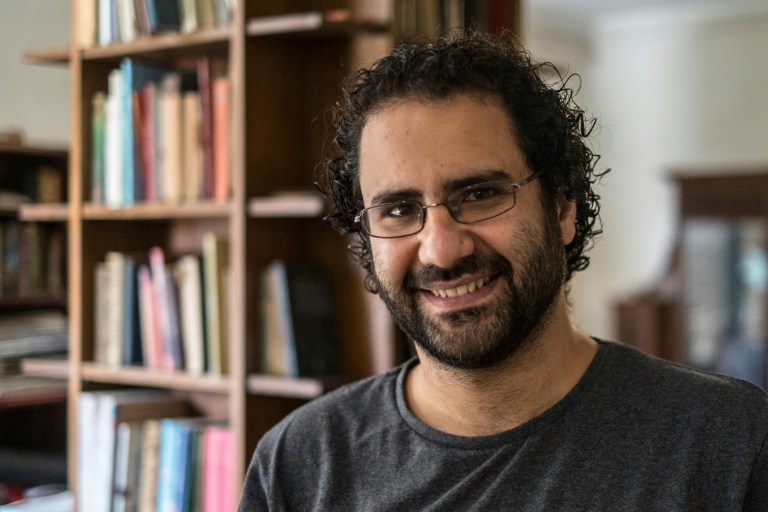
International pressure mounted Tuesday for the “immediate release” of Egyptian activist Alaa Abdel Fattah, whose family fears for his life after he escalated his hunger strike by refusing water too as COP27 opened.

After a seven-month stint during which he consumed only “100 calories a day”, the 40-year-old British-Egyptian stopped drinking water on Sunday as world leaders gathered for the opening of the global climate summit in Egypt.

On Tuesday, a day after British Prime Minister Rishi Sunak and French President Emmanuel Macron met with Egypt’s President Abdel Fattah al-Sisi and raised his plight, UN rights chief Volker Turk and German Chancellor Olaf Scholz demanded his release.

Abdel Fattah, currently serving a five-year sentence for “spreading false news” for reposting a Facebook post about police brutality, has been leading headlines during the UN summit, intensifying international attention on Egypt’s rights record.

A key figure of the 2011 uprising that toppled longtime autocrat Hosni Mubarak, Abdel Fattah gained British citizenship this year through his UK-born mother, Laila Soueif.

– ‘Dreadful consequences’ –

Soueif — who has been camped out in front of the prison for two days in the hope of receiving a letter as proof of life, according to daughter Mona Seif — warns her son many only have “a day or two or three at most”.

In a message posted on Facebook, Soueif directed an appeal to world leaders at the COP27 summit rather than the Egyptian authorities, who she accused of already having “so much blood on their hands.”

Activists at COP27 have posted prolifically on Twitter under the hashtag #FreeAlaa and several speakers have ended their speeches with the words “you have not yet been defeated” — the title of his book, prefaced by Canadian author Naomi Klein.

Sunak said Monday that the case is “a priority”, demanding it be “resolved as soon as possible.”

Macron said he had received an assurance that Sisi is “committed to ensuring that (the) health of Alaa Abdel Fattah is preserved” and that the situation will be resolved “in the coming weeks and months.”

German Chancellor Olaf Scholz on Tuesday said that “his release must be possible, so that this hunger strike does not end in death,” adding that “we should be afraid that this could lead to dreadful consequences”.

Turk said he “deeply regrets” Egypt had not released Abdel Fattah, warning that his “life is in great danger”.

On Tuesday, a press conference led by Abdel Fattah’s sister Sanaa Seif — on the sidelines of the COP27 summit in the Red Sea resort of Sharm el-Sheikh — was disrupted by an Egyptian parliamentarian.

“We are talking about an Egyptian citizen detained for a criminal offence, he is not a political prisoner,” said pro-government lawmaker Amr Darwish, who was escorted out of a COP27 hall by UN security. “Do not try to use the West against Egypt.”

– ‘Force fed’? –

Egypt’s Foreign Minister Sameh Shoukry, the COP27 president, told CNBC television that Abdel Fattah — whose dual citizenship Cairo does not recognise — has access to “all the necessary care in prison”.

Sanaa Seif said Shoukry’s talk of “care” raises concerns her brother is potentially being “force fed” with intravenous drips.

“Is he handcuffed to a bed, on IVs against his will?” she said.

Cairo has faced intensifying criticism of its long deplored human rights record since it was announced as the host of the COP27 climate summit last year, a move rights groups said “rewards the repressive rule” of Sisi.

Three Egyptian journalists also continued a hunger strike for a second day, demanding “the release of all political prisoners in Egypt”.

Rights groups say such prisoners number some 60,000, a claim denied by Cairo.

Abdel Fattah’s continued detention comes despite Egypt having granted presidential pardons to a total of 766 political prisoners since the reactivation of a pardon policy in April this year, according to data compiled by Amnesty. 

But over the same period close to double that number have been jailed for their activism, Amnesty says.

'Toxic cover-up': UN draws red line around net zero greenwashing

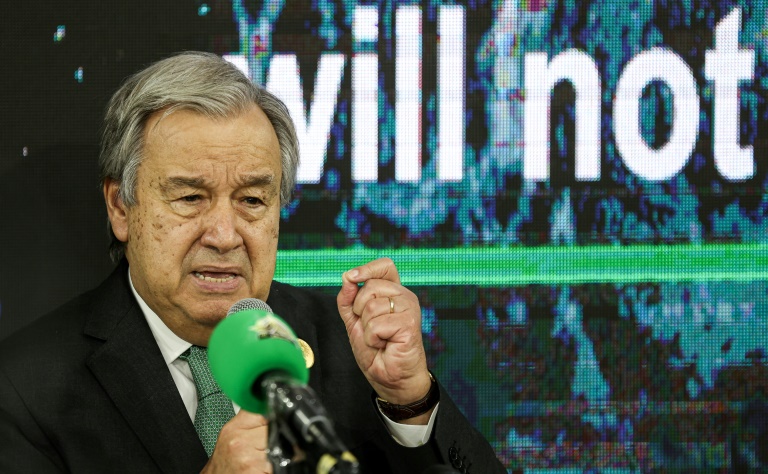
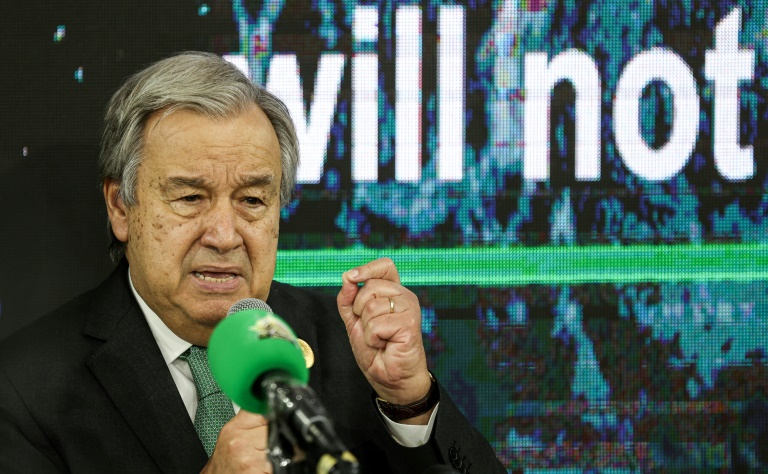
The UN’s chief called Tuesday for an end to a “toxic cover-up” by companies as a sweeping report said they cannot claim to be net zero if they invest in new fossil fuels, cause deforestation or offset emissions instead of reducing them.

Antonio Guterres said businesses as well as cities and regions should update their voluntary net zero pledges within a year to comply with the recommendations by UN experts, as he trained his sights on fossil fuel firms and “their financial enablers”.

“Using bogus ‘net-zero’ pledges to cover up massive fossil fuel expansion is reprehensible. It is rank deception,” he said at the launch of the report at the COP27 conference in Egypt.  

“This toxic cover-up could push our world over the climate cliff. The sham must end.”

The UN expert panel, convened by Guterres after UN climate talks in Glasgow last year, set its sights on drawing a “red line” around greenwashing in net zero targets from companies, cities and regions.

A huge surge in decarbonisation pledges in recent months means that around 90 percent of the global economy is now covered by some sort of promise of carbon neutrality, according to Net Zero Tracker.      

“It’s very easy to make an announcement that you are going to be net zero by 2050. But you have to walk the talk and what we’ve seen is that there is not enough action,” said Catherine McKenna, Canada’s former environment and climate change minister, who led the panel.

“We have to do two things to reach net zero — we need to drastically reduce emissions, and we need to invest in clean (energy),” she told AFP.

She added it was currently “extremely hard” to properly evaluate whether firms were cutting emissions and called for greater transparency. 

The report lists a slew of recommendations, including calling on governments to begin putting in place binding regulations.  

– ‘Do the work’ –

A central recommendation from the panel is that net zero plans must be in line with the Paris Agreement’s most ambitious aim of limiting global warming to 1.5 degrees Celsius above pre-industrial temperatures. 

But to do that UN scientists say that global emissions must be slashed virtually in half by 2030, and after that they should be reduced to net zero by 2050. 

There have been growing concerns that some firms have not aligned their efforts with the latest climate science — by failing to account for emissions from key activities, or by saying they can make up for increasing pollution today with “carbon credits” from activities like tree planting.    

The report recommends that credits should not be used to “offset” emissions, until after a firm has done everything possible to cut emissions in line with the 1.5C target and that if they are used at all they should be from a reliable and verified source. 

“The reality is you can’t offset your way to net zero,” McKenna told AFP. 

“You don’t get an A for showing up in class. You get an A for doing the work and you can’t pay someone else to do it, you have got to do it yourself.”

The report added that net zero pledges should include short term targets every five years, beginning in 2025.

It stressed that these should cover all greenhouse gas emissions from all activities — including supply chains for businesses and investments for financial institutions. 

– ‘Watershed moment’ –

Net zero is “entirely incompatible” with any new fossil fuel investment, the report said, although McKenna said oil and gas companies could still have these pledges if they swiftly transition to renewables.

Firms would also not be able to continue activities that result in deforestation and still claim they are decarbonising.

“We find that too often too many businesses continue to rely on business models that result in the destruction of natural ecosystems,” said panel member Arunabha Ghosh, of the Council on Energy Environment and Water, a think tank.

“We want to show that any company doing this is working against net zero.”

The report also said businesses with net zero plans should not lobby against climate action.

“Today’s announcement is a watershed moment when it comes to corporate lobbying on climate policy, which has long stymied action from governments,” said Will Aitchison of the think tank InfluenceMap.

In September, an analysis by CDP, a non-profit that runs a global disclosure system for companies to manage their environmental impacts, found that the decarbonisation plans of major corporations from G7 nations put Earth on course to heat a potentially catastrophic 2.7C.

'Toxic cover-up': UN draws red line around net zero greenwashing

The UN’s chief called Tuesday for an end to a “toxic cover-up” by companies as a sweeping report said they cannot claim to be net zero if they invest in new fossil fuels, cause deforestation or offset emissions instead of reducing them.

Antonio Guterres said businesses as well as cities and regions should update their voluntary net zero pledges within a year to comply with the recommendations by UN experts, as he trained his sights on fossil fuel firms and “their financial enablers”.

“Using bogus ‘net-zero’ pledges to cover up massive fossil fuel expansion is reprehensible. It is rank deception,” he said at the launch of the report at the COP27 conference in Egypt.  

“This toxic cover-up could push our world over the climate cliff. The sham must end.”

The UN expert panel, convened by Guterres after UN climate talks in Glasgow last year, set its sights on drawing a “red line” around greenwashing in net zero targets from companies, cities and regions.

A huge surge in decarbonisation pledges in recent months means that around 90 percent of the global economy is now covered by some sort of promise of carbon neutrality, according to Net Zero Tracker.      

“It’s very easy to make an announcement that you are going to be net zero by 2050. But you have to walk the talk and what we’ve seen is that there is not enough action,” said Catherine McKenna, Canada’s former environment and climate change minister, who led the panel.

“We have to do two things to reach net zero — we need to drastically reduce emissions, and we need to invest in clean (energy),” she told AFP.

She added it was currently “extremely hard” to properly evaluate whether firms were cutting emissions and called for greater transparency. 

The report lists a slew of recommendations, including calling on governments to begin putting in place binding regulations.  

– ‘Do the work’ –

A central recommendation from the panel is that net zero plans must be in line with the Paris Agreement’s most ambitious aim of limiting global warming to 1.5 degrees Celsius above pre-industrial temperatures. 

But to do that UN scientists say that global emissions must be slashed virtually in half by 2030, and after that they should be reduced to net zero by 2050. 

There have been growing concerns that some firms have not aligned their efforts with the latest climate science — by failing to account for emissions from key activities, or by saying they can make up for increasing pollution today with “carbon credits” from activities like tree planting.    

The report recommends that credits should not be used to “offset” emissions, until after a firm has done everything possible to cut emissions in line with the 1.5C target and that if they are used at all they should be from a reliable and verified source. 

“The reality is you can’t offset your way to net zero,” McKenna told AFP. 

“You don’t get an A for showing up in class. You get an A for doing the work and you can’t pay someone else to do it, you have got to do it yourself.”

The report added that net zero pledges should include short term targets every five years, beginning in 2025.

It stressed that these should cover all greenhouse gas emissions from all activities — including supply chains for businesses and investments for financial institutions. 

– ‘Watershed moment’ –

Net zero is “entirely incompatible” with any new fossil fuel investment, the report said, although McKenna said oil and gas companies could still have these pledges if they swiftly transition to renewables.

Firms would also not be able to continue activities that result in deforestation and still claim they are decarbonising.

“We find that too often too many businesses continue to rely on business models that result in the destruction of natural ecosystems,” said panel member Arunabha Ghosh, of the Council on Energy Environment and Water, a think tank.

“We want to show that any company doing this is working against net zero.”

The report also said businesses with net zero plans should not lobby against climate action.

“Today’s announcement is a watershed moment when it comes to corporate lobbying on climate policy, which has long stymied action from governments,” said Will Aitchison of the think tank InfluenceMap.

In September, an analysis by CDP, a non-profit that runs a global disclosure system for companies to manage their environmental impacts, found that the decarbonisation plans of major corporations from G7 nations put Earth on course to heat a potentially catastrophic 2.7C.

Adidas names CEO of rival Puma as new boss

Adidas on Tuesday named Bjorn Gulden, chief of rival outfitter Puma, as its new CEO as the German sportswear giant seeks to emerge from months of turbulence.

The Norwegian former professional football and handball player will take on the role from January next year, replacing current CEO Kasper Rorsted. 

He faces big challenges at Adidas, which has seen sales hit by coronavirus restrictions in key market China, and recently ended a profitable partnership with rapper Kanye West over his anti-Semitic outbursts.

“As CEO of Puma, he re-invigorated the brand and led the company to record results… Gulden will head Adidas into a new era of strength,” said Thomas Rabe, chairman of Adidas’s supervisory board. 

He “brings almost 30 years of experience in the sporting goods and footwear industry,” Rabe added. 

The 57-year-old is being given a five-year contract, an Adidas spokesman said.

Puma meanwhile announced that Arne Freundt, currently the company’s chief commercial officer, would take over as CEO with immediate effect. 

The sportswear groups, both based in the small town Herzogenaurach, Bavaria, were founded decades ago by two brothers, Adolf and Rudolf Dassler, who had a fierce rivalry.

Gulden, 57, had already spent seven years at Adidas in the 1990s. He has also held senior roles at companies including shoe retailer Deichmann and clothing and sports equipment company Helly Hansen.

He used to play football for FC Nuremberg in Germany, and Bryne and Stromsgodset in Norway.

– Tough task ahead –

In July, Adidas lowered its outlook for 2022 due in part to continuing curbs in China, which is pursuing a Covid-zero strategy of continued lockdowns.

The group said it sees net profit for the year coming in at 1.3 billion euros ($1.3 billion) compared to an earlier forecast of between 1.8 and 1.9 billion euros. 

The move to cut ties with rapper West — now known formally as Ye — in October came after he triggered an outcry with posts that Adidas labelled “unacceptable, hateful and dangerous”.

Adidas ended production of the highly successful “Yeezy” line designed together with West, a move that would slash the company’s net income in 2022 by “up to 250 million euros”.

West also triggered controversy when he appeared at a Paris fashion show wearing a shirt emblazoned with “White Lives Matter”, a slogan created as a part of a backlash to the Black Lives Matter movement.

Gulden’s “success at reinvigorating Puma will be relevant for Adidas and we expect him to hit the ground fast”, Deutsche Bank analysts said.

While noting the task ahead was “not easy… the Adidas brand is large and has a substantial back catalogue of designs and franchises. 

“We think with a positive energy injection from senior management a resurgence in the brand over the next three years is feasible.”

Spain's former king appeals for immunity over UK harassment case

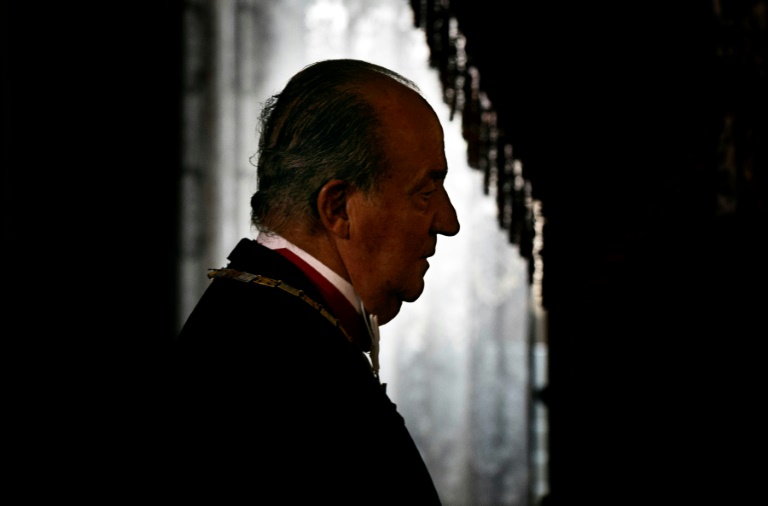
Spain’s former king, Juan Carlos I, on Tuesday resumed a UK court battle to win immunity over harassment claims by his former lover, just as a new podcast featuring her claims is released.

Corinna zu Sayn-Wittgenstein-Sayn, 58, is seeking personal injury damages from the 84-year-old former monarch, who ruled Spain from 1975 until his abdication in 2014.

The British resident has accused Juan Carlos, who now lives in the United Arab Emirates, of spying on and harassing her after their relationship soured in 2012.

She filed a harassment suit in London in 2020, alleging he pressured her to return gifts worth 65 million euros ($65 million), including works of art and jewellery.

Juan Carlos, listed in court under his full name Juan Carlos Alfonso Victor Maria De Borbon y Borbon, has not appeared at any hearings so far and strenuously denies any wrongdoing.

In March, the High Court in London rejected his claim that a 1978 UK law meant English courts had no jurisdiction to hear the case because he has state immunity as a royal.

Judge Matthew Nicklin said that “whatever special status the defendant retained under the law and constitution of Spain, he was no longer a ‘sovereign’ or ‘head of state’ so as to entitle him to personal immunity”.

– ‘Agents’ –

The former king’s lawyers appealed and won permission for a legal challenge concerning the period when Juan Carlos was on the throne.

Three judges at the Court of Appeal began hearing legal arguments on Tuesday. A ruling is expected in a few weeks, after which the harassment lawsuit could continue.

Setting out his position, Juan Carlos’s lawyer, Tim Otty, argued that immunity is “a procedural bar” and says “nothing about the lawfulness or the morality of the conduct alleged”. 

However, zu Sayn-Wittgenstein-Sayn’s lawyer, James Lewis, argued the appeal should be dismissed, claiming the alleged harassment had involved “intelligence and surveillance” personnel acting as the former king’s “agents”.

The hearing comes as zu Sayn-Wittgenstein-Sayn, who was also not present in court on Tuesday, has been discussing the relationship in a new podcast series called “Corinna and the King”.

Its release has stirred fresh controversy in Spain. Its creators — two London-based journalists — defend its timing and independence from zu Sayn-Wittgenstein-Sayn.

“Imagine that someone who says they love your children — and that you’re the love of their life — would frame you in a criminal investigation,” she alleges in the first episode, which was made available on Monday.

– Shots fired –

Court submissions claim Juan Carlos, who is married, was in an “intimate romantic relationship” with the divorcee of a German prince from 2004 to 2009 and showered her with gifts.

Zu Sayn-Wittgenstein-Sayn alleged that Juan Carlos began harassing her after their relationship broke down, using threats, break-ins at her properties and surveillance.

Juan Carlos “demanded the return of gifts”, she claimed, and she suffered “trespass and criminal damage” at her home in rural central England.

Gunshots were fired at and damaged security cameras at the front gate of the property, she alleged, accusing the former king of being angry at her refusals.

The couple’s relationship became public knowledge in 2012, when the monarch broke a hip while on an elephant hunting holiday in Botswana with zu Sayn-Wittgenstein-Sayn and had to be flown home. 

The revelation of the luxury trip, which came at the height of a recession in Spain, sparking public anger there.

Two years later, dogged by scandals and health problems, Juan Carlos abdicated at the age of 76 in favour of his son, Felipe VI, who has since distanced himself from his father.

Juan Carlos went into self-imposed exile in the United Arab Emirates in 2020. 

He and his son attended the state funeral of Queen Elizabeth II in September and were seated together.

Juan Carlos was protected for decades by his huge popularity as a key figure in Spain’s transition to democracy following the death of dictator Francisco Franco in 1975.

The excesses of the monarch only came to light in the last years of his reign, triggering a string of investigations over corruption scandals.

Adidas names CEO of rival Puma as new boss

Adidas on Tuesday named Bjorn Gulden, chief of rival outfitter Puma, as its new CEO as the German sportswear giant seeks to emerge from months of turbulence.

Gulden, a Norwegian former professional football and handball player, will take on the role from January next year, replacing current CEO Kasper Rorsted, Adidas said. 

The 57-year-old “brings almost 30 years of experience in the sporting goods and footwear industry,” said Thomas Rabe, chairman of the supervisory board of Adidas. 

“As CEO of Puma, he re-invigorated the brand and led the company to record results… Gulden will head Adidas into a new era of strength”.

Adidas has faced months of turmoil which have hit sales. The company lowered its outlook for 2022 in July due in part to continuing severe coronavirus restrictions in key market China.

The group also cut ties with Kanye West at the end of October after a series of anti-Semitic tweets by the rapper caused an outcry.

Adidas ended production of the highly successful “Yeezy” line designed together with West, a move that would slash the company’s net income in 2022 by “up to 250 million euros ($246 million)”.

Both Adidas and Puma are based in the Bavarian town of Herzogenaurach, close to Nuremberg.

The twin companies were founded by two brothers. Adolf Dassler began Adidas before his brother, Rudolf, with whom he had a fierce rivalry, established Puma.

Resolution of N.Ireland trade row possible before year-end: Dublin

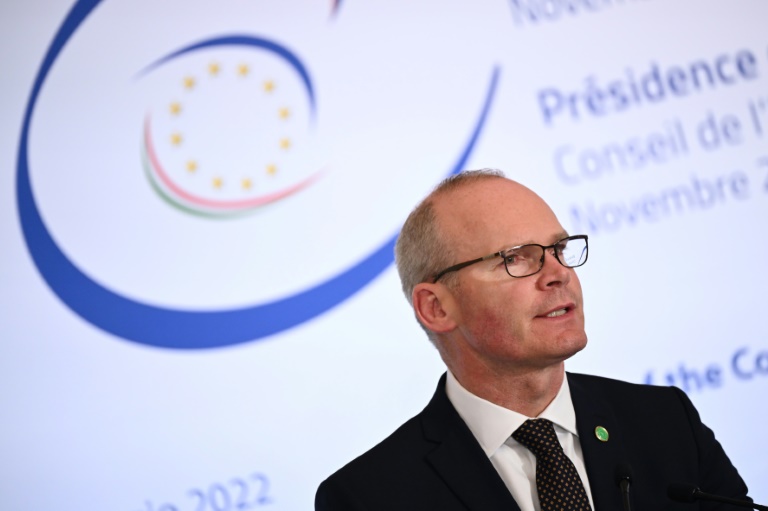
A deal between the EU and the UK on post-Brexit trading arrangements in Northern Ireland is possible before the end of the year, Ireland’s foreign minister said on Tuesday.

Simon Coveney’s optimism comes as the governments in Dublin and London prepare for talks at a British-Irish summit later this week.

Europe’s pointman on talks to resolve the row, Maros Sefcovic, on Monday said agreement could come within weeks with the right “political will”.

Ireland’s prime minister Micheal Martin will meet his UK counterpart Rishi Sunak at the summit in Blackpool, northwest England, on Thursday, Coveney added.

“We need to get this issue behind us in terms of the protocol in a way that respects an international treaty that’s been signed,” he said.

“I think it’s doable by the end of the year,” he told reporters in Dublin, stopping short of a definitive timeline for talks.

Relations between EU member Ireland and the UK, which left the bloc in 2021, have been damaged by disagreements over the implementation of trade arrangements in UK-run Northern Ireland. 

The deal signed by London and Brussels effectively keeps Northern Ireland within the European single market and customs union.

Northern Ireland has the UK’s only land border with the EU but it needs to be kept open under the terms of a 1998 peace deal that ended decades of violence over British rule.

It has led to checks on goods heading to the province from Great Britain — England, Scotland and Wales — which the UK and pro-UK parties in Northern Ireland oppose.

The UK wants to unilaterally overhaul the protocol through legislation currently making its way though parliament despite EU warnings it could spark reprisals and a possible trade war.

Coveney said this week’s summit would also give the UK the opportunity to provide “some clarity” on its approach to elections in Northern Ireland.

Last week, London backtracked on calling a December election to the region’s devolved assembly, which has been paralysed since February over unionist opposition to the Northern Ireland protocol.

The Democratic Unionist Party (DUP), the largest pro-UK party in the province, wants the arrangements overhauled or scrapped entirely, saying they threaten Northern Ireland’s constitutional place in the UK.

Coveney called for compromise on all sides, including in the DUP and said talks were the way forward.

In London, Sunak and his senior ministers agreed that restoring the Belfast assembly and protecting the Good Friday Agreement was their “absolute priority”.

Northern Ireland Secretary Chris Heaton-Harris told his colleagues he had carried out “extensive engagement” in the region in recent days, Sunak’s office said in a statement.

He was expected to outline his “informed approach” based on those discussions to parliament on Wednesday, it added.

S.Africa slams 'out of reach' climate aid for poorer nations

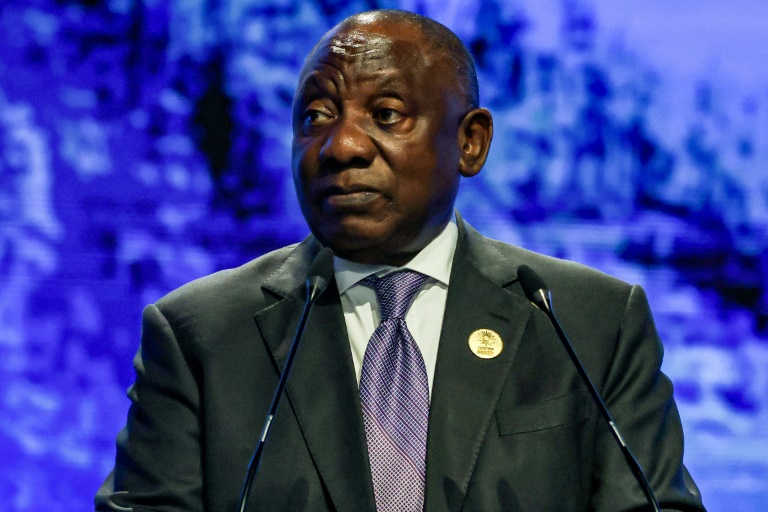
South Africa’s president, whose coal-dependent country is among the world’s biggest polluters, Tuesday criticised international funders for making it difficult for poorer nations to access aid to fight climate change.

Support from multilateral organisations “is out of reach of the majority of the world’s population due to lending policies that are risk-averse and carry onerous costs as well as conditionalities,” Cyril Ramaphosa told the UN COP27 climate summit.

Addressing the meeting in Egypt’s Sharm el-Sheikh, he said “funding institutions need to transform … the way in which they fund projects that will enable us to develop with regard to climate change”.

According to a UN-backed report released Tuesday, developing countries and emerging economies need investments well beyond $2 trillion annually by 2030 if the world is to stop the global warming juggernaut.

South Africa, one of the world’s top 12 polluters, last week revealed that it will require about $98 billion over the next five years to transition to net zero.

Last year, at the COP26 in Glasgow, Pretoria secured $8.5 billion in loans and grants from a group of rich countries towards its green transition.

“We need a clear roadmap to deliver on the Glasgow decision to double adaptation financing by 2025” Ramaphosa said in his address.

He called on rich nations to honour their commitments “because failing to honour these commitments breaks trust and confidence in the process”.

The head of state also assured the summit that South Africa, which generates about 80 percent of its electricity through coal, was on course to retire several of its ageing coal-fired power plants in the next eight years.

The World Bank last week granted South Africa $497 million to decommission one of its largest coal-fired power plants and promote renewable energy.

South Africa will require at least $500 billion dollars to achieve carbon neutrality by 2050, according to the bank.

burs-zam/sn/fz

Renault unveils sweeping overhaul for electric future

French automaker Renault unveiled a sweeping overhaul on Tuesday in a bid to attract investors as it expands its electric vehicle business amid an accelerating market.

Under the green revamp, Renault is to split its operations in two, with a new electric vehicle unit and a subsidiary for petrol, diesel and hybrid cars that will pair up with China’s Geely. 

The carmaker’s flagship division following the reorganisation will be Ampere, which aims to produce a million electric vehicles by 2031, the group said ahead of an investor day in Paris.

The new division will employ around 10,000 staff in France.

Renault is the latest automaker seeking to finance a shift towards electric.

The market for the greener vehicles is expected to grow rapidly in response to consumers’ worries about climate change, putting pressure on manufacturers to develop less polluting products.

The European Union last month agreed to phase out new CO2-emitting vehicles by 2035, a move set to turbo-charge the production of electric prototypes on the continent.

Renault follows the likes of US automaker Ford and Germany’s Volkswagen.

The latter launched its premium sports brand Porsche on the stock market in September to finance its investment in electric, connected and autonomous cars.

Ampere will produce the new Renault 5 and Renault 4 among other models in northern France and will target more than 30-percent growth annually over the next eight years and to break even by 2025.

Renault said it would list Ampere on the Euronext Paris stock exchange in the latter half of 2023 and invite investment but will retain “a strong majority”.

The group — in which the French state and carmaker Nissan each own 15 percent — has still to outline the part that its Japanese partner will play in the new electric division.

– Financing electric drive – 

For hybrid and internal-combustion vehicles, Renault plans to combine its technological, manufacturing and research and development activities with Chinese automaker Geely.

The 50-50 partnership with the Chinese group — owner of Volvo — will develop and produce engines, gear boxes and other components for hybrid and petrol and diesel vehicles.

It will employ 19,000 people across Europe, China and South America, and have 17 factories and five research and development centres.

Turnover for the division is expected to grow by four percent by 2027, the group said.

“We are designing an agile and innovative organisation to manage the volatility and accelerated technological evolution of our time,” said Renault chief executive Luca de Meo.

The group aims to see an operating margin — a key profitability yardstick — of above eight percent in 2025.

Shares in Renault fell on the Paris exchange shortly after trading began on Tuesday, before regaining ground by mid-morning. 

The group’s financial targets are “more ambitious than expected” but “raise questions”, analyst Tom Narayan of RBC said.

The company suffered a historic loss in 2020 due to the Covid-19 pandemic and its recovery was destabilised by its withdrawal from Russia following Moscow’s invasion of Ukraine.

In late July, Renault said that its decision to quit the Russian market had pushed it deep into the red in the first half of 2022.

Two months earlier, it had sold its 100-percent stake in Renault Russia and its 68-percent stake in AVTOVAZ. 

But with its new revamp, Renault said it planned to resume paying shareholders a dividend next year for the first time since 2019. 

The value of traditional car manufacturers pales in comparison to new players on the market specialising in electric vehicles such as Elon Musk’s Tesla or Chinese firm BYD.

US giant Ford has taken similar steps, announcing the creation of the “Model E” electric subsidiary earlier this year.

Renault’s sales of traditional internal-combustion vehicles are falling. 

In the first nine months of 2022, hybrid and electric vehicles represented 38 percent of the brand’s registrations in Europe, a year-on-year increase of 12 percent.

The separation of Renault’s electric and conventional production has concerned trade unions after several waves of job cuts.

Close Bitnami banner
Bitnami