World

EU leader's speech to major China trade expo cancelled: diplomats

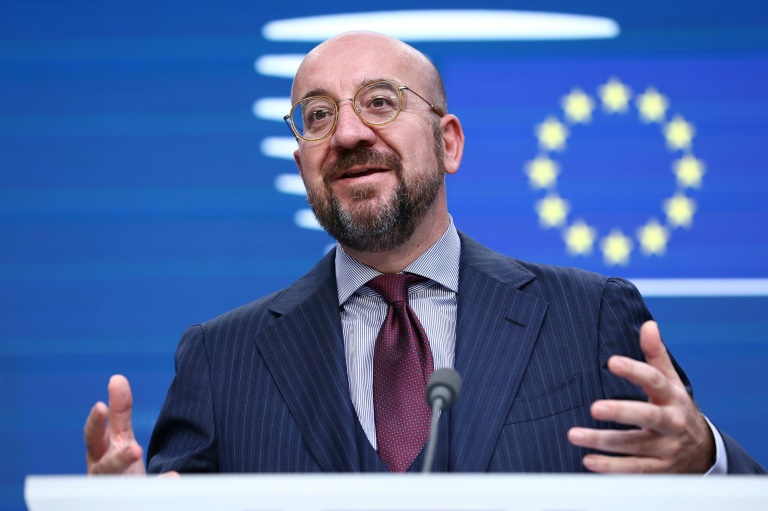
A speech by EU Council head Charles Michel scheduled to be broadcast at the opening of a major Chinese trade fair was abruptly cancelled due to wrangling over censorship, diplomats told AFP Tuesday.

The pre-recorded video address was meant to be shown at Friday’s opening of the China International Import Expo (CIIE) in Shanghai, but Michel’s spokesman and three Beijing-based diplomats confirmed it was not broadcast. 

“The Chinese wanted to censor parts of Charles Michel’s speech. Brussels preferred to cancel the speech altogether instead,” one European diplomat told AFP, requesting anonymity due to the sensitivity of the matter. 

Another European diplomat said Chinese authorities wanted to censor all parts of Michel’s speech about the Ukraine crisis, a sensitive issue for Beijing. China seeks to position itself as neutral in the crisis but has offered diplomatic backing to its strategic ally Russia.

The second diplomat said the EU had asked to discuss the censorship but the Chinese side refused, so the video address was cancelled.  

China’s foreign ministry spokesman Zhao Lijian denied any knowledge of the matter during a routine media briefing Tuesday.

Michel’s spokesman Barend Leyts told AFP the EU leader had been invited to address the 5th Hongqiao Forum/CIIE in Shanghai.

“As requested by the Chinese authorities, we had indeed provided a pre-recorded message which was ultimately not shown,” Leyts said.

“We have addressed this through the normal diplomatic channels.”

China-EU relations have deteriorated rapidly since both sides traded sanctions last year over China’s alleged human rights abuses in its Xinjiang region.

Beijing later slapped a trade embargo on virtually all Lithuanian goods in response to Vilnius’ deepening ties with Taiwan, a self-ruled island that China claims as its own territory. 

Since Russia invaded Ukraine in February, European Union leaders have repeatedly lobbied China to condemn Moscow’s actions and withdraw its support for Russia, but to little avail.

The bloc officially considers China a “partner, economic competitor and systemic rival” according to a formulation adopted in 2019. 

Michel, who is president of the EU body consisting of heads of member states, will attend next week’s G20 leaders’ summit in Bali along with senior EU official Ursula von der Leyen and Chinese President Xi Jinping.

Trade ties with China are still important to certain members of the bloc, with German Chancellor Olaf Scholz last week becoming the first G7 leader to visit China in person since the beginning of the Covid pandemic. 
Global markets mixed ahead of US midterms

Asian and European stock markets traded mixed Tuesday in jittery deals as Americans head to the polls in critical midterm elections.

The dollar clawed back some of its recent losses versus the euro, while oil continued to be weighed down by weaker Chinese demand expectations.

Frankfurt stocks gained ground after overnight Wall Street gains, but Paris flatlined and London slid in value.

“Those US midterm elections today might keep investors on the sidelines a bit before they make any major decisions,” noted Markets.com analyst Neil Wilson.

Hong Kong and Shanghai sank as speculation about a rollback of China’s strict zero-Covid policies fuelled market volatility, even after Beijing vowed to stick with its harsh lockdowns and testing regimes.

On the upside, Tokyo stocks won 1.3 percent.

Polls opened Tuesday in crucial US elections that could decide the political future of both President Joe Biden and his predecessor Donald Trump — who has all but announced he will seek the White House again in 2024.

Biden’s Democrats are facing a gargantuan struggle to hang on to Congress, after a race the president has cast as a “defining” moment for US democracy — while Trump’s Republicans have campaigned hard on kitchen-table issues like inflation and crime.

Polls show Republicans are likely to win at least one house of Congress — and some see the prospect of further Washington gridlock as a scenario that lessens the risk of policy uncertainty.

“Consensus is that investors prefer political deadlock as it prevents any significant shifts in policy,” added Scope Markets analyst James Hughes.

“With that looking like a real possibility, the real market turbulence may appear later in the week.”

– US on inflation watch –

On Monday, US stocks climbed, with the Dow Jones Industrial Average finishing up 1.3 percent and the broad-based S&P 500 rising 1.0 percent.

The next major data point that investors are watching is US inflation data due on Thursday.

SPI Asset Management analyst Stephen Innes said the data “will be the next marker for the (Federal Reserve) on how high to take interest rates”.

Back in Asia, Hong Kong closed down 0.2 percent after jumping nearly three percent in the previous session as investors continued to hope for a relaxation of China’s strict Covid-19 rules.

“Speculation about reopening continues to add some market volatility,” said Taylor Nugent, an economist at National Australia Bank.

“In a timely reminder of the potential for Covid policy to hit output, Apple warned iPhone shipments will be lower than previously expected after China lockdowns affected operations at a supplier’s factory,” he noted.

– Key figures around 1130 GMT –

London – FTSE 100: DOWN 0.1 percent at 7,293.16 points

Paris – CAC 40: FLAT at 6,416.83

Frankfurt – DAX: UP 0.4 percent at 13,581.88

EURO STOXX 50: UP 0.3 percent at 3,722.09

Tokyo – Nikkei 225: UP 1.3 percent at 27,872.11 (close)

Hong Kong – Hang Seng Index: DOWN 0.2 percent at 16,557.31 (close)

Shanghai – Composite: DOWN 0.4 percent at 3,064.49 (close)

New York – Dow: UP 1.3 percent at 32,827.00 (close)

Pound/dollar: DOWN at $1.1468 from $1.1514 on Monday

Euro/dollar: DOWN at $1.0005 from $1.0020

Dollar/yen: DOWN at 146.26 from 146.93 yen

Euro/pound: UP at 87.23 pence from 87.03 pence

West Texas Intermediate: DOWN 1.2 percent at $90.70 per barrel

Brent North Sea crude: DOWN 0.7 percent at $97.25 per barrel

UN warns of worsening food crisis in Sri Lanka

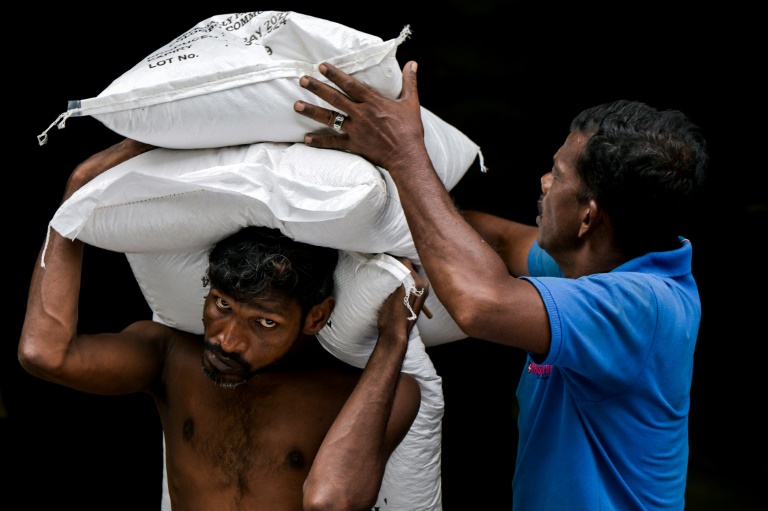
The United Nations Tuesday warned of a worsening food crisis in bankrupt Sri Lanka and said the number of people needing urgent humanitarian help had doubled to 3.4 million.

UN agencies had estimated in June that 1.7 million out of the 22 million population in Sri Lanka required help.

The UN agencies in Colombo in a joint statement said they had raised $79 million to feed those in need, but the increasing number of poor people meant they needed an additional $70 million.

“Food insecurity in Sri Lanka has increased dramatically due to two consecutive seasons of poor harvests, foreign exchange shortages, and reduced household purchasing power,” the statement said.

Sri Lanka is facing its worst economic crisis since independence from Britain in 1948 and has been enduring runaway inflation, power blackouts, and fuel rationing since last year.

The country defaulted on its $51 billion external debt in mid April and is in talks with the IMF for a $2.9 billion bailout.

Months of protests against high prices and shortages of food and medicines led to the toppling of president Gotabaya Rajapaksa in July.

The UN said its revised plan aims at feeding 2.1 million people, including pregnant mothers and school children and providing livelihood support to 1.5 million farmers and fishermen.

It also said that the poverty rate in the South Asian nation has doubled to 25.6 percent this year, up from 13.1 percent last year.

At COP27, US says election won't disrupt climate plan

The United States sought to reassure the UN climate summit in Egypt on Tuesday that it will stick to its energy transition even if Republicans triumph in midterm elections.

The COP27 talks have been dominated by calls for wealthier nations to step up their commitments to cut greenhouse gas emissions and fulfil pledges to financially help poorer nations green their economies.

Developing countries devastated by natural disasters have argued for a windfall tax on the profits of oil companies and demanded that rich polluters compensate them for the damage caused by their emissions.

But the US midterm elections have also loomed large over the summit as President Joe Biden’s Democrats face a tough battle to hang on to their majority in Congress against Republicans, who are less favourable to international climate action.

A Republican victory could be a boon to the ambitions of former president Donald Trump, who is expected to make another bid for the White House.

Trump had pulled the United States out of the 2015 Paris Agreement on climate change. Biden returned the United States to the pact on his first day in office in 2020.

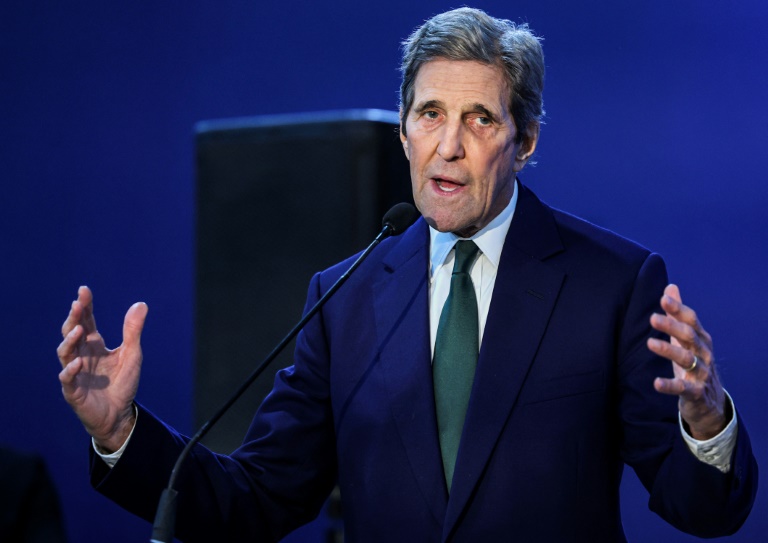
The “climate crisis doesn’t just threaten our infrastructure, economy and security — it threatens every single aspect of our lives on a daily basis,” Kerry said on the sidelines of the summit in the Red Sea resort of Sharm el-Sheikh.

He said that even if Democrats lose the election, “President Biden is more determined than ever to continue what we are doing.” 

“And most of what we are doing cannot be changed by anybody else who comes along,” Kerry said. “The marketplace has made its decision to do what we need to do to respond to the climate crisis.”

Biden won a major victory earlier this year when Congress passed the “Inflation Reduction Act”, which will see vast spending on green energy initiatives.

Some 100 world leaders were attending the summit on Monday and Tuesday but Biden will only come on Friday after the midterms. He then heads to Cambodia for the annual US-ASEAN summit and then on to Indonesia for a G20 summit.

– Oil profit tax –

The first day of the summit was marked by dire warnings from UN chief Antonio Guterres, who told the COP27 that humanity faces a stark choice: “cooperate or perish”.

Nations worldwide are coping with increasingly intense natural disasters that have taken thousands of lives this year and cost billions of dollars.

They range from devastating floods in Nigeria and Pakistan to droughts in the United States and several African nations, as well as unprecedented heatwaves across three continents.

Countries are under pressure to step up efforts to reduce emissions in order to meet the ambitious goal of preventing temperatures from rising by more than 1.5 degrees Celsius above the pre-industrial era.

A UN-backed report said Tuesday that developing countries and emerging economies, excluding China, need investments well beyond $2 trillion per year by 2030 if the world is to stop the global warming juggernaut and cope with its impacts.

One after the other, leaders of developing nations called for the establishment of a “loss and damage” fund that would compensate them for the destruction caused by natural disasters, arguing that rich nations are responsible for the biggest share of emissions harming the planet.

Antigua and Barbuda Prime Minister Gaston Browne — speaking on behalf of a group of small island nations endangered by rising sea levels and tropical storms — said it was time to tax the windfall profits of oil companies to pay for loss and damage.

“While they are profiting, the planet is burning,” Browne told fellow leaders.

Barbados Prime Minister Mia Mottley called Monday for a 10 percent tax on oil companies to fund loss and damage.

US votes with Biden agenda at stake — and Trump in the wings

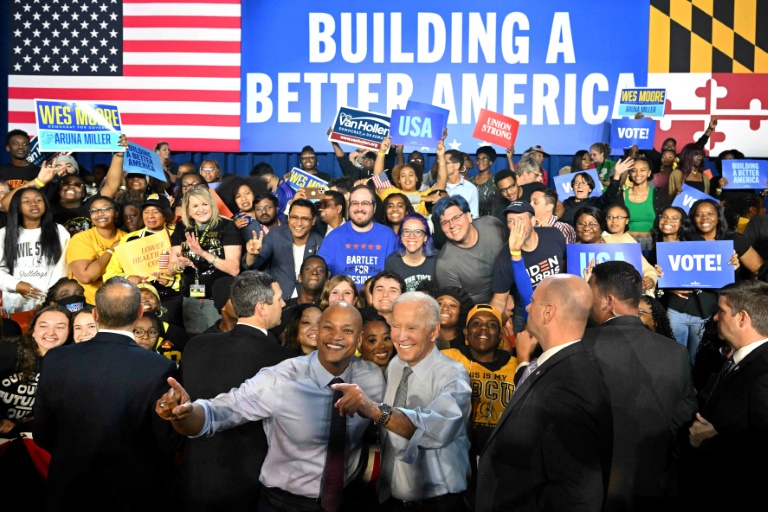
Polls opened Tuesday in crucial US midterm elections that could decide the political future of both President Joe Biden and his predecessor Donald Trump — who has all but announced he will seek the White House again in 2024.

Biden’s Democrats are facing a gargantuan struggle to hang on to Congress, after a race the president has cast as a “defining” moment for US democracy — while Trump’s Republicans campaigned hard on kitchen-table issues like inflation and crime.

Trump — who has been heavily hinting at a new run — grabbed the election eve spotlight to flag “a big announcement” on November 15, while Biden made a final appeal to Democrats to turn out en masse at the polls.

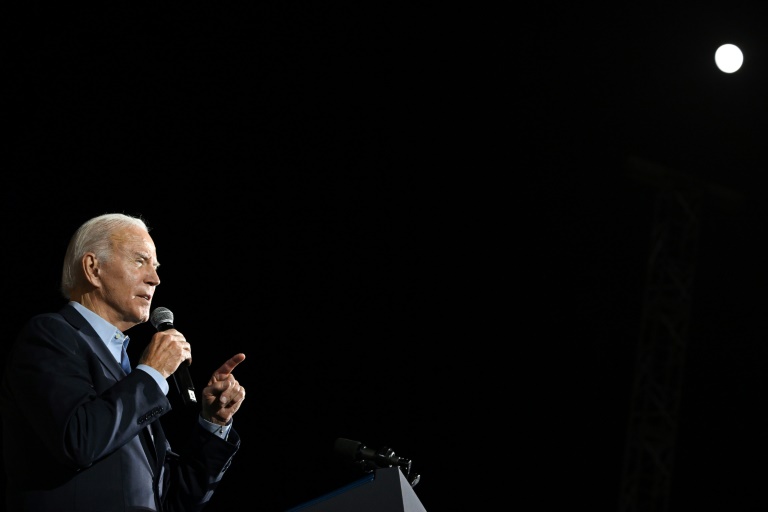
“The power’s in your hands,” Biden told a rally near the capital. “We know in our bones that our democracy is at risk and we know that this is your moment to defend it.”

With polls showing Republicans in line to seize the House of Representatives, the increasingly far-right party eyed snarling the rest of Biden’s first term in aggressive investigations and opposition to spending plans.

Returning to the White House Monday night, Biden told reporters he believed Democrats would win the Senate — though conceding “it’s going to be tough” to retain the House and that his life in Washington may become “more difficult.”

If both the House and Senate flip, Biden would be left as little more than a lame duck.

With Congress out of Democrats’ hands, he would see his legislative agenda collapse. 

That would raise questions over everything from climate crisis policies, which the president will be laying out at the COP27 conference in Egypt this week, to Ukraine, where Republicans are reluctant to maintain the current rate of US financial and military support.

An influx of far-right Trump backers in Congress would also accelerate the shift that has been taking place inside the Republican Party since the former real-estate tycoon stunned the world by defeating Hillary Clinton for the presidency in 2016.

Despite facing criminal probes over taking top secret documents from the White House and trying to overturn the 2020 election, Trump has been using the midterms to cement his status as the de facto Republican leader and presumptive presidential nominee.

In a typically dark, rambling speech to fans in Dayton, Ohio, Trump said, “if you support the decline and fall of America, then you must, you absolutely must vote for the radical left, crazy people.”

“If you want to stop the destruction of our country, then tomorrow you must vote Republican in a giant red wave,” he said — before teasing his 2024 announcement.

– Second Biden run? –

Across the country voters called on their fellow citizens to cast their ballot in the midterms, which historically have low turnout.

“I would emphasize vote, vote, vote,” 24-year-old student Luke Osuagwu told AFP in Atlanta, Georgia.

“If you’re not voting, you can’t really stand for society or anything like that,” agreed Alethia McClenton, a 45-year-old Georgia Aquarium employee. “It’s very important that everybody goes out to do their part.”

More than 40 million ballots were cast through early voting options, meaning the outcome had already begun to take shape before election day.

Polls started to open on the East Coast at 6:00 am (1100 GMT), and begin closing 12 hours later.

Up for grabs are all 435 House seats, a third of the 100 Senate seats, and a slew of state-level posts. Four states are also holding referendums on abortion — California, Vermont, Kentucky and Michigan.

Senate races in Pennsylvania, Nevada, Arizona, Georgia, Wisconsin, New Hampshire and Ohio have narrowed to projected photo finishes, and any one of them could swing the balance of power.

But final results may not be known until days — or in some cases even weeks — after election day, setting the stage for what promise to be acrimonious challenges.

Trump has already claimed baselessly that swing state Pennsylvania “rigged” the midterms — reprising his playbook from the 2020 election which he falsely asserted was stolen by Biden.

Citing growing support for voter conspiracy theories among Trump and his Republicans, as well as their push to curb abortion access, Biden has warned that democracy and basic rights are at stake on Tuesday.

Republicans have countered that a vote for Democrats means more soaring inflation and rising violent crime, seeking to make the midterms a referendum on the president.

The outcome will likely determine whether Biden, who turns 80 this month and is the oldest president ever, will seek a second term in 2024 — or step aside.

Japan to tighten rules on donations to religious groups after Abe murder

The Japanese government will propose a new law to prevent harmfully large donations to religious groups, Prime Minister Fumio Kishida said Tuesday, after Shinzo Abe’s assassination heightened scrutiny of the Unification Church.

Kishida has been battling criticism over links between the sect and politicians since former premier Abe was shot dead in July.

The man accused of Abe’s murder reportedly resented the Unification Church over massive donations his mother made that bankrupted the family.

Kishida said he had met people who had suffered because of large financial contributions to the church, which denies wrongdoing and has pledged to prevent “excessive” donations.

“It was heartbreaking to hear their stories,” the prime minister told reporters as he outlined plans to curb “malicious donations” in which members of religious groups are pressured to donate often excessive amounts.

“Regarding the new legislation to help victims of malicious donations … the government will do its utmost to submit the bill as soon as possible,” hopefully during the current parliamentary session which ends December 10, he said.

Details of the law are under discussion, but it will focus on “banning socially unacceptable and malicious recruitment practices” and “allowing donations to be recalled”, Kishida said.

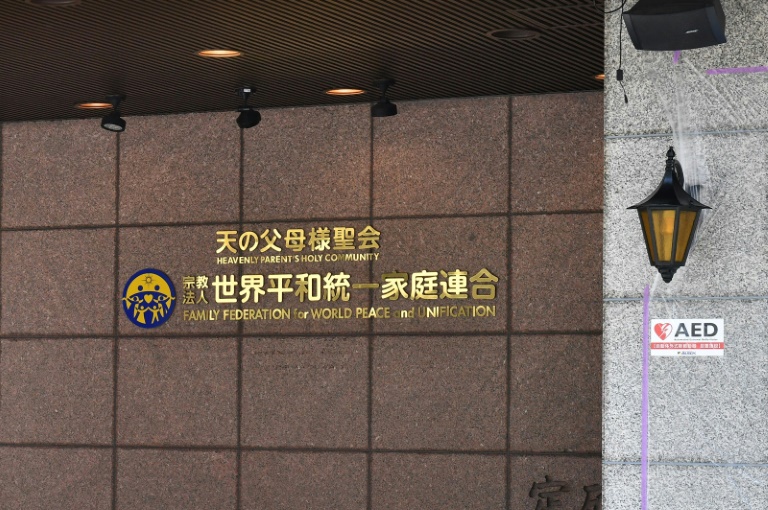
Last month, he ordered a government investigation into the Unification Church, officially known as the Family Federation for World Peace and Unification.

The probe could lead to a dissolution order, which would cause the church to lose its status as a tax-exempt religious organisation, though it could still continue to operate.

Founded in Korea in 1954 by Sun Myung Moon, the church — whose members are sometimes referred to as “Moonies” — rose to global prominence in the 1970s and 80s.

It is famous for its mass wedding ceremonies, and groups affiliated with the church have secured addresses from powerful speakers over the years, including Abe and former US president Donald Trump, neither of whom belonged to the sect.

The government’s approval ratings have plummeted in recent months and recently hit the lowest level since Kishida took office last year when a Japanese minister resigned following scrutiny over his links to the church.

UAE, Egypt ink major wind energy deal on COP27 sidelines

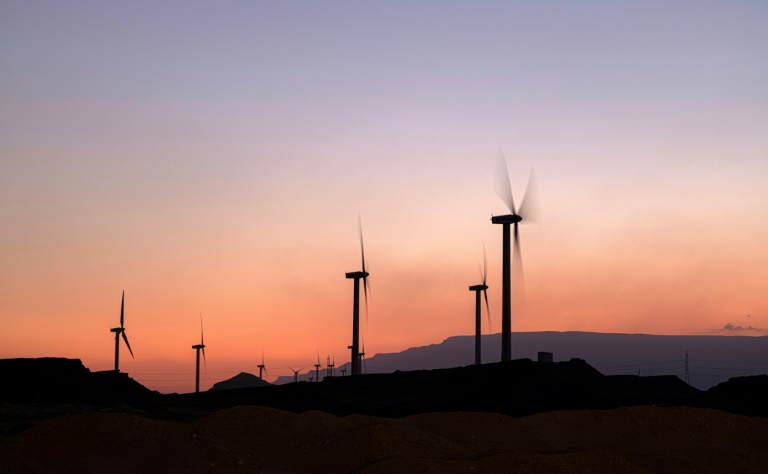
The United Arab Emirates and Egypt agreed Tuesday to develop one of the world’s largest wind farms in a deal struck on the sidelines of the UN’s COP27 climate summit in Sharm el-Sheikh. 

The 10-gigawatt (GW) onshore wind project in Egypt will produce 47,790 GWh of clean energy annually once it is completed, the UAE’s state news agency WAM said in a statement, without specifying an exact timeframe. 

It will offset 23.8 million tonnes of carbon dioxide emissions – equivalent to around nine percent of Egypt’s current CO2 output, according to WAM.

The wind farm will also save Egypt an estimated $5 billion in annual natural gas costs and help create as many as 100,000 jobs, it said. 

Emirati President Sheikh Mohamed bin Zayed Al-Nahyan joined his Egyptian counterpart Abdel Fattah al-Sisi at the signing of the agreement between the UAE’s Masdar renewable energy firm and Egypt’s Infinity Power and Hassan Allam Utilities.

In a statement on Twitter, Sheikh Mohamed said the deal was “consistent with our commitment to advance renewable energy solutions that support sustainable development”.

The UN’s COP27 climate summit kicked off Sunday in Egypt with warnings against backsliding on efforts to cut emissions and calls for rich nations to compensate poor countries after a year of extreme weather disasters.  

“We will endeavour to take forward the gains made here at COP27, as the UAE prepares to host COP28 next year,” WAM quoted Emirati industry minister Sultan Ahmed Al Jaber as saying. 

COP28 will be held in the UAE from November 6-17, 2023. 

Renault unveils sweeping overhaul for electric future

French automaker Renault unveiled a sweeping green revamp Tuesday, splitting its operations in two: a new electric vehicle unit and a subsidiary for petrol, diesel and hybrid cars that will pair up with China’s Geely. 

The car maker’s flagship division following the reorganisation will be Ampere, which will aim to produce a million electric vehicles by 2031, the group said ahead of an investor day in Paris.

The new division will employ around 10,000 staff in France.

The overhaul comes amid expectations the electric vehicle market will grow rapidly in response to consumers’ worries about climate change, putting pressure on manufacturers to develop less polluting products.

The European Union last month agreed to phase out new CO2-emitting vehicles by 2035, a move set to turbo-charge the production of electric prototypes on the continent.

Ampere will produce the new Renault 5 and Renault 4 among other models in northern France and will target more than 30-percent growth annually over the next eight years.

Renault said it would list Ampere on the Euronext Paris stock exchange in the latter half of 2023 and invite investment but will retain “a strong majority”.

Renault — in which the French state and car maker Nissan each own 15 percent — has still to outline the part that its Japanese partner will play in the new electric division.

– Financing electric drive – 

For hybrid and internal-combustion vehicles, Renault plans to combine its technological, manufacturing and research and development activities with Chinese automaker Geely.

The 50-50 partnership with the Chinese group — owner of Volvo — will develop and produce engines, gear boxes and other components for hybrid and petrol and diesel vehicles.

It will employ 19,000 people across Europe, China and South America, and have 17 factories and five research and development centres.

“We are designing an agile and innovative organisation to manage the volatility and accelerated technological evolution of our time,” said Renault chief executive Luca de Meo.

Investors on Monday expressed their interest in Renault’s transformation, with the group’s shares climbing 3.77 percent on the Paris stock market.

The company suffered a historic loss in 2020 due to the Covid-19 pandemic and its recovery was destabilised by its withdrawal from Russia following Moscow’s invasion of Ukraine.

In late July, Renault said that its decision to quit the Russian market had pushed it deep into the red in the first half of 2022.

Two months earlier, it had sold its 100-percent stake in Renault Russia and its 68-percent stake in AVTOVAZ. 

But with its new revamp, Renault said it planned to resume paying shareholders a dividend next year for the first time since 2019. 

The value of traditional car manufacturers pales in comparison to new players on the market specialising in electric vehicles such as Elon Musk’s Tesla or Chinese firm BYD.

US giant Ford has taken similar steps, announcing the creation of the “Ford Model E” electric subsidiary earlier this year.

And German auto group Volkswagen launched its premium sports brand Porsche on the stock market to finance its investment in electric, connected and autonomous cars.

Renault’s sales of traditional internal-combustion vehicles are falling. 

In the first nine months of 2022, hybrid and electric vehicles represented 38 percent of the brand’s registrations in Europe, a year-on-year increase of 12 percent.

The planned separation of Renault’s electric and conventional production has concerned trade unions after several waves of job cuts.

Asian markets mixed ahead of US midterms

Asian markets were mixed on Tuesday following an upbeat session on Wall Street as investors look to crucial midterm elections that polls show could upend power in Washington.

Shares ended lower in Hong Kong and Shanghai as speculation about a rollback of China’s strict zero-Covid policies fuelled market volatility, even after the government vowed to stick with its harsh lockdowns and testing regimes.

But Tokyo stocks closed 1.3 percent higher, extending rallies in New York, where the dollar also retreated against the pound and the euro.

Early voting has begun in many states and most US voters go to the polls on Tuesday, with a Republican takeover of Congress likely dooming President Joe Biden’s ambitious proposals.

Polls show Republicans are likely to win at least one house of Congress — and some see the prospect of further Washington gridlock as a scenario that lessens the risk of policy uncertainty.

“This may very well be taken as a positive for equity markets over coming days,” Clifford Bennett, chief economist at ACY Securities, said in a note.

“The Biden administration, while welcomed to office by financial markets, has nonetheless delivered on being a very big spending government,” Bennett wrote.

“It is difficult to argue the extreme inflation and slowing economy are entirely the Biden administration’s fault, but voters will be very clear in their feelings on the matter just the same.”

– Not too bullish –

On Monday, US stocks climbed, with the Dow Jones Industrial Average finishing up 1.3 percent and the broad-based S&P 500 rising 1.0 percent.

The next major data point that investors are watching is US inflation data due on Thursday, “which will be the next marker for the (Federal Reserve) on how high to take interest rates”, said Stephen Innes of SPI Asset Management.

Before the US Consumer Price Index data is released, “traders are unlikely to live bullish life to the fullest”, he predicted.

Seoul gained 1.1 percent, Taipei rose 0.9 percent and Sydney was up 0.4 percent, with Singapore rising 0.3 percent.

But Hong Kong closed down 0.2 percent after jumping nearly three percent in the previous session as investors continued to hope for a relaxation of China’s strict Covid-19 rules.

“Speculation about reopening continues to add some market volatility,” said Taylor Nugent, an economist at National Australia Bank.

“In a timely reminder of the potential for Covid policy to hit output, Apple warned iPhone shipments will be lower than previously expected after China lockdowns affected operations at a supplier’s factory,” he noted.

Shanghai closed down 0.4 percent, while Jakarta fell 0.7 percent and Wellington dropped 1.2 percent.

European shares also fell in early trade. London was down 0.5 percent, Paris fell 0.4 percent and Frankfurt lost 0.1 percent.

– Key figures around 0830 GMT –

Tokyo – Nikkei 225: UP 1.3 percent at 27,872.11 (close)

Hong Kong – Hang Seng Index: DOWN 0.2 percent at 16,557.31 (close)

Shanghai – Composite: DOWN 0.4 percent at 3,064.49 (close)

London – FTSE 100: DOWN 0.5 percent at 7,266.12

Pound/dollar: DOWN at $1.1476 from $1.1513 on Monday

Euro/dollar: DOWN at $0.9997 from $1.0023

Dollar/yen: FLAT at 146.69 from 146.68 yen

Euro/pound: DOWN at 87.10 pence from 87.03 pence

West Texas Intermediate: DOWN 1.2 percent at $91.49 per barrel

Brent North Sea crude: DOWN 0.8 percent at $97.74 per barrel

New York – Dow: UP 1.3 percent at 32,827.00 (close)

Veteran French designer Philippe Starck now looks to space

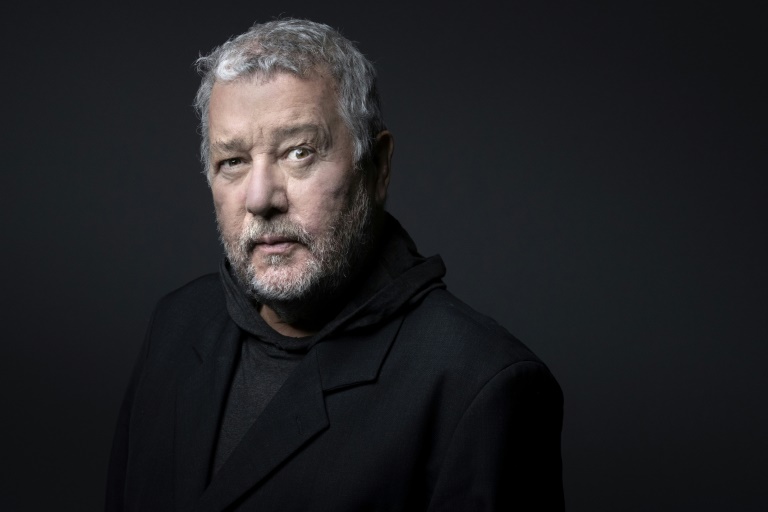
Philippe Starck, the prolific French architect and designer who has made everything from lemon juicers to wind turbines, shows no sign of slowing down and is increasingly turning his eye to space.

Visiting an exhibition at the Museum of Decorative Arts in Paris featuring some his early work, the 73-year-old seemed bemused by the volume of items on display.

“I don’t have the software for periods and dates,” he told AFP when asked about the period. 

“To me, the 1980s were like being abandoned in an Amazon jungle with nothing to eat, wild animals everywhere, a rusty machete… I just did what I could. And when you do what you can, you don’t remember what’s going on elsewhere.”

Starck made his name as an interior decorator for Paris nightclubs in the 1970s, before landing a dream commission to refurbish the Elysee Palace apartments for president Francois Mitterrand in 1983. 

He went on to design luxurious hotels and restaurants around the world. 

But he also gave the world an uber-electic range of everyday items, from his futuristic lemon juicer to electric bikes, toothbrushes, water bottles — and on to boats, wind turbines and control towers.

– ‘Pure creativity’ –

There was always a hint of humour and surrealism, he said, but also a desire to “democratise design” by keeping things affordable. 

“We managed to remove two zeros from prices,” he said. “At the time, in today’s prices, sitting on something designer cost 20,000 euros, which wasn’t right. Today, it’s 700 euros, which isn’t bad.”

These days, Starck cares less about household objects and has his eyes on bigger things. 

There is a long-awaited “laboratory for pure creativity” being built in Qatar, and immediately after the exhibition, he was due at the launch of a new hydrogen energy project.

But his real focus appears to be skyward: working with US company Axiom Space on the living quarters it plans to connect to the International Space Station, and teaming up with NASA for a new astronaut training camp. 

The focus on space is part of our “necessary change” as a species, he said.

“Except when we’re dead, we’ve been fixed by gravity, but that’s clearly over, so I’m tackling it head-on.”

Some early memories remain — being left with some old toys and his grandfather’s workbench during the holidays as a young child: “I made my first items on that workbench and I haven’t stopped since.”

A surreal early inspiration comes to him: seeing Mick Jagger dancing around with a neon tube in some film. 

“I found it extraordinary and chic — I thought to myself that someone should make it for real so that everyone could be Jagger for a minute.”

Close Bitnami banner
Bitnami