World

New season of 'The Crown' set to air after backlash

The latest season of “The Crown” hits the small screen next week, with streaming giant Netflix adding a disclaimer after a furore over untrue storylines.

Series Five, which airs on Wednesday just over two months after the death of Queen Elizabeth II and the accession of her son King Charles III, sees the action move to the 1990s.

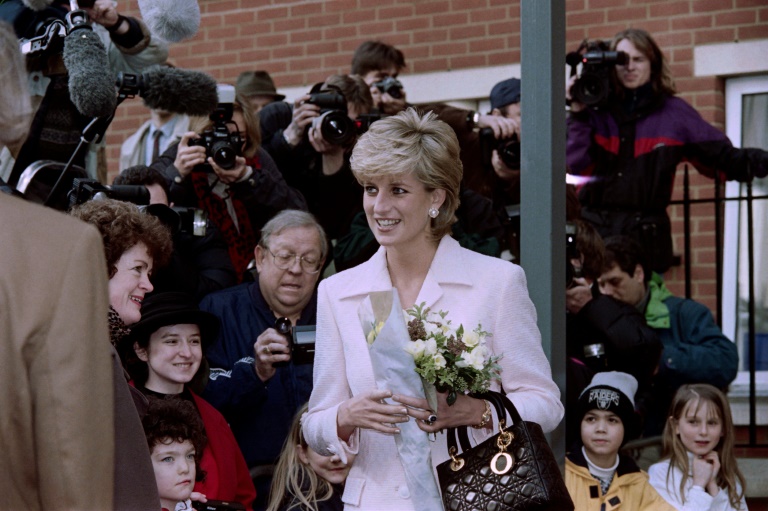
Princess Diana’s bombshell television interview, emotional turmoil and divorce from Charles are all documented, along with his affair with Camilla Parker Bowles and tensions with his mother.

It was not clear, however, how the series deals with the death of Diana in a car crash in Paris in 1997 or if a disclaimer would be added before each episode.

Following outrage from prominent figures including Oscar-winning actor Judi Dench and Britain’s former prime minister John Major last month, Netflix added a description of the show as “inspired by real events” to its programme page.

Dench blasted Netflix for “crude sensationalism” after reports of scenes showing Charles manoeuvring to force his mother’s abdication.

“No-one is a greater believer in artistic freedom than I, but this cannot go unchallenged,” wrote Dench, who won an Academy Award for playing Queen Elizabeth I in “Shakespeare in Love” and was nominated for her portrayal of Queen Victoria in “Mrs Brown”.

The strength of the criticism has forced Netflix to defend both itself and screenwriter Peter Morgan.

It said the series was not meant to be taken as fact but as an imagining of “what could have happened behind closed doors”.

Its stars too have rallied to its defence, with Diana actress Elizabeth Debicki calling for people to move on “now the disclaimer is up there”.

– ‘Good drama’ –

“There’s a huge amount of room for interpretation,” the Australian actress said. “That’s good drama to me.”

Jonathan Pryce, who plays the queen’s husband Prince Philip, even went as far as to criticise his fellow actors.

Pryce said he was “hugely disappointed by my fellow artistes” after acting powerhouses Eileen Atkins and Harriet Walter, both of whom have appeared in “The Crown”, expressed reservations.

“The vast majority of people know it’s a drama. They’ve been watching it for four seasons,” Pryce said.

But with most of the royals depicted still alive and an apparent upping of the creative licence, even a disclaimer may be too little for critics who accuse Morgan of an undeclared anti-monarchist agenda.

Television reviewer Christopher Stevens, who saw an eight-and-a-half-hour preview, wrote this week that “the sheer virulence” of the latest story lines was becoming “shockingly clear”.

The show, he said, was now unrecognisable compared to the first series in 2016.

“The Crown” was now “a nakedly republican polemic, using embarrassment as its chief weapon against the monarchy”, he wrote in the Daily Mail.

– ‘Treasured’ –

Writer and royal biographer William Shawcross said the plotlines were deliberately hurtful attempts to damage the institution of the monarchy — “something that millions of ordinary people treasure”.

“I think a lot of people do (believe them), why would they not? They see this beautifully produced thing… Most people in the world don’t have any other yardstick. It’s terribly dishonest,” he told AFP.

He said Netflix had taken advantage of the unique position in which the royal family found themselves.

“Almost any other living family is in a position to complain or stop or sue. The royal family don’t have the right or the ability to do that,” he said.

Philip Murphy, of the University of London’s Institute of Historical Research, however, said the royal family’s plight was “partly” their own fault.

The palace had made “strenuous efforts to prevent historians from gaining access to records on the queen’s 70-year reign”, he said in a letter to The Times.

“If scholars are unable to write an accurate history of the monarchy, the field will be left to dramatists and to those with vested interests in leaking information,” he wrote. 

Pakistan in 'perilous situation' after Khan assassination bid

The assassination attempt on former prime minister Imran Khan and his accusation it was a plot involving a senior intelligence officer has pushed Pakistan into a “dangerous phase”, analysts say.

Khan escaped with bullet wounds to his legs from an assassination attempt Thursday as he led supporters on a highly publicised march to the capital to press for early elections.

He claimed Friday that Prime Minister Shehbaz Sharif, Interior Minister Rana Sanaullah, and Major-General Faisal Nasir — an intelligence officer — plotted to have him killed and have it blamed on “a religious fanatic”.

“The political situation in Pakistan has entered into a dangerous phase,” said academic and political analyst Tauseef Ahmed Khan, who is also a board member of the Human Rights Commission of Pakistan. 

“In a country with a history of political chaos, the sounds echo.”

Despite being ousted by a vote of no-confidence in April, Khan retains mass public support — winning a string of by-elections even as he battles a slew of legal cases brought by the current government.  

As the pressure rises, the government’s dependence on the country’s “deep state” — a term often used to refer to the powerful military — for its survival is increasing, Ahmed Khan said. 

“It is a perilous situation — not only for the democratic process but also for the country — especially with regards to economic development,” he said.

“The issue(s) of poverty, hunger, and development fall into the background.”

– At each other’s throats –

Khan and Sharif have been at each other’s throats for months, trading accusations of incompetence and corruption with language and tone dripping with contempt.  

But such a public accusation by Khan, and the naming of a senior military officer, has taken the situation to a new level of crisis.

Khan has offered no evidence to back his claims, which the government has dismissed as “lies and fabrications”.

Criticism of the military -– which has ruled the country for roughly half of its 75-year history -– has always been a red line, but Khan has been increasingly outspoken against a security establishment many say backed his original rise to power.

On Friday, the military’s press wing issued a statement urging the government to take Khan to court for defamation.

Officials from Khan’s Pakistan Tehreek-e-Insaf (PTI) party could also be in the crosshairs. 

Senior party members have already been charged with “sedition” and other offences since Khan’s ouster, as have journalists considered sympathetic to the former PM.

“It seems that now some sort of operation might be launched against PTI,” said analyst Ahmed Khan, adding there was a risk the party could fragment. 

As Khan’s huge rallies are designed to prove — to both his political opposition and the military — that he has the support of the public, the results could be “chaos, despair, and disappointment”, he added.

In such a charged atmosphere, multiple accusations and denials from both sides are unlikely to ever be properly probed, said Karachi-based political analyst Kaiser Bengali. 

That, he added, leaves room for conspiracy theories to abound.

“The state has lost its legitimacy… police, law and order institutions — even the judiciary,” he said. 

– What went wrong –

Bengali said the military was now “sitting and wondering what went wrong and what can they do”.

The government has said the assassination bid against Khan was “a very clear case of religious extremism”, blaming a lone gunman who hailed from a poor village. 

Pakistan has long grappled with Islamist militancy, with right-wing religious groups having huge sway over the population in the Muslim-majority country.

Khan and his PTI have been accused in the past of stoking religious sentiments to appeal to a wider support base.

“Religious extremism is a weapon which the PTI use — and so do the army and the state,” said Bengali. “So we are heading towards an immensely dangerous situation.”

Behind the political crisis, however, hides a more pervasive one: the economy.

“The state is bankrupt, whatever resources it has are consumed in debt servicing and defence, and the government salaries,” Bengali said. 

“Whatever crumbs are available is what the politicians are fighting over… that is why the fight has become so petty.”

Twitter starts rolling out new paid subscription

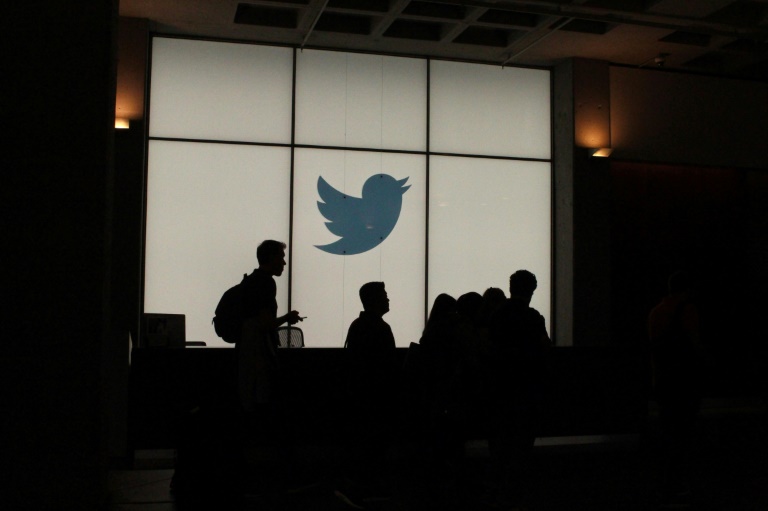
Twitter began rolling out a controversial new paid subscription system on Saturday that the social network’s unpredictable new owner, billionaire Elon Musk, ordered staff to build after taking over last week.

Days into the Tesla boss’s stewardship of one of the world’s leading platforms for discourse and activism, his promises and provocations are prompting a wave of reactions — including warnings from the United Nations and an apology from Twitter’s co-founder. 

His plan to dial back content moderation on the site is causing such concern that UN rights chief Volker Turk on Saturday urged him to make respect for human rights central to the social network.

“Twitter has a responsibility to avoid amplifying content that results in harms to people’s rights,” Turk said in his open letter. 

Reports of Musk laying off the platform’s entire human rights team were “not, from my perspective, an encouraging start,” he said. 

Jack Dorsey, who co-founded Twitter in 2006 and stepped down as CEO last year, tweeted to apologize for growing the site too quickly a day after roughly half the company’s 7,500 employees were fired by Musk. 

“I realize many are angry with me,” he wrote.

The remaining employees are witnessing an upheaval in their company’s culture. As early as last Friday, Musk launched his first flagship project, the redesign of the Twitter Blue subscription option.

He has reportedly told his team the redesign must be ready for potential activation by November 7 — the day before the US midterm elections — or their jobs will be on the line. 

– ‘Sprint’ to launch –

On Saturday the platform’s mobile app began offering an update that will allow users to sign up for the new version of Twitter Blue, which Musk has said will cost $8 a month, and is set to grant users a blue checkmark and perks such as less advertising in their feeds.

“Starting today, we’re adding great new features to Twitter Blue,” says the update, only on iPhones for now. “Get Twitter Blue for $7.99 a month if you sign up now.” 

In a tweet, the California-based company’s director of product development Esther Crawford specified that the new service had yet to go live.

“The new Blue isn’t live yet — the sprint to our launch continues but some folks may see us making updates because we are testing and pushing changes in real-time,” she posted.

The current version of the service, which costs $5, contains premium features, such as a more comfortable reading mode. 

Musk wants to add a blue tick that until now has symbolized account verification, though he has not explained how the paying accounts will be verified.

Verification has been free and serves as proof of authenticity for the accounts of users such as governments, journalists, celebrities and sports figures — a system put in place to prevent misinformation, but which Musk has derided as “lords & peasants.”

The update also lists other benefits mentioned by Musk, such as the ability to post longer videos and audio messages, and fewer ads.

– Ad spend suspended –

The California-based company needs to diversify its income, heavily reliant on advertising. 

And with concerns that Musk’s tinkering with content moderation will flood the site with hate speech and misinformation, several advertisers have reportedly suspended their spending on the platform since he bought it. 

Musk has insisted that content moderation remains a priority, that the rules had not changed, and that he would create a council dedicated to this task. 

But he also blamed “activist groups” for pressuring advertisers.

“We did everything we could to appease the activists. Extremely messed up! They’re trying to destroy free speech in America,” he tweeted on Friday.

The social network is losing more than $4 million a day, he said, to justify the layoffs. 

He promised Saturday that Twitter would evolve, with more convenient sharing and search tools, and ways to monetize content for creators.

Twitter starts rolling out new paid subscription

Twitter began rolling out a controversial new paid subscription system on Saturday that the social network’s unpredictable new owner, billionaire Elon Musk, ordered staff to build after taking over last week.

Days into the Tesla boss’s stewardship of one of the world’s leading platforms for discourse and activism, his promises and provocations are prompting a wave of reactions — including warnings from the United Nations and an apology from Twitter’s co-founder. 

His plan to dial back content moderation on the site is causing such concern that UN rights chief Volker Turk on Saturday urged him to make respect for human rights central to the social network.

“Twitter has a responsibility to avoid amplifying content that results in harms to people’s rights,” Turk said in his open letter. 

Reports of Musk laying off the platform’s entire human rights team were “not, from my perspective, an encouraging start,” he said. 

Jack Dorsey, who co-founded Twitter in 2006 and stepped down as CEO last year, tweeted to apologize for growing the site too quickly a day after roughly half the company’s 7,500 employees were fired by Musk. 

“I realize many are angry with me,” he wrote.

The remaining employees are witnessing an upheaval in their company’s culture. As early as last Friday, Musk launched his first flagship project, the redesign of the Twitter Blue subscription option.

He has reportedly told his team the redesign must be ready for potential activation by November 7 — the day before the US midterm elections — or their jobs will be on the line. 

– ‘Sprint’ to launch –

On Saturday the platform’s mobile app began offering an update that will allow users to sign up for the new version of Twitter Blue, which Musk has said will cost $8 a month, and is set to grant users a blue checkmark and perks such as less advertising in their feeds.

“Starting today, we’re adding great new features to Twitter Blue,” says the update, only on iPhones for now. “Get Twitter Blue for $7.99 a month if you sign up now.” 

In a tweet, the California-based company’s director of product development Esther Crawford specified that the new service had yet to go live.

“The new Blue isn’t live yet — the sprint to our launch continues but some folks may see us making updates because we are testing and pushing changes in real-time,” she posted.

The current version of the service, which costs $5, contains premium features, such as a more comfortable reading mode. 

Musk wants to add a blue tick that until now has symbolized account verification, though he has not explained how the paying accounts will be verified.

Verification has been free and serves as proof of authenticity for the accounts of users such as governments, journalists, celebrities and sports figures — a system put in place to prevent misinformation, but which Musk has derided as “lords & peasants.”

The update also lists other benefits mentioned by Musk, such as the ability to post longer videos and audio messages, and fewer ads.

– Ad spend suspended –

The California-based company needs to diversify its income, heavily reliant on advertising. 

And with concerns that Musk’s tinkering with content moderation will flood the site with hate speech and misinformation, several advertisers have reportedly suspended their spending on the platform since he bought it. 

Musk has insisted that content moderation remains a priority, that the rules had not changed, and that he would create a council dedicated to this task. 

But he also blamed “activist groups” for pressuring advertisers.

“We did everything we could to appease the activists. Extremely messed up! They’re trying to destroy free speech in America,” he tweeted on Friday.

The social network is losing more than $4 million a day, he said, to justify the layoffs. 

He promised Saturday that Twitter would evolve, with more convenient sharing and search tools, and ways to monetize content for creators.

In UK first, nurses vote to strike: media

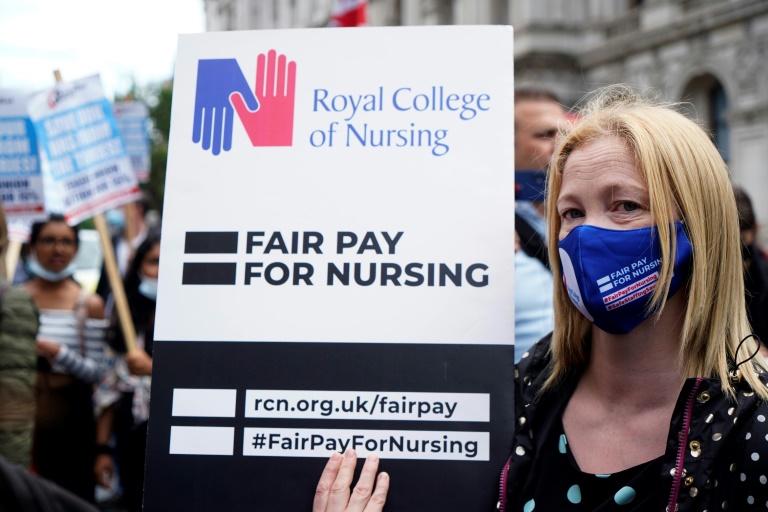
Nurses across the UK have voted to strike in their first national action over a pay dispute, a media report said on Sunday.

The strike ballot among more than 300,000 members of the Royal College of Nursing (RCN) was the biggest in the union’s 106-year history.

“Our strike action will be as much for patients as it is for nurses — we have their support in doing this,” secretary Pat Cullen said.

Although counting is still underway, the domestic PA news agency reported that RCN officials believed enough members had voted for winter industrial action, which is set to take place within a few weeks, possibly before Christmas.

The RCN is campaigning for a pay rise of five percent above the soaring inflation.

The exact nature of the strike is yet to be determined, but is likely to disrupt operations and appointments even as patients are already facing record waiting lists.

“This will see the majority of services taken out, and picket lines across the country,” a union source told the Observer newspaper.

It also comes as Prime Minister Rishi Sunak and Chancellor Jeremy Hunt already face the huge challenge of tackling a 50 billion pound ($57 billion) hole in public finances.

The UK, which is struggling with a cost of living crisis, has seen a wave of industrial action in recent months.

Tens of thousands of staff in various industries — from the postal and legal systems to ports and telecommunications — have gone one strike across Britain since the summer.

The RCN said there were record nursing vacancies as 25,000 nursing staff around the UK left the Nursing and Midwifery Council register in the last year.

Recent analysis showed an experienced nurse’s salary has fallen by 20 percent in real terms since 2010, and the RCN said the goodwill and expertise of nursing staff was being “exploited” by governments across the UK.

By taking Twitter private, Musk makes daring bet

Elon Musk’s decision to pull Twitter off the stock market allows him to make major changes quickly, but it also takes the company more heavily into debt, a risky choice for a money-losing business.

It is a long-established strategy with notable successes and failures, from computer manufacturer Dell (a success) to toy stores Toys “R” Us (a failure). 

But Twitter “is very different from a traditional buyout” of a company that delists from the market, said Steven Kaplan of the University of Chicago Booth School of Business.

Most such takeovers are of companies with positive cash flows, Kaplan said, but the social network is losing money — having posted losses in the first two quarters of 2022.

The equation is further complicated by Elon Musk’s $13 billion in loans, which will have to be repaid by the San Francisco company, not by the entrepreneur personally.

According to a calculation made by AFP, Twitter will have to disburse a little less than $1 billion from the first year as interest and principal, a high amount for a group whose turnover reached only $5 billion in 2021.

“That debt is tricky when you’re losing money. So there’ll be a lot of pressure to cut costs and increase revenue so that they can make debt payments,” said Kaplan, a finance professor. Otherwise, Musk will need to find funds to avoid bankruptcy.

The entrepreneur on Friday laid off about half of Twitter’s employees and is seeking new sources of revenue, including an optional subscription fee of $8 per month for those wanting a verified account.

Further development of Twitter may require an infusion of capital, more difficult to raise, in theory, by a unlisted company.

“I don’t think you can raise any more debt,” said Erik Gordon, an entrepreneurship expert at the University of Michigan Ross School of Business, but in this case “there is a Musk factor… You tweet a few times and you know, bring in the money.”

– ‘Radical changes’ –

Another idiosyncratic element is that most such deals “are initiated either by a financial logic or an industrial logic,” whereas Elon Musk “didn’t have one,” he said.

“He just was unhappy with the way Twitter was treating free speech” and concluded that he could “manage it better,” Gordon said.

As a general rule, an exit from the market is followed by “radical changes” at a company, said Sreedhar Bharath, professor of finance at Arizona State University, and those changes may not be readily apparent because the company no longer has an obligation to communicate publicly.

“The company is shielded from the punishment meted out by financial markets if they do not like the changes,” he said. “Some might say the markets have an excessive focus on the next quarter results” and managers of newly privatized firms can “pursue long-term goals” without fretting about the short term.

“But with the high public profile of Twitter, key decisions are likely to become public,” noted Jagadeesh Sivadasan of the University of Michigan’s Ross School of Business. “This was evident for the post-acquisition decisions regarding firing of key officers.”

A study published in 2019 by two researchers at California State Polytechnic University that looked at nearly 500 deals between 1980 and 2006, found that about 20 percent of large companies undergoing leveraged buyouts filed for bankruptcy within 10 years, compared with two percent for a sample of other companies.

“Most of them have done better than public companies,” said Gordon, “but they don’t get a lot of publicity… The big failures get a lot of attention and create this idea that the debt kills the company.”

“Most of the time, it works which is why people keep doing it,” Gordon added. 

“Musk is one of the most creative people on the planet,” able to build three totally different companies, PayPal, Tesla and SpaceX, all of which have reached more than $100 billion in valuation, Kaplan said.

“He’s a talent magnet… He’s going to attract (to Twitter) real talent that hasn’t been there for a while… I wouldn’t bet against him.”

Anatomy of the week the Musk tornado hit Twitter

The whirlwind week that Elon Musk took over Twitter began with sleepless nights for company engineers — and ended with half the staff getting the axe.

“It was a strange week,” said one former employee speaking on condition of anonymity.

“Executives were getting fired or were resigning, but there was basically no official communication until 5 pm Thursday,” some seven days after the deal was officialized.

The employees received a first email Thursday informing them that they would know their fate the next day. On Friday, the second email confirmed the rumors: 50 percent of the staff lost their jobs.

The cull hit the marketing department hard, took two-thirds of the design department, and maybe 75 percent of managers. Content moderation was somewhat spared, with a layoff rate of only 15 percent, according to Yoel Roth, head of safety at the platform.

After 24 hours without addressing the layoffs, Musk finally tweeted that “unfortunately there is no choice when the company is losing over $4M/day” and that all those who lost their jobs were “offered three months of severance.”

The layoff decision did not come as a surprise to employees — rumors had been growing — but they were shocked by how brutally it was carried out.

“People would find out not by any phone call or any email… but just by seeing their work laptop automatically reboot and just to go blank,” Emmanuel Cornet, a French engineer who had been at Twitter for a year and a half, told AFP on Friday.

– Class-action suit –

Cornet was dismissed Tuesday after being told in an email he had “violated” several company policies, without further explanation, after spending an entire weekend in the office on projects launched by edict of the new owner.

“I’m still trying to find out what the actual reason is,” he said.

The Tesla chief executive had engineers from his flagship company parachute in to assess the work of Twitter developers, examining in particular the volume of code produced by each, Cornet said. 

He is one of five former Twitter employees who filed a class-action suit against the company on the grounds that they had not received the 60-day notice required by the 1988 federal Warn Act in the event of a plant closing or mass layoff.

The French expat said many laid-off colleagues were in an unenviable “position in terms of health insurance or visas.”

“Some were on parental leave. One colleague gave birth yesterday, only to be laid off today.”

Those laid off must continue to abide by the company’s rules during the notice period. Many fear that the new management will look for excuses to accuse them of misconduct and not pay them severance.

“If anyone says something disparaging, or does anything they can use to dismiss them for cause they’ll do that instead of severance,” said the former employee speaking anonymously.

– A summer exodus –

For six months, the platform’s employees were preparing for the possibility that the world’s richest man might take control. 

He is preceded by his reputation, from the punishing work rates in his plants to his rejection of telecommuting, which is highly popular in the tech sector, and his absolutist vision of free speech, which his detractors claim can only lead to harassment, disinformation and a tolerance for hate speech.

This summer, more than 700 people left on their own, even before they knew whether the $44 billion acquisition would go through.

The radical change in corporate culture was confirmed as early as last Friday, when teams of engineers were mobilized to redesign certain features in a very short time, with their jobs on the line.

“There probably was too many layers of management… Twitter was not a well-oiled, efficient machine,” said the anonymous ex-employee. “But I don’t know if (the mass layoffs) is gonna fix it.”

“I think lots of people who remain now will leave, and maybe that’s what Elon wants,” he added.

“I feel sorry for anyone who didn’t get fired (to be honest). Elon will run those left into the ground with his hare-brained ideas,” reacted James Glynn, a London-based content moderation team leader who was laid off.

“Any kind of Twitter we knew before is dead.”

Thousands march in Peru calling for president's removal

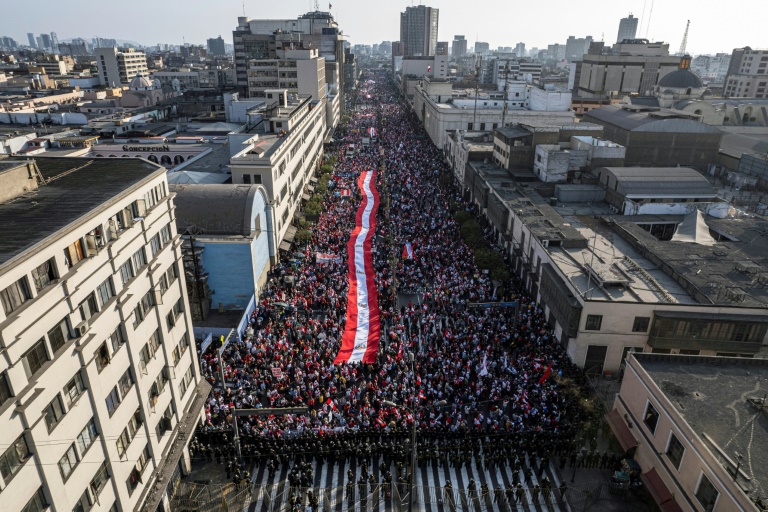
Thousands of demonstrators marched through the streets of Lima on Saturday to call for the removal of President Pedro Castillo, the subject of an unprecedented six investigations for corruption. 

Opponents of Castillo’s government marched through the capital’s center until dozens of riot police used tear gas to prevent them from reaching Parliament and the government palace.

“I come to the march to get that corrupt man out. Castillo must leave, that’s what this march is for, to get him out,” protester Nancy Huarcaya told AFP. 

“We are here representing millions of Peruvians. Peru can’t take it anymore. We are on the edge of the precipice, economically everything has stagnated,” Carola Suarez, holding a Peruvian flag, told AFP.  

Similar demonstrations called by political groups and civil associations took place in other cities around the country, two weeks before the arrival of a delegation from the Organization of American States to “analyze” the political crisis.

At the same time, a mobilization of collectives and unions marched in support of the president in Lima’s San Martin square. 

Castillo, a former rural school teacher, has been under nonstop fire since unexpectedly taking power from Peru’s traditional political elite in elections last year. 

He has survived two impeachment attempts since taking office in July 2021 and is the target of six criminal investigations for alleged graft and plagiarizing his university thesis.

In addition to these, Peru’s attorney general last month filed a constitutional complaint accusing Castillo of heading a criminal organization involving his family and allies.

Castillo, serving a five-year term that ends in 2026, cannot be criminally tried while in office.

“They will have me until the last day of my term because my people have decided so,” Castillo said Saturday morning at the government palace. 

He denies that his family has committed crimes and says he is the victim of a campaign to remove him from power.

Biden, Obama warn of democracy threat in final midterms countdown

President Joe Biden, Democratic superstar Barack Obama and Republican firebrand Donald Trump all converged Saturday on Pennsylvania to push their parties to the finishing line in a race Biden said marks a “defining” moment for US democracy.

The battle of the serving and two former presidents marked the start of a final crescendo before Tuesday when Americans will decide who controls Congress during the last two years of Biden’s first term.

Polls put Republicans well ahead in the fight for the House of Representatives and also show them gaining momentum in the Senate races as voters, riled up by culture wars around gay rights and abortion, seek to take out frustration over four-decades-high inflation and rising illegal immigration.

With Pennsylvania one of the handful of swing states that will decide the overall balance of power, both sides brought out their big guns — and the contrasts were dramatic.

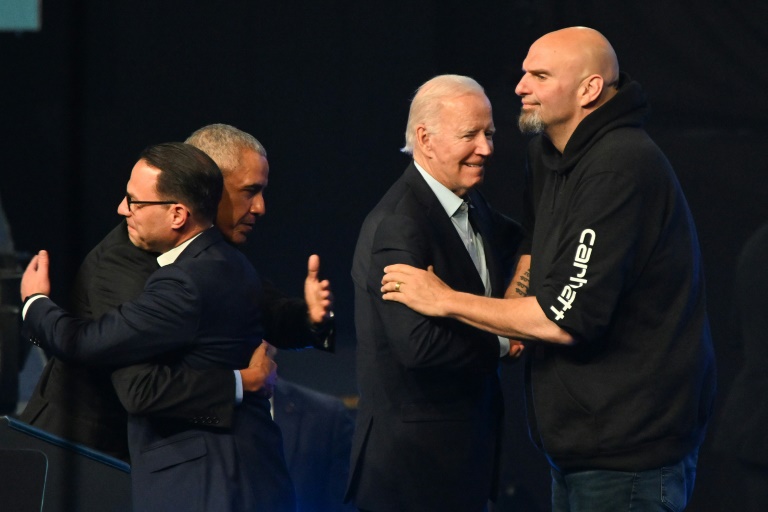
Biden and Obama rallied in Philadelphia alongside Senate hopeful John Fetterman and governor candidate Josh Shapiro.

Trump — who was defeated by Biden in 2020 but has spent the interval promoting conspiracy theories and plotting a possible White House comeback — flew to Latrobe to boost Fetterman’s opponent, TV celebrity doctor Mehmet Oz, and Shapiro’s far-right opponent Doug Mastriano.

Speaking to thousands in a Philadelphia arena, Biden and the Democratic candidates labeled the Republicans as the party of the wealthy and emphasized their support for trade unions, social security and abortion access.

Voters face “a choice between two vastly different visions of America,” Biden said.

But citing Trump Republicans’ growing support for conspiracy theories, Biden said an even bigger agenda is at stake.

“Democracy is literally on the ballot. This is a defining moment for the nation and we all, we all must speak with one voice,” Biden said.

In a rambling speech, Trump claimed the country is run by “communists” and repeatedly said that his attempts to overturn the 2020 election were justified, before urging Republicans to deliver “a humiliating rebuke.”

“If you want to stop the destruction of our country and save the ‘American Dream,’ then this Tuesday you must vote Republican in a giant red wave,” he said.

– Democratic star –

Obama, who had also addressed an earlier rally in Pittsburgh, got the loudest cheers of the night in Philadelphia, repeatedly urging supporters to make sure they vote.

“A lot of folks don’t pay a ton of attention to politics the way they do in a presidential year. Maybe they don’t think Congress matters as much. Maybe they don’t think their vote will matter,” he said.

But “fundamental rights…, reason and decency are on the ballot,” he said, attacking Republicans as increasingly averse to everything from science to respect for rules.

“Democracy itself is on the ballot. The stakes are high,” Obama said in an echo of Biden’s warning, his voice going hoarse.

Still the party’s most bankable star six years after leaving the White House, Obama hopes his support will give Fetterman the crucial extra shove.

Although Fetterman faces the added challenge of recovering from a serious stroke, he and Oz are in a dead heat.

– Trump’s comeback bid –

In Latrobe, Trump was tapping into support from a working class region that delivered him big margins in the 2016 and 2020 presidential elections.

Success for candidates he supports on Tuesday would help Trump launch his own comeback campaign, despite facing serious legal threats over attempts to overturn his 2020 defeat and the hoarding of top secret documents from the White House at his Florida golf resort.

In a speech laden with immigrant baiting, lies about supposed election fraud, and lurid claims that he and his supporters are victims of a “police state,” Trump also continued to drop hints that he will soon declare a new presidential run.

In a “very, very, very short period” his fans will be “so happy,” he said.

One supporter in Latrobe, Shawn Ecker, 44, voiced excitement about a possible Trump candidacy for 2024 “because we need our country back. We really do. And it’s not going to happen if someone doesn’t stand up like he is.”

Singaporean wanted by US over N. Korea is in Singapore: police

A Singaporean businessman wanted by the United States for violating sanctions on North Korea is currently in the city-state where he is under investigation, the Singapore police said.

In a statement issued late Saturday, the Singapore Police Force (SPF) said they have sought clarification from their US counterparts over the reward as they have kept them informed about the ongoing probe by local authorities.

The US State Department on Thursday offered $5 million for information on businessman Kwek Kee Seng, blaming him for numerous fuel deliveries to North Korea and ship-to-ship transfers as well as money laundering through front companies.

Federal prosecutors in New York in 2021 issued an arrest warrant for Kwek, a year after one of his oil tankers, the M/T Courageous, was seized by Cambodia on a US request over purported sanctions violations.

Kwek, 62, owns the Swanseas Port Services shipping company based in the city-state.

The State Department’s Rewards for Justice program had said his exact location was not known and that he has also been identified as being in North Korea, Cambodia, Taiwan and Thailand as well as Cameroon and the tiny Caribbean nation of Saint Kitts and Nevis.

But Singapore’s police said in their statement that “Kwek is presently in Singapore”.

He has been under investigation since April last year by the Commercial Affairs Department — the city’s white-collar crime investigation agency — and his passport has been impounded.

The Singapore police said the investigation was launched after the US Justice Department announced a criminal complaint had been filed against Kwek for  “allegedly conspiring to evade economic sanctions” on North Korea and for money laundering.

Police added that they have shared information about their investigation of Kwek with US law enforcement authorities.

“Since then, there were several more exchanges. Due to the nature and complexity of the case, investigations are still ongoing,” police said.

“On 4 November 2022, the SPF wrote to our US counterparts to seek clarification, given that we had been in active communication with our US counterparts on Kwek’s case,” it added.

“Singapore will continue to assist the US authorities within the ambit of our laws and international obligations.”

The reward comes as the US urges strict enforcement of United Nations sanctions on North Korea after it launched a volley of missiles, including one that landed close to South Korea’s waters.

Close Bitnami banner
Bitnami