World

Italy accepts some migrants, not others as tensions rise

Italy readied Sunday to allow vulnerable migrants off a second charity rescue vessel in Sicily, but sources close to firebrand minister Matteo Salvini warned those not eligible to remain would be forced back into international waters.

Minors and the sick were let off the German-flagged Humanity 1 in the early hours at the port of Catania, but 35 adult male migrants were refused permission to set foot on Italian soil, charity SOS Humanity said.

Fellow humanitarian vessel Geo Barents, run by Doctors Without Borders’ and sailing under a Norwegian flag, said it too has been summoned so authorities could “evaluate vulnerable cases” among the 572 rescued people on board.

Interior Minister Matteo Piantedosi earlier said those who do not “qualify” would have to “leave territorial waters”, after refusing requests by four charity vessels for a safe port.

The Geo Barents, Ocean Viking and Rise Above are still carrying 900 migrants between them.

Italy’s new far-right government, which was sworn in last month, has vowed to crack down on boat migrants attempting the perilous crossing from North Africa to Europe.

Over 87,000 people have landed in Italy so far this year, according to the interior ministry — though only 14 percent of those were rescued at sea and brought to safety by charity vessels.

Sources close to far-right transport minister Matteo Salvini, who controls the ports, said Sunday the Geo Barents was only being allowed in temporarily.

“Those who remain on the vessel will be provided with the assistance necessary to leave territorial waters,” the sources said.

– ‘Extremely depressed’ –

The 35 migrants refused permission to leave the Humanity 1 were “extremely depressed”, SOS Humanity’s press officer Petra Krischok told AFP.

It was not clear whether the ship would be ordered to leave.

“For now, we stay here and wait,” she said.

The leader of the main opposition party, Democratic Party chief Enrico Letta, accused the government on Twitter of breaking international law.

Piantedosi should explain his actions to parliament, the party said.

Member of parliament Aboubakar Soumahoro, present as those chosen from the Humanity 1 were disembarked, slammed the “selection of shipwrecked migrants”.

He said far-right Prime Minister Giorgia Meloni’s government was treating “the worn-out bodies of shipwrecked people, already exhausted by cold, fatigue, trauma and torture… as objects”.

“If the remaining castaways are rejected… we will challenge this decision in all appropriate institutions,” he said on Twitter.

– ‘No responsibility’ –

Piantedosi said Saturday those migrants not allowed to disembark would have to be “taken care of by the flag state” — a reference to the national flags under which the vessels sail.

The Humanity 1 and Mission Lifeline charity’s Rise Above sail under the German flag.

The Geo Barents and SOS Mediterranee’s Ocean Viking are registered in Norway.

The Norwegian foreign ministry said Thursday it bore “no responsibility” for those rescued by private Norwegian-flagged ships in the Mediterranean.

Germany insisted in a diplomatic “note” to Italy that the charities were “making an important contribution to saving human lives” and asked Rome “to help them as soon as possible”.
Climate change is speeding up, warns major UN report

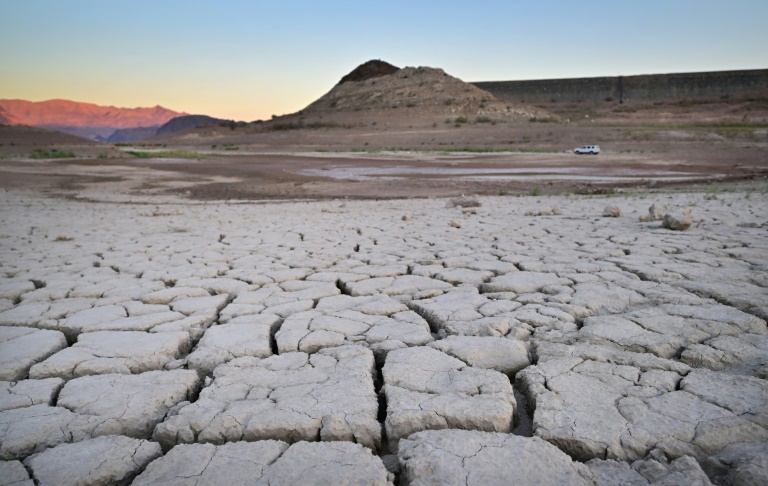
Each of the last eight years, if projections for 2022 hold, will be hotter than any year prior to 2015, the UN said Sunday, detailing a dramatic increase in the rate of global warming.

Sea level rise, glacier melt, torrential rains, heat waves — and the deadly disasters they cause — have all accelerated, the World Meteorological Organization said in a report as the COP27 UN Climate Summit opened in Sharm el-Sheikh, Egypt.

“As COP27 gets underway, our planet is sending a distress signal,” said UN chief Antonio Guterres, describing the report as “a chronicle of climate chaos”.

Earth has warmed more than 1.1 degrees Celsius since the late 19th century, with roughly half of that increase occurring in the past 30 years, the report shows.

Nearly 200 nations gathered in Egypt have set their sights on holding the rise in temperatures to 1.5C (2.7 degrees Fahrenheit), a goal some scientists believe is now beyond reach.

This year is on track to be the fifth or sixth warmest ever recorded despite the impact since 2020 of La Nina — a periodic and naturally occurring phenomenon in the Pacific that cools the atmosphere.

“The greater the warming, the worse the impacts,” said WMO head Petteri Taalas.

Surface water in the ocean — which soaks up more than 90 percent of accumulated heat from human carbon emissions — hit record high temperatures in 2021, warming especially fast during the past 20 years.

Marine heat waves were also on the rise, with devastating consequences for coral reefs and the half-billion people who depend on them for food and livelihoods.

Overall, 55 percent of the ocean surface experienced at least one marine heatwave in 2022, the report said.

Driven by melting ice sheets and glaciers, the pace of sea level rise has doubled in the past 30 years, threatening tens of millions in low-lying coastal areas.

“The messages in this report could barely be bleaker,” said Mike Meredith, science leader at the British Antarctic Survey. 

– Records shattered –

“All over our planet, records are being shattered as different parts of the climate system begin to break down.” 

Greenhouse gases accounting for more than 95 percent of warming are all at record levels, with methane showing the largest one-year jump ever recorded, the WMO’s annual State of the Global Climate found.

The increase in methane emissions has been traced to leaks in natural gas production and a rise in beef consumption. 

In 2022, a cascade of extreme weather exacerbated by climate change devastated communities across the globe.

A two-month heatwave in South Asia in March and April bearing the unmistakable fingerprint of man-made warming was followed by floods in Pakistan that left a third of the country under water. At least 1,700 people died, and eight million were displaced. 

In East Africa, rainfall has been below average in four consecutive wet seasons, the longest in 40 years, with 2022 set to deepen the drought.

China saw the longest and most intense heatwave on record and the second-driest summer.

Falling water levels disrupted or threatened commercial river traffic along China’s Yangtze, the Mississippi in the US and several major inland waterways in Europe, which also suffered repeated bouts of sweltering heat.

Poorer nations least responsible for climate change but most vulnerable to its dire impacts suffered the most. 

“But even well-prepared societies this year have been ravaged by extremes -– as seen by the protracted heatwaves and drought in large parts of Europe and southern China,” Taalas said. 

In the European Alps, glacier melt records have been shattered in 2022, with average thickness losses of between three and over four metres (between 9.8 and over 13 feet), the most ever recorded.

Switzerland has lost more than a third of its glacier volume since 2001. 

“If there was ever a year to swamp, shred and burn off the blinkers of global climate inaction then 2022 should be it,” said Dave Reay, head of the University of Edinburgh’s Climate Change Institute. 

“The world now has a monumental job of damage limitation.”

Kenya Airways pilots extend strike

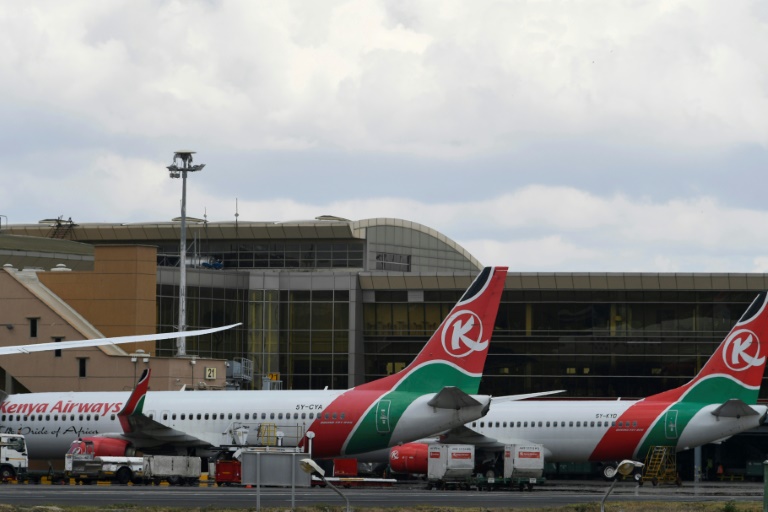
Kenya Airways pilots on Sunday extended their strike and warned of “major flight disruptions”, forcing fresh cancellations as the carrier’s deadline for disciplinary action against those participating lapsed.

Thousands of passengers were stranded as a result of the strike by the Kenya Airline Pilots Association (KALPA), which earlier said that no Kenya Airways flight flown by its members had departed Nairobi’s Jomo Kenyatta International Airport from 6:00 am (0300 GMT) onwards on Saturday.

The pilots announced the strike in defiance of a court order against industrial action and have given no indication of how long it would last.

On Saturday, the airline’s managing director and CEO, Allan Kilavuka, had urged the protesting pilots, who make up 10 percent of the workforce, to return to work by 10:30 am on Sunday.

“Failure to do so will lead to immediate disciplinary action,” he warned.

But KALPA said on Sunday that its members would remain on strike “until their voice is heard.” 

“The public should expect major flight disruptions to continue,” it said on Twitter, blaming the airline’s management for failing to resolve the stalemate.

The airline, part owned by the government and Air France-KLM, is one of the biggest in Africa, connecting multiple countries to Europe and Asia, but it is facing turbulent times, including years of losses.

The pilots’ strike has thrown over 9,000 passengers’ plans into disarray, according to the airline, with travellers turning up to the Nairobi airport on Sunday, only to find out that their flights were cancelled.

“I came here at around 5:25 in the morning… but I have been informed that the flight has been cancelled,” passenger Erick Muhanda, who was due to travel to South Africa’s port city of Cape Town, told broadcaster Citizen TV.

“It’s quite inconveniencing,” he said.

– Ground staff strike called off –

But in a measure offering some relief to the travel sector, the Kenya Aviation Workers Union (KAWU) announced Sunday that it would withdraw a planned strike by ground staff over a separate, long-running dispute with the Kenya Airports Authority (KAA) over salary increases.

“We backtracked on our decision because it was being construed as KAWU joining KALPA in their strike action,” the union’s secretary general Moss Ndiema told reporters at the Nairobi airport.

KAWU had earlier said that ground staff would strike from 2:00 pm onwards on Saturday.

The pilots are pressing for the reinstatement of contributions to a provident fund and payment of all salaries stopped during the Covid-19 pandemic.

On Monday, the airline won a court injunction stopping the strike, but an official at KALPA, which has 400 members, told AFP the pilots “were acting within the provisions of the law” and that they were yet to be served with a court order.

The carrier has warned that the strike would jeopardise its recovery, estimating losses at $2.5 million per day if the pilots went ahead with their plans.

The airline was founded in 1977 following the demise of East African Airways and flies more than four million passengers to 42 destinations annually.

It has been operating in large part thanks to state bailouts following years of losses.

Tanzanian 'Tug of War' wins top prize at Carthage Film Festival

Tanzanian film “Tug of War”, about love and politics during the final years of British colonial Zanzibar, has won the Tanit d’Or at Tunisia’s prestigious Carthage Film Festival.

Africa’s oldest film festival, held in the capital Tunis, presented a total of 170 films from around 40 countries, and ended with the prizes on Saturday night.

The winning film whose title in Swahili is “Vuta N’Kuvute” was directed by Amil Shivji.

Two other feature-length films also received awards at the 33rd edition of the festival devoted to Arab and African filmmakers.

“Under the Fig Trees”, directed by Tunisia’s Erige Sehiri, won the Tanit d’Argent. It looks at romantic relations during harvest in a Tunisian village.

The Tanit de Bronze went to “Sharaf” by German-Egyptian director Samir Nasr, which presents a sombre portrait of Egyptian society through the confines of a prison.

The festival also included a focus on Palestinian cinema and featured Saudi Arabia — with four films — as guest of honour.

Six displaced Syrians killed in regime rocket strike: monitor

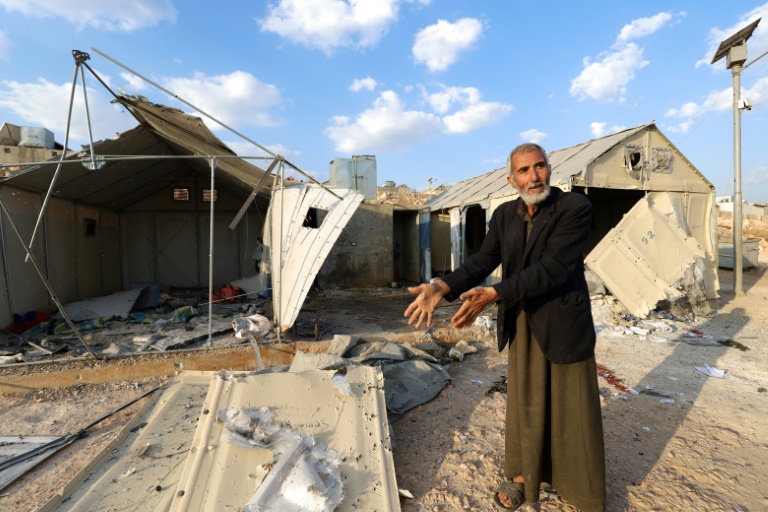
Syrian regime rocket fire killed six civilians including two children at makeshift camps for displaced people in the country’s last major rebel-held bastion early Sunday, a war monitor said.

The victims had all been uprooted from their homes during Syria’s years of war, said the Britain-based Syrian Observatory for Human Rights, which has a broad network of sources on the ground.

It said more than 30 rockets exploded in several areas, including the camps, west of the city of Idlib in Syria’s northwest.

The Observatory said the number of people wounded in the shelling increased from 20 to 75, and they were in various conditions.

It said shelling had continued at several locations in the area after rebels struck government targets in retaliation for the strikes.

An AFP correspondent saw flimsy tents destroyed and burned, blood stains and rocket debris at the scene.

At a nearby hospital, the correspondent saw the bodies of two young girls.

Abu Hamid, a camp resident, told AFP: “We awoke this morning and were getting ready for work when we began hearing the sounds of strikes.”

“The children were afraid and began screaming”, continued the 67-year-old.

“We didn’t know where to go. It wasn’t one rocket or two, but a dozen. The shrapnel was flying from every direction. We didn’t know how to protect ourselves.”

The last pocket of armed opposition to President Bashar al-Assad’s regime includes large swathes of Idlib province and parts of the neighbouring Aleppo, Hama and Latakia provinces.

Hayat Tahrir al-Sham (HTS), headed by ex-members of Syria’s former Al-Qaeda franchise, is the dominant group in the area but other rebel groups are also active.

According to the Observatory, the rocket fire came the day after five Syrian forces members died in shelling by a group affiliated with HTS.

The Idlib region is home to about three million people, around half of them displaced.

They are among the millions displaced internally and abroad by the war in Syria since 2011. Nearly half a million people have been killed.

With Russian and Iranian support, Damascus clawed back much of the ground lost in the early stages of Syria’s conflict, which erupted in 2011 when the government brutally repressed pro-democracy protests.

Despite periodic clashes, a ceasefire reached in 2020 by Moscow and Turkey — which supports anti-Assad rebels — has largely held in the northwest.

Passenger plane plunges into Lake Victoria in Tanzania

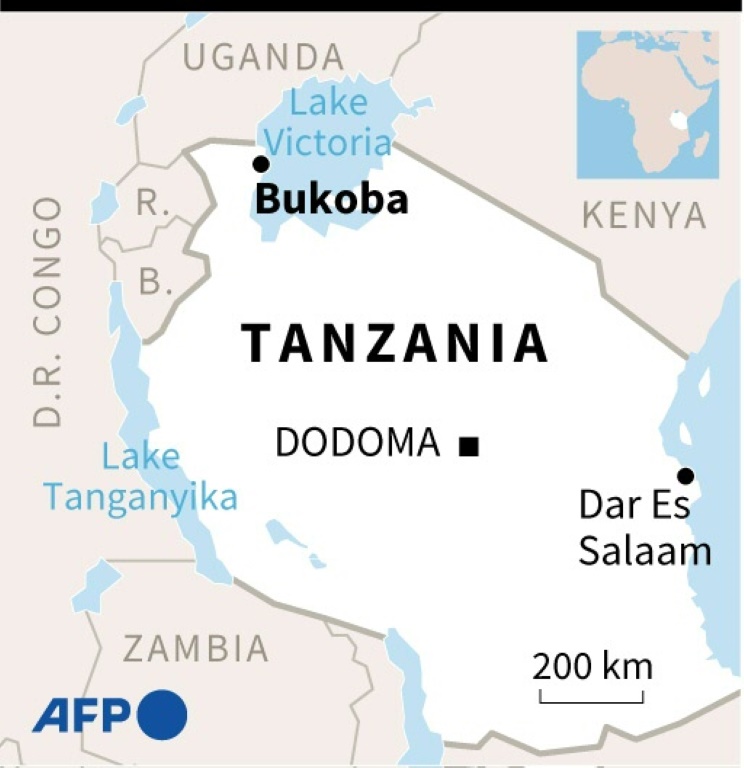
A plane carrying 43 people plunged into Lake Victoria in Tanzania early on Sunday due to bad weather shortly before it was due to land in the northwestern city of Bukoba, police said, with efforts under way to rescue those onboard.

“There was an accident involving a Precision Air plane which… crashed into water about 100 metres from the airport,” regional police commander William Mwampaghale told reporters at Bukoba airport.

Regional commissioner Albert Chalamila said 43 people, including 39 passengers, two pilots and two cabin crew, were aboard the flight from financial capital Dar es Salaam to the lakeside city in Kagera region.

“As we speak, we have managed to rescue 26 people who were taken to our referral hospital,” Chalamila said.

“The rescue operation is still ongoing and we are communicating with the pilots,” he said, adding that more details would be shared later.

Precision Air, which is Tanzania’s largest private airline, released a brief statement confirming the accident.

“The rescue team has been dispatched to the scene and more information will be released in 2 hours’ time,” the airline said.

Video footage broadcast on local media showed the plane largely submerged as rescuers waded through water to bring people to safety.

Emergency workers attempted to lift the aircraft out of the water using ropes, assisted by cranes.

President Samia Suluhu Hassan expressed her condolences to those affected by the accident.

“Let’s continue to be calm while the rescue operation continues as we pray to God to help us,” she said on Twitter.

Precision Air, which is partly owned by Kenya Airways, was founded in 1993 and operates domestic and regional flights as well as private charters to popular tourist destinations such as the Serengeti National Park and the Zanzibar archipelago.

The accident comes five years after 11 people died when a plane belonging to safari company Coastal Aviation crashed in northern Tanzania.

In March 2019, an Ethiopian Airlines flight from from Addis Ababa to Nairobi plunged six minutes after take-off into a field southeast of the Ethiopian capital, killing all 157 people on board.

In 2007, a Kenya Airways flight from the Ivory Coast city of Abidjan to Kenya’s capital Nairobi crashed into a swamp after take-off, killing all 114 passengers.

In 2000 another Kenya Airways flight from Abidjan to Nairobi crashed into the Atlantic Ocean minutes after take-off, killing 169 people while 10 survived.

Pope prays for 'suffering peoples' on final day in Gulf

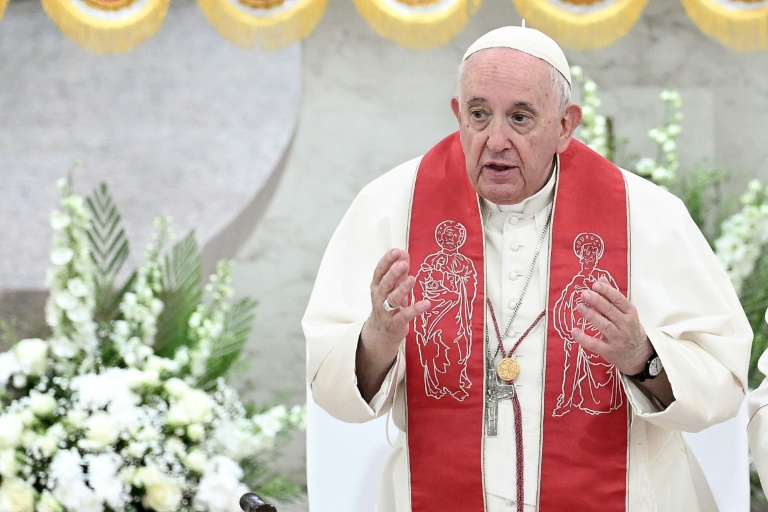
Pope Francis said Sunday he was praying for “suffering peoples of the Middle East”, at the end of a Bahrain visit promoting dialogue with Islam but marked by accusations of rights abuses in the Gulf state.

In a final address before boarding a flight to Rome, he also urged congregants to pray “for Ukraine, which is suffering so much”, and for an end to the war.

He told Lebanese congregants he was praying for “your beloved country, so weary and sorely tried, as well as (for) all peoples suffering in the Middle East”.

The 85-year-old Argentinian used his four-day visit to Muslim-majority Bahrain to meet both senior Muslim officials and Catholic residents of the Gulf, home to a large migrant labourer community.

On Saturday he held an open-air mass for about 30,000 people, many of them moved to tears by the occasion.

Bahrain, which established formal ties with the Holy See in 2000, has around 80,000 Catholic residents. Most are workers from the Philippines and other Asian countries.

On Sunday, the final morning of the first ever papal visit to the island nation, Francis visited Sacred Heart church in Manama and urged Catholics to be “tireless promoters of dialogue” with other faiths.

— Call for unity —

“Let us seek to be guardians and builders of unity… in the multi-religious and multi-cultural societies in which we find ourselves,” he said, at the Gulf’s oldest church which opened in 1939.

His words came a day after police briefly detained relatives of Bahraini prisoners on death row who had protested and asked to meet with the pontiff, according to a London-based rights group — although authorities denied there had been “apprehensions”.

Rights groups have long cited discrimination, repression and harassment by Bahrain’s Sunni Muslim rulers against Shiite opposition figures and activists.

Human Rights Watch has accused Bahraini courts of issuing death sentences based on “manifestly unfair trials”.

In his first speech, on Thursday, the pontiff had spoken of the “right to life” and the “need to guarantee that right always, including for those being punished, whose lives should not be taken”.

Finance Minister Sheikh Salman bin Khalifa Al-Khalifa told AFP that Bahrain had “robust and wide-ranging human rights and criminal justice protections”, and that the pope’s comment on the death penalty had not singled out Bahrain.

This was the pontiff’s second trip to the Gulf following a 2019 visit to the United Arab Emirates. He met in Bahrain with Sheikh Ahmed al-Tayeb, the grand imam of Cairo’s prestigious Al-Azhar mosque.

He also used the trip to warn that the world was on a “delicate precipice”, decrying the “opposing blocs” of East and West — a veiled reference to the standoff over Russia’s invasion of Ukraine.

“A few potentates are caught up in a resolute struggle for partisan interests, reviving obsolete rhetoric, redesigning spheres of influence and opposing blocs,” he said. 

The pope, who uses a wheelchair and walking stick due to knee problems, was to leave for Rome at around 1:00 PM (1000 GMT). He was expected to talk to journalists during the flight.

Japan PM pledges to boost military capacity

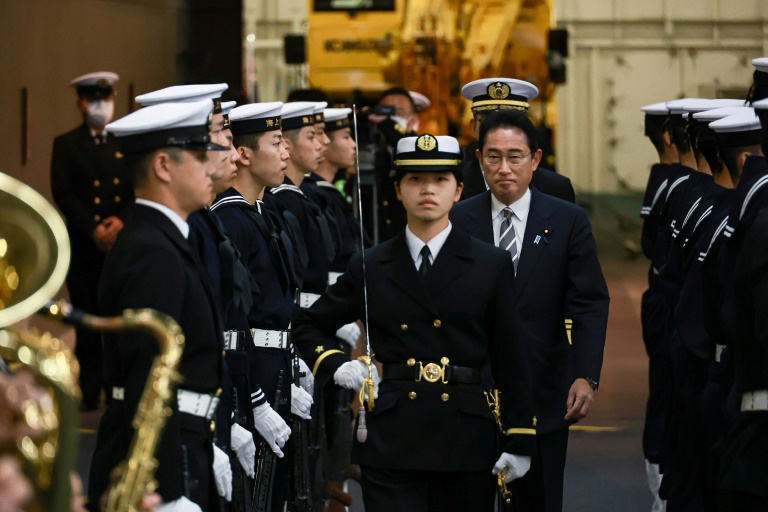
Prime Minister Fumio Kishida pledged Sunday to beef up Japan’s naval and military capacity, warning that nations must prepare to face aggressors.

Kishida also condemned Russia’s war in Ukraine and denounced North Korea’s recent blitz of missile tests, one of which flew over Japan for the first time since 2017 and prompted a rare evacuation warning. 

“We must prepare ourselves for an era when actors emerge to disobey rules and use force or threats to destroy the peace and safety of other nations,” Kishida said as he addressed Japan’s international fleet review.

The leader’s remarks come as Tokyo is drafting security plans that may call for doubling the nation’s defence spending within five years. That would represent a sea change in Japan, where the pacifist constitution limits its military capacity.

“We will accelerate realistic discussions on what’s needed to defend our people by keeping all options on the table,” Kishida said.

“The enhancement (of Japan’s naval capacity) cannot wait, including construction of new naval ships, bolstering our missile defence capacity and improvement of the work conditions and compensations for our (military) personnel,” he said.

He did not name China but said that “the national security environment surrounding our nation is growing more severe including the East China Sea and South China Sea,” where Beijing has taken assertive positions in territorial disputes with countries including Japan.

Kishida added that Japan will ensure transparency of its military spending.

“Japan will maintain our way as a pacifist country as we have done so since the end of (World War II),” he said.

The fleet review gathered ships from Japan and 12 other countries — including Australia, India and the United States — at Sagami Bay, south of Tokyo.

South Korea also took part for the first time in seven years, as Tokyo and Seoul attempt to mend strained relations. 

Italy lets minors, sick off migrant rescue boat but spurns 35 others

Italy let minors and sick people off a German-flagged rescue vessel Sunday but refused to let 35 male adult migrants off, to the rejected survivors’ despair.

Interior Minister Matteo Piantedosi earlier said those who do not “qualify” would have to “leave territorial waters”, as three other humanitarian vessels pleaded with Rome for a safe port.

The Ocean Viking, Geo Barents and Rise Above are carrying 900 migrants between them.

Three female minors and a baby were the first off the Humanity 1 in Catania port in the early hours, followed by male minors, SOS Humanity’s press officer Petra Krischok told AFP.

After that, male adults with medical issues were allowed off. In all, 144 people disembarked.

“Thirty-five male adults are still on board. For now, we stay here and wait,” she said.

“The mood among the survivors is extremely depressed. One person just suffered a breakdown,” she added.

The Humanity 1 had been requested by Italian authorities to come to the Sicilian harbour, but not assigned a safe port. It was not immediately clear whether it would be ordered to leave.

– ‘Treated as objects’ –

Italy’s new far-right government, which was sworn in last month, has vowed to crack down on boat migrants coming from North Africa to Europe.

Opposition member of parliament Aboubakar Soumahoro, who was present as those chosen were disembarked, slammed the “selection of shipwrecked migrants”, which he said broke international law.

He said far-right Prime Minister Giorgia Meloni’s government was treating “the worn-out bodies of shipwrecked people, already exhausted by cold, fatigue, trauma and torture… as objects”.

“If the remaining castaways are rejected… we will challenge this decision in all appropriate institutions”, he said on Twitter.

Piantedosi said Saturday those migrants not allowed to disembark would have to be “taken care of by the flag state” — a reference to the national flags under which the vessels sail.

Two of the charity boats — the Humanity 1 and Mission Lifeline charity’s Rise Above — sail under the German flag.

The other two — SOS Mediterranee’s Ocean Viking and Doctors Without Borders’ Geo Barents — are registered in Norway.

The Norwegian foreign ministry said Thursday it bore “no responsibility” for those rescued by private Norwegian-flagged ships in the Mediterranean.

Germany insisted in a diplomatic “note” to Italy that the charities were “making an important contribution to saving human lives” and asked Rome “to help them as soon as possible”.

COP27 summit racing against the climate clock

The COP27 summit kicks off Sunday in Egypt with nearly 200 countries struggling to outpace increasingly dire climate impacts in a world upended by war and economic turmoil.

Just in the last few months, a cascade of climate-addled weather disasters has killed thousands, displaced millions and caused billions in damages: massive flooding in Pakistan and Nigeria, deepening droughts in Africa and the western US, cyclones in the Caribbean, and unprecedented heat waves across three continents.   

“Report after report has painted a clear and bleak picture,” said UN chief Antonio Guterres in the run-up to the 13-day conference in the Red Sea resort of Sharm el-Sheik.

“COP27 must lay the foundations for much faster, bolder climate action now and in this crucial decade, when the global climate fight will be won or lost.”

Concretely, that means slashing greenhouse emissions 45 percent by 2030 to cap global warming at 1.5 degrees Celsius above late-19th-century levels.

Warming beyond that threshold, scientists warn, could push Earth toward an unlivable hothouse state.

But current trends would see carbon pollution increase 10 percent by the end of the decade and Earth’s surface heat up 2.8C, according to findings unveiled last week.

Promises made under the Paris Agreement would, if kept, only shave off a few tenths of a degree.

“Our planet is on course for reaching tipping points that will make climate chaos irreversible and forever bake in catastrophic temperature rise,” Guterres said recently.

“We need to move from tipping points to turning points for hope.”

– Conspicuous no-show –

For the UN climate forum, that means transitioning from negotiations to implementation. 

It also means a shift from politics to the economy, with government investments in China, the US and the European Union leveraging hundreds of billions of yuan, dollars and euros into trillions.  

The already daunting task of decarbonising the global economy in a few years has been made even harder by a global energy crunch and rapid inflation, along with debt and food crises across much of the developing world.   

“There have been fraught moments before,” said E3G think tank senior analyst Alden Meyer, recalling other wars, the near collapse of the UN-led process in 2009, and Donald Trump yanking the United States out of the Paris Agreement in 2016.

“But this is a perfect storm,” dubbed by some a “polycrisis”, said the 30-year veteran of the climate arena.

After front-line negotiators set COP27 in motion on Sunday, more than 120 world leaders will put in appearances on Monday and Tuesday.

The most conspicuous no-show will be China’s Xi Jinping, whose leadership was renewed last month at a Communist Party Congress.

US President Joe Biden has said he will come, but only after legislative elections on Tuesday that could see either or both houses of Congress fall into the hands of Republicans hostile to international action on climate change.

Cooperation between the United States and China — the world’s two largest economies and carbon polluters — has been crucial to rare breakthroughs in the nearly 30-year saga of UN climate talks, including the 2015 Paris Agreement.

– ‘High expectations’ –

But Sino-US relations have sunk to a 40-year low after a visit to Taiwan by House leader Nancy Pelosi and a US ban on the sale of high-level chip technology to China, leaving the outcome of COP27 in doubt.

A meeting between Xi and Biden at the G20 summit in Bali days before the UN climate meeting ends, if it happens, could be decisive.

One bright spot at COP27 will be the arrival of Brazilian president-elect Luiz Inacio Lula da Silva, whose campaign vowed to protect the Amazon and reverse the extractive policies of outgoing President Jair Bolsonaro.

More than any other COP, perhaps, this one will be about money — or how little of it has flowed from countries that got rich burning fossil fuels to mostly blameless poorer nations suffering the worst consequences.

Developing nations have “high expectations” for the creation of a dedicated funding facility to cover loss and damage, UN Climate Change Executive Secretary Simon Stiell said on Friday.

“The most vulnerable countries are tired, they are frustrated,” Stiell said. “The time to have an open and honest discussion on loss and damage is now.”

The United States and the European Union — fearful of creating an open-ended reparations framework — have dragged their feet and challenged the need for a separate funding stream.

Close Bitnami banner
Bitnami