World

French far right picks Bardella, 27, as Le Pen successor

France’s far-right National Rally on Saturday designated Jordan Bardella, its 27-year-old rising star, to succeed Marine Le Pen as party chief and pursue efforts to move the group toward the political mainstream.

Bardella, who was widely expected to win as Le Pen’s protege, won 85 percent of the votes from party members, beating Louis Aliot, mayor of the southern city of Perpignan, who garnered 15 percent.

A beaming Le Pen announced the result during a meeting in Paris, and Bardella is expected to address the gathering later Saturday.

His nomination comes after the party had its best-ever showing in parliamentary elections earlier this year, gaining 89 seats even after Le Pen failed to unseat Emmanuel Macron in her third run for the presidency.

“Over 40 years of struggle, the National Front succeeded in putting all the major issues facing our society at the heart of public debate,” Le Pen said, referring to the party’s former name.

Bardella has embraced Le Pen’s efforts to shed the virulent anti-Semitic and extremist views fomented by her father, party founder Jean-Marie Le Pen, who was excluded in 2015.

But the National Rally was rocked this week by the suspension of one of its parliamentarians, accused of making a racist outburst against a fellow lawmaker in parliament.

Bardella also faces the daunting task of getting the party on solid financial footing as it faces inquiries over alleged misuse of public funds by party members, including Le Pen.

– Next generation –

Brought up in a gritty Paris suburb by his Italian-born mother, Bardella promotes a slick image, is rarely seen out of a suit, and has impressed both admirers and critics with sharp performances in election debates.

“One of the things I’m most proud of is helping a new generation of leaders and lawmakers to emerge… who resemble the people and convey its aspirations,” Le Pen said. 

But there are questions over what value the RN presidency has for Bardella, given that Le Pen formally leads its cohort in parliament and is widely expected to again be its presidential candidate in 2027.

But the party leadership can also be a stepping stone for when “MLP” finally bows out from the political scene, at a time when populist parties are gathering steam across much of Europe.

Both Bardella and Le Pen will nonetheless have their work cut out for them in convincing voters that the party is a respectable mainstream force, capable of uniting and governing the country.

This week they had to defend a member of parliament, Gregoire de Fournas, who yelled “back to Africa!” to a black lawmaker who was challenging the government’s response to migrants rescued at sea in the Mediterranean.

He later said he was referring to the boat, not his fellow lawmaker, but Interior Minister Gerald Darmanin said Friday that Bardella had shown his complicity in “everyday racism”.

Bardella has also been criticised by Aliot, who as mayor of Perpignan is the only RN politician to run a city larger than 100,000 people.

He accused him of encouraging white supremacist groups, noting that Bardella has given credence to the so-called “Great Replacement” conspiracy theory of a surreptitious “Islamisation” of Europe orchestrated by its elites — something Le Pen has shied away from.

In an open letter last month, Aliot slammed “extremist nostalgia” and “the excesses of the National Front of a long-gone era”.

Bardella accused him of “bitterness and bad faith”, insisting his goal is to win over more supporters from traditional parties on the right and left.
N. Korea launches ballistic missiles as US-S. Korea air drills end

North Korea fired four ballistic missiles on Saturday, the South Korean military said, the latest in Pyongyang’s testing blitz this week as Washington and Seoul concluded their biggest-ever air force drills.

The flurry of North Korean launches included an intercontinental ballistic missile and one that landed near the South’s territorial waters. South Korean President Yoon Suk-yeol said it was “effectively a territorial invasion”.

The launches came as hundreds of US and South Korean warplanes — including B-1B heavy bombers — participated in the Vigilant Storm exercise, which Pyongyang described as “aggressive and provocative”. 

“The South Korean military detected four short-range ballistic missiles launched by North Korea from Tongrim, North Pyongan Province, to the West Sea at around 11:32 a.m. to 11:59 a.m. today,” South Korea’s Joint Chiefs of Staff (JCS) said in a statement on Saturday, using another name for the Yellow Sea.

Their “flight distance was detected at about 130 km (80 miles), an altitude of about 20 km, and a speed of about Mach 5”, they added. Mach 5 is equivalent to five times the speed of sound.

The United States and South Korea have warned that these launches could culminate in a nuclear test by North Korea, and extended their air force drills to Saturday in response.

Vigilant Storm was originally scheduled to run from Monday to Friday.

Pyongyang ramped up missile launches in response to the drills. Such exercises have long provoked strong reactions from North Korea, which sees them as rehearsals for an invasion.

– ‘Significant threat’ – 

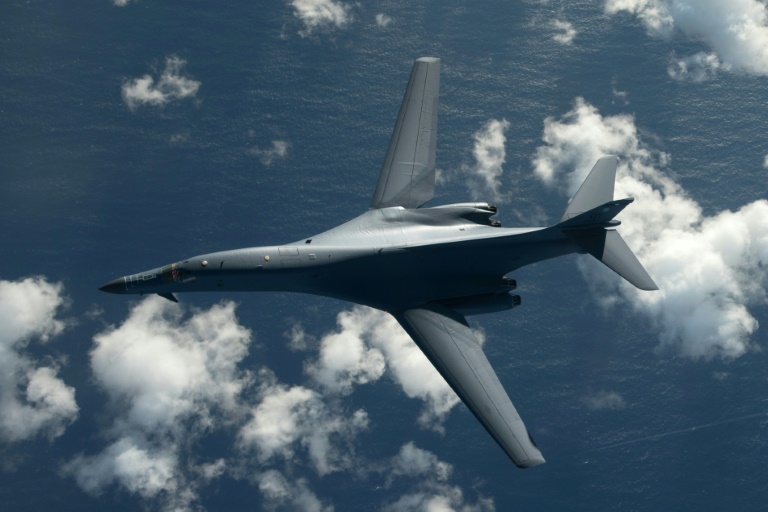
Vigilant Storm concluded on Saturday, with the US Air Force deploying two B-1B long-range heavy bombers on the final day in a ramped-up show of force.

This was the first time B-1Bs have flown to the Korean peninsula since December 2017.

The South Korean JCS said it demonstrated the “capability and readiness to firmly respond to any provocations from North Korea”.

Pyongyang has especially condemned past deployments of US strategic weapons such as B-1Bs and aircraft carrier strike groups in times of high tension.

While the supersonic B-1B “Lancer” aircraft no longer carries nuclear weapons, it is described by the US Air Force as “the backbone of America’s long-range bomber force”.

The USAF lists the Lancer’s weapons payload as 34 tonnes (75,000 pounds), which can include cruise missiles and laser-guided bombs.

The B-1B’s range can be extended by in-air refuelling, giving it the ability to strike anywhere in the world.

Ahn Chan-il, a North Korean studies scholar, told AFP that given the B-1B’s status as a strategic US asset, its deployment will be seen as a “significant threat” by North Korea.

The B-1B deployment came a day after South Korea scrambled fighter jets in response to what it said was the mobilisation of around 180 North Korean warplanes.

Experts say Pyongyang is particularly sensitive about these drills because its air force is one of the weakest links in its military, lacking high-tech jets and properly trained pilots.

Compared with North Korea’s ageing fleet, Vigilant Storm has seen some of the most advanced US and South Korean warplanes in action, including F-35 stealth fighters.

At the United Nations Security Council on Friday, US Ambassador Linda Thomas-Greenfield dismissed criticism of Vigilant Storm as North Korean “propaganda”, saying it posed no threat to other countries.

She assailed China and Russia during the emergency session, accusing them of having “enabled” North Korea.

Moscow and Beijing have in turn blamed Washington for the escalation, and the meeting ended without a joint statement from the Security Council.

Surveillance 'existential' danger of tech: Signal boss

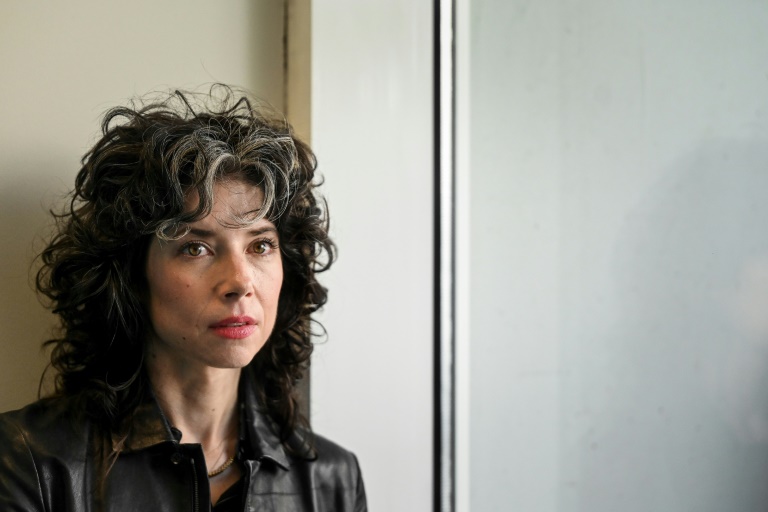
The mysticism that has allowed tech firms to make billions of dollars from surveillance is finally clearing, the boss of encrypted messaging app Signal told AFP.

Meredith Whittaker, who spent years working for Google before helping to organise a staff walkout in 2018 over working conditions, said tech was “valorised” and “fetishised” when she first began in the industry in 2006.

“The idea that technology represented the apex of innovation and progress was fairly pervasive in government circles and popular culture,” she said in an interview on the sidelines of the Web Summit tech conference in Lisbon this week.

But legislators and users were now reckoning with the “well-documented harms of allowing a handful of large corporations have the power to surveil almost every aspect of human life”.

She said people were now seeking out apps like Signal because they appreciated the “real existential dangers of placing their most intimate thoughts, their locations, their friend networks in the hands of corporate and state surveillance actors”.

Whittaker, who established the AI Now Institute at New York University in 2017 and has advised US government regulators, has emerged as a prominent critic of the business models built on extraction of personal data to use for targeted advertising.

– ‘Punching above our weight’ –

She became president of Signal two months ago and is pushing hard for the app to become a genuine alternative to the likes of WhatsApp and Apple’s iMessage.

“We want to make sure that everyone in the world can pick up their device, quickly open Signal, use it to communicate with anyone else,” she said.

The odds are stacked against her firm –- WhatsApp, she says, has around 1,000 engineers and many thousands of support staff, while her company has just 40 people in total.

The app is governed by a non-profit organisation, the Signal Foundation, and is just beginning to ask users for small donations to keep it going.

The company’s David vs Goliath act was laid bare in January when co-founder Moxie Marlinspike left his post as CEO, detailing how hard it had been to keep the app going.

“I was writing all the Android code, was writing all of the server code, was the only person on call for the service, was facilitating all product development, and was managing everyone,” he wrote in a blog at the time.

Yet Signal has been downloaded more than 100 million times and, although Whittaker will not confirm the figures, reports last year estimated it has 40 million regular users.

And she is undaunted by the task, arguing that having talented staff helps close the gap with competitors.

“We have a small team that are extremely competent and yet we’re punching way way above our weight,” she said.

– ‘Gold standard’ –

Signal has increasing numbers of friends in the pro-privacy sector.

Email services like Proton, search engine DuckDuckGo and countless data analytics firms all market themselves as privacy-focused apps.

And Whittaker stressed that Signal was producing a “gold standard” open-source encryption protocol that is used by WhatsApp among others.

But the goal is not to emulate the other players in the field and push for evermore flashy new features.

“Our growth ambitions are not of the same nature as the ambitions of for-profit surveillance companies,” she said.

The aim instead was to create a “network effect of encryption”.

That would help to make sure “everyone in the world has the option of actually communicating privately without being subject to pervasive surveillance by states and corporations”.

'No choice' but cholera water for Lebanon's poor

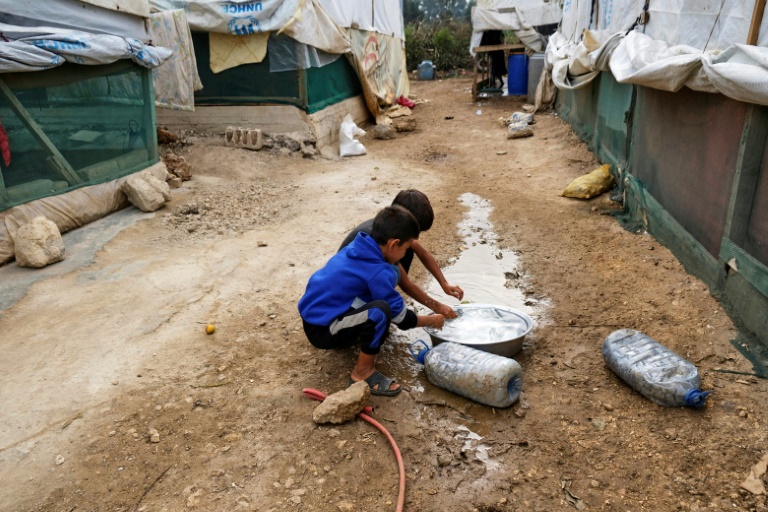
Marwa Khaled’s teenage son was hospitalised with cholera after drinking polluted water in Lebanon’s impoverished north — yet she still buys the same contaminated water, the only kind she can afford.

“People know (the water is contaminated), but they don’t have any other choice,” said 35-year-old Khaled, standing near her son, who is bedridden at a cholera field hospital.

“Everyone will end up with cholera.”

Last month Lebanon recorded its first cholera case since 1993, in the nearby Syrian refugee camp of Rihaniye — weeks after an outbreak in Syria, which lies about 20 kilometres (12 miles) away.

Now the World Health Organization warns the waterborne disease is spreading “rapidly” as Lebanon struggles with crumbling infrastructure, poor sanitation and limited access to clean water following three years of economic meltdown.

Over a quarter of the country’s more than 400 recorded cases are from Khaled’s hometown of Bebnine, where people resort to unsafe water sources as the state fails to provide clean water.

The actual number of cases could be much higher, with the health ministry recording more than 2,400 suspected and confirmed infections.

The mother-of-six and her family drink contaminated water, trucked to their home from nearby wells and water sources, because they lack access to running water and cannot afford bottled water.

Like much of Lebanon’s marginalised north, Bebnine suffers from dilapidated infrastructure and government neglect. 

A quarter of the town’s residents are Syrian refugees living in squalid conditions.

– “Sewage water” –

Only 500 of Bebnine’s households are registered with the state water network, in an overcrowded town of 80,000 people, according to engineer Tareq Hammoud of the North Lebanon Water Establishment.

But even these do not receive round-the-clock water supply.

A branch of the sewage-polluted Nahr al-Bared river flows through the town and has been contaminated with cholera, infecting nearby wells and water sources, field hospital director Nahed Saadeddine said.

Around 450 patients attend the hospital for treatments every day, she said.

The contaminated stream “provides water for all the crops in the area… There are wells, tanks, and springs pulling water from it, even water filtration sites,” Saadeddine told AFP.

Cholera is generally contracted from contaminated food or water, and causes diarrhoea and vomiting.

It can also spread in residential areas lacking proper sewerage and drinking water systems.

“The infrastructure must be changed, the wells and water sources improved” to eradicate the disease, Saadeddine said.

“We want a long-term solution. Otherwise, we will see a lot more disasters.”

The disease can kill within hours if left untreated, according to the WHO, but many of those infected will have no or mild symptoms.

It can be easily treated with oral rehydration solution, but more severe cases may require intravenous fluids and antibiotics.

– ‘Diapers’ –

Some patients at the hospital have contracted the disease more than once, among them Rana Ajaj’s nine-year-old daughter.

“Five of us are sick at home. Even after the treatment, we will be sick again from drinking the same water,” the 43-year-old said, passing a cup of water to her 17-year-old daughter who lay in bed, while her younger daughter sat close by.

In the next bed, 10-year-old Malek Hamad was struggling to drink his medicine, exhausted from losing 15 kilograms (33 pounds) after two weeks of illness. 

His mother is terrified that her 10 other children may also be infected.

Outside the hospital, school supervisor Sabira Ali walked along the banks of the polluted stream, gazing at the water.

“Coronavirus didn’t scare me as much as cholera,” said the 44-year-old who lost two members of her family to cholera last month.

Bebnine resident Jamal al-Sabsabi, 25, blamed local authorities for failing to act as disease struck the town.

“What is the municipality doing?” he asked.

“Sewage water, diapers, waste… everything gets dumped into the stream,” al-Sabsabi said, pointing to the murky brook running a few metres (yards) from his home.

“No wonder the disease is spreading.”

Malaysia's nearly century-old Mahathir seeks re-election

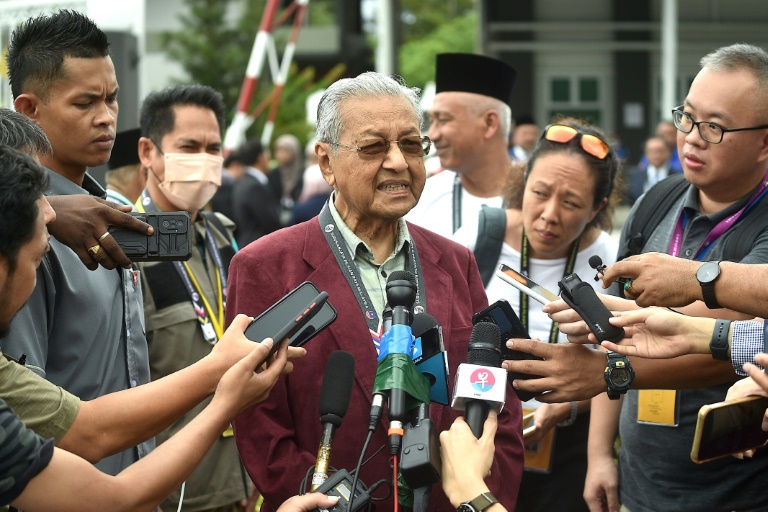
Mahathir Mohamad, the nearly 100-year-old elder statesman of Malaysian politics, filed his candidacy Saturday in what is likely to be his final race, as campaigning for upcoming general elections began.

Prime Minister Ismail Sabri Yaakob called for elections 10 months ahead of schedule, with the graft-tainted ruling party of jailed ex-leader Najib Razak seeking to cement its political comeback four years after it was dramatically voted out.

A Guinness World Record holder for being the “world’s oldest current prime minister” when he became premier for a second time in 2018, the 97-year-old Mahathir will stand again to defend his parliamentary seat in the holiday island of Langkawi in the November 19 vote.

Visibly slowed by age but still looking healthy, Mahathir was greeted by dozens of supporters waving flags of his Homeland Fighters’ Party as he arrived at a local government office in Kuah, the island’s main town, to register his candidacy.

Mahathir told reporters that he stood a “good chance” of winning and laughed off suggestions he should retire.

“I’m still standing around and talking to you, I think making reasonable answers,” he said.

He added his party would not form any alliances with parties that are led by “crooks or jailbirds”, an apparent reference to the ruling United Malays National Organisation (UMNO).

Ismail, of the UMNO, and opposition leader Anwar Ibrahim, of the Pakatan Harapan coalition, have also filed their candidacies elsewhere in the country.

Anwar urged voters to come out in big numbers, as fears circulated that torrential rain during the monsoon season could dampen turnout.

“I am optimistic we will win,” he told AFP from his constituency in the northern Perak state.     

Meanwhile, in Sabah, in Malaysia’s part of Borneo Island, police fired tear gas to disperse scores of supporters of a minor opposition party who attempted to force their way into a nomination centre in the interior town of Tenom after their leader’s candidacy was rejected.

Hazani Ghazali, the internal security police chief, was quoted by The Star news portal as saying that tear gas was fired to disperse the crowd, with no injuries reported.

Serious violence is rare during general elections in Malaysia. 

– Corruption a key issue – 

Nonagenarian Mahathir, who once ruled the Southeast Asian nation with an iron fist from 1981 to 2003, came out of retirement to lead the opposition Pact of Hope alliance in the 2018 general elections.

The reformist alliance won a stunning victory over then-incumbent Najib, who was later convicted of corruption linked to the 1MDB state fund financial scandal and is now serving a 12-year jail sentence.

Mahathir became premier again just two months shy of his 93rd birthday, but his government collapsed in less than two years due to infighting.

He has warned that Najib would be freed if the jailed politician’s allies in UMNO win, signalling that corruption will be a key issue at the polls.

He also offered to become prime minister a third time.

“You should see the circumstances of my country … so much of corruption and so many wrongdoings. It’s time to fight, fight, fight!” said Hamidah Ayub, 66, a Mahathir supporter.

While Mahathir is expected to win easily in Langkawi, aiming for the premiership a third time would be tough, an analyst said.

At least four blocs — including the one he leads — are vying for a majority in the 222-seat lower house of Parliament, making it a tight contest.

The 21 million voters also include more than six million new registrants, many of them young, who came on board following electoral reforms.

“Mahathir’s time has passed,” Bridget Welsh of the University of Nottingham Malaysia told AFP.

“He was given a second chance and bungled it. His chances this time to run as prime minister are extremely slim.”

Kenya Airways flights disrupted due to pilot strike

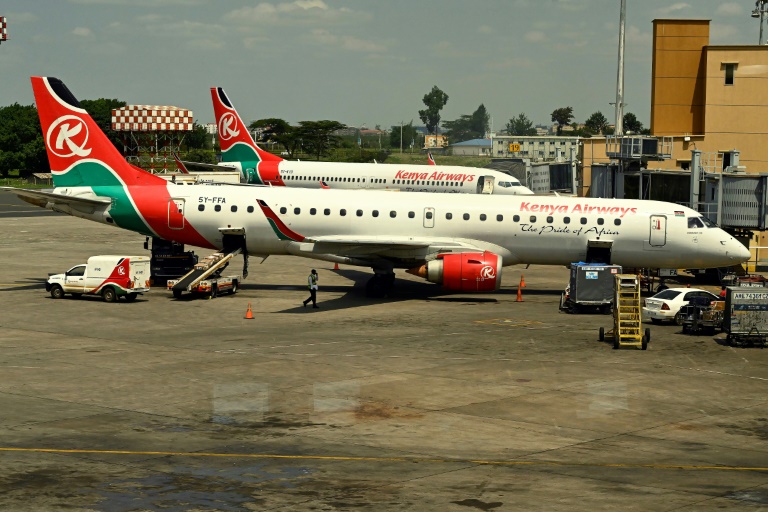
Kenya Airways flights were disrupted Saturday as a strike by its pilots demanding better working conditions grounded over a dozen planes, affecting thousands of passengers, the country’s transport minister said.

The airline, part owned by the government and Air France-KLM, is one of the biggest in Africa, connecting multiple countries to Europe and Asia, but it is facing turbulent times, including years of losses.

The Kenya Airlines Pilots Association (KALPA) said that no Kenya Airways flight flown by its members had departed Nairobi’s Jomo Kenyatta International Airport starting from 6:00 am (0300 GMT) on Saturday.

“The strike is fully in force,” KALPA union secretary general Murithi Nyagah said in a statement released on Saturday.

The pilots announced the strike in defiance of a court order against the industrial action and have given no indication of how long it will last.

Kenya’s newly appointed Transport Minister Kipchumba Murkomen told reporters at the airport on Saturday that the strike was unwarranted and “akin to economic sabotage”.

He said around 10,000 passengers had been affected by the strike, which had led to the grounding of 15 planes.

“I am not saying their concerns are not valid,” he said, but added that their actions were drastic as he appealed to the “goodwill of the pilots to terminate the strike.”

Frustrated passengers described huge queues at the airport, with many travellers only learning about their cancelled flights when they showed up to check in.

“We have been told nothing,” American tourist Jill Lee told AFP as she waited in line to figure out her next course of action after her flight to Dar es Salaam was cancelled at the last minute.

The 65-year-old had booked a safari in Tanzania but said she had no idea where she would spend the night after her connecting flight from Nairobi was cancelled.

“Many people here have nowhere to go. It’s pretty horrible.”

– ‘Soften its stance’ –

Kenya Airways on Saturday reported high call volumes at its service centre due to the “ongoing unlawful industrial action”, urging customers to only contact the airline if they were travelling in the next 48 hours.

The pilots, who have had a particularly fraught relationship with management, are pressing for the reinstatement of contributions to a provident fund.

They also want back payment of all salaries stopped during the Covid-19 pandemic.

KALPA representatives said Friday that a series of meetings with airline management had failed to resolve grievances.

“Kenya Airways management’s actions have left us with no other option,” Nyagah said, adding that a 14-day notice on the industrial action had ended without a solution.

“We had hoped that the management of the airline would soften its stance and engage in negotiation on the issues raised.”

On Monday, the airline won a court injunction stopping the strike, but an official at KALPA, which has 400 members, told AFP the pilots “were acting within the provisions of the law” and that they were yet to be served with a court order.

The carrier warned earlier this week that the strike would jeopardise its recovery, estimating losses at $2.5 million per day if the pilots went ahead with their plans.

The airline was founded in 1977 following the demise of East African Airways and flies more than four million passengers to 42 destinations annually.

But its slogan “The Pride of Africa” rings hollow as it operates thanks to state bailouts following years of losses.

Like other carriers around the world, Kenya Airways saw its revenue nosedive after the pandemic grounded planes worldwide because of stringent travel restrictions, devastating the aerospace and tourism industries.

China doubles down on zero-Covid after reopening rumours boosted markets

China said on Saturday that it would “unswervingly” stick to its zero-Covid policy, dampening the outlook for global markets following their recent surge on hopes that Beijing would cast aside some of its economically damaging virus curbs.

China is the last major economy wedded to a strategy of extinguishing outbreaks as they emerge, imposing snap lockdowns, mass testing and lengthy quarantines despite the widespread disruption to businesses and international supply chains.

Stock markets climbed on Friday in part on unsubstantiated rumours that Beijing was poised to announce significant changes to the policy or even lay out a path towards a full reopening.

But authorities poured cold water on the speculation, with National Health Commission (NHC) spokesperson Mi Feng confirming on Saturday that Beijing would “stick unswervingly to… the overall policy of dynamic zero-Covid”.

“At present, China is still facing the dual threat of imported infections and the spread of domestic outbreaks”, Mi said at a press briefing.

“The disease control situation is as grim and complex as ever,” he said. “We must continue to put people and lives first.”

China recorded 3,659 new infections on Saturday, the majority of which were asymptomatic, according to the NHC.

The thousands of domestic cases logged in the past week represent a tiny fraction of the country’s vast population, but have been enough for officials to take drastic action — sometimes with unpopular or tragic consequences.

A lockdown of the world’s biggest iPhone factory in the central city of Zhengzhou prompted large numbers of workers to flee on foot, alleging food shortages, inadequate medical care and poor treatment from their employer, Taiwanese tech giant Foxconn.

On Thursday, authorities in the northwestern city of Lanzhou made a rare apology after a three-year-old boy died of carbon monoxide poisoning following his denial of medical treatment during a weeks-long Covid lockdown.

Officials on Saturday criticised the use of “excessively layered” and “one-size-fits-all” policies in some locales but insisted the overall zero-tolerance virus approach was “correct”.

– Reopening rumours –

Chinese stocks jumped on Friday in part on rumours that China might loosen the policies, which include a ten-day quarantine for inbound travellers and a “circuit-breaker” on Covid-affected international passenger flights.

The Hang Seng Index closed up more than 5 percent, while bourses in Shanghai and Shenzhen rose 2.4 percent and 3.2 percent respectively.

But a reopening still appears to be a long way off, with areas contributing over 10 percent of China’s overall gross domestic product under some form of enhanced virus curbs as of Thursday, according to a calculation by Nomura.

The Japanese bank also warned that the impact of any policy easing “would likely be very limited” and said it foresaw a “very small probability to materially ending (zero-Covid) before March 2023”.

China’s year-on-year economic growth rebounded to 3.9 percent in the third quarter of this year, but analysts still expect Beijing to miss its stated goal of around 5.5 percent annual GDP growth by a wide margin.

President Xi Jinping, who has made fighting the pandemic a cornerstone of the ruling Communist Party’s legitimacy, lauded zero-Covid’s “significant positive results” at a congress last month as he sealed a precedent-busting third term in power.

North Korea fires four short-range ballistic missiles

North Korea fired four short-range ballistic missiles into the sea on Saturday, the South Korean military said, the latest in a blitz of weapons launches by Pyongyang this week.

The flurry of North Korean launches has included an intercontinental ballistic missile and one that landed near South Korea’s territorial waters for the first time since the end of the Korean War in 1953.

The launches came as the United States and South Korea conducted their largest-ever joint air force drills, which an infuriated North Korea described as “aggressive and provocative”.

“The South Korean military detected four short-range ballistic missiles launched by North Korea from Tonrim, North Pyongan Province, to the West Sea at around 11:32 a.m. to 11:59 a.m. today,” South Korea’s Joint Chiefs of Staff said in a statement.

Their “flight distance was detected at about 130 km (80 miles), an altitude of about 20 km, and a speed of about Mach 5”, it added. Mach 5 represents five times the speed of sound.

The JCS said South Korean and US intelligence were conducting further analysis on the launches.

The United States and South Korea have warned that these launches could culminate in a nuclear test by North Korea, and extended their air force drills to Saturday in response.

The joint exercise, named Vigilant Storm, was originally scheduled from Monday to Friday.

Pyongyang has ramped up missile launches in protest against the US-South Korea air drills. Such exercises have long infuriated North Korea, which sees them as rehearsals for an invasion.

– ‘Significant threat’ – 

Vigilant Storm concluded on Saturday, with the US Air Force deploying two B-1B long-range heavy bombers on the final day in a ramped-up show of force.

Pyongyang has been particularly angered in the past by the deployment of US strategic weapons such as B-1Bs and aircraft carrier strike groups, which have been sent to and near the Korean peninsula in times of high tension.

While the supersonic B-1B no longer carries nuclear weapons, it is described by the US Air Force as “the backbone of America’s long-range bomber force”.

The USAF lists the Lancer’s weapons payload as 34 tonnes (75,000 pounds), which can include cruise missiles and laser-guided bombs.

The B-1B’s range can be extended by in-air refuelling, giving it the ability to strike anywhere in the world.

Ahn Chan-il, a North Korean studies scholar, told AFP that given the B-1B’s status as a key strategic US asset, its deployment in the drills with South Korea will be seen as a “significant threat” by North Korea.

The B-1B deployment came a day after South Korea scrambled fighter jets in response to what it said was the mobilisation of 180 North Korean warplanes.

Experts say Pyongyang is particularly sensitive about these drills because its air force is one of the weakest links in its military, lacking high-tech jets and properly trained pilots.

Compared with North Korea’s ageing fleet, Vigilant Storm has seen some of the most advanced US and South Korean warplanes in action, including F-35 stealth fighters.

At the United Nations Security Council on Friday, US Ambassador Linda Thomas-Greenfield dismissed criticism of Vigilant Storm as North Korean “propaganda”, saying it posed no threat to other countries.

She assailed China and Russia during the emergency session, accusing them of having “enabled” North Korea.

Moscow and Beijing have in turn blamed Washington for the escalation, and the meeting ended without a joint statement from the Security Council.

Fire kills 15 at bar in Russian city of Kostroma

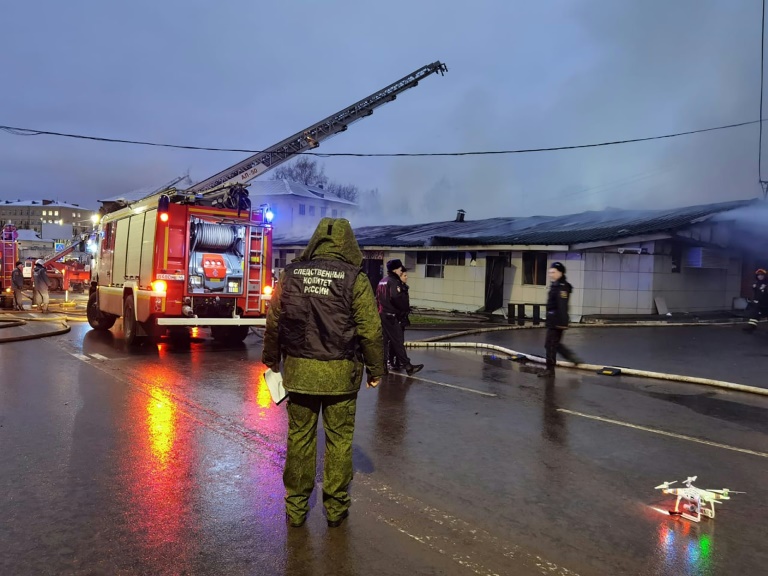
A fire Saturday killed at least 15 people at a bar in the Russian city of Kostroma, Russian news agencies reported. 

The night-time fire at the popular bar could have been started after a drunk man fired a “flare gun” on the dance floor, the TASS news agency reported. 

State television showed images of the bar — called “Poligon” and housed in a single-storey logistical centre — engulfed in flames. 

Authorities said the fire started at around 2:00 am local time and was put out at around 7:30 am.

Governor Sergei Sitnikov earlier said 13 people were killed, but emergency services then said the remains of two other people were found.

“Two more bodies were recovered. This means the number of victims is now 15,” the TASS news agency quoted law enforcement sources as saying.  

Around 250 people were evacuated from the building when it caught fire in the city around 300 kilometres (180 miles) northeast of Moscow, authorities said earlier. 

The TASS news agency, citing sources in emergency services, said a drunk man with a “flare gun” was likely to have caused the fire.  

“He was spending time in the bar with a woman, ordered her flowers, with a flare gun in his hands,” the source told the agency.

“Then he went to the dance floor and fired it.”

Local emergency services said the blaze had spread out over 3,500 square meters. 

On its website, Poligon says it acts as an evening and night-time “place for recreation and entertainment”.

By day, it is a typical Russian “stolovaya” — a casual restaurant serving traditional food.

It says it is housed in a “distribution centre” and is popular with traffic police.  

State television showed images of dozens of emergency workers fighting a huge fire that had engulfed the single-storey building.

The sign “Poligon” was visible amid the flames raging on its roof.  

One fire fighter told regional state television that it took 50 people to extinguish the fire and that they had used 20 fire engines.  

He said the fire was especially difficult to put out because of the risk of the building collapsing.  

Kostroma, a city on the Volga river of around 230,000 people, is one of Russia’s oldest cities and is famous for its medieval architecture and monasteries. 

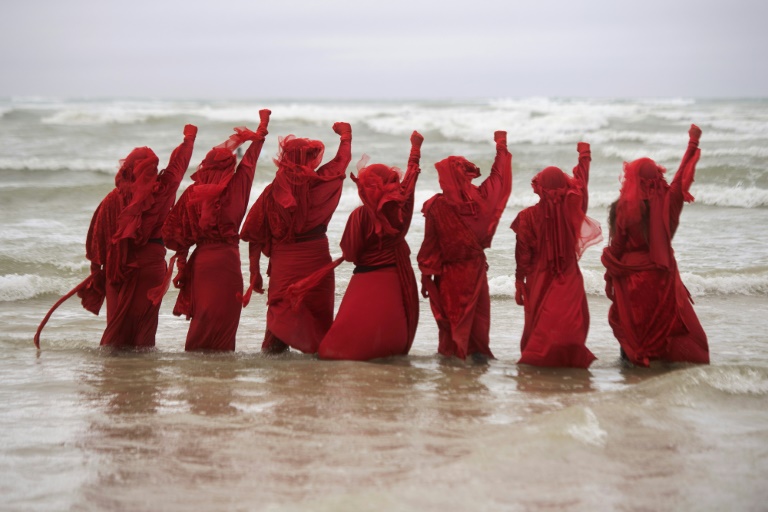
'We need to rebel': climate change needs radical response says XR activist

Soup on Vincent van Gogh paintings, mashed potatoes on a Monet masterpiece: climate activists are taking increasingly daring action to grab headlines — and it’s working.

For Extinction Rebellion (XR) co-founder Gail Bradbrook, such bold action is needed to draw attention to the “polycrisis” that threatens to tip the world into climate catastrophe and devastating biodiversity loss.

In the latest eye-catching move, activists from the Last Generation group splashed pea soup on Van Gogh’s glass-covered 1888 painting “The Sower” in Rome on Friday. 

While the Extinction Rebellion was not behind the recent art protests, the movement has inspired climate action across the world.

Bradbrook said that when people act together they can make a real difference.

The scientist spoke to AFP ahead of the 27th round of United Nations climate negotiations opening Sunday — branded by Greta Thunberg as “greenwashing” amid concerns that campaigners will be blocked from attending.

The interview has been edited for length and flow. 

– Climate protesters have recently thrown soup over a Van Gogh painting and mashed potato over a Monet. Do shock tactics work? 

In a media-saturated environment that doesn’t want to tell important stories, it’s hard to get attention. So people go and do something frankly quite dangerous and daft like getting on the motorway. That’s agitation, and it does get a story in the mainstream consciousness. Evidence, from, for example, research by Colin Davis at the University of Bristol, suggests people may dismiss the activists involved, but their focus on the issues increases. In other words, it works from an awareness-raising perspective.

The next bit is to really inspire people that change is possible. And the third bit is acting together to make sure that the change happens. We need to rewire our economy and upgrade our democracy.

You can’t leave it to indigenous people dying on the frontlines trying to defend their lands. And you can’t leave it to activists. We all have to participate.

– How much can individuals do?

There’s an honour in doing what you can. We can understand that for so many miles driven in a car, there’s so much carbon emitted, and therefore, so much ice will melt. 

But at the same time, this is systemic and what the system wants you to do is tie yourself up in a knot. It is a very stressful system that we live in. It’s not by accident that BP introduced the idea of carbon footprinting.

The whole system was founded on extraction, exploitation, especially of our family in the Global South. It needs to go.

– Why did you set up Extinction Rebellion?

It was from a sense of determination to see change happen. It was more, “well, what else do you want to do with your life?” 

We chose the name because we are in the sixth mass extinction event. The polycrisis that we’re in, it’s a climate and ecological emergency, a health crisis and inequality crisis and so on. It has many root causes. There’s an elite class of people who we need to rebel against, who are not taking sufficient action, and in some cases, taking us in the wrong direction.

Climate change weather extremes are already happening. Look at Bangladesh and Pakistan. Essentially, what the world is saying is “tough”. It’s disgusting. 

– What do you think motivates action?  

One of the first things that we did with Extinction Rebellion was to move into emergency mode messaging. You tell people the bitter and brutal truth. And then you talk about why it is like that, and therefore what can be done. And then you talk about what that person can do themselves and as part of their group, so there’s a sense of agency. 

It’s a bit like if you had a lump somewhere on your body and you go to the doctor. At the end of the day, the grown-up in you needs to know what the risks are, what the treatment is. 

The good news is, it starts with being a human being, the best side of being a human being, where we feel part of life.

People have done really incredible things in times of war, for example. Human beings are really amazing, they’re really up for acting selflessly, and on behalf of the collective. It is hardwired into us.


– And what stops people?

If there is no leadership telling you there’s an issue, and if you get mixed messages, then you don’t act. 

There have been active forces at play to stop us from wanting to do anything. We know that there were large sums of money spent on climate denial. 

After climate denial — not that it is fully done with — what is the next phase to stop us doing anything? It is these delay stories: Technology is going to save us. It’s all for consumers to sort out. Or, what about China? 

They’re all psychological tools to give people a story to say to themselves: “I can let this go because it’s too stressful to face”. 

Close Bitnami banner
Bitnami