World

Biden, Trump target pivotal battleground in countdown to midterms

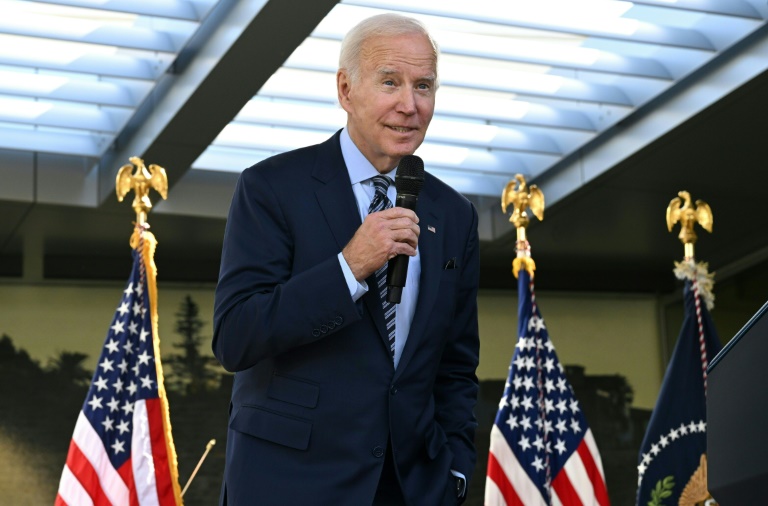
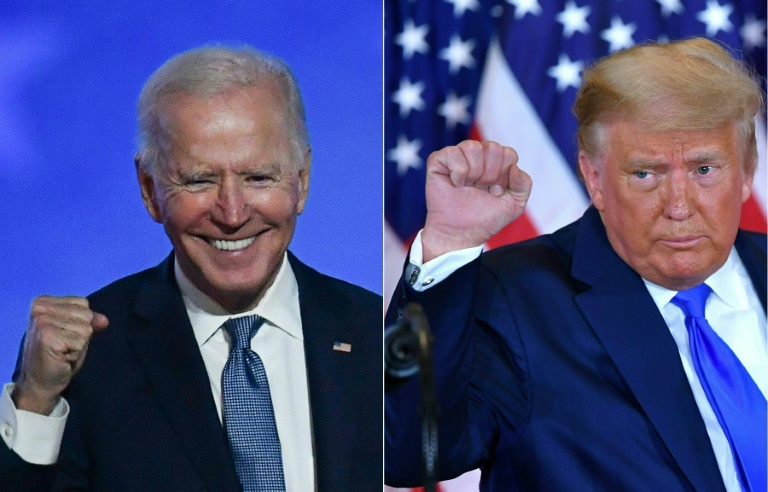
They have been shadowboxing at separate campaign stops across the United States for weeks but the Democratic and Republican leaders find themselves on the same battlefield Saturday as they make closing pitches in Pennsylvania for next week’s midterm election.

President Joe Biden will rally alongside his old boss Barack Obama as the Democrats deploy their big guns to build the energy they hope will spread nationwide and reverse the late rightward-shift in polling.

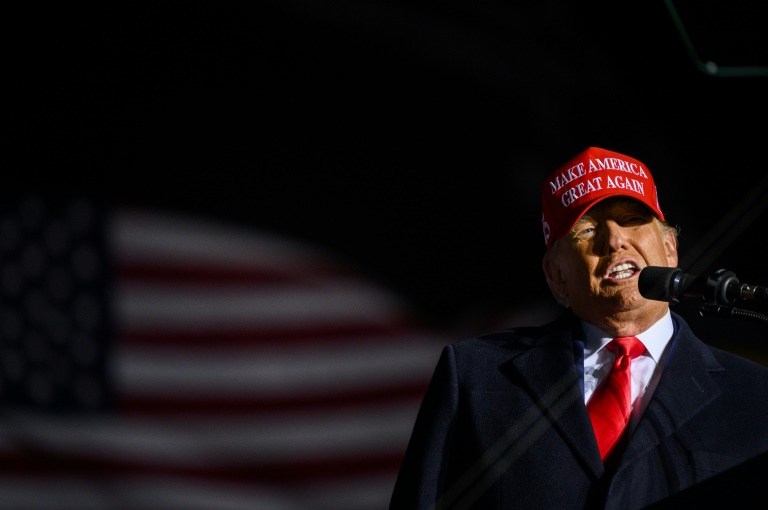
And in a split-screen preview of a potential rematch of the 2020 presidential contest, the midwestern state is also playing host to Biden’s predecessor and bitter political rival Donald Trump.

Obama — still the party’s most bankable star six years after leaving the White House — begins the day in Pittsburgh with Democratic candidate John Fetterman, who is in a dead heat against Republican TV medic Mehmet Oz in their crucial Senate race.

Biden and Obama then appear in Philadelphia, the historic cradle of US independence where the 44th and 46th presidents will woo voters from the suburbs that make for a crucial base of Democratic support.

The Keystone State backed Trump over Hillary Clinton for president in 2016 but preferred Biden to Trump in 2020.

Strategists from both parties believe the side that wins the post vacated by retiring Republican Pat Toomey will hold the majority in the upper chamber of Congress next year.

Fetterman and Oz sparred for an hour in state capital Harrisburg 10 days ago, with Fetterman still struggling with communication issues after a stroke in May upended his campaign.

– ‘Chipping away’ –

“The month-to-month shifts in support for Oz are not statistically significant,” said Patrick Murray, director of the independent Monmouth University Polling Institute.

“The overall trend suggests he has been chipping away with some voters who have not been completely comfortable with him, but that mainly happened prior to the debate.”

Just a few miles east of Pittsburgh in Latrobe, Trump — the one-term 45th president with ambitions to return as the 47th — will seek to firm up support in a region that delivered him big margins in 2016 and 2020. 

Pennsylvania is seen as a must-win not just for control of the Senate, but also for the balance of power among the country’s 50 state governors, influential officials that weigh in on most aspects of voters’ lives, from education and health care to voting rights.

Democratic gubernatorial nominee Josh Shapiro has been spotlighting the fringe views of state senator Doug Mastriano, his far-right opponent who was involved in Trump’s attempts to overturn the 2020 election.

A victory for Trump-backed Mastriano would give the prominent election denier oversight of the state’s voting system for the 2024 presidential race.

Like Biden, Trump has visited Pennsylvania twice this year, rallying for Oz and Mastriano most recently in Wilkes-Barre in early September.

The 76-year-old tycoon has already claimed baselessly that the state’s elections have been “rigged,” echoing his false claims that his own 2020 defeat was the result of widespread fraud. 

“As Biden’s approval rating plummets, Pennsylvania crime spikes, and Pennsylvanians grapple with a 74 percent hike in heating oil, coupled with record inflation, just weeks away from winter,” Trump’s office said in a statement. 

“The America First Movement offers the Keystone State an alternative vision for America: safe streets, cheap gas, low inflation, and a thriving American economy.”
Pope holds open-air mass for 30,000 in Bahrain

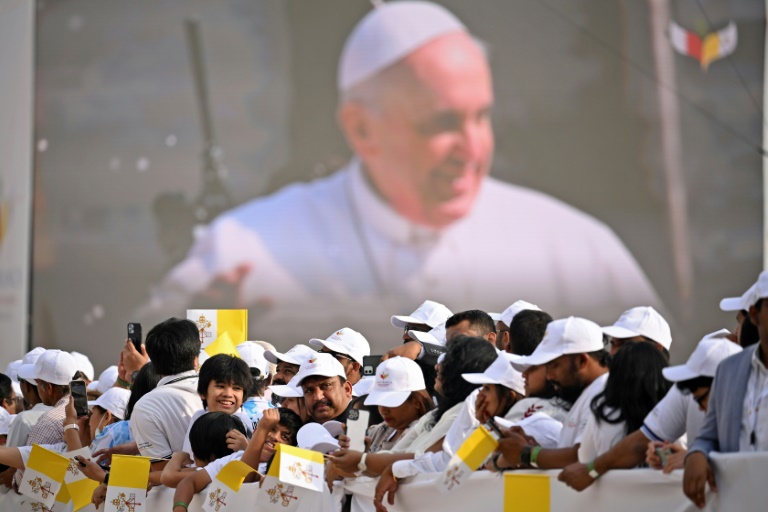
About 30,000 flag-waving worshippers joined an open-air mass held by Pope Francis in mainly Muslim Bahrain on Saturday, the highlight of his outreach mission to the Gulf.

Some of the congregation had tears in their eyes as they waited to see the 85-year-old at Bahrain National Stadium, the kingdom’s biggest venue.

Francis, who uses a wheelchair and walking stick due to knee problems, smiled and waved to the crowds from an open-sided popemobile where he was seated, flanked by more than a dozen suited security guards and attendants.

As a 100-strong, multinational choir sang in multiple languages, the Argentine stood to kiss children lifted up to greet him in the specially adapted vehicle, which drove slowly towards a white stage backdropped by a giant gold cross.

“This very land is a living image of coexistence in diversity and indeed an image of our world, increasingly marked by the constant migration of peoples and by a pluralism of ideas, customs and traditions,” he said in an address.

The pope, who has made outreach to Islam a pillar of his papacy, is on his second visit to the resource-rich Gulf, the cradle of Islam.

During his 2019 trip to the United Arab Emirates he led a mass for 170,000 people and signed a Christian-Muslim manifesto for peace.

He has spent much of his four-day Bahrain trip meeting top officials and religious figures, but for Catholics in the tiny island nation, including many migrant workers, Saturday’s mass was the high point.

– ‘We didn’t sleep’ –

“We’ve been here since one o’clock. We didn’t sleep,” said volunteer Philomina Abranches, 46, an Indian-born Bahrain resident.

“We are so excited. We all call him ‘Papa’. More than anything, he represents peace in the world. This is what we need now.”

Margerite Heida, 63, also a Bahrain resident, said: “Hosting Pope Francis is the best feeling. This is the greatest event of the year.”

Heida was waiting for her second look at the pontiff.

“I saw him yesterday in the church”, she said. “I consider myself lucky to be able to see him. I was also able to hold his hand yesterday and got his blessings.”

Many worshippers came to catch a glimpse of the pope from around the Gulf region, which has about two million Catholics, mainly foreign workers from South Asia and the Philippines.

Bahrain, like the United Arab Emirates, is considered a relatively tolerant Arab nation.

Still, NGOs continue to cite discrimination, repression and harassment in Bahrain by the Sunni elite against Shiites, crackdowns on opposition figures and activists, and other abuses. 

A government spokesperson said Tuesday in a statement that Bahrain “does not tolerate discrimination” and “prides itself on its values of tolerance”.

The statement said that “no individual” is prosecuted “because of their religious or political beliefs”, but pointed to “a duty to investigate” people who “incite, promote or glorify violence or hatred”.

Everyone at the stadium received a plastic bag containing a white baseball hat, a paper Vatican flag, a bottle of water, a booklet with details of the mass and some biscuits.

Pope Francis’s 39th international visit is largely aimed at building ties with Muslim officials. On Friday he met the grand imam of Egypt’s Al-Azhar mosque, one of the leading authorities of Sunni Islam, and members of the Muslim Council of Elders.

He also attended a service at Our Lady of Arabia Cathedral, the biggest in the Arabian peninsula that seats more than 2,000. Hundreds of migrant workers were among the congregation welcoming him.

Later on Saturday, Francis will meet children at the Sacred Heart School. 

On Sunday, he is to attend a prayer meeting at the 83-year-old Sacred Heart Church — the oldest in the region — before flying back to Rome.

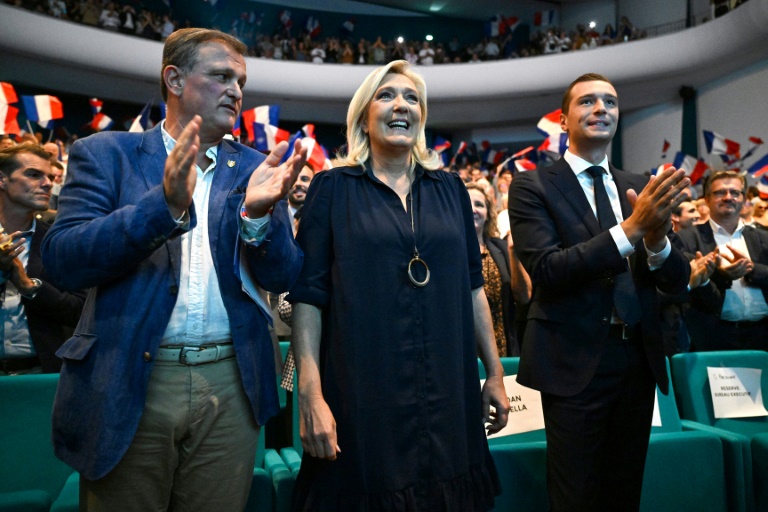
French far-right set to pick Bardella, 27, as Le Pen successor

France’s far-right National Rally party will Saturday choose a successor to its longtime leader Marine Le Pen, with 27-year-old Jordan Bardella the overwhelming favourite to oversee the task of building on strong parliament gains.

Le Pen, who failed to unseat Emmanuel Macron in last spring’s presidential vote, has nonetheless turned her party into a sizable force since taking over from her father, Jean-Marie Le Pen, 11 years ago.

Efforts to shed its legacy of virulent anti-Semitic and extremist views helped see RN candidates win 89 seats in the National Assembly after Macron’s re-election, depriving his centrist party of an absolute majority.

By stepping down as party chief, Le Pen will focus on leading the RN group in parliament, where she will have a powerful platform for a potential fourth run at the presidency in 2027.

Party sources told AFP the only uncertainty is the “size of the victory” of Bardella over his rival Louis Aliot, a party veteran and former partner of Le Pen.

Brought up by his mother who was born in Italy, Bardella promotes a slick image, rarely seen out of a suit and impressed this year with sharp performances in election debates.

But shadows from the past remain for the party. This week Le Pen and Bardella, already serving as interim chief, had to defend one of their members of parliament who was suspended over claims of a racist outburst against a colleague.

Gregoire de Fournas yelled “back to Africa” to a black lawmaker who was challenging the government’s response to migrants rescued at sea in the Mediterranean.

He later said he was referring to the boat, not his fellow lawmaker, but Interior Minister Gerald Darmanin said Friday that Bardella had shown his complicity in “everyday racism”.

– Extremist nostalgia? –

There are also questions over what value the RN presidency has for Bardella, given Le Pen formally leads its cohort in parliament and is widely expected to be its presidential candidate in 2027.

But the party position can also be a stepping stone for when “MLP” finally bows out from the political scene.

Bardella has also been criticised in the last weeks by Aliot, who as mayor of Perpignan is the only RN politician to run a city larger than 100,000 people.

Aliot has accused him of encouraging white supremacist groups that should be unacceptable for a party trying to prove it can unite and govern the country.

Bardella also gave credence in August 2021 to the so-called “Great Replacement” conspiracy theory of a surreptitious “Islamisation” of Europe orchestrated by its elites — something Le Pen has shied away from.

In an open letter last month, Aliot slammed “extremist nostalgia” and “the excesses of the National Front of a long-gone era,” a reference to the party’s original name.

Aliot later said he was targeting the supporters of Eric Zemmour, the far-right pundit who siphoned off many RN voters with his more extremist positions in this spring’s presidential contest.

Bardella accused him of “bitterness and bad faith”, insisting his goal is to win over more supporters from traditional parties on the right and left.

Further scrambling the French political establishment, the RN has voted alongside the far-left France Unbowed party in favour of no-confidence motions brought against the government in fierce budget debates.

US ups N.Korea pressure but fears no end to headache

As North Korea fires a blitz of missiles, the United States is sticking to a mixture of pressure and offers of dialogue but US policymakers are resigned that little they do is likely to change Pyongyang’s course.

Eager to avoid another global crisis alongside Russia’s invasion of Ukraine, President Joe Biden’s administration has focused on a more narrow goal of reassuring allies that the United States will defend them.

North Korea, whose leader Kim Jong Un met three times with Biden’s predecessor Donald Trump but failed to reach a lasting accord, in recent days has fired a record number of missiles, and Western officials say Pyongyang has made preparations for a seventh nuclear weapons test.

“I don’t think there is anything we can do to stop North Korea,” said Sue Mi Terry, a former CIA analyst on Korean affairs who is now director of the Asia program at the Woodrow Wilson Center for International Scholars.

“If I were Kim Jong Un’s advisor, I would say, yeah, go ahead,” she said.

“They couldn’t get any kind of deal with Trump and so what are they going to get from the Biden administration? They know this. The only thing they can do is get their program to the next level.”

The United States has responded to North Korea by extending exercises with South Korea, including deploying a strategic bomber, and Biden will likely offer robust support for South Korean and Japanese leaders during summits this month in Southeast Asia.

Biden is also widely expected to meet President Xi Jinping of China, Pyongyang’s primary ally, which joined Russia in May in vetoing a US-led bid at the Security Council to tighten sanctions on North Korea.

Linda Thomas-Greenfield, the US ambassador to the United Nations, told an emergency session Friday that China and Russia had “enabled” North Korea but also reiterated the Biden administration’s willingness to talk to the totalitarian state.

US officials say North Korea has shown no interest in talks and, privately, some think the Kim regime may be in one of its periodic cycles of escalation and that there is no choice but to wait.

Under the last Democratic administration of Barack Obama, some concluded that the United States erred in timing by reaching an agreement in February 2012 that quickly collapsed as North Korea was already poised to go ahead with a satellite test. 

– High risk, low reward –

For Biden, focused on Ukraine and possibly facing a more hostile Congress after midterm elections, diplomacy with North Korea offers high risks and limited chances of success.

“They don’t really have an appetite for engaging with North Korea. There’s a lot of North Korea fatigue,” said Frank Aum, a former Pentagon advisor on Korean affairs who is now at the US Institute of Peace.

But Aum said that diplomacy, even if chances for a breakthrough are limited, has succeeded at least in easing tensions.

He said Biden could offer concrete gestures and incentives, such as declaring a moratorium on deploying further strategic military assets or proposing sanctions relief.

“Any conciliatory tactic would be perceived domestically in the US as appeasement or a reward for bad behavior,” Aum said.

“But empirical evidence clearly demonstrates that North Korea doesn’t respond well to pressure and, conversely, when we engage with North Korea, they tend to behave better.”

He doubted the efficacy of the Biden strategy of leaning in on China to exert pressure, noting that Beijing “absolutely disagrees with that approach.”

– Time for rethink? –

The rising tensions have led, at least among experts, to a once taboo discussion on whether to accept North Korea as a nuclear state. 

Arms control expert Jeffrey Lewis, in an opinion piece last month in The New York Times that generated wide debate, said the United States has already essentially accepted that North Korea will never get rid of its nuclear arsenal and should focus on discussing risk reduction.

“It’s time to cut our losses, face reality and take steps to reduce the risk of war on the Korean Peninsula,” he wrote.

The State Department reiterated its goal on North Korea was “complete denuclearization” and some experts said a shift would send the worrisome signal at a time when Russian President Vladimir Putin is threatening nuclear attack in Ukraine.

“It buys you nothing and it freaks out your allies,” said Victor Cha, senior vice president for Asia at the Center for Strategic and International Studies.

Cha, who advised former president George W. Bush, said the Biden team needed to lay out a North Korea policy that is beyond talking points.

“Maybe that would come after the seventh nuclear test,” he said.

Pope holds open-air mass for 30,000 worshippers in Bahrain

About 30,000 flag-waving worshippers joined an open-air mass held by Pope Francis in mainly Muslim Bahrain on Saturday, the highlight of his outreach mission to the Gulf.

Some of the congregation had tears in their eyes as they waited to see the 85-year-old at Bahrain National Stadium, the kingdom’s biggest venue.

Francis, who uses a wheelchair and walking stick due to knee problems, smiled and waved to the crowds from an open-sided popemobile where he was seated, flanked by more than a dozen suited security guards and attendants.

As a 100-strong, multinational choir sang in multiple languages, the Argentine stood to kiss children lifted up to greet him in the popemobile which drove slowly towards a white stage backdropped by a giant yellow cross.

The pope is on his second visit to the resource-rich Gulf — the cradle of Islam — after his 2019 trip to the United Arab Emirates, where he held a mass for 170,000.

“We’ve been here since one o’clock. We didn’t sleep,” said volunteer Philomina Abranches, 46, an Indian-born Bahrain resident.

“We are so excited. We all call him ‘Papa’. More than anything, he represents peace in the world. This is what we need now.”

Margerite Heida, 63, also a Bahrain resident, said: “Hosting Pope Francis is the best feeling. This is the greatest event of the year.”

Heida was waiting for her second look at the pontiff.

“I saw him yesterday in the church”, she said. “I consider myself lucky to be able to see him. I was also able to hold his hand yesterday and got his blessings.”

Many worshippers came to catch a glimpse of the pope from around the Gulf region, which has about two million Catholics, mainly foreign workers from South Asia and the Philippines.

Everyone at the stadium received a plastic bag containing a white baseball hat, a paper Vatican flag, a bottle of water, a booklet with details of the mass and some biscuits.

Pope Francis’s 39th international visit is largely aimed at building ties with Muslim officials. On Friday he met the grand imam of Egypt’s Al-Azhar mosque, one of the leading authorities of Sunni Islam, and members of the Muslim Council of Elders.

He also attended a service at Our Lady of Arabia Cathedral, the biggest in the Arabian peninsula that seats more than 2,000. Hundreds of migrant workers were among the congregation welcoming him.

Later on Saturday, Francis will meet children at the Sacred Heart School. 

On Sunday, he is to attend a prayer meeting at the 83-year-old Sacred Heart Church — the oldest in the region — before flying back to Rome.

'Small courageous steps': Memorial opposing oppression in Russia

Moscow’s crackdown on Memorial has only intensified since the rights group won the Nobel Peace Prize last month, but its executive director says members are pushing on despite the dangers.

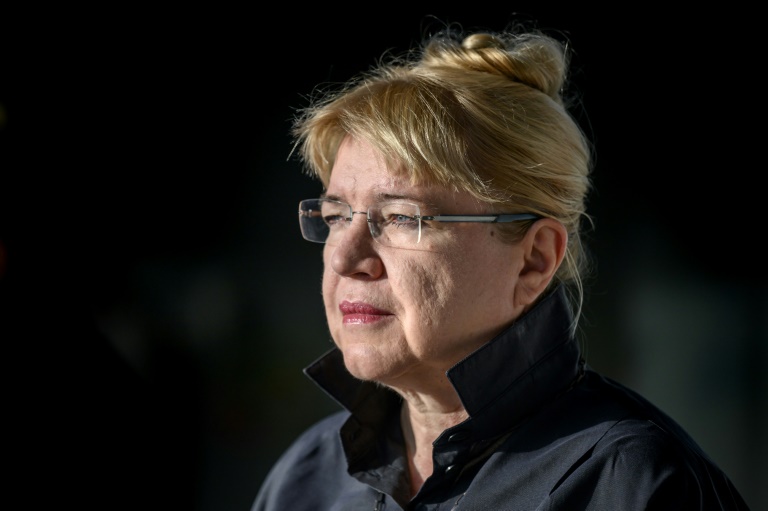
“Of course it is very difficult,” Elena Zhemkova told AFP in an interview, stressing though that there had never been any question about whether or not to carry on working.

“We continue our work.”

Memorial, which shared this year’s Nobel Peace Prize with Ukraine’s Center for Civil Liberties and detained Belarusian activist Ales Bialiatski, is the largest rights organisation in Russia.

Zhemkova said the announcement on October 7 honouring the embattled organisation she co-founded in 1989 with Andrei Sakharov — himself the 1975 Peace Prize laureate — had come as a complete surprise.

The 61-year-old described riding in a taxi on her way to open an exhibition when a colleague called and said something had happened and told her to “look at the news”.

– Feared ‘atomic bomb’ –

“I couldn’t imagine that we were talking about such a grand award,” she said, adding that she feared “something very bad (had) happened”.

“I was honestly thinking it was an atomic bomb.”

When she realised that instead Memorial had won the world’s most prestigious peace prize, she said she was “very glad”, especially to share it with rights watchdogs from the two other nations at the centre of Moscow’s war in Ukraine.

This “emphasises that people from civil society of different countries can and should fight together against evil”, she said.

Russian authorities meanwhile appeared less than thrilled with Memorial’s win.

The organisation, which has for decades worked to keep alive the memory of people who died in Soviet dictator Joseph Stalin’s gulags, while also compiling information on ongoing political oppression in Russia, has faced a growing crackdown in recent years.

Last December, the Russian Supreme Court ordered Memorial dissolved, and just hours after the Nobel Committee’s announcement on October 7, a Moscow court ordered the seizure of its headquarters.

“We received the news about the Nobel award, and then unfortunately, that day our house was taken from us,” said Zhemkova.

“So this is the response of the Russian government.”

– ‘No heroes’ –

But despite the challenges, she insisted that “we need to and we can continue our work.”

Last week, Memorial was blocked from holding its annual tribute to Stalin’s victims, known as the “Returning the Names” ceremony, in Moscow.

But Zhemkova pointed out that the marathon reading of the names of those killed under Stalin’s regime had still taken place across 22 countries and 77 cities.

“They cannot stop our work,” she said.

Inside Russia as well, she said Memorial was continuing to open exhibitions, organise excursions and “defend people’s rights in court”.

The Nobel win, she said, was helpful “because it is a very important sign of support”.

Zhemkova, who was in Geneva to give the annual Kofi Annan Peace Address, acknowledged that she and other members of Memorial fear for their safety in Russia.

“There is a mass persecution of people and institutions which are opposing the official point of view,” she said.

“Of course we are afraid… We are ordinary people.”

“We are no heroes,” she insisted, “but we are trying to take small courageous steps.”

– ‘Unlawful’ –

In addition to the security risks they face, Zhemkova said she and many of her colleagues are being targeted by “unlawful and complicated criminal cases”.

The Memorial chief is currently staying away from Russia, but lamented that she should not have to.

“I respect all the rules. I didn’t break any laws, I am doing lawful work,” she said.

But, she added, “I am against the war, and at the moment, (that) is enough to have a criminal investigation opened against you.”

Asked what she thought about Russian President Vladimir Putin’s actions, Zhemkova insisted: “I don’t think about Putin. I am not interested in him at all.”

“I am thinking about how many generations of Russians will need to pay for what he did.”

'Never again': Ukraine bolsters defences by Belarus-Russia border

Crouching in his hidden lookout on the edge of a forest, a Ukrainian border guard scans the horizon to the border with Russia and Belarus just a few kilometres to the north.

With the rain pouring down and the clouds low, there will be no Russian drones overflying his remote outpost in northern Ukraine, the last one before the frontier. 

Clutching a monocular and wearing a balaclava that only shows his eyes, the guard proudly shows off his NLAW anti-tank missile launcher.

“Our main objective is to prevent a (new) invasion. But if that happens again here, we’ll be ready to stop the enemy at the border and prevent them from coming in,” says the 33-year-old who does not give his name. 

The Senkivka border crossing is very close. A three-way crossing shaped like a ‘Y’, it points northwest into Belarus and northeast into Russia with Ukraine to the south. 

This is where Russia’s 90th armoured division swept in when the war started on February 24, cutting through Ukrainian territory like a knife through butter. 

From there, the Russian army reached the gates of Chernigiv, capital of the eponymous region, some 90 kilometres (55 miles) to the south. 

But they were never able to take the city, repelled by fierce Ukrainian resistance although it was regularly bombed. 

In early April, the Russians pulled back from the north only to refocus on the campaign in eastern and southern Ukraine. 

– ‘Growing threat’ –

Since then, Ukraine has been watching Senkivka like a hawk as well as its nearly 900 kilometres of border with Belarus, whose territory served as a rear base for Moscow’s forces. 

On October 20, Ukraine’s military said the threat of a renewed offensive from the north was “growing”, flagging intensified “aggressive rhetoric” from its northern neighbours who are close allies.

Several days earlier, Minsk said up to 9,000 Russian soldiers and some 170 tanks would be deployed to Belarus as part of a joint task force to secure its borders. 

“If you want peace, you need to prepare for war,” Belarusian President Alexander Lukashenko said on October 10, accusing Ukraine of “planning strikes” on his country.  

Until now, Minsk has not joined the fighting in Ukraine. 

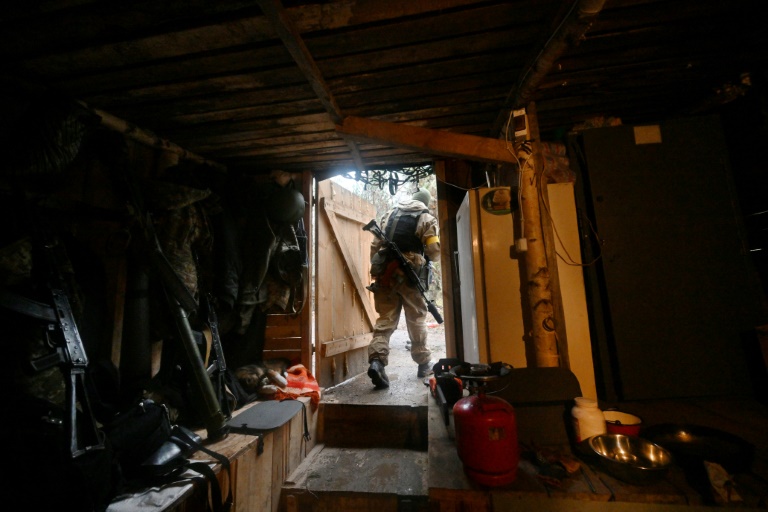
Inside the well-fortified dugout that was set up after the Russian pullback in April, a border guard in his 30s who goes by the nickname “Lynx” says he thinks there’s a “50-50 chance” of a new Russian offensive. 

“The likelihood of an attack will always be high here near the border, with a neighbour like that,” he says, a machinegun slung over his shoulder. 

“You hear the constant sound of (Russian) artillery fire here… sometimes it’s calm, but since autumn began, the enemy has become more active,” he says. 

But now “there are more (Ukrainian) positions and more fortifications, everything is more serious now… we have thought through all the possible options to avoid a repeat of what happened before,” he insists.

– ‘Friendly nations’ –

Some 30 kilometres to the south lies Gorodnia, the first town occupied by the Russians on the first morning of the invasion. 

Mayor Andriy Bogdan told AFP he was hoping the events of February 24 “won’t be repeated” even if such a threat “does exist”, pointing to the Russian troops in Belarus. 

But now, the situation “is completely different” from what it was back then, when his town — which had 21,000 residents before the war — was “almost completely unprotected”. 

“We are relying on our border guards and all our defence forces. Today they are here and ready to fight,” Bogdan says. 

When the Russians turned up, the residents made a peaceful show of resistance, he says, proudly showing a video of locals with Ukrainian flags standing in front of the armoured vehicles to stop them advancing.

In the end, the Russians remained outside the town when they occupied the area.

Grocery shop owner Svetlana, a woman in her 50s, dismisses the idea “that Belarus could attack us”. 

“We live by the border, we are friendly nations. I have a brother in Belarus and a sister in Moscow,” she told AFP.

“At the start, even my sister couldn’t believe it had happened. But they understand and they support us,” she said. 

“I want it to be over as soon as possible.”

Trump, eyeing 2024, doubles down on vote conspiracy theories

Kicked off Twitter and Facebook after his supporters stormed the US Capitol, Donald Trump eventually set up his own platform Truth Social, declaring in April 2022 after a stumbling launch: “I’m Back! #COVFEFE.”

Yet to concede his loss to Joe Biden, Trump is now signaling he will seek the White House again in 2024.

And with midterm elections Tuesday, he is doubling down on voting conspiracy theories he has wielded ever since the 2016 election, which he won, and amplified since his defeat four years later.

In the past 58 days, Trump has shared about 100 posts on Truth Social casting doubt on the integrity of US elections, according to an AFP analysis of the former president’s more than 1,200 interactions in that period.

“Here we go again!” Trump wrote November 1, sharing a misleading headline about ballots in Pennsylvania, a swing state he lost to Biden but which next week could determine if Republicans win back the Senate.

“Rigged Election!” Trump added.

The tactics mirror his 2020 playbook, when he tweeted repeatedly before the election that mail-in ballots were rife with fraud. Dozens of court cases have since ruled otherwise.

But such misinformation could undermine confidence as Americans vote in the first national polls since the January 6, 2021 insurrection at the Capitol, experts say.

“If leaders tell their followers that elections are unreliable, their followers believe them,” Russell Muirhead, professor of politics and democracy at Dartmouth College, told AFP.

“Trump’s insistence that elections are flawed (when they’re not) is doing one thing: it is corroding American democracy.”

Trump posts often on Truth Social, sometimes dozens of times a day.

In the last two months, he has attacked Biden and Democrats, criticized ongoing investigations against him and glorified his own rallies and accomplishments.

Trump has also lavished praise on Republicans who support his stolen-election claims, such as Kari Lake, who has signaled she may reject the results if she loses her bid to become Arizona governor. 

And he has engaged more brazenly than ever with extremist content, including dozens of posts from promoters of the QAnon conspiracy theory.

Although Trump’s reach on Truth Social is relatively small — 4.46 million compared to the 88.8 million he enjoyed on Twitter — experts say the misinformation he spreads reverberates across the internet.

“After Trump puts the toxin in the water, the whole lake is spoiled,” said Muirhead, who was elected to the New Hampshire House of Representatives as a Democrat in 2020 after writing a book about conspiracism entitled “A Lot Of People Are Saying” — a play on a Trump catchphrase.

Trump’s office and main political action committee, Save America, did not respond to requests for comment.

– Trump’s influence – 

The former president has boosted hundreds of pro-Trump articles, polls and memes — including some that reference QAnon and come from accounts with names such as “Patriotic American Alpha Sauce.” One post he shared called Biden “#PedoHitler.”

“Trump still has an outsized impact on the Republican Party and on the right-wing media ecosystem more broadly, and every claim he makes gets amplified,” said Rebekah Tromble, director of George Washington University’s Institute for Data, Democracy, and Politics.

In October, Trump promoted several posts from Melody Jennings, founder of a group that organized stakeouts of ballot drop boxes in Arizona to catch suspected fraud.

The posts included Jennings’ claim of “mules” at a box near Phoenix — a reference to a discredited film’s conspiracy theory about people smuggling illegal votes — and a picture of a voter.

The voter in question was depositing ballots for himself and his wife, who was in the car, according to a witness statement he provided in a lawsuit against Jennings’ group, Clean Elections USA. He also filed a state voter intimidation complaint.

The incident is reminiscent of Trump’s false 2020 claims that Georgia election workers were caught counting “suitcases” of fraudulent ballots in the dead of night. The video Trump retweeted showed normal processing of legal votes, state officials concluded.

But the damage was done.

Election workers Ruby Freeman and her daughter Shaye Moss received death threats. At the FBI’s urging, Freeman left her home for two months.

Twitter’s new owner Elon Musk has indicated he plans to lift the ban on Trump — though not before the midterms. 

If Trump announces another presidential bid, both Twitter and Facebook may feel pressure to give back the megaphone to the once-prolific ex-president.

“This is not a game,” said Ben Berwick, counsel at Protect Democracy, a non-profit group that backed the lawsuit against Clean Elections USA. “Debunked conspiracy theories like those about so-called ballot mules cause real harm to innocent Americans.”

Twitter layoffs before US midterms fuel misinformation concerns

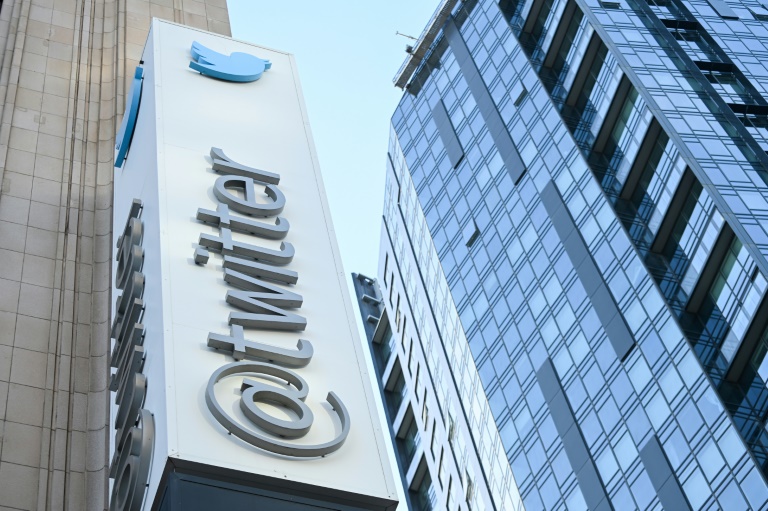
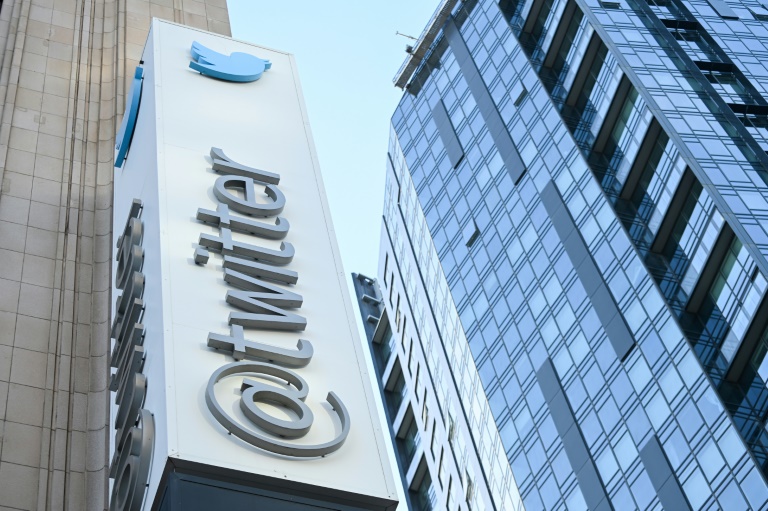
Twitter’s new owner Elon Musk has pledged the platform will not devolve into a “free-for-all hellscape,” but experts warn that mass layoffs on Friday may deeply impair the social network’s ability to curb misinformation.

Twitter fired roughly half of its 7,500-strong workforce, only days before next week’s midterm elections in the United States, when a spike in fake content is expected across social media.

The cuts, which comes after Musk’s blockbuster $44 million buyout of the company, hit multiple divisions, including trust and safety teams that manage content moderation as well as engineering and machine learning, US reports said.

“I would be real careful on this platform in the coming days… about what you retweet, who you follow, and even your own sense of what’s going on,” said Kate Starbird, a disinformation researcher and assistant professor at the University of Washington.

Starbird warned in her own Twitter post of an increased risk of “impersonation” attempts, “coordinated disinformation by manipulators” and “hoaxes that attempt to get you to spread falsehoods.”

Jessica Gonzalez, co-chief executive officer at the nonpartisan group Free Press, said she was concerned about Twitter potentially loosening its content-moderation efforts prior to the election, “when we know social media goes off the rails to misinform, intimidate and harm voters of color.”

“Twitter was already a hellscape before Musk took over, and his actions… will only make it worse,” said Gonzalez.

– ‘Deeply troubling’ –

Free Press is part of a coalition of more than 60 civil society groups that on Friday called on advertisers to boycott the platform until it committed to being a “safe place.”

Members of the coalition met with Musk earlier this week after academic studies reported a dramatic increase in hate speech, Nazi memes and racist slurs after his acquisition of the company.

One study by Montclair State University found that Musk’s purchase had “created the perception by extremist users that content restrictions would be alleviated.” 

“We  met with Elon Musk earlier this week to express our profound concerns about some of his plans and the spike in toxic content after his acquisition,” said the coalition, which uses the hashtag “Stop Toxic Twitter.”

“Since that time, hate and disinformation have continued to proliferate, and Musk has taken actions that make us fear that the worst is yet to come,” the group said in a statement.

But Musk rejected that assessment, tweeting that “we have actually seen hateful speech at times this week decline *below* our prior norms,” though he offered up no data to back up this assertion.

“To be crystal clear, Twitter’s strong commitment to content moderation remains absolutely unchanged,” Musk wrote on Friday.

Separately, Yoel Roth, Twitter’s head of safety and integrity, said that combating harmful misinformation during the midterms was a “top priority” for the company.

Musk, a self-professed free-speech absolutist, had promised to reduce Twitter’s content restrictions, and since the acquisition has announced plans to create a “content moderation council” that will review company policies.

“While Musk has publicly committed to transparency, his decision to lay off the staff members dedicated to this work is deeply troubling,” said Zeve Sanderson, executive director of the New York University’s Center for Social Media and Politics.

Musk insisted that the layoffs were necessary as the company was losing more than $4 million per day.

Twitter has long struggled to generate profit and has failed to keep pace with Facebook, Instagram and TikTok in gaining new users.

Twitter layoffs before US midterms fuel misinformation concerns

Twitter’s new owner Elon Musk has pledged the platform will not devolve into a “free-for-all hellscape,” but experts warn that mass layoffs on Friday may deeply impair the social network’s ability to curb misinformation.

Twitter fired roughly half of its 7,500-strong workforce, only days before next week’s midterm elections in the United States, when a spike in fake content is expected across social media.

The cuts, which comes after Musk’s blockbuster $44 million buyout of the company, hit multiple divisions, including trust and safety teams that manage content moderation as well as engineering and machine learning, US reports said.

“I would be real careful on this platform in the coming days… about what you retweet, who you follow, and even your own sense of what’s going on,” said Kate Starbird, a disinformation researcher and assistant professor at the University of Washington.

Starbird warned in her own Twitter post of an increased risk of “impersonation” attempts, “coordinated disinformation by manipulators” and “hoaxes that attempt to get you to spread falsehoods.”

Jessica Gonzalez, co-chief executive officer at the nonpartisan group Free Press, said she was concerned about Twitter potentially loosening its content-moderation efforts prior to the election, “when we know social media goes off the rails to misinform, intimidate and harm voters of color.”

“Twitter was already a hellscape before Musk took over, and his actions… will only make it worse,” said Gonzalez.

– ‘Deeply troubling’ –

Free Press is part of a coalition of more than 60 civil society groups that on Friday called on advertisers to boycott the platform until it committed to being a “safe place.”

Members of the coalition met with Musk earlier this week after academic studies reported a dramatic increase in hate speech, Nazi memes and racist slurs after his acquisition of the company.

One study by Montclair State University found that Musk’s purchase had “created the perception by extremist users that content restrictions would be alleviated.” 

“We  met with Elon Musk earlier this week to express our profound concerns about some of his plans and the spike in toxic content after his acquisition,” said the coalition, which uses the hashtag “Stop Toxic Twitter.”

“Since that time, hate and disinformation have continued to proliferate, and Musk has taken actions that make us fear that the worst is yet to come,” the group said in a statement.

But Musk rejected that assessment, tweeting that “we have actually seen hateful speech at times this week decline *below* our prior norms,” though he offered up no data to back up this assertion.

“To be crystal clear, Twitter’s strong commitment to content moderation remains absolutely unchanged,” Musk wrote on Friday.

Separately, Yoel Roth, Twitter’s head of safety and integrity, said that combating harmful misinformation during the midterms was a “top priority” for the company.

Musk, a self-professed free-speech absolutist, had promised to reduce Twitter’s content restrictions, and since the acquisition has announced plans to create a “content moderation council” that will review company policies.

“While Musk has publicly committed to transparency, his decision to lay off the staff members dedicated to this work is deeply troubling,” said Zeve Sanderson, executive director of the New York University’s Center for Social Media and Politics.

Musk insisted that the layoffs were necessary as the company was losing more than $4 million per day.

Twitter has long struggled to generate profit and has failed to keep pace with Facebook, Instagram and TikTok in gaining new users.

Close Bitnami banner
Bitnami