World

Indigenous people free tourists taken in Peruvian Amazon

Members of an Indigenous group on Friday freed more than 100 tourists whom they had abducted in the Peruvian Amazon a day earlier to protest what they called government inaction after an oil spill, officials said.

The group of detained tourists — some 27 from the United States, Spain, France, Britain, Switzerland and 80 from Peru itself — included several children.

“They are already returning to their places of origin,” Tourism Minister Roberto Sanchez told reporters in Lima.

Travelling on a river boat, the tourists were kidnapped Thursday by members of the Cuninico community pressing for government intervention following a September 16 spill of 2,500 tons of crude oil into the Cuninico river.

Community leader Watson Trujillo said Thursday the community took the “radical measure” to try to convince the government to send a delegation to assess the environmental damage to a region home to about 2,500 Indigenous people.

On Friday, the office of Peru’s human rights ombudsman said negotiations had led to the Cuninico “accepting our request to release” the tourists.

“They are freeing us all,” Angela Ramirez, a Peruvian cyclist who was among the tourists, later told AFP via WhatsApp.

She added there had been “a lot of anxiety, much fatigue” as the group awaited news on their fate and slowly started running out of water and food during the 28-hour ordeal.

The September spill was caused by a rupture in the Norperuano oil pipeline owned by state-owned Petroperu to transport crude oil from the Amazon region to the ports of Piura, on the coast.

According to Petroperu, the spill was the result of an intentional 21-centimeter cut in the pipeline pipe.

Stocks, oil prices rally on China hopes

Stock markets and oil prices rallied Friday on hopes China would roll back some of its economically-painful policies surrounding Covid.

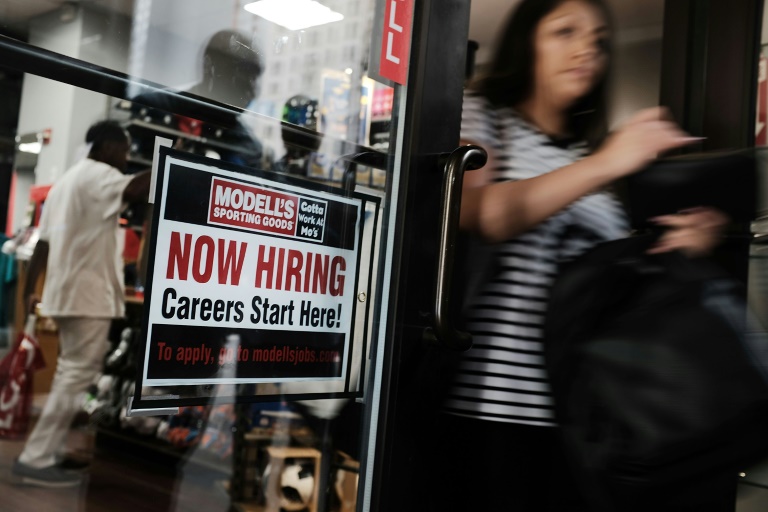
Equities also got a boost from the latest US jobs data, which showed that hiring remained resilient and wages continued to rise, though at a slower pace, raising hopes of a soft landing of the economy despite rising interest rates aimed at quelling inflation.

“Asia markets bounced back strongly today on more unsubstantiated reports that the Chinese government is looking at a reopening strategy as it looks to navigate a path out of the straitjacket of its current zero-Covid policy,” said CMC Markets analyst Michael Hewson. 

“These reports, which still haven’t been confirmed in any official capacity, have prompted a huge relief rally in equity markets, despite concerns that any reopening is unlikely to happen in the immediate future, and the very real risk that it is merely a sucker’s rally,” he added.

The rally continued into Europe, where London, Paris and Frankfurt all rose at least two percent.

Wall Street stocks climbed as well, with major indices all finishing more than one percent higher after a volatile day of trading.

The optimism lifted oil prices, with Brent crude jumping 4.1 percent and West Texas Intermediate bouncing five percent as traders eyed rising demand for crude on the news out of China.

The pound also won back some ground against the dollar, rising nearly two percent after tumbling after the Bank of England said the UK economy could face a two-year-long recession that it believes has already begun.

The BoE raised its main interest rate by 0.75 percentage point on Thursday, the most in 33 years in efforts to contain runaway inflation.

This came after the US Federal Reserve hiked its key rate by the same amount — the sixth increase this year — as central banks try to cool decades-high inflation.

The Fed has pointed to a still-strong labor market as a key reason for not easing up on its  aggressive tightening.

The addition of 261,000 US jobs last month — far more than economists had forecast — likely will reinforce the determination of policymakers to continue the hawkish stance, even if they slow the pace of increases.

That would normally see equities tumble as higher interest rates are bad for most businesses.

But the figures are “consistent with achieving a soft landing for the economy,” said market analyst Patrick O’Hare at Briefing.com, who also cited a “buy-the-dip” dynamic after US stocks fell four straight sessions earlier in the week.

While Fed Chair Jerome Powell said it is premature to think about pausing rate hikes, Boston Fed President Susan Collins added on Friday she sees a chance to achieve the goal of reining in price increases without putting the brakes on growth entirely.

But Chris Beauchamp, chief market analyst at online trading platform IG, pointed to one indicator in the report that suggests a drop of 300,000 jobs was the reason why the unemployment rate inched higher.

“This might be a case of cherry-picking par excellence, but markets have taken it as the first sign that the hitherto-unstoppable US market is weakening, thus perhaps bringing forward the chances of that fabled Fed pivot we keep hearing so much about,” said Beauchamp.

Markets have been looking for any data that would help the Fed “pivot” away from its aggressive rate hikes.

– Key figures around 2030 GMT –

New York – Dow: UP 1.3 percent at 32,403.22 (close)

New York – S&P 500: UP 1.4 percent at 3,770.55 (close)

New York – Nasdaq: UP 1.3 percent at 10,475.25 (close)

London – FTSE 100: UP 2.0 percent at 7,334.84 (close)

Frankfurt – DAX: UP 2.5 percent at 13,459.85 (close)

Paris – CAC 40: UP 2.8 percent at 6,416.44 (close)

EURO STOXX 50: UP 2.7 percent at 3,688.33 (close)

Tokyo – Nikkei 225: DOWN 1.7 percent at 27,199.74 (close)

Hong Kong – Hang Seng Index: UP 5.4 percent at 16,161.14 (close)

Shanghai – Composite: UP 2.4 percent at 3,070.80 (close)

Pound/dollar: UP at $1.1376 from $1.1160 Thursday

Euro/dollar: UP at $0.9964 from $0.9751

Dollar/yen: DOWN at 146.62 yen from 148.25 yen

Euro/pound: DOWN at 87.56 from 87.73 pence

Brent North Sea crude: UP 4.1 percent at $98.57 per barrel

West Texas Intermediate: UP 5.0 percent at $92.61 per barrel

burs-rl-bys/

US assails China, Russia on N.Korea after missile barrage

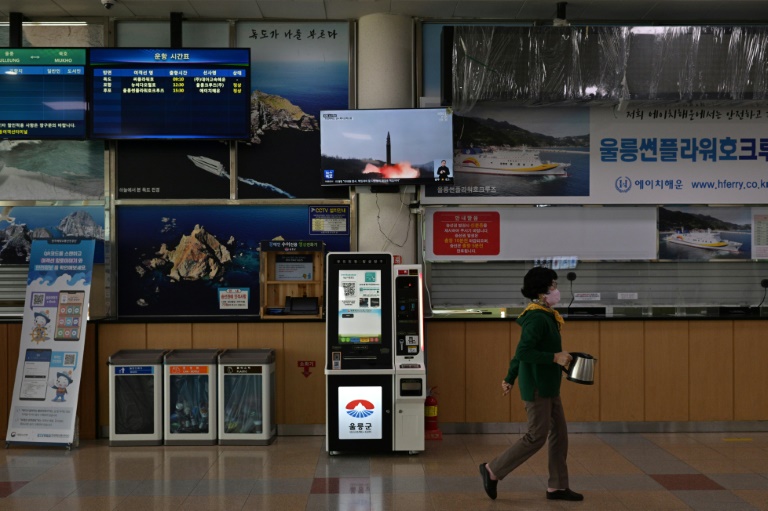
The United States on Friday assailed China and Russia at the UN Security Council for having “enabled” North Korea, which has launched a record-breaking blitz of missile tests.

North Korea has also mobilized warplanes, leading Seoul to scramble its own stealth jets, in fury over the largest-ever military drills between the United States and Seoul — which have been extended through Saturday.

At the United Nations, US envoy Linda Thomas-Greenfield denounced — without naming them — China and Russia, which in May vetoed a US-led effort to tighten sanctions on North Korea in response to earlier launches.

The North, formally known as the Democratic People’s Republic of Korea, “has enjoyed blanket protection from two members of this council,” she told an emergency Council session.

“These members have bent over backwards to justify the DPRK’s repeated violations and in turn they have enabled the DPRK and made a mockery of this council,” Thomas-Greenfield said, urging “unity” on enforcing sanctions.

She dismissed criticism of the military exercises as “DPRK propaganda,” saying the drills “pose no threat” to other countries, and reiterated that President Joe Biden’s administration was open to dialogue.

France’s envoy, Nicolas de Riviere, called for continued pressure over signs that North Korea is preparing for its seventh-ever nuclear test.

“The current escalation is unprecedented and these new provocations are unacceptable,” he said.

But China, North Korea’s closest ally, and Russia, whose relations with the West have severely deteriorated over its invasion of Ukraine, placed the blame on the United States.

Chinese Ambassador Zhang Jun pointed to the US-South Korean military exercises and the Pentagon’s recent warning in a strategy document that a nuclear attack by North Korea would mean an “end” to Kim Jong Un’s regime.

“The DPRK’s recent launches and activities did not happen in isolation; they are directly linked to the words and deeds of relevant parties,” he said.

The Chinese envoy called on the United States to address “the legitimate and reasonable concerns of the DPRK so as to create conditions for the resumption of meaningful dialogue.”

The 10 non-permanent members of the Security Council, which include India, Brazil and Mexico, in a joint statement also condemned the missile launches and urged Pyongyang to refrain from further tests.

The meeting ended without a joint statement from the whole Security Council.

– ‘Provocative’ drill –

South Korea said Friday it detected the mobilization of around 180 North Korean warplanes and that Seoul scrambled 80 fighter jets in response.

North Korea has launched 59 missiles in recent days including an intercontinental ballistic missile and one that landed near South Korea’s territorial waters for the first time since the end of the Korean War in 1953.

Pyongyang has called the joint air drills, dubbed Vigilant Storm, “an aggressive and provocative military drill targeting” North Korea, and threatened that Washington and Seoul would “pay the most horrible price in history” if it continued.

North Korea is particularly sensitive about the air drills, experts say, as its own air force is one of the weakest links in its military, lacking high-tech jets and properly trained pilots.

The ongoing joint drills involve some of South Korea and America’s advanced fighter jets — F-35As and F-35Bs, both of which are stealth aircraft designed to produce as small a radar signature as possible.

Such jets “would be a central component in any decapitation operations targeting the North Korean leadership including Kim Jong Un himself,” said Go Myong-hyun, a researcher at the Asan Institute for Policy Studies.

“We know for a fact that North Korea is highly sensitive to these kinds of threats.”

Earlier this year there were reports that US and South Korean commandos were practicing so-called “decapitation strikes” — the removal of North Korea’s top leadership in a lightning-fast military operation.

The North’s latest launches come as South Korea is in a period of national mourning after more than 150 people — mostly young women in their 20s — were killed in a crowd crush in Seoul on Saturday.

Pyongyang’s provocations, “especially during our national mourning period, are against humanity and humanitarianism,” said Lee Hyo-jung, a vice spokesperson at Seoul’s unification ministry.

In addition to extending Vigilant Storm through Saturday, Seoul’s military announced that next week it will hold the annual Taegeuk exercise, a computer simulation that prepares capacity to respond to North Korea’s nuclear and missile threats.

As violence torments Ecuadoran city of Guayaquil, even police cower

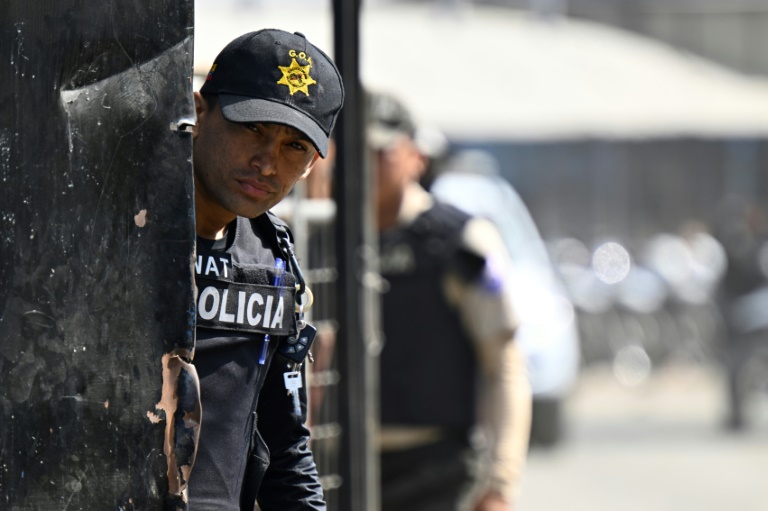
Two uniformed agents cower behind a wall, gun at the ready, fearfully eying a car parked outside their police station after nightfall in the violence-stricken Ecuadoran port city of Guayaquil.

Any car near a police station in these parts is viewed with suspicion after a recent spate of gun and explosives attacks blamed on a gruesome gang war that has killed dozens of officers since last year.

Numerous attacks this week in the city of 2.8 million people have killed five police officers and a civilian, and injured at least 17 members of the security forces.

Officials say the attacks were a response by organized crime to an ongoing mass transfer of inmates from the infamous Guayas 1 prison in Guayaquil to other jails controlled by different gangs.

On Friday, special police units oversaw the transfer of gang leaders even as journalists and concerned family members who were gathered outside could hear loud detonations coming from the jail.

Even police live in fear in Guayaquil where gangs outgun law enforcement and everything from the port to the prisons are under criminal control.

So far this year, the commercial heart of Ecuador has seen 1,200 murders — 60 percent more than in 2021 according to official data.

“I’ve seen bombs explode,” said a Guayaquil petrol attendant who did not want to be named for fear of retribution.

“That’s the danger right now. You have to watch out for any motorcyclist: If they leave something behind or throw something… you have to watch out,” he told AFP.

– ‘Not surrender’ –

Ecuador — once a relatively peaceful neighbor of major cocaine producers Colombia and Peru — has seen a wave of violent crime that authorities blame on turf battles between rival gangs with ties to Mexican cartels. 

President Guillermo Lasso responded to this week’s rash of attacks by declaring a state of emergency and nighttime curfew in the Guayas and Esmeraldas provinces, which was extended Friday to include Santa Domingo de los Tsachilas.

He also ordered the deployment of troops to the three provinces, home to a third of Ecuador’s 18 million inhabitants.

The streets of Guayaquil, worst hit by the violence, are largely empty at night, and police are on high alert.

They patrol in vans with the lights turned off or barricade themselves at their command posts wearing bulletproof vests.

Streets where politicians’ homes are located are fenced off to any traffic and petrol attendants man their posts in fear after a number were targeted in the most recent fear-mongering campaign.

It has become an occupation of “life or death,” said one attendant, 21, who did not want to be named and said he feared being shot dead by “merciless” criminals.

Lasso has vowed his government will “not surrender to narco-terrorists.”

Ecuador has gone from being a drug transit route in recent years to an important distribution center in its own right. 

The United States and Europe are the main destinations for drugs from Latin America. 

The murder rate in Ecuador nearly doubled in 2021 to 14 per 100,000 inhabitants, and reached 18 per 100,000 between January and October this year, according to official data. 

Hundreds of inmates have also died — many beheaded or burned as an extension of the gang war is waged behind bars.

US sees strong job gains in October as wages move higher

US job gains topped expectations in October, according to official data released Friday, as hiring remained resilient and wages moved ever higher, underscoring the challenges in lowering rampant inflation.

The data comes days ahead of critical midterm elections, where decades-high inflation has propelled economic issues to the top of voters’ minds and President Joe Biden faces a battle to avoid losing control of both chambers of Congress.

The figures will provide little comfort to the Federal Reserve, which has been battling to cool the economy, as policymakers fear high prices will become entrenched and rising pay will create an upward spiral — inflicting more harm on families and businesses.

American employers added 261,000 workers last month, far more than economists had forecast, though the pace was lower than the 315,000 increase in September, which was revised much higher than originally reported by the Labor Department.

The jobless rate rose two-tenths to 3.7 percent, according to the closely-watched US employment report.

Biden cheered the data which showed 10 million jobs have been created since he took office in January 2020, but he recognized the hardship Americans face due to higher prices.

“Inflation is our top economic challenge… The global inflation that is raging in other countries is hitting us as well,” Biden said in a statement on Friday.

He said policymakers will “do what it takes to bring inflation down.”

Average hourly earnings for private sector workers jumped another 12 cents or 0.4 percent last month, to $32.58, the report said.

Wages have increased 4.7 percent over the last 12 months as firms have had to compete to find and retain workers in the tight labor market. 

That pace is slightly slower than in September, which the Fed will welcome, but many employees are pushing for increases to avoid losing ground to elevated consumer costs.

US markets rallied following the latest data, which raised hopes of a soft landing for the economy. Major indices closed higher on Friday, despite the Fed’s pledge that interest rates will need to rise further to quell inflation.

– ‘Softening’ –

“The bottom line here is that the labor market is softening, but has not yet reached the point where the data are screaming at the Fed to stop tightening,” said Ian Shepherdson, chief economist at Pantheon Macroeconomics, in an analysis.

But if employment trends continue, markets will start to push policymakers to “rethink the idea of continued hikes next year,” he added.

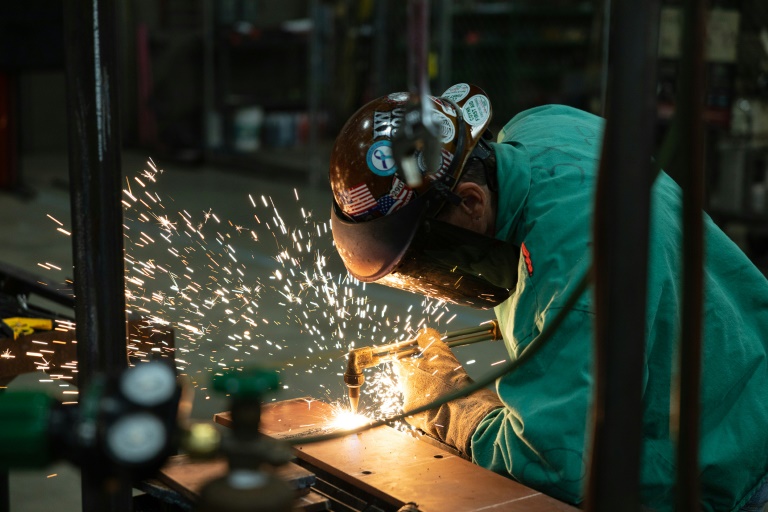
The data showed notable job gains in health care, professional and technical services, and manufacturing.

The Fed has raised borrowing rates six times this year to cool demand, but there have been few signs it is having an impact on consumer spending or inflation.

The central bank said this week that it would have to continue hiking rates, although that has raised the risk that the world’s biggest economy will suffer a downturn.

But Susan Collins, president of the Boston Federal Reserve Bank said she sees a chance to accomplish the task of reining in price increases without completely putting the brakes on growth.

While inflation so far is only slowly drifting down, “I do not believe a significant slowdown is required to accomplish our goal,” she said in a speech in Washington on Friday.

But she stressed that the Fed must continue to act as “current levels of inflation are simply too high, and are taking a significant toll on households and firms.”

While the policy tightening normally would be expected to lead to job losses, economists say employers are reluctant to shed workers that they struggled to find.

“The data are still showing strong positive momentum in the labor market which is not yet showing much adjustment in response to a rapid tightening of monetary policy,” said Rubeela Farooqi of High Frequency Economics. 

“These data will keep the Fed on track to keep raising rates into restrictive territory,” she said in an analysis.

German leader calls for equal trade ties in controversial China summit

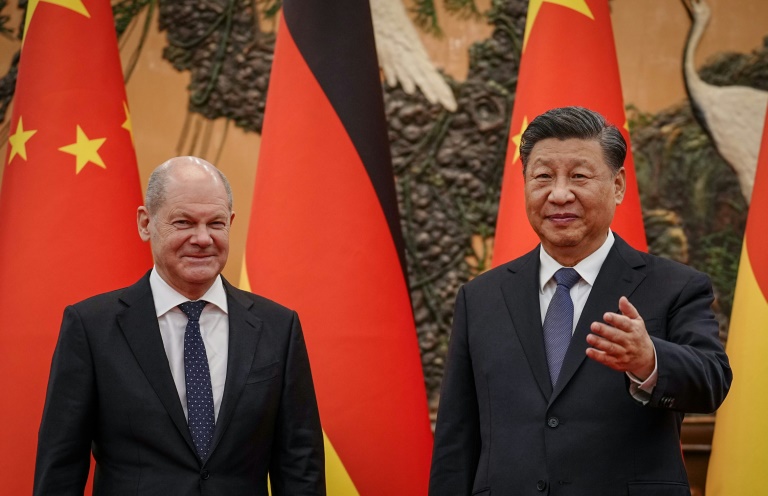
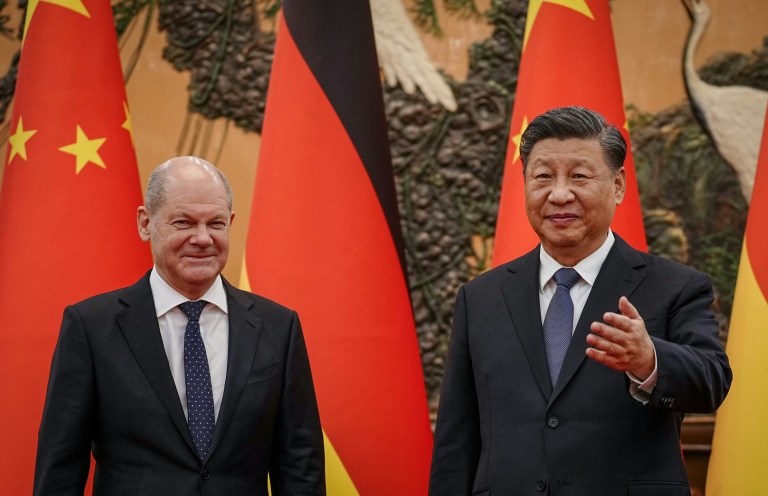
German Chancellor Olaf Scholz told Chinese leaders in Beijing on Friday that Berlin expected equal treatment on trade as he tried to drum up greater economic cooperation despite growing distrust of the Asian superpower in the West.

Scholz is under pressure to push Beijing to get tough on Russia over the war in Ukraine, and he said Friday that Germany and China had agreed they both opposed any use of nuclear weapons in the conflict.

The German chancellor is the first G7 leader to visit China since the start of the coronavirus pandemic, which led the world’s number two economy to close its borders and President Xi Jinping to largely eschew in-person diplomacy.

But his trip has prompted criticism at home over Berlin’s growing economic reliance on Beijing, and sparked controversy for coming so soon after Xi strengthened his hold on power in China just last month.

Tensions are also running high between the West and Beijing on issues ranging from Taiwan to alleged human rights abuses.

Scholz held talks with human rights lawyers critical of the regime in Beijing ahead of the trip, a source in his entourage told AFP.

Received by a smiling Xi at Beijing’s Great Hall of the People shortly after arriving, Scholz said he hoped to “further develop” economic cooperation — while alluding to areas of disagreement.

“It is good that we are able to have an exchange here about all questions, including those questions where we have different perspectives — that’s what an exchange is for,” Scholz said. 

“We also want to talk about how we can further develop our economic cooperation on other topics: climate change, food security, indebted countries.”

“Xi underscored the need for China and Germany, two major countries with great influence, to work together in times of change and instability and contribute more to global peace and development,” Beijing’s Xinhua News Agency reported.

Scholz also spoke with Chinese Premier Li Keqiang at a meeting in which he called for fair trade between the two countries. 

At a press briefing during which Chinese officials said there was “not enough time” for questions, Scholz urged Beijing to do more to “use its influence” on its ally Russia, currently engaged in a months-long war in Ukraine.

Both sides said they opposed the use of nuclear weapons in the conflict, with Scholz telling reporters: “Everyone says clearly that an escalation via the use of a tactical nuclear weapon is ruled out”.

China has steadfastly avoided criticising Russia for invading Ukraine and instead blames the United States and NATO for the war.

– ‘Keep doing business’ –

The German delegation of more than 60 people was met on the tarmac at Beijing airport by a military guard — as well as health workers in white hazmat suits who conducted mandatory PCR tests in buses converted into mobile laboratories. 

Scholz’s PCR test was taken in his plane by a German doctor he brought with him and supervised by Chinese health officials, according to the German government.

China’s economic importance is seen by some in Berlin as more crucial than ever, as Germany hurtles towards a recession battling an energy crisis triggered by the Ukraine war. 

China is a major market for German goods, from machinery to cars.

But German industry’s heavy dependence on China is facing fresh scrutiny after the over-reliance on Russian energy imports left it exposed when Moscow turned off the taps.

Scholz’s approach is still underpinned by the idea that “we want to keep doing business with China, no matter what that means for the dependence of our economy, and for our ability to act”, opposition lawmaker Norbert Roettgen told the Rheinische Post newspaper.

Concern about China has also come from within Germany’s ruling coalition, with Foreign Minister Annalena Baerbock saying past mistakes with Russia must not be repeated.

– ‘All the more important’ –

There are also concerns that the trip — coming on the heels of Xi securing a historic third term at a Communist Party Congress last month — may have unsettled the United States and the European Union.

“For Beijing, this is less about concrete outcomes and more about the symbolism of the German chancellor paying Xi a visit so soon after the party congress,” said Noah Barkin, visiting senior fellow in the Asia Program at the US German Marshall Fund.

“It gives international legitimacy to his leader-for-life status, and it shows that China is not isolated,” he added.

Berlin, however, says there have been consultations with key partners, and Scholz has insisted he is visiting China as a “European” as well as the leader of Germany.

In an article published before his departure, he said direct talks with Chinese leaders were “all the more important” after the long hiatus caused by the pandemic.

He promised to raise thorny topics such as respect for civil liberties and the rights of minorities in Xinjiang.

“We strongly agree with what he (Scholz) shared in that op-ed”, including “encouraging President Xi to press President Putin on never using a nuclear weapon of any kind”, US Secretary of State Antony Blinken said Friday after a meeting of G7 foreign ministers in Germany.

German leader calls for equal trade ties in controversial China summit

German Chancellor Olaf Scholz told Chinese leaders in Beijing on Friday that Berlin expected equal treatment on trade as he tried to drum up greater economic cooperation despite growing distrust of the Asian superpower in the West.

Scholz is under pressure to push Beijing to get tough on Russia over the war in Ukraine, and he said Friday that Germany and China had agreed they both opposed any use of nuclear weapons in the conflict.

The German chancellor is the first G7 leader to visit China since the start of the coronavirus pandemic, which led the world’s number two economy to close its borders and President Xi Jinping to largely eschew in-person diplomacy.

But his trip has prompted criticism at home over Berlin’s growing economic reliance on Beijing, and sparked controversy for coming so soon after Xi strengthened his hold on power in China just last month.

Tensions are also running high between the West and Beijing on issues ranging from Taiwan to alleged human rights abuses.

Scholz held talks with human rights lawyers critical of the regime in Beijing ahead of the trip, a source in his entourage told AFP.

Received by a smiling Xi at Beijing’s Great Hall of the People shortly after arriving, Scholz said he hoped to “further develop” economic cooperation — while alluding to areas of disagreement.

“It is good that we are able to have an exchange here about all questions, including those questions where we have different perspectives — that’s what an exchange is for,” Scholz said. 

“We also want to talk about how we can further develop our economic cooperation on other topics: climate change, food security, indebted countries.”

“Xi underscored the need for China and Germany, two major countries with great influence, to work together in times of change and instability and contribute more to global peace and development,” Beijing’s Xinhua News Agency reported.

Scholz also spoke with Chinese Premier Li Keqiang at a meeting in which he called for fair trade between the two countries. 

At a press briefing during which Chinese officials said there was “not enough time” for questions, Scholz urged Beijing to do more to “use its influence” on its ally Russia, currently engaged in a months-long war in Ukraine.

Both sides said they opposed the use of nuclear weapons in the conflict, with Scholz telling reporters: “Everyone says clearly that an escalation via the use of a tactical nuclear weapon is ruled out”.

China has steadfastly avoided criticising Russia for invading Ukraine and instead blames the United States and NATO for the war.

– ‘Keep doing business’ –

The German delegation of more than 60 people was met on the tarmac at Beijing airport by a military guard — as well as health workers in white hazmat suits who conducted mandatory PCR tests in buses converted into mobile laboratories. 

Scholz’s PCR test was taken in his plane by a German doctor he brought with him and supervised by Chinese health officials, according to the German government.

China’s economic importance is seen by some in Berlin as more crucial than ever, as Germany hurtles towards a recession battling an energy crisis triggered by the Ukraine war. 

China is a major market for German goods, from machinery to cars.

But German industry’s heavy dependence on China is facing fresh scrutiny after the over-reliance on Russian energy imports left it exposed when Moscow turned off the taps.

Scholz’s approach is still underpinned by the idea that “we want to keep doing business with China, no matter what that means for the dependence of our economy, and for our ability to act”, opposition lawmaker Norbert Roettgen told the Rheinische Post newspaper.

Concern about China has also come from within Germany’s ruling coalition, with Foreign Minister Annalena Baerbock saying past mistakes with Russia must not be repeated.

– ‘All the more important’ –

There are also concerns that the trip — coming on the heels of Xi securing a historic third term at a Communist Party Congress last month — may have unsettled the United States and the European Union.

“For Beijing, this is less about concrete outcomes and more about the symbolism of the German chancellor paying Xi a visit so soon after the party congress,” said Noah Barkin, visiting senior fellow in the Asia Program at the US German Marshall Fund.

“It gives international legitimacy to his leader-for-life status, and it shows that China is not isolated,” he added.

Berlin, however, says there have been consultations with key partners, and Scholz has insisted he is visiting China as a “European” as well as the leader of Germany.

In an article published before his departure, he said direct talks with Chinese leaders were “all the more important” after the long hiatus caused by the pandemic.

He promised to raise thorny topics such as respect for civil liberties and the rights of minorities in Xinjiang.

“We strongly agree with what he (Scholz) shared in that op-ed”, including “encouraging President Xi to press President Putin on never using a nuclear weapon of any kind”, US Secretary of State Antony Blinken said Friday after a meeting of G7 foreign ministers in Germany.

Raisi dismisses Biden 'free Iran' pledge after protest surge

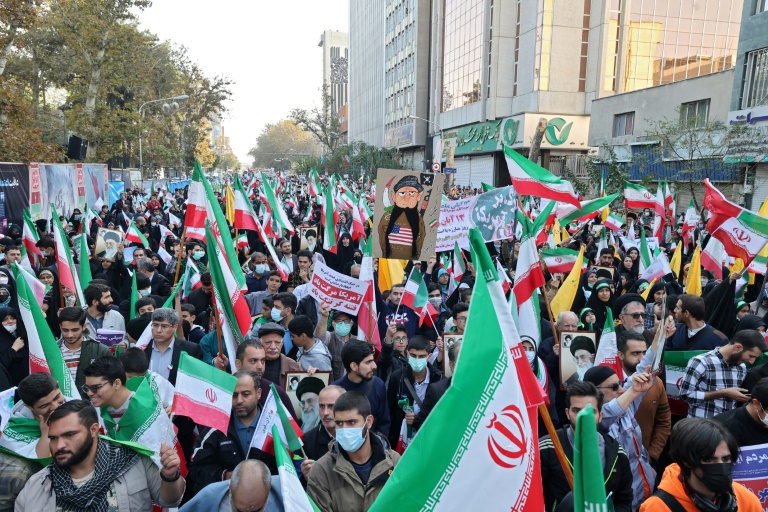
Iranian President Ebrahim Raisi on Friday dismissed a pledge from US leader Joe Biden to “free Iran” as the clerical regime faced a new upsurge in seven weeks of protests.

The protests began after the September 16 death of Mahsa Amini who had been arrested by the morality police. In their scale, nationwide spread and anti-regime nature, the demonstrations have become the biggest challenge from the street to the authorities since the 1979 revolution.

Campaigning for mid-term elections in the United States, Biden had said: “Don’t worry we’re gonna free Iran. They’re gonna free themselves pretty soon.”

Raisi retorted that Iran had already been freed by the overthrow of the Western-backed shah in 1979. He quipped that Biden’s memory lapse was “probably due to the absent-mindedness that he suffers from”.

“Our young men and young women are determined and we will never allow you to carry out your satanic desires,” he told a gathering commemorating the November 1979 seizure of the US embassy in Tehran by radical students.

– ‘Brutal and disproportionate’ –

The problems for Iran’s system under supreme leader Ayatollah Ali Khamenei, 83, are compounded by the tradition of holding mourning ceremonies 40 days after a death, meaning each death can spark new protests six weeks on.

Thursday had seen fierce clashes between protesters and security forces at such a ceremony in Karaj outside Tehran, which according to state media resulted in the deaths of one member of Iran’s Basij paramilitary force and two other unidentified people.

On Friday, mourners in Iran’s third largest city Isfahan chanted anti-government slogans at the 40-day ceremony for Shirin Alizadeh, 36, who was shot dead in her car on September 21 while filming a protest on the Caspian Sea coast.

However security forces opened fire in a bid to prevent the ceremony from taking place, the 1500tasvir monitoring channel said. 

Human rights group Amnesty International said it was told by witnesses that security forces had fired metal pellets and tear gas to disperse mourners and several bereaved relatives had been wounded.

In a statement after talks in Germany, G7 foreign ministers condemned “the brutal and disproportionate use of force against peaceful protesters.”

According to an updated death toll issued Wednesday by Norway-based Iran Human Rights, 176 people have been killed in the security forces’ response to protests sparked by Amini’s death.

Another 101 people have lost their lives in separate protests in the southeastern province of Sistan-Baluchistan.

In a new flare-up in the mainly Sunni Muslim province after the killing of a Shiite cleric this week, security forces fired on protesters in the town of Khash, south of provincial capital Zahedan, NGOs said.

Amnesty International said up to 10 people, including children, were feared to have been killed in the crackdown Friday, with dozens more injured.

Norway-based group Iran Human Rights (IHR) posted video of bloodied victims being carried away.

The official IRNA news agency said several police had been wounded by stone-throwing protesters who set fire to a police patrol post.

– Mass arrests –

Mass arrests have seen 1,000 people charged so far and activists say many risk the death penalty.

According to the New York-based Committee to Protect Journalists (CPJ), 54 journalists have been arrested, with a dozen confirmed released on bail so far.

The latest confirmed to be held is Nazila Maroufian, a Tehran-based journalist from Amini’s hometown of Saqez in Kurdistan province, who was detained on Sunday, the Norway-based Hengaw rights group said.

She had published an interview with Amini’s father in defiance of warnings from the authorities, the journalist wrote on Twitter before her arrest.

According to Hengaw, Saman Yasin, a singer from the Kurdish-populated city of Kermanshah in western Iran who was arrested in October, has now been charged with “waging war against God”. 

The charge, which carries the death penalty, is based on Islamic sharia law and frequently used against opponents of the Iranian authorities. Hengaw said Yasin has supported the protests in songs and on social media.

Activists meanwhile condemned as a forced confession a video published by Iran’s state-run media of Toomaj Salehi, a prominent rapper arrested at the weekend after backing the protests.

The video shows a blindfolded man, who says he is Salehi, admitting to making “a mistake”. 

There is also growing concern about the well-being of Wall Street Journal contributor and freedom of expression campaigner Hossein Ronaghi, who was arrested in September.

According to his family, he is on hunger strike after sustaining two broken legs in custody.

Twitter sacks half of staff as Musk launches overhaul

Twitter sacked half of its 7,500-strong staff on Friday as new owner Elon Musk launched his major overhaul of the troubled company just a week after his blockbuster takeover.

An internal document seen by AFP said “roughly 50 percent” of employees were impacted and would be denied access to company computers and email on an immediate basis.

Workers around the world were shown the door and took to Twitter to vent their frustration or disbelief and say good-bye to one Silicon Valley’s most iconic companies.

“Woke up to the news that my time working at Twitter has come to an end. I am heartbroken. I am in denial,” said Michele Austin, Twitter’s director of public policy for the US and Canada.

Ahead of the  layoffs, Twitter closed access to its offices worldwide, asking employees to stay at home to await news of their fate at the company.

The cull is part of Musk’s push to find ways to pay for the mammoth $44 billion deal for which he took on billions of dollars in debt and sold $15.5 billion worth of Tesla shares, his electric car company.

Musk, the Tesla and SpaceX chief, has been scrambling to find new ways for Twitter to make money after his mammoth buyout, including an idea to charge users $8 a month for verified accounts.

The moves would help overcome the potential loss of advertisers, Twitter’s main source of revenue, with many of the world’s top brands putting their ad buys on hold, spooked by Musk’s well-known disdain for content controls.

The mercurial tycoon on Friday complained on Twitter of a “massive drop in revenue” that he blamed on “activist groups” that were pressuring advertisers.

“We did everything we could to appease the activists. Extremely messed up! They’re trying to destroy free speech in America,” he added.

This appeared to refer to Musk’s recent meeting with civil rights groups in which he heard concerns that Twitter would open the floodgates to hate speech a week before midterm election in the United States.

In an effort to soothe nerves, Musk had vowed that Twitter will not become a “free-for-all hellscape,” but his pledge was quickly followed by a tweet relaying a conspiracy theory about an assault on the husband of US House Speaker Nancy Pelosi.

“We are witnessing the real time destruction of one of the world’s most powerful communication systems. Elon Musk is an erratic billionaire who is dangerously unqualified to run this platform,” said Nicole Gill, Executive Director of Accountable Tech.

She was part of a coalition of 60 rights groups calling on Friday for a boycott by advertisers of the Musk-owned platform.

“Elon Musk has demonstrated that it’s not possible for him to keep the brand safeguards that have existed on Twitter in place. There’s no more time for trust but verify, it’s time for escalation,” said Angelo Carusone, President and CEO of Media Matters for America.

Though extremely influential with opinion-makers and celebrities, the California company has long struggled to generate profit and has failed to keep pace with Facebook, Instagram and TikTok in gaining new users.

Twitter employees have been bracing for this kind of bad news since Musk completed his acquisition late last week and quickly set about dissolving its board and firing its chief executive and top managers.

Late on Thursday, a group of five Twitter employees who had already been fired filed a class action complaint against the company on the grounds that they had not been given the required 60-day notice period as required by law.

The lawsuit references the US Worker Adjustment and Retraining Notification (WARN) Act, which provides workers a right to advance notice in cases of mass layoffs or plant closings.

German leader calls for equal trade ties in controversial China summit

German Chancellor Olaf Scholz told Chinese leaders in Beijing on Friday that Berlin expected equal treatment on trade as he tried to drum up greater economic cooperation despite growing distrust of the Asian superpower in the West.

Scholz is under pressure to push Beijing to get tough on Russia over the war in Ukraine, and he said Friday that Germany and China had agreed they both opposed any use of nuclear weapons in the conflict.

The German chancellor is the first G7 leader to visit China since the start of the coronavirus pandemic, which led the world’s number two economy to close its borders and President Xi Jinping to largely eschew in-person diplomacy.

But his trip has prompted criticism at home over Berlin’s growing economic reliance on Beijing, and sparked controversy for coming so soon after Xi strengthened his hold on power in China just last month.

Tensions are also running high between the West and Beijing on issues ranging from Taiwan to alleged human rights abuses.

Scholz held talks with human rights lawyers critical of the regime in Beijing ahead of the trip, a source in his entourage told AFP.

Received by a smiling Xi at Beijing’s Great Hall of the People shortly after arriving, Scholz said he hoped to “further develop” economic cooperation — while alluding to areas of disagreement.

“It is good that we are able to have an exchange here about all questions, including those questions where we have different perspectives — that’s what an exchange is for,” Scholz said. 

“We also want to talk about how we can further develop our economic cooperation on other topics: climate change, food security, indebted countries.”

“Xi underscored the need for China and Germany, two major countries with great influence, to work together in times of change and instability and contribute more to global peace and development,” Beijing’s Xinhua News Agency reported.

Scholz also spoke with Chinese Premier Li Keqiang at a meeting in which he called for fair trade between the two countries. 

At a press briefing during which Chinese officials said there was “not enough time” for questions, Scholz urged Beijing to do more to “use its influence” on its ally Russia, currently engaged in a months-long war in Ukraine.

Both sides said they opposed the use of nuclear weapons in the conflict, with Scholz telling reporters: “Everyone says clearly that an escalation via the use of a tactical nuclear weapon is ruled out”.

China has steadfastly avoided criticising Russia for invading Ukraine and instead blames the United States and NATO for the war.

– ‘Keep doing business’ –

The German delegation of more than 60 people was met on the tarmac at Beijing airport by a military guard — as well as health workers in white hazmat suits who conducted mandatory PCR tests in buses converted into mobile laboratories. 

Scholz’s PCR test was taken in his plane by a German doctor he brought with him and supervised by Chinese health officials, according to the German government.

China’s economic importance is seen by some in Berlin as more crucial than ever, as Germany hurtles towards a recession battling an energy crisis triggered by the Ukraine war. 

China is a major market for German goods, from machinery to cars.

But German industry’s heavy dependence on China is facing fresh scrutiny after the over-reliance on Russian energy imports left it exposed when Moscow turned off the taps.

Scholz’s approach is still underpinned by the idea that “we want to keep doing business with China, no matter what that means for the dependence of our economy, and for our ability to act”, opposition lawmaker Norbert Roettgen told the Rheinische Post newspaper.

Concern about China has also come from within Germany’s ruling coalition, with Foreign Minister Annalena Baerbock saying past mistakes with Russia must not be repeated.

– ‘All the more important’ –

There are also concerns that the trip — coming on the heels of Xi securing a historic third term at a Communist Party Congress last month — may have unsettled the United States and the European Union.

“For Beijing, this is less about concrete outcomes and more about the symbolism of the German chancellor paying Xi a visit so soon after the party congress,” said Noah Barkin, visiting senior fellow in the Asia Program at the US German Marshall Fund.

“It gives international legitimacy to his leader-for-life status, and it shows that China is not isolated,” he added.

Berlin, however, says there have been consultations with key partners, and Scholz has insisted he is visiting China as a “European” as well as the leader of Germany.

In an article published before his departure, he said direct talks with Chinese leaders were “all the more important” after the long hiatus caused by the pandemic.

He promised to raise thorny topics such as respect for civil liberties and the rights of minorities in Xinjiang.

“We strongly agree with what he (Scholz) shared in that op-ed”, including “encouraging President Xi to press President Putin on never using a nuclear weapon of any kind”, US Secretary of State Antony Blinken said Friday after a meeting of G7 foreign ministers in Germany.

Close Bitnami banner
Bitnami