World

Parkland shooter jailed for life, confronted by victims' relatives

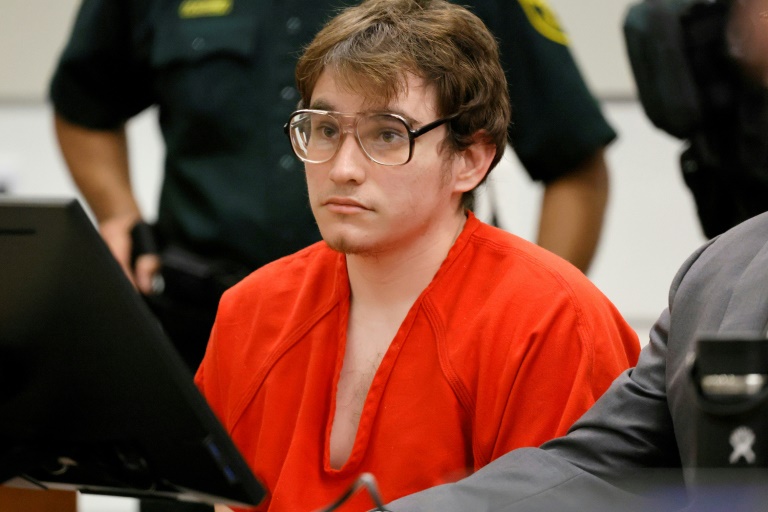
The gunman who murdered 17 people in a 2018 high school rampage was formally sentenced to life in prison Wednesday in a Florida court, where he was verbally confronted by furious parents.

Nikolas Cruz, now 24, avoided the death penalty last month when a jury could not unanimously agree that he deserved capital punishment for his shooting spree at Marjory Stoneman Douglas High School in Parkland.

Family members wept and held hands as Broward Circuit Judge Elizabeth Scherer read out the 17 sentences of first-degree murder, saying after each victim’s name that “the court imposes a mandatory life sentence without the possibility of parole.”

Cruz also received life sentences for each of the 17 people he wounded in the shooting.

The failure to mete out the death penalty shocked and angered several of the victims’ relatives last month. 

But over a two-day hearing that ended with Wednesday’s sentencing, multiple parents and other relatives of those killed were allowed to express their grief and anger by addressing Cruz directly.

“My hope for you is that the pain of what you did to my family burns and traumatizes you every day,” said Lori Alhadeff, whose 14-year-old daughter Alyssa was killed, in comments reported by National Public Radio.

Cruz pleaded guilty in October 2021. In the subsequent three-month penalty phase of the trial earlier this year, the jury saw graphic footage of the attack in which Cruz used an AR-15-style semiautomatic rifle, and they listened to harrowing testimony from survivors.

During the trial, relatives and survivors were not allowed to speak directly to Cruz. On Tuesday and Wednesday, they called him a monster and a “murdering bastard” who deserved to “burn in hell,” according to NPR.

In unadorned rage, some of them also excoriated the criminal justice system for sparing Cruz’s life, speaking to him from a lectern about 20 feet (six meters) away from the convict.

“The idea that you, a coldblooded killer, can actually live each day, eat your meals and put your head down at night seems completely unjust,” said teacher Stacey Lippel, who was wounded in the shooting, according to CBS News.

“The only comfort I have is that your life in prison will be filled with horror and fear.”

On February 14, 2018, then-19-year-old Cruz walked into the school carrying a semiautomatic rifle. He had been expelled a year earlier for disciplinary reasons.

In nine minutes, he killed 17 people and wounded another 17.

Cruz fled by mixing in with people frantically escaping the gory scene but was arrested by police shortly after as he walked along the street.

The Parkland shooting stunned the nation and reignited the debate on gun control since Cruz had legally purchased the weapon he used despite his mental health issues.

Italy's far-right PM Meloni meets EU chiefs

Italy’s new far-right Prime Minister Giorgia Meloni meets European Union chiefs in Brussels Thursday for the first time since her election, with the energy crisis expected to dominate the agenda.

Nationalist Meloni has vowed to put Italy’s interests first, and the trip will be closely watched amid fears of turbulent relations ahead between the populist government in Rome and the bloc’s powerhouses.

“Brussels should not do what Rome can do best,” Meloni was quoted as saying in a book to be published Friday, slamming “a Europe that is invasive in small things and absent in big matters”.

In her first international trip since taking office, Meloni meets European Commission President Ursula von der Leyen, European Council chief Charles Michel and European Parliament speaker Roberta Metsola.

It will be the first face-to-face encounter since von der Leyen angered Italy’s right-wing parties ahead of the September general election by warning of consequences should the country veer away from democratic principles.

But Italy’s first woman prime minister, head of the most far-right government since World War II, will land in the Belgian capital on a diplomatic rather than war footing, political analyst Lorenzo Codogno told AFP.

“Meloni is pragmatic and wants to be perceived as a moderate and mainstream leader,” he said.

– Treading carefully –

The leader of the eurozone’s third-largest economy is expected to stress the urgency of concrete European measures to reduce sky-high energy prices, a battle begun by her predecessor Mario Draghi.

“The real focus will be on energy… the most urgent issue with winter around the corner,” Codogno said, adding Meloni will be determined “to show continuity with the Draghi government”.

Draghi joined other countries in calling for bloc-wide solutions to the energy crunch aggravated by the war in Ukraine, rather than Germany’s controversial go-it-alone approach.

And Meloni, too, has insisted the continent’s worst energy crisis in decades should be dealt with “at an EU level”.

The trip “will have no immediate practical consequences”, Italy’s Messaggero daily said, but it will help Meloni gauge “what the prospects are” for help from the bloc on the country’s most pressing issues.

For their part, the EU chiefs hope to use the meeting to “understand better what Meloni intends to do”, said Sebastien Maillard, director of the Jacques Delors Institute.

“Beyond messages of appeasement” — in which Meloni pledged support for NATO and the West and distanced her Brothers of Italy party from fascism — “she has remained rather vague about her intentions”, he said.

Brussels will be treading carefully, wary of pushing Meloni towards other nationalist governments in Hungary and Poland.

There is unlikely to be a showdown over the EU’s post-pandemic recovery fund, which is funnelling almost 200 billion euros ($197 billion) to Italy on the condition that it implements major reforms.

While Meloni has said she wants to “adjust” the plan to take into account the rising cost of energy and raw materials, those tweaks — if they come — will likely be dealt with on a technical level, Codogno said.

Maillard agreed that “on economic issues (Meloni) has no interest in picking a fight with Brussels”.

“If she were to step out of line with Europe, it would be against Italian interests”.

But Brussels is unlikely to avoid a clash at some point soon over immigration, a hot-button issue for the right in Italy, which has long been a frontline entry point for migrants to Europe.

Captagon connection: how Syria became a narco state

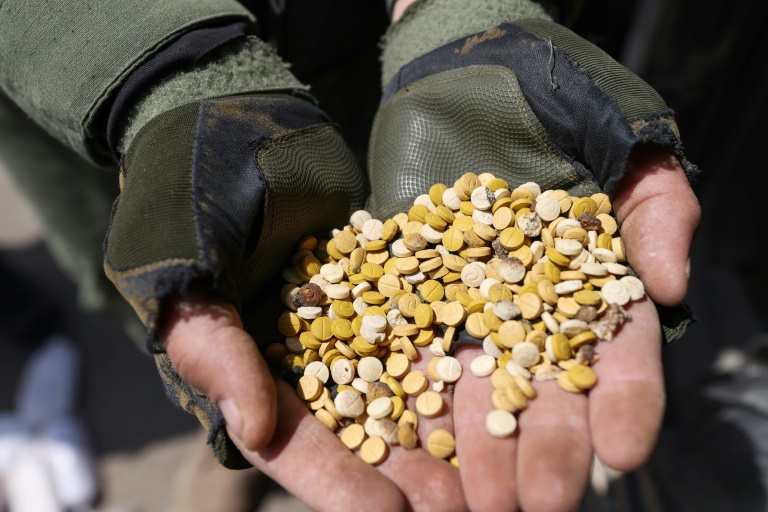
A decade of appalling civil war has left Syria fragmented and in ruins but one thing crosses every front line: a drug called captagon.

The stimulant — once notorious for its association with Islamic State fighters — has spawned an illegal $10 billion industry that not only props up the pariah regime of President Bashar al-Assad, but many of his enemies.

It has turned Syria into the world’s latest narco state, and sunk deep roots in neighbouring Lebanon as its economy has collapsed.

Captagon is now by far Syria’s biggest export, dwarfing all its legal exports put together, according to estimates drawn from official data by AFP.

An amphetamine derived from a once-legal treatment for narcolepsy and attention disorder, it has become a huge drug in the Gulf, with Saudi Arabia by far the biggest market.

AFP interviewed smugglers, a fixer who puts together multi-million dollar deals, and 30 serving and former law enforcement officers from Syria and beyond, as well as diplomats and drug experts in a bid to grasp the scope of the phenomenon.

Given the danger of speaking publicly — particularly for those inside the trade — the majority asked for their identities to be protected.

– ‘I can work for days’ –

In Saudi Arabia, captagon is often talked of as a party drug, but its hold extends far beyond the gilded lifestyles of the kingdom’s wealthy elite.

Cheap, discreet and less taboo than alcohol, many poorer Saudis and migrant workers go to work on the drug.

“I can work for two or three days non-stop, which has doubled my earnings and is helping me pay off my debts,” said Faisal, a skinny 20-year-old newlywed from a working-class background, who spends 150 riyals a week ($40) on the pills.

“I finish my first job exhausted in the early hours of the morning,” but the drug helps him push through to drive for a ride-hailing service.

An Egyptian construction worker told AFP that he began taking the pills after his boss secretly slipped some into his coffee so he could work faster and longer.

“In time my colleagues and I became addicted,” he added.

The retail price of a pill varies wildly from $25 for the premium tablets sold to the Saudi jetset to low quality adulterated pills that go for a dollar. 

Many begin their journey to the Gulf in the lawless badlands between Syria and Lebanon.

– Border barons and tribal networks – 

Hidden behind dark glasses and a mask in the middle of a vineyard in the Bekaa Valley, a Lebanese fixer and trafficker told AFP how he organised the shipments.

“Four or five big names typically partner up and split the cost of a shipment of say $10 million to cover raw material, transport and bribes,” he said.

“The cost is low and the profits high,” he said, adding that even if only one shipment out of 10 gets through, “you are still a winner”.

“There’s a group of more than 50 barons… They are one big web, Syrians, Lebanese and Saudis.”

While the captagon trade spans several countries, many key players have tribal ties, particularly through the Bani Khaled, a Bedouin confederation that reaches from Syria and Lebanon to Jordan, Iraq and Saudi Arabia. 

A shipment can stay within the Bani Khaled’s sphere of influence the whole way from manufacture in Syria to delivery in Saudi Arabia, said multiple sources, including a smuggler, an intelligence officer and Syrian army deserters. 

The economics of the trade are dizzying.

More than 400 million pills were seized in the Middle East and beyond in 2021, according to official figures, with seizures this year set to top that.

Customs and anti-narcotics officials told AFP that for every shipment they seize, another nine make it through.

That means even with a low average price of $5 per tablet, and only four out of five shipments getting through, captagon is at least a $10 billion industry.

With Syria the source of 80 percent of the world’s supply, according to security services, the trade is at least worth three times its entire national budget.

– Assad’s brother –

The Syrian state is at the heart of the trade in Assad-controlled areas, narcotics experts say.

The shadowy network of warlords and profiteers Assad indebted himself to to win the war has benefited hugely from it, including Lebanon’s powerful Iran-backed Hezbollah group, which experts say plays a significant role in protecting the trade along the Lebanese border.

“Syria is in dire need of foreign currency, and this industry is capable of filling the treasury through a shadow economy from importing raw materials to manufacturing and finally exporting” the pills, an ex-Syrian government adviser now outside the country told AFP. 

One major mover keeps coming up in all the AFP interviews — Assad’s much-feared brother Maher, the de facto head of Syria’s elite unit, the 4th Division. 

A dozen sources told AFP that the division was deeply involved in the trade, including smugglers, a regional law and order official, a former Syrian intelligence officer, a member of a tribe that smuggles captagon and a pharmaceutical industry insider. 

The British Army-linked CHACR think tank and the independent Center for Operations Analysis and Research (COAR) have also pointed the finger at Assad’s brother.

The Syrian authorities did not reply to AFP requests for comment after being contacted at the United Nations and through the country’s embassy in Paris.

“Maher al-Assad is one of the main beneficiaries of the captagon trade,” said Rami Abdel Rahman, director of the UK-based Syrian Observatory for Human Rights.

“He receives his own share from the profit. Drug money has become a main source to pay the salaries of an armed group affiliated with the 4th Division,” he added.

Some captagon labs get “the raw material directly from the 4th Division, sometimes in military bags”, said a Syria monitor, with a trafficker telling AFP that it even supplied rebel groups opposed to the regime.

The division controls large parts of the porous border with Lebanon that is key to the trade, with the Mediterranean port of Latakia another of its bastions.

Caroline Rose, of the Washington-based Newlines Institute, said it has “played an active role in guarding, facilitating and running a lot of captagon in Homs and Latakia” and then “transporting shipments to state-owned ports”.

The Lebanese frontier, which has never been clearly demarcated, has long been a happy hunting ground for smugglers, with captagon operations now booming in the north.

“Wadi Khaled is the new hub, the place is full of traffickers,” a judicial source told AFP, referring to a remote northern border region where much of the population on the Lebanese side identifies as Syrian.

At the height of the war, arms were smuggled into Syria through Wadi Khaled. Now captagon and migrants attempting to make the perilous crossing to Europe flow in the other direction.

– Rebel involvement –

The southern Syrian provinces of Sweida and Daraa, which border Jordan, are other key smuggling routes to Saudi Arabia, with the latter also home to many drug labs.

Sweida teems with gangs transporting captagon, with Bedouin tribes bringing consignments down from major production plants around Damascus and Homs.

“The smuggling is organised by the tribes who live in the desert in coordination with over 100 small armed gangs,” said Abu Timur, a spokesman for the local Al-Karama armed group. 

Across Syria the money to be made from captagon trumps old enmities.

“Captagon brought together all the warring parties of the conflict… The government, the opposition, the Kurds and ISIS,” the ex-Syrian government adviser said.

Even in the north, home to the last pockets where rebel and jihadist groups are holding out against Assad, the drug has forged unlikely alliances.

“I work with people in Homs and Damascus who receive the pills from 4th Division depots,” a smuggler in the Turkish-dominated region told AFP.

“My job is to distribute the pills here or to coordinate with rebel groups to send them to Turkey,” he said.

“This job is very dangerous and very easy at the same time.”

The trafficker said he also sold pills to leaders from the Hayat Tahrir al-Sham jihadist group that dominates the Idlib enclave in northwestern Syria.

He said myriad groups working as Turkish proxies and under the rebel umbrella known as the Syrian National Army (SNA) had aggressively moved in on the captagon business recently.

“The area is teeming with rebel groups. It’s a jungle, everyone is hungry out there and wants to eat,” he said.

He said the new captagon kingpin in the region is Abu Walid Ezza, a commander from the Sultan Murad faction of the SNA.

“He has very good relations with the 4th Division, since he used to be based in Homs,” the trafficker said. “He brings excellent pills.”

The faction told AFP they had nothing to do with the trade.

Turkish players are also deeply involved, said one regional judicial investigator.

“Diethyl ether, a kind of chloroform, is one of the main precursors needed for (making) captagon, and most of it enters from Turkey,” the source said.

– Candy machine –

Beyond the chemicals, the biggest investment for a captagon lab is a tablet press or candy-making machine. 

One Chinese website even advertises a “captagon tablet press” for $2,500 that can spew out tens of thousands of pills an hour. 

For a few dollars more you can get the pill stamps with captagon’s trademark logo — the two Cs that have earned it the nickname “Abu al-hilalain” (two crescent moons).

Once the chemical precursors have been procured, it only takes 48 hours to set up a captagon manufacturing laboratory with relatively rudimentary equipment.

Which means even when drug units swoop, the captagon cooks can quickly start working again. They have even been known to set up mobile labs in the back of utility vans, especially after a recent clampdown in eastern Lebanon. 

The Syrian government also acts but most seizures “are nothing but pure farce… the enforcers are themselves the thieves,” said a Syrian pharmaceutical company worker interviewed outside the country. Some pharma plants are also involved in the trade, he added. 

Slick videos from Saudi Arabia’s customs and police boast of how they are battling captagon with state-of-the-art detection technology and dog units.

But senior security and judicial officials in the region told AFP that the traffickers are always a step ahead.

“At (Lebanon’s) Tripoli port, for example, the scanner always needs repairing on the wrong day, or is inadvertently switched off,” said a senior Lebanese official.

“And when arrests are made, the security services always bring the driver to court, the only guy who doesn’t know anything,” the official added.

Corruption also helps to load the dice in the smugglers’ favour. Several anti-narcotics officials told AFP that some senior officials were on the take and had even sold off seized drugs.

– ‘Captagon king’ –

“Captagon king” Hassan Dekko used to run his empire out of the Lebanese border village of Tfail, which sits at the tip of a tongue of land jutting into Syria north of Damascus.

But Dekko, a binational with high-level political connections in both countries, was arrested in April last year after major captagon seizures.

In court documents obtained by AFP, Dekko denied any involvement in drug trafficking.

But anti-narcotics chiefs in Lebanon claim that some of the businesses he owns, including a pesticide factory in Jordan, a car dealership in Syria and a fleet of tanker trucks, are common covers for drug barons.

However, a senior security official said Dekko’s influence had been on the wane.

Several security sources as well as deserters from the Syrian army described Syrian MP Amer Khiti, who is under US sanctions, as another major figure in the business.

“Khiti is involved in smuggling captagon,” the Syrian Observatory for Human Rights confirmed, and he has also been named in CHACR and COAR reports.

One of his workers told AFP that he had seen captagon being delivered to a warehouse near Damascus.

“He is a good man. We don’t care what he does, so long as he helps the people,” the employee said. 

“The Khiti family has been involved in this since before the war. They used to put pills in plastic bags and stitch them inside sheep” to smuggle them, he added.

Khiti could not be reached for comment.

– ‘No smoking gun’ –

With no end in sight to their economic and political crises, the fear is that captagon will become an even bigger pillar of life in Syria and Lebanon, where up to a fifth of the pills are produced.

Multiple sources told AFP that the captagon barons have built strong political connections there. 

“Syria became the global epicentre of captagon production by conscious choice,” said Ian Larson, chief Syria analyst at the COAR political risk consultancy.

With its economy crippled by war and sanctions, “Damascus had few good options”, he added.

From the Syrian regime officials and millionaire businessmen at the top of the chain down to the villagers and refugees employed to cook and conceal the drugs, captagon dollars get spread far and wide in both countries.

“There is still no smoking gun directly linking Bashar al-Assad to the captagon industry, and we shouldn’t necessarily expect to find one,” said Larson, who has written extensively on the drug.

On September 20, the US House of Representatives passed an act with the catchy acronym CAPTAGON — Countering Assad’s Proliferation Trafficking And Garnering Of Narcotics Act — but the drug has generally received scant attention in Western policy-making circles.

Meanwhile, both the dealers and those tracking them believe the captagon era is only just beginning.

“The trade will never stop, generation after generation will keep working in it,” the Lebanese fixer insisted.

A senior judicial source agreed. “They are never convicted and the money is huge. Give me one reason why this would stop.”

(Additional reporting by Haitham el-Tabei in Saudi Arabia and Patrick Lee in Kuala Lumpur.)

N. Korea ICBM launch appears to have failed, Seoul military says

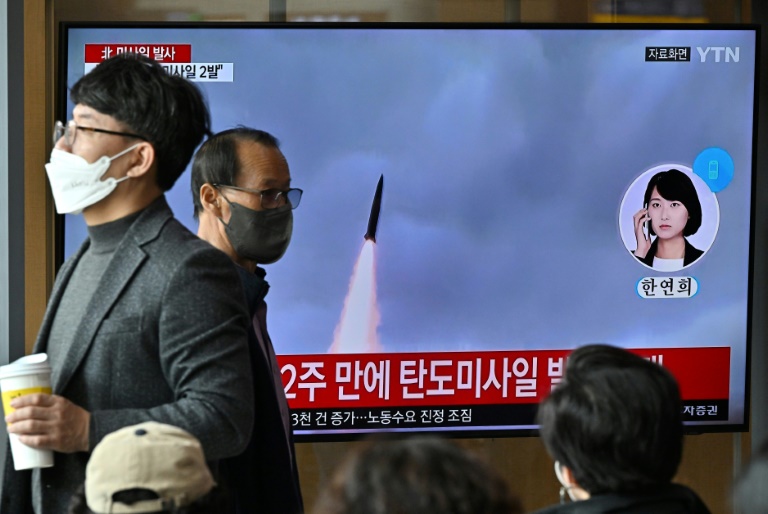
North Korea fired one intercontinental ballistic missile and two short-range missiles Thursday, although the longer-range launch appeared to have failed, Seoul’s military said.

People on a South Korean island and in parts of northern Japan were ordered to seek shelter during Thursday’s launches by the North, which followed a blitz of missiles fired on Wednesday.

The largest of those launches, however, appeared to have failed.

“North Korea’s ICBM launch is presumed to have ended in failure,” the South Korean military said.

Seoul’s military said earlier it had detected the launch of the long-range ballistic missile at around 7:40 am (2240 GMT) in the Sunan area of Pyongyang.

Shortly after, it detected what were “believed to be two short-range ballistic missiles fired at around 08:39 am from Kaechon, South Pyongan province.”

South Korea’s military “is maintaining a full readiness posture while closely cooperating with the US and strengthening surveillance and vigilance,” it said.

Pyongyang fired more than 20 missiles on Wednesday, including one that landed near South Korea’s territorial waters.

The multiple missile launches come as Seoul and Washington are staging their largest-ever joint air drills, involving hundreds of warplanes from both sides.

Pyongyang has called the US-South Korean air exercise, dubbed Vigilant Storm, “an aggressive and provocative military drill targeting the DPRK,” and warned that, if it continues, Seoul and Washington will “pay the most horrible price in history.”

Local media reported that air raid sirens had gone off on South Korea’s eastern island of Ulleungdo — where residents were warned on Wednesday to seek shelter after one of Pyongyang’s short-range ballistic missiles crossed the de facto maritime border.

Tokyo also confirmed Thursday’s launches, with the Japanese government issuing a special warning to residents of northern regions, telling them to stay indoors or seek shelter.

Tokyo initially said the missile had flown over Japan, prompting a “J-Alert” to be issued, but defence minister Yasukazu Hamada later said “the missile did not cross the Japanese archipelago, but disappeared over the Sea of Japan.”

– ‘Tactical nuclear drills’ –

Given the missile was “accompanied by evacuation warnings, strongly suggest IRBM or possible ICBM on full-distance launch,” Chad O’Carroll of Seoul-based specialist site NK News said on Twitter. 

“Latter could be very worrying for some if it successfully goes a significant distance.”

Washington and Seoul have repeatedly warned that Kim’s recent missile launches could culminate in another nuclear test — which would be Pyongyang’s seventh.

The blitz of launches indicates “Quite possible tactical nuclear weapons test(s) will be next. Possibly very soon,” O’Carroll added.

Ahn Chan-il, a North Korean studies scholar, agreed. 

“These are North Korea’s pre-celebration events ahead of their upcoming nuclear test,” he told AFP.

“They also seem like a series of practical tests for their tactical nuclear deployment.”

North Korea revised its laws in September allowing for pre-emptive nuclear strikes, with leader Kim declaring the country to be an “irreversible” nuclear power — effectively ending negotiations over its banned arms programs.

On October 4, North Korea fired a missile over Japan that also prompted evacuation warnings. Pyongyang later claimed it was a “new-type ground-to-ground intermediate-range ballistic missile”.

It was first time North Korea had fired a missile over Japan since 2017.

Pyongyang later claimed that the launch and a blizzard of other tests around the same time were “tactical nuclear drills” that simulated showering South Korea with nuclear-tipped missiles. 

– Blitz of launches –

One short-range ballistic missile crossed the Northern Limit Line, the de facto maritime border, on Wednesday, prompting President Yoon Suk-yeol to call it “effectively a territorial invasion”.

Pyongyang also fired an artillery barrage into a maritime “buffer zone” on Wednesday.

South Korea, for its part, said it fired three air-to-ground missiles into the sea close to the two countries’ maritime boundary.

Seoul also closed some air routes over the East Sea, advising local airlines to detour to “ensure passenger safety in the routes to the United States and Japan”.

Asia joins Wall St plunge as Powell wrecks Fed pivot hopes

Asian markets sank Thursday after the Federal Reserve hiked interest rates and boss Jerome Powell suggested they would go higher than expected, blowing a hole in hopes for a more dovish pivot in its fight against inflation.

Equities have rallied for more than a week on speculation the US central bank would join others in tamping down its monetary-tightening campaign as the economy showed signs of slowing.

On Wednesday, the bank unveiled a fourth straight 75 basis-point increase — the sixth hike this year — and opened the door to a smaller increase at future meetings, giving a boost to Wall Street.

However, Powell soon after sent traders scattering when he told a news conference that while it would be appropriate to lessen the size of the hikes, “incoming data since our last meeting suggests that ultimate level of interest rates will be higher than previously expected”.

He added that “we still have some ways” until borrowing costs were at the necessary level and that it “is very premature to be thinking about pausing”.

And while there is a building fear that the increasingly tight monetary conditions will send the world’s top economy into a recession, the Fed boss said it would take time for the effects of the measures to kick in.

“The historical record cautions strongly against prematurely loosening policy,” he warned. “We will stay the course, until the job is done.”

Investors now expect rates to top out at more than five percent, compared with four percent currently.

The comments hammered the narrative that had supported stocks, sending Wall Street’s three main indexes tanking — led by rate-sensitive tech giants — and pushing the dollar up against its peers.

“Every time the market gets a little bit of dovish hope, it gets smacked on the nose with a rolled-up newspaper,” Scott Rundell, Mutual Ltd, said. “There’s a lot of volatility still ahead.”

Hong Kong led the losses as traders gave back a chunk of the previous two days’ gains that came on the back of speculation China was planning to roll back some of its painful zero-Covid policies. Adding to the selling was confirmation from Beijing’s health authority that it intended to stick to the strategy.

Shanghai, Sydney, Seoul, Wellington, Taipei, Manila and Jakarta were also well in the red. Tokyo was closed for a holiday.

The release Friday of US jobs figures will give another insight into the state of the economy and particularly the labour market, which has remained resilient in the face of decades-high inflation and rising rates.

As the Fed is basing its moves on data, a strong reading could give officials room to continue lifting. 

Before that, the Bank of England is tipped to lift its key rate 0.75 percentage points, though some analysts are predicting a full percentage point hike.

– Key figures around 0230 GMT –

Hong Kong – Hang Seng Index: DOWN 2.5 percent at 15,443.42

Shanghai – Composite: DOWN 0.3 percent at 2,993.76

Tokyo – Nikkei 225: Closed for a holiday

Euro/dollar: UP at $0.9836 from $0.9816 on Wednesday

Pound/dollar: UP at $1.1414 from $1.1390

Dollar/yen: DOWN at 147.27 yen from 147.90 yen

Euro/pound: UP at 86.18 pence from 86.17 pence

West Texas Intermediate: DOWN 0.8 percent at $89.32 per barrel

Brent North Sea crude: DOWN 0.5 percent at $95.64 per barrel

New York – Dow: DOWN 1.6 percent at 32,147.76 (close)

London – FTSE 100: DOWN 0.6 percent at 7,144.14 (close)

Arizona Republican who crossed Trump sees bad omens

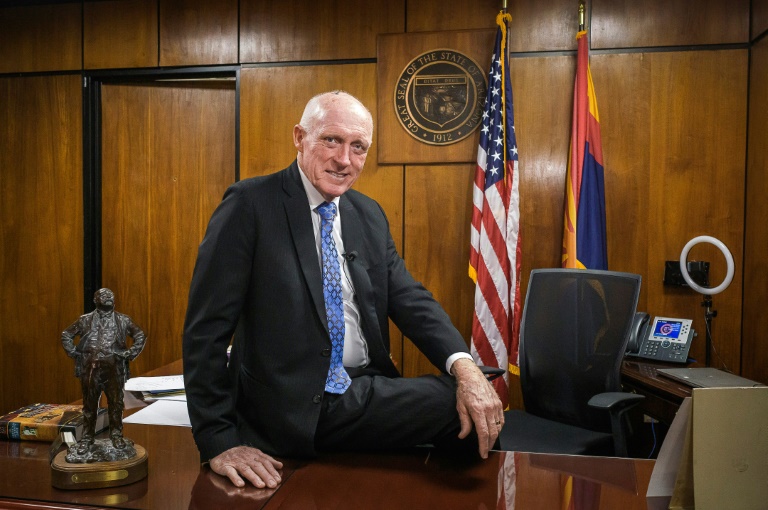
In three decades of involvement in conservative politics, Rusty Bowers has never been so worried by the gap between perception and reality that currently plagues Arizona’s Republican Party.

Ahead of the November 8 midterm elections, masked poll watchers, some of them armed, have been looming over ballot drop boxes in a bid to prevent a repeat of the vote-fixing they are convinced took Donald Trump’s presidency away from them in 2020.

No such conspiracy exists, says Bowers, and a party that was once more pragmatist than propagandist is now fully in thrall to unhinged theories — and it’s dangerous. 

“It’s intimidation,” Bowers — the 70-year-old speaker of the Arizona House of Representatives — says of the men and women wearing paramilitary gear who set up camp at ballot boxes in parts of the southwestern state.

“If you take voting away and make it insecure, and you increase the violence, to me that’s a fertile ground for fascism,” he tells AFP in an interview in Arizona’s state Capitol.

On Tuesday a judge this week ordered the self-appointed poll watchers to keep their distance from the drop boxes. But a toxic political climate that has swirled since the last election has persisted, and ensnared Bowers.

In November 2020, after campaigning for Trump in the presidential race, Bowers watched with dismay as Joe Biden’s vote tally in Arizona squeaked past those of the GOP incumbent.

A mere 10,000 ballots separated the two candidates, but under the first-past-the-post rules, the state’s electoral college votes all went to Biden, helping tip the Democrat over the national line and into the White House.

Multiple investigations, including a recount organized by the Republican Party, found no evidence of wrongdoing; nothing to throw any doubt on the results.

In line with his constitutional duty as leader of the state House, Bowers readied to certify the results. And that should have been that.

But then his phone rang.

On the other end, Trump and his lawyer Rudy Giuliani set about assuring Bowers that an old Arizona law — which he has never found — allowed the Republican-controlled assembly to change the state’s electors, the people responsible for formally electing the president after the election, in defiance of the popular vote.

“I said, ‘Mr. Trump, I voted for you, I walked for you, I campaigned for you, I was at your campaigns with you, but I will do nothing illegal for you,'” he recalls.

“When they asked me to break my vow to the Constitution, it’s like saying: ‘We want you to throw away your religion, your faith, the foundation of who you are.'”

– ‘RINO coward’? –

Bowers stuck to his guns, and Arizona’s electoral college votes went to Biden.

As it has for others before and since who have taken a principled stand in defiance of Trump, that decision tipped his world upside down.

Bowers is no wilting liberal; he is fiercely pro-life, wants the southern US border strictly controlled, and wears his Mormonism proudly.

Since Trump smeared him as a “RINO coward” — a Republican In Name Only — Bowers has been besieged by death threats and a torrent of abusive emails.

The father-of-seven was called to Washington to testify before the committee investigating the January 6 US Capitol assault about the pressure he came under to rig the election.

For weeks, Trump supporters and far-right militia members demonstrated in front of his home, sometimes armed, sometimes carrying signs that accused him of paedophilia and other insults favored by QAnon conspiracists.

Even as the physical intimidation died down, Bowers found himself the target of a political assassination.

Like many who cross Trump, he was faced with a far-right challenge in the Republican primary for a state senate seat.

He lost.

But until he leaves office in January, Bowers says he will keep fighting.

A Republican state bill introduced this session would have given the Arizona House authority to summarily dismiss the results of a popular election, Bowers said, calling it “dangerous legislation.”

“It doesn’t say they may ‘if….’, it doesn’t say they may ‘when….’, or why. Nothing, no criteria,” according to Bowers.

“I killed it,” he says. 

Whether it stays dead is another matter.

Arizona voters are being offered Republican candidates for governor, secretary of state and US senator who all subscribe wholly to Trump’s election denialism.

“The strength of the leadership of the current party is just anger,” Bowers says, adding it is “leaning towards the Mussolini model,” referring to Italy’s WWII-era Fascist leader.

And that, he concludes, is not good for the country as a whole, whose polity is hanging by a thread.

“It’s a very shallow civilization,” he says, gesturing with his thumb and his forefinger squeezed tightly together.

“About that thick.”

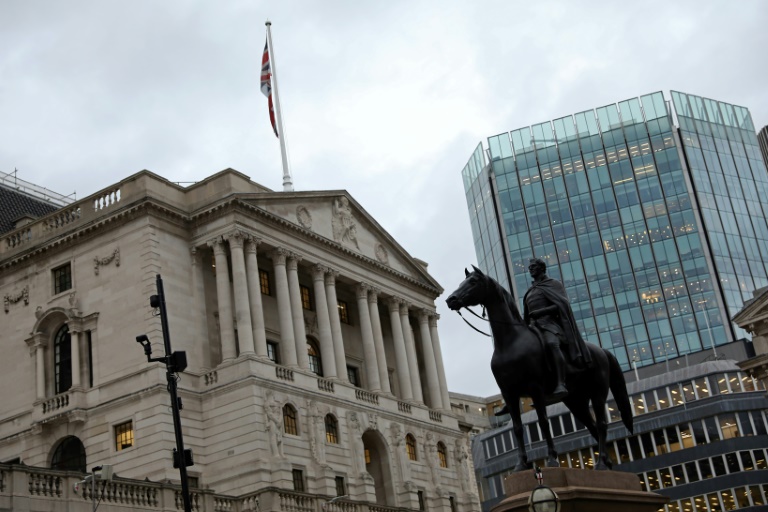
Bank of England set for biggest rate hike in 33 years

The Bank of England is widely expected to hike its key interest rate on Thursday by the biggest amount since 1989 as it bids to cool sky-high British inflation.

Following a regular meeting, the BoE is seen lifting borrowing costs by 0.75 percentage points to three percent, according to market consensus, which would be the highest level since the 2008 global financial crisis. 

Some analysts, however, are predicting a rise of one percentage point, also a 33-year high.

The move would mirror aggressive rate-tightening by central banks worldwide as economies battle the highest prices in decades.

The US Federal Reserve on Wednesday announced a fourth consecutive hike of 0.75 percentage points, taking its benchmark lending rate to 3.75-4.0 percent.

While calling further interest rate increases “appropriate” to tamp down inflation, the Fed also opened the door to smaller hikes.

The BoE decision at 1200 GMT is set to add to a cost-of-living crisis for millions of Britons as hikes by central banks see retail lenders push up the rate of interest on their own loans.

Repayments on UK mortgages have surged in recent weeks also after the debt-fuelled budget of previous British prime minister Liz Truss spooked markets, forcing her to resign and triggering emergency buying of UK government bonds by the BoE.

Her successor Rishi Sunak has attempted to bring calm to markets by hinting at tax rises in a fresh budget on November 17, even if such a move further harms Britain’s economy.

“I think everyone knows we do face a challenging economic outlook and difficult decisions will need to be made,” Sunak, a former UK finance minister, told parliament on Wednesday.

British annual inflation stands above 10 percent, the highest level in 40 years, on soaring food prices and energy bills.

– Inflation update –

Alongside its rate call, the BoE will give its latest inflation and growth forecasts, with analysts indicating that the UK economy may already be in recession.

“The BoE is expected to hike its interest rate by no more than 75 basis points, on conviction that the Sunak government would opt for some fiscal austerity, and nothing too crazy to wreak havoc, again,” forecast Swissquote analyst Ipek Ozkardeskaya.

As the Covid-19 pandemic began in early 2020, the BoE slashed its key interest rate to a record-low 0.1 percent and also pumped massive sums of new cash into the economy.

The Bank of England started raising rates last December and another hike Thursday would be the eighth increase in a row.

Ruth Gregory, senior UK economist at Capital Economics, predicts that the BoE will raise its interest rate by one percentage point on Thursday and by the same amount in December.

“If we are right that domestic inflation will be sticky, it may mean that the Bank of England ultimately has to act more aggressively further ahead,” she added.

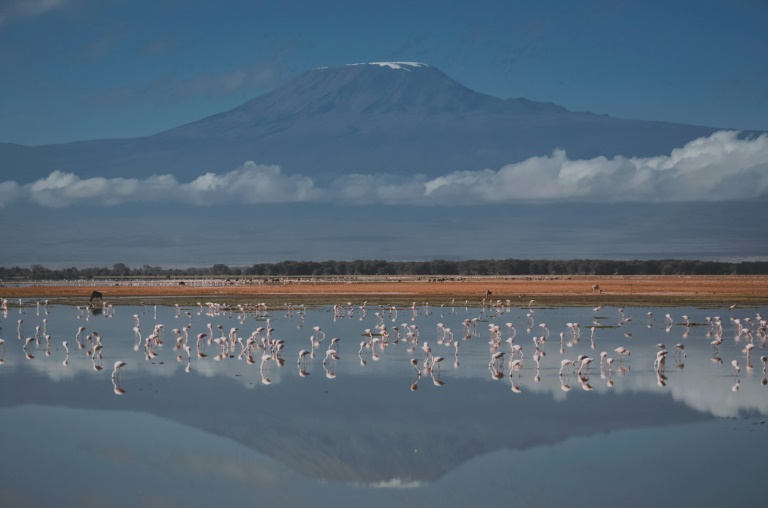
Yellowstone, Kilimanjaro glaciers among those set to vanish by 2050: UNESCO

Glaciers at many UNESCO World Heritage sites including Yellowstone and Kilimanjaro National Park will likely vanish by 2050, the UN agency warned Thursday, urging leaders to act fast to save the rest.

The warning followed a study of 18,600 glaciers at 50 World Heritage sites — covering around 66,000 square kilometres (25,000 square miles) — which found glaciers at a third of the sites were “condemned to disappear”.

The study “shows these glaciers have been retreating at an accelerated rate since 2000 due to CO2 emissions, which are warming temperatures”, UNESCO said.

The glaciers were losing 58 billion tonnes of ice every year, equivalent to the combined annual water use of France and Spain, and were responsible for nearly five percent of observed global sea-level rise, the agency explained.

“Glaciers in a third of the 50 World Heritage sites are condemned to disappear by 2050, regardless of efforts to limit temperature increases,” UNESCO said.

“But it is still possible to save the glaciers in the remaining two thirds of sites if the rise in temperatures does not exceed 1.5°C compared to the pre-industrial period.”

Countries have pledged to keep global warming to 1.5 degrees Celsius above pre-industrial levels — a goal the world is set to miss on current emission trends.

“This report is a call to action,” said UNESCO head Audrey Azoulay, ahead of the COP27 climate summit in Egypt starting on Monday.

“Only a rapid reduction in our CO2 emissions levels can save glaciers and the exceptional biodiversity that depends on them. COP27 will have a crucial role to help find solutions to this issue.”

In Africa, glaciers in all World Heritage sites will very likely be gone by 2050, including at Kilimanjaro National Park and Mount Kenya, UNESCO warned.

In Europe, some glaciers in the Pyrenees and in the Dolomites will also probably have vanished in three decades’ time.

The same went for glaciers in the Yellowstone and Yosemite national parks in the United States.

The melting of ice and snow is one of the 10 key threats from climate change, an Intergovernmental Panel on Climate Change report published in February said.

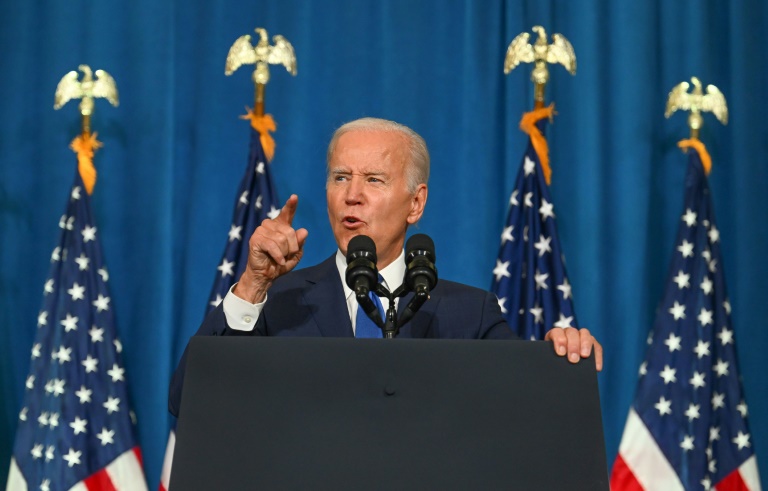
Republican denial of election results a 'path to chaos': Biden

President Joe Biden warned US voters Wednesday that the future of democracy was at stake in next week’s midterms, with the steadfast refusal of some Republican candidates to accept election results opening a “path to chaos in America.”

With conservatives hammering his administration over the state of the economy, the 79-year-old Democrat took aim squarely at Republicans who have cast their lot with former president Donald Trump in denying Biden’s 2020 election victory.

“There are candidates running for every level of office in America… who won’t commit to accepting the results of the elections they’re in,” Biden said in a televised address to the nation.

Their goal, he said, was to follow Trump’s lead and try to “subvert the electoral system itself” — noting there are more than 300 Republican election deniers on the ballot in races across the country this year.

“They’ve emboldened violence and intimidation of voters and election officials,” he charged– less than two years after a mob of Trump supporters ransacked the US Capitol to try to overturn the 2020 result.

“That is the path to chaos in America,” he said. “It’s unprecedented. It’s unlawful. And, it is un-American.”

Biden’s dire warning of threats to democracy comes six days ahead of Tuesday’s vote, in which Republicans are heavily favored to capture the House of Representatives and possibly the Senate.

In the wake of a violent attack on the husband of the Democratic House speaker, Nancy Pelosi, which dramatically heightened concerns about heated political rhetoric, Biden urged Americans to unite in defense of democracy. 

“We must with an overwhelming voice stand against political violence and voter intimidation, period,” he said.

“We have to face this problem,” he said. “We can’t pretend it’s just going to solve itself.”

But nearly 22 months after the Capitol insurrection, polling shows that American voters are more concerned with the economy. 

More than half say the price of gas and consumer goods is the economic issue that worries them the most in a new Quinnipiac University national poll.

Democrats are being attacked on inflation and fears of a looming recession, with the Federal Reserve repeatedly hiking interest rates — and Biden acknowledged Wednesday that “inflation is still hurting” at a White House event with union workers and employers.

His admission came as the US central bank delivered another steep rate hike, raising the benchmark borrowing rate by 0.75 percentage points — the fourth straight increase of that size and the sixth hike this year.

– Balancing act –

Biden, whose approval rating has been underwater for more than a year, has been relatively inconspicuous on the campaign trail.

But he entered the fray in the home stretch with Wednesday’s address, ahead of stump speeches in Pennsylvania, New Mexico, California and Maryland.

Democrats have some major legislative victories to tout, but they have been hamstrung since Biden’s election win by internecine fights between progressives and moderates.

A huge row sparked by the party’s leftist flank calling on Biden to negotiate with President Vladimir Putin over Russia’s invasion of Ukraine was the most recent example of Democratic dysfunction.

Before settling on a “kitchen sink” strategy of talking about the cash in voters’ pockets, Democrats spent much of the campaign pulling in different directions on the importance of abortion rights, climate change, reproductive freedoms and the war in Ukraine.

But polling consistently shows voters more focused on their pocketbooks, and internal divisions left Democrats without a cohesive response to Republican attacks that they have mishandled the economy.

The nonpartisan Cook Political Report moved 10 House races toward the Republicans on Tuesday in the solidly Democratic states of New York, New Jersey, Oregon, California and Illinois.

If all of the races in Cook’s Republican column go as predicted, the party would need to win just six of the 35 “toss up” races to take the majority. Democrats would need 29. 

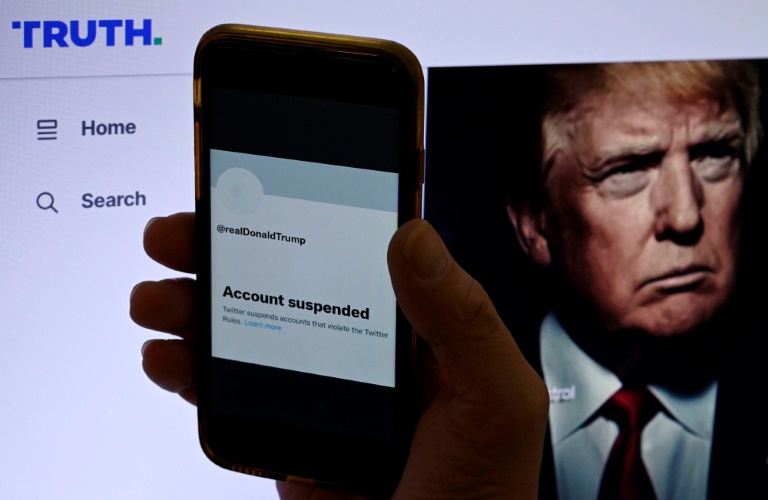
Twitter's new path unclear as Musk says 'weeks' for banned accounts' return

The road ahead for Twitter remained as murky as ever after new owner Elon Musk said Wednesday that it could take weeks to reinstate banned accounts — such as that of former US president Donald Trump.

Twitter users have been watching closely to see whether Musk will reinstate Trump, banned for inciting last year’s attack on the Capitol by a mob seeking to overturn the results of the 2020 election, and other deplatformed users.

The potential reinstatement of such accounts banned for violating the site’s content moderation rules has been seen as a bellwether of where Musk, a self-described “free speech absolutist,” wants to take the site he describes as a global town square.

But on Wednesday the South African billionaire said the wait will have to continue a little while longer. 

“Twitter will not allow anyone who was de-platformed for violating Twitter rules back on platform until we have a clear process for doing so, which will take at least a few more weeks,” he tweeted.

That would delay a return of Trump until after crucial November 8 midterm elections in the United States, which will determine control of Congress. 

Trump, once a prolific tweeter, retains a powerful hold on his Republican Party, and has reopened his 2020 playbook by questioning the integrity of the upcoming election.

Since Musk took Twitter private last week, Trump has suggested he would be happier sticking with his own Truth Social messaging platform.

But the former president’s network has financial issues and many political strategists believe he would find it hard to resist the influence offered by Twitter, where he was once one of the site’s biggest global draws.

The financial fate of Truth Social could be determined at a crucial meeting expected on Thursday that could see one of the site’s key backers dissolved.

The announcement comes only days after the world’s wealthiest man took sole control of the social media giant in a contentious $44 billion deal, vowing to dial back content moderation.

But the huge sum paid for Twitter has heaped pressure on Musk to keep advertisers on board and keep a lid on offensive content.

Musk in his tweet on Wednesday also said he had talked to civil society leaders “about how Twitter will continue to combat hate & harassment & enforce its election integrity policies.”

This followed his reassurance over the weekend that the site would not become a “free-for-all hellscape,” and announced the formation of a content moderation council.

However on Sunday, Musk himself tweeted an anti-LGBT conspiracy theory about what happened the night US Speaker Nancy Pelosi’s husband was attacked, then hours later deleted the post.

– ‘Most accurate’ –

In a sign that the approach to content moderation was a key concern, Musk praised the site for its handling of a White House tweet that users said exaggerated a claim that Biden had increased retirement benefits.

The White House deleted the tweet after Twitter users flagged the post as lacking context.

“Our goal is to make Twitter the most accurate source of information on Earth, without regard to political affiliation,” Musk said.

US conservatives complain of censorship on the major social networks and Musk staunchly defends looser moderation of content on Twitter in the name of free speech.

Twitter’s finances also remain a mystery going forward, with Musk on the hook to make huge loan repayments after his buyout.

Musk on Tuesday said the site will charge $8 per month to verify users’ accounts, arguing the plan would solve the platform’s issues with bots and trolls while creating a new revenue stream for the company.

Some users warned that they would simply leave the site if they were made to pay.

Close Bitnami banner
Bitnami