World

South Korea police admit crowd surge response was 'insufficient'

South Korea’s police chief said Tuesday that officers had received multiple urgent reports of danger ahead of a deadly crowd crush at a Halloween event but their handling of them was “insufficient”.

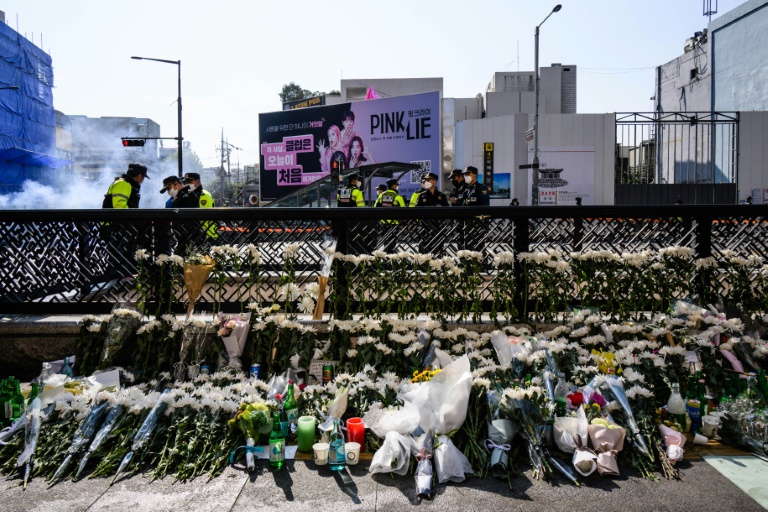
At least 156 mostly young people were killed, and scores more injured, in a deadly crowd surge late Saturday at the first post-pandemic Halloween party in Seoul’s popular Itaewon nightlife district.

An estimated 100,000 people had flocked to the area, but because it was not an “official” event with a designated organiser, neither the police nor local authorities were actively managing the crowd.

“There were multiple reports to the police indicating the seriousness at the site just before the accident occurred,” national police chief Yoon Hee-keun said.

Police knew “a large crowd had gathered even before the accident occurred, urgently indicating the danger,” he said, acknowledging the way this information was handled had been “insufficient”.

Seoul’s interior minister on Tuesday became the first top official to make a clear apology to the public for the disaster, one of the worst ever in the country’s history.

“I would like to take this opportunity to express my sincere apologies to the public as the minister in charge of the people’s safety for this accident,” Lee Sang-min said before bowing his head before lawmakers and cameras.

He promised to investigate what had caused the crowd crush and ensure a disaster on this scale could never happen again.

South Korea is typically strong on crowd control, with protest rallies often so heavily policed that officers can outnumber participants.

But police deployed only 137 officers to Itaewon for Halloween, while 6,500 officers were present at a protest across town attended by about 25,000 people, local reports said.

South Korean President Yoon Suk-yeol said Tuesday the country needed to urgently improve its system for managing large crowds in the wake of the disaster.

“The safety of the people is important, whether or not there is an event organiser,” he told a cabinet meeting.

He called for the country to develop “cutting-edge digital capabilities” to improve crowd management — but critics claim such tools already exist and were not deployed in Itaewon.

– Disaster was avoidable –

Seoul’s City Hall has a real-time monitoring system that uses mobile phone data to predict crowd size, but it was not employed Saturday night, local media reported.

Itaewon’s district authorities also did not deploy any safety patrols, with officials saying the Halloween event was considered “a phenomenon” rather than “a festival”, which would have required an official plan for crowd control.

On the night, tens of thousands of people thronged a narrow alleyway, with eye-witnesses describing how, with no police or crowd control in sight, confused partygoers pushed and shoved, crushing those trapped in the lane.

Analysts say this was easily avoidable, even with only a small number of police officers.

“Good, safe crowd management is not about the ratio, but about the crowd strategy — for safe crowd capacity, flow, density,” said G. Keith Still, a crowd science professor at the University of Suffolk.

South Korean expert Lee Young-ju said that if local police knew they would be short-handed, they could have sought help from local authorities or even residents or shop owners.

“It’s not just the numbers,” Lee, a professor from the Department of Fire and Disaster at the University of Seoul, told AFP. 

“The question is, how did they manage with the limited number (of police) and what kind of measures did they take to make up for it.”
Toyota keeps net profit forecast despite production woes

Toyota kept its annual net profit forecast unchanged on Tuesday as the weaker yen offsets supply-chain disruptions that have forced the Japanese car giant to slash production targets.

The world’s top-selling automaker said it now expects to sell half a million fewer vehicles than planned in the current financial year because of a global chip shortage and other supply problems.

Chief financial officer Kenta Kon warned that “headwinds are blowing” as he listed the uncertainties facing the company.

“Energy and material prices, as well as the global labour situation, are changing rapidly and significantly,” along with shifting monetary policies and forex rates, he told reporters.

“A number of changes are happening simultaneously, including the semiconductor situation — any one of which could have a major impact on the future of the automotive industry.”

Semiconductors are an essential component of modern cars, and the pandemic-triggered chip drought has pummelled Toyota and its rivals worldwide.

On Tuesday Toyota revised down its full-year production plan to 9.2 million units “due to risks such as procurement of semiconductors”.

The weak yen should help inflate revenues, however, and the carmaker now predicts annual sales worth 36 trillion yen ($240 billion), up from the previous forecast of 34.5 trillion yen.

Buoyed by the cheap yen — which has lost more than 20 percent of its value against the dollar this year — Toyota in August upgraded its full-year net profit forecast to 2.36 trillion yen, which it maintained on Tuesday.

– Production ‘bottleneck’ –

Net profit in the six months to September fell 23 percent year-on-year to 1.2 trillion yen.

Toyota said higher material costs pushed down its profits in North America in the first half, while business in Europe was affected by its decision to pull out of Russia.

The company announced in September its decision to end production in Russia, citing supply chain problems.

“It is hard to see six months ahead in the automotive industry, and it is really difficult to foresee Toyota’s earnings,” Kon said.

But the company can broadly maintain production levels “thanks to steady work over a long time, with many stakeholders, to improve financial health”, he added.

Some analysts say Toyota has been less affected by the chip shortage than its Japanese rivals, due in part to the stronger ties it cultivated with domestic suppliers after Japan’s 2011 earthquake and tsunami.

A key question will be how much longer Toyota is willing to keep up this approach, said Kohei Takahashi, an analyst at UBS Securities.

As the automaker readies to pivot toward new businesses and technologies, “there will come a moment Toyota will demand suppliers give something back,” he said.

Seiji Sugiura, an analyst at Tokai Tokyo Research Center, told AFP ahead of the earnings release that Toyota will face difficulties ahead.

“Domestic production issues are emerging as a bottleneck,” he warned, while “reduced exports could affect the extent to which (the forex rate) contributes to the company”.

Toyota said each drop of one yen per dollar is estimated to translate into a 45-billion yen increase in operating profit.

So “benefits from the yen’s depreciation will remain palpable”, Sugiura predicted.

Pacific nuclear legacy overshadows US talks in Marshall Islands

Marshall Islands officials say they are ready to resume talks with the United States this week on renewing a long-standing economic and security deal, provided Washington addresses grievances stemming from the testing of nuclear weapons on the Pacific archipelago more than 70 years ago. 

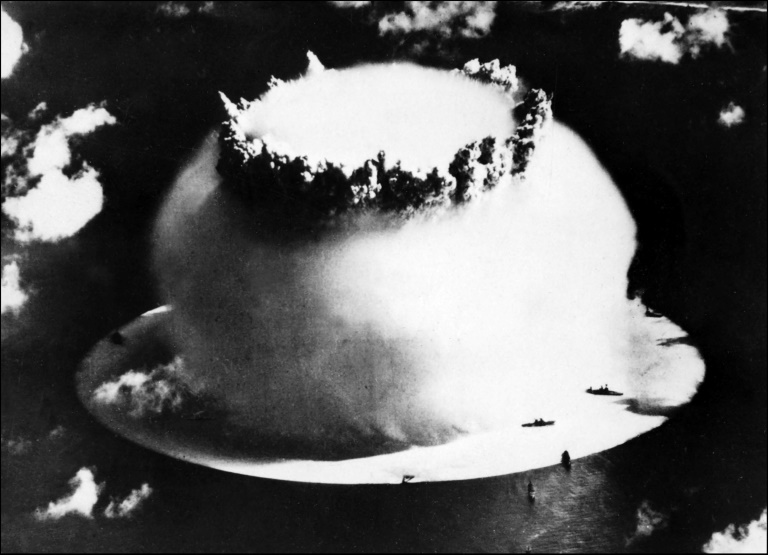
The United States detonated 67 nuclear bombs in the Marshall Islands between 1946-58, and the health and environmental impacts are still felt on the islands and atolls that lie between Hawaii and the Philippines.

US special envoy Joseph Yun is scheduled to land in the capital Majuro on Thursday to resume negotiations on extending the 20-year Compact of Free Association, part of which expires in 2023.

Marshall Islands negotiators first want the United States to pay more of the compensation awarded by the international Nuclear Claims Tribunal, totalling just over $3 billion, of which around $270 million has been paid so far.

Officials in Majuro broke off talks in September to renew the compact, a key international agreement between the United States, the Marshall Islands, Micronesia and Palau.

The Marshall Islands said it would also be ready to resume talks with Yun if Washington tackled health and environmental issues stemming from their nuclear testing.

“We are ready to sign (a Compact extension) tomorrow, once the key issues are addressed,” Parliament Speaker Kenneth Kedi told AFP.

“We need to come up with a dignified solution,” he said. Kedi represents Rongelap Atoll, which is still affected by nuclear testing.

He was encouraged by an agreement signed in late September by US President Joe Biden and Pacific island leaders, including Marshall Islands President David Kabua, that included references to the US commitment to addressing its nuclear past.

However, until that happens, “it casts a question mark on all the promises Washington has made,” Kedi said.

“If we can’t resolve issues from our past, how will it be going forward with other issues?”

Thousands of Marshall Islanders were engulfed in a radioactive fallout cloud following the 1954 Castle Bravo nuclear test by the US military, and many subsequently experienced health problems.

Tonnes of contaminated debris from the testing was dumped in a crater on the Enewetak Atoll and capped with concrete that has since cracked, sparking health concerns.

Hundreds of islanders from the Marshall’s Bikini, Enewetak, Rongelap and Utrik atolls have also had to relocate due to nuclear contamination. Many are still unable to return home.

A study issued by the US National Cancer Institute in 2004 estimated around 530 cancer cases had been caused by the nuclear testing.

“As Bikinians, we’ve done enough for the United States,” said Alson Kelen, chairman of the Marshall Islands’ National Nuclear Commission, who believes the United States should pay the full amount of the compensation awarded.

“We’re not asking to be rich. We’re asking for funding to solve our nuclear problems … really the funds are to mitigate and address the problems of our health, relocations and nuclear cleanups,” Kelen said.

'Huge step forward': Tokyo recognises same-sex relationships

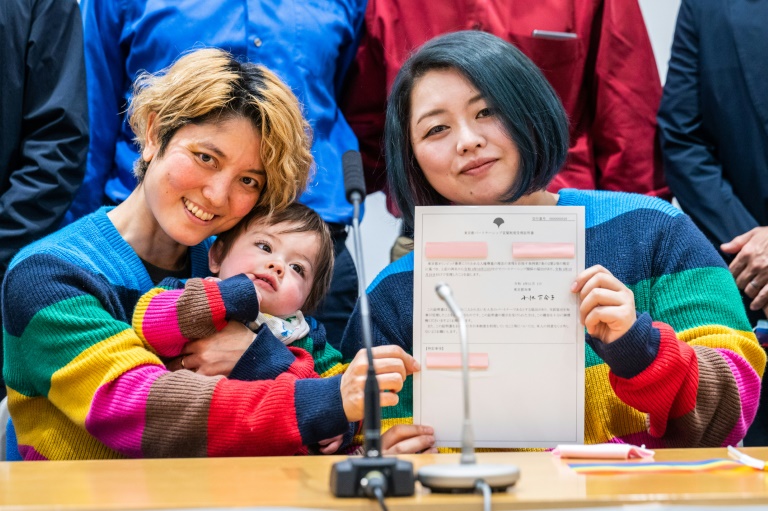
Tokyo began issuing partnership certificates to same-sex couples who live and work in the capital on Tuesday, a long-awaited move in a country without marriage equality.

The certificates allow LGBTQ partners to be treated as married couples for a range of public services in areas such as housing, medicine and welfare.

More than 200 smaller local authorities in Japan have already made moves to recognise same-sex partnerships since Tokyo’s Shibuya district pioneered the system in 2015.

While the status does not carry the same legal rights as marriage, it represents a welcome change for couples like Miki and Katie, who have long had no official proof of their relationship.

“My biggest fear has been that we would be treated as strangers in an emergency,” Miki told AFP at home in Tokyo, where photos of the Japanese 36-year-old with her American girlfriend Katie, 31, adorn the fridge.

Without a partnership certificate, the couple, who asked to be referred to by their first names, used to tuck a note inside their wallets with the other’s contact details.

“But these were insubstantial, and we felt official documents certified by the local government would be more effective,” Miki said as their grey-and-white cat frolicked in a rainbow necktie.

As of Friday morning, 137 couples had applied for a certificate, Tokyo Governor Yuriko Koike said last week.

Hopes are high that the introduction of the same-sex partnership certificates, which cover both residents and commuters, will help fight anti-LGBTQ discrimination in Japan.

“Through this Tokyo partnership system, I sincerely hope we can accelerate efforts to create a society where the rights of sexual minorities can be protected, and made more equal,” campaigner Soyoka Yamamoto told a press conference on Tuesday.

Yamamoto and her partner Yoriko, who have lived together for more than a decade, received their certificate that morning.

“I hope we can now access various facilities and services, without having to explain our relationship,” Yoriko said, calling the move a “huge step forward”.

– ‘More flexible’ –

Recent years have seen Japan — run by a conservative ruling party that espouses traditional family values — take small steps towards embracing sexual diversity.

More firms are now proclaiming support for same-sex marriage, and gay characters feature in TV shows with greater openness.

A 2021 survey by public broadcaster NHK showed 57 percent of the public was in favour of gay marriage, versus 37 percent against.

But hurdles remain, with a court in Osaka ruling in June that the country’s failure to recognise same-sex unions was constitutional.

That marked a setback for campaigners in the wake of last year’s landmark verdict by a Sapporo court, which said the current situation violated Japan’s constitutionally guaranteed right to equality.

Prime Minister Fumio Kishida has been cautious about the possibility of legislative changes that would recognise same-sex partnerships on a national level.

Meanwhile, Noboru Watanabe, a local assemblyman for Kishida’s ruling Liberal Democratic Party, came under fire last month for calling same-sex marriage “disgusting”.

“Some politicians have made really negative comments, like that we are mentally ill,” Katie told AFP.

But “families are not always made up of a mother, a father and two kids. We should be more flexible,” she said.

Miki and Katie threw a wedding party last month, but despite their joy at the introduction of the new system, they acknowledge its limitations.

The right to inheritance in the event of a partner’s death is still not guaranteed, while Katie’s lack of spousal visa status makes her ability to stay in Japan less stable.

“I feel that Japanese people’s level of understanding towards same-sex marriage is now high enough”, Miki said.

“All that’s left is for policymakers to be serious about it, and make changes”.

Francis' first visit to Bahrain to cement ties with Islam

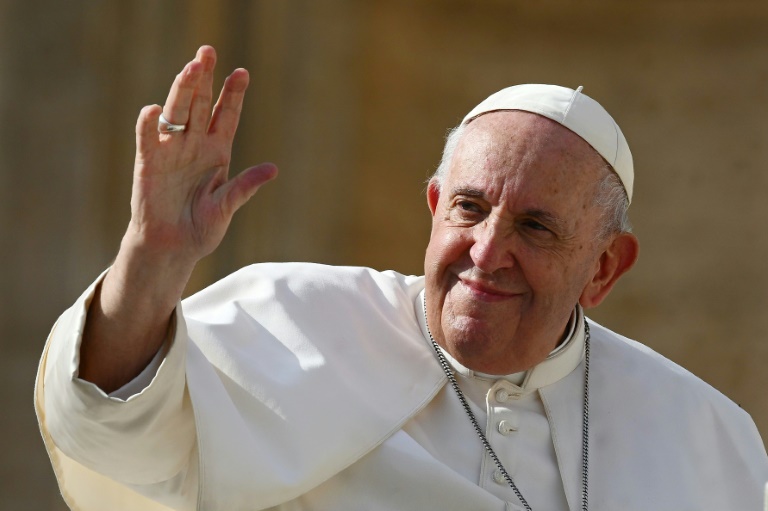
Pope Francis will become the first pontiff in history to visit Bahrain, in a trip this week that is hoped to cement ties with Islam, but is also marked by accusations of human rights abuses in the Gulf state.

The Thursday-to-Sunday visit — the 39th international trip of Francis’ papacy — comes three years after his historic trip to the United Arab Emirates in 2019, where he signed a Muslim-Christian manifesto for peace.

But some human rights groups now hope Francis will press Bahrain’s Sunni leader, King Hamad bin Isa Al-Khalifa, to halt repression against Shiite Muslims in the country, even as the rights record of neighbour Qatar has drawn more attention in recent months ahead of the World Cup.

The Argentine pontiff, 85, has made outreach to Muslim communities a priority during his papacy, visiting Middle Eastern countries including Egypt in 2017 and Iraq last year while pledging interfaith dialogue with leading Muslim clerics.

On Friday, Francis plans to meet with Sunni Islam’s highest authority, Sheikh Ahmed al-Tayeb, the grand imam of Cairo’s prestigious Al-Azhar mosque and centre of Islamic learning, at Sakhir Palace in the centre of the country.  

The two religious leaders signed a joint document in Abu Dhabi in February 2019 pledging interfaith co-existence between Christians and Muslims. That visit marked the first ever by a pope to the Gulf region, where Islam was born. 

Francis will also meet with the Abu Dhabi-based Muslim Council of Elders for an “East and West” forum, with Muslim communities in the West, humanitarian crises, climate issues and Muslim-Christian relations on the agenda. 

– Religious tolerance? –

Also on Friday, the leader of the world’s 1.3 billion Catholics — expected to be confined to a wheelchair during his trip due to persistent knee pain — will lead an ecumenical prayer in Awali’s cavernous Our Lady of Arabia Cathedral, which opened its doors December.

The cathedral that seats over 2,000 people was built to serve Bahrain’s approximately 80,000 Catholics, mainly workers from southern Asia, including India and the Philippines.

Bahrain, like the United Arab Emirates, is considered a relatively more tolerant Arab nation, in comparison with ultra-conservative Sunni powerhouse Saudi Arabia — repeatedly cited by human rights groups for abuses — whose absolute monarchy does not recognise freedom of religion and which bans all non-Muslim places of worship.

Still, NGOs continue to cite discrimination, repression and harassment in Bahrain by the Sunni elite against Shiites, crackdowns on opposition figures and activists, and other abuses. 

The non-profit Americans for Democracy and Human Rights in Bahrain wrote this month that the country’s religious freedom laws were “only an act of subterfuge, printed on paper as a means for the Bahraini ruling family to access the benefits of friendship with more powerful world leaders and obscure the misery of their human rights abuses”.

The group urged the pope — who has made standing up for marginalised people a hallmark of his papacy — to draw attention to the “rampant discrimination” against Bahrain’s Shiites. 

On Monday, Human Rights Watch issued a report documenting Bahrain’s “targeted marginalisation of opposition figures” in the decade since pro-democracy protests erupted in 2011.

Bahrain’s annual Formula One race has also frequently attracted criticism over the country’s human rights record. In 2011, the Grand Prix was cancelled amid the harsh crackdown in the wake of the protests. 

Looming over Francis’ visit is the World Cup later this month in nearby Qatar, which has shone a spotlight on its human rights record, particularly treatment of its low-income migrant workers, women and the LBGTQ community.

– Flocking to mass –

On Saturday, the pope will celebrate a mass in a stadium in Bahrain’s second-largest city Riffa before an expected 28,000 faithful, according to priest Charbel Fayad.

“We are happy to see many Christians from the region,” he told AFP, saying he expected worshippers from other Gulf countries.

The pope — who concludes his trip Sunday in Manama leading a prayer meeting with Catholic clergy — has visited various Muslim-majority countries during his pontificate, including Jordan, Turkey, Bosnia-Herzegovina, Egypt, Bangladesh, Morocco, Iraq and most recently in September, Kazakhstan.

Wall Street eyes chance of divided Washington after midterms

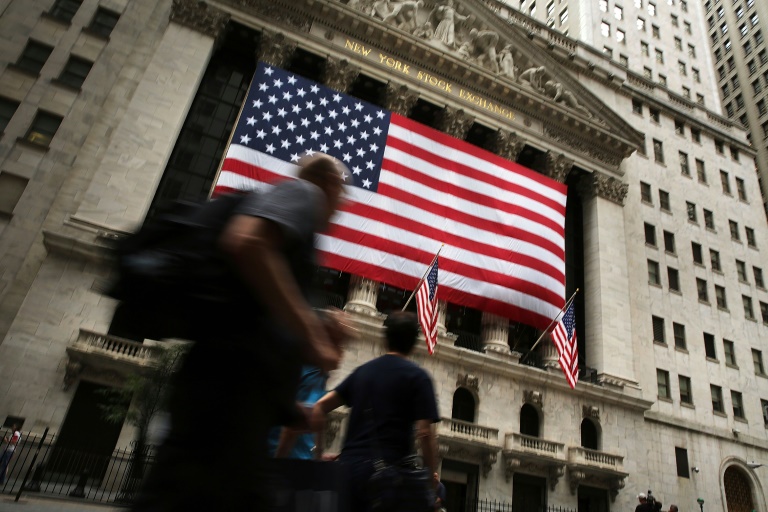
With polls suggesting Republicans will retake at least one congressional chamber in next week’s US elections, Wall Street is feeling hopeful about a likely return of a divided Washington.

A split government, while frustrating to partisans, acts as a brake on ambitious tax and spending programs. That’s a familiar dynamic to investors, and one that has historically proven benign.

“If you get Congress out of the way” because of gridlock, “then the market can pretty much act on its own,” said Sam Stovall, chief investment strategist at CFRA Research. “And that has traditionally been fairly positive for stocks.”

This expected stalemate scenario, based on polling showing Republicans poised to win the House of Representatives in light of public frustration with inflation, is one reason the Nov. 8 vote has generated so little buzz on Wall Street.

The election has high stakes for abortion rights, climate change and even the future of American Democracy itself, with backers of ex-president Donald Trump’s election conspiracies positioned for potential gains in key 2024 presidential battleground states.

But investors see little that is actionable from a trading perspective.

“The only time that politics really has an impact on the stock market is when they do something that impacts earnings, interest rates, or the dollar,” said Maris Ogg of Tower Bridge Advisors. “Most of the time it’s all sound and fury, and it doesn’t matter.”

The election takes place at a beleaguered moment in US politics, with far-right groups mobilizing vigilante-style armies of poll watchers and Friday’s attack on the husband of House Speaker Nancy Pelosi underscoring the threat of political violence.

But perhaps there is no better reflection of markets’ ability to shrug off US political upheaval than January 6 itself. On the day the US Capitol was besieged by Trump supporters who built a noose for former Vice President Mike Pence, the S&P 500 lost 0.1 percent and the dollar rose against the euro.

– Debt ceiling brinksmanship –

But some market experts warn of a downside to the gridlock scenario, particularly in make-or-break negotiations on raising the debt ceiling.

The rising political turmoil in the United States “is a bigger deal than people think,” said David Kotok, co-founder of Cumberland Advisors.

Kotok cited the ascendancy of Representative Marjorie Taylor Greene, a Georgia Republican who has championed Trump’s lies about the 2020 election, espoused the racist “great replacement” conspiracy theory and has had social media posts removed for inciting violence.

The Democratic-led House ousted Taylor Greene from her committee assignments in February 2021, but she is expected to have a prominent role if the Republicans win the House. Taylor Greene has said she would try to impeach Biden.

“The worst-case scenario is that the brinksmanship that’s played with the debt ceiling goes over the edge,” said Kotok.

The market “is ignoring that risk,” Kotok said of the possibility of a US default. “When you reconstitute the House with people who are nut cases, you invite trouble.”

But many market watchers say history suggests this risk is virtually zero.

Briefing.com analyst Patrick O’Hare said,”we’ve been down this road before,” he said. “The market would be hard pressed to believe the US is going to get into a default situation.

“Everyone agrees what a calamity it would be and I don’t think the market has that priced in, nor is it worried about it,” said O’Hare.

An Oct. 25 note from Pantheon Macroeconomics alluded to the risk of debt ceiling brinksmanship, describing a tense scenario.

“The ensuing stand-off would be a nightmare for markets, unless investors all fully believed that Republican threats are hollow,” said Pantheon.

“That’s not likely, because investors’ positions are skewed too; holders of US assets stand to a lose a lot more from a default than they would gain from an increase in the debt ceiling, which does nothing good for the economy but prevents something very bad.”

If the Democrats lose next week, party leaders could attempt to advance legislation to lift the debt ceiling in the lame-duck period in late 2022 before the Republicans take over, Pantheon said.

Notwithstanding the debt ceiling risk, a divided Congress probably dooms the prospects for significant new fiscal spending initiatives, pleasing investors who were chagrined by the plans of Liz Truss, who resigned as British prime minister earlier this month after her tax cut plan bombed on financial markets, in part because it clashed with monetary policy.

But one downside could be difficulty mobilizing Washington if there is another economic shock, whether because of a new Covid variant or something else unexpected.

“A divided Congress is going to be much slower to ride to the rescue, unless things are really, really severe,” said Carl Riccadonna, chief US economist at BNP Paribas.

Israelis vote as Netanyahu seeks return to power

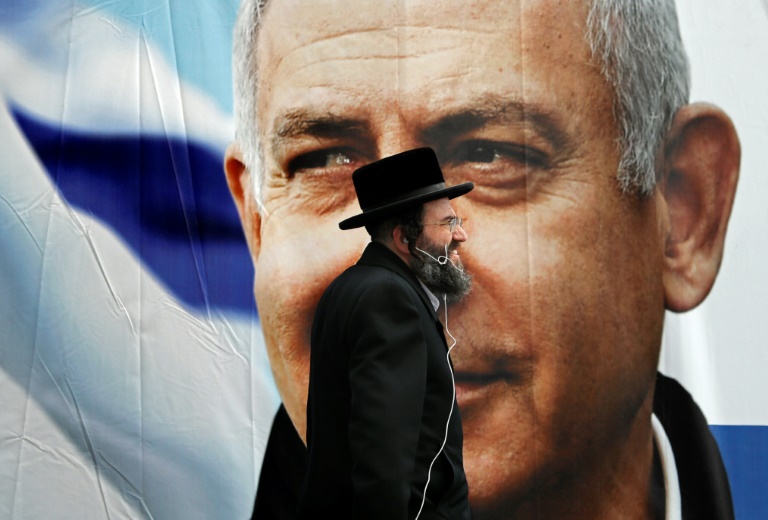
Israelis will vote Tuesday in their fifth election in less than four years, with the hawkish ex-premier Benjamin Netanyahu campaigning for a comeback alongside far-right allies.

The latest ballot follows the collapse of the so-called “change” coalition, which united eight disparate parties who succeeded in ousting Netanyahu last year after a record run as prime minister, but ultimately failed to bring political stability.

Caretaker Prime Minister Yair Lapid is seeking to hold onto power, with his centrist Yesh Atid party lagging slightly behind Netanyahu’s right-wing Likud in the polls ahead of a vote that will, as ever, precede complex bargaining to build a coalition.

Lapid, a former TV anchor, on Monday vowed to “continue what we’ve begun” and predicted: “We’ll win these elections the only way we know — by working harder than everyone else.”

But in a political system where a shift in just one of the 120 Knesset seats up for grabs could cement a ruling coalition — or lead to further deadlock and possible new elections — the outcome remains uncertain once more.

Netanyahu, who is on trial for corruption and breach of trust, has addressed party faithful from a bulletproof campaign bus, seeking to convince them that only he can keep the country safe.

“I ask you to go to all of your friends, all of your neighbours, all of your relatives, and tell them that nobody stays home,” the 73-year-old known as Bibi urged supporters at a recent rally.

– Tight race –

Whoever is tapped to form a government will need the backing of multiple smaller parties to stand a chance of clinching the 61 seats necessary for a majority.

The extreme-right leader Itamar Ben-Gvir may be key to helping Netanyahu return to the premiership, as his Religious Zionism bloc has gained momentum in recent weeks and could come third in the election.

Ben-Gvir, who has faced dozens of charges of hate speech against Arabs, argues he is “here to save the country”.

Tuesday’s vote will be held against a backdrop of soaring violence across Israeli-annexed east Jerusalem and the occupied West Bank.

At least 29 Palestinians and three Israelis have been killed across the two territories in October, according to an AFP tally. 

The Israeli military said it would shut checkpoints leading to the West Bank and close the crossing with the blockaded Gaza Strip throughout election day.

While many candidates have cited security as a concern, none have campaigned on a platform of reviving moribund peace talks with the Palestinians.

– Divisions and despondency –

The cost of living has been a hot issue this election as Israelis, having long endured high prices, are feeling the pinch even more amid global economic turmoil linked to Russia’s invasion of Ukraine.

But in repeated rounds of elections since April 2019, few voters have significantly shifted their allegiances.

The pacts agreed and broken by their political leaders have, however, changed over time and shaped short-lived governments.

Lapid was the architect of the last coalition, which for the first time brought an independent Arab party into the fold and included others from the right and left.

That unlikely alliance was made possible after Mansour Abbas pulled his Raam party from a united slate with other Arab-led parties, paving the way for him to join the coalition.

Recent months have seen further divisions within the Arab bloc, which is running on three separate lists in a move expected to weaken the minority’s representation in parliament.

Such a scenario has led to despondency among many Arab-Israelis — who make up around 20 percent of the population — potentially denting their turnout.

“We need to work harder, first of all, to convince people to go out and vote,” Aida Touma-Suleiman, from the Hadash-Taal alliance, told AFP.

“It’s one frustration on top of another.”

Filipinos flock to cemeteries for All Saints' Day

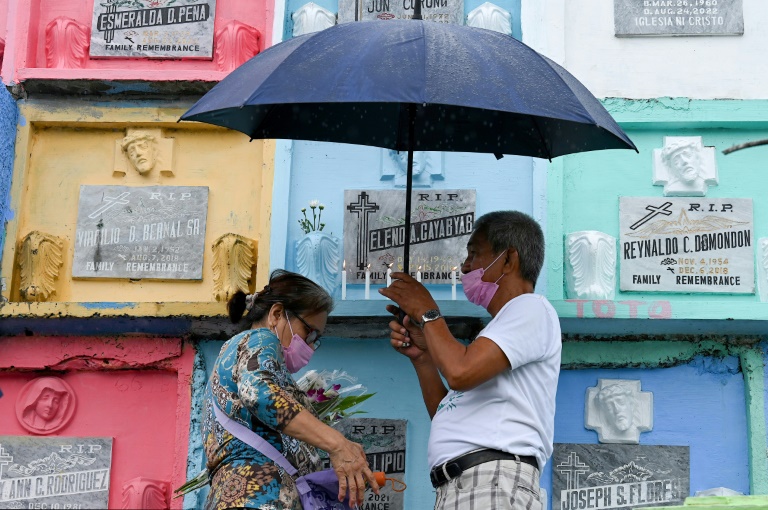
Filipinos clutching flowers and umbrellas poured into cemeteries across the Catholic-majority Philippines Tuesday to pay tribute to their dead loved ones on All Saints’ Day for the first time since the start of the Covid-19 pandemic.

Rain fell as thousands walked or took free motorised tricycle services to tombs scattered across sprawling graveyards in the capital Manila where many poor families live alongside the dead in shanties or mausoleums.

Ahead of the “day of the dead”, a powerful tropical storm unleashed landslides and flooding across the archipelago nation, killing at least 110 people and leaving dozens missing.

Among the tens of thousands of visitors to Manila North Cemetery was Leonardo Filamor, 58, who was paying his respects to a friend who died in 2017.

“Even a typhoon would not have stopped me from coming here,” said Filamor, who left a card and a small bouquet of white flowers at the tomb.

Filamor said he lived on the streets and previously had not been able to afford the public transport fare to reach the cemetery. 

“I’m really happy I had the money this time and got to be with him again,” he said. 

It was the first time since the start of the pandemic that cemeteries were open on November 1 for the ancient Christian tradition, which honours all saints and martyrs who died for the faith. 

Millions of Filipinos normally go to cemeteries on the day to remember their dead relatives by praying, lighting candles and leaving flowers at the gravesites.

People began lining up before dawn to enter graveyards in Manila. 

Flower vendor Lucila Cleto said the weekend storm had dented sales and driven up the price of chrysanthemums and roses.

“I’m not expecting to earn much, just enough to get by,” the 52-year-old told AFP as she sat under a tent among buckets of bouquets and pots of flowers.

Cemeteries in the Philippines range from quiet fields of white crosses to dense “apartment” tombs stacked metres high.

While most people visit the graves of relatives or friends, others go to remember their beloved pets.

“My siblings and I have a huge age gap so I only had Tatsumi as my playmate growing up,” said a 29-year-old woman, referring to her Japanese spitz dog buried under a tree near her grandparents’ tomb.  

“I was devastated when he died.”

Mariz Amplayo, who brought her three children to visit the grave of her diabetic brother, said it was an important day for her family.

“Visiting dead loved ones every year keeps their memory alive,” Amplayo, 47, said as she left flowers, candles and food at his tomb. 

“We don’t want to ever forget.”

Asian markets extend rally as bargain-buyers boost Hong Kong

Asian markets rose again Tuesday, building on the strong start to the week as traders look ahead to the Federal Reserve’s policy decision, hoping it will signal a more dovish approach to fighting inflation.

While Wall Street suffered a pullback from a recent rally, the mood in Asia remained optimistic while bargain-buying also provided some much-needed support to Hong Kong and Shanghai.

The Fed is widely expected Wednesday to announce a fourth straight 75-basis-point rate hike as it tries to rein in runaway prices, which has led to worries it will tip the world’s top economy into recession, sending stocks tumbling.

But a report last month suggesting officials are looking to dial down the pace of increases has sparked a rally in risk assets over the past week, helped by signs other central banks are also trying to take a step back.

“Fifty basis points or 75 basis points in December is ultimately less important than the path (Fed boss Jerome) Powell lays out for next year,” said Stephen Innes at SPI Asset Management.

“If push comes to shove, the Fed probably does not want to see the market pricing cuts as soon as the hike cycle finishes, so I expect the rhetoric to be targeted here.”

Data showing eurozone inflation hit a record 10.7 percent last month — fanned by a 41.9 percent rise in energy costs — drove home the fine line banks must walk in battling rising prices while trying to cushion fragile economies.

That came as other figures showed manufacturing around the world is shrinking owing to the spike in prices and borrowing costs.

“A global manufacturing contraction is here,” said OANDA’s Edward Moya.

“Factory activity is taking a big hit as China struggles with Covid, Europe is headed towards a recession, and as the US economy finally feels the impact of inflation and Fed tightening.”

In early trade, Hong Kong led the gains, jumping more than three percent thanks to a bargain-buying surge in beaten-down tech giants including Alibaba and Tencent.

Shanghai climbed more than one percent, along with Singapore and Seoul, while Tokyo, Sydney, Taipei and Bangkok. However, Jakarta and Wellington edged lower.

Investors are also keeping tabs on the earnings season, with Japanese giants Toyota and Sony among the big-name firms reporting.

The announcements come after a number of US companies have surprised with better-than-expected results, suggesting they are holding up despite the tough trading environment.

– Key figures around 0300 GMT –

Tokyo – Nikkei 225: UP 0.2 percent at 27,646.34 (break)

Hong Kong – Hang Seng Index: UP 3.7 percent at 15,224.90

Shanghai – Composite: UP 1.5 percent at 2,935.46

Euro/dollar: UP at $0.9905 from $0.9885 on Monday

Pound/dollar: UP at $1.1514 from $1.1465 

Dollar/yen: DOWN at 148.20 yen from 148.72 yen

Euro/pound: DOWN at 86.04 pence from 86.20 pence

West Texas Intermediate: UP 0.8 percent at $87.18 per barrel

Brent North Sea crude: UP 0.8 percent at $93.59 per barrel

New York – Dow: DOWN 0.4 percent at 32,732.95 (close)

London – FTSE 100: UP 0.7 percent at 7,094.53 (close)

Uncertain outcome as Danes head to the polls

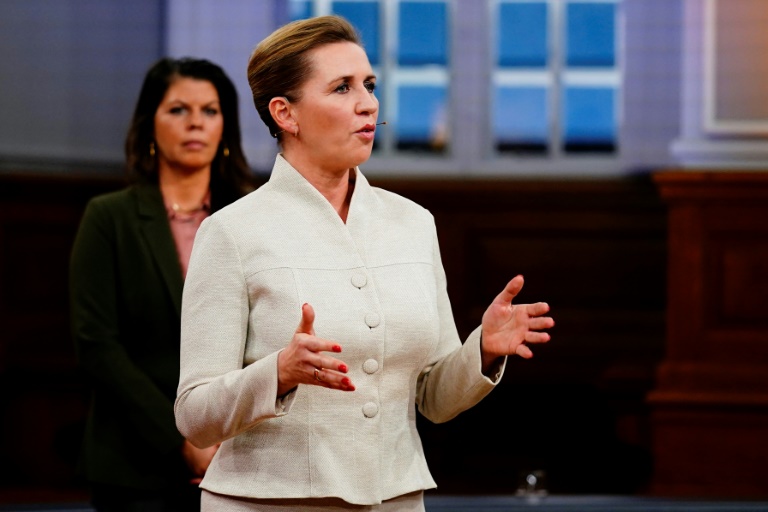
Denmark votes on Tuesday in what promises to be a tight parliamentary election in which incumbent Prime Minister Mette Frederiksen’s survival in the face of the far-right depends on a new centrist party.

Voting stations are open from 8 am to 8 pm (0700 to 1900 GMT) and the first results are expected around 9:30 pm in this election triggered by the “mink crisis” that has kept the country in suspense for over a year.

A party propping up the minority Social Democrats government threatened to topple it if it did not call elections to regain the confidence of voters after a decision — which turned out to be illegal — to cull the country’s roughly 15 million minks over fears of a mutated strain of the novel coronavirus.

Recent polls give the left-wing “red bloc”, led by Frederiksen’s Social Democrats, 47.1 to 49.1 percent against 40.9 to 43.6 percent for the “blues”, an informal alliance of liberal and conservative parties, supported by three populist parties.

With neither bloc looking likely to gain their own majority, they will not be able to govern without the help of the Moderates, a centrist party founded this year by former Liberal Party leader and two-time prime minister Lars Lokke Rasmussen, who is polling at 9.3 to 10 percent of the vote. 

“That’s the most interesting part. If there is no majority, it seems to be the case, the Moderates are required to form a government,” Rune Stubager, a professor of political science at Aarhus University, told AFP.

– Volatile voters –

Both the left and the right have been making repeated appeals to Lokke Rasmussen, who has campaigned on reforming the healthcare system.

Frederiksen has floated the idea of a coalition government, led by herself, and has said she is also willing to discuss healthcare reforms.

Liberal Party leader Jakob Ellemann-Jensen has meanwhile called for Lokke Rasmussen to align with his former party colleagues on the right.

“If you want the things you dream of, which were grown in our common old backyard, then come home,” Ellemann-Jensen said during one of the last televised debates.

After a campaign dominated by climate concerns, inflation and healthcare, almost a quarter of voters were still undecided heading into election day, according to polls.

“There is a fairly high degree of volatility with Danish voters, about 40 percent change parties,” Stubager said.

First-time voter Antesa Jensen told AFP she was still hesitant.

“I don’t know yet who I’m voting for,” Jensen said. 

The 40-year-old American has just obtained Danish citizenship after what she described as an exhausting process, highlighting the Scandinavian country’s restrictive policy towards foreigners.

– ‘Zero refugee’ –

Protective of the prosperity and social cohesion of the Nordic welfare state, Denmark championed ever stricter migration policies for over 20 years.

Advocating a “zero refugee” policy, the sitting Social Democrats government is working on setting up a centre to house asylum seekers in Rwanda while their applications are being processed.

As most parties back the restrictive policies the issue is rarely up for debate.

Climate, on the other hand, is of great concern to Denmark’s 5.9 million inhabitants.

On Sunday, some 50,000 people, including the prime minister, gathered for the “People’s Climate March” in Copenhagen.

“I think this election is very important for what’s going to happen with the Earth in the future,” 23-year-old student Esther Ronn told AFP.

“It’s important that climate is the number one priority for the politicians and for the voters when they vote on Tuesday,” she added.

The left has promised a biodiversity law and the government intends to introduce a carbon tax on agriculture, a measure supported by most other parties.

On the right, the Liberal Party is betting on the development of green solutions, while the far-right “New Right” is open to the construction of nuclear power plants, of which there are none in Denmark.

In total, no fewer than 14 parties are in the running for the 179 seats in the Folketing — Denmark’s parliament.

Four seats are reserved for the overseas autonomous territories: Greenland and the Faroe Islands. 

Voter turnout is traditionally high in Denmark. In the 2019 election, 84.6 percent of some 4.2 million voters turned out to vote.

Close Bitnami banner
Bitnami