World

US publishing mega-merger blocked by federal judge

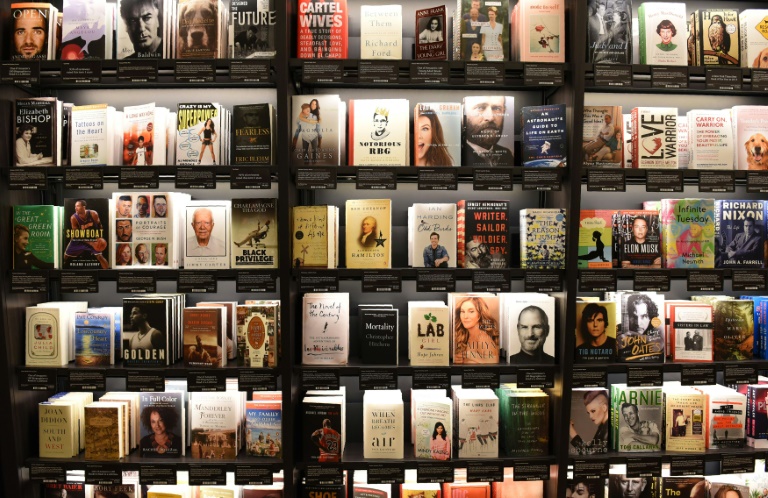
A federal judge on Monday blocked publishing giant Penguin Random House from acquiring its competitor Simon & Schuster, siding with the US Justice Department which had argued against the mega-merger.

The deal, worth $2.2 billion, had been announced in November 2020 and would have brought together two of the five largest American publishers.

US District Court Judge Florence Pan, in her ruling, said the government had convincingly shown that the merger would substantially lessen competition “in the market for the US publishing rights to anticipated top-selling books.”

Pan said her full reasoning for the decision would be issued under seal, as it relied on confidential business information.

The Justice Department hailed the decision, which comes only a week before crucial midterm elections in which Democratic President Joe Biden has tried to paint his party as defending consumers’ interests.

The Justice Department under Biden has been more aggressive than his predecessors in attempting to block mergers, with mixed success so far.

“Today’s decision protects vital competition for books and is a victory for authors, readers, and the free exchange of ideas,” said Assistant Attorney General Jonathan Kanter in a statement.

With 10,000 employees worldwide and nearly 15,000 books published per year, Penguin Random House — a subsidiary of the German Bertelsmann Group — dominates the industry in the United States.

Simon & Schuster, owned by Paramount, is the fourth largest of America’s “Big Five” publishing companies, which also include HarperCollins, Hachette Book Group USA and Macmillan Publishers.

– Stephen King ‘delighted’ –

Big-name writers on the roster at Simon & Schuster include Stephen King and Doris Kearns Goodwin, while Barack and Michelle Obama and John Grisham have books published by Penguin Random House.

It is also preparing to release Prince Harry’s memoir, in early 2023.

Penguin Random House said it strongly disagreed with the judge’s ruling and announced it will request an expedited appeal.

“We believe this merger will be pro-competitive, and we will continue to work closely with Paramount and Simon & Schuster on next steps,” it said in a statement.

But best-selling author King praised Pan’s decision, in a statement going against his own publisher.

“I am delighted that Judge Florence Pan has blocked the merger of Penguin Random House and Simon & Schuster,” the “King of Horror” said in a tweet. 

“The proposed merger was never about readers and writers; it was about preserving (and growing) PRH’s market share. In other words: $$$,” he said.

Paramount said it was disappointed by the ruling.

“We are reviewing the decision and discussing next steps with Bertelsmann and Penguin Random House, including seeking an expedited appeal,” it said.

Prior to the US action against the takeover, the UK’s competition authority had also taken a close look at the merger, as both groups have British divisions. It issued a favorable opinion in May 2021.
Modi to visit site of deadly Indian bridge collapse

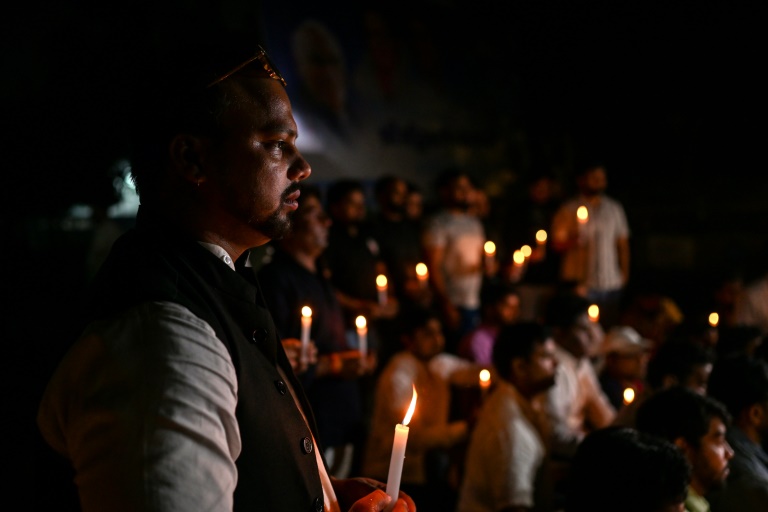
Divers searched for more bodies on Tuesday after the collapse of a recently renovated suspension bridge killed 134 people in western India, with Prime Minister Narendra Modi preparing to visit the disaster site.

Questions also grew about the possible cause of the catastrophe at Morbi, in Modi’s home state of Gujarat, on Sunday.

Nine people have been arrested on homicide charges over the collapse of the 150-year-old structure.

The pedestrian bridge was packed with people celebrating the final day of the Diwali holidays. Forty-seven children were among those killed, with a previous overall toll of 137 revised downwards.

Horrific CCTV footage showed the rickety structure, a popular tourist spot, packed with people and then suddenly giving way as cables snapped.

Several hundred fell into the river, while others clung desperately to the twisted remains of the bridge screaming in the dark for help.

“I heard screams and a loud thud and then there was silence. Then slowly cries and screams,” survivor Madhvi Ben, 30, told AFP.

Ben said one of her legs was tangled in “a steel rope”, leaving her almost entirely submerged and struggling to break free.

“I somehow blocked my nose and pulled myself up and released my leg from the wire. I grabbed another wire and climbed the remains of the bridge,” she said.

Morbi businessman Rafiq Gaffar, whose two nephews aged 12 and 21 died, described the scene as “mayhem”.

“People were crying and wailing. It was a scene from doomsday,” Gaffar, 45, said. 

“There were bodies floating on the water everywhere and people trapped on the bridge who were frantically calling for help.”

– ‘Apprehension’ –

There were no further reports of missing people on Tuesday.

Rescuers in inflatable boats drove in circles in an attempt to bring up any objects from the bottom of the river. 

“We have not called off the search operation yet as there is always this apprehension there could be victims from outside whose kin are not aware of their whereabouts and haven’t contacted us yet,” said Rahul Tripathi of the Morbi police force.

Workers also picked up plastic rubbish from the river banks and were reportedly painting a hospital that Modi was due to visit.

The bridge renovations were reportedly carried out by local firm Oreva, whose experience was limited to clocks, e-bikes and other products.

The company could not be reached immediately for comment.

Jaysukh Patel, chairman of Ajanta Manufacturing, part of Oreva, had cut a ribbon to reopen the bridge on October 26 and said then the span would last 15 more years.

But Sandeepsinh Jhala, Morbi municipality’s chief officer, said on Monday the bridge had not been issued a safety certificate.

Police arrested nine people on charges of culpable homicide on Monday, just as authorities announced an inquiry.

They included two Oreva managers, two sub-contractors and two ticket collectors accused of selling too many passes, which caused the bridge to be overloaded.

Three security guards were also arrested for failing to manage the crowd at the bridge, senior police official Ashok Yadav told reporters on Monday.

“As and when the investigation progresses, names of others associated with the Oreva Group will also be booked,” Yadav said.

He said a team had been formed to investigate aspects of the maintenance and structural safety of the bridge.

Textile trader Puneet Pitroda, 35, told AFP at Morbi’s crematorium on Monday that the bodies of his brother and sister-in-law had been recovered from the river. 

“The authorities are fully responsible for the tragedy. They allowed hundreds to gather on the bridge when it had a capacity to hold just a small number,” he said.

“We will never forget this night.”

China iPhone factory under lockdown quadruples bonuses for workers who stay

The world’s largest iPhone factory in central China told staff Tuesday it would quadruple their bonuses if they remained at the plant after scores of workers fled a Covid outbreak at the facility.

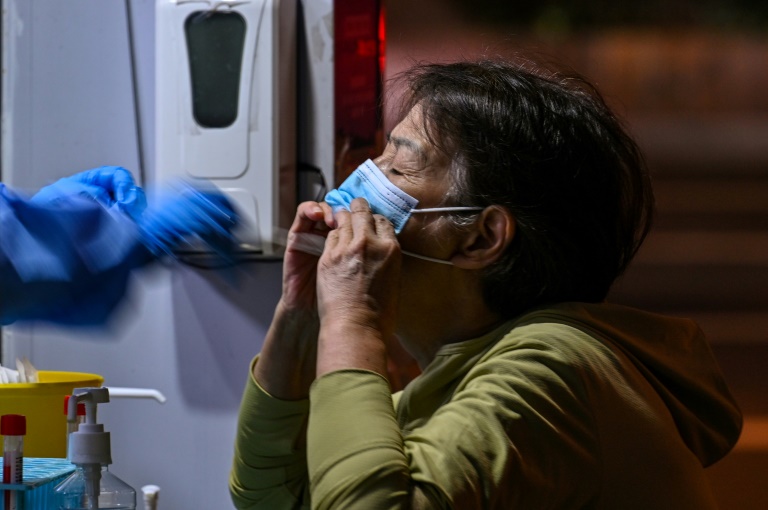
China is the last major economy committed to a zero-Covid strategy, persisting with snap lockdowns, mass testing and lengthy quarantines in a bid to stamp out emerging outbreaks.

But new variants have tested local officials’ ability to snuff out flare-ups faster than they can spread, causing much of the country to live under an ever-changing mosaic of Covid curbs.

Taiwanese tech giant Foxconn’s plant in Zhengzhou has been under lockdown since mid-October, with the company saying it is testing employees daily and keeping them in a closed loop.

But complaints from workers circulating on Chinese social media have alleged poor working conditions and inadequate virus protection for employees who are not infected.

“I only took a handbag, three packets of instant noodles, four bottles of milk, two bottles of water and some bread,” an escaped Foxconn worker named Li Yan who walked for three hours after leaving the facility told the state-run China Newsweek.

Videos shared online over the weekend showed Foxconn employees fleeing the company’s campus and returning to their hometowns on foot, in a bid to avoid Covid travel restrictions.

Foxconn’s Zhengzhou plant said on its official WeChat account that, starting from Tuesday, employees will receive a daily bonus of 400 yuan ($55) for showing up to work — quadruple the previous subsidy of 100 yuan a day.

Staff will also receive additional bonuses if they attend work for 15 days or longer in November, reaching 15,000 yuan if they record full attendance this month.

– ‘Controllable’ outbreak –

One unnamed factory manager told China Newsweek Tuesday that there had been no serious infections so far, and insisted that the outbreak was “controllable”.

Foxconn — which supplies iPhones to US tech firm Apple — has promised to do more to help employees and organise buses to transport workers back to their hometowns should they wish to leave, in what it has called a “protracted battle” against the virus.

Local governments in the area surrounding the city asked fleeing workers to register with authorities if they returned home and to complete several days of quarantine upon arrival.

The southern semi-autonomous territory of Macau also announced mass testing of its 700,000 population Tuesday after a handful of cases were discovered, triggering a lockdown of one of its casinos.

It is a fresh blow for the city’s struggling gambling industry, which had been poised for recovery after plans to relax travel between mainland China and the former Portuguese colony this month.

China reported more than 2,000 fresh domestic infections Tuesday for the second straight day, as curbs ramped up in response to a wave of regional outbreaks. 

The southern Chinese manufacturing hub of Guangzhou also announced partial lockdowns in several districts Monday in response to rising case numbers.

Guangzhou reported more than 520 fresh infections on Tuesday.

New outbreaks have also emerged in northern cities near China’s border with Russia and North Korea as winter approaches.

Danes vote as blocs woo the middle ground

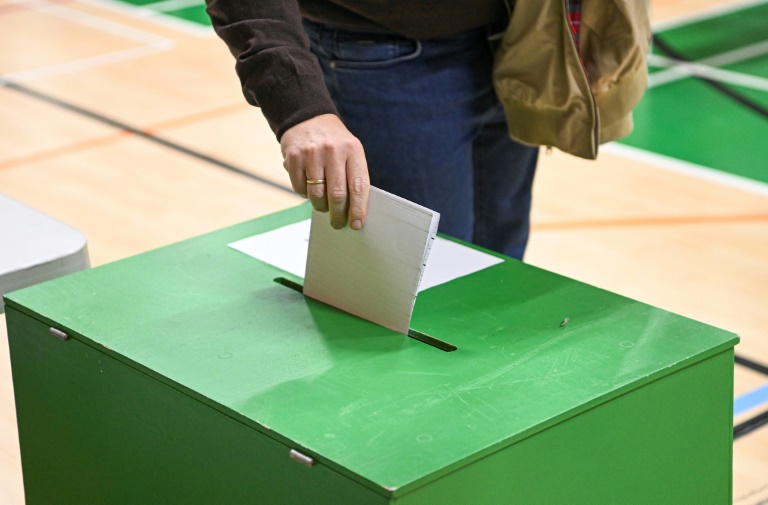
Danes were voting on Tuesday in what promises to be a tight election in which the balance of power could be tipped by which side of the political divide manages to woo the middle ground.

The election was triggered by the “mink crisis” that has embroiled Denmark since the government decided in November 2020 to cull the country’s roughly 15 million minks over fears of a mutated strain of the novel coronavirus.

The decision turned out to be illegal, however, and a party propping up the minority Social Democrats government threatened to topple it unless it called elections to regain the confidence of voters.

Grey skies covered the capital as voting stations opened at 8:00 am (0700 GMT). They are scheduled to close at 8:00 pm and the first results are expected around 9:30 pm.

“Climate issues and psychiatry (mental health issues), but mostly climate, are the reasons behind my vote,” 46-year-old Lone Kiitgaard told AFP after casting her ballot in central Copenhagen, without disclosing who she voted for.

The latest polls give the left-wing “red bloc”, led by incumbent Prime Minister Mette Frederiksen’s Social Democrats, 49.1 percent against 42.4 percent for the “blues”, an informal liberal and conservative alliance, supported by three populist parties.

Frederiksen got her vote in early at Hareskovhallen, a badminton centre turned voting booth northwest of Copenhagen. 

“This election could be really close, and there is a risk that there will be a blue government after today,” she said.

After a campaign dominated by climate concerns, inflation and healthcare, almost a quarter of voters were still undecided heading into election day, according to polls.

“There is a fairly high degree of volatility with Danish voters, about 40 percent change parties,” Rune Stubager, a professor of political science at Aarhus University, told AFP.

– ‘Moving to the middle’ –

With neither bloc likely to gain an outright majority, they will be unable to govern without the help of the Moderates, a centrist party founded this year by two-time prime minister Lars Lokke Rasmussen, who is polling at 9.3 to 10 percent.

“That’s the most interesting part. If there is no majority, as seems to be the case, the Moderates are required to form a government,” said Stubager.

Ronja Gourlay, a 32-year-old social worker, said the fact that both sides were seeking favour with the Moderates made the decision harder.

“It was difficult to make a choice. I feel the parties are moving to the middle,” she told AFP after casting her vote.

Both the left and the right have made repeated appeals to Lokke Rasmussen, who has campaigned on reforming the healthcare system.

Frederiksen has floated the idea of a coalition government, led by herself, and has said she is also willing to discuss healthcare reforms.

Liberal Party leader Jakob Ellemann-Jensen has called for Lokke Rasmussen to align with his former party colleagues on the right.

First-time voter Antesa Jensen told AFP she was still hesitant.

“I don’t know yet who I’m voting for,” Jensen said.

The 40-year-old American has just obtained Danish citizenship after what she described as an exhausting process, highlighting the Scandinavian country’s restrictive policy towards foreigners.

– ‘Zero refugee’ –

Protective of the prosperity and social cohesion of the Nordic welfare state, Denmark championed ever stricter migration policies for over 20 years.

Advocating a “zero refugee” policy, the sitting Social Democrats government is working on setting up a centre to house asylum seekers in Rwanda while their applications are processed.

As most parties back the restrictive policies the issue is rarely up for debate.

Climate, on the other hand, is of great concern to Denmark’s 5.9 million inhabitants.

On Sunday, some 50,000 people, including the prime minister, gathered for the “People’s Climate March” in Copenhagen.

The left has promised a biodiversity law and the government intends to introduce a carbon tax on agriculture, a measure supported by most other parties.

On the right, the Liberal Party is betting on the development of green solutions, while the far-right “New Right” is open to the construction of nuclear power plants, of which there are none in Denmark.

In total, no fewer than 14 parties are in the running for the 179 seats in parliament.

Four seats are reserved for the overseas autonomous territories: Greenland and the Faroe Islands.

Voter turnout is traditionally high in Denmark. In the 2019 election, 84.6 percent of some 4.2 million eligible voters cast a ballot.

Markets extend rally, China zero-Covid hopes boost Hong Kong

Asian and European markets rose again Tuesday, building on the strong start to the week as traders look ahead to the Federal Reserve’s policy decision, hoping it will signal a more dovish approach to fighting inflation.

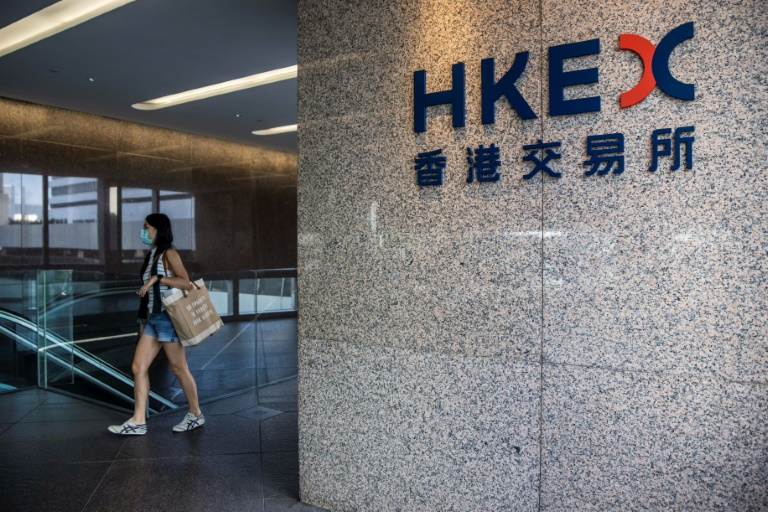
Hong Kong led the rally with Shanghai following unconfirmed posts on Chinese social media saying officials were putting together a committee to discuss how to move the country away from its economically damaging zero-Covid policy.

While Wall Street suffered a pullback from a recent rally, the mood in Asia remained optimistic while bargain-buying also provided some much-needed support to Hong Kong and Shanghai.

The Fed is widely expected Wednesday to announce a fourth straight 75-basis-point rate hike as it tries to rein in runaway prices, which has led to worries it will tip the world’s top economy into recession, sending stocks tumbling.

But a report last month suggesting officials are looking to dial down the pace of increases has sparked a rally in risk assets over the past week, helped by signs other central banks are also trying to take a step back.

“Fifty basis points or 75 basis points in December is ultimately less important than the path (Fed boss Jerome) Powell lays out for next year,” said Stephen Innes at SPI Asset Management.

“If push comes to shove, the Fed probably does not want to see the market pricing cuts as soon as the hike cycle finishes, so I expect the rhetoric to be targeted here.”

Data showing eurozone inflation hit a record 10.7 percent last month — fanned by a 41.9 percent rise in energy costs — drove home the fine line banks must walk in battling rising prices while trying to cushion fragile economies.

That came as other figures showed manufacturing around the world is shrinking owing to the spike in prices and borrowing costs.

“A global manufacturing contraction is here,” said OANDA’s Edward Moya.

“Factory activity is taking a big hit as China struggles with Covid, Europe is headed towards a recession, and as the US economy finally feels the impact of inflation and Fed tightening.”

Hong Kong led the gains, jumping more than five percent after an unverified document online referring to the zero-Covid committee and a possible relaxation of measures in the new year, Bloomberg News reported.

The news comes after the world’s number two economy has been battered by a series of lockdowns around the country aimed at stamping out the disease, hammering productivity and sending markets plunging.

However, neither Chinese state media nor government officials have suggested that the meeting actually took place, or that such a committee was established, raising questions about the veracity of the statement.

“I think the market’s reaction shows how much anticipation there has been for the reopening in the market,” Hao Hong at Grow Investment Group said. Stock market gains were led by reopening names, including travel companies.

The gains were led by a surge in beaten-down tech giants including Alibaba, JD.com, Meituan and Tencent, while Macau casinos saw double-digit advances.

Shanghai climbed more than two percent, while the yuan also rallied after recently falling to record lows against the dollar.

There were also big gains in Singapore, Seoul, Taipei, Mumbai and Bangkok. London, Paris and Frankfurt rallied at the open.

Sydney was also well up after the Australian central bank lifted rates by 0.25 percentage points to a near-decade high but brushed off calls for a bigger raise, surging despite inflation.

The prospect of China easing back from its strict containment measures also lifted oil prices, which jumped around two percent as demand expectations picked up.

Investors are also keeping tabs on the earnings season, with several big-name firms reporting this week. The announcements come after a number of US companies have surprised with better-than-expected results, suggesting they are holding up despite the tough trading environment.

– Key figures around 0820 GMT –

Tokyo – Nikkei 225: UP 0.3 percent at 27,678.92 (close)

Hong Kong – Hang Seng Index: UP 5.2 percent at 15,455.27 (close)

Shanghai – Composite: UP 2.6 percent at 2,969.20 (close)

London – FTSE 100: UP 1.1 percent at 7,174.03

Euro/dollar: UP at $0.9944 from $0.9885 on Monday

Pound/dollar: UP at $1.1543 from $1.1465 

Dollar/yen: DOWN at 147.70 yen from 148.72 yen

Euro/pound: DOWN at 86.14 pence from 86.20 pence

West Texas Intermediate: UP 1.9 percent at $88.16 per barrel

Brent North Sea crude: UP 2.0 percent at $94.65 per barrel

New York – Dow: DOWN 0.4 percent at 32,732.95 (close)

Timeline of a disaster: Seoul's fatal crowd crush

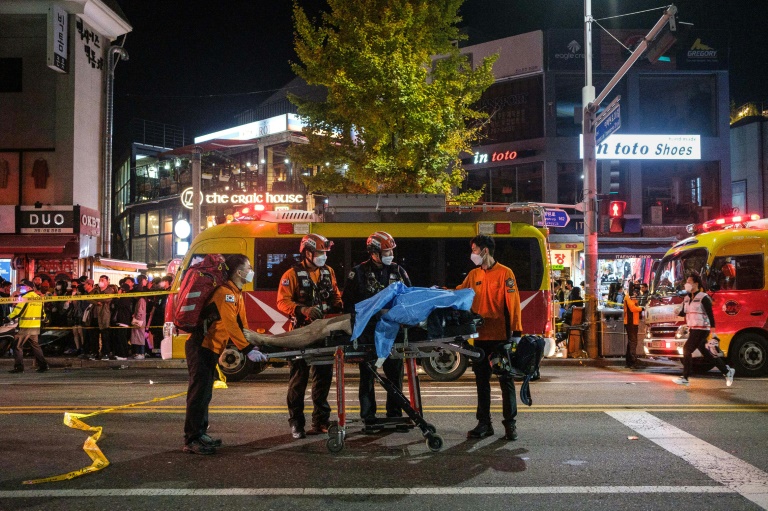
After South Korean officials concede that there were errors in crowd control on Halloween, AFP uses official data, media reports and eyewitness testimony to examine the timeline of the disaster that left 156 people dead.

– The plan –

On October 27, two days before, police estimate 100,000 people will attend the Halloween event in Seoul’s Itaewon nightlife district. They announce plans to deploy 200 officers.

As the party is not an “official” event, authorities do not plan to deploy stewards to handle the crowd.

– Early warnings –

By mid-afternoon on October 29, tens of thousands of people, many in Halloween costumes, are flooding into Itaewon’s narrow streets.

By 8:30 pm (1130 GMT) the alleyway at the epicentre of the crush is packed. Some partygoers are already sustaining injuries due to the crowd density.

“I notified the police but nobody showed up,” a nightclub worker told local media, saying they twice spoke to officers on the phone before the disaster.

At 9:16 pm a livestreamer goes to a police station about 10 meters from the alley, warning that the crowd is dangerously dense.

Police ignored her, she says in a stream that she later deletes.

National police chief Yoon Hee-keun admitted Tuesday that police had received “multiple reports” urgently indicating danger in the area, but handled the information in an “insufficient” way.

– Emergency calls –

At 10 pm, people at the top of the sloping alleyway next to the Hamilton Hotel start falling over, eyewitnesses say.

People at the bottom of the slope cannot exit due to crowds coming the other direction — out of Itaewon subway station exits 1 and 2 and out of the Hamilton Hotel main entrance.

People fell “like dominoes”, pushing into those in front of them who are immediately trapped, trampled and crushed. 

Between 10:15 pm and 10:22 pm the Yongsan Fire Station starts receiving multiple calls about a “crush accident” or stampede. They dispatch first responders between 10:15 and 10:27 pm.

Calls from people reporting difficulty breathing keep coming in — more than 81 requests for help by 10:43 pm, at which point authorities declare a “first-stage emergency response order”.

Emergency responders reach the scene and start performing emergency CPR on victims in the streets, but are quickly overwhelmed, asking members of the public to assist.

At 11:13 pm, a second-stage order is issued. It is upgraded to a third-stage order at 11:50 pm.

President Yoon Suk-yeol orders officials to urgently dispatch disaster medical assistance teams.

– Pile of bodies –

The president then oversees a meeting of the central disaster management team.

At the scene, emergency workers and bystanders struggle to drag victims out of the crush of bodies in the alleyway.

“We were pulling them out but we couldn’t because all these people were jam-packed and that creates a lot of weight,” Jarmil Taylor, who was caught in the crush at the top of the alley, told AFP.

Emergency workers did not manage to get everyone out of the crush until well after midnight.

“It was a long time for people stuck in there not to breathe,” Dane Beathard, a witness, told AFP.

– Clear the area –

Police are attempting to move people away from the scene, but the crowd is too dense and does not easily disperse.

At 1 am, police order businesses in the area to close.

By this point, emergency workers have pulled scores of people out of the crush and, with the help of passersby, are desperately trying to revive them. Other partygoers — seemingly oblivious to the unfolding disaster — continue celebrations nearby.

“There were more than 50 people lying down, but I couldn’t look at them because the scene was appalling,” an eyewitness surnamed Choi said, adding that barely anyone she helped was successfully revived.

Around 2 am, President Yoon bans anyone except officials and medical workers from entering Itaewon.

– Death toll leaps –

Around 3 am, the fire department says 120 people have died and warn the toll will rise as many of those rescued are in critical condition.

The Itaewon subway station quickly becomes congested as people try to leave. The city deploys extra buses at 3:50 am to help.

At 4 am, the fire department says 146 people have been killed and 150 more injured.

There are still partygoers trapped in the area. The city sends additional subway cars to Itaewon station at 5 am.

– Should not have happened –

At 9:45 am Sunday, President Yoon addresses the nation in a televised speech, saying the disaster “should not have happened” and vows a full investigation.

As of November 1, the death toll stands at 156, mostly young women, with scores more injured, some still in critical condition.

It is one of the worst-ever disasters in South Korean history. 

Francis' first visit to Bahrain to cement ties with Islam

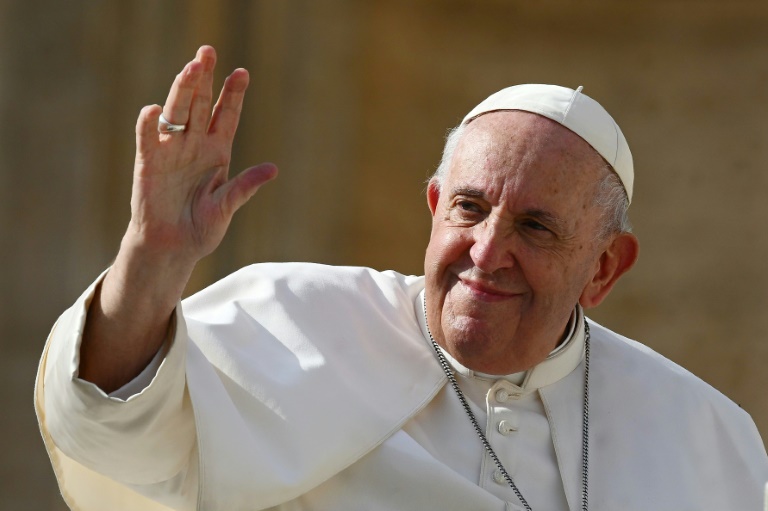
Pope Francis will become the first pontiff in history to visit Bahrain, in a trip this week that is hoped will cement ties with Islam but is also marked by accusations of human rights abuses in the Gulf state.

The Thursday-to-Sunday visit — the 39th international trip of Francis’ papacy — comes three years after his historic trip to the United Arab Emirates in 2019, where he signed a Muslim-Christian manifesto for peace.

But some human rights groups now hope Francis will press Bahrain’s Sunni leader, King Hamad bin Isa Al-Khalifa, to halt repression against Shiite Muslims, though the rights record of neighbour Qatar has drawn more attention in recent months ahead of the World Cup.

The Argentine pontiff, 85, has made outreach to Muslim communities a priority during his papacy, visiting Middle Eastern countries including Egypt in 2017 and Iraq last year while pledging interfaith dialogue with leading Muslim clerics.

On Friday, Francis plans to meet with Sunni Islam’s highest authority, Sheikh Ahmed al-Tayeb, the grand imam of Cairo’s prestigious Al-Azhar mosque and centre of Islamic learning, at Sakhir Palace in the centre of the country.  

The two religious leaders signed a joint document in Abu Dhabi in February 2019 pledging interfaith co-existence between Christians and Muslims. That visit marked the first ever by a pope to the Gulf region, where Islam was born. 

Francis will also meet with the Abu Dhabi-based Muslim Council of Elders for an “East and West” forum, with Muslim communities in the West, humanitarian crises, climate issues and Muslim-Christian relations on the agenda. 

– Religious tolerance? –

Also on Friday, the leader of the world’s 1.3 billion Catholics — expected to be confined to a wheelchair during his trip due to persistent knee pain — will lead an ecumenical prayer in Awali’s cavernous Our Lady of Arabia Cathedral, which opened its doors December.

The cathedral that seats over 2,000 people was built to serve Bahrain’s approximately 80,000 Catholics, mainly workers from southern Asia, including India and the Philippines.

Bahrain, like the United Arab Emirates, is considered a relatively more tolerant Arab nation, in comparison with ultra-conservative Sunni powerhouse Saudi Arabia — repeatedly cited by human rights groups for abuses — whose absolute monarchy does not recognise freedom of religion and which bans all non-Muslim places of worship.

Still, NGOs continue to cite discrimination, repression and harassment in Bahrain by the Sunni elite against Shiites, crackdowns on opposition figures and activists, and other abuses. 

“Pope Francis should heed his own call and publicly demand that Bahrain halt all executions, abolish the death penalty, and seriously investigate torture allegations and violations of the right to a fair trial,” said a joint statement by Human Rights Watch and eight other groups released on Tuesday.

“He should also urge Bahraini officials to issue a decree reiterating the prohibition in Bahrain’s constitution and laws of all forms of torture and ill-treatment,” the groups said.

“In addition, Pope Francis should press King Hamad to free everyone imprisoned for exercising their right to freedom of association, peaceful assembly, and expression, including rights defenders, opposition activists, and journalists. He should press Bahraini authorities to end abuses against migrant workers.

“Prominent Bahraini opposition leaders have languished in prison for more than a decade for their roles in the 2011 pro-democracy protests,” the statement said.

Bahrain’s annual Formula One race has also frequently attracted criticism over the country’s human rights record. In 2011, the Grand Prix was cancelled amid a harsh crackdown in the wake of the protests. 

Looming over Francis’ visit is the World Cup later this month in nearby Qatar, which has shone a spotlight on its human rights record, particularly treatment of its low-income migrant workers, women and the LBGTQ community.

– Flocking to mass –

On Saturday, the pope will celebrate a mass in a stadium in Bahrain’s second-largest city Riffa before an expected 28,000 faithful, according to priest Charbel Fayad.

“We are happy to see many Christians from the region,” he told AFP, saying he expected worshippers from other Gulf countries.

The pope — who concludes his trip Sunday in Manama leading a prayer meeting with Catholic clergy — has visited various Muslim-majority countries during his pontificate, including Jordan, Turkey, Bosnia-Herzegovina, Egypt, Bangladesh, Morocco, Iraq and most recently in September, Kazakhstan.

Sony hikes net profit forecast as weak yen boosts business

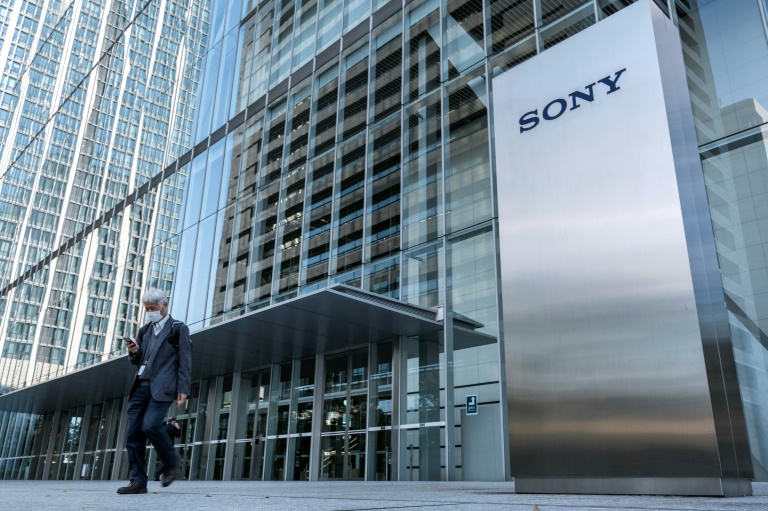
Sony raised its annual net profit and sales forecasts on Tuesday, saying the weak yen had boosted its bottom line in sectors including gaming, music and movies.

The Japanese conglomerate said it now expects net profit to March 2023 to reach 840 billion yen ($5.7 billion), up from 800 billion yen previously forecast.

It also slightly increased its sales outlook to 11.6 trillion yen.

The yen has lost more than 20 percent of its value this year, inflating profits for Japanese companies that operate overseas.

Sony said its massive global entertainment businesses, from music streaming services to blockbuster films and the PlayStation, were enjoying the impact of the cheap yen.

Sales were expected to be higher than forecast in several sectors but “partially offset by lower-than-expected sales in the financial services segment”, the company said.

In the first half of the current financial year, net profit was 482.2 billion yen, up 13 percent on-year, while sales rose nine percent to five trillion yen.

Nearly two years since its launch, the company’s PlayStation 5 console remains notoriously difficult to find.

But “hardware shipments are expected to grow significantly” in the second half, while software sales will be “very tough”, said Hideki Yasuda, senior analyst at Toyo Securities.

“This year, software makers are postponing the sale of major titles, partly because production of the PS5 has been slow,” Yasuda told AFP ahead of the earnings release.

With most of the forex-related boost coming from software sales, if the situation does not change it could start to have a negative impact on Sony’s gaming earnings, the analyst warned.

“The PS5 is selling at a very high price, but it is well balanced cost-wise … if the dollar strengthens, it’s going to be tricky,” he said.

Behind the yen’s dramatic falls is the contrast between the monetary policies of the US and Japanese central banks.

While the US Federal Reserve is fighting inflation with aggressive rate hikes, the Bank of Japan has stuck to its longstanding monetary easing programme, designed to encourage sustainable growth.

Israelis vote as Netanyahu seeks return to power

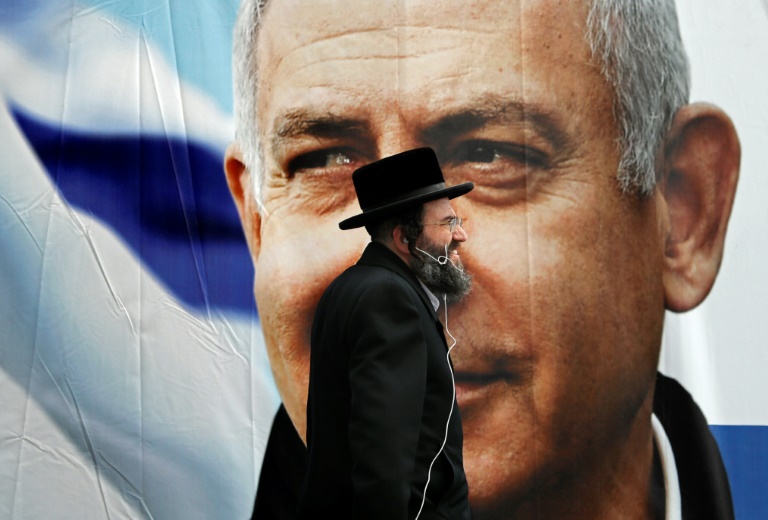
Israelis were voting Tuesday in their fifth election in less than four years, with the hawkish ex-premier Benjamin Netanyahu campaigning for a comeback alongside far-right allies.

The latest ballot follows the collapse of the so-called “change” coalition, which united eight disparate parties who succeeded in ousting Netanyahu last year after a record run as prime minister, but ultimately failed to bring political stability.

Israelis have until 2000 GMT to cast their ballot, after which complex bargaining to build a coalition will get underway.

Caretaker Prime Minister Yair Lapid is seeking to hold onto power, with his centrist Yesh Atid party lagging slightly behind Netanyahu’s right-wing Likud in the polls.

Lapid, a former TV anchor, on Tuesday urged the electorate to cast their ballot.

“Go and vote today for the future of our children, for the future of our country. Vote well!” he said at a Tel Aviv polling station.

In a political system where a shift in just one of the 120 Knesset seats up for grabs could cement a ruling coalition — or lead to further deadlock and possible new elections — the outcome remains uncertain once more.

At a polling station in Tel Aviv, left-wing voter Shai Barkan lamented the “terrible” impasse of recent years.

“I’m doing my civic duty, and I hope that these elections will be the last for the next four years,” the 66-year-old designer told AFP.

– Tight race –

Netanyahu, who is on trial for corruption and breach of trust, has addressed party faithful from a bulletproof campaign bus, seeking to convince them that only he can keep the country safe.

“I ask you to go to all of your friends, all of your neighbours, all of your relatives, and tell them that nobody stays home,” the 73-year-old known as Bibi urged supporters at a recent rally.

Whoever is tapped to form a government will need the backing of multiple smaller parties to stand a chance of clinching the 61 seats necessary for a majority.

The extreme-right leader Itamar Ben-Gvir may be key to helping Netanyahu return to the premiership, as his Religious Zionism bloc has gained momentum in recent weeks and could come third in the election.

Ben-Gvir, who has faced dozens of charges of hate speech against Arabs, vowed Tuesday there will be a “full right-wing government” led by Netanyahu.

One of Ben-Gvir’s supporters, 40-year-old Jonathan Kern, said the politician “focuses on the things important to me” such as his Jewish identity and security.

“(But) I think that nothing will change, it’s going to be the same dead heat and the most intelligent will form a government,” Kern said in Tel Aviv.

The election is being held against a backdrop of soaring violence across Israeli-annexed east Jerusalem and the occupied West Bank.

At least 29 Palestinians and three Israelis were killed across the two territories in October, according to an AFP tally. 

The Israeli military said it would shut checkpoints leading to the West Bank and close the crossing with the blockaded Gaza Strip throughout election day.

While many candidates have cited security as a concern, none have campaigned on a platform of reviving moribund peace talks with the Palestinians.

– Divisions and despondency –

The cost of living has been a hot issue this election as Israelis, having long endured high prices, are feeling the pinch even more amid global economic turmoil linked to Russia’s invasion of Ukraine.

But in repeated rounds of elections since April 2019, few voters have significantly shifted their allegiances.

The pacts agreed and broken by their political leaders have, however, changed over time and shaped short-lived governments.

Lapid was the architect of the last coalition, which for the first time brought an independent Arab party into the fold and included others from the right and left.

That unlikely alliance was made possible after Mansour Abbas pulled his Raam party from a united slate with other Arab-led parties, paving the way for him to join the coalition.

Recent months have seen further divisions within the Arab bloc, which is running on three separate lists in a move expected to weaken the minority’s representation in parliament.

Such a scenario has led to despondency among many Arab-Israelis — who make up around 20 percent of the population — potentially denting their turnout.

“We need to work harder, first of all, to convince people to go out and vote,” Aida Touma-Suleiman, from the Hadash-Taal alliance, told AFP.

“It’s one frustration on top of another.”

bur-rsc/pjm

China iPhone factory under lockdown boosts bonuses for workers who stay

The world’s largest iPhone factory in central China told staff Tuesday it would quadruple their bonuses if they remained at the plant after scores of workers fled a Covid outbreak at the facility.

China is the last major economy committed to a zero-Covid strategy, persisting with snap lockdowns, mass testing and lengthy quarantines in a bid to stamp out emerging outbreaks.

But new variants have tested local officials’ ability to snuff out flare-ups faster than they can spread, causing much of the country to live under an ever-changing mosaic of Covid curbs.

Taiwanese tech giant Foxconn’s plant in Zhengzhou has been under lockdown since mid-October, with the company saying it is testing employees daily and keeping them in a closed loop.

But complaints from workers circulating on Chinese social media have alleged poor working conditions and inadequate virus protection for employees who are not infected.

Videos shared online over the weekend showed Foxconn employees fleeing the company’s campus and returning to their hometowns on foot, in a bid to avoid Covid travel restrictions.

Foxconn’s Zhengzhou plant said on its official WeChat account that, starting from Tuesday, employees will receive a daily bonus of 400 yuan ($55) for showing up to work — quadruple the previous subsidy of 100 yuan a day.

Staff will also receive additional bonuses if they attend work for 15 days or longer in November, reaching 15,000 yuan if they record full attendance this month.

Foxconn — which supplies iPhones to US tech firm Apple — has promised to do more to help employees and organise buses to transport workers back to their hometowns should they wish to leave, in what it has called a “protracted battle” against the virus.

Local governments in the area surrounding the city asked fleeing workers to register with authorities if they returned home and to complete several days of quarantine upon arrival.

The southern semi-autonomous territory of Macau also announced mass testing of its 700,000 population Tuesday after a handful of cases were discovered, triggering a lockdown of one of its casinos.

It is a fresh blow for the city’s struggling gambling industry, which had been poised for recovery after plans to relax travel between mainland China and the former Portuguese colony this month.

China reported more than 2,000 fresh domestic infections Tuesday for the second straight day, as curbs ramped up in response to a wave of regional outbreaks. 

The southern Chinese manufacturing hub of Guangzhou also announced partial lockdowns in several districts Monday in response to rising case numbers.

Guangzhou reported more than 520 fresh infections on Tuesday.

New outbreaks have also emerged in northern cities near China’s border with Russia and North Korea as winter approaches.

Close Bitnami banner
Bitnami