World

Markets mixed on hopes Fed will take foot off pedal

World stocks were mixed on Monday before a key Federal Reserve policy meeting later in the week, with investors hoping for a less hawkish tilt in plans for interest rate hikes.

Equities in Europe mostly climbed through the day, although Paris sank on news of record high eurozone inflation and slowing economic growth and US indices were a sea of red.

“Market volatility is expected to remain high throughout the week as investors have a lot to digest,” said Pierre Veyret, analyst at ActivTrades.

Investors were hopeful on reports that the Fed could take its foot off the accelerator in its push to rein in decades-high inflation.

It is expected to announce a fourth successive 75 basis point hike on Wednesday, but it could hint that officials are open to dialling back the pace of increases.

The Dow Jones was trading down throughout Monday morning, after Wall Street enjoyed strong gains before the weekend thanks to a rally in tech firms after strong earnings from Apple.

The US gathering comes as other central banks recently indicated they are willing to ease up, with Canada raising rates less than expected last week.

The Bank of England is however expected to deliver another hefty rate hike on Thursday.

“Uncertainty sums up the feeling in the markets at the moment,” said Craig Erlam, senior market analyst at OANDA.

“There’s going to be a lot to take in this week… perhaps it’s not surprising to see some jitters creeping back in.”

– Better earnings than expected –

Concerns that rapidly rising borrowing costs will send economies into a recession have hammered markets globally this year.

Yet a better-than-expected earnings season has provided recent support.

More multinationals will report this week as the financial results season rolls on, including pharmaceutical giants Moderna and Pfizer, technology behemoth Sony, and car brands BMW, Toyota and Ferrari.

But investors remain on edge over red-hot inflation, as analysts warned a recession in the eurozone appeared to be on its way.

Economic growth in the bloc fell to 0.2 percent in the third quarter, as inflation hit another record high on the back of soaring energy prices, the EU’s statistics agency said on Monday.

“It is a matter of how deep the recession will be and not if there will be one,” Oxford Economics said in an analyst note.

Consumer prices jumped by a fresh record of 10.7 percent in October, stoked by an eye-watering 41.9 percent rise in energy costs, Eurostat said.

“Double-digit inflation and decade-high interest rates do not bode well for eurozone growth during the rest of this year and into 2023,” noted economist Benjamin Trevis at think-tank CEBR.

– ‘Salt to the wounds’ –

Asia mainly advanced through Monday, although Hong Kong and Shanghai sank on concerns over the economic impact of Chinese Covid restrictions.

Beijing reported a contraction in factory activity as sweeping pandemic restrictions paralysed major industrial cities.

That also weighed heavily on oil because China is a major global consumer.

“Although these data points are weaker than expected, it should be no surprise given those broad-based Covid-related restrictions,” said Stephen Innes, managing partner at SPI Asset Management.

“Negative news from the real estate sector is adding salt to the economic wounds.”

– Key figures around 1640 GMT –

New York – Dow: DOWN 0.4 percent at 32,720.04 points

EURO STOXX 50: UP 0.1 percent at 3,617.54

London – FTSE 100: UP 0.7 percent at 7,094.53 (close)

Frankfurt – DAX: UP 0.1 percent at 13,253.74 (close)

Paris – CAC 40: DOWN 0.1 percent at 6,266.77 (close)

Tokyo – Nikkei 225: UP 1.8 percent at 27,587.46 (close)

Hong Kong – Hang Seng Index: DOWN 1.2 percent at 14,687.02 (close)

Shanghai – Composite: DOWN 0.8 percent at 2,893.48 (close)

Euro/dollar: DOWN at $0.9888 from $0.9965 on Friday

Pound/dollar: DOWN at $1.1491 from $1.1615 

Dollar/yen: UP at 148.62 yen from 147.60 yen

Euro/pound: UP at 86.04 pence from 85.80 pence

West Texas Intermediate: DOWN 1.3 percent at $87.90 per barrel

Brent North Sea crude: DOWN 0.4 percent at $96.31 per barrel

burs-rox/raz
Vessels move as Turkey fights to save Ukraine grain deal after Russian pull-out

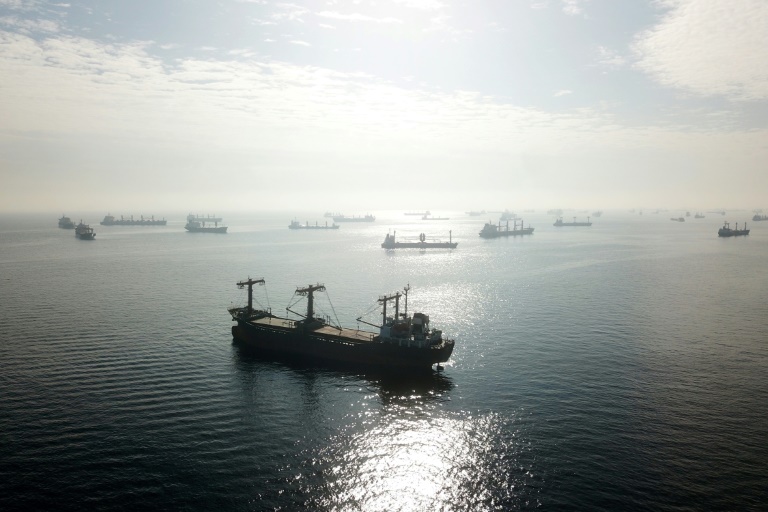
Cargo ships loaded with grain and other agricultural products left Ukrainian ports on Monday despite Russia’s decision to pull out from a landmark deal designed to ease the global food crisis.

As one of the brokers of the grain deal, Turkey has stepped up diplomacy with the two warring countries in a bid to save it as Russia warned that continuing to enforce the agreement without its participation would be “dangerous”.

At least 10 ships including the Ikaria Angel — chartered by the World Food Programme and loaded with 30,000 tonnes of wheat destined for an emergency response in the Horn of Africa — left Ukrainian ports on Monday, according to a website that tracks marine traffic. 

“Civilian cargo ships can never be a military target or held hostage. The food must flow,” Amir M. Abdulla, the UN Coordinator for the Black Sea Grain Initiative, tweeted on Monday. 

In all, 12 ships were due to leave Ukrainian ports on Monday and four more were due to head to the country, according to the Joint Coordination Center (JCC) that has been overseeing the agreement brokered by Turkey and the UN.

-‘Diplomatic feat’-

The marine traffic came two days after Russia notified the United Nations and Turkey that it was suspending its participation in the grain agreement, after Moscow accused Ukraine of a “massive” drone attack on its Black Sea Fleet in Crimea. 

Ukraine has labelled the Russian charges as a “false pretext”.

Moscow also withdrew from ship inspections, which were mandatory under the deal.

Grain prices were up on Monday morning after the Russian decision. 

Turkish President Recep Tayyip Erdogan, whose country has stayed neutral throughout the eight-month war in Ukraine, vowed to pursue efforts to keep the agreement in force despite Russia’s moves.

“Although Russia acts hesitantly… we will resolutely continue our efforts to serve humanity,” Erdogan said. 

Turkey analyst Soner Cagaptay said if Erdogan managed to convince Russian President Vladimir Putin to get back to the table, it would underline Ankara’s brand as the country that can talk to both Ukraine and Russia, from a neutral stance.

“If Turkey is able to return Russia back to the deal, Ankara will be able to say to everyone ‘Hey, let me stay where I am because you know that it works and it helps you.’ It could be quite a significant diplomatic feat for Ankara,” he told AFP. 

NATO member Turkey, which has good relations with its two Black Sea neighbours, has refrained from joining Western sanctions on Moscow and instead bolstered its trade while supplying Kyiv with combat drones. 

Monday’s shipping schedule was agreed by the Ukrainian, Turkish and UN delegations, with Russia informed of the movements, the JCC said in a statement late on Sunday.  

A source familiar with the matter said: “As a signatory to the agreement, they have been requested to take the necessary measures to ensure the safety of the vessels.”

– ‘Dangerous’-

The Kremlin said it would be “dangerous” to enforce the agreement without its involvement. 

“In conditions where Russia talks about the impossibility of guaranteeing the safety of navigation in these areas, such a deal is hardly feasible. And it takes on a different character, much more risky, dangerous,” Kremlin spokesman Dmitry Peskov told journalists.

Russian defence minister Sergei Shoigu spoke on Monday to his Turkish counterpart Hulusi Akar about Moscow’s suspension of the deal.

“Questions about the suspension, by the Russian side, of the implementation of the agreement on the export of agricultural products from Ukrainian ports as part of the ‘Black Sea Grain Initiative’ were discussed,” the Russian defence ministry said on Telegram.  

Akar said ahead of the phone call: “This (agreement) should continue. Suspending this initiative will not benefit Russia, Ukraine or anyone else.”

Ukraine, one of the world’s largest grain exporters, was forced to halt almost all deliveries following Russia’s invasion in late February. 

The July deal to unlock its grain exports is critical to easing the global food crisis caused by the conflict. 

It had already allowed more than 9.5 million tonnes of Ukrainian grain to be exported and was due to be renewed on November 19.

A separate deal signed with Russia allowed the export of Russian food and fertilisers, despite Western sanctions imposed on Moscow. But it was never implemented, to the dismay of Moscow, which has complained about the issue for weeks.

Putin looks to reassert role in talks with Armenia, Azerbaijan

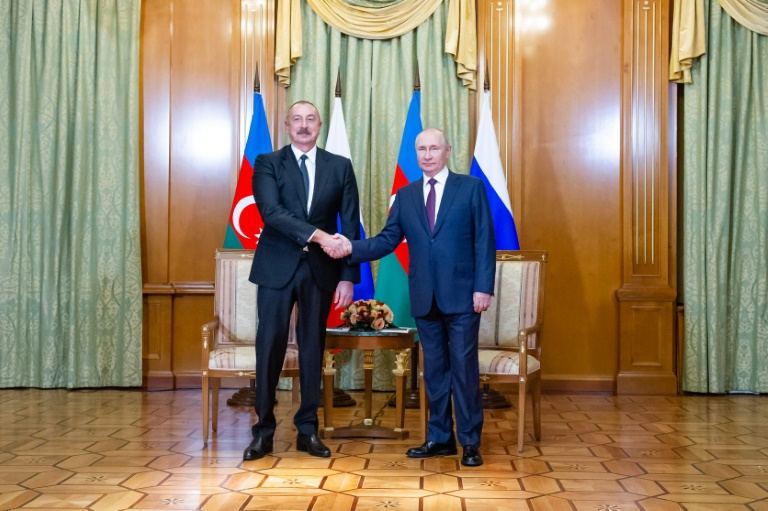
Russian President Vladimir Putin will host talks with the leaders of Armenia and Azerbaijan on Monday, as Moscow seeks to reassert its role as a key powerbroker between the Caucasus arch-foes.

The talks in the southern Russian city of Sochi will be held amid growing Western engagement in the volatile Caucasus region, where Russia — distracted by its war in Ukraine — is visibly losing influence after decades of domination.

The initiative comes a month after the worst clashes between Armenia and Azerbaijan since their war in 2020.

The offices of Armenian Prime Minister Nikol Pashinyan and Azerbaijani President Ilham Aliyev both said they had arrived in Sochi for the meeting. 

The Kremlin said the talks will focus on implementing agreements reached in talks under Russia’s mediation last year and “further steps to strengthen stability and security” in the region. 

Putin first held a face-to-face meeting with Pashinyan and was set to meet later Aliyev separately, before the three  congregate for trilateral talks, Moscow said.

“The most important is to ensure peace and create conditions for development,” he told Pashinyan.

“I do hope very much, that we will be able today to make steps towards (the Karabakh conflict’s) settlement.”

Pashinyan said Yerevan’s priorities included Azerbaijani withdrawal from the areas in Karabakh controlled by Russian peacekeepers and the liberation of Armenian POWs.

“I thank you for the efforts you are making to establish peace, stability and security.”

Armenia and Azerbaijan have fought two wars — in 2020 and in the 1990s — over Azerbaijan’s Armenian populated region of Nagorno-Karabakh. 

A six-week war in autumn 2020 which claimed the lives of more than 6,500 troops on both sides ended with a Russian-brokered deal that saw Yerevan cede swathes of territory that it had controlled for several decades. 

Last month, 286 people from both sides were killed in clashes that have jeopardised a slow and halting peace process.

The hostilities ended with a US-brokered ceasefire, after earlier failed attempts by Russia to negotiate a truce.

With Moscow increasingly isolated on the world stage following its February invasion of Ukraine, the US and the EU have taken a leading role in mediating the Armenia-Azerbaijan peace talks.

EU chief Charles Michel and French President Emmanuel Macron hosted talks between Pashinyan and Aliyev in Brussels in August.

Following a slew of diplomatic efforts from Brussels and Washington, Armenian and Azerbaijani foreign ministers met on October 3 in Geneva to begin drafting the text of a future peace treaty.

Russia and EU leaders have traded criticism of their mediation efforts in the Karabakh conflict, with Moscow and Paris in particular exchanging jabs this month. 

Putin recently dismissed a comment by Macron who said that Moscow was “destabilising” a peace process between the two countries.

Moscow has traditionally acted as a middle-man between the two countries, which were both part of the Soviet Union.  

– Russian peacekeepers –

The 2020 ceasefire agreement saw Russia deploy a force of 2,000 peacekeepers to the region to oversee a fragile truce. 

Ahead of the talks, Armenia’s Pashinyan said he was ready to extend their presence by up to another two decades. 

Russia’s peacekeeping mission has been criticised by some with even Pashinyan raising concerns about the force, in rare Armenian criticism of its ally.  

The EU has announced a “civilian EU mission” to Armenia to monitor ceasefire violations.

Aliyev has vowed to repopulate Karabakh with Azerbaijanis and recently re-opened an airport in the conquered territories. 

Baku’s ally Turkey has also advanced its efforts to be involved in mediation, with President Recep Tayyip Erdogan meeting both Aliyev and Pashinyan recently in Prague. 

The Kremlin said the trio would also discuss “questions on rebuilding and developing trade and economic as well as transport links.”

When the Soviet Union collapsed in 1991, ethnic Armenian separatists in Nagorno-Karabakh broke away from Azerbaijan. The ensuing conflict claimed around 30,000 lives.

Ethiopia rivals still talking peace in South Africa

Talks between the Ethiopian government and the rebel authorities in Tigray aimed at finding a peaceful resolution to their devastating two-year conflict were continuing Monday, sources familiar with the discussions said.

The negotiations led by the African Union began last Tuesday in South Africa, the first formal dialogue to try to end a war that has killed many thousands of people and unleashed a desperate humanitarian crisis in northern Ethiopia.

In an interview with Chinese state media, Prime Minister Abiy Ahmed voiced hope that peace could be achieved, without making any direct reference to the talks underway in Pretoria.

“We’re working towards peace, we are trying to convince the TPLF (Tigray People’s Liberation Front) to respect the law of the land, to respect the constitution and to act as one state in Ethiopia,” Abiy told the English-language CGTN news channel in an undated interview posted on Twitter.

“Of course if there are lots of interventions from left and right, that is very difficult,” he said.

“Ethiopians should understand, we can solve our own issue by ourselves. And instead of listening from afar, better to respect our own law, better to respect our own culture, better to respect our own (customs),” he said.

“If we could do that, peace is achievable. I hope we’ll achieve that.”

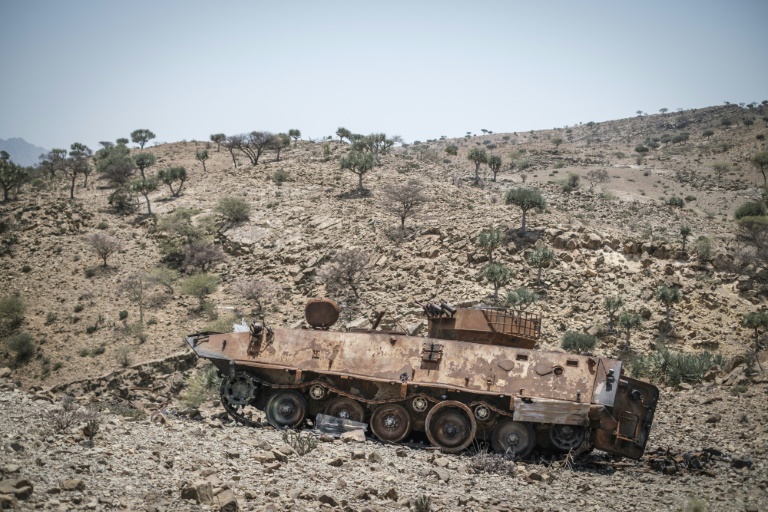
Since the negotiations began, intense fighting has continued unabated in Tigray, where government troops backed by the Eritrean army and regional forces have been waging artillery bombardments and air strikes, capturing a string of towns from the rebels.

The international community has voiced deep alarm over the combat and the human cost it has exacted on civilians caught in the crossfire.

Abiy said that in towns in Tigray now under the control of Ethiopian forces, such as Axum and neighbouring Adwa, the government was providing humanitarian aid but did not elaborate.

South Africa had initially said the discussions between the federal government and the Tigrayans would run until Sunday, but they remain shrouded in secrecy.

Ebba Kalondo, spokeswoman for AU Commission chair Moussa Faki Mahamat, said in a message to AFP that “there was no date limitation put on the talks”.

A diplomat with knowledge of the discussions confirmed to AFP that the talks were continuing on Monday, but added: “They are very strict about confidentiality.”

A source close to the Tigrayan delegation in South Africa had told AFP at the weekend that the talks would likely continue until Tuesday.

– Humanitarian response ‘constrained’ –

Diplomatic efforts to try to bring the government and the rebels to the negotiating table gathered pace after combat resumed in late August, torpedoing a five-month truce that had allowed limited amounts of aid into Tigray.

The international community is calling for an immediate cessation of hostilities, humanitarian access to Tigray where many face hunger, and a withdrawal of Eritrean forces, whose return to the battleground has raised fears of renewed atrocities against civilians.

The conflict erupted on November 4, 2020, when Abiy sent troops into Tigray after accusing the TPLF, the regional ruling party, of attacking federal army camps.

Since then, the fighting in Africa’s second most populous country has forced well over two million people from their homes, and according to US estimates, killed as many as half a million.

UN children’s agency UNICEF said in a report issued at the weekend that about 574,000 people alone had been displaced in Tigray as well as the neighbouring regions of Afar and Amhara since combat resumed in late August.

“Insecurity and restrictions on the movement of aid continue to constrain the humanitarian response across the three regions,” it said. 

Tigray remains largely closed off to the outside world with no communications and a shortage of food, fuel and medicines, while access to northern Ethiopia is restricted for journalists. 

The World Health Organization (WHO) on Friday reported that cases of malaria had increased by 80 percent in Tigray compared to a year ago.

And according to the UN’s World Food Programme, the rate of global acute malnutrition among children under five in Tigray is 29 percent.

Last week, Amnesty International said every party involved in the war had committed crimes against humanity.

“Documented violations of human rights violations… (include) rapes, sexual violence… lootings, torture and extrajudicial killings,” Fisseha Tekle, an Amnesty specialist on Ethiopia and Eritrea, told a press conference in Nairobi.

Italy surprise GDP jump comes as new PM Meloni prepares budget

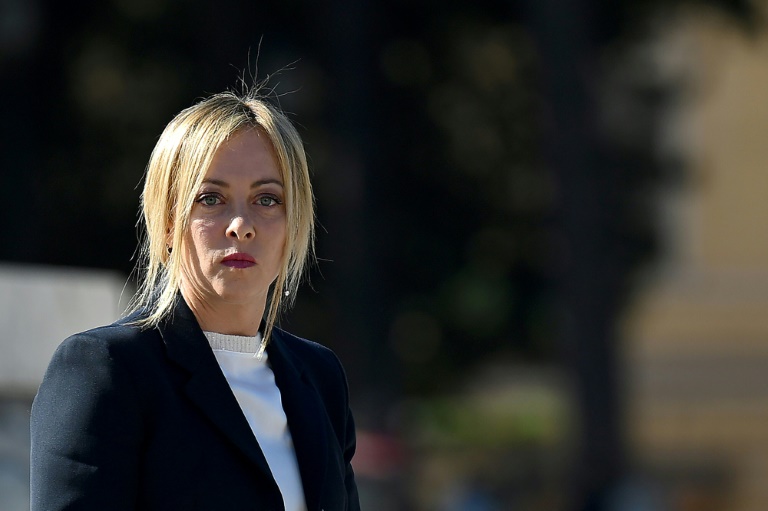
Italy posted better-than-expected quarterly growth on Monday, a surprise bump for new Prime Minister Giorgia Meloni that staves off — for now — an expected recession in Europe’s third-largest economy.

In its third quarter, gross domestic product (GDP) grew by 0.5 percent over the second quarter, compared to the slight decline that had been anticipated by the previous government of Mario Draghi. 

That rise — according to preliminary estimates by national statistics institute Istat — outpaced the Eurozone average of a rise of 0.2 percent and the 0.3 percent Germany published Friday.

Nicola Nobile of Oxford Economics told AFP it was due to a surge in “household consumption, especially in services such as tourism”.

“But like other countries in the eurozone, Italy should enter a recession this winter in a context of rising interest rates and inflation,” he said. 

Regardless, the quarterly surprise comes at the right time for Meloni, leader of the post-fascist Brothers of Italy party, whose first budget is due before the European Commission by the end of November.

– Balancing act –

On her first visit to Brussels on Thursday, where she will be received by European Commission President Ursula von der Leyen, Meloni is expected to pledge her willingness to curb deficits while maintaining the costly election promises of her right-wing coalition. 

Hailing as she does from a historically Eurosceptic party, her election has been closely watched elsewhere in Europe.

The balancing act for Italy — the first beneficiary of the EU’s post-Covid stimulus package — comes against a global backdrop of rising interest rates, record inflation, the energy crisis and the war in Ukraine. 

During the election campaign, she pledged not to swell the budget of a country long plagued by low growth and huge debt.

Still, while the Draghi government forecast a public deficit of 3.4 percent of GDP next year, Giorgia Meloni plans to raise the bar.

According to the Italian press, she is aiming for a deficit of 4.5 percent, or an additional 21 billion euros ($21 billion) to be financed by debt. 

A large part of the budget will be devoted to measures aimed at mitigating soaring energy prices for businesses and households, the new government’s top priority.

– In small doses – 

At the helm is Economy Minister Giancarlo Giorgetti, who served as economic development minister under Draghi and is considered a moderate within Matteo Salvini’s far-right League. 

The coalition’s flagship measure — extending a 15 percent flat tax for the self-employed to those with annual incomes of 100,000 euros, instead of the current 65,000 euros — could be limited at first and then extended to other incomes.  

Funds must also be made available to lower the retirement age, which, in the absence of new measures, would automatically rise from 64 to 67 in 2023, as provided for in a 2011 reform.

Salvini has proposed recovering one billion euros with a six-month hiatus in Italy’s controversial basic income — a minimum payment which goes to Italy’s hardest up, including the unemployed, those who cannot work because of disabilities or retirees who live under a basic income level.

Salvini’s contentious proposal to save cash is to cut the income for six months to an estimated 900,000 beneficiaries who are capable of working but currently not.

But the last word will go to Giorgia Meloni.  

The challenge for the premier will be “to ensure the support of the League, while neutralising in part its leader” Salvini, who could undermine the “serious image” Meloni wants to put forward, said Credit Agricole analyst Sofia Tozy. 

Italy surprise GDP jump comes as new PM Meloni prepares budget

Italy posted better-than-expected quarterly growth on Monday, a surprise bump for new Prime Minister Giorgia Meloni that staves off — for now — an expected recession in Europe’s third-largest economy.

In its third quarter, gross domestic product (GDP) grew by 0.5 percent over the second quarter, compared to the slight decline that had been anticipated by the previous government of Mario Draghi. 

That rise — according to preliminary estimates by national statistics institute Istat — outpaced the Eurozone average of a rise of 0.2 percent and the 0.3 percent Germany published Friday.

Nicola Nobile of Oxford Economics told AFP it was due to a surge in “household consumption, especially in services such as tourism”.

“But like other countries in the eurozone, Italy should enter a recession this winter in a context of rising interest rates and inflation,” he said. 

Regardless, the quarterly surprise comes at the right time for Meloni, leader of the post-fascist Brothers of Italy party, whose first budget is due before the European Commission by the end of November.

– Balancing act –

On her first visit to Brussels on Thursday, where she will be received by European Commission President Ursula von der Leyen, Meloni is expected to pledge her willingness to curb deficits while maintaining the costly election promises of her right-wing coalition. 

Hailing as she does from a historically Eurosceptic party, her election has been closely watched elsewhere in Europe.

The balancing act for Italy — the first beneficiary of the EU’s post-Covid stimulus package — comes against a global backdrop of rising interest rates, record inflation, the energy crisis and the war in Ukraine. 

During the election campaign, she pledged not to swell the budget of a country long plagued by low growth and huge debt.

Still, while the Draghi government forecast a public deficit of 3.4 percent of GDP next year, Giorgia Meloni plans to raise the bar.

According to the Italian press, she is aiming for a deficit of 4.5 percent, or an additional 21 billion euros ($21 billion) to be financed by debt. 

A large part of the budget will be devoted to measures aimed at mitigating soaring energy prices for businesses and households, the new government’s top priority.

– In small doses – 

At the helm is Economy Minister Giancarlo Giorgetti, who served as economic development minister under Draghi and is considered a moderate within Matteo Salvini’s far-right League. 

The coalition’s flagship measure — extending a 15 percent flat tax for the self-employed to those with annual incomes of 100,000 euros, instead of the current 65,000 euros — could be limited at first and then extended to other incomes.  

Funds must also be made available to lower the retirement age, which, in the absence of new measures, would automatically rise from 64 to 67 in 2023, as provided for in a 2011 reform.

Salvini has proposed recovering one billion euros with a six-month hiatus in Italy’s controversial basic income — a minimum payment which goes to Italy’s hardest up, including the unemployed, those who cannot work because of disabilities or retirees who live under a basic income level.

Salvini’s contentious proposal to save cash is to cut the income for six months to an estimated 900,000 beneficiaries who are capable of working but currently not.

But the last word will go to Giorgia Meloni.  

The challenge for the premier will be “to ensure the support of the League, while neutralising in part its leader” Salvini, who could undermine the “serious image” Meloni wants to put forward, said Credit Agricole analyst Sofia Tozy. 

Families line up to bury dead from India bridge collapse

There were so many dead that their families had to queue up to bury them. 

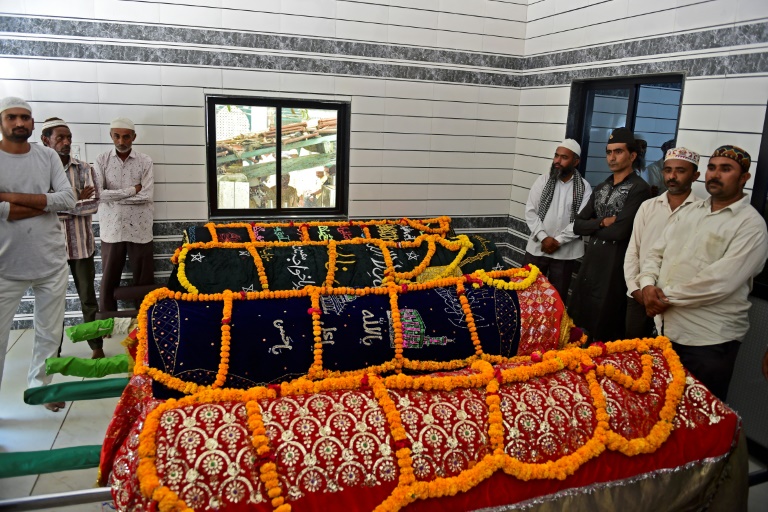
Hundreds of mourners milled among the rows of graves at the Muslim cemetery in Morbi on Monday, a day after more than 130 people were killed in India’s worst bridge collapse in decades.

Relatives dug graves for their kin with the help of staff, as mourners tried to comfort each other and volunteers offered the grieving families water.

Some hugged each other, some cried, some mourned in silence as they waited their turn to lay the bodies to rest, with a shortage of coffins slowing the process.

The newly-renovated, nearly 150-year-old suspension bridge in the Gujarat town — a renowned tourist attraction — was packed with visitors when it collapsed on the last day of the Diwali holiday season.

Around 50 Hindu cremations were held on Monday, and 37 Muslim funerals were being carried out at the only Islamic cemetery in the district.

Local businessman Rafiq Gaffar was burying two of his nephews: Nisar Iqbal, 21, and 12-year-old Arman Irfan.

They were close friends and had told their mothers they were going to the bridge. The family rushed to the site when they learned of the collapse.

“It was mayhem,” said Gaffar, 45. “People were crying and wailing. It was a scene from doomsday. 

“There were bodies floating on the water everywhere and people trapped on the bridge who were frantically calling for help.

“We had no hope after witnessing the scenes. We were just hoping to see their bodies.”

They searched for the boys for eight hours, he said, but did not find them. 

“Finally around six in the morning their bodies were fished out.

“Our family is devastated and it is difficult to overcome the loss.”

Arman was the eldest of three brothers, he added. “He was in school and was too young to die.”

Nisar had just started working at a spare parts shop and was helping to earn money for the family. 

“He has a sister who is getting married next year but we don’t know what will happen now. It will take us ages, in fact our lives to come out of this tragedy.

“They were young and we have nothing left now.”

– ‘Broken and shattered’ –

The bridge had just re-opened after a months-long renovation and reports said it had not had proper approvals.

Nine people from the management firm that ran it were arrested Monday on suspicion of culpable homicide not amounting to murder, police said.

“The government is clearly at fault,” said Gaffar. “Our lives were reduced to the mere 15 rupees (18 US cents) that the government earned from the tickets.

“We don’t expect any justice. The powerful rule this country and the poor suffer. No one will ever be held responsible for the deaths.”

Qadir Bhai Sama, 80, had fond memories of regularly taking his grandson to the bridge as a child.

Now 17, Sahil Dilawar Sama went to it for the last time on Sunday, with three friends.

“He promised his mother he would be back in two hours but the next day only his body returned,” said Sama.

Of the three friends who accompanied him, one also died and the other two were hospitalised, he added.

“They were close to each other and even tried to save each other.”

The official in charge of the graveyard, Mohammad Toufeeq, 40, said his staff had been working without a break to help the victims’ families.

“We haven’t slept or eaten anything since last night,” he said. “The entire area is in mourning. 

“We feel broken and shattered. There are no words to describe the loss and I think there’s nothing which will ease our pain.”

Ukraine grain exports resume as Turkey fights to save deal

Cargo ships loaded with grain and other agricultural products left Ukrainian ports on Monday despite Russia’s decision to pull out from a landmark deal designed to ease a global food crisis.

As one of the brokers of the grain deal, Turkey has stepped up diplomacy with the two warring countries in a bid to save it as Russia warned that continuing to enforce the agreement without its participation would be “dangerous”.

At least 10 ships including the Ikaria Angel  — chartered by the World Food Programme and loaded with 30,000 tonnes of wheat destined for an emergency response in the Horn of Africa — left Ukrainian ports on Monday, according to a website that tracks marine traffic. 

“Civilian cargo ships can never be a military target or held hostage. The food must flow,” Amir M. Abdulla, the UN Coordinator for the Black Sea Grain Initiative, tweeted on Monday. 

In all, 12 ships were due to leave Ukrainian ports on Monday and four more were due to head to the country, according to the Joint Coordination Center (JCC) that has been overseeing the agreement brokered by Turkey and the UN.

-‘Diplomatic feet’-

The marine traffic came two days after Russia notified the UN and Turkey that it was suspending its participation in the grain agreement, after Moscow accused Ukraine of a “massive” drone attack on its Black Sea Fleet in Crimea. 

Ukraine has labelled the Russian charges as a “false pretext”.

Moscow also withdrew from ship inspections, which were mandatory under the deal.

Grain prices were up on Monday morning after the Russian decision. 

Turkish President Recep Tayyip Erdogan, whose country has stayed neutral throughout the eight-month war in Ukraine, vowed to pursue efforts to keep the agreement in force despite Russia’s moves.

“Although Russia acts hesitantly… we will resolutely continue our efforts to serve humanity,” Erdogan said in a televised address. 

Turkey analyst Soner Cagaptay said if Erdogan managed to convince Russian President Vladimir Putin to get back to the table, it would underline Ankara’s brand as the country that can talk to both Ukraine and Russia, from a neutral stance.

“If Turkey is able to return Russia back to the deal, Ankara will be able to say to everyone ‘Hey, let me stay where I am because you know that it works and it helps you.’ It could be quite a significant diplomatic feet for Ankara,” he told AFP. 

NATO member Turkey, which has good relations with its two Black Sea neighbours, has refrained from joining Western sanctions on Moscow and instead bolstered its trade while supplying Kyiv with combat drones. 

Monday’s shipping schedule was agreed by the Ukrainian, Turkish and UN delegations, with Russia informed of the movements, the JCC said in a statement late on Sunday.  

A source familiar with the matter said: “As a signatory to the agreement, they have been requested to take the necessary measures to ensure the safety of the vessels.”

– ‘Dangerous’-

The Kremlin said it would be “dangerous” to enforce the agreement without its involvement. 

“In conditions where Russia talks about the impossibility of guaranteeing the safety of navigation in these areas, such a deal is hardly feasible. And it takes on a different character, much more risky, dangerous,” Kremlin spokesman Dmitry Peskov told journalists.

Turkey’s defence minister Hulusi Akar said he would speak with his Russian counterpart, Sergei Shoigu, on Monday evening. 

“This (agreement) should continue. Suspending this initiative will not benefit Russia, Ukraine or anyone else,” he said.

Ukraine, one of the world’s largest grain exporters, was forced to halt almost all deliveries following Russia’s invasion in late February. 

The July deal to unlock its grain exports is critical to easing the global food crisis caused by the conflict. 

It had already allowed more than 9.5 million tonnes of Ukrainian grain to be exported and was due to be renewed on November 19.

A separate deal signed with Russia allowed the export of Russian food and fertilisers, despite Western sanctions imposed on Moscow. But it was never implemented, to the dismay of Moscow, which has complained about the issue for weeks.

Arrests after India bridge collapse kills more than 130

Nine people were arrested Monday in connection with the collapse of a pedestrian bridge in western India that killed at least 137 people, police said.

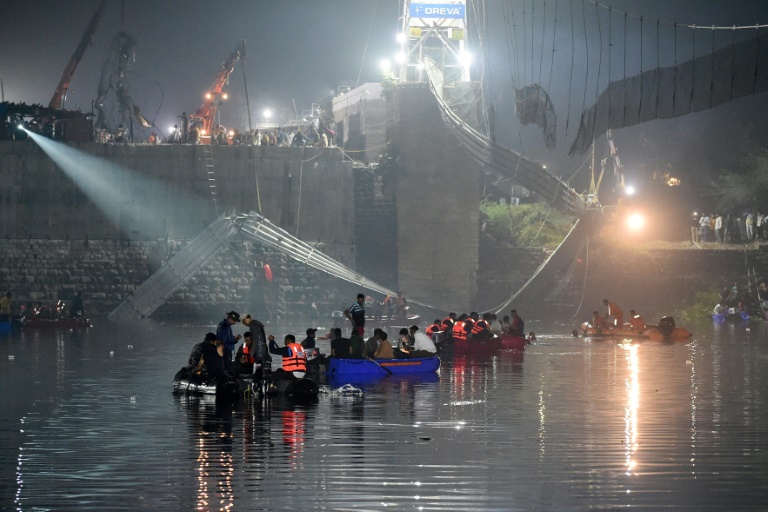
The bridge, which had reopened days earlier after renovation, collapsed on Sunday evening, sending hundreds tumbling into the river or clinging to the wreckage while screaming for help in the dark.

The nine — all associated with a company that maintained the bridge in Morbi — were being investigated for culpable homicide not amounting to murder, senior police officer Ashok Kumar Yadav said in a statement.

Crowds at the site had been celebrating the last day of the Diwali holiday. CCTV footage showed the nearly 150-year-old structure swaying — with a few people apparently deliberately rocking it — before it suddenly gave way. 

“We were all standing on the bridge together when it violently shook and crashed suddenly. I heard screams and a loud thud and then there was silence. Then slowly cries and screams,” survivor Madhvi Ben, 30, told AFP.

Ben said one of his legs was “entangled in a steel rope”, leaving him almost entirely submerged and struggling to break free.

“I somehow blocked my nose and pulled myself up and released my leg from the wire. I grabbed another wire and climbed the remains of the bridge. 

“Someone held my hand and pulled me out of the water before I reached the bank.”

Local police chief P. Dekavadiya said that by Monday afternoon the death toll from the catastrophe in Prime Minister Narendra Modi’s home state of Gujarat had risen to 137. 

They included around 50 children, the youngest being a two-year-old boy.

One local MP, Kalyanji Kundariya, told media he had lost 12 family members in the accident, including five children.

“My brother’s body was fished out at 9:00 pm and my sister-in-law’s body was recovered at 1:00 am,” textile trader Puneet Pitroda, 35, told AFP at Morbi’s crematorium on Monday.

“The authorities are fully responsible for the tragedy. They allowed hundreds to gather on the bridge when it had a capacity to hold just a small number,” he said.

“We will never forget this night.”

– ‘No certificate’ –

Authorities launched a rescue operation immediately following the collapse, with boats and divers searching the river all night and throughout Monday.

The bridge, 233 metres (764 feet) long and 1.5 metres wide, was inaugurated in 1880 by British colonial authorities and made with materials shipped from England, reports said.

The Gujarat tourist department describes the “grand suspension bridge” about 200 kilometres (120 miles) west of the state’s main city, Ahmedabad, as an “artistic and technological marvel”.

Sandeepsinh Jhala, Morbi municipality’s chief officer, said the bridge had not been issued a safety certificate after being closed for months of repair work.

Reports named the firm responsible as a unit of the Gujarat-based Oreva group, which describes itself as the world’s largest clock manufacturer, and also makes lighting products and e-bikes. The company could not immediately be reached for comment.

Modi, who was due to visit the site on Tuesday, said that he “may rarely have experienced so much pain in my life”.

Russian President Vladimir Putin sent his condolences. Japan’s Prime Minister Fumio Kishida said he was “deeply saddened” while Nepal, Bhutan and Britain also sent messages of support.

Accidents from old and poorly maintained infrastructure, including bridges, are common in India.

In 2016, the collapse of a flyover onto a busy street in Kolkata killed at least 26 people. 

Five years earlier, at least 32 people perished when a packed bridge collapsed in the hill resort of Darjeeling.

Deal complete, Twitter-Musk litigants ask judge to dismiss suit

Attorneys in the saga over Elon Musk’s Twitter takeover have asked a Delaware court to dismiss the litigation following the deal’s closure, according to court documents released Monday.

“Yesterday evening, Defendants and Twitter closed the transaction contemplated by the merger agreement dated April 25, 2022,” said the October 28 letter from Musk’s attorney in the case to Judge Kathaleen McCormick.

“In light of this development, Defendants and Twitter have agreed to dismiss their claims and counterclaims as set forth in the stipulation and proposed order of dismissal submitted with this letter.”

Twitter sued Musk in the Delaware court in July after the unpredictable billionaire tried to walk away from the April deal to acquire the social media company for $44 billion.

But with an October trial date looming, Musk revived the deal in early October, ultimately sealing the takeover last week.

After taking over, Musk immediately dismissed senior Twitter leaders and said he would appoint a “content moderation council.”

Close Bitnami banner
Bitnami