World

In Jordan camp, a new generation of Syrians born in exile

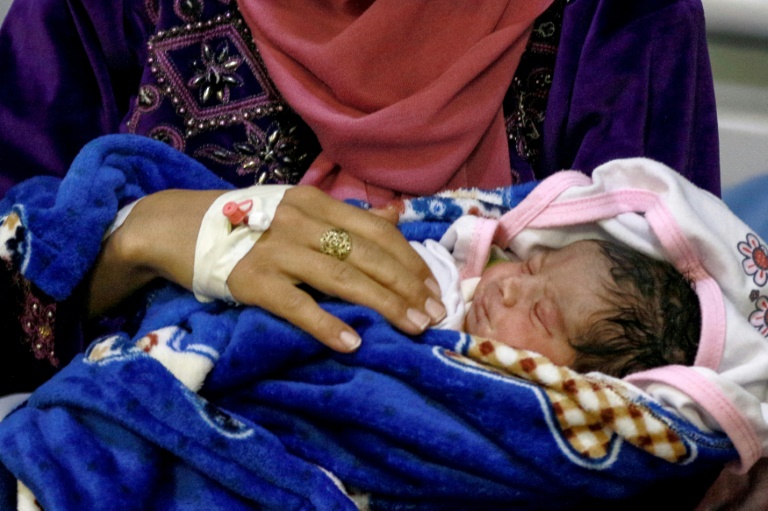
Ten years after fleeing war in her native Syria, Hadeel is expecting a third child, brought into a life of poverty and uncertainty at the Zaatari refugee camp in Jordan.

The squalid camp, 50 kilometres (30 miles) north of the capital Amman, is home to some 80,000 Syrian refugees, according to the United Nations.

Half of the camp’s residents are children, and many have no memory of Syria.

“I was hoping to be at home, in my country,” Hadeel said, asking to use a pseudonym for safety concerns.

“Fate decided I would be here, get married and give birth to my children here.”

Like most refugees in the camp, she and her family arrived from Syria’s southern Daraa province, the cradle of the 2011 uprising against the regime of President Bashar al-Assad.

The ensuing war has killed nearly half a million people and displaced around half of the country’s pre-war population.

Hadeel, who is six months pregnant, married a Syrian refugee who also lives in Zaatari, and the couple have two children, aged six and seven.

At least 168,500 Syrian babies have been born in Jordan since 2014, according to the UN, part of an estimated one million children born to Syrians in exile across the world over the same period.

Many are born in overcrowded refugee camps, with limited access to education and the threat of child labour and forced marriage hanging over them.

– ‘Where is Syria?’ –

Sat on a red plastic chair in a large hall, Hadeel awaited a checkup at the only clinic in the camp that delivers babies.

“My children grew up here. When they hear me talking to other women about Syria, they ask me, ‘Mama, where is Syria? Why do we live in this?'” said Hadeel.

“I try to explain to them that this is not our country. We are refugees. It’s difficult for them to understand”.

Some 675,000 Syrian refugees are registered with the UN in Jordan, but Amman estimates the real figure to be about twice that and says the cost of hosting them has exceeded $12 billion.

While fighting in southern Syria has abated, Hadeel said it still is not safe enough to return.

Her cousin, “fed up” with the camp, returned to Syria earlier this year.

He was killed less than a month later, and his widow and five children still in Zaatari do not know how he died.

“The bad security situation makes us think a thousand times before returning,” Hadeel said.

– Family planning –

The maternity ward at the UN-run clinic — the camp’s biggest health facility with 60 staff including 21 midwives — has 10 beds.

The clinic’s director Ghada al-Saad said the facility “works 24/7, offering everything for free, including medicines, treatments, tests and vaccinations” up to the age of two.

Midwife Amon Mustafa, 58, who has worked there since the camp opened in 2012, checks on the new mothers.

“We deliver between five and 10 babies every day, with the five today, the total number of births in the camp has reached 15,963,” Mustafa said.

“I know most of the women and children in the camp,” she added with a smile.

Nagham Shagran, 20, holding her newborn son, has spent nine years in the camp, where she and her cousin married.

“At first we hesitated to have our first child,” she said. “Every human… has the right to be born and live in his or her country, but what can we do?”

Mustafa said staff “are trying” to educate women on family planning and the use of contraceptives, but uptake is limited.

“Children are a blessing, but I hope this will be my last pregnancy,”said Eman Rabie, 28,  expecting her fourth child. “My husband loves children; he says they are a blessing from God.”

Rabie’s home in Daraa was destroyed during the war.

“If we are asked to leave the camp and go back to Syria,” she said, “I will be the last to leave”.

Brazil's comedians see perfect timing 'to make people laugh'

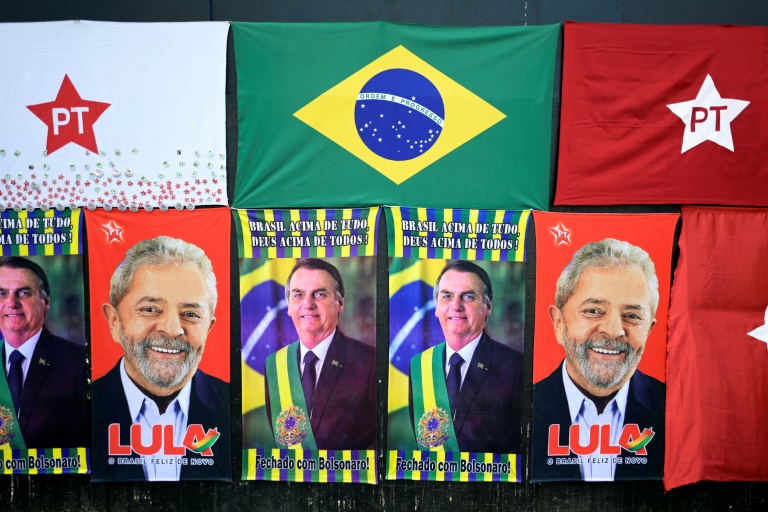
A divisive election duel has Brazilians on edge and sometimes depressed, but for comedian Fabio Porchat, it’s the perfect time to break out the jokes.

“It’s the best time to make people laugh,” said the 39-year-old, whose stand-up routine has been a hit in Rio de Janeiro in recent weeks as the country nervously awaits Sunday’s runoff between President Jair Bolsonaro and rival Luiz Inacio Lula da Silva.

“Nerves are on edge, people are sick of the elections. There is fighting within families … But when we get together to go to the theater for a laugh, it doesn’t matter if you are for Lula or Bolsonaro, we laugh at the jokes, and that is that.”

His show, “Porchat’s Stories,” is on four times a week at a theater in Leblon, an upscale neighborhood in Rio de Janeiro, and does not mention politics.

He prefers self-deprecatory jokes revealed through hysterical anecdotes of his travels abroad, such when he got a bout of gastro in Nepal.

“I speak a lot about politics on television, on social media. But, I decided not to bring it up in the theater because I told myself people need to laugh about other things,” said the comedian who also presents a show on TV Globo.

On Instagram, where he has more than six million followers, Porchat has gone live on several occasions to talk to undecided voters, “without judging them.”

He is open about his support for leftist former president Lula — and went viral on Twitter Friday with an appeal to Hollywood’s biggest superheroes, the “Avengers,” for help in the presidential duel.

Stars including Samuel L. Jackson, Chris Hemsworth and Robert Downey Jr. — who respectively play Nick Fury, Thor and Iron Man in the mega-franchise — answered the call with decidedly Lula-leaning tweets.

– ‘A matter of mental health’ –

Yuri Marcal, another popular Brazilian comedian, sees making people laugh during such a gloomy and testy period as “a matter of mental health”.

“It’s never easy to make people laugh, especially at a time like this, with such a polarized election. We feel such a heavy mood. But actually, people need to laugh more than ever.”

On Tuesday, the 29-year-old comedian, who is black, surprised his fans with a new YouTube video titled “I don’t vote for a thief”.

To a Brazilian, the phrase is an immediate reference to the insult that far-right Bolsonaro and his supporters love to wield against Lula, due to graft convictions that were annulled by the Supreme Court.

But upon clicking on the video, you realize Marcal is talking about a Bolsonarista cousin, “the white sheep of the family,” who he is trying to convince to vote for Lula.

“That’s our role, no matter what era we live in, to make people laugh by taking serious topics lightly,” he said.

“I have been getting laughs for years by talking about politics, but also racism,” he said.

– Online threats –

Porchat recalls that Brazilian comedians “have lived through worse,” referring to the 1964-1985 military dictatorship.

“At that time, you had to perform for four or five censors before you could appear in public. One wrong word and you would land up in prison.”

However, comedy is not without danger in Brazil.

In late 2019, the headquarters of the production company that Porchat founded in 2012, Porta dos Fundos, was hit by a Molotov cocktail after it released a Netflix show depicting Jesus in a homosexual relationship.

However, Porchat says the threats usually come from people hiding “behind their screen, online. But it’s a minority.”

Marcal has also received threats on social media, where he has more than one million followers on Instagram.

“Recently, I made a joke about Bolsonaro, and someone said: ‘be careful, I know where you perform.'”

Intruder hunting US politician Pelosi attacks her husband with hammer

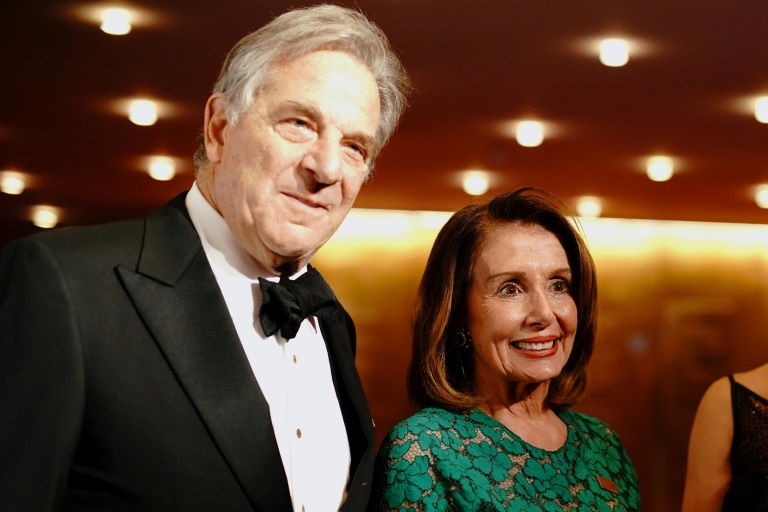
An intruder attacked the husband of US House Speaker Nancy Pelosi with a hammer, fracturing his skull, after breaking into their California home on Friday in search of her.

Paul Pelosi was “attacked at home by an assailant who acted with force and threatened his life while demanding to see the speaker,” Pelosi spokesman Drew Hammill said.

Paul Pelosi, 82 — who underwent surgery and is recovering in hospital — was at home alone, as his wife was working in Washington.

San Francisco police said officers found the assailant at the couple’s home just before 2:30 am (0930 GMT), where he and Paul Pelosi were scuffling over a hammer.

“The suspect pulled the hammer away from Mr. Pelosi and violently assaulted him with it,” San Francisco police chief Bill Scott told reporters, saying later that Paul Pelosi was hit at least once. 

He identified the assailant as 42-year-old David Depape but declined to take questions.

At a press conference Friday evening, Scott said the suspect was still in hospital, adding he could not yet publicly reveal the alleged motivation for the crime. 

“This was not a random act,” Scott said. “This was intentional, and it is wrong.”

“Everybody should be disgusted about what happened this morning.”

– ‘Condemn all violence’ –

US media, citing family sources, said the intruder told Paul Pelosi he was going to tie him up and wait for the speaker to get home.

The victim managed to dial 911 while the man was distracted, according to an account given to cable network MSNBC.

Local media had earlier reported that the intruder shouted “Where’s Nancy?” during the assault.

Scott said Depape would be charged with attempted homicide, assault with a deadly weapon, burglary and other felonies.

“Mr. Pelosi was admitted to Zuckerberg San Francisco General Hospital where he underwent successful surgery to repair a skull fracture and serious injuries to his right arm and hands,” the speaker’s spokesman added.

“His doctors expect a full recovery.”

Nancy Pelosi — who is second in line to the presidency — and the couple’s five children were reported to be returning to San Francisco to be by his side. 

Addressing a campaign rally in Philadelphia on Friday evening, President Joe Biden called the attack “despicable” and said that political violence had “no place” in the United States.

“Enough is enough is enough,” he added.

Earlier in the day, Biden, also 82, had called Pelosi to express support and said he was praying for her husband, the White House said.

“He is… very glad that a full recovery is expected. The president continues to condemn all violence, and asks that the family’s desire for privacy be respected,” Biden’s press secretary Karine Jean-Pierre said in a statement.

– ‘Disgusted’ –

The intruder broke in through a sliding-glass door, The Wall Street Journal reported, citing unnamed law enforcement officers, leaving him with wounds to the head and body.

He had espoused extreme right-wing positions on social media, including conspiracy theories about Covid-19, one of the officers told the daily newspaper.

With less than two weeks to go before the crucial US midterm elections, members of both parties have sounded the alarm about the potential for political violence.

According to the Capitol Police in Washington, threats against lawmakers have more than doubled since 2017 to nearly 10,000 in 2021.

Members of both parties rallied to support Pelosi on social media, with several suggesting the assault was the inevitable result of an increase in violent political rhetoric.

Adam Kinzinger, a Republican member of the House committee investigating the January 2021 attack on the US Capitol, blamed conspiracy theories spread by Donald Trump and his far-right followers for radicalizing some supporters. 

“I want to be clear: when you convince people that politicians are rigging elections, drink babies’ blood, etc, you will get violence. This must be rejected,” he said of Friday’s attack.

Republican House whip Steve Scalise said he was “disgusted” by the attack.

Paul Pelosi was convicted of drunk driving after an accident in May and sentenced to five days in jail.

Brazil runoff: 3 key factors

Charisma and campaign strategy won’t be the only things in play when Brazil’s far-right President Jair Bolsonaro and leftist challenger Luiz Inacio Lula da Silva face off in a polarizing runoff election Sunday.

Here are three key factors analysts say will determine the outcome.

– Rejection –

Millions of Brazilians hate Bolsonaro, Lula or both — and that rejection vote will play a decisive role, analysts say.

Four years ago, Bolsonaro ran as an outsider, tapping widespread outrage with an economic crisis and massive corruption scandals under the Workers’ Party (PT), which governed Brazil for 13 years — first under Lula (2003-2010), then Dilma Rousseff (2011-2016), who was ultimately impeached.

Now, with Brazil deeply divided over Bolsonaro’s hardline conservatism, Covid-19 denialism and vitriolic style, the former army captain has plenty of haters of his own.

“Brazilian politics has two negationist forces: ‘anti-PTism’ and ‘anti-Bolsonarism.’ And that will decide the election,” says Mayra Goulart, a political scientist at Rio de Janeiro Federal University.

– Turnout –

Around 32 million Brazilians didn’t vote in the first-round election on October 2 — more than five times the six million votes that separated Lula (48 percent) from Bolsonaro (43 percent).

“Turnout will be key” in the runoff, says political scientist Oliver Stuenkel of the Getulio Vargas Foundation.

Poor voters, a group that leans heavily toward Lula, are particularly susceptible to stay home, especially if they lack transportation.

In theory, voting is mandatory in Brazil. But the fine for failing to comply — 3.5 reais, or a little more than 50 US cents — costs less than round-trip bus fare.

“The more voters stay home, the worse it will be for Lula,” says Stuenkel.

– It’s the economy, stupid? –

Latin America’s biggest economy is crawling slowly out of its pandemic hole.

Unemployment has fallen from a pandemic high of 14.5 percent to 8.7 percent last quarter, and economic growth is expected to come in at 2.8 percent this year.

But 9.5 million workers are unemployed, 33 million people are living in hunger, and prices remain painfully high for most — though inflation has started to fall.

“The economy, high inflation… unemployment exacerbated by the pandemic, all contributed to many families’ dismay” with Bolsonaro, says sociologist Paulo Baia.

Lula, who is remembered for an economic boom and social programs that helped lift 30 million people from poverty, is leaning heavily on that legacy.

Bolsonaro is meanwhile counting on jacked-up welfare payments to the poor, fuel-price cuts and tentative signs of better times ahead to win over voters.

Ultimately, the economy may not be the decisive issue, though.

Stuenkel says it could be eclipsed by Brazil’s culture wars and favorite Bolsonaro themes like “family, Christianity and tradition.”

“If (Lula) wins, that will show voters’ main concern is the economy,” he says.

“If Bolsonaro wins, it will show social conservatism is seen as the most important issue.”

Pioneering rocker Jerry Lee Lewis dead at 87

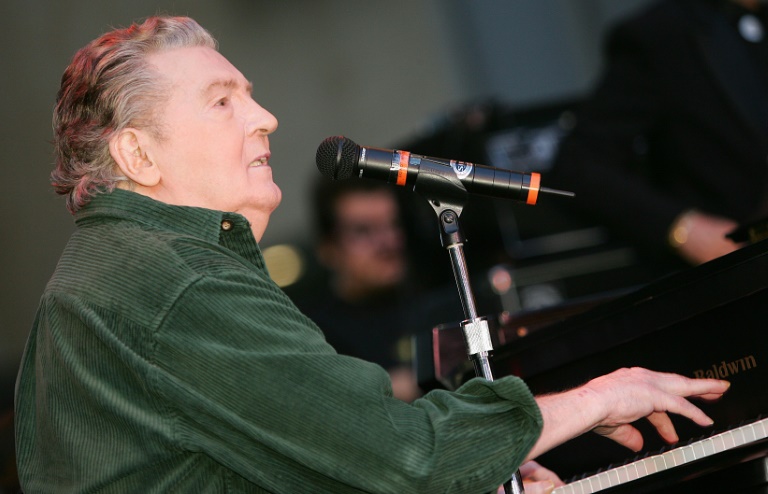
Jerry Lee Lewis, a scandal-generating kingpin of 1950s American rock and roll who played a pivotal role in shaping the genre’s sound, died on Friday. He was 87 years old.

Famous for his flowing blond locks, rowdy piano beats and outrageous stage presence, the star best known for his classic “Great Balls of Fire” died of natural causes, his publicist told AFP.

“He is ready to leave,” an accompanying statement quoted the artist’s wife Judith as saying.

The statement said Lewis suffered years of illnesses and injuries: “He had abused his body so thoroughly as a young man he was given little chance of lasting through middle age, let alone old age,” it read.

A friend and rival of Elvis Presley, Lewis’s career spanned more than half a century and produced a wealth of eyebrow-raising stories about his numerous wives — including a teenage cousin — drunken rampages and run-ins with the government over back taxes.

It also produced a string of indelible hits.

Born on September 29, 1935, in Ferriday, Louisiana, Lewis took to the keys at age nine. The following year, his parents Elmo and Mamie mortgaged the family farm to buy him an upright piano.

Along with his cousins Mickey Gilley and Jimmy Swaggart — who would respectively go on to become an award-winning country musician and a scandal-tainted evangelist — Lewis spent hours perfecting his craft.

– Provocative lyrics  –

In 1956, Lewis struck out for Memphis, Tennessee — the southern American city famous as a cradle of soul, blues and rock — to link up with the producer Sam Phillips at Sun Records, who was instrumental in Presley’s astronomical rise.

Lewis, Presley and Johnny Cash got together with Carl Perkins at the studio for the “Million Dollar Quartet” jam session that year, which was released much later to acclaim.

Lewis soared to fame the next year with his breakout hit “Whole Lotta Shakin’ Goin’ On” — whose provocative lyrics shocked some radio stations that at first refused to play it.

“It was just another song to me,” he told The New York Times in 2006. “The girls went a little berserk, but that’s girls for you.”

– ‘The Killer’ –

His follow up, “Great Balls of Fire,” remains one of the best-selling singles of all time, and was also the name of a 1989 docudrama about Lewis starring actor Dennis Quaid.

By the summer of 1958, Lewis — nicknamed “The Killer” — was rocketing to the top, with fans packing shows, money flowing in, and a third hit, “Breathless,” climbing the charts.

In an era when even the slightest lower body gyration by Presley caused a sensation, Lewis carried it further, thumping on the keys with hands and feet, and leaping atop his grand piano to squeals of delight.

“Who would have thought it would be me?” the publicist’s statement quoted the rocker as saying in his final days.

Lore has that Lewis even lit his piano on fire in an attempt to outshine guitarist Chuck Berry, who had snagged the closing slot that same night.

Elton John tweeted that without Lewis “I wouldn’t have become who I am today,” calling him a “trailblazing inspiration.”

“He was groundbreaking and exciting, and he pulverized the piano.”

– Scandal –

It all came crashing down, however, in 1958 when Lewis embarked on a tour of Britain — and the press there discovered he had married his 13-year-old second cousin Myra Gale Brown.

“I knew it was bad, I knew it was wrong,” Lewis later told The Washington Post.

His stateside return also proved a rude awakening, as Lewis found himself blacklisted from radio and television.

He headed out on the road for one-night shows in bars and minor clubs.

“From 10,000 dollars a night to 250 dollars is a hell of a disappointment,” Lewis said.

For most of the 1960s, Lewis was on the margins, eclipsed by the next generation like The Beatles, as his illicit marriage would forever tarnish his legacy. 

But he remained an inspiration to his celebrity successors.

When they met in the early 1970s, John Lennon knelt down to kiss Lewis’ feet, telling him: “You are the man who made it possible for me to be a star in rock-n-roll music.”

“I just kind of froze,” Lewis told GQ of the moment.

– Musical legacy –

Lewis jumped over to country music, searching for a fresh start. He also re-recorded some of his classic tunes.

In 1986, he was part of the first class inducted into the Rock and Roll Hall of Fame, alongside fellow greats including Presley, Berry, James Brown and Ray Charles.

He received a Grammy Award for lifetime achievement in 2005.

Late in life, he collaborated with Mick Jagger and Eric Clapton on his studio albums.

“Your songs lit up my life!” tweeted Jagger.

Lee’s personal life continued to prove concerning and stormy. After 14 years of marriage to Myra, who accused the singer of physical and  mental abuse, the couple divorced.

Married twice before Myra, Lewis wedded four times after. He had six children. One died in a swimming pool accident as a toddler, and another died in a car accident.

In 1993, arguments with the US government over back taxes led officials to seize pianos, furniture and other personal items to cover his debt. 

A notorious hard drinker, Lewis at times was addicted to prescription pills.

He toured extensively late in life, though a stroke in 2019 curtailed his schedule.

“When they look back on me, I want them to remember me not for all my wives, although I’ve had a few, and certainly not for any mansions or high living money,” Lewis said.

“I want them to remember me simply for my music.”

Poland picks US firm to build 1st nuclear power station: PM

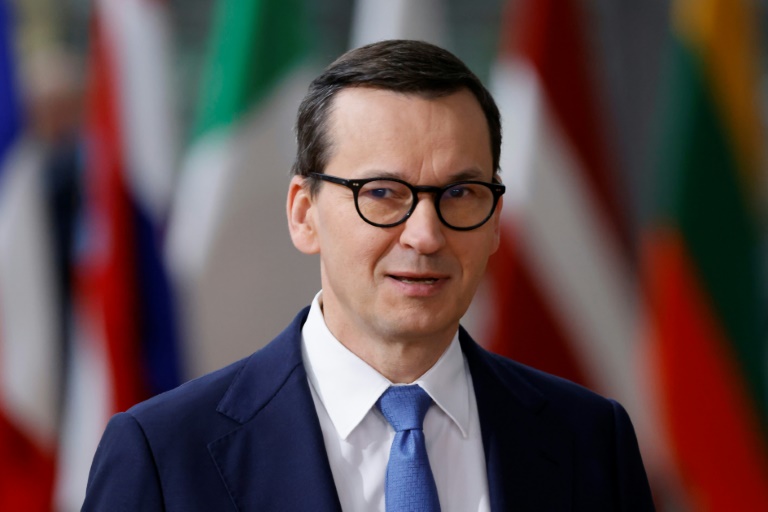
Poland on Friday picked US firm Westinghouse to build its first nuclear power station, as the country bids to shore up its energy security at a time of soaring tensions with Russia over Ukraine.

Westinghouse beat rival bids from France’s EDF and South Korea’s KHNP for the multi-billion dollar (euro) deal, although Poland has held out the possibility of other nuclear tenders in the future.

“We confirm our nuclear energy project will use the reliable, safe technology of @WECNuclear,” Prime Minister Mateusz Morawiecki wrote on Twitter.

Morawiecki said the decision would be formally adopted at a cabinet meeting in Warsaw on Wednesday.

US Energy Secretary Jennifer Granholm hailed Poland’s announcement, tweeting: “This is a huge step in strengthening our relationship with Poland for future generations to come.

“I think it sends a clear message to Russia that the Atlantic alliance stands together to diversify our energy supply… and to resist Russian weaponisation of energy,” she said in a video.

Granholm said Poland had picked Westinghouse “for the first part of their $40bn nuclear project”, without specifying the amount of the investment.

A senior US government official speaking on condition of anonymity said only that the deal was valued in the “billions” and would create “thousands of good-paying jobs”.

“This is a huge deal because this is not just about a commercial energy project, it’s about the way we will define what I would call interdependent security for decades to come,” the official said.

– Online by 2033 –

The decision “sends an unmistakable message to (Russian President Vladimir) Putin about the strength and the meshing together of the US-Poland alliance,” the official added.

And US Secretary of State Antony Blinken said in a tweet he was “very pleased” about the deal to “help produce safe, clean, and reliable nuclear power”.

“The United States is proud to be Poland’s strong partner for energy and security,” Blinken tweeted.

Poland has been planning a civil nuclear energy capacity for years, but the issue of energy security has taken on added urgency because of Russia’s invasion of Ukraine.

Denmark, Norway and Poland last month unveiled a new pipeline that will carry Norwegian gas to Poland via Denmark after Russia cut off Warsaw’s supplies.

The Polish government has said it wants its first nuclear power station to go online in 2033.

It has selected the village of Choczewo near the Baltic coast as the site for the plant.

The first plant is planned to have three reactors and the government has said it expects to select a supplier to build three more reactors in the future.

“The second set (of 3 reactors) will be coming down the road at a date to be determined subject to a decision by the government of Poland and we anticipate that to be Westinghouse as well,” the US official said.

Poland picks US firm to build 1st nuclear power station: PM

Poland on Friday picked US firm Westinghouse to build its first nuclear power station, as the country bids to shore up its energy security at a time of soaring tensions with Russia over Ukraine.

Westinghouse beat rival bids from France’s EDF and South Korea’s KHNP for the multi-billion dollar (euro) deal, although Poland has held out the possibility of other nuclear tenders in the future.

“We confirm our nuclear energy project will use the reliable, safe technology of @WECNuclear,” Prime Minister Mateusz Morawiecki wrote on Twitter.

Morawiecki said the decision would be formally adopted at a cabinet meeting in Warsaw on Wednesday.

US Energy Secretary Jennifer Granholm hailed Poland’s announcement, tweeting: “This is a huge step in strengthening our relationship with Poland for future generations to come.

“I think it sends a clear message to Russia that the Atlantic alliance stands together to diversify our energy supply… and to resist Russian weaponisation of energy,” she said in a video.

Granholm said Poland had picked Westinghouse “for the first part of their $40bn nuclear project”, without specifying the amount of the investment.

A senior US government official speaking on condition of anonymity said only that the deal was valued in the “billions” and would create “thousands of good-paying jobs”.

“This is a huge deal because this is not just about a commercial energy project, it’s about the way we will define what I would call interdependent security for decades to come,” the official said.

– Online by 2033 –

The decision “sends an unmistakable message to (Russian President Vladimir) Putin about the strength and the meshing together of the US-Poland alliance,” the official added.

And US Secretary of State Antony Blinken said in a tweet he was “very pleased” about the deal to “help produce safe, clean, and reliable nuclear power”.

“The United States is proud to be Poland’s strong partner for energy and security,” Blinken tweeted.

Poland has been planning a civil nuclear energy capacity for years, but the issue of energy security has taken on added urgency because of Russia’s invasion of Ukraine.

Denmark, Norway and Poland last month unveiled a new pipeline that will carry Norwegian gas to Poland via Denmark after Russia cut off Warsaw’s supplies.

The Polish government has said it wants its first nuclear power station to go online in 2033.

It has selected the village of Choczewo near the Baltic coast as the site for the plant.

The first plant is planned to have three reactors and the government has said it expects to select a supplier to build three more reactors in the future.

“The second set (of 3 reactors) will be coming down the road at a date to be determined subject to a decision by the government of Poland and we anticipate that to be Westinghouse as well,” the US official said.

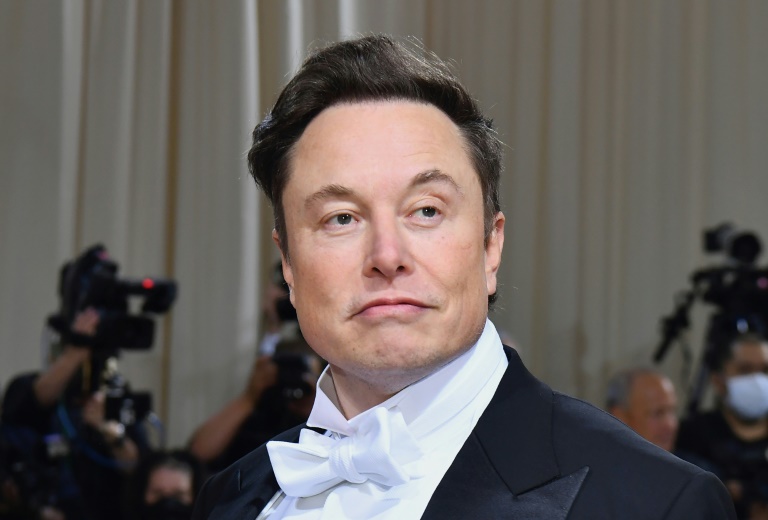
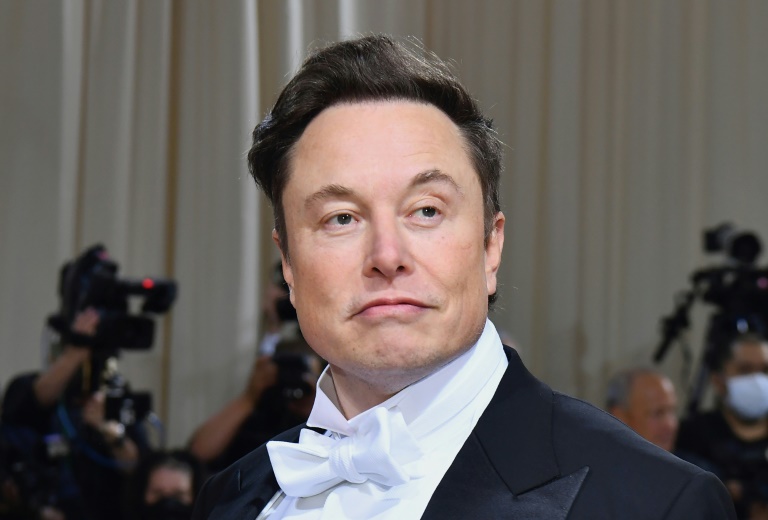
Musk seeks to soothe critics with Twitter content panel

Twitter formally became the private property of Elon Musk on Friday, steering the social media giant down an uncertain path under the stewardship of one of its most vocal critics.

Scrutiny quickly turned to how the platform will operate under a self-proclaimed free-speech absolutist who some users fear will turn Twitter into a global stage for hate speech and disinformation.

In a nod to such concerns, Musk’s first policy act was to tweet that he will form a “content moderation council” embracing “widely diverse viewpoints.”

“No major content decisions or account reinstatements will happen before that council convenes,” he said.

Musk’s sealing of the on-again, off-again $44 billion deal ended a months-long soap opera of corporate chicanery, involving insults, threats and lawsuits.

“The bird is free,” tweeted the billionaire Tesla founder and space pioneer in reference to the company’s logo. “Let the good times roll.”

The deal drew contrasting reactions, with former US president Donald Trump cheering the change of leadership on a platform that had banned him, while activists warned of a surge in harassment and misinformation.

European politicians were quick to signal to Musk that the continent had regulations for social media companies.

“In Europe, the bird will fly by our rules,” tweeted Thierry Breton, the EU internal market commissioner.

Musk had vowed to dial back content moderation and was expected to clear the way for Trump to return to the platform.

The then-president was blocked over concerns he would ignite more violence like the 2021 deadly attack on the US Capitol to overturn his election loss.

Taking to his own Truth Social platform, Trump said he was “very happy that Twitter is now in sane hands” — but gave no commitment to rejoin if allowed.

Far-right users were quick to rejoice at Musk’s ownership, posting comments such as “masks don’t work” and other taunts, under the belief that moderation rules would now be relaxed.

– ‘A huge responsibility’ –

Yale University philosophy professor Jason Stanley, who has characterized Trump’s rise as a sign of mounting fascism in the United States, said he would alter his approach to posting.

“For the moment I am staying on Twitter. But I am going to try to be much more careful about what I say now that Elon Musk is in charge. Cascading hate speech targeting can destroy your week,” he said.

Right-wing political commentator Ben Shapiro said he gained 40,000 Twitter followers Friday, while the actor Mark Hamill, a liberal, said he had lost almost 6,000 followers over the last three days.

Musk reportedly fired Twitter chief executive Parag Agrawal and other senior officials — though the company did not reply to a request for comment and Agrawal still listed himself as CEO on his Twitter profile.

But Ned Segal, Twitter’s chief financial officer since 2017, announced his departure.

“At its best, (Twitter) democratizes communication and knowledge, ensuring accountability and equal distribution of info,” Segal said.

“It’s a huge responsibility for everyone that shares in the work. I wish them strength, wisdom and foresight.”

Musk, who is using a combination of his own money, funds from wealthy investors and bank loans to finance the deal, has conceded he is overpaying for a company that has regularly posted eye-watering losses.

– How to monetize? –

Twitter says it has 238 million daily users — dwarfed by the likes of Facebook’s nearly two billion — and has not been able to monetize in the same way as its rivals.

However, it holds an outsized influence on public debate because it is the favored platform for many companies, politicians, journalists and other public figures.

Though he has vowed that Twitter will not become a “free-for-all hellscape,” Musk reportedly plans deep staff cuts that would gut teams that oversee content.

Despite Musk posting a letter to advertisers saying he wants Twitter to be a forum where rival viewpoints can be debated in a “healthy manner”, US auto giant General Motors said Friday it has “temporarily paused” paid ads on the platform.

“We are engaging with Twitter to understand the direction of the platform under their new ownership,” said a GM spokesman. 

Media watchdog Media Matters for America sounded the alarm over the future of a Musk-led Twitter, particularly the impact on imminent US midterm elections.

The platform “is now on a glide path to becoming a supercharged engine of radicalization” and a “fever swamp of dangerous conspiracy theories, partisan chicanery, and operationalized harassment,” the organization’s head Angelo Carusone said.

The closure of the deal marked the finale of a long back-and-forth between the billionaire and the social network that had culminated in a Twitter lawsuit seeking to hold Musk to the transaction agreement.

Musk seeks to soothe critics with Twitter content panel

Twitter formally became the private property of Elon Musk on Friday, steering the social media giant down an uncertain path under the stewardship of one of its most vocal critics.

Scrutiny quickly turned to how the platform will operate under a self-proclaimed free-speech absolutist who some users fear will turn Twitter into a global stage for hate speech and disinformation.

In a nod to such concerns, Musk’s first policy act was to tweet that he will form a “content moderation council” embracing “widely diverse viewpoints.”

“No major content decisions or account reinstatements will happen before that council convenes,” he said.

Musk’s sealing of the on-again, off-again $44 billion deal ended a months-long soap opera of corporate chicanery, involving insults, threats and lawsuits.

“The bird is free,” tweeted the billionaire Tesla founder and space pioneer in reference to the company’s logo. “Let the good times roll.”

The deal drew contrasting reactions, with former US president Donald Trump cheering the change of leadership on a platform that had banned him, while activists warned of a surge in harassment and misinformation.

European politicians were quick to signal to Musk that the continent had regulations for social media companies.

“In Europe, the bird will fly by our rules,” tweeted Thierry Breton, the EU internal market commissioner.

Musk had vowed to dial back content moderation and was expected to clear the way for Trump to return to the platform.

The then-president was blocked over concerns he would ignite more violence like the 2021 deadly attack on the US Capitol to overturn his election loss.

Taking to his own Truth Social platform, Trump said he was “very happy that Twitter is now in sane hands” — but gave no commitment to rejoin if allowed.

Far-right users were quick to rejoice at Musk’s ownership, posting comments such as “masks don’t work” and other taunts, under the belief that moderation rules would now be relaxed.

– ‘A huge responsibility’ –

Yale University philosophy professor Jason Stanley, who has characterized Trump’s rise as a sign of mounting fascism in the United States, said he would alter his approach to posting.

“For the moment I am staying on Twitter. But I am going to try to be much more careful about what I say now that Elon Musk is in charge. Cascading hate speech targeting can destroy your week,” he said.

Right-wing political commentator Ben Shapiro said he gained 40,000 Twitter followers Friday, while the actor Mark Hamill, a liberal, said he had lost almost 6,000 followers over the last three days.

Musk reportedly fired Twitter chief executive Parag Agrawal and other senior officials — though the company did not reply to a request for comment and Agrawal still listed himself as CEO on his Twitter profile.

But Ned Segal, Twitter’s chief financial officer since 2017, announced his departure.

“At its best, (Twitter) democratizes communication and knowledge, ensuring accountability and equal distribution of info,” Segal said.

“It’s a huge responsibility for everyone that shares in the work. I wish them strength, wisdom and foresight.”

Musk, who is using a combination of his own money, funds from wealthy investors and bank loans to finance the deal, has conceded he is overpaying for a company that has regularly posted eye-watering losses.

– How to monetize? –

Twitter says it has 238 million daily users — dwarfed by the likes of Facebook’s nearly two billion — and has not been able to monetize in the same way as its rivals.

However, it holds an outsized influence on public debate because it is the favored platform for many companies, politicians, journalists and other public figures.

Though he has vowed that Twitter will not become a “free-for-all hellscape,” Musk reportedly plans deep staff cuts that would gut teams that oversee content.

Despite Musk posting a letter to advertisers saying he wants Twitter to be a forum where rival viewpoints can be debated in a “healthy manner”, US auto giant General Motors said Friday it has “temporarily paused” paid ads on the platform.

“We are engaging with Twitter to understand the direction of the platform under their new ownership,” said a GM spokesman. 

Media watchdog Media Matters for America sounded the alarm over the future of a Musk-led Twitter, particularly the impact on imminent US midterm elections.

The platform “is now on a glide path to becoming a supercharged engine of radicalization” and a “fever swamp of dangerous conspiracy theories, partisan chicanery, and operationalized harassment,” the organization’s head Angelo Carusone said.

The closure of the deal marked the finale of a long back-and-forth between the billionaire and the social network that had culminated in a Twitter lawsuit seeking to hold Musk to the transaction agreement.

Apple rally fuels tech share turnaround, lifting US stocks

Tech shares were back on their front foot Friday following solid Apple results, boosting the Nasdaq nearly three percent and adding to weekly gains.

Apple, the biggest company in terms of market value, soared nearly eight percent after reporting higher profits despite lower-than-expected iPhone sales. 

Apple’s surge helped offset a comparable drop in Amazon shares on a disappointing holiday-quarter forecast and added to buying momentum on Wall Street following a mixed day in global bourses and a drop in oil prices.

“The stock market showed impressive resilience today,” observed Briefing.com after the Dow’s sixth straight positive session.

The gains by Apple helped prompt an advance by large tech companies like Microsoft and Google parent Alphabet that were punished earlier in the week in a pullback that investors feared could mark a major negative turning point for tech giants.

Art Hogan, analyst at B. Riley Financial, said tech shares benefited Friday from an “oversold rebound,” adding that semiconductor shares were lifted by Facebook parent Meta’s plan to boost investment in the metaverse.

Stocks have also been boosted in recent sessions by hopes the Federal Reserve will soon moderate its policies to counter inflation.

Markets largely shrugged off a mixed US economic data that showed inflation lingering but also a jump in household spending. 

In Europe, Germany’s economy unexpectedly grew in the third quarter, but slowing growth in France and Spain added to fears that high inflation and an energy crisis will tip the region into recession.

“Today’s positive growth data is a welcome surprise. However, it does not mean that the German economy will be able to prevent a recession,” said ING economist Carsten Brzeski.

Elsewhere, the yen was down against the dollar after Japan’s Prime Minister Fumio Kishida said the country would spend $260 billion on a stimulus package to cushion the weak economy.

The yen has plunged to 32-year lows versus the dollar in recent weeks as Japan’s central bank refuses to hike interest rates despite sky-high inflation, fueled by soaring energy prices.

“The Japanese yen is once again the worst performer today after the Bank of Japan kept its monetary policy unchanged,” said market analyst Michael Hewson at CMC Markets.

– Key figures around 2040 GMT –

New York – Dow: UP 2.6 percent at 32,861.80 (close)

New York – S&P 500: UP 2.5 percent at 3,901.06 (close)

New York – Nasdaq: UP 2.9 percent at 11,102.45 (close)

London – FTSE 100: DOWN 0.4 percent at 7,047.67 (close) 

Frankfurt – DAX: UP 0.2 percent at 13,243.33 (close)

Paris – CAC 40: UP 0.5 percent at 6,273.05 (close)

EURO STOXX 50: UP 0.2 percent at 3,613.02 (close)

Tokyo – Nikkei 225: DOWN 0.9 percent at 27,105.20 (close)

Hong Kong – Hang Seng Index: DOWN 3.7 percent at 14,863.06 (close)

Shanghai – Composite: DOWN 2.3 percent at 2,915.93 (close)

Euro/dollar: UP at $0.9967 from $0.9965 on Thursday

Pound/dollar: UP at $1.1618 from $1.1567 

Dollar/yen: UP at 147.46 yen from 146.27 yen

Euro/pound: DOWN at 85.77 pence from 86.11 pence

West Texas Intermediate: DOWN 1.3 percent at $87.90 per barrel

Brent North Sea crude: DOWN 1.2 percent at $95.77 per barrel

burs-jmv/md

Close Bitnami banner
Bitnami