World

All eyes on Twitter as Musk era opens

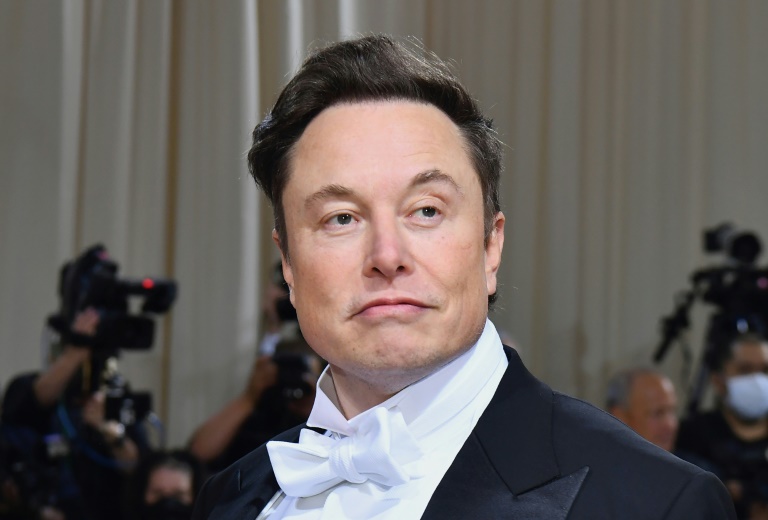
Elon Musk began Friday his first full day leading Twitter, with critics and fans anxious to see how the world’s richest man will run one of the most prominent social media platforms.

The mercurial Tesla chief tweeted, “let the good times roll,” his latest lighthearted gesture signaling his tumultuous, $44 billion bid to take Twitter private was finally done.

There was no trading on Twitter shares Friday after the New York Stock Exchange filed a delisting notice, informing US securities regulators that the merger between Twitter and X Holdings II, which is “wholly owned by Elon R. Musk became effective on October 27.”

Closure of the deal drew contrasting reactions, with former US president Donald Trump cheering the change of leadership on a platform that had banned him, while activists warned of a surge in harassment and misinformation.

European politicians were quick to signal to Musk that the continent had regulations for social media companies.

“In Europe, the bird will fly by our rules,” tweeted Thierry Breton, the EU internal market commissioner, in response to a Musk message early Friday that Twitter’s bird had been “freed,” in reference to the company’s logo.

Musk has vowed to dial back content moderation and was expected to clear the way for Trump to return to the platform.

The then-president was blocked over concerns he would ignite more violence like the 2021 deadly attack on the US Capitol to overturn his election loss.

Taking to his Truth Social platform, Trump said he was “very happy that Twitter is now in sane hands.”

Far-right users were quick to rejoice over the purchase on the network, posting comments such as “masks don’t work” and other taunts, under the belief that moderation rules would now be relaxed.

– ‘More careful’ –

Yale University philosophy professor Jason Stanley, who has characterized Trump’s rise as a sign of mounting fascism in the United States, said he would alter his approach to posting.

“For the moment I am staying on Twitter. But I am going to try to be much more careful about what I say now that Elon Musk is in charge. Cascading hate speech targeting can destroy your week.”

Right-wing political commentor Ben Shapiro said he gained 40,000 Twitter followers Friday, while the actor Mark Hamill, a liberal, said he had lost almost 6,000 followers over the last three days.

Among Musk’s first acts in power on Thursday were the reported firing of chief executive Parag Agrawal and other senior officials — though the company did not reply to AFP’s request for comment and Agrawal still listed himself as CEO on his Twitter profile.

But Ned Segal, Twitter’s chief financial officer since 2017, announced his departure early Friday, thanking ex-colleagues for the “most fulfilling” period of his career and wishing the website luck.

“At its best, (Twitter) democratizes communication and knowledge, ensuring accountability and equal distribution of info,” Segal said. “It’s a huge responsibility for everyone that shares in the work. I wish them strength, wisdom and foresight.”

Musk, who is using a combination of his own money, funds from wealthy investors and bank loans to finance the deal, has conceded he is overpaying for a company that has regularly posted eye-watering losses.

Twitter says it has 238 million daily users — dwarfed by the likes of Facebook’s nearly two billion — but has not been able to monetize in the same way as its rivals.

However, Twitter holds an outsized influence on public debate because it is the favored platform for many companies, politicians, journalists and other public figures.

Musk has expressed frustration at content moderation and critics fear his ownership will be seen as a greenlight for hate speech and misinformation.

Though he has vowed that Twitter will not become a “free-for-all hellscape,” Musk reportedly plans deep staff cuts that would gut teams that oversee content.

Media watchdog Media Matters for America sounded the alarm over the future of a Musk-led Twitter, particularly the impact on imminent elections.

The platform “is now on a glide path to becoming a supercharged engine of radicalization” and a “fever swamp of dangerous conspiracy theories, partisan chicanery, and operationalized harassment,” the organization’s head Angelo Carusone said in a statement.  

Musk is already the boss of car firm Tesla and rocket company SpaceX and it is not clear what his Twitter role might be, though unconfirmed reports suggested he might become interim CEO.

The closure of the deal marks the finale of a long back-and-forth between the billionaire and the social network that had culminated in a Twitter lawsuit seeking to hold Musk to the transaction.

Kenya charges police with crimes against humanity over 2017 violence

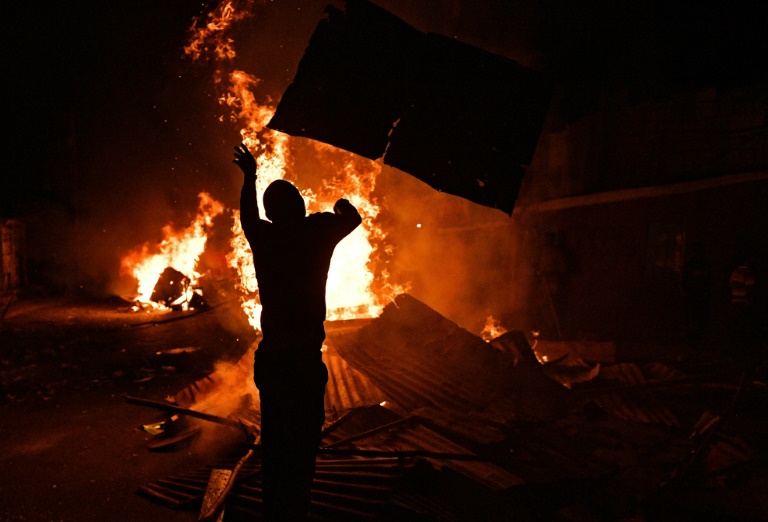
In a landmark decision, Kenyan prosecutors said on Friday they would charge police officers with crimes against humanity over a deadly crackdown on post-election protests in 2017.

The charges cover rape, murder and torture and include the case of a six-month-old baby girl whose death became a symbol of police brutality during the bloody election aftermath.

“This is the first case of crimes against humanity charged under Kenyan domestic law using the International Crimes Act and also the first criminal prosecution of electoral-related sexual violence,” the director of public prosecutions (DPP) Noordin Haji said.

An official at the prosecutor’s office said 12 mainly senior police officers were facing charges.

The police crackdown following the disputed presidential election in August 2017 saw dozens of people killed over a four-month period.

The Kenya National Commission on Human Rights documented 94 deaths during the crisis as well as 201 cases of sexual violence and over 300 injuries -– the majority of which were attributed to security forces.

“The attacks were planned, coordinated and not random,” the DPP statement said, saying various offences such as torture, rape and sexual violence “were committed by or under the authority of senior national police officers”.

The baby, Samantha Pendo, died after being beaten by police during a raid on her house as protests flared in the western city of Kisumu.

Officers fired tear gas into their house and battered down the door before raining blows on the couple with batons while the mother held Samantha in her arms. 

An autopsy had shown that Samantha had suffered acute head injuries, her scalp cracking as a result of brutal force by the police.

A Kenyan inquest in 2019 had found five police commanders liable for her death and although they were later convicted they have never served time behind bars.

Extra-judicial killings are rife in Kenya, and justice is rare with few examples of police being held to account.

– ‘Groundbreaking’ decision –

The new UN High Commissioner for Human Rights, Volker Turk, welcomed the Kenyan prosecutor’s “groundbreaking” decision, saying it was “an important advance towards accountability for gross human rights violations in Kenya.”

It “is a positive step towards justice and accountability for survivors and families of victims, including in the context of electoral violence, and can strengthen prevention of future violations,” Turk said in a statement. 

Haji said on Friday that several people had been subjected to untold incidents of pain and suffering during the protest suppression.

“The operation had a well-organised command structure with sector commanders and was executed according to a consistent pattern,” he said.

Kenyan police are often accused by rights groups of using excessive force and carrying out unlawful killings, especially in poor neighbourhoods.

They have also been accused in the past of running hit squads targeting those — including activists and lawyers — investigating alleged rights abuses by police.

Earlier this month, new President William Ruto disbanded a feared 20-year-old police unit accused of extrajudicial killings and vowed an overhaul of the security sector.

The 2017 protests erupted after victory was declared for then president Uhuru Kenyatta, angering supporters of his rival, the veteran opposition leader Raila Odinga.

The result was annulled by the Supreme Court after a challenge by Odinga, but he boycotted the rerun which was won by Kenyatta.

According to Missing Voices, a campaign group focused on extrajudicial killings in Kenya, there have been 1,264 deaths at the hands of police since it began collecting data in 2017.

Stock markets recover from tech results shock

Stock markets recovered Friday from the shock of disappointing earnings reports of giant tech firms that added to fears of a global recession according to traders.

The week has seen forecast-missing results from some of the world’s biggest firms including Apple, Amazon, Facebook parent Meta and Google parent Alphabet.

That has caused sharp share-price losses for some of the titans, in turn sending values tumbling for tech companies worldwide.

The tech-heavy Nasdaq Composite opened lower Friday, but quickly followed the Dow and S&P 500 higher.

“It has been a week of mostly disappointing results from US tech giants, putting significant pressure on the Nasdaq,” said market analyst Fawad Razaqzada at City Index and FOREX.com.

Amazon, which on Thursday predicted a slowdown in sales growth during the year-end holiday shopping season after reporting a drop in third quarter earnings, saw its shares slump around 10 percent as trading got under way on Friday, although it recovered some of that ground in morning trading.

Even if the Nasdaq moved higher, “there’s a good chance the tech-heavy index could fall again as we head towards the end of the week,” he added.

Most European markets also pulled higher. 

Investors have in fact been looking for data showing that the US Federal Reserve’s rate hikes are beginning to slow inflation and the economy, which they hope will convince policymakers to slow or pause further interest rate hikes. 

A 10 percent monthly drop in pending US home sales, a far bigger fall than expected, showed that higher interest rates are indeed having an impact on the housing market. 

But the latest inflation data showed prices and wages continuing to rise, and consumers also continuing to spend for the moment.

Patrick O’Hare at Briefing.com said the latest inflation figures “are unlikely to prompt the Fed to reconsider its aggressive rate hike plans.”

In foreign exchange Friday, the euro was back below parity against the dollar following official data Thursday showing the US economy rebounded in the third quarter.

Surprise figures Friday showing Europe’s biggest economy Germany had also expanded in the July-September period failed to push the euro above one dollar, where it stood earlier in the week for the first time since September.

Meanwhile, high inflation figures for Germany at 10.4 percent and Italy at 11.9 do not augur well for the European Central Bank letting up on its increases to interest rates.

Elsewhere, the yen was down against the dollar after Japan’s Prime Minister Fumio Kishida said the country would spend $260 billion on a stimulus package to cushion the weak economy.

The yen has plunged to 32-year lows versus the dollar in recent weeks as Japan’s central bank refuses to hike interest rates despite sky-high inflation, fuelled by soaring energy prices.

“The Japanese yen is once again the worst performer today after the Bank of Japan kept its monetary policy unchanged,” said market analyst Michael Hewson at CMC Markets.

– Key figures around 1530 GMT –

New York – Dow: UP 1.8 percent at 32,612.70 points

EURO STOXX 50: UP 0.2 percent at 3,613.02

London – FTSE 100: DOWN 0.4 percent at 7,047.67 (close) 

Frankfurt – DAX: UP 0.2 percent at 13,243.33 (close)

Paris – CAC 40: UP 0.5 percent at 6,273.05 (close)

Tokyo – Nikkei 225: DOWN 0.9 percent at 27,105.20 (close)

Hong Kong – Hang Seng Index: DOWN 3.7 percent at 14,863.06 (close)

Shanghai – Composite: DOWN 2.3 percent at 2,915.93 (close)

Euro/dollar: DOWN at $0.9947 from $0.9965 on Thursday

Pound/dollar: UP at $1.1591 from $1.1567 

Dollar/yen: UP at 147.51 yen from 146.27 yen

Euro/pound: DOWN at 85.79 pence from 86.11 pence

West Texas Intermediate: DOWN 1.5 percent at $87.71 per barrel

Brent North Sea crude: DOWN 1.5 percent at $95.50 per barrel

burs-rl/cdw

'Girl with a Pearl Earring' back on display in Dutch museum

Johannes Vermeer’s masterpiece “Girl with a Pearl Earring” was back on display at a museum in The Hague on Friday, a day after being targeted by climate activists.

Three men were arrested on Thursday after they glued themselves to the Dutch master’s famous 1665 painting at the city’s Mauritshuis museum during peak visiting hours.

“We are glad to say that at 3:30 pm (1330 GMT) the ‘Girl with a Pearl Earring’ was put back in her rightful spot in the Mauritshuis by members of our staff,” the museum said.

“We are incredibly grateful that The Girl remained undamaged and is back in her familiar place so quickly,” museum director Martine Gosselink added.

Vermeer’s work — which has inspired a best-selling novel and a Hollywood movie — was examined in the museum’s conservation studio and found to be undamaged, the museum added.

The climate activists, three Belgians in their forties, were arrested shortly after the incident, which stunned visitors and forced museum staff to cordon off the area.

Social media images showed a man wearing a “Just Stop Oil” T-shirt gluing his head to the glass protecting the canvas, while another glued his hand to the wall and a third emptied out a tin of what appeared to be tomato soup.

The climate activists said they had not intended to damage the painting, which Gosselink described as very vulnerable.

Just Stop Oil, which wants urgent action to stop global warming making the planet unliveable, explained on its website that it had begun using shock tactics targeting iconic works of art to make people think about what they considered precious and how to protect it.

“It enables a conversation,” the coalition of anti-fossil fuel groups said.

“There’s an apocalyptic, climate-driven famine in Somalia, which hasn’t pushed me to say anything. But I’m venting my anger now over a work of art in a gallery. Does any of this add up? What do I really value here?”

The stunt at the Mauritshuis comes after activists threw soup at Vincent van Gogh’s “Sunflowers” at the National Gallery in London on October 14 and smeared mashed potato over a Claude Monet painting in Germany. Both canvasses were protected by glass and were undamaged.

jhe/gil

At least 67 killed as storm lashes southern Philippines

Landslides and flooding in the southern Philippines killed at least 67 people on Friday, according to an official tally, with rescuers racing to save residents of a mountain village that was buried in mud.

The village of Kusiong accounted for many of the 50 deaths in the area around Datu Odin Sinsuat town, after heavy overnight rain unleashed floods mixed with mud, rocks and fallen trees that buried the community, the area’s civil defence office said in a statement.

Similar avalanches also struck villages in the nearby towns of Datu Blah Sinsuat and Upi, which accounted for 17 more deaths.

Eleven people remain missing and 31 were injured, according to official figures.

Flash floods from rains wrought by Tropical Storm Nalgae swamped nine mostly rural towns around Cotabato, a city of 300,000 people on Mindanao island that was also submerged in widespread flooding.

Many residents were caught by surprise as floodwaters rose rapidly before dawn, Naguib Sinarimbo, the spokesman and civil defence chief for the regional government, told AFP.

Teams in rubber boats had rescued residents from rooftops in some towns, Sinarimbo said.

In recent years, flash floods with mud and debris from largely deforested mountainsides have been among the deadliest hazards posed by typhoons in Philippine communities.

Mindanao is rarely hit by the 20 or so typhoons that strike the Philippines each year and kill hundreds of people. Those that do, however, tend to be deadlier than those that hit the country’s main island of Luzon.

A long mountain range walls off most of Luzon from the Pacific, where most storms are spawned, helping to absorb the blow, the state weather service said.

Local filmmaker Remar Pablo told AFP he was shooting a beauty pageant in Upi when the floodwaters suddenly came in after midnight and forced audience members to flee.

A row of cars sat half-submerged on the street outside, video footage showed.

“We were stranded inside,” said Pablo, who eventually waded through the water to get home.

Rescuers carried a baby in a plastic tub as they navigated chest-deep water, a photo posted by the provincial police showed.

– ‘It was a shock’ –

Floodwaters have receded in several areas, but Cotabato remained almost entirely waterlogged.

Sinarimbo said there could be more flooding over the next few hours because of heavy rain over mountains surrounding the Cotabato river basin.

The army deployed its trucks to collect stranded residents in Cotabato and nearby towns, provincial civil defence chief Nasrullah Imam said.

“It was a shock to see municipalities which had never flooded getting hit this time,” Imam said, adding that some families were swept away when the waters hit their homes.

The heavy rainfall began late Thursday in the impoverished region, which is under Muslim self-rule after decades of separatist armed rebellion.

The state weather office in Manila said the downpours were partly caused by Nalgae, which it expects to strengthen at landfall overnight Friday.

Nalgae headed northwest over water with maximum winds of 85 kilometres (53 miles) an hour just off Samar island late Friday and is forecast to track the Bicol peninsula early Saturday.

More than 7,000 people were evacuated from flood- and landslide-prone communities in these areas, the civil defence office said in an updated tally.

The coast guard also suspended ferry services in much of the archipelago nation, where tens of thousands of people board boats each day.

Scientists have warned that storms, which also kill livestock and destroy farms, houses, roads and bridges, are becoming more powerful as the world gets warmer because of climate change.

strs-cgm/aha

Nigeria beefs up security after US, UK 'terror' warning

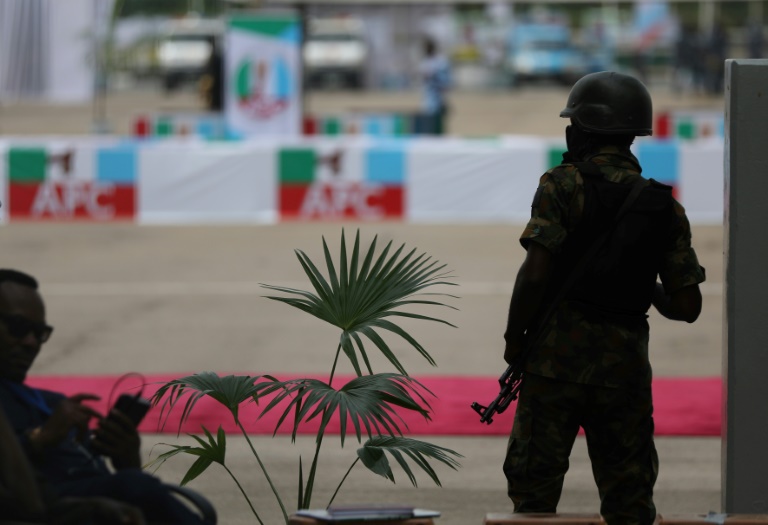
Nigeria on Friday said it had beefed up security and called for the public to be vigilant but calm after the United States and Britain warned of a high “terror” threat in the capital Abuja.

Without giving details on any specific threat, the US on Thursday ordered diplomats’ families to leave Abuja due to what it called a “heightened risk of terrorist attacks.”

Residents of the Federal Capital Territory (FCT) have been on high alert since Sunday, when several Western embassies changed their travel advisories citing an elevated risk of attack in Abuja.

Nigerian troops are fighting jihadist insurgents mostly in the northeast, though there are small cells in other parts of the country. 

Militants linked to the Islamic state group claimed several attacks near the capital in the past six months, including a mass jailbreak in July.

The incident in Kuje, in which more than 400 inmates including dozens of suspected jihadists escaped, had prompted Buhari to say he was “disappointed” with his intelligence services.

But since then, “security measures have been reinforced in and around the FCT,” a statement from President Muhammadu Buhari’s office said on Friday, citing “heightened monitoring and interception of terrorist communications.”

“Terror is a reality the world over. However, it does not mean an attack in Abuja is imminent,” it added.

The president said he gave his “assurances that the government is on top of the security situation.”

“Attacks are being foiled. Security agents are proactively rooting out threats to keep citizens safe –- much of their work unseen and necessarily confidential.”

While he ordered “additional precautionary measures be put in place,” Buhari said that “the recent changes in travel advice from the US and UK governments should not be a cause for panic.”

On Thursday, Nigerian police instructed “all strategic police managers in charge of commands and tactical formations within the country to beef up security in their respective jurisdictions, especially in the FCT.”

– Soft targets –

The Inspector General of Police Usman Alkali Baba said “all emergency numbers” should be activated to help insure “a 24/7 prompt response with combatant officers and men on standby.”

The statement came as the US State Department ordered the departure of diplomatic dependents from Abuja. 

It initially said in a statement on Thursday that non-emergency government employees and their families had been ordered to leave. On Friday, the State Department clarified that the order to evacuate applied to families and not employees, who had however been authorised but not ordered to go.

“Terrorists may attack with little or no warning,” targeting malls, markets, hotels, places of worship, restaurants, bars or schools, the State Department said in its country summary for Nigeria.

The United States, Britain, Australia and Canada had issued warnings last weekend, although the three latter countries had not ordered any evacuation of staff or their families as of Friday.

Separately, the US warned this week of a possible “terrorist” attack in South Africa’s largest city Johannesburg.

Some European embassies and international organisations have not updated their risk assessments or travel advisories for Nigeria.

“We have no crisis to manage, we are managing the panic,” a senior security manager with an international organisation based in Abuja told AFP, asking to remain anonymous.

“We don’t know what the motive is (behind the US evacuation). We are taking some precautionary measures/actions, but activities are normal,” he added.

On Thursday, Jabi Lake Mall, a major shopping centre in Abuja was temporarily shut down for unspecified security reasons.

Nigeria’s military is stretched thin, with soldiers deployed throughout most of the West African nation of some 200 million people.

The last time a jihadist group — Boko Haram — attacked the city centre was in 2014.

In addition to the ongoing terrorism threat, the capital is also surrounded by states with rampant banditry — gangs of gunmen who kidnap and kill with no ideological motivation.

Analysts have warned that insecurity could worsen with the start of political campaigning for the general election to replace Buhari next year.

Kenya charges police with crimes against humanity over 2017 violence

In a landmark decision, Kenyan prosecutors said on Friday they would charge police officers with crimes against humanity over a deadly crackdown on post-election protests in 2017.

The charges cover rape, murder and torture and include the case of a six-month-old baby girl whose death became a symbol of police brutality during the bloody election aftermath.

“This is the first case of crimes against humanity charged under Kenyan domestic law using the International Crimes Act and also the first criminal prosecution of electoral-related sexual violence,” the director of public prosecutions (DPP) Noordin Haji said, without disclosing the numbers of police being charged.

The police crackdown following the disputed presidential election in August 2017 saw dozens of people killed over a four-month period.

The Kenya National Commission on Human Rights documented 94 deaths during the crisis as well as 201 cases of sexual violence and over 300 injuries -– the majority of which were attributed to security forces.

“The attacks were planned, coordinated and not random,” the DPP statement said, saying various offences such as torture, rape and sexual violence “were committed by or under the authority of senior national police officers”.

The baby, Samantha Pendo, died after being beaten by police during a raid on her house as protests flared in the western city of Kisumu.

Extra-judicial killings are rife in Kenya, and justice is rare with few examples of police being held to account.

– ‘Groundbreaking’ decision –

The new UN High Commissioner for Human Rights, Volker Turk, welcomed the “groundbreaking” decision, saying it was “an important advance towards accountability for gross human rights violations in Kenya.”

The move “is a positive step towards justice and accountability for survivors and families of victims, including in the context of electoral violence, and can strengthen prevention of future violations,” Turk said in a statement. 

A Kenyan inquest in 2019 had found five police commanders liable for Pendo’s death.

Kenyan police are often accused by rights groups of using excessive force and carrying out unlawful killings, especially in poor neighbourhoods.

They have also been accused in the past of running hit squads targeting those — including activists and lawyers — investigating alleged rights abuses by police.

The 2017 protests erupted after victory was declared for then president Uhuru Kenyatta, angering supporters of his rival, the veteran opposition leader Raila Odinga.

The result was annulled by the Supreme Court after a challenge by Odinga, but he boycotted the rerun which was won by Kenyatta.

According to Missing Voices, a campaign group focused on extrajudicial killings in Kenya, there have been 1,264 deaths at the hands of police since it began collecting data in 2017.

Stock markets recover from tech results shock

Stock markets recovered Friday from the shock of disappointing earnings reports of giant tech firms that added to fears of a global recession according to traders.

The week has seen forecast-missing results from some of the world’s biggest firms including Apple, Amazon, Facebook parent Meta and Google parent Alphabet.

That has caused sharp share-price losses for some of the titans, in turn sending values tumbling for tech companies worldwide.

The tech-heavy Nasdaq Composite opened lower Friday, but quickly followed the Dow and S&P 500 higher.

“It has been a week of mostly disappointing results from US tech giants, putting significant pressure on the Nasdaq,” said market analyst Fawad Razaqzada at City Index and FOREX.com.

Amazon, which on Thursday predicted a slowdown in sales growth during the year-end holiday shopping season after reporting a drop in third quarter earnings, saw its shares slump around 10 percent as trading got under way on Friday.

Even if the Nasdaq moved higher, “there’s a good chance the tech-heavy index could fall again as we head towards the end of the week,” he added.

Most European markets also pulled higher in the half hour after Wall Street began trading.

Investors have in fact been looking for data showing that the US Federal Reserve’s rate hikes are beginning to slow inflation and the economy, which they hope will convince policymakers to slow or pause further interest rate hikes. 

Meanwhile, the latest batch of US economic data showed prices and wages continuing to rise, and consumers also continuing to spend for the moment.

Patrick O’Hare at Briefing.com said the latest figures “are unlikely to prompt the Fed to reconsider its aggressive rate hike plans.”

In foreign exchange Friday, the euro was back below parity against the dollar following official data showing the US economy rebounded in the third quarter.

Surprise figures showing Europe’s biggest economy Germany had also expanded in the July-September period failed to push the euro above one dollar, where it stood earlier in the week for the first time since September.

Elsewhere, the yen was down against the dollar after Japan’s Prime Minister Fumio Kishida said the country would spend $260 billion on a stimulus package to cushion the weak economy.

The yen has plunged to 32-year lows versus the dollar in recent weeks as Japan’s central bank refuses to hike interest rates despite sky-high inflation, fuelled by soaring energy prices.

ExxonMobil on Friday reported a surge in third-quarter earnings on high oil and natural gas prices.

The US oil giant became the latest petroleum heavyweight to report stunning quarterly figures, with year-on-year profits nearly tripling to $19.7 billion on revenue soaring to $112 billion.

The company’s share price dipped 0.2 percent at the start of trading.

Shares in Twitter were removed from trading on the NY stock exchange after Elon Musk completed a mega takeover of the social media giant, with critics and fans anxious to see how the planet’s richest man runs one of the world’s leading social media platforms.

– Key figures around 1330 GMT –

London – FTSE 100: DOWN 0.5 percent at 7,040.28 points

Frankfurt – DAX: DOWN 0.4 percent at 13,160.37

Paris – CAC 40: UP less than 0.1 percent at 6,247.60

EURO STOXX 50: DOWN 0.3 percent at 3,594.15

New York – Dow: UP 0.5 percent at 32,202.82

Tokyo – Nikkei 225: DOWN 0.9 percent at 27,105.20 (close)

Hong Kong – Hang Seng Index: DOWN 3.7 percent at 14,863.06 (close)

Shanghai – Composite: DOWN 2.3 percent at 2,915.93 (close)

Euro/dollar: UP at $0.9970 from $0.9965 on Thursday

Pound/dollar: DOWN at $1.1550 from $1.1567 

Dollar/yen: UP at 147.65 yen from 146.27 yen

Euro/pound: UP at 86.30 pence from 86.11 pence

West Texas Intermediate: DOWN 1.0 percent at $88.20 per barrel

Brent North Sea crude: DOWN 0.9 percent at $96.11 per barrel

burs-rl/cdw

Take your pick: Aye-aye joins ranks of snot-eaters

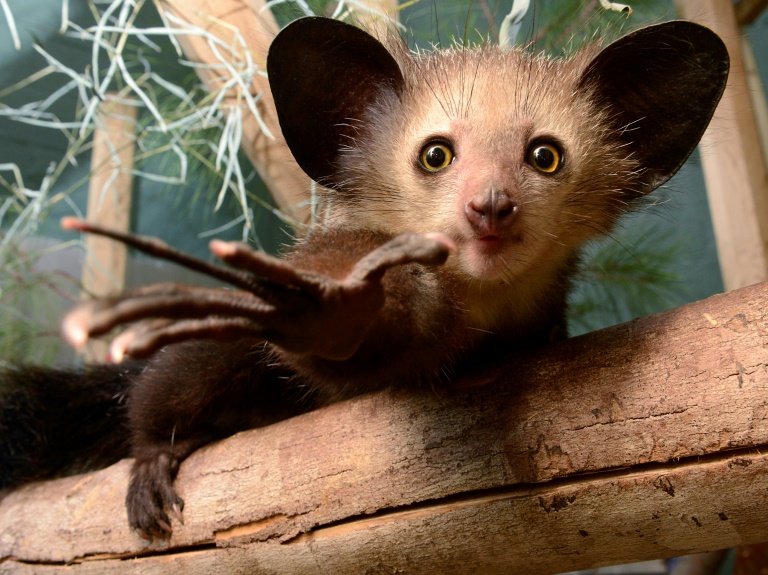
When scientists caught the aye-aye on video using its strangely thin, eight-centimetre-long middle finger to deeply pick its nose, it pointed towards a larger mystery: why exactly do some animals eat their own snot?

The footage resulted in research which names the aye-aye, a peculiar nocturnal lemur with big ears found only in Madagascar, as the 12th primate who picks their nose. 

It joins an illustrious group that includes gorillas, chimpanzees, macaques — and of course humans.

Anne-Claire Fabre, an assistant professor at Switzerland’s University of Bern and lead author of a study published in the journal Zoology this week, told AFP that the researchers stumbled on the discovery “by chance”.

She said they were “surprised” by the behaviour of a female aye-aye named Kali, who was being filmed at the Duke Lemur Center in North Carolina in 2015.

In the video, “the aye-aye inserts the entire length of its extra-long, skinny and highly mobile middle finger into the nasal passages and then licks the nasal mucus collected”, the peer-reviewed study said.

“This video brings the number of species known to pick their nose to twelve,” it said, adding that they all have “fine manipulative skills”.

The middle fingers of aye-ayes are not only long and thin, but also have a unique ball and socket joint they use to knock on wood to locate grubs.

After seeing the video, “the first thing I was wondered is where this finger is going”, said Fabre, who is also an associate scientist at London’s Natural History Museum.

So the researchers used a CT scan of an aye-aye’s skull to reconstruct the finger’s journey, finding it probably went down the throat.

“There is no other possibility. Otherwise it would have gone into the brain and then they die,” Fabre said.

The researchers compared the finger’s probing to a very deep Covid test.

– ‘Gross’ – 

But finding out exactly why aye-ayes — or other primates — pick their noses proved a more difficult task.

The scientists reviewed the existing literature and found that “most of it was jokes”, Fabre said.

They did find one study which suggested that nose-picking could spread bacteria in a harmful manner. 

Another said that eating snot could stop bacteria from sticking to teeth, so it might be good for oral health.

So why is there so little research on nose picking?

“I think it’s just something that people didn’t think about because it’s considered to be gross,” Fabre said. However she added that lots of research has been done about coprophagia — animals eating their own excrement — which could also be considered gross.

The aye-aye, the world’s largest nocturnal primate, is highly endangered — in part because it is seen as a bad omen in its native Madagascar, she said.

The Amazon: a burning question absent in Brazil vote

Felipe Guimaraes leaps on and off a surfboard on the sand as he shows tourists the basics of surfing. Here, on Rio de Janeiro’s Ipanema beach, the stricken Amazon could not feel further away.

In Western capitals, the plight of the world’s largest rainforest is seen as a key issue in Brazil’s election, with much at stake for a world scrambling to curb the climate emergency.

However, fires and deforestation have taken a back seat in a dirty and divisive election campaign, and many Brazilians have bigger concerns beyond those happening in a vast area thousands of miles away.

“I dunno man, it’s so far away, but it’s obvious it is important and good to take care of” the Amazon, says bare-chested surf instructor Guimaraes, 27, adding there are more “visible issues” than the rainforest.

Many Brazilians list the economy, crime, education, and corruption as their top worries.

“The country has enormous social inequality, we are recovering from a pandemic. Today, some Brazilians are only worried about surviving one more day. Having a job, having food on the table, access to a doctor,” Daniel Costa Matos, 38, an IT analyst from the capital Brasilia, told AFP.

While he thinks the Amazon is “of extreme importance,” his biggest worry is corruption.

“The climate crisis, the problem of deforestation in the Amazon, is still far from the reality of many Brazilians,” said 36-year-old climate activist Giovanna Nader, who uses her podcast and Instagram account to sound the environmental alarm.

“We need to educate, educate, educate.”

– ‘Sometimes we feel alone’ –

For Brazil’s Indigenous community, the fight can often seem lonely, even after four years raising the alarm about violent, environmentally harmful policies they say have occurred under far-right President Jair Bolsonaro.

Most Brazilians never visit the rainforest. The capital of Amazonas, Manaus, is some 2,800 kilometers (1,739 miles) from Rio de Janeiro.

It is about the same distance between Paris and Moscow.

“What worries us a lot is that the vision of Brazilians on environmental protection … is very superficial,” says Dinamam Tuxa, executive coordinator of the Association of Brazil’s Indigenous Peoples (APIB).

“Sometimes we feel alone, that we are fighting such a powerful force that are the big corporations exploiting our territories, and that there is no engagement among the Brazilian population.”

– Personal attacks and disinformation –

Fires and deforestation are not new problems in the Amazon. However, the destruction has increased 75 percent under Bolsonaro compared to the previous decade. 

His rival, former president Luiz Inacio Lula da Silva, who also grappled with the problem, only briefly touched on the rainforest on the campaign trail, mainly when drumming up votes in the Amazon itself.

However, it has been largely absent from an election campaign marked by disinformation and extreme polarization.

“It has become a political campaign of a lot of personal attacks between the two candidates. So, I think we are seeing more a focus on … fake news than the Amazon for example,” said Karla Koehler, a 35-year-old artist sunning herself on Ipanema beach.

“I think this is a very specific election… It is about political survival” and “maintaining basic democratic rights.”

Bolsonaro’s detractors see him as a threat to democracy and the country’s future, after a term marked by Covid carnage, attacks on the judiciary and media, and warnings he would not accept an election loss.

Lula, meanwhile, is still associated by many with a massive corruption scandal that saw him jailed for 18 months before the charges were annulled on procedural grounds, without exonerating him.

Latin America’s largest country has more than 33 million people living in hunger, according to the Brazilian Network for Research on Food Security. Some 11 million people cannot read or write, according to government statistics.

The country also has one of the highest crime rates in the world, with 47,503 murders in 2021, a figure that was nevertheless the lowest recorded in a decade, according to the Brazil Forum for Public Security.

“The challenge is getting people and their leaders to understand that the environmental agenda is directly linked to factors such as hunger, housing, crime, and the economic crisis,” said Marcio Astrini, the executive secretary of the Climate Observatory, a coalition of environmental groups.

Close Bitnami banner
Bitnami