World

Recession fears stalk Europe despite surprise German growth

Germany’s economy unexpectedly grew in the third quarter, official data showed Friday, but slowing growth in France and Spain added to fears that high inflation and an energy crisis will tip the region into recession.

Europeans are bracing for a difficult winter as Russia crimps gas supplies in the wake of the Ukraine war, raising the spectre of energy shortages and worsening a cost-of-living squeeze for millions.

Despite the gloomy outlook, Germany surprised analysts by posting growth of 0.3 percent quarter-on-quarter, driven mainly by consumer spending.

France and Spain meanwhile reported 0.2 percent growth each from July to September, a sharp slowdown however from the 0.5 and 1.5 percent expansion they saw in the previous quarter.

“The German economy managed to hold its ground despite… the continuing Covid-19 pandemic, supply chain interruptions, rising prices and the war in Ukraine,” federal statistics agency Destatis said about the preliminary data.

Germany narrowly eked out 0.1 percent growth in the second quarter, and analyst had predicted that Europe’s biggest economy would shrink by 0.2 percent in the third quarter.

But economists warned that Friday’s data merely provided a brief respite and that a downturn was coming, as Russia’s war in Ukraine sends food and especially energy costs surging.

Consumer price growth in the 19-nation eurozone jumped to a record 9.9 percent in September, further depressing household income and raising costs for companies.

“Today’s positive growth data is a welcome surprise. However, it does not mean that the German economy will be able to prevent a recession,” said ING economist Carsten Brzeski.

“The recession is only delayed, not cancelled.”

– ‘Last hurrah’ –

Germany, whose energy-hungry industries play a vital role in its export prowess, relied heavily on Russian gas before the war and it has been hit harder than other EU nations by Moscow’s cuts.

The German government expects the economy to shrink by 0.4 percent in 2023.

Adding to the country’s woes, Destatis on Friday said Germany’s annual inflation rate had climbed again to hit 10.4 percent in October, beating September’s high of 10 percent.

The country’s largest union IG Metall called on workers in the metal and electronics industry to strike from Saturday in a push for an eight-percent wage hike as inflation erodes their salaries.

In France, the EU’s second-largest economy, strong business investment helped to keep momentum going but the post-lockdown boost in the services sector was fading, analysts said.

Anaemic French growth in the third quarter might be “the last hurrah before the recession,” said Maxime Darmet, an economist at Allianz Trade.

And with consumer prices in France soaring to 6.2 percent this month to their highest level since 1985, households “will feel severely the fall in their purchasing power,” Darmet said.

French President Emmanuel Macron recently promised to support households through the difficult times in a rare TV interview, after the country was hobbled by weeks of strikes over pay by workers at oil refineries and fuel depots.

In Spain, the slowing growth was largely down to poor performance in the real estate sector, where activity contracted by 2.5 percent, and a drop in exports and business investment.

Only a strong tourism season and robust domestic demand spared the country from a contraction, said ING economist Wouter Thierie.

Austria’s economy, meanwhile, contracted by 0.1 percent in the third quarter, according to the Austrian Institute of Economic Research (WIFO).

But with many of the country’s indicators flashing red, “we forecast a mild recession for the Spanish economy in the next two quarters,” he said.

The European Central Bank on Thursday rolled out another bumper interest rate hike to combat inflation but acknowledged that higher borrowing costs would deepen the economic pain.

The likelihood of a eurozone recession was “looming much more on the horizon,” ECB chief Christine Lagarde said.
Recession fears stalk Europe despite surprise German growth

Germany’s economy unexpectedly grew in the third quarter, official data showed Friday, but slowing growth in France and Spain added to fears that high inflation and an energy crisis will tip the region into recession.

Europeans are bracing for a difficult winter as Russia crimps gas supplies in the wake of the Ukraine war, raising the spectre of energy shortages and worsening a cost-of-living squeeze for millions.

Despite the gloomy outlook, Germany surprised analysts by posting growth of 0.3 percent quarter-on-quarter, driven mainly by consumer spending.

France and Spain meanwhile reported 0.2 percent growth each from July to September, a sharp slowdown however from the 0.5 and 1.5 percent expansion they saw in the previous quarter.

“The German economy managed to hold its ground despite… the continuing Covid-19 pandemic, supply chain interruptions, rising prices and the war in Ukraine,” federal statistics agency Destatis said about the preliminary data.

Germany narrowly eked out 0.1 percent growth in the second quarter, and analyst had predicted that Europe’s biggest economy would shrink by 0.2 percent in the third quarter.

But economists warned that Friday’s data merely provided a brief respite and that a downturn was coming, as Russia’s war in Ukraine sends food and especially energy costs surging.

Consumer price growth in the 19-nation eurozone jumped to a record 9.9 percent in September, further depressing household income and raising costs for companies.

“Today’s positive growth data is a welcome surprise. However, it does not mean that the German economy will be able to prevent a recession,” said ING economist Carsten Brzeski.

“The recession is only delayed, not cancelled.”

– ‘Last hurrah’ –

Germany, whose energy-hungry industries play a vital role in its export prowess, relied heavily on Russian gas before the war and it has been hit harder than other EU nations by Moscow’s cuts.

The German government expects the economy to shrink by 0.4 percent in 2023.

Adding to the country’s woes, Destatis on Friday said Germany’s annual inflation rate had climbed again to hit 10.4 percent in October, beating September’s high of 10 percent.

The country’s largest union IG Metall called on workers in the metal and electronics industry to strike from Saturday in a push for an eight-percent wage hike as inflation erodes their salaries.

In France, the EU’s second-largest economy, strong business investment helped to keep momentum going but the post-lockdown boost in the services sector was fading, analysts said.

Anaemic French growth in the third quarter might be “the last hurrah before the recession,” said Maxime Darmet, an economist at Allianz Trade.

And with consumer prices in France soaring to 6.2 percent this month to their highest level since 1985, households “will feel severely the fall in their purchasing power,” Darmet said.

French President Emmanuel Macron recently promised to support households through the difficult times in a rare TV interview, after the country was hobbled by weeks of strikes over pay by workers at oil refineries and fuel depots.

In Spain, the slowing growth was largely down to poor performance in the real estate sector, where activity contracted by 2.5 percent, and a drop in exports and business investment.

Only a strong tourism season and robust domestic demand spared the country from a contraction, said ING economist Wouter Thierie.

Austria’s economy, meanwhile, contracted by 0.1 percent in the third quarter, according to the Austrian Institute of Economic Research (WIFO).

But with many of the country’s indicators flashing red, “we forecast a mild recession for the Spanish economy in the next two quarters,” he said.

The European Central Bank on Thursday rolled out another bumper interest rate hike to combat inflation but acknowledged that higher borrowing costs would deepen the economic pain.

The likelihood of a eurozone recession was “looming much more on the horizon,” ECB chief Christine Lagarde said.
Dissident Russian writer vows to keep speaking out

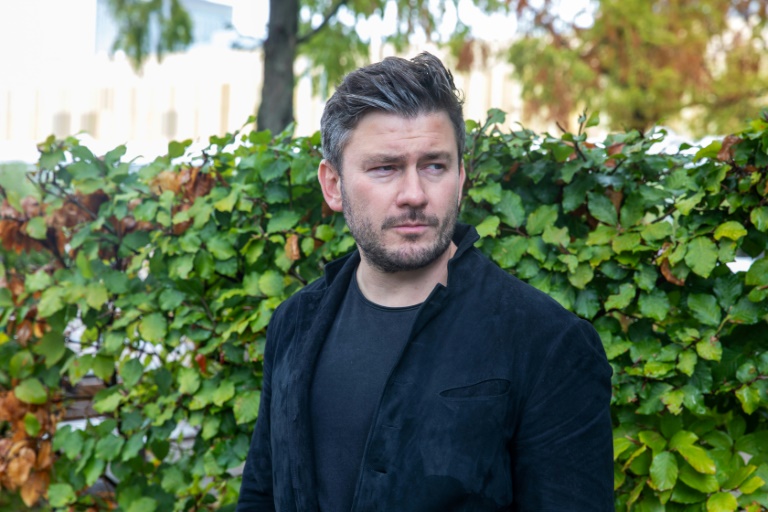
Dissident Russian writer Dmitry Glukhovsky insists he will not stop speaking out against Moscow, despite facing years in jail after being charged over criticism of the war in Ukraine.

The author of the popular dystopian novel “Metro 2033”, set in the ruins of the Moscow metro system following a nuclear war, has been in the crosshairs of the authorities for months. 

Even in the centre of the European Union, where he was attending the Frankfurt Book Fair, Glukhovsky admitted that he did not feel safe.

But the 43-year-old — who says he lives in Europe, but declines to specify where — told AFP that he will continue to voice criticism when he deems it necessary. 

“When something outrageous has happened in Russia, I have to comment on it,” said the author, who had security guards accompanying him at some of his talks at the fair. 

Glukhovsky, who has spoken out against Moscow’s invasion in social media posts and opinion pieces for Western media, said the way he was being targeted would have been “unthinkable” a few years ago. 

“The regime is transforming itself into a real dictatorship. Even one voice against (it) is already a danger,” said Glukhovsky, whose other works include “Tales From the Motherland”, a collection of political satire, and “Text”.

“When the regime was authoritarian, it was way more flexible.”

– ‘Absurd, grotesque’ –

Glukhovsky has been caught in a widening crackdown against dissent, launched in the wake of Russia’s invasion of Ukraine.

Authorities have introduced a law that imposes hefty jail terms for publishing information about the military which are deemed false by the government.

In June, a Russian court ordered his arrest in absentia. He says that he has been accused of discrediting the Russian military, and acting out of political hatred towards Russian President Vladimir Putin.

The author and former journalist says he now faces up to 15 years in jail if he returns home and is convicted, as well as a hefty fine.

Earlier this month — after he criticised Russia’s partial mobilisation to support the faltering efforts of its military — Moscow labelled the author a “foreign agent”.

The term, reminiscent of the “enemy of the people” of the Soviet era, has been used extensively against opponents, journalists and human rights activists accused of conducting foreign-funded political activities. 

“Reality is turning absurd and grotesque way faster than we could have imagined,” said Glukhovsky at the annual book fair, the world’s biggest publishing event, which wrapped up at the weekend. 

Rather than a “foreign agent”, the writer sees himself as a “patriot”.

Glukhovsky said he just wants Russia to “become a normal European country, leave its old imperial ambitions behind, and modernise, (to) just stop oppressing its own people and causing trouble to the neighbours”.

“That, I think, is the most patriotic thing that you can come up with,” he added.

– ‘Based on lies’ –

As for the recent legal moves, Glukhovsky concedes they have made him more “watchful” for potential threats, even when outside Russia.

“You can’t really feel safe,” he said, pointing to the poisoning in Britain of dissident Alexander Litvinenko which London blames on Moscow.

“The rules that were applicable up until now, are not applicable any longer.”

The author sees no prospect of returning to Moscow in the near future, fearing he will be arrested as soon as he arrives.

And even if he does go back, Glukhovsky believes a great deal will have changed as Russia undergoes a radical transformation.

“I will not find the country I love,” he said.

And while Putin’s hold on power appears unassailable, Glukhovsky says it will not go on forever — and urges people to hang on “until this rotten, fake dictatorship crumbles”.

“And it will crumble, inevitably,” he said. “Because it’s based on lies.”

Twitter: Influential network with a relatively limited audience

Purchased by Elon Musk for $44 billion, Twitter is popular with politicians, journalists and celebrities, but the social media giant draws a smaller user base than some competitors, including Facebook. 

– Less than Facebook –

At the end of the second quarter, Twitter counted nearly 238 million daily active users on the platform — a figure overshadowed by the some 1.98 billion claimed by Facebook. 

Adding Instagram, WhatsApp and Messenger, Facebook-parent Meta nears some three billion daily users. 

Twitter is also surpassed by platforms like Pinterest, with 445 billion monthly users, and Snapchat, with 363 million daily users.

TikTok, owned by the unlisted Chinese group ByteDance, does not disclose its user numbers. 

In September 2021, however, the short video app said it had passed the one billion user mark worldwide.

– Obama, Bieber… and Musk –

Former US president Barack Obama has the most popular account on Twitter, with 133.5 million followers.

He is ahead of Canadian singer Justin Bieber, who has 113.8 million followers. 

Musk, boss of Tesla and founder of SpaceX, and now the owner of Twitter, completes the podium with 110.6 million followers. 

US singer Katy Perry is the most followed woman on the network, with 108.9 followers. 

Donald Trump had some 89 million followers before he was banned from the platform shortly after the January 6, 2021, assault on the US capital led by his supporters.

He faced accusations he had used social media to incite his followers to use force in a bid to overturn the result of the 2020 US presidential election.

Musk has hinted that his account could be reactivated.

– Limited growth –

Financially speaking, Twitter is not in the same league as its big rivals either.

The California-based group had revenues of $1.2 billion from April to June, down one percent year-over-year and nearly 25 times lower than Meta.

It also fell into the red with a net loss of $270 million.

According to the Washington Post, Musk plans to eventually lay off almost 75 percent of Twitter’s 7,500 employees.

Twitter’s second quarter results could be the last to be made public.

Musk has said he wants to delist the company from the New York Stock Exchange, which would put an end to its obligation to disclose information about its financial health to the public.

Spain prosecutors drop charges against Neymar and others

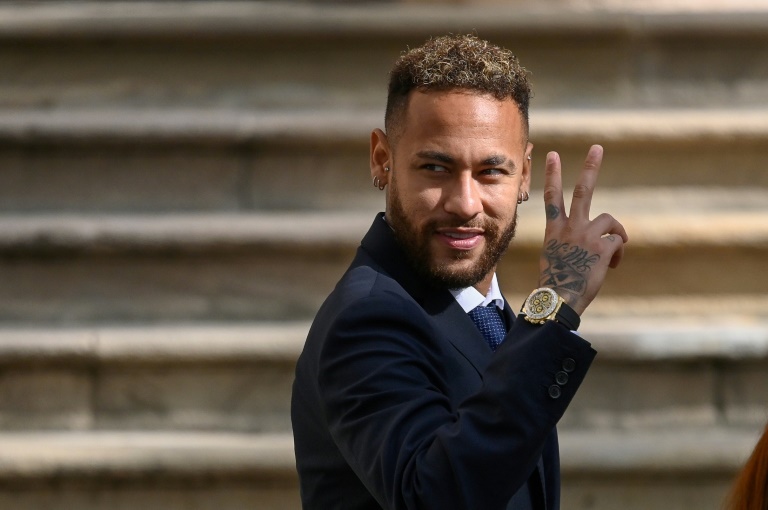
Prosecutors in Spain on Friday dropped corruption and fraud charges against football star Neymar and others accused in a trial over the Brazilian’s 2013 move from Santos to Barcelona.

In a dramatic move, the prosecutor announced the “withdrawal of the charges against all the accused and for all the allegations” they had faced.

Neymar, 30, had said he did not remember if he took part in the negotiations which led to an agreement sealed in 2011 with Barcelona over his transfer two years later to the Spanish side from Brazilian club Santos.

Spanish prosecutors had sought a two-year prison term for Neymar, a key member of the Brazil team that will be heading to the World Cup in Qatar next month, and the payment of a 10-million-euro ($9.7-million) fine. 

The dropping of the charges is the culmination of a years-long legal saga over Neymar’s high-profile transfer to Europe.

He then joined Qatar-owned Paris Saint-Germain in a world record 222-million-euro transfer in 2017.

Neymar had been one of nine defendants on trial on corruption-related charges, among them his parents and their N&N company, which manages his affairs.

Even if he had been convicted, prison terms of two years or less are never enforced in Spain for a first-time offender.

Investigators began probing the transfer to Barcelona after a 2015 complaint filed by DIS, a Brazilian company that owned 40 percent of the player’s sporting rights when he was at Santos, the club where he rose to global prominence.

The firm claims that Neymar, Barcelona and the Brazilian club colluded to mask the true cost of his transfer thereby defrauding it of its legitimate financial interests. 

Barca said the transfer was valued at 57.1 million euros, with 40 million euros paid to N&N and 17.1 million to Santos, of which 6.8 million was given to DIS.

Spanish prosecutors believe the actual value was at least 83 million euros.

DIS is seeking to recover 35 million euros.

– ‘I sign what I’m told to’ –

Neymar gave evidence earlier this month, telling the court he had done nothing illegal and that he only signed documents his father gave him.

“My father has always been in charge” of contract negotiations, he said. “I sign what he tells me to.”

DIS also claims financial harm from the 2011 pre-contract agreement with Barca, claiming it had impeded other clubs from making offers and affected the value of the transfer fee.

But the player’s father, Neymar Sr, told the court the talks had been authorised by the Brazilian club at the time and that “it was Santos’ responsibility” to inform DIS, and not his. 

Apart from Neymar, his father and his mother Nadine Goncalves, two former Barca presidents, Sandro Rosell and Josep Maria Bartomeu, and ex-Santos boss Odilio Rodrigues Filho are among the defendants.

Neymar’s lawyers insist their client is innocent, saying the 40-million-euro payment from Barca was a “legal signing bonus which is normal in the football transfer market”.

Neymar is having one of his best seasons since he joined PSG and is expected to play a key role for Brazil at the World Cup in Qatar.

He has scored nine league goals in 11 matches and made seven assists.

He is expected to lead the Selecao into their World Cup Group G opener against Serbia on November 24 as the South American giants begin their quest to win the trophy for the first time since 2002, and the sixth in total.

At least 42 killed as storm lashes southern Philippines

Landslides and flooding killed at least 42 people as heavy rain from an approaching storm lashed the southern Philippines, a disaster official said Friday.

The storm unleashed flash floods carrying uprooted trees, rocks and mud overnight in nine mostly rural towns around Cotabato, a city of 300,000 people on Mindanao island.

Many residents were caught by surprise as floodwaters rose rapidly before dawn, Naguib Sinarimbo, the spokesman and civil defence chief for the regional government, told AFP.

Sinarimbo said 27 died in the town of Datu Odin Sinsuat, including 11 from a mountain village buried in mud, while 10 died in Datu Blah Sinsuat town and five were killed in Upi town.

Teams in rubber boats had rescued residents from rooftops in some towns, Sinarimbo said, adding that 16 people were missing in the region.

In recent years, flash floods with mud and debris from largely deforested mountainsides have been among the deadliest hazards posed by typhoons on Philippine communities.

Mindanao is rarely hit by the 20 or so typhoons that strike the Philippines each year and kill hundreds of people. But those that do tend to be deadlier than those that hit Luzon, the main island.

A long mountain range walls off most of Luzon from the Pacific, where most storms are spawned, helping to absorb the blow, the state weather service said.

Local filmmaker Remar Pablo told AFP he was shooting a beauty pageant in Upi when the floodwaters suddenly came in after midnight and forced audience members to flee.

A row of cars sat half-submerged on the street outside, his clips showed.

“We were stranded inside,” said Pablo, who eventually waded through the water to get home.

Rescuers carried a baby in a plastic tub as they navigated chest-deep water, a photo posted by the provincial police showed.

– ‘It was a shock’ –

Floodwaters have receded in several areas, but Cotabato remained almost entirely waterlogged.

Sinarimbo said there could be more flooding over the next few hours because of heavy rain over mountains surrounding the Cotabato river basin.

“Our focus at this time is rescue as well as setting up community kitchens for the survivors,” he said.

The army deployed its trucks to collect stranded residents in Cotabato and nearby towns, provincial civil defence chief Nasrullah Imam said.

“It was a shock to see municipalities which had never flooded getting hit this time,” Imam said, adding that some families were swept away when the waters hit their homes.

The heavy rainfall began late Thursday in the impoverished region, which is under Muslim self-rule after decades of separatist armed rebellion.

The state weather office in Manila said the downpours were partly caused by Tropical Storm Nalgae, which it expects to strengthen at landfall overnight Friday.

Nalgae was heading northwest with maximum winds of 85 kilometres (53 miles) an hour and could hit Samar island late Friday or the Bicol peninsula on the southern tip of Luzon early Saturday.

Nearly 5,000 people were evacuated from flood- and landslide-prone communities in these areas, the civil defence office said.

The coast guard also suspended ferry services in much of the archipelago nation where tens of thousands of people board boats each day.

Scientists have warned that storms, which also kill livestock and destroy farms, houses, roads and bridges, are becoming more powerful as the world gets warmer because of climate change.

strs-cgm/dva

Take your pick: Aye-aye joins ranks of snot-eaters

When scientists caught the aye-aye on video using its strangely thin, eight-centimetre-long middle finger to deeply pick its nose, it pointed towards a larger mystery: why exactly do some animals eat their own snot?

The footage resulted in research which names the aye-aye, a peculiar nocturnal lemur with big ears found only in Madagascar, as the 12th primate who picks their nose. 

It joins an illustrious group that includes gorillas, chimpanzees, macaques — and of course humans.

Anne-Claire Fabre, an assistant professor at Switzerland’s University of Bern and lead author of a study published in the journal Zoology this week, told AFP that the researchers stumbled on the discovery “by chance”.

She said they was “surprised” by the behaviour of a female aye-aye named Kali, who was being filmed at the Duke Lemur Center in North Carolina in 2015.

In the video, “the aye-aye inserts the entire length of its extra-long, skinny and highly mobile middle finger into the nasal passages and then licks the nasal mucus collected”, the peer-reviewed study said.

“This video brings the number of species known to pick their nose to twelve,” it said, adding that they all have “fine manipulative skills”.

The middle fingers of aye-ayes are not only long and thin, but also have a unique ball and socket joint they use to knock on wood to locate grubs.

After seeing the video, “the first thing I was wondered is where this finger is going”, said Fabre, who is also an associate scientist at London’s Natural History Museum.

So the researchers used a CT scan of an aye-aye’s skull to reconstruct the finger’s journey, finding it probably went down the throat.

“There is no other possibility. Otherwise it would have gone into the brain and then they die,” Fabre said.

The researchers compared the finger’s probing to a very deep Covid test.

– ‘Gross’ – 

But finding out exactly why aye-ayes — or other primates — pick their noses proved a more difficult task.

The scientists reviewed the existing literature and found that “most of it was jokes”, Fabre said.

They did find one study which suggested that nose-picking could spread bacteria in a harmful manner. 

Another said that eating snot could stop bacteria from sticking to teeth, so it might be good for oral health.

So why is there so little research on nose picking?

“I think it’s just something that people didn’t think about because it’s considered to be gross,” Fabre said. However she added that lots of research has been done about coprophagia — animals eating their own excrement — which could also be considered gross.

The aye-aye, the world’s largest nocturnal primate, is highly endangered — in part because it is seen as a bad omen in its native Madagascar, she said.

Volkswagen says China recovery accelerating

Auto giant Volkswagen said Friday its recovery in China was accelerating, but sounded a note of caution on geopolitical risks as concerns grow over German dependence on the Asian giant.

The German group, whose brands also include Audi and Skoda, saw net profits in the July-September period slide due to the suspension of its Russian operations and costs linked to listing luxury brand Porsche.

But there was a 26 percent increase in deliveries in China, Volkswagen’s biggest market, in the same period, and a 33 percent increase in September alone.

The news is a boost for the group which, like other international companies, saw its business in China impacted by lockdowns and other restrictions as part of the country’s zero-Covid policy.

China remains a “strong market for Volkswagen… We have strong partnerships in China,” said the group’s CEO Oliver Blume, who will accompany Chancellor Olaf Scholz on a visit to the world’s number two economy next week.

German companies are however facing growing scrutiny over their reliance on authoritarian China, after many in Europe’s top economy got badly burned by an over-reliance on gas imports from Russia. 

Moscow has slashed vital energy deliveries to the continent, in suspected retaliation for the sanctions imposed over the Ukraine war, leaving consumers and businesses facing huge bills.

– Need to be ‘flexible’ –

Asked about growing tensions over China, Blume responded that the company was keeping an eye on the “geopolitical situation”. 

It was important for Volkswagen to be “flexible with our global footprint in terms of being able to react on geopolitical crises”, he added. 

Worries about China were laid bare recently when a row erupted in the ruling coalition about whether to sell a stake in a Hamburg port terminal to a Chinese company. 

Scholz ultimately defied calls from six ministries to veto the sale over security concerns, instead permitting the company to acquire a reduced stake. 

In the third quarter, Volkswagen made a net profit of 2.13 billion euros ($2.12 billion) in July to September — a fall of more than 26 percent from the same period a year earlier.

Results were “weighed down by non-recurring costs totalling around 1.6 billion euros related to revaluation effects due to the group’s suspended activities in Russia and costs associated with the Porsche IPO”, said Volkswagen in a statement.

Along with other German automakers including rivals Mercedes-Benz and BMW, Volkswagen halted exports to Russia shortly after the invasion of Ukraine and closed its local production sites.

Last month, luxury sports carmaker Porsche floated on the Frankfurt stock exchange in one of Europe’s biggest listings in years. Volkswagen is expected to use some of the cash raised in the listing in its shift towards electric vehicles.

The group confirmed its outlook for 2022 in most areas. It expects sales revenues to be eight to 13 percent higher than in the previous year.

New Italian government seeks to raise cash ceiling

Cash is king in Italy, and the debate over limiting payments in notes and coins is heating up again under the country’s new right-wing government.

A new bill introduced this week by the League party, a member of Prime Minister Giorgia Meloni’s coalition, would raise the cash payment ceiling for Italians to 10,000 euros from 2,000 euros today.

The plan would mean not only ditching a planned further decrease due to take effect from January, but also enacting a huge increase in the limit.

Credit card use has been steadily on the rise throughout the eurozone in recent years, but Italy has doggedly persisted in its preference for cash despite numerous incentives to encourage electronic payments.

Italians used cash for 82 percent of transactions, versus the 73 percent eurozone average, according to a 2020 study by the European Central Bank.

Defenders cite high card fees for shopkeepers and the preference among the elderly for cash.

However, critics say its use contributes to tax evasion and money laundering — two problems that have long dogged the Italian economy.

“Mafia and (tax) evaders thank you,” tweeted Andrea Orlando, labour minister under former premier Mario Draghi, about the League’s bill.

– Helps the poor –

Meloni — who has sought to reassure the EU that she will be fiscally prudent — told the Senate Wednesday she will support a higher cash ceiling.

However, reports suggest she will back a lower level than proposed by the League, perhaps around 5,000 euros.

The limit had been due to be cut to 1,000 euros from January.

She denied any link between high cash limits and the shadow economy, saying the higher ceiling “helps the poor”.

Cash is preferred by low earners in the centre and south of Italy, where unemployment is higher, and among women and the self-employed, according to a Bank of Italy analysis of European Central Bank surveys published in March.

In a May report, the ECB estimated there were 13.5 million people in the eurozone with no bank account or access to financial services, arguing that cash needed to remain accessible and accepted. 

However, an October 2021 Bank of Italy research paper found a direct correlation between the use of cash and the shadow economy, noting that restrictions on cash use “are an effective instrument to tackle tax evasion”.

– Tax evasion –

A 2016 decision to raise Italy’s ceiling from 1,000 euros to 3,000 euros to boost spending raised the share of the shadow economy by about 0.5 percentage points, the Bank of Italy report found.  

Italy’s cash ceiling has gradually been lowered over the past three decades, although it rose to a high of 12,500 euros under two governments of then-premier Silvio Berlusconi, whose Forza Italia party is also part of Meloni’s coalition.

Elsewhere in Europe, Greece has the most stringent cash limit, at 500 euros, while the ceiling rises above 10,000 euros in countries such as Malta, the Czech Republic and Croatia. 

Germany, Sweden and Ireland, among others, have no limits, but restrictions exist.

Italy’s largest business association, Confcommercio, said that as soaring inflation eats into household budgets, “it does not appear appropriate to impose new limitations on forms of payment”.

It said that lowering merchants’ credit card processing fees was a priority.

Massimo Vidiri, 51, who runs a Rome tobacco shop, said clients increasingly wanted to use credit cards, although he himself likes carrying cash.

“If something happens, like a blackout, what do I do?” he asked. “If the internet goes down throughout Italy, what do we do?”

He complained about high fees, a view shared by another shopkeeper nearby, Angelo Bruno.

Bruno, 71, denied small merchants like himself were a problem, telling AFP: “The big cases of tax evasion are the politicians, the only ones who get picked on are the little shopkeepers.”

The Bank of Italy report found that because small business owners were more susceptible to bureaucratic burdens and high taxes, they were “more prone to shifting into the shadow economy”.

Digital payments accelerated in Italy during the Covid-19 pandemic, when shops were shut and online shopping spiked.

A “cashback” scheme put in place in 2021 by then-prime minister Giuseppe Conte to encourage consumer spending and fight tax evasion through refunds on credit card purchases was considered inefficient and costly, and suspended by Draghi. 

Norwegian climber's peaks record bid stymied by China

Norwegian climber Kristin Harila on Friday abandoned for now her bid to scale the world’s 14 highest peaks in record time, after China refused to grant her a permit for the final two.

Harila had until November 4 to conquer the summits of Shishapangma and Cho Oyu in Tibet to make history and beat the world record. 

The record was set in 2019 by Nepali mountaineer Nirmal Purja, who scaled the 14 “super peaks” above 8,000 metres (26,247 feet) in just six months and six days.

“It is over for now,” 36-year-old Harila wrote in an Instagram message with emojis of broken hearts and floods of tears.

“We have left no stone unturned in this process, and have exhausted every possible avenue to make this happen, but unfortunately due to reasons out of our control we were unable to get the permits in time,” she continued.

But the mountaineer, who is on a quest to change how the climbing world views women athletes, vowed to complete her dizzying challenge and make history in 2023.

“In times of adversity one has to find inner strength, which is why I am letting you all know that I am coming back, and I WILL complete this record next year!” she wrote.

Harila, who is currently in Katmandu, Nepal, had just a week left to ascend 8,027-metre Shishapangma and Cho Oyu’s 8,201 metres. 

But she was refused permission to enter Tibet by the Chinese authorities, who have ruled the region since the 1950s and are accused by rights groups of violently repressing the majority ethnic Tibetan population.

China has rarely issued climbing permits in tightly controlled Tibet in recent years and all but sealed its borders during the coronavirus pandemic.

Harila is a native of Vadso in Norway’s far north where the highest point is 633 metres.

Close Bitnami banner
Bitnami