World

US terror alert in S.Africa 'unfortunate': Ramaphosa

South Africa’s President Cyril Ramaphosa on Thursday regretted as “unfortunate” the US embassy’s issuing of a warning of a possible weekend “terrorist” attack in the country without consulting his government.

The US embassy on Wednesday posted the alert on its website and identified the potential target as Sandton, a suburb in the country’s financial hub of Johannesburg.

Sandton, a collection of high-end shops and lofty office blocks and banks, is commonly referred to as the richest square mile on the African continent.

The alert said the attack could occur there on Saturday.

“It is quite unfortunate the US issued that type of warning without having any type of discussion with us,” he said during a press conference.

“Any form of alert will come from the government of the republic of South Africa and it is unfortunate that another government should issue such a threat as to send panic amongst our people,” said Ramaphosa.

He was answering a question during a joint press conference with Spanish Prime Minister Pedro Sanchez, who is visiting the country.

He said Pretoria is “working around the clock to verify and to look very closely at this message that came from the United States”.

– Parade proceeding –

The embassy said the US government had “received information that terrorists may be planning to conduct an attack targeting large gatherings of people at an unspecified location in the greater Sandton area of Johannesburg”.

The alert was quickly shared on social media and on WhatsApp groups across Johannesburg.

Pretoria had on Wednesday appeared to downplay the alert, calling it “part of the US government’s standard communication to its citizens”.

Several alerts have been issued about possible imminent attacks in South Africa in recent years, but none have materialised.

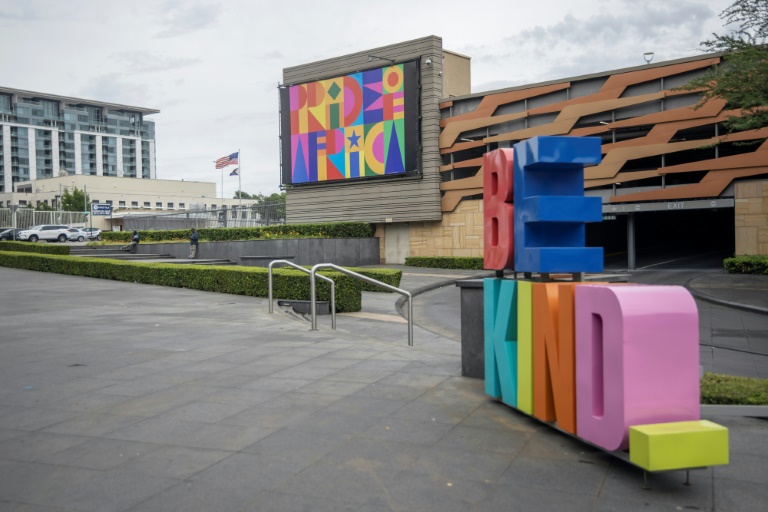
A respected local news website, News24, cited unnamed sources Thursday suggesting that a gay parade slated for Saturday in Sandton and a comedy show by a leading South African comedian of Jewish descent could have been the potential targets.

Organisers of the Johannesburg Pride vowed to forge ahead with the parade, which is returning after a two-year break due to Covid-19 pandemic restrictions.

The event “has not been directly threatened, nor have we received any communication from outside parties other than what the media assumed via the US embassy’s website,” they said in a statement.

“Gay pride began as a defiant campaign, and we will not be subjected to any threats based on sexual orientation and gender identity. We believe that all lives matter,” they said.

“It is critical for us to occupy the space we intend to occupy on October 29. We must take to the streets and… assert our visibility,” they added.

– ‘Very concerned’ –

The News24 website said ongoing peace talks between warring Ethiopian parties in the capital Pretoria had also been “flagged by South Africa’s intelligence agencies as a potential target”.

“We are very concerned about terrorism,” Foreign Minister Naledi Pandor said Thursday.

“Our security organs are paying attention to this matter.”

The US embassy on Sunday also issued a security alert in Nigeria, urging US citizens to limit their movements due to an “elevated risk of terror attacks in Nigeria, specifically in Abuja”.

South African is helping neighbouring Mozambique fight an Islamist insurgency and has deployed more than 1,000 troops there since July last year.

After the United States and Britain issued a similar security alert in 2016, South Africa reacted angrily to what it described as “attempts to generate perceptions of government ineptitude, alarmist impressions and public hysteria on the basis of a questionable single source”.
US lawmakers urge bank chiefs to reconsider Hong Kong meeting

US lawmakers on Thursday asked executives of major banks to reconsider attendance at a major conference next week in Hong Kong, saying their presence legitimizes China’s clampdown in the city.

Heads of some 30 big financial institutions are expected for the conference in Hong Kong, which is keen to show it is open for business after isolation under one of the world’s strictest Covid policies.

But the event also comes after China cracked down during the pandemic on the city’s pro-democracy movement, arresting activists and effectively shutting down independent media after imposing a draconian national security law in 2020.

“Business as usual in Hong Kong is the wrong choice for these companies,” said Senator Jeff Merkley and Representative Jim McGovern, Democrats who head the bipartisan Congressional-Executive Commission on China, which assesses human rights.

“Their presence only serves to legitimize the swift dismantling of Hong Kong’s autonomy, free press and the rule of law by Hong Kong authorities acting along with the Chinese Communist Party,” they said in a statement.

The lawmakers warned US financial executives they could draw “pertinent congressional concern” if they expand investments that further harm Hong Kong’s autonomy.

The lawmakers also accused Hong Kong’s Beijing-appointed leader, John Lee, of refusing to cooperate with US-led sanctions on Russia over its invasion of Ukraine.

The event will include panel talks featuring the CEOs of Goldman Sachs, Morgan Stanley and Citigroup.

Top executives from HSBC, Standard Chartered, JPMorgan Chase and BlackRock will also attend.

China promised to allow a separate system in Hong Kong before Britain returned the territory in 1997 but President Xi Jinping has solidified control after massive and sometimes violent protests against Beijing’s role.

Protest-hit Iran vows to 'punish' those behind shrine massacre

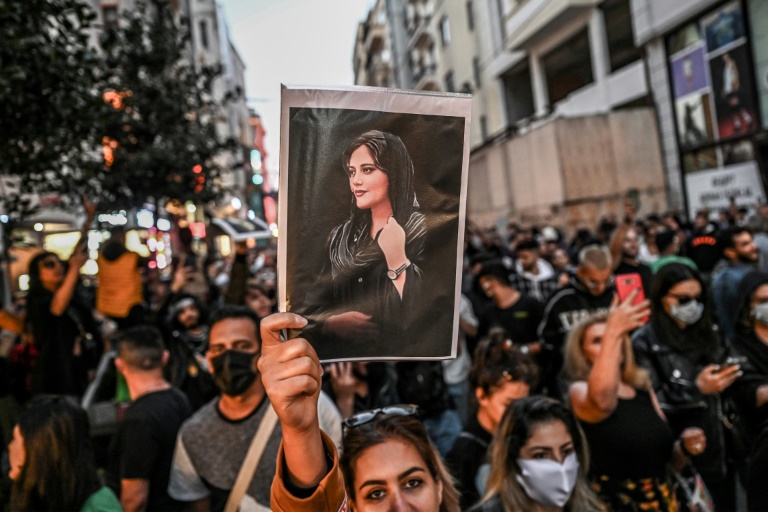
Iran’s leaders vowed Thursday to “punish” those behind a shooting that killed 15 worshippers at a Shiite Muslim shrine, as security forces pushed on with their deadly crackdown against women-led protests.

In the latest violence, a rights group said, security forces killed a Kurdish man when protesters massed around government buildings in western Iran, a flashpoint area in almost six weeks of unrest sparked by the death of Mahsa Amini in police custody.

As thousands mourned 22-year-old Amini on Wednesday, Iran was also rocked by an attack claimed by the Islamic State jihadist group in which, state media said, a gunman killed at least 15 people at a shrine in the southern city of Shiraz.

Ultra-conservative President Ebrahim Raisi appeared to link the two tragedies when he declared that “the intention of the enemy is to disrupt the country’s progress, and then these riots pave the ground for terrorist acts”.

Raisi has vowed “a severe response” over the mass killing at the Shiite Muslim Shah Cheragh mausoleum following evening prayers.

Supreme leader Ayatollah Ali Khamenei called for united efforts against the “plot” by Iran’s enemies. “The perpetrator or perpetrators of this saddening crime will certainly be punished,” he said.

Iran has been gripped by its biggest protests for years since Amini died on September 16, three days after her Tehran arrest by the notorious morality police for allegedly breaching the country’s dress code for women.

The latest protests in the west follow a massive ceremony Wednesday marking 40 days since Amini’s death, held in her hometown of Saqez, Kurdistan province.

Iran’s ISNA news agency said nearly 10,000 people had gathered there, but many thousands more were seen making their way in cars, on motorbikes and on foot, in videos widely shared online.

– ‘The army supports us’ –

The protests sparked by Amini’s death have been led by young women who have burned their headscarves and confronted security forces.

Despite heightened security measures, columns of mourners had poured into Saqez on Wednesday, paying tribute at her grave at the end of the traditional 40-day mourning period.

In another western city, Mahabad, security forces Thursday shot dead at least three people, said the Hengaw human rights group, adding that protesters returning from the funeral of another demonstrator had surrounded government buildings.

A video posted on the Iran Wire news website showed protesters setting fire to the governor’s office.

“We should not mourn for our youth, we should avenge them,” they chanted, according to the Norway-based organisation that monitors violations in Kurdish-populated areas.

On Thursday protesters shouted “the army supports us”, and people fleeing gunfire from the Islamic Revolutionary Guard Corps sought refuge at a barracks in Saqez, Hengaw said.

It added that the Guards had “disarmed the army forces” on Wednesday, according to witnesses, but did not elaborate.

Gunfire sent protesters scrambling for cover in the city of Dehgolan, also in Kurdistan province, Hengaw said.

Protesters surrounded a base of the Basij militia in Sanandaj, Kurdistan, starting fires and driving security forces back, and there were similar scenes in Ilam city, near the border with Iraq.

Mourners also gathered Thursday at the grave of 16-year-old Nika Shahkarami near the western city of Khorramabad, 40 days after she was killed by security forces, the US-based HRANA rights group said.

“I’ll kill, I’ll kill, whoever killed my sister,” they could be heard chanting, in a video HRANA posted on Twitter.

Youths also gathered to honour her at universities in Tehran and Karaj, west of the capital, where they sang: “Students may die but will not accept humiliation”, in other footage it shared.

– ‘Bloody shows’ –

Some activists behind the daily protests over Amini’s death, which have evolved into a broader campaign to end the Islamic republic founded in 1979, have raised suspicions over the timing of the Shiraz attack.

“For its survival, for distracting the protesters, for justifying killings and crackdowns, the Islamic republic always puts on such bloody shows,” one of them, Atena Daemi, tweeted.

“The people have been fighting for 40 days non-stop to end such crimes.”

Oslo-based group Iran Human Rights says the security forces’ crackdown on the Amini protests has cost the lives of at least 141 demonstrators, including at least 29 children.

The United States on Wednesday slapped sanctions on more than a dozen Iranian officials over the bloody response to the protests.

The White House said it was “concerned that Moscow may be advising Iran on best practices to manage protests, drawing on… extensive experience in suppressing” opponents.

burs-dv/pjm

EU chief courts Moscow's Central Asia allies

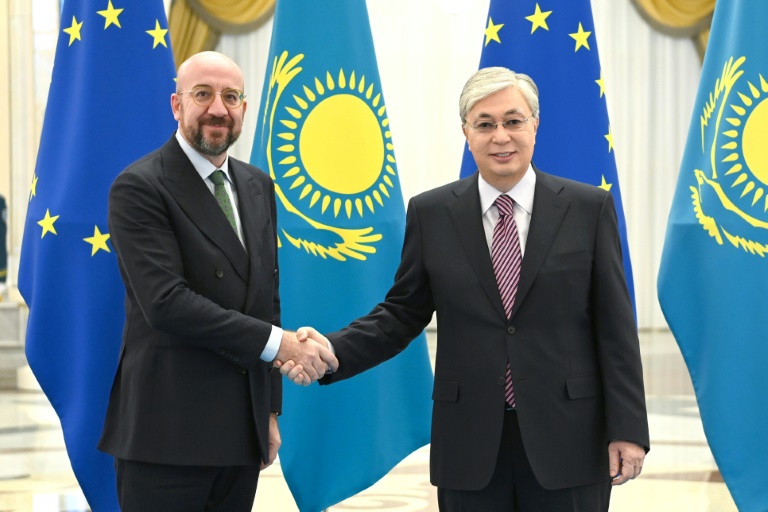
EU chief Charles Michel called on Thursday for closer ties with Central Asia on his first official visit to Kazakhstan, the main economic powerhouse in a region where Russia’s influence has come under question.

In a first European Union-Central Asia summit, Michel met the leaders of the region’s five countries — Kazakhstan, Kyrgyzstan, Uzbekistan, Tajikistan and Turkmenistan. 

He described the gathering as “much more than just a policy dialogue between two regions”.

“It’s a powerful symbol of our reinforced cooperation and a strong signal of the EU’s commitment to this region,” he said. 

Michel’s visit to the Kazakh capital Astana comes eight months into Russia’s invasion of Ukraine, which has made Moscow’s former Soviet neighbours nervous and intensified the Kremlin’s clash with the West.

In a joint statement, Michel and the Central Asian leaders said they agreed to “continue building a strong diversified and forward-looking partnership underpinned by shared values and mutual interests”.

Michel’s visit comes two weeks after Astana hosted several summits attended by Russia — as well as by China and Turkey, which are also seeking to strengthen their influence in the region. 

“Central Asia and Europe are coming closer together and becoming more and more connected,” Michel had told a press conference with Kazakh President Kassym-Jomart Tokayev in Astana.

The head of the EU Council said Kazakhstan was a “crucial partner” and the EU hoped to “develop our cooperation”.

He singled out Kazakhstan as a major trading partner for the EU and called for investment in transport infrastructure in the country, which has looked to reduce  dependence on Moscow since the latter sent troops to Ukraine. 

– ‘Geopolitical balance’ –

Since the start of Moscow’s invasion in February and the subsequent Western sanctions slapped on Russia, “Central Asian countries have been trying to strike a geopolitical balance,” Kazakh political analyst Dosym Satpayev told AFP. 

The traditional allies of Moscow have trod a fine line on the Kremlin’s attack on Ukraine, neither condemning nor openly supporting it.

Tokayev even clashed with Russian President Vladimir Putin publicly in June, refusing to recognise the self-declared separatist republics controlled by pro-Moscow rebels in eastern Ukraine. 

Russia has since claimed to have annexed the regions.

“The European Union has a very good opportunity to strengthen its position in Central Asia,” Satpayev said, 

He said this was especially true in Kazakhstan — the only country in the region that has signed an enhanced partnership and cooperation agreement with the EU — and neighbouring Uzbekistan, where Michel is expected on Friday.

Meanwhile Astana is seeking new routes for  oil exports, around three quarters of which transit Russia.

In early July, Tokayev pledged greater energy cooperation with the EU.

In a joint statement on Thursday, Tokayev and Michel said they discussed how to avoid “unintended negative impact on Kazakhstan’s economy” of EU sanctions against Russia, imposed over the Ukraine conflict.

They also discussed relocating to Kazakhstan “European manufacturing companies”, whose products are not subject to sanctions.

Since the outbreak of war in Ukraine, Russia has twice halted Kazakh oil exports, citing technical and security reasons. 

Rich in hydrocarbons and minerals, Kazakhstan lies at the heart of China’s massive new silk road project. 

Like Beijing, Turkey is also advancing its interest in the region, highlighting ethno-linguistic and religious ties to Central Asia. 

EU chief courts Moscow's Central Asia allies

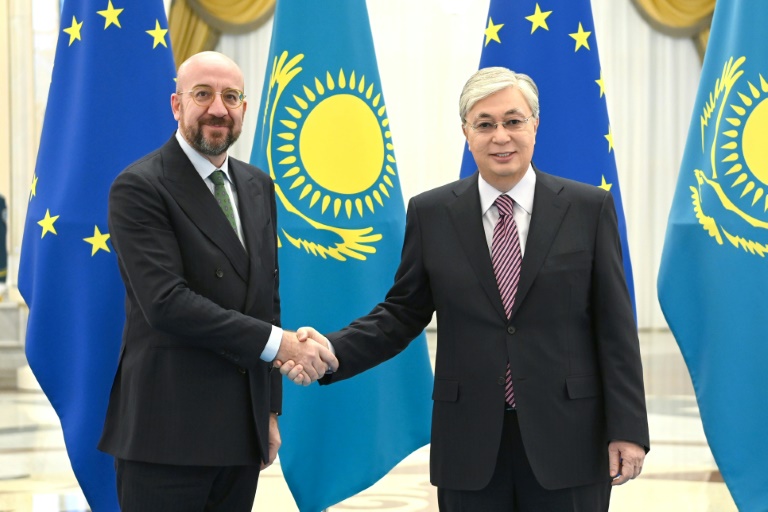
EU chief Charles Michel called on Thursday for closer ties with Central Asia on his first official visit to Kazakhstan, the main economic powerhouse in a region where Russia’s influence has come under question.

In a first European Union-Central Asia summit, Michel met the leaders of the region’s five countries — Kazakhstan, Kyrgyzstan, Uzbekistan, Tajikistan and Turkmenistan. 

He described the gathering as “much more than just a policy dialogue between two regions”.

“It’s a powerful symbol of our reinforced cooperation and a strong signal of the EU’s commitment to this region,” he said. 

Michel’s visit to the Kazakh capital Astana comes eight months into Russia’s invasion of Ukraine, which has made Moscow’s former Soviet neighbours nervous and intensified the Kremlin’s clash with the West.

In a joint statement, Michel and the Central Asian leaders said they agreed to “continue building a strong diversified and forward-looking partnership underpinned by shared values and mutual interests”.

Michel’s visit comes two weeks after Astana hosted several summits attended by Russia — as well as by China and Turkey, which are also seeking to strengthen their influence in the region. 

“Central Asia and Europe are coming closer together and becoming more and more connected,” Michel had told a press conference with Kazakh President Kassym-Jomart Tokayev in Astana.

The head of the EU Council said Kazakhstan was a “crucial partner” and the EU hoped to “develop our cooperation”.

He singled out Kazakhstan as a major trading partner for the EU and called for investment in transport infrastructure in the country, which has looked to reduce  dependence on Moscow since the latter sent troops to Ukraine. 

– ‘Geopolitical balance’ –

Since the start of Moscow’s invasion in February and the subsequent Western sanctions slapped on Russia, “Central Asian countries have been trying to strike a geopolitical balance,” Kazakh political analyst Dosym Satpayev told AFP. 

The traditional allies of Moscow have trod a fine line on the Kremlin’s attack on Ukraine, neither condemning nor openly supporting it.

Tokayev even clashed with Russian President Vladimir Putin publicly in June, refusing to recognise the self-declared separatist republics controlled by pro-Moscow rebels in eastern Ukraine. 

Russia has since claimed to have annexed the regions.

“The European Union has a very good opportunity to strengthen its position in Central Asia,” Satpayev said, 

He said this was especially true in Kazakhstan — the only country in the region that has signed an enhanced partnership and cooperation agreement with the EU — and neighbouring Uzbekistan, where Michel is expected on Friday.

Meanwhile Astana is seeking new routes for  oil exports, around three quarters of which transit Russia.

In early July, Tokayev pledged greater energy cooperation with the EU.

In a joint statement on Thursday, Tokayev and Michel said they discussed how to avoid “unintended negative impact on Kazakhstan’s economy” of EU sanctions against Russia, imposed over the Ukraine conflict.

They also discussed relocating to Kazakhstan “European manufacturing companies”, whose products are not subject to sanctions.

Since the outbreak of war in Ukraine, Russia has twice halted Kazakh oil exports, citing technical and security reasons. 

Rich in hydrocarbons and minerals, Kazakhstan lies at the heart of China’s massive new silk road project. 

Like Beijing, Turkey is also advancing its interest in the region, highlighting ethno-linguistic and religious ties to Central Asia. 

Germany reviewing possible Chinese takeover of chip factory

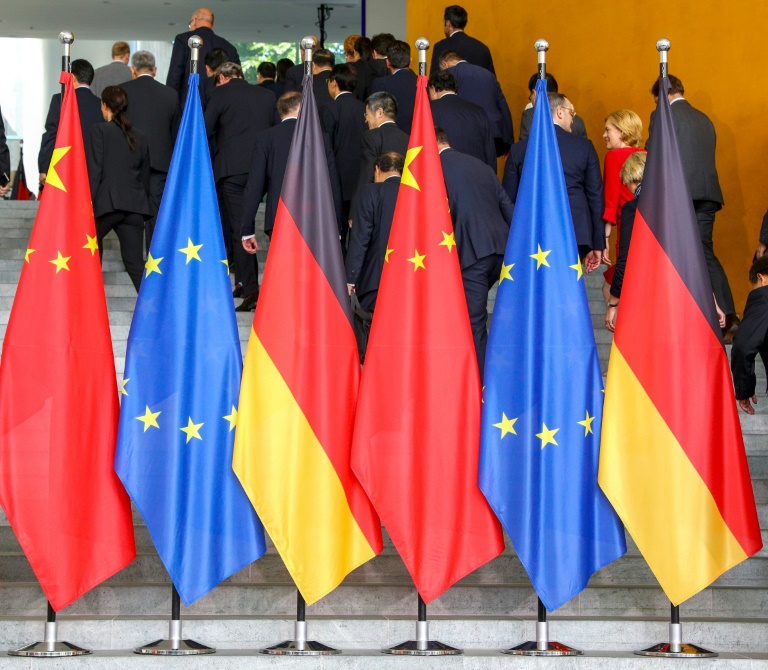
The German government is reviewing a possible sale of a local chip factory to a Chinese-owned firm, sources said Thursday, despite the reported concerns of intelligence agencies.

Government officials speaking on condition of anonymity told AFP that they were assessing the potential impact of a takeover of Dortmund-based Elmos by Sweden’s Silex, a unit of Chinese company Sai MicroElectronics.

“There is an ongoing investment review procedure,” one official said. “The checks have begun, are continuing and are not finished.”

The overture by the Chinese firm comes ahead of Chancellor Olaf Scholz’s visit to China next week as the first European Union leader to make the trip since November 2019.

And it coincides with growing fears within his coalition government and among intelligence officials about the risks of critical infrastructure and intellectual property falling into foreign hands.

Business daily Handelsblatt had reported earlier that Berlin intends to green-light the deal, possibly as early as next week.

In contrast with other recent controversial acquisitions, the chancellery and the economy ministry are in agreement on Elmos and inclined to approve the takeover as the company’s technology is not state of the art, according to the report.

However the domestic security watchdog, the Office for the Protection of the Constitution, warned against the sale, saying that Chinese control of key production capacity was enough to allow Beijing to apply pressure on Germany, Handelsblatt reported.

The Office could not immediately be reached for comment.

– Security concerns –

Elmos, which primarily builds components for the automobile industry, said late last year it intended to sell the production facility at its headquarters.

Silex is seeking to buy the site and its supplies for 85 million euros (dollars), which would allow Elmos to shed its own production activities and sell its chips to manufacturing contractors.

Germany’s coalition government on Wednesday allowed a Chinese firm to buy a reduced stake in a Hamburg port terminal, after Scholz resisted calls to ban the disputed sale outright over security concerns.

Under a tenuous compromise agreed by Scholz’s cabinet, Chinese shipping giant Cosco has the go-ahead to buy a stake “below 25 percent” in the Tollerort container terminal owned by HHLA.

Germany, along with EU partners, has in recent years taken a closer look at Chinese investment in sensitive technologies and other areas, and reserves the right to veto acquisitions.

The issue has gained urgency in light of the breakdown in ties with Russia over the Ukraine war due to the once heavy dependence of Europe’s top economy on Moscow’s energy supplies.

Germany reviewing possible Chinese takeover of chip factory

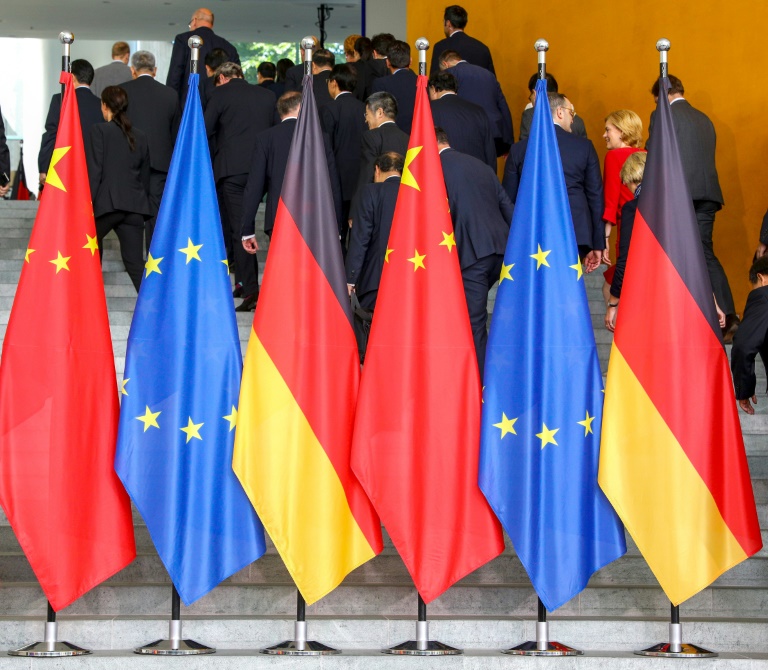
The German government is reviewing a possible sale of a local chip factory to a Chinese-owned firm, sources said Thursday, despite the reported concerns of intelligence agencies.

Government officials speaking on condition of anonymity told AFP that they were assessing the potential impact of a takeover of Dortmund-based Elmos by Sweden’s Silex, a unit of Chinese company Sai MicroElectronics.

“There is an ongoing investment review procedure,” one official said. “The checks have begun, are continuing and are not finished.”

The overture by the Chinese firm comes ahead of Chancellor Olaf Scholz’s visit to China next week as the first European Union leader to make the trip since November 2019.

And it coincides with growing fears within his coalition government and among intelligence officials about the risks of critical infrastructure and intellectual property falling into foreign hands.

Business daily Handelsblatt had reported earlier that Berlin intends to green-light the deal, possibly as early as next week.

In contrast with other recent controversial acquisitions, the chancellery and the economy ministry are in agreement on Elmos and inclined to approve the takeover as the company’s technology is not state of the art, according to the report.

However the domestic security watchdog, the Office for the Protection of the Constitution, warned against the sale, saying that Chinese control of key production capacity was enough to allow Beijing to apply pressure on Germany, Handelsblatt reported.

The Office could not immediately be reached for comment.

– Security concerns –

Elmos, which primarily builds components for the automobile industry, said late last year it intended to sell the production facility at its headquarters.

Silex is seeking to buy the site and its supplies for 85 million euros (dollars), which would allow Elmos to shed its own production activities and sell its chips to manufacturing contractors.

Germany’s coalition government on Wednesday allowed a Chinese firm to buy a reduced stake in a Hamburg port terminal, after Scholz resisted calls to ban the disputed sale outright over security concerns.

Under a tenuous compromise agreed by Scholz’s cabinet, Chinese shipping giant Cosco has the go-ahead to buy a stake “below 25 percent” in the Tollerort container terminal owned by HHLA.

Germany, along with EU partners, has in recent years taken a closer look at Chinese investment in sensitive technologies and other areas, and reserves the right to veto acquisitions.

The issue has gained urgency in light of the breakdown in ties with Russia over the Ukraine war due to the once heavy dependence of Europe’s top economy on Moscow’s energy supplies.

ECB warns of 'looming recession' as it again hikes rates

The European Central Bank announced another jumbo interest rate hike on Thursday and said further increases would follow to combat soaring inflation, even as its president, Christine Lagarde, warned a eurozone recession was looming.

The ECB’s 25-member governing council repeated last month’s unprecedented move and opted for another bumper increase of 75 basis points, leaving its three main rates sitting in a range of between 1.5 and 2.25 percent.

“We will have further rate increases in the future,” Lagarde said. “There is still ground to cover.”

The Frankfurt institution is under pressure to rein in record-high inflation, mainly driven by surging food and especially energy prices in the wake of Russia’s war in Ukraine.

Eurozone inflation stood at 9.9 percent in September, nearly five times the ECB’s two-percent target.

Inflation “remains far too high” in the 19-nation currency club, Lagarde said.

Like other central banks, the ECB is fighting back with a series of rate hikes intended to dampen demand by making credit more expensive for households and businesses.

But higher borrowing costs also weigh on economic activity, and the eurozone outlook has deteriorated significantly.

“The likelihood of recession (is) looming much more on the horizon,” Lagarde told a press conference.

And inflation could go “higher than expected if there are increases in the prices of energy and food commodities”, she added.

“Obviously we’re concerned, particularly about those who have low income,” Lagarde said.

– Political grumbling –

Moscow’s move to curb gas supplies to Europe has triggered an energy crisis on the continent, fuelling fears of power shortages and sky-high heating bills this winter. 

If Russia completely cuts off gas flows to Europe, the eurozone economy could shrink by nearly one percent in 2023, ECB vice-president Luis de Guindos recently warned.

That scenario has become more likely after Russia in late August shut down the crucial Nord Stream 1 pipeline to Europe’s economic powerhouse Germany.

As European governments race to unveil multi-billion-euro support measures to help citizens through a cost-of-living crisis this winter, the ECB’s monetary policy tightening has come under scrutiny.

Italian Prime Minister Giorgia Meloni this week criticised the ECB’s “rash choice” to aggressively hike rates, saying it created “further difficulties for member states that have elevated public debt”.

French President Emmanuel Macron expressed “concern” that the ECB was “shattering demand” in Europe.

But Lagarde hit back at the criticism.

“The decision that we made today is the most appropriate in order to restore price stability, which… is critically important for not just the stability of prices but also for the economy to actually prosper and recover,” she said.

The former French finance minister also warned governments against adding to their debt pile as they try to shield citizens from price shocks.

“Governments should pursue fiscal policies that show they are committed to gradually bringing down high public debt ratios,” Lagarde said, stressing that policymakers should pick measures which are “temporary and targeted at the most vulnerable”.

– Excess liquidity –

Also in focus on Thursday were the ECB’s efforts to bring other monetary policy levers in line with its inflation-busting efforts, including unwinding its massive balance sheet.

The governing council moved to reduce the benefits gained by eurozone banks from super-cheap loans issued at ultra-low rates during the pandemic.

The interest rate for so-called TLTRO III loans would rise, the ECB said, and lenders will be offered “additional voluntary early repayment dates”.

Lenders are currently able to make an easy profit by parking their excess TLTRO cash at the ECB and pocketing the new, higher deposit rate.

This is not considered a good look at a time when many consumers and companies are struggling, and the ECB had signalled it wanted to make the loan scheme less generous.

Lagarde was also grilled by reporters on how the ECB intends to shrink its five-trillion-euro bond portfolio, after years of hoovering up government and corporate debt to keep credit flowing.

Given the economic uncertainty and the risk of rattling financial markets, analysts believe the start of any “quantitative tightening” — letting the bonds mature or actively selling them — is some way off.

Lagarde said the topic would be discussed at the next meeting in December.

ECB warns of 'looming recession' as it again hikes rates

The European Central Bank announced another jumbo interest rate hike on Thursday and said further increases would follow to combat soaring inflation, even as its president, Christine Lagarde, warned a eurozone recession was looming.

The ECB’s 25-member governing council repeated last month’s unprecedented move and opted for another bumper increase of 75 basis points, leaving its three main rates sitting in a range of between 1.5 and 2.25 percent.

“We will have further rate increases in the future,” Lagarde said. “There is still ground to cover.”

The Frankfurt institution is under pressure to rein in record-high inflation, mainly driven by surging food and especially energy prices in the wake of Russia’s war in Ukraine.

Eurozone inflation stood at 9.9 percent in September, nearly five times the ECB’s two-percent target.

Inflation “remains far too high” in the 19-nation currency club, Lagarde said.

Like other central banks, the ECB is fighting back with a series of rate hikes intended to dampen demand by making credit more expensive for households and businesses.

But higher borrowing costs also weigh on economic activity, and the eurozone outlook has deteriorated significantly.

“The likelihood of recession (is) looming much more on the horizon,” Lagarde told a press conference.

And inflation could go “higher than expected if there are increases in the prices of energy and food commodities”, she added.

“Obviously we’re concerned, particularly about those who have low income,” Lagarde said.

– Political grumbling –

Moscow’s move to curb gas supplies to Europe has triggered an energy crisis on the continent, fuelling fears of power shortages and sky-high heating bills this winter. 

If Russia completely cuts off gas flows to Europe, the eurozone economy could shrink by nearly one percent in 2023, ECB vice-president Luis de Guindos recently warned.

That scenario has become more likely after Russia in late August shut down the crucial Nord Stream 1 pipeline to Europe’s economic powerhouse Germany.

As European governments race to unveil multi-billion-euro support measures to help citizens through a cost-of-living crisis this winter, the ECB’s monetary policy tightening has come under scrutiny.

Italian Prime Minister Giorgia Meloni this week criticised the ECB’s “rash choice” to aggressively hike rates, saying it created “further difficulties for member states that have elevated public debt”.

French President Emmanuel Macron expressed “concern” that the ECB was “shattering demand” in Europe.

But Lagarde hit back at the criticism.

“The decision that we made today is the most appropriate in order to restore price stability, which… is critically important for not just the stability of prices but also for the economy to actually prosper and recover,” she said.

The former French finance minister also warned governments against adding to their debt pile as they try to shield citizens from price shocks.

“Governments should pursue fiscal policies that show they are committed to gradually bringing down high public debt ratios,” Lagarde said, stressing that policymakers should pick measures which are “temporary and targeted at the most vulnerable”.

– Excess liquidity –

Also in focus on Thursday were the ECB’s efforts to bring other monetary policy levers in line with its inflation-busting efforts, including unwinding its massive balance sheet.

The governing council moved to reduce the benefits gained by eurozone banks from super-cheap loans issued at ultra-low rates during the pandemic.

The interest rate for so-called TLTRO III loans would rise, the ECB said, and lenders will be offered “additional voluntary early repayment dates”.

Lenders are currently able to make an easy profit by parking their excess TLTRO cash at the ECB and pocketing the new, higher deposit rate.

This is not considered a good look at a time when many consumers and companies are struggling, and the ECB had signalled it wanted to make the loan scheme less generous.

Lagarde was also grilled by reporters on how the ECB intends to shrink its five-trillion-euro bond portfolio, after years of hoovering up government and corporate debt to keep credit flowing.

Given the economic uncertainty and the risk of rattling financial markets, analysts believe the start of any “quantitative tightening” — letting the bonds mature or actively selling them — is some way off.

Lagarde said the topic would be discussed at the next meeting in December.

Turkish doctors' leader formally detained over chemical arms comment

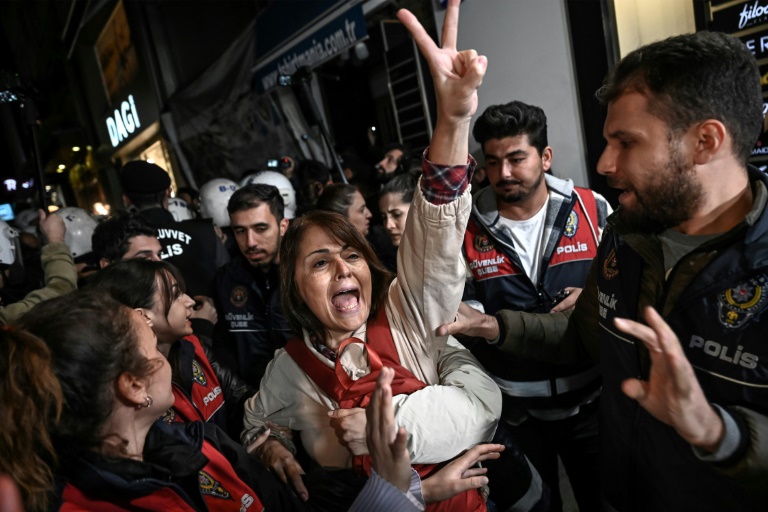
A Turkish court on Thursday ordered a doctor’s union leader detained for having called for a probe into the army’s alleged use of chemical weapons against outlawed Kurdish militants. 

Sebnem Korur Fincanci was arrested by Istanbul police Wednesday as part of an investigation launched by the Ankara chief prosecutor’s office.

Fincanci was later taken to the capital Ankara where she was formally arrested by a local court on “terror propaganda” charges, the private NTV television reported.

Fincanci told AFP last week that she had examined video footage and had only called for “an effective investigation” into the allegations.

Turkey has rejected allegations in media outlets close to the outlawed Kurdistan Workers’ Party (PKK) that its army has used chemical weapons in operations in northern Iraq.

The PKK is listed as a terror group by Turkey and its Western allies.

Milena Buyum, a campaigner for Amnesty International, tweeted that the goup had called for the “immediate and unconditional release of human rights defender” Fincanci.

“Nothing she has said or done can justify the deprivation of her liberty in this arbitrary way, that is patently aiming at silencing her and sending a chilling message to others,” she added.

Police detained some supporters of Fincanci during protests in Istanbul Wednesday over her arrest.

President Recep Tayyip Erdogan had on Monday accused Fincanci of “speaking the language of terrorism” and said she could not remain at the top of the doctors’ union.

The PKK has kept up a deadly insurgency for Kurdish self-rule in southeastern Turkey since 1984. 

The Turkish army has launched successive operations against the militant group’s rear bases in northern Iraq, a persistent thorn in Ankara’s ties with the Baghdad government.

Close Bitnami banner
Bitnami