World

'Spare' — Prince Harry to release memoir in January

Prince Harry will release a tell-all memoir in January, his publisher said Thursday, with the highly-anticipated account of life in the British monarchy and after he quit royal duties landing just four months after the death of Queen Elizabeth II.

The book by Harry — who now lives in California with his wife Meghan Markle — comes at a sensitive time.

There has been intense speculation that prince could draw back the veil on palace life and offer damaging revelations, or pull his punches in the aftermath of Elizabeth’s death as Britain adjusts to its new head of state, King Charles III. 

Titled “Spare,” the memoir will hit the shelves on January 10, 2023.

“We are excited to announce the remarkably personal and emotionally powerful story of Prince Harry, The Duke of Sussex,” Penguin Random House said on Twitter.

On its website, the book is described as a window into how the prince responded to the death of his mother Diana 25 years ago, and how his life has been affected since.

“With its raw, unflinching honesty, Spare is a landmark publication full of insight, revelation, self-examination, and hard-won wisdom about the eternal power of love over grief,” Pengun Random said.

Diana, Princess of Wales, died in a high-speed car crash in Paris on August 31, 1997. Britain was plunged into an outpouring of grief that jolted the monarchy, which was seen by some as out of touch.

In addition to the title refering to Harry’s apparent bid to lead a more simple, less ritzy lifestyle, it also alludes to his status as the “spare” to his older brother Prince William’s role as “heir” to the British throne.

Harry and Meghan stunned his family by announcing they were quitting royal duties and moving to the United States in early 2020.

From there, they launched a series of broadsides criticizing their life in the institution, including claims of racism and the Crown’s failure to support them amid relentless tabloid attacks.

Their public criticisms exacerbated tensions with William — with whom he is reported to be barely on speaking terms — and their father, King Charles.

Harry and Meghan now live with their two children, Archie and Lilibet, in Santa Barbara, California.

– ‘Highs and lows’ –

In July last year, Harry announced he was penning a memoir that would expose the “mistakes” and “lessons learned” across his life.

“I’m writing this not as the prince I was born but as the man I have become,” Harry said at the time. 

“I’ve worn many hats over the years, both literally and figuratively, and my hope is that in telling my story — the highs and lows, the mistakes, the lessons learned — I can help show that no matter where we come from, we have more in common than we think.”

He said he was “excited for people to read a firsthand account of my life that’s accurate and wholly truthful.”

But any additional unflattering and candid remarks — beyond those Harry made during a high-profile interview with Oprah Winfrey last year — about the royal family after the queen’s death might backfire.

“Prince Harry has gotten cold feet about the memoir’s contents at various points, book industry executives with knowledge of the process told The Times, and the project has been shrouded in rumors, delays and secrecy,” The New York Times reported.

Harry will use proceeds from the memoir, which will be released in 16 languages, to donate to British charities, the publisher added.
ECB unveils another jumbo rate hike to tackle inflation

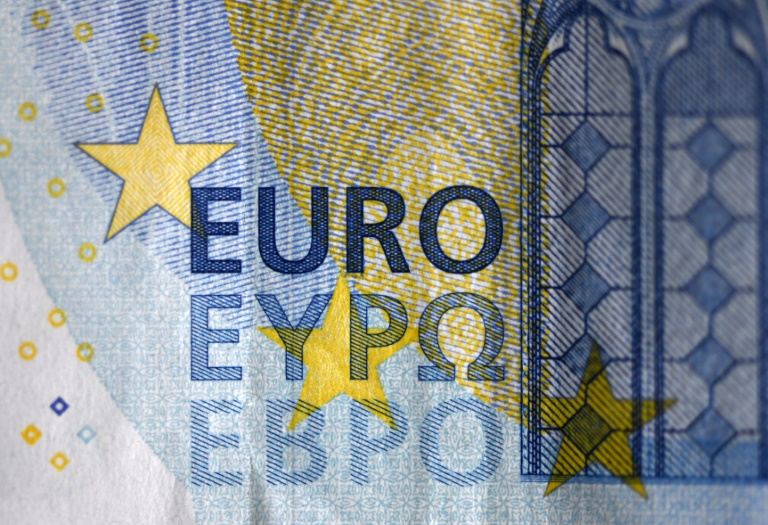
The European Central Bank on Thursday rolled out another bumper rate hike to combat soaring inflation, despite growing concern that the eurozone is hurtling towards a painful recession.

The ECB’s 25-member governing council repeated last month’s unprecedented move and opted for another increase of 75 basis points, leaving its three main rates sitting in a range of between 1.5 and 2.25 percent.

The hike was widely expected and comes as the Frankfurt institution faces pressure to rein in record-high inflation, mainly driven by skyrocketing energy costs in the wake of Russia’s war in Ukraine.

Eurozone inflation stood at 9.9 percent in September, nearly five times the ECB’s two-percent target.

In its statement, the ECB warned that inflation “remains far too high” in the 19-nation currency club, blaming “soaring energy and food prices, supply bottlenecks and the post-pandemic recovery in demand”.

Like other central banks, the ECB is fighting back with a series of rate hikes intended to dampen demand by making credit more expensive for households and businesses.

But higher borrowing costs also dampen economic activity, and signs are multiplying that the eurozone outlook has deteriorated.

In its determination to bring down price pressures, the ECB “has turned a blind eye on recession risks”, said ING economist Carsten Brzeski.

– Political grumbling –

Moscow’s move to curb gas supplies to Europe has triggered an energy crisis on the continent, fuelling fears of power shortages and sky-high heating bills this winter. 

If Russia completely cuts off gas flows to Europe, the eurozone economy could shrink by nearly one percent in 2023, ECB vice-president Luis de Guindos has warned.

That scenario has become more likely after Russia in late August shut down the crucial Nord Stream 1 pipeline to Europe’s economic powerhouse Germany.

The German economy is already forecast to shrink by 0.4 percent next year.

As European governments race to unveil multi-billion-euro support measures to help citizens through a cost-of-living crisis this winter, the ECB’s monetary policy tightening has come under increased scrutiny.

Italian Prime Minister Giorgia Meloni this week slammed the ECB’s “rash choice” to aggressively hike rates, saying it created “further difficulties for member states that have elevated public debt”.

French President Emmanuel Macron has expressed “concern” that the ECB was “shattering demand” in Europe.

ECB president Christine Lagarde will likely be quizzed about the political grumbling at her 1245 GMT press conference in Frankfurt.

Lagarde can also expect questions on how the ECB plans to bring other monetary policy levers in line with its inflation-busting efforts, including unwinding its massive balance sheet.

– Excess liquidity –

The governing council on Thursday already moved to limit the benefits gained by eurozone banks from super-cheap loans issued at ultra-low rates during the pandemic.

The interest rate for so-called TLTRO III loans would rise, the bank said, and lenders will be offered “additional voluntary early repayment dates”.

As an unintended consequence of the ECB’s rate hikes, lenders are currently able to make an easy profit by parking their excess TLTRO cash at the ECB and pocketing the new, higher deposit rate.

This is not considered a good look at a time when many consumers and companies are struggling, and the ECB had signalled it wanted to make the loan scheme less generous.

“The optics are bad against the backdrop of a historical shock to households’ income, and political pressure cannot be ignored,” said Pictet Wealth Management economist Frederik Ducrozet.

The ECB is also considering how best to shrink its five-trillion-euros bond portfolio, after years of hoovering up government and corporate debt to drive up stubbornly low inflation.

But the statement made no mention of any decisions on the issue.

Given the economic uncertainty and the risk of rattling financial markets, analysts say the start of any “quantitative tightening” — letting the bonds mature or actively selling them — is some way off.

Climate plans would allow up to 2.6C of global warming: UN

Country climate pledges leave the world on track to heat by as much as 2.6 degrees Celsius this century, the United Nations said on Wednesday, warning that emissions must fall 45 percent this decade to limit disastrous global warming.

The United Nations Environment Programme, in its annual Emissions Gap report, found that updated national promises since last year’s COP26 summit in Glasgow would only shave less than one percent off global greenhouse gas emissions by 2030.

The world has warmed nearly 1.2C since the start of the Industrial Revolution and already faces increasingly ferocious climate-enhanced weather extremes like heatwaves, storms and floods.

The Emissions Gap report examines the difference between the planet-heating pollution that will still be released under countries’ decarbonisation plans and what science says is needed to keep to the Paris Agreement goal of limiting warming to between 1.5-2.0C.

A day after the UN’s climate change agency said governments were still doing “nowhere near” enough to keep global heating to 1.5C, UNEP found progress on emissions cutting had been “woefully inadequate”.

It said that additional pledges made since the COP26 summit in Glasgow last year would not even cut emissions by one percent by 2030. 

Failure left the world “hurtling towards” a temperature rise far in excess of the Paris goals, it added. 

“It’s another year squandered in terms of actually doing something about the problem,” the report’s lead author, Anne Olhoff, told AFP.

“That’s not to say that all nations have not taken this seriously. But from a global perspective, it’s definitely very far from adequate.”

The report found that in order for temperature rises to be capped at 2C, emissions would need to fall 30 percent faster by 2030 than envisioned under countries’ most up-to-date plans. 

To limit heating to 1.5C, the gap is 45 percent.

Under the 2015 Paris deal, countries are required to submit ever deeper emission cutting plans, known as Nationally Determined Contributions, or NDCs. 

UNEP found that “unconditional” NDCs — which countries plan regardless of external support — would probably lead to Earth’s average temperature rising by 2.6C by 2100. Scientists warn that level would be catastrophic for humanity and for nature. 

Conditional NDCs — which rely on international funding to achieve — would probably lead to a 2.4C temperature rise this century, it said. 

All told, current plans are likely to see a five- to 10-percent reduction in emissions by 2030 — a far cry from the drop of nearly 50 percent required for 1.5C. 

– ‘Missed opportunity’ –

UNEP said that in 2020, carbon pollution fell more than seven percent, largely thanks to Covid-19 lockdowns and travel restrictions. A fall of that magnitude is needed every year this decade to stay on track for 1.5C. 

But it said greenhouse gas emissions in 2021 could end up being the highest on record — some 52.8 billion tonnes — because countries threw themselves into fossil-fuelled pandemic recoveries.

“We see a full bounce-back in emissions after Covid,” said Olhoff. 

“It’s a missed opportunity in terms of utilising these unprecedented recovery funds to accelerate a green transition.”

Separately, the International Energy Agency said on Thursday it believed global energy emissions would peak in 2025 as surging oil and gas prices spurred a drive to renewables.

But UNEP said that while the switch to greener tech in the power sector was accelerating, several industries were lagging behind in the push towards net-zero emissions.  

For example, in the food sector, which is responsible for around a third of emissions, dietary changes and cutting food loss could help reduce the sector’s footprint by more than 30 percent by 2050.

– ‘Avoid as much damage as possible’ – 

Olhoff said the financial sector was “part of the problem rather than part of the solution” to climate change, with hundreds of billions funnelled annually to fossil fuel projects. 

UNEP suggested the introduction of an effective carbon price under a global cap and trade system that would push investors to consider the environmental impact of their portfolios.

It also called for central banks to make more funds available and help create global low-carbon technology markets.

UN Secretary General Antonio Guterres said Thursday’s report showed the world “cannot afford any more greenwashing”.

“Commitments to net zero are worth zero without the plans, policies and actions to back it up,” he said in a video message. 

Last year the Intergovernmental Panel on Climate Change said that the world was likely to reach and even exceed 1.5C within decades, no matter how quickly emissions fall in the short term. 

Olhoff said that for every year that passed without significant emissions cuts, 1.5C was getting “less realistic and less feasible”.

But she insisted that governments needed to accelerate the green transition to avoid as much damage as possible. 

“The more we learn, it’s absolutely clear that we should aim to get (temperature rises) as low as possible,” Olhoff said. 

“Even if that means 1.6C instead of 1.5C, that’s definitely better than 2C degrees, just as 1.7C is worse than 1.6C.”

Climate plans would allow up to 2.6C of global warming: UN

Country climate pledges leave the world on track to heat by as much as 2.6 degrees Celsius this century, the United Nations said on Wednesday, warning that emissions must fall 45 percent this decade to limit disastrous global warming.

The United Nations Environment Programme, in its annual Emissions Gap report, found that updated national promises since last year’s COP26 summit in Glasgow would only shave less than one percent off global greenhouse gas emissions by 2030.

The world has warmed nearly 1.2C since the start of the Industrial Revolution and already faces increasingly ferocious climate-enhanced weather extremes like heatwaves, storms and floods.

The Emissions Gap report examines the difference between the planet-heating pollution that will still be released under countries’ decarbonisation plans and what science says is needed to keep to the Paris Agreement goal of limiting warming to between 1.5-2.0C.

A day after the UN’s climate change agency said governments were still doing “nowhere near” enough to keep global heating to 1.5C, UNEP found progress on emissions cutting had been “woefully inadequate”.

It said that additional pledges made since the COP26 summit in Glasgow last year would not even cut emissions by one percent by 2030. 

Failure left the world “hurtling towards” a temperature rise far in excess of the Paris goals, it added. 

“It’s another year squandered in terms of actually doing something about the problem,” the report’s lead author, Anne Olhoff, told AFP.

“That’s not to say that all nations have not taken this seriously. But from a global perspective, it’s definitely very far from adequate.”

The report found that in order for temperature rises to be capped at 2C, emissions would need to fall 30 percent faster by 2030 than envisioned under countries’ most up-to-date plans. 

To limit heating to 1.5C, the gap is 45 percent.

Under the 2015 Paris deal, countries are required to submit ever deeper emission cutting plans, known as Nationally Determined Contributions, or NDCs. 

UNEP found that “unconditional” NDCs — which countries plan regardless of external support — would probably lead to Earth’s average temperature rising by 2.6C by 2100. Scientists warn that level would be catastrophic for humanity and for nature. 

Conditional NDCs — which rely on international funding to achieve — would probably lead to a 2.4C temperature rise this century, it said. 

All told, current plans are likely to see a five- to 10-percent reduction in emissions by 2030 — a far cry from the drop of nearly 50 percent required for 1.5C. 

– ‘Missed opportunity’ –

UNEP said that in 2020, carbon pollution fell more than seven percent, largely thanks to Covid-19 lockdowns and travel restrictions. A fall of that magnitude is needed every year this decade to stay on track for 1.5C. 

But it said greenhouse gas emissions in 2021 could end up being the highest on record — some 52.8 billion tonnes — because countries threw themselves into fossil-fuelled pandemic recoveries.

“We see a full bounce-back in emissions after Covid,” said Olhoff. 

“It’s a missed opportunity in terms of utilising these unprecedented recovery funds to accelerate a green transition.”

Separately, the International Energy Agency said on Thursday it believed global energy emissions would peak in 2025 as surging oil and gas prices spurred a drive to renewables.

But UNEP said that while the switch to greener tech in the power sector was accelerating, several industries were lagging behind in the push towards net-zero emissions.  

For example, in the food sector, which is responsible for around a third of emissions, dietary changes and cutting food loss could help reduce the sector’s footprint by more than 30 percent by 2050.

– ‘Avoid as much damage as possible’ – 

Olhoff said the financial sector was “part of the problem rather than part of the solution” to climate change, with hundreds of billions funnelled annually to fossil fuel projects. 

UNEP suggested the introduction of an effective carbon price under a global cap and trade system that would push investors to consider the environmental impact of their portfolios.

It also called for central banks to make more funds available and help create global low-carbon technology markets.

UN Secretary General Antonio Guterres said Thursday’s report showed the world “cannot afford any more greenwashing”.

“Commitments to net zero are worth zero without the plans, policies and actions to back it up,” he said in a video message. 

Last year the Intergovernmental Panel on Climate Change said that the world was likely to reach and even exceed 1.5C within decades, no matter how quickly emissions fall in the short term. 

Olhoff said that for every year that passed without significant emissions cuts, 1.5C was getting “less realistic and less feasible”.

But she insisted that governments needed to accelerate the green transition to avoid as much damage as possible. 

“The more we learn, it’s absolutely clear that we should aim to get (temperature rises) as low as possible,” Olhoff said. 

“Even if that means 1.6C instead of 1.5C, that’s definitely better than 2C degrees, just as 1.7C is worse than 1.6C.”

Israel, Lebanon to strike 'historic' maritime border deal

Israel and Lebanon Thursday separately signed a US-brokered maritime border deal which paves the way for lucrative offshore gas extraction by the neighbours that remain technically at war.  

The agreement is set to go into effect after two exchanges of letters — one between Lebanon and the United States, the other between Israel and the US, expected from 3:00pm local time (1200 GMT). 

Hailed in advance by US President Joe Biden as a “historic breakthrough”, it comes as Western powers clamour to open up new gas production and reduce vulnerability to supply cuts from Russia. 

The deal, signed separately by Lebanon’s President Michel Aoun in Beirut and Israel’s Prime Minister Yair Lapid in Jerusalem, comes as Lebanon hopes to extract itself from what the World Bank calls one of the worst economic crises in modern world history.

It also comes as Lapid seeks to lock in a major achievement days ahead of a general election on November 1.

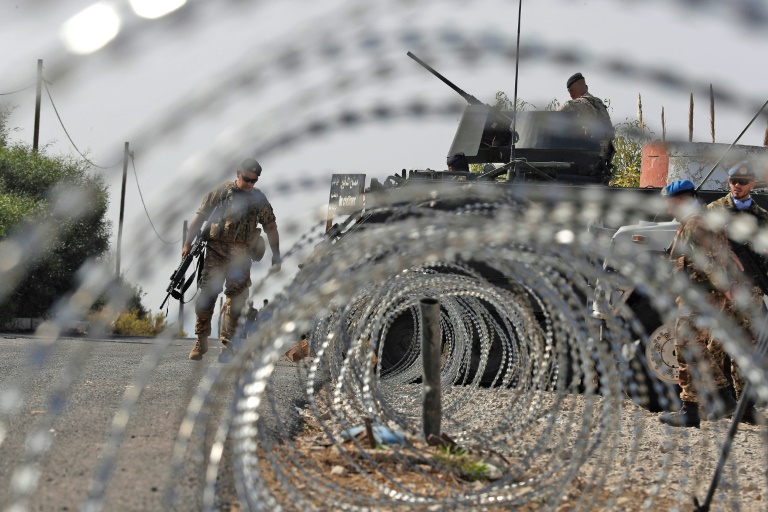
The exchange of letters is due to take place in the southern Lebanese town of Naqura, in the presence of US mediator Amos Hochstein and the United Nations’s special coordinator for Lebanon Joanna Wronecka.

Before signing it, Lapid had claimed on Thursday morning that Lebanon’s intention to ink the deal amounted to a de-facto recognition of the Jewish state.

– Delicate dance –

“It is not every day that an enemy state recognises the State of Israel, in a written agreement, in front of the entire international community,” he said, shortly before signing it in cabinet.

Aoun denied Lapid’s assertion, countering that “demarcating the southern maritime border is technical work that has no political implications”.

The deal comes as political parties in Israel — including Lapid’s centrist Yesh Atid – jockey for position in what will be the fifth general election in less than four years.

Veteran right-winger and longtime premier Benjamin Netanyahu has his sights set on a comeback and he dismissed the maritime deal as an “illegal ploy” early this month.

London-listed Energean on Wednesday said it began producing gas from Karish, an offshore field at the heart of the border agreement, a day after Israel gave the green light. 

Lebanon meanwhile will have full rights to operate and explore the so-called Qana or Sidon reservoir, parts of which falls in Israel’s territorial waters, with the Jewish state receiving some revenues.

– No quick fix –

With demand for gas rising worldwide because of the energy crisis sparked by Russia’s invasion of Ukraine, Lebanon hopes that exploiting the offshore field will help ease its financial and economic crisis.

But analysts caution that it will take time for production to start in Lebanese waters, meaning no quick return for a country that is desperately short of foreign exchange reserves. 

Exploration has so far only been tentative — a 2012 seismic study of a limited offshore area by the British firm Spectrum estimated recoverable gas reserves in Lebanon at 25.4 trillion cubic feet, although authorities in Lebanon have announced higher estimates. 

The maritime border deal could not be signed by Lebanon without the consent of Hezbollah, a powerful Shiite faction backed by Israel’s arch nemesis Iran.

Hezbollah had threatened over the summer to attack Israel if the Jewish state began extracting gas from the Karish field before reaching an agreement.

Israel and Hezbollah fought a 34-day war in 2006 and the Shiite movement is the only faction to have kept its weapons after the end of Lebanon’s 1975-1990 civil war.

Hezbollah’s leader Hasan Nasrallah is due to deliver a speech at 4:00pm on Thursday. 

Prince Harry to release memoir January 2023

Prince Harry will release his memoir next January, his publisher said Thursday, with the highly-anticipated account of life in the monarchy and after he quit royal duties landing just four months after the death of Queen Elizabeth II.

“We are excited to announce the remarkably personal and emotionally powerful story of Prince Harry, The Duke of Sussex,” Penguin Random House said on Twitter.

Titled “Spare,” the tell-all memoir that is expected to address the strains of Harry’s life in the public eye will hit the shelves on January 10, 2023.

On the book’s website, created by the publisher, it is described as a window into how the prince responded to the death of his mother Diana 25 years ago, and how his life has been affected since.

“With its raw, unflinching honesty, Spare is a landmark publication full of insight, revelation, self-examination, and hard-won wisdom about the eternal power of love over grief.” 

Diana, Princess of Wales, died in a high-speed car crash in Paris on August 31, 1997. Britain was plunged into an unprecedented outpouring of popular grief that jolted the monarchy, which was seen by some as out of touch with the moment.

Harry and his wife Meghan, Duchess of Sussex, stunned the monarchy by announcing they were quitting royal duties and moving to the United States in early 2020.

From there, they launched a series of broadsides criticizing their life in the institution, including claims of racism.

That exacerbated tensions with his older brother, heir to the throne Prince William — with whom he is reported to be barely on speaking terms — and their father, now King Charles III.

Harry and Meghan now live with their two children, Archie and Lilibet Mountbatten-Windsor, in California.

In July last year, Harry announced he was penning a memoir that would expose the “mistakes” and “lessons learned” across his life.

“I’m writing this not as the prince I was born but as the man I have become,” Harry said at the time. 

“I’ve worn many hats over the years, both literally and figuratively, and my hope is that in telling my story — the highs and lows, the mistakes, the lessons learned — I can help show that no matter where we come from, we have more in common than we think.

“I’m deeply grateful for the opportunity to share what I’ve learned over the course of my life so far and excited for people to read a firsthand account of my life that’s accurate and wholly truthful.”

“Spare” will be published in the United Kingdom, the United States, Canada, Ireland, Australia, New Zealand, India, and South Africa, the publisher’s website said. Published translations into 15 more languages are planned.

Harry will use proceeds from the memoir, which will be published in 16 languages, to donate to British charities, it added.

IEA sees global energy emissions peaking in 2025

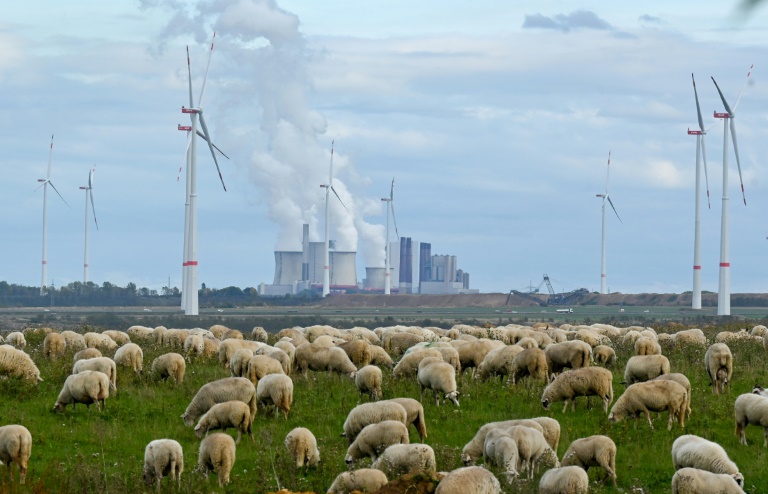
The International Energy Agency said Thursday it believes global energy emissions will peak in 2025 as surging prices due to the Russian invasion of Ukraine propel investment in renewables.

Only last year the IEA said there was “no clear peak in sight” in energy emissions, but the new higher investment in wind and solar is setting up demand for all fossil fuels to peak or plateau, leading to a drop in emissions.

“The global energy crisis triggered by Russia’s invasion of Ukraine is causing profound and long-lasting changes that have the potential to hasten the transition to a more sustainable and secure energy system,” the IEA said as it released its latest annual World Energy Outlook report.

Based on the latest measures and policies announced by governments in the face of soaring energy prices, the IEA forecasts global clean energy investment to rise by more than 50 percent from today’s levels to $2 trillion per year by 2030. 

Those measures will propel sustained gains in renewables and nuclear power.

“As a result, a high point for global emissions is reached in 2025,” the IEA said.

Global energy-related CO2 emissions are then set to fall back slowly from a high point of 37 billion tonnes per year to 32 billion tonnes by 2050, it added.

The Paris-based organisation, which advises energy-consuming nations, said that its forecast sees demand for all types of fossil fuels peaking or hitting a plateau.

Coal use, which has seen a temporary bump higher, will drop back in the next few years as more renewables come online.

Natural gas hits a plateau at the end of the decade, instead of the previous forecast of a steady rise.

Oil demand levels off in the mid-2030s and then gradually declines towards mid-century due to uptake of electric vehicles, instead of the earlier estimate of a steady increase.

Overall, the share of fossil fuels in the global energy mix in the IEA’s stated policies scenario falls from around 80 percent to just above 60 percent by 2050.

– Energy markets ‘changed’ –

“Energy markets and policies have changed as a result of Russia’s invasion of Ukraine, not just for the time being, but for decades to come,” said IEA Executive Director Fatih Birol in a statement as the report was released.

But that will still leave the world on track for a rise in global temperatures of around 2.5 degrees Celsius by the end of the century, which would likely trigger severe climate change impacts.

The IEA also has a scenario to arrive at zero net emissions in 2050, which is seen as necessary to hit the 1.5C warming target enshrined in the Paris climate pact.

That would require clean energy investments to rise to $4 trillion per year by 2030, instead of the current forecast of $2 trillion.

“The IEA, with all its expertise and authority is clear: clean energy investments must triple by 2030, and gas is a dead end,” said Laurence Tubiana, head of the European Climate Foundation and France’s former climate ambassador.

“The current European energy crisis clearly proves the dangers of gas: high price, volatility, geopolitical dependence,” she added.

“We are approaching to the end of the golden age of gas,” the IEA’s Birol said at a later news conference.

The IEA’s analyses show “that we are seeing a turning point in the history of energy and this crisis indeed accelerates clean energy transitions,” he added.

However Birol noted that energy security, not climate change, is “the biggest driver for renewable” energy development currently.

Another motivation is that governments want to ensure they have got in on the manufacturing of new renewable energy technologies.

“The three drivers, when they come together, is the reason I am optimistic we are going to see an acceleration of clean energy technologies,” Birol said.

– Russia takes $1tn hit –

The IEA’s analyses also concluded that this energy crisis has also harmed Russia’s long-term economic outlook. 

By reducing natural gas supplies to European nations it has not only pushed them to accelerate their transition to renewables, but reduced the attractivity of gas in security terms while making it expensive for developing markets.

“Russia’s role in the international energy affairs will be diminished, much diminished in terms of oil and gas trade,” said Birol.

“As a result of the decline in oil and gas sales between now and 2030, Russia will lose about $1 trillion in export revenues” according to IEA calculations, he added.

burs-rl/rox

IEA sees global energy emissions peaking in 2025

The International Energy Agency said Thursday it believes global energy emissions will peak in 2025 as surging prices due to the Russian invasion of Ukraine propel investment in renewables.

Only last year the IEA said there was “no clear peak in sight” in energy emissions, but the new higher investment in wind and solar is setting up demand for all fossil fuels to peak or plateau, leading to a drop in emissions.

“The global energy crisis triggered by Russia’s invasion of Ukraine is causing profound and long-lasting changes that have the potential to hasten the transition to a more sustainable and secure energy system,” the IEA said as it released its latest annual World Energy Outlook report.

Based on the latest measures and policies announced by governments in the face of soaring energy prices, the IEA forecasts global clean energy investment to rise by more than 50 percent from today’s levels to $2 trillion per year by 2030. 

Those measures will propel sustained gains in renewables and nuclear power.

“As a result, a high point for global emissions is reached in 2025,” the IEA said.

Global energy-related CO2 emissions are then set to fall back slowly from a high point of 37 billion tonnes per year to 32 billion tonnes by 2050, it added.

The Paris-based organisation, which advises energy-consuming nations, said that its forecast sees demand for all types of fossil fuels peaking or hitting a plateau.

Coal use, which has seen a temporary bump higher, will drop back in the next few years as more renewables come online.

Natural gas hits a plateau at the end of the decade, instead of the previous forecast of a steady rise.

Oil demand levels off in the mid-2030s and then gradually declines towards mid-century due to uptake of electric vehicles, instead of the earlier estimate of a steady increase.

Overall, the share of fossil fuels in the global energy mix in the IEA’s stated policies scenario falls from around 80 percent to just above 60 percent by 2050.

– Energy markets ‘changed’ –

“Energy markets and policies have changed as a result of Russia’s invasion of Ukraine, not just for the time being, but for decades to come,” said IEA Executive Director Fatih Birol in a statement as the report was released.

But that will still leave the world on track for a rise in global temperatures of around 2.5 degrees Celsius by the end of the century, which would likely trigger severe climate change impacts.

The IEA also has a scenario to arrive at zero net emissions in 2050, which is seen as necessary to hit the 1.5C warming target enshrined in the Paris climate pact.

That would require clean energy investments to rise to $4 trillion per year by 2030, instead of the current forecast of $2 trillion.

“The IEA, with all its expertise and authority is clear: clean energy investments must triple by 2030, and gas is a dead end,” said Laurence Tubiana, head of the European Climate Foundation and France’s former climate ambassador.

“The current European energy crisis clearly proves the dangers of gas: high price, volatility, geopolitical dependence,” she added.

“We are approaching to the end of the golden age of gas,” the IEA’s Birol said at a later news conference.

The IEA’s analyses show “that we are seeing a turning point in the history of energy and this crisis indeed accelerates clean energy transitions,” he added.

However Birol noted that energy security, not climate change, is “the biggest driver for renewable” energy development currently.

Another motivation is that governments want to ensure they have got in on the manufacturing of new renewable energy technologies.

“The three drivers, when they come together, is the reason I am optimistic we are going to see an acceleration of clean energy technologies,” Birol said.

– Russia takes $1tn hit –

The IEA’s analyses also concluded that this energy crisis has also harmed Russia’s long-term economic outlook. 

By reducing natural gas supplies to European nations it has not only pushed them to accelerate their transition to renewables, but reduced the attractivity of gas in security terms while making it expensive for developing markets.

“Russia’s role in the international energy affairs will be diminished, much diminished in terms of oil and gas trade,” said Birol.

“As a result of the decline in oil and gas sales between now and 2030, Russia will lose about $1 trillion in export revenues” according to IEA calculations, he added.

burs-rl/rox

Thai doctor recounts Mali kidnap ordeal

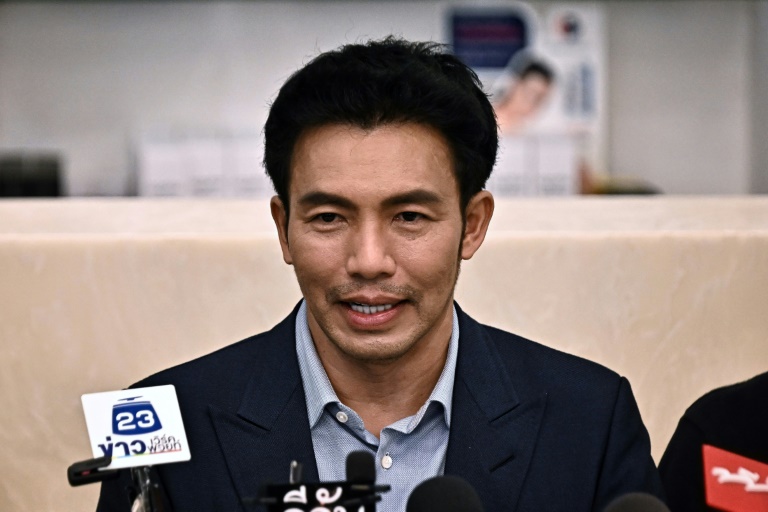
A Thai plastic surgeon on Thursday described drinking pond water to survive during three weeks of captivity at the hands of gun-toting kidnappers in Mali.

Nopparat Rattanawaraha, who also runs a popular YouTube channel where he posts travel clips, returned to Thailand after being released on payment of a reported $150,000 ransom.

The 49-year-old was back at work just a day after flying back to the kingdom, and recounted the dramatic moment he was seized while driving from Burkina Faso into Mali with a driver and guide.

After falling asleep in the car, Nopparat said he woke up to find himself surrounded.

“It was like a movie. There were five or six men carrying guns surrounding me but I couldn’t understand them,” he told Channel 3 television station.

“They told me to kneel down, put my hands behind my back and covered my eyes.”

The kidnappers took him to a remote location and he tried to stay calm and friendly, he said.

“They were not aggressive, they didn’t injure me. They spoke to me nicely,” he said, though food and drink were limited.

“I had to eat whatever there was. If there was no water, I needed to drink from the pond. Sometimes I could smell oil in it,” he said.

Helping him through was his homemade survival kit — a plastic bag containing mosquito repellent arm bands and herbal inhalers popular in Thailand.

In the third week of captivity, he was allowed to use the phone to speak to his mother and girlfriend, who spoke to the kidnappers to hear their ransom demands.

It has not been confirmed who paid the ransom, but the Thai police and foreign office helped to organise his return.

Nopparat said that while he did not feel immediately traumatised by his experience, he thought he would need professional counselling.

“You may see that I’m smiling right now, but before I shed a tear,” he said.

“I will need to seek (a) psychiatrist’s help later on.”

The United Nations recently urged action in Mali, Burkina Faso and neighbouring Niger following the “volatile” security situation, which has seen peacekeepers and civilians attacked by terror groups.

The three countries have struggled against a jihadist insurgency that has killed thousands of civilians, police and troops, while around two million people have fled their homes.

Germany's Scholz rejects Turkish claims against Greece

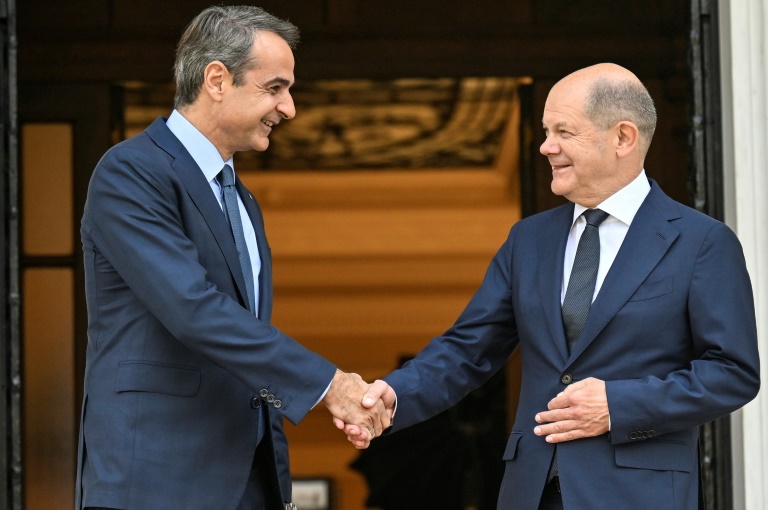
German Chancellor Olaf Scholz on Thursday rejected Turkish claims on the sovereignty of Greek islands, part of a barrage of verbal attacks from Ankara which the Greek PM termed “poison” and “lies”.

A NATO partner “should not” question the sovereignty of another member,” Scholz said in joint comments with Greek Prime Minister Kyriakos Mitsotakis.

“All such issues should be resolved on the basis of international law,” said the German leader, who is on his first visit to Greece as chancellor.

“It is truly a shame that (Turkish President Recep Tayyip) Erdogan cannot see he is heading towards an impasse, when he poisons his people with lies against Greece,” Mitsotakis added.

Greece and Turkey, which are both members of the US-led NATO defence alliance, have feuded for years over maritime borders and energy exploration rights in the Aegean and east Mediterranean seas.

In an interview with French weekly Le Point, also published on Thursday, Mitsotakis said the language used in “undeniably escalating rhetoric” by Erdogan and his senior officials in recent months was “unprecedented”.

Whilst acknowledging that Erdogan’s aggressiveness could be linked to a tough re-election campaign next year, Mitsotakis noted that Athens “cannot ignore that these statements confirm an aggressive and expansionist stance towards Greece”.

“President Erdogan… now says he could invade my country during the night,” the Greek premier said.

Erdogan has lately accused Greece of “occupying” Aegean islands whose status was settled in treaties adopted after World War I.

In response, Athens accuses Turkey of conducting hundreds of illegal military sorties over the islands.

“Our neighbours and all our partners know that the Greek islands threaten no-one,” Mitsotakis said at the news conference with Scholz.

“Everyone knows that international agreements do not change through arbitrary interpretations. Nor does history change through delusions, or geography through forged maps.”

Last month, the United States said that Greek sovereignty was not in doubt, after Turkey lodged a protest over the deployment of Greek armoured vehicles on the islands of Lesbos and Samos.

Close Bitnami banner
Bitnami