World

Britain's new PM delays crunch budget plan

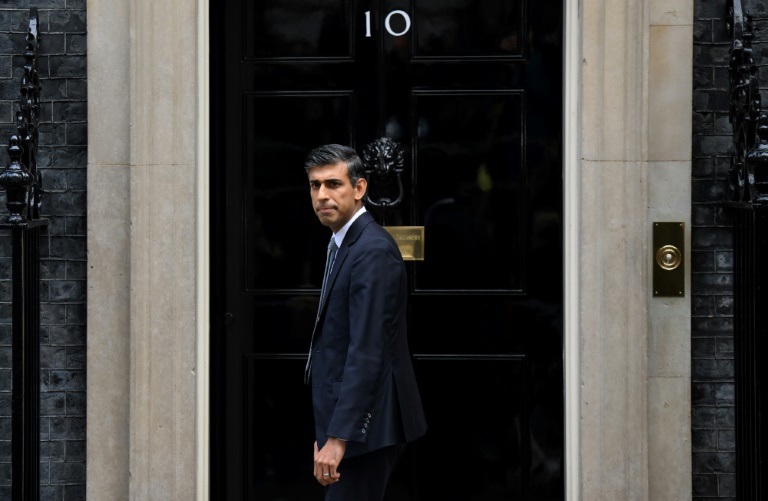
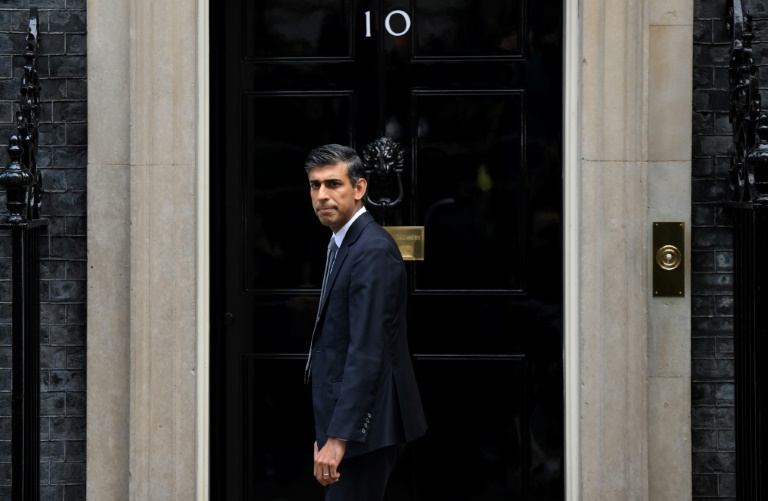
British Prime Minister Rishi Sunak on Wednesday postponed an eagerly awaited budget plan due next week, as the youthful new leader got down to business after weeks of political turmoil. 

Following a meeting of his new cabinet, Sunak was set to engage in his first parliamentary joust against opposition Labour leader Keir Starmer, who is demanding a snap general election.

“The Tories have crashed the economy, with low wages, high prices and a cost-of-living crisis,” Starmer said, in a taste of the attack to come during the Prime Minister’s Questions. 

“The public needs a fresh start and a say on Britain’s future.”

But Sunak, 42, ruled out an early election as he vowed stability and fiscal rectitude following his appointment by King Charles III on Tuesday to succeed Liz Truss after she served just 49 days in Downing Street.

After appointing the cabinet team, Sunak phoned the presidents of Ukraine and the United States to vow continuity on UK foreign policy, including resisting Russia’s invasion of its neighbour with cash and military aid.

But Chancellor of the Exchequer Jeremy Hunt — retained in Sunak’s cabinet along with other senior ministers — said that Monday’s planned “medium-term fiscal statement” was no longer so pressing.

Instead, there will be a full budget statement on November 17 to lay out the new government’s tax and spending plans, Hunt told reporters.

“Now, we have a new prime minister and the prospect of much longer-term stability for the economy,” he said, stressing the new plan would be accompanied by fresh economic forecasts from the Office for Budget Responsibility (OBR). 

– Promise to restore trust –

Hunt said he had discussed the delay with Bank of England governor Andrew Bailey — who had been blindsided by Truss’s previous ill-conceived plan for tax cuts financed by extra borrowing, which sent markets into a tailspin. 

The delay would ensure the budget can “stand the test of time” to give British mortgage holders and businesses more assurance, Hunt said, after the Truss plan provoked a damaging spike in borrowing costs and torpedoed her premiership.

Markets were unperturbed by the postponement, suggesting Hunt and Sunak have successfully calmed investor nerves.

Sunak vowed to restore “trust” and “integrity” in government after Truss’s financial carnage and the many controversies that brought down Boris Johnson before her.

But for critics, the new leader undermined his own pledges by also re-appointing the hardline right-winger Suella Braverman as interior minister, days after she was forced to resign for a security breach.

Foreign Secretary James Cleverly — also retained by Sunak — said Braverman had shown contrition for her “mistake” in emailing classified government documents outside her department.  

The documents reportedly included market-sensitive information from the OBR. 

Hunt declined to confirm this, while Cleverly denied allegations that Sunak reappointed Braverman after a secret deal securing her support against Johnson’s audacious comeback bid.

– ‘Livid’ –

As well as mending Britain’s wounded finances, Sunak is also pledging to reunite the Conservatives after another bruising leadership contest, mere weeks after Johnson was forced out.

The right-leaning Times daily welcomed a “generally broad and capable set of cabinet appointments”, although the left-wing Guardian expressed scepticism.

“Sooner or later, he will face the parliamentary disunity that his election sought to banish,” it said in an editorial. 

Sunak, finance minister under Johnson, also kept Truss’s defence, trade and culture ministers among others, as well as re-hiring some older faces from the Johnson cabinet.

The line-up “reflects a unified party and a cabinet with significant experience, ensuring that at this uncertain time there is continuity at the heart of government”, a Downing Street source said.

But Braverman’s return raised eyebrows across the political spectrum, with Labour demanding answers on the implications for national security. 

Cabinet secretary Simon Case, the UK’s most senior civil servant, was “livid” over her swift return, a source told The Times.

Truss left office as the UK’s shortest-serving premier in history, replaced by its youngest since 1812 and first Hindu leader.

Sunak triumphed in a 96-hour Tory leadership contest after rival contender Penny Mordaunt failed to secure enough nominations from Tory lawmakers and Johnson dramatically aborted his own bid.
Ethiopia peace talks enter day two in South Africa

The first formal peace talks between the warring sides in the brutal two-year conflict in Ethiopia’s Tigray region entered day two in South Africa on Wednesday.

Led by the African Union (AU), the negotiations in Pretoria follow a surge in fierce fighting in recent weeks that has alarmed the international community and triggered fears for civilians caught in the crossfire.

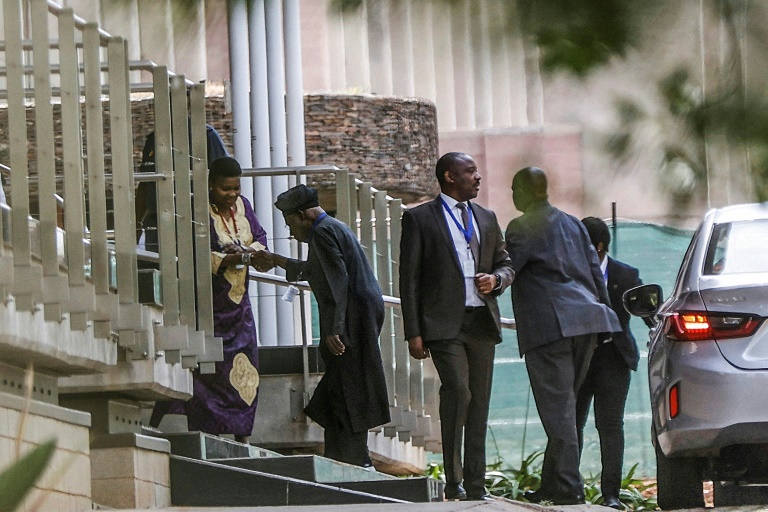
The talks are being held at South Africa’s foreign affairs ministry headquarters in Pretoria.

AU Horn of Africa envoy and Nigerian former president Olusegun Obasanjo, who is the talks’ chief facilitator, was photographed entering the meeting venue on Wednesday morning.

Kenya’s ex-president Uhuru Kenyatta who is part of the mediating team, was also seen entering the building.

South Africa’s ex-vice president Phumzile Mlambo-Ngcuka and a US envoy, Mike Hammer, are also participating.

The talks opened on Monday and are due to run until Sunday, according the South African presidency.

But there has so far been a media blackout with journalists kept outside the venue’s perimeter fence.

The dialogue between negotiators from the Ethiopian government of Prime Minister Abiy Ahmed and the regional authorities in war-stricken Tigray came almost two months to the day since fighting resumed, shattering a five-month truce.

The international community has been calling for an immediate ceasefire, humanitarian access to Tigray where many face hunger, and a withdrawal of Eritrean forces, whose return to the conflict has raised fears of renewed atrocities against civilians. 

“There is no military solution to this conflict, and these talks represent the most promising way to achieve lasting peace and prosperity for all Ethiopians,” US Secretary of State Antony Blinken said in an overnight statement welcoming the negotiations.

AU Commission chair Moussa Faki Mahamat welcomed the launch of the eagerly-awaited process.

He said he was “encouraged by the early demonstration of commitment to peace by the parties” and reiterated the AU’s continued support for a process “to silence the guns towards a united, stable, peaceful and resilient Ethiopia.”

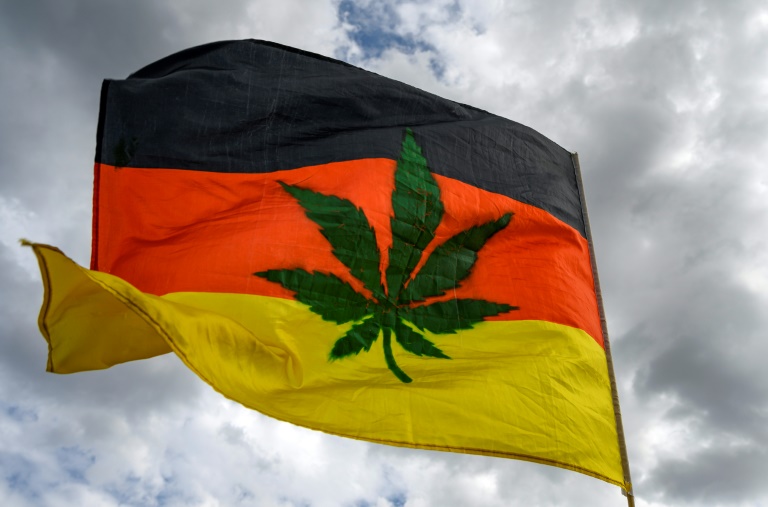
Germany agrees plan to legalise recreational cannabis

Germany on Wednesday paved the way to legalising the purchase and possession of small amounts of marijuana for recreational use, as well as its production.

“The federal cabinet today agreed the key points for the controlled distribution of cannabis to adults for recreational use,” Health Minister Karl Lauterbach said at a news conference.

The supply and use of the drug would be “permitted in a licensed and state-controlled framework”, Lauterbach said.

Under the proposals, people over 18 years old would be allowed to keep between “20 and 30 grams” of dried cannabis, which would be sold in authorised stores and pharmacies, according to a summary seen by AFP.

Germany would allow the domestic production of cannabis by licensed businesses, as well as giving adults the possibility to keep up to three plants for their own supply.

Advertisements for cannabis would be banned under the proposals, while packaging for cannabis products should be “neutral”.

Cannabis products sold to young adults under 21 years old could have a maximum strength but a general limit would not apply under the plans.

Current cannabis policies had failed to “ensure” health and youth protection aims, Lauterbach said.

“The trend is in the wrong direction and we also have a flourishing black market, which of course comes with criminality,” the health minister said.

Lauterbach did not provide a detailed timeline for the draft proposals to be turned into law but estimated that legalisation could come by 2024.

The eventual decriminalisation of cannabis will be reviewed after four years to assess the impact of the policy change.

Last year, Malta became the first country in Europe to formally legalise cannabis and its cultivation for personal use — although other countries tolerate it to varying degrees.

Germany’s neighbour Luxembourg is also looking to legalise the drug.

Euro back above dollar parity on US economic strains

The euro on Wednesday surged back above parity with the dollar, with the US currency sliding against its main rivals on concerns over the world’s biggest economy.

The euro bounced back above one dollar for the first time since mid-September, helped also by expectations of a big interest rate hike from the European Central Bank on Thursday.

There were large gains against the dollar also for the British pound and yen, helping them to recover some ground after recent sharp losses.

The dollar retreated following “a string of negative (US) economic data released since the beginning of the week”, noted ActivTrades senior analyst Ricardo Evangelista.

He said that poorly-received data, including slower house price growth and weaker consumer confidence, showed that big rate hikes from the Federal Reserve are “starting to open some cracks in the American economy. 

“The Federal Reserve has been hiking rates aggressively in an attempt to bring inflation under control, and the country’s economy is starting to suffer as a result,” Evangelista added.

Sterling on Wednesday jumped more than one percent against the dollar, winning a boost also from markets welcoming the appointment of Rishi Sunak as prime minister.

The move was seen as offering stability to the UK economy after weeks of upheaval fuelled by predecessor Liz Truss’s tax-cutting budget.

The dollar also slumped against the yen following recent 32-year highs, as the Bank of Japan holds off from raising interest rates.

– Stocks track earnings –

Stock markets were mixed Wednesday as traders digested another batch of earnings from some of the world’s biggest companies.

Banks are enjoying large profits as interest rates rise but there are concerns over bad loans with the global economy threatened by possible recession.

Shares in Barclays fell 1.3 percent despite the British bank announcing a 10-percent jump in quarterly net profits.

Google parent Alphabet meanwhile reported quarterly earnings that fell short of market expectations as belts tightened in the digital ad market that drives its revenue.

Alphabet shares slipped 6.8 percent to $97.35 in after-market trades that followed the release of the earnings report.

“When Google stumbles, it’s a bad omen for digital advertising at large,” said Insider Intelligence analyst Evelyn Mitchell.

“This disappointing quarter for Google signifies hard times ahead if market conditions continue to deteriorate.”

– Key figures around 0945 GMT –

Euro/dollar: UP at $1.0023 from $0.9971

Pound/dollar: UP at $1.1567 from $1.1478 on Tuesday

Dollar/yen: DOWN at 147.14 yen from 147.92 yen

Euro/pound: DOWN at 86.64 pence from 86.85 pence

London – FTSE 100: DOWN 0.4 percent at 6,983.15 points

Frankfurt – DAX: DOWN 0.5 percent at 13,115.31

Paris – CAC 40: UP 0.1 percent at 6,255.26

EURO STOXX 50: DOWN 0.1 percent at 3,580.76

Tokyo – Nikkei 225: UP 0.7 percent at 27,431.84 (close)

Hong Kong – Hang Seng Index: UP 1.0 percent at 15,317.67 (close)

Shanghai – Composite: UP 0.8 percent at 2,999.50 (close)

New York – Dow: UP 1.1 percent at 31,836.74 (close)

Brent North Sea crude: UP 0.4 percent at $93.89 per barrel

West Texas Intermediate: UP 0.6 percent at $85.82 per barrel

burs/bcp/rox

What next for S.Africa's Ramaphosa as party conference looms?

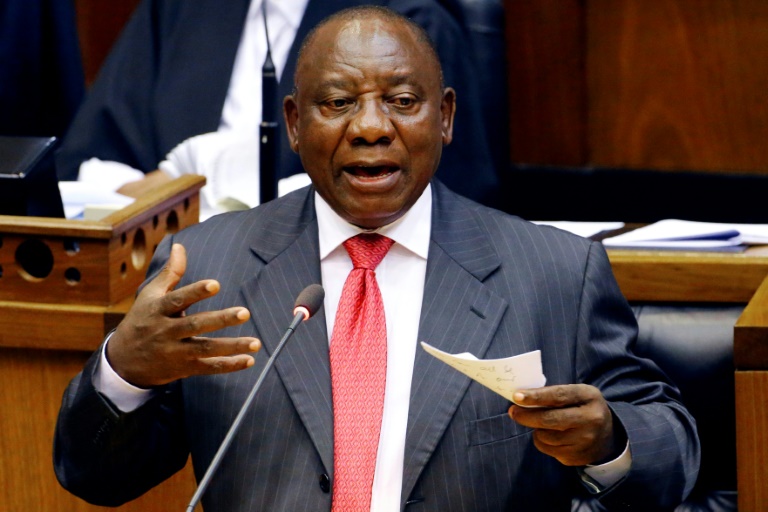
With less than two months to go until the African National Congress gathers to elect a leader, President Cyril Ramaphosa appears weakened as he seeks to retain the helm of South Africa’s fractured ruling party.

A scandal over millions of dollars allegedly found stashed at his luxury farmhouse has stained the image of Ramaphosa, who in 2018 had been trumpeted as a clean pair of hands after the graft-tainted era of Jacob Zuma.

With the ANC conference looming, analysts examine the prospects for the embattled 69-year-old former union leader and business tycoon.

– Can he stay in power? –

Commentators agree Ramaphosa stands a reasonable chance of staying on as leader of the ANC, the spearhead of the struggle against apartheid and South Africa’s ruling party since the advent of democracy in 1994.

He is “not in the strongest position, but still likely to win the race due to the lack of a stronger (rival),” said Pearl Mncube, an analyst at Frontline Africa Advisory, a Pretoria-based political risk advisory firm.

Ramaphosa’s opponents within the ANC have found fodder in the cash scandal that emerged in June.

The president is accused of hiding from police and tax authorities a 2020 break-in and cash heist from his farmhouse in the northern province of Limpopo.

“Groups opposing Ramaphosa have heavily weaponised the scandal (and) the economic woes facing the country,” Mncube said.

But “despite criticisms… he still enjoys significant support within the party”.

Susan Booysen, a professor at the University of the Witwatersrand, agreed that “there is still a pretty good chance that Ramaphosa will make it”.

Political analyst Eusebius McKaiser said Ramaphosa would “probably be okay”.

“But the degree of certainty has dropped and the reason for that is — although he is clearly still the frontrunner — his credibility (has been) dented.”

– Who are his key rivals? –

A few candidates have thrown their names in the ring to be the leader of the ANC.

Chief among them is Ramaphosa’s former health minister Zweli Mkhize, 66, who quit government last year amid allegations he diverted Covid funds. He has denied the accusations.

Senior cabinet minister Nkosazana Dlamini-Zuma, 73, the former chairwoman of the African Union Commission and Zuma’s ex-wife, who narrowly lost to Ramaphosa in the last vote more than four years ago, is another name being touted.

But analysts say Ramaphosa, a one-time favourite of anti-apartheid hero Nelson Mandela, remains the most attractive candidate.

“All the candidates are flawed and therefore there is no real threat,” said McKaiser.

“The reality is that for all the president’s weaknesses… relative to other candidates, he remains their best chance.”

– What about Zuma? –

Zuma, who faces corruption charges arising from a 1990s arms deal and has just ended a 15-month jail term for snubbing an anti-graft probe, has gone on the offensive.

He launched an unprecedented broadside against Ramaphosa at the weekend, accusing him of corruption and treason — an attack whose timing was seen as a deliberate move to smear his successor.

McKaiser dismissed the diatribe as “the rant of someone desperate to be an influencer” and said it was unlikely to shape the outcome of the election.

“Zuma’s influence is less than what he thinks it is,” he said.

Despite this, Zuma’s retains a hold over many ANC radicals, enabling him to stir resentment over deep-rooted poverty and inequality.

Ramaphosa “is still the strongest candidate but it’s going to be such a weak few years that follows for government and the ANC,” said Booysen.

That weakness may sap any political drive to reform South Africa’s economy, analysts say. The country is mired in low growth, catastrophically high unemployment and a failing energy system that has led to rolling blackouts.

Macron, Scholz set for frosty lunch amid Paris-Berlin tensions

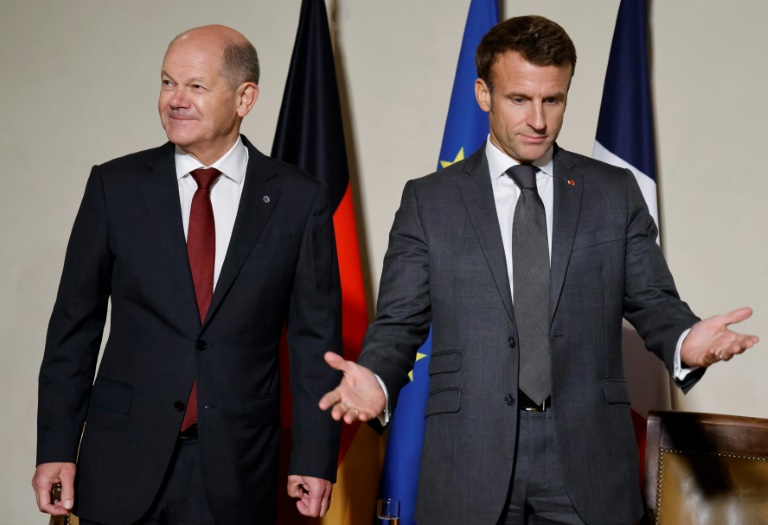
French President Emmanuel Macron will host German Chancellor Olaf Scholz for lunch Wednesday, with the leaders hoping to pare back differences on energy and defence and revitalise the European Union’s key double act.

Russia’s invasion of Ukraine — less than three months after Scholz took office last December — pitched their countries into crisis mode and decisions taken under the pressure of the war and its knock-on effects have raised hackles on both sides.

Berlin’s move to spend up to 200 billion euros ($200 billion) subsidising soaring gas prices and refusal to consider an EU-wide energy price cap nettled Paris and other European capitals, who fear the effect on their energy costs.

And France also sees commitments to cooperate on defence procurement floundering, given Germany’s plans for a shared missile shield with other NATO nations using American equipment.

Longer-term projects to jointly develop new fighter jets and tanks also face reluctance from big arms companies, which has worsened since war broke out.

The depth of the differences was laid bare by the recent delay to a regular joint cabinet meeting between Paris and Berlin, which would have been Scholz’s first as chancellor.

And limited expectations for Wednesday’s talks were clear from the schedule released by Macron’s Elysee Palace office, which did not provide for a joint press conference before or after the 12:30 pm (1030 GMT) lunch.

“The two leaders will continue their talks on defence, the economy and energy with the aim of strengthening Franco-German cooperation,” the presidency said in a statement.

– ‘Destabilising’ Ukraine war –

Differences between the EU’s two largest and most populous economies — in the past often the brokers of compromise among the bloc’s 27 members — have come at exactly the wrong time.

Russia’s invasion and the resulting disruption to the energy system have coincided with rising tensions between China and the West, as well as fears that more isolationist forces could return to power in Washington.

Berlin and Paris also differ on how to adapt the European Union to be more agile faced with the new challenges, and how quickly to admit new members.

“We can’t allow ourselves not to have a united, strong Europe at this moment in history,” former French foreign minister Dominique de Villepin warned on France Inter radio.

“That starts with a fruitful French-German dialogue,” he added.

Moscow’s burning of bridges with Europe means Germany faces “a change to its model whose destabilising nature must not be underestimated”, Macron has said.

That was made clear earlier this year, when Scholz announced a “new era” in German defence policy supported with massive spending on its creaking military.

Although Berlin’s allies welcomed the change of direction after years of under-investment, the flow of cash has not translated into big contracts for EU or especially French arms firms — one of the undertones of Macron’s calls for greater European sovereignty.

Instead Germany is rushing to buy big-ticket American-made items like F-35 fighter jets and Patriot air defence systems.

– ‘No fundamental crisis’ –

Many observers suggest that spats are inherent to the relationship between two large nations with interests that often diverge.

“The truth is that it’s a marriage of necessity” between France and Germany, a French diplomatic source said.

“This isn’t a fundamental crisis, it’s the basis of the relationship,” they added.

“This French-German relationship has always been made up of chilly patches, moments of tension and then warming up again,” agreed Alexandre Robinet-Borgomano, a German politics expert at French think-tank Institut Montaigne.

“It’s often during moments of crisis where a European response is indispensable that France and Germany manage to overcome their difference to propose a joint solution.”

“France is our closest ally. There has been a lot of speculation in recent days, but I think a lot of it’s made up,” a German government spokesman said.

In Brussels, “I trust in the determination of the French president and German chancellor,” European Council chief Charles Michel has said.

Britain's new PM eyes delay to crunch budget plan

British Prime Minister Rishi Sunak could postpone an eagerly-awaited budget plan due next week, a senior minister said Wednesday, as the youthful new leader gets down to business after weeks of political turmoil. 

Following a meeting of his new-look cabinet, Sunak was set to engage in his first parliamentary joust against opposition Labour leader Keir Starmer, who is demanding a snap general election.

“The Tories have crashed the economy, with low wages, high prices and a cost-of-living crisis,” Starmer said, in a taste of the attack to come. “The public needs a fresh start and a say on Britain’s future.”

But Sunak, 42, ruled out an early election as he vowed stability and fiscal rectitude following his appointment by King Charles III on Tuesday.

After appointing the cabinet team, Sunak phoned the presidents of Ukraine and the United States to vow continuity on UK foreign policy, including resisting Russia’s invasion of its neighbour with cash and military aid.

Foreign Secretary James Cleverly — one of several ministers retained by Sunak from the old cabinet of Liz Truss — said however that Monday’s “medium-term fiscal statement” was no longer so pressing.

The statement was forced on Truss after she caused financial markets to implode with an ill-conceived plan for tax cuts financed by extra borrowing. 

She ditched her finance minister and turned to a new one in Jeremy Hunt to steady the ship, but her own premiership was mortally wounded. 

Sunak also retained Hunt in his cabinet, and vowed to restore “trust” and “integrity” in government after Truss’s financial carnage and the many controversies that brought down Boris Johnson before her.

But for critics, the new leader undermined his own pledges by also re-appointing the hardline right-winger Suella Braverman as interior minister, days after she was forced to resign for a security breach.

Cleverly said Braverman had shown contrition for her “mistake” in emailing sensitive government documents outside her department. 

– ‘Livid’ –

On the fiscal statement, the foreign minister told BBC television that “a short delay, in order to make sure that we get this right, I think that is not necessarily a bad thing at all”.

“He will want some time with his chancellor (Hunt) to make sure that the fiscal statement matches his priorities,” Cleverly added, warning that further cuts to foreign aid might be necessary.

As well as mending Britain’s wounded finances, Sunak is also pledging to reunite the Conservatives after another bruising leadership contest, mere weeks after Johnson was forced out.

The right-leaning Times daily welcomed a “generally broad and capable set of cabinet appointments”, although the left-wing Guardian expressed scepticism.

“Sooner or later, he will face the parliamentary disunity that his election sought to banish,” it said in an editorial. 

Sunak, finance minister under Johnson, also kept Truss’s defence, trade and culture ministers among others, as well as re-hiring some older faces from the Johnson cabinet.

The line-up “reflects a unified party and a cabinet with significant experience, ensuring that at this uncertain time there is continuity at the heart of government”, a Downing Street source said.

But Braverman’s return raised eyebrows across the political spectrum, with Labour demanding answers to the implications for national security. 

Cabinet secretary Simon Case, the UK’s most senior civil servant, is “livid” over her swift return, a source told The Times.

Truss left office as the UK’s shortest-serving premier in history, replaced by its youngest since 1812 and first Hindu leader.

Sunak triumphed in a 96-hour Tory leadership contest after rival contender Penny Mordaunt failed to secure enough nominations from Tory lawmakers and Johnson dramatically aborted an audacious comeback bid.

Britain's new PM eyes delay to crunch budget plan

British Prime Minister Rishi Sunak could postpone an eagerly-awaited budget plan due next week, a senior minister said Wednesday, as the youthful new leader gets down to business after weeks of political turmoil. 

Following a meeting of his new-look cabinet, Sunak was set to engage in his first parliamentary joust against opposition Labour leader Keir Starmer, who is demanding a snap general election.

“The Tories have crashed the economy, with low wages, high prices and a cost-of-living crisis,” Starmer said, in a taste of the attack to come. “The public needs a fresh start and a say on Britain’s future.”

But Sunak, 42, ruled out an early election as he vowed stability and fiscal rectitude following his appointment by King Charles III on Tuesday.

After appointing the cabinet team, Sunak phoned the presidents of Ukraine and the United States to vow continuity on UK foreign policy, including resisting Russia’s invasion of its neighbour with cash and military aid.

Foreign Secretary James Cleverly — one of several ministers retained by Sunak from the old cabinet of Liz Truss — said however that Monday’s “medium-term fiscal statement” was no longer so pressing.

The statement was forced on Truss after she caused financial markets to implode with an ill-conceived plan for tax cuts financed by extra borrowing. 

She ditched her finance minister and turned to a new one in Jeremy Hunt to steady the ship, but her own premiership was mortally wounded. 

Sunak also retained Hunt in his cabinet, and vowed to restore “trust” and “integrity” in government after Truss’s financial carnage and the many controversies that brought down Boris Johnson before her.

But for critics, the new leader undermined his own pledges by also re-appointing the hardline right-winger Suella Braverman as interior minister, days after she was forced to resign for a security breach.

Cleverly said Braverman had shown contrition for her “mistake” in emailing sensitive government documents outside her department. 

– ‘Livid’ –

On the fiscal statement, the foreign minister told BBC television that “a short delay, in order to make sure that we get this right, I think that is not necessarily a bad thing at all”.

“He will want some time with his chancellor (Hunt) to make sure that the fiscal statement matches his priorities,” Cleverly added, warning that further cuts to foreign aid might be necessary.

As well as mending Britain’s wounded finances, Sunak is also pledging to reunite the Conservatives after another bruising leadership contest, mere weeks after Johnson was forced out.

The right-leaning Times daily welcomed a “generally broad and capable set of cabinet appointments”, although the left-wing Guardian expressed scepticism.

“Sooner or later, he will face the parliamentary disunity that his election sought to banish,” it said in an editorial. 

Sunak, finance minister under Johnson, also kept Truss’s defence, trade and culture ministers among others, as well as re-hiring some older faces from the Johnson cabinet.

The line-up “reflects a unified party and a cabinet with significant experience, ensuring that at this uncertain time there is continuity at the heart of government”, a Downing Street source said.

But Braverman’s return raised eyebrows across the political spectrum, with Labour demanding answers to the implications for national security. 

Cabinet secretary Simon Case, the UK’s most senior civil servant, is “livid” over her swift return, a source told The Times.

Truss left office as the UK’s shortest-serving premier in history, replaced by its youngest since 1812 and first Hindu leader.

Sunak triumphed in a 96-hour Tory leadership contest after rival contender Penny Mordaunt failed to secure enough nominations from Tory lawmakers and Johnson dramatically aborted an audacious comeback bid.

China Covid curbs disrupt production at world's biggest iPhone factory

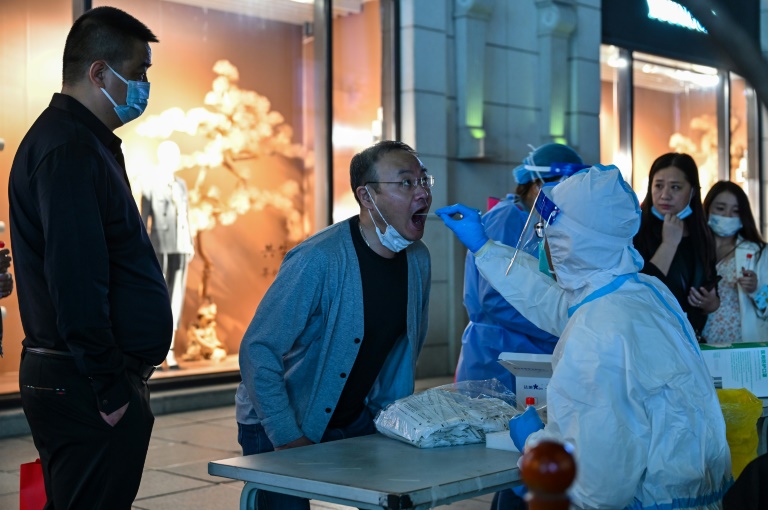
Millions of people in China were under tight Covid restrictions on Wednesday as sporadic outbreaks across the country prompted business closures and disruption at the world’s largest iPhone factory.

China is the last major economy welded to a zero-Covid strategy, persisting with snap lockdowns, mass testing and lengthy quarantines in a bid to keep infections to a minimum.

But fast-spreading virus variants have challenged that approach in recent months, with shutdowns and an ever-shifting patchwork of curbs sparking public exasperation and rare pockets of protest.

The world’s most populous nation recorded just 1,241 new local cases on Wednesday, the majority of which displayed no symptoms, according to the National Health Commission.

But they include an outbreak at a factory in the central city of Zhengzhou that employs around 300,000 people and is known as the largest producer of iPhones in the world.

Foxconn Technology Group, which runs the facility, acknowledged the flare-up on Wednesday but said “operation and production… is relatively stable”.

“Health and safety measures for employees (are) being maintained,” the Taiwanese electronics maker said, adding that it was “providing the necessary guarantees for livelihoods, including material supplies, psychological comfort and responsive feedback”.

The company did not specify how many staff were affected by the outbreak but said it was a “small number” and that unsubstantiated online rumours of tens of thousands of infections were “patently false”.

“At present, the epidemic prevention work in Zhengzhou is progressing steadily, and the impact… is controllable,” the statement said.

“The operating outlook for this quarter remains unchanged,” it added.

There were signs of further tightening in Beijing, with the capital’s Universal Resort theme park saying on Wednesday that it had “closed temporarily… to implement epidemic control requirements”.

“We will continue to evaluate the impact on operations and work hard to restore them as soon as possible”, the resort said on its official Weibo social media account, without giving a timeline for reopening.

– Inhalable vaccine –

Chinese authorities have shown little willingness to ease Covid measures even as the number of daily cases has diminished, with Japanese investment bank Nomura estimating this week that more than 200 million people are under some form of enhanced restrictions.

In the northwestern city of Xining — home to 2.5 million — residents complained on social media about grinding stay-home measures, with some making accusations of underreported cases that AFP was unable to verify.

“Xining is like Shanghai in April,” wrote one Weibo user, referencing the months-long lockdown that triggered isolated protests in the eastern megacity earlier this year.

But Shanghai’s situation has since improved, and officials there began rolling out an inhalable Covid vaccine on Wednesday in what is thought to be the first such campaign in the world.

The vaccine — produced by Tianjin-based manufacturer CanSino Biologics — was approved by domestic regulators last month and is being administered as a booster for those who have previously received a jab.

Footage posted on social media by local news outlets showed residents lifting translucent beakers to their lips and sucking in the mist-like vaccine through a nozzle.

Would-be crypto investors in Singapore could face risk tests

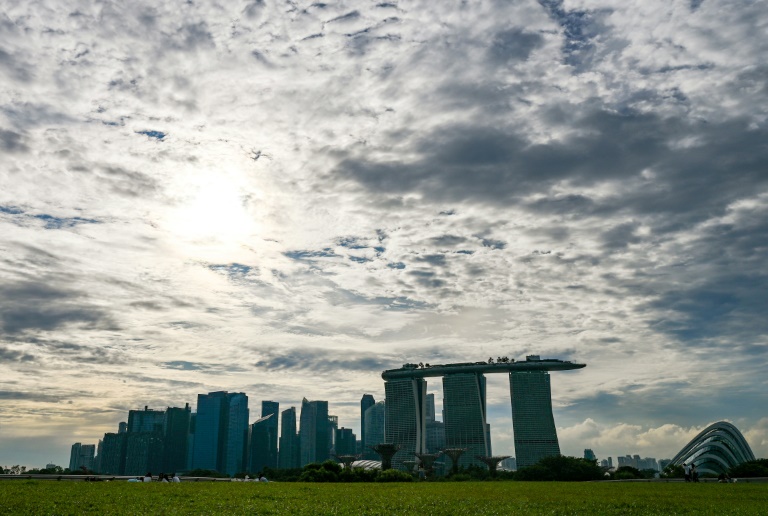
People looking to trade cryptocurrency in Singapore may soon have to take a test to prove they understand what they are getting into, the central bank said Wednesday, as it looks to prevent clueless investors from bankrupting themselves.

The Asian finance hub has taken cautious steps to expand its digital assets market, but has warned against the risks from trading in digital coins, especially among small investors lured by stories of quick riches.

“Trading in cryptocurrencies is highly risky and not suitable for the general public,” the Monetary Authority of Singapore (MAS) said as it unveiled proposals to protect traders.

“However, cryptocurrencies play a supporting role in the broader digital asset ecosystem and it would not be feasible to ban them.”

Under the plan, which will face public scrutiny before it can become legislation, the MAS will require cryptocurrency service providers to be more transparent in telling consumers about the risks so they could make informed choices.

Would-be investors must also take a test to assess their understanding of the risks before they are allowed to trade, and they will be barred from using credit cards or payment apps to buy the units.

If an applicant fails to answer the questions correctly, service providers can give them “educational materials… to strengthen the customer’s knowledge of the risks… This should not be limited to those questions to which the retail customer answered incorrectly”.

Incentives encouraging consumers to invest in crypto are disallowed, and service providers must also adhere to certain standards on how to carry out their business, the MAS said.

There has been a global push to regulate the crypto market following wild swings and a string of high-profile collapses, some of which took place in the city-state, hitting its reputation as a potential crypto hub.

In June, Singapore-based cryptocurrency hedge fund Three Arrows Capital collapsed, while Hodlnaut — a crypto lender based in the city-state — has been placed under interim judicial management.

Fugitive South Korean national Do Kwon, founder of cryptocurrency Terra, was also based in the city-state.

Despite the risks, digital currencies continue to attract investors because of reported big gains made over short periods and promotional endorsements encouraging the public to get into the market, the MAS said.

Cryptocurrencies are not backed by real-world assets, making them subject to huge price swings and trading in them is highly speculative.

Close Bitnami banner
Bitnami