World

Germany allows smaller Chinese stake in Hamburg port

Germany’s coalition government on Wednesday allowed a Chinese firm to take a smaller-than-planned stake in a Hamburg port, after Chancellor Olaf Scholz resisted calls to ban the controversial sale outright.

Under the compromise reached by Scholz’s cabinet, Chinese shipping giant Cosco will be allowed to buy a stake “below 25 percent” in a container terminal owned by HHLA, the economy ministry said in a statement.

“The reason for the partial prohibition is the existence of a threat to public order and safety.”

China’s state-owned Cosco had initially sought a 35-percent stake and the deal would have automatically gone ahead if a compromise solution hadn’t been found this week.

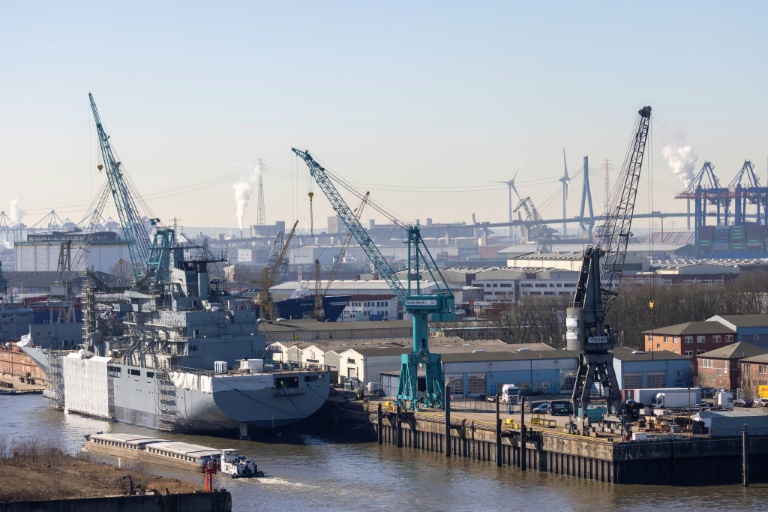
The fate of the Tollerort terminal at Hamburg’s port — Europe’s third busiest — has sparked a fierce row in Scholz’s coalition government, amid growing concern about critical infrastructure falling into foreign hands.

Scholz, a former Hamburg mayor, had supported the sale and has repeatedly stressed the importance of strong trade ties with China.

He is due to visit China next week, the first European Union leader to make the trip since November 2019.

But Scholz’s coalition partners the Greens and the FDP wanted to veto the Hamburg port deal, citing security risks.

Badly burnt by its over-reliance on Russian energy, many in Germany are also wary of becoming too dependent on China economically.

Six German ministries, including those of economy, defence and foreign affairs, had opposed the Cosco sale.

The European Commission had also expressed reservations about the deal, a source told AFP at the weekend.

The agreement to settle for allowing a reduced stake of 24.9 percent, thereby depriving Cosco of voting rights, “reduces the acquisition to a purely financial participation”, the economy ministry said.

But the face-saving compromise failed to silence some critics.

Anton Hofreiter, a Green party lawmaker and chairman of the German parliament’s European affairs committee, said greenlighting the deal was the wrong decision.

“(Scholz’s) argument… that this is a purely commercial project is fatally reminiscent of the statements on Russia and Nord Stream,” he told the Funke media group.

“The attitude can be described as naive at best. We urgently need a realistic view of China.”

Beijing meanwhile welcomed the deal’s sign off and accused critics of “hyping up” the acquisition.

“Cooperation is mutually beneficial. We hope the relevant parties will view pragmatic cooperation between China and Germany rationally and stop baselessly hyping it up,” said foreign ministry spokesman Wang Wenbin.

Germany allows smaller Chinese stake in Hamburg port

Germany’s coalition government on Wednesday allowed a Chinese firm to take a smaller-than-planned stake in a Hamburg port, after Chancellor Olaf Scholz resisted calls to ban the controversial sale outright.

Under the compromise reached by Scholz’s cabinet, Chinese shipping giant Cosco will be allowed to buy a stake “below 25 percent” in a container terminal owned by HHLA, the economy ministry said in a statement.

“The reason for the partial prohibition is the existence of a threat to public order and safety.”

China’s state-owned Cosco had initially sought a 35-percent stake and the deal would have automatically gone ahead if a compromise solution hadn’t been found this week.

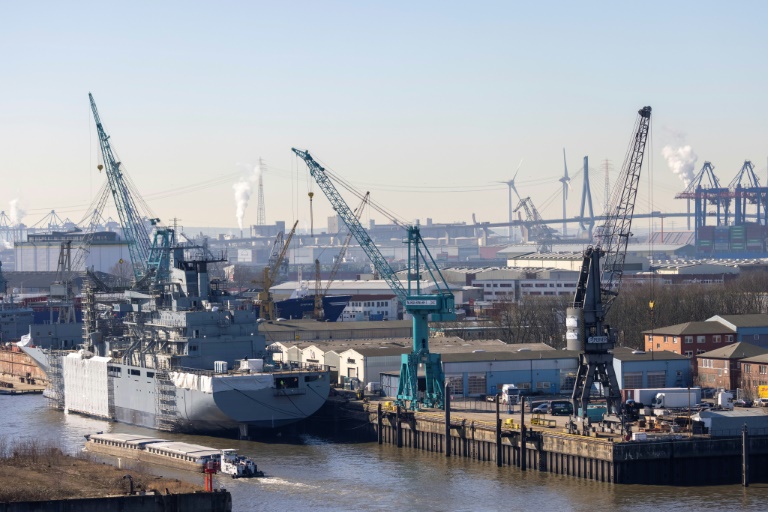
The fate of the Tollerort terminal at Hamburg’s port — Europe’s third busiest — has sparked a fierce row in Scholz’s coalition government, amid growing concern about critical infrastructure falling into foreign hands.

Scholz, a former Hamburg mayor, had supported the sale and has repeatedly stressed the importance of strong trade ties with China.

He is due to visit China next week, the first European Union leader to make the trip since November 2019.

But Scholz’s coalition partners the Greens and the FDP wanted to veto the Hamburg port deal, citing security risks.

Badly burnt by its over-reliance on Russian energy, many in Germany are also wary of becoming too dependent on China economically.

Six German ministries, including those of economy, defence and foreign affairs, had opposed the Cosco sale.

The European Commission had also expressed reservations about the deal, a source told AFP at the weekend.

The agreement to settle for allowing a reduced stake of 24.9 percent, thereby depriving Cosco of voting rights, “reduces the acquisition to a purely financial participation”, the economy ministry said.

But the face-saving compromise failed to silence some critics.

Anton Hofreiter, a Green party lawmaker and chairman of the German parliament’s European affairs committee, said greenlighting the deal was the wrong decision.

“(Scholz’s) argument… that this is a purely commercial project is fatally reminiscent of the statements on Russia and Nord Stream,” he told the Funke media group.

“The attitude can be described as naive at best. We urgently need a realistic view of China.”

Beijing meanwhile welcomed the deal’s sign off and accused critics of “hyping up” the acquisition.

“Cooperation is mutually beneficial. We hope the relevant parties will view pragmatic cooperation between China and Germany rationally and stop baselessly hyping it up,” said foreign ministry spokesman Wang Wenbin.

Markets rise with Wall St on rate hope, healthy earnings

Stocks rose Wednesday to build on another strong performance in New York following more healthy earnings from big-name firms while hopes for a slowdown in Federal Reserve rate hikes spread cheer.

Hong Kong and Shanghai enjoyed a much-needed advance after China’s central bank and forex officials pledged support for the country’s equities, bonds and yuan, helping investors bounce back from Monday’s rout.

The mood across trading floors has been generally positive this week after a report on Friday suggested the Fed could begin discussing applying the brakes on its monetary tightening campaign aimed at fighting decades-high inflation.

That came as some bank officials hinted they could be open to the prospect of hiking by less than the 75 basis points seen after the past three meetings.

And while a similar move is expected next month, there are flickers of hope that the pace could slow in December or next year.

Adding to that optimism was data indicating that higher borrowing costs were having an impact on the world’s biggest economy, with house prices falling, consumer confidence at a three-month low and weakness in the factory sector.

“A few economic reports all told a similar story… that the economy is weakening,” said OANDA’s Edward Moya. “A weakening economy will bring down inflation and that is good news for long-term investors looking to get back into equities.”

CMC Markets analyst Michael Hewson added: “There appears to be an increasing belief that a Fed pause is close.”

He pointed to comments from San Francisco Fed boss Mary Daley that it could be time to talk about stepping back after November’s hike.

All three main indexes on Wall Street rallied, with the Nasdaq up more than two percent, helped by a drop in Treasury yields.

Investors also welcomed another round of better-than-expected profits, this time from Coca-Cola and General Motors.

However, after-hours big misses from Microsoft, Texas Instruments and Google parent Alphabet soured the mood a little among tech investors and tempered early gains in Asia.

– China concerns –

The gains in Hong Kong came after it collapsed more than six percent Monday on concerns over Chinese President Xi Jinping’s plans, after he strengthened his grip on power and put in top jobs loyalists who backed his economically painful zero-Covid strategy.

News that part of the Chinese city of Wuhan had been put into lockdown reinforced market worries and helped pare the morning’s rally in Hong Kong and Shanghai. 

Still, helping the mood was China’s central bank and forex regulator saying they would maintain the development of stock and bond markets, and that the yuan would be “basically stable”.

The currency sank against the dollar Tuesday, with the onshore yuan hitting a 15-year low and the offshore unit at its lowest level since being allowed to trade overseas in 2010. 

Both clawed back some of their losses on Wednesday.

The remarks, however, were in response to the end of the Communist Party’s twice-a-decade gathering in Beijing rather than in reaction to the markets selloff, Bloomberg News reported.

Elsewhere, Tokyo, Sydney, Singapore, Seoul, Wellington, Taipei and Manila were also up.

London was flat while Paris and Frankfurt rose.

The prospect of a slowdown in US rate hikes helped weaken the dollar, which has surged against most currencies this year.

The yen, which touched a fresh 32-year low of 151.95 per dollar Friday, was back below 147, while the euro hovered just below $1.0 ahead of the European Central Bank’s policy meeting this week that is expected to end with another big rate hike.

And the pound was also just approaching $1.16 — the first time since mid-September — after former finance minister Rishi Sunak took over as UK prime minister.

His appointment provided a much-needed sense of stability to markets after weeks of upheaval fuelled by predecessor Liz Truss’s debt-fuelled tax-cutting budget last month.

– Key figures around 0810 GMT –

Tokyo – Nikkei 225: UP 0.7 percent at 27,431.84 (close)

Hong Kong – Hang Seng Index: UP 1.0 percent at 15,317.67 (close)

Shanghai – Composite: UP 0.8 percent at 2,999.50 (close)

London – FTSE 100: FLAT at 7,012.76

Pound/dollar: UP at $1.1583 from $1.1478 on Tuesday

Dollar/yen: DOWN at 146.84 yen from 147.92 yen

Euro/dollar: UP at $0.9996 from $0.9971

Euro/pound: UP at 86.62 pence from 86.85 pence

West Texas Intermediate: DOWN 0.9 percent at $84.59 per barrel

Brent North Sea crude: DOWN 1.1 percent at $92.49 per barrel

New York – Dow: UP 1.1 percent at 31,836.74 (close)

Mercedes-Benz to sell off Russian assets to local investor

German carmaker Mercedes-Benz is expected to sell its Russian assets to a local investor, the Russian ministry of industry and trade said Wednesday, becoming the latest automaker to exit since Moscow sent troops to Ukraine.

“Mercedes-Benz intends to sell its shares in Russian subsidiaries to a local investor,” Avtodom, the ministry said in a Telegram statement.

“The new owner of the Russian divisions of Mercedes-Benz, Avtodom, will be able to attract other companies as partners for joint productions,” the ministry added.

Mercedes-Benz confirmed it intended to sell in a separate statement. 

“The fulfilment of obligations to customers in Russia… as well as the preservation of jobs for employees of the Russian divisions of the company” were the priority in concluding the deal with Avtodom, general director of Mercedes-Benz-RUS Natalya Koroleva said. 

“The completion of the transaction is subject to the approval of all relevant authorities,” Mercedes-Benz said in the statement. 

Many Western companies left Russia for ethical or logistical reasons since Moscow launched what it calls a “special military operation” in Ukraine on February 24.

No financial details of the transaction were provided by either side on Wednesday.

Western sanctions imposed on Russia since the beginning of the Ukraine offensive have heavily disrupted supply chains.

The technology and car manufacturing sector were particularly affected. 

Mercedes-Benz to sell off Russian assets to local investor

German carmaker Mercedes-Benz is expected to sell its Russian assets to a local investor, the Russian ministry of industry and trade said Wednesday, becoming the latest automaker to exit since Moscow sent troops to Ukraine.

“Mercedes-Benz intends to sell its shares in Russian subsidiaries to a local investor,” Avtodom, the ministry said in a Telegram statement.

“The new owner of the Russian divisions of Mercedes-Benz, Avtodom, will be able to attract other companies as partners for joint productions,” the ministry added.

Mercedes-Benz confirmed it intended to sell in a separate statement. 

“The fulfilment of obligations to customers in Russia… as well as the preservation of jobs for employees of the Russian divisions of the company” were the priority in concluding the deal with Avtodom, general director of Mercedes-Benz-RUS Natalya Koroleva said. 

“The completion of the transaction is subject to the approval of all relevant authorities,” Mercedes-Benz said in the statement. 

Many Western companies left Russia for ethical or logistical reasons since Moscow launched what it calls a “special military operation” in Ukraine on February 24.

No financial details of the transaction were provided by either side on Wednesday.

Western sanctions imposed on Russia since the beginning of the Ukraine offensive have heavily disrupted supply chains.

The technology and car manufacturing sector were particularly affected. 

Britain's Sunak to make parliamentary debut as PM

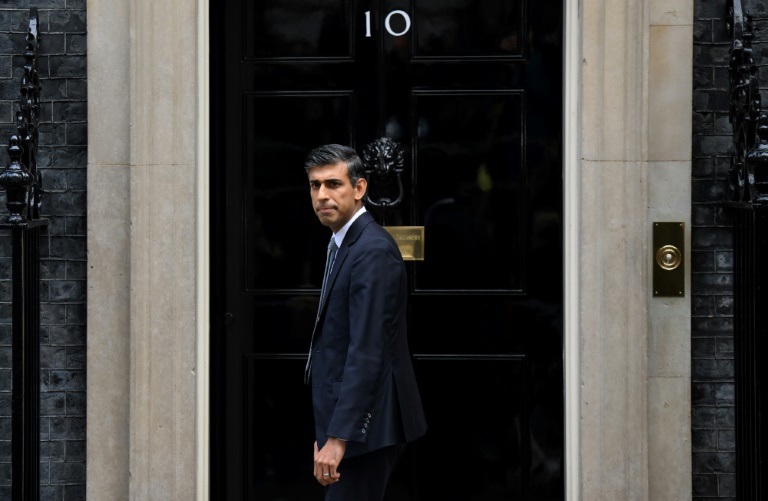
Rishi Sunak will on Wednesday face off against opposition lawmakers for the first time as British prime minister, in a likely raucous parliamentary session following weeks of political turmoil. 

His parliamentary debut as prime minister comes a day after he took power as the first UK leader of colour, vowing to repair the damage wrought by outgoing leader Liz Truss through her disastrous budget, which sparked economic carnage.

Sunak faces a daunting array of problems from the war in Ukraine to a cost-of-living crisis at home and expected budget cuts.

Asked about possible cuts to foreign aid Wednesday, Foreign Secretary James Cleverly said the government faced some difficult decisions.

He said Covid had been unprecedented and then “straight off the back of Covid, (Russian President Vladimir) Putin invaded Ukraine which then amplified the global challenges” the pandemic had created.

“We have got to be realistic because there are a whole bunch of realities domestically that we have got to address,” he told BBC radio.

Sunak on Tuesday also pledged to unite his fractured Conservatives and an increasingly unimpressed country, and began his tenure by re-appointing a host of ministers from his predecessor’s top team.

The right-leaning Times daily welcomed a “generally broad and capable set of cabinet appointments” although the left-wing Guardian expressed scepticism that he would be able to unite the party.

“Sooner or later, he will face the parliamentary disunity that his election sought to banish,” it said in an editorial. 

Sunak, finance minister under ex-premier Boris Johnson, retained Jeremy Hunt as chancellor of the exchequer, bidding to keep markets onside after he stabilised the situation with his initial appointment nearly two weeks ago.

He also kept Truss’s foreign, defence, trade and culture ministers, among others, as well as controversially bringing back recently fired Home Secretary Suella Braverman.

The line-up “reflects a unified party and a cabinet with significant experience, ensuring that at this uncertain time there is continuity at the heart of government”, a Downing Street source said.

The continuity cabinet could hold an inaugural meeting Wednesday before Sunak heads to the House of Commons for his first weekly “Prime Minister’s Questions”, when he will battle Labour leader Keir Starmer and other opposition lawmakers.

They will undoubtedly seek to capitalise on weeks of chaos at the top of government, and reiterate demands for a general election following the selection — by Conservative MPs — of their third leader in two months.

“The Tories have crashed the economy, with low wages, high prices and a cost-of-living crisis,” Starmer said Tuesday, in a taste of the attack lines to come. 

“The public needs a fresh start and a say on Britain’s future.”

– ‘Difficult decisions’ –

Truss left office as the UK’s shortest-serving premier in history, replaced by its youngest since 1812 and first Hindu leader.

Sunak, 42, triumphed in a 96-hour Tory leadership contest after rival contender Penny Mordaunt failed to secure enough nominations from Tory lawmakers and Johnson dramatically aborted an audacious comeback bid.

Truss and Johnson offered their support — though Johnson, who privately blamed his ex-minister for toppling him in July, is thought to be fuming and still harbouring hopes of an eventual Downing Street return.

In his first call with a foreign leader, Sunak told Ukrainian President Volodymyr Zelensky Britain would continue its “steadfast support” following Russia’s invasion.

He also spoke to US President Joe Biden, who had earlier hailed the appointment of the first British-Indian prime minister as “groundbreaking”.

European leaders offered their own congratulations, while Irish premier Micheal Martin reminded Sunak of their “shared responsibility” to safeguard peace in Northern Ireland following tensions under Johnson and Truss.

Sunak is unlikely to enjoy much, if any, of a political honeymoon due to the proliferation of issues waiting in his in tray.

Markets — and opposition parties — are eagerly awaiting an October 31 Halloween fiscal statement from Hunt, which is likely to contain curbs on public spending to meet tens of billions of pounds in budget shortfalls. 

Labour and others are expected to keep demanding a snap election — not due until January 2025 at the latest.

28 dead in Bangladesh cyclone, millions without power

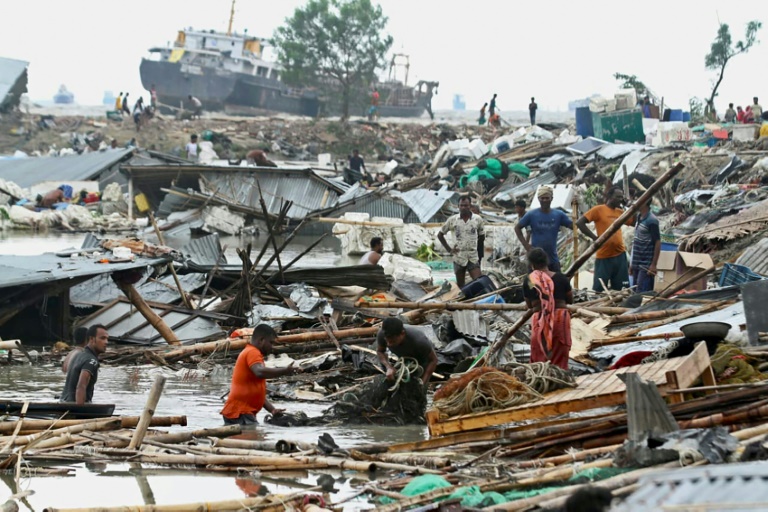
Bangladesh rescue workers found the bodies of four missing crew of a dredger boat, taking the death toll from Cyclone Sitrang to 28 as millions remained without power, officials said Wednesday.

Cyclones — the equivalent of hurricanes in the Atlantic or typhoons in the Pacific — are a regular menace in the region but scientists say climate change is likely making them more intense and frequent.

Cyclone Sitrang made landfall in southern Bangladesh on Monday but authorities managed to get about a million people to safety before the monster storm hit.

With winds of 80 kilometres (55 miles) per hour, it still left a trail of devastation in the country’s densely populated, low-lying coastal region, which is home to tens of millions of people.

The government said nearly 10,000 tin-roofed homes were either “destroyed or damaged” and crops on large swathes of farmland were wrecked at a time of record-high food inflation.

Fire department divers found the bodies of four crew of a dredger boat that sank during the storm in the Bay of Bengal.

“We found one body on Tuesday night and three more this morning. Four crew are still missing,” Abdullah Pasha from the fire department told AFP.

Nearly five million people were still without power on Wednesday, Rural Electrification Board official Debashish Chakrabarty told AFP. 

Nearly a million people who were evacuated from low-lying regions have now returned to their homes.

Trees were uprooted as far away as the capital Dhaka, hundreds of kilometres from the storm’s centre.

Heavy rains lashed much of the country, flooding cities such as Dhaka, Khulna and Barisal — which took on 324 millimetres (13 inches) of rainfall on Monday.

About 33,000 Rohingya refugees from Myanmar, controversially relocated from the mainland to a storm-prone island, were ordered to stay indoors but there were no reports of casualties or damage, officials said.

In recent years, better forecasting and more effective evacuation planning have dramatically reduced the death toll from such storms.

The worst recorded, in 1970, killed hundreds of thousands of people.

Deutsche Bank net profit soars five-fold in Q3

Germany’s biggest lender Deutsche Bank on Wednesday said its third-quarter net profit had risen more than five-fold year-on-year, far better than expected, as a restructuring programme bears fruit.

The group’s net profit between July and September reached 1.1 billion euros ($1.1 billion), compared with 194 million euros in the same period last year, it said in a statement.

It was higher than forecasts by analysts from Factset, who predicted a net profit of 809 million euros.  

Profits before tax hit 1.6 billion euros — the best third-quarter result since 2006, according to the bank. 

Revenues increased 15 percent year on year, to 6.9 billion euros. 

They were driven by corporate banking, with an increase of 25 percent to 1.6 billion euros, according to Deutsche Bank.

In the investment banking division, they rose six percent to 2.4 billion euros. 

The results “underline the successful transformation of our bank,” said Deutsche Bank CEO Christian Sewing.

Deutsche Bank launched a restructuring programme in July 2019, which saw the size of the investment banking division reduced, with the loss of thousands of jobs.

An uncertain outlook, due to the war in Ukraine and the risks of recession in Europe, led the bank to build up provisions of 350 million euros this quarter, up from 117 million in the same period a year earlier.

The bank also reduced its exposure to Russian credit in the third quarter.

Santander's net profit climbs to 2.4 bn euros in Q3

Spanish banking giant Banco Santander on Wednesday announced an 11-percent increase in net profits year-on-year in the third quarter.

The company posted a net profit of 2.42 billion euros ($2.41 billion) between July and September, thanks to strong commercial performance in Poland and Argentina.

It surpassed forecasts of analysts who expected a profit of 2.15 billion euros.

In the year to date profits climbed 25 percent to 7.32 billion euros.

Ana Botin, the executive chair of Banco Santander, said the group had delivered a “strong quarter with revenues increasing and profitability remaining above target… supported by our rock-solid balance sheet”.

She said that they expected the “macroeconomic environment to remain challenging as markets across Europe and North America adapt to levels of inflation not experienced in decades”.

The Spanish bank has 159 million customers worldwide, and said it saw revenues grow fastest in Argentina, Poland and Mexico.

The growth comes despite more pressures at home. Earlier this year the Spanish government said it would slap temporary taxes on banks and energy firms to cover the cost of state measures put in place to help Spaniards grapple with soaring inflation.

Socialist Prime Minister Pedro Sanchez told parliament that the new taxes on lenders should generate around 1.5 billion euros per year and will remain in place for two years.

Greeks turn to firewood to heat homes amid energy crisis

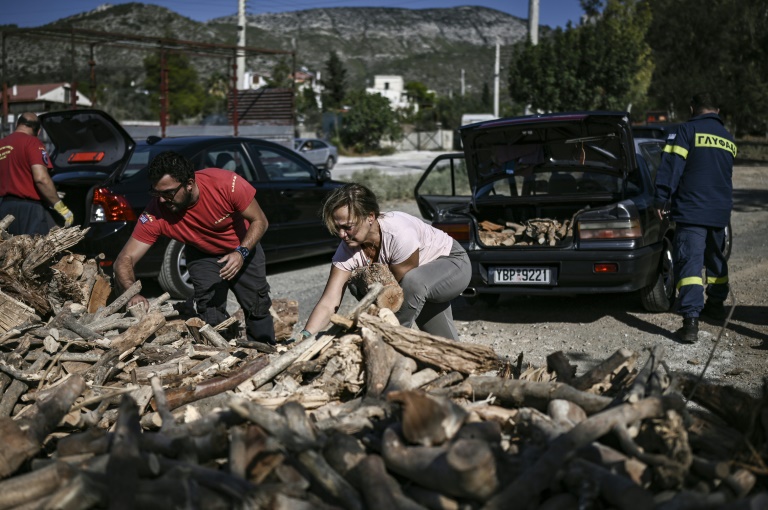
Residents of the Athens suburb of Glyfada who are struggling to heat their homes as energy prices soar now have an option — free firewood from the local council.

“We need it… especially in this difficult year,” says Yiannis Dimitrakopoulos, a 75-year-old pensioner queuing for logs. 

Dozens of people wait patiently in their cars for their turn. 

“We try to get as much wood as we can. We have a fuel oil central heating system but you never know,” says Erofili Generali, a teacher in her 50s.

She looks on while her husband fills the boot of their car with wood collected from local forests and parks.

Although temperatures in Glyfada remain fairly mild during the winter season, the inhabitants of this fashionable southern suburb, nicknamed the Athens Riviera, still need to heat their homes somewhat in winter. 

– Fuel oil and gas heating –

When natural gas prices more than quadrupled in September, many began to wonder how they would afford it.

Many Greeks are still recovering from the financial impact of the county’s decade-long economic crisis, and with inflation running at more than 10 percent for the last six months, the price of food and essential goods has shot up.

In Glyfada, which has a population of around 90,000, homes are mainly equipped with central heating systems that use fuel oil or, increasingly, natural gas.

“We feel betrayed about these exorbitant natural gas prices,” says Dimitrakopoulos.

He recalls how the Greek government has heavily promoted gas for heating in recent years.

Some homes in the area do have fireplaces, although these are not used as the main source of heating.

So the council has stepped in to help with free firewood.

“Many trees came down in a snowstorm in January, so we decided not to recycle the wood into industrial fuel like we used to,” explains Annie Kafka, Glyfada’s deputy civil protection officer.  

Instead, the wood was chopped up so the council could “offer it to households because of the energy crisis”.

Launched at the beginning of October, firewood distribution usually takes place twice a week. 

Approximately 3,000 households have already benefitted from the initiative. 

Meanwhile, demand is exploding. Some 14,000 people have registered on the council’s website, according to Kafka.

Households are notified by SMS when they can come and fill up their car boots. “Vulnerable families obviously have priority,” Kafka says.

– Air pollution –

In September, the council in Zografou, an eastern suburb of Athens, launched a similar initiative.

“The demand from our residents was impressive,” said local councillor Dimosthenis Bouloukos.

But in the country’s densely populated capital, the initiative has not been welcomed with the same enthusiasm, mainly due to environmental concerns.

“Burning wood adds significantly to air pollution, especially in big cities like Athens that already suffer from nitrogen oxide emissions,” explains Petros Varelidis, head of the Natural Environment and Climate Change Agency.

During Greece’s financial crisis, which lasted from 2008 to 2018, a large number of the city’s residents resorted to firewood to heat their homes as they could no longer afford fuel oil or gas.

As a result, Greece’s main cities found themselves shrouded in choking smog. 

But while Glyfada’s residents are aware of the environmental damage caused by burning wood, they argue that there is no other way, given the tough economic times that lie ahead.

“It’s a form of recycling, even if it is harmful,” says Dimitrakopoulos. “This year it’s justifiable.” 

Close Bitnami banner
Bitnami