World

Four Palestinians killed in Israeli raid in West Bank: Palestinian ministry 

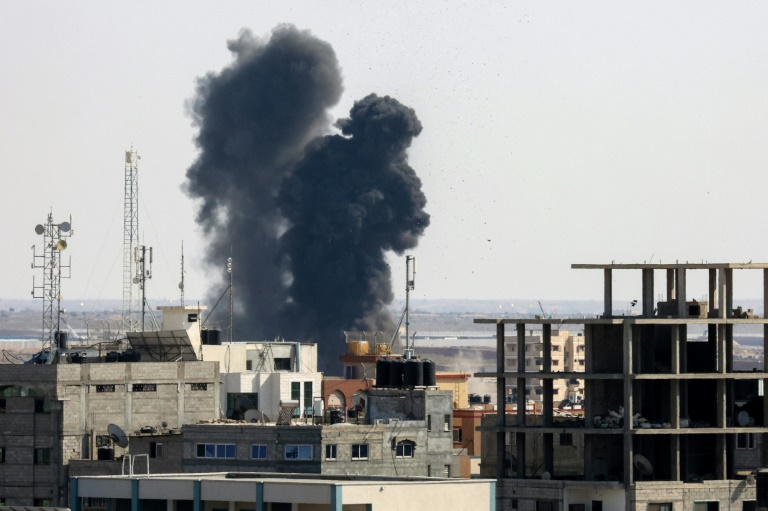
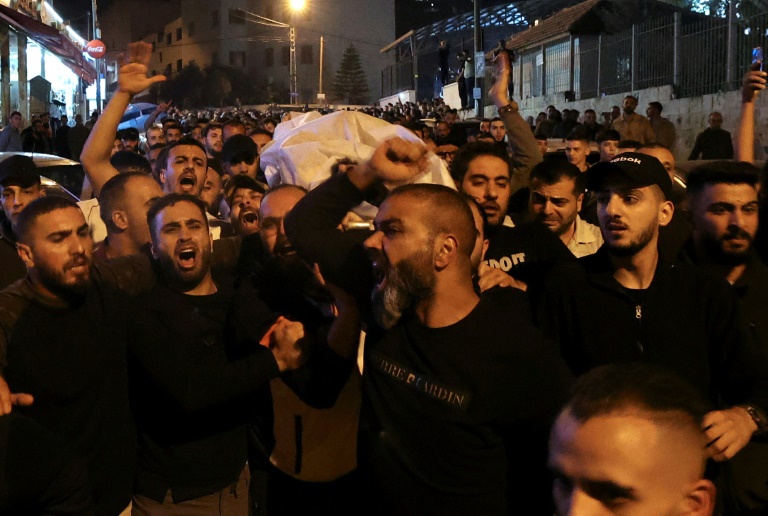
Four Palestinians were killed and nearly 20 others injured early Tuesday in raids by Israeli forces in the occupied West Bank, the Palestinian Health Ministry said. 

“There are three dead and 19 wounded, three of them seriously, by Israeli fire in Nablus,” the ministry said in a brief statement referring to a city in the occupied West Bank. 

The ministry later reported that another Palestinian was killed by Israeli fire, this time in Ramallah, home to the Palestinian Authority’s headquarters in the central West Bank.

The Israeli army confirmed in a joint statement with police and intelligence agencies that they had conducted a large-scale night operation in Nablus, raiding a “hideout apartment… that was used as a headquarters and explosives manufacturing site”.  

“The site was used by the main operatives of the ‘Lion’s Den’ terrorist group,” the statement said, referring to a new group of young Palestinian fighters who have carried out anti-Israeli operations in Nablus in recent weeks. 

“During the activity, multiple armed suspects were hit and Palestinian reports indicate that were multiple injuries.”

The Lion’s Den — called “Areen al-Ossoud” in Arabic — is composed of young Palestinian fighters, some of whom are affiliated with groups such as Fatah, Hamas and Islamic Jihad. 

They claimed responsibility for a deadly attack on an Israeli soldier two weeks ago in the occupied West Bank. 

Their late leader Ibrahim al-Nabulsi, nicknamed “The Lion of Nablus”, was known for galvanising the youth before he was shot dead by Israeli forces in August. He has since become a folk hero to Palestinians on social media.

In the aftermath of Nabulsi’s death, the Israeli army tightened its grip on the city, setting up controls to identify people leaving and constantly scanning the skies above with observation drones. 

On Saturday night, a Lions’ Den fighter, Tamer al-Kilani, was killed in the Old City of Nablus by an explosion attributed by the group and the Israeli press to a bomb remotely activated by the Israeli army. The army did not comment on these claims. 

After Tuesday’s early morning clash, Palestinian President Mahmud Abbas is establishing “urgent contacts in order to stop this aggression against our people”, his spokesman Nabil Abu Rudeinah said in a statement. 

The Palestinian Islamic Jihad also said in a statement its “fighters were involved in violent clashes” with Israeli forces in Nablus and threatened Israel with reprisals “against these crimes” there.

– ‘War crimes’ – 

Violence has surged in recent months in the northern West Bank, Palestinian territory occupied since 1967 by Israel, especially in the areas of Nablus and Jenin. 

Israeli soldiers have stepped up operations in both cities since March in the wake of deadly anti-Israeli attacks.

These raids, often accompanied by clashes with the Palestinian population, have resulted in more than a hundred deaths on the Palestinian side, the highest death toll in the West Bank in nearly seven years, according to the UN. 

Since the beginning of the month, more than 20 Palestinians and two Israeli soldiers have been killed, according to an AFP report.

Amnesty International on Tuesday called for an International Criminal Court probe into possible “war crimes” committed by both Israeli and Palestinian militants in August during deadly fighting in the Gaza Strip, a Palestinian enclave under Israeli blockade since 2007.

Thirty-one civilians were among the 49 Palestinians killed in the Gaza Strip during the three-day conflict, the global rights group said in a new report, which looked at three incidents in particular — two attributed to Israeli forces and one to Palestinian factions.

“The three deadly attacks we examined must be investigated as war crimes,” said Agnes Callamard, Amnesty International’s Secretary General. “All victims of unlawful attacks and their families deserve justice and reparations.”

Sunak to be appointed UK's third PM this year

Rishi Sunak will on Tuesday be installed as Britain’s third prime minister this year, replacing the humiliated Liz Truss after just seven weeks and inheriting a daunting array of problems.

Sunak became the ruling Conservatives’ new leader on Monday after rival contender Penny Mordaunt failed to secure enough nominations from Tory MPs, and Boris Johnson dramatically aborted a comeback bid.

The 42-year-old Hindu will be Britain’s first prime minister of colour and the youngest in more than two centuries.

Sunak will take power in a morning audience with King Charles III, who is anointing his first prime minister since ascending the throne just two days after his late mother Queen Elizabeth II appointed Truss.

The ceremony on September 6 was the last major public act of her record-breaking reign.

Truss will hold a final cabinet meeting before making a departing statement in Downing Street at around 10:15 am (0915 GMT), with Sunak expected to speak just over an hour later.

She leaves office as the shortest-serving premier in history, after a calamitous tax-slashing budget sparked economic and political turmoil.

The 47-year-old announced her resignation last Thursday, admitting she could not deliver her “mandate” from Conservative members — who had chosen her over Sunak in the summer.

He has now staged a stunning turnaround in political fortunes, and vows to do the same for Britain as it confronts decades-high inflation, surging borrowing costs and imminent recession. 

Addressing the public on Monday, Sunak promised “stability and unity” as well as bringing “our party and our country together”.

– ‘Choices’ –

After delivering the now all-too-familiar new leader’s speech from the steps of Number 10 at around 11:35 am, Britain’s fifth prime minister in six years will start appointing his top team before facing his first session of “Prime Minister’s Questions” in parliament on Wednesday.

Finance minister Jeremy Hunt, appointed by Truss just 11 days ago in an ultimately futile bid to salvage her premiership, could remain in the role after stabilising the markets.

He endorsed Sunak on Sunday, writing in the Telegraph that he was a leader “willing to make the choices necessary for our long-term prosperity”.

After reversing almost all of Truss’s various tax cuts, Hunt has warned “difficult decisions” loom over public spending.

Whoever heads the Treasury is set to unveil the government’s much-anticipated medium-term fiscal plans on October 31, Halloween, alongside independent assessments. 

Sunak must also decide whether to appoint to his cabinet senior MPs who did not support him, such as Mordaunt, in a bid to unify his fractured party. 

One so-called big beast unlikely to get a seat around the table is his former boss Johnson, who was driven out in July partly thanks to Sunak’s resignation.

The pair met late Saturday, when Johnson reportedly urged him to form a power-sharing partnership. 

The ex-leader had only secured the public backing of a few dozen Tory MPs, compared to well over 100 for Sunak, and the offer was rebuffed.

A day later, Johnson bowed to political reality and announced he would not move forward with his audacious comeback.

“You can’t govern effectively unless you have a united party in parliament,” he acknowledged.

– ‘No mandate’ –

Sunak, a wealthy descendant of immigrants from India and East Africa, is also facing calls for a general election after becoming the latest UK leader who lacks a direct mandate from the electorate.

Pollster Ipsos said Monday that 62 percent of voters want a vote by the end of the year.

“He has no mandate, no answers and no ideas,” Labour’s deputy leader Angela Rayner tweeted.

Scottish leader Nicola Sturgeon, whose nationalist government wants to hold an independence referendum next year, echoed the comments — while recognising the significance of Britain getting its first leader of colour.

The next election is not due until January 2025 at the latest and opposition parties have no way to force one, unless dozens of Conservative MPs acquiesce.

That appears unlikely as a flurry of polls show Labour with its largest lead in decades.

YouGov modelling Monday showed Sunak faces an uphill battle to restore confidence in both the Tories and himself.

Weekend responses from 12,000 people found that Labour leader Keir Starmer was seen as the “best prime minister” in 389 constituencies, compared with Sunak’s 127.

Will climate change doom US truck habit? Detroit says no

The US consumer’s love for enormous vehicles has been seen by outsiders as a curiosity and sometimes a sign of profligacy.

Either way, rising concerns about climate change seemed to create a reckoning for the behemoth-sized pickup trucks and sport utility vehicles that recently have sustained US automaker profits.

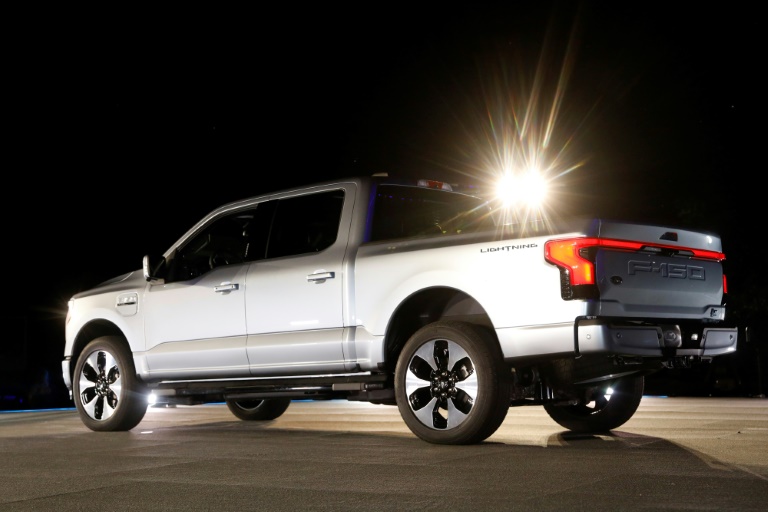
Not so, according to Detroit auto giants, who have responded to the climate crisis by launching all-electric versions of the Ford F-150 pickup, the Chevrolet Blazer SUV and other best-selling giants that seemingly promise the possibility that consumers can have it all: address global warming without sacrificing the appeal of larger autos.

Leading US environmentalists, along with the Biden administration, have praised announcements of the electric vehicle (EV) rollouts as a way to reduce greenhouse gas emissions.

Absent has been any discussion of the environmental toll of large EV trucks, which require more energy to recharge and more critical materials than do smaller EVs.

In showcasing trucks, Detroit automakers are setting the groundwork for an EV era that mirrors the current profile of US roadways and distinct from Europe, where sedans dominate.

Industry insiders like Alan Amici, president of the Center for Automotive Research, see little appetite among American consumers to go small.

“People are still clamoring for big pickups and SUVs,” Amici said. “I don’t expect a return to sedans.”

The trucks, often marketed in advertisements navigating rugged landscapes, provide lucrative profit margins to automakers and have become so ubiquitous on US roads that some consumers avoid smaller vehicles out of fear of how it would handle a crash with a much bigger auto.

Ford and General Motors, both of which report earnings this week, are positioning the vehicles as environmentally friendly based on how they contrast with gas-guzzling equivalents.

Luke Tonachel, who heads the clean vehicles program at environmental group NRDC, said electric pickups and SUVs represent a critical step in addressing climate change.

“It’s incredibly important that we eliminate tailpipe pollution from all cars as soon as possible,” Tonachel told AFP. 

“We need broad acceptance and adoption of EVs across the market. And that’s why it’s encouraging to see automakers starting to make EVs on all types of car segments, including the most popular ones.”

– Customer ‘has spoken’ –

The focus on large vehicles was apparent at last month’s Detroit Auto Show, where Biden test drove the EV Cadillac Lyriq, an SUV made by the GM brand. In previous trips to Detroit, Biden cheered on production of GM’s EV Hummer and the launch of Ford’s F-150 EV.

While GM’s display at the Detroit show included the Bolt, an EV sedan, greater prominence went to electric versions of three larger Chevies: the Silverado pickup, and the Blazer and Equinox SUVs. 

“The customer has spoken. SUVs and trucks are what the customer wants,” Chevrolet Vice President Steve Majoros told AFP at the show. 

NRDC’s Tonachel notes that some sedans still sell at substantial levels in the United States, but that they are made by companies like Japan’s Toyota and South Korea’s Hyundai.

“The different manufacturers are sort of carving out what they see as their specialty,” he said. “The Detroit three automakers, they left the compact car and most of the sedan market years ago.”

Bertrand Rakoto, global automotive practice leader at Ducker in Detroit, a consultancy, said it makes more sense to focus on trucks to fight climate change.

“You’re removing the emissions for the large vehicles that are the most emitting,” he said.

Rakoto, who is originally from France, said the contrast between the United States and Europe reflect different geographic qualities and transportation systems, with space in Europe more precious and public transit more integrated into regular life.

– Energy drain –

A December 2021 International Energy Agency report bemoaned the rise of SUVs, not only in the United States, but in India and Europe.  

Most of the vehicles still run on gasoline, meaning that “if SUVs were an individual country, they would rank sixth in the world for absolute emissions in 2021, emitting over 900 million tons of CO2,” the IEA said.

The analysis said SUV electrification helps, but noted larger vehicles require more critical materials for bigger batteries and consume around 20 percent more energy than a medium-sized car.

For Benjamin Stephan, of Greenpeace in Germany, limiting global warming remains critical, meaning “you sort of have to pull every lever available.”

“Obviously an all-electric pickup truck will have a much better carbon footprint,” he said. “But you could reduce that footprint even more by having no car at all, or a much smaller car.”

Amnesty urges ICC probe of possible Gaza war crimes

Amnesty International on Tuesday called for an International Criminal Court (ICC) probe into possible war crimes committed in August by both Israeli forces and Palestinian militants during deadly fighting in Gaza.

Thirty-one civilians were among the 49 Palestinians killed in the Israeli-blockaded Gaza Strip during the three-day conflict, the global rights group said in a new report.

The London-based organisation pressed the ICC to “urgently investigate any apparent war crimes committed during the August 2022 Israeli offensive” in the Palestinian enclave.

“Amnesty International has collected and analysed new evidence of unlawful attacks, including possible war crimes, committed by both Israeli forces and Palestinian armed groups,” it said.

The report detailed a strike that hit the Jabalia refugee camp in northern Gaza, killing seven civilians.

The bombing was “likely to have been caused by a rocket launched by Palestinian armed groups that misfired”, Amnesty said.

Fighting began on August 5 when Israel targeted the Islamic Jihad militant group in what it said were pre-emptive strikes to avert attacks.

The Palestinian organisation responded with barrages of rocket fire that did not result in any Israeli casualties.

Amnesty’s research found that an attack in which five children were killed at a cemetery “was likely to have been carried out by an Israeli guided missile fired by a drone”.

A third incident Amnesty said may amount to a war crime was Israeli tank fire on a house in the southern Khan Yunis area, which killed one civilian.

The International Criminal Court has opened an investigation into the Israeli-Palestinian conflict, expected to focus in part on possible war crimes committed during the 2014 conflict in Gaza.

The probe is supported by the Palestinian Authority, but Israel is not an ICC member and disputes its jurisdiction.

The violence in August was preceded by four wars between Israel and Palestinian militants in Gaza since 2008.

The Palestinian enclave has been under a crippling Israeli-led blockade since 2007, imposed after the Islamist movement Hamas took control of the territory.

Hamas said its militants did not participate in the August conflict.

Trump family business fraud trial opens

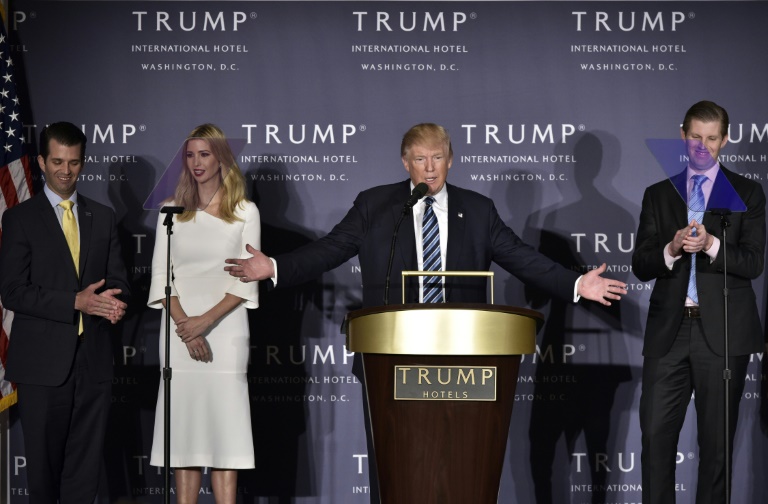
The trial of Donald Trump’s family business on fraud and tax evasion charges began in New York on Monday, with the former US president immediately dismissing as it as a political stunt.

Manhattan prosecutors have charged the Trump Organization, currently run by Trump’s two adult sons, Donald Jr and Eric Trump, with hiding compensation it paid to top executives between 2005 and 2021.

Trump, who is not named in the case, slammed the charges as a “witch hunt” by rivals, weeks ahead of congressional elections on November 8.

“The highly partisan Democrat Witch Hunt goes on, this time in New York… right during the important Mid-Term Elections, of course,” he said on social media.

The company faces potential fines of over $1.5 million if found guilty.

US news outlets said Judge Juan Merchan had made media access to the courtroom difficult and had warned the 130 jury candidates that their selection could take a week, so as to filter out any supporters or open opponents of the divisive former Republican president. 

The trial could last a month and a half, he said.

One of the implicated executives, longtime CFO Allen Weisselberg, has already pleaded guilty to 15 counts of tax fraud, and is expected to testify against his former company as part of a plea bargain.

A close friend of the Trump family, the 75-year-old Weisselberg admitted he schemed with the company to receive undeclared benefits such as a rent-free apartment in a posh Manhattan neighborhood, luxury cars for him and his wife and private school tuition for his grandchildren.

According to his plea deal, Weisselberg has agreed to pay nearly $2 million in fines and penalties and complete a five-month prison sentence in exchange for testimony during the trial, for which jury selection began Monday.

“This plea agreement directly implicates the Trump Organization in a wide range of criminal activity and requires Weisselberg to provide invaluable testimony in the upcoming trial against the corporation,” Manhattan District Attorney Alvin Bragg said in August.

Weisselberg has so far refused to give testimony directly implicating the former president in the scheme.

– Multiple legal cases –

Two subsidiaries of the Trump family’s sprawling real estate, golf and hospitality business are targeted by the suits.

While Donald Trump is not named in this case, he is facing charges along with three of his eldest children in a civil investigation led by New York’s attorney general, Leticia James.

James, a Democrat, has accused the family of purposefully inflating and deflating the value of their properties to avoid tax liabilities and to get more favorable loan and insurance deals.

Her office is seeking $250 million in fines against the former president, and that his family be barred from conducting business in the state.

The suit also calls for three of Trump’s children — Donald Jr, Eric and Ivanka — to be barred from purchasing real estate in New York for five years.

The 76-year-old Trump, who has heavily hinted at but not yet announced a 2024 White House run, is also facing legal action on several other fronts.

He is at the center of a Justice Department investigation into the handling of highly classified documents, which the FBI seized from his Florida home in a raid, as well as multiple state and federal probes into his involvement in the January 6, 2021, attack on the US Capitol.

The congressional committee investigating the Capitol riot has issued a subpoena requiring him to submit documents by November 4 and give sworn testimony by mid-November.

Without confirming that Trump had received the subpoena, his lawyer David Warrington has said his team would “review and analyze” the document and “respond as appropriate to this unprecedented action.”

Trump’s compliance would mean testifying under oath.

If he refuses, the House of Representatives can hold him in criminal contempt in a vote recommending him for prosecution. 

NATO warns Russia against 'dirty bomb' pretext

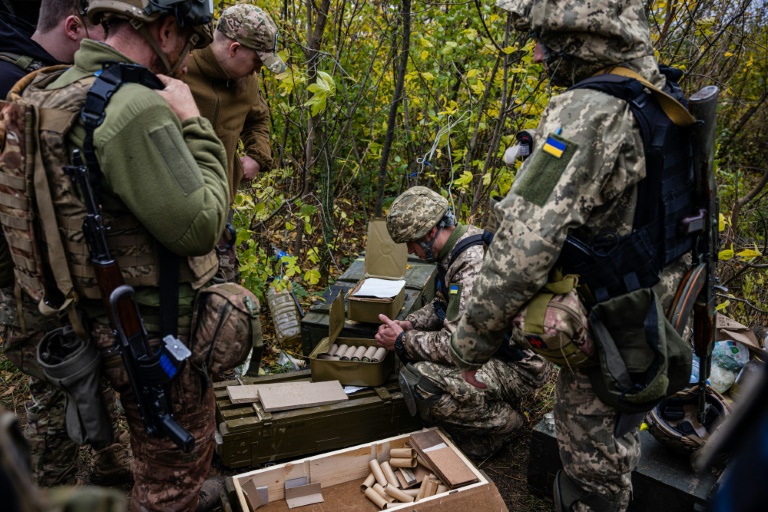
Russia must not escalate the conflict in Ukraine with false claims that Kyiv is planning to unleash a so-called “dirty bomb”, the head of NATO warned Monday.

Jens Stoltenberg weighed in following Moscow’s repeated allegations that Ukraine could deploy such a weapon, sparking fears Russia could use one and blame Kyiv.

The head of the US-led military alliance said he had spoken with Pentagon chief Lloyd Austin and Britain’s Defence Secretary Ben Wallace “about Russia’s false claim that Ukraine is preparing to use a dirty bomb on its own territory.”

“NATO Allies reject this allegation. Russia must not use it as a pretext for escalation. We remain steadfast in our support for Ukraine,” he wrote on Twitter.

Moscow has alleged that Ukraine is close to developing a dirty bomb, and Foreign Minister Sergei Lavrov insisted the threat is real.

“This is not empty information… there are serious suspicions that such things may be planned”, Lavrov said, adding: “We have a keen interest in preventing such a terrible provocation.”

But State Department spokesman Ned Price said Washington is worried that Russia’s claims could be a cover.

“We have seen a pattern in this conflict and the lead-up to this war where the Russians have engaged in mirror imaging — the Russians have accused the Ukrainians, the Russians have accused other countries of what itself was planning. That is our concern”, Price said.

The head of the Russian army Valery Gerasimov repeated Moscow’s claims in a telephone call with his US counterpart on Monday, the defence ministry said. 

The call was the latest in a string of conversations between Russian defence officials and counterparts from NATO countries, during which Moscow said, without providing evidence, that Kyiv was planning to deploy a dirty bomb.

In a statement on Monday, Russian Lieutenant General Igor Kirillov said: “According to the information we have, two organisations in Ukraine have specific instructions to create a so-called ‘dirty bomb’. This work is in its final stage”. 

At its most basic, a dirty bomb is a conventional weapon laced with radioactive, biological or chemical materials that are disseminated in an explosion.

Moscow’s claims follow weeks of military defeats for Russia in southern and eastern Ukraine, with observers and Kyiv saying the Kremlin is becoming increasingly desperate.

In Kyiv’s latest announcement of territorial gains, the Ukrainian military claims to have pushed Russian forces from several villages in the northeast of the country.

– Inspection mission –

“Due to successful actions, our troops pushed the enemy out of the settlements of Karmazynivka, Myasozharivka and Nevske in the Lugansk region and Novosadove in Donetsk region,” the Ukrainian military said in a statement.

Both Kyiv and its allies have fiercely rejected the dirty bomb claims, which follow thinly veiled threats from Moscow of potential nuclear escalation.

Ukrainian Foreign Minister Dmytro Kuleba said the head of the United Nations nuclear agency (IAEA), Rafael Grossi, accepted his request to “urgently send experts to peaceful facilities in Ukraine, which Russia deceitfully claims to be developing a dirty bomb.”

The IAEA confirmed in a statement that it would visit two Ukrainian facilities “in the coming days.”

Britain, the United States and France also issued a joint statement dismissing the Russian claims.

“Our countries made clear that we all reject Russia’s transparently false allegations that Ukraine is preparing to use a dirty bomb on its own territory,” the statement said.

With the help of Western-supplied heavy weapons, Ukraine has managed to claw back swathes of its territory from Russia in the east and south, while its power grid has been pummelled ahead of winter.

As momentum has swung toward Ukraine, Russian President Vladimir Putin has faced fissures in domestic support for his campaign, as a messy troop draft and battlefield losses challenged the prospect of a quick conclusion.

The Kremlin meanwhile said on Monday that France and Germany were showing “no desire” to participate in mediation on the conflict and praised Turkish President Recep Tayyip Erdogan’s offer to organise talks.

Turkey helped broker the deal that allowed grain exports to resume under the UN’s aegis in July, and played a role in a prisoner swap in September, one of the largest exchanges.

Cyclone Sitrang hits Bangladesh, hundreds of thousands of people evacuated

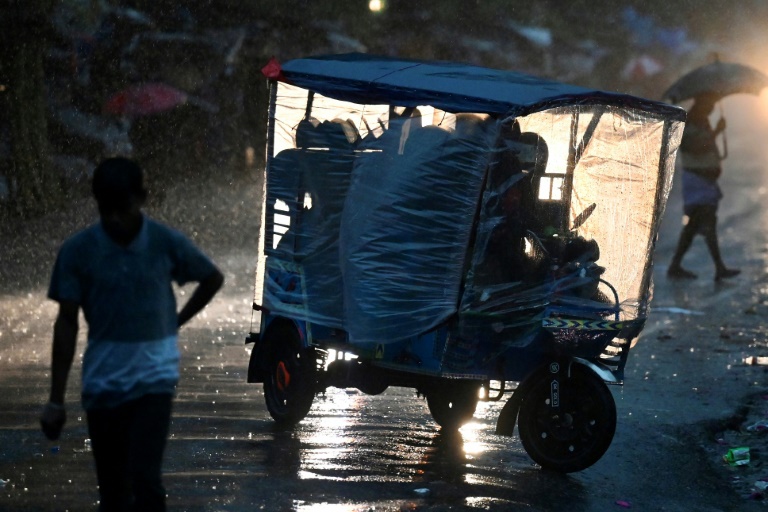
Cyclone Sitrang slammed into densely-populated, low-lying Bangladesh late Monday, killing at least five people as authorities fearing heavy rain and storm surge rushed to move hundreds of thousands out of the system’s path.

Sitrang, packing winds of 80 kilometers (50 miles) per hour, made landfall along the Chittagong-Barisal coast around 9:00 pm (1500 GMT), government meteorologist Abul Kalam Mallick told AFP.

The storm was moving swiftly over the country’s southern region and its outer bands were already impacting Dhaka, hundreds of kilometers away from the Bay of Bengal, with trees uprooted and roads flooded in the capital. 

Mallick said some coastal towns had received nearly 294 milimetres (12 inches) of rainfall. 

At least five people had been killed  in the districts of Barguna, Narail, Sirajganj and the island district of Bhola, disaster ministry control room spokesman Nikhil Sarker told AFP.

“The casualties may rise as we are hearing from our officials from some other districts as well,” he said.

Cyclones — the equivalent of hurricanes in the North Atlantic or typhoons in the Northwest Pacific — are a regular and deadly menace on the coast of the northern Indian Ocean where tens of millions of people live.

But scientists say climate change is likely making them more intense and frequent, and Bangladesh is already rated by the United Nations as one of the countries most affected by extreme weather events since the turn of the century.

Most worrying for authorities was the predicted storm surge of up to three metres (10 feet) above normal tide levels, which could inundate areas home to millions of people.

About 33,000 Rohingya refugees from Myanmar, controversially relocated to a storm-prone island in the Bay of Bengal, were advised to remain indoors.

The newly-formed silt island of Bhashan Char, where Bangladesh has been relocating Rohingya refugees to alleviate overcrowding in their refugee camps, was expected to be hit by heavy rains and strong winds.

“The Bhashan Char shelters are protected by a 19-feet-high embankment. Still, we asked people to stay at home,” a senior security officer told AFP from the island.

The government had hoped to evacuate about 2.5 million other people ahead of the storm, the country’s disaster management minister Enamur Rahman told reporters earlier Monday.

“The evacuation has already begun from the morning,” the minister said, adding that more than 7,000 shelters have been readied in an effort to keep casualties to a minimum.

At least 250,000 people had already been evacuated from coastal districts to cyclone shelters by the afternoon, two regional administrators told AFP.

Tens of thousands of volunteers were mobilised for the effort, said a spokesman for the local chapter of the Bangladesh Red Crescent Society.

“We have already evacuated the most vulnerable people, especially those who live in remote islands and river banks and those who live in flimsy houses,” Aminul Ahsan, regional administrator of Barisal, told AFP.

“In some places we have used force to bring people to cyclone shelters. It is for their own safety,” another regional administrator said.

The Red Crescent Society has mobilised tens of thousands of volunteers to help villagers evacuate, spokesman Shahinur Rahman said.

– India evacuations –

In the neighbouring eastern Indian state of West Bengal, several thousand people were also being evacuated as a precaution, with more than 100 relief centres opened, officials said.

“A special squad is making a round-the-clock vigil along the coastline of the state,” West Bengal government minister Arup Biswas said.

“Fishermen have been asked not to venture into the sea. Ferry services have also been suspended,” he said.

In 2020, Cyclone Amphan, only the second “super cyclone” ever recorded over the Bay of Bengal, killed more than 100 people in Bangladesh and India, and affected millions.

Last year, more than a million people were evacuated along India’s east coast before Cyclone Yaas battered the area with winds gusting up to 155 kilometres an hour — equivalent to a Category 2 hurricane.

The 1970 Bhola cyclone, one of the world’s worst natural disasters, killed several hundred thousand people in Bangladesh — then known as East Pakistan — and India.

In recent years, better forecasting and more effective evacuation planning have dramatically reduced the death toll from such storms. 

China trying to 'undermine' US judicial system: Justice chief

Top US justice officials accused the Chinese government Monday of an unrelenting campaign by intelligence operatives to subvert the American justice system and steal commercial secrets. 

Attorney General Merrick Garland and FBI Director Christopher Wray detailed three separate cases in which Beijing’s spies allegedly harassed dissidents inside the United States, tried to interfere in the prosecution of a Chinese telecoms giant understood to be Huawei, and pressured US academics to work for them.

Thirteen Chinese nationals who allegedly worked for Beijing’s spy agencies have been indicted in the cases and two of them have been arrested.

The cases showed that China “sought to interfere with the rights and freedoms of individuals in the United States and to undermine our judicial system that protects those rights,” said Garland.

“The Justice Department will not tolerate attempts by any foreign power to undermine the rule of law upon which our democracy is based,” the top US law enforcement officer said.

Garland, Wray, and other top justice officials spoke about the cases in a press conference in Washington one day after Xi Jinping secured a historic third term as China’s leader.

US officials have tied Xi to what they see is a growing effort by Chinese intelligence agencies over the past decade to steal US intellectual property and to crack down on Chinese political dissidents in the United States.

Asked whether the announcements Monday were timed to Xi’s confirmation as the Chinese Communist Party’s all-powerful general secretary on Sunday, Wray avoided any specific link.

“We bring cases when they’re ready. And that’s probably the simplest answer and most straightforward answer to that, as far as what signal they send,” the FBI chief said.

“If the Chinese government, the Chinese Communist Party, continues to violate our laws, they are going to keep encountering the FBI,” he said.

– Huawei case interference –

In a case cited Monday but unveiled last week, seven Chinese nationals allegedly tried to force a US resident to go back to China. Two people were arrested, but five others — all allegedly employees of Chinese intelligence agencies — remain at large, likely in China.

In the second case, two Chinese intelligence officials working from China tried to recruit a US government employee to provide them inside information on the Justice Department’s prosecution of Huawei. 

In 2019 Huawei was charged with a systematic campaign to steal US trade secrets, sanctions evasion and other counts.

The two agents believed they had recruited a US government official to work for them and paid the person $61,000 worth of bitcoin to supply internal documents related to the case against Huawei.

But the informant was in fact a double agent who worked with the FBI on the case.

The third case involved Chinese intelligence operatives who worked for the Ministry of State Security posing as academics to recruit operatives in the United States.

From 2008 to at least 2018, they targeted professors, former security officials and others with access to sensitive information and technology for recruitment.

“In all three of these cases, and frankly, in thousands of others, we found the Chinese government threatening established democratic norms and the rule of law as they work to undermine US economic security and fundamental human rights,” said Wray.

The US Justice Department has announced at least a half-dozen similar cases against alleged Chinese intelligence officers so far this year. 

Wray said the threat is constant, and that the FBI opens a Chinese counterintelligence investigation “about every 12 hours.”

Video games could improve kids' brains: study

Parents often worry about the harmful impacts of video games on their children, from mental health and social problems to missing out on exercise. 

But a large new US study published in JAMA Network Open on Monday indicates there may also be cognitive benefits associated with the popular pastime.

Lead author Bader Chaarani, an assistant professor of psychiatry at the University of Vermont, told AFP he was naturally drawn to the topic as a keen gamer himself with expertise in neuroimagery.

Prior research had focused on detrimental effects, linking gaming with depression and increased aggression.  

These studies were however limited by their relatively small number of participants, particularly those involving brain imaging, said Charaani.

For the new research, Chaarani and colleagues analyzed data from the large and ongoing Adolescent Brain Cognitive Development (ABCD) Study, which is funded by the National Institutes of Health.

They looked at survey answers, cognitive test results, and brain images from around 2,000 nine- and ten-year-olds, who were separated into two groups: those who never played games, and those who played for three hours or more a day.

This threshold was chosen as it exceeds the American Academy of Pediatrics screen time guidelines of one or two hours of video games for older children.

– Impulses and memory –

Each group was assessed in two tasks.

The first involved seeing arrows pointing left or right, with the children asked to press left or right as fast as they could. 

They were also told to not press anything if they saw a “stop” signal, to measure how well they could control their impulses. 

In the second task, they were shown people’s faces, and then asked if a subsequent picture shown later on matched or not, in a test of their working memory.

After using statistical methods to control for variables that could skew results, such as parental income, IQ, and mental health symptoms, the team found the video gamers performed consistently better on both tasks.

As they performed the tasks, the children’s brains were scanned using functional magnetic resonance imaging (fMRI). Video gamers’ brains showed more activity in regions associated with attention and memory.

“The results raise the intriguing possibility that video gaming may provide a cognitive training experience with measurable neurocognitive effects,” the authors concluded in their paper. 

Right now it’s not possible to know whether better cognitive performance drives more gaming, or is its result, said Chaarani.

The team hope to get a more clear answer as the study continues and they look again at the same children at older ages.

This will also help exclude other potential factors at play such as the children’s home environment, exercise and sleep quality.

Future studies could also benefit from knowing what genres of games the children were playing — though at age 10 children tend to favor action games like Fortnite or Assassin’s Creed.

“Of course, excessive use of screen time is bad for overall mental health and physical activity,” said Chaarani. 

But he said the results showed video games might be a better use of screen time than watching videos on YouTube, which has no discernible cognitive effects.

Foreign tourism to Greece up but below pre-Covid peak

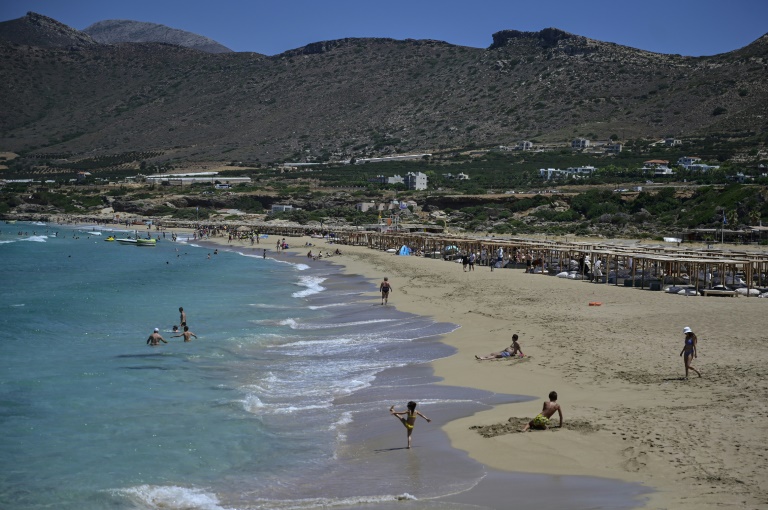
The number of foreign tourists visiting Greece has sharply increased so far this year despite soaring inflation and the Ukraine war, according to official statistics published on Monday.

But the figures remained below the record pre-pandemic levels of 2019 that helped revive the country’s tourism-dependent economy after years of crisis.

From January to late August, 19.12 million foreign tourists flocked to the sun-drenched southern European nation to explore attractions such as the Athens Acropolis or the Aegean islands, the Bank of Greece said.

That represented a 121-percent increase on the same period in 2021, when Covid-19 travel and social restrictions weighed heavily on the tourism sector.

In August alone, traditionally the peak of the Mediterranean tourism season, more than 5.8 million foreign visitors came to Greece, a rise of 44 percent on 2021 figures. 

However, tourist numbers in the first eight months of this year were down 12.4 percent on the same period in 2019.

Decades-high inflation is eating away at the budgets of many European households, while Russian tourists — frequent visitors to the beaches of Crete or Corfu — are down sharply due to the fallout from the Ukraine war and European sanctions.

Tourism represents a quarter of Greece’s annual economic output, but questions linger over the future of the sector.

Some islands are becoming saturated with tourists, whereas others have become so expensive that many Greeks can no longer afford to live there.

Close Bitnami banner
Bitnami