World

Roma inclusion in Europe 'too slow': study

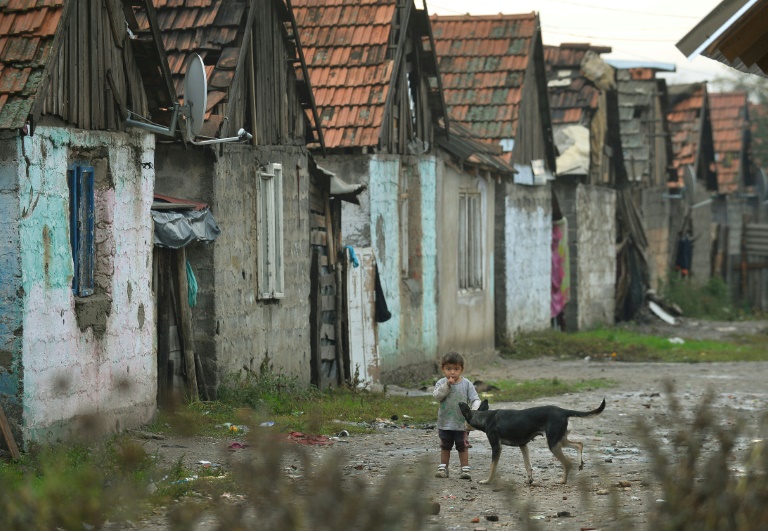
Deplorable living conditions, gloomy prospects at school and at work: the situation of Roma communities in Europe has not improved despite EU objectives to facilitate their integration, a report by the bloc’s rights agency said on Tuesday.

Across Europe, Roma continue to “face shocking levels of deprivation, marginalisation and discrimination,” said Michael O’Flaherty, director of the Vienna-based European Union Agency for Fundamental Rights (FRA).

National policymakers should “focus resources and efforts on addressing the intolerable plight”, he added in a press release.

The FRA report, which is based on nearly 8,500 interviews with Roma in ten European countries, says progress on Roma inclusion has been “too little and too slow” since the last survey six years ago.

According to the findings, 80 percent of Roma still “remain at risk of poverty,” compared with an EU average of 17 percent. This figure has remained unchanged since the 2016 study.

The figures on education are striking: 71 percent of young Roma aged 18–24 leave the education system early, compared to only 10 percent of those in the general population in the EU. 

Among those who attend school, many children aged between six and 15 are in a segregated school — 52 percent compared to 44 percent in 2016 — especially in Slovakia and Bulgaria.

– Damp and dark housing –

“Many countries are still not reaching the milestones set under the EU’s 10-year plan for Roma” that runs until 2030, the FRA said.

It warned the ripple effects of the Covid-19 pandemic and soaring inflation could further harm Roma communities especially. 

Approximately 43 percent of the Roma surveyed were in paid work, well below the European average of 72 percent for 2020.

The study also found that Roma women have a life expectancy of 71 years and men 67 years, compared to 82 and 76 years respectively for the EU’s population as a whole.

More than half of the Roma interviewed for the survey live in housing that is damp and dark or lacks proper sanitary facilities, compared to 61 percent in 2016, while 22 percent have no running water, down from 30 percent.

While lamenting the lack of “real improvements when it comes to tackling discrimination”, the survey findings indicate “a positive development in tackling hate-motivated harassment and violence”.

The report is based on a survey conducted by the FRA in 2021 among Roma in Croatia, the Czech Republic, Greece, Hungary, Italy, Portugal, Romania, Spain, as well as in North Macedonia and Serbia, which both seek accession to the EU.

In Bulgaria and Slovakia, data was collected by national authorities, with support from the FRA.

Moroccan rapper ElGrande Toto in custody after cannabis controversy

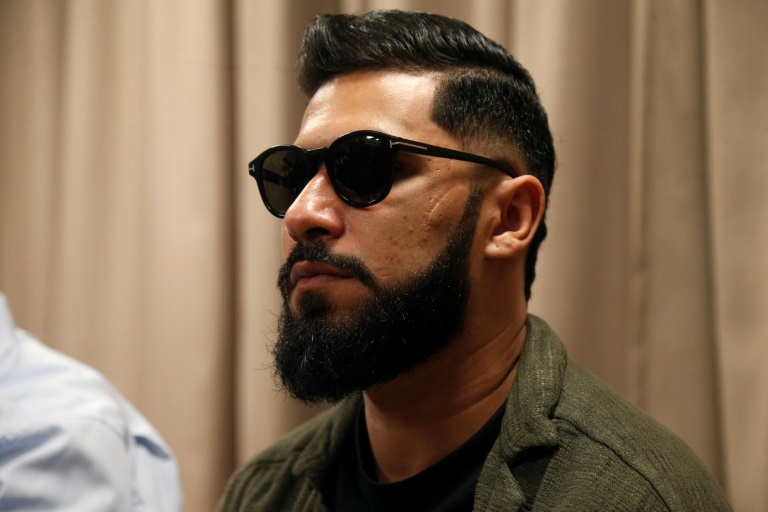
Moroccan rapper ElGrande Toto was taken into custody on Monday evening, following several complaints filed against him for public statements he made about using cannabis, a judicial source said.

The Casablanca-born rapper, who is a massive star in the Arabic-speaking music world, had in late September told reporters who gathered after one of his concerts, “I smoke hash — so what?… It does not mean I set a bad example.”

His comments sparked an outcry in Morocco, and the 26-year-old was on Thursday forbidden from leaving the territory by authorities and was also summoned by the police in Casablanca.

A prosecutor of a Casablanca court on late Monday decided to place Taha Fahssi — ElGrande Toto’s real name — in custody after complaints were filed by “three artists, a journalist, and a policeman”, a judicial source told AFP on condition of anonymity.

According to daily newspaper Le Matin, the rapper is the subject of a preliminary investigation that would focus on all his publications, digital content and statements “likely to contain elements punishable by law”. 

He was taken into custody a day after he made a public apology for his off-the-cuff comments. 

“I offer my apologies to anyone offended by my words, starting with the authorities and my public,” ElGrande Toto told a packed press conference Sunday in Rabat. 

“This controversy was not planned — it just got too big, and it’s a good lesson for me.”

After ElGrande Toto made his comments on September 23, a Belgium-based journalist lodged a complaint accusing him of “incitement to consume drugs”, said the journalist’s lawyer, Mohamed Karrout.

The rapper was the most in demand Arab artist in the Maghreb in 2021 on Spotify, with more than 50 million downloads. His YouTube channel meanwhile maintains 2.7 million subscribers, with popular videos drawing tens of millions of views.

Moscow theatre siege survivors haunted two decades on

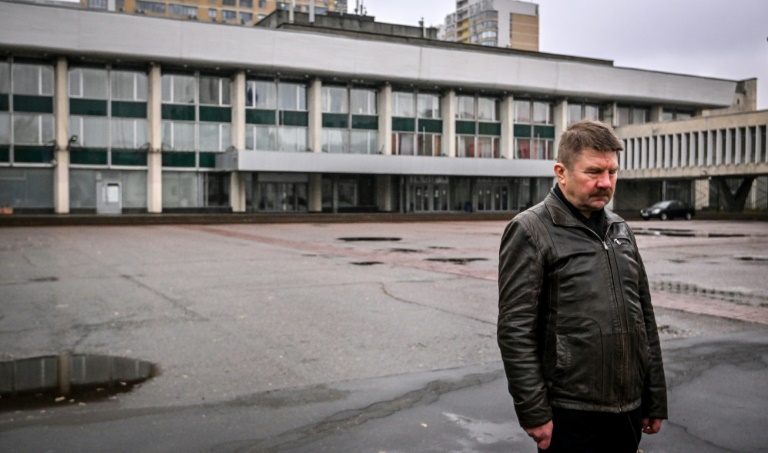
Twenty years after Chechen separatists seized a crowded theatre in Moscow, spurring a hostage standoff that ended with more than one hundred dead, the survivors are haunted by the memories and plagued by unanswered questions.

On October 23, 2002 — as the second Chechen war was raging in southern Russia — armed militants burst into Moscow’s Dubrovka theatre during a sold-out performance of the musical “Nord-Ost.”

Demanding the withdrawal of Russian troops from Chechnya, a predominantly Muslim republic in the North Caucasus, the attackers held 900 people for three nights until Russian forces stormed the theatre in the early hours of October 26, 2002.

Two decades on, Svetlana Gubareva, 65, can’t stop thinking about the ordeal that turned out to be her final outing with her 13-year-old daughter Sasha and American fiance Sandy Alan Booker.

“Sandy understood better than me what was going on and told us to lie down on the floor between the rows of seats,” she told AFP, recounting the moment the gunmen rushed the stage.

She had met Booker, a 49-year-old engineer from Oklahoma, on a dating site and on that day they were celebrating after she submitted her application for a US visa at the embassy.

They had bought the last three tickets to see the show.

– ‘A burst of bullets’ – 

It all started at the beginning of the second act when the audience was waiting for a highly-anticipated moment in the performance that would see a large prop plane make a landing on stage. 

Instead, camouflage-clad men in masks stormed onto the stage.

“A lot of the people sitting near me thought this was some sort of artistic decision or part of the show,” she said.

“They didn’t believe it was a takeover — until one of the Chechens fired a burst of bullets at the ceiling.”

What followed was a 57-hour siege that Gubareva constantly relives: hundreds of hostages paralysed by fear; female militants wearing belts with explosives; the stench from the orchestra pit used as a lavatory.

Together with Booker, Gubareva and her daughter — both citizens of Kazakhstan — were part of a group of foreigners that the militants promised to release after an intervention from several embassies.

On the last night of the takeover, the three of them fell asleep thinking ahead to their promised release at 8:00 am the next day.

But in the early hours of October 26, Russian forces dispersed an unknown gas into the ventilation systems knocking out both hostages and attackers before storming the building.

By the time it was over, 125 people, including 10 children were dead, and five more people were executed by the attackers.

Gubareva woke in a hospital hours later to hear on the radio that her daughter and fiance were among the dead.

“For me, it was all over,” she told AFP.

The three-day horror was a national tragedy and sparked a moment of reckoning in Russia with questions still plaguing some of the survivors.

Why were so many killed?  Why did doctors run out of the antidote? Why were ambulances stuck in traffic?

And these are questions the Russian authorities have never been held accountable for. In 2007, investigators dropped a years-long probe into the tragedy.

– ‘My worst nightmare’ –

Russian courts also repeatedly rejected complaints filed by the families with the European Court of Human Rights in 2011, pressing Moscow to hold those responsible for the deaths to account.

“We won’t be able to avoid attacks in the future if we don’t investigate past ones,” Dmitry Milovidov, the head of an association of families of victims called “Nord-Ost”, told AFP.

Now 59, Milovidov lost his 14-year-old daughter in the attack.

On Monday, the Kremlin acknowledged the “pain” associated with the loss felt by Russians after repeated attacks.

“We’ve learned a lot in the fight against terrorism, and of course we will always keep the memory of those who died as a result of these attacks, including at Nord-Ost,” Kremlin spokesman Dmitry Peskov said.

But two years after the Dubrovka theatre siege, again Chechen separatists staged a hostage crisis, taking more than a thousand people hostage at a school in Beslan, a town in the Caucasus republic of North Ossetia.

That tragedy — on the first day of the school year — left 330 dead, including 186 children, with Russian forces criticised for their disorderly assault on the building.

“By forgetting our mistakes, we make them again,” said Irina Khramtsova, a 39-year-old businesswoman, who lost her father in the Dubrovka theatre attack.

“Until the authorities learn to correct its mistakes, these attacks will happen again. And that is my worst nightmare”.

Most Asia markets rise on Fed bets as Hong Kong, Shanghai struggle

Hong Kong and Shanghai stocks saw big swings Tuesday following the previous day’s rout after Xi Jinping tightened his grip on power in China, while other Asian markets extended gains on hopes the Federal Reserve will slow down its pace of rate hikes.

Optimism about upcoming corporate earnings was also providing support, with Wall Street chalking up another strong day ahead of reports this week from big-name firms including Apple, Amazon and Microsoft.

Investors were keeping a wary eye on developments in China after Xi at the weekend was handed another five year term as leader and gave top jobs to a number of loyalists who back his strict zero-Covid strategy.

The policy of lockdowns and other strict measures has been a major cause of the country’s economic woes and the prospect of more upheaval has sent chills through trading floors.

The uncertainty resulted in a drop of more than six percent in Hong Kong on Monday, with tech firms — which have been hardest hit by Xi’s crackdown on a range of private-sector companies — taking the brunt of it.

And the selling spread to New York later in the day, with the Nasdaq Golden Dragon China Index of 65 Chinese stocks diving 14 percent — its biggest fall on record — wiping more than $90 billion off their market value.

Alibaba, JD.com and Tencent all saw double-digit losses, matching the selling earlier in Hong Kong.

Any hopes for a bounce from bargain-buying on Tuesday appeared to be short-lived with wild fluctuations in the city seeing the Hang Seng Index swing from gains to losses.

Shanghai struggled to get out of negative territory, while the onshore yuan sank to its weakest level since 2007 and the offshore yuan hit a record low.

“We’re certainly staying away from the Chinese market right now because the political scene is not favourable,” Laila Pence, of Pence Wealth Management, told Bloomberg TV.

“There’s a lot less risk in the US and just as much upside.”

The gloomy mood in China cast a shadow over an otherwise positive start to the week elsewhere as investors were cheered by a report suggesting the Fed could discuss at next week’s policy meeting the possibility of slowing down its pace of interest rate hikes.

The bank’s policy of ramping up borrowing costs to fight decades-high inflation has hammered global markets this year as investors worry that they will send the economy into recession.

“Investors are getting more confident that inflation will soften as the consumer rethinks massive purchases,” said OANDA’s Edward Moya.

“Fed rate hike expectations will remain volatile, but expectations are growing that a weaker economy will let the Fed pause their tightening after the February policy meeting.”

Tokyo, Sydney, Seoul, Singapore, Wellington, Manila and Jakarta all rose, though Taipei fell.

Focus is now on the release of earnings, with a sense of hope that the results will not be as bad as feared.

A fifth of S&P 500 companies have so far released their figures, with more than half beating expectations, according to Bloomberg News.

The yen hovered around 149 to the dollar after rallying Friday and Monday, with speculation swirling that Japanese authorities had intervened to support the struggling currency.

However, there are expectations it will continue to drop owing to the divergence between the Bank of Japan’s ultra-loose monetary policy and the Fed’s tightening.

The pound was also sitting around $1.13 as the choice of former chancellor Rishi Sunak as Britain’s next prime minister provided a sense of stability after weeks of uncertainty caused by former leader Liz Truss’s controversial debt-fuelled budget.

– Key figures around 0230 GMT –

Tokyo – Nikkei 225: UP 0.8 percent at 27,201.37 (break)

Hong Kong – Hang Seng Index: DOWN 1.3 percent at 14,977.72

Shanghai – Composite: DOWN 0.8 percent at 2,954.65

Pound/dollar: UP at $1.1301 from $1.1281 on Monday

Dollar/yen: DOWN at 148.92 yen from 148.95 yen

Euro/dollar: UP at $0.9880 from $0.9876

Euro/pound: DOWN at 87.44 pence from 87.56 pence

West Texas Intermediate: UP 0.1 percent at $84.62 per barrel

Brent North Sea crude: DOWN 0.1 percent at $93.21 per barrel

New York – Dow: UP 1.3 percent at 31,499.62 (close)

London – FTSE 100: UP 0.6 percent at 7,013.99 (close)

Tough odds for Macau as casinos pray for a pandemic shift

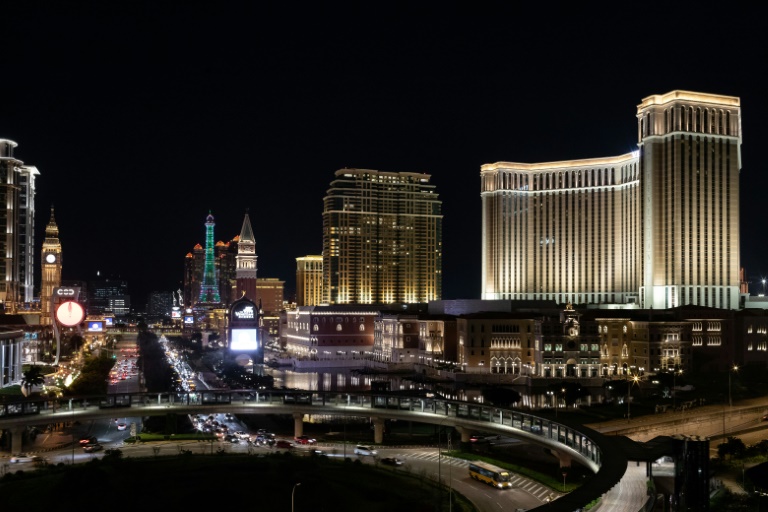
When Pinky Tam lost her job in Macau last year, she found herself among the many thousands cast adrift as the city’s casino industry crumbled beneath the twin forces of politics and a pandemic.

The former Portuguese colony has been limping for nearly three years as coronavirus restrictions have kept away mainland Chinese tourists, depriving the gaming sector of its chief revenue source and tanking the wider economy.

“Back when things were good, it would be almost too crowded to walk,” Tam, who used to work at the gambling operator Suncity Group, recalled of the narrow streets leading from the Ruin of St Paul’s, Macau’s most famous landmark.

“Now you can find maybe one or two locals passing through. I think the people of Macau are frustrated about the economy and future prospects,” she told AFP.

The crisis comes at a sensitive time for Macau’s oligopoly of casinos.

Officials are currently renegotiating the six concessions, which will expire by the end of the year.

It is an industry reshuffle that will shape Macau’s next decade, raising questions over whether the city can return to being the world’s top casino hub, whether it must seek an alternative path, and whether its golden years are over. 

Since its handover to Chinese rule in 1999, Macau has been the only place in the country where casinos are legal, growing to the point two decades later where it was generating nearly six times the annual gaming revenue of Las Vegas.

It was a heady time of extraordinary growth and riches.

– ‘Junket King’ arrest –

But even before the pandemic emerged, its wings were being clipped by President Xi Jinping’s anti-corruption drive.

Then last November, authorities arrested Suncity boss Alvin Chau — nicknamed the “Junket King” for his success in bringing in Chinese high-rollers — and charged him with fraud, money laundering and running a crime syndicate.

It was the clearest sign yet of Beijing’s crackdown on officials and wealthy tycoons who used Macau as a conduit to siphon cash out of China.

“Up until now, 90 percent of our visitors and 90 percent of our revenue comes from China… We basically are a hub to attract mainland Chinese gamblers,” Macau-based gaming analyst Ben Lee told AFP.

“So the Macau government is obviously being pushed to try and redirect the industry away from China.”

Until recently, the renewal of concessions seemed like a done deal for the six companies permitted to operate casinos, which include the subsidiaries of three Las Vegas giants — Sands China, MGM China and Wynn Macau.

But at the last minute, a surprise contender, Malaysia’s Genting Group, threw its hat into the ring.

With the concession renewal taking place at a time of spiralling tensions between Washington and Beijing, Lee posits that one of the US companies may well lose out.

“Why would (China) let the Americans keep 50 percent of the gaming industry in Macau,” said Lee, founder of Macau gaming consultancy IGamiX.

“I cannot see any good reason.”

– Industry shakeup –

Macau’s government has long been keen to diversify away from gaming into tourism and leisure.

For the new concessions, it is demanding “much more non-gaming investment”, Credit Suisse analysts wrote in a research note last week.

“An increase in investment commitment would inevitably put more stress into the already stretched balance sheet of certain operators, as well as lowering the long-term margin for the sector,” it added.

For Macau’s 680,000 residents, the cycle of lockdowns, testings and border closures have been some of the roughest years since the handover in a city where one in five people in the labour force works in gaming.

The biggest test came in July when much of the city, including casinos, was locked down to fight an outbreak of the Omicron coronavirus variant.

“It was an extreme situation for a relatively free and open city like Macau,” former lawmaker Sulu Sou told AFP, adding that the economy emerged from the lockdown “on life support”.

Tam, the former Suncity worker, said she took a one-third pay cut to land a new secretarial job, adding that similar openings were routinely advertised with a monthly wage of just $1,100.

Even if Chinese tourists return en masse under tentative plans to kickstart tour groups in November, Macau’s gaming revenue this year will only be 15 percent of 2019 levels, while the following year will reach 35 percent, according to Credit Suisse estimates.

“In the last two to three years, Covid-19 has really put a spotlight on the need to diversify,” said Glenn McCartney, an associate professor in integrated resort and tourism management at the University of Macau.

“(Diversification) won’t happen overnight, it’s a slow progression.”

Italy's PM is a trailblazer, just don't call her feminist

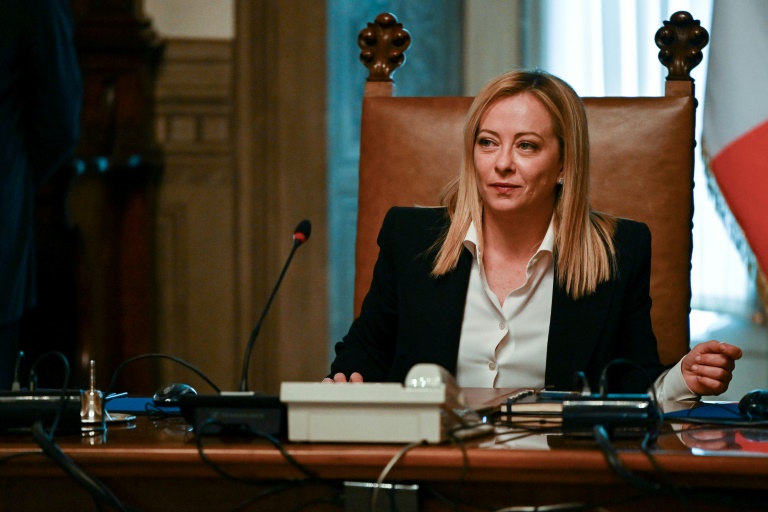
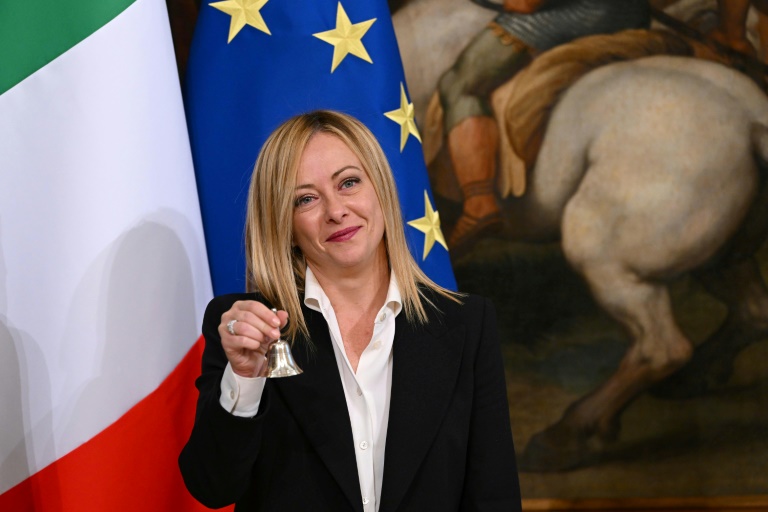
In her rapid rise through Italian politics, Giorgia Meloni has repeatedly shattered the glass ceiling and has now become the first woman premier in the still staunchly patriarchal country.

But many women do not consider the 45-year-old an ally, pointing to her advocacy of traditional family values, including her opposition to abortion, and what they see as her failure to challenge the social status quo.

“All things considered it’s a positive thing that for the first time it’s a woman” leading the government, said Giorgia Serughetti, a professor of political philosophy at the University of Milano-Bicocca who focuses on gender and politics.

“But from there to say this is a step forward for women is another thing,” she told AFP.

Meloni’s post-fascist Brothers of Italy party won the largest share of votes among women in September elections, in which she played heavily on her own personal brand.

“I am Giorgia, I am a woman, I am a mother, I am Italian, I am Christian,” Meloni said at a 2019 rally. The word wife did not feature, as she is not married to her partner, the father of her young daughter.

Serughetti argues this mantra was not a call for women’s rights but a “declaration of hostility towards enemies”, whether LGBTQ activists, feminists, defenders of mass immigration or others on the political left against whom she often rails.

Meloni has “never played the women’s card” in a Catholic-majority country where there is “widespread hostility to feminism”, the expert said.

Despite rising to the government’s top job, Meloni is not seen as a challenge to “the patriarchy”, said Flaminia Sacca, a political sociologist at Rome’s Sapienza University. 

Meloni is a working mother in a country where only about half of working-age women are employed.

But “she doesn’t in any way challenge traditional values, traditional culture and the Catholic culture”, said Sacca. “She’s more acceptable, she’s not a threat.”

– No quotas –

Meloni has broken several barriers in her political career.

In 2008, she became the country’s youngest minister, aged just 31, when she was given the youth portfolio by then-premier Silvio Berlusconi — now one of her coalition allies.

A decade ago, she co-founded Brothers of Italy, becoming the first woman to lead a major Italian political party.

As premier, she joins a very small group of women who have reached a position of political power.

Italy named its first female head of the lower house of parliament in 1979, but it took another four decades for a woman to hold the second most powerful constitutional role, president of the Senate.

In her 2021 autobiography, Meloni argued for more women in decision-making roles that would “lift the moral level and productive effectiveness of our leadership”.

But she said she won’t rely on gender quotas, mandatory today on corporate boards, saying she “detests” them.

“I am a woman, but I confess that in all my history in politics I have never felt really discriminated against,” she wrote in her book.

Her new government includes six women among 24 cabinet posts, while her coalition — which also includes Matteo Salvini’s far-right League — has fewer women lawmakers than any other bloc in parliament.

Some 30 percent of their MPs and senators are women, compared to 46 percent of the centrist bloc and 45 percent of the populist Five Star Movement, according to Sacca.

However, they are almost level with the 31 percent of the centre-left Democratic Party, which actively promotes gender parity and women’s rights. 

– Focus on mothers –

“Giorgia Meloni is to feminism like a fish on a bicycle: harried, precarious and out of place,” wrote prominent Italian-born philosopher and feminist theorist Rosi Braidotti in La Repubblica newspaper in August.

Meloni’s discourse on women is nearly exclusively about mothers, with policies supporting birth rates and families, like providing free nursery school, protecting young mothers in the workplace or lowering taxes on baby products.  

The focus on maternity is a carryover from Fascism that still resonates among right-wing voters, and is particularly reassuring in times of economic hardship, academics Sacca and Serughetti agreed.

“She’s not speaking of empowerment and careers, she speaks of mothers and their right to keep their job,” said Sacca.

Small protests, usually involving young people, have been held across Italy, focused on Meloni’s opposition to abortion.

Meloni, who is also against same-sex adoptions and surrogacy, says she has no plans to touch Italy’s 1978 abortion law, but rather offer more choices to women who feel they have no other option than to abort.

Emma Bonino, a veteran rights activist who leads the +Europe party, fears Meloni will instead “push for the law to be ignored”, exacerbating existing difficulties in finding gynaecologists willing to perform terminations.

Despite the criticism, Meloni’s strength has been in presenting herself consistently as a leader in control, said Sacca.

“She managed not to frighten an electorate that was not necessarily right wing before her,” she said.

Italy's new PM Meloni sets out programme to parliament

Giorgia Meloni will address Italy’s parliament for the first time as prime minister on Tuesday, setting out her plan for government one month after her far-right party’s historic election victory.

The 45-year-old, who was sworn in as Italy’s first woman premier on Saturday, is expected to outline her approach to challenges including soaring inflation, an energy crisis and looming risk of recession in the eurozone’s third-largest economy.

Meloni will present “a programmatic manifesto”, according to government sources, aiming to implement “the commitments undertaken with Italian citizens in the election campaign”.

The lower house of parliament and the Senate will then each hold a vote of confidence in Meloni’s government, the most right-wing in Rome since World War II.

The votes, likely on Tuesday evening and Wednesday morning, are largely procedural, as her coalition has a comfortable majority in parliament.

Meloni’s post-fascist Brothers of Italy party won a historic 26 percent of the vote in September 25 elections, with a promise to defend Italy’s borders, traditional values and national interests abroad.

She has formed a government with Matteo Salvini’s far-right, anti-immigration League party and former premier Silvio Berlusconi’s right-wing Forza Italia, which won nine and eight percent, respectively.

The prospect of a Eurosceptic, populist government in Italy, a NATO member and a founding nation of the European Union, has sparked concern among Rome’s allies.

But despite her party’s roots in Italy’s neo-fascist movement, Meloni is expected to follow a similar economic policy to outgoing premier Mario Draghi, at least initially.

She named as economy minister Giancarlo Giorgetti, a relatively moderate member of the League who was economic development minister under Draghi.

Roberto Cingolani, who served as energy minister in the last government, will also stay on as an adviser, helping to keep the lights on as Italy tries to wean itself off Russian gas in the wake of the war in Ukraine.

“On economic policies, there is general popular support for what Draghi was doing,” Gilles Moec, chief economist at the AXA group, told AFP.

Italy’s economy bounced back from a deep recession sparked by coronavirus lockdowns in 2020, but is still struggling with mammoth debt worth 150 percent of gross domestic product.

And the fall-out of the Ukraine war risks causing a fresh contraction next year, according to the International Monetary Fund.

Key to Italy’s future growth is almost 200 billion euros in grants and loans from the European Union’s post-pandemic recovery fund.

But the money is dependent on Rome implementing major reforms, from criminal justice to public administration, by 2026.

Meloni’s coalition said before the election that it wants to review the EU plan but has given no detail.

Analysts say there is little room for manoeuvre, with the funds already being disbursed and Brussels unwilling to re-open negotiations.

Megayacht sparks warnings Hong Kong could become Russia haven

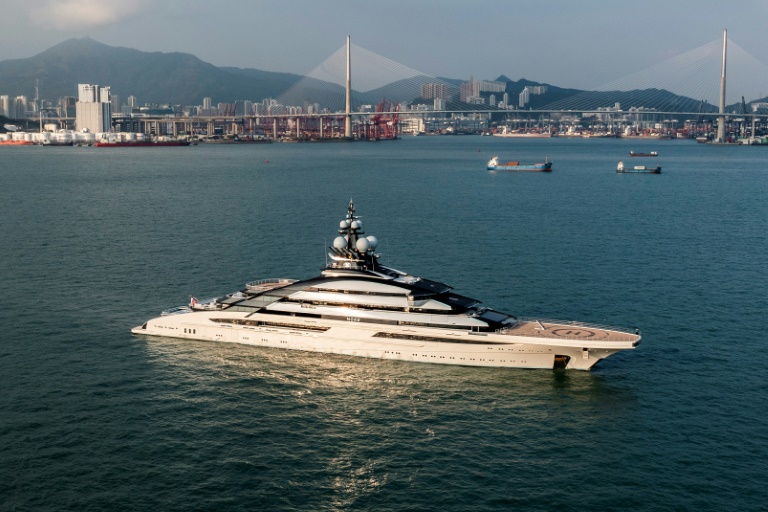
The recent visit of a Russian megayacht to Hong Kong has sparked warnings from corruption investigators that the city could become a haven for oligarchs and officials hiding from Western sanctions.

The Nord — a $500 million vessel linked to Russian billionaire Alexei Mordashov — spent a little over three weeks in the Chinese territory before leaving last Thursday.

Mordashov is among tycoons close to Russian President Vladimir Putin who have been sanctioned by the United States, the European Union and Britain following Moscow’s invasion of Ukraine.

Multiple jurisdictions have seized Russian oligarchs’ yachts and other assets this year. But Hong Kong made clear it would not do the same, saying it only implements United Nations sanctions, not “unilateral” ones.

That prompted a rebuke from Washington that Hong Kong’s reputation as an international business hub could be damaged.

But Maira Martini, a corrupt money flows expert at Transparency International, said the city has long been a useful jurisdiction for those “wanting to hide assets and launder dirty money”.

She cited Hong Kong’s “easy incorporation of shell companies that can be used to layer funds and obscure the real owners”.

“The government’s recent declaration that it has no interest in implementing sanctions makes Hong Kong an even more enticing option for Russian elites,” she told AFP.

Hong Kong is increasingly taking its cue from Beijing, a key ally of Moscow, said Anthony Ruggiero, an expert on nonproliferation at the Foundation for the Defense of Democracies. 

“I think at this moment and level, we have to treat Hong Kong really as China when it comes to their willingness to cooperate on proliferation, or in this case, the willingness to cooperate on pressuring Russia,” he told AFP.

City leader John Lee and other senior officials are themselves blacklisted by Washington for their role in a crackdown on political freedoms.

– Shell companies –

A major part of Hong Kong’s appeal is how easy it is to set up companies — about 1.4 million businesses are domiciled in the city.

Directors do not need to live there and companies can register addresses via secretarial businesses making it easier to mask true ownership.

The Panama Papers in 2016 exposed how crucial front companies in Hong Kong were for those wanting to hide wealth and avoid tax.

Businesses registered in Hong Kong have also repeatedly appeared on US and other sanctions lists.

Companies helping North Korea evade sanctions were cited by the Treasury and United Nations experts in 2017 and 2018.

More recently the focus has shifted to Iran.

Last month the Treasury named 10 companies allegedly involved in helping Iran sell petroleum products, mostly to China. Three were based in Hong Kong. 

When AFP checked their filings with the city’s Companies Registry, all were registered to secretarial company addresses. 

Two had directors who were Indian nationals, the other was owned by a Dominican Republic national living in China’s Zhejiang province. Very little other public data was available.

– ‘Plenty of competition’ –

Ruggiero, a former US national security advisor, said he expects Moscow to “unleash a network of front companies” around the world as Western sanctions gather pace.

“The Russians have expertise in doing this,” he said. “They’re probably going to be better at it than North Korea and Iran — and North Korea and Iran are pretty good at it.”

David Webb, a Hong Kong activist investor, said the city will have “plenty of competition for being a safe haven, including Dubai and Singapore”.

Nonetheless banks, law firms and other businesses that rely on access to international markets will still be wary of Russian clients lest they face scrutiny.

“Financial institutions that have a United States or European nexus will need to assess their compliance in view of any relevant domestic sanctions,” Syren Johnstone, from the University of Hong Kong’s law school, told AFP.

Igor Sagitov, Moscow’s consul general in Hong Kong, said Russians were already facing difficulties.

“Some foreign financial institutions, insurance and transport companies based here discriminate Russian companies or nationals, even if they are not on the sanctions lists,” he told AFP.

But Sagitov was optimistic that the city remained a good place for business. 

“When the trade volume between Russia and China is growing rapidly, Hong Kong can for sure benefit,” he said.

Asked about Mordashov’s megayacht, he said Moscow “appreciates the approach the Hong Kong government has taken”.

“This approach is based on the rule of law, and not on the law of some imaginary rules.”

Megayacht sparks warnings Hong Kong could become Russia haven

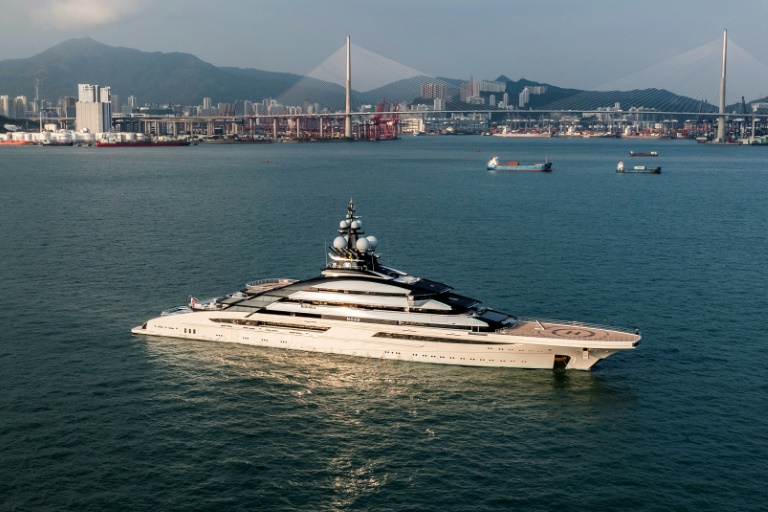
The recent visit of a Russian megayacht to Hong Kong has sparked warnings from corruption investigators that the city could become a haven for oligarchs and officials hiding from Western sanctions.

The Nord — a $500 million vessel linked to Russian billionaire Alexei Mordashov — spent a little over three weeks in the Chinese territory before leaving last Thursday.

Mordashov is among tycoons close to Russian President Vladimir Putin who have been sanctioned by the United States, the European Union and Britain following Moscow’s invasion of Ukraine.

Multiple jurisdictions have seized Russian oligarchs’ yachts and other assets this year. But Hong Kong made clear it would not do the same, saying it only implements United Nations sanctions, not “unilateral” ones.

That prompted a rebuke from Washington that Hong Kong’s reputation as an international business hub could be damaged.

But Maira Martini, a corrupt money flows expert at Transparency International, said the city has long been a useful jurisdiction for those “wanting to hide assets and launder dirty money”.

She cited Hong Kong’s “easy incorporation of shell companies that can be used to layer funds and obscure the real owners”.

“The government’s recent declaration that it has no interest in implementing sanctions makes Hong Kong an even more enticing option for Russian elites,” she told AFP.

Hong Kong is increasingly taking its cue from Beijing, a key ally of Moscow, said Anthony Ruggiero, an expert on nonproliferation at the Foundation for the Defense of Democracies. 

“I think at this moment and level, we have to treat Hong Kong really as China when it comes to their willingness to cooperate on proliferation, or in this case, the willingness to cooperate on pressuring Russia,” he told AFP.

City leader John Lee and other senior officials are themselves blacklisted by Washington for their role in a crackdown on political freedoms.

– Shell companies –

A major part of Hong Kong’s appeal is how easy it is to set up companies — about 1.4 million businesses are domiciled in the city.

Directors do not need to live there and companies can register addresses via secretarial businesses making it easier to mask true ownership.

The Panama Papers in 2016 exposed how crucial front companies in Hong Kong were for those wanting to hide wealth and avoid tax.

Businesses registered in Hong Kong have also repeatedly appeared on US and other sanctions lists.

Companies helping North Korea evade sanctions were cited by the Treasury and United Nations experts in 2017 and 2018.

More recently the focus has shifted to Iran.

Last month the Treasury named 10 companies allegedly involved in helping Iran sell petroleum products, mostly to China. Three were based in Hong Kong. 

When AFP checked their filings with the city’s Companies Registry, all were registered to secretarial company addresses. 

Two had directors who were Indian nationals, the other was owned by a Dominican Republic national living in China’s Zhejiang province. Very little other public data was available.

– ‘Plenty of competition’ –

Ruggiero, a former US national security advisor, said he expects Moscow to “unleash a network of front companies” around the world as Western sanctions gather pace.

“The Russians have expertise in doing this,” he said. “They’re probably going to be better at it than North Korea and Iran — and North Korea and Iran are pretty good at it.”

David Webb, a Hong Kong activist investor, said the city will have “plenty of competition for being a safe haven, including Dubai and Singapore”.

Nonetheless banks, law firms and other businesses that rely on access to international markets will still be wary of Russian clients lest they face scrutiny.

“Financial institutions that have a United States or European nexus will need to assess their compliance in view of any relevant domestic sanctions,” Syren Johnstone, from the University of Hong Kong’s law school, told AFP.

Igor Sagitov, Moscow’s consul general in Hong Kong, said Russians were already facing difficulties.

“Some foreign financial institutions, insurance and transport companies based here discriminate Russian companies or nationals, even if they are not on the sanctions lists,” he told AFP.

But Sagitov was optimistic that the city remained a good place for business. 

“When the trade volume between Russia and China is growing rapidly, Hong Kong can for sure benefit,” he said.

Asked about Mordashov’s megayacht, he said Moscow “appreciates the approach the Hong Kong government has taken”.

“This approach is based on the rule of law, and not on the law of some imaginary rules.”

Food shock: Crop-battering disasters highlight climate threat

Rolling crises linked to war, weather disasters and the pandemic have shaken global food systems and tipped millions into hunger and poverty.

Climate change is already playing a role, as floods, droughts and heatwaves batter harvests from Europe to Asia and threaten famine in the Horn of Africa. 

And experts warn this could be just the beginning. 

“If we don’t act now, this is just a sample of what may happen in the coming years,” said Mamadou Goita, an expert with sustainability group IPES-Food, which works with farmers’ organisations in Africa and around the world. 

This issue will be in focus as never before at high-stakes UN climate negotiations, to be held in Egypt next month.

Food production is both a key source of planet-warming emissions and highly exposed to the effects of climate change.

Some risks are slow-burning — falling yields, warming oceans, seasonal mismatches between pollinators and plants, and heat threats to farm workers. 

Others, like floods, can cause sudden “devastation of livelihoods and infrastructure”, said Rachel Bezner Kerr, professor at Cornell University and a lead author of the UN’s landmark IPCC report on climate impacts.  

These can reverberate through interwoven global supply chains, intersecting with other crises.

Climate extremes and Covid-19 had already pushed food costs close to record highs early this year, when Russia invaded Ukraine — a key grain and sunflower oil exporter.

Since then, record temperatures withered crops across South Asia, the worst drought in 500 years savaged Europe’s maize and olive crops, heat scorched cabbages in South Korea sparking a “kimchi crisis”, and floods swamped Nigeria’s rice fields. 

In China, as a punishing dry spell parched the Yangtze river basin where a third of its crops are grown, authorities sent up cloud-seeding drones to try and coax rain.

– ‘Persistent peril’ –    

Those most vulnerable are hit hardest.

The UN’s World Food Programme has said some 22 million people are at risk of starvation across Kenya, Somalia and Ethiopia, after an unprecedented four failed rainy seasons.

Globally, one person is estimated to starve to death every four seconds, nearly 200 aid groups reported in September, while a record 345 million people are suffering from acute hunger. 

“It does feel like our report is being lived out in real time,” said Bezner Kerr.

Fifty countries are severely affected by the global food crisis, according to the International Monetary Fund.

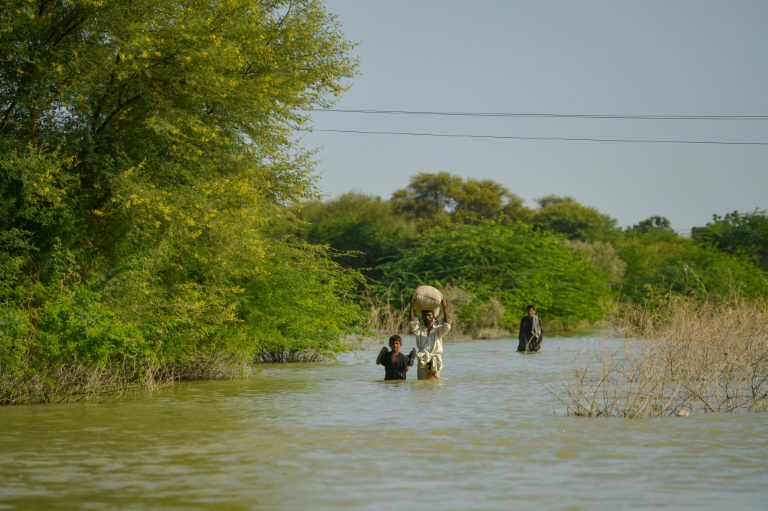
Among them is flood-hit Pakistan, where deadly monsoon inundations engulfed vast swathes of farmland, ravaging staple crops such as rice, tomatoes and onion. Two percent of the country’s livestock perished.  

In Mirpur Khas district of agricultural powerhouse Sindh province, water swallowed Akbar Rajar’s cotton crop and pooled for weeks on his fields.

“We are in persistent peril,” the heavily indebted farmer told AFP, preparing to plant wheat in sodden ground. 

Up to nine million people could be dragged into poverty by the disaster, the World Bank says.

– ‘Betting frenzy’ –

The world grows plenty of food for everyone, but lack of access and affordability prevent its distribution, experts say. 

“Once there is any problem, like Covid-19, they have been closing doors to everybody,” Goita told AFP. 

Changes to global food systems in recent decades mean countries rely less on stocks of staple crops, with about a third of food and agricultural production now traded internationally. 

That is cost-effective when things go well, but is “highly vulnerable” to major shocks, said Elizabeth Robinson, who leads the Grantham Research Institute at the London School of Economics. 

“Who gets harmed? You’re looking at countries where people spend a lot of money on food, where countries are highly dependent on imports.”

Shocks can lead to export restrictions, like those imposed by India this year when its wheat harvest was hit by the heat wave.

Importers have also been hammered by surging energy and transport costs and a strong US dollar, while the UNCTAD trade and development agency has warned of “betting frenzies” in commodities markets. 

Fertiliser prices have surged, raising concerns for future harvests.

The last time the UN Food and Agriculture Organization’s food price index was this high was in 2008, when a global food crisis drove riots and instability in countries across the world. 

So what should be on the table at the Egypt climate talks? 

One answer is money, particularly for smallholder farmers on the climate change and food insecurity “frontlines”, said Claire McConnell of think tank E3G. 

Just two percent of climate finance reaches them, she said, adding that in Africa and the Middle East alone there is a $1.7 billion funding gap for the support and technology needed.

– Strength in diversity –

Another is emissions cuts. Food production will become “impossible” in some regions, and both hunger and malnutrition will deepen if warming continues its current trajectory, the IPCC has said.

Redirecting billions of dollars of agricultural subsidies that incentivise environmental harm would also make a big difference, said Bezner Kerr. 

People in richer nations could cut their meat consumption to reduce the grain needed to feed livestock, while nations everywhere could consider broadening their taste for staples beyond rice, maize, wheat and potatoes.  

That may resonate in COP host Egypt, where most of the wheat for cheap state-subsidised flatbread — a lifeline for around 70 percent of the population — is ordinarily imported from Ukraine and Russia.    

Facing surging inflation, the government has ramped up purchases from domestic farmers, and is even running a trial adding sweet potato to bread flour.

Diversifying crops and using more drought- or flood-resilient strains could also help farmers improve soils and spread risk.    

But such solutions have limits.   

Pakistan’s floods tore over fields, ripping plants up by the root, said Nabeel Munir, the country’s ambassador to Seoul and chair of the largest negotiating bloc of developing nations at the climate talks. 

“How can you produce a crop that, even after being blown away and submerged in water for a few days, is still resistant?” he said. 

klm-burs/mh/jv/dhc

Close Bitnami banner
Bitnami