World

Rishi Sunak triumphs to become UK's new prime minister

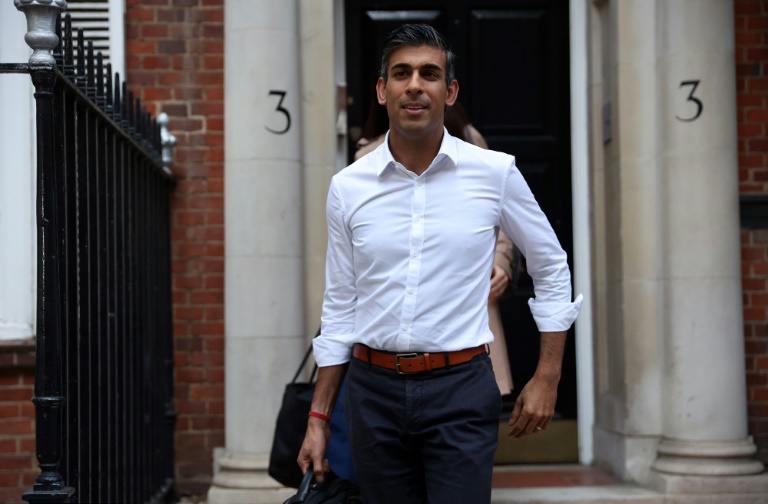
Britain’s incoming prime minister Rishi Sunak vowed Monday to bring “stability and unity” at a time of economic crisis, after he was named the beleaguered Conservatives’ new leader. 

Sunak, 42, a Hindu, will be the UK’s first prime minister of colour after the premiership of Liz Truss imploded after just 44 days.

Penny Mordaunt, the last rival left in the party’s leadership race after Boris Johnson dramatically pulled out, failed to secure the necessary 100 nominations from her fellow MPs.

“Rishi Sunak is therefore elected as leader of the Conservative party,” senior backbencher Graham Brady said, as Mordaunt and Truss pledged their full support for Sunak.

However, nearly three hours after Brady’s announcement, there was still no word from Johnson — even as Sunak urged his warring party to “unite or die”, according to Tory MPs present in a closed-doors meeting.

Addressing the public for the first time, Sunak said: “The United Kingdom is a great country, but there is no doubt we face a profound economic challenge.

“We now need stability and unity and I will make it my utmost priority to bring our party and our country together,” he said, appearing to rebuff calls from opposition parties for an early general election.

Just seven weeks after he lost out to Truss following Johnson’s own removal from office, Sunak pulled off a stunning reversal in fortunes, and is vowing to do the same for Britain on a platform of fiscal responsibility.

Scottish leader Nicola Sturgeon, whose nationalist government in Edinburgh wants to hold an independence referendum next year, was among the first to congratulate Sunak.

“I wish him well… notwithstanding our political differences,” she said.

“That he becomes the first British Asian — indeed the first from any minority ethnic background — to become PM is a genuinely significant moment.”

– Abrupt end to contest –

The contest, triggered by Truss’s resignation on Thursday, had required candidates to secure the support of at least 100 Conservative MPs by 2:00 pm (1300 GMT) on Monday.

Only Sunak made the threshold, Brady announced.

Sunak, a wealthy descendant of immigrants from India and East Africa, had crossed that threshold by Friday night, and amassed nearly 200 public nominations — more than half the parliamentary Tory party.

Johnson’s withdrawal from the race — before he had even formally announced his candidacy — left cabinet member Mordaunt the only other declared contender.

However she failed to garner the necessary support, putting an abrupt end to the contest.

Sunak’s victory came on the day Hindus worldwide mark the start of the five-day festival of Diwali — a celebration of the victory of good over evil.

When he was chancellor of the exchequer, in November 2020, Sunak marked the occasion by lighting oil lamps on the front step of the chancellor’s official residence at 11 Downing Street.

The Tories were forced into their second leadership contest since the summer due to Truss’s resignation following a disastrous market response to her tax-slashing budget plans.

Johnson’s attempt to make an immediate return to Downing Street had raised the prospect of months of disarray and disunity within the ruling Conservatives.

Critical backbench Tory MPs warned there could have been a wave of resignations under Johnson’s renewed leadership, which might have led to a general election. One is not due for at least two years.

– ‘Not the right time’ –

Johnson cut short a Caribbean holiday to return to Britain on Saturday.

But in a sign of his diminished political standing, he swiftly conceded late Sunday, admitting “you can’t govern effectively unless you have a united party in parliament”. 

“I believe I have much to offer but I am afraid that this is simply not the right time,” he said, while insisting he had secured the 100 nominations needed to progress.

Sunak was quick to pay tribute to Johnson, tweeting: “I truly hope he continues to contribute to public life at home and abroad.”

Labour leaders said Sunak must face the country.

“The Tories have crowned Rishi Sunak without him saying a word about what he would do as PM. He has no mandate, no answers and no ideas,” tweeted Angela Rayner, deputy Labour leader.

Anand Menon, politics professor at King’s College London, said Sunak becoming prime minister was a landmark.

“To have, if we do, a prime minister of Indian origin is a really, really big deal,” he told BBC television shortly before the result was confirmed.

But he noted a lack of general debate on Sunak’s roots. “In a sense… we seem to have normalised this.”
French girl, 12, laid to rest after 'evil' murder

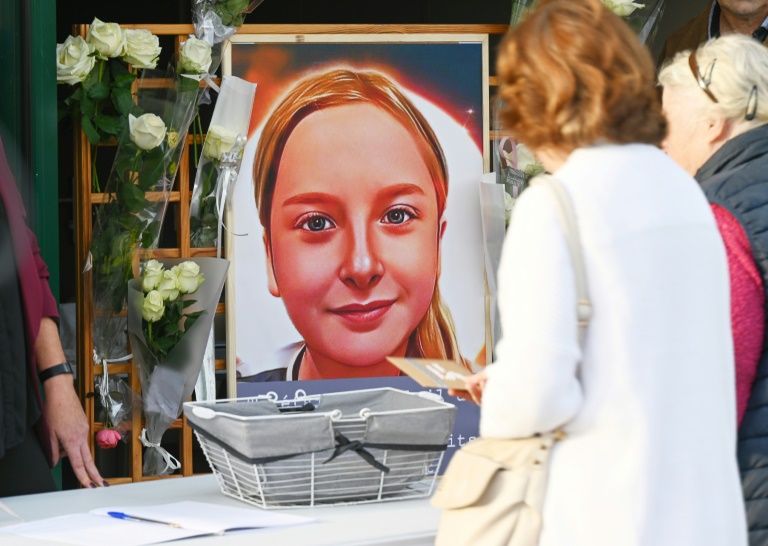
A 12-year-old girl whose murder shocked France and sparked political controversy was laid to rest on Monday, after a mentally disturbed Algerian woman already targeted by an expulsion order was charged with the killing.

The brutal assault and murder of the girl known as Lola was branded as “evil” by President Emmanuel Macron after her body was found earlier this month in a trunk in Paris.

The killing prompted conservative and far-right critics to accuse his government of not doing enough to prevent illegal migration, while ministers shot back that such rebukes were inappropriate.

Lola’s family had called for political mudslinging to be set aside and for the young girl to be laid to rest in “respect and dignity” in the town of Lillers, in her home region in northern France.

Her parents, her brothers, other family members and a crowd — including Interior Minister Gerald Darmanin, a Macron ally — were present when her white coffin, adorned with white flowers, was carried into the local church.

– ‘Didn’t have time’ –

“You left us much too soon,” Thibault, one of Lola’s older brothers, said at the ceremony. “I didn’t have time to tell you how much I love you.”

Bishop Olivier Leborgne, who presided over the ceremony, said: “Lola, who was 12, not only died too young, but under unbearable circumstances.”

Dozens of mourners followed the ceremony via loudspeakers set up outside the church.

“My grandchildren, who are the same age as Lola, wanted us to be here,” said Sabine Vizenski, one of the mourners gathered near the church.

“There are no words to describe what was done to that young girl,” said another, Thomas Maillot, who drove half an hour to pay his respects. 

“It’s very important for me to be here,” he said.

The funeral mass was open to the public but the family wanted the actual burial in the cemetery to be strictly private.

– ‘Extreme evil’ –

Macron had on Friday spoken of the “atrociousness of the crime” which he described as an act of “extreme evil”.

He praised the “dignified” behaviour of Lola’s family, who he said deserved “first and foremost the respect and affection of the nation”.

But the profile of the suspect — an Algerian woman named only as Dahbia B. who was the subject of an expulsion order — has prompted stinging criticism from the right and one of the most bitter political debates since Macron’s re-election in May.

She had overstayed a student visa and had failed to comply with a notice issued in August to leave France within 30 days.

On Monday, the 24-year-old was charged with the rape and murder of a minor aged under 15, along with torture and abuse.

In an at times rambling interview, the woman confessed that she had “committed harm of a sexual nature and other violent acts against (Lola) that caused her death, and hid her body in the trunk”, prosecutors said.

According to the autopsy, the young girl died due to “cardio-respiratory failure with signs of asphyxia and cervical compression”.

The investigation will now focus on whether the suspect was suffering from a psychiatric disorder at the time of the killing and if she can face criminal responsibility for the murder.

– ‘Honour the memory’ –

Eric Ciotti, MP from the right-wing Republicans (LR) party, had accused the government of “criminal… laxism” over migration, while extreme-right figure Eric Zemmour, an unsuccessful presidential candidate in May, had even described Lola’s killing as “Francocide”.

The far-right National Rally (RN) observed a minute of silence in parliament on Monday and the leader of its MPs, Marine Le Pen, insisted on the need for “answers” from the government.

In a statement sent to AFP on Friday, Lola’s parents called for an immediate end to “any use of the name and image of their child for political ends” so they could “honour the memory of their child in peace, respect and dignity”.

Separately, police have launched an investigation after one of their officers gave graphic details of the case in an interview with television channel BFMTV. 

The interview, filmed in a way that concealed the officer’s identity, was broadcast on Friday.

burs/jh/tgb/rox

Residents on edge as Uganda reports Ebola cases in Kampala

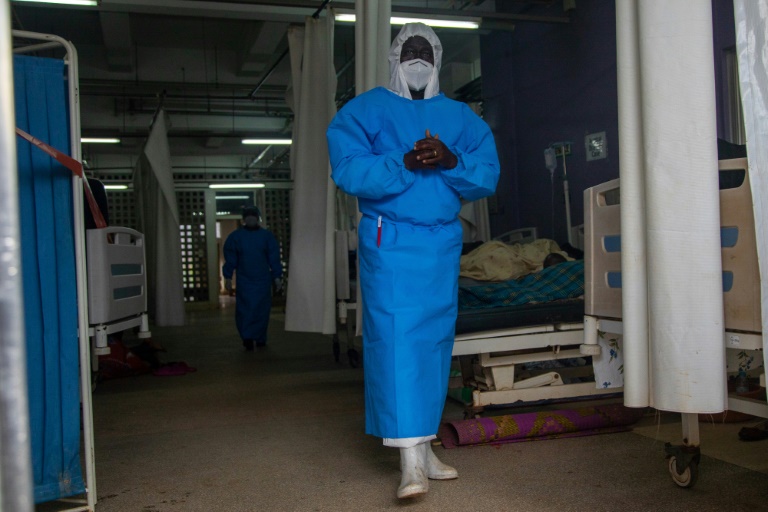
Uganda has reported 14 confirmed cases of Ebola in the greater Kampala region, the country’s health minister said Monday, but sought to assure anxious residents that the situation in the capital was under control.

So far, the death toll across the country from the Ebola epidemic declared in late September has climbed to 44, according to World Health Organisation figures issued last week.

Uganda’s health ministry meanwhile says there have been 90 confirmed cases overall, and 28 deaths.

Health Minister Ruth Jane Aceng told AFP there had been 14 confirmed cases in the Kampala area the past 48 hours, including nine who were contacts of a fatality from Kassanda, one of two central districts at the heart of the outbreak.

Of the nine, she said those infected included seven family members from Masanafu, a densely populated slum area in Kampala which lies near the Kasubi royal tombs, a UNESCO World Heritage Site, and not far from two of Uganda’s two main private universities.

President Yoweri Museveni earlier this month ordered Kassanda and Mubende, the epicentre of the outbreak, to be put under lockdown, imposing a travel ban, a curfew and the closure of public places.

But Aceng told AFP Monday: “The situation in Kampala is still under control and (there is) no need to restrict people’s movements.”

– ‘Disease is in our midst’ –

Residents of the capital, a city of about 1.5 million people bordering Lake Victoria, said they were anxious.

“It is getting scarier now that Kampala is recording Ebola cases,” said Rebecca Nanyonga, a 27-year-old mother of two.

“The government has not done much to sensitise Kampala residents on Ebola,” she said. “Parties and music concerts are still held yet the disease is in our midst.”

Ebola is spread through bodily fluids, with common symptoms being fever, vomiting, bleeding and diarrhoea, and combatted through time-honoured ways of tracing, containing and quarantining. Outbreaks are difficult to contain, especially in urban environments.

Uganda’s last recorded fatality from a previous Ebola outbreak was in 2019.

The particular strain now circulating in Uganda is known as the Sudan Ebola virus, for which there is currently no vaccine.

WHO has said that clinical trials could start within weeks on drugs to combat the Sudan strain.

The Ebola crisis follows the Covid-19 pandemic, which knocked the landlocked country’s economy hard.

“I had relaxed when Covid-19 cases went down. I am now putting back restrictions including visitors to my home,” said Ronald Kibwika, a 45-year-old Kampala businessman.

According to WHO figures, Uganda had more than 169,200 Covid cases and 3,630 deaths.

“We are at (the) mercy of God if Ebola cases rise in Kampala, because most people don’t take health precautions, and health services are still poor,” said Kampala businesswoman Anita Kwikiriza, 31.

US math and reading scores crashed during Covid

American students saw big declines in their reading and mathematics scores after years of disrupted learning due to the pandemic, with national test results described as “appalling and unacceptable” by the education secretary.

The National Assessment of Educational Progress (NAEP), also known as the Nation’s Report Card, released full data Monday for the first time since 2019, after the 2021 exams were postponed a year.

NAEP assessed a representative sample of fourth- and eighth- grade students, finding reading scores dropped back to 1992 levels. Mathematics slid back to 2003 levels.

One-quarter of fourth graders, and nearly four-in-ten eighth graders failed to grasp basic concepts.

“This is a moment of truth for education,” said Secretary of Education Miguel Cardona in comments to reporters. “How we respond to this will determine not only our recovery, but our nation’s standing in the world.”

Prior research has shown shuttered schools during Covid-19 lockdowns restricted students’ opportunities to learn, hitting those from lower-income families and ethnic minorities the hardest.

The pandemic also worsened learning outcomes in other ways, according to the National Center for Education Statistics, which organizes the tests.

These included increases in students seeking mental health services, absenteeism, school violence and disruption, cyberbullying, and nationwide teacher and staff shortages.

“The eighth graders who took NAEP last spring are in high school today,” said Beverly Perdue, chair of the National Assessment Governing Board in a statement.

“We must invest in education so resources and supports are in place to accelerate student learning and close gaps that predated — but were exacerbated by — the pandemic.”

Results from the latest scorecard showed the pandemic widened the gap between higher- and lower-performing students was widening.

Black and Hispanic students saw larger score drops compared to their white peers in fourth-grade math.

Economist Emily Oster tweeted an graphic analysis showing that states which maintained higher levels of in-person learning during the 2020-21 school year had lower drops in averaged math scores than those with more virtual learning.

California and Hawaii were notable exceptions to the trend.

Angie Schmitt, a writer and mother-of-two from Cleveland, told AFP the issue of school closures had become overly politicized early in the pandemic.

Private schools remained open while public schools, particularly in liberal regions, were closed. 

“A lot of Democrats invented rationalizations for that but I don’t think they were very compelling,” said Schmitt, who describes herself as left-leaning.

Credit Suisse to pay 238 mn euros to settle French fraud probe

Credit Suisse has agreed to pay 238 million euros ($234 million) to avoid prosecution on French money laundering and tax fraud charges, according to a settlement approved Monday by a Paris court.

The settlement will see Switzerland’s second-largest bank pay a fine of 123 million euros and pay an additional 115 million euros in damages and interest to the French state.

Credit Suisse said it had reached the settlement “to resolve a legacy matter in relation to an investigation into historical cross-border private-banking services.”

It added that “the settlement does not comprise a recognition of criminal liability.”

French financial prosecutors opened a probe in 2016 and found that 5,000 French nationals had undeclared Credit Suisse accounts that were hiding two billion euros, according to the court.

The judge presiding over the settlement said that Credit Suisse bankers had prospected for clients in high-end French restaurants and hotels, avoiding the bank’s offices in the country.

Prosecutor Francois-Xavier Dulin said the settlement took into account “the systematic character, lengthy period and creation of tools to hide” its prospecting of French clients between 2005 and 2012.

He said Credit Suisse had created offshore entities to aid clients to avoid declaring certain assets to French authorities.

Prosecutors added the settlement also took into account the bank’s current cooperation and the corrective measures it undertook.

“The bank is pleased to resolve this matter, which marks another important step in the proactive resolution of litigation and legacy issues,” Credit Suisse said in its statement.

The bank last week reached an agreement with prosecutors in the US state of New Jersey over mortgage-backed securities dating back to the 2008 financial crisis.

Credit Suisse shares gained more than 2.3 percent on the Swiss stock exchange by mid-afternoon on Monday as investors welcomed the latest court settlement.

Ratings agency Standard & Poor’s earlier this month said these “legacy issues” would “continue to cloud visibility” around the bank’s financial forecasts if they remained unresolved.

New Credit Suisse chief executive Ulrich Koerner is set to unveil his strategic road map on Thursday as he tries to improve the beleaguered bank’s fortunes.

His update has triggered speculation about the size of a potential increase in capital and the assets Credit Suisse may sell to finance its restructuring.

In November 2017, HSBC Private Bank, a Swiss subsidiary of the British banking giant, agreed to pay 300 million euros to avoid a trial in France over tax fraud accusations.

Kyrgyzstan detains border deal critics over 'coup' plans

Authorities in Kyrgyzstan have detained more than 20 politicians and civil servants accused of organising riots over a border demarcation deal with the neighbouring Central Asian country Uzbekistan, a rights group said Monday.

The Kylym Chamy rights group said that 22 people had been detained across the politically volatile ex-Soviet country and were accused of planning a coup attempt and violent protests.

The people detained are part of a group that is critical of a draft government deal with Uzbekistan that critics say could see Bishkek hand over control of a key dam to Uzbekistan.

Water is an increasingly scarce resource in Central Asia and the Kempir-Abad dam was constructed when both countries were part of the Soviet Union.

Disputes over borders and resources still routinely flare three decades after the collapse of the Soviet Union and violence regularly erupts on Kyrgyzstan’s border with neighbouring Tajikistan.

The Kylym Chamy rights group said that the people detained across several towns and cities include a military general, a former member of the constitutional court, a former public prosecutor, journalists and activists.

According to the group, the arrested individuals could face from five to 50 years in prison.

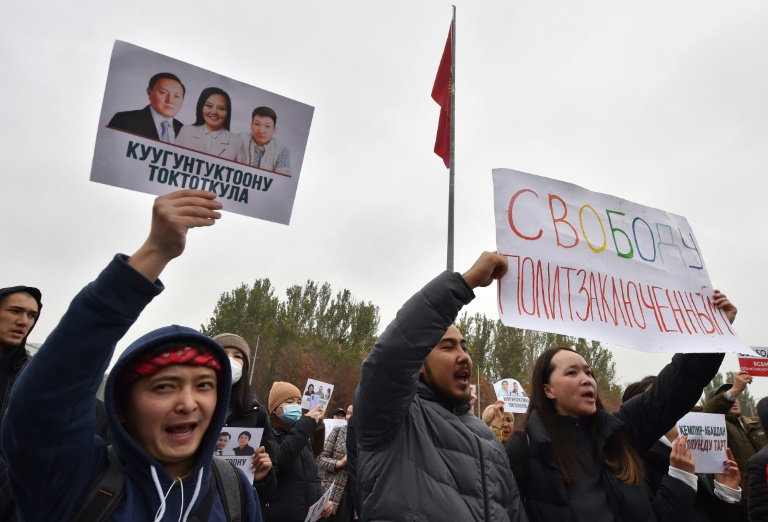
Protests broke out earlier Monday in the capital of Bishkek, where some 300 people marched chanting “The reservoir is ours” and “Freedom for the opposition”, according to an AFP journalist on the scene.

Meanwhile, a counter rally was held in the town of Jalalabad near the reservoir.

The interior ministry confirmed to AFP that the former speaker of the parliament was detained and would be held for one month “in a temporary detention centre”.

Some of those detained shared video footage as police carried them away.

The detained people belong to a group seeking the “protection” of Kempir-Abad, a water reservoir on the border with Uzbekistan.

The group was created after Kyrgyzstan and Uzbekistan signed an agreement for delimitation and demarcation of their borders in September. 

The agreement will see Kyrgyzstan expand by 150 square kilometres but leaves the Kempir-Abad water reservoir under the control of Uzbekistan, the head of the National Security Committee, Kamtchybek Tachiev, has said.

Uzbekistan would gain control of the dam but, according to President Sadyr Japarov, Kyrgyzstan would still have equal access to its water resources.

“We are recovering the dam,” Japarov was quoted as saying by the state-run Kabar news agency on Saturday, specifying that it would now be possible to “pump water for the inhabitants of neighbouring villages”.

He said that the land to be handed over to Uzbekistan under the deal was given to Kyrgyzstan when the dam was built during the Soviet period.

Attempts to oppose the agreement were “sabotage” and “provocations,” he added. 

Kyrgyzstan, a landlocked republic of 6.5 million people, has been dogged by political volatility for much of the three decades since it became independent from the Soviet Union in 1991.

Nigeria calls for calm after US, UK warn of 'terror' threat

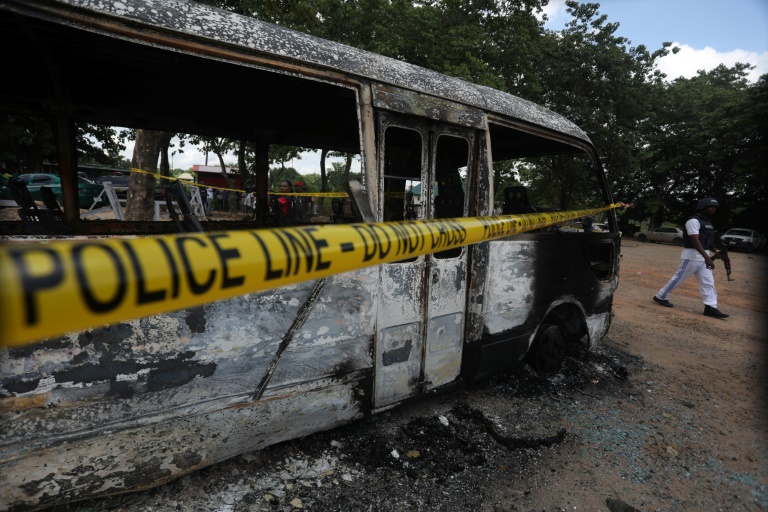
Western embassies in Nigeria’s capital Abuja on Monday advised their citizens in the country to limit their movements due to what they called a higher threat of a “terror” attack, despite appeals for calm from the authorities. 

It was unclear if the assessment from the US, UK and other countries was based on a new threat or because of incidents that had already occurred. 

Insurgents linked to the Islamic State group have claimed several attacks in states surrounding the Federal Capital Territory (FCT) in the past six months, putting many on edge in the city of six million.

On Sunday, the United States embassy in Nigeria issued an advisory warning its citizens of an “elevated risk of terror attacks in Nigeria, specifically in Abuja,” without giving further details. 

“Avoid all non-essential travel or movement,” the statement said, adding that it was “reducing services until further notice.”

Britain, Canada and Australia issued similar warnings over the weekend, recommending citizens in Nigeria and in Abuja in particular avoid public spaces where crowds gather.

The statements also reminded that schools have been targets for Nigerian insurgents in the past.

In response, Nigeria’s domestic security agency known as the Department of State Services (DSS) advised “that necessary precautions are taken by all.”

DSS spokesperson Peter Afunanya however said that there had been similar warnings in the past. 

“The service calls for calm as it works with other law enforcement agencies and stakeholders to maintain peace and order in and beyond Abuja,” he said.

In a bid to “de-escalate threats gathered from various intelligence… U.S advisory inclusive,” Nigeria’s police said it was launching a counter-terrorism exercise in Abuja on Tuesday and Wednesday. 

“The exercise will involve diversion of traffic, use of blank ammunition, and other operational manpower and assets,” police spokesperson Olumuyiwa Adejobi said in a statement on Monday. 

The operation was designed to improve coordination between different units “in response to terrorist incidents and other violent crimes,” Adejobi said.

Nigerian police said the public should not “panic at the sounds of explosives and gunshots during the exercise.”

– Mass jailbreak –

Residents in the FCT, including Western diplomats, have been increasingly worried about insecurity after a mass jailbreak from Kuje in July, a prison on the outskirts of the city. 

The incident, in which more than 400 inmates including dozens of suspected jihadists escaped, prompted President Muhammadu Buhari to say he was “disappointed” with his intelligence services.

The police and military said they had beefed up security in and around the city, which is surrounded by mountainous and forested areas and difficult to patrol.

Jihadists in Nigeria generally operate in the northeast of the country, far away from the capital, though they have small cells in other parts of the country. 

The last time one of the groups — Boko Haram — attacked the city centre was in 2014.

One of former army general Buhari’s main election promises in 2015 was to end insecurity but violence has continued and spread under his watch. 

On October 12, a man was killed during a kidnap attempt by criminals in the wealthy neighbourhood of Maitama in Abuja, where many Western embassies are located. 

In addition to the terrorism threat, the capital is also surrounded by states with high levels of banditry — gangs of heavily armed criminals who kidnap and kill. 

Analysts have warned that insecurity could worsen with the start of political campaigning to replace Buhari next year.

Europe's bees stung by climate, pesticides and parasites

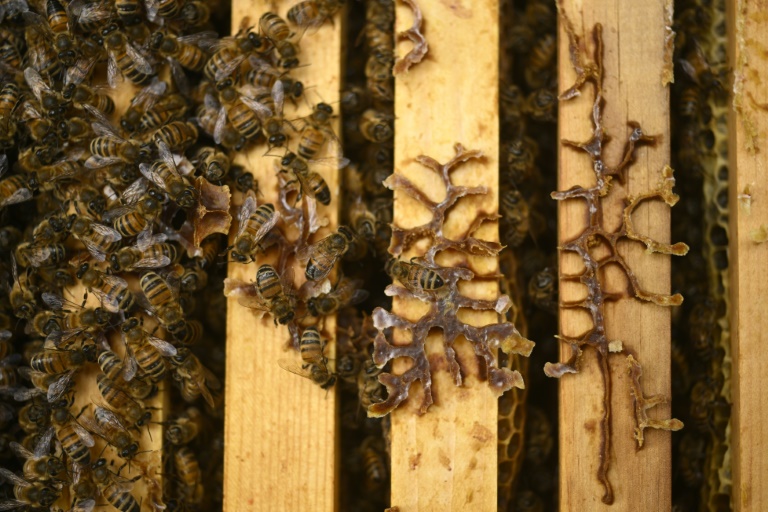
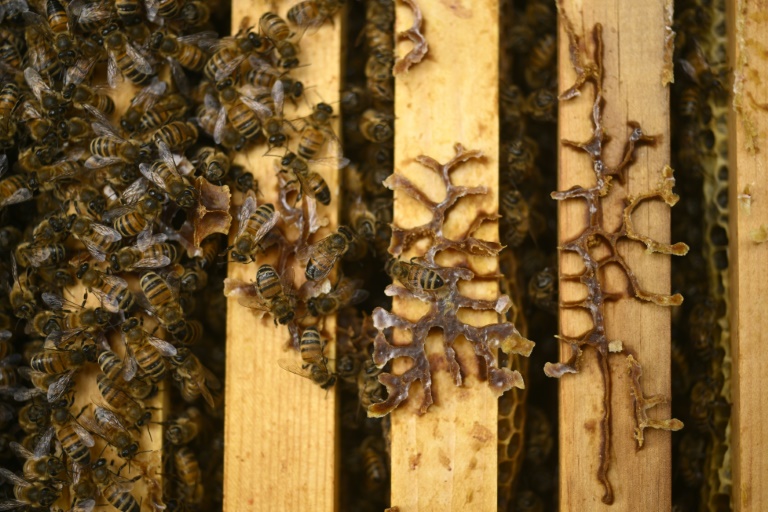
Bees pollinate 71 of the 100 crop species that provide 90 percent of food worldwide. They also pollinate wild plants, helping sustain biodiversity and the beauty of the natural world.

But climate change, pesticides and parasites are taking a terrible toll on bees and they need protecting, according to European beekeepers, who held their annual congress in Quimper, western France, this week.

The congress, which said some European beekeepers were suffering “significant mortalities and catastrophic harvests due to difficult climatic conditions”, was an opportunity for beekeepers and scientists to try to respond to the major concerns.

The European Union, the world’s second largest importer of honey, currently produces just 60 percent of what it consumes.

French beekeepers, for example, expect to harvest between 12,000 and 14,000 tonnes of honey this year, far lower than the 30,000 tonnes they harvested in the 1990s, according to the National Union of French Beekeepers (UNAF).

“I’ve been fighting for bees for 30 years but if I had to choose now, I don’t know if I’d become a beekeeper,” said UNAF spokesman Henri Clement, who has 200 hives in the unspoilt mountainous Cevennes region in southeastern France.

Clement is 62 and not far off retiring.

“But it’s not much fun for young people who want to take up the profession,” he said.

Many of the subjects buzzing around the congress were evidence of this — Asian hornets, parasitic varroa mites and hive beetles (all invasive alien species in Europe), pesticides and climate change.

With climate change, “the bigger issue is just the erratic weather and rain patterns, drought and things like that”, explained US entomologist Jeffery Pettis, president of Apimondia, an international federation of beekeeping associations in 110 countries.

“In certain places, the plants had been used to a certain temperature. And now it goes up, and you have a hot dry summer, and there are no flowers,” Pettis told AFP.

No flowers means no pollen, which means bees dying of hunger.

Climate scientists say human-induced global heating is intensifying extreme weather events like flooding, and heatwaves that exacerbate wildfires.  

“The fires seem to be a big issue,” Pettis said. “They come sporadically and we lose hives directly from flooding and fires.”

– Pollen quality –

Pettis, a former scientist at the US Department of Agriculture, published a study in 2016 on the quality of pollen produced by goldenrod — a hardy perennial also known as solidago that produces a myriad of small, yellow, daisy-like flowers.

The study showed that the more carbon dioxide — a greenhouse gas — accumulates in the atmosphere, the lower the amount of protein in goldenrod pollen. 

North America bees are dependent on nourishment from goldenrod pollen to get through the winter, Pettis explained.

“Getting inferior food … should affect wintering. It could happen with other pollen sources. We don’t know.”

As in France, 30 to 40 percent of hives in the United States are dying every winter, Pettis said, decimated by varroa mites, pesticides and the destruction of wild spaces where wild plants grow.

“Today, there are even American startups that are developing drones to pollinise plants in the place of bees. It’s utterly appalling,” said Clement.

Toxic pesticides are another factor decimating bee colonies and other pollinating insects.

French molecular biophysics scientist Jean-Marc Bonmatin said parasites like varroa, were “boosted by the presence of neonicotinide pesticides, which directly poison pollinators”.   

Neonicotinides, chemically similar to nicotine, are systemic pesticides. 

Unlike contact pesticides, which remain on the surface of the treated leaves, systemic pesticides are taken up by the plant and transported throughout the plant, to their leaves, flowers, roots and stems, as well as to their pollen and nectar.

These toxic substances can remain in the soil for between five and 30 years, Bonmatin said.

The EU restricted the use of three neonicotinides — but not all — in 2013 and banned them outright in 2018.

But since 2013, several EU states have repeatedly granted “emergency authorisations” to use the noxious insecticides on major crops.

– Limiting toxic chemicals –

He said open source software called Toxibee was being launched soon to help farmers protect bees by identifying the least toxic molecules to use on their crops. 

“Before they spray the crops with pesticides, they can try to limit their noxious effect,” he said.

“Because what kills bees will one day damage people’s health too.”

Pettis strove, however, to remain upbeat, pointing to some of the ways people can help bees.

“(We should) diversify agriculture and try not be driven by chemically-dependant agriculture, support organic and more sustainable farming.”

He also stressed the incredible resistance of some bee species, helped by factors in the natural world.

He cited the example of a black bee found on the Ile de Groix island in Brittany, which has survived varroa attacks without beekeepers treating them for mites or giving them supplementary feeding.

“We think the bees are dependent on us but in reality they survive pretty well even without us,” he said.

“And you still have the beauty of the bees. It’s such a good thing to work with bees.”

Europe's bees stung by climate, pesticides and parasites

Bees pollinate 71 of the 100 crop species that provide 90 percent of food worldwide. They also pollinate wild plants, helping sustain biodiversity and the beauty of the natural world.

But climate change, pesticides and parasites are taking a terrible toll on bees and they need protecting, according to European beekeepers, who held their annual congress in Quimper, western France, this week.

The congress, which said some European beekeepers were suffering “significant mortalities and catastrophic harvests due to difficult climatic conditions”, was an opportunity for beekeepers and scientists to try to respond to the major concerns.

The European Union, the world’s second largest importer of honey, currently produces just 60 percent of what it consumes.

French beekeepers, for example, expect to harvest between 12,000 and 14,000 tonnes of honey this year, far lower than the 30,000 tonnes they harvested in the 1990s, according to the National Union of French Beekeepers (UNAF).

“I’ve been fighting for bees for 30 years but if I had to choose now, I don’t know if I’d become a beekeeper,” said UNAF spokesman Henri Clement, who has 200 hives in the unspoilt mountainous Cevennes region in southeastern France.

Clement is 62 and not far off retiring.

“But it’s not much fun for young people who want to take up the profession,” he said.

Many of the subjects buzzing around the congress were evidence of this — Asian hornets, parasitic varroa mites and hive beetles (all invasive alien species in Europe), pesticides and climate change.

With climate change, “the bigger issue is just the erratic weather and rain patterns, drought and things like that”, explained US entomologist Jeffery Pettis, president of Apimondia, an international federation of beekeeping associations in 110 countries.

“In certain places, the plants had been used to a certain temperature. And now it goes up, and you have a hot dry summer, and there are no flowers,” Pettis told AFP.

No flowers means no pollen, which means bees dying of hunger.

Climate scientists say human-induced global heating is intensifying extreme weather events like flooding, and heatwaves that exacerbate wildfires.  

“The fires seem to be a big issue,” Pettis said. “They come sporadically and we lose hives directly from flooding and fires.”

– Pollen quality –

Pettis, a former scientist at the US Department of Agriculture, published a study in 2016 on the quality of pollen produced by goldenrod — a hardy perennial also known as solidago that produces a myriad of small, yellow, daisy-like flowers.

The study showed that the more carbon dioxide — a greenhouse gas — accumulates in the atmosphere, the lower the amount of protein in goldenrod pollen. 

North America bees are dependent on nourishment from goldenrod pollen to get through the winter, Pettis explained.

“Getting inferior food … should affect wintering. It could happen with other pollen sources. We don’t know.”

As in France, 30 to 40 percent of hives in the United States are dying every winter, Pettis said, decimated by varroa mites, pesticides and the destruction of wild spaces where wild plants grow.

“Today, there are even American startups that are developing drones to pollinise plants in the place of bees. It’s utterly appalling,” said Clement.

Toxic pesticides are another factor decimating bee colonies and other pollinating insects.

French molecular biophysics scientist Jean-Marc Bonmatin said parasites like varroa, were “boosted by the presence of neonicotinide pesticides, which directly poison pollinators”.   

Neonicotinides, chemically similar to nicotine, are systemic pesticides. 

Unlike contact pesticides, which remain on the surface of the treated leaves, systemic pesticides are taken up by the plant and transported throughout the plant, to their leaves, flowers, roots and stems, as well as to their pollen and nectar.

These toxic substances can remain in the soil for between five and 30 years, Bonmatin said.

The EU restricted the use of three neonicotinides — but not all — in 2013 and banned them outright in 2018.

But since 2013, several EU states have repeatedly granted “emergency authorisations” to use the noxious insecticides on major crops.

– Limiting toxic chemicals –

He said open source software called Toxibee was being launched soon to help farmers protect bees by identifying the least toxic molecules to use on their crops. 

“Before they spray the crops with pesticides, they can try to limit their noxious effect,” he said.

“Because what kills bees will one day damage people’s health too.”

Pettis strove, however, to remain upbeat, pointing to some of the ways people can help bees.

“(We should) diversify agriculture and try not be driven by chemically-dependant agriculture, support organic and more sustainable farming.”

He also stressed the incredible resistance of some bee species, helped by factors in the natural world.

He cited the example of a black bee found on the Ile de Groix island in Brittany, which has survived varroa attacks without beekeepers treating them for mites or giving them supplementary feeding.

“We think the bees are dependent on us but in reality they survive pretty well even without us,” he said.

“And you still have the beauty of the bees. It’s such a good thing to work with bees.”

Stocks, pound up as Sunak to become new British PM

Global stocks and the pound climbed Monday as markets reacted to the news that former finance minister Rishi Sunak would become Britain’s new prime minister.

European and American equities climbed despite data showing Britain and Germany headed for recession and a plunging Hong Kong stock market as Chinese President Xi Jinping handed key economic posts to loyalists behind his zero-Covid strategy.

Wall Street also opened in the green on Monday, with sentiment boosted by hopes the Federal Reserve would soon slow its pace of interest rate hikes.

News that European gas prices were at a four-month low also spurred traders, as the reference Dutch TTF dipped below 100 euros for the first time since June, reaching 98.60 euros per megawatt hour at around 1030 GMT on Monday.

All eyes were on Britain as Sunak was poised to become the country’s third prime minister in less than two months following the resignations of Boris Johnson and Liz Truss.

His last rival for leadership of the ruling Conservative party, Penny Mordaunt, dropped out of the race on Monday, clearing the way for Sunak to become prime minister after his failed bid earlier this year.

“The pound started the week trading higher as many see the new potential PM as a source of some stability, particularly when compared to the chaotic term served by the Truss government which saw massive volatility across markets,” noted XTB chief market analyst Walid Koudmani.

“Many see Sunak as the final chance for the Conservative Party as he has managed to maintain some credibility” compared with the uncertainty of the Truss and Johnson premierships, he added.

“Investors clearly hope Sunak will stabilise the economy and the political situation — though it’s hard to work out at this point which is the harder task,” commented AJ Bell financial analyst Danni Hewson.

Yields on UK government bonds also dropped following recent surges in the wake of Truss’s disastrous budget that led to her downfall.

Focus was also on the euro after new Italian Prime Minister Giorgia Meloni took office.

Meloni’s post-fascist Brothers of Italy scored a historic victory in general elections on September 25.

Her new government is the most far-right in Italy since World War II, and takes power at a time of decades-high inflation and an energy crisis linked to Russia’s invasion of Ukraine.

Milan’s stock market was up 1.3 percent in early afternoon trading on Monday, mirroring strong gains in Frankfurt and Paris, while yields on Italian government bonds also fell.

London was up by 0.6 percent in mid-afternoon trading, but the stronger pound and falling oil and gas prices were weighing on the heavyweight energy sector, according to traders.

The eurozone was meanwhile looking ahead to Thursday when the European Central Bank is expected to announce another bumper rise in interest rates aimed at curbing sky-high prices.

On the corporate front, Dutch medical device manufacturer Philips announced it would axe 4,000 jobs after its recall of faulty sleep respirators pushed it into a loss.

Following the news, the group’s share price dropped 0.8 percent on the Amsterdam stock exchange on Monday.

– Key figures around 1330 GMT –

London – FTSE 100: UP 0.6 percent at 7,014.28 points

Frankfurt – DAX: UP 1.8 percent at 12,957.93

Paris – CAC 40: UP 1.9 percent at 6,147.93

EURO STOXX 50: UP 1.7 percent at 3,537.16

New York – Dow: UP 0.6 percent at 31,263.39

Tokyo – Nikkei 225: UP 0.3 percent at 26,974.90 (close)

Hong Kong – Hang Seng Index: DOWN 6.4 percent at 15,180.69 (close)

Shanghai – Composite: DOWN 2.0 percent at 2,977.56 (close)

New York – Dow: UP 2.5 percent at 31,082.56 (close)

Pound/dollar: UP at $1.1285 from $1.1258 on Friday

Dollar/yen: UP at 149.14 yen from 147.65 yen

Euro/dollar: DOWN at $0.9835 from $0.9863

Euro/pound: DOWN at 87.16 pence from 87.26 pence

West Texas Intermediate: DOWN 0.4 percent at $84.70 per barrel

Brent North Sea crude: DOWN 0.3 percent at $91.07 per barrel

burs/imm/cdw

Close Bitnami banner
Bitnami