World

Russia claims Ukraine 'dirty bomb' in final stages

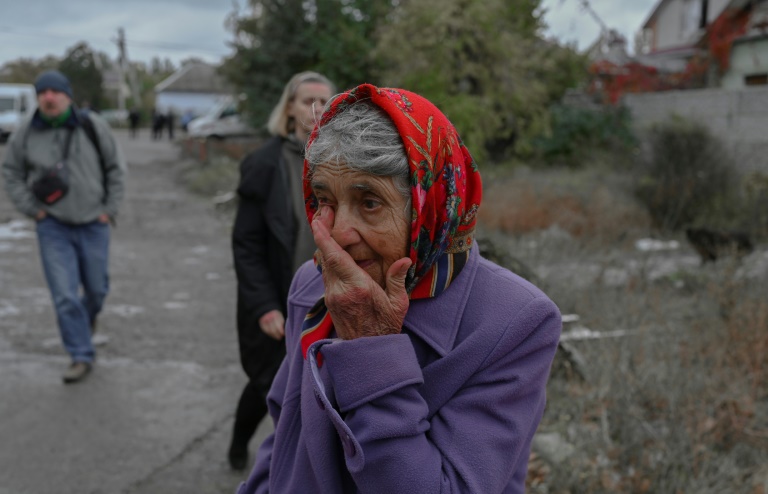
Russia on Monday claimed that Ukraine was in the “final stages” of developing a so-called dirty bomb to use against Moscow’s forces, allegations Kyiv said were “absurd” and could signal Russia’s battlefield plans.

The claim from Moscow comes after a string of unexpected and rare calls between Russian Defence Minister Sergei Shoigu with counterparts from several NATO countries, in which he said Kyiv was planning to deploy the weapon.

But they also follow on the back of weeks of military defeats for Russia in southern and eastern Ukraine, with observers of the conflict and Kyiv saying the Kremlin was becoming increasing desperate.

“According to the information we have, two organisations in Ukraine have specific instructions to create a so-called ‘dirty bomb’. This work is in its final stage,” Lieutenant General Igor Kirillov said on Monday.

At its most basic, a dirty bomb is a conventional bomb laced with radioactive, biological or chemical materials which are disseminated in an explosion.

– Inspection mission –

Since Russia’s allegations and thinly veiled threat of potential nuclear escalation in the Ukraine fighting, both Kyiv and its allies have fiercely rejected the claim.

Ukrainian Foreign Minister Dmytro Kuleba said the head of the United Nations nuclear agency (IAEA), Rafael Grossi, accepted his request to “urgently send experts to peaceful facilities in Ukraine, which Russia deceitfully claims to be developing a dirty bomb.”

The United Kingdom, the United States and France issued a joint statement dismissing the claim earlier on Monday.

“Our countries made clear that we all reject Russia’s transparently false allegations that Ukraine is preparing to use a dirty bomb on its own territory,” according to the statement.

Ukraine has managed, with the help of Western-supplied heavy weapons, managed to claw back swathes of its territory from Russia in the east and south, while its power grid has been pummelled ahead of winter’s arrival.

As momentum has swung toward Ukraine, Russian President Vladimir Putin has faced fissures in domestic support for his campaign, as a messy draft of troops and battlefield losses challenged notions of quick conclusion.

Neither side in the conflict are near sitting down for peace talks. Putin is under intense pressure to achieve a result he can call victory and the Ukrainians are generally intensely mobilised to take back their territory.

The Kremlin said on Monday that France and Germany were showing “no desire” to participate in mediation on the conflict and praised Turkish President Recep Tayyip Erdogan’s offer to organise talks.

Turkey helped broker the deal that allowed grain exports to resume under the UN’s aegis in July, and also played a role in a prisoner swap in September, one of the largest exchanges.

– Russia TV presenter apology –

Yet French President Emmanuel Macron on Sunday said Ukrainians will decide when peace is possible.

He supported Western backing for Kyiv “so that at some point the Ukrainian people can choose peace… in the terms they will have decided”.

Since the beginning of the conflict in February, Macron has differed from other Western leaders in pushing to keep talks open with Putin.

The conflict is also being constantly waged via volleys of accusations and insults between the two sides, although even they admit that sometimes it goes too far.

A presenter with state-funded Russian television channel RT apologised on Monday after being suspended for calling for the burning of Ukrainian children. 

Anton Krasovsky, a 47-year-old pro-Kremlin pundit under Western sanctions, said on Telegram that his comments had been “wild, unthinkable”.

Krasovsky’s comments last week sparked an uproar on social media, after he responded to a guest talking about meeting Ukrainian children in the 1980s who said they saw Russia as an occupier in Soviet times. 

These children “need to be drowned”, Krasovsky said. “Shove them into their huts and burn them up.”
Incoming PM Sunak inherits UK economy in crisis

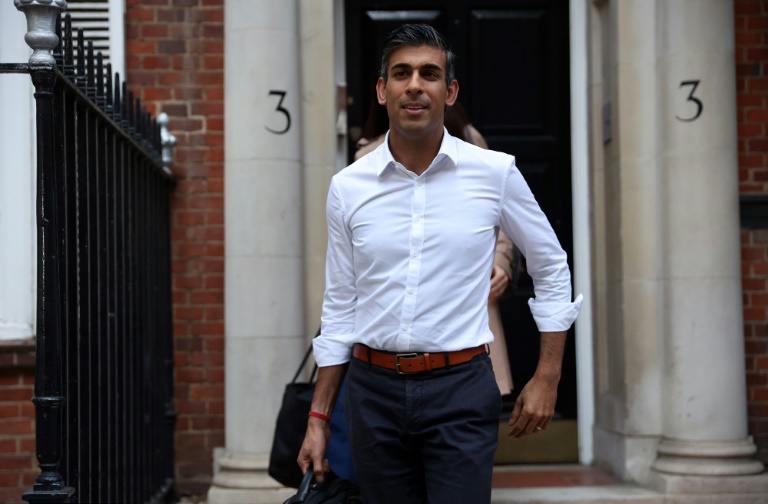
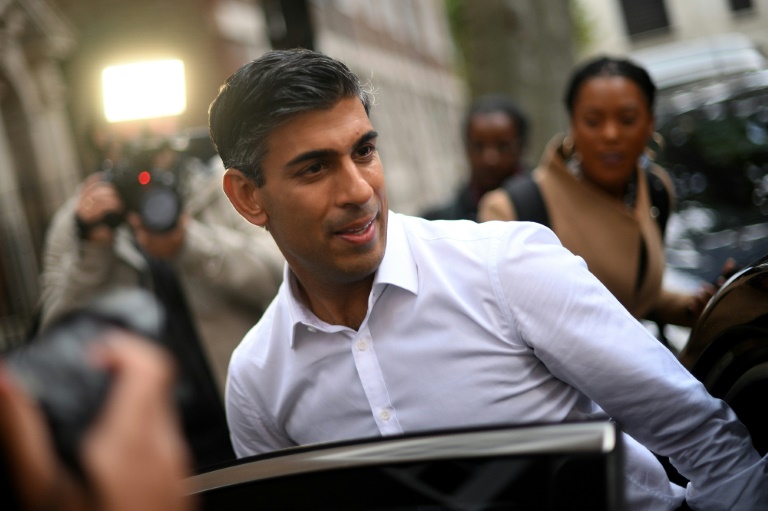
Britain’s next prime minister, former finance chief Rishi Sunak, inherits a UK economy that was headed for recession even before the recent turmoil triggered by Liz Truss.

Outgoing Prime Minister Truss resigned after her budget of tax cuts funded by debt sent shockwaves through markets, crashing the pound.

That caused the government to U-turn on most of its budget, including scaling back a cap on soaring energy bills that have contributed heavily to a cost-of-living crisis for tens of millions of Britons.

Data Monday showed Britain’s economic downturn has worsened in October, with private-sector output at a 21-month low.

“October’s flash PMI data showed the pace of economic decline gathering momentum after the recent political and financial market upheavals,” noted Chris Williamson, chief business economist at S&P Global Market Intelligence that helped compile the figures.

“The heightened political and economic uncertainty has caused business activity to fall at a rate not seen since the global financial crisis in 2009 if pandemic lockdown months are excluded.”

Williamson added that upcoming data would likely show Britain already in recession.

The S&P Global/ CIPS flash UK composite purchasing managers index stood at 47.2 in October, below September’s level of 49.1.

A figure under 50 indicates a contraction.

The UK is not alone, however, with separate S&P data pointing to “impending recession” in Germany, Europe’s biggest economy.

– ‘Sunak stability’ –

Truss resigned last Thursday after just 44 days as prime minister. She had succeeded Boris Johnson on September 6 after a weeks-long campaign against Tory rival Sunak.

The former chancellor of the exchequer had warned in the battle to succeed Johnson that tax cuts promised by Truss when government debt had already soared on Covid interventions was the wrong policy to pursue.

He was proved right as the budget sent the pound crashing to a record-low close to parity with the dollar and triggered yields on government bonds to soar.

With Sunak seen as bringing stability to markets, sterling rose and yields fell Monday.

“Investors clearly hope Sunak will stabilise the economy and the political situation — though it’s hard to work out at this point which is the harder task,” said AJ Bell financial analyst Danni Hewson.

“As well as the recovery in sterling and the reduced cost of government borrowing (as yields drop), Sunak will be pleased to see European gas prices” falling.

However, with UK inflation at a 40-year high above 10 percent, the Bank of England is set to unveil another bumper interest-rate hike at a regular policy meeting next week.

This will heap further pressure on borrowers, including homeowners who have seen mortgage rates surge in the wake of the government’s costly budget.

Shevaun Haviland, director general of the British Chambers of Commerce, urged Sunak to also help out businesses struggling with huge energy bills.

“The political and economic uncertainty of the past few months has been hugely damaging to British business confidence and must now come to an end,” she said in a statement after Sunak’s new position was confirmed.

“The new prime minister must be a steady hand on the tiller to see the economy through the challenging conditions ahead. 

“This means setting out fully costed plans to deal with the big issues facing businesses; soaring energy bills, labour shortages, spiralling inflation, and climbing interest rates.”   

Bangladesh evacuates hundreds of thousands ahead of cyclone

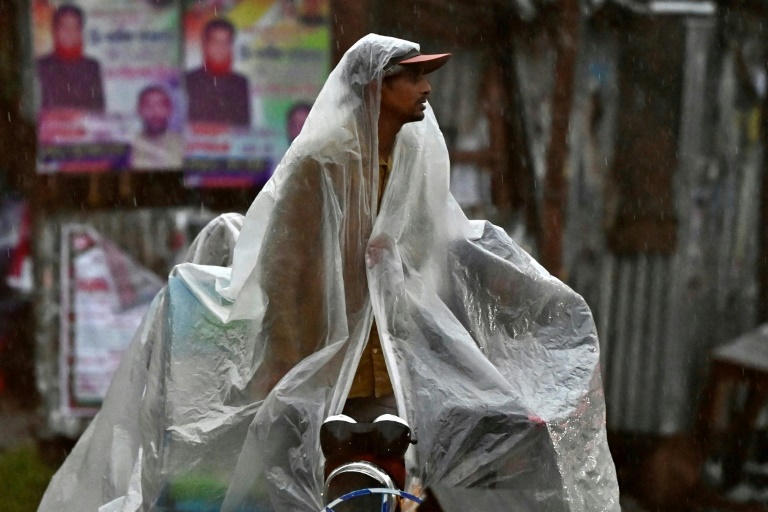
At least one person was killed and hundreds of thousands were evacuated Monday from the path of a cyclone careening towards densely populated, low-lying Bangladesh, according to officials.

About 33,000 Rohingya refugees from Myanmar, controversially relocated to a storm-prone island in the Bay of Bengal, were advised to remain indoors.

Cyclones — the equivalent of hurricanes in the North Atlantic or typhoons in the Northwest Pacific — are a regular and deadly menace on the coast of the northern Indian Ocean where tens of millions of people live.

But scientists say climate change is likely making them more intense and frequent, and Bangladesh is already rated by the UN as one of the countries most affected by extreme weather events since the turn of the century.

Cyclone Sitrang, packing gusts of 88 kilometres (55 miles) per hour, was forecast to make landfall near the southern Bangladeshi town of Khepupara by Tuesday morning, the country’s weather office said.

Most worrying for authorities was the predicted storm surge of up to three metres (10 feet) above normal tide levels, which could inundate areas home to millions of people.

The government plans to evacuate about 2.5 million people from the most vulnerable areas in the path of the storm before the cyclone hits, the country’s disaster management minister Enamur Rahman told reporters.

“The evacuation has already begun from the morning,” the minister said, adding that more than 7,000 shelters have been readied in an effort to keep casualties to a minimum.

At least 250,000 people had already been evacuated from coastal districts to cyclone shelters by the afternoon, two regional administrators told AFP. 

Tens of thousands of volunteers have been mobilised for the effort, said a spokesman for the local chapter of the Bangladesh Red Crescent Society.

“We have already evacuated the most vulnerable people, especially those who live in remote islands and river banks and those who live in flimsy houses,” Aminul Ahsan, regional administrator of Barisal, told AFP.

“In some places we have used force to bring people to cyclone shelters. It is for their own safety,” another regional administrator said.

A 40-year-old woman was killed in the rural town of Lohagara after she was hit by a branch of a tree, which fell in gusty winds, Habibur Rahman, a district administrator, told AFP.

The Red Crescent Society has mobilised tens of thousands of volunteers to alert people using loudhailers and help villagers evacuate, spokesman Shahinur Rahman said.

The newly formed silt island of Bhashan Char, where Bangladesh has been relocating Rohingya refugees to alleviate overcrowding in their refugee camps, was also expected to be hit by heavy rains and strong winds.

“The Bhashan Char shelters are protected by a 19-feet-high embankment. Still, we asked people to stay at home,” a senior security officer told AFP from the island.

– India –

In the neighbouring eastern Indian state of West Bengal, several thousand people were also being evacuated as a precaution, with more than 100 relief centres opened, officials said.

“A special squad is making a round-the-clock vigil along the coastline of the state,” West Bengal government minister Arup Biswas said.

“Fishermen have been asked not to venture into the sea. Ferry services have also been suspended,” he said.

In 2020, Cyclone Amphan, only the second “super cyclone” ever recorded over the Bay of Bengal, killed more than 100 people in Bangladesh and India, and affected millions.

Last year, more than a million people were evacuated along India’s east coast before Cyclone Yaas battered the area with winds gusting up to 155 kilometres an hour — equivalent to a Category 2 hurricane.

The 1970 Bhola cyclone, one of the world’s worst natural disasters, killed several hundred thousand people in Bangladesh — then known as East Pakistan — and India.

In recent years, better forecasting and more effective evacuation planning have dramatically reduced the death toll from such storms.

Japan minister quits after scrutiny over links to religious sect

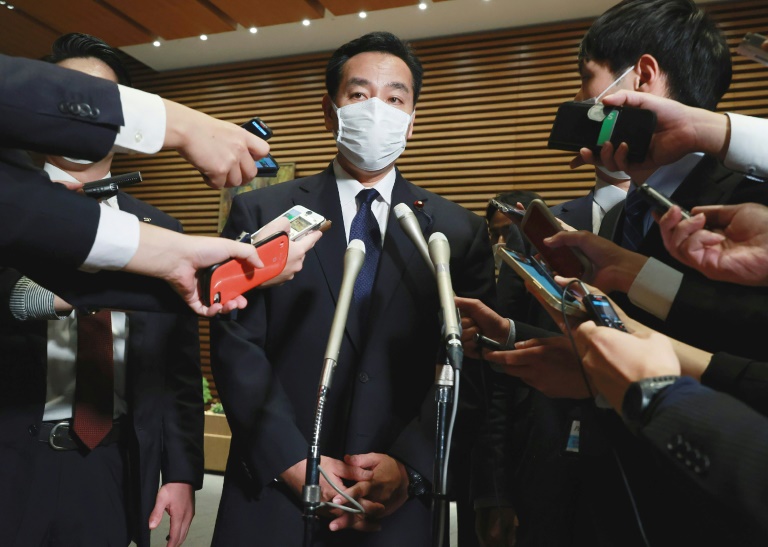
A Japanese minister resigned Monday following scrutiny over his links to a religious sect that is under pressure over ties with top politicians after the assassination of former prime minister Shinzo Abe.

Daishiro Yamagiwa, minister for economic revitalisation, said his conduct had “caused trouble for the government” but did not name the Unification Church.

The movement and its links to senior politicians have been in the spotlight because the man accused of killing Abe in July reportedly resented the organisation over massive donations his mother made that bankrupted the family.

The church, officially known as the Family Federation for World Peace and Unification, has denied wrongdoing.

But a parade of former members have gone public with criticism of its practices in Japan, and last week Prime Minister Fumio Kishida ordered a government investigation into the group.

Its members are sometimes referred to as “Moonies” after Korean founder Sun Myung Moon, who died in 2012.

Yamagiwa has been under fire in parliament following local media reports about his alleged ties to the church — partly because he appeared in a group photo in 2019 with Hak Ja Han, Moon’s wife.

The politician had confirmed it was him in the image, but said in parliament on Monday that his memory about “the photo with her… is unclear”.

He also previously disclosed that he joined an event organised by the church in 2018.

– ‘Regret’ –

“I deeply regret that my attendance at several meetings of the organisation has resulted in giving credit to the said organisation,” Yamagiwa said.

“After this was pointed out to me by an outside party, I had to follow up with explanations. As a result, it caused trouble for the government.”

Kishida said he accepted the minister’s resignation and would announce a replacement on Tuesday. Yamagiwa said he planned to stay on as a lawmaker.

The government’s approval ratings have plummeted to 38 percent, according to the latest poll by public broadcaster NHK, after an internal probe found about half of Japan’s ruling party lawmakers have had dealings with the church.

Now Kishida has ordered a wider investigation that could lead to a dissolution order, which would see the church lose its status as a tax-exempt religious organisation, though it could still continue to operate.

Only two religious groups in Japan have ever received such an order, reports said, one of which was the Aum Shinrikyo cult that carried out a 1995 sarin attack on the Tokyo metro. The other is a group that defrauded members.

Founded in Korea in 1954, the Unification Church is famous for mass wedding ceremonies.

It rose to global prominence in the 1970s and 80s, when it spawned a multi-billion-dollar business empire encompassing construction, food, education, the media and even a professional football club.

Groups affiliated with the church have secured addresses from powerful speakers over the years — including Abe and former US president Donald Trump, neither of whom belonged to the sect.

Opening arguments to start in Weinstein sex assault trial

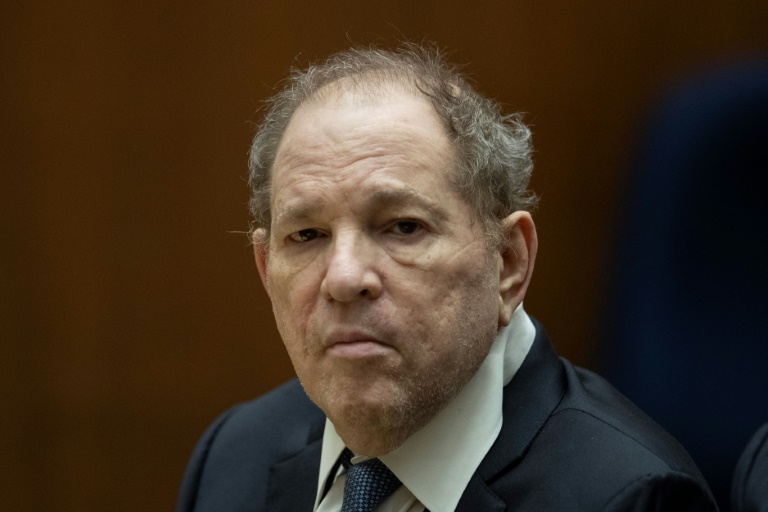
Opening arguments were due to begin Monday in the Los Angeles trial of disgraced Hollywood movie mogul Harvey Weinstein, with five alleged victims expected to take the stand during the two-month case.

The 70-year-old “Pulp Fiction” producer is already serving 23 years in jail in New York after being convicted there of a series of sex crimes.

He now faces 11 more charges, including sexual battery by restraint, forcible rape and forcible oral copulation against women in Beverly Hills and Los Angeles hotels between 2004 and 2013.

If convicted, Weinstein — who has pleaded not guilty to all counts — could be sentenced to more than 100 additional years behind bars.

The task of selecting a jury got underway on October 10, with Judge Lisa Lench overseeing proceedings.

Widespread sexual abuse and harassment allegations against Weinstein exploded in October 2017, and his conviction in New York in 2020 was a landmark in the #MeToo movement.

In June, he lost a bid to have that sex crimes conviction overturned. He has also been separately charged by British prosecutors with the 1996 indecent assault of a woman in London.

In total, nearly 90 women, including Angelina Jolie, Gwyneth Paltrow and Salma Hayek, have accused Weinstein of harassment or assault.

Weinstein attorney Mark Werksman has said there would be testimony in Los Angeles from well-known figures, The Los Angeles Times reported.

“Some of these victims, people will recognize them. Some of these women, you’ve seen them in movies, they’ve been in ad campaigns, a couple of them have achieved some success as actresses or models,” Werksman said, according to the paper.

Weinstein says that all his sexual encounters were consensual, and his lawyer told reporters that the Los Angeles accusations “stem from many years ago” and cannot “be substantiated or corroborated by any forensic evidence” or “credible witnesses.”

Before the allegations against him emerged, the producer and his brother Bob were Hollywood’s ultimate power players.

They co-founded Miramax Films, a distribution company named after their mother Miriam and father Max, in 1979. It was sold to Disney in 1993.

Their hits included 1998’s “Shakespeare in Love,” for which Weinstein shared a best picture Oscar. Over the years, Weinstein’s films received more than 300 Oscar nominations and 81 statuettes.

“She Said,” a film about the 2017 newspaper investigation into Weinstein that sparked the demise of his movie empire, is set for wide release on November 18 in the United States.

UK's Sunak poised to become PM as Johnson exits race

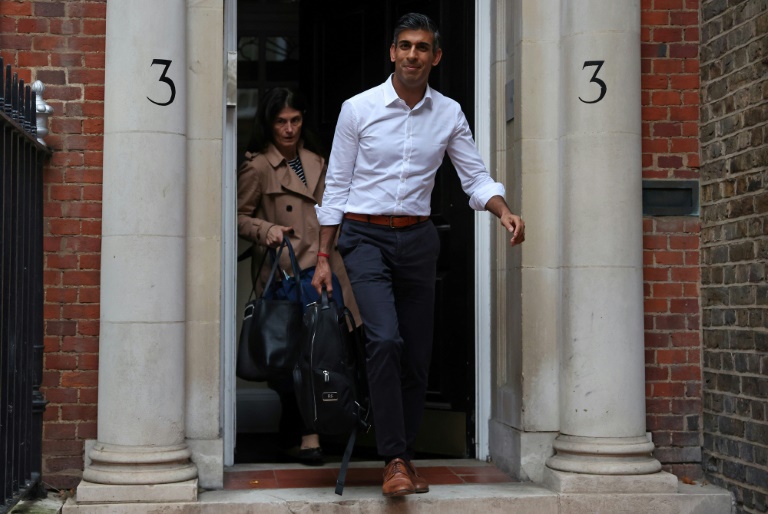
British Conservative Rishi Sunak was on Monday poised to become prime minister and the country’s first leader of colour, after a dramatic decision by Boris Johnson to abandon a political comeback bid.

Just weeks after he lost out to Liz Truss to lead the ruling Tories, Sunak could pull off a stunning reversal in fortunes by winning the leadership as early as Monday afternoon, following ex-premier Johnson’s unexpected exit late Sunday.

The contest, triggered by outgoing leader Truss’s resignation on Thursday, requires candidates to secure the support of at least 100 Conservative MPs by 2:00 pm (1300 GMT) on Monday.

Sunak, a wealthy Hindu descendant of immigrants from India and East Africa, had crossed that threshold by Friday night, ahead of declaring his candidacy on Sunday and amassing nearly 200 public nominations from Tory lawmakers.

Johnson’s withdrawal from the race — before he had even formally announced his candidacy — left cabinet member Penny Mordaunt the only other declared contender.

But Sunak supporters were quick Monday to stress that the former finance minister was not assuming he had the leadership “in the bag”.

“He’s speaking to colleagues this morning, he’s working very hard to attract those supporters who were perhaps with Boris Johnson previously,” said interior minister Grant Shapps.

Mordaunt is expected to come under growing pressure to abandon her leadership bid and end the contest quickly as Britain grapples with multiple crises.

If the 49-year-old resists and is able to garner 100 nominations, the race will be decided by the party’s roughly 170,000 members in an online vote, with the result announced on Friday.

First, however, the Tories’ 357 MPs would hold an “indicative” ballot — from 3:30 pm to 5:30 pm on Monday — to show members which candidate commands the most support within the fractious parliamentary party.

Just two months ago, the members selected Truss over Sunak, who had more support among MPs. Mordaunt is popular with the grassroots and supported Truss.

– ‘Dire straits’ –

The Tories were forced into their second leadership contest since the summer due to Truss’s resignation after only 44 days following the disastrous market response to her tax-slashing mini-budget.

She had replaced Johnson in early September following another government revolt over a slew of scandals, most notably the “Partygate” controversy involving Covid lockdown-breaching parties.

Johnson’s attempt to make an immediate return to Downing Street had raised the prospect of months of disarray and disunity within the ruling Conservatives.

Critical backbench Tory MPs warned there could be a wave of resignations under Johnson’s renewed leadership, which might have led to the general election demanded by opposition parties. One is not due for at least two years.

The Brexit figurehead had cut short a Caribbean holiday to return to Britain on Saturday.

But in a sign of his diminished political standing, he abruptly conceded late Sunday, admitting “you can’t govern effectively unless you have a united party in parliament”. 

“I believe I have much to offer but I am afraid that this is simply not the right time,” Johnson said, while insisting he had secured the 100 nominations needed to progress.

Sunak was quick to pay tribute to Johnson, tweeting: “I truly hope he continues to contribute to public life at home and abroad.”

Mordaunt added on Monday that Johnson had “put country before self”.

– ‘Unifying’ –

Mordaunt appears intent on remaining in the now two-person race.

“Penny is the person best positioned to unify the party, she’s got support from all wings of the party,” said Conservative MP Damian Green on Monday.

The leadership hopeful kept up a string of Twitter posts on Monday morning. 

“Even the former Labour Shadow Chancellor admits — I’m the candidate Labour fears most,” she wrote, referring to the main opposition Labour Party.

In an article in the right-wing Daily Telegraph, she also stressed her commitment to a “lower-tax, high productivity economy”.

Sunak kept a lower profile, writing simply on his Twitter account that the country faced a “profound economic crisis”.

“I want to fix our economy, unite our party and deliver for our country,” he said.

Labour, which has opened up huge poll leads after Truss’s government saw the Conservatives’ popularity plummet, is demanding a general election.

“Tory MPs are set to hand Rishi Sunak the keys to No 10 (the prime minister’s official residence) without him saying a single word about how he’d govern,” tweeted Angela Rayner, deputy leader of the main opposition Labour Party.

Under the UK electoral system, there is no requirement for a general election if the leader of the party in power changes. 

Nigeria calls for calm after US, UK warn of 'terror' threat

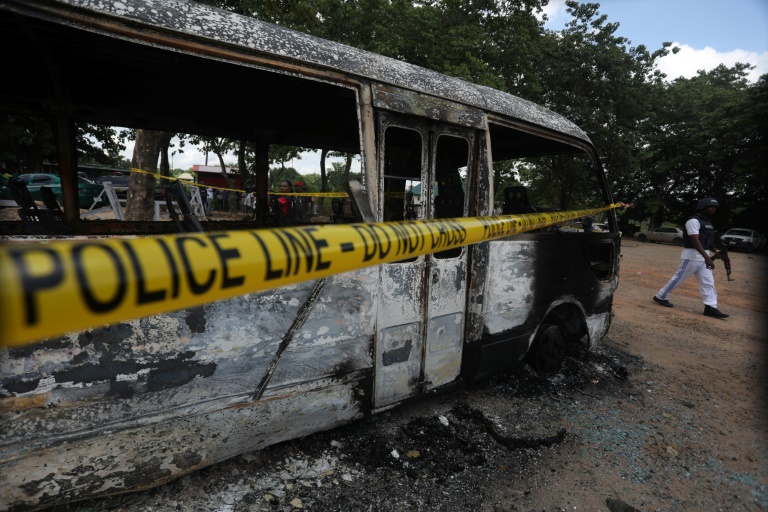
Western embassies in Nigeria’s capital Abuja on Monday advised their citizens in the country to limit their movements due to what they called a higher threat of a “terror” attack, despite appeals for calm from the authorities. 

It was unclear if the assessment from the US, UK and other countries was based on a new threat or because of incidents that had already occurred. 

Insurgents linked to the Islamic State group have claimed several attacks in states surrounding the Federal Capital Territory (FCT) in the past six months, putting many on edge in the city of six million.

On Sunday, the United States embassy in Nigeria issued an advisory warning its citizens of an “elevated risk of terror attacks in Nigeria, specifically in Abuja,” without giving further details. 

“Avoid all non-essential travel or movement,” the statement said, adding that it was “reducing services until further notice.”

Britain, Canada and Australia issued similar warnings over the weekend, recommending citizens in Nigeria and in Abuja in particular avoid public spaces where crowds gather.

The statements also reminded that schools have been targets for Nigerian insurgents in the past.

In response, Nigeria’s domestic security agency known as the Department of State Services (DSS) advised “that necessary precautions are taken by all.”

DSS spokesperson Peter Afunanya however said that there had been similar warnings in the past. 

“The service calls for calm as it works with other law enforcement agencies and stakeholders to maintain peace and order in and beyond Abuja,” he said.

Residents in the FCT, including Western diplomats, have been increasingly worried about insecurity after a mass jailbreak from Kuje in July, a prison on the outskirts of the city. 

The incident, in which more than 400 inmates including dozens of suspected jihadists escaped, prompted President Muhammadu Buhari to say he was “disappointed” with his intelligence services.

The police and military said they had beefed up security in and around the city, which is surrounded by mountainous and forested areas and difficult to patrol.

Jihadists in Nigeria generally operate in the northeast of the country, far away from the capital, though they have small cells in other parts of the country. 

The last time one of the groups — Boko Haram — attacked the city centre was in 2014.

One of former army general Buhari’s main election promises in 2015 was to end insecurity but violence has continued and spread under his watch. 

On October 12, a man was killed during a kidnap attempt by criminals in the wealthy neighbourhood of Maitama in Abuja, where many Western embassies are located. 

In addition to the terrorism threat, the capital is also surrounded by states with high levels of banditry — gangs of heavily armed criminals who kidnap and kill. 

Analysts have warned that insecurity could worsen with the start of political campaigning to replace Buhari next year.

Bangladesh evacuates hundreds of thousands ahead of cyclone

Hundreds of thousands of people were being evacuated Monday from the path of a cyclone careening towards densely populated, low-lying Bangladesh, according to officials.

About 33,000 Rohingya refugees from Myanmar, controversially relocated to a storm-prone island in the Bay of Bengal, were also advised to remain indoors.

Cyclones — the equivalent of hurricanes in the North Atlantic or typhoons in the Northwest Pacific — are a regular and deadly menace on the coast of the northern Indian Ocean where tens of millions of people live.

But scientists say climate change is likely making them more intense and frequent, and Bangladesh is already rated by the UN as one of the countries most affected by extreme weather events since the turn of the century.

Cyclone Sitrang, packing gusts of 88 kilometres (55 miles) per hour, was forecast to make landfall near the southern Bangladeshi town of Khepupara by Tuesday morning, the weather office said.

Most worrying for authorities was the predicted storm surge of up to three metres (10 feet) above normal tide levels, which could inundate areas home to millions of people.

Officials in the coastal districts of Patuakhali, Bhola, Barguna and Jhalakathi told AFP that up to 400,000 people would be evacuated from vulnerable villages and islands into shelters.

“We have a plan to evacuate some 250,000 people. There are 703 cyclone shelters in the district and many multi-storied buildings. We will complete the evacuation by tonight,” Patuakhali district administrator Kamal Hossain told AFP.

The Red Crescent Society has mobilised tens of thousands of volunteers to use loudhailers to alert people and help villagers evacuate, spokesman Shahinur Rahman told AFP.

The newly formed silt island of Bhashan Char, where Bangladesh has been relocating Rohingya refugees to alleviate camp overcrowding, was also expected to be hit by heavy rains and strong winds.

“The Bhashan Char shelters are protected by a 19-feet high embankment. Still, we asked people to stay at home,” a senior security officer told AFP from the island.

– India –

In the neighbouring eastern Indian state of West Bengal, several thousand people were also being evacuated as a precaution, with more than 100 relief centres opened, officials said.

“A special squad is making round-the-clock vigil along the coastline of the state,” West Bengal government minister Arup Biswas said.

“Fishermen have been asked not to venture into sea. Ferry services have also been suspended,” he said.

In 2020, Cyclone Amphan, the second “super cyclone” ever recorded over the Bay of Bengal, killed more than 100 people in Bangladesh and India, and affected millions.

Last year, more than a million people were evacuated along India’s east coast before Cyclone Yaas battered the area with winds gusting up to 155 kilometres (96 miles) an hour — equivalent to a Category 2 hurricane.

The 1970 Bhola cyclone, one of the world’s worst natural disasters, killed several hundred thousand people in Bangladesh — then known as East Pakistan — and India.

In recent years, better forecasting and more effective evacuation planning have dramatically reduced the death toll from such storms.

European stocks, pound up awaiting new British PM

European stocks and the pound climbed Monday as markets awaited confirmation that former finance minister Rishi Sunak would become Britain’s new prime minister.

European equities climbed despite data showing Britain and Germany headed for recession and a plunging Hong Kong stock market as Chinese President Xi Jinping handed key economic posts to loyalists behind his zero-Covid strategy.

Sentiment was boosted by hopes the Federal Reserve would soon slow its pace of interest rate hikes and on news that European gas prices were at a four-month low.

The reference Dutch TTF gas price on Monday dipped below 100 euros for the first time since June, reaching 98.60 euros per megawatt hour at around 1030 GMT.

All eyes were on Britain, set for its third prime minister in less than two months following the resignations of Boris Johnson and Liz Truss. 

“The pound started the week trading higher as many see the new potential PM as a source of some stability, particularly when compared to the chaotic term served by the Truss government which saw massive volatility across markets,” noted XTB chief market analyst Walid Koudmani.

Yields on UK government bonds also dropped following recent surges in the wake of Truss’s disastrous budget that led to her downfall.

Elsewhere, the embattled yen saw only a brief rally against the dollar on speculation Japanese authorities stepped in to support their currency for a second time in as many sessions.

Focus was also on the euro after new Italian Prime Minister Giorgia Meloni took office.

Meloni’s post-fascist Brothers of Italy scored a historic victory in general elections on September 25.

Her new government is the most far-right in Italy since World War II, and takes power at a time of decades-high inflation and an energy crisis linked to Russia’s invasion of Ukraine.

Milan’s stock market was up 1.3 percent in early afternoon trading on Monday, mirroring strong gains in Frankfurt and Paris.

London was up only slightly, with the stronger pound and falling oil and gas prices weighing on the heavyweight energy sector, according to traders.

The eurozone was meanwhile looking ahead to Thursday when the European Central Bank is expected to announce another bumper rise in interest rates aimed at curbing sky-high prices.

On the corporate front, Dutch medical device manufacturer Philips announced it would axe 4,000 jobs after its recall of faulty sleep respirators pushed it into a loss.

Following the news, the group’s share price dropped 0.8 percent on the Amsterdam stock exchange.

– Key figures around 1100 GMT –

London – FTSE 100: UP 0.2 percent at 6,980.53 points

Frankfurt – DAX: UP 1.3 percent at 12,891.41

Paris – CAC 40: UP 1.5 percent at 6,123.30

EURO STOXX 50: UP 1.3 percent at 3,521.53

Tokyo – Nikkei 225: UP 0.3 percent at 26,974.90 (close)

Hong Kong – Hang Seng Index: DOWN 6.4 percent at 15,180.69 (close)

Shanghai – Composite: DOWN 2.0 percent at 2,977.56 (close)

New York – Dow: UP 2.5 percent at 31,082.56 (close)

Pound/dollar: UP at $1.1303 from $1.1258 on Friday

Dollar/yen: UP at 149.37 yen from 147.65 yen

Euro/dollar: DOWN at $0.9822 from $0.9863

Euro/pound: DOWN at 86.88 pence from 87.26 pence

West Texas Intermediate: DOWN 1.1 percent at $84.14 per barrel

Brent North Sea crude: DOWN 0.8 percent at $92.80 per barrel

burs/bcp/imm

Japan minister resigns after Unification Church scrutiny

A Japanese minister resigned on Monday following allegations over his ties to the Unification Church, which is under renewed scrutiny after the assassination of former prime minister Shinzo Abe.

Daishiro Yamagiwa, minister for economic revitalisation, said he did not want the allegations to “affect the parliamentary debate”, without naming the church.

Last week Prime Minister Fumio Kishida ordered a government probe into the group, which has been in the spotlight because the man accused of killing Abe in July was reportedly motivated by resentment against it.

The sect’s Japan chapter has been accused of pressuring adherents to make hefty donations and blamed for child neglect among members.

The church, officially known as the Family Federation for World Peace and Unification, has denied wrongdoing, but a parade of former members have gone public with criticism of its practices.

Members of the church are sometimes referred to as “Moonies” after Korean founder Sun Myung Moon, who died in 2012.

Yamagiwa has been under fire in parliament following local media reports about his alleged ties to the group — partly because he appeared in a group photo in 2019 with Hak Ja Han, the wife of founder Moon.

The politician had confirmed it was him in the image, but said in parliament on Monday that his memory about “the photo with her… is unclear”.

He has also previously said he joined an event organised by the church in 2018.

The politician said Monday he planned to stay on as a lawmaker.

“I deeply regret that my attendance at several meetings of the organisation has resulted in giving credit to the said organisation,” he said.

“After this was pointed out to me by an outside party, I had to follow up with explanations. As a result, it caused trouble for the government.”

Kishida said Monday he accepted Yamagiwa’s resignation and would announce a replacement on Tuesday.

The government’s approval ratings have plummeted to 38 percent, according to the latest poll by public broadcaster NHK, after revelations about the church’s links with top politicians.

The investigation could lead to a dissolution order, which would see the church lose its status as a tax-exempt religious organisation, though it could still continue to operate.

Only two religious groups in Japan have ever received such an order, reports said, one of which was the Aum Shinrikyo cult that carried out the 1995 sarin attack on the Tokyo metro.

The other is a group that defrauded members.

Close Bitnami banner
Bitnami