World

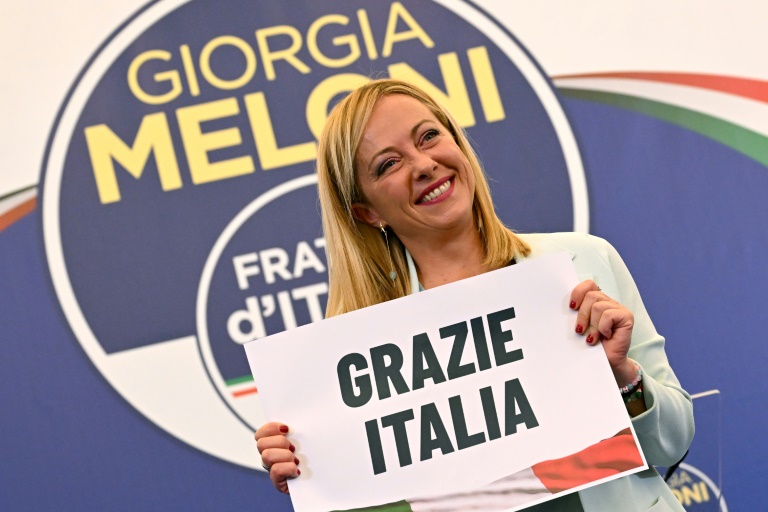
Far-right Meloni named Italy's first woman PM

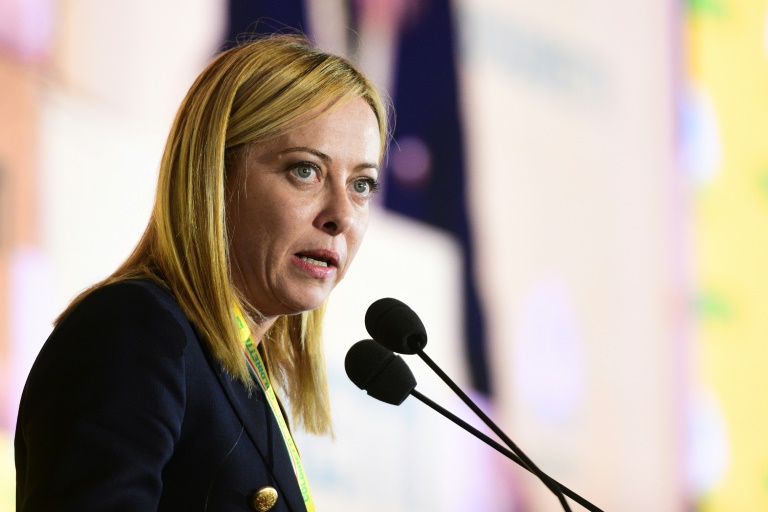
Far-right leader Giorgia Meloni was named Italian prime minister on Friday, becoming the first woman to head a government in Italy.

Her post-fascist Brothers of Italy party — Eurosceptic and anti-immigration — won the September 25 legislative polls but needed outside support to form a government.

Meloni’s appointment is an historic event for the eurozone’s third largest economy and for Brothers of Italy, which has never been in government.

Shortly after she was named, the 45-year-old from Rome named her ministers, who will be sworn in on Saturday in front of President Sergio Mattarella.

Her Brothers of Italy party won 26 percent of the vote last month, compared to eight and nine percent respectively for her allies Forza Italia and the far-right League.

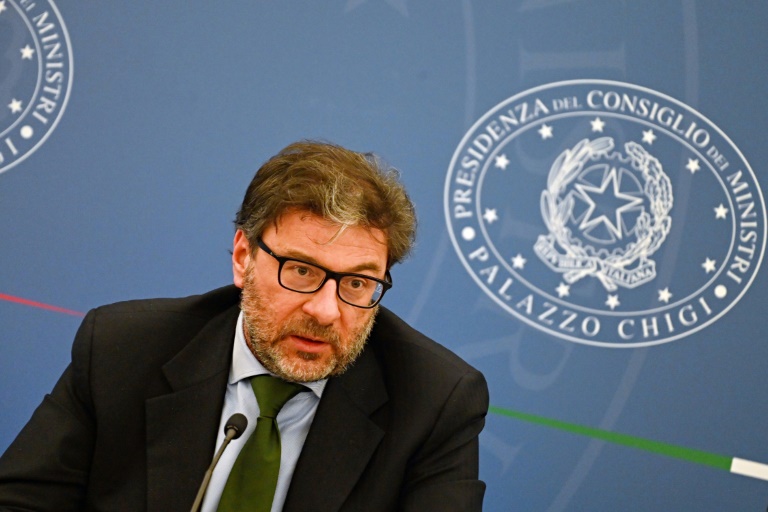
Her list of 24 ministers, including six women, revealed a desire to reassure Italy’s partners. She named Giancarlo Giorgetti as economy minister, who served under the previous government of Mario Draghi.

Giorgetti, a former minister of economic development, is considered one of the more moderate, pro-Europe members of Matteo Salvini’s League.

Meloni also named ex-European Parliament president Antonio Tajani, of Forza Italia, as foreign minister and deputy prime minister.

Salvini will serve as deputy prime minister and minister of infrastructure and transport.

That appointment is likely to disappoint Salvini, who wanted Meloni to give him the role of interior minister, a position that went to a technocrat, Rome prefect Matteo Piantedosi.

– Unity concerns –

The consultations to cobble together a government had been overshadowed by disagreements with her two would-be coalition partners over Meloni’s ardent support for Ukraine since the Russian invasion. The leaders of Forza Italia and the League are both considered close to Moscow.

A recording was leaked during the week in which Italy’s former prime minister Silvio Berlusconi — who heads Forza Italia — talks about his warm ties with Moscow and appeared to blame the war in Ukraine on Ukrainian President Volodymyr Zelensky.

Her other coalition partner, Salvini, is a long-time fan of Russian President Vladimir Putin and has criticised Western sanctions on Russia.

Despite her Eurosceptic stance, Meloni has been firm about her support for Ukraine, in line with the rest of the European Union and the United States.

“I intend to lead a government with a clear and unequivocal foreign policy line,” she has said. “Italy is fully, and with its head held high, part of Europe and the Atlantic Alliance (NATO).”

“Anyone who does not agree with this cornerstone will not be able to be part of the government, even at the cost of not forming a government,” Meloni has warned.

Berlusconi, 86, has said his personal and political positions “do not deviate from that of the Italian government (and) the European Union” on Ukraine.

But the tensions add to concerns that Meloni’s coalition, held together by the need for a parliamentary majority, will struggle to maintain unity.

Berlusconi’s allies insist his comments in the recording, from a meeting with lawmakers earlier this week, were taken out of context.

The billionaire media mogul described a rekindling of relations with long-time friend Putin, who he said sent him 20 bottles of vodka and a “very sweet letter” for his birthday.

– Challenges ahead –

Meloni’s coalition wants to renegotiate Italy’s portion of the EU’s post-Covid recovery fund. 

It argues the almost 200 billion euros ($193 billion) it expects to receive should take into account the current energy crisis, exacerbated by Moscow’s invasion of Ukraine, which has hit the supplies of Russian gas to Europe.

But the funds are tied to a series of reforms only just begun by Draghi’s government, and analysts say Meloni has limited room for manoeuvre.

Meloni had campaigned on a platform of “God, country and family”, sparking fears of a regression on rights in the Catholic-majority country.

She has distanced herself from her party’s neo-fascist past — and her own, after praising dictator Benito Mussolini as a teenager — and likes to present herself as a straight-talking but unthreatening leader.

Inflation in Italy rose to 8.9 percent in September over the previous year, threatening to put the country in recession next year. 

The margin for manoeuvre is limited given that Italy’s colossal debt represents 150 percent of gross domestic product, the highest in the eurozone after Greece.

Draghi used his last day on the European stage on Friday to warn both his fellow leaders and Meloni that a united Europe should remain their “guiding star”.

Draghi said everyone looked at “the EU as a source of security, stability and peace”, adding: “We have to keep this in mind as a guiding star for the future, especially in troubled times like these.”
Tigray's rebels agree to peace talks as Ethiopia PM vows 'end' to war

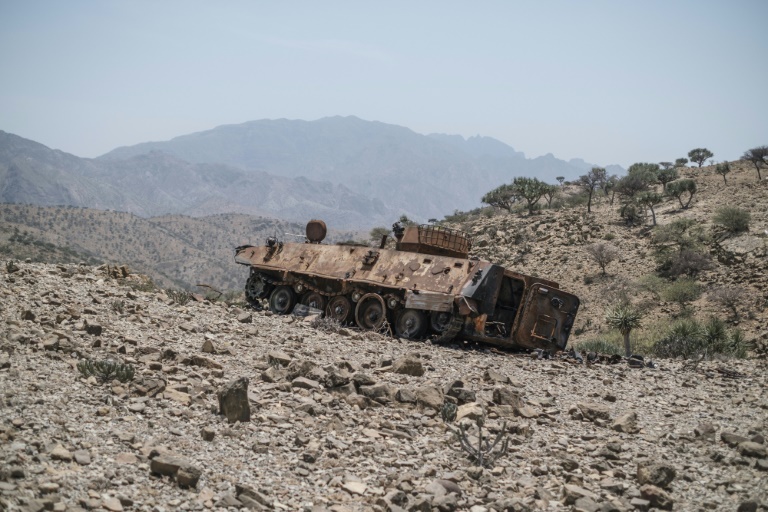
Tigray’s rebel authorities said Friday they would attend talks next week aimed at ending war in Ethiopia, as Prime Minister Abiy Ahmed vowed fighting “will end and peace will prevail”.

The government has also said it will participate in the negotiations in South Africa on Monday, being organised by the African Union, as diplomatic pressure mounts for a settlement to almost two years of bloodshed.

“Our delegation will attend,” Kindeya Gebrehiwot, a spokesman for the rebel authorities in Tigray, told AFP in a text message when asked if they would come to the table on October 24.

The news came ahead of a closed-door meeting of the United Nations Security Council on Friday to discuss the spiralling conflict in Africa’s second-most populous country, and growing fears for civilians caught in the crossfire.

Ethiopia’s government this week vowed to seize airports and other federal sites in Tigray from rebel control as its army and their Eritrean allies seized towns in the war-torn region, sending civilians fleeing.

Abiy, who sent troops into Tigray in November 2020 promising a quick victory over the northern region’s dissident leaders, said the war “would end and peace will prevail.”

“Ethiopia will be peaceful, we will not continue fighting indefinitely,” the Nobel Peace Prize winner said Thursday at a project launch outside Addis Ababa.

“I hope the day when we will stand with our Tigrayan brothers to work together for development is near.”

– ‘Dramatic’ violence –

International calls for a ceasefire have grown since the AU failed earlier this month to bring the warring sides to the negotiating table, and fighting intensified in embattled Tigray.

The AU’s Peace and Security Council, its foremost conflict resolution body, met for the first time Friday since fighting resumed in August, shattering a five-month-long truce.

In a communique, the 15-member council welcomed “the mutual commitments to genuinely participate in the peace process” and hoped for a “fruitful outcome”.

The return to the battlefield in August halted desperately-needed aid into Tigray, a region of six million that lacks food, medicine and other life-saving essentials.

A humanitarian source told AFP on Friday that heavy fighting was underway between the cities of Shire and Axum in northern Tigray, where combat has intensified in recent weeks.

EU foreign policy chief Josep Borrell warned of a “dramatic escalation of violence”.

“The number of casualties and the level of human suffering is staggering”, he posted on Twitter on Friday.

Tigray has been under a communications blackout for over a year, and independent reporting from the region has heavily curtailed.

The International Crisis Group said that, while reliable data was scarce, it believed the fighting since August “may have involved more than half a million combatants and killed tens of thousands of people”.

“According to most estimates, it is among the world’s deadliest conflicts,” the Brussels-based think tank said in a report published Friday.

– ‘Great concern’ –

US State Department spokesman Ned Price said the UNSC and AU meetings “demonstrate the international community’s great concern about the situation” and the need for the violence to stop.

Speaking to reporters on Thursday, he also renewed calls for a resumption of humanitarian aid to Tigray, and the withdrawal of Eritrean troops from Ethiopia.

Price said US special envoy Mike Hammer was in Addis Ababa and in “constant touch” with the participants in the peace talks, including Kenya and South Africa.

The AU’s mediation team was to include Horn of Africa envoy Olusegun Obasanjo — who briefed the peace council on Friday –South Africa’s former deputy president Phumzile Mlambo-Ngcuka, and former Kenyan president Uhuru Kenyatta.

Logistical problems were blamed for peace talks scheduled earlier this month never eventuating.

The AU was “widely perceived as responding inadequately to this situation” but had been trying to ensure talks got started next week as planned, the AU-focused Amani Africa think tank said Friday in a briefing note.

The conflict began nearly two years ago when Abiy accused the Tigray People’s Liberation Front (TPLF), the region’s ruling party which resisted central authority, of attacking army camps.

The TPLF dominated Ethiopia’s ruling political alliance for decades before Abiy took power in 2018 and sidelined the party.

US budget deficit drops by half in 2022 on pandemic recovery

The US budget deficit fell by half in the past year to $1.4 trillion on the back of a pandemic recovery and as relief spending eased, the government said Friday.

Covid-related spending on things like unemployment insurance and other programs have declined following a recovery in the world’s biggest economy from the virus outbreak, with businesses returning to normal.

The drop in the budget deficit marks the “largest one-year decrease,” said the Treasury Department and White House budget office on Friday.

This was helped by higher individual and corporation tax collections, bolstered by employment growth, with tax revenues for the fiscal year ended September 30 surging a record $850 billion from 2021.

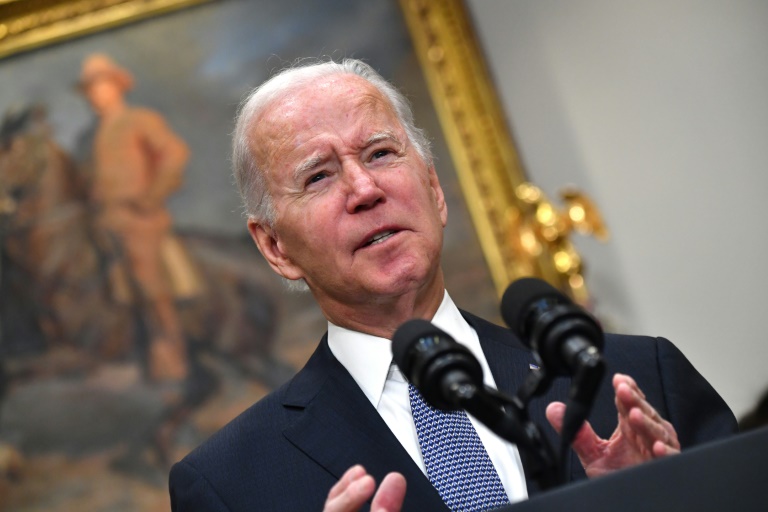
President Joe Biden hailed the big drop as evidence of a resurgent economy just three weeks ahead of November’s crucial midterm elections to decide control of Congress.

Hailing the “largest ever decline in the federal deficit,” Biden called the development “further proof that we’re rebuilding the economy.”

The development, he said, was part of “the good news on the economy” that he predicted would help Democrats climb back in the polls, which currently show Republicans poised for victory.

Treasury Secretary Janet Yellen, in a statement citing the American Rescue Plan stimulus package, said “today’s joint budget statement provides further evidence of our historic economic recovery.”

In a statement, officials also added that the US has “more than recovered all of the jobs lost during the pandemic”.

The economy added more than 10 million jobs since early 2021, while unemployment returned to its pre-pandemic level.

The figures for the latest fiscal year showed government outlays dipped $550 billion to $6.3 trillion, in part reflecting reductions in Covid-19 related spending.

But spending for categories such as student loans increased, the report added.

This was the first fall in outlays since 2013, Treasury officials told reporters.

– Loan forgiveness –

The overall drop in the deficit came after Biden announced plans to forgive part of the country’s massive student debt burden, a topic of controversy between Democrats and Republicans.

Republicans accuse Biden of wasting money on the measure, arguing that public funds could be used more effectively.

Loan modifications had a $430 billion impact in September, with a Treasury official acknowledging that loan forgiveness was one of the primary reasons for the increase.

But the department does not expect to see “similar large modifications” in the future unless there were further changes to policy moving forward.

In the latest fiscal year, federal borrowing rose by $2 trillion to $24.3 trillion, still close to the size of the world’s biggest economy, data showed.

With soaring inflation bringing a sharp rise in borrowing costs, interest on the public debt came in at $36.6 billion higher than estimated, the Treasury Department said.

The Federal Reserve has raised its benchmark lending rate several times this year to cool surging prices.

In a breakdown, the report on Friday also showed that individuals paid $2.6 trillion in taxes and those from corporations totaled $425 billion.

The Health and Human Services Department spent $1.6 trillion while the Defense Department spent $727 billion and foreign aid came up to an estimated $24.6 billion, the report said.

US, Russian defence ministers hold rare call as Ukraine advances

Russia’s defence minister held rare telephone talks with his US counterpart Friday after Kremlin proxy officials said they were turning Ukraine’s southern city of Kherson into a “fortress” as Kyiv’s forces advance.

Details of the conversation — including its duration — between Russia’s Sergei Shoigu and US Defense Secretary Lloyd Austin were scant from official read outs but both sides said the senior officials had discussed Ukraine.

“Topical issues of international security — including the situation in Ukraine — were discussed,” Moscow said, with Washington saying: “Secretary Austin emphasized the importance of maintaining lines of communication amid the ongoing war against Ukraine”.

It was only the second call between the ministers since Moscow invaded Ukraine on February 24 and during the first — in May — Austin had urged Moscow to implement an “immediate ceasefire” in Ukraine.

At the time, Russia’s invading force had been beaten back from the capital Kyiv but were making steady gains in the eastern Donbas and Kharkiv regions and had solidified a hold in the south.

Six months on however Ukraine’s forces are pushing back — particularly in the south.

Kyiv’s forces in recent weeks — aided by Western weapons — have been advancing along the west bank of the Dnieper river towards the region’s main city, also called Kherson.

Kherson was the first major city to fall to Moscow’s troops after the invasion began and retaking it would be a crucial prize in Ukraine’s counter-offensive.

Kyiv said Friday it had retaken a total of 88 towns and villages in the region since launching its offensive to retake Kherson in the late summer. 

On Friday, Moscow-installed authorities there accused Kyiv’s forces of carrying out a fatal attack on a bridge being used by civilians.

“Four people were killed,” pro-Moscow official Kirill Stremousov said on Telegram. “The city of Kherson, like a fortress, is preparing for its defence.”

Russian investigators said later two of the dead were journalists and 13 people had been injured.

A Ukrainian military spokeswoman Nataliya Gumenyuk earlier denied Kyiv’s forces were responsible, saying they do not target local populations.

Russian state-run media in recent days aired footage showing civilians with bags taking ferries across the river from Kherson.

– Risks of disasters –

Kyiv has branded the organised movement of Kherson residents to Russia and other Moscow-controlled regions as “deportations” of Ukrainian citizens.

Zelensky said late Thursday that Russian forces had mined the Kakhovka hydroelectric power plant with the intent of blowing it up.

Hundreds of thousands of people around the lower Dnieper river would be in danger of flash flooding if the dam was destroyed, Zelensky warned in a speech Thursday to European leaders.

On Friday, Prime Minister Denys Shmygal called for an international monitoring mission to deploy at the dam.

“International specialists need to arrive immediately at the station along with Ukrainian personnel,” Shmygal said during a government meeting. 

He also said cutting water supplies to the south could also impact the cooling systems of the Zaporizhzhia nuclear power plant, Europe’s largest.

The nuclear facility is a key concern of Russia’s eight-month invasion with both sides regularly accusing the other of shelling near it and endangering operations.

Ukraine’s push in the south comes after a sweeping counter-offensive in the northeast Kharkiv region that has badly impaired Russia’s supply routes and logistics corridors in the eastern Donbas region.

But Russian forces have continued shelling the region’s largest city, Kharkiv, and the presidency said Friday “industrial infrastructure” was hit in the city, wounding six.

The attack is the latest in a weeks-long barrage that has targeted infrastructure and particularly energy facilities.

Energy-saving measures were put in place across Ukraine after Russian missile and drone strikes destroyed what Zelensky said was more than 30 percent of the country’s power stations in a week.

– ‘We can hold out’ –

A 64-year-old Ukrainian, Vyacheslav, told AFP in Kyiv the nation would make do, despite the restrictions.

“There are books to read. There are battery-powered lights. I think we can hold out for a few hours. There are gas stoves so it will still be possible to cook,” he said, declining to give his full name.

Kyrylo, a 27-year-old shop salesman, said there had been a rush on power banks after Russian attacks began on the energy facilities in the capital.

“We don’t sell flashlights but regarding power banks, I can say that on the 10th, when the attack on Kyiv began, almost all available power banks were sold, and in general, the demand for power banks increased by 70 or 80 percent,” he added.

The Ukraine presidency said Friday Russian forces were shelling sections along the entire front line of Donbas and that two were killed in the Donetsk region.

Pro-Draghi League moderate named Italy economy minister

Giancarlo Giorgetti, named Italy’s new economy minister on Friday, is considered one of the more moderate, pro-Europe members of Matteo Salvini’s League party.

He was a loyal supporter of outgoing prime minister Mario Draghi, serving as his minister of economic development.

The 55-year-old has spent most of his political career in the League, but does not hesitate in disagreeing with Salvini — even if publicly, he denies any rift.

His political mentor was Umberto Bossi, who founded the party when it was the regionally focused Northern League.

“Umberto Bossi is a political master, he made me understand that politics is a game of chess, you have to calculate everything up to the last move,” he said in an interview in March 2018.

Like Giorgia Meloni, the Brothers of Italy leader named prime minister Friday, he cut his political teeth in the youth wing of the Italian Social Movement (MSI), formed by supporters of fascist dictator Benito Mussolini after World War II.

But he was not the first choice for the economy ministry, one of the most important in the new government in Rome.

Meloni had in her sights Fabio Panetta, a senior executive in the Bank of Italy, and Daniele Franco, Draghi’s finance minister, as she sought both continuity with the previous government and to reassure international investors.

“We aim to build an authoritative and top-level government,” Meloni said repeatedly.

Giorgetti will have much to do to reconcile the costly election promises of the League and the need to reduce Italy’s huge debt, in the context of soaring interest rates and fears of a looming recession.

A graduate in business economics from Bocconi university in Milan, he will have to look at the flagship measures of the right-wing coalition — a flat tax, tax amnesties, a shield on energy prices for households and businesses and lowering the retirement age.

“It would not be an enjoyable expense, but to pay for the harm done by the war” in Ukraine, he said.

In contrast to Salvini, Giorgetti is reserved and eschews the limelight, refusing to join social media. “I don’t put myself in the front row,” he said.

An avid supporter of English football club Southampton, he served under former premier Giuseppe Conte’s 2018-2019 government, notably as sports minister.

A practising Catholic and Americanophile, he was born on December 16, 1966 in Cazzago Brabbia, in northern Italy. His father was a fisherman and his mother was a textile worker.

From 1995 to 2004, he was mayor of the town of less than 800 inhabitants.

When his name came up, Ignazio La Russa, who co-founded Brothers of Italy with Meloni, said he could have been appointed to several roles.

“He could also be general of the armed forces. Giorgetti can do everything, he is my friend, there is no role that he cannot play,” said La Russa.

Italy's far-right 'Christian mother' Meloni

As a teen activist she praised Mussolini, but Giorgia Meloni has transformed herself and her post-fascist Brothers of Italy party from radicals on the political fringe to a national force now set to lead the government.

Unapologetically intense, the 45-year-old has forged a powerful personal brand that resonated with disaffected voters in elections last month, leading to her being named Friday Italy’s first woman prime minister.

Railing against the European Union, mass immigration and “LGBT lobbies”, Meloni sees herself as a defender of Italy’s traditional Christian values, repudiating what she calls the politically correct rhetoric of the left.

“I am Giorgia, I am a woman, I am a mother, I am Italian, I am Christian,” she declared at a 2019 rally in Rome.

She was the only major opposition to Mario Draghi’s outgoing government, a role she played judiciously, backing him in supporting Ukraine, while challenging him most other areas.

Through that, Meloni built an image as a steady, straight-talking politician Italians could trust — despite her party’s neo-fascist roots, which she has dismissed as history without entirely renouncing.

On the campaign trail, her rivals painted her as a danger to democracy, an attack line many admit was now overblown.

However many Italians fear what her socially conservative views mean for hard-fought civil rights in a country where the Vatican and traditional values still hold sway.

She insists a family means a mother and a father — although she and her partner are unmarried — and opposes abortion, saying she will not change the law but wants women to “know there are other options”.

– Ready to govern –

Born in Rome on January 15, 1977, Meloni was brought up by a single mother in the working-class neighbourhood of Garbatella.

She joined the far-right’s youth movement at age 15, became the youngest minister in post-war Italian history at age 31 under Silvio Berlusconi, and co-founded Brothers of Italy in 2012. 

In the 2018 elections, the party won just four percent of the vote, but it will now lead the government as part of a coalition with Matteo Salvini’s anti-immigration League and Forza Italia’s Berlusconi.

She is aware of concerns about her lack of experience, particularly at a time that Italy is grappling with soaring inflation and an energy crisis linked to the war in Ukraine.

The slogan “Ready” with the smiling face of Meloni adorned billboards up and down the country during the election campaign.

Wary of Italy’s huge debt, she has emphasised fiscal prudence, despite her coalition’s call for tax cuts and higher social spending.

Her stance on Europe has moderated over the years — she no longer wants Italy to leave the EU’s single currency, and has strongly backed the bloc’s sanctions against Russia over the Ukraine war.

However, she says Rome must stand up more for its national interests and has backed Hungarian Prime Minister Viktor Orban in his battles with Brussels.

– Neo-fascist past –

Meloni was a teenage activist with the youth wing of the Italian Social Movement (MSI), formed by supporters of fascist dictator Benito Mussolini after World War II.

At 19, campaigning for the far-right National Alliance, she told French television that “Mussolini was a good politician, in that everything he did, he did for Italy”.

After being elected an MP for National Alliance in 2006, she shifted her tone, saying the dictator had made “mistakes”, notably the racial laws, his authoritarianism and entering World War II on the side of Adolf Hitler’s Nazi Germany.

Her party takes its name from the first line of Italy’s national anthem and its logo includes the same flame used by MSI, in the green, white and red of the country’s flag.

She has refused calls to change the logo, insisting the flame has “nothing to do with fascism” while insisting that within her party “there is no room for nostalgic attitudes”.

Meloni has a daughter, born in 2016, with her TV journalist partner.

Kakhovka hydro dam: A strategic facility for Crimea

The Kakhovka hydroelectric dam in southern Ukraine was captured in the beginning of the invasion because of its strategic importance: it supplies the Moscow-annexed Crimean peninsula with water.

The Russian-occupied dam is a particular focus now after Ukrainian President Volodymyr Zelensky accused Russian troops of planning to blow it up to trigger a devastating flood.

Located on the Dnieper River, the dam is one of the biggest facilities of its kind in Ukraine.

According to the website of its Ukrainian operator, Ukrgydroenergo, the capacity of the hydropower plant is 334.8 megawatts.

Built in Soviet times in the 1950s, the Kakhovka dam pumps water into the North Crimean canal, which starts in southern Ukraine and crosses the entire Crimean peninsula.

Upstream from the dam is the Kakhovka reservoir on the Dnieper. 

The reservoir can hold 18km3 of water.

The dam and the hydroelectric power station were captured by Russian troops at the very start of the invasion on February 24.

Kakhovka is about 60 kilometres to the east of the city of Kherson, which fell into Russian hands a few days later in March.

The frontline is currently about 40 kilometres to the north of the dam.

If it were to burst, it would cause a “catastrophe on a grand scale”, Zelensky told the European Council on Thursday.

Hundreds of thousands of people around the lower Dnieper would be in danger of flooding, including the city of Kherson itself.

“This could destroy the supply of water to a large part of southern Ukraine,” as well as affect the cooling system for the Zaporizhzhia nuclear power station which relies on the Kakhovka reservoir.

Kremlin proxies in the Kherson region have denied any plans to blow up the dam, calling Zelensky’s assertions “lies”.

Any problem with the dam would cause water supply problems for Crimea, which has been under Russian control since 2014 and which Ukraine hopes to recapture one day.

Pound hit by UK political crisis

Global stocks wavered on Friday on renewed concerns about rising interest rates while the British pound slumped over the UK’s political drama.

European stocks were mixed while Wall Street went from red to green after the open as investors weighed fresh company earnings and rising bond yields.

“It’s not a good look right now in sovereign bond markets and that is making things look less pretty in global equity markets,” said Briefing.com analyst Patrick O’Hare.

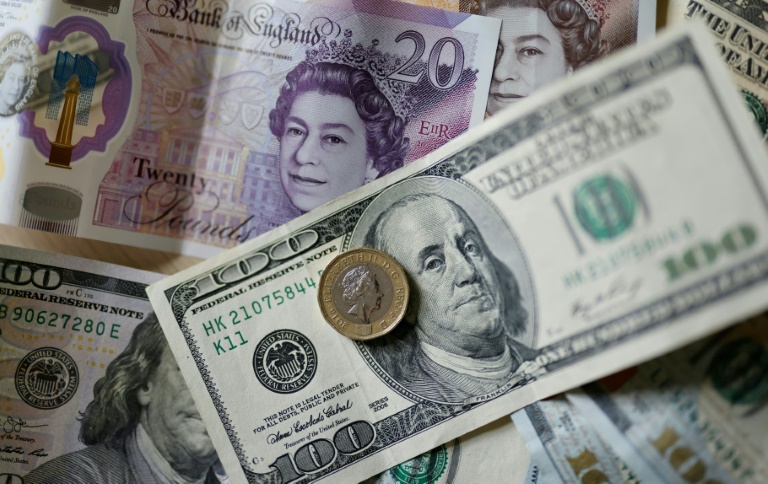
Sterling slid beneath $1.12 after having bounced above $1.13 Thursday following the resignation of Prime Minister Liz Truss. 

The yield on the British government’s 30-year bond, or gilt, climbed back above four percent on Friday as the Conservatives’ race to replace Truss went into full swing, with her divisive predecessor Boris Johnson among the potential contenders.

The dollar also strengthened further against the yen as the US central bank is expected to pursue its aggressive rate hikes while its Japanese counterpart continues its dovish stance.

The dollar surged almost one percent to 151.53 yen, but later fell back to around 148 yen.

The yield on the 10-year US Treasury bill — the interest the government pays to borrow — has surged well past four percent.

Bond yields for governments in France and Germany also rose.

“There is still huge uncertainty over the economy, inflation and where interest rates will end up and none of that is conducive to a strong sustainable stock market recovery,” said Craig Erlam, senior market analyst at trading platform OANDA.

Analysts said investors were also tracking third-quarter earnings reports from American Express and Verizon Communications.

– ‘Bleak’ situation –

“The situation in the UK looks particularly bleak,” Erlam said.

“I’m not sure anyone is particularly confident that we’re suddenly going to see stability in government,” he said.

Truss resigned after 44 days in office, having triggered markets chaos over a tax-cutting budget due to have been funded by debt.

The pound was weighed down Friday additionally by official data showing that UK borrowing surged and retail sales slumped in September.

“This morning’s retail sales data highlighted the struggles facing consumers and businesses alike, with people spending 3.9 percent more for 6.9 percent less goods,” said Joshua Mahony, senior market analyst at online trading platform IG.

London’s FTSE 100 index managed a small gain nevertheless, but both Frankfurt and Paris ended the day lower.

US stocks were higher in late morning trading, although the Nasdaq spent much of the morning in the red as weak Snap results dragged down other tech shares.

Snap shares sank around 30 percent after reporting a $360 million quarterly loss in results that showed that online advertisers are tightening their budgets.

– Key figures around 1530 GMT –

Pound/dollar: DOWN at $1.1212 from $1.1235 on Thursday

Dollar/yen: UP at 148.07 yen from 150.15 yen

Euro/dollar: UP at $0.9806 from $0.9786

Euro/pound: UP at 87.44 pence from 87.11 pence

New York – Dow: UP 0.8 percent at 30,577.63 points

EURO STOXX 50: DOWN 0.5 percent at 3,476.63

London – FTSE 100: UP 0.4 percent at 6,969.73 (close)

Frankfurt – DAX: DOWN 0.3 percent at 12,730.90 (close)

Paris – CAC 40: DOWN 0.9 percent at 6,035.69 (close)

Tokyo – Nikkei 225: DOWN 0.4 percent at 26,890.58 (close)

Hong Kong – Hang Seng Index: DOWN 0.4 percent at 16,211.12 (close)

Shanghai – Composite: UP 0.1 percent at 3,038.93 (close)

Brent North Sea crude: UP 0.4 percent at $92.78 per barrel

West Texas Intermediate: UP 0.2 percent at $84.64 per barrel

burs/rl/cdw

India's Reliance reports mixed results as taxes hurt oil business

Indian conglomerate Reliance Industries reported mixed quarterly results on Friday, with weakness in its core oil-refining business hurting profits even as its retail and telecom arms posted strong earnings.

Reliance, which is owned by Asia’s second-richest man Mukesh Ambani, reported a net profit of 136.56 billion rupees ($1.65 billion) between July and September, 0.2 percent lower than the same period last year.

From the June quarter, net profit declined 24 percent from 179.55 billion rupees.

Revenues from operations increased 33.7 percent on-year to 2.33 trillion rupees, helped by strong contributions from Reliance’s newer consumer-facing businesses.

“I am pleased with the record performance of our consumer businesses which continue to scale new milestones every quarter,” chairman and managing director Ambani said in a statement.

But Reliance’s legacy oil-to-chemicals business was hit by “subdued demand” and “the introduction of special additional excise duties during the quarter”, he added.

On July 1, India imposed duties on the sale of petrol, diesel and aviation fuel by oil refiners such as Reliance, in addition to a “windfall tax” on the sale of domestic crude.

Additional excise duties cost Reliance 40.4 billion rupees in the quarter, the company said, with planned plant shutdowns further impacting refinery earnings.

Gross revenues from Reliance’s retail business jumped 42.9 percent on-year to an all-time high of 649.2 billion rupees.

A footfall surge, the waning impact of the pandemic and 795 new store openings in the quarter contributed to 36 percent higher profits for Reliance’s retail business compared with last year.

Telecom arm Reliance Jio saw gross revenues rise 22.8 percent on-year to 285 billion rupees, as it added 7.7 million net subscribers in the quarter.

In August, Ambani pledged $25 billion to launch 5G networks in India, aiming to strengthen his grip on one of the world’s fastest-growing smartphone markets.

Reliance’s multi-billion-dollar fortune has been powered by oil and petrochemicals businesses, but the company has diversified into new areas including telecom and retail in recent years.

The company’s shares closed 1.16 percent lower in Mumbai ahead of the earnings announcement on Friday.

Mordaunt enters Tory race as Johnson eyes comeback for PM

Britain’s divisive former leader Boris Johnson on Friday received heavyweight Conservative backing to stage a sensational comeback following the resignation of Prime Minister Liz Truss.

Cabinet member Penny Mordaunt became the first to formally declare her candidacy, after the UK’s ruling party was forced into its second leadership contest in weeks.

Mordaunt, who just missed out on making the final runoff after Johnson quit, said she was running for “a fresh start, a united party and leadership in the national interest”.

Truss announced Thursday she was quitting after just 44 tempestuous days in office.

A poll by YouGov found 79 percent of British people thought she was right to resign, with 64 percent calling her a “terrible” prime minister.

The pollster also found that three in five voters want an early general election, in line with the angry clamour coming from opposition parties as Britons struggle with a worsening cost-of-living crisis.

Labour and other parties argue only an election can end the months of political chaos, sparked when Johnson was himself forced out in July after non-stop personal and political scandal.

In the resultant contest, Truss won the support of just over 80,000 Tory party members, defeating Rishi Sunak, who correctly warned that her hard-right programme of debt-fuelled tax cuts would crash the economy.

Now with a new vacancy suddenly opening up in 10 Downing Street, the former finance minister has emerged as favourite in media straw polls of Conservative MPs. 

But Johnson was reportedly cutting short a Caribbean holiday to take part in the accelerated contest, which will see Tory MPs hold a vote on Monday before a possible online ballot for the members next week.

– Serious times –

Business Secretary Jacob Rees-Mogg, an arch Johnson loyalist, became the first minister to publicly back him, tweeting: “Only Boris can win the next election.”

Cabinet colleague Simon Clarke also endorsed Johnson.

Defence Secretary Ben Wallace, a favourite of the Tory grassroots, told reporters he was not standing himself and said: “At the moment, I’m leaning towards Boris Johnson.”

Wallace noted that Johnson was the only potential leader with UK-wide electoral legitimacy, having won a thumping victory for the Tories over Labour in 2019.

But the minister added that Johnson still had “some questions to answer” over the multiple scandals, which resulted in a yet-to-launch investigation in the House of Commons.

If found guilty of lying to the Commons over the “Partygate” scandal — lockdown-breaching revels held in Downing Street — Johnson could be suspended or even expelled from parliament.

The investigating committee is sitting on “damning new evidence” that would doom any new Johnson premiership, ITV News reported.

Thanks to such controversies, Johnson left Number 10 with dismal poll ratings. One poll found that the word most commonly associated with him for voters was “liar”.

Other Tories were aghast at the prospect of his comeback. Veteran backbencher Roger Gale warned that Johnson could face a wave of resignations from MPs refusing to serve under him as leader.

Crispin Blunt MP told the BBC that Johnson was a “fantastic communicator” but Sunak was “a much more serious personality” who could impart a “serious message” to the country.

Jesse Norman, a minister in the Foreign Office, said choosing Johnson again would be “an absolutely catastrophic decision”.

– ‘Soap opera’ –

While Sunak and Johnson are yet to formally declare, the contest is widely expected to be a three-way race between them and Mordaunt, who is the cabinet minister in charge of the House of Commons. 

Contenders have until 2:00 pm (1300 GMT) on Monday to produce a minimum 100 nominations from their fellow Tory MPs.

That means a maximum of three candidates will emerge from among the 357 Conservatives in the Commons.

If necessary, they will vote to leave two candidates standing, and hold another “indicative” vote to tell the party membership their preferred option.

If no single candidate emerges, the rank-and-file will then have their say in an online ballot and the result will be announced next Friday.

Political website Guido Fawkes, which is running a rolling spreadsheet of Tory MPs’ declared support, had Sunak on 73, Johnson on 61 and Mordaunt on 21 by Friday afternoon.

The leader of the main opposition Labour party, Keir Starmer, said Britain “cannot have another experiment” after Truss’s disastrous tenure.

“This is not just a soap opera at the top of the Tory party — it’s doing huge damage to the reputation of our country,” he said.

Close Bitnami banner
Bitnami