World

US, Russian defence ministers hold rare call as Ukraine advances

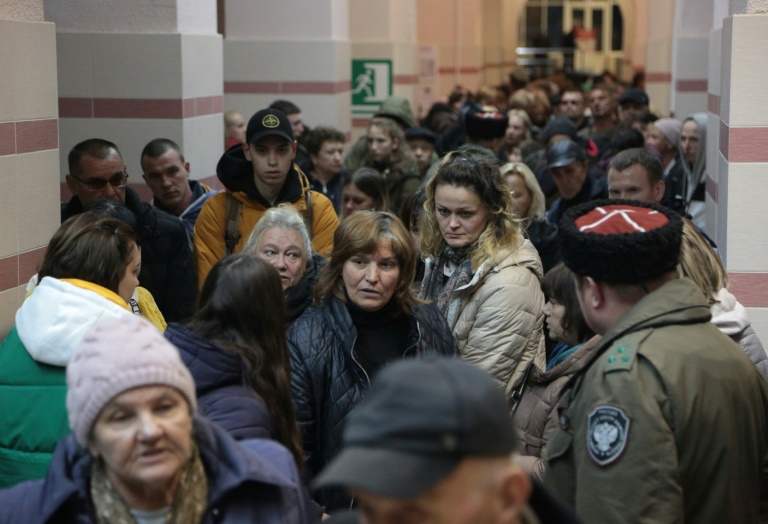
Russia’s defence minister held rare telephone talks with his US counterpart Friday, after pro-Kremlin officials said they were turning Ukraine’s southern city of Kherson into a “fortress” as Kyiv’s forces advance.

Few details emerged of the conversation between Russia’s Sergei Shoigu and US Defense Secretary Lloyd Austin, but both sides confirmed they had discussed Ukraine.

“Topical issues of international security — including the situation in Ukraine — were discussed,” said Russia’s defence ministry.

“Secretary Austin emphasized the importance of maintaining lines of communication amid the ongoing war against Ukraine,” a US military spokesman said.

It was only the second call between the ministers since Moscow invaded Ukraine on February 24. Back in May, Austin had urged Moscow to implement an “immediate ceasefire”.

At the time, Russia’s invading force had been beaten back from the capital Kyiv but were making steady gains in the eastern Donbas and Kharkiv regions and had consolidated their position in the south.

Six months on, however, Ukraine’s forces have pushed back.

Kyiv’s forces in recent weeks — aided by Western weapons — have been advancing along the west bank of the Dnieper river towards the region’s main city Kherson.

The first major city to fall to Moscow’s troops, retaking it would be a significant prize in Ukraine’s counter-offensive.

Kyiv said Friday it had retaken a total of 88 towns and villages in the region since launching its offensive to retake Kherson in the late summer while President Volodymyr Zelensky welcomed the capture of Russian arms by his forces in the region.

– Kherson ‘fortress’ –

Moscow-installed authorities in the region on Friday accused Kyiv’s forces of attacking a bridge being used by civilians.

“Four people were killed,” pro-Moscow official Kirill Stremousov said on Telegram. “The city of Kherson, like a fortress, is preparing for its defence.”

Russian investigators said later two of the dead were journalists and that 13 people had been wounded.

A Ukrainian military spokeswoman Nataliya Gumenyuk denied Kyiv’s forces were responsible, saying they did not target local populations.

Kyiv has denounced the organised movement of Kherson residents to Russia and other Moscow-controlled regions as “deportations” of Ukrainian citizens.

Zelensky told European leaders Thursday that Russian forces had mined the nearby Kakhovka hydroelectric power plant with the intent of blowing it up.

Its destruction could cause flash-flooding for hundreds of thousands of people, he warned.

On Friday, Ukraine’s Prime Minister Denys Shmygal called for an international monitoring mission to deploy at the dam.

Cutting water supplies to the south could also hit the cooling systems of the Zaporizhzhia nuclear power plant, Europe’s largest, he added.

Both sides have accused the other of repeatedly shelling the nuclear facility, endangering operations.

– Grain shipments ‘delayed’ –

Ukraine’s push in the south comes after a sweeping counter-offensive in the northeast Kharkiv region that has badly impaired Russia’s supply routes and logistics corridors in the eastern Donbas region.

But Russian forces have continued shelling the region’s largest city, Kharkiv, and the presidency said six people were wounded Friday when “industrial infrastructure” was hit in the city.

Also Friday, the Ukraine presidency said Russian forces were shelling sections along the entire front line of Donbas and that two had been killed in the Donetsk region.

And later Friday, Zelensky accused Russia of “deliberately delaying the passage of ships” exporting grain from Ukrainian ports bound for countries in Africa and Asia.

“Russia is doing everything to ensure that at least hundreds of thousands of these people become forced migrants, who will seek asylum… or die of hunger,” he said in his nightly video address.

More than 150 ships had been affected, he said, listing Algeria, Bangladesh, China, Egypt, Indonesia, Iraq, Lebanon, Morocco and Tunisia as among the countries hit by the delays.

In late July, Turkey and the United Nations brokered a landmark deal with Moscow and Kyiv that designated three Black Sea ports for Ukraine to send much-needed grain supplies through a Russian blockade.

Russia has complained its own exports have suffered and contended that most deliveries were arriving to Europe, rather than poor countries where grain is most needed. 

Moscow’s forces have carried out a series of strikes targeting Ukrainian cities and energy infrastructure in recent days with drones the West says were supplied by Iran — an issue France, Britain and Germany said Friday should be investigated by the United Nations.

The UN ambassadors of the three countries wrote in a letter that they were “deeply concerned by the transfer of unmanned aerial vehicles (UAVs) from Iran to Russia in violation” of a Security Council resolution.

“These UAVs are being used by Russia in its war of aggression against Ukraine in attacks against civilian infrastructure and cities across Ukraine, leading to the death of innocent civilians,” they wrote.
US stocks surge while yen gains amid rumored government intervention

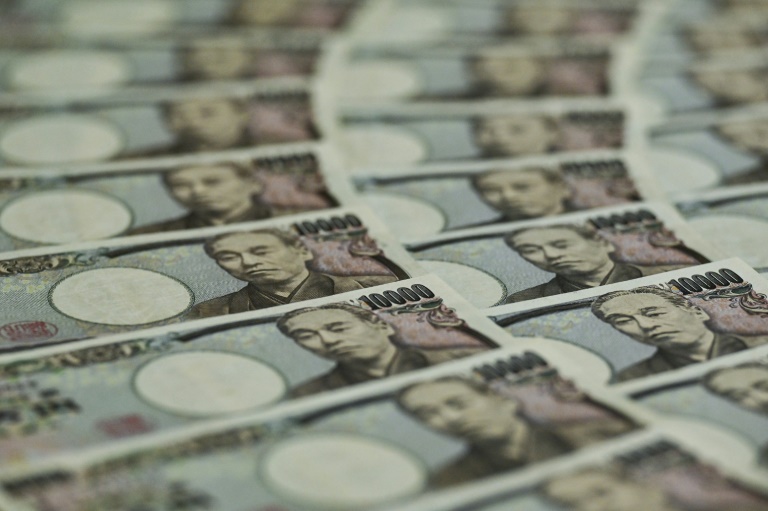
Wall Street stocks surged Friday to end a volatile week on a positive note while the yen jumped against the dollar in a shift traders attributed to an intervention by government authorities.

The Dow piled on nearly 750 points, or 2.5 percent, picking up momentum throughout the day following a Wall Street Journal report that said some Federal Reserve officials want to discuss slowing the pace of interest rate hikes at the November central bank meeting.

The report suggested the Fed could soon pivot from a “super aggressive stance to a less aggressive stance,” said Briefing.com analyst Patrick O’Hare, who also cited generally “better than feared” corporate earnings as a driver of Friday’s buoyant trading.

Earlier on, bourses in Europe and Asia finished mostly lower, although London’s FTSE advanced in spite of data showing that UK borrowing surged and retail sales slumped in September.

Markets continued to monitor the ongoing political drama in Britain following Thursday’s resignation announcement by Prime Minister Liz Truss.

Cabinet member Penny Mordaunt became the first to formally declare her candidacy, while Britain’s divisive former leader Boris Johnson received heavyweight Conservative backing to stage a comeback.

The yen, meanwhile picked up ground against the dollar after hitting a fresh 32-year low in the latest big pullback in the wake of the Bank of Japan’s accommodative monetary policy stance compared with the Federal Reserve.

“It was an intervention,” Mazen Issa of TD Securities said of the shift.

Nikkei Asia said that the Japanese government and central bank acted in support of the yen in a report that was not officially confirmed by Japanese authorities.

Rumors of an intervention have hung over foreign exchange markets in recent days as the yen has plumbed new multi-year lows.

The latest moves by the government come a month after authorities spent about 2.8 trillion yen (then around $20 billion) on an intervention.

At a news conference Friday, Finance Minister Shunichi Suzuki vowed a tough response to “excessive” market moves.

“We are confronting speculators strictly,” Suzuki said. “We cannot tolerate excessive moves by speculators. We will respond appropriately while watching currency market movements with a high sense of urgency.”

– Key figures around 2050 GMT –

New York – Dow: UP 2.5 percent at 31,082.56 (close)

New York – S&P 500: UP 2.4 percent at 3,752.75 (close)

New York – Nasdaq: UP 2.3 percent at 10,859.72 (close)

London – FTSE 100: UP 0.4 percent at 6,969.73 (close)

Frankfurt – DAX: DOWN 0.3 percent at 12,730.90 (close)

Paris – CAC 40: DOWN 0.9 percent at 6,035.69 (close)

EURO STOXX 50: DOWN 0.5 percent at 3,476.63 (close)

Tokyo – Nikkei 225: DOWN 0.4 percent at 26,890.58 (close)

Hong Kong – Hang Seng Index: DOWN 0.4 percent at 16,211.12 (close)

Shanghai – Composite: UP 0.1 percent at 3,038.93 (close)

Brent North Sea crude: UP 1.2 percent at $93.50 per barrel

West Texas Intermediate: UP 0.6 percent at $85.05 per barrel

Pound/dollar: UP at $1.1258 from $1.1235 on Thursday

Dollar/yen: DOWN at 147.65 yen from 150.15 yen

Euro/dollar: UP at $0.9863 from $0.9786

Euro/pound: UP at 87.26 pence from 87.11 pence

burs-jmb/mdl

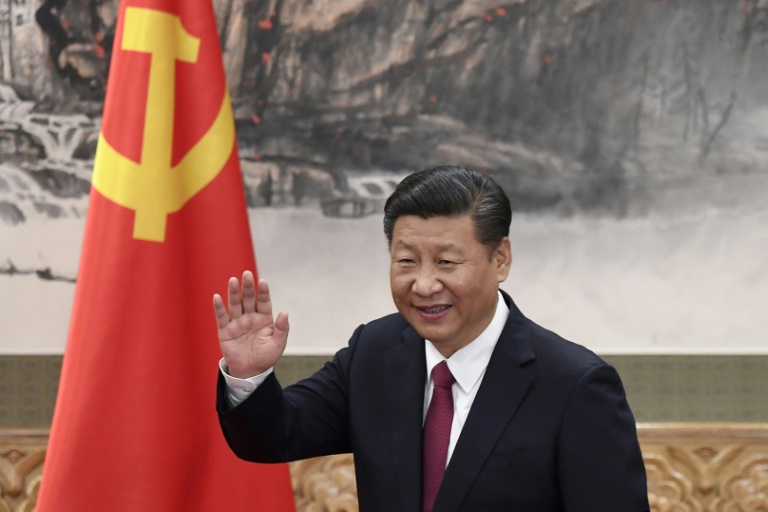
Who is China's President Xi Jinping?

When Xi Jinping took power in 2012, some observers predicted he would be the most liberal Communist Party leader in China’s history, based on his low-key profile, family backstory and perhaps a degree of misguided hope.

Ten years later, those forecasts lie in tatters, proving only how little was understood of the man who looks set to become China’s most powerful ruler since Mao Zedong after the five-yearly Communist Party Congress ends on Saturday.

Xi has shown himself to be ruthless in his ambition, intolerant of dissent, with a desire for control that has infiltrated almost every aspect of life in modern China.

He has gone from being primarily known as the husband of a celebrity singer to someone whose apparent charisma and aptitude for political storytelling have created a personality cult not seen since Mao’s day.

The colourful details of his early life have been rinsed and repackaged in official party lore, but the man himself — and what drives him — remain somewhat more of an enigma.  

“I dispute the conventional view that Xi Jinping struggles for power for power’s sake,” Alfred L. Chan, author of a book on Xi’s life, told AFP.

“I would suggest that he strives for power as an instrument… to fulfil his vision.”

Another biographer, Adrian Geiges, told AFP that he did not think Xi was motivated by a desire for personal enrichment, despite international media investigations having revealed his family’s amassed wealth.

“That’s not his interest,” Geiges said.

“He really has a vision about China, he wants to see China as the most powerful country in the world.”

Central to that vision — what Xi calls the “Chinese Dream” or “great rejuvenation of the Chinese nation” — is the role of the Communist Party (CCP). 

“Xi is a man of faith… for him, God is the Communist Party,” wrote Kerry Brown, author of “Xi: A Study in Power”. 

“The greatest mistake the rest of the world makes about Xi is to not take this faith seriously.”  

– ‘Traumatised’ – 

Xi might not seem an obvious candidate to become a CCP diehard, though he grew up as a “princeling”, or member of the party elite. 

His father Xi Zhongxun was a revolutionary hero turned vice premier, whose “strictness toward his family members was so serious that even those close to him believed it bordered on the inhuman”, according to the elder Xi’s biographer Joseph Torigian.

But when Zhongxun was purged by Mao and targeted during the Cultural Revolution, “(Jinping) and his family were traumatised”, said Chan. 

His status vanished overnight, and the family was split up. One of his half-sisters is reported to have killed herself because of the persecution.

Xi has said he was ostracised by his classmates, an experience the political scientist David Shambaugh suggests contributed to a “sense of emotional and psychological detachment and his autonomy from a very young age”.

At just 15, Xi was ordered to the countryside in central China where he spent years hauling grain and sleeping in cave homes. 

“The intensity of the labour shocked me,” he later said.

He also had to take part in “struggle sessions” in which he had to denounce his father. 

“Even if you don’t understand, you are forced to understand,” he said, describing the sessions to a Washington Post reporter “with a trace of bitterness” in a 1992 interview.

“It makes you mature earlier.”

Biographer Chan said the experiences of his youth had given him “toughness”.  

“He tends to go for broke. He tends to use a two-fisted approach when he approaches problems. But he also has a certain appreciation of the arbitrariness of power and that’s why he also emphasises law-based governance.”

– Systematic, low profile –

Nowadays, the cave Xi slept in is a domestic tourist draw, used to emphasise traits such as his concern for China’s poorest.

When AFP visited in 2016, one local painted a picture of an almost legendary figure, reading books between breaks in hard labour “so one could see he was no common man”.

That does not seem to have been obvious at the time though. Xi himself said he was not even rated “as high as the women” when he first arrived.

His application for CCP membership was rejected multiple times because of the family stigma, before it was finally accepted.

Beginning as a village party boss in 1974, Xi climbed to the governorship of coastal Fujian province in 1999, then party chief of Zhejiang province in 2002 and eventually Shanghai in 2007.

“He was working very systematically… to get experience by starting at a very low level, in a village, then in a prefecture… and so on,” said biographer Geiges.

“And he was very clever by keeping a low profile.”

Xi’s father was rehabilitated in the late 1970s following the death of Mao, massively boosting his son’s standing.

Following a divorce from his first wife, Xi married superstar soprano Peng Liyuan in 1987, at a time when she was much better known than him.

Even so, his potential was not apparent to all, exemplified by comments made by his host on a trip to the United States in 1985.

“No one in their right mind would ever think that that guy who stayed in my house would become the president,” Eleanor Dvorchak was quoted as saying years later in the New Yorker magazine.

Cai Xia, a former high-ranking CCP cadre who now lives in exile in the United States, believes Xi “suffers from an inferiority complex, knowing that he is poorly educated in comparison with other top CCP leaders”.

As a result, he is “thin-skinned, stubborn, and dictatorial”, she wrote in a recent article in Foreign Affairs.

– ‘Heir of the revolution’ –

But Xi has always regarded himself “as an heir of the revolution”, said Chan.

In 2007, he was appointed to the Politburo Standing Committee, the party’s highest decision-making body.

When he replaced Hu Jintao five years later, there was little in Xi’s past administrative record that foreshadowed his actions once installed as leader.

He has cracked down on civil society movements, independent media and academic freedoms, overseen alleged human rights abuses in the northwest Xinjiang region, and promoted a far more aggressive foreign policy than his predecessor.

In the absence of access to either Xi or any of his inner circle, scholars are left to survey his earlier writings and speeches for clues to his motivations.

“The absolute centrality of the party’s mission to make China a great country again is evident from Xi’s earliest recorded statements,” wrote Brown.

Xi has harnessed that narrative of an ascendant China to great effect, using nationalism as a tool for his own and the party’s legitimacy among the population. 

But there is also evidence he fears that grasp on power might decline.

“The fall of the Soviet Union and of socialism in eastern Europe was a big shock,” said Geiges, adding Xi blames the collapse on its political opening up. 

“So he decided that something like this shall not happen to China… that’s why he wants strong leadership of the Communist Party, with one strong leader.”

UN Security Council targets Haiti gangs with sanctions

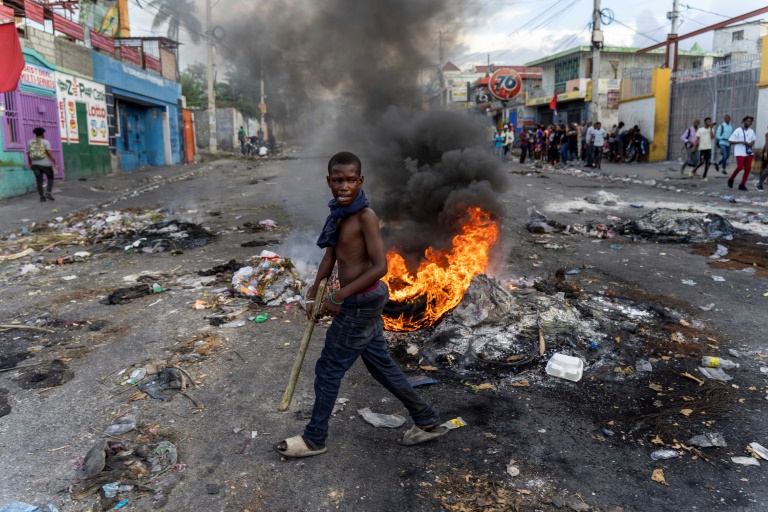
The UN Security Council on Friday agreed unanimously on a sanctions regime targeting the gangs terrorizing the population in Haiti — including an asset freeze on a powerful gang leader.

The Council has been debating for two weeks how best to address a spiraling health and security crisis in the poorest country in the Americas, which is battling a fast-growing outbreak of cholera.

After failing to reach consensus on sending an international force to the crisis-hit nation, members adopted a resolution Friday directly targeting the gangs that have seized control of the main port and blocked fuel deliveries.

It includes a one-year freeze on all economic resources owned or controlled, directly or indirectly, by Jimmy Cherizier, nicknamed “Barbecue,” the head of the “G90 Family and Allies” group of gangs blockading the country’s main oil terminal. 

The resolution demanded an “immediate cessation of violence, criminal activities and human rights abuses” in Haiti, including kidnappings, sexual violence, human trafficking and the gang recruitment of children.

The Council also called for a one-year travel ban against people deemed to be involved in gang activity in Haiti and a ban on arms and ammunition being allowed to reach them.

Friday’s action is a message to gangs “holding Haiti hostage” that friends of the country “will not sit idly by while you wreak havoc on the Haitian people,” US Ambassador to the UN Linda Thomas-Greenfield said.

Sanctions will also target those who “support, sponsor and finance” gangs, not just armed members in the streets, said Mexican UN envoy Juan Ramon de la Fuente. 

UN Secretary-General Antonio Guterres warned this week that the deterioration of Haiti’s security and health environment as gangs expand their control has produced “an absolutely nightmarish situation.”

He warned the gangs’ control of the port and fuel blockade risks worsening the cholera outbreak by preventing the distribution of water, since the most important treatment for cholera is hydration.

– France promises to support force –

Guterres has backed a call from Haitian Prime Minister Ariel Henry to send an international force to attempt to restore security. But the United States, which has a long history of intervention in Haiti, has made clear it has no interest in risking troops’ lives in the troubled country.

French Foreign Minister Catherine Colonna, on a visit to Washington, offered support if a force materializes.

“If an international police support force is set up, France would in all likelihood offer a material contribution,” she told a joint news conference with Secretary of State Antony Blinken.

“The outlines remain to be seen but I must add that right now the priority is to move forward on creating such a force, with our efforts first and foremost being at the United Nations,” she said.

Jake Sullivan, the national security advisor to President Joe Biden, pointed out that the United States has already contributed armored vehicles and supplies to the Haitian Police Force, which it hopes can take the lead.

Cherizier, a former police officer, is the only gang-related person singled out by name in the resolution.

It listed a series of his alleged actions, including taking part — as a Haitian National Police officer — in a 2018 attack on civilians in a Port-au-Prince slum called La Saline in which at least 71 people died and 400 houses were destroyed.

Throughout that year and the next he led his group in “coordinated, brutal” attacks in areas of the capital, it said.

And the resolution says that since October 11 of this year Cherizier and his gang have been blocking shipments from Haiti’s largest fuel terminal.

“His actions have directly contributed to the economic paralysis and humanitarian crisis in Haiti,” the resolution charges.

Hundreds of suspected cholera cases have been recorded in Haiti since the beginning of the month, fueling fears of a devastating resurgence of the disease in the Caribbean nation.

Health ministry data showed 964 suspected cases as of October 19.

Haiti suffered a cholera epidemic between 2010 and 2019 that was accidentally introduced by UN peacekeeping troops and killed more than 10,000 people.

Far-right Meloni named Italy's first woman PM

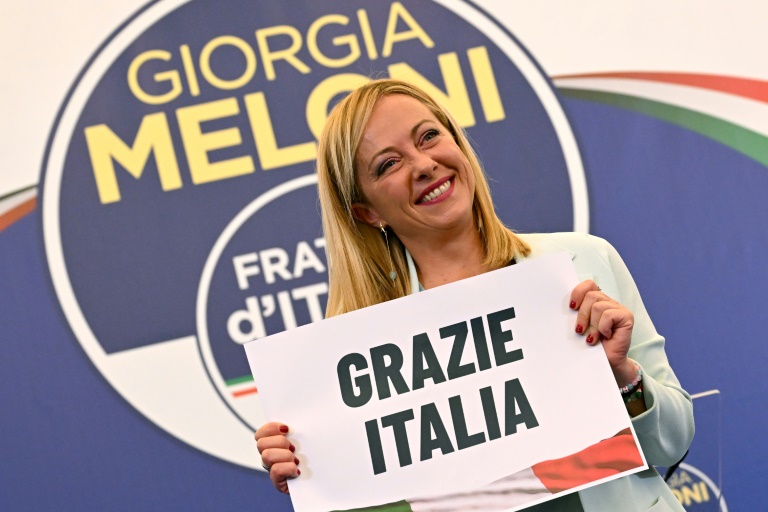
Far-right leader Giorgia Meloni was named Italian prime minister on Friday, becoming the first woman to head a government in Italy.

Her post-fascist Brothers of Italy party — Eurosceptic and anti-immigration — won the September 25 legislative polls but needed outside support to form a government.

Meloni’s appointment is an historic event for the eurozone’s third largest economy and for Brothers of Italy, which has never been in government.

Shortly after she was named, the 45-year-old from Rome named her ministers, who will be sworn in on Saturday in front of President Sergio Mattarella.

Her Brothers of Italy party won 26 percent of the vote last month, compared to eight and nine percent respectively for her allies Forza Italia and the far-right League.

Her list of 24 ministers, including six women, revealed a desire to reassure Italy’s partners. She named Giancarlo Giorgetti as economy minister, who served under the previous government of Mario Draghi.

Giorgetti, a former minister of economic development, is considered one of the more moderate, pro-Europe members of Matteo Salvini’s League.

Meloni also named ex-European Parliament president Antonio Tajani, of Forza Italia, as foreign minister and deputy prime minister.

Salvini will serve as deputy prime minister and minister of infrastructure and transport.

That appointment is likely to disappoint Salvini, who wanted Meloni to give him the role of interior minister again after he previously held the post between 2018 and 2019.

The position went instead to a technocrat, Rome prefect Matteo Piantedosi.

A formal ceremony for the handover of power from Draghi to Meloni will take place on Sunday before the premier leads the first cabinet meeting.

– Unity concerns –

The consultations to cobble together a government had been overshadowed by disagreements with her two would-be coalition partners over Meloni’s ardent support for Ukraine since the Russian invasion. The leaders of Forza Italia and the League are both considered close to Moscow.

A recording was leaked during the week in which Italy’s former prime minister Silvio Berlusconi — who heads Forza Italia — talks about his warm ties with Moscow and appeared to blame the war in Ukraine on Ukrainian President Volodymyr Zelensky.

Her other coalition partner, Salvini, is a long-time fan of Russian President Vladimir Putin and has criticised Western sanctions on Russia.

Despite her Eurosceptic stance, Meloni has been firm about her support for Ukraine, in line with the rest of the European Union and the United States.

“I intend to lead a government with a clear and unequivocal foreign policy line,” she has said. “Italy is fully, and with its head held high, part of Europe and the Atlantic Alliance (NATO).”

“Anyone who does not agree with this cornerstone will not be able to be part of the government, even at the cost of not forming a government,” Meloni has warned.

Berlusconi, 86, has said his personal and political positions “do not deviate from that of the Italian government (and) the European Union” on Ukraine.

But the tensions add to concerns that Meloni’s coalition, held together by the need for a parliamentary majority, will struggle to maintain unity.

Berlusconi’s allies insist his comments in the recording, from a meeting with lawmakers earlier this week, were taken out of context.

The billionaire media mogul described a rekindling of relations with long-time friend Putin, who he said sent him 20 bottles of vodka and a “very sweet letter” for his birthday.

– Challenges ahead –

Meloni’s coalition wants to renegotiate Italy’s portion of the EU’s post-Covid recovery fund. 

It argues the almost 200 billion euros ($193 billion) it expects to receive should take into account the current energy crisis, exacerbated by Moscow’s invasion of Ukraine, which has hit supplies of Russian gas to Europe.

But the funds are tied to a series of reforms only just begun by Draghi’s government, and analysts say Meloni has limited room for manoeuvre.

Gilles Moec, chief economist at the Axa group, said there would be a continuation of what Draghi had been doing on the economy.

“I’m not really worried, at least not in the short term, when we are in a ‘Draghi II’ (phase) in economic matters,” he told AFP.

Meloni had campaigned on a platform of “God, country and family”, sparking fears of a regression on rights in the Catholic-majority country.

She has distanced herself from her party’s neo-fascist past — and her own, after praising dictator Benito Mussolini as a teenager — and likes to present herself as a straight-talking but unthreatening leader.

Inflation in Italy rose to 8.9 percent in September over the previous year, threatening to put the country in recession next year. 

The margin for manoeuvre is limited given that Italy’s colossal debt represents 150 percent of gross domestic product, the highest in the eurozone after Greece.

Draghi used his last day on the European stage on Friday to warn both his fellow leaders and Meloni that a united Europe should remain their “guiding star”.

Draghi said everyone looked at “the EU as a source of security, stability and peace”, adding: “We have to keep this in mind as a guiding star for the future, especially in troubled times like these.”

Balenciaga breaks ties with Kanye West

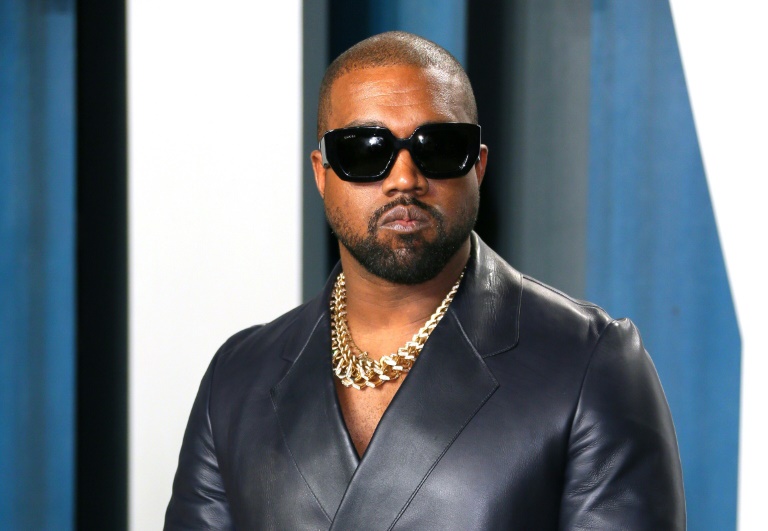
Paris-based fashion house Balenciaga has ended ties with rapper Kanye West following a recent run of controversial statements, including an outburst denounced as anti-Semitic, according to fashion news site WWD.

“Balenciaga has no longer any relationship nor any plans for future projects related to this artist,” Balenciaga’s parent company Kering told WWD.  

It follows weeks of particularly erratic behaviour from West — now known as Ye.

He made a surprise appearance earlier this month for his brand Yeezy at Paris Fashion Week, sporting the controversial slogan “White Lives Matter”, widely considered a racist response to the Black Lives Matter movement. 

The 45-year-old artist then lashed out on social media against former colleagues and friends and a leading fashion journalist who criticised the move, including Kering boss Bernard Arnault. 

West had already broken off his partnership with Gap last month, with both sides saying they were no longer pulling in the same direction. 

Adidas announced earlier this month that it was putting its own tie-up with Kanye “under review”.

Balenciaga and Kering did not respond to requests for comment from AFP. 

Ye appeared as a model in Balenciaga’s most recent Paris show last month, wearing a military-style outfit in a mud pit. Images of him from the show were no longer visible on the Balenciaga website on Thursday. 

The rapper has a long-running relationship with Balenciaga’s creative director Demna, and they launched a tie-up line of clothing earlier this year. 

The rapper-turned-mogul has been open about having a bipolar disorder. A recent Netflix documentary, “Jeen-Yuhs”, laid bare his ongoing mental health problems. 

Ye’s recent comments, which included a rant about going “death con 3 on Jewish people”, led to his accounts on Twitter and Instagram being restricted. 

Earlier this week, he announced he was buying conservative social media platform Parler.

“In a world where conservative opinions are considered to be controversial we have to make sure we have the right to freely express ourselves,” he said.

Former Pakistan PM Khan barred from elections for five years

Former Pakistan prime minister Imran Khan was disqualified Friday from running for political office for five years after the election commission ruled he misled officials about gifts he received from foreign leaders while in power.

The decision is the latest twist in political wrangling that began even before Khan’s April ouster, and is one of several legal battles being fought by the former international cricket star and his Pakistan Tehreek-e-Insaf (PTI) party.

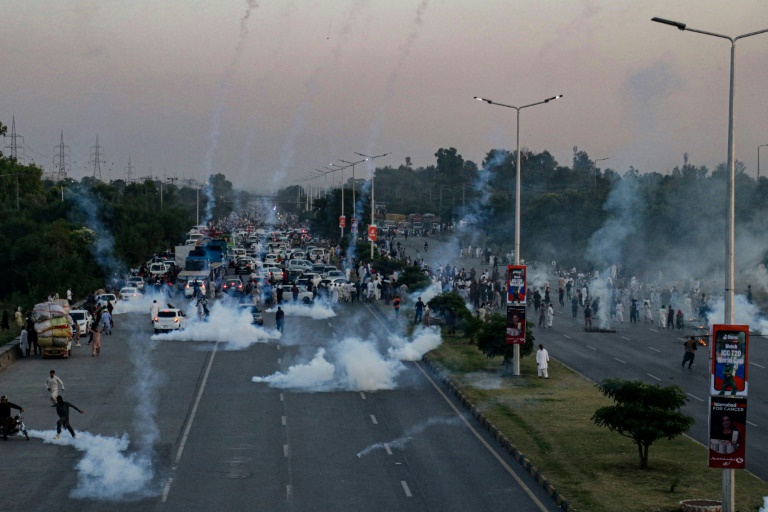
Dozens of his supporters attacked vehicles as they left the Election Commission of Pakistan (ECP) headquarters following the ruling, and police detained a party security guard after he fired a shot into the ground.

At least a dozen small protests erupted across the country, and police fired tear gas to disperse PTI supporters trying to block traffic in the capital, Islamabad.

In a video message released Friday evening Khan called for calm, saying he would summon supporters for an organized “long march” on the capital before the end of the month.

“Now I ask you to end the protests because it’s creating difficulties for people and I do not want to put my nation in trouble,” he said.

Khan said he would appeal the ruling in court and accused the election commission of being part of a corrupt establishment.

“For me this is not politics, but jihad,” he said.

“This is the mafia that is sitting (in power) of which the election commissioner is also a part. I will fight them as long as I live.”

Pakistan’s courts are often used to tie up lawmakers in lengthy proceedings that rights monitors criticise for stifling political opposition, but the commission’s involvement in this case stems from the obligation of elected officials to declare all their assets.

The case centres on a government department known as “Toshakhana”, which during the Mughal era referred to the “treasure houses” kept by the sub-continent’s princely rulers to store and display gifts lavished on them.

Government officials must declare all gifts, but are allowed to keep those below a certain value.

More expensive items must go to Toshakhana, but in some cases the recipient can buy them at around 50 percent of their value — a discount Khan raised from 20 percent while in office.

Pakistani newspapers have for months carried lurid stories alleging Khan and his wife received lavish gifts worth millions during trips abroad — including luxury watches, jewellery, designer handbags and perfumes.

Khan has said he did not register some gifts on national security grounds, but in a written submission admitted buying items worth nearly 22 million rupees ($100,000), and later selling them for more than twice that amount.

– Political disruptor –

Unless overturned by the courts, Khan’s ban will stymie one of his key tactics to disrupt the country’s political process as he presses for a general election ahead of the one scheduled for October next year.

All PTI lawmakers have quit the National Assembly — parliament’s lower house — forcing a series of by-elections.

In most of them so far, Khan has been his party’s only candidate.

This week he won six of eight National Assembly seats he stood for in a weekend by-election, a vote he called a referendum on his popularity.

Individuals can stand in multiple constituencies in Pakistani elections and choose which to forfeit if they win more than one.

Khan regularly holds rallies drawing tens of thousands of people across the country, giving fiery speeches criticising state institutions — including the powerful military — for allegedly conspiring to topple his government.

Khan’s opponents were delighted by the Election Commission’s ruling.

“He who would spread lies about alleged corruption of his political opponents has been caught red handed,” tweeted Foreign Minister Bilawal Bhutto Zardari.

Legal experts and analysts were more circumspect, however.

“The silver lining for Mr. Khan is that… he hasn’t been disqualified by the apex court so he has a right of appeal,” independent lawyer Osama Malik told AFP.

“This decision will escalate the political tension in the country and the situation will deteriorate,” said analyst Hassan Askari Rizvi.

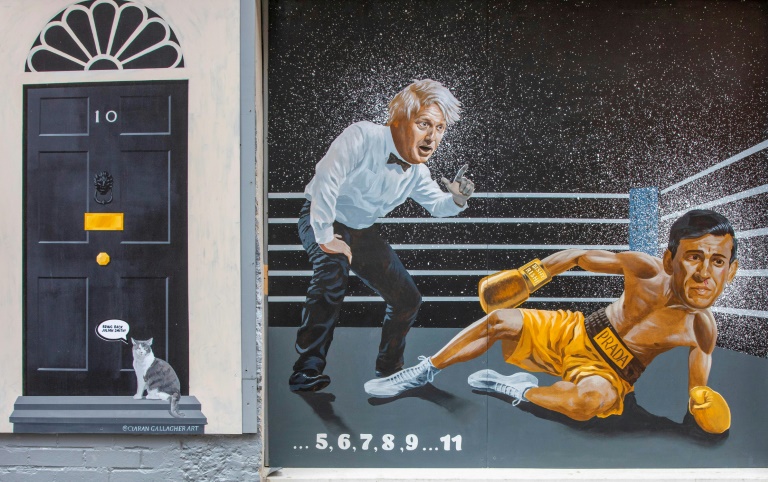
Mordaunt enters Tory race as Johnson eyes comeback as PM

Britain’s divisive former leader Boris Johnson on Friday received heavyweight Conservative backing to stage a sensational comeback following the resignation of Prime Minister Liz Truss.

Cabinet member Penny Mordaunt became the first to formally declare her candidacy, after the UK’s ruling party was forced into its second leadership contest in weeks.

Mordaunt, who just missed out on making the final runoff after Johnson quit, said she was running for “a fresh start, a united party and leadership in the national interest”.

Truss announced on Thursday she was quitting after just 44 tempestuous days in office.

Polling company YouGov found that three in five voters now want an early general election, in line with demands from opposition parties, as Britons struggle with a worsening cost-of-living crisis.

Labour and other parties argue only an election can end the months of political chaos, sparked when Johnson was himself forced out in July after non-stop personal and political scandal.

In the resultant contest, Truss won the support of just over 80,000 Tory party members, defeating Rishi Sunak, who correctly warned that her right-wing programme of debt-fuelled tax cuts would crash the economy.

– ‘I’m up for it’ –

Now with a new vacancy suddenly opening up in 10 Downing Street, former finance minister Sunak has emerged as favourite in media straw polls of Conservative MPs. 

But Johnson was said to be cutting short a Caribbean holiday to take part in the accelerated contest, which will see Tory MPs hold a vote on Monday before a possible online ballot for the members next week.

James Duddridge, one of Johnson’s closest allies in parliament, said he had been in contact with his old boss via WhatsApp.

“He’s going to fly back. He said… ‘We are going to do this. I’m up for it’,” the MP said.

Business Secretary Jacob Rees-Mogg, an arch Johnson loyalist, became the first minister to publicly back him, tweeting: “Only Boris can win the next election.”

Cabinet colleague Simon Clarke also endorsed Johnson, who led the Tories to election triumph over Labour in 2019.

Defence Secretary Ben Wallace, a favourite of the Tory grassroots, told reporters he was not standing himself and said: “At the moment, I’m leaning towards Boris Johnson.”

But Wallace added that Johnson still had “some questions to answer” over the multiple scandals, which resulted in a yet-to-launch investigation in the House of Commons.

If found guilty of lying to the Commons over the “Partygate” scandal — lockdown-breaching revels held in Downing Street — Johnson could be suspended or even expelled from parliament.

As a result of such controversies, Johnson left Number 10 with dismal poll ratings, and other Tories were aghast at the prospect of his coming back.

Veteran backbencher Roger Gale warned that Johnson could face a wave of resignations from MPs refusing to serve under him as leader.

Jesse Norman, a minister in the Foreign Office, said choosing Johnson again would be “an absolutely catastrophic decision”.

Sunak obtained his own endorsements from, among others, Sajid Javid and Dominic Raab, both senior former cabinet members.

And Johnson’s ambiguous appeal was underlined by another YouGov poll that found 52 percent of voters opposed to his return.

– ‘Backstabber’ –

While Sunak and Johnson are yet to formally declare, the contest is widely expected to be a three-way race between them and Mordaunt, who is the cabinet minister in charge of the House of Commons. 

Contenders have until 2:00 pm (1300 GMT) on Monday to produce a minimum 100 nominations each from the 357 Conservatives in the Commons.

If necessary, MPs will then vote to leave two candidates standing, and hold another “indicative” vote to tell the party membership their preferred option.

If no single candidate emerges, the rank-and-file will then have their say in an online ballot and the result will be announced next Friday.

Political website Guido Fawkes, which is running a rolling spreadsheet of Tory MPs’ declared support, had Sunak on 88, Johnson on 65 and Mordaunt on 24 by Friday evening.

In Sunak’s constituency in Yorkshire, northern England, 58-year-old farmer Elaine Stones said the party made a mistake in electing Truss instead of him. 

“He’s honest, reliable and he should have been voted in last time,” she told AFP. 

But retiree Maureen Ward called Sunak a “backstabber” who helped to topple Johnson. 

“He wielded the knife and once you do that, you can’t be trusted,” she said.

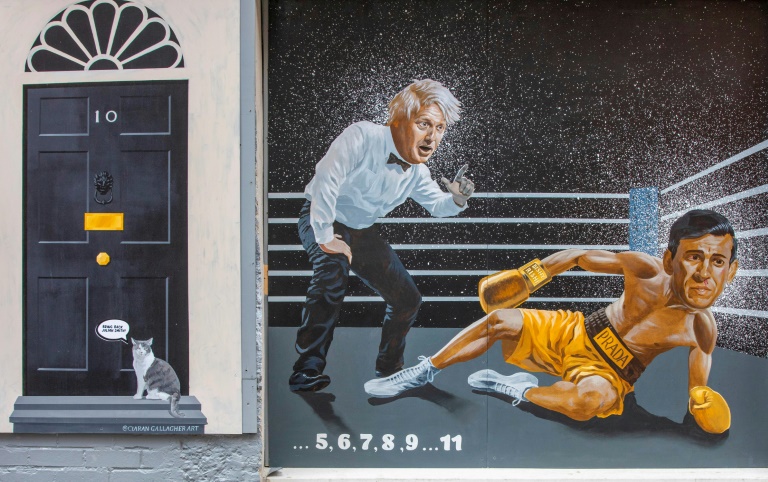
Mordaunt enters Tory race as Johnson eyes comeback as PM

Britain’s divisive former leader Boris Johnson on Friday received heavyweight Conservative backing to stage a sensational comeback following the resignation of Prime Minister Liz Truss.

Cabinet member Penny Mordaunt became the first to formally declare her candidacy, after the UK’s ruling party was forced into its second leadership contest in weeks.

Mordaunt, who just missed out on making the final runoff after Johnson quit, said she was running for “a fresh start, a united party and leadership in the national interest”.

Truss announced on Thursday she was quitting after just 44 tempestuous days in office.

Polling company YouGov found that three in five voters now want an early general election, in line with demands from opposition parties, as Britons struggle with a worsening cost-of-living crisis.

Labour and other parties argue only an election can end the months of political chaos, sparked when Johnson was himself forced out in July after non-stop personal and political scandal.

In the resultant contest, Truss won the support of just over 80,000 Tory party members, defeating Rishi Sunak, who correctly warned that her right-wing programme of debt-fuelled tax cuts would crash the economy.

– ‘I’m up for it’ –

Now with a new vacancy suddenly opening up in 10 Downing Street, former finance minister Sunak has emerged as favourite in media straw polls of Conservative MPs. 

But Johnson was said to be cutting short a Caribbean holiday to take part in the accelerated contest, which will see Tory MPs hold a vote on Monday before a possible online ballot for the members next week.

James Duddridge, one of Johnson’s closest allies in parliament, said he had been in contact with his old boss via WhatsApp.

“He’s going to fly back. He said… ‘We are going to do this. I’m up for it’,” the MP said.

Business Secretary Jacob Rees-Mogg, an arch Johnson loyalist, became the first minister to publicly back him, tweeting: “Only Boris can win the next election.”

Cabinet colleague Simon Clarke also endorsed Johnson, who led the Tories to election triumph over Labour in 2019.

Defence Secretary Ben Wallace, a favourite of the Tory grassroots, told reporters he was not standing himself and said: “At the moment, I’m leaning towards Boris Johnson.”

But Wallace added that Johnson still had “some questions to answer” over the multiple scandals, which resulted in a yet-to-launch investigation in the House of Commons.

If found guilty of lying to the Commons over the “Partygate” scandal — lockdown-breaching revels held in Downing Street — Johnson could be suspended or even expelled from parliament.

As a result of such controversies, Johnson left Number 10 with dismal poll ratings, and other Tories were aghast at the prospect of his coming back.

Veteran backbencher Roger Gale warned that Johnson could face a wave of resignations from MPs refusing to serve under him as leader.

Jesse Norman, a minister in the Foreign Office, said choosing Johnson again would be “an absolutely catastrophic decision”.

Sunak obtained his own endorsements from, among others, Sajid Javid and Dominic Raab, both senior former cabinet members.

And Johnson’s ambiguous appeal was underlined by another YouGov poll that found 52 percent of voters opposed to his return.

– ‘Backstabber’ –

While Sunak and Johnson are yet to formally declare, the contest is widely expected to be a three-way race between them and Mordaunt, who is the cabinet minister in charge of the House of Commons. 

Contenders have until 2:00 pm (1300 GMT) on Monday to produce a minimum 100 nominations each from the 357 Conservatives in the Commons.

If necessary, MPs will then vote to leave two candidates standing, and hold another “indicative” vote to tell the party membership their preferred option.

If no single candidate emerges, the rank-and-file will then have their say in an online ballot and the result will be announced next Friday.

Political website Guido Fawkes, which is running a rolling spreadsheet of Tory MPs’ declared support, had Sunak on 88, Johnson on 65 and Mordaunt on 24 by Friday evening.

In Sunak’s constituency in Yorkshire, northern England, 58-year-old farmer Elaine Stones said the party made a mistake in electing Truss instead of him. 

“He’s honest, reliable and he should have been voted in last time,” she told AFP. 

But retiree Maureen Ward called Sunak a “backstabber” who helped to topple Johnson. 

“He wielded the knife and once you do that, you can’t be trusted,” she said.

UN Security Council targets Haiti gangs with sanctions

The UN Security Council on Friday agreed unanimously on a sanctions regime targeting the gangs terrorizing the population in Haiti — including an asset freeze on a powerful gang leader.

The Council has been debating for two weeks how best to address a spiraling health and security crisis in the poorest country in the Americas, which is battling a fast-growing outbreak of cholera.

After failing to reach consensus on sending an international force to the crisis-hit nation, members adopted a resolution Friday directly targeting the gangs that have seized control of the main port and blocked fuel deliveries.

It includes a one-year freeze on all economic resources owned or controlled, directly or indirectly, by Jimmy Cherizier, nicknamed “Barbecue,” the head of the “G90 Family and Allies” group of gangs blockading the country’s main oil terminal. 

The resolution demanded an “immediate cessation of violence, criminal activities, and human rights abuses” in Haiti, including kidnappings, sexual violence, human trafficking and the gang recruitment of children.

The Council also called for a one-year travel ban against people deemed to be involved in gang activity in Haiti and a ban on arms and ammunition being allowed to reach them.

Friday’s action is a message to gangs “holding Haiti hostage” that friends of Haiti “will not sit idly by while you wreak havoc on the Haitian people,” US Ambassador Linda Thomas-Greenfield said.

Sanctions will also target those who “support, sponsor and finance” gangs, not just armed members in the streets, said Mexican UN envoy Juan Ramon de la Fuente. 

UN Secretary-General Antonio Guterres warned this week that the deterioration of Haiti’s security and health environment as gangs expand their control has produced “an absolutely nightmarish situation.”

“I’m talking of something to be done based on strict humanitarian criteria, independent of the political dimensions of the problem that needs to be solved by the Haitians themselves,” Guterres said. 

He warned the gangs’ control of the port and fuel blockade risks worsening the cholera outbreak by preventing the distribution of water, since the most important treatment for cholera is hydration.

– Cholera cases near 1,000 –

Cherizier, a former police officer, is the only gang-related person singled out by name in the resolution.

“Jimmy Cherizier has engaged in acts that threaten the peace, security and stability of Haiti and has planned, directed or committed acts that constitute serious human right abuses,” the document states.

It listed a series of his alleged actions, including taking part — as a Haitian National Police officer — in a 2018 attack on civilians in Port au Prince slum called La Saline in which at least 71 people died and 400 houses were destroyed.

Throughout that year and the next he led his group in “coordinated, brutal” attacks in areas of the capital, it said.

And the resolution says that since October 11 of this year Cherizier and his gang have been blocking shipments from Haiti’s largest fuel terminal.

“His actions have directly contributed to the economic paralysis and humanitarian crisis in Haiti,” the resolution charges.

Hundreds of suspected cholera cases have been recorded in Haiti since the beginning of the month, fueling fears of a devastating resurgence of the disease in the Caribbean nation.

Health ministry data showed 964 suspected cases as of October 19.

Haiti suffered a cholera epidemic between 2010 and 2019 that was accidentally introduced by UN peacekeeping troops and killed more than 10,000 people.

Close Bitnami banner
Bitnami