World

Ukraine warns Russia planning to destroy hydro dam

Kyiv accused Russia of planning to destroy a hydroelectric dam in the eastern Kherson region, where Ukrainian soldiers have been steadily advancing and Moscow-installed authorities have begun evacuations.

Ukrainian President Volodymyr Zelensky said Russian forces had mined the Kakhovka hydroelectric power plant with the intent of blowing it up, in what would amount to a “catastrophe on a grand scale”.

Hundreds of thousands of people around the lower Dnipro River would be in danger of rapid flooding if the dam was destroyed, Zelensky warned in a speech Thursday to European leaders.

He said cutting water supplies to the south could also impact the cooling systems of the Zaporizhzhia nuclear power plant, Europe’s largest.

And the North Crimean canal, which provides a crucial water supply to Crimea — occupied since 2014 by Russia — could be destroyed.

Russia’s goal is to halt the Ukrainian advance in the region and protect Russian troops, according to Zelensky’s adviser, Mykhailo Podolyak.

– Energy battlefield-

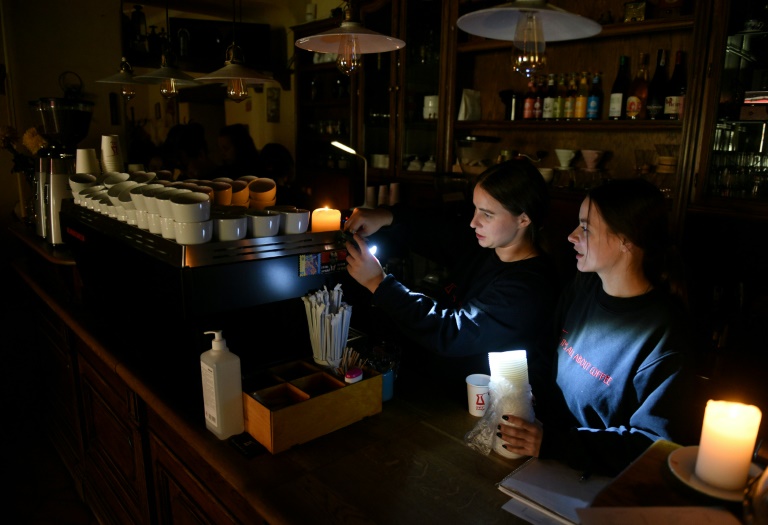
Cities across Ukraine began curbing electricity consumption ahead of winter Thursday as authorities warned that heavy damage to the country’s energy grid by Russian attacks would spark a new wave of refugees from the country.

“Russia’s leadership has given the order to turn the energy system itself into a battlefield. The consequences of this are very dangerous, again for all of us in Europe,” Zelensky said in an address to the EU council

Energy-saving measures were put in place across the country after Russian missile and drone strikes destroyed at least 30 percent of the country’s power stations in a week, according to authorities.

Following blackouts in parts of Kyiv overnight, the city’s mayor Vitali Klitschko urged businesses to limit screens and signage lights “as much as possible”.

“Even small savings and a reduction in electricity consumption in every home will help stabilise the operation of the national energy system,” he said.

Ukrainians responded defiantly.

“It’s not going to change our attitude, maybe we will only hate them more,” said Olga, a resident of Dnipro in central Ukraine who declined to give her last name.

“I would rather sit in the cold with no water and electricity than be in Russia,” she said.

People were rushing to buy auxiliary power supplies like generators and batteries, according to Kyrylo, an electronics vendor.

Speaking of the coming winter, he said: “I think that there will be nothing that we cannot survive.”

“There will be some kind of heating in any case, and the fact that it will be 16 (degrees Celsius, or 61 Fahrenheit) instead of 20 doesn’t matter much.  Just put on a thermal and socks,” he said.

– Iranians on the ground –

The White House meanwhile said it had evidence of Iranians taking a direct role in the war, helping Russians direct their Iranian-made “kamikaze drones” — which are destroyed in attacks on Ukrainian targets such as power stations.

“Tehran is now directly engaged on the ground, and through the provision of weapons that are impacting civilians and civilian infrastructure in Ukraine,” said White House national security spokesman John Kirby.

He added that there was also concern Iran might supply surface-to-surface missiles to Russia for use in the war.

“The United States is going to pursue all means to expose, deter and confront Iran’s provision of these munitions against the Ukrainian people,” he added.

The European Union and United Kingdom announced sanctions on three Iranian generals and an arms firm accused of supplying Russia with drones.

However, bipartisan support for military aid to Ukraine is starting to wane in Washington, with Republicans signalling that funding could be cut after congressional midterm elections next month.

“They said that if they win they’re not likely to fund, to continue to fund Ukraine,” US President Joe Biden said while campaigning in Pennsylvania.

“They have no sense of American foreign policy.”

– Kherson evacuation-

Little changed along the long front lines, where Russia has been sending many of the 200,000 troops newly called up to the fight.

Russian President Vladimir Putin on Thursday visited a training centre for mobilised troops south-east of Moscow where he embraced soldiers and fired a gun.

Some fighters opened their rucksacks to show him what they had been equipped with, and he asked one about his family, who replied he had a five-year-old daughter.

Putin hugged him and wished him “good luck.” 

Meanwhile Russia continued to evacuate people from Kherson city as Ukrainian forces inched closer to the southern hub, in Moscow’s hands since the earliest days of the invasion in February.

Moscow-installed authorities in Kherson said that around 15,000 people have been moved out.

Russia’s Rossiya 24 TV showed images of people waiting to board ferries, unable to use bridges damaged by Ukraine.

Kirill Stremousov, a pro-Russian official, said on Telegram that the evacuations would give Russian forces more room to fight, and said they would not cede the city back to the Ukrainians.

“Remember, nobody is going to give up Kherson,” he said.

But Ukrainians said the exit of civilians from the area was in fact forced deportations to Russia.

The US-based Institute for the Study of War, in its daily analysis, said that as Ukrainian forces continue to close in on Kherson city, Russian authorities “are likely setting information conditions to justify planned Russian retreats and significant territorial losses.”
Dollar extends gains on Fed rate hike expectations

The dollar extended gains Friday on expectations the Federal Reserve will press ahead with its programme of bumper interest rate hikes for the rest of the year.

Traders were girding for another possible intervention by Tokyo after the yen sank past 150 per dollar, while sterling remained under pressure owing to uncertainty in Westminster after Prime Minister Liz Truss resigned after just six weeks in office.

The fear that has gripped markets for most of the year returned after a brief respite at the start of the week, sending equity markets back into the red, with a series of better-than-expected earnings results unable to lift the gloom.

The dollar burst to a new 32-year high against the yen on Thursday as investors bet the Fed will ramp up borrowing costs much more as it struggles to rein in prices, while the Bank of Japan refuses to budge from its ultra-loose policies citing the need to support the torpid economy.

Even data Friday showing Japanese inflation hit an eight-year high last month — or more than 30 years when excluding VAT rises — was unable to change expectations that the central bank will continue to hold firm.

“In October, inflation may reach 3.3 percent or 3.4 percent as many food prices are going up, mobile phone fees are giving a lift and service prices are rising,” said Mari Iwashita of Daiwa Securities Co.

“The BoJ seems to focus on downside risks overseas to conclude that it will need to keep up monetary easing. It strikes me that they have already made the decision to maintain easing.”

With the dollar sitting around 150.20 yen, there is a growing sense that authorities in Tokyo will step in to support their currency, though analysts warned that such moves rarely have a lasting effect. The last intervention was on September 22, when the dollar hit 145.90 yen.

– ‘Unmitigated disaster’ –

Finance Minister Shunichi Suzuki again said on Friday that the government was prepared to move and that the recent sudden, one-sided yen weakness was undesirable. 

The dollar was also elevated against sterling after another day of drama in London, where Truss gave in to pressure to resign after removing her finance and interior ministers within days and seeing her debt-fuelled, tax-cutting mini-budget torn up.

The pound initially rallied on the news but fell back as traders contemplated more drift in government.

“Truss has no doubt been an unmitigated disaster and I’m not sure who exactly will make the country feel at ease at this point,” said OANDA’s Craig Erlam.

“There will obviously be calls for a general election but that won’t provide any certainty or leadership for the country in the midst of a crisis. It would appear there are only bad options on the table so we probably shouldn’t expect a positive outcome.”

Equity markets fell back again, extending Thursday’s losses and tracking another sell-off on Wall Street as expectations for more rate hikes by central banks around the world continue to grow owing to stubbornly high inflation.

On Thursday, the head of the Philadelphia Fed, Patrick Harker, said: “We are going to keep raising rates for a while.

“Given our frankly disappointing lack of progress on curtailing inflation, I expect we will be well above four percent by the end of the year”, then take a step back in the new year, he said.

Observers say the Fed could lift rates to as high as five percent before they take their foot off the pedal, and even then keep them there until officials are happy that prices are under control. They are currently at 3.0-3.25 percent.

In early trade, Tokyo, Hong Kong, Sydney, Seoul, Singapore, Wellington, Taipei and Manila were all in the red, though Shanghai and Jakarta edged up.

– Key figures around 0230 GMT –

Tokyo – Nikkei 225: DOWN 0.2 percent at 26,951.59 (break)

Hong Kong – Hang Seng Index: DOWN 0.5 percent at 16,205.50

Shanghai – Composite: UP 0.1 percent at 3,036.56

Pound/dollar: DOWN at $1.1200 from $1.1224 on Thursday

Dollar/yen: UP at 150.25 yen from 150.19 yen

Euro/dollar: DOWN at $0.9772 from $0.9787 

Euro/pound: UP at 87.21 pence from 87.17 pence

West Texas Intermediate: UP 0.1 percent at $84.58 per barrel

Brent North Sea crude: DOWN 0.1 percent at $92.32 per barrel

New York – Dow: DOWN 0.3 percent at 30,333.59 (close)

London – FTSE 100: UP 0.3 percent at 6,943.91 (close) 

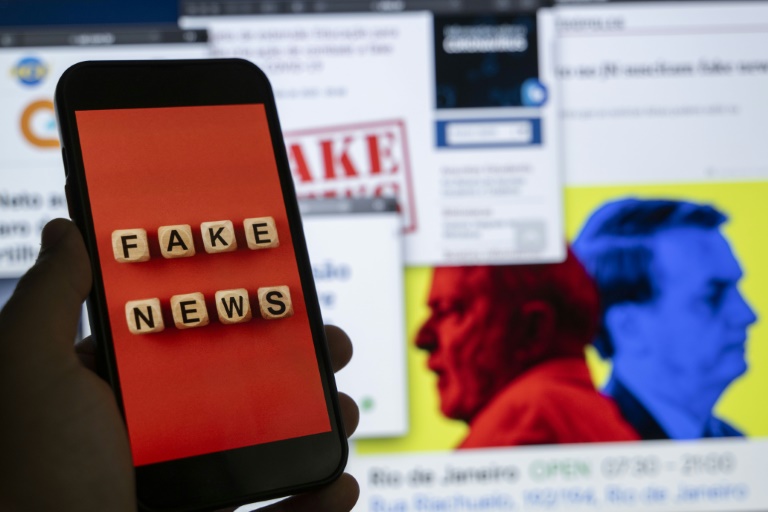
Brazil's dirty campaign: a disinformation guide

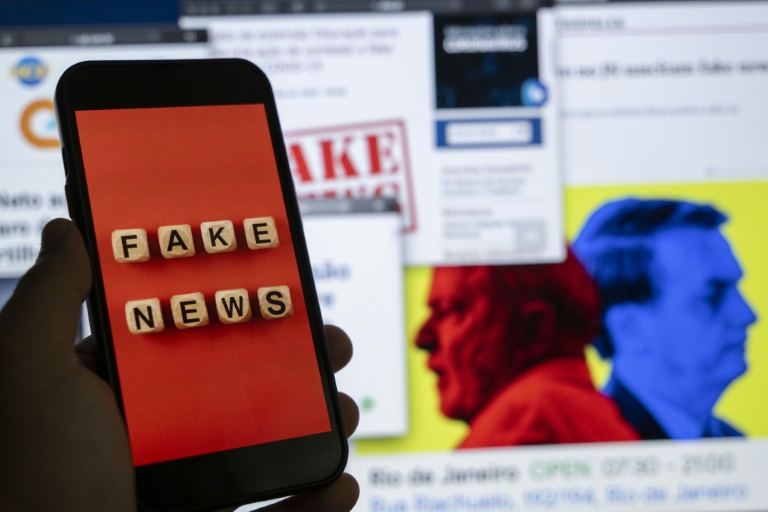
Brazil’s election campaign has been an orgy of mudslinging, social media attacks and outright lies so outlandish they are sometimes comical.

Here is a look from AFP’s fact-checking team at some of the top disinformation techniques — none of them particularly high-tech — used in the online proxy wars between backers of far-right incumbent Jair Bolsonaro and leftist rival Luiz Inacio Lula da Silva ahead of the country’s presidential runoff on October 30.

– Quotes out of context –

One of the main methods seen in the social media disinformation campaign is editing context out of video footage to make the candidates appear to say something they haven’t.

For example, a video was widely shared Wednesday by Bolsonaro backers, including influential Evangelical pastor Silas Malafaia, in which Lula says: “I have to lie. Politicians have to lie.”

The veteran leftist did utter those words the night before — but was mimicking Bolsonaro when he said it.

“Bozo (his mocking nickname for the incumbent) is a compulsive liar,” Lula, 76, said in a podcast interview. “He literally says, ‘I have to lie.'”

Bolsonaro, 67, has also been targeted with the tactic.

In one clip, he appears to say he will name scandal-plagued ex-president Fernando Collor to his cabinet to “confiscate retirees’ pensions.”

In reality, Bolsonaro was talking about a rumor swirling online.

– Pink menace –

Bolsonaro warns ex-president Lula (2003-2010) wants to “impose communism” in Brazil, and often points to crises in other Latin American countries as examples of the dangers of left-wing rule.

Amid signs of a new “pink tide” emerging in the region — with leftists now in power in Argentina, Chile and Colombia, among others — the disinformation campaign has cast a wide muckraking net.

One viral post accuses Colombian President Gustavo Petro’s leftist government of “authorizing pedophilia,” based on a measure that legalized marriage for minors older than 14.

But the measure was adopted in 2021, under conservative ex-president Ivan Duque.

“Starving locals attack poultry and pig farmers in Argentina,” warns another apocalyptic message, accompanying a video of pillaging that allegedly occurred under leftist President Alberto Fernandez.

In reality, the images came from the Colombian town of Puerto Tejada during protests last year against Duque’s government.

Videos from violent protests in Chile in 2019 under conservative ex-president Sebastian Pinera have likewise been misrepresented as happening under current President Gabriel Boric, who took office last March.

– Fake polls –

Fake opinion polls showing one candidate with a large lead are another common tactic.

Sometimes the supposed polls are completely fabricated. Other posts use editing software to change the figures in TV news reports.

In fact, most real polls give Lula a small lead over Bolsonaro.

– ‘Proof’ of fraud –

Multiple claims of fraud went viral after the first-round election on October 2, in which Lula took 48 percent of the vote to 43 percent for Bolsonaro.

Lula supposedly won more votes than there were inhabitants in a list of cities that circulated widely. But the figures cited are incorrect, and some of the cities don’t even exist.

Other viral posts allege the vote count on election night followed an algorithm in which Lula gained one percentage point and Bolsonaro lost one-half for every 12 percent of polling stations that reported results.

But those numbers do not match actual figures.

– Fake articles –

Other posts copy the look of established media to spread false news reports.

The G1 news site operated by Globo, Brazil’s biggest media group, is a frequent target.

One screen capture of a supposed G1 article has Lula saying he will confiscate Brazilians’ firearms if elected.

Another quotes him as saying, “Even God can’t stop me from winning this election.”

Brazil's dirty campaign: a disinformation guide

Brazil’s election campaign has been an orgy of mudslinging, social media attacks and outright lies so outlandish they are sometimes comical.

Here is a look from AFP’s fact-checking team at some of the top disinformation techniques — none of them particularly high-tech — used in the online proxy wars between backers of far-right incumbent Jair Bolsonaro and leftist rival Luiz Inacio Lula da Silva ahead of the country’s presidential runoff on October 30.

– Quotes out of context –

One of the main methods seen in the social media disinformation campaign is editing context out of video footage to make the candidates appear to say something they haven’t.

For example, a video was widely shared Wednesday by Bolsonaro backers, including influential Evangelical pastor Silas Malafaia, in which Lula says: “I have to lie. Politicians have to lie.”

The veteran leftist did utter those words the night before — but was mimicking Bolsonaro when he said it.

“Bozo (his mocking nickname for the incumbent) is a compulsive liar,” Lula, 76, said in a podcast interview. “He literally says, ‘I have to lie.'”

Bolsonaro, 67, has also been targeted with the tactic.

In one clip, he appears to say he will name scandal-plagued ex-president Fernando Collor to his cabinet to “confiscate retirees’ pensions.”

In reality, Bolsonaro was talking about a rumor swirling online.

– Pink menace –

Bolsonaro warns ex-president Lula (2003-2010) wants to “impose communism” in Brazil, and often points to crises in other Latin American countries as examples of the dangers of left-wing rule.

Amid signs of a new “pink tide” emerging in the region — with leftists now in power in Argentina, Chile and Colombia, among others — the disinformation campaign has cast a wide muckraking net.

One viral post accuses Colombian President Gustavo Petro’s leftist government of “authorizing pedophilia,” based on a measure that legalized marriage for minors older than 14.

But the measure was adopted in 2021, under conservative ex-president Ivan Duque.

“Starving locals attack poultry and pig farmers in Argentina,” warns another apocalyptic message, accompanying a video of pillaging that allegedly occurred under leftist President Alberto Fernandez.

In reality, the images came from the Colombian town of Puerto Tejada during protests last year against Duque’s government.

Videos from violent protests in Chile in 2019 under conservative ex-president Sebastian Pinera have likewise been misrepresented as happening under current President Gabriel Boric, who took office last March.

– Fake polls –

Fake opinion polls showing one candidate with a large lead are another common tactic.

Sometimes the supposed polls are completely fabricated. Other posts use editing software to change the figures in TV news reports.

In fact, most real polls give Lula a small lead over Bolsonaro.

– ‘Proof’ of fraud –

Multiple claims of fraud went viral after the first-round election on October 2, in which Lula took 48 percent of the vote to 43 percent for Bolsonaro.

Lula supposedly won more votes than there were inhabitants in a list of cities that circulated widely. But the figures cited are incorrect, and some of the cities don’t even exist.

Other viral posts allege the vote count on election night followed an algorithm in which Lula gained one percentage point and Bolsonaro lost one-half for every 12 percent of polling stations that reported results.

But those numbers do not match actual figures.

– Fake articles –

Other posts copy the look of established media to spread false news reports.

The G1 news site operated by Globo, Brazil’s biggest media group, is a frequent target.

One screen capture of a supposed G1 article has Lula saying he will confiscate Brazilians’ firearms if elected.

Another quotes him as saying, “Even God can’t stop me from winning this election.”

UK Tory rivals open truncated leadership race

Contenders bidding to succeed Prime Minister Liz Truss were Friday to open a hectic weekend of campaigning, but opposition parties demanded that UK voters get their own say to end months of political chaos.

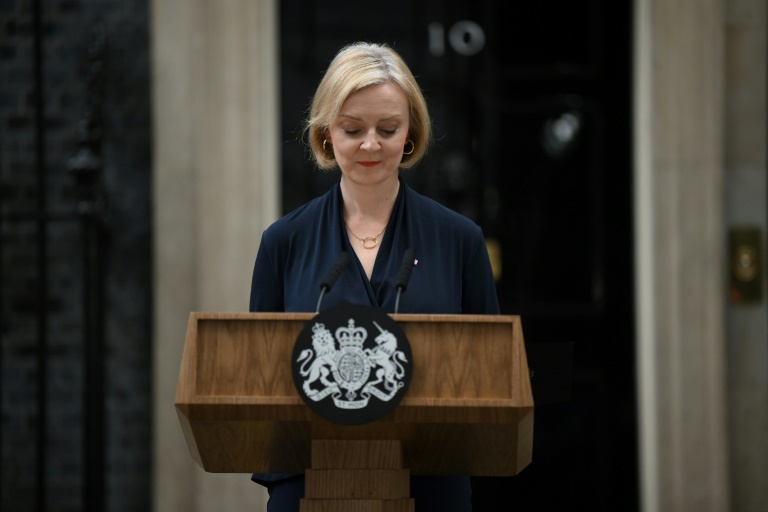
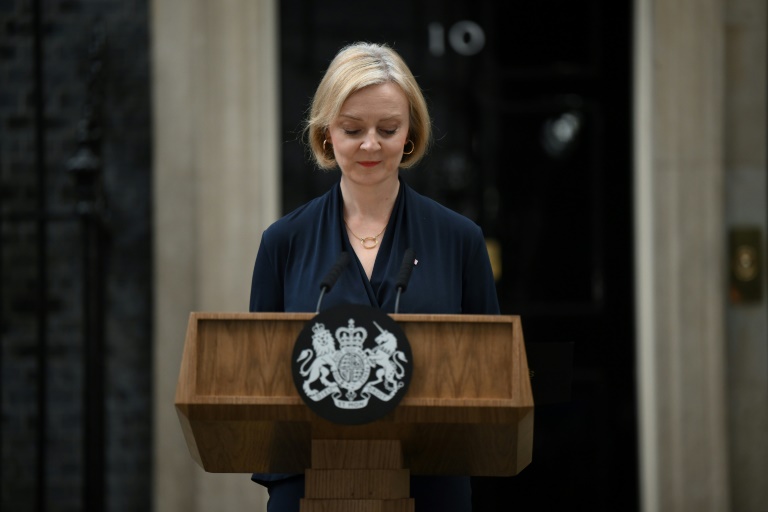
After only 44 days in office, packed with economic crisis largely of her own making, the Conservative leader announced Thursday she was stepping down.

Truss admitted she “cannot deliver the mandate” on which she was elected by Tory members, after her right-wing platform of tax cuts disintegrated and as many Conservative MPs revolted.

Truss succeeded Boris Johnson on September 6 after a weeks-long campaign against Tory rival Rishi Sunak, vowing a radical overhaul as Britons struggle with a cost-of-living crisis.

Having warned correctly of the disastrous consequences of her debt-fuelled tax promises, former finance minister Sunak has emerged as an early favourite to succeed Truss.

But the scandal-ridden Johnson may also be in the mix for a dramatic comeback bid, despite leaving Downing Street with dismal poll ratings.

Likely contenders were keeping their powder dry in the immediate hours after party managers announced Thursday a truncated election process leading up to a result on October 28.

But supporters of Sunak and Johnson were quick to promote their merits — while others such as senior cabinet members Penny Mordaunt and Ben Wallace were reportedly mulling their own runs.

Some including new finance minister Jeremy Hunt have already ruled themselves out.

Former minister Tim Loughton urged the four “big beasts” of Sunak, Mordaunt, Hunt and Wallace to agree on a unity candidate so that “we can get back to some degree of normality”.

Other candidates could include a representative of the party’s right such as Suella Braverman, whose resignation as interior minister on Wednesday helped trigger Truss’s downfall.

But Brexiteer right-wingers and other factions “need to park all those egos” and work together given the gravity of the economic situation, Loughton told BBC radio.

“We need to have a united and talented cabinet of grown-ups who come together and get us back on course,” he said.

– ‘Soap opera’ –

Whoever does stand will not have long to make their case, and will have to overcome a high bar to run.

They have until 2:00 pm (1300 GMT) on Monday to produce at least 100 nominations from their fellow Tory MPs.

That means a maximum of three candidates will emerge from among the 357 Conservatives in the House of Commons.

The MPs will vote to leave two candidates standing, and hold another “indicative” vote to tell the party membership their preferred option.

The rank-and-file will then have their say in an online ballot over the course of next week, unless a single candidate emerges from the MPs’ deliberations in an effective coronation.

But for Labour and other opposition parties, the governing party is showing contempt towards the electorate.

Demanding an immediate general election, more than two years ahead of schedule, Labour leader Keir Starmer said Britain “cannot have another experiment at the top of the Tory party”.

“This is not just a soap opera at the top of the Tory party — it’s doing huge damage to the reputation of our country” and to people’s livelihoods, he said.

The ultimate winner of the Tory race will be Labour, according to many pundits, pointing to the opposition party’s runaway lead in the polls.

“You’d have to hope, if you’re the Tory party, that you really have reached a nadir and the only way is up from here,” said Tim Bale, professor of politics at Queen Mary, University of London.

Friday’s editions of the right-wing Daily Telegraph, Sun and Daily Express newspapers all talked up Johnson’s chances.

But Bale told AFP that the former premier’s return “would just be the final joke that the Conservative party tried to play on the country, and the country wouldn’t be laughing”.

“We need to climb out of the hole the Tories have dug us into. That probably does mean a change of government,” he added, as the left-leaning Daily Mirror demanded: “General election now.”

UK Tory rivals open truncated leadership race

Contenders bidding to succeed Prime Minister Liz Truss were Friday to open a hectic weekend of campaigning, but opposition parties demanded that UK voters get their own say to end months of political chaos.

After only 44 days in office, packed with economic crisis largely of her own making, the Conservative leader announced Thursday she was stepping down.

Truss admitted she “cannot deliver the mandate” on which she was elected by Tory members, after her right-wing platform of tax cuts disintegrated and as many Conservative MPs revolted.

Truss succeeded Boris Johnson on September 6 after a weeks-long campaign against Tory rival Rishi Sunak, vowing a radical overhaul as Britons struggle with a cost-of-living crisis.

Having warned correctly of the disastrous consequences of her debt-fuelled tax promises, former finance minister Sunak has emerged as an early favourite to succeed Truss.

But the scandal-ridden Johnson may also be in the mix for a dramatic comeback bid, despite leaving Downing Street with dismal poll ratings.

Likely contenders were keeping their powder dry in the immediate hours after party managers announced Thursday a truncated election process leading up to a result on October 28.

But supporters of Sunak and Johnson were quick to promote their merits — while others such as senior cabinet members Penny Mordaunt and Ben Wallace were reportedly mulling their own runs.

Some including new finance minister Jeremy Hunt have already ruled themselves out.

Former minister Tim Loughton urged the four “big beasts” of Sunak, Mordaunt, Hunt and Wallace to agree on a unity candidate so that “we can get back to some degree of normality”.

Other candidates could include a representative of the party’s right such as Suella Braverman, whose resignation as interior minister on Wednesday helped trigger Truss’s downfall.

But Brexiteer right-wingers and other factions “need to park all those egos” and work together given the gravity of the economic situation, Loughton told BBC radio.

“We need to have a united and talented cabinet of grown-ups who come together and get us back on course,” he said.

– ‘Soap opera’ –

Whoever does stand will not have long to make their case, and will have to overcome a high bar to run.

They have until 2:00 pm (1300 GMT) on Monday to produce at least 100 nominations from their fellow Tory MPs.

That means a maximum of three candidates will emerge from among the 357 Conservatives in the House of Commons.

The MPs will vote to leave two candidates standing, and hold another “indicative” vote to tell the party membership their preferred option.

The rank-and-file will then have their say in an online ballot over the course of next week, unless a single candidate emerges from the MPs’ deliberations in an effective coronation.

But for Labour and other opposition parties, the governing party is showing contempt towards the electorate.

Demanding an immediate general election, more than two years ahead of schedule, Labour leader Keir Starmer said Britain “cannot have another experiment at the top of the Tory party”.

“This is not just a soap opera at the top of the Tory party — it’s doing huge damage to the reputation of our country” and to people’s livelihoods, he said.

The ultimate winner of the Tory race will be Labour, according to many pundits, pointing to the opposition party’s runaway lead in the polls.

“You’d have to hope, if you’re the Tory party, that you really have reached a nadir and the only way is up from here,” said Tim Bale, professor of politics at Queen Mary, University of London.

Friday’s editions of the right-wing Daily Telegraph, Sun and Daily Express newspapers all talked up Johnson’s chances.

But Bale told AFP that the former premier’s return “would just be the final joke that the Conservative party tried to play on the country, and the country wouldn’t be laughing”.

“We need to climb out of the hole the Tories have dug us into. That probably does mean a change of government,” he added, as the left-leaning Daily Mirror demanded: “General election now.”

Kevin Spacey cleared in NY sex assault case

A New York court on Thursday dismissed a $40 million sexual misconduct lawsuit brought against Kevin Spacey by an actor who claimed the Hollywood star targeted him when he was 14.

A jury found that Anthony Rapp, who was seeking damages for “emotional anguish,” failed to prove that the two-time Oscar winner had “touched a sexual or intimate body part,” leading Judge Lewis Kaplan to dismiss the civil case.

After deliberating for about an hour “the jury found the defendant not liable,” according to the US district court for the Southern District of New York.

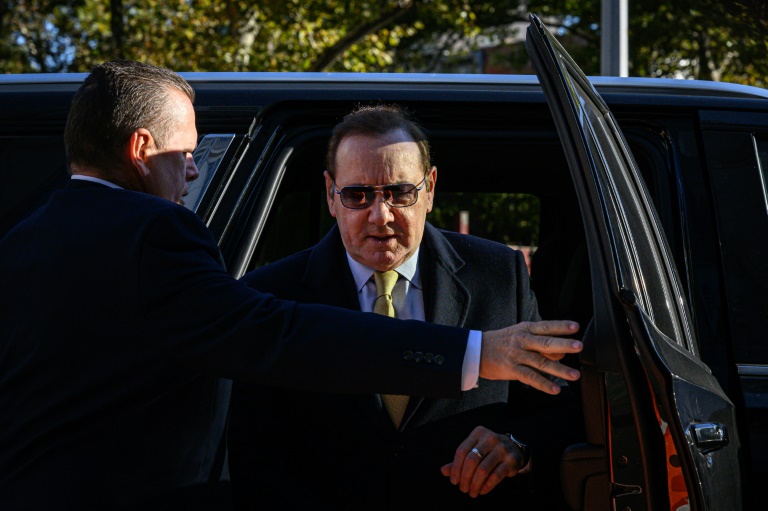
The 63-year-old star of “The Usual Suspects” and “House of Cards” was seen leaving court soon after the verdict was announced, without addressing reporters.

His lawyer said in a statement that “Mr. Spacey is grateful to live in a country where the citizens have a right to trial by impartial jurors who make their decision based on evidence and not rumor or social media.”

Rapp “told his truth in court,” said his attorney Peter Saghir in a statement to AFP.

“While we respect the jury’s verdict, nothing changes what happened to him,” he added.

One of the first stars to be caught up in the global #MeToo reckoning, Spacey has separately pleaded not guilty to charges of sexually assaulting three men in Britain between March 2005 and April 2013.

In 2019 charges against the actor of indecent assault and sexual assault were dropped in Massachusetts.

Rapp, who stars in the series “Star Trek: Discovery,” alleged he was assaulted by Spacey at a party in Manhattan in 1986, when he was 14 and Spacey 26.

In his lawsuit the actor, now 50, accused Spacey of coming into a bedroom where he was watching television, of picking him up, lifting him onto a bed and briefly laying down next to him.

According to a court document, Rapp claimed Spacey’s hand “grazed” his buttocks while doing so.

During the two-week trial, Rapp recounted that he “felt frozen” — until he managed to “wiggle his way” out.

Rapp agreed however there had been “no kissing, no undressing, no reaching under clothes, and no sexualized statements or innuendo,” during an incident that lasted no more than two minutes.

– Troubled past –

Since Rapp’s accusations first emerged in 2017, Spacey has disappeared from screens and theaters.

The “American Beauty” star took the stand repeatedly in New York to deny Rapp’s account of events, saying he had no recollection of attending the party in question with him.

At the time of Rapp’s accusations, Spacey came out publicly as gay for the first time, which he said led to charges he was “trying to change the subject, or trying to deflect.”

During cross-examination in New York, Spacey described a troubled family past, with a father he described as a “white supremacist” and a “neo-Nazi,” who disliked gay people and did not appreciate his son’s interest in the theater.

Spacey said Rapp’s accusations made him feel “shocked, frightened and confused” and that urged by his advisors he issued a public apology which he said he now regrets.

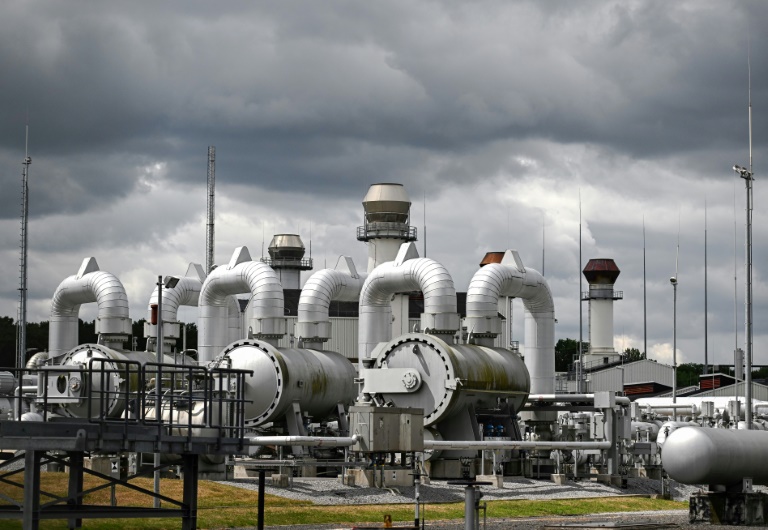
EU agrees 'roadmap' to contain energy prices

EU leaders on Friday reached agreement on a “roadmap” aimed at putting in place measures within weeks to shield European consumers from soaring energy prices.

The accord came after 11 hours of wrangling over broad proposals to lower energy bills as gas prices pushed skywards by the war in Ukraine.

The bloc’s 27 member states have been squabbling for months over which joint initiatives to adopt, riven by the fact that energy mixes in the countries vary greatly.

While the announcement of the summit text made a public show of unity, it was clear that the coming negotiations would remain difficult. One step in that would come next week with a meeting of EU energy ministers in Luxembourg.

The summit agreement set out a “solid roadmap to keep on working on the topic of energy prices”, European Commission chief Ursula von der Leyen told a media conference.

The published text calls on the European Commission and EU countries in coming weeks to find ways to shield consumers from the high prices “while preserving Europe’s global competitiveness… and the integrity of the Single Market”.

European Council President Michel said, “the energy crisis represents a threat to the internal market” of the EU and stressed “maximal coordination” was needed to protect it.

At least 15 EU countries — more than half the bloc — are pushing for an ambitious cap on prices and are increasingly unsettled by strikes and protests over the cost of living spreading across France, Belgium and other member states. 

But the price-cap idea has met resistance from Germany, the EU’s biggest economy, fearing that gas supplies could end up shifting to more lucrative markets in Asia. 

Several smaller economies are also furious that the German government will not back a gas cap and for going it alone in helping its citizens pay for high prices with a 200-billion-euro ($196-billion) spending bonanza.

In the end, the agreed text said a “cost and benefit analysis” of a price cap for electricity generation should be carried out, and  that the impact beyond Europe would be assessed.

French President Emmanuel Macron, who had gone into the summit saying Germany was isolating itself, expressed satisfaction with the result.

“The next two or three weeks will allow the commission to come up with these mechanisms” to be implemented.

He said it sent a “very clear signal to the markets of our determination and our unity”. 

German Chancellor Olaf Scholz said “good progress” had been made.

“We wanted, together, to limit fluctuations that could be caused by speculation.”

– Franco-German discord –

There was no hiding, however, a general Franco-German discord that is simmering. That became more evident on Wednesday when the two countries delayed a regular meeting between cabinet ministers.

But France’s Economy Minister Bruno Le Maire sought to downplay fears of a rift at the heart of Europe, telling the Frankfurter Allgemeine Zeitung newspaper that “no one can split up the Franco-German couple”.

How he said there was a need for a “strategic redefinition” of bilateral relations to create “a new alliance”.

In another sign the two were not in concert, France did not consult Germany before agreeing with Spain and Portugal to scrap a planned gas pipeline that Berlin has been pushing for years.

Leaders of the three countries met just before the summit and “decided to abandon the MidCat project and instead create, as a matter of priority, a Green Energy Corridor connecting Portugal, Spain and France with the EU’s energy network.”

The MidCat, a project that emerged a decade ago, called for an overland gas pipeline to be built to connect gas terminals in Spain and Portugal, across France, to European networks supplying Germany, among others.

In its place, they said, an underwater pipeline — called BarMar — would be laid from Barcelona in Spain to Marseille in France. It will initially be used for natural gas but, over time, more and more for more climate-friendly hydrogen. 

But the agreement released by Macron and his Spanish and Portuguese counterparts laid out no timetable for BarMar’s completion, and did not say how it would be funded, leaving experts sceptical.

In another nod to Germany’s concerns, the summit agreement on energy backed joint purchases by the EU energy giants in order to command cheaper prices to replenish reserves, as long as “national needs” were taken into account.

It also set limits aimed at “preventing increased gas consumption”.

Another point gives the EU’s executive arm the power to establish a pricing “corridor” on Europe’s main gas index to intervene when prices get out of control.

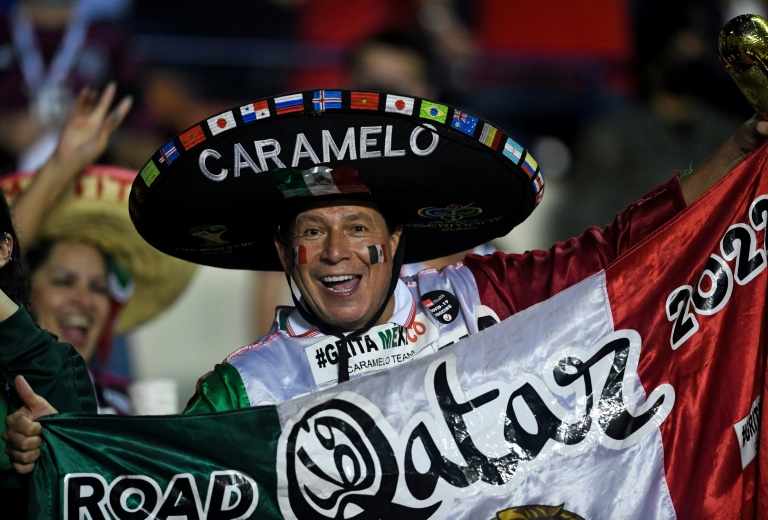
Qatar World Cup supporters' guide

The 2022 World Cup in Qatar has raised an unprecedented number of questions among fans over issues ranging from whether they will be able to drink alcohol, hold hands with a partner or even just getting into the Islamic Gulf state.

Here is a guide on rules and customs in Qatar for fans at the tournament between November 20 and December 18:

— Qatar entry

Qatar is expecting at least one million people to visit during the World Cup and has said that only people with a Hayya fan pass and a match ticket can enter the country. Each ticket holder can invite three people but they will have to pay an entry fee of 500 riyals ($140).

Once a match ticket is bought and accommodation reserved, fans must register online for the Hayya card which acts as a visa, match ticket, and free pass for transport and emergency medical treatment.

— Drugs and drink

Alcohol is severely restricted to mainly foreign residents aged over 21. Passengers cannot bring alcohol into the country. Residents need a permit to buy beer, wine and spirits for home consumption at two government-run stores. Residents and fans will be able to go to more than 30 hotels and restaurants where drinks are allowed and a beer can cost at least $10.

No alcohol will be sold in the eight stadiums, but there will be beer stands around the venues open until 30 minutes before each game and for one hour after. In the main FIFA fan zone, beer stands will open at 6.30pm. Different opening rules will apply in other private fan zones.

Narcotics are illegal and the British embassy website warns people that they should expect a “severe” sanction for possession of even small quantities of drugs. This can range from prison to a fine or deportation.

The US embassy recommends that travellers even check the legality of some medicines that they might bring to Qatar and to make sure they carry a prescription.

Embassies also recommend travellers not to import pork and any product that could be interpreted as “pornography”. 

— Sex and gender

Wearing a Muslim veil is not compulsory for women but they must dress “modestly” in public, covered from the shoulders to knees. The rule is applied in official buildings but rarely in places where expatriates gather. 

Sex outside marriage is illegal and can be punished by flogging though there is no record of when the sanction was last used. The US embassy recommends pregnant women to carry a marriage certificate with them in case they need medical care.

Many embassies say that a women who is the victim of sexual assault should contact their mission before going to Qatari police.

Despite laws that criminalise homosexual sex, the website of the Hayya card says there is no restriction on “non-married friends of different genders or couples (including LGBTQ+)” from staying in the same room.

FIFA has said that carrying an LGBTQ rainbow flag will be allowed in stadiums. Authorities say fans should be cautious in other areas.

Authorities have indicated that some leniency on social morals will be shown for the World Cup. But senior organisers have warned that “public displays of affection” could be considered “offensive” whether by a man and his wife or a same-sex couple.

The US embassy says that demonstrations and gatherings of big groups, “proselytising”, insulting the Qatar government or Islam could all lead to criminal charges.

— Transport

Qatari authorities have warned that “congestion” is likely in the first two weeks of the World Cup when peak numbers of fans will be present. They are calling on people to use public transport and taxis.

The metro, that has stations at five of the eight stadiums, will be open from 6.00am to 3.00am every day — except Friday when it opens at 9.00am. More than 3,000 extra buses have been brought in to get fans to stadiums, fan zones and the two international airports.

The main seafront Corniche highway will be closed and other roads restricted. Driving on restricted roads without authorisation can lead to a 500 riyal ($140) fine.

— Pandemic

Coronavirus vaccinations are not compulsory, but before boarding a flight to Qatar anyone aged over six must have a negative PCR test of less than 48 hours or a rapid antigen test within 24 hours. Adults must download the Ehteraz health app and show it when required. 

Visitors who do not have a vaccine must wear a mask for 10 days after arrival. Anyone who tests positive for Covid-19 will have to isolate for five days. Masks are compulsory in health facilities and recommended in stadiums.

US airlines cheer travel boost from shift to hybrid work

US airlines say they are reaping the benefits of a growing trend of hybrid work that allows employees to travel more frequently as Covid-19 restrictions ebb.

Carriers including American Airlines, United and Delta highlighted the phenomenon on a series of conference calls as they reported banner results on continued strong travel demand.

The increased adoption of virtual meetings, such as through Zoom, has eased the chains that once bound office workers to their desk, allowing greater flexibility.

Get-away weekends are going longer, meaning an excursion that might have previously lasted from Friday night to Monday morning might now return on Tuesday or leave on Thursday.

Prior to the pandemic, United Airlines would trim its transatlantic flights in the middle of the week. But this winter, more flights are planned for Europe “throughout the entire week,” said United Chief Commercial Officer Andrew Nocella.

The dynamic also means more travel outside of the traditional school holiday period, with Delta pointing to exceptional activity in Florida last month.

“If you look at September which is historically one of the worst months for Florida, you couldn’t buy a ticket to Disney,” said Glen Hauenstein, president of the Atlanta-based company.

“You had some people who were on break here, and they said they wanted to go to Disney with their families and they couldn’t buy a ticket.”

A portion of these trips outside conventional travel periods may also be the result of deadlines for consumers to use flight credits for canceled Covid-19 travel, Atmosphere Research’s Henry Harteveldt said.

“Some part of it may be driven by the fact that the summer was simply too busy and they were priced out of the market or decided they did not want to travel,” he added.

– Changing behavior –

Airlines said they expect the trend to hold for at least a while longer. This will include the upcoming holiday season, when traffic is expected to be elevated throughout the month between Thanksgiving and Christmas.

Such an expanded travel calendar with less pronounced peaks enables carriers to spread out their labor.

“We staff our pilot workforce for the flying that we do from June 15 to like August 15” Nocella said. “If we can staff for a much larger chunk of time, that should be incredibly efficient.”

The boost comes as airlines still are not yet seeing a full recovery in lucrative business travel that has long been a critical source of revenues. One downside of the new environment is that some of these revenues may not return.

“A lot of people who used to be frequent travelers used the time during the pandemic to reassess that part of their lives,” Harteveldt said. “A lot don’t want to be road warriors anymore.”

On the other hand, when people do travel for work, they are more frequently deciding to extend their stays due to the greater acceptability of remote work.

American estimates that 45 percent of its revenues now come from travelers who are mixing business and leisure travel, whereas 30 percent comes from tourism and 25 percent from business travel.

Airlines cite another boon from this trend: More consumers who sign up for airline rewards programs, or purchase their tickets directly on a carrier’s website, said Robert Isom, chief executive of American. 

The latest earnings reports also showed that airlines are still getting a lift from increased sales of premium tickets from travelers who have become more accustomed to paying more.

“They are willing and able to pay for better comfort, for better services, to reduce some of the stress and hassle,” Harteveldt said. 

But analysts are less sure the higher prices will stick, especially with the threat of a recession due to elevated inflation.

“It’s definitely difficult to speculate,” said Chris Raite, an analyst at Third Bridge. “We’re watching to see if airlines can hold the pricing power in the fourth quarter and 2023.”

Close Bitnami banner
Bitnami