World

Big staff cuts likely at Twitter: report

Massive layoffs appear to be on the horizon at Twitter, especially if billionaire Elon Musk completes his $44 billion purchase of the company, the Washington Post reported on Thursday.

While pitching his deal to buy Twitter to investors, Musk said he planned to get rid of nearly three-quarters of the firm’s workers, lopping its ranks to just over 2,000 employees, the Post reported.

Even if Musk’s deal to buy Twitter fails, a plan by the company to cut about $800 million from its payroll by the end of next year would lead to letting go of about a quarter of its workers, the paper said.

Staff cuts at the San Francisco-based company would likely hamper the platform’s ability to moderate abusive posts or keep data secure, according to the Post, which cited interviews and documents.

“Once Elon Musk buys Twitter, he can do as he pleases,” said University of Richmond law school professor Carl Tobias.

“And, I think he plans to.”

Twitter was already having trouble making money before Musk came along and “battered it and litigated it to death,” Tobias said.

Twitter had filed a lawsuit to hold Musk to the terms of the takeover deal he inked in April, even though Musk tried to get out of it.

A US judge recently suspended litigation in the saga after Musk expressed a change of heart, giving the parties until October 28 to finalize the on-again, off-again megadeal.

“I’m excited about the Twitter situation,” Musk said while fielding questions on a Tesla quarterly earnings call this week.

“I think it’s an asset that has just sort of languished for a long time but has incredible potential, although obviously myself and the other investors are overpaying for Twitter right now.”

Musk’s potential stewardship of the influential social media site has sparked worry from activists who fear he could open the gates to more abusive and misinformative posts.

Slowed Snapchat parent earnings send shares off a cliff

Shares in Snapchat’s parent company plunged more than 26 percent on Thursday on a quarterly earnings report that showed revenue was slowing as online advertisers tighten budgets.

In what could be a harbinger of pain to come for other tech firms like Google and Meta that rely on digital ads to make their money, Snap said that revenue in the recently ended quarter grew just 6 percent to $1.13 billion when compared to the same period the previous year.

Snap reported that it lost $360 million in the quarter, compared with a $72 million loss in the third quarter of last year. 

That came despite the number of daily users climbing 19 percent to 363 million in the same year-over-year comparison, Snap reported. Snap shares were down some 26 percent to $7.97 in after-market trades.

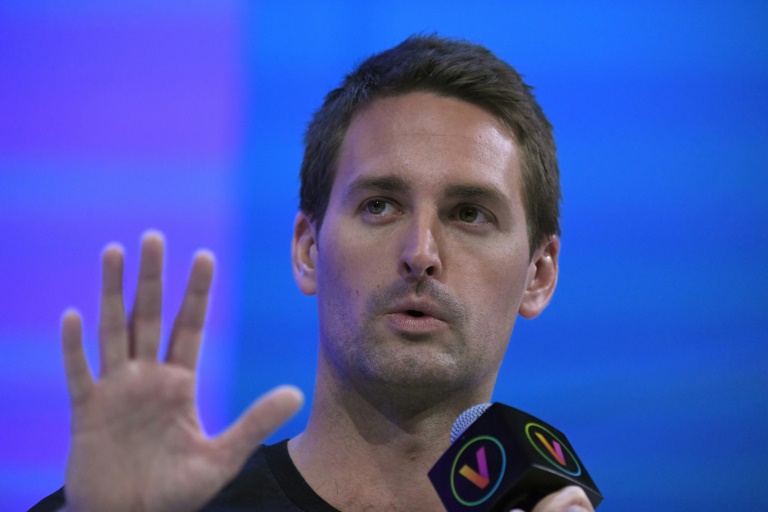
Snap chief executive Evan Spiegel said in the earnings report that the user growth “expands our long-term opportunity as we navigate this volatile macroeconomic environment.”

The loss in the recently ended quarter included $155 million in restructuring charges.

Snap in August confirmed a plan to cut 20 percent of staff, as the photo-centric messaging app worked to dig itself out amid competition and revenue woes.

A hit with young internet users in its early days, Snapchat has remained a small player in the social networking space as competition from other apps, such as TikTok, has grown ever more intense.

“We must now face the consequences of our lower revenue growth and adapt to the market environment,” Spiegel said in a note when announcing the decision “to reduce the size of our team by approximately 20 percent.”

Like other social networks, Snap has taken a hit as advertisers have tightened their belts, as well as from new privacy changes by Apple that have bitten into firms’ sales of costly but highly targeted ads.

“This quarter we took action to further focus our business on our three strategic priorities: growing our community and deepening their engagement with our products, reaccelerating and diversifying our revenue growth, and investing in augmented reality,” Spiegel said.

Snap also announced that its board of directors has authorized the buyback of as much as $500 million worth of the Southern California-based internet firm’s shares.

OAS mission will 'analyze' Peru political crisis

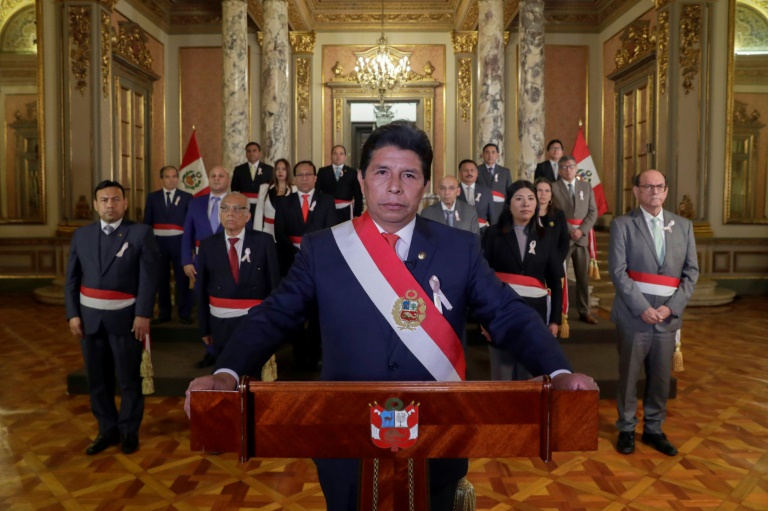
The Organization of American States said Thursday it will send a “high-level group” to Peru after President Pedro Castillo asked for the body’s help in tackling the country’s political crisis.

The decision came during a special OAS Permanent Council session in Washington following embattled Castillo’s announcement late Wednesday he had sought the body’s help to foster a national dialogue.

The council adopted a resolution offering “solidarity and support” for the “preservation of the democratic political institutional process” in Peru, calling on “all actors” to work within the “rule of law.” 

The OAS designated “a high-level group consisting of representatives of member states, and consistent with the Inter-American Democratic Charter, to visit Peru in order to analyze the situation and report to this council,” the resolution said. 

Addressing the nation live on TV Wednesday, Castillo said he had last week asked the 35-member OAS to invoke its “democratic charter,” which sets out the body’s mission “to promote and consolidate representative democracy.”

Under the document, a member state can ask for assistance “for the strengthening and preservation of its democratic system” if it fears this to be at risk.

On Thursday, the OAS declared it was available to “provide support and cooperation” in “promoting dialogue and strengthening its democratic system of government.”

Castillo, a former rural school teacher, has been under nonstop fire since unexpectedly taking power from Peru’s traditional political elite in elections last year. 

He has survived two impeachment attempts since taking office in July 2021 and is the target of six criminal investigations for alleged graft and plagiarizing his university thesis.

In addition to these, Peru’s attorney general last week filed a constitutional complaint accusing Castillo of heading a criminal organization involving his family and allies.

The complaint — the first of its kind against a sitting president — must be examined by parliament, and unlike a criminal case, can lead to Castillo’s suspension. Fewer votes are required than for impeachment.

– ‘Not corrupt’ –

Castillo, serving a five-year term that ends in 2026, cannot be criminally tried while in office.

In recent months, police have raided the presidential palace in Lima, where Castillo resides, as well as his private home in rural Peru in search of evidence to back the corruption claims.

On Wednesday, Castillo accused “the money sectors, the traditional politicians who have always thrived on corruption” of being behind the “coup” attempt against him.

“I am not corrupt,” he insisted on Twitter.

Peru is no stranger to instability: It had three different presidents in five days in 2020, and five presidents and three legislatures since 2016.

But six open investigations into a sitting president is unprecedented. 

Also on Thursday, Fitch Ratings downgraded its assessment of Peru’s long-term debt outlook to “negative” from “stable” in response to the “weakening of Peru’s political governance institutions.”

“A deterioration in political stability and government effectiveness has increased downside risks to Peru’s ratings,” it said.

Yen sinks to new low as British pound briefly surges after Truss exit

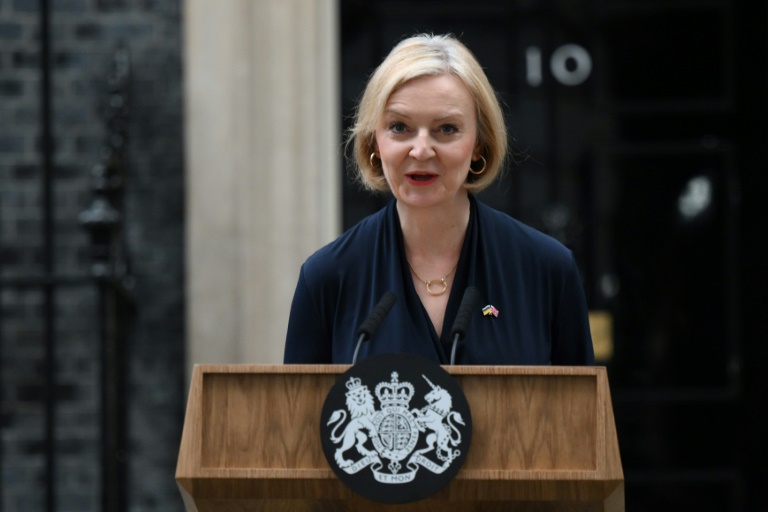
The yen sank to a new 32-year low Thursday against the dollar, while the pound briefly rallied after British Prime Minister Liz Truss announced her resignation following a brief crisis-filled tenure.

Around 1900 GMT the dollar traded at 150.17 against the Japanese currency, which fell to levels last seen in August 1990 in a retreat that reflects the Bank of Japan’s accommodative monetary policy next to the aggressive interest rate hikes adopted by the Federal Reserve.

Analysts say the yen will continue to slide as long as the two policies differ, with more dramatic Fed interest-rate hikes likely to address grinding inflation.

Markets were also fixated on Britain where Truss announced her resignation just 44 days after taking office, as the ruling Conservatives planned a rapid contest to replace the shortest-lived premier in UK history.

The British pound briefly surged more than one percent against the dollar to $1.1336, but later retreated somewhat.

“The political tumult in the UK is not going away anytime soon until we have a clear understanding on who will lead and what will be their agenda,” said Oanda’s Edward Moya.

The FTSE 100 index closed up 0.3 percent while Britain’s borrowing costs eased on the news, as the yield on 30-year government bonds, known as gilts, fell to 3.90 percent.

“Sterling and gilts rallied as the sorry reign of Liz Truss came to an end,” said Markets.com analyst Neil Wilson.

“After a flurry of activity we are seeing retracement of these initial moves as markets realize that there’s still huge uncertainty about whether the Tory party can survive in power.”

– Strong dollar, China fears –

Elsewhere, Wall Street stocks finished lower again, retreating after an early advance following the latest rise in US Treasury yield as weak housing data pointed to the drag from higher lending rates.

The yield on the 10-year US Treasury note climbed further above four percent, reflecting the market’s expectation for more aggressive Fed interest rate hikes.

Data showed existing home sales in the United States fell for an eighth straight month in September, as surging mortgage rates following earlier Fed rate hikes weigh on demand.

Worries about higher interest rates offset a largely positive set of earnings from IBM, A&T and others.

Earlier, Asian markets finished the day in the red, with selling also fuelled by concerns about the Chinese economy as Covid cases spike in the country and leaders stick to lockdown strategies.

– Key figures around 2015 GMT –

New York – Dow: DOWN 0.3 percent at 30,333.59 (close)

New York – S&P 500:  DOWN 0.8 percent at 3,665.78 (close)

New York – Nasdaq: DOWN 0.6 percent at 10,614.84 (close)

London – FTSE 100: UP 0.3 percent at 6,943.91 (close) 

Frankfurt – DAX: UP 0.2 percent at 12,767.41 (close)

Paris – CAC 40: UP 0.8 percent at 6,086.90 (close)

EURO STOXX 50: UP 0.6 percent at 3,492.85 (close)

Tokyo – Nikkei 225: DOWN 0.9 percent at 27,006.96 (close)

Hong Kong – Hang Seng Index: DOWN 1.4 percent at 16,280.22 (close)

Shanghai – Composite: DOWN 0.3 percent at 3,035.05 (close)

Pound/dollar: UP at $1.1224 from $1.1219 on Wednesday

Dollar/yen: DOWN at 150.19 yen from 149.90 yen

Euro/dollar: UP at $0.9787 from $0.9773 

Euro/pound: UP at 87.17 pence from 87.11 pence

Brent North Sea crude: DOWN less than 0.1 percent at $92.38 per barrel

West Texas Intermediate: UP 0.5 percent at $85.98 per barrel

burs-jmb/dw

Chad says some 50 dead in clashes, announces curfew

Chad’s government announced an overnight curfew on Thursday and said deadly clashes between police and demonstrators protesting the military’s grip on power claimed around 50 lives.

Hundreds of demonstrators turned out in the capital N’Djamena and elsewhere on Thursday to mark the date when the military had initially promised to hand over power — a spell that has been extended for another two years.

Chadian Prime Minister Saleh Kebzabo updated the official death toll to around 50 on Thursday night, saying most fatalities occurred in N’Djamena and the cities of Moundou and Koumra, while more than 300 people were injured.

A curfew between 6:00 pm and 6:00 am (1700 GMT and 0500 GMT) would remain in place until the “total restoration of order” in the hotspots of unrest, he added in a press conference.

Kebzabo also announced the suspension of “all public activity” of major opposition groups, including the Transformers party and civil society coalition Wakit Tamma.

The government had previously put the death toll at 30, including 10 members of the security forces.

“A banned demonstration became an insurrection,” government spokesman Aziz Mahamat Saleh told AFP.

He accused demonstrators in N’Djamena of attacking “public buildings”, including the offices of the governor, the headquarters of the prime minister’s party and that of the speaker of parliament.

An AFP reporter saw five bodies on the floor of the city’s Union Chagoua Hospital, two of which were covered with the Chadian national flag and three with bloodied white sheets.

The head doctor, Joseph Ampil, later confirmed to AFP that five individuals had “died from gunshots”.

Palls of black smoke could be seen in some parts of the city and the sound of teargas grenades could be heard.

Barricades were set up in several districts and tyres were set alight in the main avenues to block traffic.

The headquarters of Kebzabo’s UNDR party was also attacked by demonstrators “and partially burned down”, UNDR Vice President Celestin Topona told AFP.

France, Chad’s former colonial power, condemned the violence, noting it featured “the use of lethal weapons against demonstrators”.

Moussa Faki Mahamat, head of the African Union Commission, posted a tweet to “firmly condemn the repression” of the protests and call for peaceful ways to overcome the country’s “crisis”.

The United Nations said it “deplored the lethal use of force” and called for an investigation into reported human rights violations.

Later the EU condemned the Chad authorities’ action.

“The repression of demonstrations and the excessive use of force constitute serious violations of the freedoms of expression and demonstration, which undermine the ongoing transition process,” the bloc’s foreign policy chief, Josep Borrell, said in a statement, calling for those responsible to be brought to justice.

Lewis Mudge, Human Rights Watch’s Central Africa director, demanded an impartial investigation to assign responsibility and guarantee that force was only used as a last resort.

– Key date –

The violence comes on the heels of a national forum organised by military strongman Mahamat Idriss Deby Itno that extended his stay in power.

The 38-year-old five-star general took over in April 2021 after his iron-fisted father, Idriss Deby Itno, in power for three decades, was killed during an operation against rebels.

The younger Deby has since angered many at home and embarrassed backers abroad by staying in power beyond his initially promised deadline, which would have expired on Thursday.

“They’re firing on us. They are killing our people,” Succes Masra, whose Transformers party was among groups that had called the protest, said on Twitter.

Deby’s junta had originally declared it would restore civilian rule after 18 months in power and he initially promised not to take part in elections that would follow.

But as this deadline neared, a nationwide forum staged by Deby reset the clock.

On October 1, the conference approved a new “maximum” 24-month timeframe for holding elections.

It also named Deby “transitional president” and declared he could be a candidate in the poll.

Deby was sworn in on October 10, and later appointed a so-called government of national union headed by Kebzabo, a 75-year-old former journalist and one-time opposition figure.

One protester, Abass Mahamat, 35, said he had chosen to voice his anger at “this facade of a dialogue which entrenches the system”.

“In 31 years, we haven’t seen any positive change in our country.”

The vast, arid Sahel state has had a long history of coups and political turmoil since it gained independence from France in 1960.

Colombia breaks coca-growing record, slams 'war on drugs'

Colombia, the world’s leading cocaine producer, broke its own record for coca leaf cultivation in 2021, a UN body said Thursday, as the government highlighted the “failure” of the US-led war on drugs.

There was “an increase of 43 percent in the area planted with coca… from 143,000 hectares in 2020 to 204,000 ha in 2021,” the UN Office on Drugs and Crime (UNODC) said in a statement.

This was the highest figure since the UNODC started monitoring Colombia’s cocaine production 21 years ago.

The increase in coca cultivation went hand-in-hand with a rise in cocaine production from 1,010 tons in 2020 to 1,400 tons last year, destined mainly for the United States and Europe.

This continued an “upward trend that has been consolidating since 2014,” said the UNODC.

At the presentation of the report in Bogota, Justice Minister Nestor Osuna said the numbers were clear evidence “of the failure of the war on drugs.”

He said the government was working on a new drug policy, which for now would not include legalizing cocaine.

But he expressed the hope that “one day” the cocaine trade will be regulated at a global level.

As part of a new approach, Colombia’s leftist President Gustavo Petro has mooted an amnesty for drug traffickers willing to give themselves up and abandon the trade.

He has also proposed purchasing arable land to redistribute to small farmers to make a living from legal crops, free from the violent yoke of the drug gangs they rely on to make a living.

– ‘Holistic approach’ –

Petro considers small-scale coca growers the victims of a state that for years poisoned their land with pesticides to eradicate the illegal plantations.

Thousands of coca growers and pickers are behind bars on trafficking charges in Colombia.

Petro’s predecessor, Ivan Duque, had been a key ally of the drug war led by the United States — the world’s leading cocaine consumer.

Earlier this month, US Secretary of State Antony Blinken met Petro in Colombia, saying afterwards they shared “extensive common ground,” despite the new president’s change of tack.

“We strongly support the holistic approach the Petro administration is taking,” Blinken said after the meeting.

“On both the enforcement side but also on the comprehensive approach to the problem… I think that we’re largely in sync,” he added.

The UNODC said coca cultivation “continues to threaten the cultural potential of the country and its biodiversity,” contributing to deforestation.

Half of the plantations are in special management areas, it said, and a high percentage on the lands of black communities and in forest reserve areas.

Shortest-serving PM in history leaves scars on economy

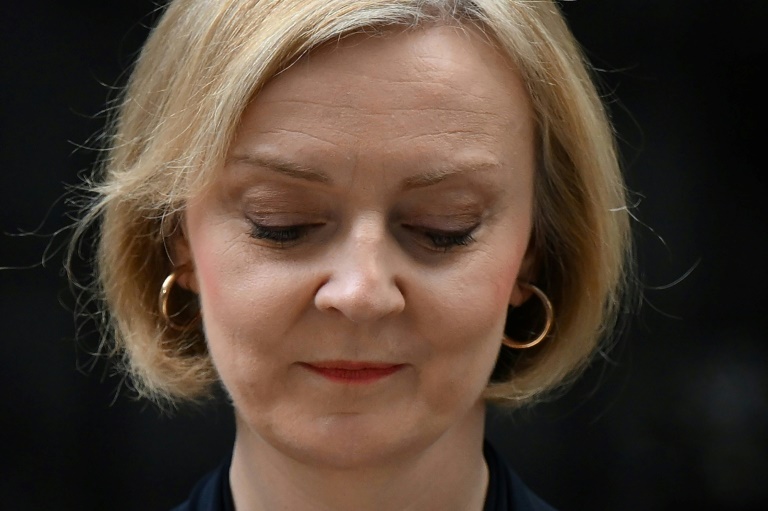
Liz Truss, the shortest serving prime minister in UK history, leaves lasting scars on the economy after her botched budget rocked markets, spiked borrowing costs and tanked the pound.

The crisis-hit PM, elected Conservative leader just six weeks ago on a tax-slashing platform, announced her resignation Thursday.

Her budget, peppered with tax cuts and delivered last month, sought to boost growth in Britain’s recession-threatened economy and freeze energy prices to ease a cost of living crisis.

However, the costly measures were fuelled by eye-watering levels of debt that damaged the government’s credibility on public finances and sent bond yields and mortgage rates soaring.

– Truss gamble backfires –

“The great political gamble of Liz Truss has spectacularly backfired but not before wreaking significant damage to the UK economy,” remarked Susannah Streeter, analyst at stockbroker Hargreaves Lansdown.

“It will take considerable time before the risk premium attached to UK assets fades away, following the financial nervous breakdown which followed the mini-budget.”

The measures triggered a loss of confidence on markets, ultimately sparking the downfall of the 47-year-old Oxford-born politician.

Investors also felt the budget splurge was in opposition to the Bank of England’s recent interest rate hikes which sought to bring down runaway inflation.

“The politics of recent weeks have undermined the confidence of people, businesses, markets and global investors in Britain. That must now come to an end if we are to avoid yet more harm to households and firms,” said Tony Danker, head of the CBI business lobby.

Markets meanwhile a breathed sigh of relief after Truss’ resignation. Sterling advanced beyond $1.13 in afternoon deals, while the government’s 30-year bond yield declined to 3.94 percent.

It had surged to more than 5.0 percent, or the highest level in two decades, in the aftermath of the budget.

– Nail in coffin –

Truss faced a final humiliation late Wednesday when a parliament vote on banning fracking descended into mayhem, delivering the final nail in the coffin of her premiership.

Her departure comes amid Britain’s intensifying cost-of-living crisis with inflation currently running at a 40-year high, fuelled by rampant food prices and soaring fuel bills.

Markets turmoil only subsided this month after the BoE launched an emergency intervention to purchase long-dated state bonds and avert a worsening financial catastrophe.

The BoE acted on concerns over pension funds which are obliged to invest in low-volatility assets like long-term government bonds, or gilts.

Sentiment was further soothed when Truss sacked close ally Kwasi Kwarteng as finance minister and replaced him with Jeremy Hunt.

Hunt, a former backer of Truss’ leadership rival and ex-finance chief Rishi Sunak, then shredded much of the budget earlier this week.

Truss was forced to end her flagship energy price freeze in April instead of late 2024.

– ‘Stability is key’ –

All eyes will now be on the leadership election of the governing Conservative Party to crown the next prime minister.

“Stability is key. The next Prime Minister will need to act to restore confidence from day one,” added Danker.

“They will need to deliver a credible fiscal plan for the medium term as soon as possible, and a plan for the long-term growth of our economy.” 

The UK is still scheduled to unveil its medium-term fiscal plan on Halloween, or October 31, alongside independent economic forecasts from the Office for Budget Responsiblity.

And the Bank of England is then widely forecast on November 3 to ramp up interest rates by a significant amount.

The bank has already hiked its key rate to a 14-year high of 2.25 percent, in turn lifting loan repayments for consumers and businesses.

Johnson comeback bid adds drama to UK political soap opera

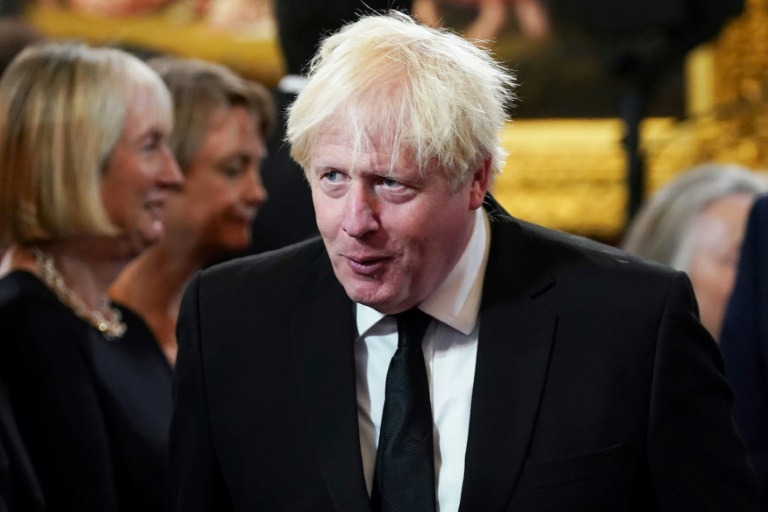
With supporters demanding “bring back Boris” and critics calling it “an insult” to the British people, an anticipated bid by Boris Johnson to once again become UK prime minister has stirred an already boiling political pot.

By declaring “hasta la vista baby” during his last question time in parliament on July 20, Johnson had already dropped a heavy hint that he had unfinished business.

According to The Times, he intends to join the race to succeed Liz Truss, believing that it is in the “national interest”.

On Twitter, some Conservatives were trying to make the hashtag #BringBorisBack go viral on Thursday, after Truss announced her resignation. 

Tory MP Brendan Clarke-Smith told Sky News that the next prime minister needed “a mandate” from voters and party members. He should be “somebody who can actually be a winner”, he said.

“Boris Johnson is the man who ticks all those boxes.” 

But highlighting the division, Tory MP Roger Gale said that Johnson should be barred from standing, given he is still under parliamentary investigation over the “partygate” scandal that brought him down.

“Until that investigation is complete and he is found guilty or cleared, there should be no possibility of him returning to government,” said Gale.

Opposition Labour leader Keir Starmer reiterated his view that Johnson was “unfit” to govern. 

“So if they’re going to go from this experiment, this chaos, this economic damage, and wind back three months to a man who was deemed to be unfit for office, I think that only adds insult to injury for the public,” he told the BBC.

But any lingering Johnsonian ambitions will run into the high bar set by the Conservative party for leadership candidates this time — at least 100 nominations each from among Tory MPs.

“I don’t think that MPs will want to go back and pick the same person they drummed out of Downing Street only a few months ago,” Tim Bale, professor of politics at Queen Mary, University of London, told AFP.

“Two-thirds of voters wanted him to resign. It’s fantasy land to think that voters want him back,” he added.

Facebook adds way to remove misinformation from groups

Facebook on Thursday added a method for people running groups to automatically sift out claims that have been debunked since being posted.

The ability for group administrators to send misinformation to a “quarantine queue” comes ahead of midterm elections in the United States and as Facebook-parent Meta continues to fend off critics who say it doesn’t do enough to fight misinformation on its platforms.

The tool allows those running groups to automatically relegate into quarantine new posts tagged as containing false information, as well as previously posted claims that were subsequently proven untrue, according to Facebook.

“To help ensure content is more reliable for the broader community, group admins can automatically move posts containing information rated as false by third-party fact-checkers to pending posts so that the admins can review the posts before deleting them,” said head of Facebook Tom Alison.

Facebook in March began letting groups automatically reject fresh posts identified as containing false information, taking aim at a part of the massive network that has drawn particular concern from misinformation watchdogs.

More than 1.8 billion people per month use Facebook Groups, which allow members to gather around topics ranging from parenting to politics.

Yet critics have said the groups are ripe for the spread of misleading or false information because they have sometimes large audiences of like-minded users organized on a particular topic.

The misinformation sifting tool was among enhancements aimed at making it easier for administrators to manage groups.

“There are over 100 million new group memberships every day on Facebook — which is kind of incredible,” Meta chief Mark Zuckerberg said in a post, adding a promise to keep building new features for “even deeper connections around shared interests.”

The evolution of groups is part of Meta’s vision of a future in which life online plays out in virtual worlds referred to as the metaverse, according to Alison.

“Technology is evolving at a rapid pace,” Alison said at the summit.

“More specifically: we’re evolving it, investing in products and research that will help make the metaverse a reality.”

Chad says some 50 dead in clashes, announces curfew

Chad’s government announced an overnight curfew on Thursday and said deadly clashes between police and demonstrators protesting the military’s grip on power claimed around 50 lives.

Hundreds of demonstrators turned out in the capital N’Djamena and elsewhere on Thursday to mark the date when the military had initially promised to hand over power — a spell that has been extended for another two years.

Chadian Prime Minister Saleh Kebzabo updated the official death toll to around 50 on Thursday night, saying most fatalities occurred in N’Djamena and the cities of Moundou and Koumra, while more than 300 people were injured.

A curfew between 6:00 pm and 6:00 am (1700 GMT and 0500 GMT) would remain in place until the “total restoration of order” in the hotspots of unrest, he added.

Kebzabo also announced the “suspension of all activity” of some opposition groups, vowing the return of order across the country.

The government had previously put the death toll at 30, including 10 members of the security forces.

“A banned demonstration became an insurrection,” government spokesman Aziz Mahamat Saleh told AFP.

He accused demonstrators of attacking “public buildings”, including the offices of the governor, the headquarters of the prime minister’s party and that of the speaker of parliament.

An AFP reporter saw five bodies on the floor of the city’s Union Chagoua Hospital, two of which were covered with the Chadian national flag and three with bloodied white sheets.

The head doctor, Joseph Ampil, later confirmed to AFP that five individuals had “died from gunshots”.

Palls of black smoke could be seen in some parts of the city and the sound of teargas grenades could be heard.

Barricades were set up in several districts and tyres were set alight in the main avenues to block traffic.

In an opposition stronghold, streets were deserted and littered with tree branches and piles of bricks. Schools and university establishments were closed, and many traders in the city centre shuttered their stores.

The headquarters of Kebzabo’s UNDR party was also attacked by demonstrators “and partially burned down”, UNDR Vice President Celestin Topona told AFP.

France, Chad’s former colonial power, condemned the violence, noting it featured “the use of lethal weapons against demonstrators”.

“France is not playing any part in these events, which lie strictly in Chad’s domestic political domain,” the foreign ministry said.

Moussa Faki Mahamat, head of the African Union Commission, posted a tweet to “firmly condemn the repression” of the protests and call for peaceful ways to overcome the country’s “crisis”.

The United Nations said it “deplored the lethal use of force” and called for an investigation into reported human rights violations.

– Key date –

The violence comes on the heels of a national forum organised by military strongman Mahamat Idriss Deby Itno that extended his stay in power.

The 38-year-old five-star general took over in April 2021 after his iron-fisted father, Idriss Deby Itno, in power for three decades, was killed during an operation against rebels.

The younger Deby has since angered many at home and embarrassed backers abroad by staying in power beyond his initially promised deadline, which would have expired on Thursday.

“They’re firing on us. They are killing our people,” Succes Masra, whose Transformers party was among groups that had called the protest, said on Twitter.

“The Soldiers of the one-and-only General who refused to honour his word and on the day when the 18 months are up — this is how he intends to install the (Deby) dynasty.”

Deby’s junta had originally declared it would restore civilian rule after 18 months in power and he initially promised not to take part in elections that would follow.

But as this deadline neared, a nationwide forum staged by Deby reset the clock.

On October 1, the conference approved a new “maximum” 24-month timeframe for holding elections.

It also named Deby “transitional president” and declared he could be a candidate in the poll.

Deby was sworn in on October 10, and later appointed a so-called government of national union headed by Kebzabo, a 75-year-old former journalist and one-time opposition figure.

One protester, Abass Mahamat, 35, said he had chosen to voice his anger at “this facade of a dialogue which entrenches the system”.

“In 31 years, we haven’t seen any positive change in our country.”

The vast, arid Sahel state has had a long history of coups and political turmoil since it gained independence from France in 1960.
Close Bitnami banner
Bitnami