World

French oil refinery strikes begin to ease

After three weeks of blockades, strikes at sites owned by French oil giant TotalEnergies were starting to ease on Wednesday, although uncertainty remains over fuel supply as the country heads into the autumn holiday break.

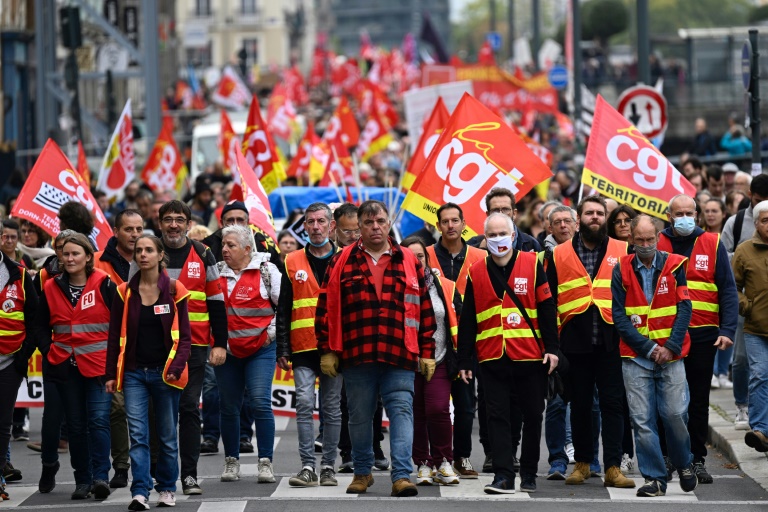
In recent weeks several of France’s seven refineries and one fuel depot were out of action as striking members of the hard-left CGT union rejected a pay offer from the hydrocarbon industry leader that other unions accepted.

But on Wednesday the CGT said the strike at the Donges refinery in the west of the country was suspended, as well as at two other oil sites in France, one in the north and one in the south.

Prime Minister Elisabeth Borne said the situation “continues to improve markedly”.

The blockades will continue at the Normandy and the Rhone sites.

Strike action at two Esso-ExxonMobil refineries ended last week, after a pay deal between management and moderate unions which represent a majority of workers.

“We hope that management will heed the demands of the strikers in order to bring this conflict to an end,” Benjamin Tange of the CGT union told AFP.

The CGT had announced on Wednesday morning that it had proposed a “protocol for ending the conflict” to the management of TotalEnergies.  

According to the union, the proposal was rejected by management, a statement not confirmed by the company when questioned by AFP.

The union proposal called for “negotiations on employment and investment” as well as guarantees that those who went out on strike would not be punished.

The CGT — which launched the industrial action three weeks ago — has been pushing for a 10-percent pay rise for staff at TotalEnergies, retroactive to the start of this year.

It says the French group can more than afford it, citing TotalEnergies’ net profit of $5.7 billion in the April-June period as energy prices soared with the war in Ukraine, and its payout of billions of euros in dividends to shareholders.

But the strike action has forced many filling stations to close and had a knock-on effect across all sectors of the economy.

Faced with the fuel shortages, many people have started to cancel holidays ahead of the upcoming school break, which has been impacting on an anticipated boost for the country’s tourism sector.

Energy Transition Minister Agnes Pannier-Runacher said the government is “doing everything so that people can go on a peaceful vacation”.

Some 20 percent of service stations were still short of petrol or diesel on Wednesday, according to the health ministry.

To try and ease the shortage, the government has used requisitioning powers to force some strikers back to open fuel depots — a move that has infuriated unions but been upheld in the courts.

burs-rox/pvh
French oil refinery strikes begin to ease

After three weeks of blockades, strikes at sites owned by French oil giant TotalEnergies were starting to ease on Wednesday, although uncertainty remains over fuel supply as the country heads into the autumn holiday break.

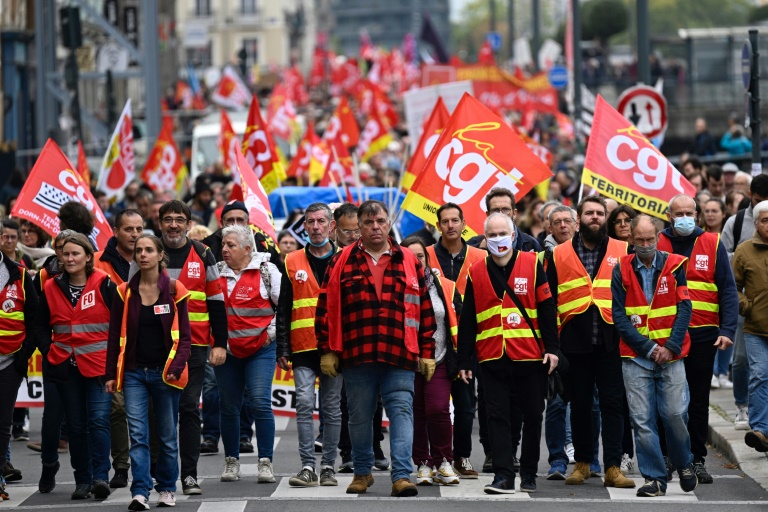
In recent weeks several of France’s seven refineries and one fuel depot were out of action as striking members of the hard-left CGT union rejected a pay offer from the hydrocarbon industry leader that other unions accepted.

But on Wednesday the CGT said the strike at the Donges refinery in the west of the country was suspended, as well as at two other oil sites in France, one in the north and one in the south.

Prime Minister Elisabeth Borne said the situation “continues to improve markedly”.

The blockades will continue at the Normandy and the Rhone sites.

Strike action at two Esso-ExxonMobil refineries ended last week, after a pay deal between management and moderate unions which represent a majority of workers.

“We hope that management will heed the demands of the strikers in order to bring this conflict to an end,” Benjamin Tange of the CGT union told AFP.

The CGT had announced on Wednesday morning that it had proposed a “protocol for ending the conflict” to the management of TotalEnergies.  

According to the union, the proposal was rejected by management, a statement not confirmed by the company when questioned by AFP.

The union proposal called for “negotiations on employment and investment” as well as guarantees that those who went out on strike would not be punished.

The CGT — which launched the industrial action three weeks ago — has been pushing for a 10-percent pay rise for staff at TotalEnergies, retroactive to the start of this year.

It says the French group can more than afford it, citing TotalEnergies’ net profit of $5.7 billion in the April-June period as energy prices soared with the war in Ukraine, and its payout of billions of euros in dividends to shareholders.

But the strike action has forced many filling stations to close and had a knock-on effect across all sectors of the economy.

Faced with the fuel shortages, many people have started to cancel holidays ahead of the upcoming school break, which has been impacting on an anticipated boost for the country’s tourism sector.

Energy Transition Minister Agnes Pannier-Runacher said the government is “doing everything so that people can go on a peaceful vacation”.

Some 20 percent of service stations were still short of petrol or diesel on Wednesday, according to the health ministry.

To try and ease the shortage, the government has used requisitioning powers to force some strikers back to open fuel depots — a move that has infuriated unions but been upheld in the courts.

burs-rox/pvh
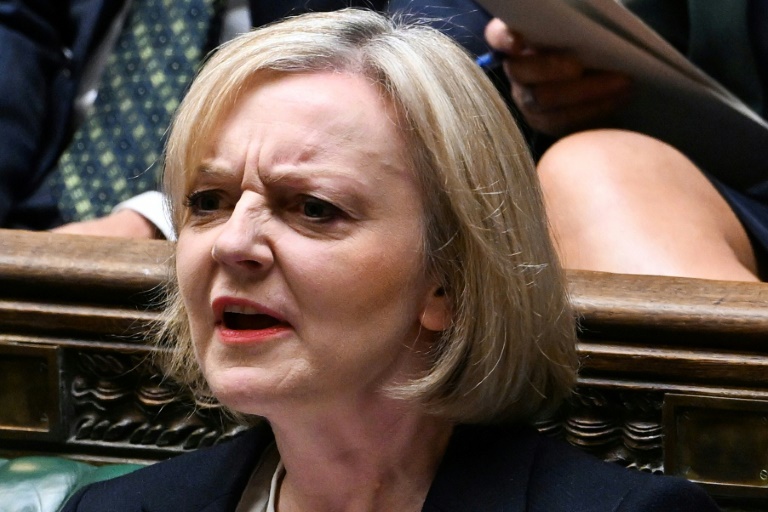
UK's PM Truss rocked as interior minister departs

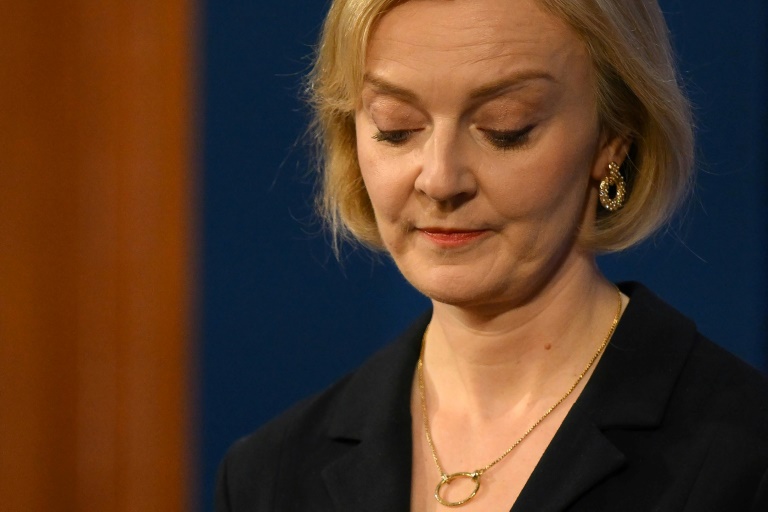
British Prime Minister Liz Truss lurched deeper into chaos Wednesday as her hardline interior minister quit, forcing the new leader to turn to one of her strongest critics to shore up her tottering government.

Suella Braverman left as home secretary ostensibly after using her personal email to send an official document to a colleague — but parted ways with a blistering attack on Truss.

Truss then appointed senior Conservative Grant Shapps in place of Braverman, having fired him as transport secretary when she succeeded Boris Johnson on September 6. 

Shapps had supported her party leadership rival Rishi Sunak.

After also losing her finance minister, Kwasi Kwarteng, over a disastrous budget last month, Truss’s economic agenda is in ruins and two of the biggest jobs in her cabinet are now occupied by Sunak allies.

Shapps acknowledged that Truss’s government has had “a very difficult period”, but that new finance minister Jeremy Hunt had done “a great job of settling the issues relating to that mini budget”.

The 54-year-old Shapps is famed for his use of Excel spreadsheets — which he reportedly put to use at the Conservatives’ recent annual conference to show colleagues how Truss could be toppled.

He is seen as one of the party’s most effective communicators, but courted controversy early in his political career after revelations that he had used pseudonyms in his prior business life.

The dysfunction deepened late Wednesday with angry scenes in the House of Commons, as Truss played hardball with her own party’s MPs over her bid to resume fracking — drilling onshore for gas.

Her chief whip and deputy chief whip — charged with enforcing party discipline — were both reported to have quit in protest at an abrupt change in government tactics over the vote, which Truss eventually won.

Downing Street was forced to issue an unusual statement to insist that the two whips “remain in post”.

Long-serving Tory MP Charles Walker lashed out at colleagues who, in his view, had supported Truss in return for personal advancement.

“I hope it was worth it to sit around the cabinet table, because the damage they have done to our party is extraordinary,” he told BBC television.

– ‘Not serious politics’ –

Business Secretary Jacob Rees-Mogg insisted the government was “functioning well” — but the Thursday front-pages of UK newspapers were caustic.

“Broken,” the right-wing Sun headlined, over a picture of Truss looking forlorn. The Guardian said: “Braverman’s bombshell puts Truss on the brink.”

Braverman said she had resigned over a “technical infringement” of government rules.

“I have made a mistake; I accept responsibility; I resign,” she wrote in her resignation letter, while adding she had “serious concerns” that Truss was breaking manifesto promises.

Truss has faced widespread criticism for failing to step down herself, after forcing Kwarteng to take the blame for the botched budget of September 23, which sent markets into freefall.

“Pretending we haven’t made mistakes, carrying on as if everyone can’t see we’ve made them, and hoping things will magically come right is not serious politics,” Braverman wrote.

Truss vowed earlier Wednesday that she would not quit as she faced booing lawmakers at her first parliamentary questions since abandoning her flagship plan for debt-fuelled tax cuts.

Opposition Labour leader Keir Starmer asked the House of Commons: “What’s the point of a prime minister whose promises don’t even last a week?”

Starmer mocked Truss by leading his MPs in chants of “Gone, gone!” as he read out a list of her dropped policies. 

“Why is she still here?” he concluded.

– ‘Fighter not a quitter’ –

Truss responded: “I am a fighter and not a quitter.”

Labour MPs howled with jeers. There was silence on her own Conservative benches.

The session took place less than 48 hours after new chancellor of the exchequer Hunt dismembered Truss’s tax plans in a bid to restore market confidence. 

Polls show Truss’s personal and party ratings have plummeted, with YouGov saying Tuesday that she had become the most unpopular leader it has ever tracked.

A separate survey of Conservative members found that less than two months after electing her as party leader and prime minister, a majority now think she should go.

Labour has opened up huge poll leads over the ruling Conservatives, amid the recent fallout as well as the worsening cost-of-living crisis. 

In more bad news for the government, inflation jumped back above 10 percent on Wednesday owing to soaring food prices.

Hunt’s warnings of further “eye watering cuts” prompted reports that the government could stop indexing current pensions to inflation, breaking another manifesto commitment. 

But Truss said in parliament that she would maintain the costly pensions commitment.

Russia's population transfers are 'deportations', says Ukraine

Russia began evacuating civilians from Kherson in southern Ukraine on Wednesday in the face of advances by Kyiv, which said the population transfers amounted to “deportations”.

As battlefield developments continued to stretch Russia, President Vladimir Putin on Wednesday imposed sweeping new security measures in a swathe of Russian regions and declared martial law in four areas of Ukraine recently annexed by Moscow.

Moscow continued to rain down missiles and munitions on all corners of Ukraine, including Kyiv and the country’s west, which was spared the brunt of the Russian onslaught earlier in the conflict.

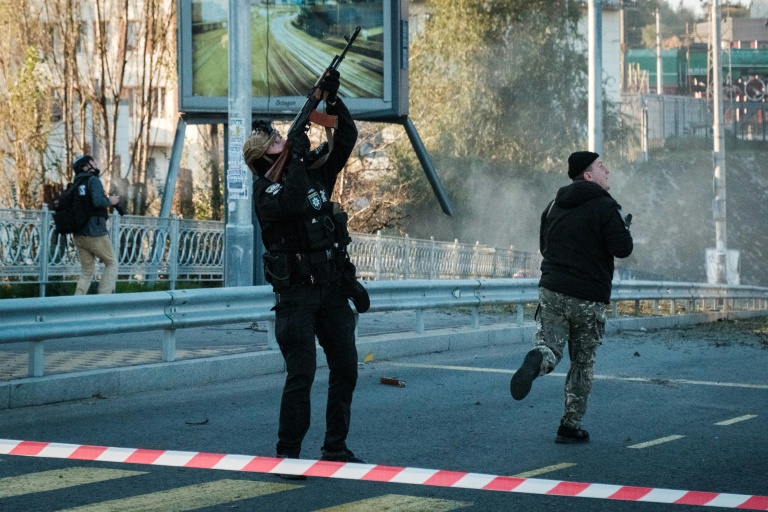
Ukraine said it had downed “several Russian rockets” over Kyiv in the third consecutive day of attacks on the capital.

– Creating ‘panic’ –

A Ukrainian representative in the Kherson region called the push by Russia to evacuate the city of the same name the “equivalent of deportation”. The city has been in Moscow’s hands since the earliest days of the invasion. 

“(Putin’s) aim is to create a kind of panic in Kherson and an image (to fuel) propaganda,” Sergiy Khlan said Ukrainian forces were still pushing their counter-offensive southward. 

He said the Russians were using the evacuations as a “pretext” to justify “their withdrawal from Kherson and more generally from the right bank” of the Dnieper river.

Pro-Russian officials in the Ukraine town of Oleshky on the other side of the river said residents from Kherson city were already arriving.

Russia’s Rossiya 24 TV showed images of people waiting to board ferries to cross the river, unable to use bridges put out of action by Ukraine.

Vladimir Saldo, the Kherson region’s Moscow-installed head, told Russian state television that the city’s administration would relocate to the eastern bank of the Dnieper.

But Khlan, the Ukrainian lawmaker, said evacuees were destined for Russia’s southern Krasnodar region.

“Russia is carrying out deportations as in Soviet times,” he said.

– Sakharov Prize –

As developments on the ground gathered pace, Putin’s introduction of military rule in the Moscow-controlled territories also gives additional power to authorities in southern Russian regions bordering Ukraine to quash dissent.

“We are working on solving very complex large-scale tasks to ensure security and protect the future of Russia,” Putin said.

Local officials said they were planning to move up to 60,000 civilians from Kherson over a period of around six days.

Separately, the secretary of Russia’s National Security Council Nikolay Patrushev said Wednesday that around five million people from Russian-held parts of Ukraine had “found shelter” in Russia.

Ukraine’s resilience has won plaudits around the world and the European Parliament on Wednesday awarded the annual Sakharov Prize for human rights to “brave” Ukrainians.

President Volodymyr Zelensky tweeted in response: “Ukrainians prove dedication to the values of freedom, democracy every day on the battlefield.”

In parts of Ukraine recently re-captured from Russian forces meanwhile, repairs were underway before the start of winter, many residents still depending on humanitarian aid.

“Apart from this, nothing is working,” said Ivan Zakharchenko, a 70-year-old resident of Izyum queueing for aid in the square where President Volodymyr Zelensky celebrated the town’s liberation just over a month ago.

– Nuclear plant staff detained –

Ukraine has re-captured occupied territory in the east of the country in recent weeks. Its advance in the south, while far slower, has been gaining momentum in recent days.

There have been some advances on the Russian side too.

Moscow reported on Tuesday its troops had retaken territory in the eastern Kharkiv region. Moscow has also been building up its defences in the territory it still holds.

Russia’s Wagner mercenary group said it was working on building a fortified line of defence in Ukraine’s eastern Lugansk region.

“It is a multi-level and layered defence,” the group’s founder Yevgeny Prigozhin said on the social media of his company Concord.

Russian forces meanwhile continue to occupy the Zaporizhzhia nuclear power plant — Europe’s largest.

Petro Kotin, head of Ukraine’s nuclear energy agency Energoatom, told AFP on Wednesday that Russian forces were currently holding about 50 plant employees.

– EU to sanction Iran –

Russia’s missile and drone strikes in the wake of Ukrainian battlefield have demolished large parts of Ukraine’s power grid ahead of winter.

The government has warned of the risk of blackouts, saying about 30 percent of Ukraine’s power stations have been destroyed. And the presidency said there would be electricity restrictions from Thursday.

Drones bombarded Kyiv on Monday, leaving five dead.

An energy facility in the city was then hit by strikes on Tuesday, killing at least two people.

On Wednesday, several explosions were heard in the centre before Kyiv mayor Vitali Klitschko said “several Russian rockets” had been successfully shot down.

Kyiv and its Western allies have accused Moscow of using Iranian-made drones, with Ukraine saying it has successfully shot down 223 of them since mid-September.

The Kremlin and Iran have denied this, but EU foreign policy spokeswoman Nabila Massrali said the EU had “sufficient evidence” and would prepare fresh sanctions on Iran.

Macron rams budget through divided French parliament

President Emmanuel Macron’s government on Wednesday sought to ram its 2023 budget through parliament without a vote after battling in vain to get it approved by the fractured lower house of parliament.

The administration is trying to lift the country out of an economic squeeze that has sparked industrial action and street protests.

But following weeks of disruption from strikes at oil refineries and fuel depots that have caused shortages at petrol pumps, the government waited until after Tuesday’s broader strike action and demonstrations before unveiling the controversial measure.

The walkouts have been just one of the challenges facing Macron in his second term in office.

The loss of his overall majority in June legislative polls meant he could not get enough deputies to approve the package.

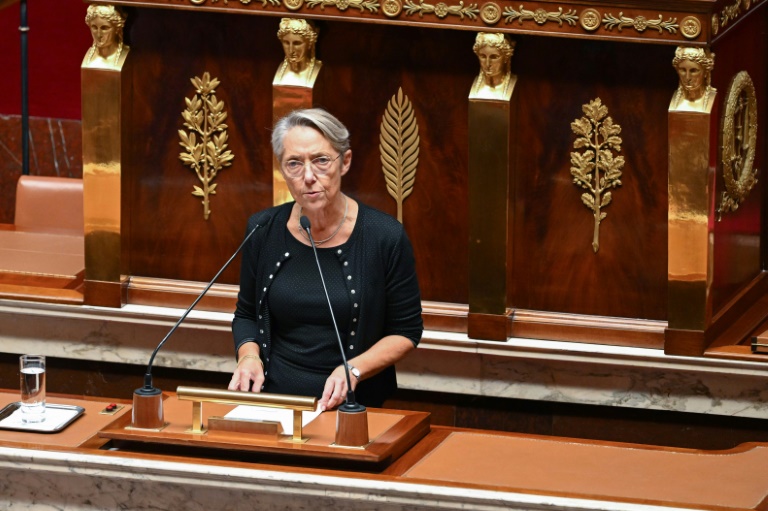
“We need to give our country a budget,” Prime Minister Elisabeth Borne told lawmakers as she announced the use of clause 49.3 of the French constitution.

Under the clause, a law can be passed automatically unless the opposition passes its own vote of no confidence in the government.

“Every opposition party has confirmed their intention to reject the text,” but “the French are expecting… action and results from us,” she said, to boos from the opposition and applause from supporters.

Deputies from the left-wing NUPES alliance began leaving the chamber before Borne had finished speaking.

After promising an open debate, Macron’s camp in recent days suffered a series of defeats over the first of thousands of proposed amendments to its fiscal plans for next year.

– ‘Anti-democratic brutality’ –

Opposition lawmakers on Wednesday accused the government of wasting their time.

“Macronism has become a form of authoritarianism,” leading France Unbowed (LFI) deputy Mathilde Panot told reporters following Borne’s announcement.

“Parliament’s work has been swept away in a few hours,” said Greens representative Cyrielle Chatelain.

Both of them were among 151 NUPES lawmakers to sign a no-confidence motion against the government.

Such an “act of anti-democratic brutality… leads us to demand the censure of the government,” it read.

On the far right, the National Rally (RN) plans to file a no-confidence motion of its own on Thursday.

But with both the hard left and far-right unwilling to back each other’s motions, neither is likely to reach the required 289 votes.

Macron has already increased the pressure on deputies by vowing to dissolve parliament and call fresh elections if a no-confidence vote succeeds.

The leader of the conservative Republicans group Olivier Marleix, asked if he could back either of the motions, said it would be “useless to pile chaos on top of chaos”.

– ‘Live with it’ –

After the election setback this summer that cost Macron’s party his parliamentary majority, he and his ministers have promised to be more open to dialogue with the opposition and civil society than during his first five years as president.

But they have rejected allegations from lawmakers that the use of article 49.3 means abandoning those efforts.

The article means “the government has the ability to force the adoption of a bill when in fact the opposition can live with it”, Francois Bayrou, leader of the Democratic Movement party allied to Macron, told broadcaster France Inter.

With the passage of the budget all but assured, lawmakers had been left wondering which of their hard-fought amendments might be left in, with the choice entirely up to ministers.

Borne said that “around 100” modifications, including some from the opposition, would be left in.

The budget “has been fed, complemented, amended, even corrected following the debates of recent days,” she told MPs.

One senior lawmaker told AFP that the changes, including tax breaks for childcare and for very small businesses, would cost up to 800 million euros ($782 million).

Finance Minister Bruno Le Maire has nevertheless warned Borne that he would not back changes that would blow holes in the budget, another person present at their Monday meeting said.

Iranian greeted as hero after competing without hijab

An Iranian climber who caused a sensation by competing at an event abroad without a hijab was given a hero’s welcome on her return to Tehran Wednesday by supporters who raucously applauded her action.

With Iran still shaken by women-led protests over the death of Mahsa Amini one month ago, Elnaz Rekabi flew back to a Tehran airport after the competition in South Korea.

In an Instagram post and comments at the airport, Rekabi has apologised over what happened and insisted her hijab — which all Iranian women, including athletes, must wear — had accidentally slipped off.

But activists fear her comments were made under pressure from Iranian authorities, who were likely infuriated by her actions.

“Elnaz is a hero” and “Well done Elnaz!” chanted dozens of supporters who gathered outside the Imam Khomeini International Airport terminal, clapping their hands and brandishing mobile phones to record the moment.

They continued to chant and applaud as a van and vehicle — one of which they presumed was carrying the climber — drove out of the airport through the crowds of people clapping above their heads.

Some of the women present were themselves not wearing the hijab.

“A hero’s welcome — including by women without the forced hijab — outside Tehran… Concerns for her safety remain,” said the New York-based Center for Human Rights in Iran (CHRI).

– ‘State propaganda’? –

Rekabi, her hair covered with a baseball cap and a hoodie although not a headscarf, was greeted by family members inside the airport terminal. She then addressed state media, with a mask pulled down on her face.

“Due to the atmosphere prevailing in the finals of the competition and the unexpected call for me to start my run, I got tangled with my technical equipment and… that caused me to remain unaware of the hijab that I should have observed,” she said.

“I returned to Iran peacefully, in perfect health and according to the predetermined plan. I apologise to the people of Iran because of the tensions created,” she said, adding she had “no plan to say goodbye to the national team”.

Her comments were similar to those made on Tuesday in an Instagram post, in which she apologised for “concerns” caused and insisted her bare-headed appearance had been “unintentional”.

She was later photographed — still wearing a cap and hoodie — standing alongside Sports Minister Hamid Sajjadi, with whom she discussed “her future in sports and arranged plans, including participation and success in the Paris Olympics”, a ministry statement said.

Activists have repeatedly accused the Islamic republic of coercing people into making statements of contrition on television or social media.

British actress of Iranian origin Nazanin Boniadi, who is an ambassador for Amnesty International in the UK, tweeted that it was clear Rekabi had been “forced to make this statement by authorities that constantly use forced and televised confessions.”

Observers “should not be swayed by state propaganda”, the CHRI said.

Prominent exiled Iranian journalist Maziar Bahari described Rekabi’s airport comments as a “forced confession”.

“You can see the fear in her eyes. She’s just repeating what she’s been told,” he said.

– UN ‘closely following’ –

Unconfirmed reports had already suggested Rekabi had been pressured by Iranian officials in South Korea.

BBC Persian quoted an unidentified source as saying friends had been unable to contact her and the team had left their hotel in Seoul on Monday, two days before their scheduled departure date.

News website Iran Wire said the head of Iran’s climbing federation had “tricked” Rekabi into entering the Iranian embassy in Seoul and the federation chief had promised her safe passage to Iran if she handed over her phone and passport.

The Iranian embassy in Seoul, however, issued a statement to AFP denying “all the fake, false news and disinformation regarding” Rekabi’s situation.

The United States criticised the Iranian government’s treatment of Rekabi. 

“The world and the Iranian people will be watching how she is treated,” State Department spokesman Vedant Patel told reporters, and describing reported intimidation and threats against her as “inexcusable.”

The incident took place at the Asian Championships in sports climbing in Seoul on Sunday.

In the initial bouldering discipline, Rekabi’s head was covered with a bandana but in a later event that involved scaling a high wall with a rope, she wore only a headband, the stream posted by the International Federation of Sport Climbing (IFSC) showed.

The IFSC said in a statement that it had been in contact with Rekabi and the Iranian Climbing Federation and fully support “the rights of athletes, their choices, and expression of free speech”.

Iconic 'Pillars of Creation' captured in new Webb image

The James Webb Space Telescope captured the iconic “Pillars of Creation,” huge structures of gas and dust teeming with stars, NASA said Wednesday, and the image is as majestic as one could hope.

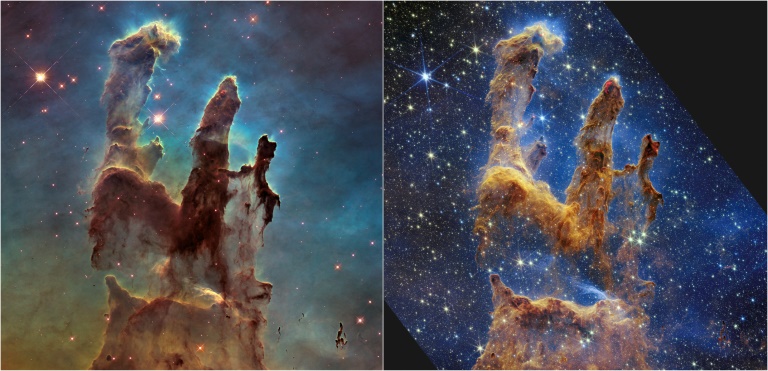
The twinkling of thousands of stars illuminates the telescope’s first shot of the gigantic gold, copper and brown columns standing in the midst of the cosmos.

At the ends of several pillars are bright red, lava-like spots. “These are ejections from stars that are still forming,” only a few hundred thousand years old, NASA said in a statement.

These “young stars periodically shoot out supersonic jets that collide with clouds of material, like these thick pillars,” the US space agency added.

The “Pillars of Creation” are located 6,500 light years from Earth, in the Eagle Nebula of our Milky Way galaxy.

The pillars were made famous by the Hubble Space Telescope, which first captured them in 1995 and then again in 2014.

But thanks to Webb’s infrared capabilities, the newer telescope — launched into space less than a year ago — can peer through the opacity of the pillars, revealing many new stars forming.

“By popular demand, we had to do the Pillars of Creation” with Webb, Klaus Pontoppidan, the science program manager at the Space Telescope Science Institute, said Wednesday on Twitter.

STScI operates Webb from Baltimore, Maryland.

“There are just so many stars!” Pontoppidan added.

NASA astrophysicist Amber Straughn summed it up: “The universe is beautiful!” she wrote on Twitter.

The image, covering an area of about eight light years, was taken by Webb’s primary imager NIRCam, which captures near-infrared wavelengths — invisible to the human eye.

The colors of the image have been “translated” into visible light.

According to NASA, the new image “will help researchers revamp their models of star formation by identifying far more precise counts of newly formed stars, along with the quantities of gas and dust in the region.”

Operational since July, Webb is the most powerful space telescope ever built, and has already unleashed a raft of unprecedented data. Scientists are hopeful it will herald a new era of discovery.

One of the main goals for the $10-billion telescope is to study the life cycle of stars. Another main research focus is on exoplanets, planets outside Earth’s solar system.

Iconic 'Pillars of Creation' captured in new Webb image

The James Webb Space Telescope captured the iconic “Pillars of Creation,” huge structures of gas and dust teeming with stars, NASA said Wednesday, and the image is as majestic as one could hope.

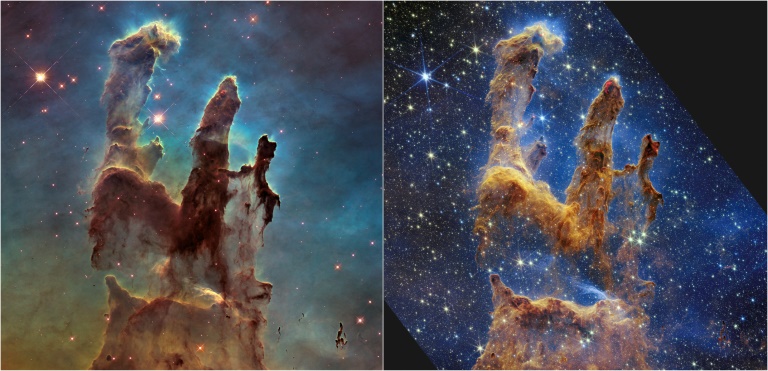
The twinkling of thousands of stars illuminates the telescope’s first shot of the gigantic gold, copper and brown columns standing in the midst of the cosmos.

At the ends of several pillars are bright red, lava-like spots. “These are ejections from stars that are still forming,” only a few hundred thousand years old, NASA said in a statement.

These “young stars periodically shoot out supersonic jets that collide with clouds of material, like these thick pillars,” the US space agency added.

The “Pillars of Creation” are located 6,500 light years from Earth, in the Eagle Nebula of our Milky Way galaxy.

The pillars were made famous by the Hubble Space Telescope, which first captured them in 1995 and then again in 2014.

But thanks to Webb’s infrared capabilities, the newer telescope — launched into space less than a year ago — can peer through the opacity of the pillars, revealing many new stars forming.

“By popular demand, we had to do the Pillars of Creation” with Webb, Klaus Pontoppidan, the science program manager at the Space Telescope Science Institute, said Wednesday on Twitter.

STScI operates Webb from Baltimore, Maryland.

“There are just so many stars!” Pontoppidan added.

NASA astrophysicist Amber Straughn summed it up: “The universe is beautiful!” she wrote on Twitter.

The image, covering an area of about eight light years, was taken by Webb’s primary imager NIRCam, which captures near-infrared wavelengths — invisible to the human eye.

The colors of the image have been “translated” into visible light.

According to NASA, the new image “will help researchers revamp their models of star formation by identifying far more precise counts of newly formed stars, along with the quantities of gas and dust in the region.”

Operational since July, Webb is the most powerful space telescope ever built, and has already unleashed a raft of unprecedented data. Scientists are hopeful it will herald a new era of discovery.

One of the main goals for the $10-billion telescope is to study the life cycle of stars. Another main research focus is on exoplanets, planets outside Earth’s solar system.

UK govt of Truss rocked as interior minister departs

The UK’s hardline interior minister Suella Braverman quit the government on Wednesday, heaping more doubt on the survival chances of Prime Minister Liz Truss after her right-wing economic agenda unravelled.

Braverman said she had resigned after using her personal email to send an official document to a colleague.

While calling it a “technical infringement” of government rules, she wrote in her resignation letter: “I have made a mistake; I accept responsibility; I resign.”

Within hours, Truss’s office announced that she would be replaced by Grant Shapps, a former transport minister under ex-premier Boris Johnson.

Shapps pledged to work to achieve “the sort of security that the British people need”.

He said he accepted that Truss’s government has had “a very difficult period” but that new finance minister Jeremy Hunt had done “a great job of settling the issues relating to that mini budget.”

Truss has faced widespread criticism for failing to step down herself, after forcing her finance minister Kwasi Kwarteng to take the blame for a disastrous budget.

The government’s September 23 mini-budget — which slashed a host of taxes without curbing spending — sent bond yields spiking and the pound collapsing to a record dollar low on fears of rocketing UK debt.

Braverman said in her resignation letter that she had “serious concerns” the prime minister was breaking manifesto promises.

“Pretending we haven’t made mistakes, carrying on as if everyone can’t see we’ve made them, and hoping things will magically come right is not serious politics,” she wrote.

Braverman spent just 43 days in the role of home secretary, and her departure is the latest crisis unleashed by the government’s budget.

– ‘Fighter not a quitter’ –

The 54-year-old Shapps who will replace her is famed in government circles for his use of Excel spreadsheets, and threw his hat into the ring — along with Braverman — to replace his old boss, Johnson.

He promised tax cuts and competent government and was widely seen as an effective communicator and campaigner, although a long shot as Conservative leader.

Despite the chaos engulfing her government, Truss vowed earlier Wednesday that she would not quit as she faced booing lawmakers at her first parliamentary questions since abandoning her flagship plan.

Opposition Labour leader Keir Starmer asked the House of Commons: “What’s the point of a prime minister whose promises don’t even last a week?”

Starmer mocked Truss by leading his MPs in chants of “Gone, gone!” as he read out a list of her dropped policies. 

“Why is she still here?” he concluded.

Truss responded: “I am a fighter and not a quitter”. 

But there was silence on her own Conservative benches as Truss issued her riposte to Starmer.

The session took place less than 48 hours after new finance minister Hunt dismembered Truss’s tax plans in a humiliating blow. 

He sat at her side in parliament, nodding at her responses.

At least five MPs from Truss’ Conservative party have already publicly called for her to be replaced.

Polls show Truss’s personal and party ratings have plummeted, with YouGov saying Tuesday that she had become the most unpopular leader it has ever tracked.

A separate survey of party members found that less than two months after electing her as Tory leader and prime minister, a majority now think she should go.

Labour has opened up huge poll leads over the ruling Conservatives, amid the recent fallout as well as the worsening cost-of-living crisis, with inflation jumping above 10 percent on Wednesday on soaring food prices.

– ‘Eye watering’ –

Truss last week staged two mini-budget U-turns, scrapping planned tax cuts for the richest earners and on company profits, while firing her close ally Kwarteng.

After appointing Hunt as his successor, she agreed to further reverse course — axing almost all the other cuts and partially rowing back on energy price support for consumers.

Hunt’s warnings of further “eye watering cuts” prompted reports that the government could stop indexing current pensions to inflation, breaking another manifesto commitment.

But Truss said in parliament that she would maintain the costly pensions commitment. 

During the summer leadership campaign, when Truss beat former chancellor of the exchequer Rishi Sunak to succeed ex-premier Boris Johnson, she vowed not to reduce public spending.

But after the economic tumult of recent weeks, Truss and Hunt have warned of “difficult decisions” and urged government departments to find savings. 

Opposition parties are demanding she stand down and a general election — not due for two years — be held. 

Under current party rules Truss cannot be challenged by a no-confidence vote in her first year, but speculation is rife the rules could be changed to allow for a ballot.

Vodka gift: Berlusconi in fresh row over Putin ties

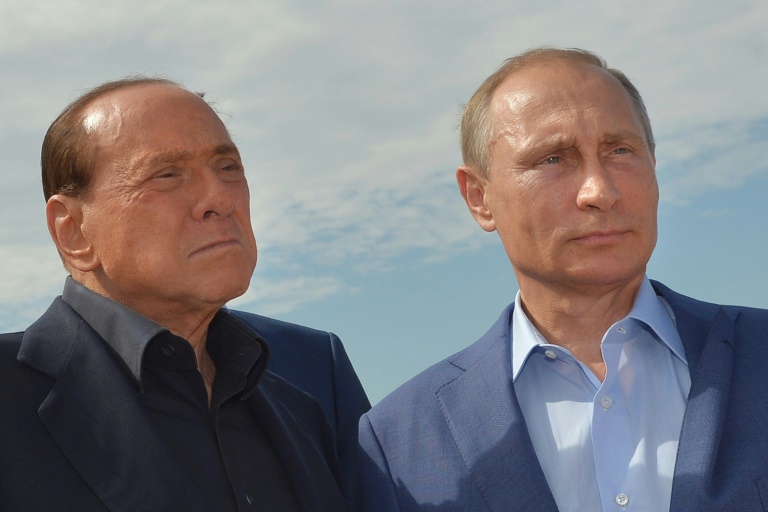
Italy’s ex-premier Silvio Berlusconi was under fresh scrutiny Wednesday over his friendship with Vladimir Putin after being recorded describing a birthday present of vodka from the Russian leader and expressing concerns about arming Ukraine.

His aides insisted he had been misrepresented, but the row risks embarrassing Berlusconi’s coalition allies, led by far-right leader Giorgia Meloni, as they prepare to form a new government following last month’s elections.

Meloni strongly supports Ukraine, and the EU sanctions on Russia, but both Berlusconi — and her other coalition ally, League leader Matteo Salvini — have long had warm ties with Moscow.

“Meloni hostage of pro-Russians,” was the headline on Wednesday’s La Repubblica newspaper.

Other reports described her private outrage at the latest gaffe from the billionaire media mogul.

Supporters of political veteran Berlusconi initially denied reports of his comments, until Italian news agency LaPresse released extracts of the recording.

In it, he explains how he rekindled ties with President Putin, an old friend, it emerged late Tuesday.

LaPresse said the comments had been made during a meeting of his Forza Italia party lawmakers this week.

“I reconnected a little bit with President Putin… for my birthday he sent me 20 bottles of vodka and a very kind letter,” he could be heard saying.

“I responded with bottles of Lambrusco (red wine) and an equally sweet letter.”

– Putin ‘person of peace’ –

A spokesman for Berlusconi, who turned 86 last month, denied he had rekindled relations with Putin.

Berlusconi had been telling parliamentarians an “old story relating to an episode dating back many years”, he insisted.

Immediately preceding the anecdote, Berlusconi can be heard describing his concerns about sending weapons and cash to support Ukraine.

He also described Putin as a “person of peace”, although this was not included in the audio published.

A senior Forza Italia lawmaker, Alessandro Cattaneo, said Wednesday that Berlusconi’s comments had been taken out of context. “Soundbites can be copied and pasted,” he added.

And Forza Italia underlined its support for the EU-US policy on Ukraine.

Berlusconi did say in April that he was “deeply disappointed” by Putin’s behaviour in Ukraine.

But then in September, he was forced to clarify remarks suggesting the Russian president had been “pushed” into the invasion by his entourage.

– ‘No joke’ – –

A close aide to Meloni, senior Brothers of Italy lawmaker Francesco Lollobrigida, also tried to calm the storm.

“We remain with the Ukrainian people and in defence of democracy in that country, but also fiercely in the Western axis… Regarding the comments of others, you must ask others,” he told reporters.

But the opposition insisted the comments could not be lightly dismissed.

“This is no joke,” wrote Democratic Party leader Enrico Letta on Twitter. This was the first step “towards an increasingly ambiguous position towards Russia”, he argued.

Fresh extracts of the recorded conversation were released on Wednesday evening, in which Berlusconi appeared to blame the war in Ukraine on the country’s president, Volodymyr Zelensky.

And he repeated his remarks from last September, suggesting that Putin had been “pushed” into invading Ukraine.

Talks are still ongoing on the formation of a new Italian government, with Meloni expected to be confirmed as prime minister by the end of next week.

But the process has been rocky.

Berlusconi lost his temper in the Senate last week, later admitting “deep annoyance” in his party over coalition discussions on how to share out ministerial posts.

But he and Meloni had a meeting on Monday to clear the air, afterwards issuing a photo of the pair smiling.

Close Bitnami banner
Bitnami