World

Cold weather brings tougher conditions to fighting in Ukraine

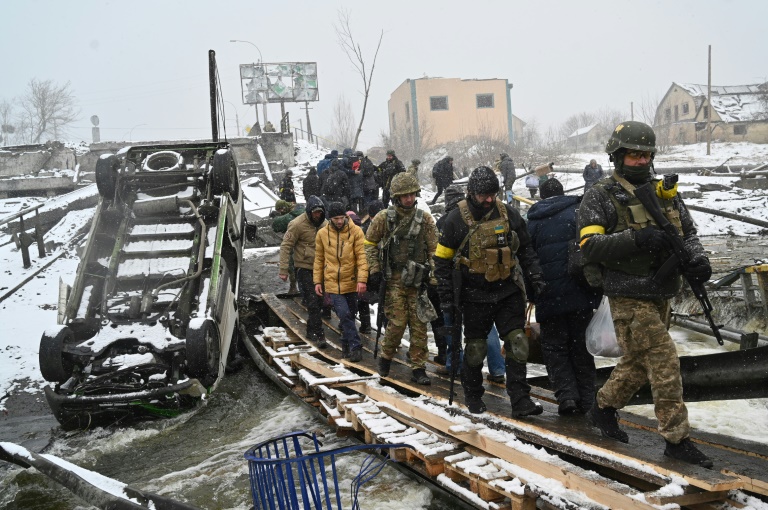
The approach of winter will bring tougher conditions to Ukraine including heavy mud, snow and freezing cold that will make operations more difficult for both sides in the war.

Kyiv — which is fighting to retake areas seized by Moscow — has more to lose from a slowdown that leaves its territory in Russian hands, and time is running out for it to capitalize on recent battlefield successes before bad weather sets in.

While frontlines in Ukraine may become more static due to weather conditions in the next few months than they have been in recent weeks, that does not mean offensive operations will stop completely.

“I expect that Ukraine will continue to do everything it can throughout the winter to regain its territory and to be effective on the battlefield,” US Defense Secretary Lloyd Austin told journalists in Brussels last week, while acknowledging that “winter always presents a challenge when it comes to fighting.”

Mark Cancian, a retired US Marine Corps officer who is a senior adviser at the Center for Strategic and International Studies, agreed that the fighting will continue, noting that the war began during the winter with the Russian invasion in February.

“I think you’ll see some slowdown starting shortly when the mud starts to hit,” Cancian said, and then “it’ll pick up in the winter.”

– Winter equipment –

That does not, however, mean that winter combat will be easy: Troops will struggle to stay warm, both vehicles and weapons will be more difficult to maintain and operate, and snow can make it more difficult to detect landmines, among other problems.

Michael O’Hanlon, a senior fellow at the Brookings Institution, said it is difficult “living in the field, doing equipment maintenance in the field, and keeping vehicles running when temperatures get low.”

“These facts do not preclude the possibility of some combat but they do constrain its likely character,” he said.

Cancian said the fighting may increasingly focus on villages because of the shelter they provide to whoever controls them.

Ukraine has an advantage in terms of the supplies it is receiving from NATO and other countries, which include cold weather equipment, while Russia has struggled with significant logistical problems in the course of the war.

Canada is supplying 500,000 items of winter clothing, including jackets, pants, boots, gloves and parkas, while Lithuania is providing cold weather gear for some 25,000 Ukrainian soldiers.

Germany has delivered hundreds of thousands of winter hats, jackets and pants to Ukraine, and the United States and Britain have also included winter clothing in recent assistance packages for Kyiv.

It is important for Ukraine’s forces to build on recent successes soon, and not just because of the approach of winter: Russia’s mobilization of additional troops has been plagued by myriad problems, but will deliver more soldiers to the battlefield, Cancian said.

– ‘Psychological factor’ –

Russia hopes that “the mobilization and the weather will stabilize the frontlines,” he said.

Then, Moscow can prolong the war in the hope that European support for Ukraine will crack under the pressures of inflation and high energy prices as the weather cools — a strategy Cancian believes will be unsuccessful.

Russia has also carried out devastating strikes targeting cities and energy infrastructure in Ukraine, increasing the pressure on the country’s civilian population ahead of winter.

Ukrainians “are experiencing hardship and… sacrifice, but they’re nowhere near cracking. And I don’t think anyone expects that the morale of the Ukrainians will crack,” Cancian said.

Gian Gentile, a former US Army officer who is a senior historian at the RAND Corporation, said Ukraine’s advantage in morale could help its forces get through tough winter fighting.

“They believe they’re in a war for their existence, and they do seem to have a strong will to fight, which does not seem to be in place with Russian ground forces,” Gentile said.

“As a psychological factor, that can… help in dealing with the cold, harsh weather.”
How gaming firm Ubisoft mashed 'Rabbids' into 'Mario' world

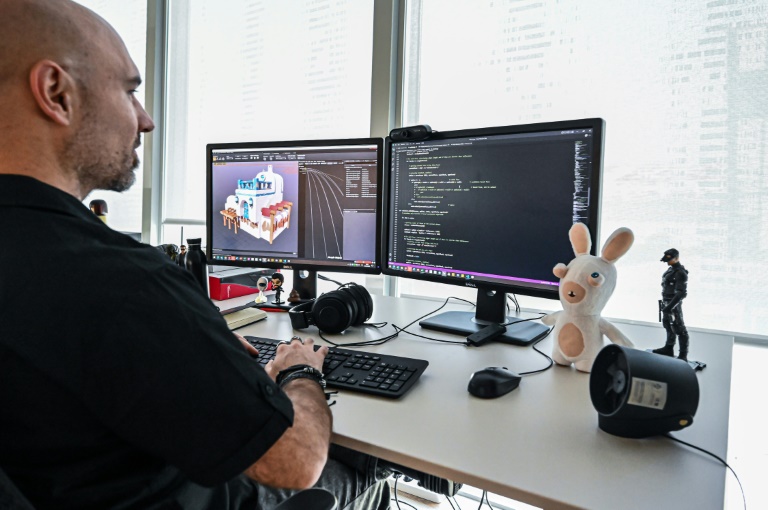
It took 300 staff working in five cities about five years, but the second edition of one of the most ambitious mash-ups in video games is set to arrive on Thursday — “Mario + Rabbids: Sparks of Hope”.

The game merges Nintendo’s Mario, the Italian plumber who has given his name to an entire universe of games, with Ubisoft’s Rabbids, a series focused on the adventures of a species of screeching, hyperactive rabbit-like animals.

Nintendo, like other media companies, is highly protective of its creations.

Only fellow Japanese studio Sega has been entrusted with characters from “Mario” before, for special editions games celebrating the Olympic Games where they compete with “Sonic the Hedgehog”.

“Nintendo told us very early on: ‘This is your game, this is your vision, we respect it,'” Ubisoft’s Xavier Manzanares, who is overseeing the new game’s development, told AFP.

“That’s where it’s interesting, so we had real creativity, really interesting room for manoeuvre.”

The first game in the series, “Mario + Rabbids: Kingdom Battle”, has garnered more than 10 million players since its release in 2017, said Manzanares.

“I don’t think we would have bet on that in 2017,” he said.

“It attracted a lot of attention because there are not many brands that do a pair-up with ‘Mario’, that’s for sure.”

– A history of mash-ups –

The idea of fictional universes colliding — characters from one popping up in another — is far more developed in cinema franchises and comic books than in video games.

Superheroes, for example, have a long history of showing up in a rival’s storylines.

In video games, Nintendo has created mash-ups featuring its own characters, like the “Super Smash Bros” series that brought together the likes of Pikachu, Donkey Kong and others.

Occasionally two studios join forces, like in the “Kingdom Hearts” series, which matched up “Final Fantasy” of the Japanese publisher Square Enix with characters owned by Disney.

This is much closer to the idea of Spiderman and Superman walking into each other’s storylines, as happened in 1970s crossover comics and many times since.

Julien Pillot, an economist specialising in cultural industries, told AFP this kind of collaboration in video games was rare and tricky to pull off.

Issues of rights and royalties cause headaches, he said, and the studio loaning its characters is likely to make onerous demands to ensure its brand is protected.

– ‘New universes’ –

Ubisoft, though, said it had been given real leeway, even to create new crossover characters in the form of “Sparks”.

They are star-shaped creatures combining “Rabbids” with “Lumas”, characters from the game “Super Mario Galaxy”.

“For us, it was important not to have ‘Rabbids’ on one side and ‘Mario’ on the other in two separate silos,” said Manzanares.

He said the aim was to “really to create a new universe with both”.

The French firm’s developers have been working across two principal locations in Milan and Paris with support from other studios in China, India and Montpellier in southern France.

Manzanares played down the challenges involved in such a creative endeavour being carried out across so many locations.

“We’ve been working like this for a long time, whether it’s on the games ‘Far Cry’, ‘Assassin’s Creed’ or ‘Just Dance’,” he said.

Analyst Cedric Lagarrigue told AFP video game firms were increasingly working on global lines like this.

North America or Europe often leads on the creative part, he said, then processes like making 3D characters or environments, “can be done anywhere in the world”.

Manzanares said all Ubisoft’s locations had autonomy and each one brought something to the new game.

“We really worked on this merger,” he said.

“It’s been a big eight-year job” bringing the two games to the market.

Robotic suit gives paralyzed children gift of walking

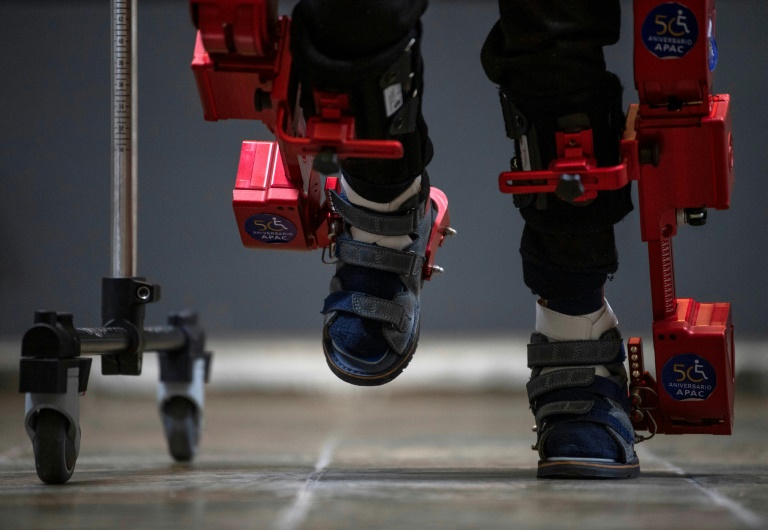
Wearing a robotic exoskeleton designed specially for children, an eight-year-old boy with cerebral palsy walked through a therapy room in Mexico City, smiling triumphantly at the once-unthinkable feat.

David Zabala uses a wheelchair due to his neurological condition, which also left him deaf and reliant on sign language.

But thanks to the Atlas 2030 exoskeleton, which won its creator a European Inventor Award this year, he was able to walk and stand in front of a mirror where he drew smiling faces with colored marker pens.

“He’s taking his first steps. That’s a joy for him,” said the boy’s mother, Guadalupe Cardoso, 41.

“At first it scared him and his hands were very tense, and now I see that he’s already holding the marker pen and starting to draw or (play with) the ball,” Cardoso added.

It makes the exhausting, near two-hour journey from their home in the south of Mexico City to the therapy center totally worth it, she said.

The exoskeleton was designed by Spanish professor Elena Garcia Armada to enable children who use wheelchairs to walk during muscle rehabilitation therapy.

The mechanical joints of the battery-powered titanium suit adapt intelligently to the motion of each child, according to the European Patent Office, which presented Garcia with the European Inventor Award.

Giving paralyzed children the opportunity to walk “not only extends their life expectancy and enhances their physical well-being, but also improves their self-esteem,” it said.

– ‘Changing lives’ –

Mexico is the third country, after Spain and France, where the Atlas 2030 has been used to treat children.

The suit helps “to achieve in record time rehabilitation goals” that would take months to achieve with conventional therapies, said Guadalupe Maldonado, director of Mexico’s Association for People with Cerebral Palsy.

The benefits include muscle strengthening, improvement of the digestive and respiratory systems and — above all — a major mood boost, Maldonado said.

The private organization, founded in 1970, has already seen positive results two weeks after acquiring its first exoskeleton, she said.

A second device, worth around $250,000, is due to arrive in Mexico City next month.

The association’s initial goal is to offer rehabilitation to about 200 children with cerebral palsy.

“We want to continue working and empowering, so that more children in the city and the country have access to this type of rehabilitation… that radically changes their lives,” Maldonado said.

The sessions also give joy to the therapists, who carefully fit the exoskeleton using its special corset, cuff and shoes and celebrate the children’s progress with smiles and applause. 

“It motivates us a lot as therapists that we will be able to achieve many things in the future,” said Arturo Palafox, 28.

Polar bear hell: An ice pack that keeps receding

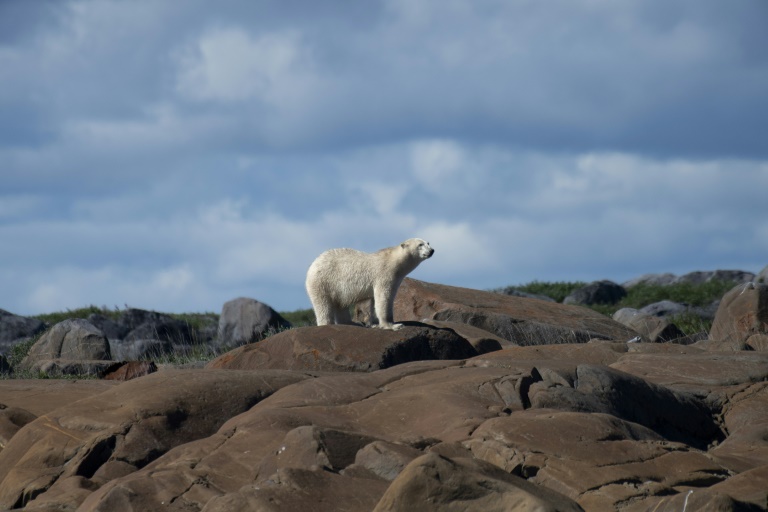
Sprawled on rocky ground far from sea ice, a lone Canadian polar bear sits under a dazzling sun, his white fur useless as camouflage. 

It’s midsummer on the shores of the Hudson Bay and life for the enormous male has been moving in slow motion, far from the prey that keeps him alive: seals.

Every year from late June, when the bay ice disappears — shrinking until it dots the blue vastness like scattered confetti — the bears must move onto shore to begin a period of forced fasting. 

But that period is lasting longer and longer as temperatures rise.

The whole annual rhythm of the polar bear is in peril, and birth rates are dropping as they scavenge for food.

“There could be a beluga whale carcass they might be able to find, (or a) naive seal near shore, but generally they’re just fasting. They lose nearly a kilogram of body weight every day that they’re on land,” said Geoff York, a biologist for Polar Bears International (PBI). An AFP team joined him on an expedition.

In the Arctic, global warming is occurring three or four times faster than elsewhere in the world, recent studies indicate.

According to a 2020 report published in the journal Nature Climate Change, this means the near-extinction of this iconic animal is approaching: From 1,200 individuals in the 1980s, the polar bear population in western Hudson Bay has dropped to about 800 today.

These days, this super predator of the Arctic sometimes has to feed on seaweed, as a mother and her cub were seen doing not far from the port of Churchill, the Manitoba town and self-declared “polar bear capital.”

They are also moving closer to the cities. In Churchill, the bears a few years ago began frequenting the waste disposal site, a source of easy – but harmful – food for them.

Since then, the town has taken precautions. The dump is now guarded by cameras, fences and patrols. Across Churchill, people leave cars and houses unlocked in case someone needs to take refuge quickly after a bad encounter with this large carnivore.

The emergency number for the wildlife protection unit is posted on many walls.

Some areas, like schoolgrounds, are more closely monitored.

When they get an urgent call, Ian Van Nest, the provincial officer of the unit, and his colleagues jump into their pickup truck armed with a rifle and a spray can of repellent, wearing protective vests.

Sometimes the bears can be scared off with just “the horn on your vehicle,” Van Neste said. Other times the animals need to be sedated, then kept in cages until winter rolls around and they are freed.

The fate of the polar bear should alarm everyone, said Flavio Lehner, a climate scientist at Cornell University, who notes that the Arctic is a good barometer of planetary health.

And since the 1980s, data show, the bay’s summer ice pack has decreased by nearly half.

tib/dp/tjj/dw/bbk

Tesla quarterly profit jumps, but revenues miss estimates

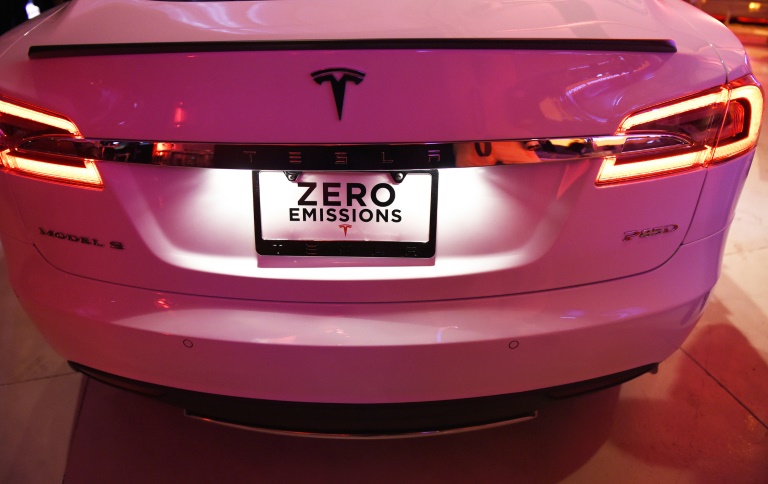
Tesla reported Wednesday another quarter of sparkling earnings growth, but shares fell amid questions over the resilience of electric vehicle demand, CEO Elon Musk’s embattled Twitter transaction and other issues.

The electric vehicle (EV) maker scored a more than doubling of profits in the third-quarter to $3.3 billion on increased auto deliveries

But shares retreated in after-hours trading after the company reported revenues of $21.5 billion, a 56 percent increase over the year-ago period, but about $500 million below analyst forecasts.

The company flagged battery supply chain bottlenecks as a constraint on EV growth and noted that logistics volatility was an “improving” challenge. 

“Knock on wood, it looks like we’ll have an epic end-of-year,” Musk said during an earnings call.

“The factories are running at full speed and we’re delivering every call we make.”

The results follow Tesla’s disclosure earlier this month that deliveries and production grew solidly in the third quarter after diving in the prior period due to a coronavirus-related factory closure at the company’s Shanghai plant.

The automaker has avoided setting specific annual delivery targets, but analysts have benchmarked a target of about 1.4 million for all of 2022.

Tesla is on pace for a 50 percent increase in production this year, but could fall shy of that goal when it comes to getting the cars to buyers, chief financial officer Zach Kirkhorn said on the call.

Tesla is working on smoothing out a “crazy delivery wave” at the end of each quarter, Musk told analysts.

“There weren’t enough boats; there weren’t enough trains; there weren’t enough car carriers to actually support the wave, because it got too big,” Musk said.

Tesla watchers are expecting a strong fourth quarter with a restored Shanghai factory and the ramp-up of plants in Texas and Germany.

– Immune to inflation? –

But Covid-19 remains a wildcard in light of China’s continued adherence to its zero-tolerance approach to fighting the virus.

Another question concerns whether Musk’s company will continue to remain immune to macroeconomic concerns, especially inflation. 

The cheapest version, the Tesla Model 3, currently lists for about $48,500. With US inflation showing no signs of easing, analysts wonder whether demand for the pricey vehicles will remain robust.

Shares of Tesla have dropped more than 16 percent since September 30, shortly before the company released its third-quarter delivery figures and ahead of Musk’s October 4 revival of his bid to acquire Twitter and head off a trial in which he was being sued by the company for breach-of-contract.

In the most recent move in the takeover saga, a Delaware judge suspended litigation between the parties to allow time to finalize the $44 billion transaction. 

But the judge has said that if the deal does not close by October 28, the trial could be rescheduled for November. 

“I’m excited about the Twitter situation,” Musk said during the earnings call.

“I think it’s an asset that has just sort of languished for a long time but has incredible potential, although obviously myself and the other investors are overpaying for Twitter right now.”

Some analysts see the drop in Tesla shares — during a period that saw the S&P 500 advance — reflects worries that Musk will sell more Tesla shares to finance the purchase of the social media company.

“Despite Elon Musk’s Twitter distractions, Tesla has been fixated on identifying and mitigating disruptive themes in the automotive sector,” said GlobalData analyst Daniel Clarke.

“That’s why its results show it to be one step ahead of competitors.”

The analyst warned, however, that reliance on the China market is potentially a massive “bump in the road” for Tesla as geopolitical rivalry heats with the United States and Chinese electric car maker BYD approaches in its “rear view mirror.”

Tesla shares were down more than six percent to $208.16 in after-hours trading, despite Musk saying there is a potential for the company to buy back billions of dollars’ worth of shares.

Why law enforcement struggles to throttle crypto scams

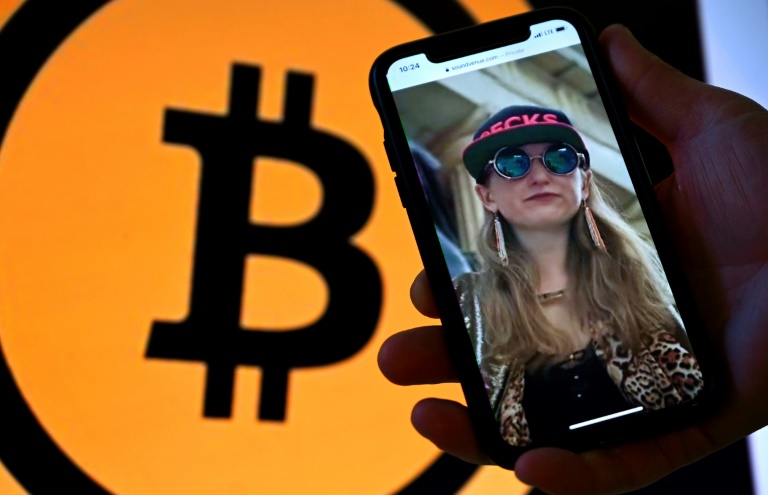
Under the headline “Scammers in Paris”, an online sleuth known as ZachXBT published a blog in August detailing how a pair of youngsters stole cryptoassets worth millions.

Much to his surprise, the French police announced last week that they had acted on his tipoff and charged five people.

It was the first time his sleuthing had led to police action, ZachXBT told AFP, despite having investigated $250 million worth of crypto scams and thefts and chronicling them for his 300,000 Twitter followers.

One explanation for the lack of action is that low-level scams are not a priority.

The authorities in the European Union and the United States — the leaders on crypto control — have relentlessly focused on aspects of crypto crime related to terrorist financing, money laundering and sanctions busting.

Arrests have been rare at federal level in the US — the Department of Justice’s specialised unit charged only eight suspects in the first half of this year.

US federal agencies have often concentrated on headline-grabbing suspects like Heather Morgan, an amateur rapper nicknamed “Razzlekhan” who was charged with money laundering in February, and more recently reality TV star Kim Kardashian, who was fined this month for illegally promoting a cryptocurrency.

Yet the specialist crypto firm Chainalysis said more than $3.5 billion had been lost to scams and hacks between January and July. 

AFP contacted police departments and crime agencies in Europe and the United States but none could give figures for clear-up rates or charges for crypto-related crime.

– ‘Fear of crypto’ –

The sheer scale of the criminality proves difficult for law enforcement agencies already lacking resources for financial crime.

Chainalysis is one of several firms rushing to fill the gap in expertise, selling its tools and services to agencies including the New York police.

Former New York police chief Terry Monahan told a recent Chainalysis event that before he stepped down last year officers would face three cryptocurrency cases every day.

But they had no way of investigating, so the cases would be closed.

“The victim was left with nowhere else to go,” he said, pointing out that federal agencies were only interested in cases worth millions.

Another part of the problem is the direction from the top.

The focus on terrorism and sanctions busting comes as regulators struggle to decide if cryptoassets are securities or commodities.

If they plump for securities, crypto companies would face so much regulation and fines that the sector could be decimated.

Omid Malekan, a professor at Columbia University, said the manoeuvring by US agencies could be seen as “their fear of what a crypto-centric future might mean for US power at home and abroad”.

If decentralised crypto networks revolutionise finance, US politicians would no longer be able to project power in the way they do now with the dollar and the banks.

– ‘Very little’ enforcement –

With Washington and Brussels focused on high-value targets, victims of low-level fraud are often left high and dry.

Some end up asking ZachXBT for help, and he has recovered funds for them.

“I would say there is very little law enforcement in the crypto space,” he said, adding that China was particularly unresponsive to his investigations.

But he said US authorities at least were taking more notice of lower-level scams.

Scams have become harder to ignore since crypto lender Celsius went bust owing $4.7 billion to investors.

Many of those who lost out were ordinary folk sold on the idea of quick and easy profit.

Their testimony to regulators — pensioners robbed of their life savings, small investors left contemplating suicide, farm owners who lost their livelihoods — reset the image of a typical crypto-scam victim.

– ‘Treasure trove’ –

Monahan and Malekan both reckon law enforcement is slowly getting a grip.

Monahan hailed the tracking technology supplied by the likes of Chainalysis for allowing some funds to be returned.

“At least we got something back for (the victims), we didn’t just take that case and toss it into the trash,” he said.

And Malekan says increasingly sophisticated tools are helping to unmask scammers despite the much-vaunted anonymity of the blockchain — the digital ledgers where all transactions are stored.

“Once a single participant is unmasked,” said Malekan, “their on-chain history becomes a treasure trove of data for chasing down their entire network”.

However, the damage of years of lax enforcement will be difficult to unpick.

“I do think lack of enforcement encourages and emboldens the scammers,” said Molly White, whose project “Web3 is going just great” chronicles some of the most outrageous scams and thefts in the crypto world.

“I think it has contributed to a perception that crypto hacks are basically risk-free and high reward, which many of them have been.”

Riot of color draws fall tourists to Canadian mountaintop

Despite the complete absence of snow, the ski resort in Canada’s Quebec province attracts tens of thousands of visitors every fall to witness one of the world’s great displays of autumnal glory.

The auburn, crimson and golden foliage spreads across much of eastern Canada each year, with the bright red leaves of the country’s signature maple trees taking a starring role.

At Mont Orford, shivering hikers step off the resort’s chairlift and declare the trip worthwhile despite temperatures barely above freezing at the top.

“The temperature, the colors, the atmosphere it creates… It’s something, honestly, that I wouldn’t trade for anything in the world,” said Dominique Poudrier, 42, from nearby town Trois Rivieres Quebec, who came to admire the spectacle with his family.

Situated about 100 kilometers (60 miles) from Montreal, near the border with the US states of Maine and Vermont, Mont Orford even boasts views over heart-shaped Baker Lake — a highlight for many visitors.

“The ski lift, coming to see the colors at the top, that’s what really attracts people here,” resort spokeswoman Valerie Collette, sporting a knitted cap and parka, told AFP.

Quebecker Melanie Diamond, 46, admired the display, but cautioned that the peak colors would soon slip away.

“It’s very, very beautiful,” said Diamond who came with her niece. “It loses a bit of its intensity as we’re heading into winter, but the view is incredible, the colors are really superb.”

Musk says he's 'excited' about buying Twitter, but overpaying

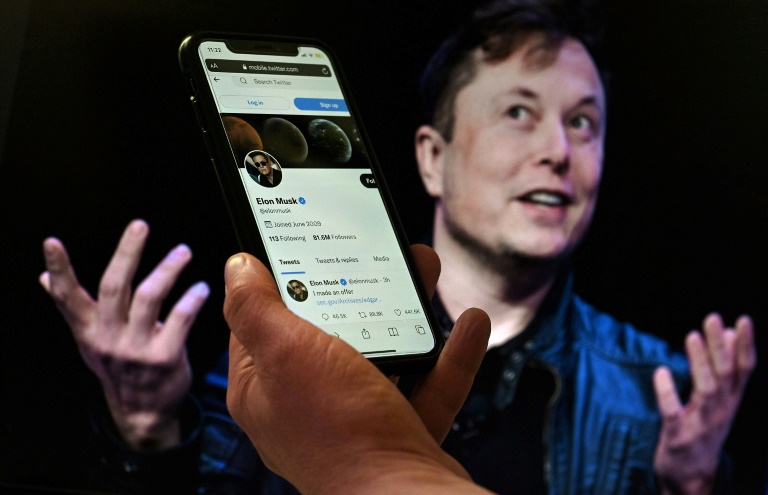
Elon Musk on Wednesday said he is “excited” about taking over Twitter, expressing enthusiasm even though he’s spent months trying to break free of the $44 billion buyout contract.

A US judge early this month suspended litigation in the saga over Musk’s proposed takeover of Twitter, giving the parties until October 28 to finalize the on-again, off-again megadeal.

Twitter had filed a lawsuit to hold Musk to the terms of the deal he inked in April after the Tesla chief sent word he was terminating the contract.

“I’m excited about the Twitter situation,” Musk said while fielding questions on a Tesla quarterly earnings call.

“I think it’s an asset that has just sort of languished for a long time but has incredible potential, although obviously myself and the other investors are overpaying for Twitter right now.”

Musk added that he believes Twitter has potential to be worth “an order of magnitude” more than it is now.

Delaware Judge Kathaleen McCormick granted a request by Musk to freeze the case despite bitter opposition from Twitter, and said that a trial originally set for this week could be rescheduled for next month if a deal is not finalized.

With trial on Twitter’s breach-of-contract suit against Musk looming, the unpredictable billionaire had done an about-face, reviving his takeover plan on condition the court halt the lawsuit against him.

Musk began to step back from the Twitter deal soon after it was agreed, and said in July he was canceling the purchase because he was misled by Twitter concerning the number of fake “bot” accounts, allegations rejected by the company.

Twitter, meanwhile, has sought to prove Musk was contriving excuses to walk away — simply because he changed his mind.

Musk’s potential stewardship of the influential social media site has sparked worry from activists who fear he could open the gates to more abusive and misinformative posts.

US hits network that smuggled chips to Russian arms makers

US authorities indicted five Russians Wednesday who allegedly shipped American electronic components to Russia arms makers, some of which have been found on the battlefield in Ukraine.

Separately, three Latvians and a Ukrainian were charged for attempting to send a US-made high-precision industrial grinder to Russia that the Justice Department said could be used by arms makers or in a nuclear weapons program.

The Justice Department said the two schemes involved front companies in multiple countries including Dubai and Germany and were designed to evade US and global sanctions on Russia.

The first scheme involved buying sensitive technologies from US manufacturers like advanced semiconductors and microprocessors that are used in fighter aircraft, missile systems, smart munitions, radar and satellites.

The Justice Department said Dubai-based Russian Yury Orekhov, Artem Uss, the son of a regional Russian governor, and the three others used a Hamburg, Germany-based firm for the operation, shipping some of the technology to Russian defense companies that are under US sanctions.

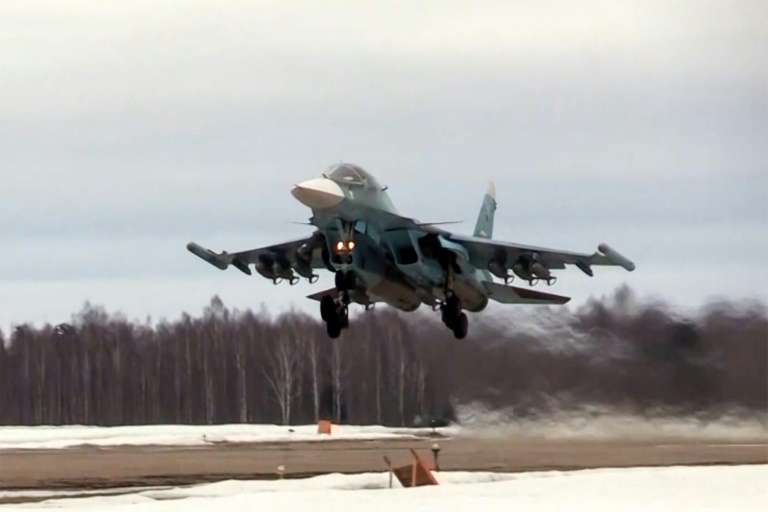
It said, for example, that Orekhov had travelled to the United States in 2019 to source parts that were used in the Russian-made Sukhoi fighter aircraft.

“Some of the types of electronic components obtained through the criminal scheme have been found in Russian weapons platforms seized on the battlefield in Ukraine,” the Justice Department said.

At the same time, it said, Orekhov, his Russian parters and two Venezuelan oil brokers who were also indicted, used the German company as a front to ship “hundreds of millions of barrels of oil” from Venezuela to Russia and China, violating global sanctions.

Payments meanwhile were routed through shell companies, a bank in the Untied Arab Emirates, and via cash drops and cryptocurrency trades, the department said.

The five Russians and two traders are charged with conspiracy to defraud the Untied States, sanctions violations, fraud and money laundering.

Orekhov and Uss were arrested Monday in Germany and Italy, respectively, and the United States will seek their extradition, the department said.

In the second scheme, the four arranged the purchase of a jig grinder made in the US state of Connecticut ostensibly for the European market, but sought to ship it to Russia. The grinder was intercepted by Latvian authorities.

“These defendants attempted to smuggle a high-precision export-controlled item to Russia where it could have been used in nuclear proliferation and Russian defense programs,” said US Attorney Vanessa Roberts Avery.

The three Latvians were arrested on Tuesday while the Ukrainian national was arrested in June in Estonia.

They are all charged with conspiracy to defraud the Untied States, smuggling, and money laundering. The Justice Department is also seeking their extradition.

Meanwhile the US Treasury placed sanctions on Orekhov, the German company and a Dubai company he controls.

“Russia has increasingly struggled to secure critical inputs and technologies needed for its brutal war against Ukraine,” said Deputy Treasury Secretary of Wally Adeyemo in a statement.

“We know these efforts are having a direct effect on the battlefield, as Russia’s desperation has led them to turn to inferior suppliers and outdated equipment,” Adeyemo said.

Stocks waver as inflation concerns offset positive earnings

US stocks stumbled Wednesday, snapping a two-day rally, as investors tracked soaring inflation, while oil prices rose despite the latest US petroleum release announcement by President Joe Biden.

The yield on the 10-year US Treasury note, a proxy for Federal Reserve interest rates, jumped above four percent following UK data that showed inflation soaring back above 10 percent last month.

“There’s nothing to suggest that inflation is going to move in the right direction,” said Tom Cahill of Ventura Wealth Management. 

A downcast Federal Reserve “Beige Book” report observed rising recession fears as households grapple with soaring costs and earlier Fed interest rate hikes slowing demand.

After climbing the last two days, major US indices retreated, with the S&P 500 losing 0.7 percent.

Bourses in Paris, London and Frankfurt also pulled back.

Market movements have been dominated in recent months by interest rate hikes by the US Federal Reserve and other central banks as they try to rein in surging inflation.

Foreign exchange traders were keeping tabs also on whether the dollar would reach 150 yen, which would be a fresh high for 32 years.

Japan’s currency is being hit hard as the country’s central bank holds off from hiking interest rates, in sharp contrast to its peers.

Traders were given an extra boost by news that Netflix gained more than two million subscribers in July-September. Shares of Netflix surged more than 13 percent.

In Europe, Nestle’s nominal sales surged in the first nine months of the year as the maker of Nespresso capsules, Purina pet food and Haagen-Dazs ice cream raised its prices in response to soaring inflation.

Nestle’s shares ended the day down 1.3 percent, however, amid concerns about the impact of higher prices on sales volumes.

On commodity markets, crude oil prices rose after US inventory data showed a surprise decline in petroleum reserves. 

The gains also came as Biden announced the release of a final 15 million barrels of an earlier promise to release 180 million barrels from the Strategic Petroleum Reserve.

However, he also urged the US oil industry to get more oil out of the ground, insisting this did not counter his presidency’s priority of pushing the United States into a clean energy future.

“We need to responsibly increase American oil production without delaying or deferring our transition to clean energy,” he said.

– Key figures around 2100 GMT –

New York – Dow: DOWN 0.3 percent at 30,423.81 (close)

New York – S&P 500: DOWN 0.7 percent at 3,695.16 (close)

New York – Nasdaq: DOWN 0.9 percent at 10,680.51 (close)

London – FTSE 100: DOWN 0.2 percent at 6,924.99 (close)

Frankfurt – DAX: DOWN 0.2 percent at 12,741.41 (close)

Paris – CAC 40: DOWN 0.4 percent at 6,040.72 (close)

EURO STOXX 50: UP 0.2 percent at 3,471.24 (close)

Tokyo – Nikkei 225: UP 0.4 percent at 27,257.38 (close)

Hong Kong – Hang Seng Index: DOWN 2.4 percent at 16,511.28 (close)

Shanghai – Composite: DOWN 1.2 percent at 3,044.38 (close)

Pound/dollar: DOWN at $1.1219 from $1.1320 on Tuesday

Dollar/yen: UP at 149.88 yen from 149.26 yen

Euro/dollar: DOWN at $0.9778 from $0.9858 

Euro/pound: UP at 87.10 pence from 87.09 pence

Brent North Sea crude: UP 2.6 percent at $92.41 per barrel

West Texas Intermediate: UP 3.3 percent at $85.55 per barrel

burs-jmb/bfm

Close Bitnami banner
Bitnami