World

Hamas resumes Syria ties in Damascus visit

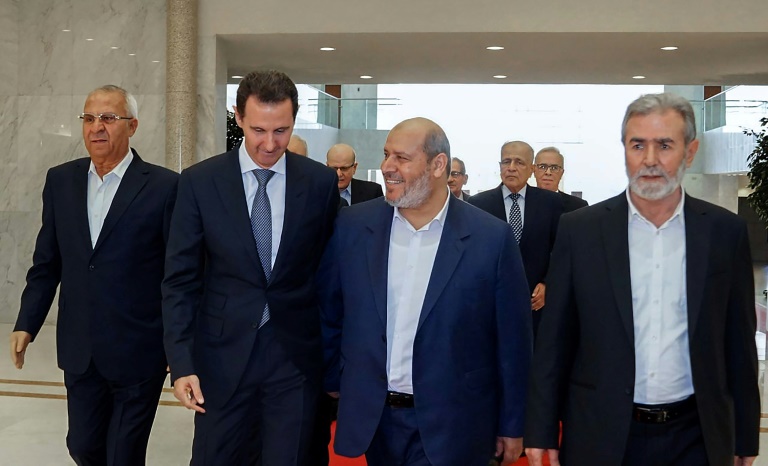
Palestinian movement Hamas on Wednesday said it restored relations with the Syrian government after a visiting delegation held a “historic meeting” with President Bashar al-Assad in Damascus. 

The Islamist group, which controls the Gaza Strip, was long one of Syria’s closest allies, in large part due to a shared enmity towards Israel. 

But it left Syria in 2012 after condemning the Assad government’s brutal suppression of protests in March 2011, which triggered the country’s descent into civil war.

“This is a glorious and important day, in which we come back to our dear Syria to resume joint work,” Hamas chief of Arab relations Khalil al-Hayya told reporters in Damascus.

“This is a new start for joint Palestinian-Syrian action,” he said after meeting Assad along with other representatives of Palestinian factions.

Hamas and Assad have agreed to “move on from the past and look to the future,” al-Hayya added. 

By restoring ties with Damascus, Hamas cements its role within the “axis of resistance” against its arch-enemy Israel, analysts said, an Iran dominated alliance that extends to Lebanon’s Hezbollah movement and Yemen’s Huthi rebels.

Wednesday’s meeting with Assad “is in line with the broader rapprochement between Hezbollah and Hamas evident in Lebanon over the past year or more,” said Maha Yahya of the Carnegie Middle East Center.

The moves come amid fundamental shifts in Middle East relationships, including the Islamist group’s long-time ally Turkey restoring full diplomatic ties with Israel in August.

– ‘Hostile’ attitudes –

Charles Lister, Director of the Syria Program at the Middle East Institute, said rapprochement is the “only logical move” Hamas could take.

“Given the prevailing regional trend of Arab engagement with Israel, it’s not surprising to see Hamas’ leadership in Gaza seeking to re-enhance and amplify their role within the Axis of Resistance,” he told AFP. 

The United Arab Emirates, Bahrain and Morocco have all normalised ties with Israel in the last couple of years.

Aron Lund, a fellow with the Century International think-tank, said the thaw has “been propelled by the hostile regional attitude to Hamas and by Israel’s normalization with several Arab states.”

“Hamas simply doesn’t have the luxury of being able to ignore or oppose the Syrian government indefinitely,” Lund said. 

Al-Hayya said there was consensus among Hamas leadership and supporters over the resumption of ties with Syria — a move also backed by the Palestinian group’s foreign sponsors. 

“All the states we notified of our decision were welcoming and supportive of the move, including Qatar and Turkey, who encouraged us to take the step,” al-Hayya said. 

Turkey supports rebels against the government in Syria’s civil war, but has lately signalled a willingness to reconcile with Damascus.

According to Lund, Hamas’ rapprochement with Damascus “seems to have been facilitated by the fact that several other Arab states have reconnected with Assad’s regime.”

“Turkey’s recent softening of tone will also have helped,” he told AFP.

– ‘Too early’ –

The Syrian presidency said Assad met a delegation of Palestinian leaders without mentioning the restoration of ties with Hamas. 

But the presidency published a video of Assad and Al-Hayya holding hands as they walked with other Palestinian officials. 

The two-day Hamas visit to Syria comes after the Islamist group signed a reconciliation deal with its Palestinian rival Fatah in Algiers last week, vowing to hold elections by next October in a bid to settle a 15-year intra-Palestinian rift.

A Hamas leader told AFP that the group, which was headquartered in the Syrian capital before leaving the country, plans to reopen its Damascus office.

But it was “too early” to talk about relocating its headquarters to the Syrian capital, said the official who spoke on the condition of anonymity. 

The thaw between Hamas and Damascus was brokered by Tehran and Hezbollah, a senior Hamas source said.

For the past decade, Syrian officials had accused Hamas of betrayal.

In a 2013 speech, Assad had accused Palestinian groups he did not identify of treating the country like a “hotel” that they leave “when conditions are tough” in a thinly-veiled reference to Hamas.

Hamas has its origins in the transnational Muslim Brotherhood, whose Syrian branch was one of the leading factions in the armed opposition after Syria’s civil war broke out.

Hamas officials have said they broke ties with the Brotherhood in 2017.
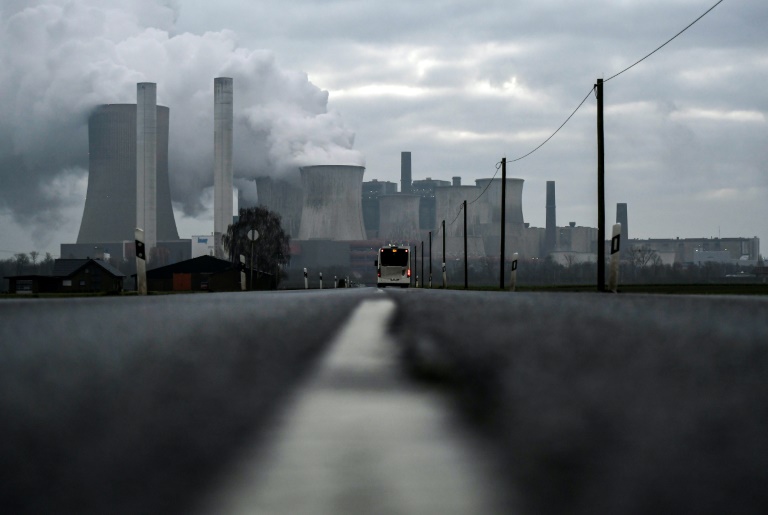
Fossil fuel CO2 emissions up slightly in 2022: IEA

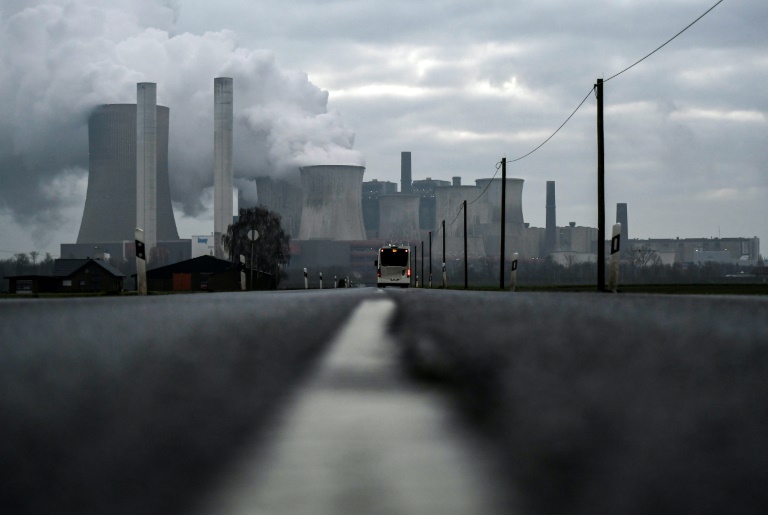
Global carbon dioxide emissions from fossil fuel combustion are expected to grow just one percent this year despite concerns over the impact of the energy crisis, the International Energy Agency said Wednesday, amid bumper growth for renewable energy.

The IEA predicted that the CO2 emitted for energy by burning oil, gas and coal would stand at 33.8 billion tonnes in 2022, more than 300 million tonnes more than in 2021.

That increase was however far smaller than the 2-billion-tonne jump the world experienced last year as countries turned to fossil fuels to power their Covid-19 recoveries, it added.

The United Nations says greenhouse gas emissions must be halved by 2030 to keep the Paris Agreement temperature goals within reach — effectively a drop of some eight percent each year this decade.

The energy crisis sparked by Russia’s invasion of Ukraine propped up some coal demand this year due to hikes in natural gas prices, said the IEA.

But the relatively small increase in coal emissions had been offset by widespread deployment of renewable tech, including electric vehicles (EVs) — and this had prevented a CO2 rise of some 1 billion tonnes in 2022.

“The encouraging news is that solar and wind are filling much of the gap, with the uptick in coal appearing to be relatively small and temporary,” said IEA Executive Director Fatih Birol. 

“This means that CO2 emissions are growing far less quickly this year than some people feared –- and that policy actions by governments are driving real structural changes in the energy economy.”

The IEA analysis showed that solar photovoltaic and wind capacity grew by more than 700 terawatt-hours in 2022, the largest single year rise on record. 

Birol said the trend is due to continue “thanks to the major clean energy policy plans that have advanced around the world in recent months”.

Coal was expected to register the next largest increase due to high gas prices, rising 200 millions tones in terms of CO2, or around two percent year-on-year.

The IEA said emissions in Europe were likely to fall slightly this year and continue their downward trajectory with a spate of new renewable projects slated for next year. 

In China, the world’s largest polluter, emissions will stay largely flat in 2022, it said.

Fossil fuel CO2 emissions up slightly in 2022: IEA

Global carbon dioxide emissions from fossil fuel combustion are expected to grow just one percent this year despite concerns over the impact of the energy crisis, the International Energy Agency said Wednesday, amid bumper growth for renewable energy.

The IEA predicted that the CO2 emitted for energy by burning oil, gas and coal would stand at 33.8 billion tonnes in 2022, more than 300 million tonnes more than in 2021.

That increase was however far smaller than the 2-billion-tonne jump the world experienced last year as countries turned to fossil fuels to power their Covid-19 recoveries, it added.

The United Nations says greenhouse gas emissions must be halved by 2030 to keep the Paris Agreement temperature goals within reach — effectively a drop of some eight percent each year this decade.

The energy crisis sparked by Russia’s invasion of Ukraine propped up some coal demand this year due to hikes in natural gas prices, said the IEA.

But the relatively small increase in coal emissions had been offset by widespread deployment of renewable tech, including electric vehicles (EVs) — and this had prevented a CO2 rise of some 1 billion tonnes in 2022.

“The encouraging news is that solar and wind are filling much of the gap, with the uptick in coal appearing to be relatively small and temporary,” said IEA Executive Director Fatih Birol. 

“This means that CO2 emissions are growing far less quickly this year than some people feared –- and that policy actions by governments are driving real structural changes in the energy economy.”

The IEA analysis showed that solar photovoltaic and wind capacity grew by more than 700 terawatt-hours in 2022, the largest single year rise on record. 

Birol said the trend is due to continue “thanks to the major clean energy policy plans that have advanced around the world in recent months”.

Coal was expected to register the next largest increase due to high gas prices, rising 200 millions tones in terms of CO2, or around two percent year-on-year.

The IEA said emissions in Europe were likely to fall slightly this year and continue their downward trajectory with a spate of new renewable projects slated for next year. 

In China, the world’s largest polluter, emissions will stay largely flat in 2022, it said.

West pushes Russia at UN on Iranian drones in Ukraine

Western powers will raise alarm Wednesday at a UN Security Council session over Russia’s attacks in Ukraine with purported Iranian drones, as the European Union prepared sanctions.

The United States, France and Britain requested the discussion, which will take place behind closed doors at the Security Council, diplomats said.

Russia holds veto power at the Security Council and would be sure to kill any resolution. But the United States and France have warned that Iran is violating a Security Council resolution by arming Russia in its war in Ukraine.

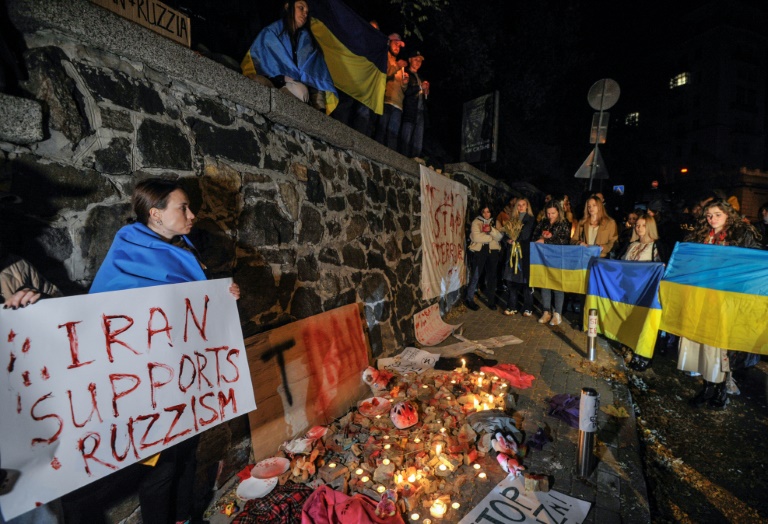
Ukraine has for weeks reported attacks by Russia with Iranian Shahed-136 drones — unmanned aircraft whose warheads explode in kamikaze landings — and has moved to cut relations with Tehran.

Iran and Russia have both denied the use of the drones, with Tehran saying it wants talks with Ukraine. But the European Union said Wednesday it had confirmed that Iran has supplied the drones to Russia.

The Ukrainian military said Wednesday that it had shot down more than 220 Iranian-made drones in little more than a month, although a drone bombardment on the capital Kyiv on Monday left five people dead.

Nabila Massrali, spokeswoman for EU foreign policy chief Josep Borrell, said that the bloc had “gathered our own evidence” and would prepare “a clear, swift and firm EU response.”

EU diplomats told AFP there was work under way on Wednesday to draw up a list of Iranian individuals and entities linked to the drones who would be added to the bloc’s sanctions blacklist.

– US sees UN violation –

The United States has charged that the drones, formally known as unmanned aerial vehicles (UAVs), violated UN Security Council Resolution 2231 of 2015 that blessed a now moribund nuclear deal.

The resolution’s ban on Iran’s conventional arms sales expired in 2020, despite attempts by the then-US administration of Donald Trump.

But the resolution still bans through October 2023 any transfers that could benefit nuclear-capable ballistic missiles unless there is permission from the Security Council.

“Iran’s supply of these specific types of UAVs to Russia is a violation of UN Security Council Resolution 2231, and it is an issue for the UN Security Council,” State Department spokesman Vedant Patel said Wednesday.

The alleged arms transfers come as Iran is facing growing pressure over its crackdown on the biggest protests in years, which were sparked by the death of Mahsa Amini, a 22-year-old detained by the clerical state’s notorious “morality police.”

The unrest has led to new Western sanctions over human rights and put on the backburner efforts by US President Joe Biden to restore the 2015 nuclear deal, from which Trump pulled the United States.

Western officials have highlighted the Iranian drones as evidence that Russia, historically one of the world’s largest arms exporters, has seen its arsenal badly depleted from losses on the battlefield.

The United States has released intelligence saying that the Iranian drones have frequently malfunctioned and that Russia has also turned to North Korea, although China has reportedly rebuffed calls to send weapons.

Estonian Defense Minister Hanno Pevkur, on a visit to Washington, said that Russia was relying on drones both because of low supplies and due to Ukraine’s success in the skies.

The Russians “understand that in air, they don’t have supremacy at the moment because there is air defense from the Ukrainian side. They’ve lost many airplanes already,” Pevkur told reporters.

Time running out to avert 'genocide' in Tigray: WHO chief

The World Health Organization chief condemned the dire situation in Ethiopia’s conflict-torn Tigray region Wednesday, warning that urgent action was needed to avert “genocide”.

“The world is not paying enough attention,” Tedros Adhanom Ghebreyesus told reporters from WHO headquarters in Geneva, stressing “there is a very narrow window now to prevent genocide in Tigray.”

Addis Ababa on Tuesday said it had captured three towns in the northern region, where fighting between pro-government forces and rebels has raged since August after a truce collapsed.

International concern is growing for those caught in the crossfire in Tigray, where Ethiopian forces and troops from neighbouring Eritrea have stepped up their offensive.

The UN has described the situation as spiralling out of control and inflicting an “utterly staggering” toll on civilians.

Tedros, who himself is from the northern region and has repeatedly decried the situation there, said he was “running out of diplomatic language for the deliberate targeting of civilians in Tigray.

– ‘Indiscriminate attacks’ –

“The social fabric is being ripped apart and civilians are paying a horrific price,” he said, insisting that the “hostilities in Tigray must end now, including the immediate withdrawal and disengagement of Eritrean armed forces from Ethiopia.”

Tedros stressed that “indiscriminate attacks or attacks that deliberately target civilians or civilian objects amount to war crimes.”

The WHO chief said the people of Tigray had essentially been blocked off from essential services since the conflict first erupted in November 2020.

“There is no other situation globally in which six million people are being kept under siege for almost two years,” he said.

“Banking, food, electricity and healthcare are being used as weapons of war,” he lamented.

“Even people who have money are starving because they can’t access their bank for two years,” he said, adding that “children are dying every day from malnutrition.”

Tedros acknowledged that he is personally affected by the situation in Tigray.

“Most of my relatives are in the most affected areas,” he said, but insisted that “my job is to draw the world’s attention to crises that threaten the health of people wherever they are.

“This is a health crisis for six million people,” he said.

“The world is not paying enough attention.”

Truss budget fiasco shows power of the markets

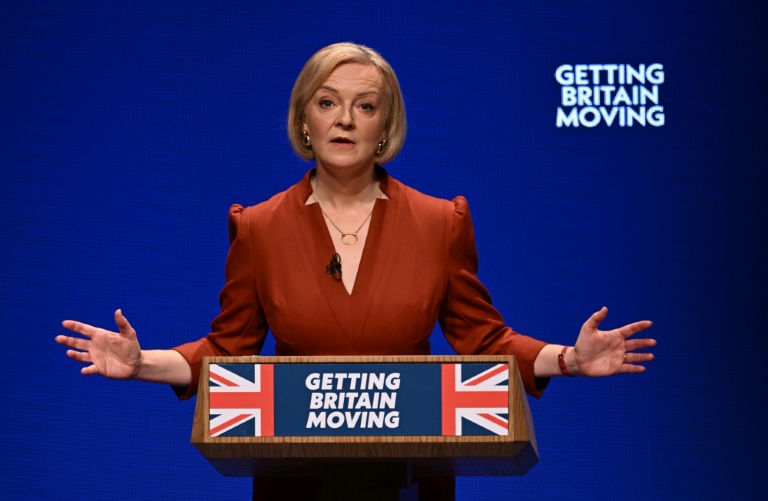
British Prime Minister Liz Truss’s humiliating budget U-turn shows how markets can wield influence over government fiscal policy.

The premier on Monday shredded her tax-slashing budget after it sparked markets chaos over rocketing state debt, as traders questioned the government’s credibility on public finances.

Truss was elected last month on a tax-cutting platform and her astonishing reversal prompted talk of a rebellion within the governing Conservative party.

The furore “is a rather extreme example of how markets react when a change in policy does not appear to be credible”, said economist Antoine Bouet at French economic forecaster CEPII.

– Not the first –

The Truss budget is not the first time that world governments have failed to overcome the verdict of markets.

Other examples include the pound’s exit from the gold standard in 1931 and from the Exchange Rate Mechanism in 1992, as well as the Asian financial crisis in 1997, analysts say.

Britain’s reversal has echoes of 1983 France, when socialist president Francois Mitterand switched to austerity in a major U-turn to restore market stability.

Truss’s flagship mini-budget on September 23 was aimed at boosting the recession-threatened economy and easing a cost-of-living crisis.

But her costly universal energy price freeze and tax cuts were financed by debt, fuelling fears of even higher inflation.

That sent UK government bond yields rocketing and the pound collapsing to a record dollar-low on debt concerns.

In reaction, the Bank of England launched an emergency bond-buying plan to help avert a financial catastrophe, while the International Monetary Fund urged a budget rethink amid a surge also in mortgage rates.

Three weeks later, Truss fired finance minister Kwasi Kwarteng and replaced him with Jeremy Hunt — who then axed most of the tax cuts, slashed the energy-price cap and warned of tough spending cutbacks.

“No government can control the markets but every government can give certainty about the sustainability of public finances,” Hunt said Monday as he took the axe to the budget.

– ‘Room for manoeuvre’ –

Bouet argued the markets did not dictate the political and economic policy, rather they reacted to it.

“There is a large amount of room for manoeuvre for governments, provided they do not go completely off the rails,” the economist told AFP.

The reaction would have been “on a smaller scale” if the UK had announced smaller tax cuts — or energy price assistance that was more targeted.

The market response was “brutal” because of “major inconsistencies”, Bouet said.

Truss’ budget was seen as adding to already sky-high inflation, which the Bank of England is struggling to bring down.

The BoE is set to deliver a super-sized interest rate hike next month after UK inflation hit a 40-year high of 10.1 percent in September.

Russ Mould, strategist at stockbroker AJ Bell, said the sheer size of bond and foreign exchange markets gave them a unique power to impact the UK economy.

– No ‘convincing plan’ –

“Financial markets can and will push governments around, especially if governments — or central banks — do something stupid,” Mould told AFP.

“Bond and currency markets are so large they can overwhelm almost anyone.”

Some have tried to take on markets, such as in 2012 when Mario Draghi — at the time head of the European Central Bank — vowed “to do whatever it takes” to save the euro. 

Draghi helped avert a eurozone debt crisis, although the euro weakened significantly.

“The EU debt crisis is a good example where markets lost confidence in debt sustainability in various southern European countries,” noted analyst Kay Neufeld at research group CEBR.

The Truss budget drama “showed what happens if you surprise markets — and don’t have a convincing plan on how to pay” for costly measures.

Methane in Turkey mine was below critical level: Erdogan

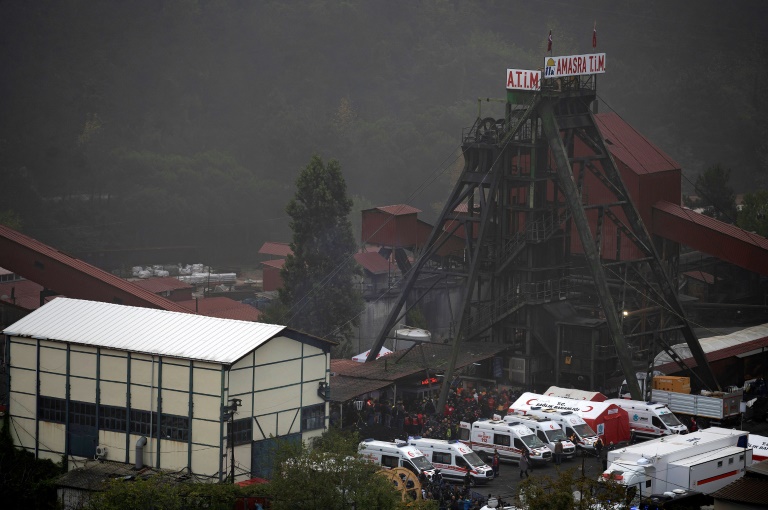
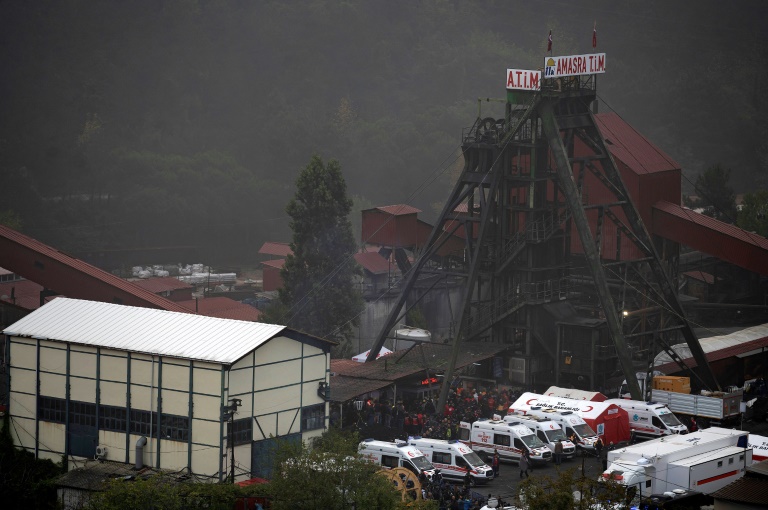
Turkish President Recep Tayyip Erdogan said Wednesday that the methane level in a mine in northwest Turkey was below the critical threshold before an explosion killed 41 people last week.

The blast ripped through the mine near the small coal town of Amasra on Turkey’s Black Sea coast shortly before sunset on Friday.

“According to measurements before the accident, the current was cut in the mine because of a methane level that reached 1.5 percent at 18:05 (15:05 GMT)”, or 10 minutes before the explosion, Erdogan told MPs belonging to his AKP Party.

“For methane to explode, its level in the air must reach at least five percent,” Erdogan said.

“We do not know yet how the explosion could have occurred despite all the precautions taken,” the president said. Erdogan visited the site of the disaster on Saturday.

Under Turkish law, mines are supposed to evacuate workers when the level of methane in the air reaches two percent in the tunnels.

Relatives of the dead told AFP and Turkish media that miners had complained of the smell of gas in the mine for about 10 days before the explosion.

“Everything that can be said will be speculation until we have a definitive accident report,” the head of state said.

– Opposition outcry –

The opposition has accused the government of failing to take the necessary measures to prevent the disaster.

“Mine accidents can happen anywhere in the world,” Erdogan said, alluding to an accident where 1,099 people had died in France. He did not specify that the Courrieres disaster happened in 1906.

“What century are we in?” opposition leader Kemal Kilicdaroglu asked Saturday. “Why are mining accidents always happening in Turkey?” 

Turkey suffered its deadliest coal mining disaster in 2014 when 301 workers died in a blast and ensuing fire that brought down a mining shaft in the western town of Soma.

Five mine managers were found guilty of negligence and handed jail terms of up to 22 years.

Turkey’s Supreme Court of Accounts said in its reports in 2019 and 2020 that there were irregularities in the Amasra mine, according to Turkish media.

Erdogan vowed Saturday that “nobody will be spared” if the accident report determines who is responsible.

But he also repeated his conviction that such accidents were a result of fate.

“If there are guilty people, they will be punished. But in doing this, we submit to fate, to the will of God. It’s indispensable for Muslims,” he said.

Methane in Turkey mine was below critical level: Erdogan

Turkish President Recep Tayyip Erdogan said Wednesday that the methane level in a mine in northwest Turkey was below the critical threshold before an explosion killed 41 people last week.

The blast ripped through the mine near the small coal town of Amasra on Turkey’s Black Sea coast shortly before sunset on Friday.

“According to measurements before the accident, the current was cut in the mine because of a methane level that reached 1.5 percent at 18:05 (15:05 GMT)”, or 10 minutes before the explosion, Erdogan told MPs belonging to his AKP Party.

“For methane to explode, its level in the air must reach at least five percent,” Erdogan said.

“We do not know yet how the explosion could have occurred despite all the precautions taken,” the president said. Erdogan visited the site of the disaster on Saturday.

Under Turkish law, mines are supposed to evacuate workers when the level of methane in the air reaches two percent in the tunnels.

Relatives of the dead told AFP and Turkish media that miners had complained of the smell of gas in the mine for about 10 days before the explosion.

“Everything that can be said will be speculation until we have a definitive accident report,” the head of state said.

– Opposition outcry –

The opposition has accused the government of failing to take the necessary measures to prevent the disaster.

“Mine accidents can happen anywhere in the world,” Erdogan said, alluding to an accident where 1,099 people had died in France. He did not specify that the Courrieres disaster happened in 1906.

“What century are we in?” opposition leader Kemal Kilicdaroglu asked Saturday. “Why are mining accidents always happening in Turkey?” 

Turkey suffered its deadliest coal mining disaster in 2014 when 301 workers died in a blast and ensuing fire that brought down a mining shaft in the western town of Soma.

Five mine managers were found guilty of negligence and handed jail terms of up to 22 years.

Turkey’s Supreme Court of Accounts said in its reports in 2019 and 2020 that there were irregularities in the Amasra mine, according to Turkish media.

Erdogan vowed Saturday that “nobody will be spared” if the accident report determines who is responsible.

But he also repeated his conviction that such accidents were a result of fate.

“If there are guilty people, they will be punished. But in doing this, we submit to fate, to the will of God. It’s indispensable for Muslims,” he said.

Putin declares martial law in annexed Ukraine regions

Russian President Vladimir Putin on Wednesday declared martial law in four regions of Ukraine recently annexed by Moscow as his proxy officials in a southern-held city pulled out with Ukraine troops advancing.

Putin’s decree to introduce military rule in the Moscow-controlled regions also gives additional power to authorities in Russian border areas and comes after a string of battlefield defeats.

“We are working on solving very complex large-scale tasks to ensure security and protect the future of Russia,” Putin said. 

The decree gives greater powers to limit movement to, from and within the areas and allows for the residents of those territories to be moved to “safe zones”.

Pro-Kremlin officials meanwhile said they were pulling out of the key southern Ukraine city of Kherson on Wednesday, as Kyiv’s forces advanced on territory in Russian hands since the war’s earliest days.

Kherson was the first major city to fall to Moscow’s troops since the February invasion began and retaking it would be a crucial prize in Ukraine’s counter-offensive.

“The entire administration is already moving today,” to the eastern bank of the Dnieper River, the Kherson region’s Moscow-installed head, Vladimir Saldo, told Russian state television.

But Andriy Yermak, the Ukrainian presidency’s chief of staff, called the moves a “propaganda show” and accused Russia of “trying to scare the people of Kherson”.

Ukrainian forces “do not fire at Ukrainian cities,” Yermak wrote on Telegram.

Kyiv’s recapturing of swathes of its territory in the east and parts of the south has however been followed by missile and drone strikes that have demolished large parts of Ukraine’s power grid ahead of winter.

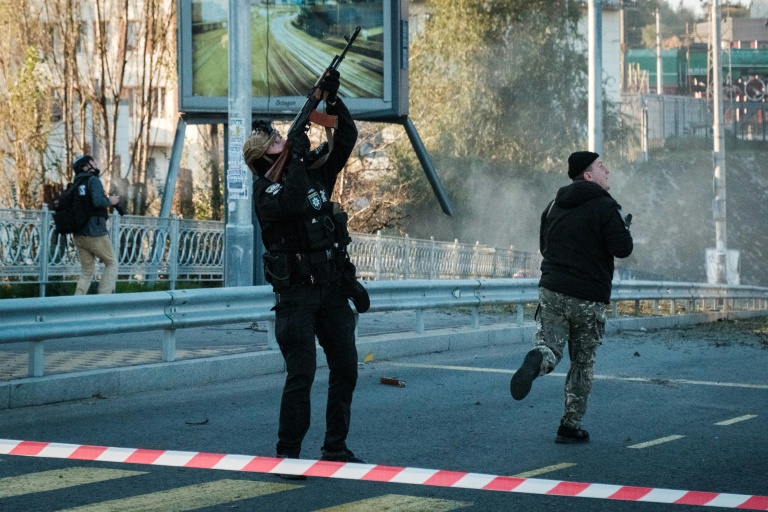
In a third day of attacks on the Ukrainian capital, Kyiv mayor Vitali Klitschko said “several Russian rockets” had been downed over the city after AFP reporters heard several loud explosions in the city centre.

– Evacuations by ferry –

Kherson is located on the western bank of the Dnieper, the same side where Ukrainian troops have been moving forward in a counter-offensive that began in August.

Saldo said the pull-out, along with the organised movement of civilians from the city, was a precaution and vowed that Russian forces would continue to fight against Ukraine.

Pro-Russian officials have said civilians would only be allowed to leave towards Russia or Russian-held parts of Ukraine.

However, Ukrainian forces have targeted bridges across the river to disrupt supply lines so Russian-installed officials said the evacuations were being done with ferries.

Russia’s Rossiya 24 state television channel showed images of people waiting to board ferries to cross the river.

Local officials said they were planning to move up to 60,000 civilians from the city of Kherson over a period of around six days.

Russia’s military commander for Ukraine operations, General Sergey Surovikin has said the Russian army will ensure “the safe evacuation of the population” from Kherson.

Speaking to Russian state TV on Tuesday, he accused Ukraine of strikes on civilian infrastructure in the region that “create a direct threat to the lives of residents”.

– Nuclear plant staff detained –

Ukraine has re-captured occupied territory in the east of the country in recent weeks.

Its advance in the south has been far slower but has been gaining momentum in recent days.

There have also been some Russian advances.

Russian forces on Tuesday claimed to have retaken territory from Ukrainian troops in the eastern Kharkiv region.

It was Moscow’s first announced capture of a village there since being nearly entirely pushed out of the region last month.

Moscow has also been building up its defences in the territory it still holds.

Russia’s Wagner mercenary group said it was working on building a fortified line of defence in Ukraine’s eastern Lugansk region.

“It is a multi-level and layered defence,” the group’s founder Yevgeny Prigozhin said on the social media of his company Concord.

Russian forces meanwhile continue to occupy the Zaporizhzhia nuclear power plant — Europe’s largest.

Petro Kotin, head of Ukraine’s nuclear energy agency Energoatom, told AFP on Wednesday that Russian forces were holding “about 50” plant employees in captivity.

– EU to sanction Iran –

Ukraine has scrambled to rebuild damaged energy facilities across the country following a series of Russian strikes.

The government has warned of the risk of blackouts, saying about 30 percent of Ukraine’s power stations have been destroyed.

Drones bombarded Kyiv on Monday, leaving five dead, in what the presidency described as an attack of Russian desperation after a string of battlefield losses.

An energy facility in the city was hit by strikes on Tuesday, leaving two people dead.

Kyiv and its Western allies have accused Moscow of using Iranian-made drones in the strikes, a move President Volodymyr Zelensky portrayed as a sign of Russia’s failure.

Ukraine said Wednesday it had shot down 223 Iranian-made drones since mid-September.

But the Kremlin has said it has no knowledge of its army using Iranian drones in Ukraine and Tehran has said the claims that it is providing Russia with weapons are “baseless”.

Nabila Massrali, spokeswoman for EU foreign policy chief Josep Borrell, said the EU has “sufficient evidence” that Tehran was supplying Russia with drones and would prepare fresh sanctions on Iran.

French govt under pressure on immigration after girl's killing

France’s government acknowledged Wednesday that it had to “do better” on illegal immigration after it emerged that an Algerian woman charged with the murder of a 12-year-old girl had been ordered to leave the country.

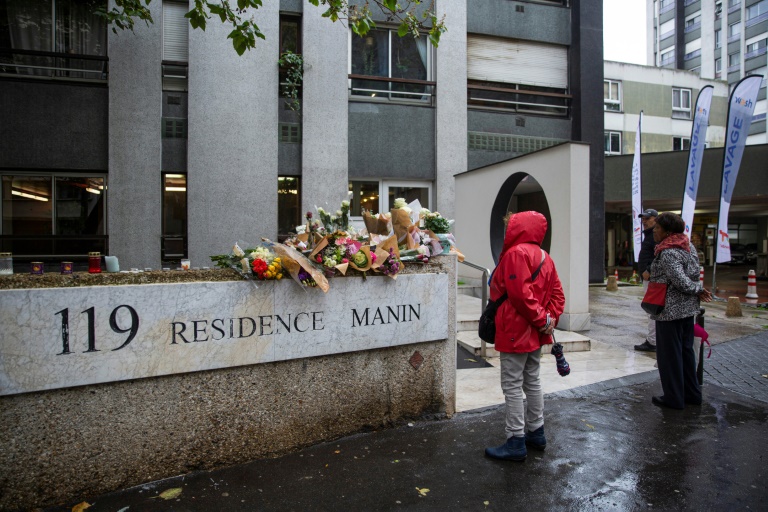
The brutalised body of the victim, identified only as “Lola” under French law, was found in a plastic box after going missing in northeast Paris last week.

A 24-year-old woman from Algeria was quickly identified as the main suspect and detained. Police have determined she had a history of psychiatric disorders.

Investigators also learned that the woman had overstayed a student visa, and in August had received notice to leave France within 30 days.

Conservative and far-right parties have seized on the murder to accuse President Emmanuel Macron’s government of failing to enforce immigration laws, saying strict application of deportation orders could have avoided the murder.

“The government must be summoned to correct its mistakes,” Le Figaro newspaper wrote in a front-page editorial Wednesday.

The president’s allies however have denounced what they call a callous attempt to exploit a tragedy to score political points. Macron met the girl’s parents on Tuesday to express his condolences and support.

– ‘Political exploitation’ –

Government spokesman Olivier Veran conceded on Wednesday that the enforcement of orders to quit French territory was not “satisfactory”.

“We’re working tirelessly to make sure deportations are carried out,” Veran said after a cabinet meeting, but “obviously we must do better”.

A French Senate report this year found that while 143,226 deportation orders were issued in 2021, only 9.3 percent were carried out, down from 15.6 percent in 2019.

“This is not the time for a political trial, for political exploitation, as we’ve seen over the past few days — this is the wish of the family,” Veran said, referring to Lola’s parents.

“Above all they do not want anyone taking political advantage” of the crime, Mayor Gerard Ogiez of Fouquereuil, a village in northern France where the parents have sought refuge, told Le Parisien daily.

Far-right lawmakers have called for a rally to honour Lola on Thursday, after officials called off a silent march that had been planned for Wednesday.

“You won’t be able to dismiss this issue with claims of exploitation,” Marine Le Pen, leader of the far-right National Rally said in parliament on Tuesday.

Close Bitnami banner
Bitnami