World

Empty shelves as German supermarkets resist price hikes

German shoppers are increasingly finding empty shelves where their favourite Kellogg’s cereal, Mars chocolate bar or rice brand used to be, as supermarkets square off against major food companies over price hikes.

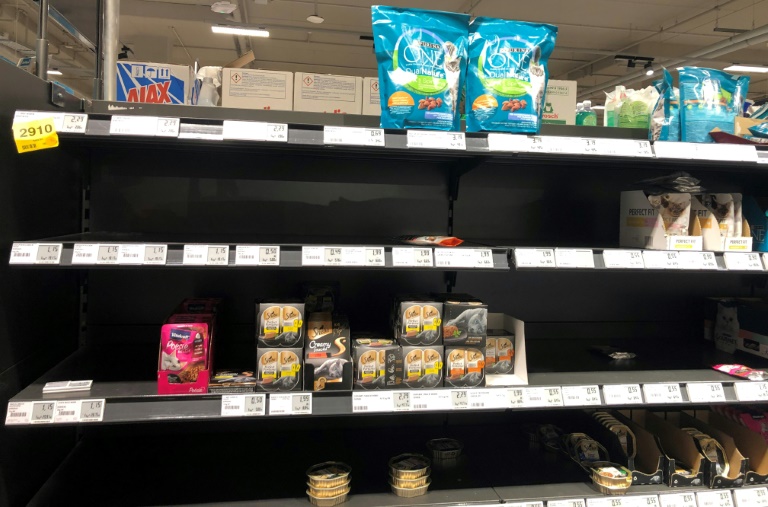
“Dear customers: we are sorry to inform you that we can’t currently offer all the products of our supplier Mars GmbH,” reads a note in a sparsely stocked aisle at an Edeka supermarket in central Berlin.

With German inflation running at a record 10 percent, supermarket giants are pushing back against what they see as unreasonable price increases by some of the world’s best-known brands.

Food multinationals argue that their manufacturing costs have risen on the back of soaring energy and transport costs, in part because of the war in Ukraine.

But retailers in Europe’s top economy say they are protecting customers’ purchasing power at a difficult time, and that price hikes of up to 30 percent in some cases are overblown. 

“Many international brands are trying to take advantage of inflation to charge excessive prices in order to increase their profits,” an Edeka spokesman told AFP, calling Mars’s price demands “unjustified”.

Edeka and its rival Rewe, two of Germany’s biggest supermarket chains, have stopped getting delivery of around 300 products from the Mars company, known for its Twix and Snickers bars, Ben’s Original rice packets and Whiskas cat food.

They have also used the supermarket showdown to push their cheaper, own-brand products as alternatives.

– Coca-Cola court battle –

Mars for its part blames the “volatile context” and “inflationary pressure”.

Thomas Roeb, a retail expert at the Bonn-Rhein-Sieg University of Applied Sciences, said the battle of the brands was not new, and that items get pulled every year in spats between supermarkets and food companies.

“But this time it has gone a little less unnoticed, because Edeka and Rewe are affected at the same time,” Roeb told AFP.

At the Edeka in Berlin the absence of pet food, a sector where Mars dominates, is particularly glaring.

In a nearby Rewe, the rice aisle is half empty.

The cereal section is looking bare, too, after Rewe failed to reach a compromise with US company Kellogg’s — which according to German media was asking almost 30 percent more for its popular breakfast food.

Similar price wars are raging with other brands.

In some stores, tea and coffee products by Jacobs Douwe Egberts are missing from shelves. 

Discounters Aldi and Lidl aren’t stocking Danone, the world’s largest yoghurt maker.

Edeka and Coca-Cola are fighting out their row in court, with the supermarket appealing a recent ruling saying the drinks giant was within its rights to stop deliveries over the dispute.

– ‘Tastes the same’ –

“Food, drinks and even hygiene products are missing,” said Leana Kring, 24, outside a supermarket on Berlin’s Karl-Marx-Allee boulevard.

The supermarket woes add more strain for German consumers, who are already bracing for a grim winter amid high inflation and a deepening energy crisis following Russia’s cutoff of gas supplies. 

The German economy, usually a driver of European growth, is forecast to tip into recession next year.

A Rewe spokesman told AFP that supermarkets don’t want to see shoppers “unnecessarily penalised” during “these difficult times”.

But the retailers have also seized the opportunity to promote their store-brand products, which have grown in popularity as Germans try to watch their pennies.

“Astronomical prices from Mars? Then buy Netto,” read a recent tongue-in-cheek Instagram post from discounter Netto, owned by the Edeka group.

At a Rewe store at Berlin’s Friedrichstrasse station, the supermarket’s own “Ja” (Yes) cereals have already replaced the colourful rows of Kellogg’s boxes.

Own-brand sales accounted for 34.6 percent of revenues in German supermarkets in the first quarter of 2022, according to GfK pollsters, up 1.2 percentage points on a year earlier.

“It’s cheaper, and it tastes the same,” said Mirjam Branz, a 30-year-old Berlin resident, upon leaving Rewe.

Procter & Gamble earnings boosted by price hikes

Procter & Gamble turned in another solid quarter Wednesday as it pointed to indications that consumers are mostly sticking with  leading household brands despite higher prices.

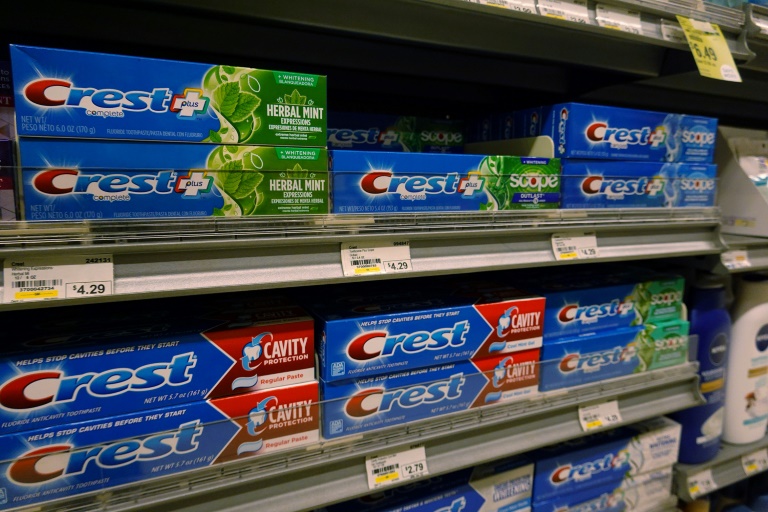
The maker of Crest toothpaste and Bounty paper towels, P&G saw a slight dip in profits due to cost pressures as it trimmed its sales forecast because of the strong dollar.

But results topped analysts; expectations as executives expressed confidence in the company’s ability to navigate what they described as a “very difficult” cost and operating environment.

“When we look at the aggregate picture, we feel very good about the consumers’ reaction to our price increases because we don’t see any major trade down,” Chief Financial Officer Andre Schulten said on a conference call with reporters.

Profits were $3.9 billion, down four percent from the year-ago period, while revenues increased one percent to $20.6 billion.

The company said its lower profit margins were the result of higher commodity and input material costs, as well as increased freight costs and spending on package reinvestment initiatives.

Offsetting these expenses were price increases across the P&G slate of goods, ranging from a six percent increase in health care to 11 percent in fabric and home care.

Overall, P&G’s prices rose nine percent, while product volumes decreased three percent.

Schulten said the breadth of P&G’s products allows it to meet consumers at “different value tiers,” meaning that wealthier consumers can opt for premium Pampers brand diapers, which are about twice the price of Luvs diapers.

In light of the strong dollar, P&G now expects sales to be down between one and three percent. In July, P&G projected fiscal 2023 sales of in-line to an increase of two percent. 

Shares of P&G rose 1.6 percent to $130.45 in pre-market trading.

Record measurement of universe suggests 'something is fishy'

The most precise measurements ever made of the universe’s composition and how fast it is expanding suggest “something is fishy” in our understanding of the cosmos, the astrophysicist who led the research said Wednesday.

The comprehensive new study published in The Astrophysical Journal further confirmed that there is a significant discrepancy between two different ways to estimate the speed at which the universe is expanding. 

The study said that around five percent of the universe is made up of what we might think of as normal matter, while the rest is dark matter and dark energy — both of which remain shrouded in mystery.

Dark energy, a hypothetical force causing the universe to expand at an ever-increasing rate, makes up 66.2 percent of the cosmos, according to the study published in The Astrophysical Journal.

The remaining 33.8 percent is a combination of matter and dark matter, which is also unknown but may consist of some as-yet-undiscovered subatomic particle.

To arrive at the most precise limits yet put on what our universe is made up of, an international team of researchers observed exploding stars called supernovae.

They analysed the light from 1,550 different supernovae, ranging from close to home to more than 10 billion lights year away, back when the universe was a quarter of its current age.

“We can compare them and see how the universe is behaving and evolving over time,” said Dillon Brout of the Harvard–Smithsonian Center for Astrophysics and lead author of the study, called Pantheon+.

– Two decades of analysis –

The study updated the data from the Pantheon project a couple of years ago, stamping out possible problems and nailing down more precise calculations.

“This latest Pantheon+ analysis is a culmination of more than two decades’ worth of diligent efforts by observers and theorists worldwide in deciphering the essence of the cosmos,” US astrophysicist Adam Reiss, 2011’s physics Nobel winner, said in a statement.

It was by observing supernovae back in the late 1990s that Reiss and other scientists discovered the universe was not only expanding but also doing so at an increasing rate, meaning galaxies are racing away from each other.

“It was like if you threw a ball up, and instead of the ball coming down, it shot up and kept accelerating,” Brout said of the surprise of that discovery.

Pantheon+ also pooled data with the SH0ES supernova collaboration to find what is believed to be the most accurate measurement for how rapidly the universe is expanding.

They estimated the universe is currently expanding 73.4 kilometres a second every megaparsec, or 3.26 million light years. That works out to be around 255,000 kilometres (160,000 miles) per hour, according to a Harvard-Smithsonian statement.

But there’s a problem.

– The Hubble tension – 

Measuring cosmic microwave background radiation, which can look much farther back in time to around 300,000 years after the Big Bang, suggests the universe is expanding at a significantly slower rate — around 67 kilometres per megaparsec.

This discrepancy has been called the Hubble tension, after US astronomer Edwin Hubble.

The Pantheon+ results have raised the certainty of the Hubble tension above what is known as the five sigma threshold, which means the discrepancy “can no longer be attributed to luck”, Brout said.

“It certainly indicates that potentially something is fishy with our understanding of the universe,” Brout told AFP.

Some possible, unverified theories for the discrepancy could include another kind of dark energy in the very early universe, primordial magnetic fields, or even that the Milky Way sits in a cosmic void, potentially slowing it down.

But for now, Brout said that “we, as scientists thrive on not understanding everything.

“There’s still potentially a major revolution in our understanding, coming potentially in our lifetimes,” he added.

UK's Truss tells booing MPs she's no 'quitter'

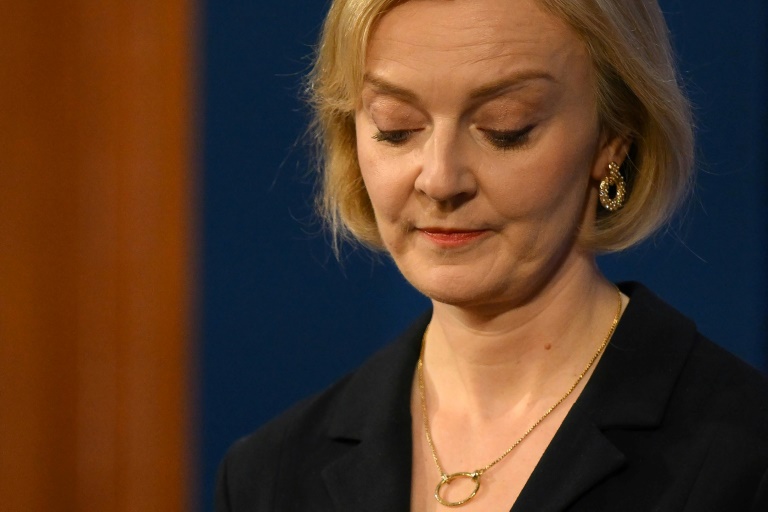
British Prime Minister Liz Truss insisted she would not quit on Wednesday as she faced questions from booing MPs at her first Question Time session since abandoning her disastrous tax-slashing economic policies.

Truss faced hostile questioning from opposition Labour leader Keir Starmer, who asked the House of Commons: “What’s the point of a prime minister whose promises don’t even last a week?”

Starmer mocked Truss by leading his MPs in chants of “Gone, gone!” as he read out a list of her dropped policies. “Why is she still here?” he concluded.

Truss responded defiantly: “I am a fighter and not a quitter”, insisting that “I am someone who is prepared to front up. I’m prepared to take the tough decisions”.

She insisted: “I have acted in the national interest to make sure that we have economic stability.”

The session took place less than 48 hours after new finance minister Jeremy Hunt dismembered Truss’s flagship tax plans in a humiliating blow. He sat at her side in parliament, nodding along to her responses.

While castigating Truss for conducting “an economic experiment on the British public”, Starmer said dismissively: “How could she be held to account when she’s not in charge?”

At least five Conservative party MPs have already publicly called for her to be replaced amid catastrophic popularity ratings.

Polls show Truss’s personal and party ratings have plummeted, with YouGov saying Tuesday that — within six weeks of taking power — she had become the most unpopular leader it has ever tracked.

A separate survey of party members found less than two months after electing her Tory leader and prime minister, a majority now think she should go.

Foreign minister James Cleverly defended Truss on Sky News on Wednesday, however, saying he was “far, far from convinced” that “defenestrating another prime minister will either convince the British people that we’re thinking about them or convince the markets to stay calm”.

Meanwhile, the main Labour opposition has opened up huge poll leads over the ruling Conservatives, amid the recent fallout as well as the worsening cost-of-living crisis, with inflation jumping above 10 percent on Wednesday on soaring food prices.

More than three-quarters of people disapprove of the government — the highest in 11 years, YouGov said. 

– ‘Difficult decisions’ –

The government’s September 23 mini-budget — which slashed a host of taxes without curbing spending — sent bond yields spiking and the pound collapsing to a record dollar-low on fears of rocketing UK debt.

Truss last week staged two U-turns, scrapping planned tax cuts for the richest earners and on company profits, and fired her close ally Kwasi Kwarteng as finance minister.

After appointing Hunt as his successor, she agreed to further reverse course, axing almost all the other cuts and partially rowing back on energy price support for consumers.

A cap on costs was set to last two years, but will now end for many next April.

Hunt’s warnings of further “eyewatering cuts” prompted reports that the government could stop indexing current pensions to inflation and use earnings as a benchmark instead, breaking a manifesto commitment and dividing MPs.

Truss said in parliament that she would maintain the commitment, however. 

During the summer leadership campaign which saw Truss beat former chancellor of the exchequer Rishi Sunak to succeed ex-premier Boris Johnson, she vowed not to reduce public spending.

But after the economic tumult of recent weeks saw government borrowing rates spiral, Truss and Hunt have warned of “difficult decisions” and urged government departments to find savings. 

Opposition parties are demanding she stand down and a general election — not due for two years — is held. 

“Will she do the decent thing and go and call a general election?” Labour MP Sarah Owen asked in parliament.

Under current party rules Truss cannot be challenged by a no-confidence vote in her first year, but speculation is rife the rules could be changed to allow for a ballot.

Conservative lawmakers so far have failed to coalesce around a contender to replace her, with Johnson and Sunak both touted but each likely to draw significant opposition from factions within the party.

Kremlin proxies flee Kherson as Ukraine advances

Pro-Kremlin officials said they were pulling out of the key southern Ukraine city of Kherson on Wednesday, as Kyiv’s forces advanced on territory in Russian hands since the war’s earliest days.

Kherson was the first major city to fall to Moscow’s troops after the February invasion and retaking it would be a crucial prize in Ukraine’s ongoing counter-offensive.

Kyiv’s recapturing of swathes of its territory in the east and parts of the south has however been followed by missile and drone strikes that have demolished large parts of Ukraine’s power grid ahead of winter.

“The entire administration is already moving today,” to the eastern bank of the Dnieper River, the Kherson region’s Moscow-installed head, Vladimir Saldo, told Russian state television.

But the Ukrainian presidency’s chief of staff Andriy Yermak called the moves a “propaganda show” and accused Russia of “trying to scare the people of Kherson”.

Ukrainian forces “do not fire at Ukrainian cities,” Yermak wrote on Telegram.

The city is located on the western bank of the Dnieper, the same side where Ukrainian troops have been moving forward in a counter-offensive that began in August.

Saldo said the pull-out, along with the organised movement of civilians from the city, was a precaution and vowed that Russian forces would continue to fight against Ukraine.

Pro-Russian officials have said civilians would only be allowed to leave towards Russia or Russian-held parts of Ukraine.

However, Ukrainian forces have targeted bridges across the river to disrupt supply lines so Russian-installed officials said the evacuations were being done with ferries.

Russia’s Rossiya 24 state television channel showed images of people waiting to board ferries to cross the river.

Local officials said they were planning to move up to 60,000 civilians from the city of Kherson over a period of around six days.

Russia’s military commander for Ukraine operations, General Sergey Surovikin has said the Russian army will ensure “the safe evacuation of the population” from Kherson.

Speaking to Russian state TV on Tuesday, he accused Ukraine of strikes on civilian infrastructure in the region that “create a direct threat to the lives of residents”.

– ‘Safe evacuation’ –

Ukraine has re-captured occupied territory in the east of the country in recent weeks.

Its advance in the south has been far slower but has been gaining momentum in recent days.

There have also been some Russian advances.

Russian forces on Tuesday claimed to have retaken territory from Ukrainian troops in the eastern Kharkiv region.

It was Moscow’s first announced capture of a village there since being nearly entirely pushed out of the region last month.

Russia has also been building up its defences in the territory it still holds.

Russia’s Wagner mercenary group said it was working on building a fortified line of defence in Ukraine’s eastern Lugansk region.

“It is a multi-level and layered defence,” the group’s founder Yevgeny Prigozhin said on the social media of his company Concord.

Russian forces meanwhile continue to occupy the Zaporizhzhia nuclear power plant — Europe’s largest.

Petro Kotin, head of Ukraine’s nuclear energy agency Energoatom, told AFP on Wednesday that Russian forces were holding “about 50” plant employees in captivity.

– Warnings of power outages –

Ukraine meanwhile scrambled to rebuild damaged energy facilities across the country following a series of Russian strikes.

The government has warned of an emerging “critical” risk to its power grid after repeated Russian bombardments had destroyed one third of the country’s power facilities as winter approaches.

“It’s necessary for the whole country to prepare for electricity, water and heating outages,” Kyrylo Tymoshenko, deputy head of the Ukrainian president’s office, told Ukrainian television on Tuesday.

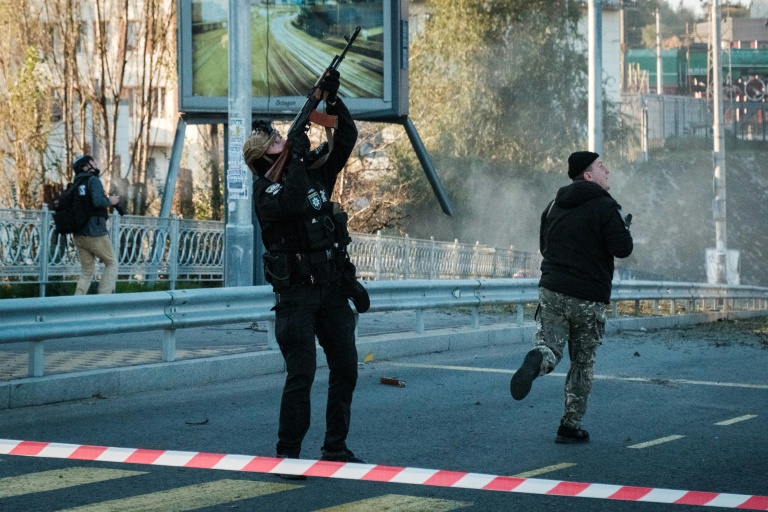
Drones also bombarded Kyiv on Monday, leaving five dead, in what the presidency described as an attack of Russian desperation after a string of battlefield losses.

Kyiv and its Western allies have accused Moscow of using Iranian-made drones in the strikes, a move President Volodymyr Zelensky portrayed as a sign of Russia’s failure.

Ukraine said Wednesday it had shot down 223 Iranian-made drones since mid-September.

But the Kremlin has said it has no knowledge of its army using Iranian drones in Ukraine and Tehran has said the claims that it is providing Russia with weapons are “baseless”.

Nabila Massrali, spokeswoman for EU foreign policy chief Josep Borrell, said the EU has “sufficient evidence” that Tehran was supplying Russia with drones and would prepare fresh sanctions on Iran.

Vodka gift: Berlusconi in fresh row over Putin ties

Italian ex-premier Silvio Berlusconi was under fresh scrutiny Wednesday over his friendship with Vladimir Putin after being recorded describing a birthday present of vodka from the Russian leader and expressing concerns about arming Ukraine.

Aides insisted he had been misrepresented but the row risks embarrassing Berlusconi’s coalition allies, led by far-right leader Giorgia Meloni, as they prepare to form a new government following last month’s elections.

Meloni strongly supports Ukraine and EU sanctions on Russia, but both Berlusconi and her other coalition ally, League leader Matteo Salvini, have both long had warm ties with Moscow.

“Meloni hostage of pro-Russians,” headlined Wednesday’s La Repubblica newspaper, while other reports described her private outrage at what is only the latest gaffe from the billionaire media mogul.

A recording emerged late Tuesday of Berlusconi recounting how he had rekindled ties with President Putin, an old friend.

Italian online news agency LaPresse said the comments came during a meeting of his Forza Italia party lawmakers this week. 

“I reconnected a little bit with President Putin… for my birthday he sent me 20 bottles of vodka and a very kind letter,” he said, according to the tape published by LaPresse.

“I responded with bottles of Lambrusco (red wine) and an equally sweet letter.”

A spokesman for Berlusconi, who turned 86 last month, denied he had rekindled relations with Putin, saying Berlusconi had been telling parliamentarians an “old story relating to an episode dating back many years.”

– Putin ‘person of peace’ –

Immediately preceding the anecdote, Berlusconi can be heard describing his concerns about sending weapons and cash to support Ukraine.

According to LaPresse, Berlusconi also described Putin as a “person of peace”, although this was not included in the audio published.

A senior Forza Italia lawmaker, Alessandro Cattaneo, said Wednesday that Berlusconi’s comments had been taken out of context, adding: “Soundbites can be copied and pasted.”

Forza Italia also emphasised its support for the EU-US policy on Ukraine.

Berlusconi said in April he was “deeply disappointed” by Putin’s behaviour in Ukraine.

But in September, he was forced to clarify remarks suggesting the president was “pushed” into the invasion by his entourage.

A close aide to Meloni, senior Brothers of Italy lawmaker Francesco Lollobrigida, told reporters Wednesday: “We remain with the Ukrainian people and in defence of democracy in that country, but also fiercely in the Western axis… Regarding the comments of others, you must ask others.”

Talks are still ongoing on the formation of a new government, with Meloni expected to be confirmed as prime minister by the end of next week.

But the process has been rocky.

Berlusconi lost his temper in the Senate last week, later admitting “deep annoyance” in his party over coalition discussions on how to share out ministerial posts.

But he and Meloni had a meeting on Monday to clear the air, afterwards issuing a photo of the pair smiling.

Stocks stumble as inflation concerns offset positive earnings

Major stock markets stumbled Wednesday, as lingering concerns over sky-high inflation offset positive earnings.

In a sign of the uphill struggle in the battle against soaring prices, UK inflation jumped back above 10 percent last month.

London’s FTSE 100 shares index steadied and the pound fell following the data — and as Britain’s under-fire Prime Minister Liz Truss faced a grilling in parliament.

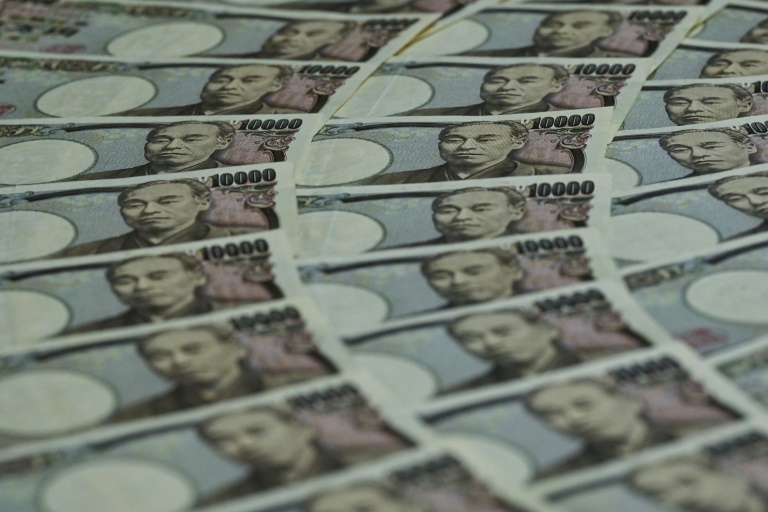
Foreign exchange traders were keeping tabs also on whether the dollar would reach 150 yen, which would be a fresh high for 32 years.

Japan’s currency is being hit hard as the country’s central bank holds off from hiking interest rates, in sharp contrast to its peers the world over which are aggressively hiking borrowing costs to try and cool decades-high inflation.

Asian stock markets diverged after Wall Street ended higher for a second session running Tuesday, heartened by forecast-beating results from Goldman Sachs and Johnson & Johnson.

They came on the heels of better-than-expected reports from banking giants Citi, JP Morgan and Wells Fargo.

Traders were given an extra boost by news that Netflix gained more than two million subscribers in July-September.

“Earnings season offers investors the opportunity to focus more on the actual earnings power of corporate America, and less on the machinations of the backward-looking economic data stream,” said Art Hogan, a strategist at B. Riley.

“A better-than-feared earnings season may well be the catalyst the market needs to see a break in the steady grind lower.”

In Europe, Nestle’s sales surged in the first nine months of the year as the maker of Nespresso capsules, Purina pet food and Haagen-Dazs ice cream raised its prices in response to soaring inflation.

On commodity markets, crude oil prices rose on renewed supply worries.

They had slumped Tuesday on bets that US President Joe Biden would order the release of more barrels from the country’s emergency reserves in order to keep fuel prices subdued heading into mid-term elections.

– Key figures around 1100 GMT –

London – FTSE 100: FLAT at 6,934.52 points

Frankfurt – DAX: UP 0.1 percent at 12,776.12

Paris – CAC 40: UP 0.4 percent at 6,090.48

EURO STOXX 50: UP 0.7 percent at 3,486.43

Tokyo – Nikkei 225: UP 0.4 percent at 27,257.38 (close)

Hong Kong – Hang Seng Index: DOWN 2.4 percent at 16,511.28 (close)

Shanghai – Composite: DOWN 1.2 percent at 3,044.38 (close)

New York – Dow: UP 1.1 percent at 30,523.80 (close)

Pound/dollar: DOWN at $1.1252 from $1.1332 on Tuesday

Dollar/yen: UP at 149.59 yen from 149.21 yen

Euro/dollar: DOWN at $0.9780 from $0.9862 

Euro/pound: DOWN at 86.97 pence from 87.01 pence

Brent North Sea crude: UP 1.1 percent at $91.03 per barrel

West Texas Intermediate: UP 1.5 percent at $84.04 per barrel

HRW calls for sanctions on Ethiopia to protect civilians

Human Rights Watch called Wednesday for targeted sanctions and an arms embargo against Ethiopia to help protect civilians as the country’s brutal war in Tigray intensifies.

Addis Ababa on Tuesday said it had captured three towns in the northern region, where fighting between pro-government forces and rebels has raged since August after a truce collapsed.

International concern is growing for those caught in the crossfire, with the UN describing the situation as spiralling out of control and inflicting an “utterly staggering” toll on civilians.

HRW said the stories emerging from the conflict zones were “terrifying.”

“The attacks have resulted in untold civilian casualties, including aid workers delivering food, property destruction, and large-scale displacement,” its regional director, Laetitia Bader, said in a briefing note.

Ethiopia, not just its ally Eritrea, should be subject to global sanctions over its conduct in the conflict, Bader said.

“The US and EU, as well as the Security Council, should use the appropriate tools, including targeted sanctions and an arms embargo, to protect civilians at risk,” she said.

“The suffering of civilians in Ethiopia should no longer be tolerated in the name of political expediency.”

The International Rescue Committee (IC) said a staff member was among three civilians killed in an attack last Friday in Shire, a city of 100,000 that was captured by Ethiopian and Eritrean forces after a sustained bombardment.

Witnesses described civilian casualties during days of aerial assaults over the city.

The government said it had avoided fighting in urban areas in its latest offensive, and would investigate any loss of civilian life.

But there are growing fears that civilians in cities and towns retaken by pro-government forces could be at risk of atrocities as occurred during the earlier stages of the nearly two-year war.

The advance of Ethiopian and Eritrean forces through Tigray in late 2020 and early 2021 was followed by mass murder, rape and other crimes documented by UN investigators and rights groups.

Amnesty International said that Eritrean forces at the start of the conflict in November 2020 massacred hundreds of civilians in the ancient city of Axum, where their forces are currently on the march.

US aid chief Samantha Power on Sunday said “the potential for further widespread atrocities” was alarming and “the staggering human cost of this conflict should shock the world’s conscience”.

In March, the Commission of Human Rights Experts on Ethiopia, a UN-created body, said it had found widespread violations against civilians by all sides to the conflict.

They listed a long line of horrific violations, from extrajudicial killings to intentional starvation and rape and sexual violence perpetrated on a “staggering scale”.

Untold numbers of civilians have been killed since the war began, an estimated two million people driven from their homes, while millions more are in need of aid, according to UN figures.

Iranian greeted as hero after competing without hijab

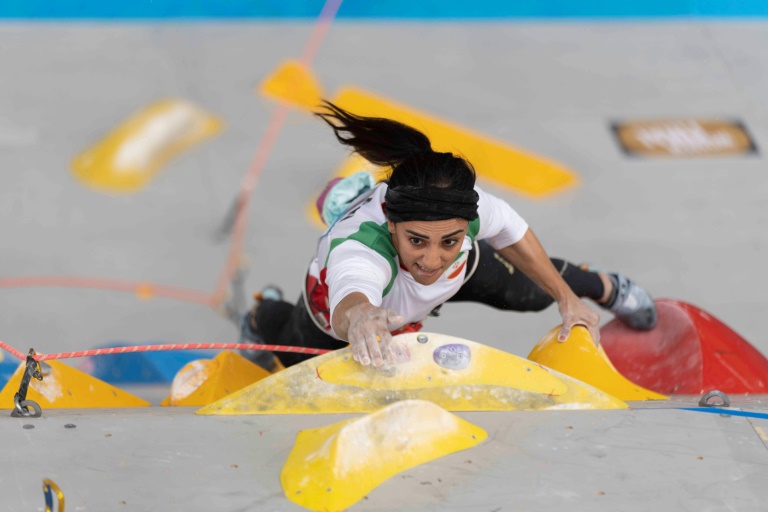
An Iranian climber who caused a sensation by competing at an event abroad without a hijab was on Wednesday given a hero’s welcome on her return to Tehran by supporters who raucously applauded her action.

With Iran still shaken by women-led protests over the death of Mahsa Amini one month ago, Elnaz Rekabi flew back to a Tehran airport after the competition in South Korea.

In an Instagram post and comments at the airport, Rekabi has apologised over what happened and insisted her hijab — which all Iranian women, including athletes, must wear — had accidentally slipped off.

But activists fear her comments were made under pressure from Iranian authorities, who were likely infuriated by her actions.

“Elnaz is a hero” and “Well done Elnaz!” chanted dozens of supporters who gathered outside the Imam Khomeini International Airport terminal, clapping their hands and brandishing mobile phones to record the moment.

They continued to chant and applaud as a van and vehicle — one of which they presumed was carrying the climber — drove out of the airport through the crowds of people clapping above their heads.

It was unclear where she was headed. Some of the women present were themselves not wearing the hijab.

“A hero’s welcome — including by women without the forced hijab — outside Tehran… Concerns for her safety remain,” said the New York-based Center for Human Rights in Iran (CHRI).

– ‘State propaganda’? –

Inside the airport terminal, Rekabi was greeted by family members with her hair covered with a baseball cap and a hoodie although not a headscarf, before addressing state media with a mask pulled down on her face.

“Due to the atmosphere prevailing in the finals of the competition and the unexpected call for me to start my run, I got tangled with my technical equipment and… that caused me to remain unaware of the hijab that I should have observed,” she said.

“I returned to Iran peacefully, in perfect health and according to the predetermined plan. I apologise to the people of Iran because of the tensions created,” she said, adding she had “no plan to say goodbye to the national team”.

Her comments were similar to those made on Tuesday in an Instagram post, in which she apologised for “concerns” caused and insisted her bare-headed appearance had been “unintentional”.

But the Islamic republic has been repeatedly accused by activists of coercing people into making statements of contrition on television or social media.

The British actress of Iranian origin Nazanin Boniadi, who is an ambassador for Amnesty International in the UK, tweeted that it was clear Rekabi had been “forced to make this statement by authorities that constantly use forced and televised confessions.”

Observers “should not be swayed by state propaganda”, the CHRI said.

Prominent exiled Iranian journalist Maziar Bahari described Rekabi’s airport comments as a “forced confession”.

“You can see the fear in her eyes. She’s just repeating what she’s been told,” he said.

There has been no news from her or activity on her Instagram account since she left the airport.

– UN ‘closely following’ –

Unconfirmed reports had already suggested she had been pressured by Iranian officials in South Korea.

BBC Persian quoted an unnamed source as saying friends had been unable to contact her and the team had left their hotel in Seoul on Monday, two days before the scheduled departure date.

Meanwhile news website Iran Wire said the head of Iran’s climbing federation had “tricked” her into entering the Iranian embassy in Seoul and the federation chief had promised her safe passage to Iran if she handed over her phone and passport.

The Iranian embassy in Seoul, however, issued a statement to AFP denying “all the fake, false news and disinformation regarding” her situation.

The spokesperson for the UN office of the high commissioner for human rights, Ravina Shamdasani, said the UN was “closely following” the case and concerns were being raised with the Iranian authorities.

The incident took place at the Asian Championships in sports climbing in Seoul on Sunday.

In the initial bouldering discipline her head was covered with a bandana but in the later lead climbing, scaling a high wall with a rope, she wore only a headband, the stream posted by the International Federation of Sport Climbing (IFSC) showed.

The IFSC said in a statement that it had been in contact with Rekabi and the Iranian Climbing Federation and fully support “the rights of athletes, their choices, and expression of free speech”.

Football icon Shevchenko feels pain and pride in Ukraine's resilience

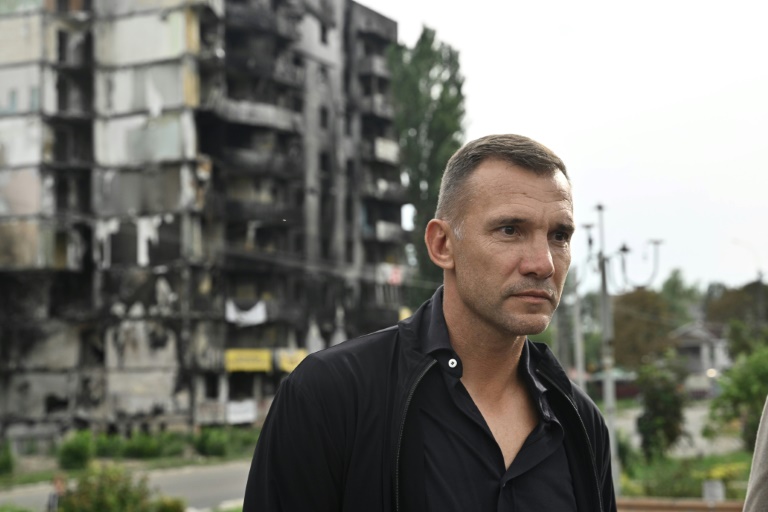
Ukrainian football legend Andriy Shevchenko has admitted in an interview with AFP he cried when he “saw children running through a field strewn with missile craters” in Irpin, a commuter town outside Kyiv which was liberated from Russian control.

The 2004 Ballon D’Or winner said he was overwhelmed by the youngsters’ determination to play football despite the carnage around them.

Shevchenko, 46, the son of “a military man” who despite his upbringing “stood against wars all his life”, was so angry at the Russian invasion in February he “felt such excruciating pain I couldn’t even breathe.”

“I couldn’t comprehend the fact that bombs are falling and rockets are flying in the centre of democratic Europe now,” he said, speaking this week.

“They fly towards my home, towards everything I love. I had to decide on what I should do to help my country quickly.

“I thought about everything I’m capable of and where I can be most effective.

“And I realised that I have to use the power of my name, to fight for Ukraine publicly.”  

Shevchenko, unlike some Ukrainian sports stars who took up arms, chose an ambassadorial role to showcase his country’s plight.

The 2003 Champions League winner with AC Milan and top tennis player Elina Svitolina “immediately” accepted an invitation from Ukrainian President Volodymyr Zelensky to become ambassadors for a charity called United24.

He met the president in Kyiv on May 18.

“It was the first time I came to Ukraine since February 24, the war had been going on for two and a half months already, and Russian troops had only just retreated from the city.

“I saw an empty, and yet indomitable, Kyiv. It was a very emotional moment for me, as well as my meeting with the president.”

The charity was launched by Zelensky to collect donations to cover Ukraine’s most pressing needs: Defence and de-mining, medical aid and to rebuild the country which has been devastated since Vladimir Putin launched the invasion.

Shevchenko has focused on raising funds for medical aid and reconstruction.

“We are about to announce the first project this week. In total, over $200 million were collected in five months, and people from 110 countries joined in.

“I think I made the right decision.”

– ‘Sympathy and admiration’ –

Shevchenko, whose mother and sister were able to leave Kyiv around six weeks after the invasion, said he never ceased to be amazed at the resilience of his compatriots on his visits back home.

“The people I met in Borodianka, in a temporary house built for 22 families, have already arranged the living space there and met us with smiles on their faces,” he said.

“Despite the fact that these people lost everything they had, they keep enjoying their lives.

“And this is such a typical trait for Ukrainians. To raise from the darkness, always looking for the best in everything and supporting each other.

“Ukrainians evoke not only sympathy, but also admiration from the whole world.”

He says he is indebted to his former club for their support.

“There are no words to describe how I felt when AC Milan announced they were releasing a special t-shirt with my number in support of Ukraine,” he said.

Sales of the t-shirt raised 200,000 euros ($196,000) which will help reconstruct a children’s football pitch in Irpin, destroyed by Russian missiles.

Shevchenko — who has also been touched by the “great, constant support” from Barcelona’s Polish forward Robert Lewandowski — said despite recent Ukrainian battlefield successes he was reminded only last week of Russia’s ability to strike.  

“A week ago, I left Kyiv by train, on the day when the most devastating strikes since February 24 hit Ukraine,” he said.

“Today (he spoke to AFP on October 17), Russia attacked civilians again.

“A residential house is on fire in the very centre of Kyiv, a family expecting a child was killed.”

However, even amid the loss of innocent lives Shevchenko saw something to hearten him.

“Among all this horror and pain, I saw a photo of a rescuer taking a small kitten out of the rubble.”

Close Bitnami banner
Bitnami