World

Ethiopia says govt forces seize three towns in Tigray

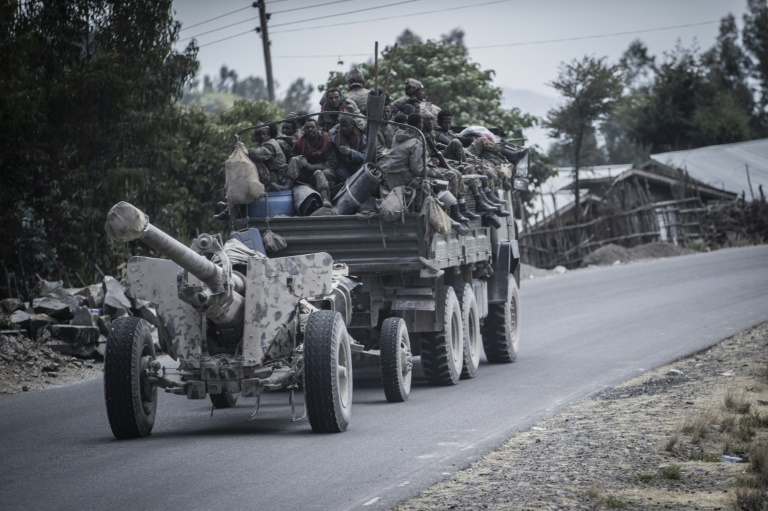
Ethiopia said Tuesday its forces had seized three towns in Tigray, the latest major battleground shift in the brutal war, as the UN warned the situation was spiralling out of control with an “utterly staggering” toll on civilians.

International calls for a halt to escalating violence in Tigray have been mounting since a failed attempt by the African Union earlier this month to bring the warring sides to the negotiating table.

“The ENDF (Ethiopian National Defence Force) has taken control of the towns of Shire, Alamata and Korem without fighting in urban areas,” the government said in a statement.

It was the latest twist in the two-year conflict pitting federal forces and their allies against the Tigray People’s Liberation Front (TPLF) that has been marked by several dramatic about-turns.

Tuesday’s announcement by Prime Minister Abiy Ahmed’s government was issued after the Tigray Central Command said the strategic city of Shire and other areas had fallen to “invading forces”.

Troops from Ethiopia and neighbouring Eritrea had been waging an offensive near Shire for several days, triggering international alarm over the human cost of the renewed combat in Tigray.

Shire, home to about 100,000 people before the conflict began, is around 300 kilometres (180 miles) by road northwest of Tigray’s capital Mekele. Korem and Alamata lie about 180 kilometres south of Mekele.

The Tigrayan statement said artillery strikes by their rivals had killed or injured many civilians, and sent hundreds of thousands fleeing.

It is not possible to verify such claims as Tigray is under a communications blackout and access to northern Ethiopia is restricted.

– ‘Alarming levels’ of violence –

Fighting resumed between pro-government forces and the TPLF in late August, with both blaming the other for shattering a five-month truce that had allowed limited amounts of aid into Tigray and raised a glimmer of hope for peace.

On Monday, UN Secretary General Antonio Guterres warned that the situation was “spiralling out of control”.

“Violence and destruction have reached alarming levels,” he said, calling for the “immediate withdrawal and disengagement” of Eritrean forces.

The European Union, the United States and the AU have also issued urgent appeals for a halt to the fighting, which is threatening the stability of the continent’s second most populous nation and the wider Horn of Africa region.

Washington and Brussels have voiced particular concern about the presence of troops from Eritrea, whose forces were accused of brutal atrocities during the early phase of the war that first erupted in November 2020.

Over two years, untold numbers of civilians have been killed, an estimated two million people driven from their homes while millions more are in need of aid, according to UN figures.

Tigray and its six million people are virtually cut off from the outside world, facing dire shortages of fuel, food and medicines and lacking basic services, including communications and electricity.

– ‘Risk of escalation’ –

Abiy’s government had said in a statement Monday it was committed to AU-led peace talks, without addressing a call by the bloc for a ceasefire.

But it accused the TPLF of colluding with unnamed “hostile foreign powers” and said it would pursue “defensive measures” including taking control of all airports and other federal sites in the region.

On Tuesday, Abiy’s national security adviser Redwan Hussein insisted on Twitter that the conflict was not “spiralling… Now it’s just being extinguished and degenerating”.

But the UN’s new high commissioner for human rights, Volker Turk, warned of a “significant risk of escalation” as more troops and soldiers were mobilised. 

Air and artillery strikes in Tigray since August have inflicted an “utterly staggering” toll on civilians, he said in a statement issued in Geneva. 

UN human rights office spokesperson Ravina Shamdasani said since August 31 the agency had documented at least 31 civilians killed, including children, and 73 wounded in 14 air strikes by the Ethiopian air force in Tigray.

Among those killed in a recent attack was a staff member of the International Rescue Committee aid group, who was part of a team delivering humanitarian assistance to pregnant women and malnourished children.   

“Under international law, indiscriminate attacks or attacks deliberately targeting civilians or civilian objects amount to war crimes,” Turk said.

Almost 40,000 inhabitants of the Afar region have been displaced recently by fighting on the border with Tigray, according to the latest situation report by the UN’s humanitarian agency OCHA.
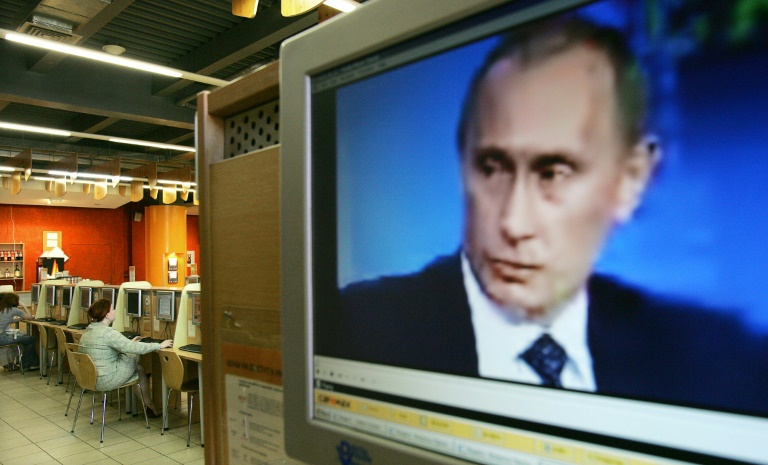
Russia sets back global progress on internet freedom: study

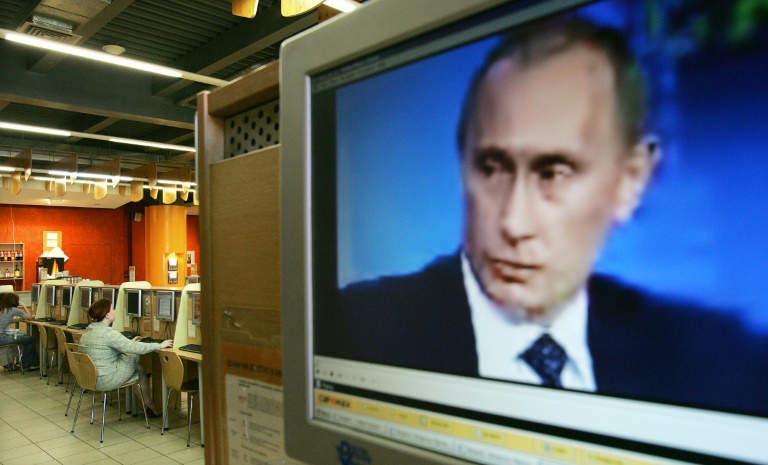
A Russian crackdown has driven a global decline in internet freedom although a number of smaller countries are making headway, Freedom House said in a study Tuesday.

The US democratic advocacy and research group found that internet freedom at the global level fell for the 12th straight year, led by Russia as well as by worsening conditions in Myanmar, Sudan and Libya.

But the report also found that a record 26 nations have made progress, with notable upticks in The Gambia, which is shaking off two decades of dictatorship, as well as often-criticized Zimbabwe, which has moved forward with a new law on data protection.

Allie Funk, the co-author of the report, said that civil society has begun to see fruits of advocacy around the world.

“Over the past three to five years, you’ve seen a massive emphasis on human rights online, from democratic governments putting a lot of money in internet freedom programming and tech companies — some of them — starting to pay attention to these issues,” said Funk, research director for technology and democracy at Freedom House.

“Russia’s invasion of Ukraine undermined internet freedom, not just in Russia and Ukraine but globally,” she said, but the outlook overall is “actually a lot more positive than we’ve had previously.”

Freedom House assesses nations on a 100-point scale on indicators including obstacles to internet access, limits on content and violations of users’ rights.

Russia’s rating dropped seven points to an all-time low as the Kremlin blocked websites as well as major social media platforms to eliminate other accounts of its “special military operation” in Ukraine.

China once again was given the worst mark on internet freedom. The report pointed to heavy censorship of information on the Covid pandemic response and the Beijing Winter Olympics as well as the detention of tennis star Peng Shuai after she alleged on social media that she was assaulted by former vice premier Zhang Gaoli.

The report said that the future of the internet will likely be decided by “swing states” — large nations such as Brazil, India and Nigeria that have mixed track records.

“Progress in these countries could ensure the survival of a free and open internet, or they could join authoritarian powers in promoting the more closed model of cyber sovereignty,” the report said.

The report found controls on the internet, such as blocking of sites or arrests of internet users, between June 2021 and May in all the 70 countries it studied except four — Canada, Costa Rica, Iceland and Japan.

Russia sets back global progress on internet freedom: study

A Russian crackdown has driven a global decline in internet freedom although a number of smaller countries are making headway, Freedom House said in a study Tuesday.

The US democratic advocacy and research group found that internet freedom at the global level fell for the 12th straight year, led by Russia as well as by worsening conditions in Myanmar, Sudan and Libya.

But the report also found that a record 26 nations have made progress, with notable upticks in The Gambia, which is shaking off two decades of dictatorship, as well as often-criticized Zimbabwe, which has moved forward with a new law on data protection.

Allie Funk, the co-author of the report, said that civil society has begun to see fruits of advocacy around the world.

“Over the past three to five years, you’ve seen a massive emphasis on human rights online, from democratic governments putting a lot of money in internet freedom programming and tech companies — some of them — starting to pay attention to these issues,” said Funk, research director for technology and democracy at Freedom House.

“Russia’s invasion of Ukraine undermined internet freedom, not just in Russia and Ukraine but globally,” she said, but the outlook overall is “actually a lot more positive than we’ve had previously.”

Freedom House assesses nations on a 100-point scale on indicators including obstacles to internet access, limits on content and violations of users’ rights.

Russia’s rating dropped seven points to an all-time low as the Kremlin blocked websites as well as major social media platforms to eliminate other accounts of its “special military operation” in Ukraine.

China once again was given the worst mark on internet freedom. The report pointed to heavy censorship of information on the Covid pandemic response and the Beijing Winter Olympics as well as the detention of tennis star Peng Shuai after she alleged on social media that she was assaulted by former vice premier Zhang Gaoli.

The report said that the future of the internet will likely be decided by “swing states” — large nations such as Brazil, India and Nigeria that have mixed track records.

“Progress in these countries could ensure the survival of a free and open internet, or they could join authoritarian powers in promoting the more closed model of cyber sovereignty,” the report said.

The report found controls on the internet, such as blocking of sites or arrests of internet users, between June 2021 and May in all the 70 countries it studied except four — Canada, Costa Rica, Iceland and Japan.

Stock markets climb on bright US earnings

Major global equities rose Tuesday, with sentiment soothed after Britain shredded its controversial budget and following a series of upbeat US earnings.

On Wall Street, the Dow Jones jumped two percent at the open after a day of strong trading in Asia and Europe, as several big banks updated with healthy data.

Goldman Sachs reported lower profits in its results Tuesday — but the firm still topped analyst expectations on strong trading revenues.

It follows positive earnings news from the Bank of America on Monday, days after JPMorgan Chase and others also logged solid numbers.

“Better-than-expected US earnings reports sparked a rally on Wall Street with positive momentum reverberating across European equities,” Interactive Investor analyst Victoria Scholar told AFP.

“Risk appetite is picking up after a volatile week for markets, as corporate results look to be the main driver of price action today.”

Later on Tuesday, investors will also digest results from Johnson & Johnson, Lockheed Martin and Netflix.

Analysts remain hopeful that an upbeat third-quarter results season could give a shot in the arm to markets which have been slammed this year on fears over inflation and Federal Reserve interest rate hikes.

But Craig Erlam, senior market analyst at OANDA, warned the upbeat investor sentiment might not last, saying there was a “strong feeling of a bear market rally about trading over the course of the last week.”

“From the post-US-inflation rebound to what has now been a strong start to the week — in part driven by the UK’s decision to no longer shoot itself in the foot — nothing about this screams sustainable.”

– European positivity –

Frankfurt stocks jumped nearly two percent on Tuesday as a key survey showed German investor confidence climbed slightly in October, but it still held at a low level.

London gains were muted after the Bank of England poured cold water on a newspaper report that it could delay the sale of government bonds again to help maintain market stability.

A BoE spokesperson described the Financial Times story as “inaccurate”.

But the British pound retreated slightly after jumping Monday above $1.14 as the UK government sensationally ripped up its controversial debt-fuelled budget.

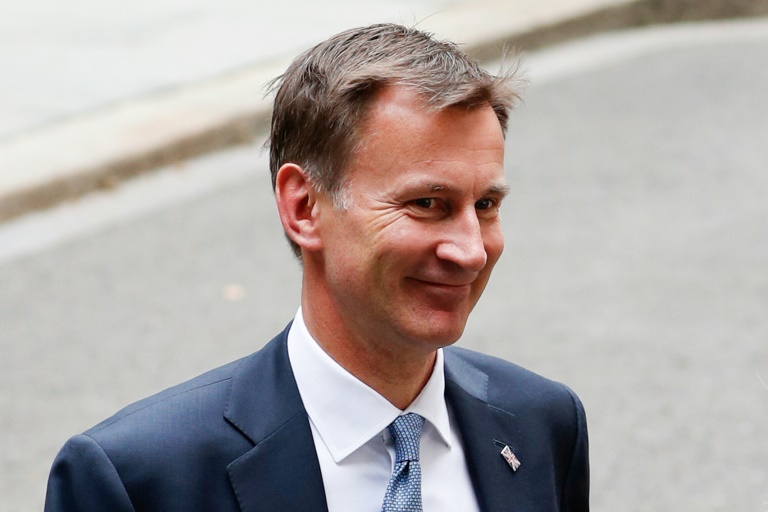
After a volatile few weeks during which the pound hit a record low, new finance minister Jeremy Hunt sought Monday to reassure investors as he scrapped tax cuts and warned of tough spending cuts.

Monday’s move, which dealt a blow to Prime Minister Liz Truss’s authority, sent sterling up as much as two percent at one point and the cost of government borrowing tumbled, while the FTSE 100 jumped.

“Investors continue to monitor the political and economic turbulence surrounding the UK,” noted XTB analyst Walid Koudmani.

Markets in China fluctuated a day after authorities delayed the release of third-quarter economic figures, which analysts said were likely to show the weakest growth since the pandemic owing to Covid-19 lockdowns.

The decision comes as the Communist Party holds a key gathering at which President Xi Jinping is expected to be handed a third term.

– Key figures around 1340 GMT –

London – FTSE 100: UP 1.0 percent at 6,985.33 points

Frankfurt – DAX: UP 2.1 percent at 12,931.76

Paris – CAC 40: UP 1.5 percent at 6,130.52

EURO STOXX 50: UP 1.9 percent at 3,504.68

New York – Dow: UP 2.1 percent at 30,828.15 

Tokyo – Nikkei 225: UP 1.4 percent at 27,156.14 (close)

Hong Kong – Hang Seng Index: UP 1.8 percent at 16,914.58 (close)

Shanghai – Composite: DOWN 0.1 percent at 3,080.96 (close)

Pound/dollar: DOWN at $1.1320 from $1.1358 on Monday

Dollar/yen: DOWN at 149.00 yen from 149.04 yen

Euro/dollar: UP at $0.9853 from $0.9841 

Euro/pound: UP at 87.07 pence from 86.64 pence

Brent North Sea crude: DOWN 0.3 percent at $91.30 per barrel

West Texas Intermediate: DOWN 0.6 percent at $84.03 per barrel

burs-rox/kjm

Ukraine warns situation 'critical' after Russia attacks power grid

Ukraine warned Tuesday of an emerging “critical” risk to its power grid after President Volodymyr Zelensky said that repeated Russian bombardments had destroyed one-third of the country’s power facilities as winter approaches.

That warning came as Russian forces claimed to have retaken territory from Ukrainian troops in the eastern Kharkiv region, Moscow’s first announced capture of a village there since being nearly entirely pushed out of the region last month.

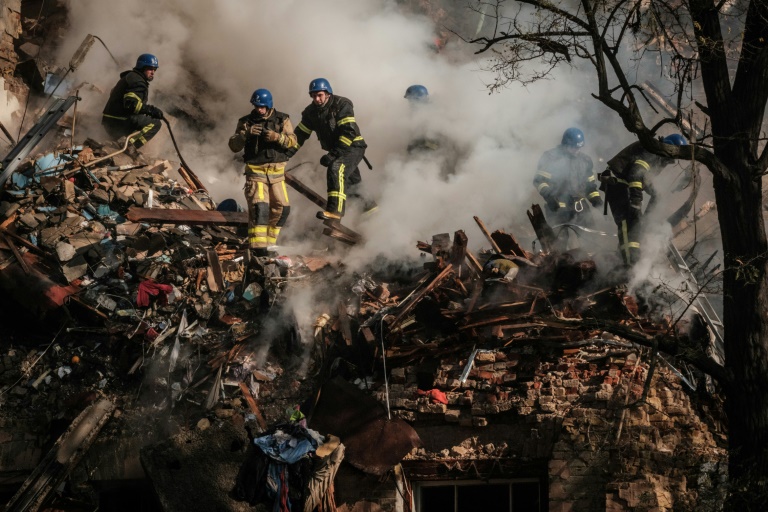
At the same time, Russian attacks rocked energy facilities in Kyiv and urban centres across the country, causing blackouts and disrupting water supplies, just one day after the capital was bombarded with a swarm of suicide drones.

“The situation is critical now across the country because our regions are dependent on one another… it’s necessary for the whole country to prepare for electricity, water and heating outages,” Kyrylo Tymoshenko, the deputy head of the Ukrainian president’s office, told Ukrainian television.

The strikes in the early hours of Tuesday hit Kyiv, Kharkiv in the east, Mykolaiv in the south and central regions of Dnipro and Zhytomyr, where officials said hospitals were running on backup generators.

Drones also bombarded Kyiv on Monday leaving five dead, officials said, in what the presidency described as an attack of desperation.

It was the second Monday in a row that Russia launched punitive strikes which military observers have said appear to be Moscow’s response to battlefield losses.

Zelensky described the repeated targeting of energy infrastructure as “another kind of Russian terrorist attacks”.

“Since October 10, 30 percent of Ukraine’s power stations have been destroyed, causing massive blackouts across the country,” the Ukrainian leader said on Twitter. 

– Hospitals on back-up power –

He said the attack meant that there was “no space left for negotiations with (President Vladimir) Putin’s regime”. 

Many towns and cities in the Zhytomyr region west of Kyiv and parts of the city of Dnipro in central Ukraine were without electricity, while power was restored to the southern city of Mykolaiv after strikes overnight. 

“Now the city is cut off from electricity and water supplies. Hospitals are working on backup power,” the mayor of Zhytomyr, Sergiy Sukhomlyn, said in a statement online.

In the northeast meanwhile, Ukraine’s second-largest city of Kharkiv some 40 kilometres (25 miles) from the border with Russia was hit with eight missiles, the regional governor said. 

In Kyiv, meanwhile, the DETK energy provider said its staff were “doing their best to restore electricity supply after the destruction of a critical infrastructure facility in Kyiv city.”

The mayor Vitali Klitschko said three people had been killed in Tuesday’s strikes.

Zelensky earlier said the fresh wave of nationwide strikes — which he said had damaged a residential buidling and flower market in Mykolaiv — was a Russian attempt to “terrorize and kill civilians.”

– Kremlin denies Iran drone use –

Following the wave of kamikaze drone attacks against Kyiv on Monday, Foreign Minister Dmytro Kuleba demanded EU sanctions on Iran, accusing Tehran of providing Russia with drones.

The Kremlin said Tuesday it has no knowledge of its army using Iranian drones in Ukraine.

“Russian tech is being used,” Kremlin spokesman Dmitry Peskov said, referring other questions to the defence ministry.

The defence ministry did however confirm strikes on energy facilities over the past 24 hours, saying it had used long-range and precision weapons.

Iran has denied exporting any weapons to either side, but the United States warned it would take action against companies and nations working with Tehran’s drone programme following the strikes in Kyiv.

Western officials however said it was “increasingly evident that Russia is pursuing a deliberate strategy of trying to destroy heating, electrical networks” and that Iranian drones were playing an “increasingly significant role” in the conflict.

Senior presidential aide Mykhaylo Podolyak meanwhile called for Russia to be excluded from the upcoming G20 summit.

With fighting ongoing across a sprawling frontline in east and southern Ukraine, its military said that over the past 24 hours it had shot down 38 Iranian-made Shahed-136 unmanned aerial vehicles.

Separately on Tuesday, Russian investigators said initial indications suggest that the crash of a military plane into a residential building near Ukraine was due to a technical malfunction.

Investigators said they were questioning the pilots of the Sukhoi Su-34, who managed to parachute out of the plane before it crashed on Monday evening into the nine-storey building, engulfing it in flames.

Ethiopia says govt forces seize three towns in Tigray

Ethiopia said on Tuesday its forces had seized three towns in war-stricken Tigray in an advance that coincides with UN warnings of a spiralling conflict and an “utterly staggering” toll on civilians.

International calls for a halt to the escalating violence in Tigray have been mounting since a failed attempt by the African Union earlier this month to bring the warring sides to the negotiating table and find a peaceful solution to the near two-year conflict.

“The ENDF (Ethiopian National Defence Force) has taken control of the towns of Shire, Alamata and Korem without fighting in urban areas,” the government said in a statement, adding that it would work with humanitarian agencies to provide aid to the areas now under army control.

The announcement was issued by Prime Minister Abiy Ahmed’s government after the rebel Tigray People’s Liberation Front (TPLF) said the strategic city of Shire and other areas had fallen to “invading forces”.

Troops from Ethiopia and neighbouring Eritrea had been waging an offensive near Shire for several days, with international alarm over the human cost of the renewed combat in Tigray.

Shire, home to about 100,000 people before the conflict, lies around 300 kilometres (180 miles) by road northwest of Tigray’s capital Mekele and about 50 kilometres from the border with Eritrea.

The Tigrayan statement said artillery strikes by the rival forces in areas they reached had killed or injured many civilians, and sent hundreds of thousands fleeing.

It is not possible to verify battlefield claims as Tigray is under a communications blackout and access to northern Ethiopia is restricted for journalists.

– ‘Alarming levels’ of violence –

Fighting resumed between pro-government forces and the TPLF in late August, with both sides blaming the other for shattering a five-month truce that had allowed limited amounts of aid into Tigray and raised a glimmer of hope for peace.

On Monday, UN Secretary General Antonio Guterres warned that the situation was “spiralling out of control”.

“Violence and destruction have reached alarming levels,” he said, calling for the “immediate withdrawal and disengagement” of Eritrean forces.

The European Union, the United States and the AU have also issued urgent appeals for a halt to the fighting, which is threatening the stability of the continent’s second most populous nation and the wider Horn of Africa region.

Washington and Brussels have also voiced particular concern about the presence of troops from Eritrea, whose forces were accused of brutal atrocities during the early phase of the war that first erupted in November 2020.

In two years of war, untold numbers of civilians have been killed, an estimated two million people driven from their homes while millions more are in need of aid, according to UN figures.

Tigray and its six million people are virtually cut off from the outside world, facing dire shortages of fuel, food and medicines and lacking basic services, including communications and electricity.

– ‘Risk of escalation’ –

Abiy’s government had said in a statement Monday it was “committed to the peaceful resolution of the conflict through the AU-led peace talks,” without addressing a call by the bloc for a ceasefire.

But it also accused the TPLF of colluding with unnamed “hostile foreign powers” and said it would pursue “defensive measures” to protect Ethiopia’s sovereignty and territorial integrity.

“It is thus imperative that the Government of Ethiopia assumes immediate control of all airports, other federal facilities, and installations in the region.”

On Tuesday, Abiy’s national security adviser Redwan Hussein insisted on Twitter that the conflict was not “spiralling… Now it’s just being extinguished and degenerating”.

But the UN’s new high commissioner for human rights, Volker Turk, warned of a “significant risk of escalation” as more troops and soldiers were mobilised. 

Air and artillery strikes in Tigray since August have inflicted an “utterly staggering” toll on civilians, he said in a statement issued in Geneva. 

Among those killed in recent incidents was a staff member of the International Rescue Committee aid group, who was part of a team delivering humanitarian assistance to pregnant women and malnourished children.   

“Under international law, indiscriminate attacks or attacks deliberately targeting civilians or civilian objects amount to war crimes,” Turk warned.

Goldman Sachs reports lower profits, unveils reorganization

Goldman Sachs reported lower profits Tuesday on a big drop in revenues tied to corporate merger advising, but the firm still topped analyst expectations on strong trading revenues.

The big New York investment bank, which unveiled details of a reorganization plan, pointed to a “significant decline in industry-wide completed mergers and acquisitions,” as well as lower revenues from debt and equity underwriting.

But that drag was offset by elevated volatility in financial markets during the period, which led to “significantly higher” revenues in interest rate products and currencies and boosted performance in commodities and credit products.

The firm also scored higher net interest income tied to the benefits of higher Federal Reserve interest rates on its lending.

Profits were $3.0 billion, down 44 percent from the 2021 period, while revenues declined 12 percent to $12.0 billion.

The results come on the heels of similar reports from other large banks that have seen earnings drop, but still exceed expectations.

Goldman increased its provisions for credit losses compared with the year-ago period, citing growth in its consumer business, charge-offs for bad loans and the impact of “continued broad concerns on the macroeconomic outlook.”

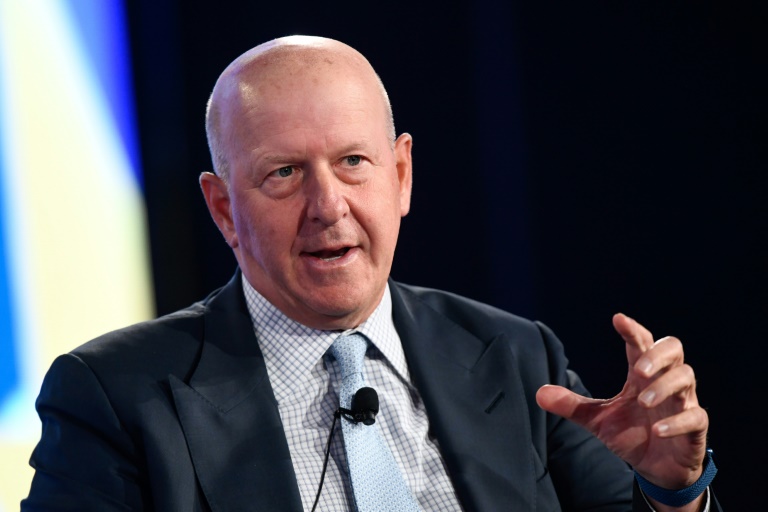
The investment bank’s chief executive, David Solomon, told CNBC early Tuesday that businesses should be “cautious” in light of increased volatility.

“That doesn’t mean for sure that we have a really difficult economic scenario,” Solomon said. “But on the distribution of outcomes, there’s a good chance that we have a recession in the United States.”

Goldman plans to streamline its businesses to three operating segments from four, one of which is “platform solutions,” which will include consumer partnerships and its GreenSky acquisition of a fintech platform for home improvement consumer loans.

Shares rose 3.2 percen to $316.60 in pre-market trading.

Britain summons China charge d'affaires over protest assault

Britain’s foreign office on Tuesday summoned the Chinese charge d’affaires in London over footage of a Hong Kong pro-democracy protester being assaulted in the grounds of a UK consulate.

The summons came after Beijing earlier Tuesday accused demonstrators of “illegally entering” the consulate in the northern British city of Manchester.

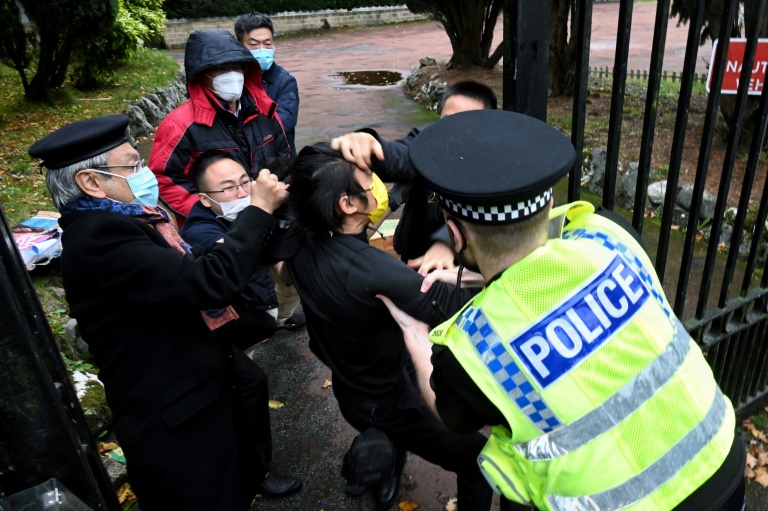
British police have said a group of men came out of the consulate during a peaceful demonstration on Sunday afternoon, dragging one of the protesters inside the grounds and assaulting him.

“The Foreign Secretary has issued a summons to the Chinese charge d’affaires at the Chinese Embassy in London to express… deep concern” over the incident “and to demand an explanation for the actions of the consulate staff”, a foreign office minister, Jesse Norman, told parliament.

But Chinese foreign ministry spokesman Wang Wenbin said the protesters were to blame and that “violation of the peace and dignity of China’s overseas embassies and consulates will not be tolerated”.

“The troublemakers illegally entered the Chinese Consulate-General in Manchester, endangering the security of the premises,” Wang said at a daily press briefing.

He urged the UK to “earnestly fulfil its duties and take effective measures to step up protection of the premises and personnel of the Chinese embassy and consulates”.

The victim, a man in his 30s, suffered injuries and spent the night in hospital, local police said.

Video footage posted on Twitter showed a grey-haired man kicking protesters’ banners and scuffling with a group of demonstrators at the gates of the consulate.

A group of men were then shown punching a protester lying on the ground inside the mission’s gates.

The BBC reported that the injured activist was from Hong Kong, which was engulfed by massive pro-democracy protests in 2019 before Beijing imposed a harsh national security law to mute dissent.

“They dragged me inside. They beat me up,” he told the broadcaster.

The protest took place as China opened its five-yearly Communist Party Congress, where President Xi Jinping is widely expected to be handed a historic third term in power.

Greater Manchester Police said in a statement that around 40 people had gathered outside the consulate for a planned peaceful protest.

Shortly before 4:00 pm (1500 GMT) “a small group of men came out of the building and a man was dragged into the consulate grounds and assaulted”, police said.

“Due to our fears for the safety of the man, officers intervened and removed the victim from the consulate grounds.”

– ‘Denial of free speech’ –

Police have said they had not made any arrests and asked for witnesses to get in touch and pass on any footage of the incident.

Several senior British politicians have condemned the use of violence against a protester.

The newly appointed chair of the UK parliament’s foreign affairs committee, Alicia Kearns, tweeted that interior and foreign ministers Suella Braverman and James Cleverly “need to urgently investigate”.

The Chinese Communist Party “will not import their beating of protestors and denial of free speech to British streets”, she added.

And influential former Conservative Party leader Iain Duncan Smith called for the government to “demand a full apology from the Chinese ambassador to the UK”.

Nathan Law, a Hong Kong activist who has fled to the UK, tweeted: “If the consulate staff responsible are not held accountable, Hongkongers would live in fear of being kidnapped and persecuted.”

He called for Cleverly and Braverman to “investigate and protect our community and people in the UK”.

Who could replace UK's under-fire premier Liz Truss?

UK Prime Minister Liz Truss has vowed to lead Britain’s Conservatives into the next election — due within two years — but after a disastrous six weeks in Downing Street many doubt she will remain leader long.

Here are the main contenders who could take over.

– Rishi Sunak – 

Truss easily beat the former chancellor of the exchequer in this summer’s Tory leadership contest, winning party members over with promises to slash taxes and regulations without curbing government spending.

Sunak, 42, repeatedly warned that her plans to fund the proposals through extra borrowing were reckless and could worsen decades-high inflation as well as market confidence in the UK.

Now that he has been proved entirely right — and Truss has scrapped her plans and replaced her previous finance minister with the Sunak-backing Jeremy Hunt — some think he is the best-placed Conservative MP to replace Truss.

Sunak garnered the support of the largest number of Tory lawmakers in the early rounds of the recent leadership contest and is thought to still enjoy considerable support within the parliamentary party.

A new YouGov poll on Tuesday found he has the best ratings of the touted alternatives to Truss — albeit still with an overall net favourability rating of -18.

But he is also now viewed as a divisive figure. Many party members, who get the final say on who leads the party, are unwilling to forgive him for his role in ousting ex-prime minister Boris Johnson.

– Boris Johnson – 

The former premier left office early last month after a revolt among his cabinet and Tory MPs, sparked by the resignation of Sunak and others from his faltering government following months of controversies.

Encouraged by several strong hints from Johnson himself, speculation has swirled ever since that he would attempt an eventual comeback — though few thought that could be feasible this quickly.

The ever-ebullient Brexit figurehead remains popular with a section of Conservative MPs and the party but his brand among the wider electorate was severely damaged by his scandal-tainted three-year tenure.

Tuesday’s YouGov poll showed the 58-year-old is far more popular than Truss. Yet around two-thirds of those asked had an unfavourable opinion of him.

Johnson has kept a low profile since resigning, giving a paid speech in the United States last week but no indications of his views on the current crises gripping the UK.

He was thought to favour Truss in the summer leadership contest — although his former top aide-turned-arch-critic Dominic Cummings argued that was because he expected her tenure to be disastrous and short-lived, paving the way for his return. 

– Jeremy Hunt – 

Truss’s new finance minister has been a candidate in the Tories’ past two leadership contests. He lost in the final run-off in 2019 to Johnson and finished in last place in the first ballot of MPs this year.

But his appointment to the second most powerful job in government has returned the former foreign secretary from the political wilderness to centre-stage, and his assured performance so far has bolstered his standing.

As Conservative MPs plot Truss’s ousting, some suggest Hunt — an ex-entrepreneur who garners most support from the centrist wing of the party — could emerge as a competent unity candidate.

But the 55-year-old would enjoy even less of a democratic mandate than most of the rival contenders, probably heightening calls for a general election which — based on current polling — the Tories would lose by a landslide.

– Penny Mordaunt – 

The current cabinet member was an early favourite to succeed Johnson and came within eight votes of beating Truss to the run-off against Sunak.

The former defence and trade minister, who is popular with the Tories’ grassroots, was a strong Brexit supporter and key figure in the 2016 “Leave” campaign.

But she faced criticism in the recent leadership race from Conservative colleagues, with some accusing her of being ineffective in previous government roles.

Mordaunt’s profile rose this week after she was sent out on Monday in place of Truss to answer an urgent question in parliament from the Labour opposition about the recent economic turmoil.

Despite being forced to explain that the prime minister was “not under a desk” — in response to accusations that Truss was in hiding — Mordaunt was seen to have coped well with a febrile House of Commons.

Reports on Tuesday said a senior ally of the 49-year-old held private talks with Sunak last week about forming a unity ticket but the ex-finance minister rebuffed the offer because he does not want to be the junior partner.

French government set to overrule lawmakers in budget standoff

The French government is poised to wield a rarely used constitutional weapon to force its budget through parliament, where opposition groups have stymied the text for weeks with rival amendments, officials said Tuesday.

The impasse underscores the weakened position of President Emmanuel Macron since his centrist party lost its majority in parliamentary elections last spring, just weeks after his own re-election.

Government spokesman Olivier Veran said Prime Minister Elisabeth Borne would “probably” invoke article 49.3 of the constitution on Wednesday, which would end debate and pass the 2023 budget without a vote.

“For now, we will see how the debates progress” after several stormy sessions since last week, Veran told France 2 television.

If article 49.3 is used, hard-left and far-right opponents are expected to call for a no-confidence vote to force the government’s resignation.

That vote is highly unlikely to pass, however, since the conservative Republicans have already said they will not join a bid to bring Macron’s administration down.

But opponents from across the political spectrum have seized on the budget battle, forcing amendments such as a tax on corporate “super-dividends” and a new “exit tax” on people who move wealth out of France — which Macron abolished in his first term.

It is also setting up a bigger fight over Macron’s pensions overhaul that would push back the retirement age to 64 or 65, which he wants to enact in the coming months.

Resorting to article 49.3 would expose Macron to claims of running roughshod over parliament despite his vow last month for more inclusive governance and a “broad national consultation” on “crucial choices.”

His government seems aware of the risk, coming at a time of growing public discontent over soaring inflation.

“We need to give this debate a chance, all the more so because the French don’t really like the 49.3. These tools, like requisitions, should be used with caution,” Borne told lawmakers in Macron’s Renaissance party on Tuesday, according to one participant.

Last week, the government ordered striking refinery employees at TotalEnergies back to work at some fuel depots to ease the shortages causing huge waits at service stations across the country.

Veran said further such “requisitions” could come if the strike continues, though he declined to comment on workers’ demands for a 10 percent pay hike, saying “it’s not for the government to get involved in labour debates in a private company.”

Close Bitnami banner
Bitnami