World

Counting starts in latest union vote at Amazon US warehouse

US labor officials began counting ballots in New York Tuesday in the latest unionization drive at Amazon after workers delivered the retail behemoth a split decision in two earlier votes.

Over the last few days, employees at the ALB1 warehouse near Albany in upstate New York cast ballots in the third vote on a unionization petition by the Amazon Labor Union (ALU).

The National Labor Relations Board (NLRB) said it expects the counting to last several hours, concluding later Tuesday.

The union estimates that 400 hourly workers are eligible to vote. Seasonal employees, information technology employees and truck drivers were among the workers excluded from voting, according to an NLRB email.

Established in 2021 by a small group of current and ex-employees frustrated at Amazon’s workforce policies during the pandemic, ALU scored an upset win in April at the 8,000-employee JFK8 warehouse in Staten Island in New York City.

Led by its president Christian Smalls, a former worker at the Staten Island site, the ALU win gave a jolt to the US organized labor movement after a solid majority voted for representation.

However, just weeks later, the ALU suffered a setback when the LDJ5 warehouse, also in Staten Island, voted against the group.

Amazon has refused to accept the election outcome in the first Staten Island vote, arguing the results should be tossed out in light of alleged improprieties.

Last month, an NLRB official rejected Amazon’s claims as groundless after a 24-day hearing on the e-commerce giant’s claims. 

Russia blames 'malfunction' for jet crashing into flats

Russia said Tuesday that a technical malfunction had caused a military plane to crash a day earlier into a residential building near Ukraine, killing over a dozen people and spurring an outpouring among locals.

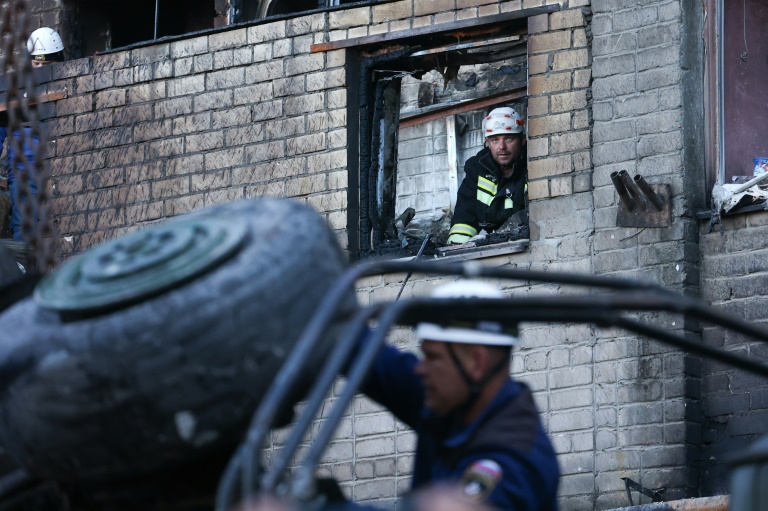
The crash late Monday ignited a towering blaze in the Soviet-style housing block, but by morning rescue workers were clearing the charred debris and grieving locals were leaving flowers at a memorial.

Authorities reported a 15th death on Tuesday due to the Sukhoi Su-34 aircraft’s slamming into the building in Yeysk, which sits across a narrow part of the Azov Sea from the Russian-held port of Mariupol in Ukraine.

A Yeysk resident told state television channel Rossiya-24 that two of her friends who had only recently bought a flat in the building were killed.

“They just took a mortgage. We are in mourning,” she said. 

Nineteen people were injured, four of them — including a five-year-old girl and a teenage boy — were critically wounded, a regional official said.

Investigators announced they were questioning the pilots, who managed to parachute out of the plane before it crashed into the nine-storey building, engulfing it in flames.

Amateur footage on social media showed locals running to one of the pilots who lay on the ground, still attached to his parachute. 

The southern seaside town was in shock. 

One local, Natalia Kush, told state media she had seen the pilot ejecting from the jet from her window.

– ‘A terrible noise’ –

“I heard a terrible explosion. I looked outside and I saw the pilot flying right by me,” she told the Rossiya 24 news channel, visibly shaken. 

The Investigative Committee, which probes serious crimes, said it had launched a criminal enquiry into flight safety violations.

“The pilots who managed to eject, as well as the airfield personnel, are being questioned,” the investigators said. 

It also said it had “seized fuel samples at the departure aerodrome” and “flight recorders at the site of the crash”.

On Monday, Russia’s defence ministry said the jet collided with the block, which was home to around 600 people, during a training flight.

Veniamin Kondratiev, the governor of the Krasnodar region that includes Yeysk, said that the region will have a three-day period of mourning.

He said residents of the building had been put in temporary accommodation and were receiving psychological help. 

Locals meanwhile were leaving flowers and children’s toys at a makeshift memorial near the building, where a black board read “Yeysk. 17.10.2022. We remember. We mourn.”

Locals placed red roses, candles and smiling teddy bears around the board, in memory of the three children killed by the crash. 

The Kremlin said Tuesday that President Vladimir Putin “expresses deep condolences to those families who lost their loves ones as a result of this disaster.”

Images of the dramatic crash showed the burnt-out fuselage of the plane, which snapped in two on impact.

One of its mangled wings bore a red star — the symbol of the Russian army.

The remains of wrecked parked cars littered the foot of the building, trapped when the blaze engulfed at least five of its floors.

Thousands strike across France amid fuel shortages

Thousands of people took to the streets across France on Tuesday and commuters faced delays as unions staged a nationwide strike for higher salaries, as they remain in deadlock with the government over walkouts at oil depots that have sparked fuel shortages.

“It’s a shame it had to come to blockades for something to happen,” said Nadine, a 45-year-old employee in the metalworking industry who was among more than 1,000 demonstrators in Strasbourg, northeast France.

“But today if we don’t block anything, no one listens,” she said.

Among a crowd of some 1,800 marching in the southern city of Montpellier, Magali Mallet, a medical secretary, said she was there because many workers were “living on a knife’s edge”.

A transport walkout did not cause major disruptions nationwide, despite making commuters travelling into the capital from its suburbs late on Tuesday morning.

The broader strike comes after workers at several oil refineries and depots operated by energy giant TotalEnergies voted to extend walkouts.

Their industrial action has seriously disrupted fuel distribution across the country, particularly in northern and central France and the Paris region.

Motorists have scrambled to fill tanks as the fuel strike, which has lasted for nearly three weeks, has had a knock-on effect across all sectors of the economy.

– ‘Serious consequences’ –

Prime Minister Elisabeth Borne said that less than a quarter of petrol stations nationwide were experiencing shortages, down from 30 percent previously.

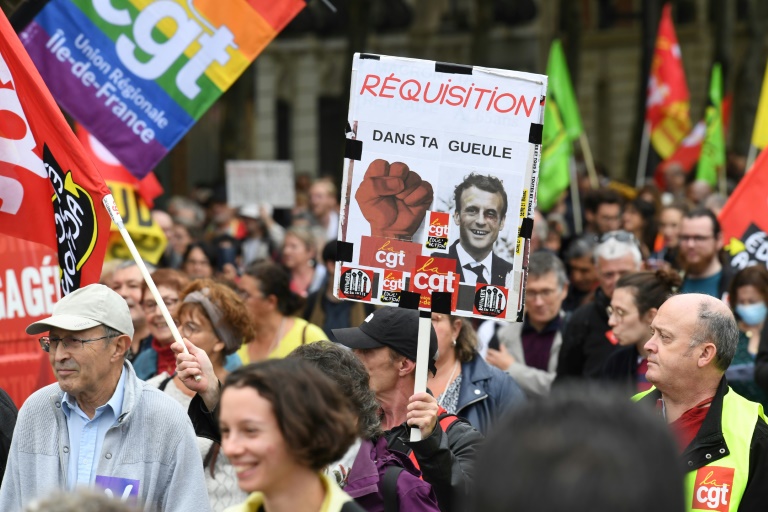
President Emmanuel Macron’s government used requisitioning powers to force some strikers back to open fuel depots, a move that infuriated unions but has so far been upheld in the courts.

But his government is also pushing bosses to acknowledge salary demands, with Interior Minister Gerald Darmanin saying Tuesday that there was “a salary problem” in France, and urging employers “to increase pay when possible”.

Workers have also been striking in the nuclear power sector, potentially hampering efforts to restart reactors down for maintenance or safety work.

At the northern Gravelines nuclear plant, 32-year-old technician Henia Abidi said she was not usually one to protest.

“But now since it’s about inflation and our salaries, I really feel concerned. I won’t give up,” she said, adding that everything from food to fuel had become expensive.

Power grid operator RTE warned Tuesday that “any extension of the social movement” at the nuclear power stations would have “serious consequences” on electricity provision this winter.

Macron said last week only 30 out of 56 nuclear reactors were online, while the country hoped to have 45 working by January.

But French state energy provider EDF said Saturday it was postponing plans to bring five of the halted reactors back on stream.

The leftist CGT and FO unions called the nationwide strike Tuesday for higher salaries, and against government requisitions of oil installations.

The action is the unions’ biggest challenge to Macron since he won a new presidential term in May.

The Liberation newspaper published a front-page caricature of Macron swept off his feet and clinging on to the edge of a giant megaphone blasting the message of angry protesters.

– Tense autumn? –

Unions in other industries and in the public sector had also announced action to protest against the twin impact of soaring energy prices and overall inflation on the cost of living.

Beyond transport workers, unions had hoped to bring out staff in sectors such as the food industry and healthcare.

The education ministry said less than six percent of its workers had walked out, though that rate reached 23 percent for vocational schools.

Their action will kick off what could be a tense autumn and winter as Macron also seeks to implement his flagship domestic policy of raising the French retirement age.

The economic squeeze partly caused by Russia’s invasion of Ukraine, along with the failure of Macron’s party to secure an overall majority in June legislative polls, only adds to the magnitude of the task.

A poll by the Elabe group found that one in three French people would be prepared to take part in a strike or protest in the coming weeks to demand pay increases as inflation soars. 

sl-burs/ah/js/rox

Thousands strike across France amid fuel shortages

Thousands of people took to the streets across France on Tuesday and commuters faced delays as unions staged a nationwide strike for higher salaries, as they remain in deadlock with the government over walkouts at oil depots that have sparked fuel shortages.

“It’s a shame it had to come to blockades for something to happen,” said Nadine, a 45-year-old employee in the metalworking industry who was among more than 1,000 demonstrators in Strasbourg, northeast France.

“But today if we don’t block anything, no one listens,” she said.

Among a crowd of some 1,800 marching in the southern city of Montpellier, Magali Mallet, a medical secretary, said she was there because many workers were “living on a knife’s edge”.

A transport walkout did not cause major disruptions nationwide, despite making commuters travelling into the capital from its suburbs late on Tuesday morning.

The broader strike comes after workers at several oil refineries and depots operated by energy giant TotalEnergies voted to extend walkouts.

Their industrial action has seriously disrupted fuel distribution across the country, particularly in northern and central France and the Paris region.

Motorists have scrambled to fill tanks as the fuel strike, which has lasted for nearly three weeks, has had a knock-on effect across all sectors of the economy.

– ‘Serious consequences’ –

Prime Minister Elisabeth Borne said that less than a quarter of petrol stations nationwide were experiencing shortages, down from 30 percent previously.

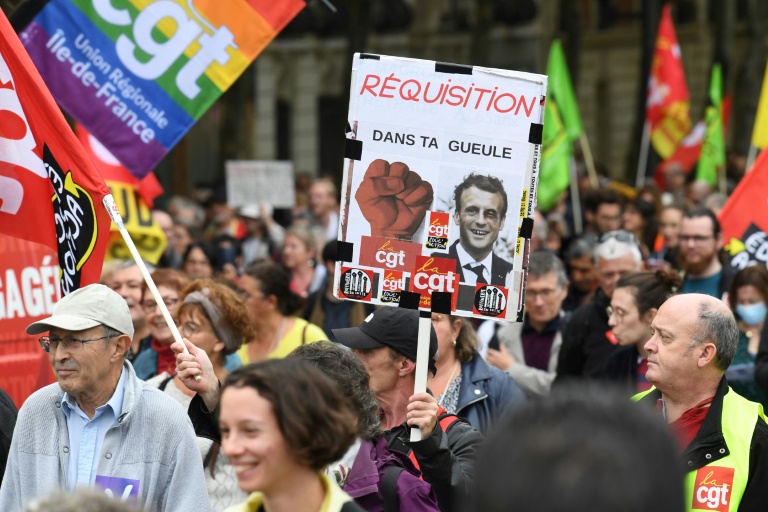
President Emmanuel Macron’s government used requisitioning powers to force some strikers back to open fuel depots, a move that infuriated unions but has so far been upheld in the courts.

But his government is also pushing bosses to acknowledge salary demands, with Interior Minister Gerald Darmanin saying Tuesday that there was “a salary problem” in France, and urging employers “to increase pay when possible”.

Workers have also been striking in the nuclear power sector, potentially hampering efforts to restart reactors down for maintenance or safety work.

At the northern Gravelines nuclear plant, 32-year-old technician Henia Abidi said she was not usually one to protest.

“But now since it’s about inflation and our salaries, I really feel concerned. I won’t give up,” she said, adding that everything from food to fuel had become expensive.

Power grid operator RTE warned Tuesday that “any extension of the social movement” at the nuclear power stations would have “serious consequences” on electricity provision this winter.

Macron said last week only 30 out of 56 nuclear reactors were online, while the country hoped to have 45 working by January.

But French state energy provider EDF said Saturday it was postponing plans to bring five of the halted reactors back on stream.

The leftist CGT and FO unions called the nationwide strike Tuesday for higher salaries, and against government requisitions of oil installations.

The action is the unions’ biggest challenge to Macron since he won a new presidential term in May.

The Liberation newspaper published a front-page caricature of Macron swept off his feet and clinging on to the edge of a giant megaphone blasting the message of angry protesters.

– Tense autumn? –

Unions in other industries and in the public sector had also announced action to protest against the twin impact of soaring energy prices and overall inflation on the cost of living.

Beyond transport workers, unions had hoped to bring out staff in sectors such as the food industry and healthcare.

The education ministry said less than six percent of its workers had walked out, though that rate reached 23 percent for vocational schools.

Their action will kick off what could be a tense autumn and winter as Macron also seeks to implement his flagship domestic policy of raising the French retirement age.

The economic squeeze partly caused by Russia’s invasion of Ukraine, along with the failure of Macron’s party to secure an overall majority in June legislative polls, only adds to the magnitude of the task.

A poll by the Elabe group found that one in three French people would be prepared to take part in a strike or protest in the coming weeks to demand pay increases as inflation soars. 

sl-burs/ah/js/rox

UK PM Truss battles to stay in power after tax reforms trashed

Britain’s Liz Truss on Tuesday battled to salvage her position as prime minister, after market turmoil at her tax-slashing plans forced a series of humiliating U-turns that have put her job in jeopardy.

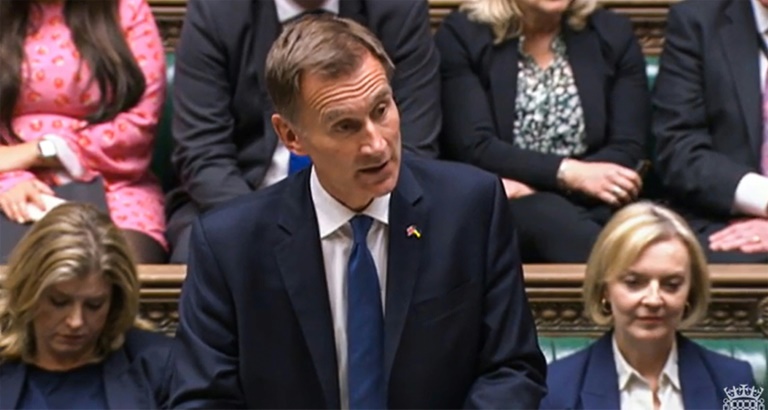
The beleaguered leader — only six weeks into her tenure — met senior ministers for their weekly cabinet, the day after new chancellor of the exchequer Jeremy Hunt announced almost all her debt-fuelled tax cuts would be reversed.

Truss reiterated her government “had gone too far and too fast” in its mini-budget unveiled last month, her office said, as she bids to stabilise weeks of economic and political tumult sparked by the package.

Hunt, who replaced her sacked ally Kwasi Kwarteng last Friday, urged ministers “to look at finding ways to save taxpayers’ money,” ahead of detailing the government’s revised medium-term fiscal plans on Halloween.

“The cabinet are fully supportive of the prime minister and it was an effective and in-depth discussion,” Truss’s spokesman told reporters, denying there were any calls for the embattled premier to resign.

But even Conservative MPs are publicly joining opposition lawmakers in declaring her position untenable, with the 47-year-old’s credibility seemingly in tatters.

Less than two months after electing her Tory leader, a new YouGov poll of the party’s membership found a stunning reversal in her fortunes, with a majority now saying she should go.

The pollster also found she was the most unpopular leader it has ever tracked, scoring a net favourability of -70.

“Unprecedented unpopularity,” tweeted YouGov’s Patrick English.

– Spending cuts –

The government’s September 23 mini-budget sent bond yields spiking and the pound collapsing to a record dollar-low on fears of rocketing UK debt.

Truss had already staged two embarrassing U-turns, scrapping tax cuts for the richest earners and on company profits, before then firing close friend Kwarteng.

On Monday, his replacement Hunt announced that not only would the remaining tax curbs be reversed, but a previously two-year cap on consumer energy bills would now be limited to six months.

He estimated all the changes would raise about £32 billion ($36 billion) per year, after economists estimated the government faced a £60-billion black hole. Hunt also warned of tough spending cuts.

His interventions sent the British pound soaring against the dollar and euro, while bond yields dipped.

Truss sought to draw a line under the largely self-inflicted crisis by apologising for the first time in a BBC interview Monday. But she insisted she would remain in office.

It followed a day branded farcical by critics, in which she failed to turn up to an urgent question tabled by the leader of the main Labour opposition in parliament, instead sending cabinet colleague Penny Mordaunt.

After she doggedly defended the prime minister for an hour, Truss then appeared sheepishly to take her place next to Hunt as he announced the dismemberment of her economic agenda. 

She is set to return to the House of Commons on Wednesday for a session of Prime Minister’s Questions seen as a crucial, possibly last, opportunity to reassert her authority.

– ‘Ghost PM’ –

Following Monday’s performance, The Sun tabloid branded Truss “the Ghost PM”, while left-wing tabloid The Mirror called the situation a “catastrophic humiliation”.

Even The Daily Telegraph, typically loyal to Conservatives, questioned her future. 

“It’s hard to conceive of a more serious political and economic crisis in recent times than that which Britain now faces,” its editorial said.

The paper added she faced “the ignominy” of becoming the country’s second shortest-serving prime minister in history, unless her own MPs gave her “breathing space”.

But that appears increasingly unlikely, as reports continue of Tory lawmakers plotting to oust her.

Under current party rules, she cannot be challenged internally through a no-confidence vote in the first year, but speculation is rife they could be changed to allow for a ballot.

Conservative MP Roger Gale said Monday Hunt had become “de facto prime minister”, as several MPs publicly urged her to resign.

“I think her position is untenable,” Conservative MP Charles Walker told Sky News.

“If she doesn’t go right now, it will not be her decision.”

Armed forces minister James Heappey said Tuesday that Truss had “owned” her mistake but cautioned that she could not repeat such errors.

“Given how skittish our politics are… I don’t think that there’s the opportunity to make any more mistakes,” he told Sky News.


Britain summons China diplomat over protest assault

The UK’s foreign office on Tuesday summoned a top Chinese diplomat in London over footage of a Hong Kong pro-democracy protester being assaulted in the grounds of a Chinese consulate in Britain.

The summons came after Beijing earlier Tuesday accused demonstrators of “illegally entering” the consulate in the northern British city of Manchester.

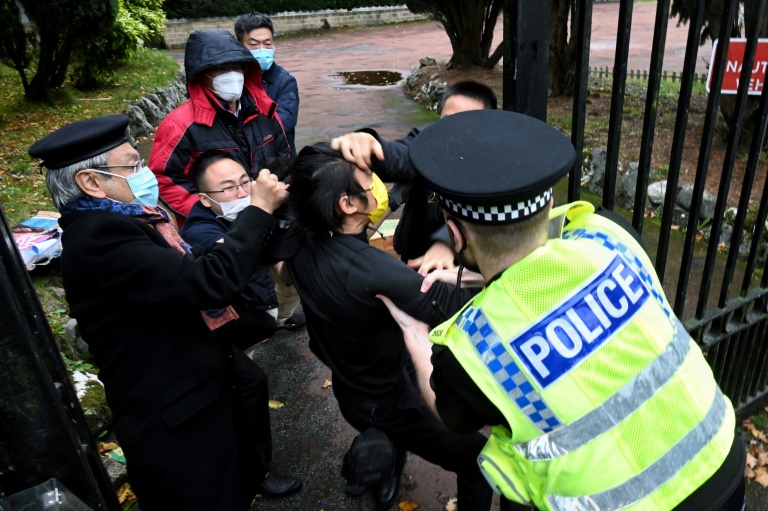
British police have said a group of men came out of the consulate during a peaceful demonstration on Sunday afternoon, dragging one of the protesters inside the grounds and assaulting him.

“The Foreign Secretary has issued a summons to the Chinese charge d’affaires at the Chinese Embassy in London to express… deep concern” over the incident “and to demand an explanation for the actions of the consulate staff”, a foreign office minister, Jesse Norman, told parliament.

But Chinese foreign ministry spokesman Wang Wenbin said the protesters were to blame and that “violation of the peace and dignity of China’s overseas embassies and consulates will not be tolerated”.

“The troublemakers illegally entered the Chinese Consulate-General in Manchester, endangering the security of the premises,” Wang said at a daily press briefing.

He urged the UK to “earnestly fulfil its duties and take effective measures to step up protection of the premises and personnel of the Chinese embassy and consulates”.

The man involved in the incident, who is in his 30s, sustained injuries and spent the night in hospital, local police said.

Video footage posted on Twitter showed a grey-haired man kicking protesters’ banners and scuffling with a group of demonstrators at the gates of the consulate.

A group of men were then shown punching a protester lying on the ground inside the mission’s gates.

The newly appointed chair of the UK parliament’s foreign affairs committee, Alicia Kearns, accused the Chinese consul-general Zheng Xiyuan, one of China’s most senior UK diplomats, of being at the scene and “ripping down posters and peaceful protest.”

China has not responded to the claims.

The BBC reported that the injured activist was from Hong Kong, which was engulfed by massive pro-democracy protests in 2019 before Beijing imposed a harsh national security law to mute dissent.

“They dragged me inside. They beat me up,” he told the broadcaster.

The protest took place as China opened its five-yearly Communist Party Congress, where President Xi Jinping is widely expected to be handed a historic third term in power.

Greater Manchester Police said in a statement that around 40 people had gathered outside the consulate for a planned peaceful protest.

Shortly before 4:00 pm (1500 GMT) “a small group of men came out of the building and a man was dragged into the consulate grounds and assaulted”, police said.

“Due to our fears for the safety of the man, officers intervened and removed the victim from the consulate grounds.”

– ‘Denial of free speech’ –

Police have said they had not made any arrests, and asked for witnesses to get in touch and pass on any footage of the incident.

Several senior British politicians have condemned the use of violence against a protester.

Kearns, tweeted that interior and foreign ministers Suella Braverman and James Cleverly “need to urgently investigate”.

The Chinese Communist Party “will not import their beating of protestors and denial of free speech to British streets”, she added.

And influential former Conservative Party leader Iain Duncan Smith called for the government to “demand a full apology from the Chinese ambassador to the UK”.

Nathan Law, a Hong Kong activist who has fled to the UK, tweeted: “If the consulate staff responsible are not held accountable, Hongkongers would live in fear of being kidnapped and persecuted.”

He called for Cleverly and Braverman to “investigate and protect our community and people in the UK”.

Alleged accomplices on trial over Vienna jihadist shooting

Six men accused of helping a gunman who carried out Austria’s first deadly jihadist attack on Tuesday all pleaded not guilty to the main charges as their trial opened in a Vienna court.

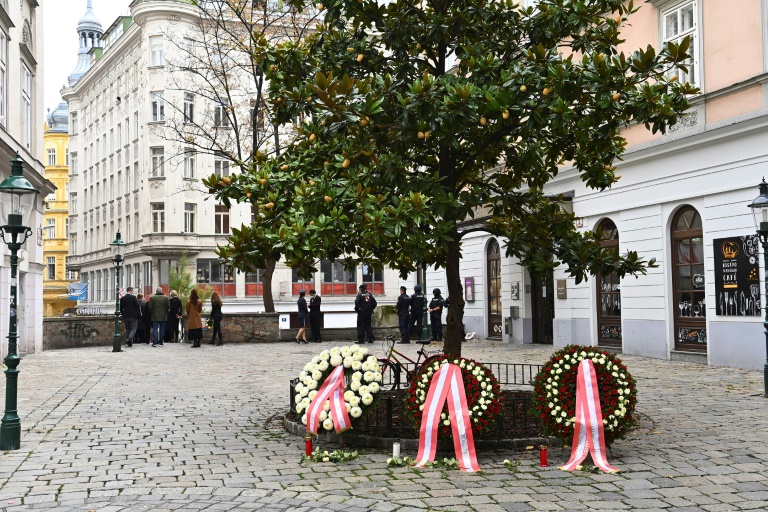
Convicted Islamic State group sympathiser Kujtim Fejzulai went on a shooting rampage on November 2, 2020 in downtown Vienna, killing four and wounding 23 others before police shot him dead.

In the wake of the EU member’s deadliest shooting in decades, the Austrian government and in particular its intelligence service were accused of failing to monitor the Islamist movement in the country.

The six defendants — four Austrians, a Chechen and a Kosovar — were not directly involved in the deadly attack, but are suspected of actively helping Fejzulai prepare for the shooting, prosecutors said.

The lead prosecutor, who cannot be named due to security concerns, said evidence painted an “unambigious and very clear picture” of the men’s involvement, describing the attack as “malicious, almost bestial”.

– ‘Scapegoats’ –

The six men — aged between 21 and 32 years old — are accused of “enabling… or otherwise promoting” the execution of the crimes “due to their shared affiliation with the radical Islamist scene and the terrorist organisation IS Islamic State,” according to the charge sheet.

The accused face charges ranging from participating in terrorist crimes in connection with murder to involvement or membership in a terrorist group.

Four of them could be sentenced to life in prison if found guilty, while the two others face up to 20 years in jail with the prosecution demanding the maximum penalties.

All of them pleaded not guilty to the main charges, while two pleaded guilty to arms trafficking. 

Their lawyers argued they had been unaware of what Fejzulai intended to do.

With the help of some of the accused, the gunman — an Austrian citizen whose parents are from North Macedonia — was allegedly able to obtain the weapons and the ammunition needed for the attack, while others provided logistical aid or encouraged Fejzulai, according to prosecutors.

Their lawyers argued that the evidence was only “circumstantial”, with one of them saying “the chain of evidence is inconclusive and crumbles”.

Another accused prosecutors of trying to find “scapegoats” to hide the authorities’ failings to stop the attack.

At the start of the trial, all six were led into the crowded courtroom, escorted by armed guards under tight security. Cameras were barred from the room.

All except one have been held in custody on remand in the lead-up to the trial.

– ‘Ensure justice is done’ –

The trial is scheduled to resume at the beginning of December. Verdicts are not expected before February. 

Lawyer Mathias Burger, acting for the family of 21-year-old Nedzip Vrenezi, who was shot dead first by Fejzulai during the attack, told AFP in an interview ahead of the opening of the trial that the family “still suffers to this day” from what happened to their son. 

The victim’s family had received compensation from the Austrian state, but his clients’ main interest was to “ensure justice was done”, Burger said.

During the rampage, Fejzulai opened fire on passersby with a Kalashnikov in central Vienna.

In 2019, Fejzulai had been convicted and sentenced to 22 months in prison for trying to join the Islamic State group in Syria, before being arrested in Turkey and extradited to Austria.

Last year, Austria adopted a heavily criticised anti-terror law that was formulated in the wake of the attack and allows for increased surveillance.

German cybersecurity chief sacked over alleged Russia ties

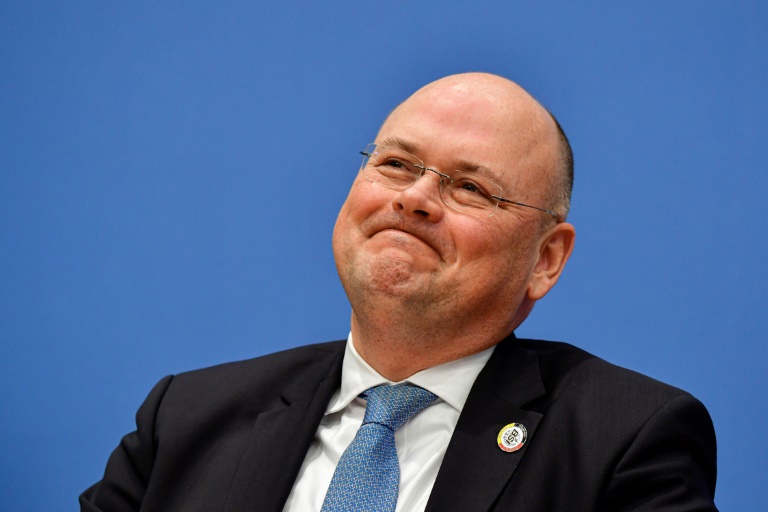
Germany’s cybersecurity chief was sacked on Tuesday after a TV satire show accused him of having ties to Russian intelligence services, with the country on high alert over potential sabotage activities by Moscow.

Arne Schoenbohm, head of the Federal Cyber Security Authority (BSI), had been at the centre of intense speculation since the popular show accused him in early October of contacts with Russia.

He has now been relieved of his duties “with immediate effect”, an interior ministry spokesman told AFP on Tuesday, citing “the allegations revealed and widely discussed in the media” as one of the reasons behind the move.

The allegations “have permanently damaged the necessary public trust” in Schoenbohm as head of the authority, the spokesman said. 

“This is all the more true in the current crisis situation regarding Russian hybrid warfare,” he added.

Schoenbohm was accused in the satire show on broadcaster ZDF of contacts with Russian secret services through an association he co-founded in 2012 known as the Cyber Security Council Germany.

One member of that association, Berlin cybersecurity company Protelion, reportedly operated under the name “Infotecs GmbH” until the end of March. 

The report said this was a subsidiary of Russian cybersecurity company OAO Infotecs, founded by a former employee of the Russian KGB intelligence service.

According to other German media reports, Schoenbohm had maintained contact with the Cyber Security Council Germany until recently and the interior ministry had on August 24 approved a request for him to give a speech to the association.

The interior ministry spokesman on Tuesday said all allegations against Schoenbohm would be “thoroughly and emphatically examined and subjected to a detailed evaluation”. 

– ‘Great annoyance’ –

The cybersecurity chief would be “presumed innocent” in the meantime, he said.

The Handelsblatt daily had reported that there was “great annoyance” within the government over the allegations.

A planned joint appearance by Schoenbohm and Interior Minister Nancy Faeser to present a report on German cybersecurity in 2022 was cancelled last week. 

Commenting on the scandal then, Faeser said Germany was “vulnerable” to cyberattacks, “especially due to the threat posed by Russia’s war”.

Europe’s biggest economy has in recent years repeatedly accused Russia of online espionage attempts.

The most high-profile incident blamed on Russian hackers to date was a cyberattack in 2015 that paralysed the computer network of the lower house of parliament, the Bundestag, forcing the entire institution offline for days while it was fixed.

Russia denies being behind such actions.

Tensions between Russia and Germany have only intensified since Moscow’s invasion of Ukraine.

The BSI has warned that companies, individuals and critical infrastructure are at risk of being hit by Russian cyberattacks.

Last week, the rail network in the north of the country was temporarily paralysed by what operator Deutsche Bahn called “sabotage”, with some officials pointing the finger at Russia.

Important communications cables were cut at two sites, forcing rail services to be halted for three hours and causing travel chaos for thousands of passengers.

Moscow is also suspected of being behind explosions last month that set off leaks in the Nord Stream 1 and 2 gas pipelines, which connect Russia to Germany.

German cybersecurity chief sacked over alleged Russia ties

Germany’s cybersecurity chief was sacked on Tuesday after a TV satire show accused him of having ties to Russian intelligence services, with the country on high alert over potential sabotage activities by Moscow.

Arne Schoenbohm, head of the Federal Cyber Security Authority (BSI), had been at the centre of intense speculation since the popular show accused him in early October of contacts with Russia.

He has now been relieved of his duties “with immediate effect”, an interior ministry spokesman told AFP on Tuesday, citing “the allegations revealed and widely discussed in the media” as one of the reasons behind the move.

The allegations “have permanently damaged the necessary public trust” in Schoenbohm as head of the authority, the spokesman said. 

“This is all the more true in the current crisis situation regarding Russian hybrid warfare,” he added.

Schoenbohm was accused in the satire show on broadcaster ZDF of contacts with Russian secret services through an association he co-founded in 2012 known as the Cyber Security Council Germany.

One member of that association, Berlin cybersecurity company Protelion, reportedly operated under the name “Infotecs GmbH” until the end of March. 

The report said this was a subsidiary of Russian cybersecurity company OAO Infotecs, founded by a former employee of the Russian KGB intelligence service.

According to other German media reports, Schoenbohm had maintained contact with the Cyber Security Council Germany until recently and the interior ministry had on August 24 approved a request for him to give a speech to the association.

The interior ministry spokesman on Tuesday said all allegations against Schoenbohm would be “thoroughly and emphatically examined and subjected to a detailed evaluation”. 

– ‘Great annoyance’ –

The cybersecurity chief would be “presumed innocent” in the meantime, he said.

The Handelsblatt daily had reported that there was “great annoyance” within the government over the allegations.

A planned joint appearance by Schoenbohm and Interior Minister Nancy Faeser to present a report on German cybersecurity in 2022 was cancelled last week. 

Commenting on the scandal then, Faeser said Germany was “vulnerable” to cyberattacks, “especially due to the threat posed by Russia’s war”.

Europe’s biggest economy has in recent years repeatedly accused Russia of online espionage attempts.

The most high-profile incident blamed on Russian hackers to date was a cyberattack in 2015 that paralysed the computer network of the lower house of parliament, the Bundestag, forcing the entire institution offline for days while it was fixed.

Russia denies being behind such actions.

Tensions between Russia and Germany have only intensified since Moscow’s invasion of Ukraine.

The BSI has warned that companies, individuals and critical infrastructure are at risk of being hit by Russian cyberattacks.

Last week, the rail network in the north of the country was temporarily paralysed by what operator Deutsche Bahn called “sabotage”, with some officials pointing the finger at Russia.

Important communications cables were cut at two sites, forcing rail services to be halted for three hours and causing travel chaos for thousands of passengers.

Moscow is also suspected of being behind explosions last month that set off leaks in the Nord Stream 1 and 2 gas pipelines, which connect Russia to Germany.

US to offer leases for Pacific offshore wind energy platforms

The US Interior Department announced plans on Tuesday to offer leases for the first offshore wind energy platforms in the Pacific Ocean.

An offshore wind energy lease sale will be held by the Bureau of Ocean Energy Management (BOEM) on December 6, the department said.

The leases will be to build floating offshore wind energy platforms in areas on the Outer Continental Shelf off central and northern California.

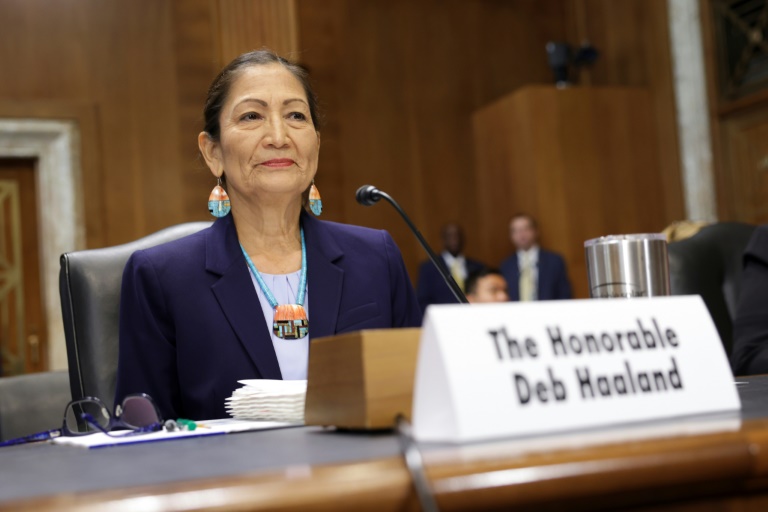
“The demand and momentum to build a clean energy future is undeniable,” Interior Secretary Deb Haaland said in a statement.

“Today, we are taking another step toward unlocking the immense offshore wind energy potential off our nation’s west coast to help combat the effects of climate change,” Haaland said.

BOEM will offer five lease areas with the potential to produce over 4.5 gigawatts (GW) of offshore wind energy, enough to power more than 1.5 million homes.

More than two dozen commercial wind leases have previously been issued for the Atlantic Ocean, stretching from Massachusetts to North Carolina.

The Biden administration has announced plans to deploy 30 GW of offshore wind energy by 2030 and 15 GW of floating offshore wind energy by 2035.

It seeks to reduce the cost of floating offshore wind energy by more than 70 percent by 2035.

Floating platforms can be built in deep-water areas where turbines cannot be secured directly to the seafloor.

Two-thirds of America’s offshore wind energy potential is in deep-water areas such as off the coast of California and Oregon that require floating platforms, according to US officials.

Close Bitnami banner
Bitnami