World

China sees 'much faster timeline' on taking Taiwan, Blinken warns

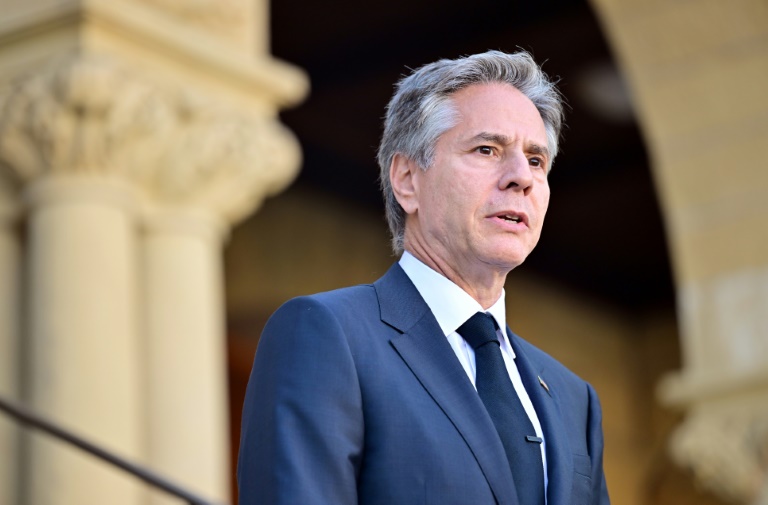
Beijing wants to seize Taiwan “on a much faster timeline” than previously considered, US Secretary of State Antony Blinken said Monday, warning that President Xi Jinping was leading China in a more aggressive direction.

Xi is on the cusp of securing a third five-year term at the helm of the world’s most populous nation, delivering a landmark Communist Party Congress speech on Sunday that hailed his decade in power and restated his vow to one day “reunify,” or forcefully take, Taiwan.

“We’ve seen a very different China emerge in recent years under Xi Jinping’s leadership,” Blinken told a forum at Stanford University with former secretary of state Condoleezza Rice.

“It is more repressive at home; it’s more aggressive abroad. And in many instances that poses a challenge to our own interests as well as to our own values,” he added.

Blinken accused Xi of “creating tremendous tension” by changing the approach toward self-ruled Taiwan, which China’s Communist Party has never controlled but claims as its own.

He said China had made a “fundamental decision that the status quo was no longer acceptable, and that Beijing was determined to pursue reunification on a much faster timeline,” though he gave no hard estimate or date.

Senior US military figures have previously sounded the alarm that China has expanded its military forces to the point where it could soon have the capability to pull off an invasion of Taiwan. 

China’s stance has long been that it seeks “peaceful reunification” with Taiwan but reserves the right to use force if necessary, especially if the island formally declares independence.

But the rhetoric and actions towards Taiwan have become more pronounced under Xi, China’s most assertive leader in a generation.

He has tied taking Taiwan to his vision of the “great rejuvenation of the Chinese nation” and has previously said the goal of reunification cannot continue to be passed indefinitely from generation to generation.

In Sunday’s speech, he repeated similar themes, saying the “wheels of history are rolling on towards China’s reunification” and that “we reserve the option of taking all measures necessary.”

– Shared interests –

Russia’s recent invasion of Ukraine, which China has not condemned, has also raised fears that Beijing might take similar moves against Taiwan’s 23 million people.

Ties between Washington and Beijing have been at a decade-low ebb under both the administrations of Donald Trump and his successor President Joe Biden, over a range of issues from trade to security and human rights. 

But Blinken said the world’s two largest economies should be willing to cooperate on shared interests.

He said the world “fundamentally expects” the two powers to work together on climate change, global health and possibly drug trafficking.

Beijing “just has to be responsive to demand signals that it’s getting from countries around the world to be a positive actor, not a negative actor, on issues that concern them.”

China cut cooperation with the United States on climate change and drug trafficking in August as part of its protest against US House Speaker Nancy Pelosi’s visit to Taiwan, which also saw Beijing launch its biggest military drills yet around the island.

Responding to Blinken’s speech, Chinese foreign ministry spokesman Wang Wenbin accused Washington of altering its own approach to Taiwan, citing examples such as Pelosi’s visit and recent arms sales.

“Peacefully resolving the Taiwan issue cannot coexist with Taiwan separatism,” Wang said. 

Xi is widely expected to meet Biden on the sidelines of a Group of 20 summit next month in Bali, their first meeting since the US leader took office.
Afghan women protest after students expelled from university dorms

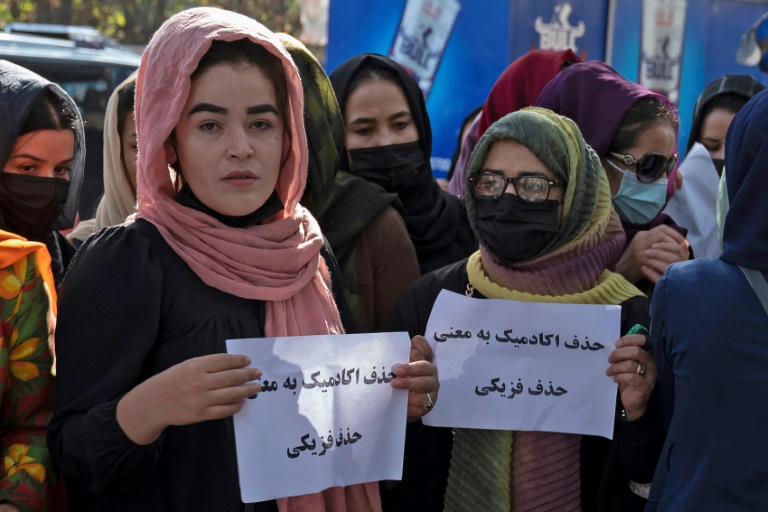
About 30 Afghan women protested in front of Kabul University on Tuesday after authorities expelled students from the dormitories allegedly for breaking rules.

The protesters claimed that all the evicted students were women in a move that comes as the Taliban has increasingly restricted girls’ access to education. 

“Today’s protest was for girls who have been expelled,” organiser Zholia Parsi told AFP after Taliban forces dispersed the rally.

Organisers also called for the reopening of girls’ secondary schools, which have been shut since the Taliban returned to power last year.

In several cities, women have staged sporadic protests against harsh restrictions imposed by the hardline Islamists.

The rallies are usually swiftly put down — often harshly — and journalists have increasingly been prevented from covering them.

“Don’t expel us… education is our red line,” chanted the protesters in front of the university.

The Ministry of Higher Education said Monday that an undisclosed number of students “who violated the rules and regulations of the university’s dormitory” had been expelled from their accomodations.

It did not say if they were all women.

In response to international pressure over girls’ education, Taliban officials have said the secondary school closures are temporary, but they have also wheeled out a range of excuses for the shutdown — from lack of funds to time needed to remodel the syllabus along Islamic lines.

Late Monday, Taliban supreme leader Hibatullah Akhundzada replaced the minister of higher education with a loyalist cleric, Neda Mohammad Nadeem, a government statement said.

It was the sector’s second such reshuffle in a month, following the appointment of a new minister of education.

The Ministry of Higher Education oversees universities, while the Ministry of Education runs schools up to 12th grade.

Nadeem, previously the governor of Kabul province, has for years held several key positions in the Taliban and was formerly chief of intelligence for the movement in eastern Afghanistan.

Nadeem’s personal views on girls’ education are unknown, and it remains unclear why his predecessor Abdul Baqi Haqqani was removed.

“Given his proximity to the supreme leader and his performance he has been entrusted with key positions,” a Taliban official who worked closely with Nadeem told AFP on condition of anonymity.

bur-abh-jd-fox/lb

Ethiopian and Eritrean forces seize key Tigrayan city, say rebels

Tigrayan rebels said Tuesday that Ethiopian and Eritrean forces had seized a key Tigrayan city, a move coinciding with UN warnings of a spiralling conflict and an “utterly staggering” toll on civilians.

“These invading forces have taken control for the moment of some areas including Shire,” the Tigray Central Command said in a statement, adding that the rebels were in a “life or death” struggle.

It said the joint forces had entered Shire, a strategic city of about 100,000 people which lies about 300 kilometres (180 miles) by road northwest of the Tigrayan capital Mekele, on Monday.

“The enemies are massacring our people with heavy weaponry/armaments in the areas it invades,” the statement said.

It is not possible to verify battlefield claims as Tigray is under a communications blackout and access to northern Ethiopia is restricted for journalists.

The conflict began in November 2020, when Ethiopian Prime Minister Abiy Ahmed sent troops into Tigray after accusing the region’s ruling Tigray People’s Liberation Front (TPLF) of attacking federal army camps. 

The TPLF had dominated Ethiopia’s ruling political alliance for decades before Abiy took power in 2018 and sidelined the party.

Abiy’s military campaign has received the support of Eritrea, with which Ethiopia was at odds until a rapprochement that earned Abiy the 2019 Nobel Peace Prize.

Tigray and its six million people are virtually cut off from the outside world, facing dire shortages of fuel, food and medicines and lacking basic services, including communications and electricity.

An estimated two million people have been driven from their homes in northern Ethiopia and millions more are in need of aid, according to UN figures, with reports of widespread atrocities including massacres and rape. 

The death toll remains unknown. 

Fighting resumed between the warring sides in August, shattering a five-month truce that had allowed limited amounts of aid into the battered region.

Both sides blamed the other for firing first.

– UN warnings –

On Monday, UN Secretary General Antonio Guterres warned that the situation was “spiralling out of control”.

“Violence and destruction have reached alarming levels,” he said, calling for the “immediate withdrawal and disengagement” of Eritrean forces.

The European Union (EU), the United States and African Union (AU) have also issued urgent appeals for a halt to the fighting.

Abiy’s government said in a statement Monday it was “committed to the peaceful resolution of the conflict through the AU-led peace talks,” without addressing the bloc’s call for a ceasefire the day before.

But the government also accused the TPLF of colluding with unnamed “hostile foreign powers.”

It said it would also pursue “defensive measures” to protect Ethiopia’s sovereignty and territorial integrity from internal and external threats.

“It is thus imperative that the Government of Ethiopia assumes immediate control of all airports, other federal facilities, and installations in the region,” the government said.

The UN’s new high commissioner for human rights, Volker Tuerk, warned Tuesday of a “significant risk of escalation” as more troops and soldiers were mobilised in the conflict. 

Air and artillery strikes in Tigray since August have inflicted an “utterly staggering” toll on civilians, he said in a statement issued in Geneva. 

Among those killed in recent incidents was a staff member of the NGO International Rescue Committee, who was part of a team delivering humanitarian assistance to women and children.   

“Under international law, indiscriminate attacks or attacks deliberately targeting civilians or civilian objects amount to war crimes,” Tuerk warned.

UK PM Truss battles to stay in power after tax reforms trashed

British Prime Minister Liz Truss on Tuesday battled to stabilise her position after an economic crash forced her into humiliating U-turns on tax reforms, putting her future as leader in doubt.

“It’s hard to conceive of a more serious political and economic crisis in recent times than that which Britain now faces,” right-wing broadsheet The Daily Telegraph wrote in an editorial.

The paper, which previously supported Truss, wrote that she faced “the ignominy” of becoming the country’s second shortest-serving prime minister in history, unless her own MPs gave her “breathing space”.

Truss on Tuesday was to meet her cabinet and attempt to rally support among Conservative MPs, some of whom have publicly said she has no future as prime minister. 

She was set to face parliament on Wednesday for a session of Prime Minister’s Questions.

The right-wing Sun tabloid on Tuesday called Truss “The Ghost PM”, while left-wing tabloid The Mirror called the situation a “catastrophic humiliation”.

The embattled prime minister on Monday apologised in a BBC interview for going “too far and too fast” with reforms, a month after taking office.

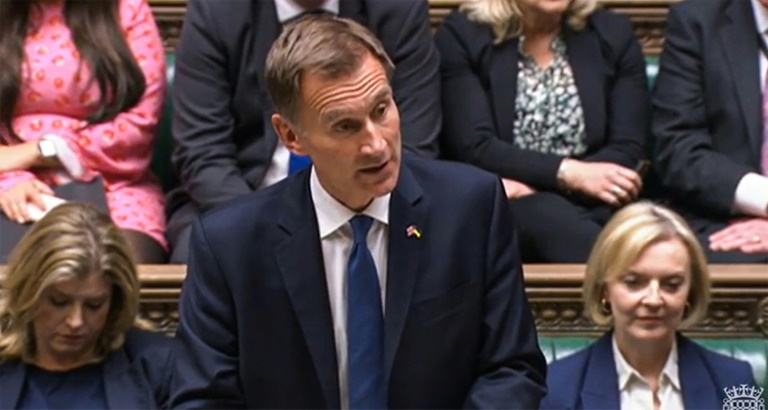
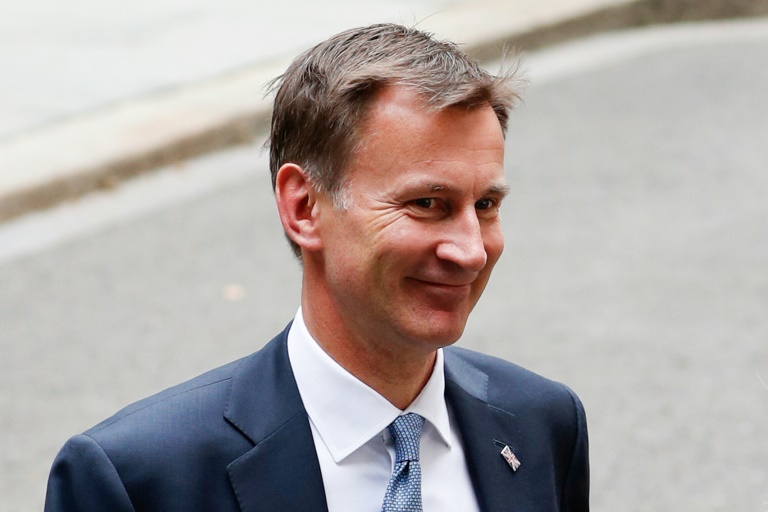
This came after her new finance minister Jeremy Hunt in a brief televised statement on Monday axed almost all the debt-fuelled tax cuts announced last month in a budget by his sacked predecessor, Kwasi Kwarteng.

Hunt told parliament that he and Truss “agreed yesterday to reverse almost all the tax measures announced in the growth plan three weeks ago”, flanked by a grim-faced Truss.

The announcement came as Truss’s governing Conservative party tanked in the opinion polls amid the reversals and Britain’s worsening cost-of-living crisis.

– ‘Very British coup’ –

British media likened Hunt’s dramatic intervention to a coup, with The Telegraph depicting him in cartoon form as a bemedaled Generalissimo “taking temporary control to stabilise the situation”.

“It was a very British coup. So polite you could almost have missed it,” wrote left-wing broadsheet The Guardian.

Conservative MP Roger Gale said that Hunt had become “de facto prime minister” as several MPs publicly urged her to go and others reportedly plotted to unseat her.

“I think her position is untenable,” Conservative MP Charles Walker told Sky News.

“If she doesn’t go right now, it will not be her decision,” he warned.

Armed forces minister James Heappey assured British media on Tuesday morning that Truss had “owned” her mistake, while admitting she could not repeat such errors.

Asked by Sky News whether Truss was “prime minister in name only”, Heappey insisted: “She’s been very candid about the mistake that was made and she has apologised for that… There’s leadership in doing that”.

But he conceded that “given how skittish our politics are… I don’t think that there’s the opportunity to make any more mistakes.”

Truss fired her close friend Kwarteng on Friday after their tax-slashing budget sent bond yields spiking and the pound collapsing to a record dollar-low on fears of rocketing UK debt — fuelling intense speculation over her political future one month after taking office.

Truss had already staged two embarrassing budget U-turns, scrapping tax cuts for the richest earners and on company profits.

Hunt’s strategy reversals included reducing Truss’s announced £2,500 cap on energy bills for all British people from two years to six months, after which he promised a new approach.

Hunt estimated the tax changes would raise about £32 billion ($36 billion) per year, after economists estimated the government faced a £60-billion black hole. He also warned of tough spending cuts.

Hunt’s actions on Monday sent the British pound soaring against the dollar and euro, while bond yields dipped.

UK PM Truss battles to stay in power after tax reforms trashed

British Prime Minister Liz Truss on Tuesday battled to stabilise her position after an economic crash forced her into humiliating U-turns on tax reforms, putting her future as leader in doubt.

“It’s hard to conceive of a more serious political and economic crisis in recent times than that which Britain now faces,” right-wing broadsheet The Daily Telegraph wrote in an editorial.

The paper, which previously supported Truss, wrote that she faced “the ignominy” of becoming the country’s second shortest-serving prime minister in history, unless her own MPs gave her “breathing space”.

Truss on Tuesday was to meet her cabinet and attempt to rally support among Conservative MPs, some of whom have publicly said she has no future as prime minister. 

She was set to face parliament on Wednesday for a session of Prime Minister’s Questions.

The right-wing Sun tabloid on Tuesday called Truss “The Ghost PM”, while left-wing tabloid The Mirror called the situation a “catastrophic humiliation”.

The embattled prime minister on Monday apologised in a BBC interview for going “too far and too fast” with reforms, a month after taking office.

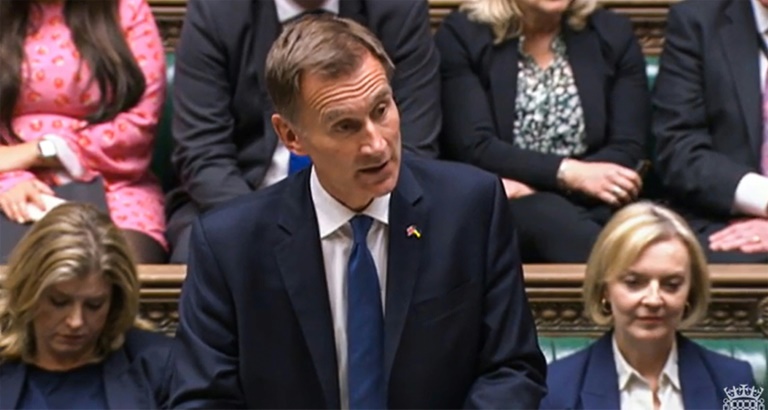
This came after her new finance minister Jeremy Hunt in a brief televised statement on Monday axed almost all the debt-fuelled tax cuts announced last month in a budget by his sacked predecessor, Kwasi Kwarteng.

Hunt told parliament that he and Truss “agreed yesterday to reverse almost all the tax measures announced in the growth plan three weeks ago”, flanked by a grim-faced Truss.

The announcement came as Truss’s governing Conservative party tanked in the opinion polls amid the reversals and Britain’s worsening cost-of-living crisis.

– ‘Very British coup’ –

British media likened Hunt’s dramatic intervention to a coup, with The Telegraph depicting him in cartoon form as a bemedaled Generalissimo “taking temporary control to stabilise the situation”.

“It was a very British coup. So polite you could almost have missed it,” wrote left-wing broadsheet The Guardian.

Conservative MP Roger Gale said that Hunt had become “de facto prime minister” as several MPs publicly urged her to go and others reportedly plotted to unseat her.

“I think her position is untenable,” Conservative MP Charles Walker told Sky News.

“If she doesn’t go right now, it will not be her decision,” he warned.

Armed forces minister James Heappey assured British media on Tuesday morning that Truss had “owned” her mistake, while admitting she could not repeat such errors.

Asked by Sky News whether Truss was “prime minister in name only”, Heappey insisted: “She’s been very candid about the mistake that was made and she has apologised for that… There’s leadership in doing that”.

But he conceded that “given how skittish our politics are… I don’t think that there’s the opportunity to make any more mistakes.”

Truss fired her close friend Kwarteng on Friday after their tax-slashing budget sent bond yields spiking and the pound collapsing to a record dollar-low on fears of rocketing UK debt — fuelling intense speculation over her political future one month after taking office.

Truss had already staged two embarrassing budget U-turns, scrapping tax cuts for the richest earners and on company profits.

Hunt’s strategy reversals included reducing Truss’s announced £2,500 cap on energy bills for all British people from two years to six months, after which he promised a new approach.

Hunt estimated the tax changes would raise about £32 billion ($36 billion) per year, after economists estimated the government faced a £60-billion black hole. He also warned of tough spending cuts.

Hunt’s actions on Monday sent the British pound soaring against the dollar and euro, while bond yields dipped.

Alleged accomplices on trial over Vienna jihadist shooting

Six men accused of helping a gunman who carried out Austria’s first deadly jihadist attack went on trial in a Vienna court on Tuesday.

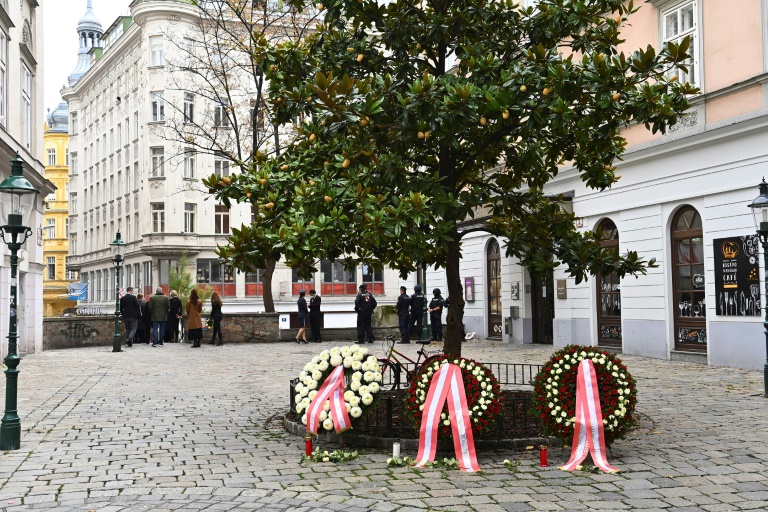
Convicted Islamic State sympathiser Kujtim Fejzulai went on a shooting rampage on November 2, 2020 in downtown Vienna, killing four and wounding 23 others before police shot him dead.

In the wake of the EU member’s deadliest shooting in decades, the Austrian government and in particular its intelligence service were accused of failing to monitor the Islamist movement in the country.

According to the federal prosecutors’ charge sheet seen by AFP, the six defendants — four Austrians, a Chechen and a Kosovar — were not directly involved in the deadly attack, but are suspected of actively helping Fejzulai prepare for the shooting.

At the start of the trial, all six were led into the crowded court room, escorted by armed guards under tight security. Cameras were barred from the room. 

The six men — aged between 21 and 32 years old — are accused of “enabling… or otherwise promoting” the execution of the crimes “due to their shared affiliation with the radical Islamist scene and the terrorist organisation IS Islamic State,” the confidential court document said.

The accused face charges ranging from participating in terrorist crimes in connection with murder to involvement or membership in a terrorist group.

Four of them could be sentenced to life in prison if found guilty, while the two others face up to 20 years in jail.

All except one have been held in custody on remand in the lead-up to the trial.

– ‘Ensure justice is done’ –

According to the Vienna state criminal court, verdicts are not expected before February.

Lawyer Mathias Burger, acting for the family of 21-year-old Nedzip Vrenezi, who was shot dead first by Fejzulai during the attack, told AFP in an interview ahead of the opening of the trial that the family “still suffers to this day” from what happened to their son. 

The victim’s family had received compensation from the Austrian state, but his clients’ main interest was to “ensure justice was done”, Burger said.

With the help of some of the accused, the gunman — an Austrian citizen whose parents are from North Macedonia — was allegedly able to obtain the weapons and the ammunition needed for the attack, while others provided logistical aid or encouraged Fejzulai, according to prosecutors.

Lawyer Astrid Wagner, who represents 32-year-old Chechen Adam Makhaev, accused of selling weapons to Fejzulai, told AFP ahead of the trial, that her client was going to plead not guilty. 

Makhaev has confessed to illicit arms trafficking, but did not know what the weapons would be used for, she said.

During the rampage, Fejzulai opened fire on passersby with a Kalashnikov in central Vienna.

In 2019, Fejzulai had been convicted and sentenced to 22 months in prison for trying to join the Islamic State group in Syria, before being arrested in Turkey and extradited to Austria.

Last year, Austria adopted a heavily criticised anti-terror law that was formulated in the wake of the attack and allows for increased surveillance.

China blames 'troublemakers' after consulate protest assault in UK

China accused demonstrators on Tuesday of “illegally entering” its consulate in the British city of Manchester, after footage of a Hong Kong pro-democracy protester being assaulted on the grounds sparked outrage in the UK.

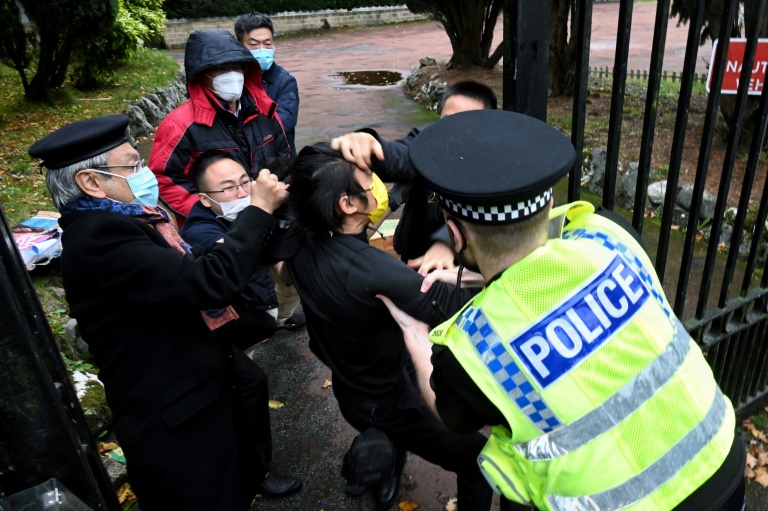
British police have said a group of men came out of the consulate during a peaceful demonstration on Sunday afternoon, dragging one of the protesters inside the grounds and assaulting him.

But Chinese foreign ministry spokesman Wang Wenbin on Tuesday said the protesters were to blame and that “violation of the peace and dignity of China’s overseas embassies and consulates will not be tolerated”.

“The troublemakers illegally entered the Chinese Consulate-General in Manchester, endangering the security of the premises,” Wang said at a daily press briefing.

He urged the UK to “earnestly fulfil its duties and take effective measures to step up protection of the premises and personnel of the Chinese embassy and consulates”.

The victim, a man in his 30s, suffered injuries and spent the night in hospital, local police said.

Video footage posted on Twitter showed a grey-haired man kicking protesters’ banners and scuffling with a group of demonstrators at the gates of the consulate.

A group of men were then shown punching a protester lying on the ground inside the mission’s gates.

The BBC reported that the injured activist was from Hong Kong, which was engulfed by massive pro-democracy protests in 2019 before Beijing imposed a harsh national security law to mute dissent.

“They dragged me inside. They beat me up,” he told the broadcaster.

A British government spokesman on Monday said reports of the incident were “obviously deeply concerning,” adding that it would be “inappropriate” to comment further while the police probe was ongoing.

The protest took place as China opened its five-yearly Communist Party Congress, where President Xi Jinping is widely expected to be handed a historic third term in power.

Greater Manchester Police said in a statement that around 40 people had gathered outside the consulate for a planned peaceful protest.

Shortly before 4 pm (1500 GMT) “a small group of men came out of the building and a man was dragged into the consulate grounds and assaulted”, police said.

“Due to our fears for the safety of the man, officers intervened and removed the victim from the consulate grounds.”

– ‘Denial of free speech’ –

Police have said they had not made any arrests and asked for witnesses to get in touch and pass on any footage of the incident.

Several senior British politicians have condemned the use of violence against a protester.

The newly appointed chair of the UK parliament’s foreign affairs committee, Alicia Kearns, tweeted that interior and foreign ministers Suella Braverman and James Cleverly “need to urgently investigate”.

The Chinese Communist Party “will not import their beating of protestors and denial of free speech to British streets”, she added.

And influential former Conservative Party leader Iain Duncan Smith called for the government to “demand a full apology from the Chinese ambassador to the UK”.

Nathan Law, a Hong Kong activist who has fled to the UK, tweeted: “If the consulate staff responsible are not held accountable, Hongkongers would live in fear of being kidnapped and persecuted.”

He called for Cleverly and Braverman to “investigate and protect our community and people in the UK”.

WWII munitions hinder Nord Stream pipeline probe

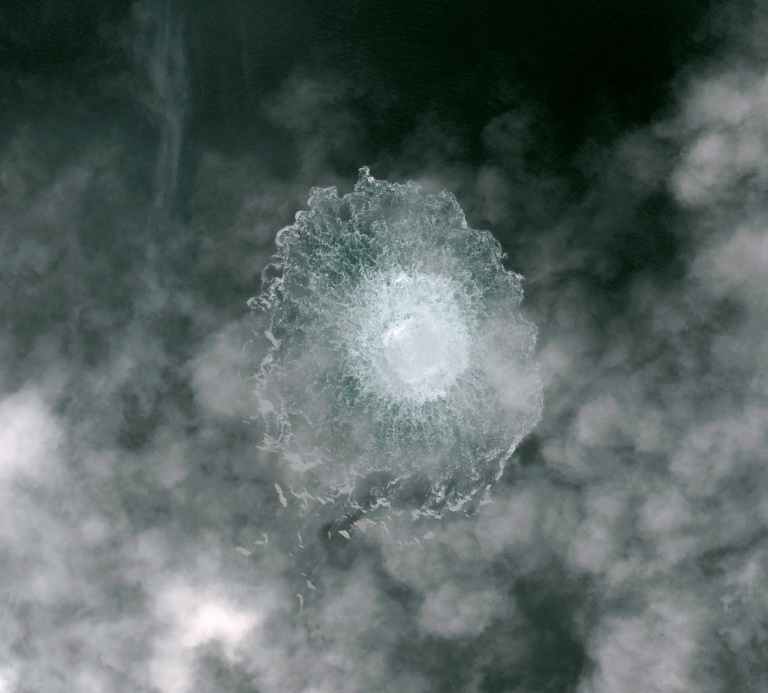
Investigations into the suspected sabotage of the Nord Stream gas pipelines linking Russia with Europe are “progressing well”, despite World War II munitions on the seabed, Denmark said Thursday.

“It’s a zone marked by the presence of munitions — used or not — from World War II,” Danish Defence Minister Morten Bodskov told reporters on the sidelines of a meeting of the NATO defence alliance in Brussels.

“There’s a lot of stuff at the bottom of the sea, so it’s not so easy.”

“But the work is continuing and going well,” he added.

The two Nord Stream pipelines were damaged by two explosions under the Baltic Sea at the end of September, causing major gas leaks.

Sweden has announced that preliminary underwater inspections backed up suspicions of probable sabotage.

“With Sweden and Germany, Denmark is carrying out an inquiry which is progressing well,” the minister said.

“What we discover will of course be made public.”

With fingers being pointed at Russia for the sabotage, Moscow demanded to be part of the investigations into the explosions which happened in international waters, but Copenhagen and Stockholm refused.

Russia’s ambassador to Copenhagen said the credibility of the inquiry was undermined by Moscow’s absence.

But Sweden’s outgoing Prime Minister Magdalena Andersson told Moscow to open its own investigation.

Both Moscow and Washington have denied responsibility for the gas leaks.

Taiwan's Foxconn unveils more electric vehicle prototypes

Taiwanese tech giant Foxconn unveiled two more electric vehicle prototypes on Tuesday, including a pickup truck, saying commercial production on two other designs would start later this year.

The world’s largest contract electronics maker, Foxconn already plays a lynchpin role in assembling gadgets for a host of top international brands including Apple’s iPhone.

The company has moved to diversify beyond electronics assembly and embraced the competitive but rapidly expanding EV business, unveiling three concept cars last year.

Foxconn chairman Young Liu showed off two more prototypes at Tuesday’s media event in Taipei — a sporty hatchback dubbed the Model B and a pickup, the Model V.

He also announced that commercial production would start by the end of the year on the group’s previously unveiled electric bus and a family sports utility vehicle.

“Foxconn has cut in half the design time and reduced development cost by a third in taking an EV from concept to production-ready,” Liu said.

Foxconn plans to do with electric vehicles what it did for gadgets — become a go-to contract builder.

Its strategy is to construct vehicles for clients rather than sell them under its own name, using the prototypes as a guide.

“I hope one day we can do Tesla cars for Tesla,” Liu told reporters, adding that Foxconn was aiming for five percent of the global EV market by 2025. 

Liu said one of its clients, Taiwanese automaker Luxgen, had received 15,000 customer pre-orders in under two days for its N7 car, which is based on the Foxconn Model C unveiled last year.

He added that various models will be put into production in Taiwan, Thailand and the United States while the company is also eyeing cooperation with Indonesia and India, without providing details.

Foxconn has also started building electric vehicles for Lordstown Motors after completing its purchase of a former General Motors plant in Lordstown, Ohio in May.

This month, it signed a memorandum of understanding with US-based INDIEV Inc to build the first INDI One prototype EV at its Ohio facility.

Its partners also include Fisker, one of a host of US-based electronic car startups hoping to someday challenge Tesla’s supremacy.

Fisker has recently reaffirmed plans to have Foxconn build its upcoming Fisker Pear model at the Ohio factory starting in 2024.

It has been widely reported for years that Apple has a secret electronic car project, something Foxconn could be in an ideal place to partner on given its existing relationship with the California-based giant.

Stocks, sterling extend gains after UK budget U-turn

Equities rose with sterling Tuesday after the UK government scrapped a controversial debt-funded mini-budget that had roiled markets, while traders were also cheered by a broadly positive start to earnings season.

After a volatile few weeks during which the pound hit a record low, new finance minister Jeremy Hunt sought Monday to reassure investors as he unveiled a new spending package, doing away with tax cuts and warning of much lower spending.

The move — which deals a blow to Prime Minister Liz Truss’s authority — sent sterling up as much as two percent at one point and the cost of government borrowing tumbled, while the FTSE 100 jumped.

The positive mood filtered through to other markets, with Wall Street enjoying a much-needed surge, including a more than three percent jump in the Nasdaq.

And most of Asia followed suit, with Tokyo, Hong Kong, Singapore, Mumbai, Bangkok, Sydney, Seoul, Wellington, Taipei, Manila and Jakarta all enjoying a pick-up, though Shanghai dipped.

London opened on the front foot along with Paris and Frankfurt.

The pound was also given an extra boost — at one point topping $1.14 — after a Financial Times report said the Bank of England will likely put off the sale of government bonds again as it looks to maintain market stability.

The Bank had been due to offload the gilts — bought to keep borrowing costs down during the pandemic — from October 6 but delayed that because of the turmoil sparked by the mini-budget, but the FT said it would likely delay again until financial conditions had calmed.

The market gains built on Monday’s rise, though analysts warned that the advances were unlikely to be sustained owing to broader worries about inflation and rising interest rates.

“The last couple of months have been tough for equity markets since peaking towards the end of the summer and a rebound of some kind was going to happen eventually,” said OANDA’s Craig Erlam. 

“I’m just not convinced there’s much substance behind it as the economic landscape looks treacherous and we don’t even know if we’re at peak inflation and interest rate pricing yet. Those are substantial headwinds that will make any stock market rebound extremely challenging.”

The latest data out of New Zealand showing inflation remained at a three-decade high underscored the tough job central banks have in bringing prices down, even after several rate hikes.

Commentators said traders have come to the conclusion that a recession is on the way in major economies, with the main question being how bad it will be.

“I think we can stop saying inflation is ‘hotter than expected’ and shift to ‘hotter than hoped’ — because it really does feel like we’re all just crossing our fingers and hoping prices come down,” said Matt Simpson at City Index.

“And in the few cases that they are, it is clearly not fast enough for anyone’s liking. Conversely to the adage about stock market prices, inflation seems to get the elevator up and the escalator down — but not before lingering around the top floor for an extended period of time.”

Markets in China fluctuated a day after authorities delayed the release of third-quarter economic figures, which analysts said were likely to show the weakest growth since the pandemic owing to Covid-19 lockdowns.

The decision comes as the Communist Party holds a key gathering at which President Xi Jinping is expected to be handed a third term.

“Whenever the release occurs, we should all be prepared for some global financial market reaction if the world’s two largest economies are both in recession this year. Especially, as the global economic slowdown remains ongoing,” said Clifford Bennett at ACY Securities.

“While in China, we have a slightly artificially generated risk of recession due to a zero-Covid policy.

“This policy has been confirmed to remain in place indefinitely. This means China will see further economic disruption over the coming year.”

– Key figures around 0810 GMT –

Tokyo – Nikkei 225: UP 1.4 percent at 27,156.14 (close)

Hong Kong – Hang Seng Index: UP 1.8 percent at 16,914.58 (close)

Shanghai – Composite: DOWN 0.1 percent at 3,080.96 (close)

London – FTSE 100: UP 1.1 percent at 6,994.87

Pound/dollar: UP at $1.1357 from $1.1351 on Monday

Dollar/yen: DOWN at 148.99 yen from 149.03 yen

Euro/dollar: UP at $0.9858 from $0.9840

Euro/pound: UP at 86.80 pence from 86.66 pence

West Texas Intermediate: UP 0.4 percent at $85.82 per barrel

Brent North Sea crude: UP 0.3 percent at $91.89 per barrel

New York – Dow: UP 1.9 percent at 30,185.82 (close)

— Bloomberg News contributed to this story —

Close Bitnami banner
Bitnami