World

Israel vexed as Australia reverses recognition of 'capital' Jerusalem

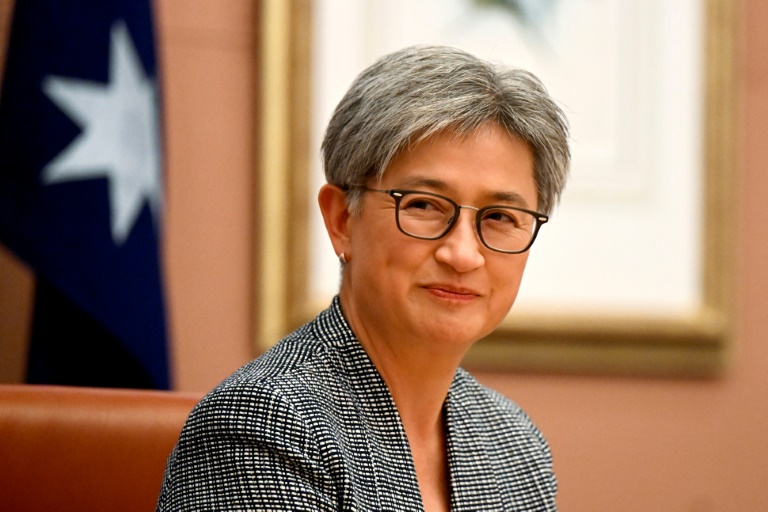
Australia said it would no longer recognise west Jerusalem as Israel’s capital Tuesday, a policy reversal that prompted a curt rebuke from the Jewish state.

Foreign Minister Penny Wong said the city’s status should be decided by Israeli-Palestinian peace talks, unwinding a contentious decision by the previous conservative government.

In 2018, Australia’s then-Prime Minister Scott Morrison followed US president Donald Trump’s lead in unilaterally recognising west Jerusalem as the Israeli capital.

The move caused a domestic backlash in Australia and friction with neighbouring Indonesia — the world’s most populous Muslim-majority nation — temporarily derailing a bilateral free trade deal.

“I know this has caused conflict and distress in part of the Australian community, and today the government seeks to resolve that,” Wong said.

Jerusalem is claimed by both Israelis and Palestinians, but most governments avoid putting embassies there to avoid prejudging the outcome of a final peace agreement.

“We will not support an approach that undermines” a two-state solution, Wong said, adding: “Australia’s embassy has always been, and remains, in Tel Aviv”.

Israeli Prime Minister Yair Lapid criticised Tuesday’s move — which comes as he prepares to face November 1 elections.

“We can only hope that the Australian government manages other matters more seriously and professionally,” he said.

Israel annexed east Jerusalem following the 1967 Six Day War, and has declared the entire city as its “eternal and indivisible capital”.

Palestinians claim the eastern part as the capital of a future state.

Palestinian Authority’s civil affairs minister, Hussein al-Sheikh welcomed the move by Canberra as an “affirmation” that Jerusalem’s status depends on a final status talks.

Indonesia also welcomed the decision. 

“This policy would hopefully contribute positively to Palestinian-Israeli peace negotiations,” the foreign ministry in Jakarta said.

– Steadfast friend –

Wong insisted that the decision — which has limited practical impact — did not signal any broader shift in policy or hostility towards Israel.

“Australia will always be a steadfast friend of Israel. We were amongst the first countries to formally recognise Israel,” she said.

“We will not waver in our support of Israel and the Jewish community in Australia. We are equally unwavering in our support of the Palestinian people, including humanitarian support.”

The centre-left Labor party, with Anthony Albanese as prime minister and Wong as foreign minister, came to power in May 2022 after strongly opposing the previous government’s Jerusalem policy.

Wong accused the Morrison government of making the Jerusalem decision to influence a by-election in a Sydney suburb with a sizable Jewish community.

“You know what this was? This was a cynical play, unsuccessful, to win the seat of Wentworth and a by-election,” she said.

– Symbolism –

Canberra’s shift was foreshadowed by the removal of language about the Israeli capital on the website of Australia’s Department of Foreign Affairs and Trade.

Although Australia is not a major player in peace talks, Ran Porat, a historian and researcher at Melbourne’s Monash University, said the move was significant.

“In the Middle East in general symbolism is very much at the centre of many conflicts. Symbolism is not negligible, it’s not unimportant.”

Porat added that the move could be seized on by Israel’s opposition Likud, led by Benjamin Netanyahu, as evidence of the government’s failings ahead of the general election.
France prepares for major disruptions as unions call transport strike

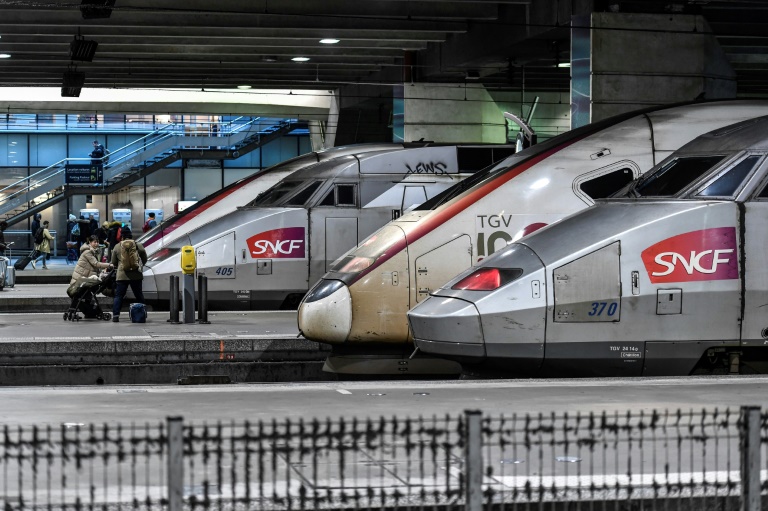
France faced major disruptions on Tuesday after unions called a nationwide transport strike, as they remain in deadlock with the government over walkouts at oil depots that have sparked fuel shortages.

The effects were already visible at Paris hub Gare de Lyon early Tuesday, with packed suburban trains disgorging floods of passengers onto the platforms every 15 or even 20 minutes.

“I’ve got a two or three hour trip today, rather than an hour and a half normally,” said commuter Yera Diallo, adding that “I have no idea how it’s going to go this evening.”

The broader strike comes after workers at several oil refineries and depots operated by energy giant TotalEnergies voted to extend walkouts.

Their industrial action has seriously disrupted fuel distribution across the country but particularly in northern and central France and the Paris region.

Motorists have scrambled to fill tanks as the fuel strike, which has lasted for nearly three weeks, cripples supplies at around 30 percent of France’s service stations and has had a knock-on effect across all sectors of the economy.

President Emmanuel Macron’s government used requisitioning powers to force some strikers back to open fuel depots, a move that infuriated unions but has so far been upheld in the courts.

“We will continue to do the utmost,” Macron said after a meeting Monday with ministers, adding he wanted the crisis “to be resolved as quickly as possible”.

– ‘Time for negotiation over’ –

Finance Minister Bruno Le Maire earlier said it was necessary to use requisitioning powers to reopen the refineries and depots.

“The time for negotiation is over,” Le Maire told the BFMTV broadcaster. 

“There was a negotiation, there was an agreement,” he added, referring to the agreement concluded last week between TotalEnergies and two majority unions, but which the hard-left CGT union rejects.

CGT boss Philippe Martinez suggested Monday that the government “get around a table” with the unions to discuss an increase in France’s minimum wage.

“Requisitioning is unacceptable and it’s never the right solution,” added Frederic Souillot, general secretary of the FO union which is also taking part in the day of strike action, the unions’ biggest challenge to Macron since he won a new presidential term in May.

– Trains cancelled –

The leftist CGT and FO called for a nationwide strike Tuesday for higher salaries, and against government requisitions of oil installations, threatening to cripple public transport in particular.

Unions in other industries and the public sector have also announced action to protest against the twin impact of soaring energy prices and overall inflation on the cost of living.

Rail operator SNCF will see “severe disruptions” with half of train services cancelled, Transport Minister Clement Beaune said.

CGT boss Martinez told RTL radio that “it will be the workers who decide” whether the strike at SCNF continues into the busy late October school holiday period.

Suburban services in the Paris region as well as bus services will also be impacted, operator RATP said, but the inner-Paris metro system should be mostly unaffected.

Beyond transport workers, unions hope to bring out staff in sectors such as the food industry and healthcare.

Their action will kick off what is likely to be a tense autumn and winter as Macron also seeks to implement his flagship domestic policy of raising the French retirement age.

But the economic squeeze partly caused by Russia’s invasion of Ukraine, along with the failure of Macron’s party to secure an overall majority in June legislative polls, only adds to the magnitude of the task.

In Paris Tuesday, separate marches by striking workers and vocational school teachers are expected by police to gather more than 15,000 people in total.

A weekend march against the high cost of living called by opposition party France Unbowed (LFI) saw around 30,000 people hit the streets by a police count, while organisers claimed 140,000.

France prepares for major disruptions as unions call transport strike

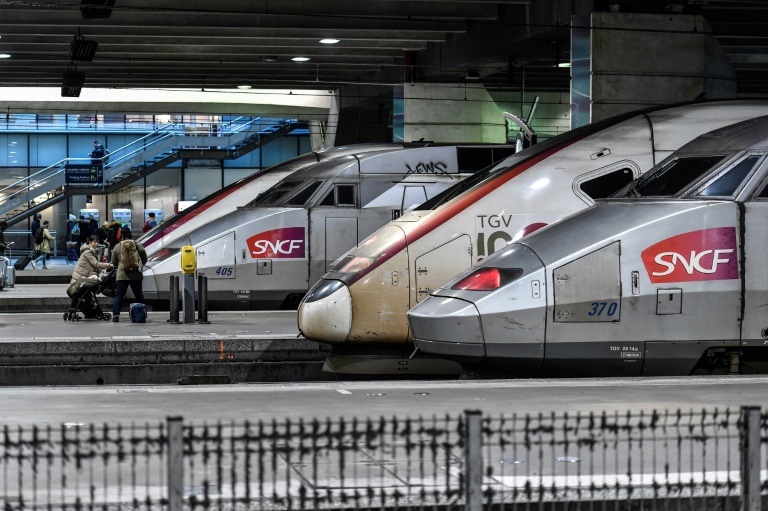
France faced major disruptions on Tuesday after unions called a nationwide transport strike, as they remain in deadlock with the government over walkouts at oil depots that have sparked fuel shortages.

The effects were already visible at Paris hub Gare de Lyon early Tuesday, with packed suburban trains disgorging floods of passengers onto the platforms every 15 or even 20 minutes.

“I’ve got a two or three hour trip today, rather than an hour and a half normally,” said commuter Yera Diallo, adding that “I have no idea how it’s going to go this evening.”

The broader strike comes after workers at several oil refineries and depots operated by energy giant TotalEnergies voted to extend walkouts.

Their industrial action has seriously disrupted fuel distribution across the country but particularly in northern and central France and the Paris region.

Motorists have scrambled to fill tanks as the fuel strike, which has lasted for nearly three weeks, cripples supplies at around 30 percent of France’s service stations and has had a knock-on effect across all sectors of the economy.

President Emmanuel Macron’s government used requisitioning powers to force some strikers back to open fuel depots, a move that infuriated unions but has so far been upheld in the courts.

“We will continue to do the utmost,” Macron said after a meeting Monday with ministers, adding he wanted the crisis “to be resolved as quickly as possible”.

– ‘Time for negotiation over’ –

Finance Minister Bruno Le Maire earlier said it was necessary to use requisitioning powers to reopen the refineries and depots.

“The time for negotiation is over,” Le Maire told the BFMTV broadcaster. 

“There was a negotiation, there was an agreement,” he added, referring to the agreement concluded last week between TotalEnergies and two majority unions, but which the hard-left CGT union rejects.

CGT boss Philippe Martinez suggested Monday that the government “get around a table” with the unions to discuss an increase in France’s minimum wage.

“Requisitioning is unacceptable and it’s never the right solution,” added Frederic Souillot, general secretary of the FO union which is also taking part in the day of strike action, the unions’ biggest challenge to Macron since he won a new presidential term in May.

– Trains cancelled –

The leftist CGT and FO called for a nationwide strike Tuesday for higher salaries, and against government requisitions of oil installations, threatening to cripple public transport in particular.

Unions in other industries and the public sector have also announced action to protest against the twin impact of soaring energy prices and overall inflation on the cost of living.

Rail operator SNCF will see “severe disruptions” with half of train services cancelled, Transport Minister Clement Beaune said.

CGT boss Martinez told RTL radio that “it will be the workers who decide” whether the strike at SCNF continues into the busy late October school holiday period.

Suburban services in the Paris region as well as bus services will also be impacted, operator RATP said, but the inner-Paris metro system should be mostly unaffected.

Beyond transport workers, unions hope to bring out staff in sectors such as the food industry and healthcare.

Their action will kick off what is likely to be a tense autumn and winter as Macron also seeks to implement his flagship domestic policy of raising the French retirement age.

But the economic squeeze partly caused by Russia’s invasion of Ukraine, along with the failure of Macron’s party to secure an overall majority in June legislative polls, only adds to the magnitude of the task.

In Paris Tuesday, separate marches by striking workers and vocational school teachers are expected by police to gather more than 15,000 people in total.

A weekend march against the high cost of living called by opposition party France Unbowed (LFI) saw around 30,000 people hit the streets by a police count, while organisers claimed 140,000.

China sees 'much faster timeline' on taking Taiwan, Blinken warns

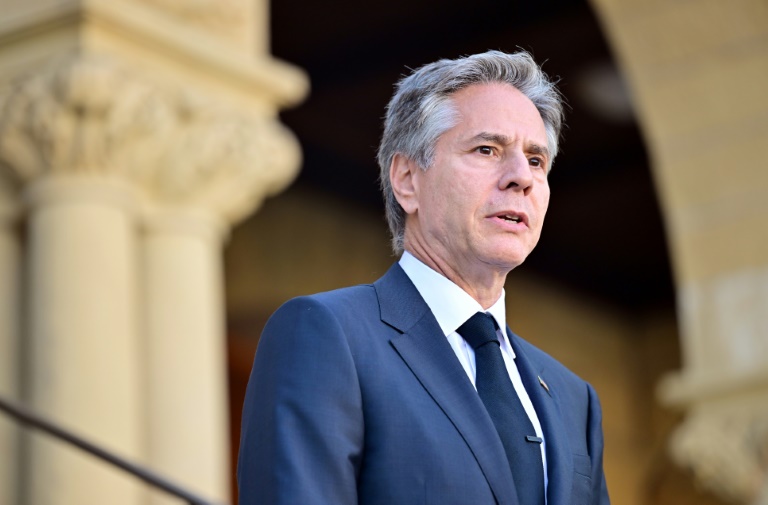
Beijing wants to seize Taiwan “on a much faster timeline” than previously considered, US Secretary of State Antony Blinken said Monday, warning that President Xi Jinping was leading China in a more aggressive direction.

Xi is on the cusp of securing a third five-year term at the helm of the world’s most populous nation, delivering a landmark Communist Party Congress speech on Sunday that hailed his decade in power and restated his vow to one day “reunify”, or forcefully take, Taiwan.

“We’ve seen a very different China emerge in recent years under Xi Jinping’s leadership,” Blinken told a forum at Stanford University with former secretary of state Condoleezza Rice.

“It is more repressive at home; it’s more aggressive abroad. And in many instances that poses a challenge to our own interests as well as to our own values,” he added.

Blinken accused Xi of “creating tremendous tension” by changing the approach toward self-ruled Taiwan, which China’s Communist Party has never controlled but claims as its own.

He said China had made a “fundamental decision that the status quo was no longer acceptable, and that Beijing was determined to pursue reunification on a much faster timeline”, though he gave no hard estimate or date.

Senior US military figures have previously sounded the alarm that China has expanded its military forces to the point where it could soon have the capability to pull off an invasion of Taiwan. 

China’s stance has long been that it seeks “peaceful reunification” with Taiwan but reserves the right to use force if necessary, especially if the island ever formally declares independence.

But the rhetoric and actions towards Taiwan have become more pronounced under Xi, China’s most assertive leader in a generation.

He has tied taking Taiwan to his landmark “great rejuvenation of the Chinese nation” and has previously said the goal of reunification cannot continue to be passed indefinitely from generation to generation.

In Sunday’s speech he repeated similar themes, saying the “wheels of history are rolling on towards China’s reunification” and that “we reserve the option of taking all measures necessary”.

– Shared interests –

Russia’s recent invasion of Ukraine, which China has not condemned, has also raised fears that Beijing might try something similar against Taiwan’s 23 million people.

Ties between Washington and Beijing have been at a decade-low ebb under both the administrations of Donald Trump and his successor Joe Biden, over a range of issues from trade to security and human rights. 

But Blinken said the world’s two largest economies should be willing to cooperate on shared interests.

He said the world “fundamentally expects” the two powers to work together on climate change, global health and possibly drug trafficking.

Beijing “just has to be responsive to demand signals that it’s getting from countries around the world to be a positive actor, not a negative actor, on issues that concern them”.

China cut cooperation with the United States on climate change and drug trafficking in August as part of its protest against a visit to Taiwan by US House Speaker Nancy Pelosi, which also saw Beijing launch its biggest military drills yet around the island.

Xi is widely expected to meet President Biden on the sidelines of a Group of 20 summit next month in Bali, their first meeting since the US leader took office.

Israeli anger as Australia reverses recognition of Jerusalem as capital

Australia said it would no longer recognise West Jerusalem as Israel’s capital Tuesday, a policy reversal that prompted a curt rebuke from the Jewish state.

Foreign Minister Penny Wong said the city’s status should be decided through Israeli-Palestinian peace talks, unwinding a contentious declaration by the previous conservative government.

In 2018, Australia’s then-Prime Minister Scott Morrison followed US president Donald Trump’s lead and unilaterally recognised West Jerusalem as the Israeli capital.

The move caused a domestic backlash in Australia and friction with neighbouring Indonesia — the world’s most populous Muslim-majority nation — temporarily derailing a bilateral free trade deal.

“I know this has caused conflict and distress in part of the Australian community, and today the government seeks to resolve that,” Wong said.

Jerusalem is claimed by both Israelis and Palestinians, and most foreign governments avoid formally declaring it the capital of either state.

“We will not support an approach that undermines” a two-state solution, Wong said, adding: “Australia’s embassy has always been, and remains, in Tel Aviv”.

Israeli Prime Minister Yair Lapid criticised Tuesday’s move — which comes before November 1 elections.

“We can only hope that the Australian government manages other matters more seriously and professionally,” he said.

Israel annexed east Jerusalem following the 1967 Six Day War, and declared the entire city its “eternal and indivisible capital”.

Palestinians claim the eastern part as the capital of a future state.

Wong insisted that the decision did not signal any broader shift in policy or a new-found hostility towards Israel.

“Australia will always be a steadfast friend of Israel. We were amongst the first countries to formally recognise Israel,” she said.

“We will not waver in our support of Israel and the Jewish community in Australia. We are equally unwavering in our support of the Palestinian people, including humanitarian support.”

The centre-left Labor party, with Anthony Albanese as prime minister and Wong as foreign minister, came to power in May 2022 after strongly opposing the previous government’s Jerusalem policy.

Wong accused the Morrison government of making the Jerusalem decision to influence a by-election in a Sydney suburb with a sizable Jewish community.

“You know what this was? This was a cynical play, unsuccessful, to win the seat of Wentworth and a by-election.”

– Symbolism –

Canberra’s shift was foreshadowed by the removal of language about the Israeli capital on the website of Australia’s Department of Foreign Affairs and Trade.

Although Australia is not a major player in peace talks, Ran Porat, a historian and researcher at Melbourne’s Monash University, said the move was significant.

“In the Middle East in general symbolism is very much at the centre of many conflicts. Symbolism is not negligible, it’s not unimportant.”

The move could be seized on Israel’s opposition Likud, led by Benjamin Netanyahu, as evidence of the government’s failings ahead of a general election.

Lapid will be disappointed, Porat added, but the response had to walk “between the disagreement and not souring relations with Canberra”.

Taiwan's Foxconn unveils more electric vehicle prototypes

Taiwanese tech giant Foxconn unveiled two more electric vehicle prototypes on Tuesday, including a pickup truck, as it said commercial production on two other designs would start later this year.

The world’s largest contract electronics maker, Foxconn already plays a lynchpin role in assembling gadgets for a host of top international brands including Apple’s iPhones.

The company has moved to diversify beyond electronics assembly and embraced the competitive but rapidly expanding EV business, unveiling three concept cars last year.

Foxconn chairman Young Liu showed off two more prototypes at Tuesday’s media event in Taipei — a sporty hatchback dubbed the Model B and a pickup, the Model V.

He also announced that commercial production would start by the end of the year on the group’s previously unveiled electric bus and a family sports utility vehicle.

“Foxconn has cut in half the design time and reduced development cost by a third in taking an EV from concept to production-ready,” Liu said.

Foxconn plans to do with electric vehicles what it did for gadgets — become a go-to contract builder.

Its strategy is to construct vehicles for clients rather than sell them under its own name, using the prototypes as a guide.

Liu said one of its clients, Taiwanese automaker Luxgen, had received 15,000 customer pre-orders in under two days for its N7 car, which is based on the Foxconn Model C unveiled last year.

Foxconn has also started building electric vehicles for Lordstown Motors after completing its purchase of a former General Motors plant in Lordstown, Ohio in May.

This month, it signed a memorandum of understanding with US-based INDIEV Inc to build the first INDI One prototype EV at its Ohio facility.

Its partners also include Fisker, one of a host of US-based electronic car startups hoping to someday challenge Tesla’s supremacy.

Fisker has recently reaffirmed plans to have Foxconn build its upcoming Fisker Pear model at the Ohio factory starting in 2024.

It has been widely reported for years that Apple has a secret electronic car project, something Foxconn could be in an ideal place to partner on given its existing relationship with the California-based giant.

Mountainous Lesotho finds gold in trout fish farming

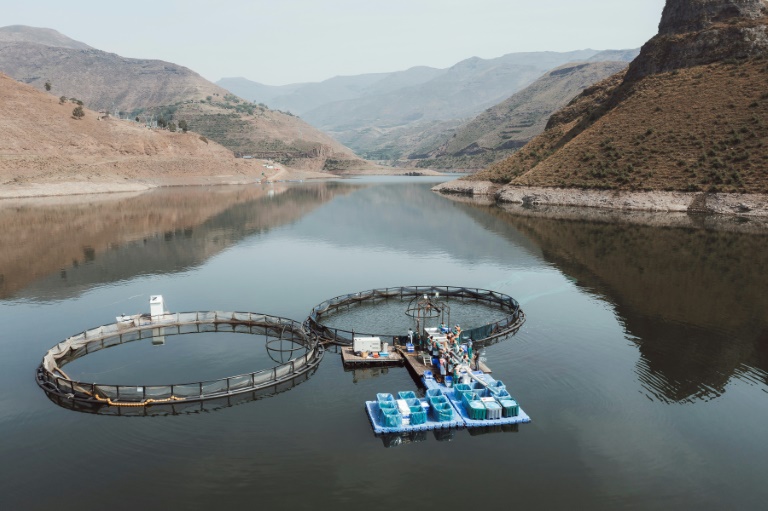
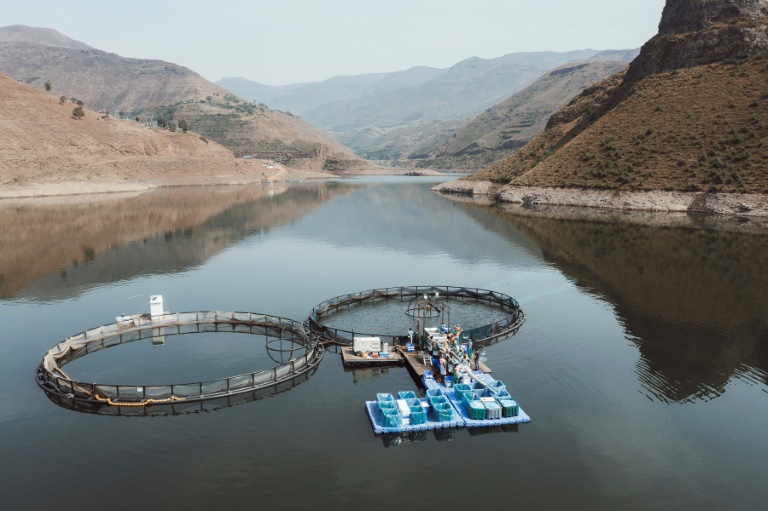
It’s harvest time in Lejone, a small village nestling in mountains in southern Africa more than two thousand metres above sea level.

The yield is not grain or fruit, but rainbow trout — the bounty from an undulating river at the foot of the peaks of Lesotho.

Fishermen haul nets bulging with trout onto a floating platform.

The fish are killed and put on ice, the first step on their journey to dinner tables in neighbouring South Africa.

The settlement is home to one of Lesotho’s two professional fish farms — pioneering ventures in the poor landlocked kingdom.

Stephen Phakisi, 59, launched Katse Fish Farms with two partners in 2005.

Today, he chuckles at how the trio leapt into the business with meagre knowledge about some of its unknowns, including the best feed for fattening fish quickly.

“For five years, it was totally uneconomical,” Phakisi says.

He recalls how he once found a shoal of fish dead and belly-up in the water, while another time a full cargo of imported fingerlings died on a 16-hour drive from Cape Town. 

Today, the company is profitable, with a yearly output of 800 tonnes of fish, which is sold at about $4 a kilogram. 

It supplies a few local restaurants, where the trout is usually pan-fried in butter for a few minutes and served with a side dish of kale and potato chips or rice.

But the bulk of its production lands on the shelves of high-end supermarkets in neighbouring South Africa, where a vacuum-packed one-kilo bag can cost up to $50. 

– ‘Heads and bones’ –

Trout farming in Lesotho has grown on the back of another of the mountain country’s most famous exports: water. 

South Africa gets much of its water from its neighbour, which has dammed several of its waterways over the past three decades. 

The dams have widened riverbeds, creating inlets and basins that are ideal for trout farming. 

Katse Fish Farms lies more than 2,000 metres (6,500 feet) above sea level on the Malibamatso River, upstream from the giant Katse Dam reservoir that supplies South Africa’s capital Pretoria and the largest city, Johannesburg.

Fish farming currently accounts for less than 0.1 percent of Lesotho’s $2 billion GDP.

Locals say they have always eaten salted, sun-dried freshwater fish. And young boys sell fresh catch to passing motorists.

But as dam construction continues the country has the potential “to become the regional leader in aquaculture,” according to the Lesotho National Development Corporation.

In this country of just over two million people, who rank among the poorest in the world, few seem to be benefiting so far from the water boom. 

“We are selling water to South Africa but we have no water to our homes,” says Joshua Sefali, a village leader in Lejone.

Many of the village’s stone houses with thatched roofs have no mains water or electricity.  

Large swathes of land were flooded after dams went up. 

Some people lost their homes and access to farmland, receiving only small compensation in return. 

Machaka Khalala, 31, said she received about $165 when the field where she used to grow corn and spinach was submerged. 

Now she makes a living selling “fat cakes,” a local doughnut.

But that’s often not enough to make ends meet.

A cap on her head, Khalala was among dozens of people queueing up in the cold, a bucket in hand, on a mountain roadside.

Here, Lesotho’s other fish farm hands out leftovers every week — “the heads and backbones,” Khalala said. 

Mountainous Lesotho finds gold in trout fish farming

It’s harvest time in Lejone, a small village nestling in mountains in southern Africa more than two thousand metres above sea level.

The yield is not grain or fruit, but rainbow trout — the bounty from an undulating river at the foot of the peaks of Lesotho.

Fishermen haul nets bulging with trout onto a floating platform.

The fish are killed and put on ice, the first step on their journey to dinner tables in neighbouring South Africa.

The settlement is home to one of Lesotho’s two professional fish farms — pioneering ventures in the poor landlocked kingdom.

Stephen Phakisi, 59, launched Katse Fish Farms with two partners in 2005.

Today, he chuckles at how the trio leapt into the business with meagre knowledge about some of its unknowns, including the best feed for fattening fish quickly.

“For five years, it was totally uneconomical,” Phakisi says.

He recalls how he once found a shoal of fish dead and belly-up in the water, while another time a full cargo of imported fingerlings died on a 16-hour drive from Cape Town. 

Today, the company is profitable, with a yearly output of 800 tonnes of fish, which is sold at about $4 a kilogram. 

It supplies a few local restaurants, where the trout is usually pan-fried in butter for a few minutes and served with a side dish of kale and potato chips or rice.

But the bulk of its production lands on the shelves of high-end supermarkets in neighbouring South Africa, where a vacuum-packed one-kilo bag can cost up to $50. 

– ‘Heads and bones’ –

Trout farming in Lesotho has grown on the back of another of the mountain country’s most famous exports: water. 

South Africa gets much of its water from its neighbour, which has dammed several of its waterways over the past three decades. 

The dams have widened riverbeds, creating inlets and basins that are ideal for trout farming. 

Katse Fish Farms lies more than 2,000 metres (6,500 feet) above sea level on the Malibamatso River, upstream from the giant Katse Dam reservoir that supplies South Africa’s capital Pretoria and the largest city, Johannesburg.

Fish farming currently accounts for less than 0.1 percent of Lesotho’s $2 billion GDP.

Locals say they have always eaten salted, sun-dried freshwater fish. And young boys sell fresh catch to passing motorists.

But as dam construction continues the country has the potential “to become the regional leader in aquaculture,” according to the Lesotho National Development Corporation.

In this country of just over two million people, who rank among the poorest in the world, few seem to be benefiting so far from the water boom. 

“We are selling water to South Africa but we have no water to our homes,” says Joshua Sefali, a village leader in Lejone.

Many of the village’s stone houses with thatched roofs have no mains water or electricity.  

Large swathes of land were flooded after dams went up. 

Some people lost their homes and access to farmland, receiving only small compensation in return. 

Machaka Khalala, 31, said she received about $165 when the field where she used to grow corn and spinach was submerged. 

Now she makes a living selling “fat cakes,” a local doughnut.

But that’s often not enough to make ends meet.

A cap on her head, Khalala was among dozens of people queueing up in the cold, a bucket in hand, on a mountain roadside.

Here, Lesotho’s other fish farm hands out leftovers every week — “the heads and backbones,” Khalala said. 

Russian military jet crash leaves 13 dead as search ends

At least 13 people, including three children, were killed after a Russian military plane crashed into a residential area of Yeysk, a town in southwest Russia near the border with Ukraine, Moscow authorities said Tuesday as search operations ended.

The ministry of emergency situations said in a statement that rescuers had completed the search of the rubble, and discovered “10 more bodies”, after earlier announcing three deaths.

“In total, 13 people died, including three children, while 19 people were injured,” according to the ministry, as quoted by Russian news agencies.

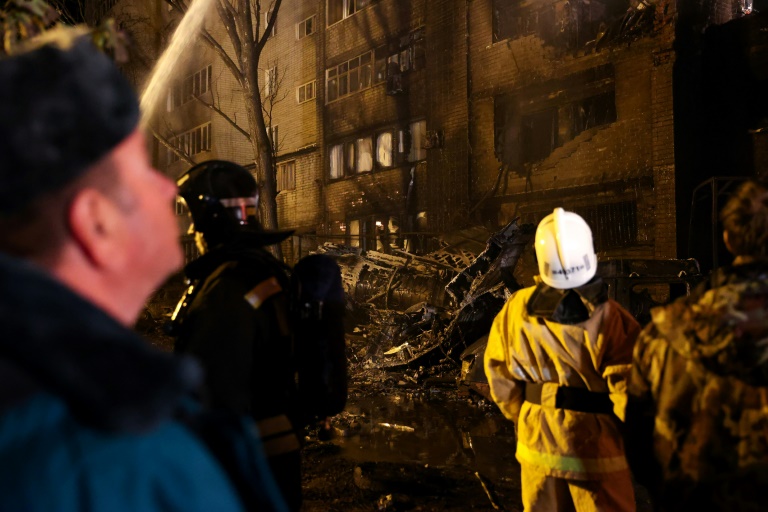
The Sukhoi Su-34 crashed on Monday evening, causing a massive fire that engulfed a nine-storey building where around 600 people lived.

Russian President Vladimir Putin was informed of the fire and ordered “all necessary assistance be given to casualties from the military plane incident”, the Kremlin told the state-run TASS news agency.

“At the site of the Sukhoi Su-34 crash, in the courtyard of a residential area, the aircraft’s fuel caught fire,” the ministry of defence said.

Images on social media showed a Soviet-era residence block engulfed by flames.

The blaze spread over five floors of the building, covering 2,000 square metres (21,500 square feet), the ministry of emergency situations said.

The defence ministry said the plane’s pilots were able to eject.

The plane crashed after taking off to carry out a training flight from the military airfield of the Southern Military District, it said.

It added that the military jet had malfunctioned after “one of its engines caught fire during take-off”.

– Investigation opened –

Regional governor Veniamin Kondratyev told reporters his administration was “providing maximum assistance” to residents and promised to “figure out whether the house would be restored, or we will build new apartments.”

The fire was brought under control by 1730 GMT Monday, he said.

Kondratyev earlier said on Telegram that the fire had spread to a few floors and that 17 flats were affected.

Russia’s investigative committee, which looks into serious crimes, said it had opened a criminal investigation into the crash. 

Since the beginning of the Ukraine offensive, the airspace around the south of Russia has been closed.

Yeysk town is on the Taganrog Gulf on the Sea of Azov, opposite the Ukrainian city of Mariupol, which is under Russian control after relentless bombardment and a long siege.

Oksana, a resident who declined to give her last name, said the area had been cordoned off.

“There could be an explosion. Everything is burning inside. There is smoke,” she told AFP.

She said she was stuck in traffic when she heard the news.

“I’m in shock obviously. My child was alone at home. We already used to go to sleep with fear every day — Mariupol is just across from us,” she said, referring to the nearby Ukrainian port besieged earlier this year by Russian forces.

Accidents involving Russian civilian aircraft and warplanes are fairly common, usually caused by technical malfunction or human error. 

In June a military plane crashed in the city of Ryazan, southeast of Moscow, killing four people and injuring five others. 

Zelensky set for Frankfurt book fair as Ukraine stars

Ukraine’s President Volodymyr Zelensky will address this week’s Frankfurt book fair, with organisers offering emphatic support to the country’s literary scene in the wake of Russia’s invasion.

Ukrainian authors led by “punk poet” Sergiy Zhadan will feature prominently at the world’s biggest publishing event.

Zelensky will make his speech Thursday via video link at the five-day annual fair, which attracts tens of thousands of visitors from around the world and hundreds of exhibitors. 

His wife, Olena Zelenska, is also due to speak at a side event. 

Russian state institutions usually in charge of running their nation’s stand have been banned with prominent opponents of President Vladimir Putin instead given the stage.

The fair “has maintained close ties to the Ukrainian book industry for many years”, said the event’s director, Juergen Boos.

“We therefore want to offer direct support to our Ukrainian colleagues now as they withstand the Russian attack.”

The 2022 edition marks a return to near normal after what Boos called “two difficult years” because of the coronavirus pandemic. 

The 2020 fair was almost fully digital, while last year’s was muted with many authors joining only via video link. 

This year’s event has no restrictions, although the number of countries represented — over 80 — is still below the level at the last pre-pandemic fair in 2019. 

– No ‘normality’ –

One of the most high-profile Ukrainian attendees will be Zhadan, a writer, translator and musician, and a key figure in the country’s literary scene. 

The author, who has put his writing career on pause as he focuses on humanitarian aid and supporting the Ukrainian army, will read his poems at the fair and be interviewed.

While several other prominent events have been planned around Ukrainian writers and publishers, the fair will also offer a platform to Russian dissidents and opponents of Putin. 

Leonid Volkov, a leading ally of jailed Kremlin critic Alexei Navalny, and Irina Scherbakova, an activist from prominent rights group Memorial, will discuss the state of Russia’s opposition.

Popular Russian science fiction writer Dmitry Glukhovsky — recently labelled a “foreign agent” by Moscow and put on a wanted list after denouncing the war in Ukraine — will also be appearing.

Lighter subjects are also on the agenda, however, with an in-depth look at #BookTok, a growing community on social media network TikTok where users make short videos reviewing and discussing books. 

Other big names at the show include 2021 Nobel literature prize winner Abdulrazak Gurnah from Tanzania and British-Pakistani writer Mohsin Hamid, German-born actress Diane Kruger and American crime fiction author Donna Leon.

Spain is this year’s official guest of honour, and the fair will be opened Tuesday in the presence of Spain’s King Felipe VI and his wife Queen Letizia, as well as German President Frank-Walter Steinmeier.

Leading Spanish authors will also attend, and there will be exhibitions about Spanish book illustrators, and of stories told through films, drawings and installations.

The huge gathering dates back to the Middle Ages, with the first fairs taking place shortly after the Gutenberg printing press was invented in nearby Mainz in 1436.

Close Bitnami banner
Bitnami