World

Deadly drone strikes hit Kyiv as Russian warplane crashes

Moscow on Monday stepped up attacks across Ukraine, cutting electricity and killing eight people, including in kamikaze drone strikes on the capital, as a Russian warplane crashed near the border.

The plane struck a residential area of Yeysk, a town in southwestern Russia, according to Russian authorities.

Health minister Mikhail Murashko said three people had died and 19 were injured, Russia’s state-run TASS news agency reported, revising an earlier toll of six dead given by the ministry of emergency situations.

Moscow is thought to be trying to counter battlefield losses in its eight-month war in Ukraine by waging a punitive policy of striking energy facilities before winter in a move President Vladimir Putin hopes will weaken resistance.

Ukrainian Prime Minister Denys Shmygal said Russia launched five strikes in Kyiv and against energy facilities in Sumy and the central Dnipropetrovsk regions, knocking out electricity to hundreds of towns and villages.

Ukraine said four people were killed in Kyiv, including a married couple expecting a baby, and another four in the northeast region of Sumy.

Foreign Minister Dmytro Kuleba demanded EU sanctions on Iran, accusing Tehran of providing Russia with drones.

An AFP journalist saw drones swooping low over central Kyiv on Monday as police tried to shoot them down with automatic weapons and smoke rose from explosions across the city.

“I saw a bright orange splash… The house trembled,” said resident Tamara Beroshvili.

Ukraine’s military said it shot down eight Iranian-made drones and two Russian cruise missiles on Monday.

Iran denies exporting any weapons to either side, but the United States warned it would take action against companies and nations working with Tehran’s drone programme following the strikes in Kyiv.

– Call for Russia to be ousted from G20 –

The strikes come exactly a week after Russian missiles rained down on Kyiv and other cities on October 10 in the biggest wave of attacks in months, killing at least 19 people, wounding 105 others and sparking an international outcry.

“They seem to be hitting us every Monday now,” said taxi driver Sergiy Prikhodko, who was waiting for a fare near the central train station in Kyiv.

“It’s a new way of starting the week,” he told AFP.

Air raid sirens sounded in Kyiv shortly before the first explosion at around 6:35 am (0335 GMT), followed by sirens across most of the country.

“Kamikaze drones and missiles are attacking all of Ukraine. The enemy can attack our cities, but it won’t be able to break us,” President Volodymyr Zelensky said.

“Russia will not achieve anything with this form of terror even now when we still do not have a sufficient number of air defence and missile defence systems,” the president added.

Senior presidential aide Mykhaylo Podolyak called for Russia to be excluded from the G20 following the strikes.

“Those who give orders to attack critical infrastructure, to freeze civilians and organise total mobilisation to cover the frontline with corpses, cannot sit at the same table with leaders of (the) G20,” he said in a statement on social media, calling for Russia to be “expelled from all platforms”.

– NATO drills –

In Moscow, mayor Sergei Sobyanin announced that Russian army draft offices would close from Monday, saying the Kremlin’s mobilisation quotas to recruit reservists to fight in Ukraine had been completed in the capital.

Meanwhile, Ukraine announced it had swapped more than 100 prisoners with Russia in what it said was the first all-female exchange with Moscow since the invasion began on February 24.

“The more Russian prisoners we have, the sooner we will be able to free our heroes. Every Ukrainian soldier, every front-line commander should remember this,” Zelensky said.

NATO launched regular nuclear deterrence drills in western Europe, which were planned before Russia invaded Ukraine, rejecting calls to scrap the exercises after Putin ratcheted up veiled threats to launch a nuclear attack.

The exercises will involve US B-52 long-range bombers, and up to 60 aircraft in total will take part in training flights over Belgium, the United Kingdom and the North Sea.

Meanwhile, Moscow ally Belarus said as many as 9,000 Russian soldiers and around 170 tanks would be deployed in the country to build up a new joint force, which it said will be uniquely defensive and aims to secure its borders.

In the south, Ukrainian troops have been pushing closer and closer to the large city of Kherson, just north of Crimea.

Kherson is one of four regions in Ukraine that Moscow recently claimed to have annexed.

burs/jm-kjm/wd/sst/mtp/cwl
Russian military jet crashes in southwest, at least three dead

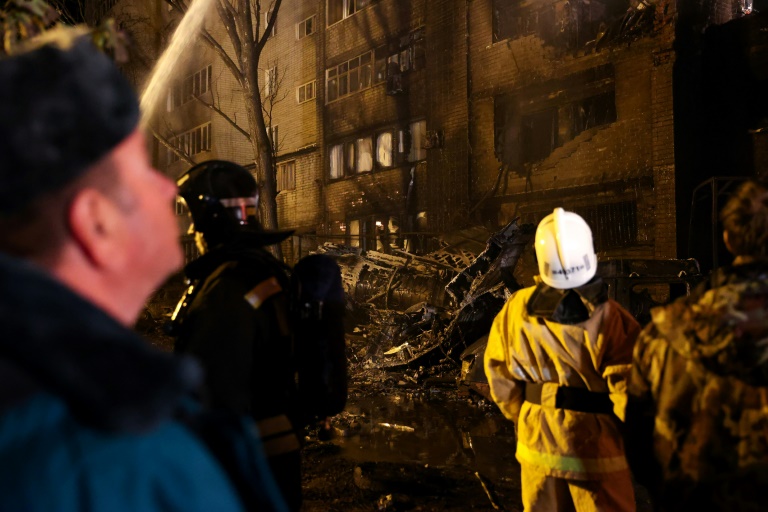
A Russian military plane crashed on Monday into a residential area of Yeysk, a town in southwest Russia near the border with Ukraine, causing a huge fire and killing at least three people, news agencies reported.

Health minister Mikhail Murashko said three people had died and 19 were injured, the state-run TASS news agency reported. 

The ministry of emergency situations had earlier given a toll of six dead. The reason for the discrepancy was not immediately clear.

The resulting fire that engulfed a nine-storey residential building had been contained and was almost extinguished, regional governor Veniamin Kondratyev, who was on the scene Monday night, said on Telegram.

Oksana, a resident who declined to give her last name, said the area had been cordoned off.

“There could be an explosion. Everything is burning inside. There is smoke,” she told AFP.

She said she was stuck in traffic when she heard the news.

“I’m in shock obviously. My child was alone at home. We already used to go to sleep with fear every day — Mariupol is just across from us,” she said, referring to the nearby Ukrainian port besieged earlier this year by Russian forces.

Russian President Vladimir Putin was informed of the fire and ordered “all necessary assistance be given to casualties from the military plane incident,” the Kremlin told TASS.

– Residence block engulfed by flames –

“On October 17, 2022, while taking off to carry out a training flight from the military airfield of the Southern Military District, an Su-34 aircraft crashed,” the Russian defence ministry said.

Its statement said the military jet had malfunctioned after “one of its engines caught fire during take-off”.

“At the site of the Sukhoi Su-34 crash, in the courtyard of a residential area, the aircraft’s fuel caught fire,” the ministry said.

Images on social media showed a Soviet-era residence block engulfed by flames.

The blaze reached five out of nine floors of a residential building, according to emergency services, quoted by Russian state-run agencies.

The blaze spread over 2,000 square metres (21,500 square feet), the services added.

Around 600 people usually reside in the building, the local Krasnodar administration said on Telegram.

“The governor ordered the whereabouts of each resident to be established,” the administration said. 

Governor Kondratyev told reporters his administration was “providing maximum assistance” to residents and promised to “figure out whether the house would be restored, or we will build new apartments.”

Kondratyev earlier said on Telegram that the fire had spread to a few floors and that 17 flats were affected.

– Investigation opened –

Russia’s investigative committee, which looks into serious crimes, said it had opened a criminal investigation into the crash. 

Since the beginning of the Ukraine offensive, airspace around the south of Russia has been closed.

Yeysk town is on the Taganrog Gulf on the Sea of Azov, opposite Mariupol, which is under Russian control. The town is home to about 85,000 people. 

Mariupol withstood weeks of relentless Russian bombardment, with resistance concentrated in a dense network of underground tunnels at its Azovstal steel plant.

Accidents involving Russian civilian aircraft and warplanes are fairly common, usually caused by technical malfunction or human error. 

In June a military plane crashed in the city of Ryazan, southeast of Moscow, killing four people and injuring five others. 

Australia reverses recognition of Jerusalem as Israeli capital

Australia said Tuesday it would no longer recognise West Jerusalem as Israel’s capital, reversing a contentious decision by the previous conservative government.

Foreign Minister Penny Wong said the city’s status should be decided through peace talks between Israelis and Palestinians, and not through unilateral decisions.

“We will not support an approach that undermines” a two-state solution, she said, adding: “Australia’s embassy has always been, and remains, in Tel Aviv”.

In 2018 a conservative government led by Scott Morrison followed former US president Donald Trump’s lead in naming West Jerusalem as the Israeli capital.

The move caused a domestic backlash in Australia and caused friction with neighbouring Indonesia — the world’s most populous Muslim-majority nation — temporarily derailing a free trade deal.

Jerusalem is claimed by both Israelis and Palestinians, and most foreign governments avoid formally declaring it the capital of any state. 

“I know this has caused conflict and distress in part of the Australian community, and today the government seeks to resolve that,” Wong said.

She accused the Morrison government of being motivated by a by-election in a beach-side Sydney suburb with a sizable Jewish community.

“You know what this was? This was a cynical play, unsuccessful, to win the seat of Wentworth and a by-election.”

The centre-left Labor party, with Anthony Albanese as prime minister and Wong as foreign minister, came to power in May 2022.

Wong insisted that the decision did not signal any hostility to Israel.

“Australia will always be a steadfast friend of Israel. We were amongst the first countries to formally recognise Israel,” she said.

“We will not waver in our support of Israel and the Jewish community in Australia. We are equally unwavering in our support of the Palestinian people, including humanitarian support.”

Israel occupied Arab east Jerusalem in the 1967 Six Day War and later annexed it, declaring the entire city its “eternal and indivisible capital”.

Palestinians claim the eastern part as the capital of a future Palestinian state.

– Symbolism –

Canberra’s decision is unlikely to come as a shock to the Israeli government.

The policy reversal was foreshadowed by the removal of language on the Israeli capital on the website of Australia’s Department of Foreign Affairs and Trade.

But it will likely cause unease, according to Ran Porat, a historian and researcher at Melbourne’s Monash University.

Even though Australia is not a major player in peace talks, he said: “In the Middle East in general symbolism is very much at the centre of many conflicts. Symbolism is not negligible, it’s not unimportant.”

The move could be seized on Israel’s opposition Likud, led by Benjamin Netanyahu as evidence of the government’s failings ahead of November 1 elections.

Prime Minister Yair Lapid will be disappointed, Porat added, but the response “has to be walking between the disagreement and not souring relations with Canberra.”

In Lula's home state, Brazilian rodeo riders lean left

Brazil’s powerful agribusiness industry may back far-right President Jair Bolsonaro, but at the “Grab the Bull Bush Rodeo” in runoff rival Luiz Inacio Lula da Silva’s home state, the death-defying cowboys love the leftist ex-president.

Northeastern Brazil’s harsh, semi-arid Sertao region is the birthplace of this unique rodeo tradition, in which cowhands on horseback chase a charging bull through thick, cactus-strewn scrubland, racing to grab a leather tag from around his neck.

One at a time, hundreds of bulls are released from a narrow pen, charging into the bush as two-person teams give chase. The winner is the team that returns their tag to the starting line fastest — sometimes sprinting on foot, for those who fall off their horses.

Bleeding from his left eyelid, cowboy Jose Vasconcelos looks like he just had a near-death experience as he strips off the heavy, head-to-toe leather get-up riders wear for protection.

But even though he failed to catch his bull, he is beaming.

“It’s the best! Wow, the adrenaline. I can’t even explain it,” says the thickly built 29-year-old, who has previously smashed up his arm, leg and collarbone while competing.

Besides the whoops of the cowboys, the jangling of spurs and the smell of barbecue, there is a heavy hint of politics in the air at Fazenda Piuta, a cattle ranch outside Cabrobo, in Pernambuco state, a five-hour drive from Lula’s hometown.

The election showdown between the ex-president (2003-2010) and Bolsonaro is in full swing, and — as seems to be the case for virtually everyone at the rodeo — Vasconcelos is no fan of the incumbent.

“I don’t know much about politics, but I know this: Bolsonaro ain’t a good president,” he says.

Economical with his words, he cites a common complaint: inflation.

“In Lula’s day, gas was cheaper. Everything was.”

– Horseback prayer –

Brazil’s giant agribusiness sector broadly backs Bolsonaro — the third “B” in his “Bibles, bullets and beef” coalition.

But northeastern cattle farmers are outliers.

The region, Brazil’s poorest, is also a key electoral battleground, home to one-fourth the country’s 214 million people.

Lula, who won the first-round election on October 2 by a tighter-than-expected 48 percent to 43 percent for Bolsonaro, won the northeast with a crushing 67 percent.

Bolsonaro, who took just 27 percent in the region, is hoping to do better in the October 30 runoff, but he faces a tough fight.

Ana Gabriele dos Santos, a 25-year-old farmhand helping prepare the horses, was only a child when Lula last won election 16 years ago. But she says she grew up hearing how much his social programs helped people.

“Ever since I was a kid I heard people talk about Lula. We were for Lula then, we’re for Lula now,” she says.

“He’s from here, he knows what it’s like. He thinks about the poor. Bolsonaro doesn’t. He just thinks about winning.”

Preparing for his rodeo run in his traditional leather gear, Marcelo Nogueira, 30, cites two examples: a new $115-a-month welfare program called Auxilio Brasil, and a massive irrigation project rerouting the Sao Francisco river, both of which Bolsonaro claims as successes.

“Bolsonaro is worthless. He invented this ‘Auxilio Brasil,’ but it’s just a new name for ‘Bolsa Familia’ (Lula’s signature welfare program). And all he did was inaugurate the irrigation system. The one who started it was Lula,” says Nogueira.

“My whole family’s with Lula. I think the whole northeast is with Lula.”

The rodeo starts with a Catholic mass on horseback, where a priest blesses the riders and prays for their safety.

It is no trivial matter. Two weeks before this event, a cowboy was impaled by a branch in the parched scrubland and died.

The danger doesn’t diminish the appeal for die-hard fans, who climb atop trucks or scale the thorny trees to cheer on riders.

“We live for this. It’s bigger than football here,” says Maria de Moraes, 48, a farmer and self-described rodeo addict.

One other thing gets her equally fired up.

“Lula, Lula and Lula,” she says when asked which candidate she is voting for.

“I get goosebumps just talking about him.”

High hopes for nasal Covid vaccines despite 'disappointing' trial

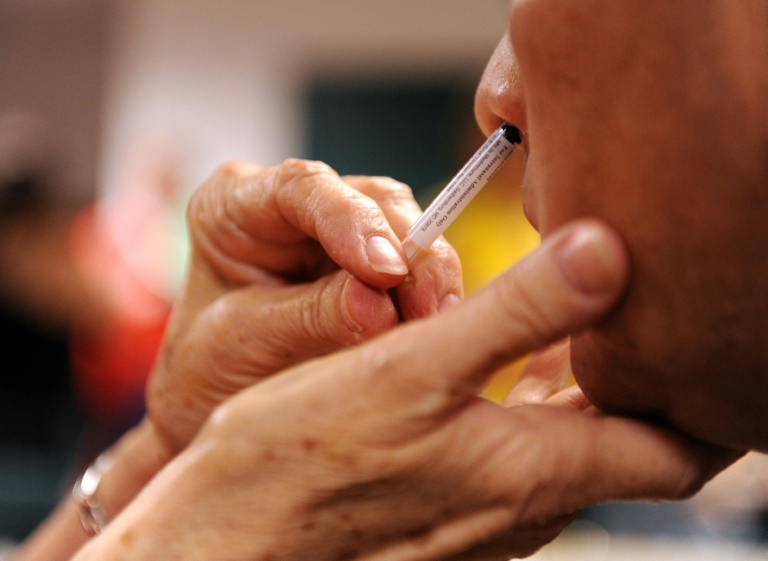
Nasal vaccines could still be a powerful future weapon in the fight against Covid-19 despite “disappointing” recent trial results for an AstraZeneca spray, experts say.

By entering the body the same way as the virus, nasal vaccines aim to build immunity in the mucous membrane that lines the nose and mouth.

This could block people from getting infected in the first place — and also potentially hamper those who have Covid from spreading it further.

That would represent a huge boost compared to traditional shots in the arm, which have proved very effective at preventing severe Covid but perform far less well when it comes to stopping transmission.

Last month China became the first country to approve a needle-free Covid vaccine, an aerosolised mist inhaled through the nose and mouth using a nebuliser device, while India greenlit a homegrown nasal drop vaccine days later.

With some wondering when Western nations would catch up, last week Oxford researchers revealed the results of a phase 1 trial for a simple nasal spray using the AstraZeneca vaccine. 

However, the vaccine promoted mucosal antibodies only in a minority of the participants, and the immune responses were weaker compared to those from traditional vaccines, according to a study published in the journal eBioMedicine.

– Don’t be ‘too downhearted’ –

“The nasal spray did not perform as well in this study as we had hoped,” said the trial’s chief investigator, Sandy Douglas of Oxford University.

“This was quite different from recent data from China, which has suggested good results can be achieved by delivery of a similar vaccine deep into the lungs with a more complex nebuliser device,” Douglas said in a statement.

“One possibility is simply that the majority of the nasal spray vaccine ends up being swallowed and destroyed in the stomach — delivery to the lungs could avoid that.”

Connor Bamford, a virologist at Queen’s University Belfast, told AFP that it was important to “not be too downhearted” about the AstraZeneca results. 

He said that working out exactly why the nasal spray fell short could help researchers discover how to make a future version more effective.

Unlike AstraZeneca, successful nasal vaccines used for other diseases such as polio, rotavirus and influenza are all live vaccines, which means they replicate inside the nose, Bamford said, potentially pointing a way forwards for researchers.

Eric Tartour, an immunologist at the European Hospital Georges Pompidou in Paris, said that while the AstraZeneca results “are indeed disappointing”, he did not think the news “dampens hope for nasal vaccines”.

It was “reassuring” that the AstraZeneca, Chinese and Indian nasal vaccines have not shown any serious side effects, he added.

Around 100 different intranasal Covid vaccines are under development worldwide, according to analysis by health data firm Airfinity and Nature last month, with some 20 being tested on humans.

Russia and Iran have also approved nasal vaccines. However, like China and India, they have not published trial data showing that their vaccines stop transmission in a peer-reviewed journal.

And with falling inoculation rates worldwide leading some countries to destroy millions of expired doses, the demand for a new Covid vaccine remains unclear. 

– ‘Wake up and lead’ – 

For example, in 2020 France’s Pasteur Institute and biotech firm TheraVectys developed a nasal vaccine candidate that was found to block transmission and produce antibodies for different variants in tests on animals, according to chief scientific officer Pierre Charneau.

However, the vaccine has not “aroused enough interest from funding agencies or ‘Big Pharma’ to hold trials on humans,” so the firm has turned its focus back towards cancer vaccines, Charneau said.

US biotech firm Meissa Vaccines has developed a nasal vaccine shown to produce an immune response in phase 1 trials on humans, said its chief scientific officer Martin Moore.

So how long could it take for such a nasal vaccine to be made available to the public? It depends, Moore said.

He called for the world to put similar resources into creating a nasal vaccine as it did into the first round of Covid jabs, which were developed and deployed en masse in less than a year — the fastest rate in history. 

“If there was a Warp Speed 2.0, and there should be, our vaccine could be available to the public with a similar timeline,” Moore said.

“Reducing transmission is the best way to gain control over the virus,” Moore said. “The challenge is proving that a nasal vaccine can actually do this,” he added.

“The upside to our health and economies is enormous. Western countries need to wake up and lead.”

Six men go on trial over Vienna jihadist shooting

Six men accused of helping a gunman who carried out Austria’s first deadly jihadist attack go on trial in a Vienna court on Tuesday.

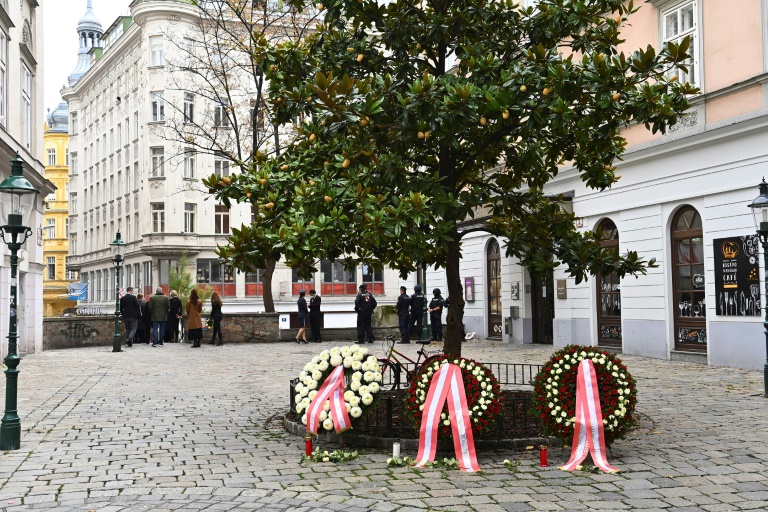
On November 2, 2020, convicted Islamic State sympathiser Kujtim Fejzulai went on a shooting rampage in downtown Vienna, killing four and wounding 23 others before police shot him dead.

In the wake of the EU member’s deadliest shooting in decades, the Austrian government and in particular its intelligence service were accused of failing to monitor the Islamist movement in the country.

According to the federal prosecutors’ charge sheet seen by AFP, the six defendants — all men aged between 21 and 32 years old — were not directly involved in the deadly attack, but are suspected of actively helping Fejzulai prepare for the shooting.

The six men — four Austrians, a Chechen and a Kosovar — are accused of “enabling … or otherwise promoting” the execution of the crimes “due to their shared affiliation with the radical Islamist scene and the terrorist organisation IS Islamic State,” the confidential court document said.

The accused face charges ranging from participating in terrorist crimes in connection with murder to involvement or membership in a terrorist group.

All except one have been held in custody on remand in the lead-up to the trial.

– ‘Ensure justice is done’ –

According to the Vienna state criminal court, verdicts are not expected before February.

Lawyer Mathias Burger, acting for the family of 21-year-old Nedzip Vrenezi, who was shot dead first by Fejzulai during the attack, told AFP in an interview ahead of the opening of the trial that the family “still suffers to this day” from what happened to their son. 

The victim’s family had received compensation from the Austrian state, but his clients’ main interest was to “ensure justice was done”, Burger said.

With the help of some of the accused, the gunman — an Austrian citizen whose parents are from North Macedonia — was allegedly able to obtain the weapons and the ammunition needed for the attack, while others provided logistical aid or encouraged Fejzulai, according to prosecutors.

Lawyer Astrid Wagner, who represents 32-year-old Chechen Adam Makhaev, accused of selling weapons to Fejzulai, told AFP ahead of the trial, that her client was going to plead not guilty. 

Makhaev has confessed to illicit arms trafficking, but did not know what the weapons would be used for, she said.

During the rampage, Fejzulai opened fire on passersby with a Kalashnikov in central Vienna.

In 2019, Fejzulai had been convicted and sentenced to 22 months in prison for trying to join the Islamic State group in Syria, before being arrested in Turkey and extradited to Austria.

Last year, Austria adopted a heavily criticised anti-terror law that was formulated in the wake of the attack and allows for increased surveillance.

Global broadcasting icon BBC turns 100

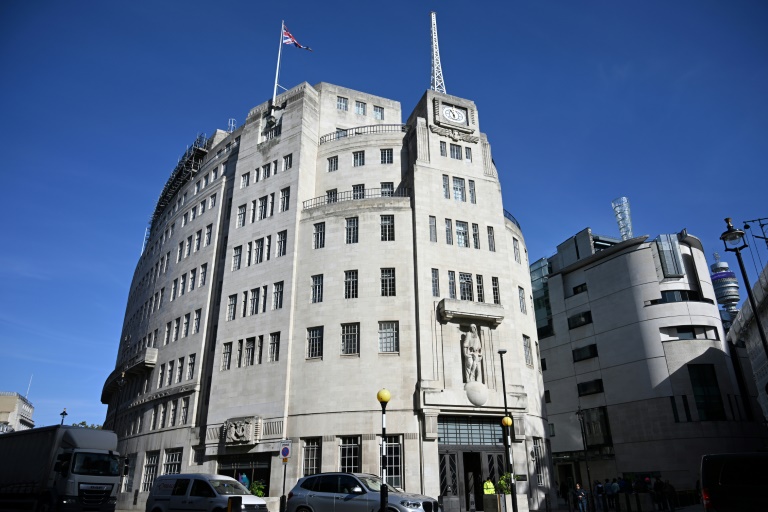
Global media giant the British Broadcasting Corporation (BBC) celebrates turning 100 on Tuesday with one eye on its illustrious past and another on its uncertain future.

Over a century, the BBC has established itself as one of Britain’s most visible and respected global brands, delivering its original mission statement to “inform, educate and entertain”.

The broadcaster reaches an audience of 492 million around the world every week, according to the corporation’s 2021-2022 annual report.

BBC World Service broadcasts in 41 languages to about 364 million people a week globally.

“For a century, the BBC has been a beacon of trusted news and programming across the world, as well as being part of the fabric of the UK and one of its key institutions,” BBC director-general Tim Davie said of the landmark.

“It has been a story of a devotion to public service and constant reinvention — which those in the BBC today remain utterly committed to,” he added.

For nearly seven million people, each day starts with BBC Radio 4’s flagship “Today” programme, which often sets the political agenda.

At weekends, “Strictly Come Dancing”, which pairs celebrities with professional ballroom dancers, has had viewers glued to their sets for 20 years and is the most talked-about television programme on air.

BBC series such as “Peaky Blinders”, “Fleabag” and “Killing Eve” have been exported around the world.

But the centenary comes at a time of uncertainty, with drastic budget cuts and changing viewing habits driven by the digital revolution raising questions about its future.

The government in January announced it would freeze the BBC’s licence-fee funding model for two years, raising fears it could be scrapped in future.

The annual charge for households with a television set is currently set at £159 ($176).

The financial situation has been accompanied by an exodus of younger audiences towards streaming and on-demand platforms, prompting questions about why they should still pay for the BBC.

But BBC chairman Richard Sharp vowed that the broadcaster would “educate and entertain for another century.”

“The BBC is one hundred today — it’s a time to celebrate, but also to embrace the future,” said Sharp.

“I believe its best days are ahead. We have always innovated, changed and adapted,” he added.

“By continuing to put the public first, we will continue to inform, educate and entertain for another century.”

Cranberry farmers fight climate change to protect Thanksgiving staple

American farmers growing cranberries, a quintessential component of Thanksgiving feasts, have had to adapt their traditional methods to fight the effects of climate change.

The tart red berries, boiled with a heaping dose of sugar to make classic cranberry sauce, thrive only in the right environment — but climate change threatens to make conditions more unpredictable and extreme.

After a terrible 2021 season, Massachusetts farmer Billy McCaffrey is ecstatic for a bumper crop this year.

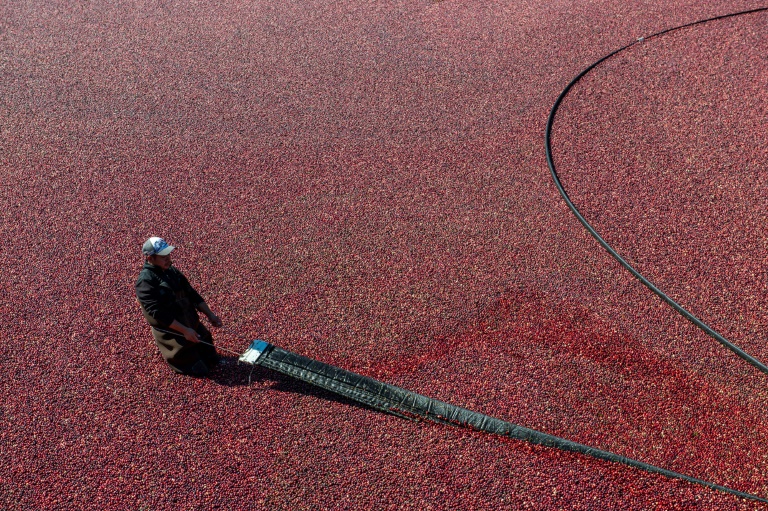
“Phenomenal, unbelievable,” the 70-year-old former teacher says, surrounded up to his waist by a sea of floating berries.

His cranberry farm, south of Boston, is one of hundreds in the northeastern US state of Massachusetts — the second largest producer after midwestern Wisconsin.

“Every year is up and down… I just hope we can keep it and get paid,” says McCaffrey, worrying that an unexpected hail storm could still cause disaster for him and his wife Mary.

The McCaffreys had worried that 2022 could see a repeat of the previous year, which the head of the Cape Cod Cranberry Growers Association (CCCGA), Brian Wick, says was “one of our worst crops in quite some time.”

“The rains and the environment in the vine canopy created the perfect conditions for rot (and) fungus” the expert told AFP.

– ‘Double Whammy’ –

This year’s growing season started with a drought, the exact opposite of last year, but farmers were able to use pumps and water to keep their crops alive.

That eats into their bottom line.      

Now this year looks like one of the biggest crops ever with a prediction of 1.9 million barrels (189 million pounds) produced in Massachusetts according to the CCCGA.

Keith Mann, 54, has outfitted his large farm in Buzzards Bay, Massachusetts, with solar panels to help offset fuel costs. He has also installed several windmills on his property and sells electricity back to the grid.

Though he’s not sure the average temperatures have noticeably increased, Mann says the “weather extremes cause real troubles for us.”

“We had drought all summer… Then late in the summer we had torrential downpours, (which) caused flooding, and the flooding causes fungal infections.”

“Too much rain all at once is a problem. Not enough rain most of the season was another problem. Put them together it’s a double whammy,” said Mann.

As for this year’s Thanksgiving and those in the relative near future, Americans don’t need to rush and stock up on cranberry sauce just yet.

Farmers are adapting to the changing climate and producing new varieties to be processed by the massive Ocean Spray farm cooperative in Massachusetts.

“Thanksgiving, we get up for that. It drives us” said McCaffrey.

“You’re going to have to change your technique and tweak it a little bit at a time.”

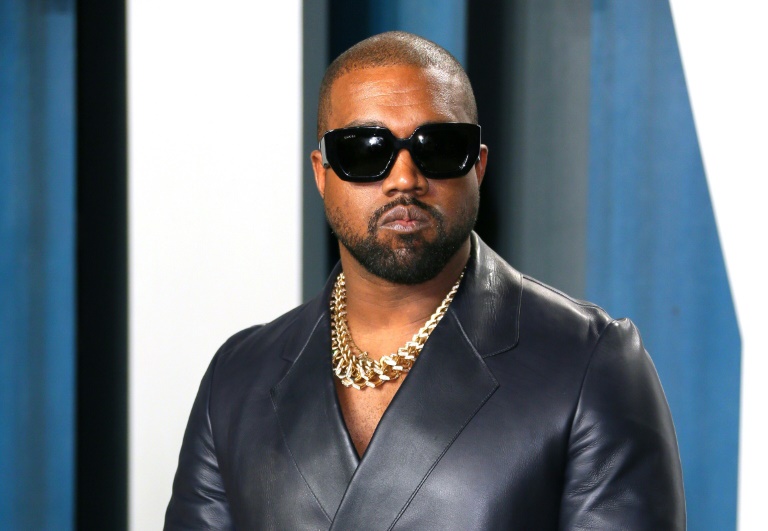
Kanye West agrees to buy social network Parler

Social network Parler announced Monday a deal for Kanye West to buy the platform popular with US conservatives, just over a week after the rapper’s Twitter and Instagram accounts were restricted over anti-Semitic posts.

West — now known as Ye — has recently alienated fans and business partners with anti-Semitic comments, interest in racist conspiracy theories and wearing a provocative “White Lives Matter” T-shirt at Paris fashion week.

“In a world where conservative opinions are considered to be controversial we have to make sure we have the right to freely express ourselves,” the billionaire artist and fashion mogul said in a statement released by Parler.

Parler said West, who has an account on the network as of Monday, was “taking a bold stance against his recent censorship from Big Tech.”

West’s decision to buy his own social media platform comes on the heels of him running into trouble on Twitter and Meta-owned Instagram for posts containing anti-Semitic remarks, in violation of the platform’s content rules.

The 45-year-old’s restrictions on Twitter and Instagram earlier in October were not the first time his posts prompted punitive action from major social media platforms.

Earlier this year, West was banned from posting on Instagram for 24 hours after violating the social network’s harassment policy amid his acrimonious divorce from reality star Kim Kardashian.

Former US president Donald Trump, himself permanently banned from Twitter for tweets deemed to be inciting violence, has already spoken with West about his Parler purchase and the two plan to have dinner, according to news site Politico.

Parler, which describes itself as “a guiding force in the fight against Big Tech, Big Government, censorship, and cancel culture,” announced in September that it was restructuring to focus on users who risk being ousted from the internet.

– Trump supporters –

George Farmer, Parler’s executive director, said the deal with West would “change the world, and change the way the world thinks about free speech.”

“Ye is making a groundbreaking move into the free speech media space and will never have to fear being removed from social media again,” he said.

The value of the deal was not disclosed.

Launched in 2018, Parler became a haven for Trump supporters and far-right users who say they have been censored on social media platforms. It has since signed up many more traditional Republican voices.

But it was pulled from the Apple and Google online marketplaces and effectively shut down when Amazon Web Services cut ties over allegations the platform failed to stop incitement of violence ahead of the January 6, 2021, siege of the US Capitol led by Trump supporters.

Last month, Google allowed Parler back into its Play Store, more than a year after banning the platform.

The network — one of several in a crowded conservative social media marketplace — claimed to have more than 20 million users before being pulled from Apple and Google.

Competitor Truth Social — which Trump launched after being barred from Twitter over the Capitol riot — was also allowed on the Google Play Store this month, weeks before the crucial midterm elections.

Meanwhile, Tesla chief Elon Musk tweeted a cartoon picturing him and West combining their respective social media companies’ forces, with a caption of “Wait for it” as well as “Fun times ahead.”

Musk is proceeding with his $44 billion deal to buy Twitter after trying to back out of the contract, but it has yet to close.

UN Security Council split over security force for Haiti

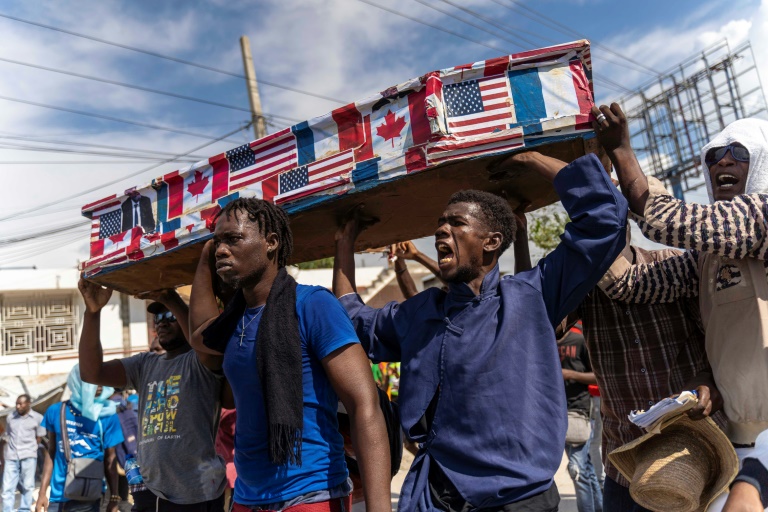
The UN Security Council split Monday over sending an international force to Haiti to help with deteriorating security and a surge in cholera after powerful gangs took over the main port and blocked fuel deliveries.

Un Secretary-General Antonio Guterres said Haitians faced a dramatic emergency and that there was a need for “armed” intervention to help local police open up the port to create a humanitarian corridor for delivery of aid.

“It’s an absolutely nightmarish situation for the population of Haiti, especially Port-au-Prince,” Guterres said before the Security Council met.

“I’m talking of something to be done based on strict humanitarian criteria, independent of the political dimensions of the problem that needs to be solved by the Haitians themselves,” Guterres said.

– Fuel terminal seized –

Haiti asked the United Nations last week for help to reopen to Varreux oil terminal, seized by gangs in mid-September, leading to a growing paralysis of the local community.

“I have the delicate mission of bringing before the Security Council the cry of distress of an entire suffering people and to say out loud and intelligible that the Haitians do not live, they survive,” Haiti’s foreign minister, Jean Victor Geneus, told the council on Monday. 

The United States and Mexico were preparing two resolutions for the council to address the request.

US Ambassador to the UN Linda Thomas-Greenfield said one resolution would authorize a non-UN international security assistance mission to improve security and enable humanitarian aid to flow into Haiti.

She said the proposal was for “a limited, carefully scoped, non-UN mission” to be led by “a partner country” with experience in such operations.

– Bad memories –

Once decided, Washington would “consider the most effective means to directly support, enable, and resource” the mission, she said.

The proposal had some support in the Security Council, but some countries expressed reservations, noting recent protests in Haiti against foreign intervention and also pointing to major problems with the previous UN peacekeeping force in the country.

Known as MINUSTAH, the UN peacekeepers were in Haiti from 2004 to 2017 and notably were identified as the source of a cholera outbreak in 2010 that ultimately killed around 10,000 people.

The bacterial disease disappeared in 2019, but has surged back in recent weeks, causing hundreds of suspected infections and an estimated 36 deaths.

Geng Shuang, China’s deputy permanent representative to the UN, said the body needed to be cautious about supporting a new force for Haiti.

“At a time when the Haitian government lacks legitimacy, and is unable to govern, will sending such a rapid action force to Haiti receive the understanding support and cooperation from the parties in Haiti, or will it face resistance or even trigger violent confrontation from the population?” he asked.

– Sanctions on gangs –

However, China voiced support for a second draft resolution which would lay down a set of sanctions to be applied to the gangs and their leaders.

A draft seen by AFP specifically mentioned Jimmy Cherizier, nicknamed “Barbecue,” the powerful leader of the “G9 Family and Allies” group of gangs which has blocked the Varreux terminal.

Cherizier and his gang “have directly contributed to the economic paralysis and humanitarian crisis in Haiti,” the draft said.

Russia meanwhile rejected the sanctions proposal, saying it was drawn up hastily.

Russian UN envoy Dmitry Polyanskiy said it would be “unacceptable” to support “external interference in the political processes in Haiti” that would subsume Haiti’s interests “to the interests of world-known regional players who view the American continent as their backyard.”

Guterres urged quick action, saying the halt of fuel deliveries was compounding other problems.

Without fuel, he said, water cannot be distributed, worsening the cholera outbreak.

“The most important treatment for cholera is hydration, and there is no water available in the city,” Guterres told reporters.

The Security Council did not schedule a vote on the proposed measures, and the question of who would lead any security intervention group remained a question.

Richard Gowan, an analyst at the International Crisis Group, said the leader would likely be the United States. 

The United States and Canada have already sent equipment to the Haitian police to help their operations, and Gowan said Canada could supply personnel to a peacekeeping force.

“I can imagine the US calling on Latin American countries to send back-up too, and some like Brazil have significant experience in Haiti,” he said.

“But all indications are that the US will lead the way.

Close Bitnami banner
Bitnami